State agency to educate insurance entrepreneurs on investments #ศาสตร์เกษตรดินปุ๋ย

#ศาสตร์เกษตรดินปุ๋ย : ขอบคุณแหล่งข้อมูล : หนังสือพิมพ์ The Nation

https://www.nationthailand.com/business/30382229?utm_source=category&utm_medium=internal_referral

State agency to educate insurance entrepreneurs on investments

Feb 16. 2020
Suthipol Taweechaikarn

Suthipol Taweechaikarn
By The Nation

The Office of Insurance Commission (OIC) is planning to educate insurance business entrepreneurs about international investments such as private equity investment after new investment criteria were publicised, the office’s secretary-general, Suthipol Taweechaikarn, said.

On March 12, the office will hold a meeting with the private sector at the OIC meeting room with the purpose of exchanging ideas and presenting guidelines for the development of investments by insurance businesses.

The OIC is also preparing to specify the qualifications of the businesses to ensure effective investments and manage the risks properly.

The OIC has updated the criteria for investments after making it effective from January 29, enabling large insurance companies to plan investment portfolios and expand business assets such as equity instruments in businesses established to operate hospitals, businesses related to the care of the elderly and long-term care and technology business for insurance.

The new approach might increase revenue, help cope with low rate insurance and lower stress of business caused by the baht’s appreciation.

Spending on capex, M&A loses favor with U.S. firms, UBS says #ศาสตร์เกษตรดินปุ๋ย

#ศาสตร์เกษตรดินปุ๋ย : ขอบคุณแหล่งข้อมูล : หนังสือพิมพ์ The Nation

https://www.nationthailand.com/business/30382188?utm_source=category&utm_medium=internal_referral

Spending on capex, M&A loses favor with U.S. firms, UBS says

Feb 15. 2020
By Syndication Washington Post, Bloomberg · Joanna Ossinger

American executives set buybacks and dividends as their top priority for deploying capital around the turn of this year, and sharply curbed their expectations for capital spending, according to a survey from UBS Group.

Even with the U.S.-China phase-one trade deal in the offing, business investment “collapsed” as a priority, the UBS Evidence Lab survey of 450 senior executives about expectations for the coming 12 months showed. The percentage of firms seeing some acceleration in capital spending fell 15 percentage points compared with a June survey, while the proportion expecting some slowdown increased by 3 percentage points, the report said.

The survey was conducted in December through mid-January, before concerns erupted about the coronavirus. American nonresidential fixed investment already contracted for three straight quarters through December, hit by both the trade war and a slump in the development of fossil fuels.

Along with capex, mergers and acquisitions slumped to the lowest priority yet in UBS surveys that date back to 2017.

“There is a broad reallocation of funding from capex and M&A to buybacks/dividends, paying down debt/raising cash, and increased R&D budgets,” UBS analysts including Keith Parker wrote in a note about the survey. “Small firms appear to be at the extreme end, with paying down debt/increasing cash the top priority, likely due to relatively higher leverage levels. Materials firms seem to be the exception with higher M&A expectations at the expense of paying down debt.”

Sales and profit margin expectations have moderated from the June survey, with a notable dispersion among sectors. Projections in industrials were weakest “by far,” while health-care companies showed “clear strength” with increases in their outlooks, UBS said.

In addition, profit outlooks for small firms weakened further, while improving for larger companies, which “points to earnings support for the S&P 500, particularly relative to the Russell 2000,” the UBS strategists wrote.

Hedge fund behind McClatchy bankruptcy set to take over #ศาสตร์เกษตรดินปุ๋ย

#ศาสตร์เกษตรดินปุ๋ย : ขอบคุณแหล่งข้อมูล : หนังสือพิมพ์ The Nation

https://www.nationthailand.com/business/30382177?utm_source=category&utm_medium=internal_referral

Hedge fund behind McClatchy bankruptcy set to take over

Feb 15. 2020
By The Washington Post · Jonathan O’Connell 

Bankruptcy may have been inevitable for the newspaper chain McClatchy ever since its ill-fated decision to borrow heavily in 2006 to buy another chain, Knight Ridder, for $4.5 billion.

Shortly afterwards both the national economy and the print news industry collapsed, and the latter has never recovered.

A decade of cost-cutting and efforts at growing new digital revenue wasn’t enough to change the company’s fortunes. A series of more recent, behind-the-scenes transactions on Wall Street shaped a new path for the 163-year-old owner of the Miami Herald, the Charlotte Observer and 28 other newspapers across the country.

In its press release announcing its filing for Chapter 11 bankruptcy Thursday, Sacramento, California-based McClatchy said it would continue operating as it seeks relief from its debt and pension obligations in the hope of quickly emerging as a privately held company.

McClatchy’s announcement does not name who its new controlling owner would be, the hedge fund Chatham Asset Management, referring instead to Chatham as its largest secured creditor.

But details in hundreds of pages of documents associated with the filing show how Chatham used a series of financial transactions to exert increasing control over the company, to the point where it partnered with McClatchy on a bankruptcy plan that, if finalized and approved by the court, would hand control of the company to the hedge fund.

In a sign of possible complications to come, the federal Pension Benefit Guaranty Corp. raised concerns in a bankruptcy filing Friday about a 2018 financial transaction between Chatham and McClatchy and asked the court to investigate. The filing was first reported by McClatchy’s Washington bureau.

McClatchy, led by President and Chief Executive Craig Forman, has been seeking a bailout of its $530 million pension obligations with the federal agency, which steps in to pay benefits to employees with failing private sector retirement plans.

In the bankruptcy filings, McClatchy’s management outlines the extremes it has gone to in order to get out from under the debt it took on buying Knight-Ridder at the same time that its century-old business model was falling out from beneath it.

From the 2006 acquisition to 2018, McClatchy cut its operating expenses by nearly 60%. By mid-2019, it had cut 82% of full-time workforce from the time of the deal — shedding reporters, editors, photographers and other staffers across the country — going from 15,378 to 2,800. At the same time, advertising revenues fell by 80% and total daily print circulation fell 59%.

In a mark of the divergent fortunes of regional papers and national titles such as the New York Times – which now has 5 million digital subscribers – McClatchy continued to scrap for any cost savings it could find all last year.

It saved an additional $41 million through another round of staff reductions. In February of last year, it offered an early retirement plans to 450 employees. It centralized advertising operations and continued to outsource printing to third parties. It sold commercial real estate in Miami and Kansas City, home to the Herald and the Kansas City Star.

The company also increased its number of digital-only subscribers to 220,000, more than double what it was two years ago, in an attempt to mimic some of the success that the Times, Wall Street Journal and The Washington Post have found online.

It wasn’t enough. McClatchy still has $703 million of outstanding debt, much of it the result of bad business decisions.

“Newspapers are obviously in trouble but there is $700 million in debt and only $14 million of that is to vendors,” said Eric Snyder, chairman of the bankruptcy department at Wilk Auslander. “They’re doing what they’re doing because lenders piled debt on this company and they’re not getting paid.”

To keep its earlier creditors at bay, McClatchy had to find new lenders, and last year it found a willing partner in New Jersey-based Chatham, which inked a deal that set McClatchy’s proposed reorganization into motion.

Chatham, which reported $4.4 billion in assets in 2019, isn’t a stranger to the news business but its reputation has not won accolades among McClatchy supporters and employees.

Chatham founder Anthony Melchiorre has been referred to as a “bare-knuckled fighter in business dealings” who “has waded deeper into contrarian bets over the years and stuck by them,” according to industry publication Pensions & Investments.

Chatham is also the controlling owner of American Media Inc., parent of the racy tabloid the National Enquirer. AMI’s chairman, David Pecker, worked with President Donald Trump’s attorney, Michael Cohen, to bury allegations of Trump’s extra-marital affairs, and the publication acquired photos threatened to publish intimate photos of Amazon founder and Post owner Jeff Bezos.

In March of last year McClatchy agreed to borrow newly from Chatham to stave off debts to other lenders, according to the filings. McClatchy then agreed to allow Chatham to convert some of its “unsecured” debt to “secured” debt, giving it a leg up on other creditors in the bankruptcy process. Chatham also owns 23.7% of the company’s stock.

In its bankruptcy announcement, McClatchy said that it had reached agreement with Chatham on a series of transactions that would take the company private. Kevin McClatchy, chairman of McClatchy’s board and great-great grandson of the company’s founder, said in the statement that turning his family owned company over was “a necessary and positive step forward for the business.”

But a number of hurdles remain. In its announcement, McClatchy briefly noted what may be a disagreement over how the company will be managed going forward, as the parties “continue to negotiate the final details surrounding governance and senior management.”

At AMI, Chatham took two of four board seats and other hedge funds have been more aggressive about taking board seats at declining newspaper companies – positions that journalists or former journalists once filled previously. The newly formed Gannett, backed by investments from private equity giants Fortress Investment Group and Apollo Global Management, has a nine-member board with no journalists.

As it bought up shares of Tribune Publishing, hedge fund Alden Global Capital won two board seats.

The bankruptcy judge might take issue with Chatham’s maneuvering ahead of other creditors, Snyder said, in addition to consideration of some 22,000 pension holders. He did not expect the plan to go through as proposed.

“I think the court is going to want to see more about how the PBGC claims are going to be treated and see what McClatchy is going to receive in exchange for allowing Chatham to convert that debt,” he said.

In the meantime, McClatchy is taking out even more debt – a $50 million revolving credit facility – to cover the company’s costs through the bankruptcy process, according to the filings.

Amazon ends ties to delivery firm, erasing hundreds of jobs #ศาสตร์เกษตรดินปุ๋ย

#ศาสตร์เกษตรดินปุ๋ย : ขอบคุณแหล่งข้อมูล : หนังสือพิมพ์ The Nation

https://www.nationthailand.com/business/30382176?utm_source=category&utm_medium=internal_referral

Amazon ends ties to delivery firm, erasing hundreds of jobs

Feb 15. 2020
By Syndication Washington Post, Bloomberg · Spencer Soper 

An Illinois company that rapidly expanded over the past two years to deliver packages for Amazon.com Inc. is shuttering operations in five states and letting go hundreds of drivers after failing to meet the e-commerce giant’s standards.

The shuttering of Bear Down Logistics underscores the challenges Amazon faces outsourcing deliveries to new, untested companies instead of traditional partners such as United Parcel Service Inc. and FedEx Corp. It also serves as a warning to Amazon delivery partners that the company is an exacting client willing to cut them off.

Bear Down Logistics notified Ohio, Virginia, Minnesota and Illinois that it would close facilities in those states in April, resulting in the loss of almost 280 jobs. Another Bear Down facility near Grand Rapids, Michigan, will also close in April, according to documents reviewed by Bloomberg.

About 120 drivers work at the Michigan facility, said a person familiar with the matter who spoke on condition of anonymity due to company policies about speaking with the media. The company also has Amazon delivery operations in Wisconsin, the status of which was not immediately clear.

“We have a responsibility to our customers and the communities where we operate to ensure these partners meet our high standards for things like safety and working conditions,” an Amazon spokeswoman said in an email. “Occasionally we need to end a relationship with a partner and when this happens we are committed to helping the impacted employees find opportunities with other delivery service partners or to learn more about the thousands of available roles at Amazon delivery stations and fulfillment centers.” Calls to Bear Down Logistics weren’t immediately returned.

Amazon in 2018 launched a program encouraging aspiring entrepreneurs to lease vans, hire drivers and build their own businesses delivering packages to its customers. More than 100 such businesses have sprouted around the country, helping Amazon increase delivery capacity. Amazon also has greater negotiating leverage over each small operator than it does with larger delivery partners like UPS, FedEx and the U.S. Postal Service.

Drivers working for Amazon delivery partners typically earn less than their counterparts working at larger delivery companies like UPS, which helps Amazon lower costs. One driver working for Bear Down Logistics in Michigan said he earned about $15 an hour delivering Amazon packages, while UPS paid seasonal drivers doing the same work in that area about $20 an hour.

A big challenge for Amazon is balancing safety with its efforts to deliver things quickly at the lowest possible cost. ProPublica in December revealed internal Amazon documents showing it prioritized speed over safety in its delivery network, which followed other investigations exposing the injuries and deaths that accompany Amazon’s quick expansion of its delivery program.

The Bear Down experience also shows how hard it is to make a go of such businesses. When Amazon courted entrepreneurs, it touted the prospects of earning $300,000 a year with as little as $10,000 in up front costs, significantly less than most franchise businesses that can cost more than $100,000 to launch.

Canopy jumps 25% after beating expectations across the board #ศาสตร์เกษตรดินปุ๋ย

#ศาสตร์เกษตรดินปุ๋ย : ขอบคุณแหล่งข้อมูล : หนังสือพิมพ์ The Nation

https://www.nationthailand.com/business/30382167?utm_source=category&utm_medium=internal_referral

Canopy jumps 25% after beating expectations across the board

Feb 15. 2020
File Photo of cannabis/Syndication Washington Post, Bloomberg

File Photo of cannabis/Syndication Washington Post, Bloomberg
By Syndication Washington Post,  Bloomberg · Kristine Owram 

Canopy Growth Corp. jumped as much as 25% Friday, the biggest gain since 2018, after the world’s largest cannabis company by market value reported quarterly results that beat expectations across the board.

Canopy posted a 62% quarter-over-quarter jump in net revenue to C$123.8 million, which was well ahead of the consensus estimate of C$105.4 million. Cannabis gross revenue rose 8%, and Canopy said it took top market share in the quarter ended Dec. 31, capturing 22% of Canada’s recreational pot sales.

Its adjusted Ebitda loss of C$91.7 million was C$64 million narrower than the previous quarter, and beat the average analyst estimate of a C$110 million loss.

The results, which set a very different tone than Aurora Cannabis Inc.’s earnings Thursday, sent cannabis stocks higher Friday morning. Tilray Inc. gained 11%, Aphria Inc. rose 9.5% and Cronos Group Inc. added 9.8%.

Canopy cut its operating expenses by 14% in the quarter, boosting its gross margin to 34% from negative 13% in the previous quarter.

“We delivered significant gross improvement in the third quarter driven by stronger revenues and higher capacity utilization,” Chief Financial Officer Mike Lee said in a statement. “Actions taken earlier this year are expected to meaningfully reduce stock-based compensation in FY21, and we have started to implement tighter cost controls across the organization.” He added that further cost-cutting measures are planned.

Bill Kirk, analyst at MKM Partners, called the Ebitda beat “surprising” given the costs associated with preparing for the rollout of newly legal products in Canada, including beverages, edibles and vapes.

“We had expected only small improvements from the prior quarter, but Canopy is showing a meaningful progression,” Kirk wrote in a note. “That said, the path to profitability still remains very unclear.”

Boeing leaves Singapore empty-handed #ศาสตร์เกษตรดินปุ๋ย

#ศาสตร์เกษตรดินปุ๋ย : ขอบคุณแหล่งข้อมูล : หนังสือพิมพ์ The Nation

https://www.nationthailand.com/business/30382166?utm_source=category&utm_medium=internal_referral

Boeing leaves Singapore empty-handed

Feb 14. 2020
Spectators wearing protective masks look and photograph an aerobatics team performing maneuvers at the Singapore Airshow in Singapore on Feb. 11, 2020. MUST CREDIT: Bloomberg photo by SeongJoon Cho.

Spectators wearing protective masks look and photograph an aerobatics team performing maneuvers at the Singapore Airshow in Singapore on Feb. 11, 2020. MUST CREDIT: Bloomberg photo by SeongJoon Cho.
By Syndication Washington Post, Bloomberg · Anurag Kotoky, Kyunghee Park

The giants of aviation left the Singapore Airshow with little to brag about, but someone ended up with one of the hottest deals in town: a couple of boxes of hand sanitizers.

Alarm over the novel coronavirus outbreak has led to panic-buying of unlikely hot commodities, from toilet paper and instant noodles to soap and even condoms, which people have been using as makeshift finger protectors — safe texts and all that. Bosses at one U.S. aerospace company were befuddled when they arrived at their corporate booth Thursday morning to find it had been liberated of hand sanitizers. Everything else — aircraft models, television sets and branded coat pins — was left untouched.

The priorities at Asia’s flagship aviation event were a far cry from normal. Many companies didn’t even show up because of concern over the virus, which has infected more than 60,000 people and killed 1,380, primarily in China. Attendance was thin and the executives who did attend headed for the door soon after finishing their meetings. The organizers advised attendees to avoid hand contact, leading to awkward greetings and elbow bumps.

Boeing, which is bedeviled with the 737 Max grounding and failed to sign any orders at all in January, didn’t announce any deals. Neither did Airbus, beyond its helicopter unit selling some trainer aircraft to the Thai military. A highlight of the show was PNG Air ordering three ATR 42-600S aircraft. Last year’s Paris Air Show heralded 610 commitments for new planes between Boeing and Airbus alone. A year earlier in Farnborough, England, there were almost 1,000 orders worth $141 billion.

By Thursday afternoon, the third day of the Singapore show, many company booths were empty. Some had closed shop after the first day. There was hardly a soul at the static display area. Even pilots, who tend to enthusiastically show off private jets to the ultra-rich at air shows, were nowhere to be found. At least one company said executives who came to the event from overseas will have to go through self-quarantine upon their return.

The organizers of the Singapore Airshow didn’t immediately respond to requests for comment on the event.

The signs were ominous before the show began, with Singapore raising its disease response level to second-highest, prompting companies such as F-35 fighter-jet maker Lockheed Martin and Commercial Aircraft Corp. of China to pull out from the event. The news of several coronavirus cases in Europe being linked to a British man who attended a business meeting at Singapore’s Grand Hyatt hotel last month added to the gloom.

From the events that took place, Boeing’s 737 Max dominated conversations. The global grounding of the single-aisle plane following two crashes has cost the U.S. plane manufacturer an estimated $18.6 billion. There’s still no real clarity on when it will fly again, and that’s hurting suppliers such as United Technologies Corp. and Spirit AeroSystems Holdings Inc., which has slashed its dividend and laid off 2,800 employees.

Boeing said it will take several quarters to return the 737 Max to the skies globally, which means about 700 of the jets are stuck on the tarmac. The company plans to resume production of the aircraft before regulators give it the green light to get back in the air. Budget carrier SpiceJet Ltd. said at the air show that Boeing will bear the expenses of setting up a simulator in India.

One of the biggest beneficiaries of the Max crisis, at least on paper, is Airbus. The European planemaker said it expects 1,000 orders in the next 10 years for its A321XLR jet, the newest and longest range model of its best-selling A320 family. Boeing is considering a new aircraft that may potentially compete with the latest Airbus.

Even Airbus’s announcement this week for an outline agreement to sell 50 A220 planes was made in London rather than Singapore. Most executives had left the show by that time anyway, and taxi drivers were offering discounts for rides back to the center of the city.

ICECREAM-ADS: Unilever will stop marketing to kids in an effort to curb childhood obesity #ศาสตร์เกษตรดินปุ๋ย

#ศาสตร์เกษตรดินปุ๋ย : ขอบคุณแหล่งข้อมูล : หนังสือพิมพ์ The Nation

https://www.nationthailand.com/business/30382154?utm_source=category&utm_medium=internal_referral

ICECREAM-ADS: Unilever will stop marketing to kids in an effort to curb childhood obesity

Feb 14. 2020
By The Washington Post · Laura Reiley · BUSINESS, HEALTH

Unilever, one of the oldest multinational consumer goods companies, pledged this week to stop advertising ice cream to children. By the end of this year, the company will stop marketing and advertising foods and beverages to children under the age of 12 in television and print, and for children under 13 via social media channels.

Unilever may not leap to mind when it comes to frozen dairy confections, but it should. The company owns premium brands Ben & Jerry’s and Talenti, workhorse ice creams Breyers, Klondike and Good Humor, and specialty bars and ice cream treat brands Magnum, Cornetto, Viennetta, Choc Ice and others.

“The World Health Organization names childhood obesity as one of the most serious public health issues of the 21st century. And it’s a key reason why Unilever is committing to new principles on marketing and advertising foods and beverages to children,” the company said in a statement.

The company says it will not run ads on television and other media where children under 12 represent more than 25 percent of the audience. It will not promote ice cream products in schools or children’s films. In addition, Unilever said it won’t employ celebrities or social media influencers or use licensed cartoon characters in marketing that appeals primarily to kids under 12.

Obesity rates for children and adolescents have more than tripled since the 1970s, and experts say a drop of just a few percentage points could save thousands of children from diabetes, heart disease and other health problems. According to a National Survey of Children’s Health report released in October, obesity rates among youths ages 10 to 17 averaged 15.3 percent nationwide, with a childhood obesity rate hitting 25.4 percent in Mississippi.

This is not the first time Unilever has pledged to restrict advertising aimed at children. In 2010, the company joined 18 of the world’s largest food corporations in signing the Children’s Food and Beverage Advertising Initiative (CFBAI), pledging not to advertise Skippy and Popsicle brands to children younger than six. For children between the ages of 6 and 11, it would advertise those food and beverage products that met certain nutrition criteria.

While brands like Magnum, Ben and Jerry’s and Breyers are marketed more to adults, Good Humor targets children directly via ice cream trucks. With this week’s announcement, Unilever also debuts a “Responsibly Made for Kids” label. By the end of 2020, every ice cream in the kids’ range will have no more than 110 calories and a maximum of 12 grams of sugar per portion.

“It’s a move designed to help parents, caregivers and kids make informed choices about the food and drinks they buy, and to address the rise of social media, and the vast increase in products on sale,” the Unilever statement said.

Fran Fleming-Milici, director of marketing initiatives for the nonprofit Rudd Center for Food Policy and Obesity, says that to meet that sugar limit, many products may have added artificial sugars, something not recommended for children. And while she sees Unilever’s announcement as a step in the right direction, she says government regulation is essential.

“Their bottom line is profit, not public health,” she said. “Without policies that put some rules around marketing to children across all companies, it’s hard to believe one company is going to sacrifice its profits to effectively reduce consumption of unhealthy foods. Policies would be good in that sense because they level the playing field.”

Shu Wen Ng, an associate professor in the nutrition department at the University of North Carolina at Chapel Hill, says that many food and beverage companies voluntarily restrict their marketing to kids as a means of delaying stronger regulations.

“They can say, ‘We’ve already done all these things and we’re being proactive,’ as a delay tactic,” she said. “They can pledge things that sound great but have a lot of loopholes.”

She says that companies may make pledges of this sort to get credit for portion-size changes or ingredient reformulations they were already considering in anticipation of the Food and Drug Administration’s Nutrition Facts labels, which went into effect last month. The new nutrition panels list total calories in a bigger font, and serving size requirements have changed to reflect what people actually eat (read: more). And for the first time, the label calls out added sugar as opposed to those naturally occurring and updates the list of nutrients required or permitted to be declared on the label.

Unilever did not respond to a request for further details about the announcement.

Latin American countries such as Chile have led the way in reducing children’s exposure to advertisements. Foods high in added sugar, saturated fats, calories and added sodium must display black stop signs on front-of-package labels. Nothing with black stop signs can be sold or promoted in schools or included in child-targeted television ads or marketing strategies aimed at children. Consumption of sugar-sweetened drinks dropped nearly 25 percent after Chile adopted the rules in 2016.

In the United States, food, beverage and restaurant companies spent $13.5 billion in advertising in all media in 2016, according to the Rudd Center, a 7 percent increase since 2007 despite those commitments from major food companies who signed the Children’s Food and Beverage Advertising Initiative.

Unilever’s total revenue dropped to $58.22 billion in 2019 from $60.32 billion in 2017, and lagging ice cream sales may have contributed: Per capita consumption has trended downward, with people eating 20 percent less ice cream per year in 2018 than in 2000. In December, Nestle, the other dominant ice cream company, sold its U.S. ice cream business altogether.

Krungthai Card sees continuous growth in net profit #ศาสตร์เกษตรดินปุ๋ย

#ศาสตร์เกษตรดินปุ๋ย : ขอบคุณแหล่งข้อมูล : หนังสือพิมพ์ The Nation

https://www.nationthailand.com/business/30382136?utm_source=category&utm_medium=internal_referral

Krungthai Card sees continuous growth in net profit

Feb 14. 2020
Rathian Srimongkol

Rathian Srimongkol
By THE NATION

SET-listed credit card service provider Krungthai Card Plc (KTC) expects continuous growth in its net profit this year. However, said chief executive officer Rathian Srimongkol, total spending of cardholders might miss the 15-per cent growth target year on year due to the current economic conditions and impacts from the coronavirus outbreak.

The company has targeted a 10-per cent growth year on year in personal loan.

To capitalise on the low interest rate trend, KTC planned to issue new corporate bonds of between Bt10 billion-Bt12 billion to refinance those reaching maturity and to fund business expansion.

Commerzbank Plans Further Cost Cuts After Boost to Profit #ศาสตร์เกษตรดินปุ๋ย

#ศาสตร์เกษตรดินปุ๋ย : ขอบคุณแหล่งข้อมูล : หนังสือพิมพ์ The Nation

https://www.nationthailand.com/business/30382108?utm_source=category&utm_medium=internal_referral

Commerzbank Plans Further Cost Cuts After Boost to Profit

Feb 14. 2020
By Syndication Washington Post, Bloomberg · Steven Arons
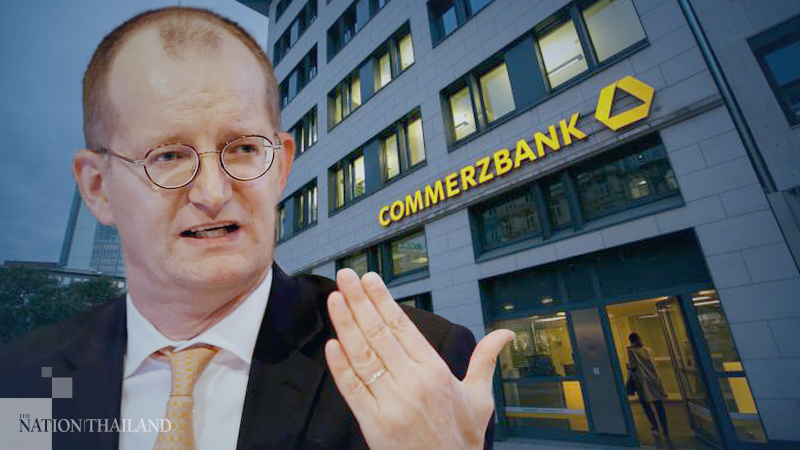
Commerzbank Chief Executive Officer Martin Zielke plans further cost cuts after boosting revenue and capital buffers as he seeks to accelerate the German lender’s turnaround.

The bank will disclose the details of a new cost plan when it reports second-quarter earnings, Chief Financial Officer Bettina Orlopp said on a conference call on Thursday, without providing details. The shares jumped as much as 5.1%, spiking after Orlopp’s comments.

Commerzbank in September unveiled a new strategy the lender described as “soberingly realistic” because of its low growth targets for revenue and profitability. Several large shareholders privately lambasted the plan as insufficient, people familiar with the matter have said.

Revenue at the German lender beat estimates with a 6.8% increase in the fourth quarter as income from its core lending business grew. That led to an increase in operating profit, Commerzbank said Thursday. The bank’s key CET1 capital ratio also improved more than expected.

“We will take advantage of the extra leeway” provided by the improvements in profit and capital, Zielke said in the statement. “I’m more optimistic about our return expectations than I was last autumn.”

Commerzbank was up 4.9% in Frankfurt trading as of 10:39 a.m. The stock is little changed over the last 12 months.

Not everything was positive. The bank reduced its dividend on 2019 earnings to 15 cents from 20 cents a year earlier, which “sends a negative signal,” Morgan Stanley analyst Magdalena Stoklosa wrote. Citigroup analysts called the bank’s 2020 outlook “worse than expected” and said it implies a 15% cut to the consensus for operating profit.

Zielke’s strategy to aggressively add new clients has helped the bank to drive up net interest income, blunting the effect of negative rates on lending margins. But the initiative partly explains why the bank has needed to raise its cost targets several times. Commerzbank on Thursday said it added 200 million euros of expected IT expenditure to its 2020 cost target.

There are more challenges ahead for Zielke. His decision to take full control of online lender Comdirect Bank cost more than planned and the expected sale of the mBank unit in Poland has been met with muted interest from potential buyers.

CFO Orlopp said Commerzbank is sticking to its plan to dispose of the Polish lender but only “if the conditions are the right ones and, specifically, if we get the right price.”

Zielke has previously abandoned an aggressive client acquisition plan for cost reasons even though that strategy has helped increase income from lending. He’s also intensified efforts to charge interest on large deposits.

As in the preceding years, the bank in 2019 failed to produce a return that covers its cost of capital or delivers returns investors would typically expect from an investment in an asset seen as similarly risky. Zielke has vowed to achieve a return on tangible equity – a common measure of profitability – of 2% to 4% over the next few years. The cost of capital for European banks is typically estimated to be 8% to 10%.

SEC subpoenas financial records from Tesla in new probe #ศาสตร์เกษตรดินปุ๋ย

#ศาสตร์เกษตรดินปุ๋ย : ขอบคุณแหล่งข้อมูล : หนังสือพิมพ์ The Nation

https://www.nationthailand.com/business/30382105?utm_source=category&utm_medium=internal_referral

SEC subpoenas financial records from Tesla in new probe

Feb 14. 2020
File Photo by Syndication Washington Post, Bloomberg

File Photo by Syndication Washington Post, Bloomberg
By The Washington Post · Faiz Siddiqui

SAN FRANCISCO – Tesla again has come under the scrutiny of financial regulators, less than a year after its chief executive, Elon Musk, resolved a dispute with the Securities and Exchange Commission over his tweets.

In an annual financial filing Thursday, Tesla disclosed that the SEC had subpoenaed information about its finances on Dec. 4, though it did not disclose specifics.

The SEC “issued a subpoena seeking information concerning certain financial data and contracts including Tesla’s regular financing arrangements,” the company said. That request came on the same day that the SEC closed an investigation into projections and public statements on the production of Tesla’s mass-market Model 3 electric vehicle.

Musk tweeted a year ago that Tesla was on pace to produce 500,000 vehicles, when Tesla’s actual production estimate for 2019 was about 360,000 to 400,000 vehicles. The SEC alleged that the tweet was misleading and violated the terms of an agreement in a securities fraud investigation that required Musk to have his potentially market-moving communications approved in advance by securities experts.

That agreement stemmed from a settlement reached after Musk tweeted in 2018 that Tesla had “funding secured” to take the company private at $420 a share. That settlement required that Musk relinquish his chairmanship of Tesla and that he and the company each pay a $20 million fine.

The renewed scrutiny coincides with a recent stock rally that has sent Tesla’s stock surging to nearly double its year-end price. Investor confidence has surged on two straight quarters of profits and Musk’s emergence from high-profile legal and regulatory scrutiny, though the recent disclosures complicate that narrative.

Tesla has also faced safety and regulatory investigations by the National Highway Traffic Safety Administration, which is looking into issues including updates to Tesla’s battery management software on its Model S and X vehicles and to its Autopilot driver-assistance software.

Meanwhile, Tesla noted that it was not completely in the clear over Musk’s tweets.

“Separately, the [Department of Justice] had also asked us to voluntarily provide it with information about the above matters related to taking Tesla private and Model 3 production rates.”

Tesla did not immediately respond to a request for comment Thursday. SEC spokesman Ryan White declined to comment. The Justice Department did not immediately respond to a request for comment.