CPF confident of Chinese govt’s ability to contain bird flu outbreak #ศาสตร์เกษตรดินปุ๋ย

#ศาสตร์เกษตรดินปุ๋ย : ขอบคุณแหล่งข้อมูล : หนังสือพิมพ์ The Nation

https://www.nationthailand.com/business/30381563?utm_source=category&utm_medium=internal_referral

CPF confident of Chinese govt’s ability to contain bird flu outbreak

Feb 04. 2020
CPF chief executive officer Prasit Boondoungprasert

CPF chief executive officer Prasit Boondoungprasert
By The Nation

Charoen Pokphand Foods PLC (CPF) foresees no threat to its operations from the outbreak of the potent H5N1 bird flu in Shaoyang city in China, and is maintaining its 2020 sales targets on expectation that the Chinese government has immense experience in tackling these outbreaks.

CPF chief executive officer Prasit Boondoungprasert said that the outbreak in Shaoyang city in Hunan province has so far had no impact on CPF’s chicken business in China, which contributes about 2 per cent of the company’s total sales.

He added that China has dealt with bird flu epidemics for more than 10 years and has a lot of experience. Vaccination has been allowed while other preventive measures are in place, aside from international-standard elimination of dead birds. All of these result in effective disease prevention, he said.

Prasit said that opportunities for chicken meat exports from Thailand to China remain huge, thanks to the continuous increase in demand.

In 2019, Thailand exported 70,000 tonnes of chicken meat to China and the volume is expected to jump to 150,000 tonnes in 2020 as more Thai chicken-processing plants are expecting licences.

Meanwhile, China is putting more emphasis on the improvement of its food industry following the epidemic, to ensure greater food security and safety for its citizens.

He asserted that while the chicken business will be intact, CPF is witnessing an improvement in the swine business thanks to high pig prices, especially in Vietnam, Cambodia, Laos and Thailand. This is a factor that will allow CPF to achieve its 2020 sales target of about Bt600 billion, he said.

U.S. manufacturing posts its first expansion in six months #ศาสตร์เกษตรดินปุ๋ย

#ศาสตร์เกษตรดินปุ๋ย : ขอบคุณแหล่งข้อมูล : หนังสือพิมพ์ The Nation

https://www.nationthailand.com/business/30381531?utm_source=category&utm_medium=internal_referral

U.S. manufacturing posts its first expansion in six months

Feb 04. 2020
An American flag hangs as General Electric diesel locomotives stand on the final assembly line at the GE Manufacturing Solutions facility in Fort Worth, Texas, on Oct. 25, 2016. MUST CREDIT: Bloomberg photo by Luke Sharrett.

An American flag hangs as General Electric diesel locomotives stand on the final assembly line at the GE Manufacturing Solutions facility in Fort Worth, Texas, on Oct. 25, 2016. MUST CREDIT: Bloomberg photo by Luke Sharrett.
By Syndication Washington Post, Bloomberg · Reade Pickert

A gauge of U.S. manufacturing rebounded sharply in January, topping estimates and signaling growth in the beleaguered sector for the first time since July.

The Institute for Supply Management’s purchasing managers’ index, based on a survey of manufacturers, increased to 50.9 in January from an almost four-year low of 47.8, according to Monday’s data. While just above the 50 level that signals expansion, the monthly advance was the largest since mid-2013. ISM last week revised data back to 2012. Stocks, bond yields and the dollar extended gains after the report.

The gain — exceeding the median projection for 48.5 — reflected sizable improvements in the orders and production components, while the employment gauge contracted at a slower pace. The new orders index jumped to an eight-month high of 52 and the production gauge surged 9.5 points, also the largest gain in more than six years.

The figures, along with the strongest reading for the ISM’s export index since September 2018, suggest the worst may be behind for American factories. The gain also brings the group’s measure more in line with IHS Markit’s factory index, which, unlike the ISM figure, showed expansion in manufacturing for all of last year.

“We’re going to have to wait and see” whether the PMI continues to expand in coming months, Timothy Fiore, chair of the ISM’s manufacturing survey committee, said on a call with reporters. “Weakness in the inputs for January questioned demand for expansion in February and whether we’re at the beginning of sustained PMI expansion.” Additionally, the coronavirus is likely to have an impact in February, he said.

Depressed by weak export markets, a trade war, cutbacks in business investment and elevated inventories relative to sales, the sector has struggled to gain traction. As a result, the services sector has fueled the economic expansion. Sustained manufacturing growth would indicate a partial trade deal with China is providing impetus for further expansion.

“The reading likely reflects the positive impact of the phase-one trade deal between the U.S. and China,” Bloomberg analyst Eliza Winger wrote in a note. “However, we are expecting the uptick to be temporary as the Boeing production halt and recent uncertainties in response to the coronavirus outbreak may stress global supply chains.”

The ISM measure shows the sector is barely expanding and remains in a precarious position. A quickly spreading coronavirus threatens to damp activity abroad and adds to uncertainty about global growth prospects, while domestic demand has cooled and Boeing Co.’s production halt of the 737 Max is weighing on producers.

Eight of 18 manufacturing industries reported growth in January, led by furniture, wood products, food and computers. Eight also reported that business shrank, including the print, apparel and electrical equipment sectors.

Another report Monday showed companies are cutting back on capital expenditures. Private construction spending on non-residential structures, including factories, hotels and office buildings, slumped 1.8% in December from a month earlier, the most since April.

The ISM’s factory employment gauge improved in January but remained anemic at 46.6, suggesting hiring weakness in the sector may continue. While factories last year added the fewest jobs since 2016, the Labor Department’s monthly employment report Friday will offer information about hiring at the start of 2020.

An index of prices paid showed input costs increased as the gauge of supplier deliveries held above 50, suggesting shipments are slowing.

In a separate report, IHS Markit’s factory gauge eased in January to a final reading of 51.9 from 52.4 a month earlier.

CVS shrinks board, drops ex-Aetna CEO Bertolini as director #ศาสตร์เกษตรดินปุ๋ย

#ศาสตร์เกษตรดินปุ๋ย : ขอบคุณแหล่งข้อมูล : หนังสือพิมพ์ The Nation

https://www.nationthailand.com/business/30381540?utm_source=category&utm_medium=internal_referral

CVS shrinks board, drops ex-Aetna CEO Bertolini as director

Feb 04. 2020
Signage is displayed outside a CVS Health Corp. store in Oakland, California, U.S.,on Friday, August 2, 2019. Photographer: Michael Short/Bloomberg

Signage is displayed outside a CVS Health Corp. store in Oakland, California, U.S.,on Friday, August 2, 2019. Photographer: Michael Short/Bloomberg
By Syndication Washington Post, Bloomberg · Angelica LaVito, Drew Armstrong 

CVS Health Corp. will drop three directors from its 16-member board, including Mark Bertolini, the former chief executive officer of Aetna, the health insurer it bought in a transformative $68 billion deal in 2018.

The changes, which will shrink the board to 13 members, are being made to “further align with corporate governance best practices,” Woonsocket, Rhode Island-based CVS said in a statement Monday.

The Aetna acquisition, announced in December 2017, was the health, pharmacy and benefits company’s biggest-ever deal, and a bet that the U.S. health-care system is shifting to a more integrated model.

“With the bulk of the integration behind us and the Aetna business performing strongly,” CVS spokesman T.J. Crawford said in an emailed statement, “the board felt it was the right time for Mark to focus on his other endeavors.”

Bertolini said that he wasn’t renominated to the board of directors.

“I offered to continue my service to the board in what I think is the most transformative effort in health care for the company and for the nation, and the board felt otherwise,” Bertolini said in a phone interview.

Bertolini said he serves on six boards, three for-profit companies and three nonprofits, including Verizon Communications Inc. and Fidelco Guide Dog Foundation. He is helping his son’s high-school friends with a microgrid energy company.

CVS shares were up 0.5% to $68.13 at 10:43 a.m. in New York. Over the past 12 months, the stock has gained about 4%.

Also leaving the board are Richard Swift, the former CEO of Foster Wheeler Ltd., the energy-services company, and Richard Bracken, the ex-CEO of for-profit hospital chain HCA Inc.

CVS said the changes will go into effect after the company’s annual meeting of shareholders. The company hasn’t set a date for the 2020 meeting yet; last year’s was held in May.

Wide-ranging management reshuffle as RS gears for growth #ศาสตร์เกษตรดินปุ๋ย

#ศาสตร์เกษตรดินปุ๋ย : ขอบคุณแหล่งข้อมูล : หนังสือพิมพ์ The Nation

https://www.nationthailand.com/business/30381524?utm_source=category&utm_medium=internal_referral

Wide-ranging management reshuffle as RS gears for growth

Feb 03. 2020
Chief executive officer Surachai Chetchotisak

Chief executive officer Surachai Chetchotisak
By THE NATION

RS has undergone a major restructuring in management as part of its strategy to boost business growth, effective February 1, 2020.

It is a shake-up at the company, aimed at strengthening its business as a data-driven organisation and becomes the leader in the industry, said chief executive officer Surachai Chetchotisak.

According to its release on Monday (February 3), executive Pornpan Techarungchaikul has been appointed Chief Commercial Officer, overseeing commerce business in all aspects, including products, services, and other commercial innovations. She was, previously, RS Chief Operating Officer.

Pornpan is experienced in the company’s business and is able to utilise its strength to develop new commerce opportunities.

She is also good at leading her team to expand business, thanks to her deep understanding of the company’s brands and corporate culture, having worked at RS for 16 years.

Wittawat Wetchabutsakorn has been appointed Chief Finance Officer, overseeing the company’s continuous growth.

Wittawat has more than a decade of experience from working for leading companies in banking and retailing, such as Siam Commercial Bank and Minor International.

Kunchanya Karuhadej has been appointed Chief People Officer, in charge of the company’s human resources management and strengthening of the corporate culture, in order to recruit suitable and capable individuals who can become future leaders of RS.

Kunchanya came with five years of experience in human resources management at ecommerce company Lazada Thailand, and her most recent position was Human Resources Director.

To drive the company’s technology, Dr Parin Fuangvut has been appointed Head of Technology to support the company’s goal of becoming a Data-Driven Organisation.

Dr Parin has a wealth of experience in technology development. His most recent position was Head of Technology at BECi Corporation Limited.

For products and product innovations, Dr Chakrit Pichyangkul has been appointed Head of Products and Services. Previously, he was Managing Director of Lifestar Co Ltd.

He holds a doctoral degree in Innovation Management from Chulalongkorn University, and has been behind the success of LifeStar Limited under RS for the past 15 years.

For Telemarketing, which is another important contributor to the success of RS’ ‘entertainmerce model’, Ekasit Kansuwiro, the newly-appointed Director of Telemarketing will head the Telemarketing team, utilising his 10 years of experience in telemarketing at True Corporation.

Another major growth factor of the entertainmerce model is the Digital Commerce Platform, and RS has appointed Chot Chetchotisak as Head of Digital Commerce Platform, leading a team of the younger generation to create new channels for RS Mall.

Nongluk Ngamroj, has been appointed Head of Digital Television Business, responsible for the overview and operation of Channel 8 in news, dramas, variety shows and sports programmes. Earlier, she was Managing Director of RS Television Company Limited

Prinn Muensuksaeng, has been appointed Head of Radio Business. He has a lot of experience in radio business and played an important role in COOLfahrenheit radio station, which has remained the No 1 station today. He will look after the station both online and on air. Previously, he was Managing Director of COOLISM.

Sukit Suksakulwat, is the new Head of Music Business. He has 17 years of experience in the music business with RS, understanding the dynamic of the industry including the structure and the transformation into entertainmerce. Previously, he was RS’ senior vice president.

Dusit signs deal with Vietnam’s General Technology to build upscale hotel in Hanoi #ศาสตร์เกษตรดินปุ๋ย

#ศาสตร์เกษตรดินปุ๋ย : ขอบคุณแหล่งข้อมูล : หนังสือพิมพ์ The Nation

https://www.nationthailand.com/business/30381494?utm_source=category&utm_medium=internal_referral

Dusit signs deal with Vietnam’s General Technology to build upscale hotel in Hanoi

Feb 03. 2020
By THE NATION

Hotel and property development company Dusit International has signed a long-term agreement with Vietnamese real estate developers General Technology Joint Stock Company to build and operate Dusit Tu Hoa Palace in Hanoi’s affluent Tay Ho district, at the northern end of the city’s largest freshwater lake, West Lake.

Comprising 207 rooms, the upscale property will put guests at the heart of a vibrant lakeside community renowned for its international restaurants, trendy cafes, chic nightlife venues, and fascinating lakeside temples, according to a company statement today (February 3).

Noi Bai International Airport is 30 minutes away by car, while Hanoi’s Old Quarter, the city’s business hub and main tourist destination, can be reached in 15 minutes.

The hotel will feature a distinctive blend of Thai and Vietnamese design elements to offer high levels of comfort and convenience for business and leisure travellers alike, the company said.

“We are delighted to partner with General Technology Joint Stock Company to bring our unique brand of Thai inspired, gracious hospitality to Vietnam’s vibrant capital for the first time,” said Dusit International chief operating officer Lim Boon Kwee.

“As a destination, Hanoi keeps going from strength to strength. Last year the city welcomed more than six million foreign visitors in the first 11 months – up 12 per cent year-on-year. The country’s strong GDP growth rate is also driving a rapidly growing segment of high-spending domestic tourists. With this in mind, now is the perfect time to expand our operations in Vietnam’s capital city and strengthen our brand for further growth in Vietnam,” he added.

“Dusit’s ability to translate its Thai heritage and industry expertise into impressive localised experiences is fully evident at its international properties, including its first hotel in Vietnam, Dusit Princess Moonrise Beach Resort Phu Quoc, which opened in 2018,” said Le Minh Thanh, chairman of the Board of Management, General Technology Joint Stock Company. “We look forward to working with Dusit to offer a distinctive hotel experience in Hanoi that delights guests and customers, and which delivers long-term, sustainable value for all stakeholders.”

Dusit International’s property portfolio now comprises 307 properties operating under six brands across 15 countries. The company has also recently diversified into the food business, with strategic investments designed to mitigate risk, expand its customer base, and generate revenue from commerce.

Virus threatens U.S. companies’ supply of Chinese-made parts and materials #ศาสตร์เกษตรดินปุ๋ย

#ศาสตร์เกษตรดินปุ๋ย : ขอบคุณแหล่งข้อมูล : หนังสือพิมพ์ The Nation

https://www.nationthailand.com/business/30381492?utm_source=category&utm_medium=internal_referral

Virus threatens U.S. companies’ supply of Chinese-made parts and materials

Feb 03. 2020
By The Washington Post · David J. Lynch 

The battle to contain the Chinese coronavirus threatens to cut off U.S. companies from parts and materials they need to produce iPhones, automobiles, appliances and for treating medical conditions including Alzheimer’s disease, high blood pressure and malaria.

Some of the United States’ best-known manufacturers such as General Electric, Caterpillar and the Big Three automakers, along with many smaller American businesses, depend on what is made in Chinese factories.

Now, they confront life without those items. Major airlines in the United States and Europe are halting their cargo and passenger flights to China for up to two months. Recent visitors to the country are barred from entering the United States.

After four decades of growing integration with the rest of the world, China almost overnight has become an economic island. Its temporary isolation – no one knows for how long – will hurt companies that depend on Chinese inputs as well as those that sell to Chinese customers.

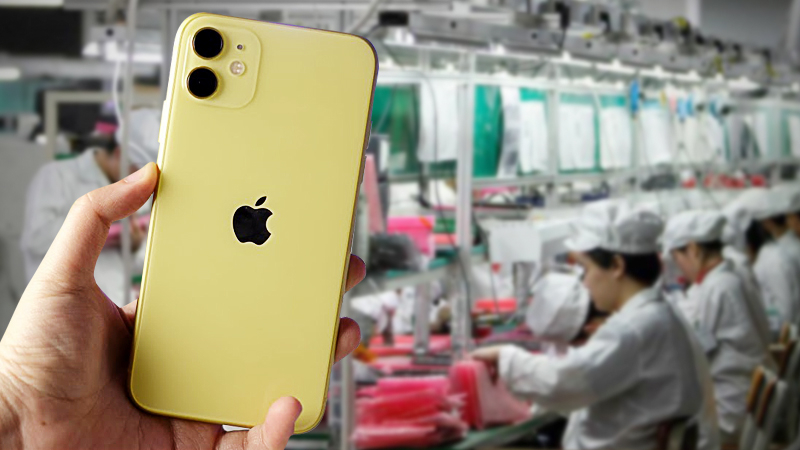
Consumer electronics makers are among the most vulnerable since many game consoles, smartphones and tablets are made in China. On Saturday, Apple announced that it had closed all of its corporate offices and retail stores in China – where it booked $44 billion in sales last year – until Feb. 9 because of the virus.

“The concern is not the zombie apocalypse with people dying in the streets. The concern is that a huge chunk of the global economy gets put out of commission as people wait it out,” said Patrick Chovanec, managing director at Silvercrest Asset Management in New York.

White House advisers so far have played down the disease’s effects, with President Donald Trump’s top economic aide, Larry Kudlow, saying last week that he expects the virus to have “no material impact” on the U.S. economy.

Most Wall Street economists, likewise, say the economic damage will be limited. Economists at JPMorgan Chase Bank on Friday cut their first-quarter global growth estimate by 0.3 percentage points, to 2.3%. But they predicted a swift rebound that would return China and the global economy to their pre-crisis trends by midyear.

The sanguine forecasts are based in part on a disease outbreak from 2003: The Chinese economy recovered quickly after severe acute respiratory syndrome (SARS), another fatal flulike infection, temporarily emptied offices and factories.

But there is no guarantee that the coronavirus will trace a similar path. Already, there are indications that while the new virus is less lethal than SARS, it spreads more easily.

China’s $14 trillion economy also is four times larger than it was 17 years ago, and far more globalized. About 150 million Chinese business executives and tourists took an international flight in 2018, the most recent data available, more than seven times the 2003 figure, according to JPMorgan. Globally, the number of shipping containers moving among the world’s ports has almost tripled, according to the United Nations.

In Youngstown, Ohio, Phantom Fireworks worries that a prolonged hiatus at its Chinese supplier may prevent it from importing sufficient inventory for the Independence Day celebration.

Though its vendor in Liuyang, about 200 miles from Wuhan, is scheduled to reopen on Feb. 10, Phantom executives say the shutdown will probably last at least an additional week and perhaps several more. Chinese officials also closed the southern port of Beihai late last week, severing a key export link. Few alternative producers exist outside China.

“We’re in a very precarious situation, no question about it,” said Alan Zoldan, the company’s executive vice president. “I’m not very confident at all. It’s pretty unprecedented territory.”

Precautions that the Chinese and American governments are taking to stop the spread of the coronavirus, justified on grounds of medical necessity, are raising the potential economic toll. An official quarantine will keep factories across much of China, closed since Jan. 24 for the Lunar New Year holiday, shut for at least one more week, maybe longer.

Three major U.S. airlines – United, American and Delta – suspended flights to China until the end of March. American grounded its planes immediately, one day after its flight attendants union sued the company, arguing that the virus made such trips unsafe. United and Delta will stop flying at the end of the week.

That means trans-Pacific airfreight shipments will be limited for at least two months even if Chinese factories return to normal operations before then. (FedEx says it is continuing its flights.) Some U.S. companies are drafting contingency plans for supply disruptions that linger into April or May, according to Craig Allen, president of the U.S.-China Business Council.

China is the largest export destination for 33 countries and the top source of imported goods for 65, including the United States, according to a 2019 McKinsey Global Institute study.

The accumulating uncertainty is unnerving investors. The Dow Jones industrial average fell more than 600 points, or 2.1%, on Friday.

The U.S. dependence on China was on display two years ago, when American companies first sought to dissuade the Trump administration from imposing tariffs on Chinese goods.

Among those lobbying for relief was GE, which relies on its Chinese factories for parts to produce CT scanners, ultrasound and X-ray machines, oil field pumps, valves and motors and aircraft engine components.

“There are certain inputs that cannot be readily sourced outside China,” Del Renigar, a top official in GE’s Washington office, wrote to the Office of the U.S. Trade Representative.

Finding a replacement for Chinese suppliers would not be easy. Dayco, a maker of engine parts and drive systems in Troy, Michigan, said it would need two years to qualify new U.S. suppliers and to secure the needed approvals from its customers to use them.

Prinston Pharmaceuticals of Cranbury, New Jersey, depends on Chinese ingredients to make medications to treat high blood pressure, Alzheimer’s and depression. Novus Pharmaceuticals said its Chinese plant was the only FDA-approved source for coartem tablets, a treatment for malaria.

Electronic component maker AVX of Fountain Inn, South Carolina, produces ceramic capacitors at its plants in Tianjin and Shenzhen, which its industrial customers in the United States use in automobiles, microwave ovens, washing machines, radios and television sets.

The impact of an interruption in Chinese supplies will depend on the duration of any cutoff, which is unknowable, and the size of current inventories, which companies generally do not disclose.

The number of people with the coronavirus has soared above 14,000, and more than 300 Chinese citizens have died. In response, Trump on Friday declared a public health emergency and barred foreign nationals who had been to China in the past 14 days from entering the United States. American citizens returning from the country will be subject to health screening and up to 14 days in quarantine.

The president’s decision came one day after the State Department warned U.S. citizens against all travel to China and the World Health Organization declared the outbreak a global health emergency.

China, which in recent years accounted for about one-third of global growth, is now radiating economic weakness. The immediate impact of the health crisis will slow its domestic economy. First-quarter growth will dip to an annual rate of 5.2%, down from 6% in the final three months of last year, the most abrupt slowdown in nearly 10 years, according to PNC Bank.

“It’ll bounce back when it’s over,” said Allen, the U.S. China Business Council president. “But we don’t know when it will be over.”

Chinese consumers sheltering in their homes rather than engaging in traditional holiday activities will spend less, while factory closures affecting millions of workers threaten parts shortages for American electronics or auto plants, economists said.

In one sign that the virus will have enduring effects across the world’s second-largest economy, the LPGA late last week canceled the March 5-8 Blue Bay golf tournament on Hainan Island. That’s about 1,000 miles from Wuhan, where the virus originated.

More than 50 million Chinese residents remain under a lockdown. The government already extended the Lunar New Year holiday to Monday. Factories in Hubei province, the epicenter of the outbreak, have been ordered closed through Feb. 13. Other provinces plan to restart production on Feb. 10.

“We believe there will be a disturbance at least until the end of February and possibly into mid-March,” said Sebastien Breteau, chief executive of QIMA, a supply-chain consultancy. “We are not very optimistic.”

More than 450 U.S. importers use suppliers in Hubei province, according to London-based Panjiva. Electronics manufacturers rely on Chinese suppliers for up to 50% of their components, while automakers get 15% from China, according to Chris Rogers, a Panjiva supply-chain specialist.

Some U.S. and global manufacturers will face higher costs even after their Chinese suppliers resume normal operations. Airline cutbacks will mean less space available for the industrial shipments – known as “belly cargo” – that travel in the hold of commercial jetliners.

“The scale of the airline cutbacks really caught my attention,” said Phil Levy, chief economist for freight forwarder Flexport. “This is a big network. You carve China out of it and it’s going to affect goods to Europe and goods to the U.S.”

As health officials fight the virus, the earliest and most severe economic consequences will be felt by China’s Asian neighbors. Countries such as Thailand, Malaysia, Vietnam and the Philippines are tied into production networks centered on Chinese manufacturers and also have benefited from the past decade’s boom in Chinese tourism.

Aftershocks also are certain to be felt by major commodity-producing nations, such as Australia, which supplies China with much of its iron ore. The Baltic Dry Index, a gauge of bulk shipping costs, fell Friday for the 10th consecutive session and is now down 49% this year.

Of the advanced economies, nearby Japan and export-dependent Germany will feel the greatest chill.

Conventional economic forecasting is ill-equipped to calculate the impact of such an unpredictable health emergency, said Torsten Slok, chief economist for Deutsche Bank Securities. His baseline model for the U.S. economy relies on 200 equations.

“I just don’t know which equation I should be putting this in,” he said. “I just don’t have a good framework for assessing the risk.”

Pinthong plans industrial estate estate in EEC #ศาสตร์เกษตรดินปุ๋ย

#ศาสตร์เกษตรดินปุ๋ย : ขอบคุณแหล่งข้อมูล : หนังสือพิมพ์ The Nation

https://www.nationthailand.com/business/30381428?utm_source=category&utm_medium=internal_referral

Pinthong plans industrial estate estate in EEC

Feb 03. 2020
By THE NATION
Pinthong Industrial Park plans to set up Pinthong Industrial Estate 7 in the Eastern Economic Corridor (EEC), the company’s chief operating officer, Surat Pattanawongyuenyong, said recently.

The company will purchase additional land plots of between 2,000 rai and 3,000 rai in the EEC, which covers Rayong, Chonburi and Chachoengsao.

Recently the company and the Industrial Estate Authority of Thailand jointly set up Pinthong Industrial Estate 6 in Rayong.

He said the EEC zone is attractive for foreign investors, especially from China.

He added that the company is also keen to enter the electricity generating business.

Wall Street’s London outposts are braced for a Brexit beating #ศาสตร์เกษตรดินปุ๋ย

#ศาสตร์เกษตรดินปุ๋ย : ขอบคุณแหล่งข้อมูล : หนังสือพิมพ์ The Nation

https://www.nationthailand.com/business/30381448?utm_source=category&utm_medium=internal_referral

Wall Street’s London outposts are braced for a Brexit beating

Feb 02. 2020
By Syndication Washington Post, Bloomberg · Viren Vaghela, Silla Brush, Harry Wilson 
Wall Street titans have come to dominate London finance. Now they have the most at stake as they face Brexit’s final reckoning — and with less influence than they are accustomed to.

Banks such as Goldman Sachs and JPMorgan Chase use London as their base for doing business with European Union clients. Now, they are torn between the impulse to keep a big presence in the financial hub and their frustration at the U.K.’s go-it-alone approach.

The big U.S. banks have been regularly meeting with officials from the U.K. Treasury to emphasize the importance of winning so-called equivalence from the EU, which would allow them to largely keep their current structure, according to half a dozen bankers who spoke on condition of anonymity. But the U.K. government has expressed determination to forge its own path.

At a dinner hosted by BlackRock at the World Economic Forum in Davos, Switzerland, Chancellor Sajid Javid said he was prepared to diverge from EU financial services rules, according to people present who asked not to be named discussing a private meeting. Bankers at the event included HSBC Holdings chairman Mark Tucker and Douglas Flint, chairman of Standard Life Aberdeen. Both firms and Blackrock declined to comment on the dinner.

U.S. firms have for decades ridden the gravy train of trade with Europe via London, which is also the world’s hub for the $6.6 trillion-per-day currency market and the quadrillion dollar swaps market, among others. They increased their share of total Europe, Middle East and Africa investment bank revenue to 53% by the third quarter of 2019, up from 44% six years ago, while their European peers’ share fell to 47%, according to data from Coalition Development.

Britain has long been a host for global capital. According to 2015 figures from the Prudential Regulation Authority, foreign banks oversee almost half of all banking assets in the U.K.

“U.S. headquartered banks that use London as their Europe hub are most concerned” about Brexit, said Sebastian Barling, financial regulation partner at Linklaters. “Ideally they want to keep London as their main base and that works with a good long term equivalence determination.”

One bank boss, who spoke anonymously, said that London is fast becoming one of the worst places to do business, given its regulatory regime. Some continental governments have been aggressively wooing American firms that currently ply their trade in London with tax breaks and speedy broker-dealer licenses, he said.

The U.S. banks are pushing the U.K. authorities for a much closer union with Europe, said two of the people familiar with the discussions. Some bankers aren’t seeing the progress they had hoped for. One U.S. bank chief who spoke on condition of anonymity said his firm could move hundreds more jobs to the EU and elsewhere, where governments are more welcoming. The U.S. banks are also telling U.K. officials that they will shift more assets to the 27-nation bloc if Downing Street’s hard-line stance continues, said one of the people briefed on the discussions.

“Equivalence remains a very important mechanism by which EU clients would be able to access the London capital markets,” said James Bardrick, CEO of Citigroup’s U.K. business. “We have been a long time supporter of the highest possible level of market access, supported by strong regulatory and supervisory cooperation which looks to minimize the differences in rules between jurisdictions.”

For many British banks, however, the cross-border implications of Brexit are less important. Antonio Horta-Osorio, who runs Britain’s largest mortgage lender Lloyds Banking Group, said in a Bloomberg interview at Davos that Brexit doesn’t change much for his business, which is largely domestic.

U.K. banks have seen their influence in the City of London fade since the 2008 financial crisis when they largely gave up investment banking. Notable exceptions include Barclays, which is committed to building a transatlantic service, and the Asian ambitions of HSBC Holdings and Standard Chartered.

“We urge the government to enable the U.K. to remain a competitive and attractive place in which and from which financial services firms conduct their various businesses,” said Stephen Jones, chief executive of U.K. Finance.

American banks occupy the top three slots in investment banking and the top two in equities and fixed income, currencies and commodities in EMEA, Coalition data shows.

U.S. banks, who successfully lobbied for tax cuts from the Trump administration, were among the biggest benefactors to the Remain campaign ahead of the 2016 referendum on Britain’s membership of the European Union. With the vote lost, much of their business with EU clients will now depend on whether London is granted equivalence.

Equivalence is a byzantine process that involves the EU making about 40 decisions this year. It will rule on how much equity, fixed-income and other investment banking business can still serve EU clients from a London office.

These decisions are formally based on whether both sides’ rules match. However, they are made by politicians with no obligation to maintain close ties with the U.K.’s finance industry. Prime Minister Boris Johnson, who has set a deadline of year-end to have a wider Brexit accord in place, could also bring in equivalence as a bargaining tool.

Meanwhile, the U.S. banks are wasting no time hedging their bets. JPMorgan this month unveiled new office space in the heart of Paris to house as many as 450 employees. BofA is nearing the end of a plan to move hundreds of staff to the French capital.

Marathon Petroleum explores sale of Speedway division #ศาสตร์เกษตรดินปุ๋ย

#ศาสตร์เกษตรดินปุ๋ย : ขอบคุณแหล่งข้อมูล : หนังสือพิมพ์ The Nation

https://www.nationthailand.com/business/30381414?utm_source=category&utm_medium=internal_referral

Marathon Petroleum explores sale of Speedway division

Feb 01. 2020
A Marathon Petroleum Corp. Speedway gas station in Huntington, W.Va., on Oct. 18, 2016. MUST CREDIT: Bloomberg photo by Luke Sharrett.

A Marathon Petroleum Corp. Speedway gas station in Huntington, W.Va., on Oct. 18, 2016. MUST CREDIT: Bloomberg photo by Luke Sharrett.
By Syndication Washington Post,  Bloomberg · Scott Deveau, Kiel Porter 

Marathon Petroleum Corp., the largest independent oil refiner in the U.S., is exploring a sale of gas station arm Speedway, according to people familiar with the matter.

The retailer, which Marathon Petroleum has said it would seek to spin off, has drawn interest from potential buyers, said the people, who asked to not be identified because the matter isn’t public. Speedway, with about 4,000 stores in the U.S., could be worth $15 billion to $18 billion, including debt, as a standalone company, Marathon Petroleum has said.

No final decision has been made and Marathon Petroleum, which trades under the MPC ticker symbol, could opt to proceed with a spinoff instead of a sale, the people said.

“A spinoff actually creates more value for MPC shareholders than an outright sale,” Manav Gupta, an analyst at Credit Suisse, said Friday in a note to investors. “However, we understand why some investors would have a strong preference for a sale over spinoff given it’s a lower-risk transaction that unlocks value a lot more quickly than a spinoff.”

A representative for Marathon Petroleum decline to comment. Shares rose 1.7% at 9:40 a.m. in New York.

Marathon Petroleum announced plans in October to spin off Speedway in a tax-free distribution to shareholders by the end of 2020. Speedway would pay a dividend to Marathon Petroleum, which would use the proceeds from the transaction to pay down the substantial debt incurred in its $23.3 billion merger in 2018 with Andeavor.

While a spin would create more value, it could also take as long as a year for the full benefit to be realized, Gupta said. If the fuel-distribution sector falls out of favor in that period, Speedway’s value could shrink. A “sale eliminates all these market risks as MPC shareholders will see cash come in the door right away,” according to the note.

A spinoff would be tax-free, while an outright sale could lead to $1.5 billion in cash taxes, Credit Suisse said.

The company is also conducting a strategic review of MPLX LP, its publicly traded oil pipeline affiliate. Marathon will provide an update on the status of MPLX in the first quarter and is targeting a spin off of Speedway in the fourth quarter, according to its earnings report Wednesday.

A Speedway sale could generate much larger cash proceeds than a spinoff, “while potentially changing the landscape for the strategic review of MPLX as well,” Justin Jenkins, an analyst at Raymond James, said Jan. 30 in a note to investors.

The refiner decided to split up last year under pressure from investors including Elliott Management Corp. and D.E. Shaw & Co., which had called for an overhaul of the company. Chief Executive Officer Gary Heminger also announced plans to step down.

Reynolds Wrap maker rises after raising $1.2 billion in IPO #ศาสตร์เกษตรดินปุ๋ย

#ศาสตร์เกษตรดินปุ๋ย : ขอบคุณแหล่งข้อมูล : หนังสือพิมพ์ The Nation

https://www.nationthailand.com/business/30381413?utm_source=category&utm_medium=internal_referral

Reynolds Wrap maker rises after raising $1.2 billion in IPO

Feb 01. 2020
By Syndication Washington Post, Bloomberg · Michael Hytha 
Reynolds Consumer Products Inc., the maker of Reynolds Wrap aluminum foil and Hefty trash bags, rose in its trading debut after raising $1.23 billion in the biggest initial public offering by a household goods maker.

The company’s shares rose Friday as much as 5.8% from the $26 offer price. They were up 4.4% to $27.14 at 10:39 a.m., giving the company a market value of $5.5 billion.

Reynolds, backed by New Zealand billionaire Graeme Hart’s Rank Group, sold 47.17 million shares Thursday after marketing them for $25 to $28.

The offering is the first billion-dollar U.S. listing of the year, as well as an unusual debut for a household goods maker. The listing is the largest ever by a company in that niche, topping the 2014 Brussels listing by soap maker Ontex Group’s 2014 that raised 596 million euros ($659 million) including the so-called greenshoe shares, according to data compiled by Bloomberg.

The Reynolds listing is the biggest test so far this year of investor interest. Also on Thursday, 1Life Healthcare Inc., a provider of tech-driven primary care clinics under the One Medical brand, priced shares at the bottom of a marketed range to raise $245 million.

Next week, drug and biotech research services provider PPD Inc. is seeking to raise as much as $1.62 billion in its IPO. Casper Sleep Inc., one of the leading brands in the so-called bed-in-a-box industry, also plans to go public, with a goal of raising $159 million.

The offerings follow last year’s tech-related IPO surge, led by Uber Technologies Inc.’s $8.1 billion offering, that gave way to a largely disappointing second half.

Peloton Interactive Inc. dropped in its trading debut in September, the same month as WeWork’s share-sale plans were officially withdrawn after its spectacular flop. In November, Canadian waste management firm GFL Environmental Inc. canceled an IPO that targeted as much as $2.1 billion.

Reynolds, based in Lake Forest, Illinois, was formed by Rank Group in 2010, primarily through a consolidation of the earlier Reynolds and Hefty businesses with Presto brands. Unlike many of the so-called unicorns that went public last year, Reynolds is profitable. For the nine months ended Sept. 30, it had net income of $135 million on revenue of $2.1 billion, according to its filings.

The company’s products are used in 95% of U.S. households, according to its filings. Hefty trash bags and related wares accounted for about 39% of its sales in 2018, followed closely by cookware goods including Reynolds foil, which was first sold in 1947 and has 64% of the U.S. market share. Hefty tableware, including disposable cups and cutlery, made up the remaining 24% of revenue.

Reynolds said it plans to grow through improved operational efficiency and through innovation, aiming to generate 20% of its revenue each year from products introduced within the previous three years. The company is also focusing on goods made with recycled, renewable, recyclable and compostable materials, according to its filings.

Reynolds will be controlled by PFL, a subsidiary of a company wholly owned by Hart, according to the company’s filings. PFL will have 77% of the voting rights of Reynolds, which plans to use some of the IPO proceeds to repay debt and for general corporate purposes.

The offering was led by Credit Suisse Group, Goldman Sachs. and JPMorgan Chase. The shares are trading on the Nasdaq Global Select Market under the symbol REYN.