AOT to spend Bt393 billion on expansion of six airports

ศาสตร์เกษตรดินปุ๋ย : ขอบคุณแหล่งข้อมูล : หนังสือพิมพ์ The Nation

https://www.nationthailand.com/business/30378403?utm_source=category&utm_medium=internal_referral

AOT to spend Bt393 billion on expansion of six airports

Nov 16. 2019
By THE NATION

1,297 Viewed

Airports of Thailand (AOT) will spend Bt393 billion on the expansion of six airports as part of its investment plan for 2017-33, the company’s president, Nitinai Sirismatthakarn, said.

The plan, already approved by the board, aims to boost the airports’ capacity to serve a total of 243.7 million passengers.

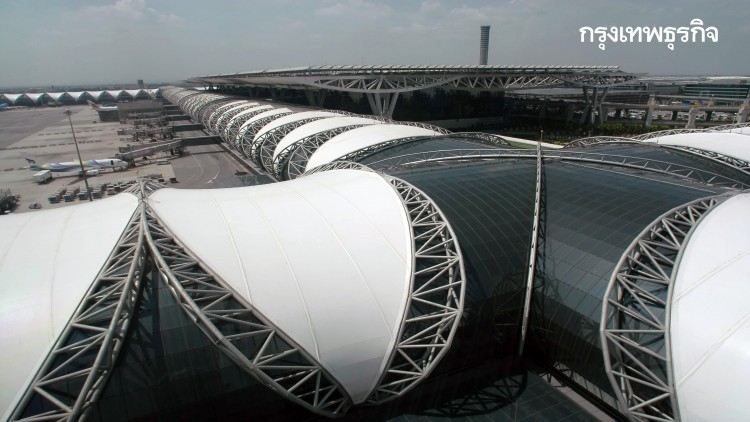
The budget covers the construction of a passenger terminal in the north of Suvarnabhumi Airport, which will boost the airport’s capacity by another 40 million passengers per year.

It also covers phase 3 of Don Mueang Airport’s expansion and phase 2 of the Chiang Mai Airport expansion.

He added that AOT could afford the huge investment, due to its financial strength.

Presently, AOT runs six international airports: Don Mueang, Phuket, Chiang Mai, Hat Yai, Chiang Rai and Suvarnabhumi.

Price-cutting not on agenda as THAI seeks turnaround in fortunes

ศาสตร์เกษตรดินปุ๋ย : ขอบคุณแหล่งข้อมูล : หนังสือพิมพ์ The Nation

https://www.nationthailand.com/business/30378402?utm_source=category&utm_medium=internal_referral

Price-cutting not on agenda as THAI seeks turnaround in fortunes

Nov 16. 2019
By THE NATION

1,293 Viewed

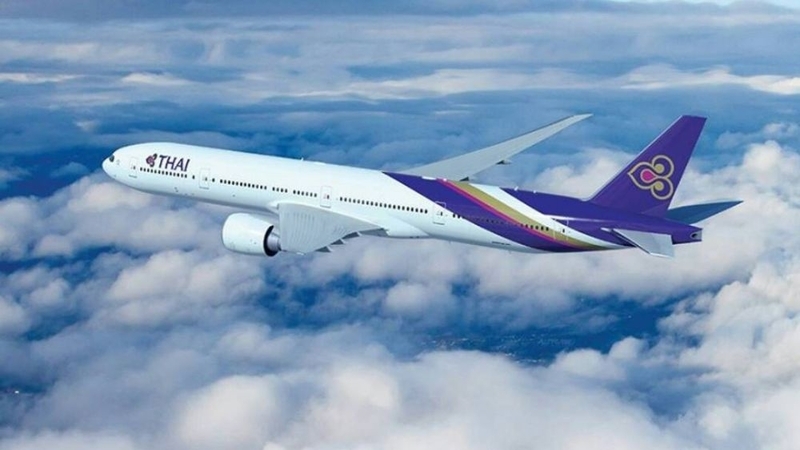
National flagship carrier Thai Airways International (THAI) will avoid a heavy price-cutting strategy to be competitive next year but will instead focus on building a solid customer base and tap specific segments, airline president Sumeth Damrongchaitham said.

The carrier will continue to recruit stronger marketing partners, he added.

He estimated that the aviation industry would continue to experience intense competition next year.

THAI will continue with its transformation plan next year, which includes focusing on earning ancillary revenue, creating satisfactory customer experiences and effective human resource management.

THAI will cooperate with the Tourism Authority of Thailand to hold a joint marketing campaign in order to boost in-bound tourism and increase national revenue.

Sumeth said that currently several negative factors were impacting the aviation industry and affecting business operations, which had caused several airlines to cease operations. Airlines are incurring losses as a result of the world economic situation, the aggressive and intense competition, technological disruption and political unrest across the globe. THAI was also affected by the continually strengthening baht, he said.

THAI and its subsidiaries reported a total revenue of Bt45.016 billion for the third quarter of 2019, down 6.1 per cent year on year. THAI and its subsidiaries reported a net loss of Bt4.680 billion for the third quarter.

THAI has continued to implement cost cutting measures, such as postponement of unnecessary investments, work reprocessing to reduce expenditure and improve work quality, as well as reduction in employee benefits of management and staff.

THAI has implemented a personalised approach to target customer groups with emphasis on creating ancillary revenue. During the first nine months of 2019 (January to September), THAI earned Bt4.604.17 billion in ancillary revenue.

CP Foods vows to protect human rights of workers as US mounts pressure on Thailand

ศาสตร์เกษตรดินปุ๋ย : ขอบคุณแหล่งข้อมูล : หนังสือพิมพ์ The Nation

https://www.nationthailand.com/business/30378376?utm_source=category&utm_medium=internal_referral

CP Foods vows to protect human rights of workers as US mounts pressure on Thailand

Nov 15. 2019
CPF employs about 12,000 foreign workers under a memorandum of understanding between the Thai government and neighbouring governments such as Cambodia and Myanmar, according to the company.

CPF employs about 12,000 foreign workers under a memorandum of understanding between the Thai government and neighbouring governments such as Cambodia and Myanmar, according to the company.
By The Nation

1,581 Viewed

Charoen Pokphand Foods Pcl (CP Foods) has pledged to achieve sustainable development of labour rights across its entire group and supply chains.

The company said it conducts constant surveillance to ensure good practices.

Under its Human Rights Due Diligence Process, the company said it analyses and assesses risks and impacts on human rights across business activities.

The announcement by CP Foods comes amid mounting pressure on the Thai government and corporates from the United States, which has threatened to cut Generalised System of Preferences (GSP) tax benefits worth $1.3 billion over labour rights issues.

Parisotat Punnaphum, CP Foods' executive vice president for human resource development,

Parisotat Punnaphum, CP Foods’ executive vice president for human resource development,

Parisotat Punnaphum, CP Foods’ executive vice president for human resource development, said the company was much concerned about slavery and human trafficking which are major global human rights issues. It also vowed to stand firm in combating all forms of slavery and human trafficking by preventing, mitigating, and solving any grave violations.

In 2019, CP Foods conducted the Human Rights Due Diligence Process. The salient human rights issues as a result of the assessment are working conditions, health and safety of employees, community health and safety, data privacy, use of illegal labour (child labour, forced labour and illegal migrant workers) in the supply chain, sub-contractors and suppliers’ health and safety and community safety and standard of living in supply chain, he said.

Parisotat added that once those risks had been assessed, the company would closely monitor them and they would be managed and mitigated systematically. Moreover, the Human Rights Due Diligence Process has been conducted regularly every three years, he added.

In October 2019, the company was ranked the third best company in the overall score by Seafood Stewardship Index, reflecting strong performance in most of the sustainability areas. In addition, the company got the highest scores in the areas of stewardship of the supply vhain and human tights as well as working conditions. This showed transparency and sustainable development in the company’s operation, he said.

“CP Foods adheres to all forms of transparent approaches to ensure human rights fundamentals, standards and welfare are met,” noted Parisotat, adding the company also associates with international labour institutions and civil society organisations such as the International Labour Organisation.

The company is committed to continuously supporting the drive to transform Thailand’s seafood industry, in order to achieve responsible sourcing of fishmeal, which is a raw material for shrimp feed, he said. In this mission, the company’s aquaculture business is collaborating with both national and international groups, including Thai Sustainable Fisheries Roundtable, Seafood Task Force, The Fishermen Life Enhancement Centre, Seafood Business of Ocean Stewardship, Global Dialogue on Seafood Traceability and Global Sustainable Seafood Initiative.

He added that the company continued to focus on human rights issues in the supply chain by providing training to business partners and encouraging its suppliers to adopting a similar stance under Thailand’s labour laws and international standards requirement.

The company has also teamed up with Thailand’s Department of Labour Protection and Welfare under “Joint Development Project for Suppliers to Achieve Thai Labour Standard” framework. The project aims to improve labour practices of its suppliers to ensure traceability and sustainability. It is also designed to upgrade workers’ living standards as well as fair treatment of all labour in Thailand.

“We try to strengthen competitiveness and win-win partnership with our suppliers, particularly medium suppliers and raw material traders in the supply chain including corn, cassava, palm oil, rice products and fish meal by promoting them to operate business legally, and responsibly, in line with labour rights protection and international principles,” Parisotat stressed.

CP Foods said it was obliged to responsible sourcing and traceability of key raw materials to achieve sustainable production. The policy has been implemented in line with the Sustainable Development Goals and the United Nations Global Compact.

The company has engaged with the Labour Rights Promotion Network Foundation (LPN). CP Foods’ workers can voice their concerns through the Labour Voice Hotline jointly developed with LPN. As a neutral party, workers can more freely express their concerns, opinions, recommendation and complaints.

“The Labour Voice Hotline helps the company to promote labour protection and a better quality of life for workers, and tackle any risks of human trafficking and forced labour,” Parisotat said.

CPF employs about 12,000 foreign workers under a memorandum of understanding between the Thai government and neighbouring governments such as Cambodia and Myanmar, according to the company.The company earlier said it would not be adversely affected by the US government’s warning to cut GSP. The GSP cut will come into force in April next year if the US is not happy with Thailand’s response on labour rights protection.

Google firm on “leaving no Thai behind”

ศาสตร์เกษตรดินปุ๋ย : ขอบคุณแหล่งข้อมูล : หนังสือพิมพ์ The Nation

https://www.nationthailand.com/business/30378352?utm_source=category&utm_medium=internal_referral

Google firm on “leaving no Thai behind”

Nov 14. 2019
Google has reaffirmed its commitment to leave no Thai behind.

Google has reaffirmed its commitment to leave no Thai behind.
By The Nation

1,781 Viewed

Google has reaffirmed its commitment to “Leave No Thai Behind”, highlighting initiatives that will help more Thai people and businesses participate in the growth and opportunities of the digital economy at the second annual Google for Thailand event today (November 14).

Google’s initiatives span across four pillars: access, digital skilling, localised content/local products, and SMEs – designed to ensure that all Thais would have equal opportunities to access technology and use it to unlock digital opportunities.

Mike Jittivanich, head of Marketing of Google Thailand, has launched two digital skilling programmes under the company’s Grow with Google global economic opportunity umbrella. The new programmes specific to Thais include Primer, an app providing simple training in foundational business and digital marketing skills, and Skillshop, an e-learning platform for Google products. Jittivanich also launched Be Internet Awesome, a programme designed to teach kids to explore the internet safely and confidently. Thailand is the first country in Asia to have the programme in its local language.

Another major announcement is Google’s expansion of its research into harnessing AI for detecting diabetic retinopathy. There are 4.5 million diabetic patients in Thailand, but only 1,500 eye doctors can detect the disease.

Dr Fred Hersh, programme manager of Google Health, said that since the study began in December 2018, Google and its partners – the Rajavithi Hospital, Department of Medical Services and the Ministry of Public Health have expanded their study from one clinic to eight clinics in three Thai provinces (Bangkok, Pathum Thani, and Chiang Mai).

Google also unveiled its most recent culture project in Thailand, the Hidden Fruits exhibit, which is the 5th installment in the Front Palace collection that Google Arts & Culture launched in September. Working closely with the Department of Fine Arts under the support of Thanpuying Sirikitiya Jensen, Google was able to capture high resolution images of the murals in the impressive Buddhaisawan Chapel using their Art Camera technology.

The ultra-high resolution capabilities of the camera results into “gigapixel” imagery made up of over one billion pixels, allowing Thais to see and experience upclose the intricate details of their rich culture online.

For its access initiative, Google said that its free WiFi programme, Google Station, which was launched last year, is now available in over 100 venues nationwide, including markets, malls, airports, and also in key ground transport hubs, connecting Thais to commerce all over the country.

Lastly, Google announced that more Thai SMEs can now have a presence online. Their collaboration with the Ministry of Commerce will allow Thai SMBs who are listed under Blue Flag and ThaiTrade.com to sign up and be verified for Google My Business, a free tool enabling businesses be found on Google Search and Google Maps.

In addition, Google has expanded its partnership with Siam Commercial Bank where SMEs can be verified on Google My Business using SCB Easy app, starting end of November 2019.

True posts Bt2.9-bn profit in Q3

ศาสตร์เกษตรดินปุ๋ย : ขอบคุณแหล่งข้อมูล : หนังสือพิมพ์ The Nation

https://www.nationthailand.com/business/30378353?utm_source=category&utm_medium=internal_referral

True posts Bt2.9-bn profit in Q3

Nov 14. 2019
By THE NATION

1,187 Viewed

Telecommunications group True Corp has reported a net profit of Bt2.9 billion for the third quarter of 2019, up from Bt1.1 billion in the previous quarter and Bt99 million more than it netted in the same period last year.

The jump was attributed to an increase of Bt10.3 billion in earnings before interest, tax, depreciation and amortisation and a rise of Bt3.4 billion in operating profits.

It credited higher service revenue with above-industry subscriber growth in both the mobile and broadband segments, lower sales expenses and net benefit from asset sales to the Digital Telecommunications Infrastructure Fund in August.

“True Group recorded strong subscriber and net profit growth in the third quarter, driving service revenue to a record high of Bt78.6 billion and net profit to Bt5.4 billion in the first nine months of this year,” said co-president Kittinut Tikawan.

TrueMove H’s mobile phone service revenue reached Bt19.3 billion as combined revenues from data and voice services grew 2 per cent year-on-year in the third quarter.

TrueVisions’ exclusive broadcasting rights to English Premier League (EPL) matches on all platforms also boosted revenue, along with its platinum subscriptions and customer base. It added 4 million more customers by the end of the third quarter than it had in the second and 2.3 million more paying subscribers.

TrueVisions’ service revenue maintained a quarterly upward trend to Bt3.1 billion in Q3, underpinned mainly by growing revenue from major concerts, as well as sublicensing and sponsorship related to the EPL broadcasts.

TrueVisions said it would continue to diversify its portfolio and expand its revenue stream beyond traditional TV by sublicensing self-produced content to partners and utilising online “influencers” marketing to specific customer segments.

Ratch posts 2.4% growth in net profit to Bt5.06 bn for first nine months

ศาสตร์เกษตรดินปุ๋ย : ขอบคุณแหล่งข้อมูล : หนังสือพิมพ์ The Nation

https://www.nationthailand.com/business/30378350?utm_source=category&utm_medium=internal_referral

Ratch posts 2.4% growth in net profit to Bt5.06 bn for first nine months

Nov 14. 2019
By The Nation 

1,099 Viewed

RATCH Group Public Company Limited today (November 14) announced a net profit of Bt5.058 billion in the first nine months of the year.

The company recently invested over Bt2 billion in securing 99.97 per cent ownership of Navanakorn Electric Company Limited, which has since been renamed

RATCH Cogeneration Company Limited. The acquisition enabled it to realise instant income.

It has also expanded its role in power supply at the Nava Nakorn Industrial Promotion Zone.

Nevertheless, the company has been looking for more infrastructure investments and was recently awarded, through BGSR Consortium, the operation and maintenance service of two intercity motorway (Bang Pa-In to Nakhon Ratchasima and Bang Yai to Kanchanaburi) under a Bt60-billion deal.

Kijja Sripatthangkura, chief executive officer of RATCH Group, said:” the first 9-month performance demonstrated progress towards target, proven by continued growth of earnings and investment expansion in both power and infrastructure sectors, including the 99.97-per cent share acquisition of the 119.11MW Navanakorn Electric Company Limited (renamed RATCH Cogeneration power plant), 70-per cent share purchase in the 214.2-MW Yandin wind farm and the 226.8MW Collector wind farm in Australia. The company has now acculumated a total capacity of 446.57 MW”.

In infrastructure investment, the company has won under the Public-Private-Partnership scheme the operation and maintenance of Bang Pa-In to Nakhon Ratchasima and Bang Yai to Kanchanaburi intercity motorway, worth Bt33 billion and Bt28 billion respectively.

In the period, RATCH realised profit-sharing from Berkprai Cogeneration power plant (35- per cent shareholding), which commenced operation last June and the Asaha-1 Hydroelectric power project in Indonesia, after a 26.61-per cent share purchase last year end. Besides, it expects revenues derived from RATCH Cogeneration power plant and Xepian Xenamnoy Hydroelectric power project will be realised by end of this year as well as throughout next year, helping to further strengthen the company’s financial stability.

“RATCH forecasts that the investment in RATCH Cogeneration power plant will help create a industrial customer base. Its capacity potential can support the growing demand for electricity from industrial customers in the Nava Nakorn Industrial Promotion Zone. As a partner of Navanakorn power plant located in the zone, it is possible to seek collaboration for RATCH Cogeneration to supply electricity to the industrial sector.

Additionally, the company has been seeking more infrastructure projects. It has teamed up with BSR Group to participate in bidding for projects under the Public-Private Partnership scheme, including public transportation, telecommunication and other public services. Many of these projects are currently under feasibility study for potential investment”, said Kijja.

As of September 30, RATCH booked revenues and profit-sharing from power plants in Thailand and aboard with a total of 7,057 megawatts in capacity while projects under-construction and scheduled to commence operations within this year and next comprise the 102.5-MW Xepian-Xenamnoy Hydroelectric power project, the 24-MW Nava Nakorn expansion power project and the 149.94-MW Yandin wind farm.

In the first nine-month, the company reported Bt33.61 billion in total revenue, mainly derived from Bt27.38 billion in electricity sales by Ratchaburi Power Plant, Tri Energy Power Plant and RATCH-Australia Corporation Pty Ltd, accounting for 81.5 per cent of the total with Bt3.52 billion in profit sharing making up the balance.

The company recorded Bt5.058 billion in net profit during the period, rising 2.4 per cent year on year.

Major hotels planned for Phuket, Pattaya seen as boon for MICE trade

ศาสตร์เกษตรดินปุ๋ย : ขอบคุณแหล่งข้อมูล : หนังสือพิมพ์ The Nation

https://www.nationthailand.com/business/30378346?utm_source=category&utm_medium=internal_referral

Major hotels planned for Phuket, Pattaya seen as boon for MICE trade

Nov 14. 2019
By THE NATION

1,805 Viewed

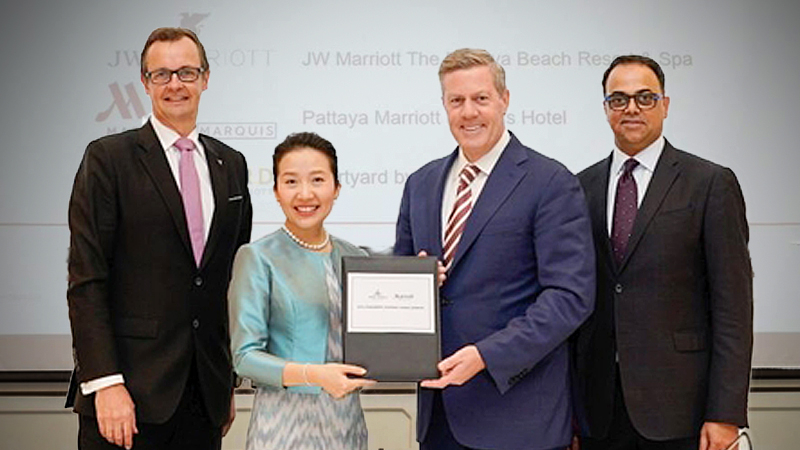
Integrated lifestyle real-estate group Asset World Corp (AWC) and Marriott International will bring three global brands to Pattaya and Phuket, aiming to create a new destination of world-class MICE (Meetings, incentives, conferences and exhibitions) hotels and facilities for both business and leisure travellers.

AWC Centre Pattaya will combine facilities for meetings, conventions and accommodations with luxury shopping and spaces for inspiring art and and entertainment.

It will consist of the Pattaya Marriott Marquis Hotel and JW Marriott the Pattaya Beach Resort & Spa.

Courtyard by Marriott Phuket Town is meanwhile designed to set a new benchmark for stylish and upscale accommodations on the globally acclaimed island paradise.

“Partnering with Marriott will allow us to offer a unique experience for both business and leisure customers,” said Wallapa Traisorat, CEO and president of Asset World Corp.

Wallapa Traisorat, CEO and President of Asset World Corp

Wallapa Traisorat, CEO and President of Asset World Corp

She said the company foresees a long-term positive outlook for the Thai MICE sector, which has grown by 47.6 per cent on average in recent years.

“We look forward to building on our long-standing partnership with Asset World Corp,” said Craig Smith, group president for Asia-Pacific at Marriott International.

“Marriott International is proud to play a strategic role in AWC’s vision of expanding its diverse portfolio of hospitality and lifestyle projects in Thailand.”

AWC Centre Pattaya, seen as a new destination modelled after the acclaimed Asiatique the Riverfront in Bangkok, will feature luxury accommodations and a diverse array of indoor and outdoor retail spaces and attractions that will appeal to all age groups.

The JW Marriott The Pattaya Beach Resort & Spa and Pattaya Marriott Marquis Hotel will together offer 1,298 guestrooms, 11 food & beverage outlets, and 10,000 square metres of convention, event and meeting spaces.

Targeted to open in late 2020, the Courtyard by Marriott Phuket Town will be surrounded by historic Chino-Portuguese buildings. It involves the strategic conversion of the well-known Metropole Phuket Hotel.

With 248 guest rooms, two food-and-beverage outlets and 2,000sqm of meeting space, the hotel will offer business and leisure travellers modern fuss-free amenities.

Feel more secure with MacroEye

ศาสตร์เกษตรดินปุ๋ย : ขอบคุณแหล่งข้อมูล : หนังสือพิมพ์ The Nation

https://www.nationthailand.com/business/30378341?utm_source=category&utm_medium=internal_referral

Feel more secure with MacroEye

Nov 14. 2019
Jeerawut Wongpimonporn

Jeerawut Wongpimonporn
By THE NATION

1,107 Viewed

“Improved security in daily life” is the promise of MacroEye, a face-recognition system offered by Thailand-based technological firm Coding Hub and Yitu, a Chinese artificial intelligence researcher-developer.

Coding Hub managing director Jeerawut Wongpimonporn points out that Yitu “won” a test of face-recognition technology run by the US National Institute of Standards and Technology “for the third time in a row”.

The system includes School Time, Smart Event Manager, Smart Security for Home and Office, Time In, and Face Recognition API Service.

School Time can be used in schools, including monitoring phone use among kindergarten pupils, maintaining attendance records for all students with their names, photos and ID numbers and a message program linking the schools with parents around the clock.

Smart Event Management keeps an eye on arrivals at a workplace, and Smart Security for Home and Office on the security of all areas and the arrivals and departures of all individuals, raising an alarm if there’s an unidentified intruder.

Time In involves a phone application by which employees can register their times clocking in and out of work and share the information with supervisors.

Face Recognition API Service can match a person’s facial characteristics between official database records and any still or moving image.

BGRIM posts record third-quarter profit

ศาสตร์เกษตรดินปุ๋ย : ขอบคุณแหล่งข้อมูล : หนังสือพิมพ์ The Nation

https://www.nationthailand.com/business/30378332?utm_source=category&utm_medium=internal_referral

BGRIM posts record third-quarter profit

Nov 14. 2019
BGRIM chief executive Preeyanart Soontornwata said the third-quarter profit upsurge was largely a result of significant expansion of electricity generating capacity over the past 12 months.

BGRIM chief executive Preeyanart Soontornwata said the third-quarter profit upsurge was largely a result of significant expansion of electricity generating capacity over the past 12 months.
By The Nation

1,541 Viewed

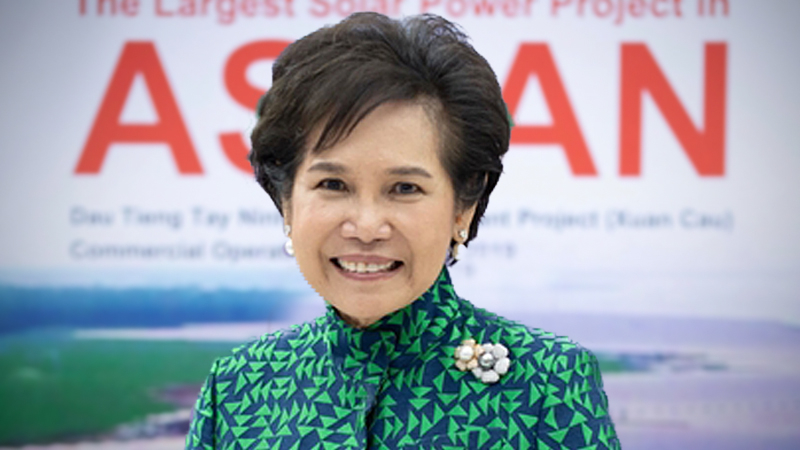
B.Grimm Power Plc (BGRIM) posted the highest third-quarter normalised net profit for the period July-September, a massive 69-per-cent increase over the same period last year thanks to a revenue boost from its new solar power projects in Vietnam.

B GRIM chief executive Preeyanart Soontornwata said the third-quarter profit upsurge was largely a result of significant expansion of electricity generating capacity over the past 12 months, which saw 856 megawatts from 11 projects being added to its growing portfolio. Revenue rose 21 per cent over the same period of last year.

The full quarter revenue realisation from the Dau Tieng 1 and 2 solar photovoltaic power facilities, the Phu Yen solar farm – both in Vietnam – and the Nam Che 1 hydropower plant in Laos which was brought on stream in June made an important contribution to BGRIM’s third-quarter profit.

Another contributor was the reduced fuel consumption at the company’s ABP3 co-generation plant following the gas turbine power efficiency improvement that was completed early this year.

BGRIM’s net profit from the consolidated financial statements was at Bt1.287 billion baht with the earnings attributable to major shareholders Bt763 million.

If excluding unrealised gain on foreign exchange and other non-operating expenses, the company had a normalised net profit of Bt1.225 billion with Bt715 million baht being attributable to major shareholders. That was an increase of 69 per cent from the same period last year and 24.3 per cent from the preceding quarter.

The margin of earnings before interest, tax, depreciation and amortisation (EBITDA) rose to 28.3 per cent due to the increase in revenue from solar power plant projects.

Preeyanart noted that BGRIM signed an agreement with PetroVietnam Power Corporation of Vietnam early this month to study an investment in a 3,000-MW power plant using liquefied natural gas (LNG) as fuel as well as the LNG import and distribution facilities in Vietnam.

Meanwhile, construction of BGRIM’s Interchem industrial waste-to-energy project, with an installed capacity of 4.8 MW, has advanced as planned with 87-per-cent progress made. Currently underway there is construction of the drainage system piping, double layer brick wall and maintenance building and carbon black building.

Commercial operation of Interchem facility is scheduled to start next month.

The proportion of renewable energy to BGRIM’s overall production capacity has now grown to 30 per cent from 8 per cent earlier, while megawatt contribution from its overseas projects increased to 25 per cent from 2 per cent, underscoring the company’s status as a leading regional energy player.

BGRIM is exploring new investment in power both at home and abroad including South Korea, Vietnam, Cambodia, the Philippines and Malaysia. Moreover, the company has been expanding solar rooftop business in Thailand, the Philippines and Oman with total secured capacities of 60 megawatt already.

As for the progress for the development of five replacement power plants in Thailand, BGRIM has secured licenses and permits for all of them as has an acceptance letter from EGAT regarding power purchasing. All five replacement projects are under development with the scheduled commercial operation date (COD) in 2022.

EGAT has also extended the power purchase from BGRIM’s ABP1 power plant by three years beyond the September 17 expiration of the original contract until its replacement plant is completed.

Preparations complete, time to get to work, says PTTEP

ศาสตร์เกษตรดินปุ๋ย : ขอบคุณแหล่งข้อมูล : หนังสือพิมพ์ The Nation

https://www.nationthailand.com/business/30378319?utm_source=category&utm_medium=internal_referral

Preparations complete, time to get to work, says PTTEP

Nov 14. 2019
PTTEP president and chief executive Phongsthorn Thavisin says the company is ready to accelerate its exploration plan.

PTTEP president and chief executive Phongsthorn Thavisin says the company is ready to accelerate its exploration plan.
By Wichit Chaitrong
The Nation

1,071 Viewed

PTT Exploration and Production Plc (PTTEP), a subsidiary of energy conglomerate PTT, will accelerate its exploration and production of oil and gas following completion of key mergers and acquisitions, its president and CEO said.

“We will focus our investment on Thailand, Malaysia, Myanmar, the United Arab Emirates and Oman,” said Phongsthorn Thavisin.

PTTEP takes its innovations and technology to the UAE

“Now that we have completed several acquisition deals and won bids for our portfolio, it is time to execute,” he told reporters on Tuesday (November 12), adding that merger and acquisition efforts will cease for now.

The company plans to drill 20 oil and gas wells next year, up from the usual one to three per year, and expects to spend US$300 million.

“Drilling wells is costly,” Phongsthorn said. “If nothing is found, the investment is totally wasted. But it could also yield high rewards if it leads to a vast volume of reserves.”

He said the company was more confident in its exploration and production abilities now after winning concessions last year to operate the Bangkot and Erawan gas fields in the Gulf of Thailand.

PTTEP anticipates spending $1.7 billion-$2 billion annually to implement its plan between 2020 and 2023. It will announce the amount in December after directors approve the plan, he said.

New investment will double production capacity from 350,000 barrels of “oil equivalent” (a mix of oil and gas) per day (BOED) last year to 500,000-700,000, up 5-7 per cent per year.

It produced 370,000 BOED early this year, a figure rising to 410,000 or 420,000 by the end of the year.

The cost of producing petroleum would be kept at $30 per barrel on average over the next five years.

Phongsthorn said exploration is the key to success in the business, rather than relying on purchasing raw material for oil and gas production.

He said the company has “solid assets and a strategic alliance” for the future.

It bought Murphy Oil Corp of Malaysia in July, making PTTEP the third-largest exploration and production firm in that country.

With a US-based oil company pulling up stakes in Thailand, this is a good time to invest here and elsewhere in Southeast Asia, Phongsthorn said.

The company this year won petroleum exploration and production concessions for two blocks off the Malaysia coast.

It bought stakes in Coastal Energy Company, Tatex Thailand LLC and Tatex Thailand II LLC, gaining an 84.5-per-cent share of Sinphuhorm natural gas concession covering EU1 in Udon Thani and and E5N in Khon Kaen.

PTTEP is now looking for a gas value-chain investment in Myanmar, Phongsthorn said.

In June the company announced the acquisition of Partex Holding BV from the Calouste Gulbenkian Foundation, making it part of a consortium working the largest onshore source in Oman as well as projects in five other countries, and paving the way for future investment in the Middle East.

Partex has invested in seven upstream and downstream oil and gas projects in Oman, the United Arab Emirates (UAE), Kazahkztan, Brazil and Angola.

The key investments:

• The PDO (Block 6) Project, the largest onshore producing oil asset in Oman with considerable petroleum potential. The project, in which Partex holds a 2 per cent interest, covers around 100,000 square kilometres – one-third of the country’s total area. Total oil production volume in 2018 was approximately 610,000 barrels per day (BPD), accounting for around 70 per cent of Oman’s total production. Petroleum Development Oman is the operating consortium.

• The Mukhaizna (Block 53) Project is the large producing oil field in Oman, run by Occidental Petroleum Corp. Total production in 2018 was 120,000 BPD, 13 per cent of the country’s total. Partex’s share is 1 per cent.

• Oman LNG Project is the only gas liquefaction complex there, consisting of three liquefaction trains with total LNG production capacity of 10.4 million tons per annum. Oman LNG LLC is the operator. Partex’s share is 2 per cent.

• ADNOC Gas Processing Project is the largest gas processing complex in Abu Dhabi, UAE, with total capacity of 8 billion cubic feet per day (BCFD), operated by Abu Dhabi National Oil Company (ADNOC). The gas processing plants in which Partex holds 2 per cent interest have processing capacity of 1.2 BCFD.

• The Dunga Project is an oil field in Kazakhstan producing 15,000 BPD with Total as the operator. Partex’s share is 20 per cent.

• The Potiguar Project is an oil field in Brazil producing at 300 BPD in 2018. Operator of the project, Partex’s share is 50 per cent.

• The Block 17/06 Project is the pre-development asset in Angola. The project, operated by Total, is confirmed for petroleum potential and awaiting the Final Investment Decision. Partex’s share is 2.5 per cent.

Phongsthorn said PTTEP and its partners would also explore for gas in Abu Dhabi’s offshore I and II projects, in each of which it has a 30-per-cent stake.

He was optimistic that all of these undertaking would help ensure energy security for Thailand, though he acknowledged future uncertainty due to oil prices hovering around $60 a barrel and concerns rising over pollution from burning fossil fuels.

But the oil-and-gas industry still has room to grow, he said, since huge numbers of people around the world have yet to gain access to petroleum, instead still relying on burning wood.

PTTEP was established 35 years ago and in its first 15 years grew 19 per cent a year on average, then 5 per cent in the next 10 years and 1 per cent in the past five.

Future expansion is projected at 1-2 per cent a year, he said.