Bangkok Airways, Emirates pool member benefits

ศาสตร์เกษตรดินปุ๋ย : ขอบคุณแหล่งข้อมูล : หนังสือพิมพ์ The Nation

https://www.nationthailand.com/business/30378156?utm_source=category&utm_medium=internal_referral

Bangkok Airways, Emirates pool member benefits

Nov 07. 2019
By THE NATION

1,837 Viewed

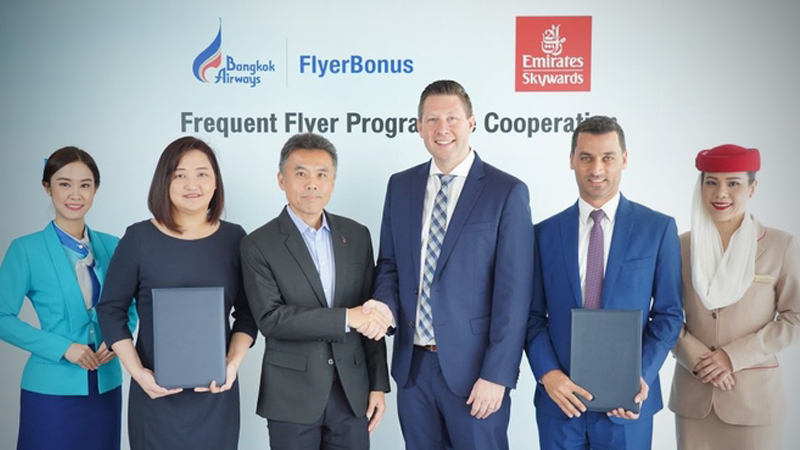
In a new collaboration for frequent flyers, Bangkok Airways (PG) and Emirates (EK) are expanding benefits enjoyed by the former’s FlyerBonus and the latter’s Skywards.

“We are expanding our FlyerBonus and Emirates Skywards programmes service networks and point reward and privilege systems to provide even more special experiences,” said Chulin Kocharoen of Bangkok Airways.

“Emirates Skywards is 25 million members strong and growing by the day,” said Nejib Ben Khedher of Skywards. “We have a diverse membership base drawn from 180 countries. Our alignment with FlyerBonus complements Emirates’ codeshare partnership with Bangkok Airways, helping our members enjoy rewards offered in both programmes.”

FlyerBonus members will be able to enjoy reward flights on Emirates’ network spanning 143 destinations, including 47 cities in Europe, 22 in the Americas, 15 in the Middle East and 27 in Africa.

Members of Emirates Skywards can explore the boutique destinations of Thailand by flying on codeshare flights operated by Bangkok Airways, and enjoy seamless connectivity to 33 destinations combined, beyond Bangkok and Phuket.

In addition to the domestic Thai routes, the partnership allows passengers to travel to Cambodia, Myanmar and Laos.

Solid ThaiBev maintains ‘AA’ ratings

ศาสตร์เกษตรดินปุ๋ย : ขอบคุณแหล่งข้อมูล : หนังสือพิมพ์ The Nation

https://www.nationthailand.com/business/30378153?utm_source=category&utm_medium=internal_referral

Solid ThaiBev maintains ‘AA’ ratings

Nov 07. 2019
By THE NATION

951 Viewed

TRIS Rating has affirmed an “AA” rating for Thai Beverage PLC (ThaiBev) as a company and for its outstanding senior unsecured debentures.

It said the ratings reflect the firm’s dominant position in the alcoholic-beverage market, extensive distribution network, steadily increasing cash generation and diversified sources of income.

“These strengths are partially offset by the surge in financial leverage in recent years, intense competition, regulatory constraints and frequent excise tax hikes in the industry,” TRIS said.

It expects ThaiBev’s domestic beverage business performance to continue improving. After a decline in domestic sales in 2018, it posted a quick recovery of 8.5 per cent year-on-year growth in the first nine months of fiscal 2019.

The growth was supported by the recovery of demand in both the alcoholic and non-alcoholic beverage segments. As a result, the company’s operating profit margin improved to 15.8 per cent in the first nine months of 2019, compared with 14.3 per cent in 2018.

TRIS believes domestic market demand will continue to grow in tandem with government spending to stimulate the economy, coupled with higher farm income. It expects ThaiBev’s domestic sales to increase by around 8 per cent in 2019 and 3 per cent in both 2020 and 2021.

It also projects ThaiBev’s operating profit margin to stay around 16 per cent over the next three years.

In the past few years, the company has made three key strategic investments – the acquisition of Grand Royal Group (GRG), the largest producer and distributor of spirits in Myanmar, Saigon Beer-Alcohol-Beverage Corporation (Sabeco), the largest beer producer in Vietnam, and KFC outlets in Thailand.

These acquisitions have added more than 30 per cent to its revenue base and earnings before interest, taxes, depreciation and amortisation. Its expansions in Vietnam and Myanmar have also helped significantly reduce its reliance on the domestic market.

Overseas revenue jumped to 28 per cent of sales in the first nine months of fiscal 2019, compared with a negligible 3 per cent in 2017.The markets in Myanmar and Vietnam are less mature and have better growth potential.

The company holds a strong position in every market where it’s active. In Thailand it is the largest beverage company, with a market share exceeding 90 per cent for spirits and nearly 40 per cent for beer, based on sales volume.

It is also the market leader in the ready-to-drink tea and drinking-water segments and is a major producer of carbonated drinks and other beverages.

Through its affiliated companies, ThaiBev extends its market coverage across Southeast Asia. Fraser and Neave Ltd has a strong position in its home markets of Malaysia and Singapore.

The rating agency expects ThaiBev’s leverage to gradually decline over the next three years. Its net debt reached a peak at Bt215.8 billion in fiscal 2018, then declined to Bt206.2 billion in the first nine months of fiscal 2019.

TRIS’ projection assumes no additional, large, debt-funded acquisitions over the next three years as the company’s management has expressed strong intention to deleverage.

The liquidity position is strong. As of June, ThaiBev had cash on hand of Bt24.1 billion. TRIS projects funds from operations to be around Bt33 billion in the next 12 months. The company has undrawn credit facilities of around Bt54 billion.

These sources of funds should be sufficient to cover the cash needed for debt service and investments over the next 12 months.

ThaiBev has long-term debt-repayment obligations of around Bt6 billion coming due during the next 12 months. As of June, its outstanding short-term obligations were Bt14 billion. The company has planned capital expenditures of approximately Bt7 billion in fiscal 2020.

Hiring on potential yet to take hold in Thailand

ศาสตร์เกษตรดินปุ๋ย : ขอบคุณแหล่งข้อมูล : หนังสือพิมพ์ The Nation

https://www.nationthailand.com/business/30378146?utm_source=category&utm_medium=internal_referral

Hiring on potential yet to take hold in Thailand

Nov 07. 2019
Srisakul Thunwuthikul, Manager of Sales & Marketing (Healthcare), Robert Walters Thailand

Srisakul Thunwuthikul, Manager of Sales & Marketing (Healthcare), Robert Walters Thailand
By SIRIVISH TOOMGUM
THE NATION

1,133 Viewed

Hiring managers in Thailand are hesitant to adopt a talent growth strategy based on recruiting for potential, according to Robert Walters, a global recruitment specialist group.

It is among the findings of its survey seeking the opinions of managers hiring candidates for potential and the outcomes of this as a long-term strategy towards growth.

“Grow your Talent, Hire Based on Potential”, the latest Robert Walters guide released in October, includes insights from over 3,000 managers and professionals from Thailand and five other countries: Indonesia, Malaysia, Philippines, Singapore and Vietnam.

The guide reveals that in Southeast Asia, 94 per cent of hires based on potential were retained in their jobs.

Yet close to half (42 per cent) of hiring managers in the region remain reluctant to evolve their recruitment strategies beyond hiring based solely on experience. This was despite using resources to recruit, evaluate, and subsequently manage employees who are not a good fit.

The hesitancy to recruit on potential, despite growing importance of it, is reflected among Thailand’s respondents too. Yet, adopting this philosophy could be the key to future recruitment drives according to Srisakul Thunwuthikul, Manager of Sales & Marketing (Healthcare), Robert Walters Thailand.

“Talent has become an increasingly in-demand asset and valuable resource for companies on a worldwide, regional, and local levels. With Thailand being an evolving and strategically located hub within Asean, strategising on how to effectively compete to attract hires from available talent pools is essential and an intrinsic element in achieving a competitive edge with successful sustainability and growth. As the intensity in competing for talent continues, hiring for potential is gaining traction as a viable talent growth strategy in Southeast Asia as a whole.”

Experience over potential

In Thailand, over 60 per cent of respondents considered experience as one of their top three considerations when looking for a new hire, with over 46 per cent focused on the ability of candidates to learn quickly and over 33 per cent citing soft skills as another key factor.

However, while this suggests a willingness to value potential, over 44 per cent of respondents stated that they had rejected a candidate who showed a lot of potential but lack the right qualifications or experience.

Hesitance remains 

While close to 52 per cent of those surveyed did respond that they had hired someone who showed a lot of potential, but did not have the right qualifications or experience, over 48 per cent had not, with nearly 16 per cent of this group stating that they would not consider doing so either.

Traits of potential 

In Thailand, respondents identified individual traits that convinced them to hire based on potential. These comprised of: willingness to learn (74.23 per cent); motivation (64.95 per cent); engagement (34.02 per cent); creativity (28.87 per cent); insights (16.49 per cent); curiosity (13.40 per cent) and other reasons (4 per cent). In terms of these hires, 85 per cent were said to have become valuable team members, with 38 per cent of these viewed in such a way after time was taken to train them.

Recruitment delays

Hires that only fixate on experience may lead to costly delays in filling positions, among other issues. In Thailand, under 5 per cent of positions within the survey had had an offer accepted in less than one month and while nearly 40 per cent reported a hire window of one to two months, over 49 per cent of positions were reported to have taken between two to six months, and over 6 per cent over half a year. Widening the scope of the recruitment process to include candidates with potential could close these gaps.

Out of the successful recruits deemed not to have turned out to be a good fit once hired for a role, the majority (close to 29%), were recorded as not delivering as expected. Over 19 per cent were regarded as not having the right learning attitude, not having the right skills, knowledge or expertise.

Potential not favoured

The “Grow your Talent, Hire Based on Potential” guide cited a preference, across the region, for candidates who can pick up work immediately, the technical nature of the role, and the lack of know-how to evaluate the person’s potential as key reasons for not hiring high-potential professionals. One in three, (30 per cent) of respondents believe that a candidate with the right qualifications and experience will eventually show up.

In Thailand, the top reasons for respondents not considering hiring based on potential also include a preference for someone who can pick up the work immediately (44.83 per cent); as well as the role being very technical and requiring significant prior experience and skill sets (44.83 per cent); the company not having the time, resources and expertise to offer in-depth training (41.38 per cent); difficulty in identifying whether a person would be a good fit for their team (37.93 per cent); taking more time and work to train someone (37.93 per cent); believing that someone with the right qualifications and experience will show up (24.14 per cent); finding it difficult to assess the potential of an individual (17.24 per cent); and concern that the candidate would not be able to learn quickly enough (13.79 per cent).

Nurturing niche skill sets

The guide suggests ideas for companies wishing to adapt their recruitment strategies based on potential. This includes identifying crucial or secondary requirements to the role, ensuring a realistic job description, looking out for signs of opportunities or progress in the candidate’s job experience, and engaging the expertise of recruitment consultants, especially in hiring talent with niche skill sets.

In a separate interview with The Nation online newspaper, Srisakul cited successful stories with her company sourcing candidates based on potential for her clients. They were accepted and have since stayed with their employers, she added.

“Given that these group of people are receptive, eager to learn, have the drive and motivation, they feel challenged to do things they have not done before and have the eagerness to close the gap and be successful in what they are asked to do,”

“Also, growth is in the mindset of potential candidates; they want to do new things and continue learning. They want to be trained and invested upon; and when they realise the investment that is being made on them, they tend to invest more in their work, proving to the company they are capable for the role,”

“Loyalty and new ideas come with potential candidates; they want on stay with the firm to keep learning about the business and since they are considered unique assets to the company, they are able to inject new ideas to the team”.

“On the other hand, hiring based on experience gives the company what they are expecting right away as these group of people are experienced in what they are doing and will do it well. However, companies will need to find ways to keep them motivated and loyal to the company because when there is no more excitement in work, they may reconsider their roles”.

With homes planned across Bangkok, Kun eyes MAI listing

ศาสตร์เกษตรดินปุ๋ย : ขอบคุณแหล่งข้อมูล : หนังสือพิมพ์ The Nation

https://www.nationthailand.com/business/30378145?utm_source=category&utm_medium=internal_referral

With homes planned across Bangkok, Kun eyes MAI listing

Nov 07. 2019
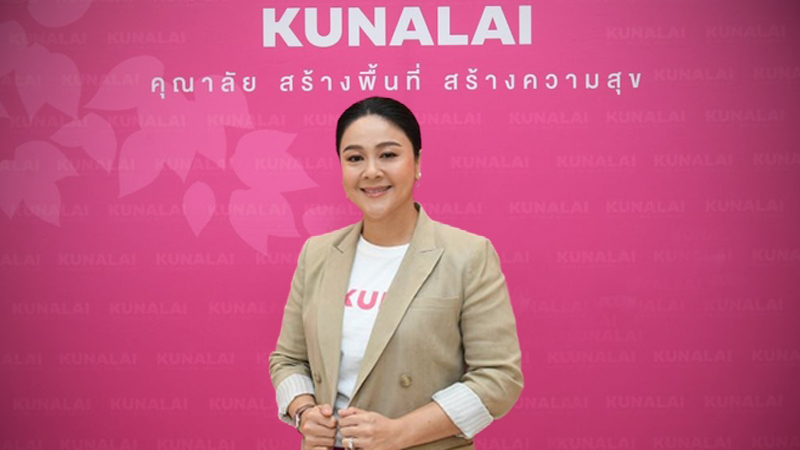
Chief executive Praweerat Dheva-aksorn

Chief executive Praweerat Dheva-aksorn
By THE NATION

868 Viewed

Villa Kunalai Public Company Limited (Kun), builder of Kunalai-brand homes, plans to seek a listing on the Market for Alternative Investment (MAI).

It will allocate 150 million shares to an initial public offering to raise funds to buy more land and expand its business, with S14 Advisory Company Limited as financial advisor.

It currently has seven projects underway, together worth Bt3.9 billion, and plans two more worth Bt2.17 billion.

Chief executive Praweerat Dheva-aksorn said the company adheres to “four pillars” – potential location (Comfortable), beautiful houses in a warm community (Appearance), professional teamwork (Reliability), and reasonable price (Economy).

The seven current housing projects are under the main brands Kunalai Begins, Kunalai Pollen, Kunalai Symphony and Kunalai Joy.

Its subsidiary Villa Vanich Company Limited focuses on Greater Bangkok, especially Bang Bua Thong district in neighbouring Nonthaburi province.

Nonthaburi is Kun’s strategic location for housing, and the company has just initiated expansion in Chachoengsao under the Kunalai Joy, involving 314 projects on 24 rai. The province boasts economic strength and strong housing demand similar to those of Bang Bua Thong.

Chachoengsao is also part of the Eastern Economic Corridor slated for a substantial boost in economic activity.

Kun has finalised sales on four projects valued Bt1.32 billion and has seven ongoing projects worth Bt3.9 billion.

There are two new projects worth Bt2.17 billion for future development, including Kunalai Joy 2, the Bt1.5-billion duplex and single-house project in Nonthaburi, which is expected to kick off sales in the second quarter of 2020.

The other one is Villa Vanich, the Bt672-million shophouse project in Bang Bua Thong, which will start construction and launch sales around 2021-2022.

Praweerat said earnings from the initial public offerings would fund business expansion, including the purchase of more land in Bang Bua Thong and act as a reserve for future projects in all four suburban areas of Bangkok.

The IPO will feature 150 million shares with par value of 0.5 baht each, equivalent to 25 per cent of the total issued and paid-up shares after the IPO.

Kun currently has registered capital of Bt300 million – 600 million ordinary shares (450 million existing paid-up shares and 150 million IPO shares) – and paid-up capital of Bt225 million.

The Securities and Exchange Commission has accepted the filing and Kun expects to be able to list and start trading on the MAI around the end of this year.

Piyapa Jongsathian, managing director of S14 Advisory, said Villa Kunalai is the leader and expert in horizontal housing project in Bang Bua Thong.

The company posted total revenue of Bt297.5 million in 2016, Bt450.38 million in 2017 and Bt447.09 million in 2018, while net profit was Bt5.94 million, Bt10.80 million and Bt11.56 million, respectively.

For the first nine months of 2019, revenue was Bt461.09 million and net profit Bt43.15 million. The growth of revenue came from increased property sales after projects were gradually closed.

GE announces to invest up to $60M to create new global repair engineering in Singapore

ศาสตร์เกษตรดินปุ๋ย : ขอบคุณแหล่งข้อมูล : หนังสือพิมพ์ The Nation

https://www.nationthailand.com/business/30378135?utm_source=category&utm_medium=internal_referral

GE announces to invest up to $60M to create new global repair engineering in Singapore

Nov 07. 2019
The chief executive of GE Gas Power, Scott Strazik says that Singapore has been a key industrial and talent hub for GE over the last 50 years.

The chief executive of GE Gas Power, Scott Strazik says that Singapore has been a key industrial and talent hub for GE over the last 50 years.
By The Nation

1,242 Viewed

General Electric (NYSE: GE) announced on Thursday (November 7) that it was investing up to US$60 million in its existing Global Repair Service Centre in Singapore to develop the next-generation repair capabilities for high efficiency air-cooled (HA) gas turbines through the creation of a new HA Repair Engineering and Development Centre.

The new service centre will be beneficial to Thailand too, according to Jim Vono GE Gas Power Asia Pacific President of Operations, who notes it will reduce time for repairing the HA gas turbine.

GE announces plans to invest up to $60M to create new  global repair  engineering and development centre in Singapore for its industry-leading HA gas turbines.

GE announces plans to invest up to $60M to create new global repair engineering and development centre in Singapore for its industry-leading HA gas turbines.

“Thailand is a big market for GE and we have a great relationship with the Electricity Generating Authority of Thailand. It will be a great opportunity to work with them and provide support in the future,” he said.


With the support of the Singapore Economic Development Board, the announcement underscores the company’s commitment to continued investments in the future of gas, which is a vital part of the energy mix.

The new Center of Excellence will significantly increase GE’s repair development capability globally to support the industry’s most-advanced, heavy-duty gas turbine, making the site a world reference in power generation technology development and implementation.

The new centre, which will begin repairing HA components in 2021, will include a research and development (R&D) component to develop next-generation HA repair capabilities and the repair of high-tech components, such as HA nozzles and blades.

With GE’s HA fleet growing globally, this investment in Singapore is expected to add up to 160 experts in engineering and repairs and enable GE to better service HA power plant operators based in Asia, and all countries outside Americas region, which will be served by GE’s world-class Manufacturing and Services facility in Greenville.

This news comes on the heels of GE’s celebration of its 100th HA gas turbine order with the Greek Mytilineos SA Power Plant and the introduction of its 7HA.03 gas turbine, which currently enables the most efficient combined cycle block of power at the lowest cost conversion of gas to electricity for 60 Hz customers.

The chief executive of GE Gas Power, Scott Strazik says that Singapore has been a key industrial and talent hub for GE over the last 50 years. “The quality of talent, belief in our team and the work they are doing here, and our strong partnership and trust with the government and EDB are key reasons we chose Singapore for this investment.

“The new centre for our industry-leading HA gas turbine technology is expected to become one of the GE’s largest gas turbine repair facility globally servicing our HA and Aeroderivative gas turbines. In addition, it will allow us to better serve our HA customers in Asia as we provide localised support and expect to reduce HA repair cycle time for them by up to two months,” he said.

Meanwhile, the chairman of EDB, Dr Beh Swan Gin said that GE’s investment in the Global Repair Engineering and Development Centre marks the latest milestone in our longstanding partnership and extends the company’s range of activities in Singapore.

“The establishment of repair development capabilities for Gas Turbines is a good addition to Singapore’s base of industrial activities and also creates good jobs for Singaporeans. We look forward to the success of this Center,” said Dr Beh Swan Gin.

GE has been involved in the current service center in Singapore since the 1970s in partnership with local companies. The site originally performed marine and offshore repairs. With GE, it has evolved into power generation repairs, servicing gas turbines, steam turbines and generators. Its current focus is exclusively on power generation gas turbine repair processes and localization of GE’s newest products.

The facility carries out overhauls of gas turbine blades, rotors and aero-derivative engine components. It uses advanced repair technologies such as robotic laser cladding, adaptive CNC machining, robotic coating and polishing, and inspection technologies. The site currently employs approximately 250 people.

Opening December 1, Mercure & ibis hotel meets dual demand

ศาสตร์เกษตรดินปุ๋ย : ขอบคุณแหล่งข้อมูล : หนังสือพิมพ์ The Nation

https://www.nationthailand.com/business/30378119?utm_source=category&utm_medium=internal_referral

Opening December 1, Mercure & ibis hotel meets dual demand

Nov 06. 2019
By THE NATION

1,456 Viewed

Accor will open the dual-branded Mercure & ibis hotel on Bangkok’s Sukhumvit Soi 24 on December 1.

“We are excited to partner with the Erawan Group to launch this property,” Accor chief operating officer Patrick Basset said this week. “The combination of our Mercure and ibis brands will let guests choose between one of the world’s largest midscale brands and the most recognised economy brand, offering an unbeatable price-to-fun ratio.”

Mercure Bangkok Sukhumvit 24 will feature 201 rooms and suites, an all-day-dining restaurant, rooftop swimming pool, fitness centre and meeting facilities, complemented by the brand’s authentic, locally-inspired service.

Guests staying on the executive floor will enjoy access to the Executive Lounge for complimentary refreshments throughout the day.

The ibis Bangkok Sukhumvit 24 has 300 rooms, boasting a vibrant atmosphere and convenient amenities.

The hotel will offer the ibis “Mission 15” promise, which provides guests with prompt service and support within 15 minutes at any time during their stay.

“The two-in-one hotel concept offers our guests a superb choice between Mercure where business and leisure guests can experience local stories and ibis, a popular economy brand aimed at today’s budget-savvy and trendy travellers,” said Erawan Group senior vice president Youssef Elkhomri.

Dusit International brings South African healthy restaurant chain to Bangkok

ศาสตร์เกษตรดินปุ๋ย : ขอบคุณแหล่งข้อมูล : หนังสือพิมพ์ The Nation

https://www.nationthailand.com/business/30378108?utm_source=category&utm_medium=internal_referral

Dusit International brings South African healthy restaurant chain to Bangkok

Nov 06. 2019
By THE NATION

2,206 Viewed

Dusit Foods, a subsidiary of Dusit International, has entered into a joint venture with South Africa’s Real Foods Group, to bring its popular healthy fast-casual restaurant concept, Kauai, to Southeast Asia, under the Thai brand name, Real Foods, launching the first store recently at Virgin Active Fitness Club 101 The Third Place in Bangkok.

Established 23 years ago, the Kauai brand serves 7.3 million healthy meals each year across its 164 stores in South Africa and the Netherlands.

The brand offers smoothies, salads, wraps and warm bowls, all made with a commitment to sustainable sourcing.

Located at True Digital Park 101, the first Real Foods store at Virgin Active Fitness Club 101 The Third Place is easily accessible from Punnawithi and Udomsuk BTS (Skytrain) stations.

The Real Food stores in Thailand will retain the Kauai concept and store design, and also most of the menu. The menu features over 100 superfood ingredients, including free-range eggs, collagen, whey protein, spirulina, kale, broccoli and spinach, used to make a range of nutritious and delicious dishes and drinks with a focus on natural produce.

Roughly 30 per cent of the menu has been modified to meet Thai tastes, including the addition of new items such as a soba noodle salad, iced matcha smoothie, Thai red milk tea and iced coffee drinks.

Firm favourites like the Princess Wrap and the Strawberry Stinger, which have been on the menu since Kauai’s inception, will be available in Thai stores.

From left: Suphajee Suthumpun, Group CEO, Dusit International; Dean Kowarski, CEO, Real Foods S.A.; and Jate Sopitpongstorn, MD of Dusit Foods Co. Ltd.

From left: Suphajee Suthumpun, Group CEO, Dusit International; Dean Kowarski, CEO, Real Foods S.A.; and Jate Sopitpongstorn, MD of Dusit Foods Co. Ltd.

The development of Real Foods in Thailand is in line with Dusit Food’s mission to invest in proven and profitable businesses, expand into high growth spaces, and respond to consumer trends while positively serving the community through the delivery of healthy, wholesome food products that reflect four key pillars of sustainable production – healthy, natural, organic, and locally sourced.

“Globally, there is a major shift taking place as consumers seek out healthier, natural food options which are both affordable and convenient”, said Jate Sopitpongstorn, Dusit Foods’ managing director. “With our extensive experience in food, resorts and hospitality, moving into standalone outlets was an obvious next step for Dusit. The Thai joint venture, Dusit Real Foods, will oversee the opening of several fast-casual restaurants in Thailand, with possible expansion into retail ranges.”

Jate added that Real Foods will also benefit from access to top-tier hospitality and restaurant talent from Dusit’s hospitality education programme, ensuring Dusit’s renowned gracious service is part of the offering.

Dean Kowarski, Real Foods Group chief executive and founder, said that the premium brand, which has become synonymous with natural food, has a strong appeal for those embracing healthier living on account of its emphasis on nutrition and responsible sourcing.

“At Real Foods we care about what you put in your body because we know that eating well is key for a good life. We are committed to making nutritious and delicious food and drinks with an emphasis on real, responsibly sourced natural produce,” he said. “This means, where possible, our food is free of GMO’s, low in refined sugar and avoids additives, preservatives, artificial colourants or flavourants. As an example, we only use free-range chicken and eggs, which shows our commitment to responsible sourcing.

“We make healthy eating delicious, easy and convenient and there is something for everyone on our menu and our stores offer a mix of both take-away and sit-down meals.”

The Real Foods store experience

Within the coming months, Real Foods will also supply its healthy meals and drinks to six other Virgin Active health clubs throughout the city, ensuring Bangkok residents have convenient, grab and go access to wholesome and healthy food. The brand also has plans for expanding its Thai store footprint into the retail space, and is actively seeking new retail locations. Dusit Real Foods owns the territory rights to Southeast Asia and Australia, and is currently exploring opportunities in these markets.

Taco Bell inaugurates fourth Thai outlet at Samyan Mitrtown

ศาสตร์เกษตรดินปุ๋ย : ขอบคุณแหล่งข้อมูล : หนังสือพิมพ์ The Nation

https://www.nationthailand.com/business/30378090?utm_source=category&utm_medium=internal_referral

Taco Bell inaugurates fourth Thai outlet at Samyan Mitrtown

Nov 05. 2019
By THE NATION

1,431 Viewed

Taco Bell, the Mexican restaurant chain, today (November 5) opened its latest outlet in Thailand at Samyan Mitrtown.

Chalermchai Mahagitsiri, president and chief executive of Thoresen Thai Agencies Public Company Limited (TTA), who is also a director of Siam Taco Co Ltd, says Taco Bell always wants to be where the customers are.

The fourth Taco Bell outlet is expected to become one of the favorites among visitors to the complex as well as university students and office workers in the Samyan area, he added.

The restaurant is located on the ground floor, opening daily from 10 AM to 10 PM.

Taco Bell Corp, a subsidiary of Yum! Brands Inc, is a world-famous Mexican-inspired restaurant chain. There are currently 500 Taco Bell restaurants in nearly 30 countries outside the United States, in addition to over 7,000 restaurants across the US, amid continuous expansion in international markets.

Siam Taco Co Ltd is a joint venture company between TTA and CM Capital (owned by the Mahagitsiri family) to operate Taco Bell restaurants in Thailand.

TTA has grown from its beginning in 1904 as a shipping service company to a global strategic investment holding company with presence throughout Asia, the Middle East, Europe and Africa.

Listed on the Stock Exchange of Thailand, TTA is a diversified investment holding group with primary interest in shipping, offshore service, agrochemical and investment which includes food retail.

Thaicom, PTTEP units to develop drones for farming

ศาสตร์เกษตรดินปุ๋ย : ขอบคุณแหล่งข้อมูล : หนังสือพิมพ์ The Nation

https://www.nationthailand.com/business/30378085?utm_source=category&utm_medium=internal_referral

Thaicom, PTTEP units to develop drones for farming

Nov 05. 2019
Anant Kaewruamvongs, third from left, Thaicom's CEO, and Thana Slanvetpan, third from right, ARV's General Manager.

Anant Kaewruamvongs, third from left, Thaicom’s CEO, and Thana Slanvetpan, third from right, ARV’s General Manager.
By THE NATION

1,882 Viewed

Thai Advance Innovation Company Limited (Thai AI), a subsidiary of Thaicom, will cooperate with Robotics Ventures Company Limited (ARV) on the development of cost-effective and easy-to-use drone technology for the agriculture sector, the Thai satellite operator has announced.

ARV is a subsidiary of PTT Exploration and Production Public Company Limited (PTTEP).

By leveraging smart farming technology, the agro drones will contribute to a more sustainable agriculture ecosystem, resulting in less impact from chemicals, lower production costs, and improved quality of life for farmers. It will also boost international competitiveness of the local sector.

Anant Kaewruamvongs, Chief Executive Officer Thaicom, said Thai AI and ARV share the same objectives to solve the problems in Thailand’s agricultural sector. The partnership aims to sustain Thailand’s leading position in APAC’s agricultural sector and improve productivity through the development and marketing of smart farming technology that benefits the ecosystem and people making a living out of farming.

“And, as we are defining our new vision and making inroads into new business areas, we have begun investing in smart digital solutions for a better life. Our subsidiary Thai AI plays an important role for us in the expansion of our business into new markets and in creating strategic partnerships with next generation smart technology companies such as ARV,” he added.

Thana Slanvetpan, general manager of ARV, said the company is very excited to welcome Thaicom as a partner. “We share the same goal of a better future through the development of smart technology. ARV’s know-how and vast experience in both hardware and software drone technology make this partnership ideal for business growth and helping farmers improve agricultural productivity”.

Glass manufacturer Guardian chooses Thailand as Asia-Pacific HQ

ศาสตร์เกษตรดินปุ๋ย : ขอบคุณแหล่งข้อมูล : หนังสือพิมพ์ The Nation

https://www.nationthailand.com/business/30378086?utm_source=category&utm_medium=internal_referral

Glass manufacturer Guardian chooses Thailand as Asia-Pacific HQ

Nov 05. 2019
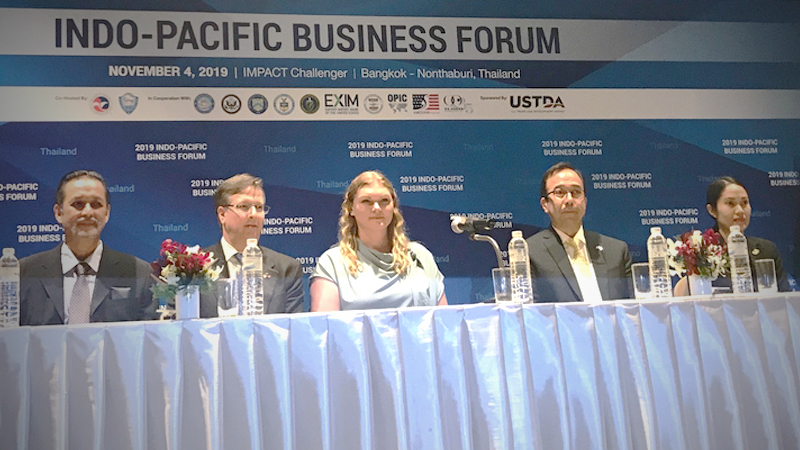
Alexis Underwood, centre, general manager of Guardian Industries Asia Pacific, announces the opening of the company’s regional headquarters in Thailand on Monday at the Indo-Pacific Business Forum.

Alexis Underwood, centre, general manager of Guardian Industries Asia Pacific, announces the opening of the company’s regional headquarters in Thailand on Monday at the Indo-Pacific Business Forum.
By The Nation

2,001 Viewed

Guardian Industries, a leading global glass manufacturer, has chosen Thailand as its headquarters in the Asia-Pacific region.

The US company’s executives made the announcement at the Indo-Pacific Business Forum on the sidelines of the Asean Summit on Monday.

“We have centralised our production base in the region,” said Alexis Underwood, general manager of Guardian for the Asia Pacific “We are excited to continue our expansion in Thailand, with the country serving as a critical base for our Asia-Pacific business.”

The firm has invested about $100 million (Bt3 billion) over the past five years in Thailand, she said.

The company manufactures glass used in the construction and automotive industries. It exports about 50 per cent of its production to other countries in the Asia Pacific, with Australia and Japan being its two largest markets.

The Michigan-based firm has been investing in Thailand since the 1990s. It has two factories in the country – one in Saraburi province, north of Bangkok, and the other in Rayong, east of Bangkok.

Thailand has in recent years offered generous tax and other incentives for multinational companies which set up regional operating headquarters (ROH) in the country.

For example, the Revenue Department offers a corporate income tax reduction from 20 per cent to 10 per cent on net profit deriving from offshore branches and associated companies, tax exemption for dividends received from the ROH’s domestic or foreign subsidiaries, withholding tax exemption for dividends paid out from the ROH to foreign companies that do not carry on business in Thailand. The department also offers personal income tax reduction on salaries for expatriates working at regional headquarters at the rate of 15 per cent instead of the progressive tax rate of 5-35 per cent.

Furthermore, the Board of Investment has given foreign investors permission to own land, permission to bring in foreign experts and technicians, with work permit and visa facilitation.