The Thailand Consumers Council (TCC) on Monday called for a delay in the decision on the merger of two telecom firms, pending appointment of the new telecom watchdog.
The TCC expessed its opposition to the approval of the merger between Total Access Communication Plc (DTAC) and True Corporation Plc in an open letter to watchdog National Broadcasting and Telecommunications Commission (NBTC).
Signed by TCC telecom subcommittee chairwoman Supinya Klangnarong, the letter called on the outgoing NBTC not to make any decision on the merger and instead defer to the new watchdog, whose seven commissioners are awaiting royal appointments.
True and DTAC announced their merger plan to pursue a new tech business and provide venture capital for startups. Their merger plan has been approved by their respective executive boards but since the two are major telecom operators, their merger has yet to be endorsed by the NBTC.
The letter said if the two telecom firms were to go ahead with the merger, the new telecom firm would control up to 52 per cent of market share and would be able to influence the market, leading to unfair practices.
The letter also voiced concern that the merger would reduce choices for consumers, and would lead to wider gaps in digital access as the new firm might unfairly raise prices of mobile phone services and Internet access services.
The letter reminded the NBTC it had once pledged to prevent monopoly or any action that would lead to unfair market practices. The letter said it would be appropriate for the current NBTC to leave the decision to the new board so that there could be transparency and public interest can be taken into account.
Speaking to reporters after submitting the letter, Supinya said the NBTC has the authority to prevent monopoly or unfair market practices, so it should carry out its duties as the regulator, not just a registrar of the merger.
She said the Thai telecom market has not reached free-market state yet and it was only an oligopoly. The merger would create a duopoly and there could be collusion between them to create a monopoly, compromising the interests of consumers.
“Society is waiting for the new NBTC to take office. This is a big issue that requires righteousness both in the legal and social aspects, so the current NBTC should stop considering the issue and let the next set of office bearers deal with it,” Supinya said.
Earlier, the Thailand Development Research Institute and academics from 86 universities nationwide signed a petition for the NBTC to act against the merger.
Low-cost airline NokAir has applied to start operating domestic flights to and from Nakhon Ratchasima Airport, which has been shut since 2019, a source said.
Some 26 kilometres from downtown Nakhon Ratchasima, the airport first opened on December 5, 1997, to serve the domestic market. However, after years of running at a loss due to low passenger load, the airport was closed. During all of 2019, the airport had only served 39 passengers.
“NokAir will operate seven flights between Nakhon Ratchasima and Chiang Mai, Hat Yai and Phuket,” the source said. “The airline expects to start providing the flights by the second and third quarter of this year. It also plans to add six airplanes to its domestic fleet within 2022.”
The source added that before the closure, many airlines flew in and out of Nakhon Ratchasima Airport but had to cancel flights due to an underwhelming response. The airlines included Thai Airways, Air Andaman, New Gen Airways, AirAsia and Happy Air.
Amata Corporation Pcl. is aiming to sell up to 1,000 rai of lands in its industrial estates this year after an increasing number of foreign investors have approached the companies since Test & Go scheme resumed on February 1.
“Currently Amata has available lands in Amata City Chonburi Industrial Estate in at 9,800 rai, and at Amata City Rayong Industrial Estate at 2,400 rai, which are more than enough to supply the need of new foreign investors,” said the company’s chief marketing officer and executive director Viboon Kromadit on Thursday. “After Thailand reopened to foreign visitors without having to quarantine, the companies have been contacted by increasing number of foreign investors, most of whom are in automotive, logistics, electronics and chemical industries.”
Viboon added that Amata also possesses lands that have yet to be developed into industrial estates or commercial districts at around 14,000 rai throughout Thailand. “We have also recently opened a new industrial estate in Loas namely Amata Smart & Eco City, which has an area of 2,562.5 rai and can accommodate up to 1,400 factories from Thai, Laos and Vietnamese companies,” he said.
Viboon said that initially Amata was planning to invest in Myanmar, but shifted to Laos instead due to political problems in Myanmar. “Laos also has a strong development potential thanks to the China-Laos high speed railway that connects Laos with other countries in the Southeast Asian region,” he added. “Last year Laos reported a GDP expansion at 4 per cent despite the pandemic, which means our industrial estate in Laos is likely to welcome more investors this year.”
The management of the Queen Sirikit National Convention Center (QSNCC) on Thursday vowed to make Thailand proud as the host venue of the Asia-Pacific Economic Cooperation (Apec) Summit in November.
The QSNCC was on Wednesday selected as the summit venue by a committee making preparations for the summit. The QSNCC is operated by the NCC Management & Development Co Ltd (NCC).
NCC president Sakchai Pattarapreechakul said the firm felt honoured after its convention centre was picked as the venue for the Apec Summit.
“We are delighted and honoured to have been entrusted by the Apec organising team of the Thai government that has chosen our full range of meetings and events solutions,” he said.
The old QSNCC was closed four years ago with the old building demolished and a new one built to be more luxurious and advanced.
The new QSNCC is scheduled to reopen in September.
Sakchai expressed confidence that the new QSNCC is ready to welcome delegates from all the 21 economies and beyond to Thailand, and will support Apec to host the meetings under the Apec 2022 theme of “Open. Connect. Balance”.
He said the centre has cutting-edge technology and complete facilities in line with standards of global top event venues in other countries, so it will be able to accommodate all types of events, whether they are online conferences or hybrid meetings.
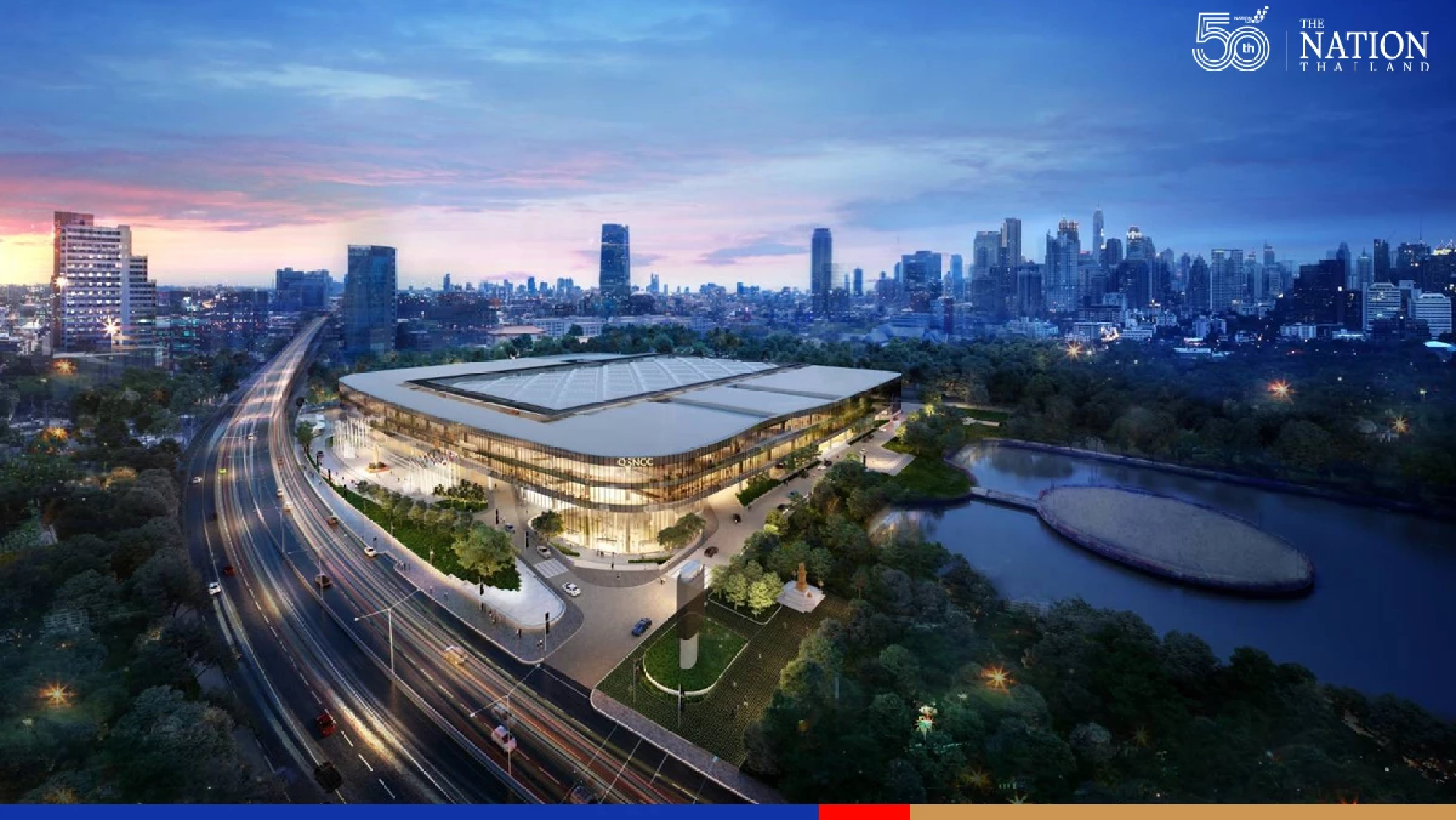
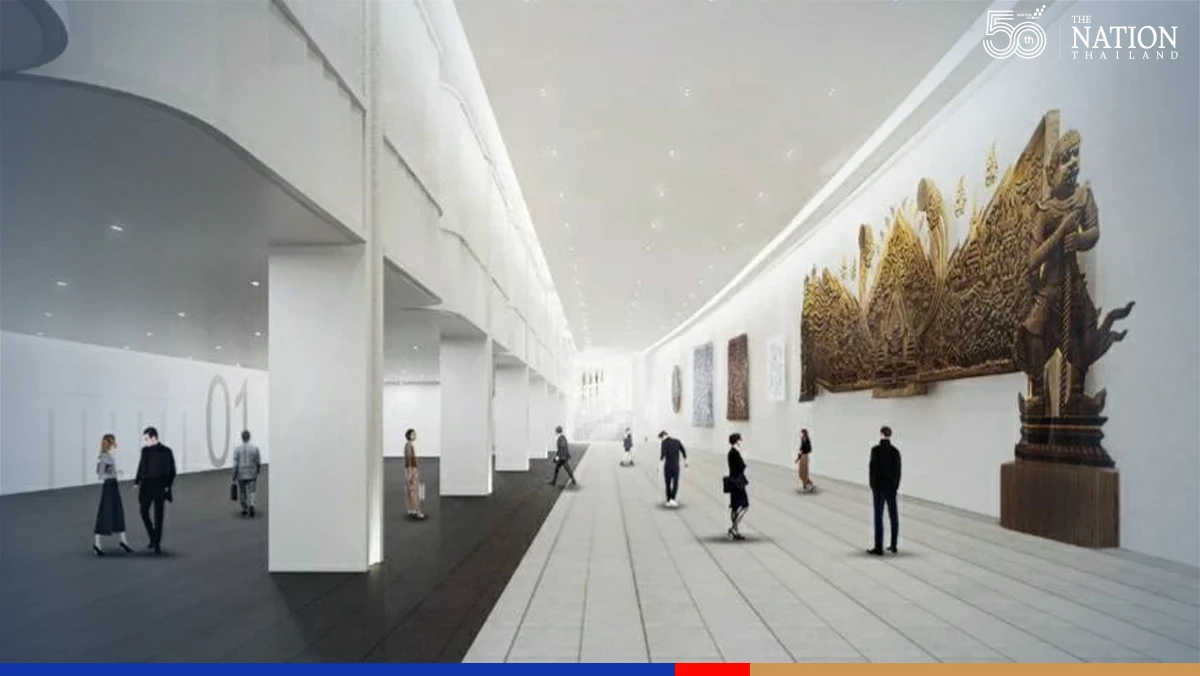
He added that the new QSNCC has a unique identity, along with the architecture and landscape architecture that is beautiful, outstanding and harmonised with the surrounding areas to exhibit a perfect combination of Thai and international characteristics.
“With the knowledge, expertise, and experience in the business of our professional team, we are certain that the upgraded QSNCC will provide excellent services to the conference organisers and participants of Apec 2022,” Sakchai added.
He said the new QSNCC will be the first convention centre in Thailand that can break through the limitations in the event organising activities. With flexible space design and modern construction techniques, the long-span truss structure or the absence of columns helps create greater space within the building.
This allows the centre to have a large hall of 22,500 square metres on the ground floor and the second floor to accommodate all types of events. With a total event space of 78,500 square metres, the centre provides two large conference halls with nearly 10,000 square metres and additional 50 flexible meeting rooms apart from the two large exhibition halls with over 45,000 square metres.
It also provides 2,700 indoor parking spaces. To make it convenient for participants of events at the centre, the QSNCC also has direct access to the subway.
To facilitate online conferences smoothly, the QSNCC was built with infrastructure to accommodate the use of high-speed internet in Thailand. Currently the max broadband speed in Thailand is 2 Gbps but the centre has prepared infrastructure to use 6 Gbps max speed in the future, Sakchai added.
The building is also equipped with touchless access system and the centre uses an intelligence event platform management system for controlling the use of space. It is also equipped with top-level security technology.
He said the new QSNCC will definitely live up to its theme of “the ultimate inspiring world-class event platform for all” and it will become a new event destination contributing to Thailand’s economic growth.
He added that the QSNCC is the first and only convention centre that has received Leadership in Energy and Environmental Design Silver certification. The use of environmentally friendly construction materials by adopting 25 per cent of recycled products and 75 per cent of recyclable products, solar cells, and energy-saving devices constitute sustainable management.
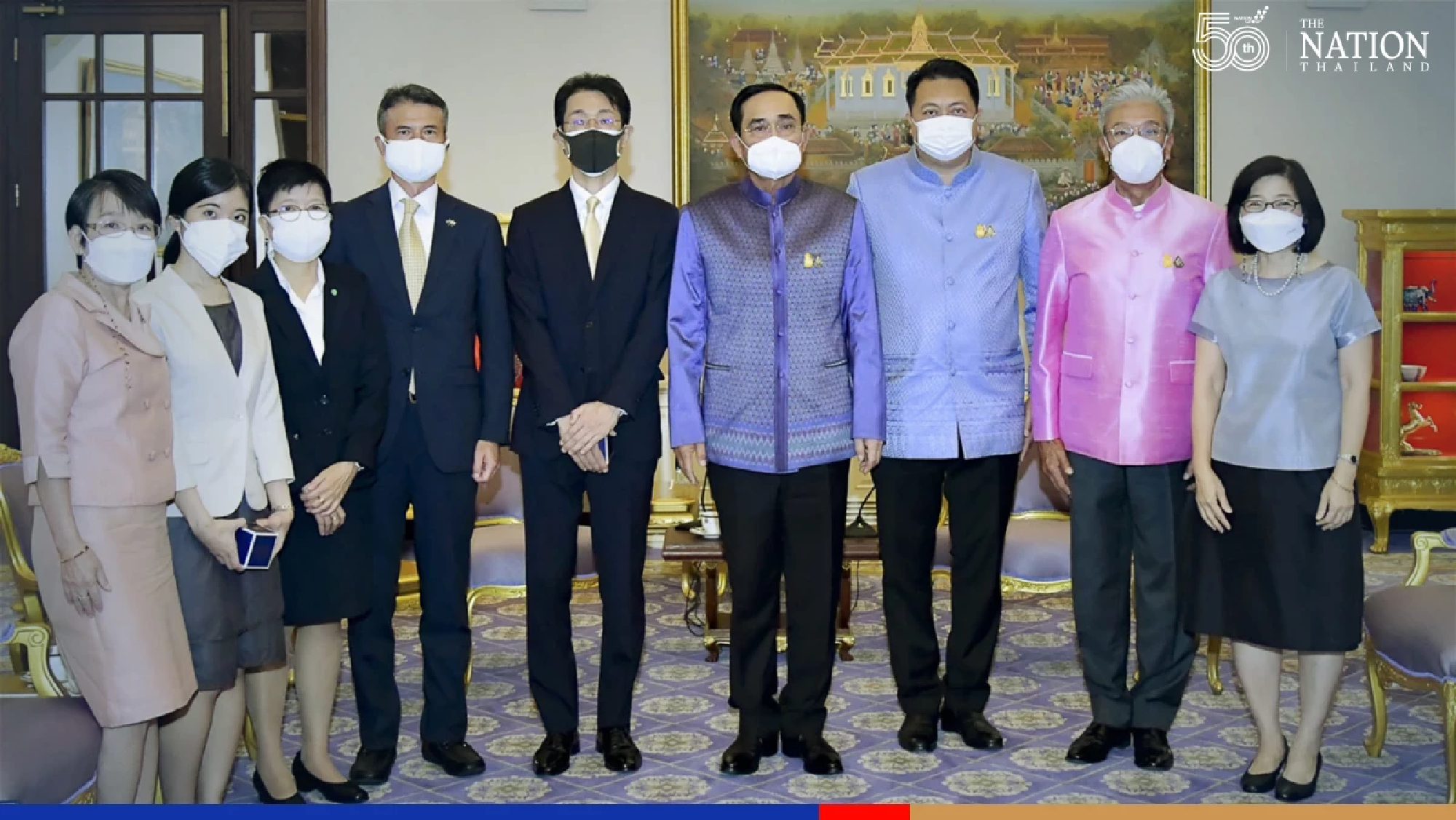
Senior executives of Japanese multinational company Minebea Mitsumi Inc met Prime Minister General Prayut Chan-o-cha on Tuesday to thank the Thai government for supportive measures to help private entrepreneurs, especially Japanese companies, to conduct business in Thailand during the Covid-19 situation.
“The government’s ‘Factory Sandbox’ initiative has greatly helped in ensuring that all employees can get Covid-19 vaccines and the company can keep its manufacturing workforce at full capability even during the lockdown period,” Tetsu Shiozaki, chairman and executive director of Minebea Mitsumi Inc, said on Wednesday.
Minebea Mitsumi is a major manufacturer of machinery components and electronics devices. It has 121 consolidated subsidiaries and affiliates worldwide and is headquartered in Minato City, Tokyo.
“This has enabled us to export key industrial components and medical devices from Thailand to other countries around the world and thus maintain a continued supply chain of several related industries,” Shiozaki said.
Minebea Mitsumi will continue to invest in Thailand as the company has confidence in the government’s policy and Thailand’s potential to build a strong industrial sector supported by stable and flexible supply chain, even while the country is still facing threats from Covid-19, he added.
“Among many countries that we have invested in, Thailand is the only place where we can maintain employment rate during the pandemic. Minebea Mitsumi, therefore, has chosen Thailand to be the base for our manufacturing expansion in the next generation,” he added.
Shiozaki said that the company’s additional investment in Thailand will correspond with the Thai government’s policies that support the BCG (Bio-Circular-Green) economy and the Japanese government’s “Green Growth Strategy” that promotes economic growth through the achievement of carbon neutrality. Minebea Mitsumi is expected to invest over 3 billion baht in building a new factory in Thailand with enhanced capability in greenhouse gases reduction, as well as in personnel development.
PM Prayut reportedly said he was glad that Thailand and Japan can continue to foster their long-standing partnership despite the difficulties posed by the pandemic. He added that the government would continue working to achieve the goal of achieving carbon neutrality within 2050 and net zero greenhouse gas emission in 2065.
The Electricity Generating Authority of Thailand (Egat) will build its second hybrid hydro-solar power plant at the Ubolratana Dam in Khon Kaen province, Egat deputy governor Prasertsak Cherngchawano said.
Prasertsak said the solar electricity generating facility will be built on the dam’s reservoir and its solar panels will be capable of generating 24 megawatts of power to feed into the hydro-power plant of the dam.
The solar system will be equipped with a BESS (Battery Energy Storage System) so that the Ubolratana power plant would be capable of feeding power to the grid system continually with stability, the deputy governor added.
Prasertsak said that Egat had decided to add the solar-cell function to its Ubolratana power plant after the success of its hybrid hydro-solar power generating project at Sirindhorn Dam.
The solar panels were built on the Sirindhorn Dam’s reservoir to generate 45 megawatts of power that has already been fed to the national power grid for commercial use since October 31 last year.
Prasertsak said the hybrid system at the Sirindhorn Dam created power generating stability and the floating solar panels did not cause any environmental and ecological damage to the reservoir.
The deputy governor said Egat has a development plan to achieve carbon neutrality by using reusable clean energy. He said the two hybrid power plants at the two dams would be able to help Egat reduce carbon emissions by some 47,000 tonnes a year.
The study of the second floating solar panel project at the Ubolratana Dam would also be used to expand the hybrid power-generating projects at other dams, Prasertsak added.
He said Egat is selling bidding documents to companies interested in installing the floating solar panels at the Ubolratana Dam and the bidding envelops will be opened for consideration on March 9.
The Government Savings Bank has reported a profit of Bt25 billion last year after providing Bt590 billion in loans during 2021 and reducing cost by Bt12 billion, its director said on Monday.
GSB director Withai Rattanakorn told reporters that the good performance of the state bank had made it one of the top four state enterprises out of 58 state firms that had shared its profits with the government. The GSB contributed Bt16 billion from its profit to the government treasury and kept the rest for carrying out social service missions, the director added.
The bank had assets worth Bt3 trillion as of December 31 2021, which was the highest since it was founded. It has savings worth Bt2.57 trillion and it has granted credits and loans worth Bt2.27 trillion. A total of Bt590 billion worth of loans were approved in 2021, Withai said.
The bank meets the Bank for International Settlements’ (BIS) criteria with a ratio of 16.06 per cent, Withai said.
He said the GSB also managed to keep its non-performance loans at a low 2.5 per cent of the overall loans. It has set aside a reserve of Bt93 billion to compensate for loan damage, so the bank has its NPL coverage ratio of 165.09 per cent, which reflects the bank’s strength.
Last year, the GSB reduced its cost by Bt12 billion under its cost reduction programme, which helped push its profit up to Bt25 billion.
Withai said the bank used its profit to help 11.6 million people under 36 programmes to help the low-income earners affected by the Covid-19 situation during the past year.
The director added that the bank was successful in approving loans to 1.5 million small-time borrowers via its MyMo (Digital Lending) app that allowed them to apply for loans without going to a GSB branch.
The bank also granted Bt12 billion more loans to low-income earners who used their motorcycles or vehicles as collaterals and since the loans had low-interest rate, the interest in the loan market also dropped.
As part of its social mission in 2022, he said the GSB would continue to play the role of a bank for society by granting soft loans to help people who had lost their jobs or were laid-off because of the Covid-19 situation rebuild their careers. The bank would also help people under nonbanking debts to receive loans with cheaper and fair interest rates.
Withai said the GSB will also enhance its MyMo app with alternative data analytics capability and will encourage people to save more for their retirement as the country is entering an aged society.
Huawei launched the “Seeds for the Future” programme in Thailand for the first time in 2008. More than 215 universities students have participated in this programme after over 13 years.
Education has become more personalised and hybrid in the past decade. With new digital models emerging, intelligence and the cloud are increasingly critical, supported by fresh innovations in Information and Communications Technology (ICT) that are transforming the education industry.
According to a survey on Thailand’s digital life in 2020 and 2021, Thai people’s use of e-commerce has increased from 37 per cent to 76 per cent, and the ratio of people who work remotely has risen from 17 per cent to 30 per cent.
At the same time, the cloud adoption rate by corporates has rapidly increased from 26 per cent to 70 per cent. By 2030, digital economy is estimated to account for 30 per cent of overall GDP.
The fundamental role of digital education has been highlighted during the pandemic. There is no doubt that Covid-19 has impacted every field and the effects are certainly being felt in education.
In fact, over the last year or so, about 1.5 billion students — 90 per cent of all primary, secondary, and university level students worldwide — have been unable to attend their schools or campuses for at least some period. The urgent need for more equal, accessible, and advanced education resources has now become a global concern.
As Thailand is making strides to become the Asean digital hub, this period of disruption has been transformative as education providers have hurried to adopt smart technologies to ensure education continuity for all.
Supot Teachavorasinskun, dean of Engineering Faculty at Chulalongkorn University, emphasised at “Huawei Cloud and Connect 2022” (HCC), “Nowadays, the physical and the cyber world are integrated. We have to work with Huawei and other partners to integrate the digital world into every knowledge aspect for the lecturers and students. This is unavoidable.”
This trend was echoed by Kamol Keatruangkamala, executive vice president for information technology at King Mongkut’s Institute of Technology Ladkrabang. During the HCC event, he stressed that “Covid has accelerated the transformation. If we still think in the same way, in 10 years we won’t be able to maintain the university. So we have to disrupt ourselves with innovative technologies from leading companies like Huawei.”
Higher education in Thailand has become more popular while ICT investment has also increased significantly.
Huawei launched the “Seeds for the Future” programme in Thailand for the first time in 2008. More than 215 universities students have participated in this programme after over 13 years. In 2019, Huawei Asean Academy (Thailand) was established to further support the visionary Thailand 4.0 strategy which so far has provided upskilling and reskilling training to over 41,000 local ICT professionals and over 1,300 SMEs.
Huawei has also provided a number of joint solutions, such as smart campus, smart classroom, and online education solutions for more than 10 educational institutions and universities including top ranking universities in Thailand, such as Chiang Mai University, King Mongkut’s University of Technology Thonburi (KMUTT), King Mongkut’s Institute of Technology Ladkrabang (KMITL) and Srinakharinwirot University (SWU). These solutions have ensured that learning never ceases even during the pandemic.
In February 2019, the SWU campus network upgrade was completed. Huawei provided high-bandwidth and low-latency campus networks to improve the wireless network coverage and security, promoting infrastructure-based digital development, and setting a benchmark for campuses.
At the HCC event, Prasert Kanthamanon, senior vice president for Administrative Affairs and Chief Information Officer, KMUTT shared their collaboration with Huawei to make “KMUTT4Life” a reality.
According to Prasert, KMUTT will build a living lab to support endless learning for everyone. Sanya Setpityakul, chief information officer and assistant vice president of Dhurakij Pundit University, added that by Huawei’s expertise it builds a platform to maintain education in the video conference classroom.
Huawei said that it believes the key to a digital and sustainable future lies in a thriving talent foundation. Huawei Thailand’s CEO Abel Deng emphasised that by promoting proactive collaboration with educational institutions, Huawei advocates an ICT talent ecosystem that will benefit Thailand 4.0.
Pattanasak Mongkolwat, the dean of ICT at Mahidol University, expressed appreciation for this strategy. “Huawei has added practical ICT knowledge and practices to our ICT faculty expertise. I believe this will enhance our students’ ability to work and excel in the real world scenarios.”
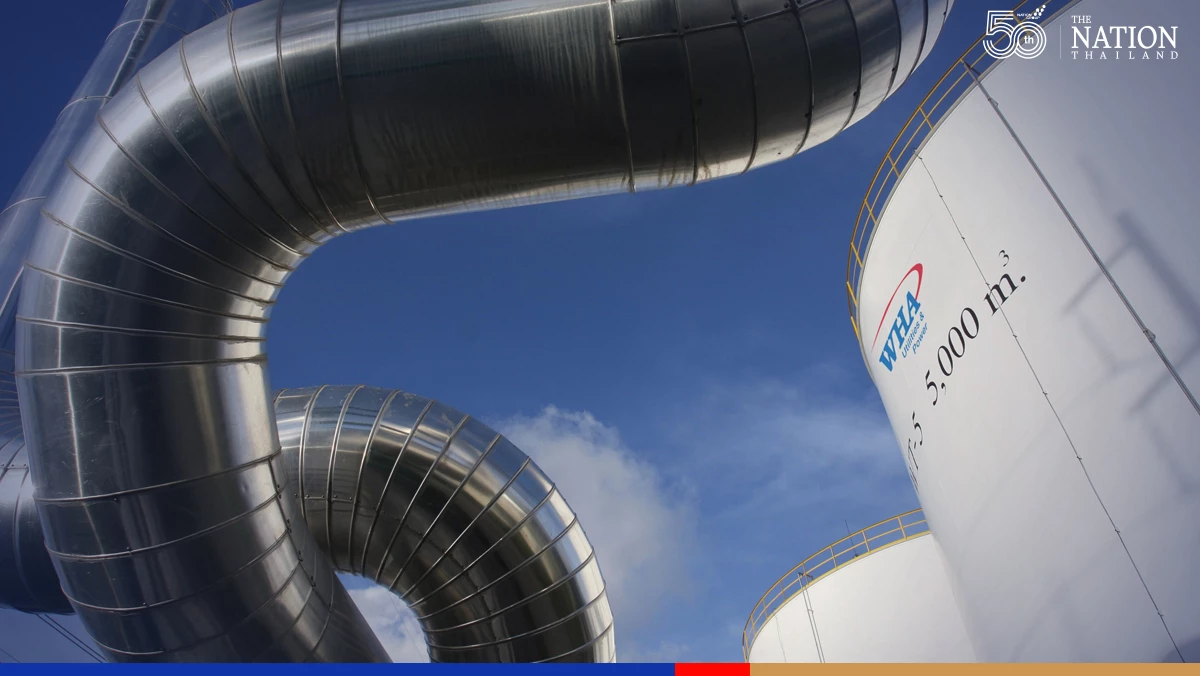
WHA Group is pursuing a strategy to drive business towards smart technologies and digital transformation for sustainable growth over the next five years.
Jareeporn Jarukornsakul, chairman and group CEO of WHA Corporation, said the company had chalked up 28 per cent revenue growth in 2021 despite the challenging environment.
“Last year, WHA’s revenue and share of profits amounted to 12 billion baht, with total assets reaching 83 billion billion, and credit rating maintained at A-,” she said.
“Of the total revenue and share of profit in 2021, 48 per cent came from the logistics business, 26 per cent from the industrial estate business, 25 per cent from utilities and power business and 1 per cent from the digital business.”
She expected normalised total revenue and share of profits to hit 21 billion baht in 2026, 1.75 times higher than in 2021.
The company is expected to maintain high earnings before interest, tax, depreciation, and amortisation (EBITDA) margin of over 40 per cent, and interest-bearing debt (IBD) to equity ratio at lower than 1.2 times, she added.
“Despite another year marked by a challenging environment, with the pandemic restricting travel possibilities for our customers and international investors, we were able to achieve remarkable growth while maintaining our strong financial position and financing capability,” she said.
“To further sharpen WHA’s competitive edge, we are implementing a digital transformation with a two-fold objective: Firstly, we aim to deliver better customer experience. Secondly, through digitalisation, we are fast forwarding to high levels of operational excellence.”
Outlook for 2022 and beyond
With digital transformation at the core of WHA’s businesses, Jareeporn said 33 digital projects were launched in 2021, spanning all areas of the company’s businesses. WHA aims to utilise digital technologies to further enhance the reliability and efficiency of its operations and differentiate its offering.
“In fact, WHA Smart Eco-Industrial Estates are already raising the bar in terms of digitalisation, with digital technologies functioning in virtually all activities, ranging from communications, mobility, security and safety, environment control, and water production and waste treatment,” she said.
“The next step of WHA’s Digital Transformation will consist of using technology to introduce new income streams from innovative products and services and use data as a source of competitive advantage. As part of its road map, WHA targets to be a tech company by 2024.”
Jareeporn said the strategy of WHA’s four core businesses are:
1. WHA Logistics will pursue its expansion in Thailand while seeking new opportunities in Vietnam.
WHA Logistics aims to further grow its geographical footprint and capture new demand in strategic locations in the Eastern Economic Corridor (EEC) provinces (Chachoengsao, Chonburi, and Rayong), in addition to its established and strong foothold in the Bangna-Trad area.
WHA Logistics product portfolio will be enlarged from built-to-suit facilities and general warehouses to include smaller-scale facilities to cater to the needs of smaller enterprises and SMEs and capture this growing segment. Internationally, opportunities will be prioritised to capitalise on the robust demand and to leverage on existing WHA capabilities in Vietnam.
Existing and new strategic long-term partnerships will be developed with regional and global players, focusing on high-growth industries such as e-Commerce, healthcare, and consumer products.
To further enhance the competitiveness of its products and services, smart technologies and innovations based on AI, IoT, Big Data, automated systems and robotics will be favoured, while opportunities in Metaverse, quantum computing and green transportation will be actively explored.
WHA Logistics will pursue its expansion of WHA Office Solutions. Equipped with six prime office locations with full facilities and superior design in Bangkok and Samut Prakan provinces, WHA will target tenants ranging from early-stage startups to established corporations.
2. WHA Industrial Development (WHAID) will cement its leadership in Thailand, enlarge its product offering and widen its presence in Vietnam.
WHAID has more industrial estates in its pipeline over the next five years.
In 2022, the plan includes the expansion of WHA Eastern Seaboard Industrial Estate 4 (+580 rai) with construction that started in the fourth quarter of last year, as well as the construction of the first phase of WHA Industrial Estate Rayong (1,100 rai), in a joint venture with IRPC, scheduled to start end-2022.
WHAID will pursue its efforts to enlarge its product offering to increase recurring revenue and reduce reliance on land sales. The supply of nitrogen gas by BIG WHA, a joint venture with Bangkok Industrial Gas, already operational at Eastern Seaboard Industrial Estate (Rayong), will expand its product offering to include other gases, as well as its geographical coverage to other industrial estates.
WHAID will leverage on its experience developing TusPark WHA, an incubation and innovation centre for startups, which is already in operation near Chulalongkorn University, to move towards higher value estates or properties.
WHAID will also explore business opportunities in line with net zero and sustainability trends.
In Vietnam, WHAID will build on its initial success of the Nghe An project to broaden its presence on a national basis. Due to increasing customer demand, WHAID plans to accelerate the development of its next phases, including the construction of phase 2 (2,200 rai, or 352 hectares) scheduled to start in the first quarter of this year. When fully completed, including phases 1, 2 and subsequent expansions, WHA Industrial Zone – Nghe An will comprise a total of 11,550 rai (1,848 hectares).
Following the signing of a memorandum of understanding in December 2020 with Thanh Hoa Provincial People’s Committee, WHAID will start the development of the two new industrial zones. “WHA Smart Technology Industrial Zone – Thanh Hoa”, with its proximity to the province’s main city, is poised to capture demand from high-value technology investors, while “WHA Northern Industrial Zone – Thanh Hoa” strategically located near the existing Nghi Son petrochemical complex, will target intermediate and downstream industries.
Land relocation and construction are expected to commence in 2023 and 2024, respectively.
3. WHA Utilities and Power (WHAUP) will continue to grow its utilities business inside and outside the group’s industrial estates, both in Thailand and Vietnam. Innovative renewable energy solutions, in particular solar energy, will be developed and initiated.
For utilities, WHAUP will leverage its expertise to offer value-added water products such as wastewater reclamation and demineralised water to industrial customers both inside and outside WHA industrial estates, such as other industrial land developers, municipalities, and communities.
It also plans to grow vertically by exploring alternative raw water sources to enhance water reliability and reduce raw water purchase cost. It also operates a ‘Smart Utilities Services Platform and Innovative Solution’ for customers in WHA industrial estates.
In Vietnam, where it owns equity stakes in two water companies, WHAUP will continue to explore new projects as well as merger and acquisitions opportunities. This year, utilities sales and managed volume is expected to reach 128 million cubic meters in Thailand and 25 million in Vietnam.
For power, WHAUP will continue to develop renewable energy solutions and increase its capacity, from solar rooftop and waste-to-energy projects, with a cumulative target of signed Power Purchase Agreements (PPA) of 150MW by the end of 2022.
It will continue to introduce innovative technologies such as a peer-to-peer (P2P) energy trading system and a Smart Microgrid in industrial estates. WHAUP’s 2022 total signed PPA is expected to reach 700 equity MW.
4. WHA Digital Platform will empower WHA Group’s digitisation by continuing to lay digital infrastructure and spearheading the implementation of digital technologies across all business hubs.
WHA Digital Platform will broaden its product range to cover telecommunication towers inside WHA’s industrial estates. This will include the construction of telecommunication towers and base stations as well as renting spaces on these towers to telecom operators to install necessary devices for receiving and broadcasting network frequencies including 3G, 4G and 5G. Data centres are being monetised.
WHA Digital has been set up as a new company to lead the group in digital transformation and implementation of digital innovations and technologies across business hubs. WHA Digital is looking at startups, especially homegrown companies, as key technology partners.
In line with this strategy, Jareeporn said the group planned to invest 50 billion baht over the next five years from 2022 to 2026.
She explained that the target investment budgets for both WHA Logistics and WHAID amount to 18 billion baht each. In addition, WHAUP will invest 10 billion baht. Finally, 4 billion baht has been budgeted for WHA Digital to invest in startups and new technologies and propel the group to become a tech company.
“We look forward to 2022 with confidence and optimism, as we expect the restrictions due to the pandemic to be lifted, while experiencing rapid economic recovery,” she said.
“For the next five years, we will continue the digital transformation across all our businesses, by utilising smart technologies and innovations to boost our operations further.
“Our digital readiness and ability to adopt new technologies, as manifested in our investments, will have a strong impact on our company’s ability to welcome investors, and therefore to transform the socio-economic status of the country, and drive the government’s Industry 4.0 policy,” she said.
The Malaysian holding company, AirAsia Group Berhad, has changed its name to Capital A Berhad, it was announced on Friday.
The name change reflects the group’s new core business strategy as an investment holding company with synergistic travel and lifestyle businesses, which have rapidly transformed the AirAsia brand into much more than just an airline, the company said.
“This is not just about unveiling a new logo. It’s a significant milestone that marks a new era for the group. Today’s announcement reinforces we are not just an airline anymore,” Capital A CEO Tony Fernandes said.
However, the airline will always underpin the AirAsia brand, according to him.
“While Capital A will be the new group holding company name, one thing that isn’t changing is the AirAsia brand name for our airlines,” the CEO said. “It’s one of the strongest brands in Asia and provides a solid platform for all of our other products and services to leverage from each other.”
He said that it had long been his firm intention, well before Covid-19 hit, to leverage the strong data built up over 20 years and incorporate new technologies to offer a broad range of products and services. “The pandemic has allowed us to accelerate that strategy,” he added.
According to the CEO, the strategy behind the name change is to introduce a new corporate identity that better reflects the group’s core businesses and its future undertakings, in tandem with its transformation from an airline into a “one-stop digital travel and lifestyle services group”.
Essentially, Capital A is an investment company with a broad portfolio of businesses, he said.
“We are now delivering more products and services under one umbrella than any other brand in Asean and with access to over 700 million people in the region,” Fernandes said.
The CEO voiced confidence that his group’s portfolio businesses are on the way to becoming industry leaders in their respective fields across Southeast Asia, including its airasia super app, fintech business BigPay, aircraft engineering division Asia Digital Engineering, and logistics venture Teleport.
Fernandes said for him Capital A signals a new era for the group’s airlines and other businesses as it is heading for a new growth phase.
“We have a five-year plan in place which will see non-airline revenues contributing around 50 per cent of overall group revenue by 2026. Once the airlines return to pre-Covid levels in the near future, all of our other lines of business will benefit significantly and will all soar to new heights in tandem with one another,” he said.


 It also provides 2,700 indoor parking spaces. To make it convenient for participants of events at the centre, the QSNCC also has direct access to the subway.