The Office of Insurance Commission (OIC) announced on Thursday that it would form a panel to look into Thai Group Holdings’ (TGH) motion to shut down its loss-making subsidiary Southeast Insurance Plc to see if it follows all legal requirements.
TGH told the Stock Exchange of Thailand on Wednesday that it had shut down Southeast Insurance because an increased number of claims for Covid-19 pay-outs had resulted in huge losses. However, the firm insisted it would be able to pay customers and stakeholders.
“When an insurance company wishes to close its business, they have to inform the OIC of the following before the closure can be approved,” the OIC announcement said.
1) Steps taken to manage or transfer active insurance policies to a new operator.
2) Steps taken inform its customers and beneficiaries of the closure and notify them on how to exercise their legal rights.
3) Steps taken to withdraw or transfer the deposit that it had placed with the OIC.
4) Asset and debt management plans, both in the loss insurance business and other related businesses.
5) The period during which regulations 1 to 4 will be implemented.
“Customers need not panic, as Southeast Insurance cannot legally shut down its business until it gets approval from the OIC,” the announcement said. “The OIC will appoint a task force comprising experts in forensic accounting, loss insurance analysis, business management and investment, as well as legal and compensation issues to ensure that all policyholders, beneficiaries and stakeholders receive their compensation as stated in the policies.”
Gulf Energy Development Plc (GULF) has won the award for best brand value in the energy and utilities category at the 12th ASEAN and Thailand’s Top Corporate Brands 2021.
The event, which was recently organised by Chulalongkorn Business School (Master’s in Branding and Marketing Programme) in cooperation with the Stock Exchange of Thailand (SET) and Manager Media Group Plc, awards organisations with strong corporate reputations and excellent business performance in line with the principles of good governance.
“It was an honour to be recognised as having the ‘highest corporate brand value’ in energy and utilities among Thai brands in 2021,” said GULF’s chief corporate affairs officer, Tanon Tantisunthorn. “Receiving such an award reaffirms our first-class brand image and also that our operation has demonstrated social and environmental responsibilities while achieving sustainable business growth. This will also reinforce the confidence of investors and stakeholders in the company.”
ASEAN and Thailand’s Top Corporate Brands uses the Corporate Brand Success (CBS) valuation to evaluate candidates each year, explained Prof Guntalee Ruenrom of the Department of Marketing, Faculty of Commerce and Accountancy at Chulalongkorn University.
“The CBS valuation is based on figures from the financial statements of SET-listed companies from the past three years,” she said. “Our valuation mechanics systematically integrates marketing, financial, and accounting concepts, making it possible to calculate a corporation’s brand value into objective financial numbers.”
To be eligible for the CBS valuation required for this award, companies must achieve a score of at least 4 on the Institute of Directors (IOD)’s Good Governance Index, have been publicly listed for at least three years and have a corporate brand value of at least 5 billion baht.
The TCEB has set its sights on hosting as many as 63 international trade shows this year for the prioritised industries in Bangkok
The Thailand Convention and Exhibition Bureau (TCEB) is steaming ahead with promoting international exhibitions, focusing on six post-pandemic industries – aviation and logistics, future automobiles, integrated medical services, robotics, and digital and technology (5G), the bureau said in press statement. The TCEB has set its sights on hosting as many as 63 international trade shows this year for the prioritised industries in Bangkok. Several more will be held in other MICE (meetings, incentives, conferences and exhibitions) cities across the country.
“With a strategic location in the heartland of Southeast Asia and the Asean market, Thailand offers exhibitions a strong advantage of tapping the wider market beyond the country,” the bureau pointed ou “TCEB’s exhibitions department has crafted 360-degree subventions for trade fairs from around the world to co-create a business win-win situation in a market of 660 million Asean citizens.”
The bureau said subventions to start new exhibitions offer five pillars of funding, from preparation, conceptualisation and execution to promotion and facilitation. It said funding is also available for organising a new show and holding existing ones, while subventions for marketing promotion to attract international pavilions and Asean trade delegates are ready in a bid to “co-create business growth”.
The subventions are also designed to cover the virtual space of exhibitions and to secure tech solutions for safe, hygienic events, the press release said. “Our support schemes will help you achieve a return on investments and on time,” the bureau promised. The TCEB said that in the pre-pandemic period from 2016-2021, international exhibitions in Thailand attracted approximately 196,000 foreign participants and 22 million local visitors each year, generating an annual national income of more than US$3 billion (THB99.5 billion) and accounting for 55 per cent of the MICE industry. “Fundamentally, exhibitions are a form of experiential marketing engaging active and highly motivated exhibitors and visitors in a face-to-face environment,” the bureau said. “Although the impacts of the pandemic have disrupted the exhibition industry as a whole, the crisis has presented organisers with new opportunities.”
Many have refreshed perspectives on the market and enhanced the utilisation of digital and innovation technologies, as set forth by the TCEB, the press statement said. “As the country returned to normalcy in the last quarter of 2021, there are 15 physical and hybrid international shows successfully taking place under TCEB’s MICE safety and hygiene standards,” the bureau added. For inquiries or more information, contact exhibitions@tceb.or.th.
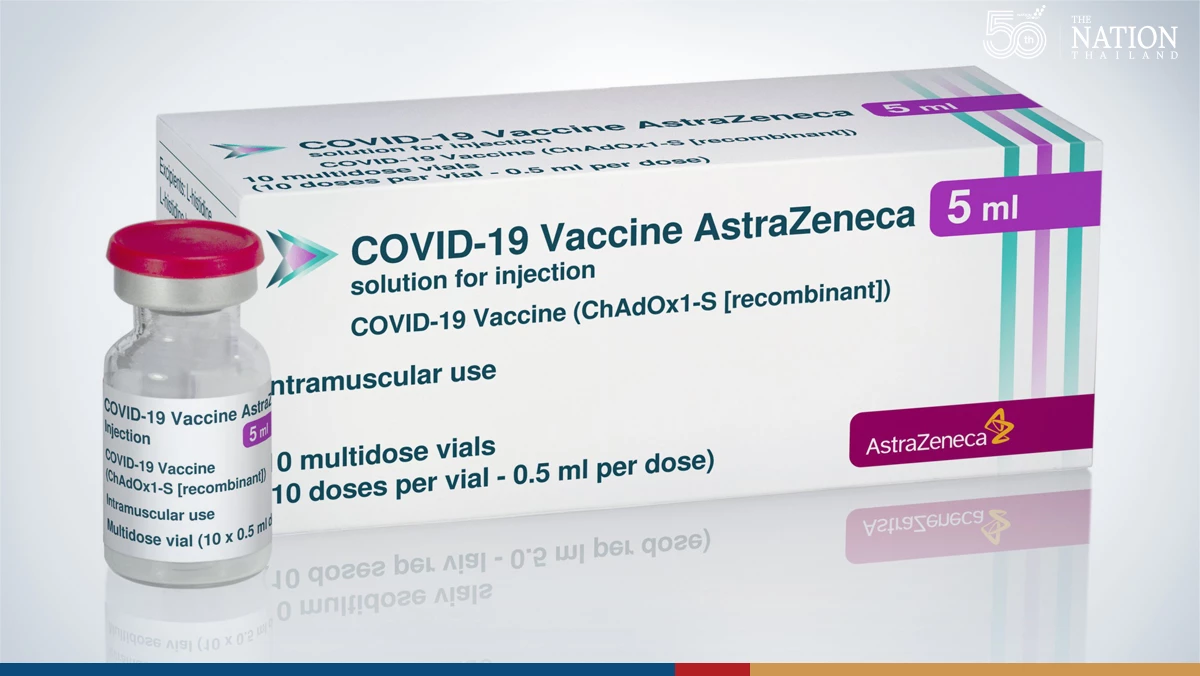
AstraZeneca announced on Thursday its delivery of more than 15 million doses of Covid-19 vaccine to the Public Health Ministry in December, to complete an initial commitment of 61 million.
It added that another 60 million doses of the vaccine will be supplied to Thailand across 2022, based on an agreement made between the company and the government in September.
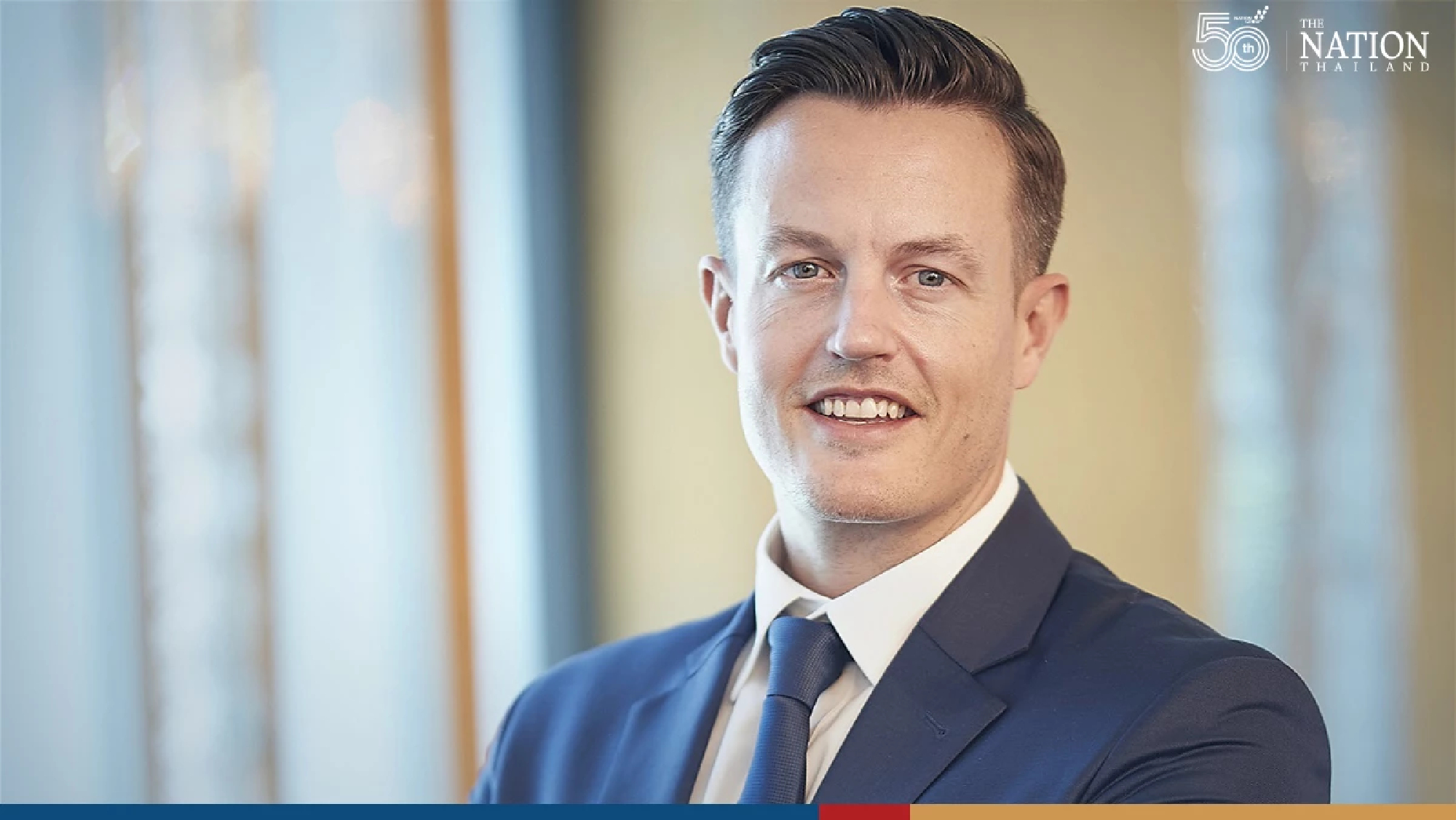
James Teague, country president of AstraZeneca, Thailand said: “Supporting the Ministry of Public Health’s mass vaccination programme via the production and supply of our vaccine is our highest priority, and has gained urgency following the emergence of the new Omicron variant. We have been able to accelerate our supply over the last quarter and will continue to support Thailand in meeting the dynamic challenges of the pandemic.”
“Covid-19 vaccine AstraZeneca manufactured in Thailand has been authorised under the World Health Organisation Emergency Use Listing procedure. The authorisation recognises that vaccine doses manufactured by Siam Bioscience, AstraZeneca’s production partner in Thailand, is the same product as Covid-19 vaccine AstraZeneca manufactured elsewhere in the world,” the company said.
“To date, more than 2.3 billion doses of Oxford-AstraZeneca Covid-19 have been supplied to over 170 countries, and approximately two-thirds of these doses have been delivered to low- and lower-middle income countries. The vaccine is estimated to have helped prevent 50 million Covid-19 infections, five million hospitalisations and helped save more than one million lives due to Covid-19. From the body of evidence in clinical trials and real-world data, the vaccine has been shown to have an acceptable safety profile,” quoted the company’s statement.
SAN FRANCISCO – Tesla will no longer allow drivers and front-seat passengers to play video games while its cars are in motion, the company told federal regulators after a probe was opened this week.
“Tesla informed the agency that it is changing the functionality of this feature,” NHTSA spokeswoman Lucia Sanchez said. “In a new software update, “Passenger Play” will now be locked and unusable when the vehicle is in motion.”
Sanchez said Tesla’s move followed the Dec. 21 opening of a preliminary evaluation into the feature, which allowed drivers and passengers to play solitaire and more advanced games while the car was moving – after agreeing the software was for passenger use.
“The Vehicle Safety Act prohibits manufacturers from selling vehicles with defects posing unreasonable risks to safety, including technologies that distract drivers from driving safely,” Sanchez said.
She said the evaluation continues while federal regulators gather additional information from Tesla.
Tesla did not immediately respond to a request for comment. The company in the past has touted potential safety benefits of its advanced driver-assistance system, Autopilot, comparing its performance to driving overall.
But federal regulators worry that in-car distractions paired with systems that introduce automation will encourage drivers to take their eyes off the road. And Autopilot’s performance is not directly comparable to regular driving because the system consists of primarily highway-only features.
A second system, called Full Self-Driving, is a software beta available to a more limited group of thousands of testers – and is intended to be used on city and residential streets.
NHTSA opened a probe this summer into Autopilot over crashes involving a dozen parked emergency vehicles while the system was activated. The agency also asked Tesla and other car-makers, along with manufacturers of self-driving vehicles, to report on many crashes involving autonomous and advanced-driver assistance systems within a day of learning of the incidents.
Sanchez said this week that NHTSA had opened its 580,000-vehicle probe into in-car gaming because of concerns about driver distraction.
“NHTSA based its decision on reports that Tesla’s gameplay functionality is visible from the driver’s seat and can be enabled while driving the vehicle,” she said, noting that “no commercially available motor vehicles today can drive themselves.”
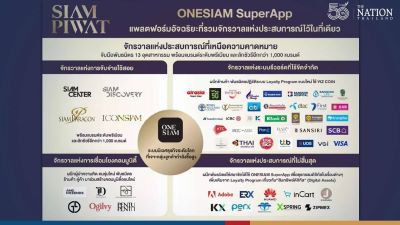
Siam Piwat, the owner and operator of Bangkok’s Siam Paragon, Siam Centre, Siam Discovery and Iconsiam shopping complexes, launched its “OneSiam” application on Thursday in a bid to provide an “extraordinary” experience for online customers, director and CEO Chadatip Chutrakul said.
She said the platform would link customers with the company’s domestic and overseas partners covering more than 13 industries, such as tourism, finance, insurance, medication, aviation and digital assets.
“This move is aimed at creating a global ecosystem to enable the company and its partners worldwide to grow together on a digital platform,” she said.
The app will provide customers four universes of experiences:
1. Universe of shopping experiences: products from over 1,000 premium and luxury brands are available on the platform.
2. Universe of co-created communities: over 3,000 pieces of content are ready to attract customers each month, such as lifestyle, healthcare, travel and sports.
3. Universe of infinite rewards: various loyalty programmes using Viz Coin are available to boost customers’ shopping experience both onsite and online.
4. Universe of unlimited experiences: next year, customers can use the application to perform transactions related to digital assets and utilities.
In addition, Siam Piwat is planning to cooperate with several experts in connecting the real world with metaverse to provide added shopping experiences to customers.
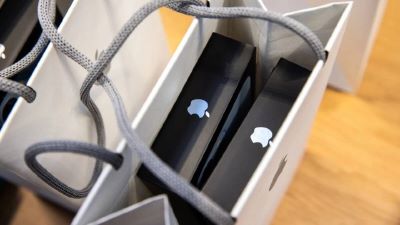
After a decades-long run as one of the worlds best-performing stocks, Apple is on the verge of reaching $3 trillion in market value. Thats bigger than the entire German equity market. Or the U.K. economy.
The iPhone maker needs to rise just another 6% to become the first company to achieve the milestone, less than four years after it first surpassed $1 trillion.
“It’s a phenomenal achievement and highlights the incredible dominance of U.S. tech firms,” said Craig Erlam, senior market analyst at Oanda. “And there’s so much still to come from Apple, which makes you wonder what milestone they’ll pass next and how big they can become.”
Apple became the world’s most valuable business thanks to a steady stream of products that have captivated consumers. Now, with markets wobbling because of concern that higher interest rates and the coronavirus will undermine economic growth, investors view the company as a relatively safe place to park their money thanks to its consistent sales growth and hefty cash balance.
Since the end of the 1990s, Apple shares have returned a whopping 22,000%, equal to about 28% a year. The S&P 500 has returned 7.5% annually in the same period. A few other tech stocks have done better — Nvidia, a maker of graphics-processing chips, has returned 31% annually, while streaming giant Netflix is up 39% a year since its 2002 initial public offering — but Apple dwarfs them both in size.
The iPhone maker opened 0.8% higher on Wednesday a day after jumping 3.5% boosting the Nasdaq 100 and S&P 500 stock indexes. The Cupertino, California-based company trades at 30 times profit projected over the next 12 months, compared with an average of 22 times for companies in the S&P 500.
Morgan Stanley analyst Katy Huberty argues the stock is undervalued when considering revenue contributions expected in coming years from new products like augmented and virtual reality and autonomous vehicles.
“Apple should benefit from a flight to quality especially as upside from new product categories gets priced in,” said Huberty, who raised her price target to a Wall Street high $200 on Tuesday.
It wasn’t always so: In late 2000, Apple had a market value of just $4.5 billion, and investors were fleeing the stock, which traded for almost the value of the cash the company had in the bank. Co-founder Steve Jobs had returned to the helm in 1997 but had failed to revive its fortunes, and the iPod and the iPhone were still off in the future.
Now, investors can’t get enough of the stock. In a sign that mom-and-pop traders are chasing Apple, short-term bullish call options saw extreme buying activity. Four of the 10 most-active options contracts on U.S. exchanges Tuesday were calls on the iPhone maker.
What’s more, its shares got another boost from a late-breaking Nikkei report that the company asked suppliers to ramp up iPhone output from November to January. That comes a week after a Bloomberg News reported that iPhone demand was slowing.
Apple “is kind of in that sweet spot of not being too expensive, having a nice mix of products and services, and being a great innovator across its entire product line,” said Tim Ghriskey, senior portfolio strategist at Ingalls & Snyder.
Intel Corp. plans to list shares of its Mobileye self-driving car business by the middle of next year, letting the chipmaker capitalize on its investment in a burgeoning industry.
Intel will remain the majority owner after the transaction, which involves an initial public offering of newly issued Mobileye stock, the company said in a statement Monday. Mobileye’s executive team, led by Amnon Shashua, also will stay on board.
News of the IPO sent shares of Intel up as much as 7.9% on Tuesday, their biggest intraday gain since January. The stock had previously increased just 2.3% this year, trailing the performance of Intel’s chip peers and broader indexes.
The move could generate billions for Intel at a time when it’s tying to revitalize its main business. Mobileye’s valuation and the total amount to be raised in the IPO will be determined nearer the event, Intel Chief Executive Officer Pat Gelsinger said Tuesday on a conference call. The majority of the proceeds will be retained by Intel, but Mobileye will be given a balance sheet that allows it to fuel its expansion plans, he said.
Analysts at Morgan Stanley said the news was a “significant positive,” noting that Intel can generate some value from the business, as it will remain the majority owner, and the move will free up additional capital.
Gelsinger has been shaking up Intel since taking the helm in February, looking to revive the fortunes of the world’s largest chipmaker. Intel, long the dominant maker of computer processors, has ceded market share to rivals such as Advanced Micro Devices Inc. and lost its technological edge in key markets.
Against that backdrop, Mobileye has been a particular bright spot. The business, acquired by Intel in 2017 for about $15 billion, has consistently grown faster than its parent — and it serves a still-nascent industry. Intel has projected that the market for automotive silicon will reach $115 billion by the end of the decade.
Gelsinger stressed that Intel doesn’t need the IPO money to fund its push into new businesses. But Mobileye was undervalued by investors because it’s part of a much larger company, he said. A greater degree of independence will also help the profile of the business in the automotive industry and with attracting customers, he added.
The auto industry’s shift to electric vehicles and more autonomous cars is creating a huge appetite for electronics. Mobileye makes chips and software that work with sensors to let vehicles handle more driving functions, with the ultimate goal of replacing humans in the role altogether.
The company recently shipped its 100 millionth EyeQ chip system and unveiled a six-passenger vehicle that will be used for driverless ride-hailing services in Tel Aviv and Munich next year. It has won contracts with more than 30 top automakers globally, Intel said Monday.
Mobileye has about 80% of the global market for advanced driver-assistance vision systems, according to researcher Guidehouse Insights.
The unit, based in Israel, has tested its technology in robo-taxi fleets in Tokyo, Paris, Shanghai and Detroit. It posted revenue of $326 million last quarter, up 39% from a year earlier. Operating income climbed to $105 million, double the year-earlier total. Overall, Intel posted a 5% revenue increase in its third quarter.
Mobileye expects revenue to rise 40% for all of 2021. The transaction won’t affect Intel’s 2021 financial targets, the company said.
Intel has made other recent moves to push deeper into transportation technology. In 2020, it acquired Israeli startup Moovit for about $900 million. The purchase gave it access to data from public-transport mapping, which could be integrated into a ride-hailing service.
That division, along with Intel staff working on lidar and radar development, will be part of Mobileye, the company said Monday.
Intel’s broader comeback effort has been slower going. The stock slid after the company’s last earnings report in October, when management warned that the turnaround would hurt profitability over the next few years. Investors are waiting to see if Gelsinger can improve Intel’s products quickly enough to keep more customers from switching to competitors or, in some cases, designing the chips themselves.
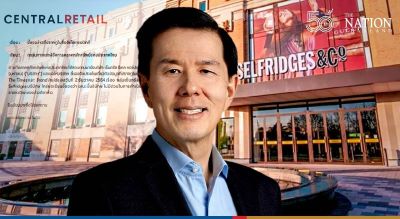
The Central Retail Corporation (CRC) dismissed recent media reports that it has bought the famous British luxury department store chain, Selfridges, for 180 billion baht.
CRC’s chief executive officer Yol Phokasub also wrote to the Stock Exchange of Thailand (SET) denying reports published in the UK saying that Central had acquired the Selfridges group.
Selfridges, which was founded in 1908 and is an integral part of British popular culture, is owned by the Canada-based Weston family. It runs 25 luxury stores worldwide, including its flagship store on London’s Oxford Street.
CRC said the news was first published on November 12, when it was consulting a bank about buying Selfridges. However, it said, the widely reported claim that it has struck a 4-billion pound deal with Selfridges is completely false.
It is believed that CRC’s acquisition of several luxury department stores in Europe since 2011 may have sparked these rumours. Central has taken over Alsterhaus, KaDeWe and Oberpollinger department stores in Germany, La Rinascente in Italy, Illum in Denmark and Globus in Switzerland.
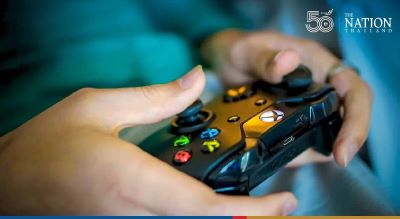
100 Thieves, a Los Angeles-based esports company, raised $60 million from investors at a valuation of $460 million, one of the largest for a company in competitive video gaming.
Green Bay Ventures led the round, which also included money from investors such as Breyer Capital and Artists Capital Management. Founded by former professional video gamer Matt Haag, 100 Thieves operates a handful of competitive esports teams, as well as businesses related to the culture of video gaming. It sells apparel, and also works with social media influencers who play games but don’t compete in professional leagues.
The valuation of 100 Thieves tripled in the last two years, bucking the trend in esports, where many companies have struggled to live up to the hype. While the number of people playing video games has continued to grow, the valuations for teams that play them professionally have not, as the pandemic crimped revenue for all live events businesses.
Investors are still eager to plow money into video gaming more broadly, as evidenced by the performance of Roblox since it went public earlier this year. 100 Thieves has benefited from stressing the diversity of its business. The company makes about two-thirds of its revenue from gaming-related apparel and entertainment, such as podcasts. While 100 Thieves owns teams in leagues for the games League of Legends, Valorant and Call of Duty, two of its most popular gamers, CouRageJD and Valkyrae, are known for their fun videos on YouTube more than for their playing skills. They are also co-owners of the business.
Sales were expected to more than double this year, but the company declined to state specific figures. “Esports has grown very solidly, but gaming more broadly has grown astronomically,” said John Robinson, the company’s president and chief operating officer. “2021 was a record year for 100 Thieves.”
The company isn’t profitable, and 100 Thieves plans to use its new funds to continue to invest in its businesses. It has more than tripled its staff during the pandemic, beginning with about 30 people and now employing more than 100. It plans more programming for social media, in particular TikTok, and it will make acquisitions. The company bought its first company, gaming keyboard maker higround, in October.
100 Thieves has now raised more than $100 million in total and attracted many high-profile backers, including the rapper Drake, music manager Scooter Braun and Dan Gilbert, the owner of the Cleveland Cavaliers. They all sit on the company’s board.