Micro Leasing (MICRO), a financing service provider for second-hand trucks, expects to meet its lending growth target of 30 per cent this year to between Bt2.4 billion and Bt2.5 billion, manging director Winit Piyamaythang said on Thursday.
The company began trading in the Stock Exchange of Thailand on Thursday.
The listing will help enhance the company’s competitiveness, broaden expansion opportunities as well as strengthen its capital base.
Fundraising will be allocated to its hire-purchase business expansion, loan repayment and investment in the IT system for the development of a mobile lending application.
MICRO provides hire purchase financing services of second-hand trucks for commercial operation as well as other loan services with second-hand trucks as collaterals.
Walmart’s next health foray is Medicare plan with startup Clover
CorporateOct 02. 2020Shoppers wearing protective masks leave a Walmart store in Lakewood, Calif., on July 16, 2020. MUST CREDIT: Bloomberg photo by Patrick T. Fallon.
By Bloomberg · John Tozzi · BUSINESS, HEALTH, RETAIL, HEALTH-NEWS
Walmart will make its first foray into the fast-growing market for privately managed Medicare Advantage plans next year with two products for Georgia seniors jointly branded with insurance startup Clover Health.
The plans will give seniors access to new Walmart Health centers that the retail giant is testing in stores outside Atlanta. Those clinics and other providers in the plan will use Clover’s technology to track patients’ health and improve care, the companies said Thursday.
Walmart’s health-care strategy has been closely watched, and the retail giant is seen as a potential threat to established providers and insurers. The Georgia offering will make Walmart a player in the Medicare Advantage program, a lucrative market dominated by UnitedHealth Group Inc., Humana Inc., CVS Health Corp.’s Aetna unit, and BlueCross BlueShield branded plans, some of which are also expanding their offerings.
More than a third of Medicare beneficiaries opt to get their benefits through private Advantage plans that collect fees from the government in exchange for managing members’ care. The plans often combine traditional Medicare benefits with other services such as vision and dental care, gym memberships, and prescription drug coverage.
Seniors often choose Advantage plans over traditional Medicare to get those benefits, though they may have to agree to use a limited network of doctors and hospitals. Clover’s new plans with Walmart will use a preferred-provider organization network, though Clover said members won’t face additional fees for going out-of-network.
One of the two plans won’t charge monthly premiums, and both will offer free primary care, the companies said. Members will get $400-a-year benefit for over-the-counter health expenses that can be spent in Walmart stores or on its website, similar to a perk the retailer offered Anthem Medicare subscribers through a deal two years ago. Clover will underwrite the insurance plans, branded “LiveHealthy: Clover Powered, Walmart Enhanced.”
Other companies are expanding as well. Cigna Corp. plans to sell Medicare Advantage plans in five new states, and UnitedHealth said its expansion in 2021 in almost 300 counties would be its largest in five years. Humana plans to launch dozens of new plans across hundreds of counties, the company said. Aetna is adding 115 new counties, and Anthem is expanding into more than 80.
Clover said its product with Walmart will be distinguished by low costs and convenience. “Our vision is, we deliver care wherever our members want to get care,” said Andrew Toy, Clover’s president and chief technology officer. A Walmart spokeswoman said company officials weren’t available for interviews. In addition to Walmart’s health clinics, the network will include 31 hospitals and 8,000 providers in the region, which covers eight Georgia counties mostly outside Atlanta.
Walmart began opening health clinics in Georgia stores in 2019 and now has six locations there and one in Arkansas, according to the company’s website. Cash prices are posted in price sheets online and in waiting rooms: $40 for basic office visit and $20 to test for strep throat, for example. The clinics offer primary care, vision, dental care, lab tests and mental health visits.
Walmart will continue expanding its health centers, with seven more Georgia locations planned in the months ahead and additional centers coming in the Chicago area and some cities in Florida, according to a company blog post Sept. 17.
“The demand definitely tells us that Americans are looking for access to quality care, and we think Walmart – its footprint – should be a part of that,” Walmart U.S. Chief Executive Officer John Furner said in an investor conference this month.
Other moves by Walmart into the sector include a collaboration with Oak Street Health, a Medicare-focused primary care company, to open clinics at three supercenters in the Dallas-Fort Worth area, according to a press release this month. The retailer recently formed an insurance agency to enroll customers in Medicare health plans, the Arkansas Democrat-Gazette reported in July, citing job ads and corporate filings. The company also sells monthly supplies of low-cost generic prescription drugs for $4.
Founded in 2014, Clover is among a handful of new entrants like Devoted Health and Oscar that are trying to use technology to improve health care. Backed by almost $1 billion from investors including GV, the venture capital arm of Alphabet Inc., the company has about 57,000 members in seven states and plans to triple the number of counties where it offers plans next year.
Clover’s software for medical professionals, known as Clover Assistant, will be deployed in the Walmart clinics and to other providers in the network. The program analyzes data from patient records, labs, socioeconomic data, and other sources to prompt clinicians to recommend actions like screening tests and adhere to evidence-based treatment guidelines, Toy said.
Exxon flags further losses that add to pressure on dividend
CorporateOct 02. 2020An Exxon Mobil gas station in Falls Church, Va., on April 28, 2020. MUST CREDIT: Bloomberg photo by Andrew Harrer.
By Syndication Washington Post, Bloomberg · Kevin Crowley · BUSINESS, US-GLOBAL-MARKETS Exxon Mobil Corp. likely made a third consecutive loss in the last quarter, heaping further pressure on the energy giant’s ability to pay its $15 billion-a-year dividend, currently the third-highest in the S&P 500 Index.
Exxon suffered further losses in its refining division in the third quarter while higher oil prices were likely not enough to push its production operations back into profit, the Irving, Texas-based company said Thursday in a filing. Refining margins took a negative hit of as much as $600 million in the period while chemicals made a small profit.
A third-quarter loss would suggest Exxon still isn’t able to fund either its dividend or capital expenditure from operational cash flow, meaning it’s reliant on debt to get by. The last time the company generated enough free cash to cover its dividend was the third quarter of 2018, according to data compiled by Bloomberg.
In aggregate, Exxon probably made a loss of about 30 cents a share, compared with analyst expectations of a 1-cent loss, analysts at Tudor, Pickering, Holt & Co. said in a note to clients. The update from Exxon will likely weigh on the shares, they said.
“We suspect investors will continue to focus on the path forward for the business with operating cost and capital cuts in focus to shore up the balance sheet in a bid to defend the company’s dividend,” the analysts said.
Exxon’s dividend yield has risen to more than 10% over the past few days, indicating shareholders believe the dividend is unsustainable at current levels and may be cut. Rival oil supermajors Royal Dutch Shell Plc and BP Plc slashed their payouts earlier this year as Covid-19 savaged oil demand globally. Reducing its dividend would be a seismic shift for Exxon, which has made a rising payout the keystone of its investment strategy for the last 37 years.
Shares of Exxon were down 1.1% at $33.97 at 9:42 a.m. in New York trading.
The United Nations Framework Convention on Climate Change (UNFCCC) released its report on “Commitments to Net Zero Double in Less Than a Year” during this year’s Climate Week held in New York from September 21 to 27.
In the release, UNFCCC said more governments and businesses across the world committing themselves to reducing their greenhouse gas emissions. Currently 22 regions, 452 cities, 1,101 businesses, 549 universities and 45 of the biggest investors have committed to the cause.
New institutions that have joined the “race to zero” include the Australian state of New South Wales, logistics giant Brambles, automaker Ford, buildings materials company LafargeHolcim and Thailand’s agri-food giant Charoen Pokphand (CP) Group.
These companies will lend a hand in limiting global warming to 1.5 degrees Celsius.
Suphachai Chearavanont, chief executive officer of CP Group, was quoted on the UNFCCC website as saying: “CP Group has a role to play in reducing the agriculture sector’s carbon footprint and encouraging consumers to adopt more sustainable food choices. With our commitment for net zero emissions within our operations by 2030, we aim to meet this opportunity by leveraging innovation and working closely with all our partners and stakeholders.”
The CEO also spoke with Nigel Topping, a high-level climate champion for Climate Action COP 26, on the challenges of alleviating global warming problems and achieving net zero carbon emissions.
Suphachai said to help the agricultural sector transition to net zero carbon, efficient, energy-saving farming practices will have to be adopted. He also said that reducing food waste will require support from consumers and partners across the supply chain, while new technology will help empower farmers leading to a neutral carbon footprint.
“I have been motivated by the fact that the global threat of climate change is real, recognising that the bio-sphere we live in is extremely fragile. Here in Thailand, we have seen first-hand its impact on agriculture, tourism as well as human health. We have digitised our operations to unlock both sustainable practices and business value. Our supply chain management is more transparent and integrated. I truly believe that CP Group has the scale, skills and most importantly, ‘the mindset to lead and succeed’.”
Also joining the commitment to reduce their carbon footprint were Microsoft president Brad Smith, LafargHolcim’s chief executive Jan Jenisch and L’Oreal CEO Jean-Paul Agon.
True Corporation (TRUE) will sell no more than 300 units of its Digital Telecommunications Infrastructure Fund (DIF) to raise Bt4.02 billion in operating capital.
As of 10.47am Wednesday, DIF units were going for Bt13.70 each, down by Bt0.50 or 3.52 per cent.
TRUE recently informed the Securities and Exchange Commission (SEC) that its board of directors had decided to sell 300 DIF units, or 2.82 per cent of the fund’ investment units, to investors outside the company.
The company expects to raise Bt4.02 billion in operating capital from the sale of the units, which will be priced using the book-building method.
Once it sells the units, TRUE’s stake in DIF will drop from 26.18 per cent to 23.38 per cent.
The company said it is sticking by its policy to hold the fund’s investment units for the long run.
By Syndication Washington Post, Bloomberg · Matt Robinson, Tom Schoenberg · BUSINESS JPMorgan Chase & Co. admitted wrongdoing and agreed to pay more than $920 million to resolve U.S. authorities’ claims of market manipulation in the bank’s trading of metals futures and Treasury securities over an eight-year period, the largest sanction ever tied to the illegal practice known as spoofing.
The New York-based lender will pay the biggest monetary penalty ever imposed by the CFTC, including a $436.4 million fine, $311.7 million in restitution and more than $172 million in disgorgement, according to a statement from the Commodity Futures Trading Commission. The CFTC said its order will recognize and offset restitution and disgorgement payments made to the Department of Justice and Securities and Exchange Commission.
The accord ends a criminal investigation of the bank that has led to a half dozen employees being charged for allegedly rigging the price of gold and silver futures for more than eight years. Two have entered guilty pleas, and four others are awaiting trial.
The JPMorgan penalty far exceeds previous spoofing-related fines levied against banks, and is the toughest sanction imposed in the Justice Department’s years-long crackdown on spoofing. The bank entered into a deferred prosecution agreement with the Justice Department as part of the settlement, according to the CFTC.
A JPMorgan spokesman had no immediate comment.
Spoofing typically involves flooding derivatives markets with orders that traders don’t intend to execute to trick others into moving prices in a desired direction. The practice has become a focus for prosecutors and regulators in recent years after lawmakers specifically prohibited it in 2010. While submitting and canceling orders isn’t illegal, it is unlawful as part of a strategy intended to dupe other traders.
More than two dozen individuals and firms have been sanctioned by the Justice Department or the CFTC, including day traders operating out of their bedrooms, sophisticated high-frequency trading shops and big banks such as Bank of America Corp. and Deutsche Bank AG.
The Justice Department took a much more aggressive tack with JPMorgan by alleging that the bank hosted an eight-year market manipulation conspiracy with its precious metals desk as a criminal racketeering operation.
While other suspected market cheats have been charged with specific spoofing and manipulation offenses, the Justice Department accused JPMorgan metals traders under the 1970 Racketeer Influenced and Corrupt Organizations Act — a criminal law more commonly applied to Mafia cases than global bank probes.
RICO allows for prosecutors to charge multiple criminal acts involving a group of people in the same case as long as they were part of the same enterprise. The Justice Department said the conspiracy on the JPMorgan metals desk ran from March 2008 to August 2016. The two former metals traders for the bank who have pleaded guilty to fraud charges are cooperating with authorities.
The highest-level individual charged is Michael Nowak, a veteran gold trader who remained active as the global head of JPMorgan’s precious metals desk until he was indicted under seal in August 2019 along with two others. A former JPMorgan salesman who worked with hedge fund clients was later added to the case.
In 2015, JPMorgan pleaded guilty to felony antitrust charges along with several other global banks that paid penalties and admitted to conspiring to rig the price of U.S. dollars and euros. The bank agreed to pay $550 million, but it and other global lenders in the accord felt little lasting hit from markets or customers, undercutting investor fears that a guilty plea would devastate their business.
Shortly after Nowak and other traders were charged under RICO, JPMorgan learned it was the focus of a separate but related criminal investigation into trading of Treasury securities and futures, according to a person familiar with the matter.
The Social Security Office (SSO) sold 41,100 Bangkok Bank (BBL) shares on September 24, the Securities and Exchange Commission (SEC) reported on Tuesday.
The SEC said it received the SSO’s report on acquisition or disposition of securities stating that the company sold 41,100 BBL shares, accounting for 0.0021 per cent of total shareholding.
This makes SSO shareholding in BBL drop to 95.40 million shares, accounting for 4.99 per cent of total shareholding.
As of June 30, approximately 68 per cent of SSO investment was in government bonds and 12.09 per cent in Thai stocks. The company has a policy to invest 80 per cent in safe-haven assets and 20 per cent in volatile assets.
The company realised gains of Bt23 billion in the first half of this year – Bt21 billion from interest, debt instrument sales and asset borrowing fees, and Bt2.7 billion from dividends and equities and investment unit sales.
Airlines face worst crisis since 9/11 as funding ends
CorporateSep 27. 2020Air transportation jobs plummet Photo by: Michael Laris — The Washington Post Fi
By The Washington Post · Ian Duncan, Lori Aratani, Michael Laris · NATIONAL, BUSINESS, WORLD, TRANSPORTATION, TRAVEL
For Jennie Ballesteros, having the wings of a United Airlines flight attendant ceremonially pinned to her chest was the fulfillment of a dream she’d held onto for years – ever since some crew members she served as a waitress told her she might have what it takes.
“I’m going to make it,” Ballesteros recalls thinking. “I’m going to have some security. A retirement. A 401(k). This is an amazing job. I was just so happy.”
In her first months as a flight attendant, Jennie Ballesteros worked evacuation flights as the world shut down. She may be lose her job Thursday, when Cares Act funding to airlines expires. CREDIT: Photo by David Becker for The Washington Post
It was Jan. 2.
“I said, ‘2020 is going to be my year.’ ”
Soon, news of a novel coronavirus from Wuhan, China, began spreading. In her first few months on the job, the 29-year-old was working evacuation flights as people sought to get to their home countries as the world locked down.
Now she’s on the verge of seeing her long-held dream end, facing being furloughed as one of 16,300 United employees – and more than 35,000 across the airline industry – set to be out of a job come Thursday. It’s another devastating blow for an industry facing a crisis analysts say is already far worse than it experienced after the Sept. 11, 2001, terrorist attacks, and one that has already seen employment in air transportation decline by 100,000 jobs according to one measure.
The employees facing furlough will be victims of the ongoing devastation the pandemic has inflicted on airlines, which have seen demand for travel drop precipitously since March, but also of a Congress that says it wants to protect their jobs with billions of dollars in aid and yet has been unable to reach agreement on a bill to do so.
“I feel kind of abandoned by our representatives,” said Ballesteros, who is based in San Francisco.
Leaders of her union, the Association of Flight Attendants, along with other labor groups and airline heads were in Washington last week to make a final push for an extension of financial aid known as the Payroll Support Program. At a news conference in the shadow of the Capitol on Tuesday afternoon, their frustration was clear.
“What Congress and the administration did back in March was a remarkable effort to save the U.S. economy and to save aviation,” United Airlines Chief Executive Scott Kirby said. His airline, which employs 79,000 people, received $5 billion in the first coronavirus relief package.
“But this is taking longer than most people expected six months ago and the reality is we need to do more to keep those professionals and to keep their support of the economy intact.”
Lawmakers say they didn’t intend to create a precipice when they gave airlines an initial $25 billion in aid on the condition that they not lay off workers until October. Like many Americans, they expected the virus to be under control by now. Instead, it continues to spread and air travel is stuck at about 700,000 passengers a day, a third of its normal rate.
The prospects of a deal remain uncertain, with Democrats and Republicans still haggling over a broader relief package, of which help for the airlines would likely have to be a part.
– – –
Airline employees are far from the only workers suffering as the pandemic continues to wreak havoc on the U.S. economy. But their situation is particularly dramatic because the industry is concentrated in a few very large and very visible companies, and there is a bright deadline on the calendar. Airline industry employees may not come to mind when many Americans think of “essential workers.” But airline employees say they have risked their own health to keep planes in the air during the pandemic, transporting those who had to travel and moving essential goods, including medical supplies. Some 45 to 50 percent of freight typically moves in passenger jets.
The more than 35,000 facing furlough are only part of the industry’s story. Tens of thousands more have already taken unpaid leave, or left their airlines for good. Others have seen hours cut and worry about pay cuts this fall.
More than 1,800 U.S.airline planes remain parked – a third of the industry’s fleet – and cuts to service are likely to follow the job losses.
Though the aviation industry took a hit from 9/11, a different coronavirus outbreak in 2003 and a deep recession in 2008, economists say those episodes – while painful – pale in comparison to this year’s calamity.
Labor Department figures released this month show there are more than 100,000 fewer air transportation jobs in the U.S. than in March, a decline of more than 20 percent.
“This is just unprecedented,” said Joseph Sobieralski, an airline labor expert at Purdue University.
That overall figure goes beyond airlines to cover both passenger air travel and cargo-related employment, and doesn’t include many support jobs and the layoffs put on hold by the federal bailout. But the number is a good stand-in for gauging the severity of the downturn, Sobieralski said.
The uncertainty of life in pandemic-stricken America has made for a historic crisis for airlines and their employees.
“The 9/11 situation was abrupt. It was shocking. It knocked people back on their heels. This situation seems to be a little bit more sinister, simply because we don’t know,” said Eric Jones, chair of the maintenance science department at Embry-Riddle Aeronautical University and a former mechanic for Southwest Airlines. “There’s a sense of unknowing about, well, when is covid going to recede? When is this vaccine going to happen?”
Furloughed employees will have the right to be called back to their old jobs, but industry leaders and analysts expect the recovery to take years.
The Trump administration has faced sharp criticism for downplaying and mismanaging the pandemic, and for failing to put in place a national testing infrastructure and other measures that could slow the virus’s spread and give airline passengers and others the confidence to resume a more normal life.
Daniel Elwell, deputy administrator at the Federal Aviation Administration, recently told state aviation leaders that the government is consulting with airlines and international officials on plans to “incentivize travel while keeping passengers safe and healthy,” and said details would be forthcoming. The goal, Elwell told the National Association of State Aviation Officials, is not “to create zero risk or to eliminate any chance of covid,” but rather to “bring the highest level of health security into the system without making it so burdensome that we can’t fly.”
Individual airlines have adopted different strategies in response to the crisis. United and American Airlines began warning of mass furloughs in the summer. But Delta Air Lines has been able to avoid doing so, instead using the summer to convince 40,000 of the 90,000 people it employed in March to go on temporary unpaid leave and another 17,000 to accept separation packages. The company received $5.4 billion from the payroll support program.
Delta’s leaders have praised employees’ willingness to make sacrifices for the good of the company, but two flight attendants interviewed described receiving a barrage of emails that left them feeling intensely pressured to leave.
“I definitely feel like that was implied, you’re a bad employee if you don’t take the leave,” said one of the flight attendants, who spoke on the condition of anonymity because she feared retaliation and like nearly all Delta employees, is not protected by a union.
Delta, in a statement, said the decision about whether to take a leave, “was left up to each individual Delta employee to make on behalf of themselves and their families.”
“Delta people have done everything to step up during this pandemic which is completely a function of our unique culture and why there will be no involuntary furloughs for Delta front-line ground and flight attendants in the U.S.,” the company said.
United and American, which are heavily unionized, kept most employees on their payrolls, and the two airlines account for nearly all of the coming job losses. American, which accepted $5.8 billion in payroll support, is preparing to furlough 19,000 of its 107,000 employees. Chief Executive Doug Parker said that with his company burning through $1 billion a month, he has no choice but to move forward.
“As painful as it is that is absolutely what we would have to do,” Parker said in a phone interview from the airline’s Washington office, where he spent the week pursuing the campaign for more federal assistance.
Should the money come through, Parker and Kirby both said they expect demand for travel to be robust enough in six months that the industry will be ready to start standing on its own again.
However, Parker said if workers are furloughed, the airline won’t be able to quickly rehire enough people to match that demand because they will require months of retraining, something he said could hamper a broader economic recovery.
“It would be a really bad thing for American Airlines and it would be a really bad thing for our country,” he said.
Southwest, which also is largely unionized, is trying to avoid that situation, agreeing to pay thousands of its employees not to come to work – for up to five years in the case of pilots – or to retire early.
The carrier, which employs 62,000, received $3.3 billion from the payroll program. Southwest has also raised more than $15 billion by borrowing, selling assets and leasing them back and issuing new stock.
With its “Extended Emergency Time Off” program, the company is trying to stop hemorrhaging money on salaries, but still maintain ties with employees it has already spent large sums training and hopes it will eventually need again.
The volunteers keep a significant chunk of their wages and all their benefits. About 12,500 employees are participating. Pilots were offered about half of their pay, a Southwest pilot said in an interview, though the company declined to provide specific compensation figures. The company can call the pilots back to work with a minimum of 30 days notice, but said it would try volunteers first “if additional pilots are ever needed.”
More than 4,200 flight attendants, mechanics, pilots, and customer service and ground crew workers have agreed to leave Southwest altogether, the airline said in a regulatory filing. Employees said the departures were sweetened with generous incentive packages.
Avoiding layoffs is a point of pride at Southwest, something the company boasts it has never had to do in its 49-year history. Chief Executive Gary Kelly said Southwest is not planning pay cuts or involuntary furloughs this year either, though “we will continue to plan for multiple weak scenarios and maintain our preparedness.”
While avoiding the pain of layoffs, the thousands of early retirements and departures have made for a tumultuous, and at times emotional, stretch at the airline.
“The great thing is, you’re getting rid of your top earners,” said the Southwest pilot, who spoke on the condition of anonymity because employees are not authorized to speak to media. “It helps all of us.”
But the idea of cutting short their careers and time in the cockpit was a struggle for many, the pilot said.
“A lot of these guys just love it. They love what they do,” the pilot said. “But the package was so good it really made people think. There are a lot of people who wish they were in a position to take it, myself included.”
Some lawmakers have questioned the airlines’ efforts to cut labor costs while accepting billions in federal aid meant to shore up their payrolls. Rules for the payroll grant program, part of the massive aid package known as the Cares Act, said airlines could not involuntarily put people out of work or cut pay if they accepted the money, but some airlines interpreted the language to mean that cutting work hours was allowed.
Delta cut hours by 25% for many employees, a policy Delta Chief Executive Ed Bastian said would continue through the end of the year. United sought to force a cut in some 15,000 employees’ hours, but backed off under pressure from political leaders and a lawsuit by one of its unions. Several airline contractors are under investigation by House Democrats, accused of laying off workers immediately before receiving the payroll aid money.
Nonetheless, there is broad bipartisan support for renewing the program through April, even among those like Rep. Jan Schakowsky, D-Ill., who questioned why the Treasury Department allowed companies receiving aid to cut hours. She said she hopes “that it can be reauthorized quickly” and that new safeguards could be included in an extension.
The problem has remained finding a route for turning that support into legislation.
Early last week, Sens. Roger Wicker, R-Miss., and Susan Collins, R-Maine, who lead committees with responsibility for aviation, introduced a stand-alone bill to extend the payroll protection program. About two dozen other Senators have signed on as co-sponsors of the legislation, including two Democrats.
White House press secretary Kayleigh McEnany said the Trump administration wanted lawmakers to pass one-off aid bills, including help for the airlines.
But Democratic leaders in the House have been committed to passing several trillion dollars in aid as a single package. Rep. Rick Larsen, D-Wash., who chairs the aviation subcommittee, said he could not foresee a stand-alone bill being successful when there are also local government workers whose jobs are on the line and people are on the verge of being evicted.
“All these folks and more need to have their needs reflected in a covid-19 relief package,” Larsen said.
On Thursday, House Speaker Nancy Pelosi, D-Calif., said she would begin crafting a new proposal that would include help for the airlines and took steps to open negotiations with the Trump administration.
For front-line airline workers counting down the days to Oct. 1, the regular struggles of life were magnified to huge proportions by the virus and the impending loss of their livelihoods.
– – –
In March, when President Donald Trump signed the Cares Act, Toni Valentine felt like she finally had time to breathe.
The payroll protection program included in the law offered her assurance she could keep her job as a reservations agent at United, she said, and gave her family stability at a time when so much else in their world was uncertain.
For Valentine, 2019 had been a difficult year: Six months after starting a new job, her husband suffered a massive stroke.
“We lost a whole income, medical benefits,” she said. “It just seemed like it happened overnight.”
These days, Valentine, 41, who has worked at United for 15 years, finds herself anxious and worried. Worried about supporting six kids. Worried about bills – phone, electricity and gas. Worried about what she’ll do if she’s furloughed and loses her medical coverage in the midst of a pandemic.
Her family is doing what they can. Her 19-year-old son left college to help her manage, caring for his younger siblings and overseeing their online schooling. She’s thankful for that and other small things. Her voice quivered as she recalled how quietly relieved she was that school would be online and not in person: There wasn’t any extra money for new school supplies and clothes this year.
And so she prays. And works. And prays. And works. And every day she said it gets just a bit harder.
“I have to put on this brave face and be the best employee I’ve got to be knowing that . . . I might not have a job,” said Valentine, who lives in the Detroit suburbs. “And that’s the hardest thing ever.”
Andrea’ Myers has spent the last few months in a fog of worry. Myers, also a United reservations agent, was diagnosed with cancer in February and had surgery to remove a tumor in March, just as the pandemic was beginning to shut down cities across the country.
Since the hospital only allowed one person to be with her due to coronavirus restrictions, three carloads of relatives sat in the hospital parking lot for nine hours as she underwent surgery. While she was in the hospital recovering, she got covid-19.
But Myers returned to work in July, relieved to still have a job. Then came word of possible furloughs. Now just days from the deadline, she’s grappling with the idea she may have to leave the company she’s been with for 21 years, losing her health insurance. Her husband was laid off from his job as an electrician, and so was her son, who worked for Hertz.
“We just need to make sure that people understand that we’re people,” said Myers, 46, who also lives in Detroit. “We’re not just a number at United Airlines. We have families. We have things we have to get done.”
For Ballesteros, the elation of becoming a flight attendant began to give way to dread as the virus took hold.
In March, she flew on a packed 787 to Munich, returning German residents home from the U.S. At first she was excited to be going to Europe, only to realize she couldn’t leave her hotel. And when she was in the van on the way to the hotel, she learned her foster father had had a heart attack.
He’d already been undergoing chemotherapy, and Ballesteros said she had avoided visiting him so as to not potentially expose him to the coronavirus.He died just as she was getting back from Munich.
“I still haven’t gone home,” she said. “I haven’t been able to hug my foster mom.”
If there’s no aid deal, Ballesteros said she doesn’t know what she’ll do. At one point it looked like she’d lined up a bartending job at a new restaurant, but because of the pandemic, it’s not going to open. Unemployment will barely cover her rent and car payment. She spent her savings to break a lease in Las Vegas and move to San Francisco for the new job.
“I’m at the absolute bottom,” she said.
She plans to keep working this week. Then she might have to turn in her company property. But, Ballesteros said, she would keep the wings.
BOT plans credit-term limit as SMEs hit by big firms’ delaying tactics
CorporateSep 26. 2020Experts brief the press about plans to introduce a mandatory credit term with financial penalties. From left, Thita Phakanont, Sauwanee Thairungroj, Chitkasem Pornprapunt.
By The Nation
The central bank plans to punish large firms who delay paying their debts to small companies.
The move comes after a study showed that big corporates are taking advantage of small and medium-sized enterprises (SMEs) by delaying payments, leading to a credit crunch for SMEs, said Sauwanee Thairungroj, adviser to the University of Thai Chamber of Commerce.
Cash payment represents only 4 per cent of transactions among businesses, most of whom rely on credit. Usually, businesses settle their bills within 30 to 45 days, but during the Covid-19 outbreak, big corporates have delayed payment by up to four months or 120 days, she said.
The delaying tactics have cost SMEs dearly, with their liquidity dropping by 38.5 per cent, debt rising by 27.6 per cent and debt payment ability falling by 16.2 per cent.
The response from small firms has been mixed, with 40.6 per cent asking for partial up-front payment, 35.5 per cent offering discounts, 15 per cent seeking credit from loan sharks and the rest applying for loans from financial institutions.
Thita Phakanont, senior economist at the Bank of Thailand (BOT), noted that other countries have created solutions to problems caused by extending credit terms.
Britain requires payment within 60 days, after which debtors have their rights to do business with state agencies revoked. Australia requires payment in 30 days, after which debtor-firms can have their certification revoked. The European Union sets a 60-day credit term, with fines or interest-rate penalties for violators. China sets a deadline of 30 to 60 days, after which debtors must pay interest equivalent to the rate on a one-year loan.
In Thailand, a possible credit term of 30 to 45 days is being studied by the central bank, National Economic and Social Development Council (NESDC) and Thai Chamber of Commerce. Those who fail to meet the deadline could be subject to a fine and interest rate charge. The study will also explore whether the Stock Exchange of Thailand should disclose names of listed firms which delay debt payment.
Incentives may be also needed for firms to stick to the set credit term, Thita added.
Senior BOT director Chitkasem Pornprapunt said the results of the study would be proposed to Cabinet for approval. If given the green light, central bank may introduce a compulsory credit term by December this year. The rule would be applied to big companies first – manufacturers with at least Bt500 million annual revenue and service-sector firms with at least Bt300 million yearly revenue.
The Securities and Exchange Commission (SEC) has permitted WHA Premium Growth Real Estate Investment Trust (WHART) to raise capital for a sixth time for its Bt3.23-billion built-to-suit project.
Anuwat Jarukornsakul, CEO and manager of WHART, said the project will enhance property potential in the Eastern Economic Corridor as the centre of logistics in Thailand, and expects to offer investment units within this year.
“WHART will invest in a built-to-suit project consisting of approximately 128,789 square metres of buildings for rent and approximately 3,055 square metres of parking spaces for rent on about 120 rai,” he said.
He said WHART has stable cash flow because tenants in long-term rental agreements with REIT were large multinational companies in various industries.


 Shoppers wearing protective masks leave a Walmart store in Lakewood, Calif., on July 16, 2020. MUST CREDIT: Bloomberg photo by Patrick T. Fallon.
  An Exxon Mobil gas station in Falls Church, Va., on April 28, 2020. MUST CREDIT: Bloomberg photo by Andrew Harrer.


 Air transportation jobs plummet Photo by: Michael Laris — The Washington Post Fi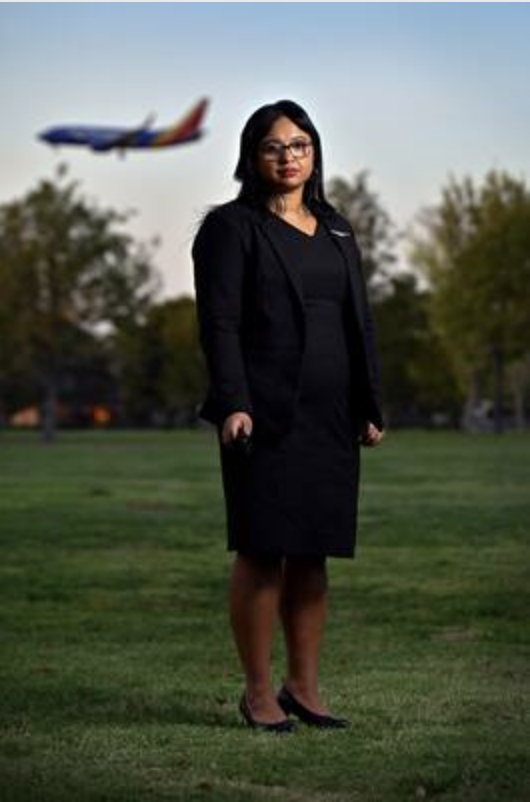
 Experts brief the press about plans to introduce a mandatory credit term with financial penalties. From left, Thita Phakanont, Sauwanee Thairungroj, Chitkasem Pornprapunt.