Vietnam-Laos trade hits US$940 million in ten months

#ศาสตร์เกษตรดินปุ๋ย : ขอบคุณแหล่งข้อมูล : หนังสือพิมพ์ The Nation

https://www.nationthailand.com/business/30379237?utm_source=category&utm_medium=internal_referral

Vietnam-Laos trade hits US$940 million in ten months

Dec 09. 2019
PM Nguyen Xuan Phuc chairs the meeting. — VNA/VNS Photo

PM Nguyen Xuan Phuc chairs the meeting. — VNA/VNS Photo
By Viet Nam News

1,345 Viewed

Hanoi — Trade co-operation was the highlight of Vietnam-Laos relations in the first ten months of the year, with revenue reaching US$940 million.

The figure was unveiled at a meeting of permanent cabinet members in Hanoi on Saturday under the chair of Prime Minister Nguyen Xuan Phuc.

Two-way trade is projected to hit $1.1-1.2 billion in 2019, up 12.6 per cent year-on-year, surpassing the targets of $1 billion and 10 per cent respectively set by the Government.

Vietnam has become the third biggest investor in Laos with 413 projects valued at $4.22 billion, with joint ventures involving Viettel, the Vietnam Rubber Group, Muong Thanh Hotel, Crown Plaza, LaoViet Bank and the Xekaman 1 Hydropower Plant.

Vietnam has committed to providing VNĐ3.25 trillion ($139.8 million) in non-refundable aid for Laos from 2016-20, including VNĐ707 billion in the 2019 fiscal year, up 18.4 per cent against the previous year, aiming to help the neighbouring country implement infrastructure projects in transport, energy, personnel training and social welfare.

In early 2019, Vietnam provided 300 tonnes of seeds for Laos to support locals hit by natural disasters.

Over 1,000 scholarships have been granted to Lao students, and Vietnam has also dispatched teachers to Laos and financed Vietnamese language teaching courses in the country.

This year, five Vietnamese-funded projects have been completed in Laos and two others have been launched.

At the meeting, cabinet members also pointed out slow capital disbursement of these projects, along with bottlenecks in procedures.

The PM and cabinet members called for efforts to remove these difficulties to speed up the implementation of the work and prepare for the meeting of the Vietnam-Laos Inter-Governmental Committee slated for January 2020.

Ethnic work boosted

The same day, a Vietnam – Lao conference was held in the central province of Nghe An to seeks ways to continue nurturing the bilateral relations and friendship and to share experiences in the ethnic work between the two countries.

With the participation of more than 300 delegates from Vietnam – Laos bordering provinces, the event is a chance for them to analyse deeply and comprehensively the issues on the role of the political systems and ethnic minority communities along the border line in nurturing the tradition of the great relations between the two neighbouring countries.

Speaking at the function, Politburo member and Permanent Deputy Prime Minister Truong Hoa Binh stressed that the conference is another chance for the two countries to further strengthen the ties between them as well as the closeness between the ethnic groups living along the sides of the Trường Sơn mountain range.

For his part, Politburo member and President of the Central Committee of the Lao Front for National Construction Saysomphone Phomvihane held that the traditional and long-lasting solidarity and friendship between the two countries have become an exemplary and rare model in the international relations in the current context of the changing world.

Presentations at the conference touched upon the poverty easing and sustainable development in mountainous and ethnic minority areas, lessons on preservation and bringing into full play traditional cultural values of the ethnic minority communities along the Vietnam – Laos border line, and experiences in the building of the unity among those communities in the context of international integration.

Earlier, the Lao delegation offered incense at the Vietnam – Laos international cemetery in Nghe An Province for over 11,000 Vietnamese voluntary soldiers and military experts who laid down their lives in Laos. — VNS


Moody’s negative on Asia-Pacific banking industry

#ศาสตร์เกษตรดินปุ๋ย : ขอบคุณแหล่งข้อมูล : หนังสือพิมพ์ The Nation

https://www.nationthailand.com/business/30379231?utm_source=category&utm_medium=internal_referral

Moody’s negative on Asia-Pacific banking industry

Dec 09. 2019
By THE NATION

1,695 Viewed

Moody’s Investors Service says its outlook for the Asia-Pacific banking industry is negative over the next 12 months as the US-China trade dispute will weaken economic and trade activity in the region and erode investor confidence.

“Weaker economic and trade conditions will lead to moderate increases in problem loans for APAC banks,” said Moody’s vice president and senior credit officer Eugene Tarzimanov.

“Meanwhile, the profitability of banks will fall because they are raising credit provisions while central banks are cutting interest rates to support economic growth,” he added.

Nevertheless, Moody’s said APAC banks have generally maintained good capital and liquidity buffers and the probability of government support for these banks will stay high, except for banks in Hong Kong, because the territory is the only jurisdiction in APAC with an “operational resolution regime”.

Moody’s conclusions are contained in its just published 2020 outlook for the 17 banking systems in the Asia Pacific, namely in Thailand, Australia, Bangladesh, China, Hong Kong, India, Indonesia, Japan, Korea, Malaysia, Mongolia, New Zealand, the Philippines, Singapore, Sri Lanka, Taiwan and Vietnam.

Moody’s pointed out that while high private sector leverage poses a risk to many APAC economies, the buildup in leverage is generally moderating.

Most APAC banking systems have passed Moody’s stress test on capital, except for banks in India, Mongolia, Sri Lanka and Vietnam, “because banks in these jurisdictions have lower starting capital ratios and higher starting problem loan ratios”.

Moody’s report also said that environmental, social and governance risks will increasingly affect the creditworthiness of APAC banks.

Thai GDP growth forecast for 2019 slashed further

#ศาสตร์เกษตรดินปุ๋ย : ขอบคุณแหล่งข้อมูล : หนังสือพิมพ์ The Nation

https://www.nationthailand.com/business/30379227?utm_source=category&utm_medium=internal_referral

Thai GDP growth forecast for 2019 slashed further

Dec 09. 2019
By THE NATION

2,573 Viewed

Kasikorn Research Centre has revised downward its gross domestic product (GDP) forecast for 2019 to 2.5 per cent and projected that the Thai economy may grow 2.7 per cent in 2020.

The centre revealed the forecast at its seminar on “Business Outlook amid Numerous Challenges in 2020” on Monday (December 9).

Meanwhile, Thai businesses may face numerous downside risks including the baht’s appreciation, drought and minimum wage hike, it added.

Nattaporn Triratanasirikul, KResearch assistant managing director, said that KResearch’s downward economic growth revision for 2019 to 2.5 per cent from 2.8 per cent can be attributed to lacklustre export performance which has been caused by the protracted trade war and the stronger baht, less-than-expected overall investment and delay in the enactment of the budget expenditure bill for FY2020.

“For 2020, GDP is projected to grow 2.7 per cent (within a projected range of 2.5-3.0 per cent). We hope that the economy will be mainly driven by the push for the draft bill on budget expenditure for FY2020 and disbursement acceleration.”

However, as the political uncertainty at home may prompt a delay in the injection of a new budget into the economic system, which will affect private sector confidence, GDP may see growth of 2.5 per cent or less, which is at the lower end of KResearch’s projection range.

Meanwhile, exports may continue to shrink due to deceleration in Thailand’s major export markets, the US-China trade war which is unlikely to be resolved anytime soon as well as the baht’s relentless rise, especially amid the expectation of another rate cut by the Fed next year which will put greater pressure on the US dollar.

Thai commercial banks are expected to brace for four challenges, especially limited loan growth in line with the overall economic sentiment.

The loan growth next year is expected to stay unchanged at 3.5 per cent. Non-performing loans may increase from 2019, while the banks’ fees are likely to grow no more than 1-2 per cent and there may be additional impacts from the government’s policies.

Additionally, downward trend of the interest rates and the government’s signals to commercial banks to help their customers will affect an adjustment of lending and deposit interest rates, which will in turn pressure net interest margin (NIM).

Kevalin Wangpichayasuk, assistant managing director, KResearch, said other business sectors would face tough questions as well.

First of all, the expected stronger baht in 2020, when compared to the 2019 average, will not only affect the export sector but also lead to a shrinkage or reduction of the manufacturing output and possible job losses. Based on preliminary estimations, over 30,000 jobs in the manufacturing sector will be affected after almost 100,000 jobs disappeared in 2019.

Meanwhile, the drought in 2020 is forecast to be more severe than in 2019 as the water levels in various dams in Thailand have dropped drastically since the beginning of this year.

The drought may result in a contraction in the gross domestic product of the agricultural sector and farmers’ income. It remains to be seen whether the drought next year will record another historically severe condition as seen in 2015-16. The outlook should be clearer in the first 3-4 months of 2020 when it will become known whether Thailand will experience a long dry season next year.

Regarding the latest daily minimum wage rise, although its impact on 2020 inflation will likely be limited, it may present a challenge to the business sector.

An average increase in the daily minimum wage of approximately Bt5 will cause average labour cost to rise by another 0.3 per cent while the agricultural business will be adversely affected by the stronger baht, drought and rising labour costs.

This may force the government to introduce specific policies to aid this sector.

Meanwhile, the property sector has not recovered yet because there are around 200,000 accumulated unsold residential units in the market, which is too high for property developers to clear within a short period of time.

Among the businesses that continue to thrive is tourism. Although international tourist arrivals to Thailand are projected to grow at a slower pace of approximately 2-3 per cent in 2020, declining from a prior estimate of about 4 per cent in 2019, some inbound tourism markets, including China, Asean and India, as well as domestic tourism will likely help create travel-related business opportunities in Thailand.

The government may continue to promote or introduce tourism stimulus measures as one of the tools to boost the Thai economy in 2020 because tourism accounts for as much as 18 per cent of GDP.

Pet-food boom drives crop giant ADM’s push in $91 billion market

#ศาสตร์เกษตรดินปุ๋ย : ขอบคุณแหล่งข้อมูล : หนังสือพิมพ์ The Nation

https://www.nationthailand.com/business/30379216?utm_source=category&utm_medium=internal_referral

Pet-food boom drives crop giant ADM’s push in $91 billion market

Dec 09. 2019
Pet dogs stand in a shopping cart inside a Lowe's Cos. Home Improvement Warehouse store in Burbank, Calif., on May 19, 2017. MUST CREDIT: Bloomberg photo by Patrick T. Fallon.

Pet dogs stand in a shopping cart inside a Lowe’s Cos. Home Improvement Warehouse store in Burbank, Calif., on May 19, 2017. MUST CREDIT: Bloomberg photo by Patrick T. Fallon.
By Syndication Washington Post, Bloomberg · Isis Almeida

1,045 Viewed

At Archer-Daniels-Midland Co.’s new animal-nutrition lab in Decatur, Illinois, food scientists aren’t coming up with the next generation of rations for the world’s pigs, cows or chickens. They’re making dog cookies.

Just-baked bone-shaped treats containing ancient grains including quinoa, buckwheat and chia sit on a lab counter that looks more like a large kitchen island. The smell is so good they could be mistaken for real cookies. And that’s the objective, as animal lovers across America increasingly project their personal tastes on their cats and dogs.

Dog treats may seem like a strange bet for one of the world’s largest traders of crops such as corn, wheat and soybeans. But the $91 billion pet-food market is growing so rapidly it will be almost as big as the chocolate confectionery market by 2024, according to data from Euromonitor International Ltd.

“What we are seeing is a trend toward humanization of pets, so pet food solutions and labels are starting to mirror more and more what the pet owners are thinking and eating,” Ian Pinner, vice president of growth and strategy at ADM, said in an interview. “Think about gluten-free pet food. It’s a very small category, but it’s a category that’s growing very quickly at the moment.”

The newly-opened research center is part of ADM’s push to transform itself into an ingredients and animal-nutrition business, a drive largely responsible for billions in acquisitions in recent years. This year’s $1.8 billion buyout of Neovia, ADM’s second-biggest deal ever, expanded the pet-food business from just supplying ingredients, premixes and treats to manufacturing and owning consumer brands.

ADM is already seeing strong results. In the third quarter, the nutrition unit — which also contains Wild Flavors, a maker of flavors, colors and food ingredients — accounted for 17% of earnings before interest, taxes, and amortization, up from 9.5% a year earlier.

Dogs and cats have become so popular that American households now have more pets than children. As a result, the pet-food market is expected to have grown at an average annual rate of 5.5% to $91 billion in the 10 years through 2019, according to Euromonitor data. By 2024, the researcher found, pet food sales may hit $115 billion, just $1.1 billion less than the chocolate market.

Pet food usually contains a blend of meat and grains, including corn, wheat, rice and soy products. But just like in human food, the gluten-free craze is spreading with pet owners increasingly seeking grain-free options. Many brands and treats have replaced traditional recipes with ingredients that include pea protein, sweet potatoes and even tapioca starch.

“As we humanize pets, there are more and more ingredients being introduced,” Ryan Lane, president of ADM’s North American animal-nutrition business, said in an interview in Decatur. There’s now a value proposition with things like food without wheat, or corn or soy, he said.

“That has been the biggest change over the last five years,” Lane said. “And our specialty ingredients business can supply those.”

As consumers become more demanding, so do ADM’s customers.

The 117-year-old agriculture giant is working harder to cater to customer needs as it develops new products. To prototype treats for clients, for instance, ADM’s lab has a 3-D printer that can make “on the spot concepts and designs for what might be a new dog treat,” Pinner said. The research center is also focusing on aquaculture, another growing area for ADM, and should have salmon and shrimp tanks in operation by 2021.

Just like for humans, taste is crucial. The pet treats ADM develops are tested in partnership with the University of Illinois. Dogs will get two bowls of dog food and scientists will note their preferences. Studies also take into account if a dog has a right or left paw preference, meaning they have a tendency to turn one way or the other when deciding which bowl to focus on. And surprisingly, taste is also important for fish.

“Salmons are carnivores and they will spit it right out if it doesn’t taste right,” Lane said.

Overall, Americans last year spent around $72.6 billion on everything from pet food to veterinary care, a figure that’s expected to rise by 3.9% this year, the American Pet Products Association estimates.

“If you think about labels, wanting to be more nutritious and less processed, healthier and more traceable, I think those are trends you’ll see coming through companion animals as well,” ADM’s Pinner said.

The death of the English High Street hits women workers hardest

#ศาสตร์เกษตรดินปุ๋ย : ขอบคุณแหล่งข้อมูล : หนังสือพิมพ์ The Nation

https://www.nationthailand.com/business/30379208?utm_source=category&utm_medium=internal_referral

The death of the English High Street hits women workers hardest

Dec 08. 2019
Pedestrians walk along the high street with a view towards Canterbury Cathedral in Canterbury, England, on Feb. 22, 2018. MUST CREDIT: Bloomberg photo by Luke MacGregor.

Pedestrians walk along the high street with a view towards Canterbury Cathedral in Canterbury, England, on Feb. 22, 2018. MUST CREDIT: Bloomberg photo by Luke MacGregor.
By Syndication Washington Post, Bloomberg · Lucy Meakin

1,643 Viewed

When the northern city of Leeds began setting up its retail skills training center, manager Dianne Wainwright knew that one of her biggest problems was simply getting people in the door.

She knew there was an audience, but she had to find a way to fit into the schedule of workers — often women — trying to juggle family life and caring commitments around long hours on the shop floor.

Getting workers up to speed on everything from digital skills and visual merchandising to functional math is becoming more pressing as major chains such House of Fraser, Mothercare and ToysRUs shutter stores and shift online. The employees being left behind are predominantly female, often facing high barriers to securing new positions in a changing workplace, even when initiatives like Wainwright’s Ambition Leeds are stepping in.

It’s a particular problem for Britain, which really is a nation of shopkeepers. Retail is the largest private sector employer with 2.9 million people. Of the sales assistants and cashiers on the front line of stores, around seven in 10 are female, according to the Annual Population Survey.

But while you’re still likely to hear a female voice at the grocery store checkout, it’s increasingly likely to be a machine. Self-service checkouts and home delivery are now ubiquitous. J Sainsbury, the second largest supermarket chain, is even trialing an entirely till-free store in central London, meaning the kinds of jobs available are shifting away from the female dominated end to those more usually held by men.

“Work is gendered,” said Vivian Hunt, managing partner for the U.K. and Ireland at McKinsey. “The further you go back in the supply chain, in manufacturing and warehousing, there are fewer women but those jobs are a little slower to be automated. It’s the customer facing, customer service roles, it’s the call support centers, the back office jobs with low physicality. These roles are more vulnerable.”

The Office for National Statistics estimates that about two-thirds of cashier, sales and retail assistant jobs are at high risk of being replaced by technology. Of the 108,000 job losses in sales and customer service occupations between 2011 and 2018, almost three quarters were women, according to analysis by the Royal Society for the Encouragement of Arts, Manufactures and Commerce.

At department store Debenhams, many workers face an uncertain future. It may close as many as 22 locations next year as part of an agreement with creditors to save the company.

Ex-retail workers are staying unemployed for longer. About 40% have been unemployed for six months or more, the second-highest of all sectors and a stark turnaround from before the global financial crisis, when they had among the shortest periods of unemployment, according to the Resolution Foundation.

Overall, 70% of roles at high risk of automation are currently held by women, according to the ONS. McKinsey estimates that one-in-four working women will need to substantially re-skill — and probably more in retail.

Many of the industry’s new jobs, Wainwright says, aren’t on the shop floor. They’re more like social media specialists, visual merchandisers, data analysts and multimedia designers. Even those in more traditional customer service roles face new challenges, from event planning to drive store footfall to the IT skills needed to handle online order collections.

For bosses, a tight labor market and lack of qualified candidates means redeploying existing workers is increasingly attractive. Employment is near record highs and the jobless rate is below 4%. McKinsey estimates the cost of retraining an employee is around 10% of their annual salary, while replacing them can cost as much as 30%.

Retraining isn’t always that simple, though. Despite huge changes in attitude over the past century, women in still spend an average 23 hours per week caring for family members, more than double the time spent by men. As a result they may not be able to commit additional — and usually unpaid — time to learning outside working hours.

Mobility is also an issue for women who are likely to earn less than their partner. Wider caring responsibilities may also mean they need to remain close to elder family members, or near to childcare for their own kids.

For Wainwright and the team at Ambition, the answer was to fit around the lives of those it hopes to reach. That means opening early, for pre-work sessions, and late, with at a location right in the center of the retail district.

“When we’re running a breakfast session, people know that they can leave here and be at work literally within five minutes,” Wainwright said. “The money could be invested in retraining them. It makes far more sense than getting rid of people.”

Paris billionaires’ rivalry fuels pursuit of Tiffany, Moncler

#ศาสตร์เกษตรดินปุ๋ย : ขอบคุณแหล่งข้อมูล : หนังสือพิมพ์ The Nation

https://www.nationthailand.com/business/30379205?utm_source=category&utm_medium=internal_referral

Paris billionaires’ rivalry fuels pursuit of Tiffany, Moncler

Dec 08. 2019
Jewerly, boxes and decorations sparkle in Tiffanys Holiday window display at the flagship store in New York on Nov. 17, 2019. MUST CREDIT: Bloomberg photo by Christopher Goodney.

Jewerly, boxes and decorations sparkle in Tiffanys Holiday window display at the flagship store in New York on Nov. 17, 2019. MUST CREDIT: Bloomberg photo by Christopher Goodney.
By Syndication Washington Post, Bloomberg · Eric Pfanner, Albertina Torsoli

1,421 Viewed

The first families of French luxury are at it again, firing up a race to gather the world’s brightest baubles and fanciest fashions under their rival houses.

Only days after the Arnaults’ LVMH snapped up jeweler Tiffany & Co. for $16.2 billion, word surfaced of a possible riposte from the Paris giant’s crosstown rival, the Pinaults’ Kering. The Gucci owner has held exploratory talks with Italian skiwear maker Moncler SpA about a potential acquisition, according to people with knowledge of the matter.

“We had expected the LVMH-Tiffany news to catalyze a round of industry consolidation — which Kering-Moncler would be a part of — but the race seems to have gotten underway even more swiftly than imagined,” said Swetha Ramachandran, investment manager of the GAM Global Luxury Brands Fund.

The rivalry, more than two decades in the making, has defined the modern luxury industry and shows no signs of ending. Since 2001, when Kering founder Francois Pinault beat out LVMH Chief Executive Officer Bernard Arnault for control of Gucci, the companies have increased their hold over the sector through dozens of deals.

Kering has announced at least $14.7 billion of acquisitions since 1995, according to data compiled by Bloomberg, compared with at least $45.5 billion for LVMH. Each family’s wealth has increased vastly as the companies integrated their purchases and rode a wave of demand in China.

As their dominance over the business has grown, the two families have broadened the playing fields on which they compete. The Pinaults and Arnaults have bought up neighboring vineyards in Burgundy, set up separate art museums in Paris and even one-upped each other with contributions to the rebuilding of Paris’s fire-ravaged Notre Dame Cathedral.

On one scorecard, Arnault has a clear lead. He’s the richest person in Europe with a $101.8 billion fortune, after adding $33 billion this year alone, according to the Bloomberg Billionaires Index. Pinault, whose son Francois-Henri now runs Kering, has a net worth of $38.7 billion, up $9 billion in 2019.

Sprawling structures like those of Kering and LVMH — which owns brands ranging from Louis Vuitton to Christian Dior to Dom Perignon — have gone out of style in other industries. But there’s no conglomerate discount for these giants.

Combining many different brands under one umbrella lets LVMH and Kering pool functions like purchasing and information systems, while feeding investment to those that need it most, as individual labels ride the ups and downs of consumers’ changing tastes.

With a market value of more than 200 billion euros, LVMH is one of the biggest companies in Europe. Its rival, which owns Saint Laurent, Boucheron jewelry and Brioni suits, trails at 68 billion euros, but Gucci has been the fastest-growing major luxury brand over the past few years.

As the bigger player, LVMH has led the way in turning new acquisitions into drivers of growth. While Arnault has had a few missteps, including purchases of Donna Karan and Marc Jacobs and unsuccessful runs at Hermes International and Gucci, deals for the likes of Bulgari jewelry, Givenchy and Christian Dior have paid off handsomely. LVMH has pushed newly acquired brands upmarket with a sharper focus on marketing and store presentation, boosting profits.

Kering’s offerings include Ulysse Nardin watches, fashion labels such as Alexander McQueen and Bottega Veneta, but it’s less diversified than LVMH. The company has become increasingly dependent on Gucci, which provided more than three-quarters of its operating profit in the first half of the year. That’s putting pressure on Kering to hedge against the risk that demand for the Italian brand’s new looks could fade. Hence the possible interest in Moncler, which has a market value of about $12 billion.

To secure the maker of puffy down jackets worn on the ski slopes of St. Moritz and at the World Economic Forum in Davos, the Pinaults will need the backing of another luxury billionaire. Moncler Chairman Remo Ruffini’s holding company owns a 22.5% stake in the company, valued at about $2.5 billion.

Moncler confirmed that it’s had contacts with Kering, saying there are no concrete proposals. A representative for the French company declined to comment.

So successful have the Pinaults and the Arnaults been that others elsewhere have sought to emulate the conglomerate approach, but so far their acquisitions have been limited to second-tier brands. Capri Holdings Ltd., the U.S. parent of Michael Kors, has added Italian label Versace and Jimmy Choo. Tapestry Inc. owns Coach, Kate Spade and Stuart Weitzman. China’s Shandong Ruyi has talked of turning itself into an Asian LVMH.

With many Italian luxury labels already acquired and others struggling, that means the global luxury business is increasingly controlled from Paris.

“Competition is the mother of invention,” Luca Solca, an analyst at Sanford C. Bernstein in Geneva, said. “The rivalry between LVMH and Kering – or between Arnault and Pinault, if you really want to personalize it – has brought the creation of two incredible companies that sit at the top of the modern luxury goods industry.”

Corporate bonds reach record high

#ศาสตร์เกษตรดินปุ๋ย : ขอบคุณแหล่งข้อมูล : หนังสือพิมพ์ The Nation

https://www.nationthailand.com/business/30379149?utm_source=category&utm_medium=internal_referral

Corporate bonds reach record high

Dec 09. 2019
By THE NATION

953 Viewed

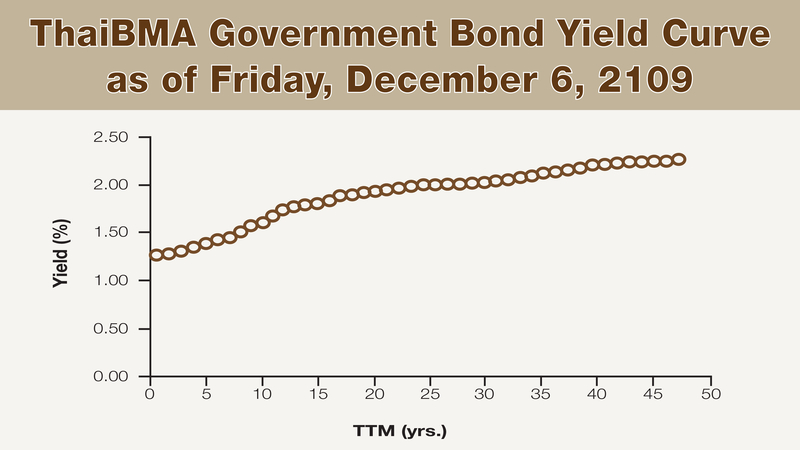
The issuance of corporate bonds with maturity of over one year from early this year through mid-November has already hit a record high of Bt1 trillion, according to The Thai Bond Market Association (ThaiBMA).

TBMA senior executive vice-president Ariya Tiranaprakij said that the value was well over the association’s expectations.

One reason is that companies rushed to take advantage of the low interest to issue bonds to refinance the short term loans that they had taken out to finance their business takeovers.

The top five industries issuing the bonds during this period were real estate developers with an issuance worth Bt144 billion, followed by finance companies at Bt133 billion, banks Bt124 billion, ICT Bt115 billion, and food Bt89 billion.

Most of the issuances were made in the second half of this year, especially in perpetual bonds.

The association expects to see a lower value of Bt800 million in corporate bond issuance in 2020, due partially to the new stricter rules of the Securities and Exchange Commission on corporate bond trading.

The value of the bonds due next year is worth Bt622 billion.

California’s fintech startups are invading New York

#ศาสตร์เกษตรดินปุ๋ย : ขอบคุณแหล่งข้อมูล : หนังสือพิมพ์ The Nation

https://www.nationthailand.com/business/30379203?utm_source=category&utm_medium=internal_referral

California’s fintech startups are invading New York

Dec 08. 2019
A view from 68th floor of 3 World Trade Center building in New York on May. 22, 2018. MUST CREDIT: Bloomberg photo by Jeenah Moon.

A view from 68th floor of 3 World Trade Center building in New York on May. 22, 2018. MUST CREDIT: Bloomberg photo by Jeenah Moon.
By Syndication Washington Post, Bloomberg · Julie Verhage

1,470 Viewed

When two Irish brothers started Stripe Inc. together in 2010, there was little question about where they should put their headquarters. It had to be California.

Now, though, Stripe is leaving the metropolitan tech mecca, awash in tech talent and investor cash, and is in the process of moving its main office about 10 miles to neighboring South San Francisco. What’s more, the company-whose $35 billion valuation makes it one of the world’s most valuable startups-is currently building up its staff in another state altogether: New York.

In September, Stripe opened an office near Wall Street the company told Bloomberg, and plans to add several hundred employees there in the coming years. The startup’s planned New York growth is on track to outpace its headquarters’.

The city has long been a hub for finance, and more recently for tech. “New York is a global leader,” said David Singleton, Stripe’s chief technology officer. “It’s just an important market for entrepreneurialism and startups.”

Stripe is one of many Bay Area-based fintech companies now building up a New York presence. Plaid Technologies Inc., which connects various apps to customers’ bank accounts, has relocated or hired more than 100 people in the city over the last year, or about a quarter of its staff. Affirm Inc., the lending startup founded by former PayPal Holdings Inc. co-founder Max Levchin, also recently opened up a Manhattan office that has about 50 employees, the company said. And Brex Inc., the business credit card startup most recently valued at $2.6 billion, has permanently relocated its chief financial officer to Midtown, according to a person familiar with the matter who asked not to be identified discussing information that’s not yet public.

In some ways, the moves are natural for tech startups with financial ambitions. Despite the growing success of fintech upstarts hailing from San Francisco, Wall Street institutions remain on top of the financial world, and New York offers an appealing pool of potential hires. Uber Technologies Inc., for example, announced the creation of a new unit called Uber Money in October, and will be shopping for fintech talent in and around Manhattan, according to a CNBC report. At Affirm, the company’s New York employees’ resumes are littered with names like Morgan Stanley and Goldman Sachs.

Often, financial technology companies that are just getting started set up shop in San Francisco to be close to tech workers with experience designing products at big companies, said Mark Goldberg, a partner at Index Ventures. San Francisco’s resident tech giant include Uber, Lyft, Twitter and Airbnb. But “what they don’t understand is the industry,” he said, adding that eventually, many fintech companies look eastward for hiring. “What I think happens is that companies that start on the West Coast end up recognizing that they want to compliment that DNA with capital market expertise, and with people that have been in and around banks.”

Meanwhile, tech epicenter San Francisco has become less hospitable for some companies. Last year, voters passed a new tax on businesses that will go to fund homelessness relief efforts, and taxes financial services companies at a higher rate than other types of businesses. Stripe’s decision to leave the city was widely regarded by local officials as related to the passage of the new tax. The company, which strongly opposed the measure, denied that taxes were a major factor in the decision to move.

Stripe instead pointed to the limited office space in San Francisco. The city’s asking prices for commercial rent, which are the highest in the nation, climbed 7% over the last year to record levels in the third quarter, according to real estate firm Cushman & Wakefield. And adding to the region’s woes: In recent months fires caused widespread power outages in homes around the Bay Area.

Still, none of fintech unicorns Bloomberg spoke to have plans to move their headquarters away from the West Coast. Stripe, while hiring a few hundred people in New York, currently has more than 1,000 employees in Silicon Valley. Affirm’s San Francisco office is many times larger than its Manhattan outpost. And New York-based financial services startups tend to have stubbornly lower valuations than their high-flying West Coast counterparts.

For Plaid, New York is a homecoming of sorts. The startup left the city in 2013 after winning TechCrunch’s Disrupt New York Hackathon, and, seeking proximity to engineers and investors, moved its headquarters to San Francisco. “Us coming back and building a really big presence is a strong signal for NYC tech, which has made huge strides in terms of client base, talent, and funding,” said Charley Ma, Plaid’s New York City growth manager, who moved from the West Coast for the job last fall. Plaid’s chief executive officer, however, will remain in San Francisco.

CAAT ordered to monitor financial health of airlines

#ศาสตร์เกษตรดินปุ๋ย : ขอบคุณแหล่งข้อมูล : หนังสือพิมพ์ The Nation

https://www.nationthailand.com/business/30379187?utm_source=category&utm_medium=internal_referral

CAAT ordered to monitor financial health of airlines

Dec 07. 2019
Transport Minister Saksayam Chidchob

Transport Minister Saksayam Chidchob
By THE NATION

1,287 Viewed

Transport Minister Saksayam Chidchob has instructed the Civil Aviation Authority of Thailand (CAAT) to check on the financial status of all airlines operating in Thailand to see if they are in financial trouble.

He added that the CAAT should conduct the inspection immediately. If it finds any airlines financially unhealthy, it should increase its frequency of such inspections and order them to improve their financial status.

He said that the move is aimed at proactively preventing financial troubles from causing problems to passengers.

CAAT director general Chula Sukmanop said that it has found several carriers should be closely monitored in relation to their financial status.

If they fail to improve their situations in compliance with relevant rules, they risk having their licences revoked, he added.

PTT to hike LNG imports next year to meet needs of industrial sector

#ศาสตร์เกษตรดินปุ๋ย : ขอบคุณแหล่งข้อมูล : หนังสือพิมพ์ The Nation

https://www.nationthailand.com/business/30379146?utm_source=category&utm_medium=internal_referral

PTT to hike LNG imports next year to meet needs of industrial sector

Dec 07. 2019
By THE NATION

1,203 Viewed

PTT Plc will import 5.2 million tonnes of liquefied natural gas (LNG) next year, up from 5 million tonnes this year, the company’s senior executive vice president of its Gas Business Unit, Wuttikorn Stithit, said.

This is in line with the long-term contracts PTT has signed with four suppliers.

The company estimated that the total demand of LNG next year would be almost the same level as this year or a little bit higher.

The LNG demand from power plants is expected to remain the same this year at 4,800-5,000 million cubic feet per day, accounting for 60 per cent of the country’s total demand.

The demand by the industrial sector, which accounts for 20 per cent of total demand, is expected to increase from this year.

He expected the demand for industrial use will expand as PTT’s gas business has continued to expand its gas distribution network to tap more number of industrial customers.

PTT has also increased the number of partners to distribute its LNG on a retail basis. Therefore, he expected growth in LNG demand for industrial use next year.

PTT is expected to begin trial of LNG-related services in the first quarter next year as part of the government’s policy of turning Thailand into the regional LNG trading hub.

The activities include LNG reloading and LNG bunkering services.