India’s exit from trade deal negotiations moves closer to reality

#ศาสตร์เกษตรดินปุ๋ย : ขอบคุณแหล่งข้อมูล : หนังสือพิมพ์ The Nation

https://www.nationthailand.com/business/30379199?utm_source=category&utm_medium=internal_referral

India’s exit from trade deal negotiations moves closer to reality

Dec 08. 2019
Pool photo / The Yomiuri Shimbun
A meeting of RCEP leaders in Bangkok on Nov. 4, at which India announced its intention to withdraw from the regional trade deal.

Pool photo / The Yomiuri Shimbun A meeting of RCEP leaders in Bangkok on Nov. 4, at which India announced its intention to withdraw from the regional trade deal.
By Syndication Washington Post, The Japan News-Yomiuri

35 Viewed

The withdrawal of India from the negotiations for the Regional Comprehensive Economic Partnership free trade deal (RCEP), which has involved the participation of 16 countries, including Japan, China, South Korea and members of the Association of Southeast Asian Nations (ASEAN), is seemingly coming closer to reality.

Japan intends to continue efforts to persuade India to remain in the initial 16-country framework for the agreement of the regional trade talks. However, as there is still strong opposition to the RCEP within India, it remains to be seen whether the negotiations will go smoothly.

At a news conference after a Cabinet meeting on Friday, Economy, Trade and Industry Minister Hiroshi Kajiyama said that he would visit India from Tuesday to Wednesday.

In addition, he stated, “[Japan] will seriously discuss the matter together with India to aim for the signing [of the RCEP] within 2020,” indicating that he will aim to persuade India to take concerted action with other negotiating countries.

Prime Minister Shinzo Abe also plans to visit India from Dec. 15 to 17. Abe likely will urge India to return to the negotiating table.

India’s announcement of its exit from the RCEP took place at the leaders’ meeting for the deal in Bangkok on Nov. 4. Initially, there was a view among the other participating countries that the withdrawal announcement was a tactic to gain a negotiating advantage for India. But since then, the Indian government has been making comments to justify the country’s exit from the RCEP, strengthening its stance of not hesitating to actually withdraw.

A source close to the Thai government said, “We came to gradually feel how serious India is [about exiting the RCEP].”

In India, there is strong fear that if the RCEP is realized, a high volume of low-priced industrial and other products would flow into India from China, and India’s domestic industries could suffer.

At the leaders’ meeting, Indian Prime Minister Narendra Modi was said to have stated that under the current circumstances, the RCEP could put Indian companies and consumers at a disadvantage, and that Mahatma Gandhi (1869-1948) would not have allowed India to join the RCEP.

Since the day following India’s withdrawal announcement, there have been a large number of voices from local newspapers and organizations in India applauding the announcement. They include one from English-language Indian paper The Economic Times, stating that the prime minister was protecting India. According to local newspapers and other sources, opposition to the RCEP still continues in India.

Japan sees the participation of India as indispensable for the RCEP because India is a huge market with a population of more than 1.3 billion people, and it is expected to see future economic growth. An increasingly urgent concern for Japan is that without India, China could enhance its relative influence.

Meanwhile, India is said to strongly seek the introduction of safeguards to prevent a sudden increase in the volume of imported products as a condition for the country to participate in the RCEP. It is said that India is taking such a step with China in mind, a stance that likely sets India apart from the other negotiating countries.

In addition, through the RCEP negotiations, India asks others to create an environment in which high-quality Indian human resources in the information technology sector will be able to succeed overseas. As the main workplaces for these Indian workers will be English-speaking countries, such as RCEP participants Australia and New Zealand, a Japanese government official said that Japan’s leverage is limited.

Under such circumstances, China and some ASEAN countries began to take a stance of accepting the RCEP coming into effect with just 15 participating countries, without India.

It is said that the negotiation schedule from now on has yet to be decided. The Japanese government is concerned about the future of the negotiations, as a government official said that if nothing is done, Japan could find itself as one of the minority countries that wish to stick to the 16-country framework.

– – –

RCEP

A large-scale economic cooperation framework for which negotiations started in 2013. There are 16 negotiating countries – Japan, India, the 10 ASEAN countries, China, South Korea, Australia and New Zealand. The 16 countries account for half of the global population and about 30% of global trade value.

Proposed Cambodian FTA with Eurasian Economic Union would diversify export market

#ศาสตร์เกษตรดินปุ๋ย : ขอบคุณแหล่งข้อมูล : หนังสือพิมพ์ The Nation

https://www.nationthailand.com/business/30379186?utm_source=category&utm_medium=internal_referral

Proposed Cambodian FTA with Eurasian Economic Union would diversify export market

Dec 07. 2019
The Kingdom’s garment and footwear sectors would gain a new market if an FTA is signed, Garment Manufacturers Association in Cambodia secretary-general Ken Loo said on Thursday. POST PIX

The Kingdom’s garment and footwear sectors would gain a new market if an FTA is signed, Garment Manufacturers Association in Cambodia secretary-general Ken Loo said on Thursday. POST PIX
By Thou Vireak
The Phnom Penh Post

1,167 Viewed

As the government moves to a Free Trade Agreement (FTA) with the Eurasian Economic Union (EAEU), garment and rice industry insiders expect the new trade corridor to diversify the Kingdom’s export market.

The Ministry of Commerce on Wednesday released a report on the results of its assessment of a potential FTA deal between Cambodia and the EAEU.

Garment Manufacturers Association in Cambodia secretary-general Ken Loo told The Post on Thursday that the Kingdom’s garment and footwear sectors would gain a new market if an FTA is signed.

“We will have duty-free access to exports, but we don’t know when we’ll reach the FTA. That is all I can say,” he said.

Cambodia Rice Federation vice-president Chan Sokheang said the agreement will boost the competitiveness of the Kingdom’s export-rice processing industry among its neighbours.

“Our export market will grow further and will not rely on just the European and Chinese markets. We have to open up more markets.

“Today, our premium varieties of rice are in very fierce competition with those of our neighbouring countries. The agreement will allow us to boost our competitiveness,” he said.

Speaking at the report launch ceremony, Minister of Commerce Pan Sorasak said the benefits of the FTA noted in the study include industrial diversification and expansion of financial services, transport, digital economy and agricultural services.

“An FTA will enable the two parties to increase economic cooperation, trade in goods, services and investment.

“We expect to increase trade and investment opportunities and mutual investment. Cambodia can increase its garments and textiles exports, agricultural products and other goods,” he said.

The EAEU is an economic bloc covering Eastern Europe and comprises five countries – Armenia, Belarus, Kazakhstan, Kyrgyzstan and Russia. The bloc has a combined population of 176 million and posted a gross domestic product of $2.5 trillion in 2016, Sorasak said.

Last month, Prime Minister Hun Sen discussed the agreement with Russian Prime Minister Dmitry Medvedev during the 14th East Asia Summit in Thailand.

Speaking at the Asean Business and Investment Summit last month, Medvedev said as the EAEU had signed an FTA deal with Vietnam in 2015 and with Singapore on October 1, it is currently in talks with “other partners in Asean” about possible FTAs as well, Singapore’s The Straits Times reported.

He also called for joint efforts with Asean to tackle monopolies by high-tech companies to allow a “healthy competition and the introduction of new promising ideas”, The Straits Times said.

Ministry of Commerce secretary of state Tek Reth Kamrong told reporters in March that the EAEU has provided tariff-free access for 46 Cambodian made products for three years due to the Kingdom’s Least Developed Countries (LDC) classification.

Though preferential status will last until Cambodia has graduated from its LDC rank, Reth Kamrong said the negotiation for an FTA deal with the bloc is a good initiative.

EAEU tariff preferences granted to Cambodian goods include rice, silk, textiles, meat, vegetables and coffee.

Garment, textile and footwear industry exports rose 13.18 per cent year-on-year during the first nine months of this year to more than $7.973 billion, data from the General Department of Customs and Excise shows.

Energy Regulatory Commission to look at price for charging EVs

#ศาสตร์เกษตรดินปุ๋ย : ขอบคุณแหล่งข้อมูล : หนังสือพิมพ์ The Nation

https://www.nationthailand.com/business/30379169?utm_source=category&utm_medium=internal_referral

Energy Regulatory Commission to look at price for charging EVs

Dec 07. 2019
By THE NATION

1,326 Viewed

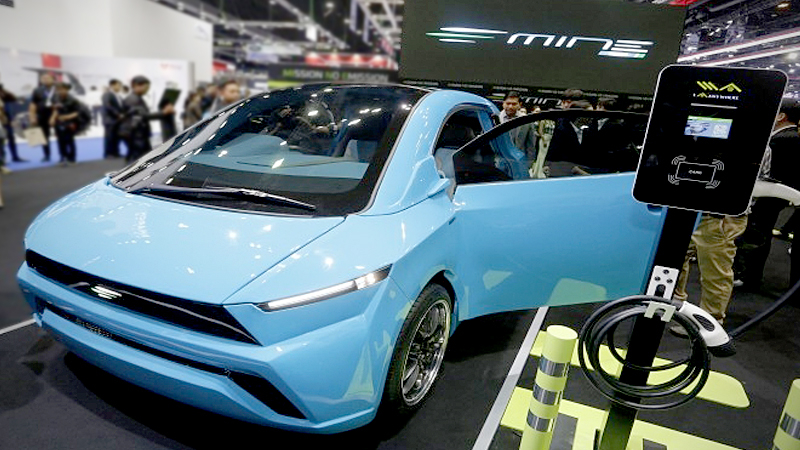
The Office of the Energy Regulatory Commission (ERC) will conduct a study on the appropriate fee for an electric car charging service at charging stations.

This is in response to an order issued by the Energy Policy Administration Committee on December 4.

ERC deputy secretary-general Khomgrich Tantravanich explained that charging station operators were keen for the government to set new and higher fee rates to make their business more commercially viable as currently only a small number of electric vehicles (EV) are using the service.

The operators have proposed that the government determine the higher rate to make it worthwhile for them to continue business expansion, he added.

The current rate is based on a time of use (TOU) basis, which sees the charging fee varying according to the peak time from 9am to 10pm on weekdays to the off-peak time after 10pm on weekdays and during weekends.

The charging fee at peak time and off peak is Bt4.10 per unit and Bt2.60 per unit, respectively.

The administration committee has also approved the ERC’s proposal to solve the problem of 14 renewable power plants which failed to start operation on the commercial dates due to uncontrolled factors.

The ERC proposed that the administration committee put off the dates of the commercial operations for these plants on a case-by case-basis. This proposal will also need approval from the National Energy Policy Committee.

These renewable power plants have a total capacity of 300 megawatts. Construction is almost complete on most of them but several will not probably not be finished until 2021. One reason for the delay has been cited as the time needed to reach an understanding with communities where the plants will be located.

If they fail to start operation on time, their licences will be terminated.

A very British Christmas with Mulberry

#ศาสตร์เกษตรดินปุ๋ย : ขอบคุณแหล่งข้อมูล : หนังสือพิมพ์ The Nation

https://www.nationthailand.com/lifestyle/30379148?utm_source=category&utm_medium=internal_referral

A very British Christmas with Mulberry

Dec 06. 2019
By The Nation

1,269 Viewed

Much-loved British brand Mulberry draws inspiration from the great tradition of festive storytelling to spread messages of hope and the spirit of giving through the launch of MulberryLights, which celebrates Christmas and New Year with a series of joyful projections including a new short film and a dedicated gift collection.

Poet and director Caleb Femi, the first Young People’s Laureate for London, has been commissioned to create a poem and short film entitled “The Season of Light”, celebrating the wonder and sense of connection that links Christmases past, present and future. Selected excerpts of the poem will be brought to life across the UK through unexpected and enchanting light projections in landmark British spots.

A line of signature gifts have also been launched and include such charming stocking fillers as heart-shaped purses, the Amberley Satchel bag to tartan soft accessories. They join new bag silhouette: the youthful Belted Bayswater Satchel, while the Iris bag will bring a modern heritage twist to the gift line-up.

MBS got his world-beating Aramco IPO. Now the hard work begins.

#ศาสตร์เกษตรดินปุ๋ย : ขอบคุณแหล่งข้อมูล : หนังสือพิมพ์ The Nation

https://www.nationthailand.com/business/30379156?utm_source=category&utm_medium=internal_referral

MBS got his world-beating Aramco IPO. Now the hard work begins.

Dec 06. 2019
By Syndication Washington Post, Bloomberg · Alaa Shahine, Matthew Martin883 Viewed

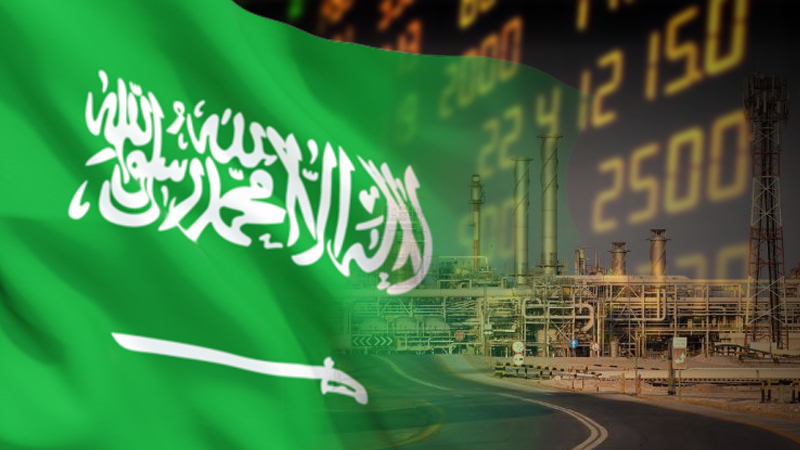
Saudi Aramco’s world-beating initial public offering is a watershed moment for a business that’s bankrolled the kingdom and its rulers for decades. The world’s largest public company will now trade in Riyadh and not New York.

Less clear is how far it will help overhaul the economy of the world’s biggest oil exporter.

First floated by Crown Prince Mohammed bin Salman in 2016 with an ambition to raise as much as $100 billion, the share sale was touted as part of a blueprint for life after oil. Saudi Arabia would raise funds off its biggest asset, and use them to develop new industries.

But after global investors balked at hopes to value the company at $2 trillion, the final deal was not quite what the prince had envisaged. Aramco offered just 1.5% of its shares and opted for a local listing, relying almost entirely on Saudi and regional investors.

And while proceeds of $25.6 billion exceed the 2014 IPO of Chinese internet giant Alibaba Group Holding, it’s unlikely to be a game-changer for the $780 billion economy.

“It’s difficult to see how this level of subscription can be repeated to raise the sort of revenue required by Vision 2030,” said Bill Farren-Price, a consultant at RS Energy Group. “And Saudi economic diversification will need a lot more of that.”

The sale is the first major disposal of state assets under a plan to empower the private sector and attract foreign direct investment, which has tumbled since oil prices crashed in 2014.

“It does provide ammunition to support investments as they move into the main construction phase, but by itself it’s not enough,” said Monica Malik, chief economist at Abu Dhabi Commercial Bank and a longtime Saudi watcher. “The quality of spending remains critical — how much will be spent domestically, how effectively it will be deployed.”

The proceeds will be transferred to the Public Investment Fund, which has made a number of bold investments, plowing $45 billion into SoftBank Group Corp.’s Vision Fund, taking a $3.5 billion stake in Uber Technologies Inc.

At home, the sovereign wealth fund is financing mega projects to develop tourist hubs along the Red Sea and elsewhere.

But the fund has also been criticized for elbowing out private businesses in smaller projects. Plans for a $500 billion futuristic city announced in 2017 have raised concerns that the prince may end up sinking more cash into vanity ventures.

Funds from the IPO “should be invested, in domestic projects, with a large local content, while avoiding white elephants,” according to Ziad Daoud, chief Middle East economist at Bloomberg Economics.

“The government’s recent spending pattern has failed to live up to these criteria. It has cut investment, increased current spending and shown a continued penchant for mega-projects,” he wrote last month.

Still, pulling off the deal can help the prince get his ambitious plan for the economy back on track after setbacks at home, including the backlash against his purge of the elite, and abroad by the outrage over the murder of columnist Jamal Khashoggi and the war in Yemen.

The kingdom’s richest families, some of whom had members detained in Riyadh’s Ritz-Carlton hotel during a so-called corruption crackdown in 2017, are expected to have made significant contributions.

The state-owned oil giant set the final price of its shares at 32 riyals ($8.53), valuing the world’s most profitable company at $1.7 trillion. It received total bids of $119 billion.

Aramco will become the world’s most valuable publicly traded company once it starts trading, overtaking Microsoft and Apple.

The deal opens up one of the world’s most secretive companies that, until this year, had never published financial statements or borrowed in international debt markets.

It will also mean the company now has shareholders other than the Saudi government for the first time since it was fully nationalized in 1980.

Saudi Arabia pulled out all the stops to ensure the IPO got done. It cut the tax rate for Aramco three times, promised the world’s largest dividend and offered bonus shares for retail investors who keep hold of the stock.

Goldman Sachs, acting as share stabilizing manager, has the right to exercise a so-called greenshoe option of 450 million shares. The purchase option can be executed in whole or in part at any time on or before 30 calendar days after the trading debut. It could raise the IPO proceeds to $29.4 billion.

Vietjet launches four new international routes

#ศาสตร์เกษตรดินปุ๋ย : ขอบคุณแหล่งข้อมูล : หนังสือพิมพ์ The Nation

https://www.nationthailand.com/business/30379142?utm_source=category&utm_medium=internal_referral

Vietjet launches four new international routes

Dec 06. 2019
By THE NATION

1,462 Viewed

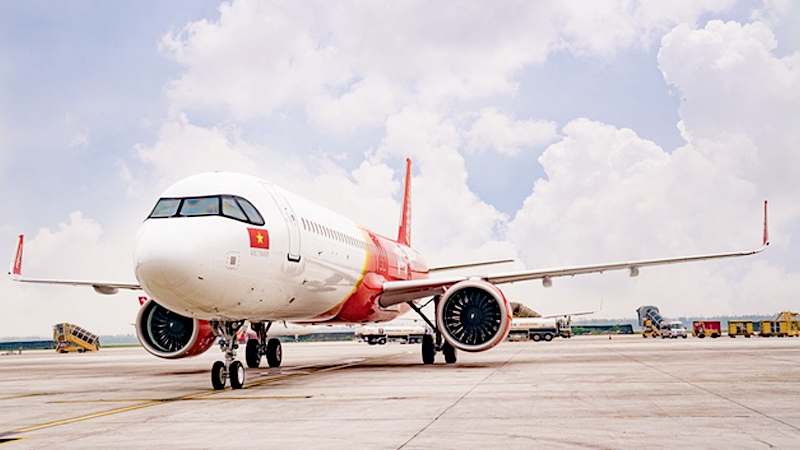
To meet the rising travel demand in the year-end festive season, Vietjet will launch four more direct international services linking Vietnam’s Central Highlands City of Da lat and the hub of Vietnam’s southwest city Can Tho to Seoul, Can Tho to Taipei and Hanoi to Bali.

These new routes aim to expand the airline’s international flight network while offering more travel opportunities for people from the North to the South of Vietnam and creating more convenient connections for travellers to visit Vietnam’s famous destinations.

In celebration of the new routes, millions of promotional tickets priced only from zero dollar (excluding taxes and fees) are up for grabs during the three golden days from December 10 to 12, between the golden hours noon to 2pm (GMT+7).

The promotional tickets are applied to all Vietjet’s international routes between Vietnam and Japan, South Korea, Taiwan, Hong Kong, India, Indonesia, Thailand, Singapore, Malaysia, Myanmar and Cambodia as well as all routes operated by Thai Vietjet.

The promotional tickets for all flights between Vietnam and Japan can be snapped at any time during the three golden days.

The promotional tickets are valid from January 3, 2020 to October 24, 2020 (excluding public holidays).

The Da Lat-Seoul (Incheon) route will operate four return flights per week, starting from January 15, 2020. The flight departs from Da Lat at 5.10pm and arrives in Seoul (Incheon) at 11.55pm. The return flight takes off from Seoul (Incheon) at 2.30am and lands in Da Lat at 5.50am (all in local times).

The Can Tho-Seoul (Incheon) route will operate three return flights per week starting from January 16, 2020.

The flight departs from Can Tho at 4.50pm and arrives in Seoul (Incheon) at 11.55pm. The return flight takes off from Seoul (Incheon) at 2.30am and lands in Can Tho at 6.20am (all in local times).

With the two new routes, Vietjet now has 11 routes, operating the most flights connecting Vietnam and South Korea, including Hanoi/Ho Chi Minh City/Hai Phong/Da Nang/ Nha Trang/Phu Quoc/Can Tho/Da Lat – Seoul, Hanoi/Nha Trang – Busan and Da Nang-Daegu.

The Can Tho-Taipei route will operate four return flights per week, starting from January 10, 2020. The flight departs from Can Tho at 12.40pm and arrives in Taipei at 5.10pm.

The return flight takes off from Taipei at 6.10pm and lands in Can Tho at 8.55pm (all in local times). After five years of operation in Taiwan, Vietjet operates the most routes between Vietnam and Taiwan with nine routes, including Hanoi/Ho Chi Minh City/Da Nang/Can Tho – Taipei, Ho Chi Minh City/Hanoi – Taichung/ Kaohsiung and Ho Chi Minh City-Tainan.

The Hanoi-Bali route will operate daily return flights, starting from January 26, 2020.

The flight departs from Hanoi at 10am and arrives in Bali at 4.25pm. The return flight takes off from Bali at 5.30pm and lands in Hanoi at 9.55pm (all in local times). Vietjet is the first and only carrier to operate direct flights from Hanoi to Bali. This is the second route of Vietjet to Bali following the Ho Chi Minh City-Bali route operated since May 2019.

Thai Union takes stake in cod-liver producer in Iceland

#ศาสตร์เกษตรดินปุ๋ย : ขอบคุณแหล่งข้อมูล : หนังสือพิมพ์ The Nation

https://www.nationthailand.com/business/30379137?utm_source=category&utm_medium=internal_referral

Thai Union takes stake in cod-liver producer in Iceland

Dec 06. 2019
 Thai Union CEO Thiraphong Chansiri 

Thai Union CEO Thiraphong Chansiri
By THE NATION

1,852 Viewed

The world’s seafood leader, Thai Union Group, has made a strategic investment in Aegir Seafood Company, one of the leading producers of cod liver in Iceland.

The investment in Aegir will support the growth of the cod liver business for Thai Union’s King Oscar brand, a Norwegian-based manufacturer of cod liver, sardines and mackerel.

“Aegir has built a reputation over almost 25 years for manufacturing some of the most premium cod liver in the market today,” said Thai Union CEO Thiraphong Chansiri.

“The strategic investment in Aegir will strengthen King Oscar’s capacity and market position through the addition of the plant in Iceland, while also providing improved sourcing of cod liver for the brand.”

Aegir sources all of its cod from Icelandic Responsible Fisheries, while its products are also certified by the Marine Stewardship Council (MSC). MSC certification is widely recognised by global experts as the best mark of seafood sustainability.

The investment will play an important role in King Oscar’s strategy to create growth and help it take a leading position in the canned cod liver segment.

King Oscar has a strong brand heritage of more than 140 years and is one of the leading canned fish suppliers in Norway, the US, Poland, Belgium and Australia. King Oscar was acquired by Thai Union in 2014.

Committees, panel set up to regulate airport link project, power plants

#ศาสตร์เกษตรดินปุ๋ย : ขอบคุณแหล่งข้อมูล : หนังสือพิมพ์ The Nation

https://www.nationthailand.com/business/30379151?utm_source=category&utm_medium=internal_referral

Committees, panel set up to regulate airport link project, power plants

Dec 07. 2019
Credit : EEC Office

Credit : EEC Office
By THE NATION

943 Viewed

The Eastern Economic Corridor Policy Committee on Friday (December 6) gave the nod to the establishment of a committee to regulate the high-speed train project linking three international airports.

A second new committee will also be set up to manage the contract for this project, Kanit Sangsubhan, the committee’s secretary general, said, adding that this was in line with the proposals of the EEC management panel chaired by Finance Minister Uttama Savanayana.

On October 24, the State Railway of Thailand (SRT) and Eastern High-Speed Rail Linking Three Airports Co., Ltd, led by Charoen Pokphand Holding and strategic alliances, signed a Public Private Partnership (PPP) deal to develop the high-speed rail linking Don Mueang, Suvarnabhumi and U-Tapao airports.

The EEC committee also appointed a panel to study and draw up the plan to establish the waste-driven power plants in the EEC and the power purchase plan. The panel consists of representatives from the Interior Ministry, Energy Ministry, PTT Global Power Synergy (GPSC). It will have to submit the progress of the study within next three months.

The plants are expected to be completely set up in next few years.

Rise in minimum daily wage deemed acceptable

#ศาสตร์เกษตรดินปุ๋ย : ขอบคุณแหล่งข้อมูล : หนังสือพิมพ์ The Nation

https://www.nationthailand.com/business/30379154?utm_source=category&utm_medium=internal_referral

Rise in minimum daily wage deemed acceptable

Dec 07. 2019
Thanawat Pholwichai, director of the Centre for Economic and Business Forecasting of the University of the Thai Chamber of Commerce

Thanawat Pholwichai, director of the Centre for Economic and Business Forecasting of the University of the Thai Chamber of Commerce
By THE NATION

867 Viewed

The rise in daily minimum wage announced yesterday (December 6) was set at an appropriate rate, said Thanawat Pholwichai, director of the Centre for Economic and Business Forecasting of the University of the Thai Chamber of Commerce.

He estimated that the hikewould see business operators paying an additional Bt30 billion in wages a year to labourers.

From this point of view, the rate is acceptable and not too high, he said, adding that it was speculated earlier that the daily minimum wage would increase by between Bt10 and Bt15.

The National Wage Committee announced today (December 6) that it will raise the minimum wage by Bt6 in nine provinces and Bt5 for others.

The committee will propose the new wage for Cabinet approval as soon as possible as it intended the increase to take effect on January 1, 2020. Supant Mongkolsuthree, chairman of the Federation of Thai Industries (FTI), said he believes the industrial sector could cope with the new rate in spite of the ongoing economic deceleration.

The hike, he said, would mostly affect SMEs and the farm sector as they are labour-intensive sectors while major industrial firms could adapt by deploying automation/robotics system.

Germany boosts electric-car incentives to stimulate demand

#ศาสตร์เกษตรดินปุ๋ย : ขอบคุณแหล่งข้อมูล : หนังสือพิมพ์ The Nation

https://www.nationthailand.com/business/30379164?utm_source=category&utm_medium=internal_referral

Germany boosts electric-car incentives to stimulate demand

Dec 07. 2019
Angela Merkel visits the VW ID.3 electric car factory in Zwickau, Germany MUST CREDIT: Bloomberg photo by Krisztian Bocsi

Angela Merkel visits the VW ID.3 electric car factory in Zwickau, Germany MUST CREDIT: Bloomberg photo by Krisztian Bocsi
By Syndication Washington Post, Bloomberg · Iain Rogers, Arne Delfs

911 Viewed

Chancellor Angela Merkel’s government and German automakers agreed to increase cash incentives for electric cars, intensifying an effort to move away from the combustion engine and reduce harmful emissions.

A so-called environment bonus will jump by 50% to as much as 6,000 euros ($6,680) per electric vehicle and the auto industry will continue to cover half the cost, Merkel’s chief spokesman, Steffen Seibert, said in a statement. The changes will take effect this month and run through 2025, according to Bernhard Mattes, president of Germany’s VDA auto lobby.

“It will therefore be possible to provide support for another 650,000 to 700,000 electric vehicles,” Seibert said. The measures were agreed Monday evening in Berlin between Merkel and officials from automakers, parts suppliers and labor unions, including the chief executives of Volkswagen AG, BMW AG and Daimler AG.

The accord came a day after Merkel visited a revamped VW electric-car plant in Zwickau, eastern Germany. The chancellor has come under fire for failing to make more progress in curbing greenhouse-gas emissions, while VW — the world’s biggest carmaker — has invested billions in the shift to electric vehicles.

Merkel’s Climate Protection Program 2030, unveiled in September, targets as many as 10 million electric cars on German roads by that year, a goal that most automotive experts say is unrealistic even with generous subsidies. As of the start of the year, there were about 420,000 electric and hybrid-electric vehicles in a national fleet of 47 million, according to the the University of Duisburg-Essen’s Center for Automotive Research.

Merkel called the challenges facing the industry “a paradigm shift in mobility that has never been realized in automotive history.”

Germany is closing in on Norway for European leadership with sales of almost 53,000 all-electric cars this year, according to the KBA, or federal motor transport authority. Per-capita it remains far behind the smaller country, and it’s still unclear how many German customers will ultimately switch to electric cars in a country with a rich automotive heritage centered on combustion engines.

Subsidies make a difference because higher costs for development and batteries drive up the price of an electric car. VW’s ID.3, for example, will start at just under 30,000 euros ($33,200 U.S.), while the least-expensive version of the new combustion-powered Golf will be sold for less than 20,000 euros.

The government’s push to promote electric cars includes boosting the number of public charging stations to 50,000 within two years, Seibert said. Automakers will help fund 15,000 of the stations by 2022. BMW has said it will install 4,100 charging points at its German locations by 2021, with about half being open to the public.

“I see this as an absolute chance to now increase demand, which will be good for us,” Klaus Rosenfeld, chief executive officer of German automotive supplier Schaeffler AG, said in an interview Tuesday.

“Anything that helps to achieve this mobility transformation, to increase consumer demand, is good for us, so in that sense we welcome the decision made today,” he added.

Merkel said in a podcast Sunday that the government’s focus is on promoting electric vehicles, but that it’s also open to hydrogen technology. It wants 1 million charging stations to be in place by 2030, she said.

Merkel’s $60 billion climate package failed to restore her reputation as a champion of the environment. Critics branded the measures, such as extra taxes on flights, as insufficient for a “climate emergency,” while economists criticized carbon price proposals as too shy an approach to spur emissions cuts.

Big industry and some union leaders slammed Germany’s go-it-alone approach, saying it would harm jobs and businesses.

Ferdinand Dudenhoeffer, the director of Center for Automotive Research, estimates a tally of about 5 million all-electric and hybrid car registrations by 2030. Reaching that level would be an achievement, he said in September.