Germany gets glimmer of hope as firms say worst may be over

#ศาสตร์เกษตรดินปุ๋ย : ขอบคุณแหล่งข้อมูล : หนังสือพิมพ์ The Nation

https://www.nationthailand.com/business/30379163?utm_source=category&utm_medium=internal_referral

Germany gets glimmer of hope as firms say worst may be over

Dec 06. 2019
By Syndication Washington Post, Bloomberg · Yuko Takeo878 Viewed

German business expectations improved in October from a decade low, a cautious sign that Europe’s largest economy may have stopped deteriorating at the start of the fourth quarter.

The figures from the Ifo Institute offer a glimmer of hope a day after a survey showed manufacturing still stuck in a slump and industry employment falling at the fastest pace in almost 10 years. Germany’s economy is forecast to have slipped into a technical recession in the third quarter, though economists see a return to modest growth at the end of the year.

Ifo said Friday its business climate indicator was unchanged in October, and the expectations measure rose more than economists forecast to a three-month high.

The euro rose 0.1% to $1.1117. German 10-year bond yields, which have been pushed far below zero this year on concern about the economy, climbed 2 basis points to minus 0.38%.

The report is a rare piece of encouraging news for the export-reliant economy, which is taking hits on multiple fronts, from a global slowdown amid trade tensions to upheaval in its key auto industry. Purchasing Managers’ Indexes show manufacturing mired in a deep slump, though the latest figures also showed that a decline in demand has eased somewhat.

The country’s struggles are also weighing on the euro zone, where the European Central Bank stepped up monetary stimulus last month by cutting interest rates further below zero and reviving asset purchases. In his final press conference on Thursday, President Mario Draghi highlighted how the euro-area services sector is now showing signs of negative contagion.

While the downturn has amplified calls for governments to add fiscal stimulus, in Germany imminent action appears unlikely.

Chancellor Angela Merkel has said the problem isn’t a shortage of money for investment, and there are sufficient projects in the pipeline. A government spokeswoman said Friday that Germany is sticking to its balanced-budget policy and sees no need for a spending program to boost the economy — a worrying sign for Christine Lagarde, who takes over the ECB presidency following Draghi’s exit this month.

Labor market remained strong in November as U.S. economy added 266,000 jobs and jobless rate fell to

#ศาสตร์เกษตรดินปุ๋ย : ขอบคุณแหล่งข้อมูล : หนังสือพิมพ์ The Nation

https://www.nationthailand.com/business/30379155?utm_source=category&utm_medium=internal_referral

Labor market remained strong in November as U.S. economy added 266,000 jobs and jobless rate fell to

Dec 06. 2019
File Photo

File Photo
By The Washington Post · Rachel Siegel ·

988 Viewed

The United States added 266,000 jobs in November as the jobless rate decreased to 3.5%, the latest snapshot of an economy that appears to have slowed but stabilized in recent months.

The data, released by the Bureau of Labor Statistics, beat expectations. Analysts had forecast roughly 180,000 new jobs for the month.

The tally was impacted by thousands of General Motors workers who returned to their jobs in late October after a lengthy strike.

The labor market has remained one of the brightest spots in the economy, and combined with the high stock market has contributed to high levels of consumer spending and a relatively rosy consumer sentiment.

Many employers are still struggling to find qualified workers to fill jobs, but other companies have had to cut jobs because of a recent pullback in manufacturing demand.

The labor market’s health could have big implications for the 2020 elections.

Concerns about a looming recession have waned, but the economy has still shown signs of cooling. Economists have warned the mounting toll of President Donald Trump’s protracted trade war has strained global trade growth and slowed the creation of American jobs. Federal Reserve Chair Jerome Powell has said Trump’s tariffs have wrought so much uncertainty that companies are delaying investments and slowing the economy.

But major parts of the economy continue to show resilience, buoyed in part by consumer spending and the low unemployment rate.

Uncertainty remains an issue. Just this week, Trump said he could wait to strike a deal with China until after the 2020 election, sending stocks plunging. The volatility followed Trump’s announcement he was reimposing tariffs on steel and aluminum coming from Brazil and Argentina, though the timeline for this action is uncertain.

Diane Swonk, chief economist at accounting firm Grant Thornton, expected November’s numbers to rise significantly from the month before as GM workers returned to work. Roughly 48,000 strikers, and 12,000 workers who suffered layoffs during the strike, are expected to have returned to the payrolls, Swonk said.

Still, Swonk projected some drag on employment thanks to the loss of 12,000 temporary workers who wrapped up their jobs for the 2020 census. Holiday hires were expected to stay muted so long as retail stores continued closing their doors.

Seasonal retail hiring is also down. Compounding store closures is a shift among retailers to focus on their websites and distribution centers to meet customer demand, rather than stocking physical stores with employees, said Julia Pollak, an economist at ZipRecruiter, a popular job site.

Mark Hamrick, senior economic analyst at Bankrate.com, expected November to bring solid job growth. But he said that monthly average job growth for the year is running 26% below the pace seen this time last year. Hamrick said a “major development of some kind” would be needed to change course.

“Employers continue to counter challenges associated with trade disputes and tariffs,” Hamrick wrote in comments Thursday. “The general election, now less than one year away, will add another layer of uncertainty for business leaders trying to make decisions on hiring and investment.”

Additionally, private payroll growth in November grew by just 67,000, according to a Wednesday estimate from ADP and Moody’s Analytics. That number came in far behind estimates of 150,000, marking the slowest growth since May. Mark Zandi, chief economist for Moody’s, said in a statement that the “job market is losing its shine,” adding that manufacturers, commodity producers and retailers were shedding jobs and that openings were declining.

“If job growth slows any further unemployment will increase,” Zandi said earlier this week.

The country added a better-than-expected 128,000 jobs in October when the jobless rate rose slightly to 3.6%. Those numbers were affected by the General Motors strike, in which workers shut down production for six weeks at the automaker. The strike spurred layoffs from Canada to Mexico in related industries and caused a rise in unemployment claims in states like Michigan.

Eyewear brand Mykita’s first store in Thailand is its biggest in SE Asia

#ศาสตร์เกษตรดินปุ๋ย : ขอบคุณแหล่งข้อมูล : หนังสือพิมพ์ The Nation

https://www.nationthailand.com/lifestyle/30379126?utm_source=category&utm_medium=internal_referral

Eyewear brand Mykita’s first store in Thailand is its biggest in SE Asia

Dec 06. 2019
By The Nation

181 Viewed

German luxury eyewear brand Mykita has opened its first flagship store in Thailand, the largest in Southeast Asia.

Situated in the new Sindhorn Village development in Bangkok’s prestigious Langsuan Road, Mykita Shop Bangkok brings handcrafted products and innovative aesthetics of the Berlin-based global eyewear brand.

“The Bangkok shop opening is a natural step for Mykita given our longstanding and rewarding relationship with the city, our local team, and not least, our loyal customer base,” Mykita founder Moritz Krueger said. “We feel a strong connection to the authentic, positive nature of this urban culture that shares our values and appreciates original, modern design. We welcome residents and visitors alike to our new home in Pathum Wan to experience the world of Mykita in its entirety.”

Alongside the full product portfolio, including the designer collaborations with Martine Rose, Bernhard Willhelm or Maison Margiela among others, the Mykita Shop Bangkok incorporates a Zeiss Vision Centre to provide a comprehensive optical service for customers. Using state-of-the-art instruments, the in-house optometrist is able to generate a customised optical profile and perfectly adapt the frame and lens for each customer’s face.

The brand currently has 16 shops worldwide — in Barcelona, Berlin, Cartagena, Copenhagen, Los Angeles, Monterrey, New York, Paris, Taipei, Tokyo, Vienna, Washington, Zermatt and Zurich.

Forest Harmony’s $18M luxury villas break ground in Kampot

#ศาสตร์เกษตรดินปุ๋ย : ขอบคุณแหล่งข้อมูล : หนังสือพิมพ์ The Nation

https://www.nationthailand.com/property/30379111?utm_source=category&utm_medium=internal_referral

Forest Harmony’s $18M luxury villas break ground in Kampot

Dec 05. 2019
Local and French joint-venture Forest Harmony has broken ground on its $18 million ‘second-home’ Luxury Holiday Villas project in Kampot province, comprising 90 villa units on an 18ha parcel near Kampot town. Forest Harmony via facebook

Local and French joint-venture Forest Harmony has broken ground on its $18 million ‘second-home’ Luxury Holiday Villas project in Kampot province, comprising 90 villa units on an 18ha parcel near Kampot town. Forest Harmony via facebook
By May Kunmakara
The Phnom Penh Post

433 Viewed

Local and French joint-venture Forest Harmony has broken ground on its $18 million “second-home” Luxury Holiday Villas project in Kampot province.

Century 21 Mekong CEO and local shareholder of the project Chrek Soknim told The Post that the project will comprise 90 villa units covering 18ha on a 97ha parcel of land which is located near Kampot town.

He said Kampot province has a reputation as a natural tourism destination and second coastal tourism destination after Preah Sihanouk province.

The project targets both local and foreign tourists who wish to have their own property in the province to relaxing over a weekend or holiday, he said.

“We opened for sale on Saturday, which was the same day we started construction. As of now, more than 10 per cent [of the project] has been booked – this is a very positive sign.

“Cambodians have seen an increase in their incomes and are spending a lot more on holidays in many places around the country, so it is the right time for us to start our first second-home project in Kampot, which is very famous among local and foreign tourists,” Soknim said.

He said each villa will be laid over an area of 24m by 30m and designed in a European style. The project will also contain parks, restaurants, football and tennis courts and other entertainment facilities.

He said the project will be completed within two years and in line with the government’s plans to develop the province to be more attractive to tourists.

Kampot provincial Department of Tourism director Soy Sinol said the project follows the tourism development policy in promoting second homes for retired people and for locals seeking to go on holiday.

The project “will greatly contribute to the attraction of the tourism sector in my province”, he said.

Cambodia is an expatriate hotspot for those dreaming of living a more luxurious lifestyle at an affordable cost, International Living’s Annual Global Retirement Index 2019 report said in February.

For the fourth year in a row, Cambodia took the top spot in the Cost of Living category. The report detailed the best places for foreign retirees to live this year and scored the country full marks of 100 out of 100 for the cost of living.

Vietnam ranked second with 99 points, and Thailand third on 94 points. Peru and Bolivia were tied for fourth to complete the top five. The Annual Global Retirement Index ranks the 25 best retirement havens in the world.

Cambodia ranked 12th overall in the list of best retirement destinations, scoring overall points of 81.2. Thailand was placed ninth on 83.5, with Vietnam 19th on 79.4. Panama in Central America topped the list, scoring 100.

Optus deputy to take over as CEO as Singtel veteran Allen Lew moves to new role in Thailand

#ศาสตร์เกษตรดินปุ๋ย : ขอบคุณแหล่งข้อมูล : หนังสือพิมพ์ The Nation

https://www.nationthailand.com/business/30379110?utm_source=category&utm_medium=internal_referral

Optus deputy to take over as CEO as Singtel veteran Allen Lew moves to new role in Thailand

Dec 05. 2019
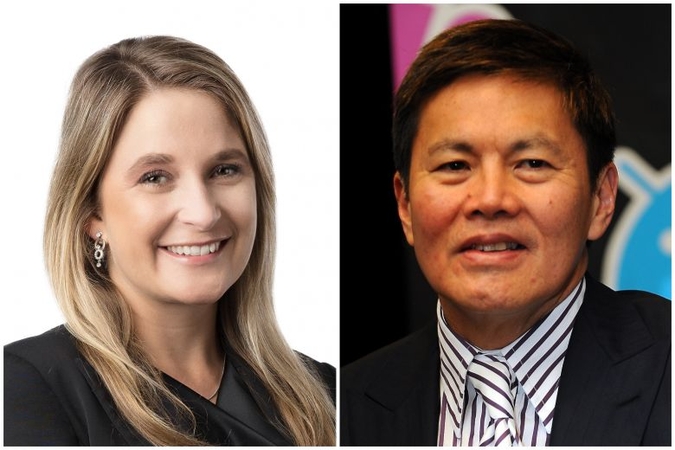
CEO designate of Optus, Kelly Bayer Rosmarin, will take over from Allen Yew, who joined Singtel in 1980.PHOTOS: SINGTEL, STEPHANIE YEOW

CEO designate of Optus, Kelly Bayer Rosmarin, will take over from Allen Yew, who joined Singtel in 1980.PHOTOS: SINGTEL, STEPHANIE YEOW
By Choo Yun Ting
The Straits Times

2,509 Viewed

SINGAPORE – Local telco veteran Allen Lew, who is currently chief executive of Singtel’s Australian subsidiary Optus, will be taking on a new role in Thailand from next April.

In its announcement on Thursday (Dec 5), Singtel said that Mr Lew will be assuming the newly-created roles of chief executive officer for group strategy and business development and country chief officer of Thailand.

He will also continue as chairman of the executive committee of Singtel’s Thai associate AIS.

Optus is Australia’s second-largest telco and a wholly-owned subsidiary of Singtel.

Taking over from Mr Lew is current deputy CEO of Optus, Ms Kelly Bayer Rosmarin, who has been named CEO designate of both Optus and Consumer Australia.

She will join the Singtel management committee from April 1, 2020.

Singtel group CEO Chua Sock Koong said that Mr Lew’s tenure at Optus, which he has headed since 2014, has made it the go-to operator in Australia for good connectivity, innovative services and content.

“Given the tremendous growth of digital services in Thailand and the strides taken by AIS to assert market leadership, he is best placed to help drive growth there given his knowledge of the Thai market and expertise,” Ms Chua added.

Mr Lew is a long-time employee of Singtel, having held a range of senior management roles such as CEO Singapore since joining the company in 1980.

His designated successor Ms Bayer Rosmarin joined Singtel in March this year, and has been named among the top 10 businesswomen in Australia and top 25 women in Asia Pacific finance.

She was previously group executive of institutional banking and markets at the Commonwealth Bank of Australia, where she drove significant business growth and digital transformation programmes.

Ms Bayer Rosmarin said: “I look forward to harnessing and optimising the benefits of these changes for our customers across the country, and working with the passionate people at Optus to drive innovation, deliver great customer service, and power the digital economy with connectivity for all Australians.”

Musk tells jury he’s worth $20 billion but is short on cash

#ศาสตร์เกษตรดินปุ๋ย : ขอบคุณแหล่งข้อมูล : หนังสือพิมพ์ The Nation

https://www.nationthailand.com/business/30379106?utm_source=category&utm_medium=internal_referral

Musk tells jury he’s worth $20 billion but is short on cash

Dec 05. 2019
Elon Musk, CEO of Tesla Inc., arrives at federal court in Los Angeles on Dec. 3, 2019. MUST CREDIT: Bloomberg photo by Patrick T. Fallon.

Elon Musk, CEO of Tesla Inc., arrives at federal court in Los Angeles on Dec. 3, 2019. MUST CREDIT: Bloomberg photo by Patrick T. Fallon.
By Syndication Washington Post, Bloomberg · Dana Hull, Edvard Pettersson, Tom Metcalf

1,590 Viewed

Elon Musk says he doesn’t have a lot of cash. His wealth came up in the second day of his testimony before a federal jury in Los Angeles, where the Tesla and SpaceX chief executive is on trial over a tweet in which he referred to a British cave expert as a “pedo guy.”

After an unsuccessful objection from his lawyer, Musk told the jury that he has Tesla stock and SpaceX stock, with debt against those holdings, and that his net worth is about $20 billion. But contrary to public opinion, he said, he didn’t have much cash. Musk finished testifying after a total of about six hours on the stand over two days.

Caver Vernon Unsworth sued Musk over the “pedo guy” tweet, which the CEO called “a flippant, off-the-cuff insult.” Musk said he was responding to Unsworth’s criticism of Musk’s effort to help rescue members of a Thai soccer team from a flooded cave in 2018. Musk and engineers at his companies prepared a mini submarine to help with the rescue efforts. The 12 kids, ages 11 to 16, and their coach were ultimately saved without the sub.

Usnworth, who knew the caves well, ridiculed the high-profile effort from Musk. He told CNN that Musk could “stick his submarine where it hurts” and called the idea a PR stunt with no chance of working.

That angered Musk, who said a team of engineers worked very hard to build the sub to save the boys. He said Unsworth’s comments denigrated the efforts of his team.

Thai rescue officials were “very happy” with his team’s effort, and the government thanked him for it, Musk said, contradicting Unsworth’s comments in the CNN interview.

Musk also explained to the jury his penchant to tweet. (He retweeted a Tesla post during a break in his testimony.)

Musk said he likes to solicit public input on Twitter.

“There are pretty smart people out there,” Musk said.

Despite Musk’s status as one of the richest people on the planet, his net worth is largely illiquid.

The Bloomberg Billionaires Index puts his fortune at $26.6 billion. That comprises an estimated $14.6 billion stake in SpaceX. Musk has said previously he doesn’t intend to sell any of his holdings in the closely held company.

Musk has also long been a buyer of Tesla shares to bolster his $11.4 billion holding.

He’s pledged about 40% of his Tesla shares to unlock some of the wealth without shrinking his stake. A May filing revealed that he had access to about $500 million of credit lines from affiliates of Morgan Stanley, Goldman Sachs and Bank of America as of April 30. Still, that’s a fraction of his $26.6 billion overall fortune on the Bloomberg Billionaires Index and it’s unclear how much of those credit lines remain unused.

Musk’s wealth is an issue at the trial because a jury may consider evidence of his net worth in determining punitive damages. But Musk’s lawyers argued in court papers that the jury can’t award more in punitive damages than in compensatory damages. There is no way the jury would award more than $1 billion in compensation, so Musk’s net worth exceeding that isn’t relevant, the lawyers said.

In his testimony, Musk cited his mother as having some good advice, that Unsworth might want to follow.

“As my mom said, if somebody insults you, just let it go,” Musk said.

In September, Musk revealed in court documents that one of his trusted aides, Jared Birchall, paid $50,000 to hire a private investigator who looked into Unsworth. Attorneys for Unsworth said the investigator was offered a $10,000 bonus if he was able to confirm nefarious behavior – which was never paid.

Birchall worked at Morgan Stanley until 2016 and is the manager of Excession, Musk’s family office.

He took the stand after Musk.

Birchall testified that he hired James Howard, who later turned out to be a conman.

After Howard came up with what later turned out to be fake dirt on Unsworth, such as that he had been visiting Thailand since the 1980s and that he met his wife when she was a teenager, Birchall, using the name James Brickhouse, told Howard to leak the information to media in the U.K.

“I believed him to be a credible investigator,” Birchall told the jury. “I understood these things to be facts. I asked him to share facts.”

Musk also enlisted help from a second investigator at the Palo Alto, California-based law firm Cooley, which didn’t respond to a request for comment.

The case is Unsworth v. Musk, 18-cv-08048, U.S. District Court, Central District of California (Los Angeles).

Egat to pursue solar project in dams

#ศาสตร์เกษตรดินปุ๋ย : ขอบคุณแหล่งข้อมูล : หนังสือพิมพ์ The Nation

https://www.nationthailand.com/business/30379074?utm_source=category&utm_medium=internal_referral

Egat to pursue solar project in dams

Dec 06. 2019
1,345 Viewed
The Electricity Generating Authority of Thailand (Egat) intends to press ahead with the development of a floating solar project in dams, regardless of the ongoing revision of the Power Development Plan (PDP) by the Energy Ministry.

Egat governor Viboon Rerksirathai said that the state agency was assigned to develop 16 floating solar projects at nine dams under the present PDP of 2018-2037.

The development will generate a total 2,725 megawatts.

Egat has already granted an engineering, procurement, construction (EPC) contract to a company to build the project with capacity of 45MW at Sirindhorn Dam.

The state agency has also pressed ahead with the study of the project to build a Floating Storage and Regasification Unit (FSRU) of liquified natural gas (LNG) in the Gulf of Thailand with capacity of 5 million tonnes per year.

The plan is at the stage of public hearings with involved parties.

He added that the ministry had not ordered Egat to shelve the solar project and the FSRU project, despite the ministry’s revision of PDP.

Amorn Kansaree, the assistant of the Bhumibol Dam director, said that Egat is also studying the floating solar project at Bhumibol Dam with capacity of 778MW.

The first phase of the project will be able to generate power of 158MW in 2026, an additional 300MW in 2030, and another 320MW in 2033. The construction area will occupy 8,000 rai of land.

If the project is approved by the government, the construction of Phase 1 is expected to begin in 2022.

He added that the cost of electricity generation by the floating solar project at the Bhumibol Dam would not exceed Bt2.40 per unit.

Negative rates are starting to worry ECB officials

#ศาสตร์เกษตรดินปุ๋ย : ขอบคุณแหล่งข้อมูล : หนังสือพิมพ์ The Nation

https://www.nationthailand.com/business/30379122?utm_source=category&utm_medium=internal_referral

Negative rates are starting to worry ECB officials

Dec 06. 2019
The stars of the European Union (EU) sit on banners flying outside the European Central Bank (ECB) headquarters in Frankfurt, Germany, on Nov. 27, 2019. MUST CREDIT: Bloomberg photo by Peter Juelich.

The stars of the European Union (EU) sit on banners flying outside the European Central Bank (ECB) headquarters in Frankfurt, Germany, on Nov. 27, 2019. MUST CREDIT: Bloomberg photo by Peter Juelich.
By Syndication Washington Post, Bloomberg · Craig Stirling ·

964 Viewed

Five weeks since Mario Draghi retired from running the European Central Bank, finding an outright fan of his legacy of negative interest rates has become a lot harder.

Governing Council members, who collectively lowered the key rate to minus 0.5% shortly before Draghi’s term ended, are increasingly portraying it as a necessary evil that shouldn’t be compounded. Sparse communication on monetary matters by his successor as president, Christine Lagarde, hasn’t dispelled that impression.

Banks have picked up on the mood change, dropping predictions that Lagarde — under the guidance of Chief Economist Philip Lane, the intellectual standard-bearer who proposed the latest cut as part of a stimulus package — would ease again at her first policy meeting on Dec. 12.

It’s a striking development for an institution whose credibility hangs on the promise that it can always do more if needed to revive inflation, and whose policy guidance explicitly states that rates can still fall further. It suggests that a strategy review planned by the new chief will need a thoughtful scrutiny of the toolkit.

“We don’t expect they’ll cut rates further,” said Sarah Hewin, chief economist for Americas and Europe at Standard Chartered Bank. “I’m not sure there is a consensus that negative rates are bad, but I’m wondering whether with this transition from Draghi to Lagarde — a new broom at the helm — there’s an opportunity to vocalize their concerns.”

Lane has defended negative rates as a complement to other measures that aim to spur economic activity. In one speech last month, he said they aren’t “super loose” — citing the absence of a price surge as a demonstration of that. In another, he said the policy forces banks to chase higher investment returns.

Aline Schuiling, an economist at ABN Amro Bank, reckons the weakness of the economy means the ECB will cut again, probably in March. There is “some recovery in growth, but not very spectacular,” she said.

Yet the lack of a broad public defense for negative rates has let a chorus of criticism from bankers fill the void. Among them is Deutsche Bank President Karl von Rohr, who last month described them as “the biggest challenge facing the European financial industry.” Even the ECB’s own financial stability review flagged the risks of ultra-loose money.

Two of the ECB’s prospective new board members took a similarly cautious view when quizzed by the European Parliament this week. Italy’s Fabio Panetta said officials need to be alert to the “unintended consequences of monetary policy.” His German colleague, Isabel Schnabel, said the institution should listen carefully to voters’ concerns on sub-zero rates.

Such discontent is vocal in some euro-zone countries, notably Germany and the Netherlands. Reflecting that, ECB officials are also privately encountering pushback from some finance ministers, according to people familiar with the matter.

Bundesbank President Jens Weidmann and Dutch central bank Governor Klaas Knot, already skeptics of loose policy, look unlikely to back another rate cut unless the economy worsens significantly. So far, it seems to be stabilizing. At Draghi’s final meeting in October, one participant made a plea for “patience” to allow current easing to work.

Bank of Spain Governor Pablo Hernandez de Cos said this week he couldn’t rule out that sub-zero policy could eventually harm monetary-policy transmission.

Perhaps most striking is that Bank of Italy Governor Ignazio Visco, a long-time backer of monetary stimulus, has started criticizing the sub-zero policy, saying he prefers asset purchases.

“The longer they remain negative and the lower they go, the higher is the likelihood of significant negative side effects,” the Italian told German newspaper Handelsblatt. “I’m not encouraging this.”

One of the last banks holding out for a December rate cut, JPMorgan Chase, has thrown in the towel. Economist Greg Fuzesi said that “given the lack of any easing signal, and the time it often takes for the ECB to build consensus, it is becoming increasingly hard to see the ECB do more.” Barclays said this week that “the bar for more easing is high.”

The chief worry is that policy is close to the so-called reversal rate, where the harmful effects outweigh the good. Lane’s denial that such a situation is near may be valid, but it’s also unsurprising that the chief economist wants to dispel any impression of monetary impotence.

He and many of his colleagues, including Lagarde, do make the point that more government spending could speed up the path to normalization. Germany, the prime candidate to do that, isn’t rushing to respond though, and a newly created euro-area fiscal capacity is tiny.

In short, central bankers are approaching their last meeting of the year with a heavy heart about one of their signature policy tools, even if there’s no immediate way out.

Austrian Governor Robert Holzmann said in September that negative rates aren’t sustainable and will need to be reversed. That’s a relatively extreme view in the Governing Council — but the open hand-wringing on the matter among his colleagues suggests he could one day have company.


Markets wrap: Stocks advance on fresh hopes for U.S.-China deal

#ศาสตร์เกษตรดินปุ๋ย : ขอบคุณแหล่งข้อมูล : หนังสือพิมพ์ The Nation

https://www.nationthailand.com/business/30379103?utm_source=category&utm_medium=internal_referral

Markets wrap: Stocks advance on fresh hopes for U.S.-China deal

Dec 05. 2019
By Syndication Washington Post, Bloomberg · Rita Nazareth, Vildana Hajric

1,404 Viewed

Stocks rose and bonds fell on speculation the U.S. and China will reach a deal that avoids tariffs due to take hold in 11 days.

The S&P 500 index halted a three-day slide after Bloomberg News reported negotiators are getting near an agreement on the amount of tariff relief in a phase-one accord between the world’s two largest economies. President Donald Trump said discussions with China are going very well, just a day after downplaying the urgency of a deal. Treasury 10-year yields climbed, following the biggest decline since August. The dollar dropped. Oil surged.

Investors are watching for any signs of progress in talks between Washington and Beijing as worries increase that Trump may slap more tariffs on China this month. A flood of trade news has whipsawed global markets, with the U.S. also threatening levies on France after hitting steel from Brazil and Argentina. American equities reached record highs in November, driven in part by optimism that at least an initial trade deal was in the offing.

“You wake up every single day and see that the number one thing that’s dictating markets is trade,” said Matt Miskin, co-chief investment strategist at John Hancock Investment Management. “If those tariffs are avoided, then the recent gains in the market will likely hold.”

On corporate news:

– PG&E Corp. soared as the company was said to be close to a $13.5 billion deal with wildfire victims.

– Expedia Group Inc. surged as Chief Executive Officer Mark Okerstrom and Chief Financial Officer Alan Pickerill resigned after clashing with the board on the online travel agency’s direction.

– Cloud software stocks fell as disappointing forecasts from Workday Inc. and Salesforce.com Inc. added to concern about slowing growth.

– Peloton Interactive Inc. tumbled as a report said it lowered the price of its digital subscription app for workouts in an effort to appeal to more users.

Elsewhere, oil rallied as Energy Information Administration data showed U.S. crude inventories fell more than expected. The British pound touched the highest against the euro since May 2017 as traders stepped up bets on a win for the Conservatives in next week’s election.

Here are some key events coming up this week:

– Germany releases factory-order data for October on Thursday.

– Saudi Aramco’s initial public offering is scheduled to be priced on Thursday, with Riyadh looking to raise more than $25 billion.

– Friday brings the U.S. jobs report, where estimates are for non-farm payrolls to rise by 190,000 in November.

These are the main moves in markets:

– – –

– The S&P 500 climbed 0.8% to 3,118.95 at 2:53 p.m. New York time.

– The Stoxx Europe 600 index surged 1.2%.

– The MSCI Asia Pacific index decreased 0.7%.

– – –

– The Bloomberg Dollar Spot index dipped 0.1%.

– The euro decreased 0.1% to $1.1072.

– The British pound climbed 0.8% to $1.3094.

– The Japanese yen weakened 0.3% to 108.94 per dollar.

– – –

– The yield on 10-year Treasuries increased six basis points to 1.78%.

– Germany’s 10-year yield climbed three basis points to -0.32%.

– Britain’s 10-year yield increased seven basis points to 0.741%.

– – –

– The Bloomberg Commodity index jumped 0.6%.

– West Texas Intermediate crude surged to $58.43 a barrel.

– Gold fell 0.3% to $1,479.30 an ounce.

Commerce Ministry urges industries to increase their exports until early 2020

#ศาสตร์เกษตรดินปุ๋ย : ขอบคุณแหล่งข้อมูล : หนังสือพิมพ์ The Nation

https://www.nationthailand.com/business/30379101?utm_source=category&utm_medium=internal_referral

Commerce Ministry urges industries to increase their exports until early 2020

Dec 05. 2019
Jurin Laksanawisit

Jurin Laksanawisit
By THE NATION

1,808 Viewed

Deputy Prime Minister and Commerce Minister Jurin Laksanawisit said on Wednesday (December 4) that his ministry has held discussions with the Thai Chamber of Commerce, the Federation of Thai Industries and representatives from the private sector, asking them to accelerate the export of products that fall under the MoUs with foreign trade partners signed by Thailand earlier this year during business matching trips.

“To boost exports in the last quarter of 2019, Ministry of Commerce went on several foreign trips to secure trade deals and negotiate with local authorities in an attempt to match Thai entrepreneurs with foreign counterparts,” he said. “We have signed MoUs for the export of Thai products with accumulated value of Bt70.9 billion, and delivery should start this month and continue through early 2020.”

Jurin added that major Thai entrepreneurs participating in these deals include CP Group, who agreed to export additional 10,000 tonnes of its products on top of its regular December export volume of 40,000 tonnes. “Meanwhile, the Thai Chamber of Commerce and Federation of Thai Industries will negotiate with 2 electronics manufacturing giants, namely Western Digital and Seagate Technology to increase their export volume in early 2020 as well,” he said.

“As for the automotive sector, Toyota has informed me that they will add 1,000 units to the December export volume while Honda will increase its export of hybrid cars next year,” he said. “PTT also agreed to export more as the government’s measures to promote use of alternative energy have resulted in more oil in reserve.”

Meanwhile, Thai Chamber of Commerce vice president Sanan Ang-Ubolkul said that Thai exports in 2019 had suffered greatly from the impacts of trade disputes and the appreciation of the Baht, making it a challenge to boost exports at year end. “This year we estimate that exports will shrink by 2.5 per cent with a total volume of US$246.2 billion,” he said. “2020 may see only 1 per cent growth at a total $250 billion, depending on how well the government handles the Baht appreciation problem, which is the top threat to Thai exports.”