Two of four contracts awarded for Rama III Expressway

ศาสตร์เกษตรดินปุ๋ย : ขอบคุณแหล่งข้อมูล : หนังสือพิมพ์ The Nation

https://www.nationthailand.com/business/30376836

Two of four contracts awarded for Rama III Expressway

Sep 28. 2019
Artist's image of the Rama III expressway project

Artist’s image of the Rama III expressway project
By THE NATION

1,394 Viewed

Directors of the Expressway Authority of Thailand (EXAT) on Friday (September 27) announced the winners of two of four contracts to build the Rama III Expressway, which will feature a two-kilometre cable-stayed bridge spanning the Chao Phraya River.

A consortium called CTB, comprised of China Harbour Engineering Co, Thipakorn Co Ltd and Buri Ram Thong Chai Construction Co Ltd, posted the winning bid of Bt6.44 billion for Contract 2, 11.06 per cent lower than the reference rate.

Ch Karnchang Pcl was awarded Contract 4 – the bridge itself – with a Bt6.636-billion bid, 16.46 per cent under the reference rate.

Two other contracts are expected to be awarded at the end of October, by which time a new EXAT governor will have succeeded retiring Phuttigun Kanjanapangka.

The expressway will cover 19km from Rama III Road in Phra Nakhon to the Western Outer Ring Road in Thon Buri.

Contract 1, involving a 6.4km segment of the expressway, has a reference rate of Bt6.98 billion. A consortium of China State Construction Engineering Corp, Nawarat Patanakarn Pcl and AS Associated Engineering (1964) Co Ltd have bid Bt5.897 billion.

Contract 3, for a 5km section, has a reference rate of Bt6.991 billion. A consortium of China Railway 11th Bureau Group Corp, Civil Engineering Co Ltd and Bunchai Panich (1979) Co Ltd has offered Bt6.098 billion.

Jurin’s China trip hailed a triumph for rubber, cassava, fruit producers

ศาสตร์เกษตรดินปุ๋ย : ขอบคุณแหล่งข้อมูล : หนังสือพิมพ์ The Nation

https://www.nationthailand.com/business/30376832

Jurin’s China trip hailed a triumph for rubber, cassava, fruit producers

Sep 27. 2019
By The Nation

648 Viewed

Banjongjitt Angsusingh, director-general of the Department of International Trade Promotion (DITP), has called Commerce Minister Julin Laksanawisit’s visit to China last weekend “beautifully successful”.

“We urged China to buy up rice and rubber from the remaining quota and China provided the opportunity to export more cassava, rubber and fruits there,” he said on Friday (September 27).

The department plans to invite Chinese importers to meet Thai cassava entrepreneurs in November. During the visit to China, its officials explored the market in Guangxi Zhuang autonomous region, where businesses that require cassava are blooming, especially the construction industry.

Thailand is China’s top-ranked partner in the cassava trade. China imports around seven million tonnes of Thai cassava chips and flour per year, with a combined value of Bt60 billion, to Nanjing, Qingdao, Hefei and Shanghai’s Huangpu district.

Bankongjitt said representatives of the Rubber Authority of Thailand and Sinochem Group would meet in Beijing from October 19-21 to explore ways to hasten the trading process for rubber.

The DITP is meanwhile coordinating with the departments of Foreign Trade and Internal Trade to expand the market for rubber with a booth at a major rubber-products exhibition in Shanghai later this year.

It will also assist Thai businessman in negotiations with rubberwood and latex producers in Malaysia and in November fly them to meet Turkish entrepreneurs.

The DITP is looking for new buyers among makers of latex gloves and automobiles.

Bankongjitt said the visit to China also resulted in the sale of Bt100 million worth of Thai fruit.

“And China agreed to ease restrictions on Thai fruit imports, suggested ways to increase trade value through e-commerce and is allowing Thailand to participate in a fruit exhibition in Guangxi next month, where we plan to promote coconuts, which are popular in China.”

THAI could lease rather than purchase more aircraft

ศาสตร์เกษตรดินปุ๋ย : ขอบคุณแหล่งข้อมูล : หนังสือพิมพ์ The Nation

https://www.nationthailand.com/business/30376788

THAI could lease rather than purchase more aircraft

Sep 27. 2019
 THAI president Sumeth Damrongchaitham

THAI president Sumeth Damrongchaitham
By THE NATION

622 Viewed

Overall operations at Thai Airways International (THAI) will not be affected by its board’s demand that plans to procure new aircraft be reviewed, THAI president Sumeth Damrongchaitham said on Thursday (September 26).

THAI management will next month submit to the board a proposal to lease three Boeing 777-300ER aircraft to support operations for six years, he said.

If approved, the leasing process would begin immediately. No Cabinet endorsement would be required.

Unless unforeseen obstacles arise, the leasing procedure would likely take four months, with the jets delivered beginning early next year.

The THAI board on Tuesday asked management to review plans to procure 38 more aircraft worth a combined Bt156 billion.

The directors cited a “fast-changing situation” in asking for a fresh plan within the next six months.

Nok seeks strategic partner to boost performance

ศาสตร์เกษตรดินปุ๋ย : ขอบคุณแหล่งข้อมูล : หนังสือพิมพ์ The Nation

https://www.nationthailand.com/business/30376792

Nok seeks strategic partner to boost performance

Sep 27. 2019
By THE NATION

620 Viewed

Nok Airlines Plc is looking for a strategic partner to strengthen its operations.

Although the carrier needs a partner to boost its performance, it does not need a financial backer, said chief executive officer Wutthiphum Jurangkool, adding that the Jurangkool family could meet the funding needs of the airline. Members of the Jurangkool family own 67 per cent of Nok Airlines.

Wutthiphum said he could not tell when the company would find a strategic partner.

Nok’s management will submit a rehabilitation plan to the board in November.

PTT board to discuss plans to list its oil, retail businesses

ศาสตร์เกษตรดินปุ๋ย : ขอบคุณแหล่งข้อมูล : หนังสือพิมพ์ The Nation

https://www.nationthailand.com/business/30376802

PTT board to discuss plans to list its oil, retail businesses

Sep 27. 2019
By The Nation

1,378 Viewed

PTT, Thailand’s largest energy conglomerate, is expected to discuss the plan of listing its oil and retail businesses on the stock market on Friday (September 27), an informed source revealed on Thursday.

“The PTT board will meet to discuss the plan, but it may not make a decision on the listing unless the plan proves to be faultless,” the source added.

The board of directors will also consider the interim dividend payment for PTT shareholders as well as its winning bid for the Bt55.4 billion expansion of the Map Ta Phut seaport.

The PTT Oil and Retail Business Public Company Limited (PTTOR)’s main products are fuel oil, liquefied petroleum gas, lubricant as well as food and beverage. Part of its retail business is “Café Amazon”, which PTT executives often say earns far more than the sale of fuel.

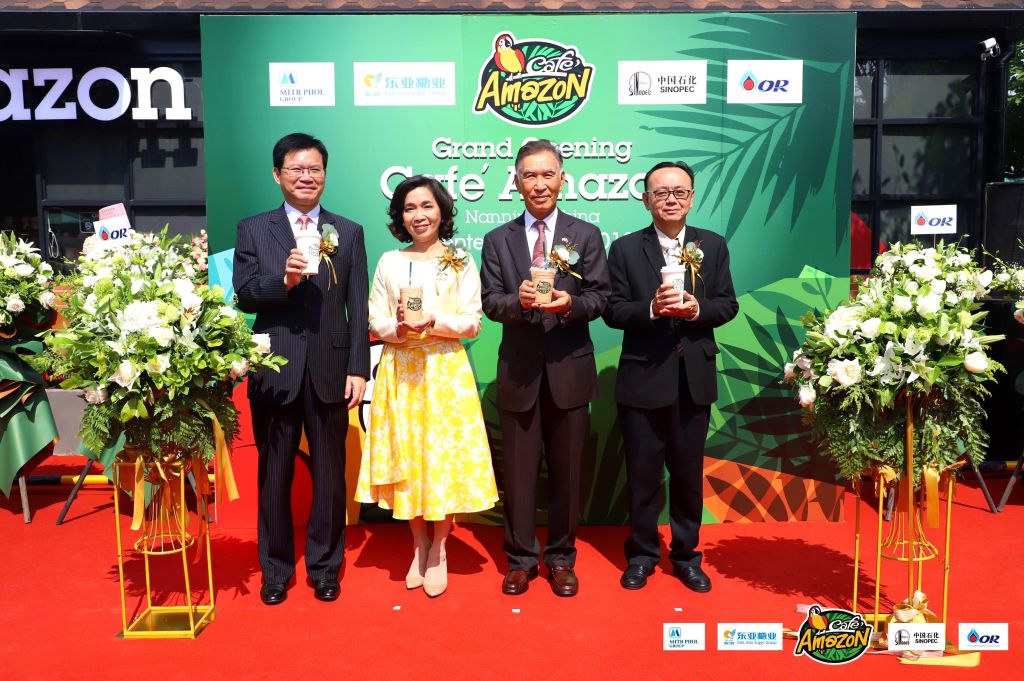
PTTOR entered China on September 26 by opening a Café Amazon in Nanning, Guangxi province, with full backing from the company’s partners in both Thailand and mainland, PTTOR’s president and chief executive officer Jiraphon Kawswat said. The conglomerate plans to open other Café Amazon branches at Sinopec petrol stations across China and has given operating rights to PTTOR China (Shanghai), a unit under its umbrella.

Apart from China, Café Amazon has also made its presence felt in Malaysia, Singapore, Laos, Cambodia, Myanmar, the Philippines, Japan and Oman.

This business has been growing annually in terms of new branches and sales. Last year, it recorded sales of 225 million cups, Jiraphon added.

Strong baht takes a toll on Thai tapioca export revenue

ศาสตร์เกษตรดินปุ๋ย : ขอบคุณแหล่งข้อมูล : หนังสือพิมพ์ The Nation

https://www.nationthailand.com/business/30376801

Strong baht takes a toll on Thai tapioca export revenue

Sep 27. 2019
Credit:North Eastern Tapioca Trade Association

Credit:North Eastern Tapioca Trade Association
By The Nation

1,290 Viewed

Farm products have a bright future in the Chinese market but the strong baht is leading to huge revenue losses, tapioca exporters said.

“The appreciation of the baht against the US dollar and the Chinese yuan has hit our revenue by up to Bt10 billion,” said Somboon Wattanavanichkul, president of the North Eastern Tapioca Trade Association.

Exporters want the baht in the range of Bt32 to the dollar in order to ensure price competitiveness of farm products in export markets, he said.

The baht currently trades at around Bt30 to the dollar, a five per cent appreciation since January this year. If the US Federal Reserve cuts its policy rate again, that would further strengthen the baht hence Thai authorities should look at the exchange rate market, he said. Thai exporters and their Chinese counterparts recently signed a memorandum of understanding (MoU) to trade 2.68 million tonnes of tapioca products — chips and starch — valued at $608 million (Bt18.464 billion).

The MoU signing took place last week during the visit of a Thai delegation to China led by Commerce Minister Jurin Laksanawisit in a bid to export more farm products to China.

Chinese traders will import this batch of tapioca chips and starch between October this year and October next year.

Boonchai Srichaiyongpanich, president of the Thai Tapioca Trade Association, said that export demand is higher than Thailand’s tapioca production cane meet, leading to the rising price of cassava roots. The fresh root now sells at between Bt2.10 to Bt2.40 per kilogram.

Currently, Thailand has the capacity to produce about 30 million tonnes of tapioca. He said that production capacity should increase to 40 million tonnes to meet high export demand. Thailand could increase cassava root yields from 3.6 tonnes per rai to 5 tonnes per rai, he suggested. Total land area for plantation of tapioca in Thailand is estimated at 8 million rai

From January to July, Thai traders exported 4.5 million tonnes of tapioca products value at $1.69 billion, down 11.63 per cent and 6.88 per cent respectively year on year. However, the Chinese export market remains promising as China is expected to import more cassava products to produce ethanol and feed meal, according to Thai exporters.

Nestle vows zero net emissions by 2050

ศาสตร์เกษตรดินปุ๋ย : ขอบคุณแหล่งข้อมูล : หนังสือพิมพ์ The Nation

https://www.nationthailand.com/business/30376794

Nestle vows zero net emissions by 2050

Sep 26. 2019
By THE NATION

331 Viewed

Nestle has announced its ambition to achieve zero net greenhouse gas emissions by 2050, embracing the most ambitious aim of the Paris Agreement of limiting global temperature rise to 1.5 degrees Celsius.

The company said it was accelerating its climate change efforts. Over the past four years, Nestle said it had aligned its objectives with science-based targets to keep the temperature increase below 2 degrees Celsius.

The company vowed to play a leading role in tackling climate change and said that over the next two years, it would come up with a time-bound plan consistent with the 1.5 degrees Celsius goal. Nestle said it would review its progress annually to ensure it was on track.

“Climate change is one of the biggest threats we face as a society. It is also one of the greatest risks to the future of our business,” said Mark Schneider, Nestle’s CEO.

“We are running out of time to avoid the worst effects of global warming. That is why we are setting a bolder ambition to reach a net-zero future. Deploying Nestle’s global resources and industry know-how, we know we can make a difference at a significant scale. Our journey to net zero has already started. Now, we are accelerating our efforts,” he added.

Thai Union strengthens guard against food fraud

ศาสตร์เกษตรดินปุ๋ย : ขอบคุณแหล่งข้อมูล : หนังสือพิมพ์ The Nation

https://www.nationthailand.com/business/30376793

Thai Union strengthens guard against food fraud

Sep 26. 2019
Thai Union Group’s new Combating Food Fraud and Food Defense Strategy will help protect the company’s food supply chains from intentional contamination, preventing threats to the business and customers.

Thai Union Group’s new Combating Food Fraud and Food Defense Strategy will help protect the company’s food supply chains from intentional contamination, preventing threats to the business and customers.
By THE NATION

446 Viewed

Thai Union Group PCL has announced a series of robust programmes to combat food fraud and protect its food supply chain from intentional contamination.

The “Combating Food Fraud and Food Defence Strategy” will complement the work Thai Union already does under its global sustainability strategy, SeaChange, which includes tracing products to identify and record their provenance and progress along the supply chain.

“We have an unwavering commitment to protect our supply chain,” Sirilak Suwanrangsi, Thai Union’s global regulatory leader, said in announcing the policy at the World Seafood Congress in Penang, Malaysia.

“This new strategy will strengthen our existing work to prevent any threats to our business and to our customers.”

Thai Union has introduced a “Manual of Mitigation Measures to Combat Food Fraud and Intentional Adulteration”, which provides guidance in developing measures against threats specific to each business.

Suwanrangsi said it’s important for companies such as Thai Union to have systems in place that protect reputations and assess any vulnerabilities in supply chains.

“Collectively, these efforts will reduce risks in Thai Union’s supply chain and help protect our business” said Dr Darian McBain, Thai Union’s global director of corporate affairs and sustainability.

Food fraud includes the deliberate and intentional substitution, addition, tampering or misrepresentation of food, ingredients or packaging, along with false or misleading statements made about a product, for economic gain.

Cafe Amazon branches into China

ศาสตร์เกษตรดินปุ๋ย : ขอบคุณแหล่งข้อมูล : หนังสือพิมพ์ The Nation

https://www.nationthailand.com/business/30376782

Cafe Amazon branches into China

Sep 26. 2019
By THE NATION

813 Viewed

PTT Oil and Retail Business Plc (OR) has opened the first Cafe Amazon branch in China in line with its goal of making the coffee chain a global brand.

The first outlet in the country is located at a Sinopec petrol station in Nanning of Guangxi, marking the tenth foreign market it has entered.

OR president and chief executive officer Jiraphon Kawswat said plan for first branch in China was supported by the company’s partners in Thailand and the host country.

The company has awarded the right to operate the branch to PTT OR China (Shanghai), a unit under its umbrella.

OR will continue to roll out Cafe Amazon branches at other Sinopec petrol stations across China, the world’s biggest consumer market.

Cafe Amazon has now made its presence in ten countries: China, Thailand, Malaysia, Singapore, Laos, Cambodia, Myanmar, the Philippines, Japan, and Oman.

It has been growing annually in terms of the number of new branches and sales.

Last year, it recorded sales of 225 million cups.

Bangkok Bank unveils Be 1st Smart Rabbit LINE Pay debit cards

ศาสตร์เกษตรดินปุ๋ย : ขอบคุณแหล่งข้อมูล : หนังสือพิมพ์ The Nation

https://www.nationthailand.com/business/30376763

Bangkok Bank unveils Be 1st Smart Rabbit LINE Pay debit cards

Sep 26. 2019
By THE NATION

664 Viewed

Bangkok Bank is partnering with Rabbit-LINE Pay to come up with the “Be1st Smart Rabbit LINE Pay” debit card that will link to online payment options.

Shoke Na Ranong, the executive vice president of BBL’s credit card division, on Thursday said that with young people preferring to making payments online, the bank has decided to join Rabbit LINE Pay so that they could enjoy both online and offline options.

“The aim is to ensure that customers can conveniently and confidently complete all their financial transactions, such as transfers and withdrawals, via the Be1st Smart Rabbit LINE Pay card or via e-transactions through the Thai Payment Network [TPN] or UnionPay,” Shoke said.

Sudrutai Thongsong, the senior vice president of BBL’s consumer product development under consumer banking, said the BBL–RLP cooperation will enable the bank to offer new financial services that match customer demand and lifestyle.

“This is also a good opportunity for the bank to expand its customer base into the new generation, which is more used to completing transactions online. And this is also a step towards a cashless society,” she said.

Jin Woo Lee, the CEO of Rabbit-LINE Pay, said the tie-up is an important step for the programme to maintain its leadership in the area of mobile payment services. This is the first time that the company has developed a payment system that supports TPN UnionPay accounts, as well as BBL branches nationwide.

“This cooperation strengthens our standing in the ‘Young Gen’ customer base, and we are confident that we will receive a good response. I believe the new debit cards will make transactions more convenient and help meet the lifestyle needs of customers. This is part of the drive to achieving a cashless society,” Lee said.

RLP has around 6.5 million customers and is accepted in more than 60,000 shops nationwide, which is planned to be expanded to 100,000 shops across Thailand by the end of this year.