Banks urged to facilitate development of sustainable economies

ศาสตร์เกษตรดินปุ๋ย : ขอบคุณแหล่งข้อมูล : หนังสือพิมพ์ The Nation

https://www.nationthailand.com/business/30375136

Banks urged to facilitate development of sustainable economies

Aug 21. 2019
By THE NATION

187 Viewed

The Asean bloc is facing existential threats such as climate change and environmental degradation, which could potentially lead to financial instability and social unrest, according to WWF’s 2019 Sustainable Banking Assessment (SUSBA).

The report finds that of the 35 Asean banks assessed, all are not responding fast enough to these threats, based on the level of ESG integration as measured by a framework covering six aspects: purpose, policies, processes, people, products and portfolio.

Humanity stands on the edge of a precipice with the Intergovernmental Panel on Climate Change (IPCC) report issued in 2018 saying that there were 12 years left to limit global warming to 1.5°C and prevent a climate crisis.

The number of heatwaves hitting Europe and Asia-Pacific in recent months is testament that climate change is already disrupting our daily lives and business operations. Unfortunately, the Asean economy remains highly dependent on fossil fuels, which contributes significantly to greenhouse gas emissions. 91 per cent of the banks assessed have continued to finance new coal-fired power plants and are therefore fuelling the fire.

Coal is not the only problem. Rampant deforestation has exacerbated climate change and caused biodiversity loss, which threatens food security by disrupting essential ecosystem services such as soil fertility maintenance and pollination. The recent IPCC special report on land use and climate emphasises that sustainable land management alongside rapid decarbonisation of the energy system are critical to meet the 1.5°C goal of the Paris Agreement. SUSBA finds that only 9 per cent of banks assessed have no-deforestation policies, despite being home to some of the world’s deforestation hot spots in Greater Mekong, Sumatra and Borneo.

Southeast Asia is suffering from manifestations of climate change in the form of water-related disasters – from crops and manufacturing facilities being destroyed by floods in Thailand, Malaysia’s water resources expected to be reduced by 20-25 per cent from 2025 to 2030, to major coastal cities such as Jakarta being susceptible to rising sea level. Asean banks remain highly exposed, with just 17 per cent recognising risks of water, while none requires clients to conduct water-risk assessments.

Regulators understand the threat to financial stability and are responding. By the end of the year, seven banking associations or regulators in Asean will have issued sustainable banking guidelines. The central banks of Malaysia, Singapore and Thailand have joined the Network for Greening the Financial System (NGFS), established to enhance the ability of the financial system to manage climate risks and mobilise capital for sustainable development. The NGFS is recommending central banks and supervisors to better integrate climate-related risks into financial stability monitoring. Banks will increasingly be expected to test their resilience of their loan books to climate risks and report the results to the regulators.

374 financial institutions representing US$118 trillion of assets have endorsed the Task Force on Climate-related Financial Disclosures (TCFD), which has specific recommendations for financial institutions on climate disclosures. Asean banks have not made much progress to meet these expectations, with only three banks developing a strategy to manage climate-related risks or conducting climate-risk assessment.

Investors are increasingly engaging with banks on their management of climate and environmental risks. Alistair Thompson, director of First State Investments (Singapore) said, “The WWF Sustainable Banking assessment has proven to be a valuable tool for us in Asean. It allows us to track where progress is being made, or not, and the areas in which investors like ourselves can push for improvement. We have used it to engage in areas such as Thermal Coal and Palm Oil.”

SUSBA finds that of the 35 banks assessed, four banks from Singapore and Thailand met half-way the standards set by the indicators while 51 per cent reached less than a quarter. However, there is still progress with 74 per cent of the banks making some improvement compared to last year. In particular, the three Singapore banks have demonstrated leadership by prohibiting the financing of new coal-fired power plants and implementing no deforestation commitments. The uneven playing field undermines the region’s response to these impending threats as unsustainable activities continue to be financed.

“The prosperity of Asean’s economies is underpinned by the bedrock of natural capital which provides climate and air quality regulation as well as food and freshwater production. These are the basic necessities for our societies to thrive. Asean’s economies are very much interdependent, which magnifies the effects of climate change and environmental destruction. To ensure that the people of ASEAN have a secure future, Asean banks must be the lifeblood of sustainable development,” said Jeanne Stampe, WWF’s head of Asia Sustainable Finance.

Asean banks are also leaving money on the table by not actively supporting the urgently needed transition to a low carbon and sustainable economy. A DBS and UNEPFI study estimated the demand for green investment to be US$3 trillion from 2016 to 2030 in sectors such as infrastructure, renewable energy, energy efficiency, food, agriculture and land use. 51 per cent of the banks that offer green financial products have mostly focused on renewable energy, there remains a huge financing gap in the other sectors.

Encouragingly, some banks understand that there is no time to lose and are laying the foundations for good governance of ESG issues. 57 per cent of Asean banks have senior management oversight of ESG issues, nearly half of which have additional responsibilities over climate-related risks and opportunities. However, this needs to be translated down to sector policies based on science-based standards to ensure robust management of material ESG risks. Resources such as Asia Sustainable Finance Initiative (ASFI), a multi-stakeholder platform, can support banks with cutting-edge sustainable finance tools and capacity building.

Financial institutions need to work together on a pre-competitive basis to create a resilient financial sector that can support the region’s sustainable development needs and boost livelihoods. The Association of Banks in Singapore (ABS) has been facilitating peer-to-peer learning in cooperation with WWF to catalyse the transition throughout Asean.

Ong-Ang Ai Boon, director of ABS, said, “Banks in Singapore have been advancing their ESG integration and capacity building efforts following the issuance of the ABS Responsible Finance Guidelines in 2015 and are continuing to improve their practices. We are glad this progress is reflected in the SUSBA results and look forward to continue sharing our experience with our counterparts in the region”.

Rice-price guarantees ready for Cabinet

ศาสตร์เกษตรดินปุ๋ย : ขอบคุณแหล่งข้อมูล : หนังสือพิมพ์ The Nation

https://www.nationthailand.com/business/30375131

Rice-price guarantees ready for Cabinet

Aug 21. 2019
By The Nation

471 Viewed

The National Rice Policy Committee on Wednesday approved a Bt21-billion budget to guarantee the price of rice harvested in 2019 and 2020.

Deputy Prime Minister and Commerce Minister Jurin Luxanavisit said Prime Minister Prayut Chan-o-cha chaired the meeting, at which it was forecast that 3.9 million members of rice-farming families would be registered for the programme.

Cabinet approval will soon be sought for the rice guarantees in five types, Jurin said:

•    Rice grown at 15 per cent humidity will be priced at Bt10,000 per tonne with an income guarantee of not more than 30 tonnes per household or not more than 40 rai.

•    Glutinous rice is guaranteed a price of Bt12,000 per tonne, for not more than 16 tonnes per household or not over 40 rai.

•    Jasmine rice has been guaranteed a price of Bt15,000, not exceeding 40 rai or 14 tonnes per household.

•    Fragrant rice will be assured Bt14,000 per tonne, not more than 40 rai or not over 16 tonnes.

•    Pathumthani fragrant rice has been guaranteed a price not exceeding Bt11,000, not more than 40 rai or not more than 25 tonnes.

The committee assigned the Bank of Agriculture and the Agricultural Cooperatives and Commerce Ministry to prepare the details and a formal budget in accordance with the Financial Discipline Act.

Growers must register with the ministry’s Agricultural Extension Department before October 31, except those in the South, who have until February 28.

The Finance Ministry has proposed measures to improve production, harvesting and quality that would see farmers receive Bt500 per tonne, limited to 20 rai each. The committee assigned Finance Minister Uttama Savanayana to discuss the programme with the Budget Bureau, Jurin said.

Thai Rice Exporters Association president Charoen Laothammatas called the price guarantee a short-term measure to ensure farmers have a stable income, but in the longer term, the association expects the government to improve the quality of seeds and support farmers in producing higher-quality crops, and to expand their overseas markets.

Thailand exports 300,000 tonnes of rice annually to Japan and on average 800,000 tonnes to Iraq and Iran. It also has a government-to-government contract with China to ship up to two million tonnes there. Already 1.7 million tonnes have been sent and the remainder will be delivered later this year.

Charoen said global rice production for 2018-2019 dropped by 760,000 tonnes – about 0.15 per cent – from 2017-2018.

The global export market declined 4.9 per cent between January and August, when Thailand shipped 5.27 million tonnes, down from 6.15 million tonnes or 22.4 per cent compared to the same period last year.

The value of exports in that same period this year was Bt88 billion, down nearly 17.1 per cent, he said.

Thailand ranked second in the world for rice exports in those eight months, behind India.

Thai exports show growth in July

ศาสตร์เกษตรดินปุ๋ย : ขอบคุณแหล่งข้อมูล : หนังสือพิมพ์ The Nation

https://www.nationthailand.com/business/30375118

Thai exports show growth in July

Aug 21. 2019
By The Nation

457 Viewed

Thai exports in July 2019 bounced back up to 4.28 percent with a total value of US$21.2 billion (Bt652.3 billion), largely from gold exports as a safe-haven asset, according to the Commerce Ministry.

While global oil prices dampened exports of oil-related products, practical proactive export strategies are likely to balance negative impacts from the US-China trade dispute. In the first seven months of 2019, Thai exports contracted 1.9 percent.

Diversity of exports including agricultural and food products, lifestyle products related to tourism and rising industrial products appear likely to help Thai exports for the rest of 2019. Together with government stimulus packages in many countries, new export promotion schemes endorsed by a Joint Public and Private Consultative Committee on Commerce, would gradually boostThai exports in the fourth quarter of 2019.

Thai exports to most major trading partners markets, for example, US Japan Hong Kong, Taiwan, and China, include fresh, frozen, and processed fruits as well as automobiles. Exports to India remain robust but those to CLMV (Cambodia, Laos, Myanmar, and Vietnam) and ASEAN contracted because of oil and oil-related products.

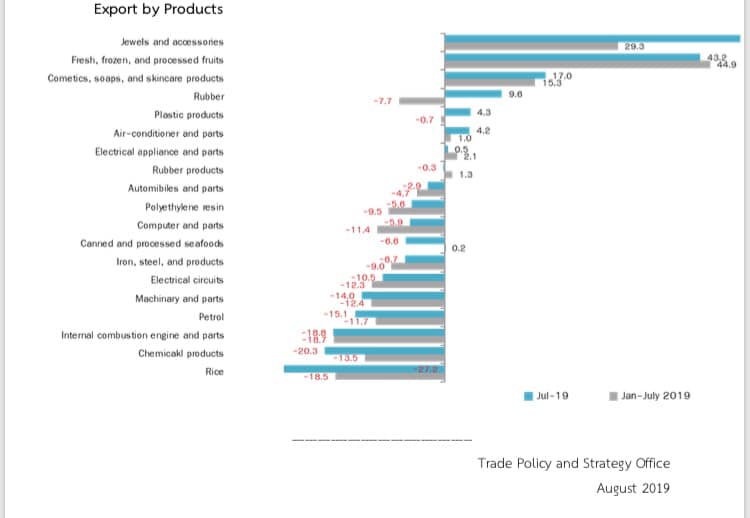
Growth of agricultural and agro-industrial products returned to positive growth and stood at 1.4 per cent,” the ministry said. Top performers that still expanded favourably were fresh, frozen, and processed fruits (+26.1 per cent), rubber (+9.6 per cent), cassava products (+8.7 per cent), and fresh, frozen, and processed shrimps (+7.3 per cent).

Meanwhile, exports of some major products declined, for example, rice (-27.2 per cent), sugar (-25.4 per cent), and canned tuna (-13.6 per cent). In the first seven months of 2019, agricultural and agro-industrial products contracted 1.7 percent.


In contrast, industrial products remained positive for a second consecutive month. Top performers are gold (+406.9%), cosmetics, soaps, and skincare products (+17.0 per cent), and air-conditioners (+4.2 per cent). However, some industrial products decreased, for example, oil-related products (-14.2 per cent), computer and parts (-5.9%), automobiles and parts (-2.9 per cent). In the first seven months of 2019, industrial products contracted 1.4 percent.

Despite a variety of challenging factors in common with other export-oriented countries, many positive factors are likely to strengthen and improve Thai exports namely new rising -star products, the opportunity to substitute products subject to retaliatory measures in US and China markets, expansion of tourism related products, potential exports to new areas according to customized strategies, and new export promotion schemes underway endorsed by a Joint Public and Private Consultative Committee on Commerce. Last but not least, expansionary monetary policy would also diminish the baht-appreciation effect in the fourth quarter of the year 2019.

Government speeds up spending as only 87 per cent of year’s budget used so far

ศาสตร์เกษตรดินปุ๋ย : ขอบคุณแหล่งข้อมูล : หนังสือพิมพ์ The Nation

https://www.nationthailand.com/business/30375111

Government speeds up spending as only 87 per cent of year’s budget used so far

Aug 21. 2019
Yanee Sangsrichun

Yanee Sangsrichun
By The Nation

244 Viewed

The Comptroller General’s Department of the Finance Ministry has reported that the government’s spending of the 2019 fiscal budget as of July 2019 had reached only Bt2.2 trillion or 87.01 per cent of the total Bt2.52 trillion budget for 2019.

The department advisor of fiscal and financial system development, Yanee Sangsrichun, on Wednesday said that from October 1, 2018 through July 31, 2019, Bt2.2 trillion of the Bt2.52 trillion total fiscal budget for the year had been spent – about 87.01 per cent.

This can be separated out to the current expenditures worth Bt1.75 trillion, the investment budget worth Bt441.7 billion, as well as Bt297.02 billion for the budget for overlapping years, said Yanee, who is also spokesperson for the department.

The government has tried to speed up spending of the remaining budget for the remaining two months of the fiscal year, August and September, Yanee added.

Proud Group develops two projects with confidence in Phuket’s future

ศาสตร์เกษตรดินปุ๋ย : ขอบคุณแหล่งข้อมูล : หนังสือพิมพ์ The Nation

https://www.nationthailand.com/property/30375040

Proud Group develops two projects with confidence in Phuket’s future

Aug 20. 2019
Proudputh

Proudputh
By The Nation

536 Viewed

With Phuket’s property market continuing to show real demand, Proud Group has decided to expand its businesses to Phuket by investing Bt7 billion in two new projects.

The first is Andamanda, a Bt4.5 billion integrated entertainment and resort destination that is set to be the largest of its kind in Phuket when it opens in 2021. The second, the InterContinental Phuket luxury hotel and resort, is expected to be operating with full services in the third quarter of 2019.

The projects are being marketed as “eco-friendly”.  They will support local products and help boost local employment to enhance the sustainable development of tourism while applying innovative technology solutions to ensure customer service excellence, said a release from the company on Tuesday.

Proudputh Liptapanlop, a Proud Group executive director, said the attraction expects to welcome over 700,000 visitors within the first year.

Pasu Liptapanlop, also an executive director, said their strategy is to be able to accommodate tourists, especially millennials and families, by offering unique travel experiences.

“We believe that it will be a new iconic landmark for Phuket and support Phuket’s image and positioning to truly be among the world-class entertainment destinations,” said Pasu. “Additionally, the opening of these projects will also help boost the economy, employment and incomes in local communities in Phuket and its surroundings.”

The Bt2.5 billion InterContinental Phuket Resort will differentiate itself from other existing five-star hotels by showcasing exquisite Thai handicrafts and the art collections of local Thai artists, such as a sculpture that reflects Thai beliefs and culture about heaven and earth. It was crafted by Komkrit Teptian, a local Thai artist who was well-known for his Giant Twins statue that was exhibit at the Bangkok Art Biennale event. Another highlight is a series of paintings of local tourist attractions by Dr Khan Payungphan, a local artist and a Fine Arts professor at the Faculty of Humanities and Social Sciences at Phuket Rajabhat University.

InterContinental Phuket Resort was designed by the well-know architect and interior firm, Habita and P49 design and associates under the concept “heaven on earth”.

The exterior and interior details embrace the true beauty of “Thainess” while reflecting its rich heritage and culture, delivering a memorable leisure experience.

The hotel will also present a new style of Thai food to complete a special travel experience. In addition, the Proud Group is pushing for the InterContinental Phuket Resort to comply with the LEED Green Building construction standards at the Gold level. Every detail of design and creativity must take into consideration the concept of environmental protection, said the release.

Krisda Rojanasomsmithi, the director for Hotels of Proud Group, sees the tourism outlook for Phuket as being on the bright side. In the first half of this year, almost 6 million visitors travelled through Phuket airport despite the downside news about the tourism situation.

With convenient transportation, well-established public utilities, the upgrading of the current Phuket airport and the expansion of the second airport in Phuket along with government’s new policy to promote Phuket and Andaman as a 365-day destination with no high or low season, Krisda said Proud Grow was assured that Phuket will become the must-visit destination for all.

While China remains as one of their major target countries, the firm is also looking into other potential markets such as Russia, UK, and India, especially for FITs and MICE.

“One of the advantages of being a member of the InterContinental Hotel Group is that we gain access to internal data helping us to better understand our customers’ journeys,” said Krisda. “We are also in the midst of partnering up with our sister companies in Phuket to offer integrated experiences for all visitors to ensure the most memorable trip. Thus, it will help support the local economy and community in many ways.”

The company is planning to become Thailand’s leading integrated entertainment resort developer by 2022, and expects a total of over 1 million visitors at both Vana Nava Water Parks and Andamanda with over 1,000 rooms within the 4 hotels.

Standard Chartered joins with SAP Ariba in supply and finance pact

ศาสตร์เกษตรดินปุ๋ย : ขอบคุณแหล่งข้อมูล : หนังสือพิมพ์ The Nation

https://www.nationthailand.com/business/30375105

Standard Chartered joins with SAP Ariba in supply and finance pact

Aug 21. 2019
Photo by China Daily

Photo by China Daily
By The Nation

50 Viewed

Standard Chartered Bank and SAP Ariba on Wednesday announced a strategic collaboration to make the bank’s financial supply chain solutions easily accessible to businesses in the Asia

Pacific region through Ariba Network, the world’s largest digital business network that connects more than 4.2 million companies in 190 countries.

By the end of 2019, buyers using Ariba Network will be able to seamlessly manage their payments and supply chain finance needs with the SAP Ariba digital platform, while suppliers will get quicker access to financing and foreign exchange via Standard Chartered’s global network, according to a release on Wednesday.

The collaboration is intended to accelerate the digitalisation of the entire supply chain, improving efficiency, transparency and accuracy for buyers and suppliers alike.

Working across some of the world’s most dynamic trade corridors, Standard Chartered and SAP Ariba are committed to supporting sustainable economic growth and making financing more accessible to companies by connecting business communities and facilitating increased commerce across the globe.

“Our goal is to make life easier for our clients and their ecosystems, and as their businesses evolve, so do we,” said Lisa Robins, the global head of transaction banking at Standard Chartered. “We are delighted to collaborate with SAP Ariba to support our clients throughout their procure-to-pay lifecycles and beyond. As we embrace open banking, we connect communities across our footprint and provide access to integrated solutions that enable our clients to grow their businesses sustainably.”

Sean Thompson , senior vice president for business network and ecosystem at SAP Ariba and SAP Fieldglass, said, “Customers expect the procure-to-pay process to be easy, efficient, comprehensive and seamless, and rightly so.

“We are thrilled to welcome Standard Chartered into our ever-expanding ecosystem to deliver financing options that enhance value for our customers, allowing them to complete the procure-to-pay process end-to-end on a single platform.”

SET lists power plant infrastructure fund SUPEREIF

ศาสตร์เกษตรดินปุ๋ย : ขอบคุณแหล่งข้อมูล : หนังสือพิมพ์ The Nation

https://www.nationthailand.com/business/30375085

SET lists power plant infrastructure fund SUPEREIF

Aug 21. 2019
Manpong

Manpong
By The Nation

243 Viewed

The Stock Exchange of Thailand (SET) will today (August 21) list Super Energy Power Plant Infrastructure Fund, the first SET-listed solar power plant infrastructure fund, the ticker symbol “SUPEREIF”, with a market capitalisation at its initial public offering (IPO) of Bt5.15 billion (about US$166 million).

SET senior executive vice president Manpong Senanarong said that SUPEREIF would list and start trading on SET in the Resources industry group, Energy & Utilities sector.

SUPEREIF has invested in the rights of net income derived from 19 projects of ground-mounted photovoltaic power plants, with a combined installed capacity of 118 megawatts, under the Very Small Power Producer (VSPP) scheme of “17 Aunyavee Holding Co Ltd” and “Health Planet Management (Thailand) Co Ltd”.

The major income contributor is the selling of electricity to the Provincial Electricity Authority (PEA) and the Metropolitan Electricity Authority (MEA), whichever the case may be. The power purchase agreement was made under fixed price or the feed-in tariff (FiT) scheme at Bt5.66/unit, with 21-22 years remaining for each project (counting from August 2019). Each power plant project has been in commercial operation for over three years.

SUPEREIF offered 515 million newly issued units to the general public during July 22-26 and July 30-31, 2019, and institutional investors as well as patronages on August 5, 2019, at a par value of Bt10 per unit, for a total of Bt5.15 billion. BBL Asset Management Co Ltd (BBLAM) is its fund manager, and Bangkok Bank Plc is its financial advisor and lead underwriter.

BBLAM chief executive Peerapong Jirasevijinda stated that SUPEREIF has the potential to generate a consistent income stream from the 22 years remaining of the power purchase agreement under fixed price with MEA and PEA, so the fund provides opportunities for investors to jointly invest in alternative energy business that yields steady and long-term returns.

SUPEREIF’s dividend policy is to pay no less than 90 per cent of the adjusted net profit to unit holders at least twice a year. SUPEREIF’s three major unit holders after IPO are Super Energy Corporation pcl (SUPER) (20 per cent), KRUNGTHAI-AXA Life Insurance pcl (9.07 per cent), and Muang Thai Life Assurance pcl (9.07 per cent).

Mineral resources used for construction to be evaluated

ศาสตร์เกษตรดินปุ๋ย : ขอบคุณแหล่งข้อมูล : หนังสือพิมพ์ The Nation

https://www.nationthailand.com/business/30375075

Mineral resources used for construction to be evaluated

Aug 21. 2019
By The Nation

736 Viewed

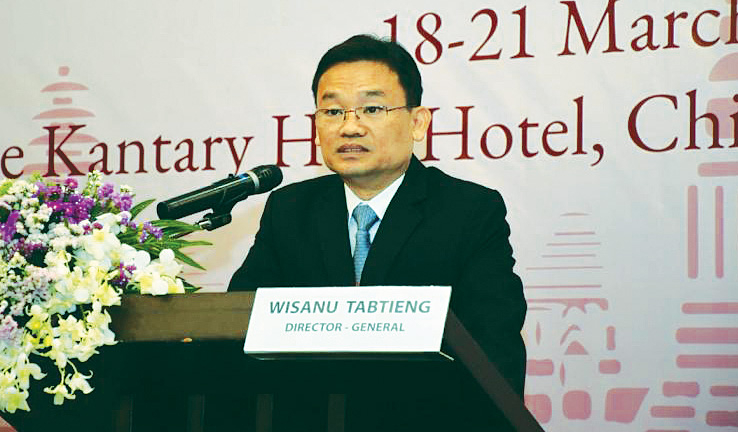
Wisanu Tabtieng, director-general at the Department Primary Industries and Mines (DPIM), said available mineral resources are being evaluated to see if they can support the five mega-projects in the Eastern Economic Corridor (EEC), namely the high-speed rail link to three airports, development of the Laem Chabang industrial port, development of the U-tapao Airport, the EEC airport project and new development projects in the capital.

Officials will propose a draft proposal next year once they complete a precise study on the construction materials required in the EEC area. The study is expected to cost Bt50 million and will come up with an estimation on the minerals and limestone required in each project. The study will especially focus on the airport rail link, because it is expected to use premium-grade stones like basalt and granite.

The officials have roughly estimated that construction minerals from three provinces should be enough to cover all projects, though there may be some extra requirement for stones.

RS looks to multi-platform commerce as it joins with BTS Group

ศาสตร์เกษตรดินปุ๋ย : ขอบคุณแหล่งข้อมูล : หนังสือพิมพ์ The Nation

https://www.nationthailand.com/business/30375070

RS looks to multi-platform commerce as it joins with BTS Group

Aug 20. 2019
By THE NATION

571 Viewed

Traditionally a music company, RS Public Company Limited, continues to pursue new approaches to business, including a horizontal integration strategy and building new alliances.

In the latest development, BTS Group Holdings Public Company Limited (BTS) has paid more than Bt1 billion for 68 million shares (7 per cent) in the RS Group.

The move is expected to generate multiple new business opportunities and provide a foundation for an expansion of commercial businesses through multi-platform commerce (MPC). New projects to increase the capacity for competition will also be launched as part of a push to enable RS Group to reach its aim of Bt10 billion in income.

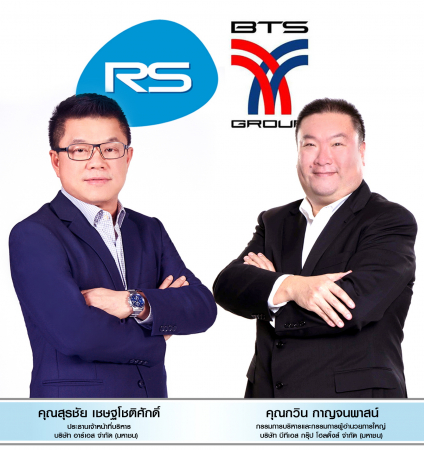
Surachai Chetchotisak, the CEO of RS Public Co Ltd, sees this year as a very important and meaningful one for the firm, as it is marks a turning point for the company’s 35-year-old business. As RS makes a transition towards commercial business, a new era under a new business model has begun, based on MPC and direct to consumer (D to C) principles, according to a company release on Tuesday.

The transition provides an opportunity to build upon the company’s traditional strength in the music business and create new opportunities in the media business, said the release. For example, the company’s Channel 8 has been turned into a platform that has been generating sustained income and growth for RS.

As part of its vision, RS continues to pursue growth spurts as well as long-term corporate strength. The company is open for building new alliances that can contribute to horizontal integration and increased opportunities for reaching new groups of customers.

The alliance with BTS, a leading provider of mass transit, brings with it the potential of its subsidiaries including VGI, a complete ecosystem of offline-to-online solutions with advertising, payment and logistics. With this synergistic strategy, the combined strengths of the two companies and the integration of customer databases will further buttress consumer confidence in effectively accessing goods and services, according to the release., and leading to RS reaching the Bt10 billion income level in 2022.

Kavin Kanjanapas, the CEO of BTS Group, said, “This strategic partnership will build and solidify business opportunities to both BTS and RS.”

BTS’s platforms comprise a travel platform and the VGI platform. The travel platform now serves over 1 million trips per day, and will see an expansion as the company’s mass transit rail lines are extended from the current 48.9 kilometres to 133.4km by 2021. VGI’s platform spans advertising with media capacity of more than Bt12 billion, with Payment (in the form of the Rabbit Group) serving more than 18 million users and Logistics (through Kerry Express) which connects to more than 1.2 million consumers daily, said Kavin.

“Through RS’s multi-platform commerce reaching to more than 1.2 million consumers reflecting in their annual sales of Bt2.1 billion, we believe that this investment will bring countless opportunities and enable both companies to leverage their core capabilities to capture greater market share.”

Added Surachai, “This investment by BTS represents a new dimension in alliance building between companies from different business sectors, aimed at creating new project opportunities for both parties and supporting the expansion towards multi-platform commerce to ensure a superior capability over its competitors and reach the stated income level goal more rapidly. RS remains committed to its mission of horizontal integration and horizontal growth, while keeping an open mind for new business partners in the future.”

The purchase of shares by the BTS Group Holdings Public Company Limited for the purpose of creating this business alliance has no effect on the company’s management, or on the structure of Surachai Chetchotisak’s shareholding. Surachai remains the company’s top shareholder, according to the release.

Samyan Mitrtown, KBank join for 24-hour co-learning space

ศาสตร์เกษตรดินปุ๋ย : ขอบคุณแหล่งข้อมูล : หนังสือพิมพ์ The Nation

https://www.nationthailand.com/business/30375065

Samyan Mitrtown, KBank join for 24-hour co-learning space

Aug 20. 2019
By THE NATION

490 Viewed

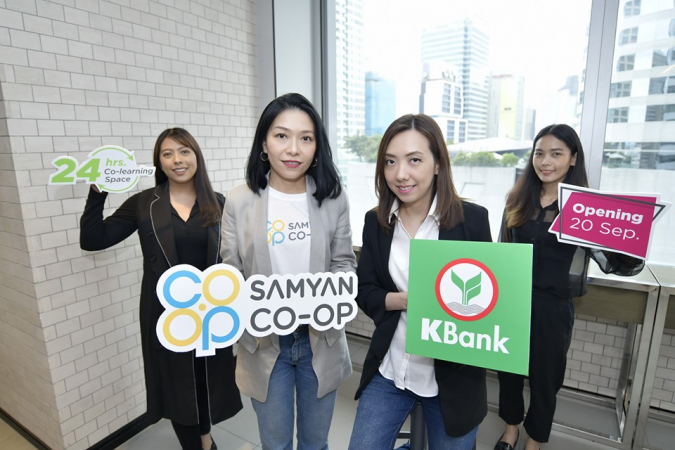
Samyan Mitrtown has teamed up with KBank for “Samyan CO-OP”, a 24-hour co-learning space that is open to the public free of charge.

Equipped with a while range of modern conveniences, including a sophisticated security system, the 1,400-square metre learning space, unmatched in look and feel by any other co-learning space, caters to all types of patrons.

Piyawan Soinoi, director of Samyan CO-OP at Goldenland Property Development PLC (Goldenland), management of the project, said, “Samyan Mitrtown collaborated with KasikornBank (KBank) to open “Samyan CO-OP”, a new-style, 24-hour co-learning space set in a 1,400-square metre area spanning over the second and third floors. It covers 30 per cent of Samyan Mitrtown’s 24-hour retail zone that has a gross floor area of 5,000 square metres.

It features leisure and conference facilities including a central area, meeting and activity rooms, all under 24-hour CCTV surveillance. The co-learning space has a seating capacity for 500 with sufficient power outlets and wi-fi connectivity for all users. The high-tech security system provides total protection with mandated identity verification via the learning space’s proprietary app or website. Entry to the area is by QR code scanning.

“W had conducted a survey of customer demands and found that our target group has diverse lifestyle needs that have to be satisfied. The space is designed to provide 24-hour service to meet the preferences of the new generation. Visitors using Samyan CO-OP include university students and working people. It’s an area where people can come to work, enjoy reading, or meet colleagues for a group session. We wanted to create Samyan CO-OP as a learning community,” Piyawan said.

Samyan CO-OP places great importance on learning and promoting related activities. We have joined forces with content partners to co-organise activities in the premises, including Lukkid Co Ltd and Hacker House Institute. We expect Samyan CO-OP to receive 2,500 visitors daily, making up 10 per cent of the overall customer traffic to Samyan Mitrtown which aims to attract 25,000 daily.”

Thitiporn Sirisrisakunchai, head of Innovative Business Management at Kasikornbank, said the concept of the Samyan Mitrtown project revolves around building a shopping mall that offers new and different experience, not just purely commercial services.

“Our bank has confidence in the management of Goldenland that’s been recognised for a number of real estate projects which have benefited the society and the local community. Thus, the bank partnered with Samyan Mitrtown to create Samyan CO-OP. The new-style co-learning space – located right in the heart of Bangkok – is close to educational institutions. It aims to satisfy the new generation’s lifestyle needs in the digital age where their preferences are shifting. The learning space is a great place to read books, prepare for an exam, exchange or share ideas among friends or colleagues or just join in a meeting. We will be organising activities in the facility.” he said.

Samyan CO-OP is well positioned to serve patrons of all kinds and ages in the interests of educational, personal development and learning.

It also houses a KBank the Office Space, our staff’s workplace, to offer more convenience and flexibility, Thitiporn said.