Thai shrimp industry to host first-ever Thai Aqua Expo in December

ศาสตร์เกษตรดินปุ๋ย : ขอบคุณแหล่งข้อมูล : หนังสือพิมพ์ The Nation

https://www.nationthailand.com/business/30374621

Thai shrimp industry to host first-ever Thai Aqua Expo in December

Aug 12. 2019
By THE NATION

415 Viewed

The Thai Eastern Shrimp Association has joined forces with shrimp clubs and eastern region associations to host the Thai Aqua Expo 2019 for the first time in Thailand on December 2-4, and will release aquatic animals to celebrate the 67th birthday of His Majesty King Maha Vajiralongkorn.

Patcharin Chindaphan, president of the Thai Eastern Shrimp Association, said this year’s exposition is the first such event to include aquatic animals at the same event.

The event, to be held in Chachoengsao, will share academic findings and other know-how about aquatic animals with farmers in order to improve the capacity of Thai aquaculture industry and to promote production in accordance with the needs of the world aquatic market. The event aims to create unity in the Thai aquaculture industry.

“Thai Aqua Expo 2019” will be divided into 3 major parts. The first will feature academic seminars to share knowledge with farmers while the second will help match aquaculture input traders, and the third will celebrate the birthday of the King.

The president of Thai Eastern Shrimp Association has invited local and overseas aquatic farmers and those in related fields to join the event. Participants will be able to access knowledge and techniques from government and private-sector experts and specialists in aquaculture, as well as marketing and other specialists.

The sharing of information will benefit the sustainable national development of aquaculture and a sustainable success for farmers, he said.

VN food-beverage sector draws foreign interest

ศาสตร์เกษตรดินปุ๋ย : ขอบคุณแหล่งข้อมูล : หนังสือพิมพ์ The Nation

https://www.nationthailand.com/business/30374620

VN food-beverage sector draws foreign interest

Aug 12. 2019
VNS Photo

VNS Photo
By VIet Nam News

331 Viewed

Viet Nam has become an increasingly attractive destination for international enterprises in the food, beverages and packaging industry thanks to its rapid economic growth and rising consumer demand.

Ly Kim Chi, chairwoman of the Food and Foodstuff Association of HCM City, said the food and beverage sector accounts for 15 per cent of Viet Nam’s GDP and is growing at 7 per cent annually on average.

“Vietnamese spend a third of their income on food and beverages,” she told a B2B event held in HCM City last week that attracted the participation of 49 Indian companies who exhibited their products at the recent Vietfood and Beverage-Propack exhibition.

Indian consul general in the city, Dr. K Srikar Reddy, said Viet Nam is a major producer and exporter of food and agricultural products but “is also a major food importer and consumer.

“Agricultural products form a significant portion of the total bilateral trade between the two countries. India is among major suppliers to Viet Nam of food products like seafood, meat, cereals, and fresh and processed vegetables and fruits.”

Mohan Ramesh Anand, chairman of the Indian Business Chamber in Viet Nam, said with a population of over 95 million and increasing demand for food and beverages, Viet Nam is a large food and beverage market, making it attractive to local and international investors, including Indian.

He believed Indian investment in Viet Nam would increase in future.

Polish firms

Many leading Polish businesses that produce beef, poultry and pork meat, meat-based products, fresh and frozen fruits and vegetables, fruit concentrates and preserves, and other food products are looking to enter the Vietnamese market.

Speaking to the media on the sidelines of the Viet Nam-Poland B2B meeting in the food sector in HCM City last week, Piotz Ziemann, vice president of the Association of Butchers and Producers of Processed Meat of the Republic of Poland, said his country’s advantage is that it produces beef at 17 per cent less cost than the rest of the EU but tops them in quality.

Of its beef production 85 per cent is meant for export, and it is 55 per cent for chicken and 47 per cent for pork, he said.

“Poland’s foods not only have high quality, but also are safe and tasty.

“With fast economic growth and improving living standards, Vietnamese tend to choose food products that have higher quality, safer and tastier. This offers good opportunities for Poland companies in the sector.”

Poland’s pork has appeared in the Vietnamese market, but beef and chicken are still new to Viet Nam though they are popular in fastidious markets such as South Korea and Japan, he said.

He hoped the new EU programme titled “Tasteful Europe – Tradition and Quality” that was recently launched in Viet Nam and will be carried out from 2019 to 2022 would yield positive results, with more Vietnamese customers knowing about and using Polish meat products and fruits and vegetables.

The programme seeks to promote products like fresh, chilled and frozen meats, meat products, and high-quality poultry and fresh and processed fruit and vegetables in Viet Nam and other Asian markets.

It would provide Vietnamese consumers with knowledge about the uniqueness of European food production and convince the unconvinced that values such as production safety at every stage from field to table, and the resulting quality, sustainability and flavour combined with tradition would bring about a unique culinary experience, Ziemann said, who is also the head of the project.

The EU-Viet Nam Free Trade Agreement would offer opportunities to enhance investment and trade ties between Viet Nam and Poland, he added. —VNS


ACFS pushes for higher levels of organic farming

ศาสตร์เกษตรดินปุ๋ย : ขอบคุณแหล่งข้อมูล : หนังสือพิมพ์ The Nation

https://www.nationthailand.com/business/30374618

ACFS pushes for higher levels of organic farming

Aug 12. 2019
By THE NATION

331 Viewed

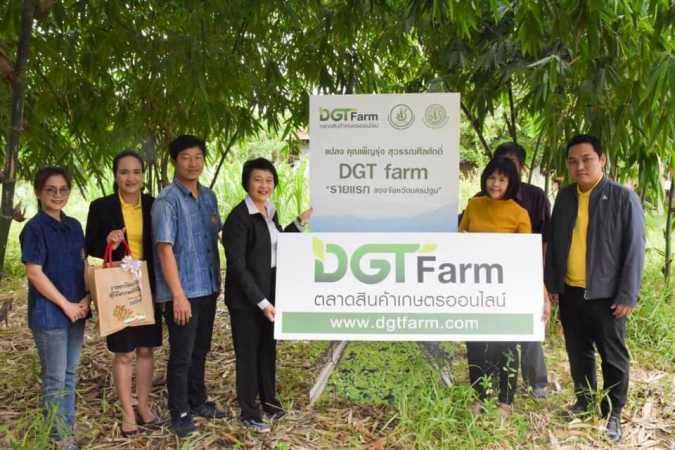
The National Bureau of Agricultural Commodity and Food Standards (ACFS) has introduced a brand new online-marketing channel for young producers focusing on organic farming, which is aimed at helping them expand their clean food business and catch up with the increasing value of organic products, which is growing by 20 per cent every year.

ACFS secretary-general Juadee Pongmaneerat notes that young smart famers have an important role to play in helping government meet its goals of expanding the organic market, as set out in the 20-year national strategic plan 2018-2037. This involves creating awareness about the food safety system among both food producers and consumers while guiding farmers to ensure their products meet health standards.

The office’s newly developed website DGTFarm.comserves as an online marketplace and is open to young farmers to place any of their products provided these are 100-per-cent organically produced. A Business Matching option is also featured while the QR Trace helps buyers access product information.

Safe food and organic products will be exhibited and farmers encouraged to adopt new marketing channels for organic produce.

“This year, we expect to train 189 young smart farmers who have expressed interest in organic farming. We are confident that our efforts will increase the number of organic plantations,” Juadee said.

According to the Department of Internal Trade, there are 40,774 farmers in 119 groups certified by organic farming standards cultivating more than 521,826.56 rai. The Ministry of Commerce’s Organic Marketing Intelligence Center reports the value of domestic organic farming products at Bt3 billion baht, with Bt900 million coming from the domestic market. The growth rate is 10 per cent per year and the value of exports represents 0.06 per cent of the global value.

It is estimated that the global organic farming products could reach U$104 billion, or Bt3.55 trillion, and enjoy a growth rate of 20 per cent per year. The main markets dominating the global organic farming market are the United States, Canada, Europe, China and Australia.

Juadee adds that organic produce remains the choice of a niche market which regards health as the main priority and says this is growing rapidly. Organic farming is a platform for agricultural sustainability and generates more income and thus raises the living standards of farmers.

To respond the global trend of healthcare and to elevate produce to organic standard and GAP (Good Agricultural Practice), DGTFarm.com categorises the products into three types. They are organic produce, which is planted in land free from chemical and toxins such as vegetables, fruits, rice and processed food. Group 2 comprises products certified by GAP like vegetables, fruits, rice, egg, processed food, livestock and fishery products, including banana soap from Kamphaengphet province. Finally, the products with QR Trace identifies the source through a QR code attached to the products and include rice, eggs, vegetables, fruits, processed food and herbal cosmetics from Ratchaburi province.

Currently 1,600 farmers who have attained organic and GMP standards are active on the online marketplace.

Plan to expand alternative energy sources to get final hearing in August

ศาสตร์เกษตรดินปุ๋ย : ขอบคุณแหล่งข้อมูล : หนังสือพิมพ์ The Nation

https://www.nationthailand.com/business/30374593

Plan to expand alternative energy sources to get final hearing in August

Aug 12. 2019
By THE NATION

510 Viewed

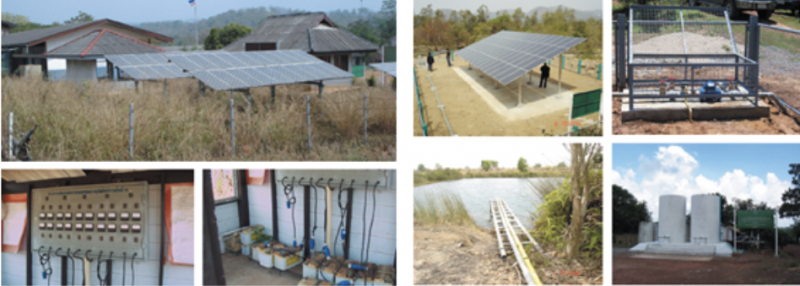
The Department of Alternative Energy Development and Efficiency has drawn up Bt10 billion budget plan to support its projects during 2020-2024.

The department deputy director-general Yongyuth Sawatdisawanee said the projects will include preparing a revolving fund to promote energy conservation, actions to support the use of energy-saving machinery, the promotion of solar rooftops, and demonstration projects targeted to farmers showing how to use less energy.

The department will this month hold a fifth and final hearing into its draft plan for developing alternative energy from 2018-2037.

The plan aims to raise the ratio of electricity generated by alternative energy sources to 30 per cent of total produced energy, representing 29,358 contracted megawatts, within 2037.

The contribution from solar energy will be increased to 15,574 megawatts in that year.

Real estate firm Teka takes the plunge in property development

ศาสตร์เกษตรดินปุ๋ย : ขอบคุณแหล่งข้อมูล : หนังสือพิมพ์ The Nation

https://www.nationthailand.com/property/30374590

Real estate firm Teka takes the plunge in property development

Aug 10. 2019
Peerawat Wanitwat, managing director of Teka Real Estate Co Ltd

Peerawat Wanitwat, managing director of Teka Real Estate Co Ltd
By THE NATION

253 Viewed

Teka Real Estate is jumping into the property business with plans to develop three low-rise projects in five years. With more than 35 years’ experience in construction, the company has unveiled its five-year plan to develop three low-rise projects worth a combined Bt2.1 billion to Bt3 billion.

The company is confident of developing quality projects, capitalising on its experience in construction.

Peerawat Wanitwat, managing director of Teka Real Estate Co Ltd, said that despite the current economic slowdown and sluggish growth in the real estate industry, the company foresees opportunities. He said they hope to benefit from the expertise and 35 years of experience of Teka Construction Co Ltd.

Over the next five years, Teka Real Estate will develop three low-rise projects worth a total of Bt2.1 billion to Bt3 billion (each project will be worth about Bt700 million to Bt1 billion). The three projects are in Nonthaburi, not far from the outer ring area; in Ramindra area, not far from Fashion Island Department Store; and a project in Bangna area, not far from King Kaew Road.

“Teka Real Estate will focus on developing low-rise projects, including detached houses, townhouses, and semi-detached houses, with selling price at between Bt3 million to Bt7 million per unit, ” Peerawat said.

The first project that the company has started to develop is “The Essence Chaiyapruek – Wongwaen”. The project is located on 43 rai of land, on Bankluay-sainoi district in Nonthaburi province. The project has been developed in the form of townhouse over 16.5-22 square wah with selling price starting at Bt1.55 million to Bt2.2 million per unit; semi-detached houses of 35-50 square wah, with selling price from Bt2.89 million to Bt3.3 million, totalling 421 units. The project value is about Bt950 million. This project has been divided into three phases and each phase has about 100 units. Sales of the first phase started in 2018. About 50 per cent of the first phase have been sold. The second phase is set for sales in early 2020, while the third phase will be sold by the end of 2020.The company expects to conclude the entire project by the end of 2021.

Higher provision for retirement benefits dents CP All’s Q2 profit

ศาสตร์เกษตรดินปุ๋ย : ขอบคุณแหล่งข้อมูล : หนังสือพิมพ์ The Nation

https://www.nationthailand.com/business/30374592

Higher provision for retirement benefits dents CP All’s Q2 profit

Aug 11. 2019
By THE NATION

444 Viewed

CP All Pcl has posted a profit of Bt4.795 billion for the second quarter of the year, up 0.3 per cent over the same quarter last year, according to the company’s filing with the Stock Exchange of Thailand.

The company’s chief financial officer, Kriengchai Boonpoapichart, said that the company and its subsidiaries achieved total revenue of Bt143.326 billion in the second quarter of this year, a 10.6 per cent increase over the same period last year, mainly driven by higher sales revenue and service income from the convenience store business and the cash and carry business under the “Siam Makro” brand.

CP All and its subsidiaries’ distribution costs and administrative expenses in the second quarter this year were Bt28.849 billion, up 17.2 per cent from the same quarter of last year. Distribution costs in the quarter were Bt23.870 billion, up 14.9 per cent year on year mainly related to domestic store expansion, as well as expenses that rose relative to higher sales revenue such as advertising and sales promotion expenses, store management fees of the convenience store business and utilities expenses.

Meanwhile, administrative expenses rose to Bt4.979 billion, up 29.9 per cent year on year. In the quarter, the company and its subsidiaries amended their retirement plan in compliance with the change of the Labour Protection Act in the second quarter of 2019. As a result of this change, the provision for retirement benefits as of June 30 as well as past service costs were recognised additionally, amounting to Bt809 million in the consolidated financial statement.

Kriengchai Boonpoapichart, CP All's chief financial officer

Kriengchai Boonpoapichart, CP All’s chief financial officer

Kriengchai said that in the second quarter of this year, profit before interest and tax expenses of the company and its subsidiaries were Bt7.296 billion, down 3.9 per cent year on year. Net profit was Bt4.795 billion in the second quarter, up only 0.3 per cent year on year mainly due to higher provision for retirement benefits. However, profit from the normal business operation of the group was growing considerably along with lower finance costs compared to the same period of last year. Earnings per share reported in the consolidated financial statements in the second quarter this year was Bt0.51.

For the first half of 2019, the company and its subsidiaries’ total revenue amounted to Bt282.134 billion, up 9.6 per cent year on year, mainly driven by higher sales revenue and services income. Net profit was Bt10.564 billion, up 3.6 per cent year on year. Earnings per share reported in the consolidated financial statements were Bt1.12 in the first half of this year.

In the first half of the year, the convenience store and other businesses accounted for 66 per cent of total revenue and the cash and carry business accounted for 34 per cent.

In the first half of 2019, the convenience store and other businesses accounted for 81 per cent of profit before tax while the cash and carry business accounted for 19 per cent. In addition, the profit before tax proportion of the cash and carry business rose year on year due to higher growth of operating profit compared to the convenience store business.

AirAsia’s long-haul operations get a boost with first A330neo

ศาสตร์เกษตรดินปุ๋ย : ขอบคุณแหล่งข้อมูล : หนังสือพิมพ์ The Nation

https://www.nationthailand.com/business/30374584

AirAsia’s long-haul operations get a boost with first A330neo

Aug 10. 2019
By THE NATION

775 Viewed

AirAsia has taken delivery of its first A330neo aircraft, to be operated by its long-haul affiliate, AirAsia X Thailand.

The aircraft was delivered via lessor Avolon and is the first of two A330neos set to join the airline’s fleet by the end of the year.

The A330neo will bring a step-change in fuel efficiency for AirAsia’s long haul operations, the company said, adding, the new generation A330neo will be based at Bangkok’s Don Mueang International Airport, supporting the airline’s growth and network expansion plans to key markets such as Australia, Japan and South Korea.

The AirAsia X Thailand A330-900 features 377 seats in a two-class configuration, comprising 12 premium flatbeds and 365 economy class seats.

AirAsia’s long-haul affiliate, AirAsia X currently operates 36 A330-300 aircraft and is the largest customer for the A330neo with 66 orders.

Powered by the latest Rolls-Royce Trent 7000 engines, the A330neo provides an unprecedented level of efficiency with 25 per cent lower fuel burn per seat than previous generation competitors, the company said. Equipped with the Airbus Airspace cabin, the A330neo offers a unique passenger experience with more personal space and the latest generation in-flight entertainment system and connectivity.

Govt relaxes policy on van service operators switching to microbus

ศาสตร์เกษตรดินปุ๋ย : ขอบคุณแหล่งข้อมูล : หนังสือพิมพ์ The Nation

https://www.nationthailand.com/business/30374591

Govt relaxes policy on van service operators switching to microbus

Aug 10. 2019
(Photo: thairath.co.th)

(Photo: thairath.co.th)
By THE NATION

668 Viewed

After talking with van operators in the Bangkok area, Transport Minister Saksayam Chidchob said that he would revisit the policy requiring public van services to switch from van to bus.

If operators insist on using their existing van, they must ensure the old van achieves the safety standards. For van operators who would like to change to a microbus, the registration deadline previously set for August 13 has been removed.

The minister also directed the Land Transport Department to allow vans 10-12 years old to ensure they pass quality standards. He will later discuss with the department about security measures.

Sontirat plans renewed push for Napier grass energy plants

ศาสตร์เกษตรดินปุ๋ย : ขอบคุณแหล่งข้อมูล : หนังสือพิมพ์ The Nation

https://www.nationthailand.com/business/30374586

Sontirat plans renewed push for Napier grass energy plants

Aug 10. 2019
By The Nation

593 Viewed

Energy Minister Sontirat Sontijirawong is pushing for the use of Napier grass as a source of energy.

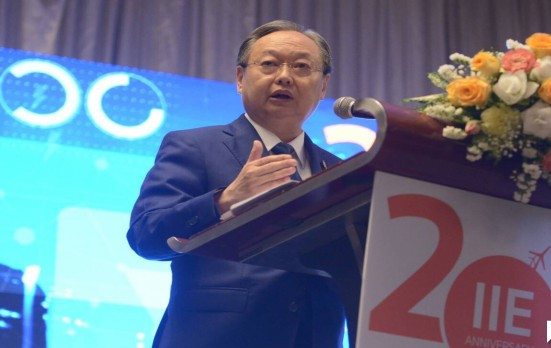
Speaking at a seminar on “Energy for Industries for a sustainable future” to mark the 20th anniversary of the Institute for Industrial Energy on Friday (August 9), he revealed plans to establish a committee to work with the industrial sector in order to review the plan to use Napier grass, also known as elephant grass, as an energy source. He said the review process was expected to be completed within a month.

He spoke of a plan for Napier grass farming to feed electricity-generating plants, which could provide electricity to nearby villages and also encourage people to take part in energy production. This will help secure energy for people at a lower cost.

“I met with industries who are using Napier grass as a source for electricity. We will cooperate with the businesses to review and improve the power development plan [PDP]. In 2018, the PDP plan de-prioritised Napier grass in the energy crop group. However, I have to hold a session in order to hear from businesses and agriculture experts,” Sontirat said.

The Energy Ministry source said that the review of the Napier grass farming project was looking at two ways:

1 Using the successful business model of UAC Global, which uses Napier grass and corn as sources for biogas electricity production in Chiang Mai.

2 Adjust the pattern from the past to promote biogas by bringing the grass to ferment production of gas to produce electricity. This approach may help to reduce the cost of producing electricity.

“Napier grass electricity plants have to be based near animal farms due to the fermenting process and the need for a large water source. They are still discussing these matters to discover the proper approach,” the source said.

The Napier grass farming plan was proposed in 2013 by the then-energy minister, Pongsak Ruktapongpisal, as part of bioenergy production. However, the plan was abandoned a year later due to lack of a budget. The industrial sector continued with the plan without financial support from the government.

Bank depositor protection cut to Bt5 million

ศาสตร์เกษตรดินปุ๋ย : ขอบคุณแหล่งข้อมูล : หนังสือพิมพ์ The Nation

https://www.nationthailand.com/business/30374582

Bank depositor protection cut to Bt5 million

Aug 10. 2019
By The Nation

1,115 Viewed

Coverage amounts for protection of deposits has been reduced by half, from Bt10 million to Bt5 million per account per financial institution starting August 11, the government’s Deposit Protection Agency (DPA) said.

The period of protection will last until August 10, 2020 after which the coverage amounts will be reduced to Bt1 million.

DPA president Songpol Chevapanyaroj said depositors covered will also drop to 99.65 per cent of total bank depositors from 99.83 per cent at present.

When the coverage amount reduces to Bt1 million, the depositor coverage will reduce to 98.14 per cent of total depositors.

“Although the number of depositors covered will have decreased, the coverage rate is higher than the global benchmark,” he said.

DPA, established in 2007 in the aftermath of the 1997 financial crisis, has been created to reduce taxpayers’ burden when crisis hits the financial system. Before the crisis, a blanket coverage was in place, therefore it was largely attributed to a rapid rise of public debt as a result of government spending tax money to rescue the banking sector.

The limited insurance is expected to check the risky behaviour of investors who search for high rate of returns without taking into account potential risks.