Second-half export growth depends on unique products, meeting global needs: EXIM

ศาสตร์เกษตรดินปุ๋ย : ขอบคุณแหล่งข้อมูล : หนังสือพิมพ์ The Nation

https://www.nationthailand.com/business/30373969

Second-half export growth depends on unique products, meeting global needs: EXIM
Jul 31. 2019
By THE NATION

260 Viewed

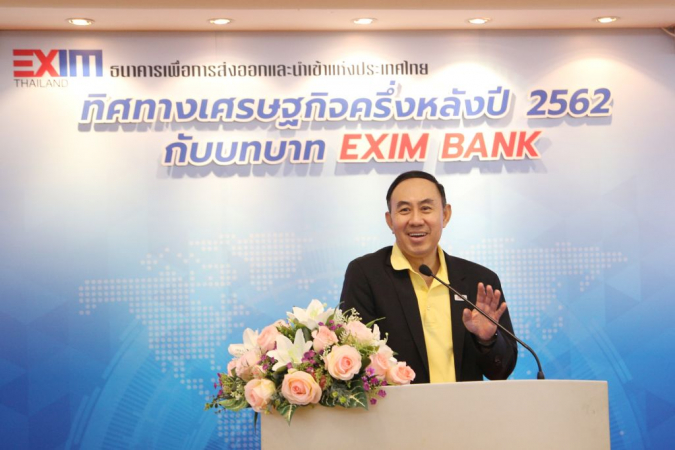
The Export-Import Bank of Thailand (EXIM Thailand) has predicted that Thai export growth in the second half of 2019 will hinge upon products with unique characteristics, and that also meet expectations of the global market.

Success will also come to those who emphasize diversification into new markets and innovation to meet modern consumers’ demands, it said.

EXIM Thailand has stepped up its support for exporters, especially small and medium-sized enterprises, as they launch or expand their export business. There has been a sharp increase – at 69 per cent – of outstanding credit among SMEs over the past five years. That growth has resulted from continued product and service development and the incubation of new exporters.

The bank’s president Pisit Serewiwattana said that in the first half of 2019, Thai exports shrank by 2.9 per cent as a result of the ongoing trade war between the US and China, which has continued to dampened Thai exports to supply chains with a heavy dependence on the Chinese market, such as computers and parts, printed circuit boards and plastic resin, among other products.

The gloomy outlook has led EXIM Thailand among other agencies to revise down their export growth forecast to a mere 0.2 per cent for 2019.

Thai export growth in the second half of 2019 will depend largely on a group of rising star products that have recorded consistent growth for the past years amid several looming risks, according to EXIM.

This group of products comprise consumer goods in which Thailand has high expertise, especially processed foods, fruits and vegetables, beverages, seasonings and cosmetics.

Certain goods – Thai foods, herbs and kitchenware – have meanwhile benefited from Thai tourism, which helps highlight Thai identity on the global market

In addition, the side-effects of the US-China Trade War have indirectly helped Thai products bearing certain similarities and serving as close substitutes for Chinese goods to increase US market share, such as car tyres, toys, garments, electrical appliances, among others.

Concurrently, a number of products continue to maintain competitiveness, thanks to the adaptability of Thai producers and their ability to evade the trade war impacts.

These are products taking refuge in alternative markets. Most of these products are a part of the Chinese supply chains, including computers and parts that are seeing high growth in India, Mexico and Vietnam, printed circuit boards which have grown healthily in Mexico and Belgium, and wood and products that are seeing impressive expansion in Cambodia, Laos, Myanmar and Vietnam (CLMV), as well as India.

Though these markets cannot fully replace the Chinese market, they have reduced the prevailing adverse impact and sustained Thai exports to some extent.

At the same time, certain products have responded to existing demand and expanded into new markets, somewhat substituting for the demand shrinkage in the existing markets.

Demand for rubber, for example, contracted as a result of pricing problems and slowing demand from China (which is Thailand’s largest rubber market), but robust growth has been witnessed in such markets as eastern Europe and Canada.

However, Thai rubber requires greater development to better compete in the long term. Likewise, export of auto and parts to Australia, which is Thailand’s largest export market for the products, has continued to contract against the backdrop economic slump.

On the other hand, export to the CLMV and India has expanded, driven by demand from the increasing middle-class population and its desire for oil-fuelled cars. Nevertheless, in the long run, Thai products will need to use production technology and innovation to fulfill the changing demand of new-generation consumers. For example, with the increasing awareness of environmental protection and energy saving in several countries, demand for electric vehicles (EV) and bio-chemicals has been on an upward trend.

Another engine that may help sustain Thai exports comes from the service sector. Thai tourism has already reached the top 10 on the global scale in terms of both revenues and number of visitors, but other service sectors such as construction, logistics and recreation have grown in reputation, giving a boost to exports from other related industries.

Pisit further said that EXIM Thailand has recently accelerated support for Thai exporters, particularly SMEs, for their business start-up and expansion. Outstanding loans to SMEs surged from Bt22.930 billion in 2014 to Bt38.834 billion as of the end of June 2019, representing a growth of 69 per cent in the past five years and 17.79 per cent year on year.

Total outstanding loans of the Bank in the first half of 2019 amounted to Bt107.183 billion, a 11.10 growth year on year. This contributed to a business turnover of Bt94.750 billion, of which Bt52,953 million came from SMEs.

SME exporters continue to gain greater access to EXIM’s financial facilities, representing 12.48 per cent of SME exporters across the country. The gain is attributable to the Bank’s product and service development and export incubation projects for Thai entrepreneurs.

At present, EXIM has extended loans for international projects to a total Bt86,024 million, with outstanding loans of Bt41,330 million as of the end of June 2019. Outstanding loans to support Thai entrepreneurs’ trade and investment expansion to the CLMV amounted to Bt30,415 million, a Bt1,338 million increase year on year.

In addition, EXIM Thailand has rendered export credit insurance to enhance Thai entrepreneurs’ confidence in penetrating new frontier markets or expanding export. In the first half of 2019, the Bank recorded Bt53,920 million in export credit and investment insurance business turnover, up by Bt9,153 million year on year, of which Bt11,487 million came from exports by SMEs, representing 21.56 per cent of the Bank’s accumulated insurance business turnover.


Consumers value transparency in online purchases, study finds

ศาสตร์เกษตรดินปุ๋ย : ขอบคุณแหล่งข้อมูล : หนังสือพิมพ์ The Nation

https://www.nationthailand.com/business/30373964

Consumers value transparency in online purchases, study finds

Jul 31. 2019
By THE NATION

245 Viewed

Consumers in the Asia-Pacific region seek visibility throughout the online-purchase cycle and incentives that add value to the shopping process, research shows.

Customised shipping options and fuss-free returns policies are also appreciated, but the study by UPS highlights that regional satisfaction with returns is low.

Now in its seventh year, the UPS Pulse of the Online Shopper study sheds light on consumer online shopping behaviour. It also, for the first time, features insights into the buying habits of business purchasers. Conducted in Australia, mainland China, Hong Kong and South Korea, as well as 11 other markets across the Americas, Europe and India, the study tracks evolving trends and demands from e-commerce customers.

The findings reveal three factors that impact consumers’ purchasing decisions – visibility across the purchase journey, incentives offered, and ways in which shoppers can customise their purchase and delivery experience.

“Consumers in Asia Pacific are increasingly knowledgeable about the options available to them when shopping online, and this is driving a demand for complete clarity and access to information throughout the purchase journey, as well as greater flexibility in both the shopping and shipping process,” said Sylvie Van den Kerkhof, vice president of marketing for UPS Asia Pacific.

“As consumers are presented with more options to buy online and competition increases, expectations are becoming more refined and retailers need to be agile enough to stay ahead of the trends. The ability to offer incentives not just in the form of a unique product offering but also in the shipping and delivery experience will be crucial to success in the evolving e-commerce landscape.”

Russell Reed, managing director of UPS for Thailand and Vietnam, said: “The value of the Thai e-commerce industry is expected to grow from US$3 billion in 2018 to US$13 billion by 2025. A large portion of this is driven by cross-border e-commerce and high demand for Thai products.

“The Asia Pacific edition of the study helps retailers in Thailand tap into this rapid growth by providing more in-depth analysis of customer purchasing behaviours across the region. The patterns and trends revealed by the study can then be leveraged to ensure that overseas customers are receiving the service they expect, in turn maximising customer loyalty and the potential for repeat business.”

A significant 90 per cent of all consumers globally research their product before proceeding with a purchase. While price is the most commonly researched information worldwide, by comparison it is less important for consumers in Asia Pacific (74 per cent), than for those in the Americas and Europe (both 81 per cent).

Reviewing a retailer’s returns policy is often part of the pre-purchase process, with 42 per cent of online shoppers in Asia Pacific doing this before making a transaction, reinforcing why it is important that retailers make this information clear and easy to find.

Furthermore, the findings identify that shoppers may cancel a purchase when they find out the retailer is based internationally, if they were unaware of this initially. Some 77 per cent of shoppers in China have done this, as well as 65 per cent in Australia, and 60 per cent in Hong Kong and South Korea. At the same time, 75 per cent of all shoppers in Asia Pacific have knowingly made purchases from international sellers, suggesting that online shopping is situational and, with international purchases likely taking longer to arrive, how long a customer is willing to wait may depend on what they are buying.

Continuing the trend from previous years’ studies, consumers still value free shipping, as highlighted by the fact that high delivery cost is the most common reason for an abandoned shopping cart. Asia Pacific shoppers will often take actions to reduce shipping costs, with 37 per cent indicating that they are willing to add items to their cart to qualify for free shipping, and 27 per cent saying they would purchase an alternative product priced above the retailer’s free-shipping threshold. These figures indicate that shoppers can actually be incentivised to spend more on the actual purchase, if this action will reduce the cost of shipping.

In addition to being a key part of the pre-purchase routine, a good returns policy can also encourage customer loyalty. And with just 5 per cent of Asia Pacific shoppers saying they are “very satisfied” with the returns process, there is huge potential for retailers with a good returns policy to rise above the competition. The common causes of dissatisfaction with the returns experience were a delay in receiving refunds (cited by an average of 32 per cent of respondents across the region), having to pay for their own returns (31 per cent) and delays in receiving a replacement product (25 per cent).

Furthermore, shoppers have been empowered to “vote with their clicks” when they have bad experiences with a merchant. In Asia Pacific, 93 per cent of consumers who receive poor customer service will either stop using that merchant or reduce how often they purchase from them. This is most apparent with South Korean shoppers; 70 per cent of whom will stop buying from a merchant altogether due to bad customer service.

The popularity of alternative delivery locations in Asia Pacific is a continuing trend, with the study finding that only 36 per cent of the region’s consumers prioritise receiving their package in-person at their home – compared to 62 per cent in Europe – while 19 per cent are happy to have the package left on their doorstep or porch.

Consumers in Asia Pacific are also more likely to know about and make use of specialised delivery services, such as UPS My Choice. The ability to select shipping options offers added convenience, with the research revealing that the ability to choose a delivery day has the greatest appeal.

As an alternative to purchasing directly from a retailer, marketplaces are also a popular purchasing platform, with 93 per cent of Asia Pacific shoppers having purchased from a marketplace in the three months prior to the survey. The region has notable market-level variations when it comes to the marketplace that businesses should take into account and cater to – 100 per cent of respondents in China had made a purchase from one of these platforms in the three months leading up to the survey, whereas 14 per cent in Australia and 10 per cent in Hong Kong don’t use marketplaces at all, the highest rates of non-usage in the world.

Expanding the study to cover B2B purchasing this year, the findings show that business buyers follow many of the same trends as consumers.

Similar to the consumer shopper, 96 per cent of Asia Pacific buyers consider the ability to track packages important, with the preferred method of tracking deliveries being a carrier’s website. 92 per cent of business purchasers would like to see all elements of their delivery managed by the supplier or shipper, and this is particularly so in Hong Kong, where respondents unanimously chose this option.

One area where the responses differed however was that while 42 per cent of B2C buyers will check the returns policy before making a purchase, this number jumps to 71 per cent when it comes to business purchasers, even when the buyer already has a contract with the supplier.

Furthermore, business purchasers in Asia Pacific are more likely than the global average to purchase products from non-domestic marketplaces, with 71 per cent purchasing internationally, the highest percentage of all regions surveyed. Of those that purchase internationally, 42 per cent stated that they did so because of higher product quality, while 41 per cent said it was because the product they wanted could only be bought from international suppliers.

One area of commonality among business purchasers globally is the importance of knowing the fully-landed cost, or the total price of a product once it arrives at their location. Asia Pacific confirms this trend with 94 per cent of buyers in the region indicating that this is important to them.

“For both consumers and business purchasers, the 2019 UPS Pulse of the Online Shopper reveals that here in Asia Pacific, we are navigating a world of choice and we expect to make purchases on our terms,” added Van den Kerkhof.

“In a crowded space like e-commerce, the kind of insight revealed by the Pulse of the Online Shopper study can make all the difference in helping businesses stay one step ahead – today, tomorrow, and next year.”

B20 biodiesel discount to continue two more months: energy minister

ศาสตร์เกษตรดินปุ๋ย : ขอบคุณแหล่งข้อมูล : หนังสือพิมพ์ The Nation

https://www.nationthailand.com/business/30373957

B20 biodiesel discount to continue two more months: energy minister

Jul 31. 2019
By THE NATION

310 Viewed

The Energy Policy Administration Committee chaired by Energy Minister Sontirat Sontijirawong today (July 31) resolved to extend the period of a lowered B20 biodiesel price by another two months starting from today, in order to ease the burden on people’s wallets and to address the supply glut of crude palm oil.

The resolution is also aimed to promote the consumption of B20 biodiesel and stabilise the palm oil market.

The resolution means the price of B20 biodiesel will remain lower than that of conventional biodiesel by Bt5 per litre until September 30. This price gap was scheduled to expire on July 31.

The committee decided to maintain the subsidised B20 at Bt4.50 per litre.

The Bt5 price gap between the two diesel types began on December 1 last year. The daily consumption of B20 diesel is around 5 million litres at the present.

As of July 21, there were 13 oil retailers selling B20, at a total 1,181 stations.

ToR for commercial area development at Bang Sue to be revised

ศาสตร์เกษตรดินปุ๋ย : ขอบคุณแหล่งข้อมูล : หนังสือพิมพ์ The Nation

https://www.nationthailand.com/property/30373933

ToR for commercial area development at Bang Sue to be revised

Jul 31. 2019
Perspective of Bang Sue Grand Station/ Photo by: SRT

Perspective of Bang Sue Grand Station/ Photo by: SRT
By The Nation

148 Viewed

The State Railway of Thailand (SRT) is to revise the terms of reference for the development of a 32-rai commercial area in Bang Sue worth Bt11 billion after private firms failed to submit project proposals yesterday, SRT’s acting governor Worawut Mala said late Tuesday.

He added that by 3pm on Tuesday, no private sector firms had bid to develop the commercial area at Bang Sue Grand Station, and SRT was thus proposing that the TOR be revised. .

“We accept that there was apparently no private sector interest in joining the bidding so we have to delay the process to find a private developer. This could well delay the plan to open the commercial space in parallel with the launch of the station in 2021,” he said.

CBRE appointed sole leasing agent for Sunny

ศาสตร์เกษตรดินปุ๋ย : ขอบคุณแหล่งข้อมูล : หนังสือพิมพ์ The Nation

https://www.nationthailand.com/property/30373875

CBRE appointed sole leasing agent for Sunny

Jul 30. 2019
By THE NATION

127 Viewed

CBRE Thailand has been appointed by Bhiraj Buri Group as the sole leasing agent for Sunny at Summer Lasalle, a new two-storey shopping centre located on Sukhumvit 105 (Lasalle), about five minutes from Bearing BTS Station.

The project has a total lettable area of approximately 3,600 square metres and is expected to be completed in this year’s fourth quarter.

Pictured are Pitiphatr Buri, second from right, managing director of Bhiraj Management Co Ltd; Sarocha Buri, right, deputy chief financial officer of Bhiraj Buri Holding Co Ltd; Aliwassa Pathnadabutr, second from left, managing director of CBRE Thailand, and Jariya Thumtrongkitkul, left, associate director and head of retail advisory and transaction services for CBRE Thailand.

Car loans by Kiatnakin Group slows

ศาสตร์เกษตรดินปุ๋ย : ขอบคุณแหล่งข้อมูล : หนังสือพิมพ์ The Nation

https://www.nationthailand.com/business/30373904

Car loans by Kiatnakin Group slows

Jul 31. 2019
Aphinant Klewpatinond, left, chief executive officer of Kiatnakin Phatra Financial Group

Aphinant Klewpatinond, left, chief executive officer of Kiatnakin Phatra Financial Group
By THE NATION

409 Viewed

Kiatnakin Phatra Financial Group has become more cautious in providing new car loans amid a volatile domestic and global economy.

Chief executive officer Aphinant Klewpatinond said the group has been more careful in giving new loans to high-risk segments, especially vehicles, since the fourth quarter last year. This has led to its auto lending contracting in the first half of this year.

However, its car loans in the second half could expand, though the group will continue to lend to the segment cautiously. He expects it will take at least two years before lending to the segment goes back to normal.

The other high-risk portfolio is property loans – for the real-estate, apartment and hotel businesses, Aphinant said.

Due to its present policy, the group’s overall new loans this year are expected to expand only 5 per cent, falling short of the 8 per cent target. A growth of 2.1 per cent was achieved in the first half.

Aphinant said new lending has expanded while only auto loans have slowed down. Car loans are the gro

Toyota revs up for Tokyo 2020

ศาสตร์เกษตรดินปุ๋ย : ขอบคุณแหล่งข้อมูล : หนังสือพิมพ์ The Nation

https://www.nationthailand.com/business/30373912

Toyota revs up for Tokyo 2020

Jul 31. 2019
By The Nation

679 Viewed

People with mobility needs who attend the 2020 Tokyo Olympics will be taken around the city by an Accessible People Mover (APM) developed by Toyota.

Japan’s top auto maker has also designed four robots to assist and engage with athletes and spectators, while also facilitating remote participation, according to Games organizers.

Toyota will deploy approximately 200 short-distance battery electric vehicles to transport athletes, staff and visitors with accessibility needs around venues. The APMs, which can carry five passengers and travel 100 kilometres on a single charge, will also support relief activities.

Along with providing solutions for an ageing population and fans who would previously not have been able to attend, the technology will help reduce Tokyo 2020’s environmental burden to historically low levels.

The Tokyo 2020 Robot Project is also a major component of Toyota’s mobility innovations. Four different types of robot will assist spectators, athletes and officials at venues, and encourage virtual participation by fans watching remotely by relaying sounds and images.

IOC member Khunying Patama Leewasastrakul said: “Toyota has also developed robots designed to collect equipment from the field events such as hammer, discus and javelin. They are able to follow and retrieve the equipment instead of us having to use officials.”

Jarton expands into smart-home market

ศาสตร์เกษตรดินปุ๋ย : ขอบคุณแหล่งข้อมูล : หนังสือพิมพ์ The Nation

https://www.nationthailand.com/business/30373920

Jarton expands into smart-home market

Jul 30. 2019
By The Nation

384 Viewed

Jarton Group has launched “Jarton Home”, the first one-stop mobile application in Asean that can control Wi-Fi Smart Home functions from the fingertips, managing director T-Tutt Jungkankul said.

“Jarton aims to become the number one firm in smart home solutions this year and take a top-five spot in the construction industry by 2022,” said T-Tutt.

The smart home and building market has the potential to grow 25-30 per cent in the near future.

T-Tutt said Jarton Home, which uses the Wi-Fi Smart Home system and has four main categories of equipment, caters to house and condominium owners.

He said these owners can instantly gain control of their smart devices by using an existing Wi-Fi connection through a 2.4Ghz router via the Jarton Home smartphone application, which is now available on both Android and iOS devices.

T-Tutt said the construction market with different sub-segments in Thailand is valued at about Bt20 billion. He pointed out that Jarton is able to secure a large chunk of market share in the segments of window and door systems, installation services, water closet systems, senior citizens assistance equipment, and smart home and building systems.

The company will focus on penetrating the smart home and building market by working with various project developers and contractors who are interested in suitable systems, he said.

The company will continue to entice house and condominium owners who need Wi-Fi Smart Home systems with its offerings, T-Tutt said, boasting that Jarton’s smart devices are stand-alone and do not need third-party gateway devices.

Banpu Power showcases post-disaster contribution to Fukushima

ศาสตร์เกษตรดินปุ๋ย : ขอบคุณแหล่งข้อมูล : หนังสือพิมพ์ The Nation

https://www.nationthailand.com/business/30373911

Banpu Power showcases post-disaster contribution to Fukushima

Jul 30. 2019
By THE NATION

354 Viewed

Banpu Power Public Company Limited (BPP), a major supplier of both conventional and renewable energy across the Asia-Pacific region, recently received a research team from the US to its solar power plant in Fukushima, Japan.

During the visit, Wataru Shima, chief executive officer of Banpu Power (Japan)/Tokyo branch presented the Fukushima prefecture recovery plan through renewable power generation to Associate Teaching Professor Jessica McManus Warnell and researchers from the Department of Management and Organisation, Mendoza College of Business, University of Notre Dame.

The team also visited Nari Aizu Solar Power Plant to collect data for their research project on “Energy, Justice, and Fukushima.”

Banpu Power’s Nari Aizu Solar Farm has contributed to the economic and community development of Fukushima, in line with the Japanese government’s policy to promote renewable energy after the earthquake and Tsunami incidents in 2011.

The power plant supplies Fukushima with solar-powered electricity, generated with cutting-edge eco-friendly technologies. It is also the first power plant to have entered into the Agreement on Supplying Power from Emergency Power Supply at Disaster with the Aizu Wakamatsu municipality, which guarantees power reserve for the nearby communities.

“Our team is very impressed with the dedication of Banpu Power in integrating solar power generation in the disaster-affected area, which yielded an awe-inspiring landscape. It is a good model showing a striking harmony between the deployment of modern technologies and preserving a pristine natural environment. We could also sense the collaboration among the company, local leaders, and local people. So, we are looking forward to learning more from Banpu Power’s community development model based on its renewable energy operation,” Associate Teaching Professor Warnell said.

“Banpu Power is committed to being a good corporate citizen in every country where we operate. We have taken part in the Fukushima prefecture recovery plan since 2014 when we started the development of a 26 MW Nari Aizu Solar Power Plant. From the beginning, we visited the community and listened to the locals’ opinions; we found that power shortage during a disaster was their top concern. And as we always prioritise stable and reliable power supply, we installed the emergency power supply system direct from our solar power plant to provide uninterrupted power supply during disasters,” Shima said.

Earlier, Banpu Power had provided aid to the Mukawa community in Hokkaido, which suffered total power blackout after an earthquake. The company delivered five portable solar power generators worth Bt850,000 ($27,500) to the community to provide renewable power for the residents in both normal times, and when a disaster strikes.

Banpu Power currently has 13 solar power plants and projects in Japan with a total of 233.57 MW equity-based power generation capacity, including five power plants that already achieved Commercial Operation Date (COD). The company targets an additional 300 MW of renewable capacity by 2025.

Sutee Sukruan, chief executive officer of Banpu Power Public Company Limited, said, “Banpu Power’s renewable power generation capacity in Japan plays a crucial role in driving the company’s growth according to the Greener & Smarter Strategy. The company plans to increase capacity to over 4,300 MWe, with a minimum of 20 per cent share of renewables by 2025. Banpu Power’s management and employees feel honoured that the US research team recognised our unwavering dedication to the recovery of Fukushima Prefecture. The effort not only reflects our good relationships with the community and local government, but is also aligned with Banpu Power’s policy to strike a balance between business growth and community, social and environmental development in every location where we operate.”

Prudential customer support goes live

ศาสตร์เกษตรดินปุ๋ย : ขอบคุณแหล่งข้อมูล : หนังสือพิมพ์ The Nation

https://www.nationthailand.com/business/30373909

Prudential customer support goes live

Jul 30. 2019
By The Nation

225 Viewed

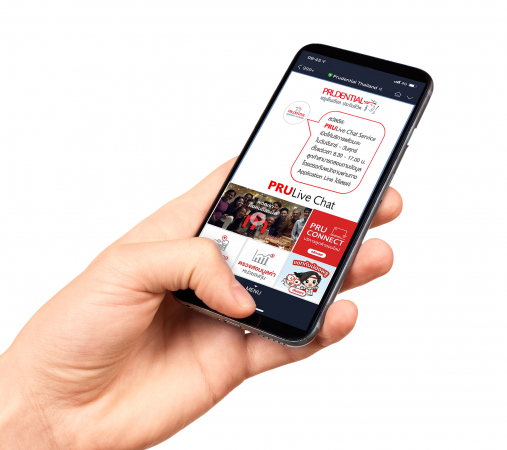
Prudential Life Assurance (Thailand) PCL has introduced a new Live Chat service, in addition to its existing Chatbot service, allowing customers to converse in real time with Customer Service representatives via its official LINE account.

The company announced on Tuesday that the new Live Chat service would be available on weekdays from 8.30am to 5pm.

If you access the service after operating hours you will be asked to leave your questions and contact details and will be contacted by a Customer Service representative within 24 hours.

The service is aimed at providing Prudential Thailand’s customers with a personal touch in today’s fast-paced and highly digitalized world, the company added.