PTTEP increase shares in APICO LLC, drives forward Sinphuhorm Project development

ศาสตร์เกษตรดินปุ๋ย : ขอบคุณแหล่งข้อมูล : หนังสือพิมพ์ The Nation

https://www.nationthailand.com/business/30373968

PTTEP increase shares in APICO LLC, drives forward Sinphuhorm Project development

Jul 31. 2019
Sinphuhorm project

Sinphuhorm project
By THE NATION

300 Viewed

PTTEP HK Holding Limited, a subsidiary of PTT Exploration and Production Public Company Limited (PTTEP), has signed a share purchase agreement to acquire a 39-per-cent stake in APICO LLC from Coastal Energy Company (Khorat) Limited, with the total transaction valued a approximately US$74 million (Bt2.27 billion). The deal will increase PTTEP’s share in APICO LLC to 72.8 per cent.

APICO LLC currently holds a 35 per cent participating interest in the Sinphuhorm Project, of which PTTEP is the operator with a 55 per cent participating interest. ExxonMobil Exploration and Production Khorat Inc holds the remaining 10 per cent participating interest.

Furthermore, APICO LLC also holds a 100 per cent participating interest in Block L15/43 and Block L27/43, which both are located in the northeastern region of Thailand.

The transaction is expected to be completed within the third quarter of 2019. After the completion, PTTEP’s stake in the Sinphuhorm Project will, directly and indirectly, increase to a total of 80.48 per cent.

Phongsthorn Thavisin, the PTTEP president and CEO, said “this acquisition of additional interest in APICO underlines PTTEP’s growth strategy in expanding investment in Thailand. The deal will generate return on investment to PTTEP while also driving further development of the Sinphuhorm Project to support electricity generation in northeast of Thailand”.

This is an acquisition of additional stakes in APICO after PTTEP had completed APICO’s share purchase transaction from Tatex Thailand in June 2019.

The Sinphuhorm Project covers Blocks EU1 and E5N in Udon Thani and Khon Kaen provinces. In the first half of 2019, the project’s average sales volume of natural gas was approximately 88 million cubic feet per day (14,487 barrels of oil equivalent per day) and the average condensate sales volume was 289 barrels per day.

Natural gas from the project is the main supply for the Nam Phong Power Plant in Khon Kaen, which has been included in the latest national Power Development Plan (PDP) 2018-2037 to support economic and social development of Thailand. The Sinphuhorm Project’s concessions were granted a 10-year extension by the cabinet in May 2019.

Thai Smile Airways picks Charita Leelayudth as chief

ศาสตร์เกษตรดินปุ๋ย : ขอบคุณแหล่งข้อมูล : หนังสือพิมพ์ The Nation

https://www.nationthailand.com/business/30373961

Thai Smile Airways picks Charita Leelayudth as chief

Jul 31. 2019
Charita Leelayudth

Charita Leelayudth
By THE NATION

257 Viewed

THAI Smile Airways has named Charita Leelayudth as its chief executive with the aim of speeding up the airline’s growth plans.

Charita will focus on increasing efficiency in aviation management, the hours of its aircrafts’ operation and the number of flights on existing routes while adding new routes.

“The focus is still placed on financial and investment management, promoting the use of technology and service innovation as well as HR management so as to create the optimal satisfaction for Thai Smile passengers, while performing full duties in line with the policy and business direction of Thai Airways International Public Company Limited,” the airline said.

Charita had been serving as acting chief executive and is recognised as a high-ranking executive in the airline industry.

“She is a thought leader who inspires others and who is behind the success of Thai Smile with The Best Airline in Thailand and the Travellers’ Choice Regional Airline – Asia from the TripAdvisor for three consecutive years,” the company said. “Moreover, she has continued planning and deploying the policy of connecting services seamlessly with Thai Airways International as well as substantially supporting digital transformation in the organisation.”

She had earlier served as the airline’s chief financial officer.

“She is also a high-level executive who continues to put the importance on CSR activities, such as Tong Fah Pah Yim, Smile for Life, and recently with the Arabica coffee support project from the Royal Project Foundation,” the company said

“Charita will cooperate with all sectors, both domestically and overseas, in various fields to push the business forward.

“In the past years, Charita has worked with deep understanding of the nature of aviation business and the operations of Thai Smile since her last position with Thai Airways International Public Company Limited as executive vice president of finance and accounting before moving to assume the management role at Thai Smile.”

Thai, Myanmar bankers take part in bilateral meet

ศาสตร์เกษตรดินปุ๋ย : ขอบคุณแหล่งข้อมูล : หนังสือพิมพ์ The Nation

https://www.nationthailand.com/business/30374031

Thai, Myanmar bankers take part in bilateral meet

Aug 01. 2019
Photo by BOT

Photo by BOT
By The Nation

45 Viewed

Veerathai Santiprabhob, Governor of the Bank of Thailand (BOT), and U Kyaw Kyaw Maung, Governor of the Central Bank of Myanmar along with high-level delegations from each institute participated in the Bilateral Meeting on July 30, 2019 at the Central Bank of Myanmar, Nay Pyi Taw.

The meeting aimed to strengthen banking and financial cooperation including the promotion of local currency usage, banking cooperation, and cross border payment and settlement. These would further enhance financial integration and support the sustainable economic growth of both countries.

Veerathai Santiprabhob and the BOT’s delegation also paid a courtesy call on the Union Minister for Planning and Finance U Soe Win at his ministry in Nay Pyi Taw. They discussed and exchanged views on financial cooperation, including the potential for using financial technology to facilitate settlement of trade and investment between Thailand and Myanmar, as well as workers’ remittances.

More cuts to US base rate coming in October, Morgan Stanley predicts

ศาสตร์เกษตรดินปุ๋ย : ขอบคุณแหล่งข้อมูล : หนังสือพิมพ์ The Nation

https://www.nationthailand.com/business/30374028

More cuts to US base rate coming in October, Morgan Stanley predicts

Aug 01. 2019
Photo by Morgan Stanley

Photo by Morgan Stanley
By The Nation

87 Viewed

Morgan Stanley on Thursday said that it expects the US Federal Open Market Committee or the Fed to again cut the interest rate in October this year after it delivered a 25 basis-point cut to the funds rate on Wednesday.

At its July meeting, the Fed voted to cut the federal funds rate target range by 25 basis points, to 2.00 per cent-2.25 per cent. Committee members Esther George and Eric Rosengren dissented, confirming some resistance from regional FRB presidents to cutting rates at this stage of the business cycle.

The minimal size of the cut, the dissents, and Fed chairman Jerome Powell’s press conference comments disappointed markets, undercutting investment bank Morgan Stanley’s expectations, according to a statement released on Thursday.

Powell’s statement that the cut was “in the nature of a mid-cycle adjustment to policy” provided little dovish guidance for future policy moves, said the research statement.

“We expect a follow-up cut of 25 base points this year, and we judge October as the most likely timing,” the Morgan Stanley research paper said.

In the near term, the pricing of future Fed policy beyond another 25 point rate cut will hinge more on the evolution of more domestic, service sector data, than on global growth data, associated risks emanating from global trade, and their consequent impact on US manufacturing. Morgan Stanley suggested that investors exit all nominal and real rate positions that they had predicated on their previous understanding of the Fed’s reaction function.

“In TIPS, we stay neutral on break-evens, given Powell’s expectation of a ‘delayed’ move toward 2 per cent inflation. We exit our 5s30s real rates steepener. We also put some context on the Fed’s early end to balance sheet normalisation and what it means for real yields and break-evens,” said the research. “We see a muted impact on real yields, and mild support for breakeven tightening (not widening), given that the Fed buys lower duration in TIPS vs outstanding nominals.”

The early end to balance sheet normalization could alleviate some of the funding pressure Morgan Stanley expects to see, but they still expect over US$150 billion (Bt4.16 trillion) of T-bill issuances in August, said the report. “Further, we reiterate our view that POMOs will begin in the fourth quarter of this year as reserves will dip below $1.3 trillion in October and approach $1.2 trillion by December. Lastly, we project that EFFR-IOER will be in the 8-10 basis point range by the September meeting.

“Fed hawkishness may give the USD a bid, but we argue for caution. USD strength exacerbates the issues that concern the Fed the most – global growth, trade and inflation. The more cautious the Fed is on rate cuts, the higher the probability that financial conditions tighten, making future rate cuts more likely. We thus argue that the higher the USD rally, the bigger the subsequent USD decline.”

Manufacturing continues quarterly decline in key Asean countries, index finds

ศาสตร์เกษตรดินปุ๋ย : ขอบคุณแหล่งข้อมูล : หนังสือพิมพ์ The Nation

https://www.nationthailand.com/business/30374026

Manufacturing continues quarterly decline in key Asean countries, index finds

Aug 01. 2019
By The Nation

94 Viewed

The latest data has pointed to a further deterioration in manufacturing conditions across Asean at the start of the third quarter, according to the headline IHS Markit Purchasing Managers’ Index.

The headline index fell from 49.7 in June to 49.5 in July, signalling a second successive monthly deterioration in operating conditions at Asean manufacturers. Furthermore, this marked the lowest reading in exactly two years.

Contributing to the decline was a slight reduction in overall output, the first recorded since July 2017. This occurred alongside only a marginal increase in new orders, although the rate of growth was slightly stronger than in June. Demand conditions were also strengthened by the fastest rise in foreign sales for a year. However, employment continued to fall.

July 2019 data were collected July 12-25, 2019.

Country-level data showed business conditions improving in four of the seven monitored areas. Myanmar’s manufacturing sector continued its run of solid improvements, posting a headline reading (52.9) broadly in line with that seen in June.

Vietnam also saw a strong rate of growth during July (52.6) that was the most marked for seven months.

The Philippines meanwhile recorded a moderate improvement in manufacturing conditions, with the headline index (52.1) rising for the third month in a row.

By comparison, Thailand saw growth slow to only a marginal pace in July (50.3).

Indonesia’s manufacturing sector meanwhile slipped into decline, with firms reporting the quickest deterioration in operating conditions since the end of 2017 (49.6).

Malaysia continued to signal weakening manufacturing conditions, as the headline index fell to a four-month low (47.6).

Lastly, Singapore extended the current run of deterioration in its manufacturing sector to one year, although the downturn in July (44.5) was softer than in June.

Commenting on the latest survey results, David Owen, an economist at IHS Markit, said the Asean manufacturing sector remained in decline in July, according to the latest PMI survey data. “In fact, the rate of deterioration was the steepest in two years, driven by lower output and employment. Firms were led to reduce production levels on the back of only marginal increases in new orders in recent months.

“As such, manufacturers appear in a difficult position, and require stronger demand growth to lift them out of the current soft patch. Output prices also rose at a subdued pace, the joint-slowest since August 2016, suggesting that some firms are relying on discounts to attract customers. Thus, next month’s data will show whether the downturn in the Asean region is temporary or long term.”

The IHS Markit Asean Manufacturing PMI is compiled by IHS Markit from responses to monthly questionnaires sent to purchasing managers in panels of manufacturers in Indonesia, Malaysia, Myanmar, the Philippines, Singapore, Thailand and Vietnam, totalling around 2,100 manufacturers.

These countries account for 98 per cent of Asean manufacturing value added. The panels are stratified by detailed sector and company workforce size, based on contributions to GDP.

Survey responses are collected in the second half of each month and indicate the direction of change compared to the previous month. A diffusion index is calculated for each survey variable at the national level. The index is the sum of the percentage of “higher “responses and half the percentage of “unchanged” responses. The indices vary between 0 and 100, with a reading above 50 indicating an overall increase compared to the previous month, and below 50 an overall decrease.

The headline figure is the Purchasing Managers’ Index™ (PMI). The PMI is a weighted average of the following five indices: new orders (30 per cent), output (25 per cent), employment (20 per cent), suppliers’ delivery times(15 per cent) and stocks of purchases (10 per cent).

Ministry sets sights on boosting access to electricity

ศาสตร์เกษตรดินปุ๋ย : ขอบคุณแหล่งข้อมูล : หนังสือพิมพ์ The Nation

https://www.nationthailand.com/business/30374000

Ministry sets sights on boosting access to electricity

Aug 01. 2019
 Sontirat

Sontirat
By THE NATION

583 Viewed

The Energy Ministry is set to revise the Power Development Plan for 2018-2037 with the aim of putting more people on the electricity grid.

Speaking at a seminar on the direction of the energy industry, hosted on Wednesday by the Thansettakit newspaper, Energy Minister Sontirat Sontijirawong said the revision would offer investment opportunities for the private sector and on a community basis with the establishment of a community power plant.

Communities will be able to buy back shares from the investment, which will focus on renewable power plants. He also instructed related state agencies to map out zones for the establishment of community power plants and keep them within reach of the transmission network.

Sontirat also asked the Energy Conservation Fund, which will be financing this move, to revise its criteria for seeking funding to support the promotion of this community power plant development and come up with a proposal for his consideration next week. The fund has a budget of Bt12 billion.

The minister said the PDP revision must also be in line with Thailand’s policy of becoming Asean’s power hub. If all plans are achieved, the price of electricity in Thailand will drop to less than Bt3.576 per unit – a target that should be achieved in the next 20 years as set in the current PDP.

He added that though he cannot specify when the PDP revision will be completed, as it requires the opinion of many parties, he promised that the review will not affect existing projects.

FTI sees investment slowdown in second half

ศาสตร์เกษตรดินปุ๋ย : ขอบคุณแหล่งข้อมูล : หนังสือพิมพ์ The Nation

https://www.nationthailand.com/business/30373998

FTI sees investment slowdown in second half

Aug 01. 2019
By THE NATION

691 Viewed

The Federation of Thai Industries (FTI) said most of the new government’s economic policies could only be implemented towards the end of the year which would create uncertainty and slow down the pace of investment in the private sectors.

FTI Vice Chairman Montri Mahaplerkpong said investment growth in the second half would either stay flat or decline, as the policies announced by the new Cabinet would take at least a month for adjustment at the ministry and departmental levels, after which they would have to be translated into action plans. Thus, most policies could not be launched sooner than the end of 2019 or even early next year.

“EEC related investment should continue as planned,” he said. “However, other private investments will likely slow down as investors wait for clarity of the government policies, such as details of investment policies from the Thailand Board of Investment (BOI) and industrial promotion policies from the Ministry of Industry. We should see a steady flow of investment from the private sectors starting next year.”

From his discussions with overseas trade partners, Montri said, he believes that most of them still see Asean as a high potential investment destination.

“Vietnam is the investment destination for industries that rely on manual labours, while high technology investors would opt for Thailand,” he said.

FTI Vice Chairman said the government should further promote robotics manufacturing. By establishing robot factories in Thailand, foreign investors will realise our potential which may lead to more investments in the high-tech industries, such as e-vehicle assembly, aircraft components, and medical equipment. These industries require high-precision machinery that can only be provided by robotics.

“Furthermore, we should establish universities with a focus on high-tech industries, similar to the aerospace engineering schools in Mexico that supply hundreds of graduates with specialised skills a year to Boeing, Airbus, and other aircraft manufacturers worldwide.

Doing so will complete the development efforts in all dimensions: infrastructure, technology, and manpower” he said

Asean business, investment summit set for November

ศาสตร์เกษตรดินปุ๋ย : ขอบคุณแหล่งข้อมูล : หนังสือพิมพ์ The Nation

https://www.nationthailand.com/business/30374006

Asean business, investment summit set for November

Jul 31. 2019
By THE NATION

384 Viewed

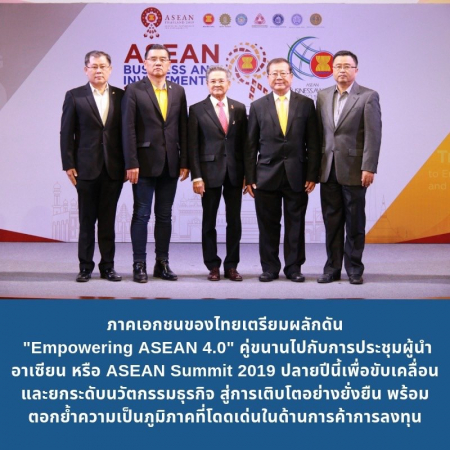
The Asean Business and Investment Summit 2019 and the Asean Business Awards 2019 will be organised on November 2-3 at Impact Exhibition Centre, Muang Thong Thani.

The events are being organised by the Asean Business Advisory Council (Asean-BAC), in cooperation with the Thai Foreign and Commerce ministries as well as the Joint Standing Committee on Commerce, Industry, and Banking which comprises the Board of Trade of Thailand, the Federation of Thai Industries and the Thai Bankers’ Association.

The ABIS 2019 is expected to  serve as a platform for the business community to engage with the leaders from Asean and beyond, business leaders, high-profile entrepreneurs and key decision-makers who are shaping and influencing Asean economies. It also provides an ideal platform to identify, discuss and present solutions for pressing issues that affect the region’s economic activities, investment attractiveness and business potential. At the same time, the event will be touching on the key global issues and exploring the challenges faced by businesses in the world today.

Asean-BAC chairman Arin Jira said: “The ABIS 2019 is Asean’s premier annual business and investment event organised by the Asean-BAC of the country holds the Asean chair. This event is held in conjunction with the Asean Summit every year in the host country. This year the event will be held under the theme ‘Empowering Asean 4.0’.”

Arin said the main focus of the theme will be: digital infrastructure, digital connectivity, Asean human empowerment and development, and micro small and medium enterprises (MSMEs). The key topics of the event are: advancing Asean 4.0 in the global value chain; sustainable Asean 4.0: circular economy; next generation MSME access to finance; Asean digital transformation and connectivity; Asean human empowerment and development, and Asean mentorship for entrepreneurs network for MSMEs.

Arin added that heads of states or governments across and beyond Asean countries will be invited to attend the event and deliver the keynote addresses during the two-day event. The key leaders will come from within and beyond Asean. Key business leaders and high-level officials of international organisations are also invited to participate in the panel discussions. It is expected that over 800 participants will attend the event this year.

Drop in domestic consumption, foreign demand weakening Thai economy

ศาสตร์เกษตรดินปุ๋ย : ขอบคุณแหล่งข้อมูล : หนังสือพิมพ์ The Nation

https://www.nationthailand.com/business/30373984

Drop in domestic consumption, foreign demand weakening Thai economy

Jul 31. 2019
Don Nakornthab, BOT's senior director for Economic and Policy Department

Don Nakornthab, BOT’s senior director for Economic and Policy Department
By THE NATION

929 Viewed

The Thai economy in June weakened from the previous month due mainly to a drop in domestic and external demand, a central bank report on the economic and monetary conditions for the month of June and the second quarter showed.

Indicators for private consumption expanded at a slower pace in almost all categories, while indicators for private investment contracted. Public spending also shrank in both current and capital expenditures. The value of exports continued to contract, in line with a drop in merchandise import and manufacturing, though the tourism sector rebounded thanks to a rise in Indian tourists. However, the number of tourists from China continued to contract.

The Bank of Thailand put the moderate expansion in private consumption indicators to a drop in the purchase of durable goods and a decline in domestic vehicle sales and a lower number of newly registered motorcycles.

The fundamental factors supporting overall purchasing power appeared softer, mainly due to a softer increase in non-farming income, though income from agriculture showed a favourable expansion.

However, the improvement in farm income was mainly put down to the rise rubber and pineapple prices, while the price of other main crops continued to fall. This reflects a disparity in the benefits gained from a rise in farm income consistent with the Consumer Confidence Index, which has continued to drop.

Private investment indicators tightened from the same period last year, while spending in construction also dropped due to a reduction in permitted construction area, except for manufacturing purposes, while the sale of construction materials expanded. Investment in machinery and equipment also contracted in all categories. After seasonal adjustment, private investment indicators dropped slightly from the previous month from both investment in construction and in machinery and equipment.
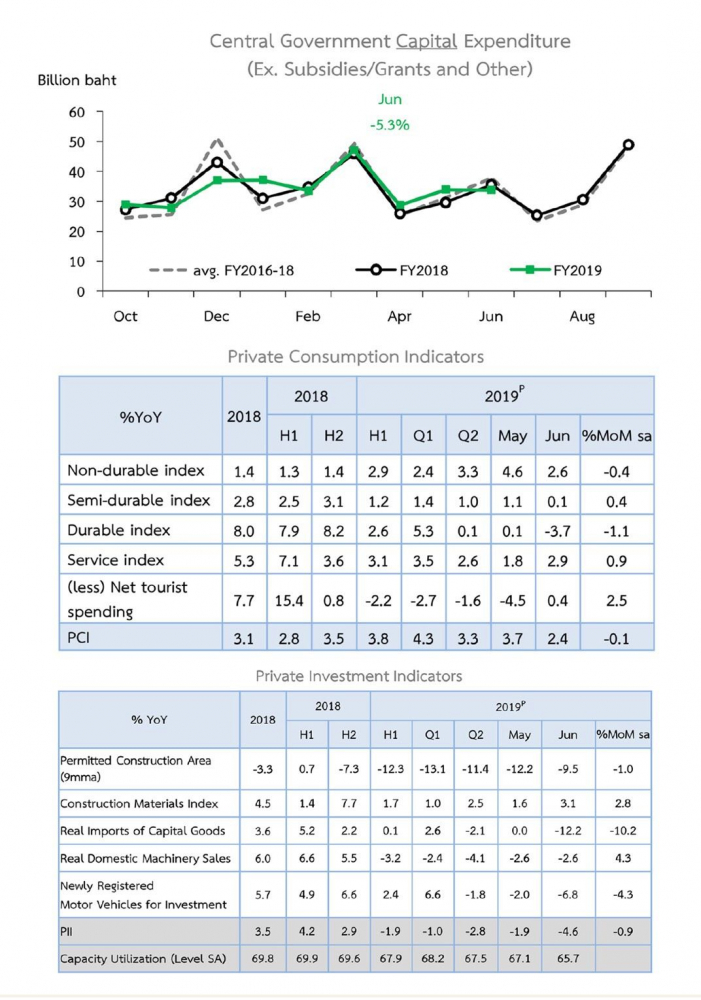
Public spending, excluding transfers, contracted from the same period last year from both current and capital expenditures. Current spending contracted mainly from the use of goods and services, while compensation for civil servants rose slightly. Capital spending contracted due to a reduction in the budgets allocated to provincial clusters, and a contraction in the disbursement of funds due to constraints on investment efficiency after the reassessment and realignment of investment projects under the 20-year National Strategy Framework.

The value of merchandise exports contracted by 2.1 per cent from the same period last year, and excluding gold, the value of merchandise exports dropped by 9.1 per cent. This continual contraction can be attributed to a weaker global demand owing to slower economic growth in a number of major trading economies, protectionist policies resulting from the US-China trade war, continued downturn in the electronic cycle and a fall in global crude oil prices. The contraction was mainly due to a drop in the export of petroleum-related products in terms of both price and export volume; electronic products, especially hard-disk drive and integrated circuits; agricultural products, especially rice; and agro-manufacturing products, especially rubber-based products and sugar. However, export in some categories continued to expand such as automotive and parts, particularly commercial vehicles and car tyres.

The value of merchandise imports contracted by 9.6 per cent from the same period last year, and excluding gold, the value of merchandise imports declined by 10.5 per cent. The contraction was attributed to a decline in the import of raw and intermediate goods, particularly crude oil in terms of both price and import volume, partly due to the shutdown of oil refineries for maintenance, and imports of electronic parts, in line with the continued contraction in exports of such products; import of capital goods excluding aircrafts, ships, floating structures, and locomotives, particularly telecommunication equipment, and machinery used in manufacturing, consistent with the slowdown in private investment; import of consumer goods especially non-durable goods following a drop in the price of tuna from the same period last year; and automotive and parts consistent with the contraction of automotive production and domestic car sales. The value of imports showed a solid reduction from last month, contributing to an increase in trade surplus.

Meanwhile, the number of foreign arrivals rebounded by 0.9 per cent from the same period

last year, mainly due to a continual expansion in the number of Indian tourists, who partly benefited from the exemption of visa-on-arrival fee. However, the number of Chinese tourists continued to contract as a result of the slowdown in Chinese economy and stronger competition from neighbouring countries. Moreover, the number of Malaysian tourists reduced from last year owing to an acceleration after the Malaysian 2018 general election. After seasonal adjustment, the number of foreign tourists rose from the previous month, mainly due to the return of Chinese visitors to the North after the air-pollution problem was cleared.

On the stability front, headline inflation decelerated to 0.87 per cent from 1.15 per cent

last month, due mainly to the decelerated core inflation, coupled with a fall in domestic retail petroleum prices. However, fresh food prices accelerated from a rise in fruit and pork prices.

Expedia urges Thai accommodation operators to tap into technology

ศาสตร์เกษตรดินปุ๋ย : ขอบคุณแหล่งข้อมูล : หนังสือพิมพ์ The Nation

https://www.nationthailand.com/business/30373974

Expedia urges Thai accommodation operators to tap into technology

Jul 31. 2019
Pimpawee Nopakitgumjorn, director of market management at Expedia Group, says Thai hoteliers can benefit from the company’s investments in technology.

Pimpawee Nopakitgumjorn, director of market management at Expedia Group, says Thai hoteliers can benefit from the company’s investments in technology.
By THE NATION

298 Viewed

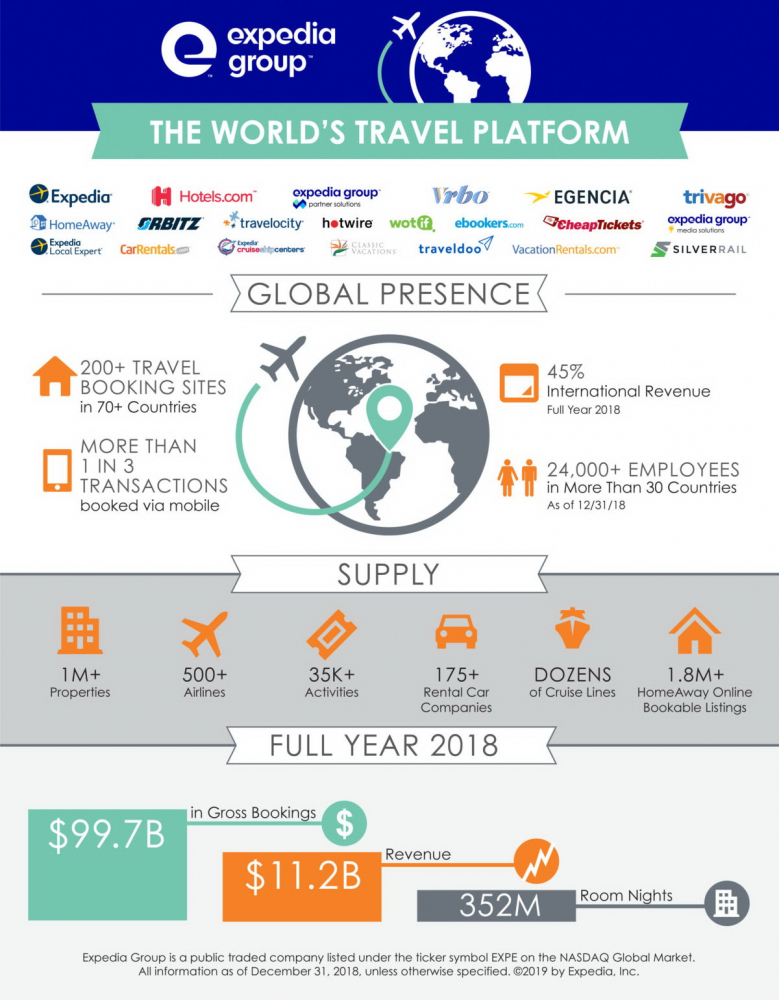
Expedia Group, a travel platform with over 200 travel sites across 70 countries, has advice for Thai accommodation operators on how they can expand amid weaker growth in the country’s tourism industry.

Due to a global economic slowdown, soaring fuel prices and the appreciation of the baht, the Tourism Authority of Thailand (TAT) recently lowered the projected number of international arrivals for 2019 to 40.2 million. “As such, tourism players can expect a tough year ahead. It is therefore paramount for the industry, including hoteliers, to be prepared to face the challenging conditions ahead,” Expedia said. “One of the ways to rise above this is the innovative use of technology. As online bookings continue to grow at an incredible pace, the APAC travel market will swell from US$418.1 billion in 2018¬ to $540.3 billion. By 2022, and the online share of travel bookings will climb from 44 per cent to 53 per cent in the same period.” Despite the massive growth opportunities, the online travel realm remains hugely complex, the company said.

“There are about two million destinations around the world that people are looking to visit and more than 10 ways that a traveller can describe their accommodation – from hotel through to bed and breakfast, apartment or even treehouse. Travellers will also search for relevant terms such as family-friendly, pet-friendly, beach resort and look for amenities ranging from wi-fi, swimming pool to facilities for special needs,” said Pimpawee Nopakitgumjorn, director of market management at Expedia Group.

“Expedia Group has catalogued over 160 additional qualifying terms that people might think about when they are refining their searches. Realistically, there could be approximately 3.2 billion search combinations. This huge amount of combination makes it extremely challenging for travel providers and hotels to reach their customers. Hoteliers who can leverage relevant data and technology to navigate through these complexities will be best positioned to win in this digital age.”

On a daily basis, there are one billion peak searches and over two billion lodging supply updates on the Expedia Group platform. “By harnessing the power of its global platform and simplifying petabytes of traveller data into tools and actionable insights, Expedia Group is empowering Thai hoteliers to make smarter and better business decisions,” Pimpawee said. “Last year alone, the company invested US$1.6 billion in technology, taking automation to the next level by pairing the power of its platform with data science to make automation more customer and partner-centric.

“Guest Insights – available to Expedia Group’s hotel partners – is a prime data analytic tool that allows hotels to leverage guest booking data and get a deeper understanding of where travellers are coming from and their booking behaviour. This will enable them to identify opportunities to reach and convert travellers from specific countries, allowing them the opportunity to grow their revenue. Globally, one in three Expedia Group accommodation partners look at some form of analytics reporting on a daily basis. It is therefore critical for Thai hoteliers to leverage such data insights in order to stay competitive in the online marketplace.

Machine learning is a powerful and positive disruptor which can help solve industry challenges and put the power of global platforms, such as Expedia Group, into the hands of accommodation players of all sizes. “Today, machine learning is already helping Expedia Group’s accommodation partners reduce their operational expenses and increase revenues by forecasting demand for their inventory,” Pimpawee said.

“As an example, Rev+ is a free revenue management tool that Expedia Group offers its accommodation partners. Rev+ is designed to provide them with smart, actionable data and predictive analytics, all in real-time. This means hotel partners can have access to predictions such as what they should charge based on competition, compression and other market dynamics. Globally, over 53,000 hotels are actively using Rev+ to optimise their revenue management strategy on Expedia Group Platform. Hotels who are highly engaged with Rev+ were able to gain an average 20 percent incremental uplift in revenue than hotels in their competitive set not using Rev+, generating US$28 million incremental revenue combined.

“Looking forward, the company will be taking AI and Machine learning one step further by providing personalised recommendations via a video bot to its hotel partners. “In the not-too-distant future, everything we’ve dreamt of through science fiction movies will be coming to life in the way we conduct business. Technology is already creating the type of experience where that automation feels just that little bit more human.”