New logistics JV aims to ride AirAsia’s connectivity

ศาสตร์เกษตรดินปุ๋ย : ขอบคุณแหล่งข้อมูล : หนังสือพิมพ์ The Nation

https://www.nationthailand.com/business/30373654

New logistics JV aims to ride AirAsia’s connectivity

Jul 25. 2019
From left: AirAsia Thailand CEO Santisk Klongchaiya; Teleport CEO Pete Chareonwongsak; Triple i Group CEO Mr. Tipp Dalal; AirAsia X Group CEO and AirAsia X Thailand CEO Nadda Buranasiri flanked by AirAsia Cabin Crew.

From left: AirAsia Thailand CEO Santisk Klongchaiya; Teleport CEO Pete Chareonwongsak; Triple i Group CEO Mr. Tipp Dalal; AirAsia X Group CEO and AirAsia X Thailand CEO Nadda Buranasiri flanked by AirAsia Cabin Crew.
By THE NATION

362 Viewed

Teleport, the rebranded digital cargo and logistics platform of AirAsia, and Triple i Logistics have signed a memorandum of understanding (MoU) to set up a joint venture aimed at integrating cargo capacity in Thailand for AirAsia Thailand and AirAsia X Thailand.

The MoU was signed on Thursday (July 25) by Teleport CEO Pete Chareonwongsak and Triple i Logistics CEO Tipp Dalal, with AirAsia Thailand and AirAsia X Thailand as potential customers of the joint venture.

The joint venture is expected to be operational by January 1, 2020

“Teleport is on a mission to move goods and e-commerce seamlessly throughout Southeast Asia, taking full advantage of AirAsia’s network of more than 100 cities and 10,000 weekly flights across Asia Pacific,” its CEO Pete said. The integration of AirAsia Thailand and AirAsia X Thailand’s belly space completes Teleport’s first milestone to bring all AirAsia group airlines together as one, he said.

“We have the widest and strongest network in Asia, covering 35 of the region’s top 50 cities. With our infrastructure, we intend to open this to both individuals and companies, enabling them to transport anything they want both quickly and painlessly.”

Triple i Group CEO Dalal said, “Triple i has earned the trust to manage air cargo services on behalf of AirAsia Thailand and AirAsia X Thailand for 10 years. The airline’s network has grown to more than 2,200 weekly flights across seven hubs, including from Don Mueang International Airport, its main hub in Thailand.” He said AirAsia and Teleport both share Triple i’s vision to develop and grow demand for air cargo services, a sector which is constantly evolving, especially when it comes to e-commerce.

“Through this joint venture, we will be able to create new and innovative logistics solutions, combining the strengths and expertise of all partners. This is a reflection of our strong and long-standing business relationship and our goal to become the leading air logistics business in the region,” Dalal said.

Founded in 2018 and formerly known as RedCargo Logistics, Teleport Commerce Malaysia Sdn Bhd is a wholly-owned subsidiary of AirAsia Group Berhad, building out the cargo and logistics ambitions for AirAsia.

Bangkok Land holds its own despite tough economy

ศาสตร์เกษตรดินปุ๋ย : ขอบคุณแหล่งข้อมูล : หนังสือพิมพ์ The Nation

https://www.nationthailand.com/business/30373644

Bangkok Land holds its own despite tough economy

Jul 25. 2019
By THE NATION

367 Viewed

Bangkok Land has held its 47th general shareholder meeting and announced a dividend of Bt0.09 per share, a the same dividend amount as last year.

Bangkok Land Public Co Ltd (BLAND) has achieved its financial targets, Sui Hung (Peter) Kanjanapas, vice chairman and executive director, will tell the 2019 annual general shareholder meeting on Thursday and announce a dividend payment of Bt0.09 per share, which is the same as that of the previous year.

The recommended dividend will be proposed for shareholders’ approval to the 47th shareholder meeting on July 25. Despite the ongoing global economic weakness that consequently led to the slowdown in various sectors of the Thai economy, the company achieved stable growth through its high determination and management expertise, Sui Hung will tell the meeting.

Over the past year, the unit trust of IMPACT Growth Real Estate Investment Trust, was held by IMPACT Exhibition Management Co Ltd for 741,250,000 units, with recorded at the cost net of Bt10.60 per unit, a total value of Bt7.857 billion in this present annual report. As of March 31, 2019, the unit market price per unit closed at Bt21.60 per unit, or an increase of 103.8 per cent. The company has also entered into additional agreements on land sales (Srinakarin) with unrelated parties, totalling Bt14.997 billion. The lands which were already transferred totalled Bt11.032 billion, with the remaining to be transferred with a value of Bt3.965 billion baht.

For the fiscal year ended March 31, 2019, the group reported a consolidated recurring operating profit of Bt1.356 billion and a net profit after non-recurring items and tax of Bt1.816 billion.

BLAND reported outstanding performance in 2018, with the successful launch of phase one of Cosmo Bazaar lifestyle shopping mall. Phase two of Cosmo Bazaar was opened in the first quarter of 2019 and it has been successful, with 100 per cent occupancy of retail space. The additional retail space includes a five-screen cinema by SF Cinema, a large scale 24-hour supermarket by AEON Maxvalu, a 24-hour fitness centre by Jetts and many well-known restaurants and shops. The success of Cosmo Bazaar has in turn increased land values in the surrounding areas and the demand of residential properties and office spaces nearby.

BLAND will continue to explore opportunities to expand its business, especially in the Muang Thong Thani area. The company believes that the unique development synergy it has created in Muang Thong Thani over the years has proven it to be on the right path, said a media release from the company on Thursday, and it will strive to further develop Muang Thong Thani to fruition.

“Under the current uncertain economic and political environment, I expect a difficult year ahead for the Thai economy. However, with our debt free and strong financial position, in additional to the continued strength of our businesses, Bangkok Land will withstand pressures and challenges that may be posed by the political turmoil and slowing economic activities,” said Sui Hung.

“In the year ahead, we will continue to further strengthen our existing positions and operations.”

Alibaba expands GET Network

ศาสตร์เกษตรดินปุ๋ย : ขอบคุณแหล่งข้อมูล : หนังสือพิมพ์ The Nation

https://www.nationthailand.com/business/30373640

Alibaba expands GET Network

Jul 25. 2019
Vice president of Alibaba Group Zhang Yu, centre, with members of Alibaba Global eCommerce Talent (GET) Network at the 12th Annual China-Asean Education Cooperation Week.

Vice president of Alibaba Group Zhang Yu, centre, with members of Alibaba Global eCommerce Talent (GET) Network at the 12th Annual China-Asean Education Cooperation Week.
By The Nation

270 Viewed

Alibaba Business School has announced the expansion of the Alibaba Global eCommerce Talent (GET) Network initiative, with new eight organisations joining existing members including Thailand’s Burapha University in committing to facilitate the education and empowerment of youth around the world.

The announcement was made at an Alibaba symposium held during the 12th Annual China-Asean Education Cooperation Week early this week in Guiyang.

The Alibaba GET Network was initiated in 2018 as an extension of Alibaba’s GET program which, to date, has benefitted 80 education partners and trained more than 300 lecturers, as well as some 13,000 students and other participants from China, Thailand, Singapore, Malaysia, India, South Korea, Mongolia, Australia, Israel and Turkey.

In Thailand, the network currently covers 10 local education partners with a combined force of 72 lecturers and has successfully training 2,000 people to date.

Brian Wong, Vice President of Alibaba Group, said the hundreds of lecturers they have trained globally and the Alibaba GET programme subsequently introduced by participating universities have accelerated the pace at which they educate and empower the talents of tomorrow, and they are keen to replicate this success with their new slate of educational partners.

“Our students have grown over the past year under GET as has the enthusiasm of our lecturers to bring even more students into the fold,” said Charoen Chinwanitcharoen, vice president of Thailand’s Burapha University, one of the founding members of the GET Network.

He added that the dynamic nature of the digital economy is a double-edged sword, and the students now have the confidence to pursue opportunities and knowledge to keep learning and upgrading to succeed.

As part of the Alibaba GET Network, education partners receive learning materials based on real-world case studies and multimedia learning assets via the GET Online Learning Platform and Simulation Platform, taught by experts from the Alibaba ecosystem.

Participating universities can also send their lecturers to receive further training on equipping students with the right knowledge and skills to succeed in the digital economy.

The symposium “Entrepreneurship and Innovation Education in the Era of the Digital Economy” brought together GET-trained university lecturers and students as well as representatives from 62 universities and partners across 22 countries including China, Thailand, Indonesia, Malaysia, Kazakhstan, Uzbekistan, Russia and Mexico.

More than 250 experts and representatives from Alibaba Group, various governments, universities and the digital industry joined stakeholders from the Network to discuss how to further develop talents in the digital economy and drive a new business education model.

Leaders from Thailand’s Burapha University and Malaysia’s Sunway Education Group presented their GET teaching programmes developed after their training by Alibaba Business School.

The Alibaba symposium was part of the wider proceedings of the China-Asean Education Cooperation Week, which has encouraged educational and cultural exchange between Asean nations and international partners since 2008.

Zen starts shift to paper from plastic in its restaurants

ศาสตร์เกษตรดินปุ๋ย : ขอบคุณแหล่งข้อมูล : หนังสือพิมพ์ The Nation

https://www.nationthailand.com/business/30373635

Zen starts shift to paper from plastic in its restaurants

Jul 25. 2019
By THE NATION

207 Viewed

Major restaurant operator Zen Corporation Group Plc, has launched a pilot programme using paper packaging for food, and is urging other food companies to join them in the switch in order to reduce the harmful effects of plastic on the environment.

The Thailand-based company is focused on ensuring customer needs for convenience are met while adapting its business to meet changes in customer behaviour. In a media release on Thursday, the company said it will replace foam cups and plastic containers to avoid toxins that can be harmful to consumers.

As well, plastic containers cause environmental damage because they do not easily decompose. In contrast, paper can be composted or recycled.

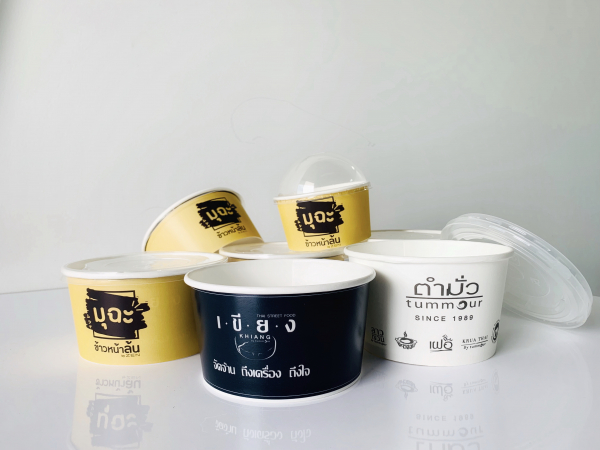
It is important to match the right type of paper packaging for each type of food, said the release from ZEN Corporation Group. They recently began using paper packaging for their Tumour, Musha and Khian restaurants for take-away and food delivery. The programme will be expanded to other restaurants in future.

In particular, ZEN aims to be part of the circular economy by using the products that are recyclable and so can reduce environmental damage. They will also encourage their customers to change their behaviours to reflect environmental consciousness.

“Environmental awareness is very important, so we aim to support and promote the environment. However the using of paper food packaging is not just to [reduce damage to] the environment only, but also to ensure food safety. We are always concerned about the key elements in how we like to serve our customer needs: taste, quality and safety. So the proper using of packaging is important and we need to be aware of that,” Boonyong Tansakul, chief executive officer of Zen Corporation Group Plc, said.

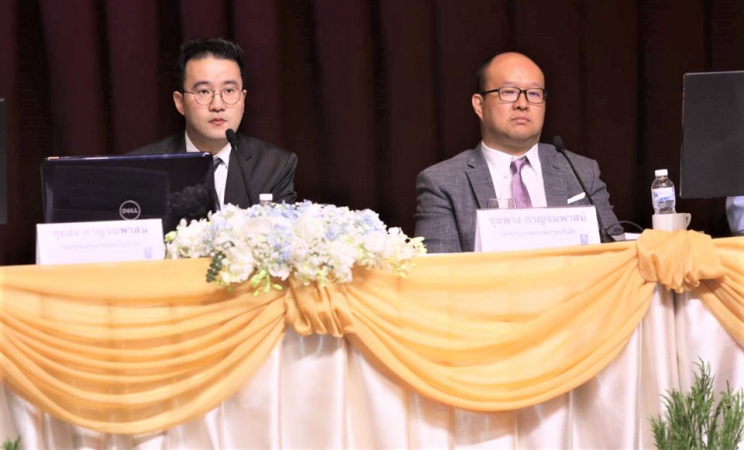
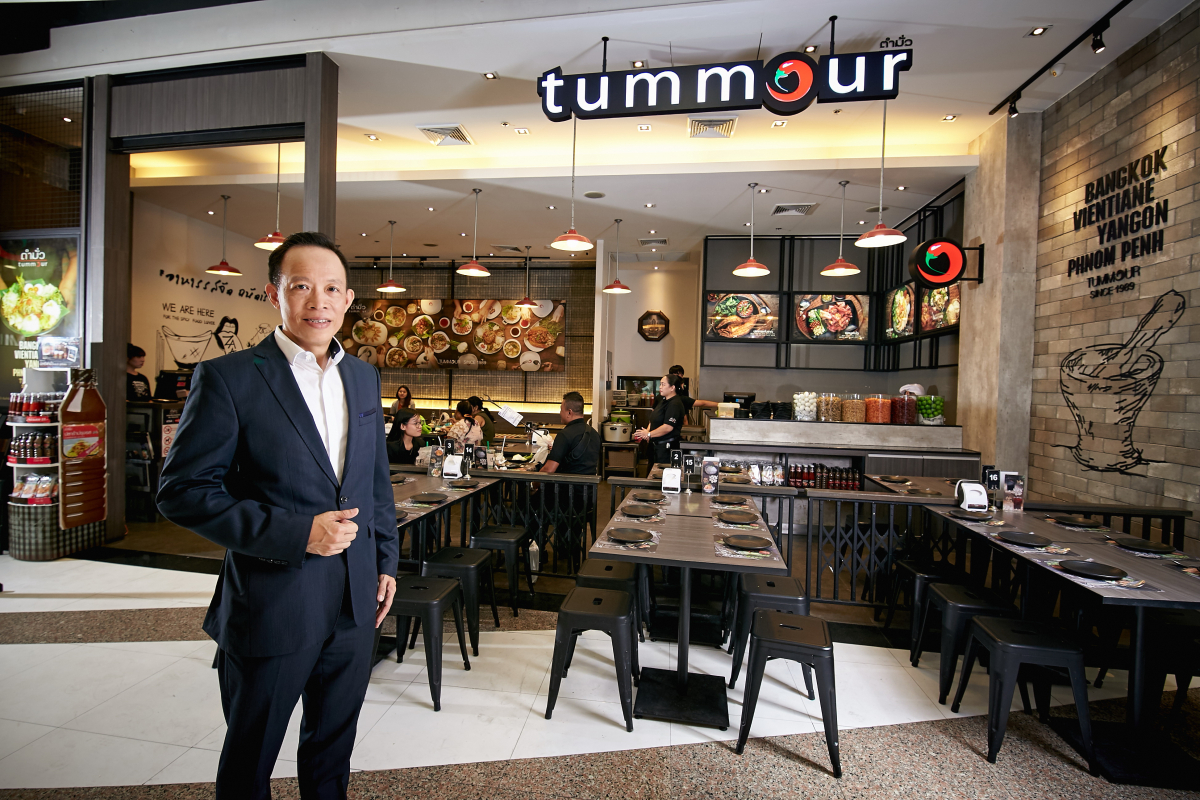
Boonyong Tansakul, chief executive officer of Zen Corporation Group Plc

Boonyong Tansakul, chief executive officer of Zen Corporation Group Plc

Plastic garbage in Thailand now reaches above 2 million tonnes yearly, accounting for 12 per cent of all garbage. Of the more than 1 million tonnes that ends up in the ocean, most is plastic including plastic bags at 13 per cent, straws at 10 per cent, plastic caps at 8 per cent and food packaging at 8 per cent.

5G on its way but full coverage likely to take years

ศาสตร์เกษตรดินปุ๋ย : ขอบคุณแหล่งข้อมูล : หนังสือพิมพ์ The Nation

https://www.nationthailand.com/business/30373712

5G on its way but full coverage likely to take years

Jul 26. 2019
By THE NATION

71 Viewed

Global telecom firms are enthusiastic about the roll-out of 5G, according to a report prepared by Vertiv and technology analyst firm 451 Research released today.

The report, titled “Hopes and Fears: From Energy Costs to Edge Computing Transformation” lays out the results of an in-depth survey of more than 100 global telecom decision makers with visibility into 5G and edge strategies and plans. The research covers 5G deployment plans, services supported by early deployments, and the most important technical enablers for 5G success.

Survey participants are moving forward aggressively with deployment plans, the report said, with 12 per cent of operators expect to roll out 5G services in 2019, and an additional 86 per cent expect to be delivering 5G services by 2021.

According to the survey, those initial services will be focused on supporting existing data services (96 per cent) and new consumer services (36 per cent). About one-third of respondents (32 per cent) expect to support existing enterprise services with 18 percent saying they expect to deliver new enterprise services.

As networks continue to evolve and coverage expands, 5G itself will become a key enabler of emerging edge use cases that require high-bandwidth, low latency data transmission, such as virtual and augmented reality, digital healthcare, and smart homes, buildings, factories and cities.

However, illustrating the scale of the challenge, the majority of respondents (68 per cent) do not expect to achieve total 5G coverage until 2028 or later. Twenty-eight per cent expect to have total coverage by 2027 while only 4 per cent expect to have total coverage by 2025.

“In Asia, operators are optimistic that they are ready to deploy 5G in the next few years. But with the growing reality comes a new set of challenges including increasing energy consumption, existing infrastructure readiness and visibility as well as manageability of sites” said Danny Wong, senior director for telecoms at Vertiv Asia. “There is a pressing need for telecom operators to identify and utilize energy-efficient and innovative power and thermal solutions to make 5G a reality.”

To support 5G services, telcos are ramping up the deployment of multi-access edge computing (MEC) sites, which bring the capabilities of the cloud directly to the radio access network. Thirty-seven per cent of respondents said they are already deploying MEC infrastructure ahead of 5G deployments while an additional 47 per cent intend to deploy MECs.

As these new computing locations supporting 5G come online, the ability to remotely monitor and manage increasingly dense networks becomes more critical to maintaining profitability. In the area of remote management, data center infrastructure management (DCIM) was identified as the most important enabler (55 per cent), followed by energy management (49 per cent). Remote management will be critical, as the report suggests the network densification required for 5G could require operators to double the number of radio access locations around the globe in the next 10-15 years.

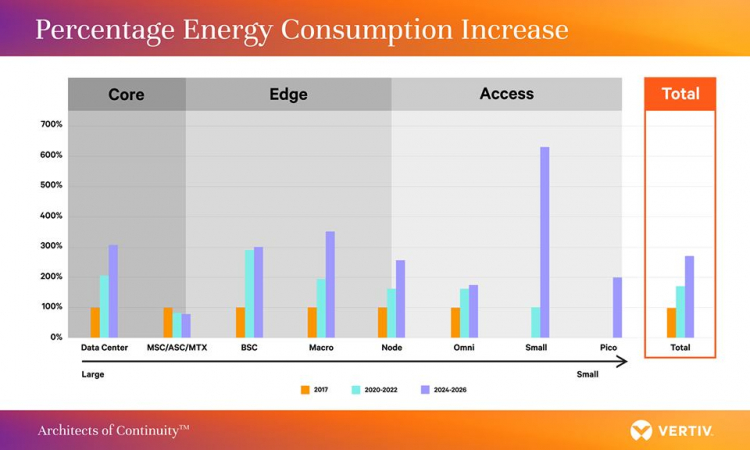
The survey also asked respondents to identify their plans for dealing with energy issues today and five years in the future when large portions of the network will be supporting 5G, which 94 per cent of participants expect to increase network energy consumption.

Five years from now, that number is projected to jump to 81 per cent.

“5G represents the most impactful and difficult network upgrade ever faced by the telecom industry,” said Brian Partridge, research vice president for 451 Research. “In general, the industry recognises the scale of this challenge and the need for enabling technologies and services to help it maintain profitability by more efficiently managing increasingly distributed networks and mitigating the impact of higher energy costs.”

Myanmar to unveil business updates at Bangkok meet

ศาสตร์เกษตรดินปุ๋ย : ขอบคุณแหล่งข้อมูล : หนังสือพิมพ์ The Nation

https://www.nationthailand.com/business/30373711

Myanmar to unveil business updates at Bangkok meet

Jul 26. 2019
From left, Thant Sin Lwin, Suphatra Srimaitreephithak and Nattawin Phongsphetrarat at a press conference in Yangon on July 25 (Photo-Khine Kyaw, The Nation)

From left, Thant Sin Lwin, Suphatra Srimaitreephithak and Nattawin Phongsphetrarat at a press conference in Yangon on July 25 (Photo-Khine Kyaw, The Nation)
By KHINE KYAW
THE NATION
YANGON

88 Viewed

A lack of updated information on the Myanmar government’s priorities will no longer be a major challenge for Thai and foreign companies keen to invest in Myanmar, as the latest developments in its business scenario are to be shared at the fourth edition of Myanmar Insight seminar next month.

Speaking at a press conference on Thursday afternoon, Thant Sin Lwin, director general of the Directorate of Investment and Company Administration, said Myanmar would take advantage of the full-day event to explain its business-related laws and regulations. The event will be held at the Centara Grand Hotel in Bangkok on August 23.

“Our high-level delegation led by the chairman of Myanmar Investment Commission Thaung Tun will be there to publicise all the updates Thai investors need to know,” he said.

The official said the event would help Thai and foreign businesses unlock “enormous opportunities” in Myanmar.

“We will arrange the best speakers to attract more Thai investments to Myanmar,” he said.

“Today, Thailand is the third largest investor in Myanmar [after Singapore and China] in terms of the value of investment among the permitted enterprises, accounting for 14 per cent of our total foreign direct investment [FDI]. We hope it will remain the same in the months to come.”

The Myanmar Sustainable Development Plan (MSDP) and Project Bank, which unveils the government’s prioritised projects, will be among the key topics for discussion at the seminar.

Thai Ambassador to Myanmar Suphatra Srimaitreephithak says the plan as very comprehensive and integrated.

“I am a believer in MSDP. With the implementation of both MSDP and MIPP, it is very timely for Thai private sector and government officials to get to know more about the updates,” she said.

“This year, we have seen Myanmar’s economy igrowing stronger and stronger. With MSDP, I believe that whoever wins the elections, will be able to drive this country towards the development path.”

Bilateral trade for the first half of 2019 exceeded US$3.85 billion (Bt119.22 billion), up by $21 million from the same period last year, according to Thailand’s Ministry of Commerce.

Last year, bilateral trade was recorded at $7.64 billion, up by 12.58 per cent from the previous year. Thailand’s exports to Myanmar grew by 7.35 per cent at $4.6 billion while Thailand’s imports from Myanmar rose by 21.6 per cent at $3 billion.

“We have a trade target to accomplish. Both sides have agreed to increase our trade volume in the next three years,” said the envoy.

Suphatra said the upcoming 2020 general election results would not have major impact on Thai business interests in Myanmar.

“We see much room for bilateral cooperation. We hope this event will result in closer ties between Thai and Myanmar officials as well as among the Thai private sector,” she said.

“The future of politics in Myanmar depends very much upon its citizens. But as we are close neighbours of Myanmar, we only hope that the best will happen in this country.”

Nattawin Phongsphetrarat, vice president of the Thai Business Association of Myanmar (TBAM), which co-organised the event with the Royal Thai Embassy, told The Nation that retail, wholesale and manufacturing sectors would be prioritised.

“We look at it as a gateway to attract Thai and foreign businesses to do business in Myanmar,” he said.

“We are developing the Myanmar Insight as a living seminar. This year, new economic policies have been developed by the Myanmar government, and officials will share the updates with our participants.”

Nattawin expects to accommodate more than 600 Thai business people this year, the same as the previous three events.

“There, we will hear about the projects that Myanmar wants to push forward. As we are complementing each other, I am sure more and more Thai companies will participate in these projects,” he said.

“Additionally, Thai business people in Myanmar will share their experiences and success stories with businesses back home so prospective Thai investors can be well-prepared and inspired to enter this market.”

According to Nattawin, the seminar is open to members and non-members of TBAM. Tickets cost Bt2,500 for TBAM members and Bt3,500 for non-members.

“I am confident that we will attract more Thai investors to Myanmar this year. We are ready to support Thai businesses that are keen to expand to Myanmar in every possible way,” he said.

Thailand issuer ratings upgraded to positive

ศาสตร์เกษตรดินปุ๋ย : ขอบคุณแหล่งข้อมูล : หนังสือพิมพ์ The Nation

https://www.nationthailand.com/business/30373706

Thailand issuer ratings upgraded to positive

Jul 26. 2019
Photo by: Moody's

Photo by: Moody’s
By The Nation

134 Viewed

Moody’s Investors Services on Thursday changed the outlook on the Government of Thailand’s issuer ratings to positive from stable and affirmed the Baa1 issuer and senior unsecured ratings.

In its statement released on Thursday, it said the decision to change the outlook to positive reflects Moody’s view that investment in physical and human capital, in the context of a lengthening track-record of a predictable and stable macroeconomic environment, might over time boost Thailand’s competitiveness. Such developments could partially offset the drag on the country’s growth potential from gaps in human capital development and an ageing population.

The affirmation of Thailand’s Baa1 ratings reflects the country’s very strong public and external finances that provide Thailand significant room to counter shocks. Thailand’s large and diverse economy also supports shock absorption capacity and the rating. By contrast, the Baa1 rating also takes into account credit constraints from lingering, albeit easing, political risk and, longer-term structural challenges related to an ageing society and labour skills shortages that weigh on growth potential.

In addition, Moody’s has also affirmed Thailand’s local currency senior unsecured ratings at Baa1 and the foreign currency commercial paper rating at P-2. Concurrently, Moody’s has affirmed the local currency senior unsecured rating for the country’s central bank, the Bank of Thailand, at Baa1.

Thailand’s country ceilings remain unchanged. The long-term foreign currency bond ceiling remains at A2, and the short-term foreign currency bond ceiling at P-1. The long-term foreign currency deposit ceiling remains at Baa1, and the short-term foreign currency deposit ceiling at P-2. Furthermore, the long-term local currency bond and deposit ceilings remain unchanged at A1.

Thailand is building a lengthening track record of transparent and predictable fiscal and monetary policies that maintain a broadly stable and low government debt burden, low and stable inflation and financial stability. Long-standing macroeconomic stability through economic and political cycles supports competitiveness.

The government’s investment plans on physical capital may partly address Thailand’s competitiveness challenges. In particular, under its 20-year national strategy, the government’s economic plan to raise infrastructure investment in the $50 billion Eastern Economic Corridor (EEC, about 10 per cent of GDP) could support Thailand’s competitiveness through attracting new businesses and technologies. At present, development in the EEC is contributing to a pick-up in private domestic investment and foreign direct investment. Total net investment applications through the Board of Investment in the government’s 10 targeted industries reached Bt700-Bt800 billion in 2017-18 (4.6 per cent-5.2 per cent of GDP), double the levels of 2016. Beyond the EEC, the government’s plan includes investing Bt2.76 trillion (about $89 billion or 18 per cent of GDP) in infrastructure through the Transport Action Plan 2016-18.

Increased competitiveness would be reflected in sustained higher private investment and higher productivity. In the context of potential shifts in production location across Asia, related in part to the US-China trade dispute, a boost to the economy’s attractiveness as a place to locate production from high-quality infrastructure would benefit Thailand’s growth in the medium term.

But the effectiveness of investment in physical capital in attracting private investment and shifting the country’s production to higher value-added industries also hinges on addressing the country’s labour skills shortages. In particular, Thailand faces a shortage of highly skilled labour in areas such as next generation automobiles, software engineering and artificial intelligence, which poses risks to the government’s ability to develop manufacturing capabilities in higher value-added production. The government, in conjunction with the United Nations, is working to promote education that focuses on science, technology, engineering and mathematics, while it is also establishing vocational training institutes to enhance the development of teachers and link educational institutions to enterprises to foster human capital development. These initiatives may, over time, help boost labour skills and productivity.

Overall, Moody’s projects real GDP growth of between 3.0 per cent and 3.5 per cent in 2019-20. At these rates, Thailand’s growth will remain in line with the median for A- and Baa-rated sovereigns in the next couple of years. More effective investment in physical and human capital would boost potential growth. Longer term, effective investment in physical and human capital also offers the prospects to partially offset significant downward pressure on the economy’s growth potential from a rapidly ageing population.

The affirmation of Thailand’s Baa1 ratings reflects the country’s very strong public and external finances, the result of effective macroeconomic policy, that provide Thailand significant room to counter shocks.

Despite continued fiscal accommodation to support infrastructure investment in the next few years, Moody’s projects general government debt to remain around 35 per cent-40 per cent of GDP in 2019-20, staying around the median of 37 per cent for A-rated sovereigns and well below the 52 per cent median for Baa-rated sovereigns. Thailand’s low government debt burden provides it very high fiscal flexibility such that it can fund additional spending on addressing economic and social development needs and counter potential future shocks without weighing on its very high fiscal strength.

Proactive debt management and the very low share of foreign currency denominated debt will continue to insulate Thailand from future potential shifts in international investor sentiment, as most recently evidenced during the period of emerging market volatility in the second half of 2018. Only 1.5 per cent of outstanding government debt is in foreign currency as of April 2019 and only 17.8 per cent of outstanding local government bonds are held by non-residents as of July 2019, in both cases lower than for other similarly-rated sovereigns.

ECB maintains interest rates

ศาสตร์เกษตรดินปุ๋ย : ขอบคุณแหล่งข้อมูล : หนังสือพิมพ์ The Nation

https://www.nationthailand.com/business/30373702

ECB maintains interest rates

Jul 26. 2019
Photo by:ECB

Photo by:ECB
By The Nation

126 Viewed

Thursday’s meeting of the Governing Council of the European Central Bank (ECB) decided that the interest rate on the main refinancing operations and the interest rates on the marginal lending facility and the deposit facility will remain unchanged at 0.00 per cent, 0.25 per cent and -0.40 per cent respectively.

The Governing Council expects the key ECB interest rates to remain at their present or lower levels at least through the first half of 2020, and in any case for as long as necessary to ensure the continued sustained convergence of inflation to its aim over the medium term, according to a release late Thursday.

The Governing Council intends to continue reinvesting, in full, the principal payments from maturing securities purchased under the asset purchase programme for an extended period, past the date when it starts raising the key ECB interest rates, and in any case for as long as necessary to maintain favourable liquidity conditions and an ample degree of monetary accommodation.

The Governing Council also underlined the need for a highly accommodative stance of monetary policy for a prolonged period of time, as inflation rates, both realised and projected, have been persistently below levels that are in line with its aim. Accordingly, if the medium-term inflation outlook continues to fall short of its aim, the Governing Council is determined to act, in line with its commitment to symmetry in the inflation aim. It therefore stands ready to adjust all of its instruments, as appropriate, to ensure that inflation moves towards its aim in a sustained manner.

In this context, the Governing Council has tasked the relevant Eurosystem Committees with examining options, including ways to reinforce its forward guidance on policy rates, mitigating measures, such as the design of a tiered system for reserve remuneration, and options for the size and composition of potential new net asset purchases.

Baht speculation curbed but Thailand still open to long-term foreign investment: BOT

ศาสตร์เกษตรดินปุ๋ย : ขอบคุณแหล่งข้อมูล : หนังสือพิมพ์ The Nation

https://www.nationthailand.com/business/30373676

Baht speculation curbed but Thailand still open to long-term foreign investment: BOT

Jul 26. 2019
By The Nation

1,046 Viewed

The Bank of Thailand (BOT)’s latest measure to manage the inflow of foreign money should not affect long-term foreign investment in the country, BOT director of economic analysis Pornpen Sodsrichai said on Thursday.

“Our latest measure to prevent baht speculation by reducing the limit on the outstanding balance of non-resident baht accounts (NRBA) and non-resident baht accounts for Securities (NRBS) from Bt300 million to Bt200 million is focused on foreign investors who are speculators, but the BOT continues to welcome foreign investors seeking to expand investment in the country for the long term,” said Pornpen.

She added that the bank had taken the measure to cap non-resident accounts in response to an increase of foreign inflows in June that helped push up the baht.

Pornpen said the BOT had plenty of measures in hand to manage the baht according to future developments, but would always leave room open for foreign individuals and organisations interested in expanding their long-term investment in Thailand.

Kobsit Silapachai, economic and capital markets research manager for Kasikorn Bank, said that following the BOT measure the baht had effectively weakened from Bt30.60 per US$ to Bt30.90. The measure to reduce currency speculation, especially in the bond market, was effective in reducing short-term foreign bond purchases from Bt120 billion to just over Bt80 billion.

However, Kobsit forecast that the upward trend of the baht would continue this year.

“I believe the baht will appreciate because, along with short-term investors the country also still has long-term investors who will drive up the baht till the end of this year,” he said.

Meanwhile, at its end-of-July meeting the US Federal Reserve is expected to cut the interest rate by 0.25 per cent, which should serve to weaken the dollar and perhaps cause a short-term impact on the baht, he said.

Bt400 minimum daily wage worries SMEs, business chamber says

ศาสตร์เกษตรดินปุ๋ย : ขอบคุณแหล่งข้อมูล : หนังสือพิมพ์ The Nation

https://www.nationthailand.com/business/30373670

Bt400 minimum daily wage worries SMEs, business chamber says

Jul 26. 2019
Kalin

Kalin
By THE NATION

767 Viewed

Most companies oppose the government’s plan to raise the minimum daily wage nationwide to Bt400 as it will hurt small and medium-sized enterprises (SMEs), according to the Thai Chamber of Commerce.

Chamber chairman Kalin Sarasin said that from the chamber’s discussions with many business operators, it was found that most of them worry over the impact of a further wage rise.

He said that only the major companies could make the adjustments to accommodate higher wages due to their massive capital holdings. Most of the companies canvassed by the chamber would rather see the government focus on upgrading labour skills.

Kalin said the government should promote more border trade, which is a key way to boost exports.

After the government’s policy announcement, the chamber will talk with Deputy Prime Minister Somkid Jatusripitak to propose its opinions on economic issues.