Speed, security among key features of next-generation AI

ศาสตร์เกษตรดินปุ๋ย : ขอบคุณแหล่งข้อมูล : หนังสือพิมพ์ The Nation

https://www.nationthailand.com/business/30372954

Speed, security among key features of next-generation AI

Jul 14. 2019
By Nophakhun Limsamarnphun
The Nation

482 Viewed

Mobility, industrial Internet of Things (IoT), cloud, and security will be the key features of the next-generation artificial intelligence (AI) and edge computing eco-systems, according to experts of US-based tech giant Cisco.

All these features will be put together at a faster speed and treated as a single fabric for cutting-edge networks as the number of AI devices, for example, is set to increase sharply in coming years.

According to Anuj Kapur, Cisco’s senior vice president for AI and machine learning, the advent of fifth-generation (5G) cellular network will lead to the use of more connected devices on a larger scale over cloud-based computing facilities.

Unlike the current 4G network, which has been mainly used by consumers and platforms such as Wechat, Uber, Grab and the likes, the upcoming 5G will see more enterprises tapping its potential.

For example, hospitals, corporate campuses, smart factories, smart cities, autonomous vehicles and public security systems are among potential users of 5G connectivity which is 10-100 times faster than 4G.

In Thailand, the National Broadcasting and Telecom Commission has urged telecom carriers to roll out 5G services quickly to upgrade the country’s crucial infrastructure, but private investors are not sure if there are enough use cases to generate revenues that can justify the big investment.

Kapur said during a recent Cisco Live conference that South Korea and Japan are leading the efforts to launch 5G networks commercially, with Japan planning to test its 5G use cases during the upcoming Tokyo 2020 Summer Olympics.

Rakuten of Japan, an online shopping platform, has also entered the telecom sector by launching its 5G mobile network which is expected to synergise with e-commerce and other platforms.

According to Kapur, finance and banking, retail, manufacturing, tele-medicine and healthcare should be among the first sectors to take advantage of 5G along with AI and machine-learning capabilities.

Data processing will be much faster and more accurate, but the cost will be cheaper. For example, a cancer doctor can more quickly and accurately diagnose patients and get better treatment options using the global database of comparable cases.

In the hospitality and retail sectors, businesses will also benefit from having better customer relations and loyalty programmes to boost sales and do predictive marketing campaigns.

Besides 5G, the upcoming Wi-Fi 6 technology will further enhance AI and machine-learning programmes leading to a wider use of programmable APIs (application programme interface).

Human workers, meanwhile, will shift to do more valuable tasks as networks become more intent-based to meet business needs.

In addition, networks can be further extended into oil refinery operations, warehouses or factories via IoT-connected devices and sensors to create smart factories and refineries.

In the oil and gas sector, pipeline corrosion, for example, can also be monitored by the smart network as part of a preventive maintenance and long-term saving programme.

Scott Harrell, Cisco’s senior vice president for enterprise network, said during the Cisco Live conference that a campus of the future, for example, will use Wi-Fi 6 indoor and 5G outdoor in a wireless-first network featuring AI and virtual reality (VR) capabilities.

A software-defined network will not be interrupted as problems can be solved predictively and automatically, while a wireless-enabled cloud with Wi-Fi sensors such as those in an oil refinery will facilitate predictive asset maintenance.

Speaking at the Cisco Live conference, Amy Chang. Cisco’s senior vice president, said cognitive collaboration using AI and machine-learning capabilities will change how people work on LinkedIn, Webex and other platforms while healthcare and other sectors will benefit from better patient and customer experience.

According to Cisco, software innovation has made running and securing networks easier using AI and machine-learning capabilities to cover an entire enterprise network from campus and wide-area networks to data centres and IoT edge.

This will reduce the burden on IT teams who could better focus on more creative tasks, leaving network management to these new capabilities for more visibility, greater insights and better guided actions.

Asia: the global economic powerhouse

ศาสตร์เกษตรดินปุ๋ย : ขอบคุณแหล่งข้อมูล : หนังสือพิมพ์ The Nation

https://www.nationthailand.com/business/30372967

Asia: the global economic powerhouse

Jul 15. 2019
Oliver Tonby, chairman of McKinsey in Asia

Oliver Tonby, chairman of McKinsey in Asia
By THE NATION

24 Viewed

Asia is now the centre of global economic activity, according to new research by McKinsey, which makes the point that China is now competing as an economy with the US; India is poised to overtake the UK to become the world’s fifth largest economy, with a GDP about double the size of either Canada or Russia; and that sizeable growth among smaller and mid-size countries is pushing the region into a leadership position.

The rise of Asia is happening faster than expected, notes the “Future of Asia”, a new multi-channel, multi-year research effort by McKinsey & Company, in partnership with the McKinsey Global Institute, that examines, not how quickly Asia will rise, but how Asia will lead.

“If you want to understand the global economy and its future, you need to understand Asia,” said Oliver Tonby, chairman of McKinsey in Asia. “Not just its stunning economic ascendancy, but its complexity, resilience and interconnectedness through industrialisation, investment, infrastructure, trade, culture and innovation.

“The 21st-century will be characterized by a pivot toward Asia, and business and market leaders will need an accurate picture of what a future Asia will look like as they set long-term strategies,” he added.

Framing an extensive series of analysis that will follow, MGI has released a discussion paper, “Asia’s Future is Now”, which provides an overview of Asia’s role in four areas: trade flows and networks; corporations in Asia; technology; and the Asian consumer. MGI will return to each of these topics with more in-depth, stand-alone research reports over the coming 12 months.

ASIA IS TRANSFORMING TRADE

Asia’s output is accelerating. McKinsey’s research highlights that the region is on track to top 50 per cent of global GDP by 2040 and drive 40 per cent of the world’s consumption. Furthermore, as consumption rises, more of what gets made in Asia is being sold locally instead of being exported to the West.

Jonathan Woetzel, a senior partner at McKinsey and Director of MGI, said intra-regional trade is increasingly important to Asia with supply chains becoming shorter and more localized. Today, 52 per cent of Asian trade is intra-regional. “While the previous era of globalisation was marked by Western companies building supply chains that stretched halfway around the world as they sought out the lowest possible labor costs, today only 18 per cent of goods trade involves exports from low-wage countries to high-wage countries,” Woetzel said.

Asia is no longer the cheap factory of the world. As wages have risen in China, countries like Vietnam, India and Bangladesh have managed to grow their exports of labour-intensive manufactured goods by annual rates of 15 percent, 8 percent and 7 percent, respectively.

The Asian services trade is booming too. While the trade intensity of goods has declined, service flows have become the real connective tissue of the global economy – and Asia’s services trade is growing 1.7 times faster than the rest of the world’s.

ASIAN CORPORATES ARE ON THE RISE

More than 40 per cent of the world’s 5,000 largest companies are Asian. The 2018 Fortune Global 500 ranking confirmed that 210 of the world’s 500 biggest companies by revenue were Asian. Their presence is game-changing – not just in sheer numbers, but also in performance.

The region’s share of top-performing firms has grown from 19 per cent to 30 per cent the past two decades. Most of these companies are from China, India, Japan, and Korea, and the most dominant sectors within this group are computers and electronics, automotive, and banking.

Wonsik Choi, managing partner of McKinsey in South Korea and a founder of the “Future of Asia” project, said: “Our research has found that ‘superstar’ firms in the top decile of performance are generating higher economic profits than ever before, while losses are growing among the worst-performing firms, some of which are ‘zombie’ firms that actually destroy value.”

In the decade since 2005-07, the economic profit produced by top-quintile Asian firms has increased by 57 per cent (versus 33 per cent in North America). Meanwhile, the economic profit destroyed by bottom-quintile Asian firms increased sevenfold (versus 2.5 times in North America). This effect tends to squeeze the firms in the middle of the distribution. This phenomenon is global, but it is particularly pronounced in Asia.

The superstar effect in the corporate world is mirrored by widening disparities between cities, regions, and population segments. Asia may be replicating some of the patterns that have taken hold in the West.

ASIA IS SHAPING THE FUTURE OF DIGITAL INNOVATION GLOBALLY

Asia is online and booming. Today it already accounts for half (2.2 billion) of the world’s internet users; China and India alone account for one-third. The region’s enormous pools of digital consumers support a flourishing and innovative technology sector.

China has become a force to be reckoned with in digital, at home and around the world. As a major worldwide investor in digital technologies and one of the world’s leading adopters of new technologies, it is already shaping the global digital landscape and supporting and inspiring entrepreneurship far beyond its own borders.

Asia also has ample venture capital to support technology innovation and entrepreneurship. China provided 20 per cent of the world’s venture capital between 2014-2016, with India not far behind. China now ranks second only to the United States in terms of start-up investment.

Innovation hubs are starting to take root too. As of April 2019, Asia was home to more than one-third of the world’s ‘unicorns’ (start-ups valued at more than $1 billion). Ninety-one of these companies are in China, followed by India with 13, South Korea with six, and Indonesia with four.

ASIA’S CONSUMERS ARE A FORCE IN THE GLOBAL ECONOMY

By 2020, Asia’s middle class will be around three billion strong and may be home to half of the world’s middle class. Southeast Asia alone, which had 80 million households in the consuming class only a few years ago, is now expected to double to 163 million households by 2030.

These newly prosperous consumers will have income levels that allow them to make significant discretionary purchases. McKinsey projects that, over the next decade, the region may fuel half of consumption growth worldwide.

The ‘Asian consumer’ resists easy characterisation. Asia’s Generation Z has very different buying behaviours and values from the region’s seniors and will drive 15 per percent of global consumption growth, adding some $660 billion to what they already spend today. This young post-90’s generation of consumers are starting to shift their preference for foreign brands and bias against domestic brands; in fact, they are starting to choose them over foreign brands more often.

Brands will need highly targeted strategies to succeed across such a diverse and fragmented region. As companies strive to meet ever-high expectations, Asian consumers will increasingly set trends for the rest of the world.

Phuket tourism slows even as hotels, condos booming

ศาสตร์เกษตรดินปุ๋ย : ขอบคุณแหล่งข้อมูล : หนังสือพิมพ์ The Nation

https://www.nationthailand.com/business/30372948

Phuket tourism slows even as hotels, condos booming

Jul 14. 2019
By THE NATION

903 Viewed

Phuket looks set to weather a perfect storm as soaring hotel supply is forecast to be challenged by declining tourism demand.

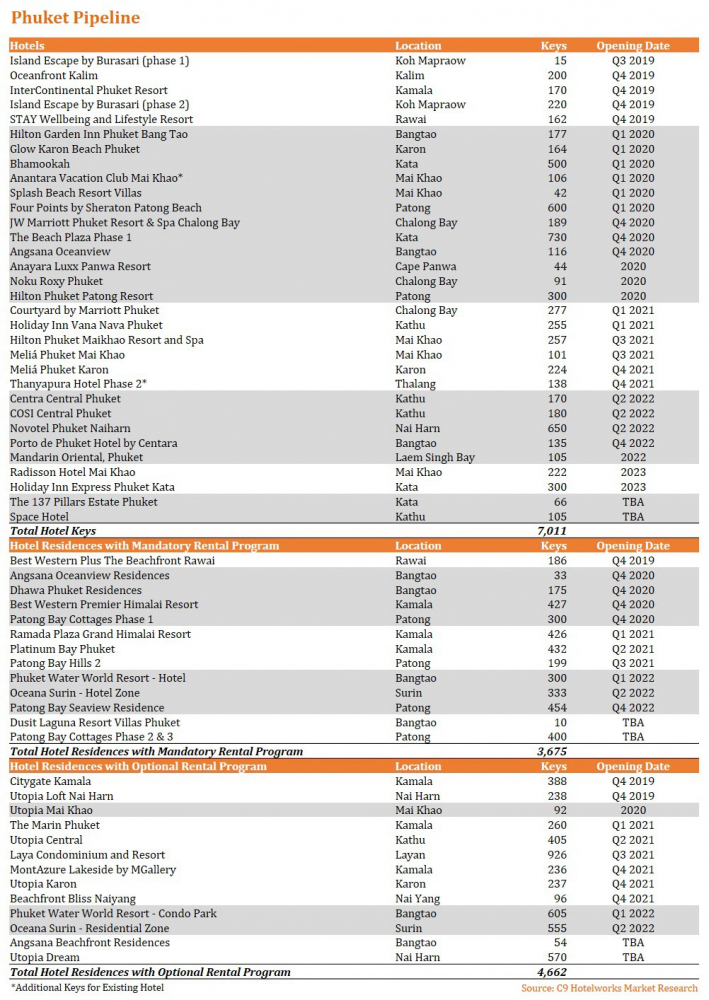
New research from consulting group C9 Hotelworks in its “Phuket Hotel Market Update Mid-Year Edition” has revealed a development pipeline of 15,348 rooms set to enter the market over the next five years, which represents an 18-per-cent push in total supply.

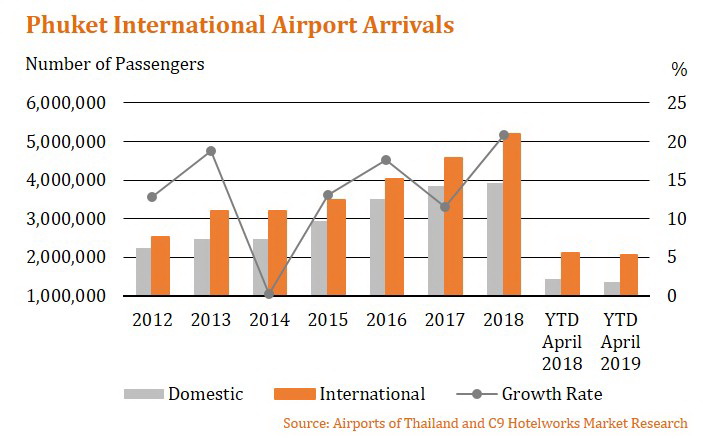
During the first four months of 2019 – high season – year-on-year international passenger arrivals at Phuket Airport slipped by 3 per cent, while the domestic segment was down 6 per cent.

The first half of 2018 had been a record-setting tourism period, with the succeeding six months experiencing a sharp decline due to the retraction of the Mainland China market.

Mainland China remains at the forefront of any discussion about Phuket and the segment remains volatile, with a 19-per-cent decrease registered this year from January through May.

Russian arrivals have yet to fully recover.

On the upside, fast-growing India tripled its tourism-arrival trajectory during the same period versus 2018.

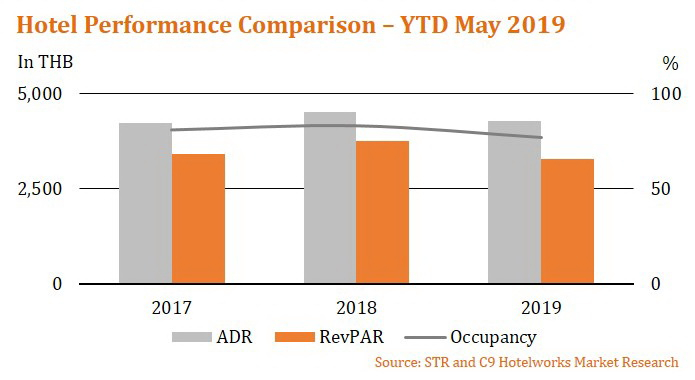
Hotel performance has mirrored the current trend. Data reflect a 12-per-cent retraction of RevPAR, driven largely by lower market-wide occupancy.

While May and September are the two lowest months for Phuket hotels, July and August are projected to experience boosts in occupancy. But the reality remains that non-high season attracts significantly lower room rates and this factor will undoubtedly suppress overall rate growth during the year.

The C9 Hotelworks report also highlights the growing influence of hotel-branded residences on the Phuket accommodation market.

More than 50 per cent of the incoming pipeline – 8,337 units – is being developed. The majority of this is condominiums, with many being affiliated with international hotel groups via management or franchise agreements.

Despite the drop in Chinese tourists, a number of Mainland real estate conglomerates have entered the island property sector.

Summarising Phuket’s forecasted tourism market conditions, C9 Hotelworks’ view is that, with the development of the new Greater Phuket airport by AoT in Southern Phang Nga, the long-term forecast remains positive.

It’s probable that the current hotel sector will experience a cycle similar to what Bali saw between 2014 and 2018 and that new supply will eventually be absorbed on a medium-term basis. But in the shorter term, demand remains a key risk factor impacting operators and owners.

Amari Pattaya is reborn, with dramatic changes

ศาสตร์เกษตรดินปุ๋ย : ขอบคุณแหล่งข้อมูล : หนังสือพิมพ์ The Nation

https://www.nationthailand.com/business/30372936

Amari Pattaya is reborn, with dramatic changes

Jul 14. 2019
By THE NATION

654 Viewed

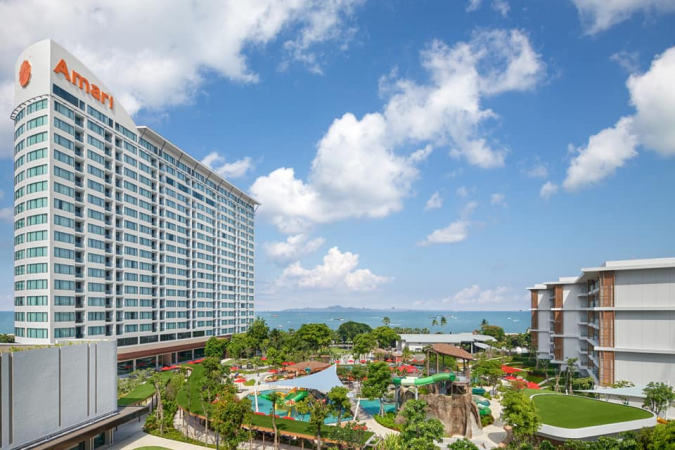
Amari Pattaya’s redevelopment programme is complete, with the unveiling of new accommodation in two distinct buildings – Amari Tower and Amari Suites.

They have extensive free-form swimming pools with a treehouse-themed slide and aqua waterpark, kids’ club with animation team, restaurants, ballrooms, meeting facilities, fitness centre and spa.

Dramatic changes have taken place to the entire property, which has transformed the legendary hotel into a new paradise along the northern end of Pattaya Bay.

New stylish rooms and suites are offered in two buildings: Amari Tower and Amari Suites. There are 297 refurbished guest rooms and suites, including the 19th floor executive lounge in Amari Tower, just steps away from the beach. The Amari Suites, tucked away in an exclusive building, offers a collection of 49 one- and two-bedroom suites, perfect for families and friends travelling together, the company said.

All suites offer ocean views, a dedicated living area with large dining space as well as furnished balconies. The suites are especially suitable for both short and longer stays.

New, inspired dining experiences with multiple cuisine options including Thai, Asian, Indian, Italian, Chinese, among international fare are on offer at Amaya Food Gallery. Aqua Eatery & Bar is another new dining venue for guests to enjoy poolside cool breezes, refreshing cocktails and a diverse menu of informal selections, the company added.

With almost 50 years of experience hosting large-scale events, the hotel’s all-new facilities complement its talented meeting and event specialists. Its flexible venue offerings include the newly built pillar-free ballroom, four additional meeting rooms in Amari Tower, and the Beach Lawn, Amari Pattaya said.

At the newly refurbished Breeze Spa, the treatments are both smart and fun, focusing on boosting energy and allowing guests to simply enjoy the spa experience. Amari Pattaya is located at the northern end of Pattaya Beach, less than 90 minutes by car from Suvarnabhumi Airport.

Finance minister mulls bridging gap between personal and corporate tax

ศาสตร์เกษตรดินปุ๋ย : ขอบคุณแหล่งข้อมูล : หนังสือพิมพ์ The Nation

https://www.nationthailand.com/business/30372932

Finance minister mulls bridging gap between personal and corporate tax

Jul 14. 2019
By THE NATION

580 Viewed

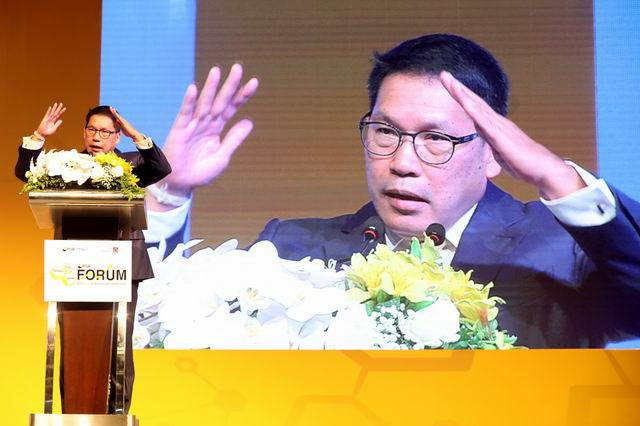
The incoming Finance Minister Uttama Savanayana is considering the restructuring of personal income tax and bringing it in line with corporate income tax in order to bridge the gap between the two taxes.

He said this at the sidelines of the “MAI Forum 2019” co-hosted by the Market for Alternative Investment (MAI) and MAI Listed Company Association in Bangkok on Saturday.

Currently, the maximum level of personal income tax is 35 per cent, while corporate income tax is 20 per cent. The minister said he will consider the option carefully, including a possible impact this plan may have on state revenue.

He added that if the government launches any stimulus packages during this time, they will have to be customised to serve specific targeted groups.

He has also called on MAI to seek ways to have small businesses listed in the MAI index.

Vietnam plans to become leading digital economy in Asean by 2030

ศาสตร์เกษตรดินปุ๋ย : ขอบคุณแหล่งข้อมูล : หนังสือพิมพ์ The Nation

https://www.nationthailand.com/business/30372920

Vietnam plans to become leading digital economy in Asean by 2030

Jul 13. 2019
( Photo cafebiz.vn)

( Photo cafebiz.vn)
By Viet Nam News
Asia News Network
Hanoi

532 Viewed

Vietnam aims to become the leading digital country and economy in the Asean region by 2030 and allow testing of new technologies in the digital economy.

This is one of the proposals in a draft project on national digital transformation by Vietnam’s Authority of Information Technology Application (AITA) under its Ministry of Information and Communications.

The ministry has assigned AITA to develop the project and submit it for approval in November. The project aims to realise orientations and policies of the government to develop the economy based on digital technologies.

Speaking at a conference this week to review MIC’s activities in the first half of the year, AITA director Nguyen Thanh Phuc said that all people would be able to participate in the digital economy.

Phuc said the main targets would include improving the competitiveness of the economy, with the average growth rate of the digital economy reaching 20 per cent a year, and labour productivity growth of 7 to 10 per cent by 2030.

The project also aims to take Vietnam into the global top 20 and Asean top three in terms of the global competitiveness index, as well as building a transparent and effective government to be in the world’s top 50 in terms of e-government.

In addition, the project plans to have everyone using mobile payment services by 2030.

“Electronic identification will be widely recognised and used by the State to promote not only transactions between people and governmental agencies but also other transactions in the digital economy,” Phuc said.

The draft expects all Vietnamese people to be equipped with skills to be safe in cyberspace.

The AITA has proposed that the digital transformation road map in Vietnam would be implemented in three phases: the country would digitalise industrial sectors and implement digital transformation of the economy, society and State agencies from 2020-22; it would focus on digital transformation to improve labour productivity, creating new growth momentum and competitiveness from 2023-25; it would move towards the development of a comprehensive digital economy and society from 2026-30.

The AITA said Vietnam had paid attention to the application and development of information and communications technology. However, digital transformation had been ignored, thus breakthroughs in terms of models, production processes and products based on data and digital technologies had been lacking.

“For a successful digital transformation, all social components need investment, especially in resolving current shortcomings,” he added.

Network security

The Ministry of Information and Communications stated that Vietnam needed to develop a safe network security ecosystem. There would be some 100 network security businesses in the next two years while 50 network security products and services by Vietnamese firms would be widely used. The number of specialists in the sector would reach some 1,000 people and bring the market to US$1 billion to $2 billion by 2020.

Nguyen Huy Dung, director of the ministry’s Authority of Information Security, said that though Vietnam had a modest position in the world’s network security map, the country still had opportunities to develop.

To realise the target, Vietnam’s network security products and services must be widely used around the world. There should be reputable Vietnamese experts working in the world’s leading corporations on network security. Security experts should return to Viet Nam to start a business, Dung said.

Each organisation and business should allocate at least 10 per cent of total spending to IT to ensure network security. They should prioritise local products and services.

Statistics from the ministry show that the network security sector has seen strong development. In the first half of the year, there were 20 firms granted business registration on trading of network security products and services.

The artist of customer satisfaction

ศาสตร์เกษตรดินปุ๋ย : ขอบคุณแหล่งข้อมูล : หนังสือพิมพ์ The Nation

https://www.nationthailand.com/business/30372882

The artist of customer satisfaction

Jul 13. 2019
Pete Chemsripong

Pete Chemsripong
By PHUWIT LIMVIPHUWAT
THE NATION

484 Viewed

Software guru Pete Chemsripong explains how art and technology can synergise to transform user experience, before sharing his vision to revolutionise business practices in Thailand with the ‘concept to cash’ process

With over 10 years of experience in visual design and front-end development, Pete Chemsripong, general manager of ThoughtWorks (Thailand), is convinced that the key to boosting customers’ user experience lies in melding technology with art.

Pete calls his global tech-consulting firm a “thought leader” in using technology to solve core business issues. His current mission is to employ the “concept to cash” process to help revolutionise traditional business practices in Thailand.

Technology certainly wasn’t his first love, though.

“When I was young, all I wanted to do was draw cartoons. I was determined to make a living from drawing cartoons despite my family urging me to use my artistic skills to pursue a career in architecture,” Pete said during an interview with The Nation.

A move from his home province of Phitsanulok came when Pete’s mother got a scholarship to study in Australia, which also covered Pete’s education.

His passion for illustration eventually saw him collect a Bachelor’s degree in Visual Communication from the University of Newcastle, then a Master’s in Design Science from Sydney University.

After graduating he pursued his artistic passion by opening a small drawing school. Then came the fateful mishap that eventually led him to ThoughtWorks.

“After teaching arts to children for a while, my career choice of illustration was no longer viable after I badly injured my hand,” he said. “This was when I turned to technology and started to find jobs as a visual designer.”

Pete worked for marketing agencies as a web designer for several years before joining ThoughtWorks’ Sydney team in 2012 as an Experience Design consultant. He moved on to help build the Brisbane office in 2013 and then set up the ThoughtWorks Singapore design team in 2014. Since 2016, Pete has been working on user-experience tech as part of the Bangkok office.

“At ThoughtWorks Sydney I realised that when you put art and technology together, the work that you create has the potential to transform the user experience of others,” he recalled.

Pete and his ThoughtWorks colleagues have worked closely with industry leaders to improve their software operations in Thailand, including leading firms in e-commerce, financial services and aviation.

The artist turned technologist also promotes the cutting-edge “concept to cash” business process to his clients.

“Competitive advantage now lies in a firm’s ability to innovate and adapt to technological change,” Pete continued. “Traditional business models where operations are split into dislocated departments can no longer cope with the pace of change.”

For instance, firms normally take 24 months to develop a new product and launch it on the market, he explained,

By that time, the product may already be out of date because a competitor will have released a new product in the interim.

The “concept to cash” process establishes close links between different departments of an organisation to foster rapid generation and evaluation of ideas that can be quickly turned into profit. ThoughtWorks uses this approach to develop efficient end-to-end software solutions for its clients, he said.

As a thought leader in design technology, Pete is also a co-founder of the User Experience (UX) Community, a non-profit organisation focused on empowering the local community with better design. The UX community has grown from modest beginnings.

“It started out as a few visual designers meeting up for lunch. We agreed to share our experiences and discuss issues that visual designers in Thailand face,” he recounted.

“Gradually, our lunch meetings grew larger and we started to organise conferences and invited global leaders in visual design as guest speakers. At our last conference, we had up to 600 attendees,” he said.

The UX Community is now sponsored by various firms in Thailand, including Krungthai Innovation Lab, Kasikorn Business-Technology Group and even ThoughtWorks.

Having upskilled from a traditional illustrator to a visual designer, Pete understands the process of digital transformation at a very personal level. He has also nurtured growth of the country’s top software consulting firm and visual design community.

With those glittering achievements behind him, the future looks bright both for himself and the companies he deals with.

Pete’s vision of employing innovative business practices and technology to transform traditional business operations also bodes well for the country. Thailand can only benefit from more ambitious “thought leaders” like Pete.

Chia Tai expands seed business into India, Philippines

ศาสตร์เกษตรดินปุ๋ย : ขอบคุณแหล่งข้อมูล : หนังสือพิมพ์ The Nation

https://www.nationthailand.com/business/30372905

Chia Tai expands seed business into India, Philippines

Jul 12. 2019
Manas Chiaravanond, chief executive officer of Chia Tai

Manas Chiaravanond, chief executive officer of Chia Tai
By THE NATION

381 Viewed

Chia Tai, a Thai integrated agricultural company, is expanding its seed business unit in Asia by launching new brands and opening new offices in India and the Philippines. Under the plan, the company wants to raise standards in the agricultural industry.

Manas Chiaravanond, chief executive officer of Chia Tai, said: “India and the Philippines are markets with high growth potential. Expanding the seed business unit to these markets is considered a major step in building on our success in the Asian region. We aim to provide quality products and services that are in line with market demands.

“With our commitment to ‘Growing Better, Together’, we are ready to pass on our agricultural innovations and expertise and play leading a role in the efforts to improve the quality of life of farmers as we continue to move closer to our goal of being a leader in the vegetable and fruit business in Asia.”

To mark the brand launch and the opening of its new office in Bengaluru, Chia Tai India has selected varieties of seeds beneficial to Indian farmers as well as developed hybrid varieties. The company also hosted its first field day at Kannamangala in Bengaluru where dealers and farmers from across India were given the chance to explore a demonstration plot and see the varieties of crops launched on the Indian market, such as tomatoes, hot peppers, watermelons, melons, cucumbers and sweet corn, the latter from the company’s latest breeding development program.

Apart from expanding its seed unit to India, the company has also expanded its business to the Philippines by launching a new brand and opening an office in Fairlane, Tarlac City. The company marked its entry to the new market by hosting its first field day in an area of 3,000 square metres at Balibago station in Tarlac City. Outstanding varieties, such as sweet and waxy corn, watermelons, tomatoes, and bitter gourds gained a lot of interest from farmers, collectors and dealers. These varieties can provide good yields and have high tolerance to pests, diseases and unstable weather conditions. Experts from the company also gave presentations at the field day activity to provide knowledge on the products, techniques, and the cultivating methods that best respond to market demand.

“The company firmly believes that our seeds and knowledge will help create value for farmers, customers and communities. Since its founding, the company has been determined to develop quality seeds that bring success to both famers and consumers. Our company will continue looking for opportunities to develop new products and innovations for India, the Philippines, and other countries around the world in the future to meet new challenges in the agricultural industry,” said Manas.

Thanachart seeks impact from video ad highlighting personal progress

ศาสตร์เกษตรดินปุ๋ย : ขอบคุณแหล่งข้อมูล : หนังสือพิมพ์ The Nation

https://www.nationthailand.com/business/30372899

Thanachart seeks impact from video ad highlighting personal progress

Jul 12. 2019
Employees of Thanachart Bank put on a show of strength to mark the launch of the company’s new video ad.

Employees of Thanachart Bank put on a show of strength to mark the launch of the company’s new video ad.
By THE NATION

378 Viewed

Thanachart Bank has made a video advertisement that was shown on 3,000 screens across the country.

The ad conveys the message of “Your Everyday Progress”, and was directed by Tor Phenomena, an advertising film director. The ad showcases Thanachart Bank workers’ efforts to facilitate customers’ progress toward their goals.

The video was launched on July 11 as viewers watched a new video ad from the bank, entitled “Progress”. This aired for an hour on 3,000 LED screens nationwide in main department stores such as Siam Paragon, The Emporium, The EmQuartier and outdoor video screens at major intersections in every province, in addition to screen at BTS and MRT stations.

The concept “Your Everyday Progress” is to reinforce the Thanachart Bank’s mission to develop and empower customers to make progress” and achieve their goals, with products and services catered to customer needs’ throughout the financial journey.

Praphan anupongongarch, chief executive officer and president of Thanachart Bank Public Company Limited, said that the era of technological advancements has provided customers with greater convenience and speed for access to financial products and services.

“We believe that a little step every day will lead to a big step forward. Thanachart Bank’s primary step today is a determined push to make customers progress every day and help them reach their goal with the fullest ability from our products, services, and staff,” said Praphan.

The film “Progress,” directed by commercial film director, Thanonchai Sornsriwichai aka Tor Phenomena, delivers Thanachart Bank’s message of “Your Everyday Progress” using real insights and situations in which Thanachart Bank has helped customers.

“The ad tells an emotive story signifying human life and empathy that necessitates a push to conquer hardships and move forward,” Tor said.

“The most extraordinary thing about this production is Thanachart Bank’s courage to take a different approach by welcoming new perspectives and delivering strong messages of employees’ solemnity at its highest. The bank worker’s character looks tough and unfriendly, in in a way that other brands don’t dare to go for. The reason behind is that this person has been with you throughout life’s stages and always be supportive but at the same time, can pick you up and make a strong push to get you started. Every step taken is taken together in the journey. Small progress every day will be lead us to success.”

Jetro Bangkok names Taketani as new chief

ศาสตร์เกษตรดินปุ๋ย : ขอบคุณแหล่งข้อมูล : หนังสือพิมพ์ The Nation

https://www.nationthailand.com/business/30372896

Jetro Bangkok names Taketani as new chief

Jul 12. 2019
Atsushi Taketani brings a scholarly background to his role as president of Jetro Bangkok.

Atsushi Taketani brings a scholarly background to his role as president of Jetro Bangkok.
By The Nation

327 Viewed

Jetro Bangkok has named Atsushi Taketani as president, replacing Hiroki Mitsumata, who is returning to Japan.

Taketani said he recognises the company’s roles to advance the bilateral economic relationship on trade and investment between Thailand and Japan.

In the regional context, the company is making concerted efforts with Thailand to expand the cooperation and partnership into neighbouring countries for sustainable growth.

Taketani said the company would  promote more startups and innovation activities and to upgrade industries in line with the Thai government’s economic policies under Thailand 4.0.

He will focus on enhancing more cross-border connectivity within the region, as Thailand is a gateway to neighbouring countries.

Taketani joined the Ministry of International Trade and Industry (MITI, now known as  METI) in Japan in 1990. In his  almost 30 years at METI, he has served in many positions related to policy areas such as the economy, industry, energy and environment, including as the  director of the Global Environment Affairs Office in 2008, director of Electric Device Industry Strategy Office in 2009, director of the gas market division in the  Agency for Natural Resources and Energy (ANRE) in 2012 and director of the petroleum refining and reserves division in 2013. Prior to coming to Jetro Bangkok, he was deputy commissioner for international affairs of ANRE, in METI.

In 2006 he was counsel for the economy, trade and industry at the Japanese embassy in the US and in 2015, he was director general of the planning department at the weekend Jetro head office in Japan.

Taketani earned a bachelor’s degree in laws from University of Tokyo in 1990 and his master’s degree in political science from Stanford University in 1997.