August 10, 2022 – Suphachai Chearavanont, Chief Executive Officer of Charoen Pokphand Group (C.P. Group), strongly believes that climate change, particularly the increase in temperature, is an urgent matter in which every stakeholder must take action.
To tackle global warming, C.P. Group and its affiliates have undertaken a number of initiatives that includes circular economy, clean energy, water resource management, ecosystems and biodiversity protection, and sustainable supply chains. The aim is to achieve zero waste and carbon neutrality within 2030, and net zero emissions by 2050. As public awareness of this issue is critical, the #2MetersToSaveEarth campaign was launched to help Thai people and employees of C.P. Group and its affiliates acknowledge the effects of climate change. The general public, in particular the younger generation, can help tackle global warming by personally taking responsibility. Panipak “Tennis” Wongpattanakit, Thailand’s sporting hero, has been chosen as brand ambassador and will help drive this mission.
“The only way to create a sustainable planet is to cultivate a new generation of environmentally aware citizens of the younger generation and provide them with education and know-how in sustainable development. They are vital in driving change for society, the country, and the world as the threat of climate change is real and it is affecting all of us right now. The evidence clearly shows that ecosystems on which humankind depends upon is vulnerable. We’ve witnessed the impacts on agriculture, tourism, and health in Thailand, in this region and around the world. It’s time everyone lent a hand to take care of our surroundings and make the planet a better place,” the CEO said.
As the brand ambassador and the representative of the new generation, Panipak “Tennis” Wongpattanakit, the Olympic gold medallist in taekwondo, notes that global warming is not only a big problem for the planet but also for all humankind. However, we can start saving the earth by taking care of the two-meter circle around us. It can be any simple action, from recycling used plastics, reducing waste, opting for clean energy by using a bicycle instead of a car to increasing green spaces by planting more trees. Everyone is invited to fight against global warming. If everyone lends a hand and takes care of the two-meter space around them, the dots will be connected, and the world will be a better place.
The people of Thailand and employees of C.P. Group are invited to take part in #2MetersToSaveEarth by taking a photo or video clip of themselves stretching their arms to their sides, signifying the two-meter space around them that they are using to save the earth. The action can be planting a tree or recycling used plastics. The photo or clip should then be shared on social media. This is how we can start to save the earth.
Citibank recommends diversifying investments to handle market volatility and increasing interest rates.
Bangkok, August 9, 2022 – Citibank recently shares global economy forecasts for the second half of 2022 as the rest of the world continues to face challenges. The two powerhouses also face difficulties: the US local economy slows down due to many factors, while China, with gradual recovery, continues to be under pressure from its Zero COVID policy. For Thailand’s economy in 2022, the GDP is expected to be 3.5% thanks to the return of tourism. It is also expected that the Monetary Policy Committee will raise interest rates by 25bps three times in this year and next year to support the recovering economy in Thailand. As a result, the investment market continues to be challenging. For the second half of the year, recommended investment options are reducing cash on hand by investing in bonds that will potentially offer better returns, investing in long-term industry leaders to reap benefits from well-performing industries such as clean energy, electric vehicles, digitalization, fintech, and healthcare and medicine. Another option is to invest outside main assets to diversify and protect portfolio in the long term, while keeping a close eye on global affairs.
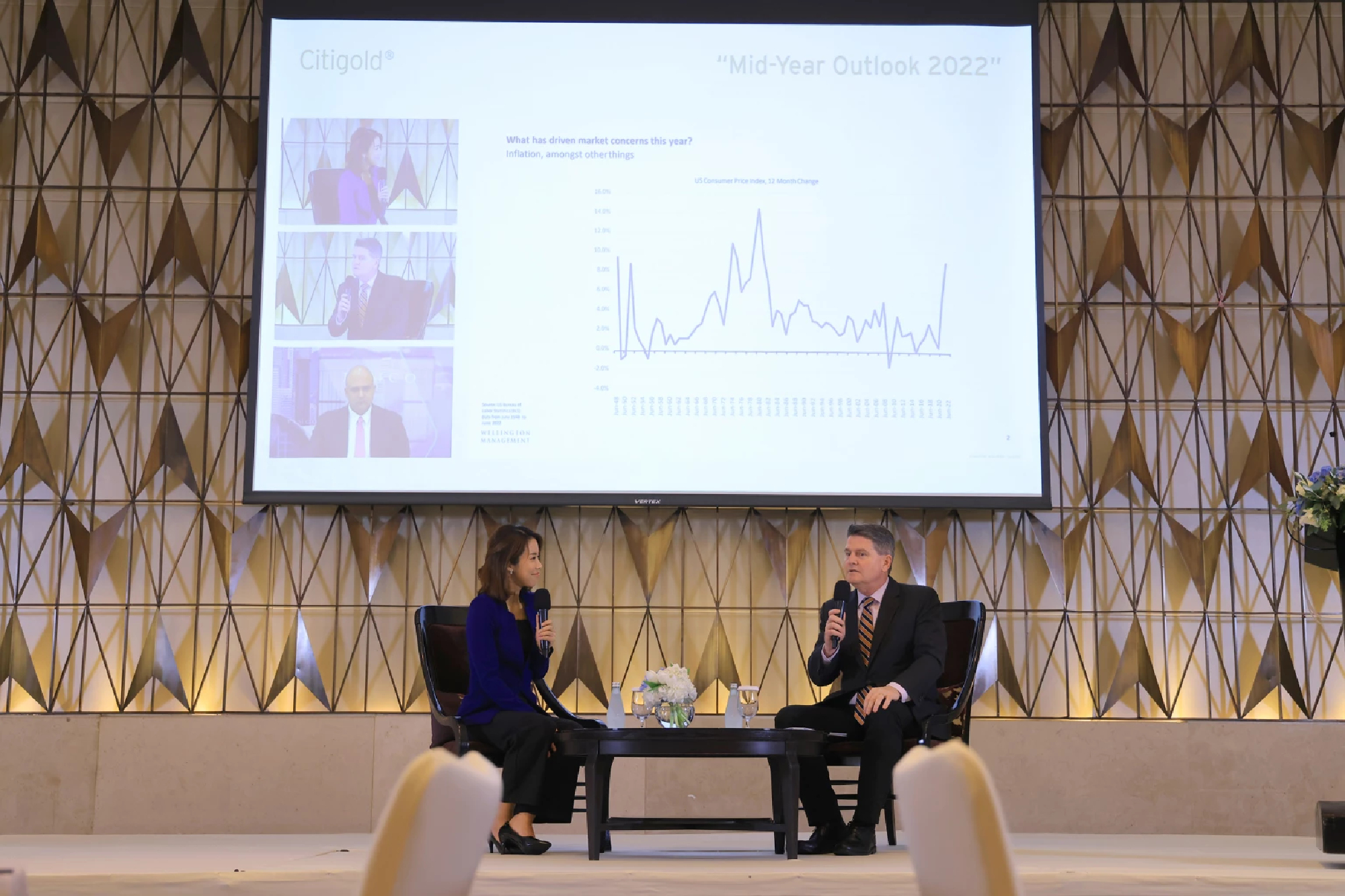
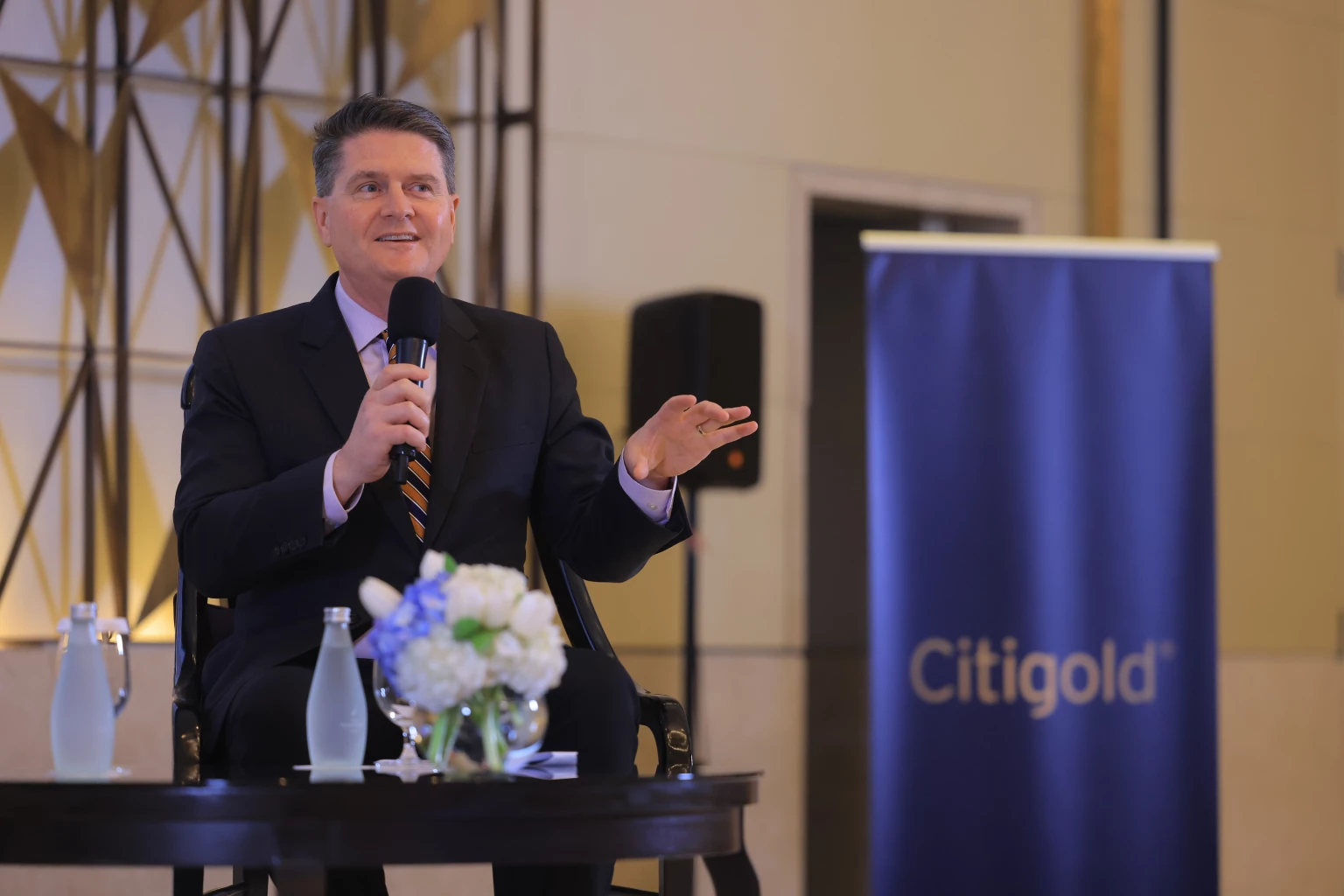
Mr. Ken Peng, Head of Investment Strategy, Citi Global Wealth for Asia Pacific, said that in the second half of the year, inflation will continue to be high in many countries. There will still be a supply chain imbalance, and stricter finance and banking policies in different countries. Oil prices concern will continue due to the ongoing issues between Russia and Ukraine. Global volatility will remain as the US will face an economic downturn due to ongoing inflation, unemployment, and wage increase. At the same time, consumer confidence index drops, especially in consumer products, real estate and services, except for natural gases. Meanwhile, as the Fed proactively increases interest rates to curb inflation, Citi analysts believe that the inflation situation in the US will take about 10 years to reach the same point as before the Russia-Ukraine conflict began. China, on the other hand, begins to see the recovery of its economy, but the Zero COVID policy puts pressure on its growth. The PMI in the service sector has increased. The Chinese government has announced various measures to stimulate the recovery of the investment market, especially in real estate, as it is an important factor that drives the growth of the country’s economy.
Therefore, the investment market will continue to face challenges, such as volatility of stock markets and government bonds. Citi analysts remain optimistic about high-quality bonds that will benefit from current market situation, such as the rough doubling in the US government bond yields which has restored higher quality fixed income to a more appropriate yield level for the first time in several years. However, there are other pressure factors from the market, such as uncertainties amid geopolitical tensions. Investors should therefore closely monitor international affairs and diversify their investments to protect their portfolio in the long term. Recommended investment strategies for the second half of the year are:
• Bonds are Back! – Reduce cash on hand by investing in bonds that offer promising returns such as treasury bills and 10-year US treasuries. • Long term leaders –Investment in long-term industry leaders in high-quality sectors with steady returns and high potential for long-term growth, particularly options that offer regular and growing dividends, such as clean energy, electric vehicles, digitalization, fintech, healthcare and medicine, and technology related to cyber security. • Alternative Investments in Uncertain Times – Consider alternative investments outside main assets as the market is volatile. This will help prevent long-term risks. Another option to consider is equity instruments and private equity.
Ms. Nalin Chutchotitham, Investment Advisor of Citi Thailand, said that Citi has raised tourist arrival expectations for Thailand in the second half of 2022 and in 2023 as arrivals proved stronger than expected after travel restrictions were removed, and neighboring countries have reopened their borders once again. Current account is likely to remain in deficit in 2022 due to high commodity prices and freight payments, but a high surplus is expected in 2023 from stronger tourism revenues. Citi has revised down GDP forecasts for 2022 to 3.5% (from 3.6%) and for 2023 to 4.5% (from 4.8%) due to expectation of slowdown in government spending and global growth. Citi also maintains its expectation for three 25bps policy rate hikes by the Monetary Policy Committee – once in the second half of 2022 and twice in the first half of 2023 as previously forecast.
Ms. Jane O’Charoen, Retail Banking Head, Citi Thailand, said that in the second half of 2022, Citibank has prepared new funds to offer to Citigold and Citi Priority customers, leading to investment growth. Recently, it has partnered with a leading asset management company in the US, Wellington Management, to offer two new funds: Wellington Global Health Care Equity Fund which invests in the equity securities of healthcare companies worldwide, and Wellington Asia Technology Fund which invests in the best-run Asian companies powering the exponential growth of the multi-year tech cycle. Both funds focus on up-and-coming investment trends.
Additionally, Citibank also offers international investment options with more than 200 funds to choose from with five local asset management partners and 13 foreign asset management partners, offering diverse types of funds in terms of assets and regions. At the same time, Citibank facilitates its customers by taking care of their accounts, offering consultation and ad services on investment transactions via phone, and making wealth management more convenient with the Citi Mobile® App. Customers can sell and buy funds directly, monitor their investment portfolio, transfer money via PromptPay to other banks, or transfer money overseas conveniently. They can also open an account for foreign currencies 24 hours a day.
Citgold customers can get special fund trading privileges on the Citi Mobile® App. Enjoy 5% or up to 150,000 baht rebates on fees when buying participating funds at the minimum of 100,000 baht, and get up to 150,000 baht of credit rewards when making a new investment in participating funds. New customers can get up to 15,8000 baht of credit rewards when opening a new account and making transactions using their Citi credit card. Get 2% monthly interest rate for three months for a fixed deposit account. These offers are valid from July 1, 2022, to September 30, 2022. Those who are interested in Citigold can contact Citibank Thailand at 0-2081-0999 or www.citibank.co.th/th/citigold.
Citibank Thailand has recently organized “Citigold Mid-Year Outlook 2022” to share economic and investment trends for the second half of 2022. For more details, contact Citibank Thailand or visit www.citibank.co.th.
SET-listed fintech and payment machine operator Sabuy Technology (SABTECH) has announced a 657-per-cent rise in second-quarter net profit this year to 356 million baht.
The company also reported second-quarter revenue of 756 million baht, up 95 per cent.
Sabuy this year unveiled its strategy to become a fintech firm by expanding its four core businesses – payments, merchandising, business solutions, and financial services.
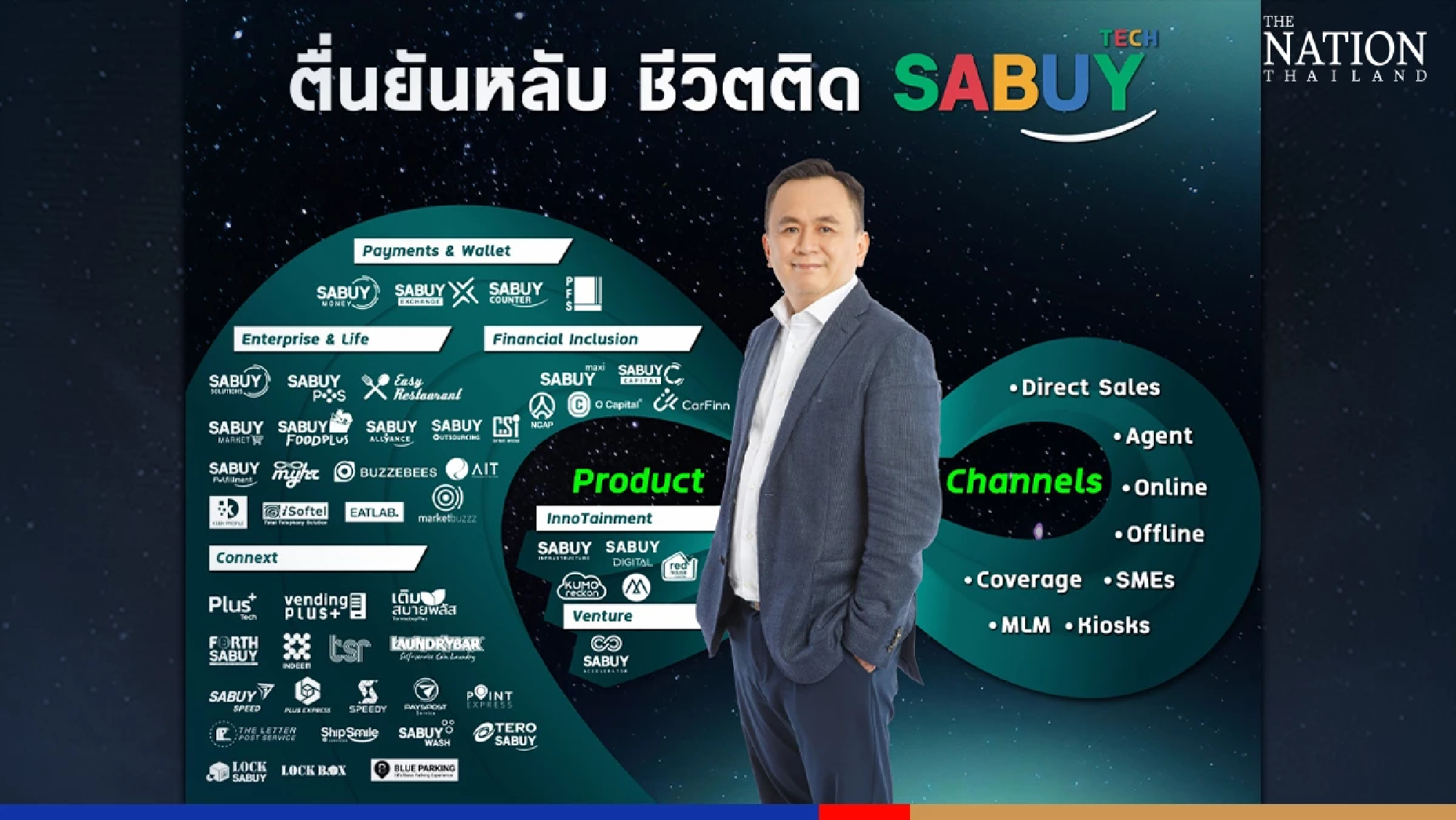
CEO Chookiat Rujanapornpaje said the company is developing technology and lifestyle-related services for customers under the concept “Sabuy Life from Wake-up to Sleep”.
Sabuy is targeting total revenue of 5 billion baht this year.
“The company has also set its revenue target for next year at 20 billion baht,” Chookiat added.
He said the company is developing its workforce, applying technologies and innovations, improving workflow and managing risks to maintain sustainable growth in the long term.
“Sabuy has continued to expand business constantly along with implementing its strategy to maintain significant growth,” he said.
Wirach Morakotkarn, chief of commerce & investment, said Sabuy planned to increase customer touchpoints nationwide to 500,000 within this year.
Sabuy will also invest in a media entertainment company to boost the potential of its InnoTainment (innovative media) business, expecting to announce the results within a couple of weeks.
Sabuy develops all-in-one business platforms offering consumers health, wealth, work and recreation services.
The company operates six main business groups: Payments and Wallet, Enterprise & Life, Connext, Financial Inclusion, InnoTainment, and Venture – an investment business to support sustainable growth.
The new president of the Thai Startup Trade Association has unveiled his mission to transform Thailand from a nation of “technology users” to one of “technology makers” that no one can ignore.
Mickey Srisavat shared his ambitious vision and two-year mission as Thai Startup’s new leader at a press conference on Tuesday.
He said that although Thailand is well regarded for its digital infrastructure, the country lags behind neighbouring countries in terms of technology creation and development.
Mickey revealed that his mission to transform the country from a nation of tech users to makers has three elements: collaborations between start-ups, engaging various partners, and making a positive impact.
Working collaboratively would help boost start-ups with skills to improve their business while also connecting them to funding via venture capital.
Start-ups in their early stages needed as much support as possible to survive and flourish to become potential unicorns, he added.
However, recognising that his vision will not be accomplished during his presidency, he hopes to at least improve the image of Thai start-ups from low-quality to competitive excellence.
The Thai Startup Trade Association is a non-profit organisation founded in 2014 by a group of Thai tech entrepreneurs. Its purpose is to encourage Thai start-ups to grow and to create a complete ecosystem in which members can share ideas that will help the country develop a new tech industry. The association currently has 108 start-up members.
After holding the interest rate for more than two years during the pandemic, the Monetary Policy Committee (MPC) on Wednesday decided to raise the policy rate by 25 basis points to 0.75 per cent.
MPC secretary Piti Disyatat said after the meeting that six members voted to raise the policy rate by 25 basis points, while one member voted for a 50 basis points hike.
He said the economy was likely to recover gradually, thanks to an increase in foreign visitors after the easing of travel restrictions.
He added that private sector consumption was also likely to recover, due to the improvement in the labour market and household income.
He expected Thailand’s economy to reach the pre-Covid-19 level by the end of this year.
“The committee concluded that a loose monetary policy to support the economy amid the Covid-19 crisis has become less necessary, as the economy is likely to recover,” he said.
However, he added that the committee would follow up on rising production cost and the impact of the cost of living on Thailand’s economic recovery.
He expected inflation to remain high this year before declining next year.
Piti added that the country’s financial system is now stable, as commercial banks have strong capital and reserves, while the business and household sectors’ ability to repay debt has improved in line with economic recovery.
However, he said measures to relieve the debt burden are necessary for some vulnerable groups, especially small and medium-sized enterprises and low-income households.
He added that the financial markets would be vulnerable to high volatility, as the baht has weakened against the dollar amid uncertainty about a global economic slowdown and the monetary policy direction of the US Federal Reserve.
“The committee agreed that raising the policy interest rate to meet economic expansion in the long term should be done gradually, in line with economic context and inflation,” he concluded.
The Federation of Thai Industries (FTI) has urged Thai entrepreneurs, particularly those in the automotive, automation and electronics sectors, to prepare a Plan B as chip shortages loom.
FTI chairman Kriengkrai Thiennukul issued the warning during the Thailand Industry Sentiment Index (TISI) monthly press conference for July on Wednesday.
He warned that if geopolitical tensions between China and Taiwan prolonged for a few months, semiconductors or chips, which are critical components in many high-tech industries, will be in short supply.
Currently, no industry is affected because they all have enough chips in their inventories to last another 2-3 months. However, if China and Taiwan continue their live-fire military drills for an extended period of time, the supply shortage would be serious, he said.
Besides being well-prepared, Thailand should seize the opportunity to become a chip manufacturer, he added.
Taiwan’s TSMC is the world’s largest semiconductor-maker, accounting for 60 per cent of total market share. However, amid the recent tensions, some news reports claim that the company is considering relocating its chip factory to other countries, such as Singapore and the United States.
“I heard that Singapore is approaching them to grab this opportunity, while the US has just signalled its readiness by approving the Chips and Science Act,” said Kriengkrai.
He explained that Thailand’s main industry is still old technology such as discs, so now is the time for the country to grab this opportunity to embrace change.
Meanwhile, the government has already established the Eastern Economic Corridor (EEC) project to promote the development of new high-tech industries. Hence, Thailand has the potential to be Taiwan’s second or third choice.
Kriegnkrai also pleaded with the government to keep electricity prices under control so that Thai industries can remain competitive. If the government must raise the price, he believes it should take into account the current market situation.
The latest Thailand Industry Sentiment Index (TISI) for July shows an increase to 89.0 over June. The index has risen for two consecutive months. The index numbers show that overall purchase orders, sales, volume of production and turnover have risen.
The manufacturing sector expanded as a result of increasing demand for industrial products, both durable and consumer goods, in the domestic and export markets, especially the US, China, Japan and India among others. Besides, the easing of China’s lockdown restrictions in major cities has benefited Thai exports.
In addition, the reopening measures and the cancellation of the Thailand Pass system from July 1, along with the depreciation of the baht, have helped the Thai economy and tourism sector gradually recover. Moreover, higher incomes of the agricultural sector have led to an increase in purchasing power in the region.
The survey was conducted in July, covering 1,238 enterprises from 45 industry clubs nationwide. It unveiled factors of concern such as global economy (72.2 per cent), domestic politics (40.3 per cent), loan interest rates (35.5 per cent), while fuel prices (80.7 per cent), domestic economy (51.8 per cent), Covid-19 situation (50.1 per cent), and THB/USD exchange rates in exporters’ view (32.0 per cent) have helped ease enterprises’ concerns.
The baht opened at 35.36 to the US dollar on Wednesday, strengthening from Tuesday’s close of 35.45.
The currency is expected to move between 35.25 and 35.45 during the day, Krungthai Bank market strategist Poon Panichpibool predicted.
He said the baht was likely to fluctuate and swing in a wide range amid two important factors that could affect the currency market today, Wednesday – the Bank of Thailand’s Monetary Policy Committee (MPC) meeting and US inflation results.
Poon believes the baht might strengthen if some MPC members decide to increase the policy interest rate by 0.5 per cent. The market may feel that the committee might increase the interest rate more in their next meeting, which could lead to foreign investors purchasing Thai stocks and short-term bonds.
However, the baht could fluctuate and weaken, especially if the dollar strengthens. If the US inflation rate is higher than expected, investors might feel the US Federal Reserve would continue to increase the interest rate until it can control the situation, Poon said.
The currency market is in a cautious state as investors await core US inflation data, which would influence market opinion about the Fed’s currency policy direction, he added.
Consumer spending on Mother’s Day (August 12) is expected to increase by 9 per cent over 2020, the highest in 10 years, the University of the Thai Chamber of Commerce (UTCC) has estimated.
Thanawat Polvichai, UTCC president and director of the Economic and Business Forecasting Centre, said that the centre had conducted a survey to study the opinion and spending behaviours on Mother’s Day in 2022.
The survey asked 1,288 people from all over the country from July 28 to August 2.
Based on the responses, the centre estimates that spending on Mother’s Day this year will amount to 10.883 billion baht.
The figure was a 9 per cent increase over 2020. The survey was not conducted in 2021 due to the Covid-19 pandemic.
Of the total spending, 10.012 billion baht will be used for various activities while another 870 million baht will be used for tourism.
The number was a reflection of the public perception that the Covid-19 situation was easing, hence they would spend more, which would facilitate economic recovery.
Thanawat said that the estimated spending would be the highest since 2010. It is a reflection that the economy is recovering but slowly as people will take their mothers for a meal, travel, or do other activities.
Thailand’s National Digital Trade Platform (NDTP) will launch next month, its private sector backers announced on Tuesday.
The NDTP will serve as Thailand’s national single platform for import and export procedures, integrating with counterparts in other countries, said Kobsak Duangdee, secretary-general of the Thai Bankers’ Association.
The platform will offer Thai businesses the flexibility required to compete in the digital era of international business, he added.
Rather than submitting the same document to several different government departments and organisations, businesses can make a single submission to the NDTP – which is already connected to the relevant parties.
This would save time and money for businesses and government while also improving ease of doing business in Thailand, which is a key factor in attracting foreign trade and investors, Kobsak said on Tuesday.
Jumrud Sawangsamud, director-general of the Federation of Thai Industries (FTI), said the NDTP platform would be up and running in September and linked with counterparts in Singapore (NTP) and Japan (TradeWaltz).
Results from the NDTP’s soft launch would be presented at November’s Asia-Pacific Economic Cooperation summit in Bangkok so that APEC leaders understand the need for this type of platform, he added.
Jumrud said that as well as simplifying document processes for businesses, NDTP also serves as a data centre that can be used to explore future trade opportunities.
Current Phase 1 testing of the platform by several Thai companies covers three areas. These are commercial documents such as e-purchase orders, e-invoices, and e-packing List; transport documents; and other government and insurance certificates.
The NDTP’s e-documents will be developed according to Trade Facilitation and E-business (UN/CEFACT) standard, said Jumrud.
Kobsak said the platform will go through five stages of development, each providing use-case lessons to improve features and functionality. The completed version will include all parties, including small and medium-sized businesses (SMEs).
But he cautioned that government support was needed to upgrade the Thai business environment.
“Before connecting with foreign trade partners, Thailand must first strengthen itself. To make the platform a reality, we need the government’s support,” Kobsak said.
The NDTP platform would improve business accountability and transparency by converting paper documents to electronic files that can be verified and traced back, he added. Hence, Thai companies would serve as a model for other countries seeking to establish a unified platform and participate in the global era of digital trade.
The high demand for seaside condominium units in Hua Hin town has driven the land price of plots along the beach to as high as 150 million baht per rai (0.6 hectare), an international property consultant said.
Phattarachai Taweewong, research and communications director of Colliers Thailand, said land prices on the Hua Hin seaside in Prachuap Khiri Khan province had reached 150 million baht per rai.
The high land prices had prompted more property developers to develop condominiums in the middle of the town, away from the seaside and the hillsides, Phattarachai said.
He said hillside land prices were about 60,000 baht per square metre and condo buyers were more interested in condos developed there because the unit prices were not too high.
During the past 10 years, 71 condominium projects had been built in Hua Hin, Cha-am in Phetchaburi and Pran Buri in Prachuap Khiri Khan with 29,152 units and total value of 123.7 million baht.
Phattarachai said condominium sales in Hua Hin and Cha-am were booming in 2011 and 2012 with some 7,000 to 8,000 units sold each year.
Of the 71 projects, 31 were developed by listed firms, providing 16,188 units, and the other 40 projects with 12,964 units were developed by private builders.
He said Colliers Thailand had surveyed and found that 84.6 per cent of condo units along the seaside had been sold while 83.8 per cent of the units on the hillside had been sold so far.
He said buyers included Russian and Chinese people as well as Thai investors. He said Colliers Thailand expected real estate developers to continue developing new projects in Hua Hin this year as the demand is still high.













 Phattarachai said condominium sales in Hua Hin and Cha-am were booming in 2011 and 2012 with some 7,000 to 8,000 units sold each year.
 He said buyers included Russian and Chinese people as well as Thai investors. He said Colliers Thailand expected real estate developers to continue developing new projects in Hua Hin this year as the demand is still high.
