Developing Asia’s productivity growth is slowing, IMF warns

#SootinClaimon.Com : ขอบคุณแหล่งข้อมูล : หนังสือพิมพ์ The Nation.

https://www.nationthailand.com/thailand/economy/40024015

Developing Asia’s productivity growth is slowing, IMF warns

Developing Asia’s productivity growth is slowing, IMF warns

SATURDAY, JANUARY 14, 2023

Nongluck Ajanapanya

Asia’s developing nations should urgently solve technological constraints to sustain productivity growth, a recent report by the International Monetary Fund (IMF) said.

Asia has become a digital and innovation powerhouse, IMF deputy managing director Antoinette Sayeh said on Friday.

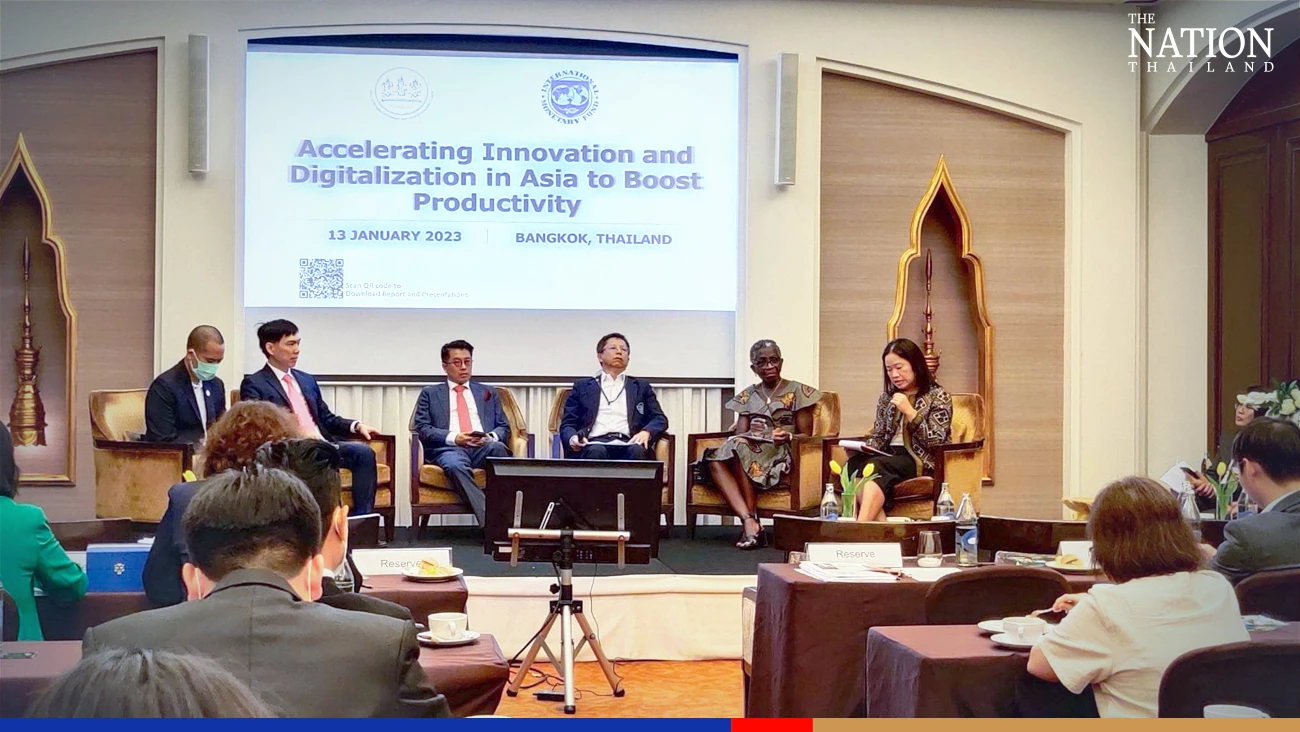
Half of the world’s patents are issued in Asia, so there is no doubt that Asia is at the forefront of innovation and technological development, she told a seminar in Bangkok at which the IMF report “Accelerating Innovation and Digitalization in Asia to Boost Productivity” was released.

The seminar was co-hosted by Thailand’s National Economic and Social Development Council.

Still, even though Asia is a growth engine, its productivity growth is slowing, according to the IMF report, which says this is a result of a failure to digitise quickly enough.

Sayeh said two factors are missing from the region’s development.


“There is no question that Asia leads in innovation, but there is a difference in the quality level of patents … Not all patents are the same. Not all patents are equal and … contribute to productivity growth,” she said.

The lack of technological diffusion is the second factor constraining growth, she said.
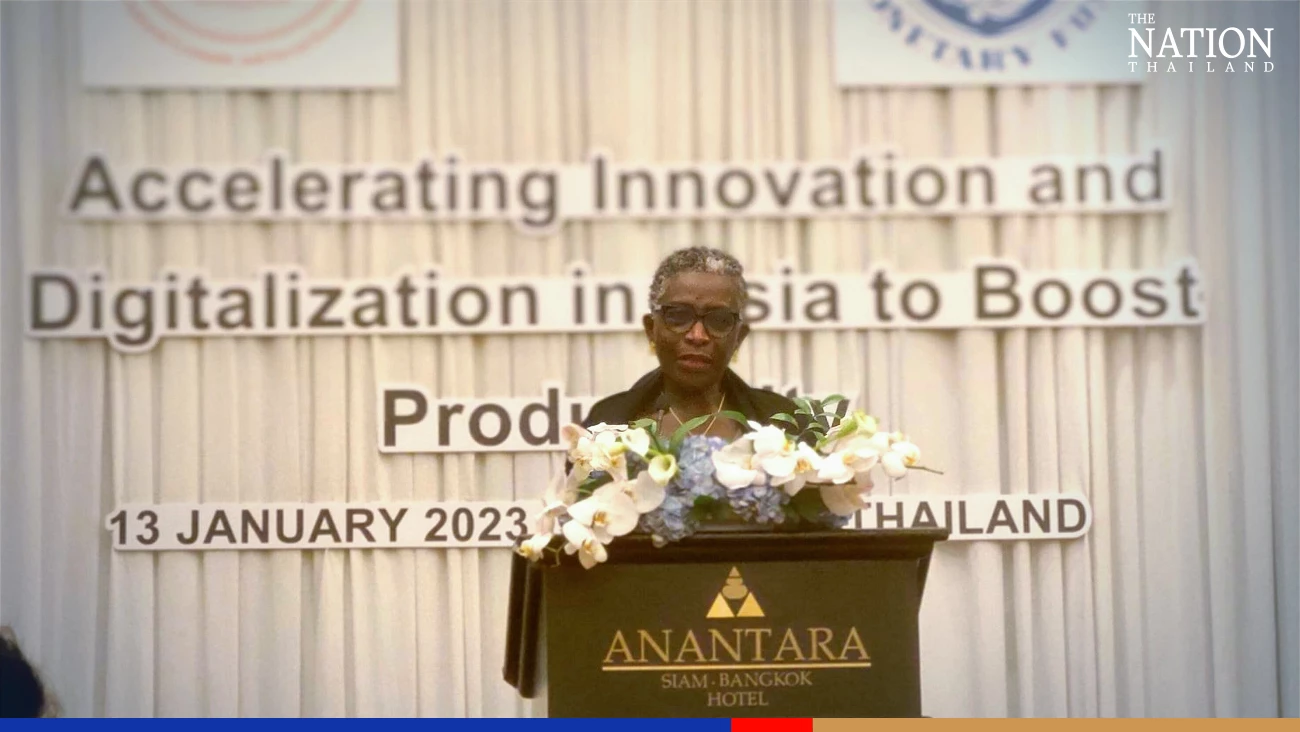
Antoinette SayehAntoinette Sayeh

“The second [factor], which is probably more relevant to a country like Thailand, is that technological diffusion has been very limited. So, the technology has vanished and is only available to a small proportion of the economy’s firms,” she explained.

Eteri Kvintradze, director of the IMF Capacity Development Office in Thailand, said the concentration of research and development (R&D) in a smaller number of companies deters the progress of innovation and productivity in Asia.

According to the IMF report, nearly half of small- and mid-sized enterprises and one-third of large firms in emerging and developing Asia identified obtaining financing as the most significant barrier to adopting technology.

Restrictive trade and regulations on foreign direct investment impede technology diffusion, the report says, adding that innovation has not translated into broad-based productivity growth in Asia.

“The concentration in R&D, digital, managerial, funds, and skilled talent widened Asia’s productivity gaps,” Kvintradze said. “However, digitisation and global exposure can assist in closing productivity gaps.”

Asia should foster innovation by providing R&D tax credits, increasing public spending on basic research, supporting intellectual property rights, and rewarding disruptive innovation, the IMF report advises.

Asian governments should also ensure a level playing field and a simplified and efficient insolvency framework to facilitate resource reallocation, the report says.

“Asian nations should really lower trade barriers and streamline FDI regulations, facilitate knowledge sharing between foreign and domestic firms, improve business-university R&D collaboration while upgrading labour skills, close digital divides, and improve digital infrastructure and the legal environment,” Kvintradze said.
Developing Asia’s productivity growth is slowing, IMF warns

Suriyon Thunkijanukij, the National Economic and Social Development Council’s senior advisor on policy and planning, said the innovation-aggregated productivity link isn’t working well in Thailand because the country lacks serious consistency in implementation.

“We’ve already set the right target, direction, and structural system. However, no actions are properly taken. We also need a monitoring mechanism to ensure that our policies are implemented,” Suriyon said.

Thailand should focus on increasing the capacity of youths to accelerate change in the next decade, he said.

Suriyon suggested that the government should provide access to reproductive health and childcare services, offer inclusive maternity support, promote universal child benefit policies, improve education quality and accessibility, and propose legislation that legally allows different types of families to have children.

However, he pointed out that these policies cannot be implemented unless people also formalise their participation in the system.

Meanwhile, Atip Asavanundd, executive director of the Digital Council of Thailand, and Kiatipong Ariyapruchaya, senior country economist at the World Bank, agreed that Thailand urgently requires education reform.

Thailand, according to Atip, has everything except well-educated people.

All Thai students should have access to digital devices and proper English language education, Atip said. Furthermore, students should be encouraged to study mathematics and science until they complete high school.

“Our educators must focus on pattern quality rather than pattern quantity,” he said.

Kiatipong added that basic education for all was essential, and that the country must adopt a more resilient and agile growth mindset.

Meanwhile, he advised Thailand to improve its government data system in order to boost the country’s competitiveness and overall service quality.

Pan-Arj Chairatana, director of the National Innovation Agency, said Thailand requires both innovative entrepreneurs and innovative politics.

“We need to put innovation on the national agenda. We already have science, technology, and innovation policies in place. We have a variety of mechanisms. We have a lot of incentives. However, it is not comprehensive enough to be called a national agenda,” he said.

Thailand needs to change its perception of innovation to move forward, Pan-Arj said.
 

Nongluck Ajanapanya

North’s top digital asset expo returns with Block Mountain CNX on Feb 23-26

#SootinClaimon.Com : ขอบคุณแหล่งข้อมูล : หนังสือพิมพ์ The Nation.

https://www.nationthailand.com/more/pr-news/40023991

North’s top digital asset expo returns with Block Mountain CNX on Feb 23-26

North’s top digital asset expo returns with Block Mountain CNX on Feb 23-26

FRIDAY, JANUARY 13, 2023

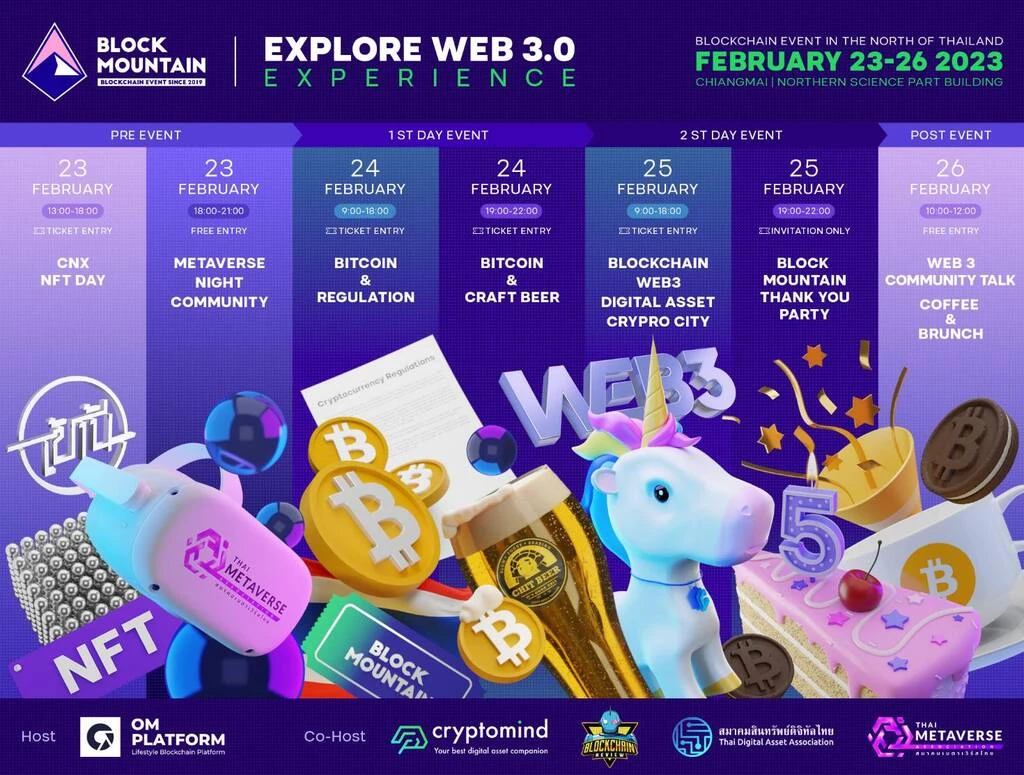
The largest Blockchain and digital asset exhibition in the North is celebrating its 5th anniversary with the four-day Block Mountain CNX 2023 expo next month.

Visitors can explore the Web 3.0 experience in Chiang Mai from February 23-26.

On the menu is a feast of Blockchain and digital-asset events that have proved popular among the government sector, entrepreneurs, investors and the general public alike over the past four years.

The four-day expo is being held by OM Platform Co Ltd together with the Thai Digital Asset AssociationThai metaverse association, and a network of industry alliances. Other partners including CryptomindBlockchain Review, and the crypto community will be showcasing their knowledge of Web3.0 Blockchain technology, digital assets, innovations, and related technologies.

The organisers expect the expo to stimulate knowledge and understanding of the application of Blockchain technology in business operations for entrepreneurs in Thailand. It will boost awareness of digital assets’ important role and how they will affect life in the future, while also serving as a forum for connection and collaboration between sectors related to Web 3.0 Blockchain technology and digital assets.

The core of Block Mountain CNX 2023 will be held at the Science and Technology ParkChiang Mai University from February 23-26.

North’s top digital asset expo returns with Block Mountain CNX on Feb 23-26

The introductory event is the “CNX NFT Day” from 1pm to 6pm on February 23.

Other side events include “Bitcoin & Beer Uncensored” while the expo will wrap up with the Web3.0 Community Talk. Tickets for the mixed-format online/offline expo are on sale from Saturday, January 14.

For more details visit https://blockmountaincnx.com or https://www.facebook.com/BlockmountainOfficial

ManpowerGroup launches guide to 2023 corporate remunerations in Thailand

#SootinClaimon.Com : ขอบคุณแหล่งข้อมูล : หนังสือพิมพ์ The Nation.

https://www.nationthailand.com/pr-news/more/pr-news/40023988

ManpowerGroup launches guide to  2023 corporate remunerations in Thailand

ManpowerGroup launches guide to 2023 corporate remunerations in Thailand

FRIDAY, JANUARY 13, 2023

ManpowerGroup, a leading global workforce solutions provider, has issued a new salary guide that enables companies in Thailand to better plan their manpower and manage costs.

The ManpowerGroup Thailand Salary Guide 2023 provides a wealth of information on various dimensions such as job skills, position levels, and current multi-level employment types and provides comprehensive advice to organizations efficiently and accurately.

The release of the report comes in the wake of Thai labor market in 2023 becoming more adaptable and flexible.

There is an increase in short-term employment, particularly outsourced hiring as firms are grappling with workforce deficiency and employment opportunity growth, especially in the IT field, said Ms. Lilly Ngamtrakulpanit, Country Manager of ManpowerGroup Thailand.

This indicates the need for people with diverse skills in order to stay on top of the increasingly competitive labor market with these current trends.

 “It is crucial that companies must be able to assess and develop concrete hiring plans and adopt cost control as well,” she pointed out.

ManpowerGroup launches guide to  2023 corporate remunerations in Thailand

Pandemic Disruption 

As the COVID-19 pandemic has shattered economies and disrupted lives, the workforce market has also been experiencing changes in various areas, triggering a widespread shortage of skilled workers.

It comes despite many organizations having resorted to more flexible employment and greater reliance on technological tools to strike a work-life balance to attract and retain skilled employees.

Ms. Lilly pointed out that a recent survey contained in the ManpowerGroup Outlook report has found that global labor turnover rates have skyrocketed in recent years.

As a result, the demand for manpower or the employment rate leaped by 45%, especially in the IT and technology careers which have become an important factor in every industry.

This is because organizations need a workforce with these skills to help drive their business forward. 

Furthermore, IT is also an important part of working under the ‘New Normal,’ a hybrid work system, and the transformation leading to a digital working world that pushes the boundaries of the traditional workforce and encourages businesses to respond and adapt in a timely manner to new ways of working.

This clearly requires both IT and technology skills along with soft skills such as communication, teamwork, digital marketing, and analysis which are essential for operational process changes.

Employees and employers must learn to adapt, coordinate, communicate and support one another in this new working style of the COVID-19 era for sustainable success.

Therefore, it is imperative for organizations to be receptive to opinions and offer opportunities for growth in their workplace and avoid employees leaving office.

ManpowerGroup Thailand Salary Guide 2023 is available at this link https://www.manpowerthailand.com/salary-guide-manpowergroup-thailand

For more information about ManpowerGroup Thailand, go to https://www.manpowerthailand.com or tel. 02171 2399 and social media platforms.

Esso deal took one year to close, says Bangchak CEO

#SootinClaimon.Com : ขอบคุณแหล่งข้อมูล : หนังสือพิมพ์ The Nation.

https://www.nationthailand.com/business/corporate/40024013

Esso deal took one year to close, says Bangchak CEO

Esso deal took one year to close, says Bangchak CEO

SATURDAY, JANUARY 14, 2023

Bangchak Corporation Plc began planning to take over petroleum refining company Esso (Thailand) Plc four years ago, and it took one year of negotiations before the deal was sealed, said Chaiwat Kovavisarac, the Thai petroleum and energy conglomerate’s CEO and president.

On Thursday, Bangchak announced it had acquired 65.99% of Esso (Thailand)’s ordinary shares from ExxonMobil Asia Holdings Pte Ltd. The stake was valued at 55.5 billion baht.
Both Bangchak and Esso (Thailand) are listed on the Stock Exchange of Thailand.

After the takeover, Chaiwat said that Bangchak began planning to acquire more petroleum refineries four years ago as part of its business expansion, as petroleum would remain the company’s major money-maker.

“We had serious negotiations with ExxonMobil for a full year,” he said, pointing out that Esso has the capacity to procure crude oil from around the world and is experienced in managing large refineries.

Under the takeover deal, Bangchak will acquire Esso refineries with a total capacity of 174,000 barrels per day, Esso’s network of petroleum warehouses, and more than 700 of its petrol stations across the country.

Bangchak will continue to employ workers at the service stations.

Bangchak’s rebranding of the existing Esso service stations is expected to be completed within two years.

With the business merger, Bangchak will have a combined refinery capacity of 294,000 barrels per day and about 2,100 service stations throughout the country.

Esso will keep its brand for a variety of chemical and petroleum products, including lubricant oil.

Electric tuk-tuk innovator MuvMi to triple fleet as demand soars

#SootinClaimon.Com : ขอบคุณแหล่งข้อมูล : หนังสือพิมพ์ The Nation.

https://www.nationthailand.com/business/corporate/40023998

Electric tuk-tuk innovator MuvMi to triple fleet as demand soars

Electric tuk-tuk innovator MuvMi to triple fleet as demand soars

FRIDAY, JANUARY 13, 2023

Nongluck Ajanapanya

Thai startup MuvMi will nearly triple the number of its electric tuk-tuks this year from 350 to 1,000 due to rising demand for rides in vehicles, said the CEO of its parent company, Urban Mobility Tech.

Krisada Kritayakirana, who is also the co-founder of Urban Mobility Tech, told a press conference on Friday that demand for rides in electric tuk-tuks is growing in tandem with the rising popularity of electric vehicles (EVs) in Thailand.

“Our initial goal is to provide environmentally friendly vehicles for city dwellers who struggle to find public transportation after departing skytrain, subway, and bus stations,” he said.

“The majority of our MuvMi customers are working people and university students who take tuk-tuk to and from their homes to shopping malls, offices, restaurants, and universities nearby,” he added.

Customers can book an electric tuk-tuk through the MuvMi app for 10 baht, with the price rising in tandem with travel time and distance.

Krisada said the company would increase the number of electric tuk-tuks in the first half of this year, while the second half would focus on expanding service to cover all of Bangkok and other major cities, such as Chaing Mai, and the resort island of Phuket.

“We are currently available in 12 main areas in downtown Bangkok, including Sukhumvit, Chulalongkorn University, Samyan, Silom-Sathorn, Ratchada-Rama 9, and Chidlom-Lumpini,” he said.

The company’s strength is the technology it invented and developed, Krisada said.

Krisada KritayakiranaKrisada Kritayakirana

Krisada said the company owns the designs of the electric tuk-tuk body and the EV charging points using solar energy. Both designs are protected by patents, he said. Artificial intelligence is also used to control the current to achieve a long-term competitive advantage, Krisada said.

He said the company’s expansion plan would cost between 600 million and 700 million baht. As the company is a startup business, some funding will be from venture capital and partners.

“We expect to expand both domestically and internationally as a 100% Thai EV ride-sharing service with its own EVs and platform. We are committed to further developing our technology, ” he said.

MuvMi has had about 3.7 million passengers since its inception in 2018. However, as demand increased and some customers complained about long wait times, Krisada said the company decided it was time to expand.

Electric tuk-tuk innovator MuvMi to triple fleet as demand soars

Urban Mobility Tech is a success story for Thailand’s National Innovation Agency, which helped launch the company in 2016. It took nearly two years to develop and manufacture its electric tuk-tuk before launching the service five years ago.

According to Vichian Suksoir, deputy executive director at the National Innovation Agency’s Innovation Development, the agency wants MuvMi to be a role model for other Thai EV startups and related businesses, such as EV charging stations.

They can seek support from the agency, he said.

EV and related technology will be one of the six key sectors the agency will allocate funding to this year, Vichian said.

“This year, we allocated 100 million baht to support EV and EV-related technology. Interested startups must submit a business plan for our consideration. We plan to award 10-15 startup grants this year,” he said.

The National Innovation Agency’s strategy coincides with the government’s efforts to propel the growth in the digital economy. The EV industry is contributing to the effort. Currently, the Thai government is implementing a number of measures to attract investment from both foreign and domestic investors. At the same time, it is implementing measures to increase demand for EVs in the country.

According to TTB Analytics, Thailand’s EV industry continues to surge in both production and demand. The number of new EV registrations at the Department of Land Transport was 15,423 during the first 10 months of last year. The total number of EV registrations in the previous decade (2012 – 2021) was 11,749.

Nongluck Ajanapanya

National Telecom reports 1.3-billion baht profit as revenue edges up

#SootinClaimon.Com : ขอบคุณแหล่งข้อมูล : หนังสือพิมพ์ The Nation.

https://www.nationthailand.com/business/corporate/40023995

National Telecom reports 1.3-billion baht profit as revenue edges up

National Telecom reports 1.3-billion baht profit as revenue edges up

FRIDAY, JANUARY 13, 2023

Thailand’s state-owned telecommunications company National Telecom Plc (NT) exceeded its own targets and reported a net profit of 1.3 billion baht for 2022, NT president Colonel Sanphachai Huvanandana said on Friday.

The company’s estimated revenue at the end of 2022 totalled 91.5 billion baht, compared to costs of 90.2 billion.

He said the company’s operating results last year were better than in 2021 – when it was established – and exceeded the targets in its business plan.

The NT president attributed the improved results to more revenue from its digital services, larger business alliance, reduced costs, and greater corporate efficiency.

NT was established and corporatised in 2021 following the merger of state-run telecom operators CAT Telecom and TOT Plc.

Sanphachai said on Friday that most of NT’s revenue – 50.8 billion baht or 55% – came from its mobile business, 19.9 billion (22%) from fixed line and broadband and satellite business, 9.4 billion (10%) from telecom infrastructure, and 3.9 billion (4%) from digital and IDC (internet data centre) and cloud-computing business.

He said the company’s main business involves mobile networking and broadband internet, which has high investment costs and tough competition in the market.

The president said that the company was working harder to further cut costs that stem from the repetition of the separate legacy telecom networks of its two predecessors. Also, NT was restructuring the organisation in a bid to reduce its work force, particularly those redundant following the merger.

Company created by merger of telecom giants to retain True Corporation name

#SootinClaimon.Com : ขอบคุณแหล่งข้อมูล : หนังสือพิมพ์ The Nation.

https://www.nationthailand.com/business/corporate/40023985

Company created by merger of telecom giants to retain True Corporation name

Company created by merger of telecom giants to retain True Corporation name

FRIDAY, JANUARY 13, 2023

The newly formed entity after the merger of two telecom giants will be called True Corporation Plc.

The Stock Exchange of Thailand (SET) was informed on Friday of the decision of the boards of Total Access Communication Plc (DTAC) and True Corporation Plc.

The decision to retain the current name of True lays to rest earlier rumours that the merged entity will be named True D Plc.

The merger of Thailand’s second- and third–largest mobile network operators was first announced in November 2021.

The deal, which would make the combined entity the largest mobile network ahead of current market leader AIS and reduce the mobile service provider market to a duopoly, has been strongly opposed by academics and civil society groups as detrimental to the interests of consumers and the general public.

Telecom watchdog National Broadcasting and Telecommunications Commission acknowledged the merger in October last year but set certain conditions, which included True and DTAC retaining their brands without sharing their frequency for three years.

The boards of True and DTAC and their shareholders will meet on February 23 to vote on the new board of directors of the merged entity. The proposed list comprises 11 executives from both companies. They are: Suphachai Chearavanont (chairman of the board), Joergen Christian Arentz Rostrup, Kittipong Kittayarak, Kamonwan Wipulakorn; Kalin Sarasin, Pratana Mongkolkul, Adhiruth Thothaveesansuk, Tongqing Gao, Tone Ripel, Lars Erik Tellmann and Teerapon Tanomsakyut.

The companies have also nominated Manat Manavutiveth, the current co-president of True, as the chief executive officer of the new company, and Sharad Mehrotra, the current chief executive of DTAC, as his deputy. Meanwhile, DTAC’s Nakul Sehgal and True’s Yupa Leewongcharoen were nominated as co-chief financial officers.

A news source said on Friday that some DTAC employees were shocked and disappointed with the board’s decision to abandon the brand name, as the company had been making profits under its own brand for several years.

Related Stories

Regulator’s decision to allow True-Dtac merger skirted the law, professor says

dtac Joins Forces with BMA in Prevention of Online Child Exploitation

NBTC finally gives True-Dtac merger ‘conditional’ approval after 9 months

2023 Thailand’s Economic Outlook

#SootinClaimon.Com : ขอบคุณแหล่งข้อมูล : หนังสือพิมพ์ The Nation.

https://www.nationthailand.com/blogs/thailand/economy/40024003

2023 Thailand’s Economic Outlook

2023 Thailand’s Economic Outlook

SATURDAY, JANUARY 14, 2023

Unprecedented events have been challenging for all of us, pandemic, the war in Ukraine, inflation pressures, and hence, aggressively increasing policy rates were seen in various regions. Thailand, is no exception, had increased the interest rate by 0.25% for the first time in August 2022 since the pandemic occurred in order to battle inflation situation.

As entered to 2023, Thai economy seems to gain recovery from the resuming tourism and private consumption. Both IMF and the Bank of Thailand also announced that Thailand’s GDP would grow at 3.7% for 2023 amidst the global slow down.

Tourism, known as Thailand’s key engine for economic growth in pre-Covid, is recovering from more relaxed measurements and reopening of the border. As of December 2022, the country had already reached the 2022’s target of 10 million of foreign tourists, mainly contributed by Malaysia, India, and Laos, and is expected to reach around 22 million for 2023. Besides, China’s faster-than-expected to reopen the border would also push up number of foreign tourist arrivals.

Cost-of-living crisis, pushed by inflation and production costs, saw improving as Thailand’s headline inflation had peaked at 7.9% in August 2022, decelerated to 5.6% in November 2022, and is expected to return to the target rate at 3% by the end of this year. However, Thailand would still face high energy prices as the country is a net importer of crude oil.

By comparing our currency to peers, Thai baht depreciated to 38 per USD in October 2022 mainly from the US’s rising interest rate. Recently, Thai baht has been stronger in response to Fed’s announcement in slowing down the US interest rate increase. TDRI’s forecast in November 2022 also indicated the value 36.87 per USD for 2023.

Looking at industries in Thailand, they are performing in varied directions. Those saw recovering and better-than-Covid19 level are wholesale and retail, department stores with the supports from government scheme, purchasing power from the middle to high income group, and rising tourists. Surge in internet usage also would lead information and communication industry bloom, while changing behavior since Covid will also drive e-commerce, delivery services, and electrical equipment. However, those saw less sign of recovery are internal combustion engine automotive industry due to prolonged semiconductor shortage, high cost of raw material, and rising trend of electric vehicles, while metal industry from the high raw material price which both of the finished steel consumption and import also contracted by 23% in October 2022 (YoY), according to ISIT. 

Thailand’s 2023 Key risks and opportunities

Key risks that could deter Thai economic recovery are geopolitical tensions (e.g. war in Ukraine, China-Taiwan tension), resulting in supply disruption or rising energy prices and costs of raw material. FED and other regions to further increase interest rate in response to the inflation would also lower purchasing power, together with, Thailand’s current high level of household debt. China’s economic recovery which might recover slower-than-expected also saw influence on tourism sector and Thai export. However, the bright sides are rising tourist arrivals from other regions’ reopening their borders, recovery in domestic consumption after Covid, and the relocation of production from China.


Looking ahead for 2023 Business Trends

Digital transformation and ESG are two major global trends for all businesses regardless of which industry they are in. It is vital that business leaders need to comprehend and make the most use of these trends.

Digital transformation is no longer an optional for business, as pandemic pressure and consumer trends change to be more digital. As recent Deloitte Tech Trend 2023 articles, the impact of emerging technology is widely affected organization in both challenge and opportunities.

Startups’ mantra – move fast, fail fast and break things – might not be applicable to established companies, as they don’t have any legacy to protect. Successful businesses must realize that they can’t risk breaking thing, as Startups, in pursuit of new. It is crucial that leaders need to balance their digital transformation initiatives from modernizing its core business technologies/processes to extending its business capability or even reimagine their business models.

Hence the roles of leadership are vital in driving successfully digital transformation initiatives. Leaders is in the position to foresee what the business trends & challenges in the future, then set the vision of what their business would be. This aspiration and ambition will be the key to define what the role and level of involvement of leaders.

Organizational readiness is another key factor; leadership, culture, structure and capabilities. Leadership in C-suite level must be motivated and capable of executing the vision with positive attitude and willingness to transform. Culture of innovation, take risk must be instilled against those bureaucratic or risk-averse mindset. The proper talents & team structure are needed to be designed supporting the initiatives with the capabilities in scalability and nimbleness.
Both leadership ambition and organizational readiness will help business shape and structure on how they should manage and drive successful digital transformation initiative in a sustainable way.

ESG issues are more crucial at this moment. Investor interest in companies taking ESG goals seriously is also becoming prevalent. According to Deloitte Thailand’s ESG and sustainability survey 2022, most business leaders prioritize awareness of ESG in the organization and integrating ESG into the corporate strategy. Additionally, 34% of respondents already have sustainable committee to oversee or drive ESG in their businesses. Majority of the respondents also view that better corporate sustainability performance will bring about three key benefits: operational efficiency and cost saving, brand credibility and image, and risk management.

By Narain Chutijirawong, Executive Director – Clients & Markets and Tasada Sangmanacharoen, Senior Consultant – Clients & Markets at Deloitte Thailand

Great Wall Motor Reveals 2022 Achievement with 11,616 Car Sales

#SootinClaimon.Com : ขอบคุณแหล่งข้อมูล : หนังสือพิมพ์ The Nation.

https://www.nationthailand.com/more/pr-news/40023977

Great Wall Motor Reveals 2022 Achievement with 11,616 Car Sales

Great Wall Motor Reveals 2022 Achievement with 11,616 Car Sales

FRIDAY, JANUARY 13, 2023

Great Wall Motor has welcomed in the new year with remarkable sales performance and deliveries of all five models: the HAVAL H6 Hybrid SUV, All New HAVAL H6 Plug-in Hybrid SUV, HAVAL JOLION Hybrid SUV, ORA Good Cat, and ORA Good Cat GT, totalling 11,616 units in 2022, a year-on-year increase of 214%.

The number includes 4,135 units of HAVAL H6 Hybrid SUV, 3,155 units of HAVAL JOLION Hybrid SUV, and 4,326 units of ORA Good Cat. Of the total, 1,610 units were sold and delivered in December – recording the highest monthly sales volume for last year.

In addition, the HAVAL H6 Hybrid SUV has retained its leadership stature in the compact SUV segment for 12 consecutive months while the ORA Good Cat continues to perform outstandingly in the 100% EV market.

Currently, the GWM app currently has 126,825 active users, and there are more than 1.1 million followers on GWM’s social media (all platforms and channels combined).

These achievements reiterate consumers’ trust bestowed upon GWM, which is ready to become the xEV leader, committed to putting cutting-edge vehicles onto Thai roads to transform the county into an electric vehicle society while also completing the EV ecosystem and strengthening Thailand’s automotive industry on the global stage.

Last year’s final quarter was concluded exceptionally once again when GWM achieved total sales and deliveries of 3,522 units from October to December 2022, an increase of 23% from the previous quarter in which 2,875 units were sold and delivered, and a year-on-year growth of 37%.

The success was led by the 12-consecutive-month leader (January-December 2022) in the compact SUV segment – the HAVAL H6 Hybrid SUV, which saw 1,188 units sold in the Q4 2022.

Great Wall Motor Reveals 2022 Achievement with 11,616 Car Sales

As a result, since its official launch in Thailand in June 2021, GWM has delivered a total of 6,776 units of this model to Thai fans. Of those, 4,135 units were sold and delivered in 2022, including 233 units of the All New HAVAL H6 Plug-in Hybrid SUV – the enthusiastically welcomed electric vehicle with plug-in technology, whose first-batch delivery commenced in November 2022.

The much-loved pure electric vehicle, the ORA Good Cat, which has retained tremendous success after having ignited the trend and excited the EV industry since its official launch in Thailand, achieved total sales and deliveries of 1,361 units in Q4 2022, an increase of 195% compared to the sales volume in Q4 2021.

To date, GWM has released 4,788 units of the ORA Good Cat onto Thailand’s roads, with 4,326 units being sold and delivered in 2022. This included 186 units of the sporty ORA Good Cat GT. Not only does it reinforce the blistering popularity of the vehicle itself but also reflects the rising demand for 100% electric vehicles among consumers.

Meanwhile, 973 units of the HAVAL JOLION Hybrid SUV, which is packed with innovative technology and outstanding performance designed to meet various driving lifestyles, were sold in the fourth quarter of 2022. This marked a 67% growth from the previous quarter and a year-on-year increase of 62%. GWM has delivered 3,754 units of this model to Thai customers.

Among the total deliveries, 3,155 were sold and delivered in 2022, including 549 units in December, which was the best sales performance made since its official launch in November 2021. This success demonstrates the HAVAL JOLION Hybrid SUV’s increasing popularity among Thai consumers, who favour SUVs with spacious cabin and cutting-edge technology, providing safety and convenience for various driving scenarios.

In addition to the successful sales performance, GWM can boast achievements as the fastest-growing brand in Thailand’s automotive industry. Its stature is now attested to by the current 126,825 active users on the GWM app, a year-on-year increase of 76,456 users.

The number of daily active users is more than 14,000 (11.5% of total users). There are more than 1.1 million followers on GWM’s social media channels (Facebook, TikTok, Instagram, Twitter, and YouTube). On Facebook, GWM has almost 800,000 followers combined (GWM Thailand, HAVAL Thailand, and ORA Thailand). On TikTok, GWM has more than 300,000 followers combined (GWM Thailand, HAVAL Thailand, and ORA Thailand).

Narong Sritalayon, Managing Director of Great Wall Motor (Thailand), said: “Throughout the previous year, GWM’s achievements in terms of rapidly growing sales and social media followers is yet another crucial testimonial to consumers’ unwavering trust bestowed upon us from the beginning of our business journey in Thailand. We appreciate the support, which has encouraged us to provide quality products and services as well as to develop new experiences for consumers. For 2023 onwards, GWM will continue listening to consumers to better develop products and services, curate activities that serve different lifestyles of the new generations and fulfil the mission to bring four xEV models to offer new driving experiences highlighting safety, intelligence, and eco-friendliness to the Thai market.”

Additionally, GWM will expand its network of GWM Stores – Direct Stores and Partner Stores – to cover key locations across the country in 2023, allowing Thai consumers to access electric vehicles from the brand more conveniently. At the end of 2021, GWM Stores were established in 30 locations. By the end of 2022, 80 GWM Stores had been appointed nationwide, of which, 62 stores are currently in operation, and 18 stores are being constructed.

In terms of strengthening the EV ecosystem through the expansion of fast-charging (DC) stations, GWM has appointed 55 facility operators following its direction. Most of these are through collaboration with Partner Stores. There are seven fully constructed facilities with installed systems that will be ready to operate in January 2023. All DC charging docks at GWM Partner Stores provide up to 120 kW to every pure EV, twenty-four hours a day, seven days a week.

GWM also achieved remarkable success internationally, with total sales of 1,067,523 units across the world in 2022, resulting in record sales of more than 1 million vehicles in the global market for seven consecutive years. From these units, 173,180 were sold outside China, marking a 21.28% increase in overseas sales growth year-on-year, of which, 616,550 were HAVAL, 103,996 were ORA, and 123,881 were TANK.

As the ‘Global Intelligent Technology Company’, GWM is committed to providing products and services equipped with advanced technology, safety, and eco-friendliness, while adhering to a consumer-centric approach to provide experiences that truly cater to Thai customers. Similarly, GWM is committed to contributing to the growth of Thailand’s automotive industry and economy in a long-term and sustainable way.

UOB’s 2022 Smart Business Transformation Programme helps over 250 SMEs

#SootinClaimon.Com : ขอบคุณแหล่งข้อมูล : หนังสือพิมพ์ The Nation.

https://www.nationthailand.com/business/corporate/40023972

UOB’s 2022 Smart Business Transformation Programme helps over 250 SMEs

UOB’s 2022 Smart Business Transformation Programme helps over 250 SMEs

FRIDAY, JANUARY 13, 2023

Digital adoption, sustainability practices and better people management were among the favourable outcomes for Thai SMEs who participated in UOB Thailand’s 2022 Smart Business Transformation Programme.

UOB and The FinLab, UOB’s innovation accelerator, assisted over 250 Thai small and medium-sized enterprises (SMEs) to undergo digital transformation as part of the bank’s 2022 Smart Business Transformation Programme (SBTP).

SMEs achieved various positive outcomes through the programme, including improved business efficiency, lower operating costs, better organisational management, and improved readiness to integrate sustainability into their businesses.

These outcomes are consistent with the findings from UOB’s ASEAN SME Transformation Study 2022, which found that while 55 % of SMEs in the region are optimistic about their business recovery, 50 % of Thai SMEs remain concerned about the need to transform their business models, particularly in the areas of digitalisation, sustainability and customer engagement due to shifts in consumer preferences. 

Sirinun Jiradilok, Head of Digital Engagement and FinTech Innovation, UOB Thailand, said, “The concept of sustainability has influenced the way SMEs think about their operations in addition to digitalisation. Two-thirds of Thai SMEs (65 %) surveyed indicated that sustainability is now an area of importance and concern to their businesses.”

UOB’s 2022 Smart Business Transformation Programme helps over 250 SMEs

“Since the launch of SBTP in 2019, we have helped around 900 SMEs in Thailand to innovate and transform digitally. We equipped SMEs with relevant digital skills and tools for them to stay relevant and competitive. They also learnt to integrate sustainability into their business strategy and were introduced to green finance alternatives for long-term success.”

During the three-month programme, Thai SMEs embraced digital solutions, business and sustainability practices under the supervision of UOB Thailand and its ecosystem of partners as they progress to make changes to their business models and adapt to new challenges.

The adopted solutions, particularly those related to data management, addressed various business challenges such as managing and analysing collected and internal data to better understand existing and new customers and improve digital marketing, and for optimising business processes and better cost management.

SMEs reported positive outcomes from the Smart Business Transformation Programme 
The SMEs participating in the 2022 SBTP reported higher productivity and customer engagement from business process optimisation, increased sales from using digital marketing tools, as well as lower operational and marketing costs. They also achieved a better understanding and willingness of the business owners and key decision-makers to embrace sustainability across their organisations.   

UOB’s 2022 Smart Business Transformation Programme helps over 250 SMEs

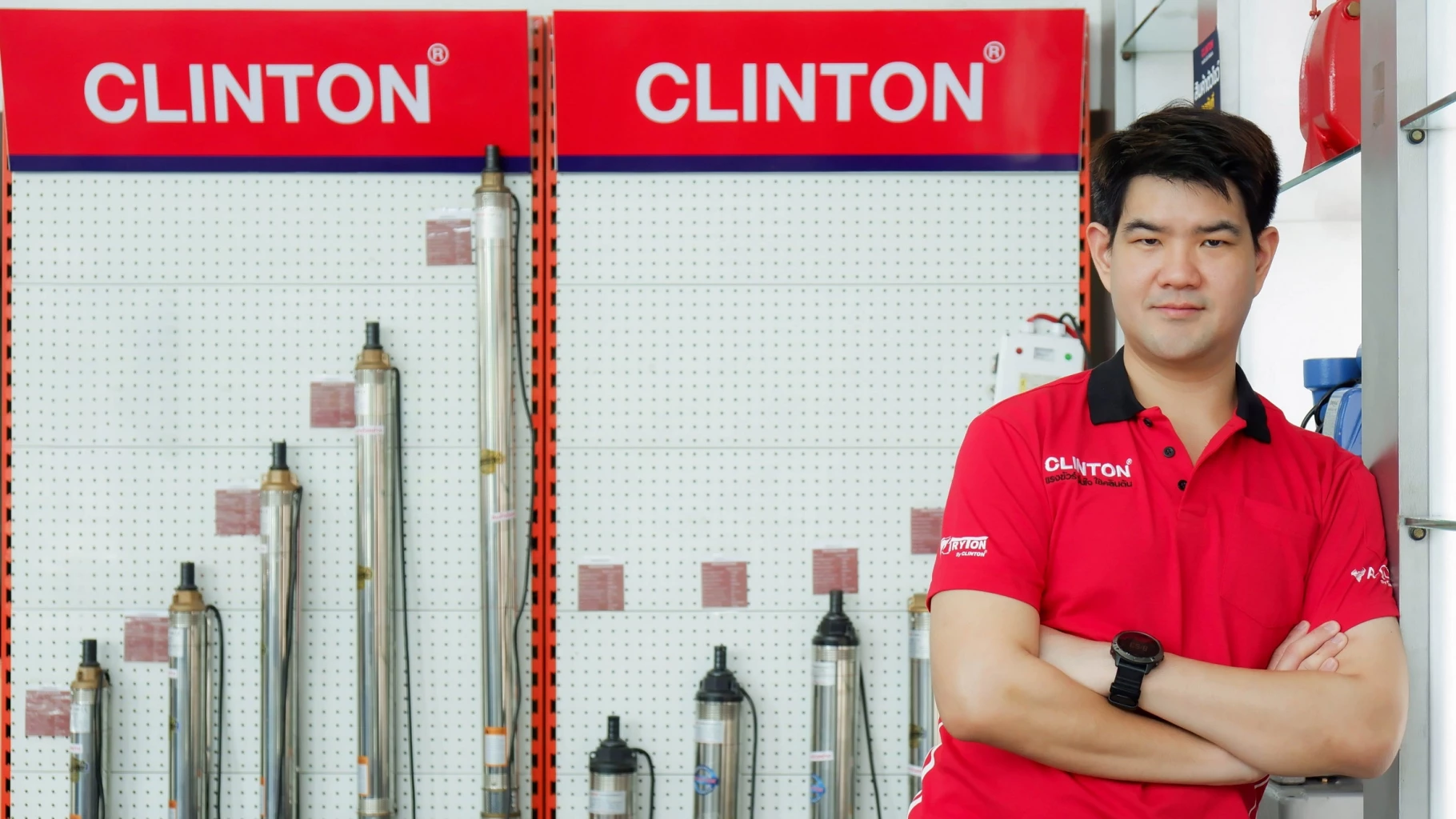
Chonlawat Ruengpreechavech, Chief Executive Officer, of Clinton Intertrade, a wholesaler of electrical supply and water pumps, said “The 2022 SBTP has tremendously accelerated our digitalisation journey. We deployed SAP B1, one of the key software applications to manage and optimise collected data, which improved our documentation process while real-time data allowed incidents to be addressed immediately. In addition, one of the partners from the programme provided consultation on managing generational differences in the workplace, which I believe will eventually help boost our productivity and performance.”

UOB’s 2022 Smart Business Transformation Programme helps over 250 SMEs

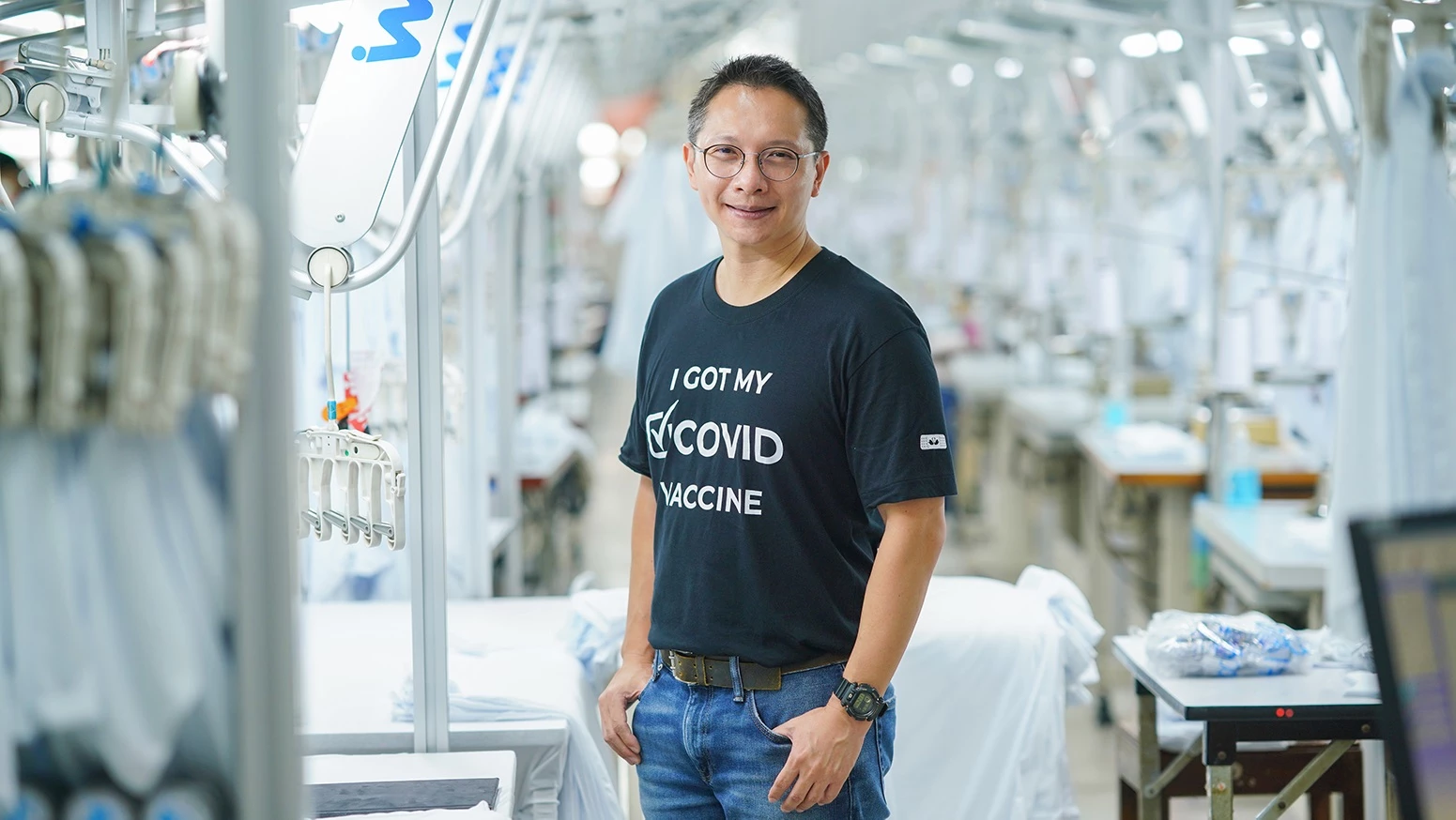
Khunakorn Dhanasarnsombat, Managing Director of Thailand Knitting Factory Co. Ltd., the owner of the Double Goose brand, said, “We have participated in the SBTP for two years and have seen positive impacts since. Especially in the second year when we started implementing tech solutions like SAP B1, which has improved our cost management and business data collection. With the data gathered, we were able to produce more recyclable products from our production line, contributing to our green manufacturing journey. Additionally, we adopted business solutions such as UOB mCollect to ease our collection and reconciliation processes, freeing up more time for front-end staff/sales officers to provide customers better services.”

UOB’s 2022 Smart Business Transformation Programme helps over 250 SMEs

Pitiphat Mongkolariyanan, Deputy Chief Executive Officer, KMP Partner, a construction consultant company, said, “We have learnt to adopt the concept of customer centricity in our application development process, and by doing this, our application was able to address our customers’ needs. Our user base has consequently increased from 20 users to 700 users. Also, thanks to the SBTP that connected us to Zaviago, a CRM solution that gathers data and optimises the targeting process of online media, this helped us reach our targeted customers at lower costs.”  

UOB’s 2022 Smart Business Transformation Programme helps over 250 SMEs

Jakkadej Asavasopon, Chief Executive Officer, A Ramen said, “Business and customer data has always been our top priority. The programme helped us to successfully install a data management tool, providing us with the ability to analyse the customer data, allowing us to save costs and increase sales, all while providing better experiences to our customers. Moreover, the programme has led us to pursue zero waste in managing our food business, which aligns with our sustainability goal of becoming a Zero Waste entrepreneur by launching a central kitchen in 2023.”

UOB’s 2022 Smart Business Transformation Programme helps over 250 SMEs

Paulovatchara Yuvanasiri, Managing Director of RainForest Green Community, said, “Our goal is to build our community mall to be recognised as a ‘green community.’ We not only gained insights from the experts but were also introduced to UOB’s sustainable financing solutions like U-Solar where I see opportunities in adopting renewable energy for our community mall. The SBTP connected us to ecosystem partners, which I strongly believe will reduce energy consumption and expenditure once the installation is complete. On digitalisation, we have seen an improvement in cost management, corporate taxation, and operational process due to the adoption of PEAKaccount, the online accounting and cost management solution that mandates data management.” 

The SBTP is open to SME business owners or decision makers who are keen to explore new ideas, adopt technology and invest in digital tools, and can commit their time throughout the three-month programme.