CP Foods strikes public-private pact to preserve forests
Oct 15. 2020
By The Nation
The government has signed a cooperation pact on “Climate change prevention through Forest Rehabilitation” with Charoen Pokphand Foods (CP Foods) to preserve and rehabilitate 26,000 rai of terrestrial and mangrove forest.
The pact’s signing was presided over by Natural Resources and Environment Minister Varawut Silpa-archa and CP’s CEO Suphachai Chearavanont.
Under the agreement, the ministry’s Royal Forest Department and the Thailand Greenhouse Gas Management Organisation (TGO) will join with CP Foods to rehabilitate three areas: 7,000 rai under CP Foods’ “Rak Ni-Ves Project” at the Pasak watershed, Khao Phraya Doen Tong in Lop Buri province, from 2021 to 2025; 14,000 rai under CP Foods’ “Grow-Share-Protect Mangrove Forestation Project” in the Gulf of Thailand, Samut Sakhon province, from 2019 to 2023; and 5,000 rai of green areas at CP Foods’ premises.
Varawut said the pact would support Thailand’s development in the long term by helping the country meet international efforts to reduce greenhouse gases (GHGs) for sustainable growth of the economy, society and the environment.
“Climate change is closer than we think. To effectively mitigate the impacts demands collaboration from all parties,” Varawut said.
He added that CPF’s forest rehabilitation in the Pasak watershed and Gulf of Thailand in Samut Sakhon will help restore the balance of nature, since mangrove forests act as natural carbon dioxide sinks, erosion barriers and marine habitats. The projects would serve as an example for forest rehab in other parts of the country, he said.
Warren prods Disney CEO on buybacks, pay before 28,000 cuts
CorporateOct 15. 2020Bob Iger, chief executive officer of Walt Disney Co., during a Bloomberg Television interview at Disneyland in Shanghai on June 16, 2017. MUST CREDIT: Bloomberg photo by Qilai Shen.
By Syndication Washington Post, Bloomberg · Anders Melin · BUSINESS, US-GLOBAL-MARKETS
Sen. Elizabeth Warren criticized Walt Disney Co. for laying off thousands of workers as a result of the pandemic, saying its spending on share buybacks and executive pay enriched bosses and investors but eroded its ability to weather a downturn.
“It appears that — prior to, and during the pandemic — Disney took good care of its top executives and shareholders — and now is hanging its front-line workers out to dry,” Warren wrote Tuesday in a letter to Executive Chairman Bob Iger and Chief Executive Officer Bob Chapek.
In the letter, Warren asked about the monthly cost of wages for the affected employees, whether Disney will cover their health-care premiums, and several questions about the company’s executive pay. The Democratic senator from Massachusetts wrote that she expects an answer by Oct. 27.
Disney shares were down 1% to $127.69 at 10:48 a.m. in New York. The stock is down 12% for the year.
Disney said last month that it would terminate 28,000 workers in its theme parks and cruise-line businesses, which have plunged as a result of the coronavirus pandemic. The company said at the time it would offer some benefits, including 90 days of job-placement services. Two-thirds of those laid off were employed part-time. The company’s domestic parks employed more than 100,000 people before the crisis, not counting the cruise line and other divisions.
In her letter, Warren noted that Disney had dismissed more workers in Florida than in California, despite the company attributing the cuts in part to California’s refusal to let Disneyland reopen.
Warren said Disney spent $47.9 billion on share buybacks from 2009 through 2018, $5.4 billion on dividends in 2018 and 2019 alone, and hundreds of millions of dollars on executive compensation.
Iger, for years one of America’s top-paid executives, has received repeated criticism over his compensation. Almost half of the company’s investors rejected its executive-pay practices in advisory votes in 2018 and 2019, after Iger secured a new contract entitling him to more than $100 million in stock if Disney shares did well enough over the coming years.
And Abigail Disney, a granddaughter of the company’s co-founder Roy Disney, drew attention to Iger’s pay by saying in a 2019 CNBC interview that “Jesus Christ himself isn’t worth 500 times his median worker’s pay.” Months earlier, Disney had disclosed that the ratio between Iger’s $65.7 million pay package and $46,127 for the firm’s median employee was 1,424-to-1.
Representatives for Disney didn’t respond to an email seeking comment.
CorporateOct 15. 2020The Tencent Holdings building stands in the Nanshan district of Shenzhen, China. MUST CREDIT: Bloomberg photo by Brent Lewin
By Syndication Washington Post, Bloomberg · Helene Fouquet, Manuel Baigorri · BUSINESS
Tencent Holdings is planning to increase its stake in Universal Music Group by a further 10% before the option expires in January, according to people familiar with the matter.
The Chinese technology company last year led a consortium that purchased 10% of the world’s biggest music company from French media company Vivendi. That deal valued Universal Music at 30 billion euros ($35.2 billion) and Tencent and its partners have the option to increase their stake to as much as 20% at the same valuation until Jan. 15, 2021.
Tencent is likely to exercise this option, three people said, asking not to be identified as the deliberations are private. It could make the move before year’s end, one person said.
Shares of Vivendi rose as much as 2.2% in early trading in Paris. Shares of Tencent listed in Hong Kong rose as much as 2.2% in early trading Wednesday, reaching a record of HK$569.5 ($74.48) each. Tencent’s American Depositary Receipts achieved a record closing price of $74.04 in Tuesday’s U.S. session, after Apple announced that its game “League of Legends: Wild Rift” would be coming to iPhone 12.
It isn’t clear whether Tencent will be joined by the original consortium members, the identities of which haven’t been made public, the people said. Hillhouse Capital and Singapore sovereign wealth fund GIC were among potential investors that Tencent approached, Bloomberg News reported last year.
Deliberations are ongoing, and Tencent could still opt not to increase its stake in Universal Music, one of the people said. Representatives for Tencent and Vivendi declined to comment.
By increasing its stake, Tencent would seek to diversify from gaming and China, where it has been busy with deals this year. It’s helped orchestrate the combination of Huya and DouYu International Holdings, creating a Chinese game-streaming giant with a market value of more than $11 billion. It has also proposed to take private Chinese gaming firm Leyou Technologies Holdings.
Universal Music has been boosted by a surge in streaming that has dragged the industry out of a decade-long slump. The music business has helped Vivendi hold up through the pandemic lockdown, limiting the blow from a drop in advertising and publishing revenue.
A deal by Tencent will counter a recent venture by rival NetEase, which in August struck a deal to license songs from Universal Music for the first time. China’s antitrust authorities had investigated Tencent’s dealings with the world’s three biggest record labels, but the probe was suspended this year, people familiar with the matter said in February.
An initial public offering of Universal Music is planned by early 2023, according to a Vivendi statement in February. An entry onto the stock market could give the music group more financial clout to compete with rivals Warner Music Group and Sony Music Entertainment. Tencent also plans to take a minority stake in Universal Music’s Chinese subsidiary.
VW crushed the iconic beetle to make room for this small SUV
CorporateOct 15. 2020A Volkswagen on the steering wheel of a VW ID.3 electric automobile, the first of around 22 million vehicles to be produced and delivered worldwide by 2028, at the automaker’s factory in Dresden, Germany, on Sept. 11, 2020. MUST CREDIT: Bloomberg photo by Krisztian Bocsi.
By Syndication Washington Post, Bloomberg · Christoph Rauwald, Craig Trudell · BUSINESS, WORLD, US-GLOBAL-MARKETS, EUROPE
Automakers are so eager to replace less-lucrative cars with higher-margin SUVs that they’re willing to scrap iconic nameplates along the way.
Volkswagen’s newest North American model, the Taos, is perhaps the starkest example of this yet. The German automaker made room to manufacture the compact sport utility vehicle in its Mexican assembly plant by ceasing production of the Beetle, one of the most influential cars of the 20th century.
For automotive product planners, the decision making is simple. The ebb toward crossovers and away from sedans has been relentless, helping put SUVs and trucks on course to seize more than 70% of the U.S. market this year. Crossovers also are a better bang for automakers’ buck — consumers are willing to pay up for the higher ride height and roomier interior of models that aren’t substantially costlier to develop or build compared with sedans.
“We think the trend is going to continue,” Duncan Movassaghi, executive vice president of sales and marketing for VW’s U.S. unit, told reporters during a briefing on the Taos. The automaker sees Americans buying almost 10 million SUVs a year by the end of the decade.
VW rose as much as 0.8% in early trading in Frankfurt on Wednesday.
The German manufacturer is far from alone in being cold-blooded about its cars.
Ford is abandoning sedans in North America, killing off the likes of the Taurus, once the top-selling car in the country. General Motors Co. has ceased several nameplates including the Chevrolet Impala, a model line with more than 60 years of lineage. Fiat Chrysler Automobiles NV also gave up trying to get Americans to buy the 500, the diminutive car used to bring its eponymous Italian brand back to the U.S. in 2011.
While those companies are making space in factories and showrooms for SUVs some consumers will recognize — the Ford Bronco, Chevrolet Blazer and Jeep Grand Wagoneer — VW eschewed the Beetle for an entirely new nameplate. The Taos is named after a town of less than 6,000 people in the northern New Mexico desert.
By adding the Taos and the all-electric ID.4 to the Tiguan, VW will have three models in the compact SUV segment, similar to how Subaru has the Outback, Forester and Crosstrek, and Jeep has the Wrangler, Cherokee and Compass.
Chief Executive Officer Herbert Diess is counting on an expanded SUV lineup to help VW put an end to losses that predated the German carmaker’s disastrous diesel-emissions scandal. He told shareholders last month the brand was close to breaking even in North America before the Covid-19 pandemic hit. The manufacturer generates the vast majority of its profits in China and Europe and has struggled for years to make money in the U.S.
The Taos will be available in the second quarter of next year. It will be about 9 inches (23 centimeters) shorter than the Tiguan and priced below that model, which starts at $25,245.
Krungsri (Bank of Ayudhya) has joined with Lao Development Bank to launch Krungsri-LDB Global Transfer, a service for real-time money transfers between Thailand and Laos.
Offered through Krungri Biz Online (KBOL), the service is designed to enable individuals and small businesses to better respond to business and customer needs, conveniently and safely.
Krungsri-LDB Global Transfer connects the Application Programming Interface (API) of the two banks for the first time, to offer seamless and easy international remittance transactions.
The service will support money transfer to recipients’ accounts based on the currency being transferred, without using exchange rates. Baht and US dollars will be supported in the first phase, followed by other currencies in the future.
Customers can use the service free of charge until the end of 2020.
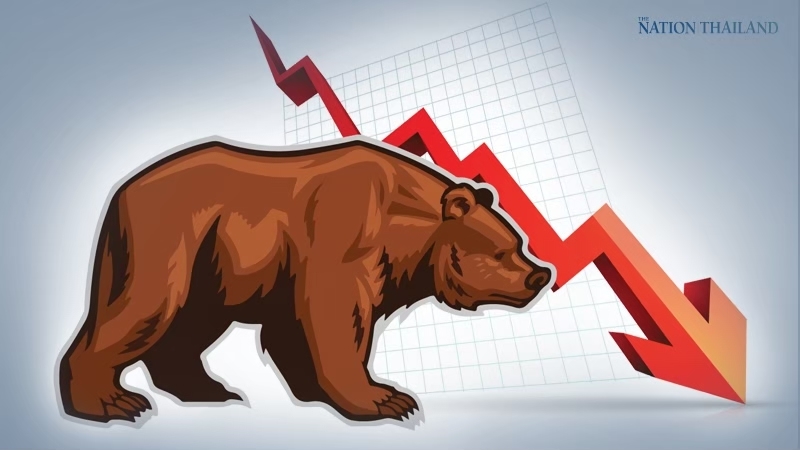
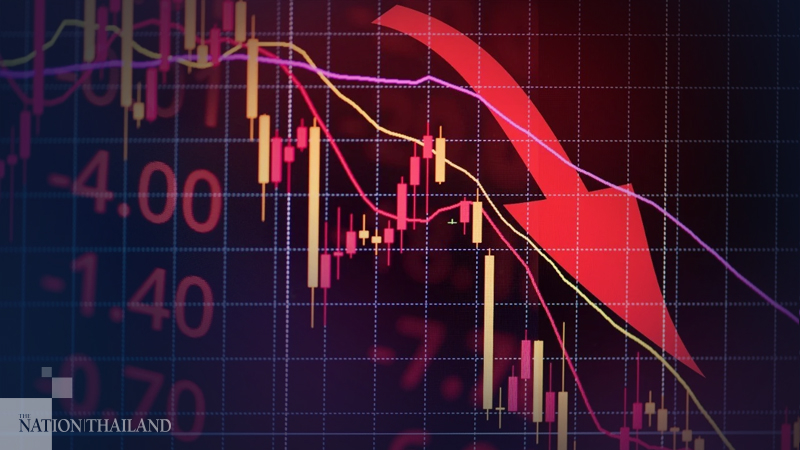
The Stock Exchange of Thailand (SET) Index fell by 10.16 points, or 0.80 per cent, to 1,253.83 in the morning session on Thursday.
An analyst at Krungsri Securities expected the index to fall to between 1,255 and 1,260 points due to the escalating political situation in Thailand and a US conflict on the rollout of economic stimulus measures in that country.
“After the anti-government protest in front of Government House ended, Khana Ratsadon 2563 [People’s Party 2020] announced it would continue their rally at 4pm on Thursday at Ratchaprasong Intersection. Meanwhile, the government declared a state of emergency in Bangkok to control the situation,” he explained.
The analyst added that uncertainty over weak commercial banks’ third-quarter performance would also pressure the index.
He recommended investors buy shares of:
> CRC, HMPro, JMart, Com7, and KTC that benefit from the government’s “Shop Dee Mee Kuen” (Shop and Payback) scheme.
> TU, PlanB, STGT, Com7, Asian and CBG, whose third-quarter performance is expected to grow.
The SET Index closed at 1,263.99 on Wednesday, down 9.44 points, or 0.74 per cent. Total transactions amounted to Bt51 billion, with an index high of 1,271.10 points and a low of 1,257.84.
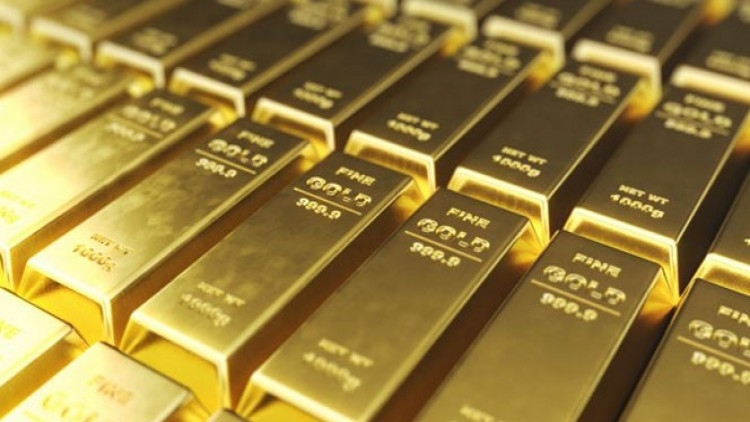
The price of gold was unchanged in morning trade on Thursday, the Gold Traders Association reported.
As of 9.24am, the buying price of a gold bar was Bt27,900 per baht weight and selling price Bt28,000, while gold ornaments cost Bt27,394.12 and Bt28,500, respectively.
At close on Wednesday, the association announced a change in the precious metal price, causing the price to drop sharply by Bt350 per baht weight.
The spot gold price moved to US$1,895 (Bt59,064) per ounce in the morning after the price rose by $12.70 to $1,907.30 per ounce at Wednesday’s close in response to a weakening dollar, uncertainty amid the Covid-19 crisis and the upcoming US presidential election.
The Hong Kong gold price meanwhile dropped by HK$30 to $17,510 (Bt70,418) per tael on Thursday morning, the Chinese Gold and Silver Exchange Society reported.
Oil rises with dollar decline boosting appeal of commodities
EconOct 15. 2020Vehicles drive through the road as shipping containers sit at the Busan Port Terminal, left, and oil tankers stand in Busan, South Korea, on Oct. 13, 2020. MUST CREDIT: Bloomberg photo by SeongJoon Cho.
By Syndication Washington Post, Bloomberg · Andres Guerra Luz · BUSINESS, US-GLOBAL-MARKETS
Oil rose for a second day amid a weaker dollar and signs of improving demand in China and India.
Crude futures gained as much as 2.3% in New York as the Bloomberg Dollar Spot Index slipped as much as 0.3%, raising the appeal for commodities priced in the currency. Meanwhile, refinery activity in Asia is signaling a bright spot for demand recovery. One Chinese mega-refiner is snapping up barrels of Middle Eastern crude, while India’s refiners have cranked up processing to meet higher consumption during a festive period.
“A weaker U.S. dollar tends to boost all dollar-denominated commodities and vice versa,” said Carsten Fritsch, an analyst at Commerzbank. “This applies in particular to gold, but also to other commodities like crude oil.”
Signs of a demand boost in Asia is helping lift the overall outlook for oil consumption, which continues to struggle to return to normal due to the coronavirus pandemic. At the same time, the structure of the market is signaling strength ahead. The spread between Brent’s nearest contracts is at its narrowest in six weeks, while the contract’s six-month spread is at the strongest since late July.
Rongsheng Petrochemical Co.’s Singapore unit has purchased at least 7 million barrels in the spot market so far this month for delivery in December and January, according to traders who asked not to be identified because the information is private. The company is buying up crude to feed a trial run operation of its expanded refinery in Zhejiang province this quarter.
The oil purchase from Rongsheng’s Singapore unit is “giving a ray of hope for the market,” said John Kilduff, a partner at Again Capital. “We’re seeing demand pick up in the face of constrained supply, helping to push up prices a bit.”
West Texas Intermediate for November delivery climbed 61 cents at $40.81 a barrel as of 12:37 p.m. in New York. Brent for December settlement rose 63 cents to $43.08 a barrel.
Traders’ attention has also turned to plans by OPEC+ to raise supply in 2021 in line with its agreement earlier this year. While some producers inside the group are said to have doubts, the United Arab Emirates and now Russia have said that, for the time being, the group intends to proceed as scheduled. Saudi Crown Prince Mohammed Bin Salman and Russian President Vladimir Putin on Tuesday urged the alliance to comply with agreed cuts as virus infections rise again.
Meanwhile, U.S. crude inventories are expected to have declined by 2.1 million barrels last week, according to the median estimate in a survey of Bloomberg analysts ahead of government data released on Thursday. The industry-funded American Petroleum Institute will report its supply tally later Wednesday.
The outlook for demand from refineries remains precarious, with refining margins severely depressed for this time of year. The so-called crack for combined gasoline and diesel against West Texas Intermediate futures falling toward $9 a barrel. Refineries typically need the spread to be more than $10 a barrel to make a profit processing crude oil.
“They’re minimizing jet fuel, maximizing diesel,” said Stewart Glickman, energy equity analyst at CFRA Research. “There’s only so much you can do with those kinds of levers. The only other lever they have is to start shutting in runs and producing even less.”
By Syndication Washington Post, Bloomberg · Rita Nazareth, Vildana Hajric · BUSINESS
Stocks dropped after Treasury Secretary Steven Mnuchin downplayed the chances of striking a stimulus deal before the election.
Traders also parsed earnings from big banks, with Wells Fargo & Co. tumbling 6% after posting a profit slump and warning that net interest income could “get a little bit softer” in 2021. Bank of America Corp. slid amid an increase in trading revenue that was just a fraction of its competitors’ gains, while Goldman Sachs Group Inc. outperformed after earnings per share jumped to a record that was almost twice as high as analysts predicted. Energy stocks joined a rally in oil, with Concho Resources Inc. soaring 10% on a news report that ConocoPhillips is in talks to acquire the company.
Mnuchin said at a conference that getting a stimulus agreement “before the election and executing on that would be difficult.” His remarks came after another in a long series of calls with House Speaker Nancy Pelosi, D-Calif., that have failed to seal a deal. While he hoped for bipartisan support for Senate Majority Leader Mitch McConnell’s, R-Ky., latest idea — a vote on a narrow bill next week to help small businesses — Democratic leaders have no appetite for piecemeal measures now.
“This has been an ongoing drama,” said Paul Nolte, portfolio manager at Kingsview Investment Management. “They’re getting close, they’re not getting close, we’re still talking, we’re not talking. The latest twist I heard is nothing is going to get done until the election. That’s why I think you’re getting the market selling off a little bit.”
Meanwhile, the Joe Biden campaign on Wednesday denied a New York Post report that said the former vice president met with a senior official from a Ukrainian energy firm that was at the center of a controversy over the dismissal of a prosecutor investigating the company.
These are some of the main moves in markets:
Stocks
– The S&P 500 dipped 0.7% as of 4 p.m. EDT.
– The Stoxx Europe 600 Index fell 0.1%.
– The MSCI Asia Pacific Index decreased 0.1%.
Currencies
– The Bloomberg Dollar Spot Index dipped 0.2%.
– The euro advanced 0.1% to $1.1753.
– The Japanese yen appreciated 0.4% to 105.08 per dollar.
Bonds
– The yield on 10-year Treasurys fell one basis point to 0.72%.
– Germany’s 10-year yield dipped two basis points to -0.58%.
– Britain’s 10-year yield decreased two basis points to 0.22%.
Commodities
– The Bloomberg Commodity Index advanced 0.6%.
– West Texas Intermediate crude rose 2.1% to $41.03 a barrel.
The Stock Exchange of Thailand (SET) Index closed at 1,263.99 on Wednesday, down 9.44 points or 0.74 per cent. Total transactions amounted to Bt51 billion with an index high of 1,271.10 and a low of 1,257.84.
In the morning session, an analyst at Krungsri Securities expected the day’s index to fluctuate between 1,265 and 1,280 points as worries over domestic developments override progress in talks on fresh US economic stimulus measures.
“The student-led rally [in Bangkok on Wednesday] and uncertainty over commercial banks’ weak third-quarter performances will pressure the index,” he said.
The 10 stocks with the highest trade value today were KBANK, HANA, PTT, IVL, STGT, STA, CPF, NRF, CPALL and KCE.
As of 4.30pm, the price of oil rose by US$0.12 or 0.30 per cent to $40.32 per barrel, while gold rose by $5.90 or 0.31 per cent, to $1,900.50 per ounce.
Other Asian indices were mixed:
Japan’s Nikkei Index closed at 23,626.73, up 24.95 points or 0.11 per cent.
China’s Shang Hai SE Composite Index closed at 3,340.78, down 18.97 points or 0.56 per cent, while the Shenzhen SE Component Index closed at 13,691.04, down 107.54 points or 0.78 per cent.
Hong Kong’s Hang Seng Index closed at 24,667.09, up 17.41 points or 0.071 per cent.
South Korea’s KOSPI Index closed at 2,380.48, down 22.67 points or 0.94 per cent.
Taiwan’s TAIEX Index closed at 12,919.31, down 27.82 points or 0.21 per cent.


 Bob Iger, chief executive officer of Walt Disney Co., during a Bloomberg Television interview at Disneyland in Shanghai on June 16, 2017. MUST CREDIT: Bloomberg photo by Qilai Shen.
 The Tencent Holdings building stands in the Nanshan district of Shenzhen, China. MUST CREDIT: Bloomberg photo by Brent Lewin
 A Volkswagen on the steering wheel of a VW ID.3 electric automobile, the first of around 22 million vehicles to be produced and delivered worldwide by 2028, at the automaker’s factory in Dresden, Germany, on Sept. 11, 2020. MUST CREDIT: Bloomberg photo by Krisztian Bocsi.


 Vehicles drive through the road as shipping containers sit at the Busan Port Terminal, left, and oil tankers stand in Busan, South Korea, on Oct. 13, 2020. MUST CREDIT: Bloomberg photo by SeongJoon Cho.