The Stock Exchange of Thailand (SET) Index closed at 1,263.71 on Wednesday, up 13.56 points or 1.08 per cent, while transactions tallied at Bt52.31 billion with an index high of 1,264.29 and a low of 1,245.09.
In the morning session, a Krungsri Securities analyst said he expected the index to move sideways between 1,240 and 1,260 points despite positive sentiment over the rising price of oil and Thailand’s Centre for Economic Situation Administration decision to discuss measures to stimulate spending in the latter part of the year.
“President Donald Trump’s decision to postpone negotiations for the economic stimulus bill until after the elections and foreign investors’ mass sell-offs will pressure the index,” he said.
The top 10 stocks with the highest trade value today were TKN, IVL, AOT, MINT, PTT, PTTEP, CPALL, TU, STGT and KBANK.
As of 4.30pm, the price of oil dropped by US$0.90 or 2.21 per cent to $39.77 per barrel, while gold dropped by $18 or 0.94 per cent, to $1,890.80 per ounce.
Other Asian indices were mixed:
Japan’s Nikkei Index closed at 23,422.82, down 10.91 points or 0.047 per cent.
Hong Kong’s Hang Seng Index closed at 24,242.86, up 262.21 points or 1.09 per cent.
South Korea’s KOSPI Index closed at 2,386.94, up 21.04 points or 0.89 per cent.
Taiwan’s TAIEX Index closed at 12,746.37, up 42.14 points or 0.33 per cent.
China’s stock markets were closed for the Moon Festival.
The Eastern Economic Corridor Office (EECO) board chaired by Prime Minister Prayut Chan-o-cha has approved a study into linking Laem Chabang Port with international cities under three projects, EECO secretary-general Kanit Sangsubhan said on Wednesday.
The three comprise:
1. A Thai bridge project, which aims to link the Eastern Economic Corridor to the Southern Economic Corridor by constructing a four-lane highway connecting Thailand’s west and east coasts (Chon Buri and Petchaburi). This will save travel time by 2-3 hours and can also promote tourism and reduce freight costs between the South and Laem Chabang Port.
2. A dry port project, which will link Laem Chabang with international cities under collaboration with neighbouring countries. The aim is to connect Laem Chabang to land ports in major cities such as China’s Chongqing and Kunming, Laos’s Natei, Luang Prabang, Vientiane and Savannakhet, Myanmar’s Yangon, Nay Pyi Taw and Mandalay, Cambodia’s Poipet and Phnom Penh, and Vietnam’s Danang. When completed, this will add two million containers to Laem Chabang port per year.
3. A project connecting the Gulf of Thailand with the Andaman Sea (Chumphon Port and Ranong Port) plus land-bridge connectivity. The Office of Transport and Traffic Policy and Planning aims to develop Ranong’s deep-sea port into a container port to serve shipping routes to South Asian countries, or the BIMSTEC bloc (Bangladesh, Bhutan, India, Myanmar, Nepal and Sri Lanka). This will reduce the time and cost of shipping since vessels won’t have to pass through the Straits of Malacca. Also, a cargo transportation system is being developed to connect the two deep-sea ports with a double-track railway and motorway to serve as an economic bridge linking the Andaman Sea and the Gulf of Thailand.
The price of gold dropped by Bt350 per baht weight in morning trade on Wednesday, the Gold Traders Association reported.
As of 9.26am, the buying price of a gold bar was Bt27,800 per baht weight and selling price Bt27,900, while gold ornaments cost Bt27,303.16 and Bt28,400, respectively.
At close on Tuesday, the buying price of a gold bar was Bt28,150 per baht weight and selling price Bt28,250, while gold ornaments cost Bt27,636.68 and Bt28,750, respectively.
The spot gold price moved to US$1,880 (Bt58,905) per ounce on Wednesday morning after the price dropped by $11.30 to $1,908.80 per ounce at yesterday’s close due to a strengthening dollar and a rise in the US bond yield that hit the highest in four years.
The Hong Kong gold price dropped by HK$280, opening at $17,350 (Bt70,143) per tael this morning, the Chinese Gold and Silver Exchange Society reported.
More than Bt1 billion flowed into global healthcare equity funds as they gained positive sentiment from news of a Covid-19 vaccine.
From the beginning of this year to September 7, the returns of global healthcare equity funds, such as MSCI World Pharmaceuticals, was 0.04 per cent, Nasdaq Biotechnology 6.17 per cent, MSCI World Healthcare Providers & Services -2.13 per cent, and MSCI World Healthcare Equipment & Supplies 8.83 per cent.
Fund managers have had a positive view of healthcare stocks as these gained positive sentiment from research and development of medicines and vaccines and the US health welfare scheme.
According to Morningstar Research, Bt1.1 billion flowed into global healthcare equity funds. Their net asset value in the past eight years was Bt30 billion, up 11 per cent compared to the end of the previous year from a cumulative average return of 8.2 per cent.
Morningstar Research senior analyst Chayanee Juengmanon said the price of healthcare stocks was currently high, but she advised investors to pay attention to diversifying risks because the returns of funds focus on investing in one industry and may fluctuate more than others.
Tisco Asset Management director of marketing and investment adviser Sarat Chatsuwan said global healthcare stocks would grow further for another 5-10 years, taking into account research and development to cure various diseases, an ageing society, and healthcare trends.
“If medicines and vaccines by healthcare companies are approved by the US Food and Drug Administration, their share prices will rise sharply. And these would rise further if the firms were taken over by bigger healthcare companies,” he said. “Also, the price of healthcare stocks are cheaper than technology stocks.”
Sarat explained that stocks in the healthcare group consist of biotechnology companies that conduct research and development of medicines and vaccines, and healthcare facilities and services companies that provide medical services, such as telemedicine.
Even if the price of healthcare stocks was high compared to others and these face mass sell-offs for profit, he recommended investors buy these shares and advised them to diversify 50 per cent of investment for long-term speculation and another 50 per cent to gain profit.
The Cabinet on Tuesday gave the green light to spending Bt62 billion over the next five to 10 years on building six medical excellence centres nationwide.
The strategy aims to boost the country’s medical competitiveness and its public health system as well as reduce disparity in medical service accessibility among Thais.
Of the total budget, more than Bt19 billion will be spent on the project during the current fiscal year, over Bt16 billion in the next fiscal year, more than Bt13 billion in 2022 and over Bt14 billion between 2023 and 2027.
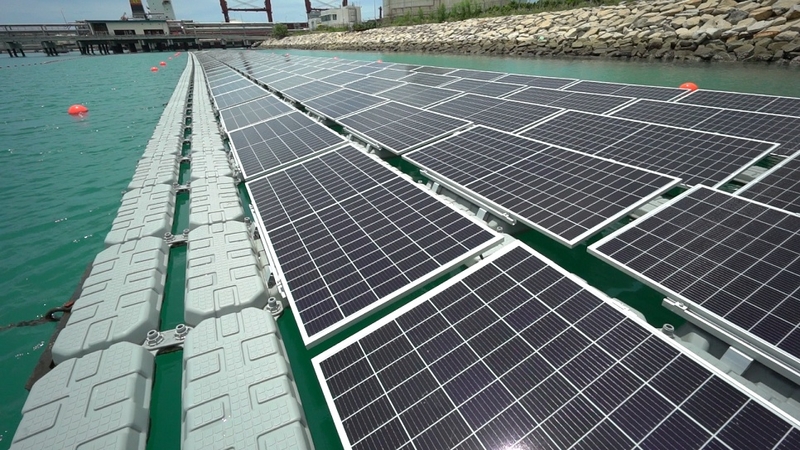
PTT Group has piloted the installation of a floating solar panel in the sea with a total capacity of 100 kilowatts at PTT Tank Terminal in Rayong as part of its campaign to promote renewable energy, a PTT press release said on Tuesday.
PTT Tank’s managing director ML Peekthong Thongyai said this system will help the company save Bt390,000 in electricity bills every year and cut down on the emission of carbon dioxide by 36 tonnes yearly.
The floating panel is made of special-grade plastic produced by PTT Global Chemical, while Global Power Synergy’s subsidiary Combined Heat and Power Producing Co Ltd designed and installed the system.
By The Washington Post · Hamza Shaban · BUSINESS The Securities and Exchange Commission has warned General Electric that it faces legal action in connection with its troubled insurance business, according to a regulatory filing published Tuesday.
The SEC issued what’s known as a “Wells notice” on Sept. 30 to alert the conglomerate that it considering civil action for possible securities law violations.
Boston-based GE first disclosed the government investigation into its accounting practices in 2018, after a multibillion-dollar underestimate of its insurance business created a shortfall in its reserves. Then-Chief Financial Officer Jamie Miller said on a conference call with analysts, “There’s nothing here I’m overly concerned about.” The SEC also delved into how GE recognized revenue from long-term service agreements for the maintenance of industrial equipment, including power plants and jet engines.
In a statement Tuesday to The Washington Post, GE said it has “fully cooperated with the SEC’s investigation,” adding, “We strongly disagree with the recommendation of the SEC staff and will provide a response through the Wells notice process.” GE said it is providing documents and other information requested by the SEC.
The SEC declined to comment.
GE will be given an opportunity to make a case against enforcement. But if the government proceeds, it could seek an injunction against future violations of securities law and impose fines. GE acknowledged a level of uncertainty in the filing on what the investigation means for its business: “The results of the Wells notice and any enforcement action are unknown at this time.”
Like other companies in the aviation business, GE has been battered by the coronavirus. In May, the company said it would cut 13,000 jobs from its jet-engine operation. Industry executives have said it will take years for the aviation business to return to pre-pandemic levels. From its recent peak in February, the value of GE shares has been cut in half.
News of the Wells notice shook investors further, and the stock slumped 3.7% to close at $6.17. But the broader market fell after President Donald Trump tweeted Tuesday afternoon that he was withdrawing from stimulus negotiations until after the Nov. 3 election. He said he had instructed Treasury Secretary Steven Mnuchin to halt talks with Democratic leaders.
Investors have for months monitored the negotiations for signs of a breakthrough. Economic experts and government officials, including Federal Reserve Chair Jerome Powell, have tied the recovery of the U.S. economy to further government aid, highlighting the importance of a deal. Hours before Trump said he ended negotiations, Powell warned that insufficient support from policymakers could batter the economy further and imperil the recovery.
ERX, a digital token trading service provider, will launch its digital trading platform in Thailand by the end of the year.
Pinpraaj Chakkphak, ERX chief executive officer, said the Finance Ministry and the Securities and Exchange Commission (SEC) gave the company approval for trading digital assets in July this year, and the company has allowed certain customers to open a trading account since October 1.
He said ERX is currently talking to some potential customers who want to use their assets, such as property, to raise funds in the form of digital tokens. The firm expects to get three assets by the end of this year.
Pinpraaj added that the company has negotiated with three security companies to help boost investor’s interest in digital tokens.
“ERX’s strongest point is its major shareholder is Elevated Returns, an American company that specialises in digital assets and is experienced in issuing Aspen Coins, a token that is linked to the assets of the St Regis Aspen Resort with a funding value of US$18 million,” he said.
He added that ERX aims to first create a platform in Thailand before expanding further in rest of Asia.
“We have decided to start in Thailand because many Thais use smartphones and the SEC has the potential of improving its regulations in line with changes in technology. Also, Thai financial institutions are ready to invest in this form of assets,” he said.
Pinpraaj went on to say that the strongest point of digital tokens is that it gives investors a chance to get high returns by investing in assets they would not have access to otherwise, like properties that that sell investment units at Bt100 million.
“It also enables asset owners to raise funds at a far lower cost than they would if they were raising funds via the Stock Exchange of Thailand,” he added.
Trump just crushed stimulus talks, endangering U.S. economy and 26 million on unemployment
Biz insightsOct 07. 2020President Donald Trump watches Marine One from the Truman Balcony on Monday, Oct. 5, 2020, as he returns to the White House after receiving treatments for covid-19. MUST CREDIT: Washington Post photo by Jabin Botsford
By The Washington Post · Heather Long · BUSINESS, US-GLOBAL-MARKETS ECON-ANALYSIS
WASHINGTON – President Donald Trump’s surprise move Tuesday to shut down all negotiations on another big relief package until after the Nov. 3 election threatens to stall the U.S. economic recovery – or even trigger a backslide.
Many economists and business leaders were quick to dub the move disheartening and irresponsible. The stock market immediately sold off after the news, with the Dow Jones industrial average ending the day 376 points down. Companies from airlines to energy firms to restaurants have warned in recent days that they will have to undertake massive layoffs without more government aid. At least 75,000 layoffs were announced by major corporations at the end of last week alone, and Boeing has sharply pulled back its forecasts for airplane sales for years.
In short, the U.S. economy is about half recovered, meaning there is still a long way to go. For weeks, economists and business leaders have warned that the next phase of the recovery will likely be harder and it would be a huge mistake for politicians to think their job is done.
Even some right-leaning economists were calling for stimulus.
“If there isn’t more stimulus, the recovery is in danger of collapsing. It’s that simple,” said Peter Morici, an economist and emeritus business professor at the University of Maryland who has supported Trump’s reelection. “Waiting until after the election is waiting too long.”
There’s growing concern among economists about a downward spiral. As businesses cut more jobs, people have less money to spend, which means they buy less at stores, restaurants and other companies, putting those businesses and workers at risk.
Trump has tried to portray this recovery as a rapid bounceback – a “super V” shape when considered on a line chart – but there’s growing fear it could turn into more of a “W” shape with a second dip if layoffs and business closures escalate in the coming weeks.
“Corporations were holding off on laying off employees in the hopes of further stimulus,” said Peter Atwater, an adjunct lecturer in economics at the College of William & Mary. “With this afternoon’s news, I expect that we will see businesses capitulate and begin to announce large scale layoffs.”
This new wave of layoffs will add more to the ranks of the 26 million Americans who were receiving unemployment compensation. Many unemployed people say they no longer have enough money to pay for rent, cars, utilities or even food. The average unemployment-benefit payment fell from $900 a week to just over $300 at the end of July, a sharp reduction that makes it hard for many families to survive. As these people stop paying renting and car payments, it hurts landlords, firms and banks waiting for the money.
Hours before Trump’s tweet, Federal Reserve Chair Jerome Powell urged Congress to act quickly and go big on more aid, saying the risk was far greater of backsliding for inaction than doing too much.
“Too little support would lead to a weak recovery, creating unnecessary hardship for households and businesses,” Powell said at an event hosted by the National Association for Business Economics.
These fears are growing as the United States tries to contain the novel coronavirus, which causes the deadly illness covid-19. More than two dozen states have reported increases in cases in recent days. As case counts rise, people typically stay home and curtail spending. Rose and Sparrow Salon, a top rated hair salon in the District of Columbia, has seen a pickup in cancellations as people worry about venturing out, said owner Amie Adkins.
Trump tweeted that “the Stock Market is at record levels, JOBS and unemployment also coming back in record numbers,” but the reality is that about half the jobs lost in the spring, during the initial spike of the public health crisis, have returned.
Economists have warned for weeks that jobs that have returned are the low-hanging fruit and getting the rest of the jobs back will be more difficult, much like running the second half of a marathon.
Trump’s own treasury secretary, Steven Mnuchin, told Congress during a recent hearing that another round of stimulus was needed for small businesses and the unemployed.
“We should act quickly because they need the support now,” Mnuchin said told the Senate Banking Committee on Sept. 24. “They don’t need the support next year.”
Mnuchin and House Speaker Nancy Pelosi, D-Calif., were close to a deal for over $1.6 trillion in aid. The major disagreements were over how much help to give cash-strapped states, cities and the unemployed, but many felt a deal was within reach.
The momentum in negotiations came after the September jobs report. Permanent job losses are rising as people have been out of work for half a year. While the nation did add jobs in September, the gains were the slowest since the recovery and nearly a quarter of restaurant and hospitality jobs remain wiped out. State government and the education sector lost jobs in September, a red flag of what lies ahead for many states, cities and municipalities are running low on funding.
Fred Warf runs a small barbershop and salon called Hair FX in Chicago with his wife. Like many small business owners, he was really hoping for another round of government grants or loans like the Paycheck Protection Program that went to more than 5 million businesses.
Warf did receive a loan over the summer, but that money is long gone. He has been able to reopen, but like many “high contact” businesses, it’s nothing like before. Some clients still have not returned. His costs are up for all the protective gear and cleaning that he has to do in between clients. And a lot of people are still on edge. The business staff is down to him and his wife, but he’s still struggling to pay his landlord.
“My business has to change to make profitability, but what else can we cut?” said Warf, who is 62. “This was supposed to be my golden years to make money and it certainly is not.”
Warf says he’s staying in business largely because of his blue-collar clients. They still have to go to work in factories and warehouses, and they are willing to come in for regular haircuts. Yet, many of his white-collar Chicago office workers are “leery” to come in. As winter approaches, he’s worried about whether he can make it without more aid or more customers coming back.
The National Restaurant Association warned that 40% of restaurants are in danger of closing in the next six months without more aid. The American Hotel & Lodging Association warned thousands of hotels can’t pay toward their mortgages right now, putting them in danger of closing. Overall, 21% of small business warn that they will have to shut permanently if something doesn’t change in the next six months, according to a National Federation of Independent Business survey in August.
Economists, including those at the Fed, have built more government stimulus into their projections about the economic recovery. Without it, they warn the economy is likely to sputter again or even backslide.
“My forecast is, it may take until the end of 2021 to recover all of the economic output losses and three years to recover all the job losses,” said Lynn Reaser, chief economist at the Fermanian Business & Economic Institute at Point Loma Nazarene University. But she predicted a sharp “drop in economic activity” without more government stimulus.
Trump risks the nation backsliding economically, putting more jobs and business in danger of going away. He wanted a V-shaped recovery, but a W is looking more likely.
The Stock Exchange of Thailand (SET) Index fell by 3.55 points, or 0.28 per cent, to 1,246.60 in the morning session on Wednesday.
An analyst at Krungsri Securities expected the index to fluctuate sideways between 1,240 and 1,260 points despite positive sentiment over the rising oil price and the Centre for Economic Situation Administration aiming to discuss measures to stimulate expenses during the latter part of the year.
“The postponement of US economic stimulus bill negotiations until after the presidential election and foreign investors’ mass share sell-offs will pressure the index,” he said.
He recommended investors buy shares of:
> PTTEP, Top and PTTGC, that benefit from the rising oil price.
> Banpu and Age, that benefit from a rising coal price in response to strong Chinese demand.
> TU, PlanB, STGT and Com7, whose third-quarter performance is expected to grow.
The SET Index closed at 1,250.15 on Tuesday, up 7.16 points, or 0.58 per cent. Total transactions amounted to Bt56.52 billion, with an index high of 1,257.46 points and a low of 1,249.14.




 President Donald Trump watches Marine One from the Truman Balcony on Monday, Oct. 5, 2020, as he returns to the White House after receiving treatments for covid-19. MUST CREDIT: Washington Post photo by Jabin Botsford


