The price of gold rose by Bt200 per baht weight in morning trade on Wednesday, the Gold Traders Association reported.
As of 9.26am, the buying price of a gold bar was Bt28,300 per baht weight and selling price Bt28,400 while gold ornaments were priced at Bt27,788.28 and Bt28,900, respectively.
At close on Tuesday, the buying price of a gold bar was Bt28,100 per baht weight and selling price Bt28,200 while gold ornaments were Bt27,591.20 and Bt28,700, respectively.
Spot gold price moved to US$1,896 (Bt60,056.19) per ounce on Wednesday morning after the price rose by $20.9 to $1,903.2 per ounce at close on Tuesday.
Gold price closed in positive territory from the weakening dollar and mass buy-ups of the precious metal as a safe-haven asset amid uncertainty over the Covid-19 impact on the economy.
Hong Kong gold price rose by HK$120, opening at $17,520 (Bt71,619.46) per tael on Wednesday morning, the Chinese Gold and Silver Exchange Society reported.
The Stock Exchange of Thailand (SET) Index dropped by 3.46 points, or 0.28 per cent, to 1,253.88 in morning session on Wednesday.
An analyst at Krungsri Securities expected the index to fall to the support line at 1,250 due to lack of positive sentiment and the sharp fall in oil price due to uncertainty over fuel demand amid the Covid-19 crisis.
“Meanwhile, uncertainty over market volatility from the expiration of SET’s ceiling-floor adjustment, uptick rules and circuit breaker would pressure the index,” he said.
As investment strategy, he recommended that investors buy:
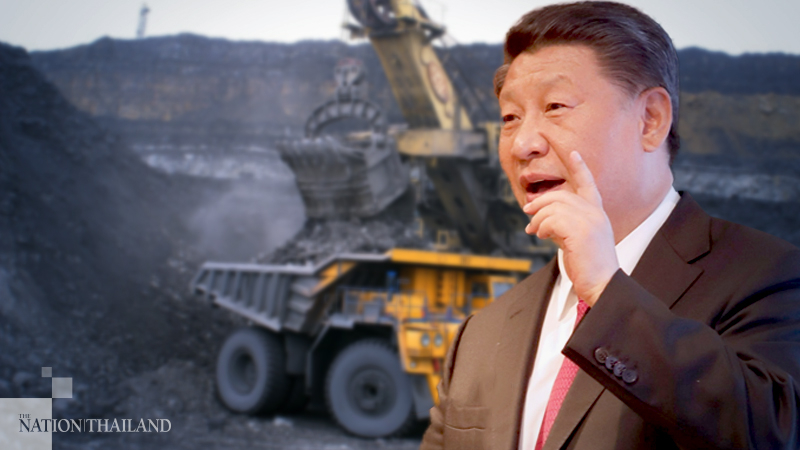
▪︎ BANPU and AGE that benefit from rising coal price in response to China’s strong demand.
▪︎ TU, ASIAN, COM7, CHG, PTG and PlanB whose third-quarter performance is expected to grow.
▪︎ DELTA, HANA, KCE and SMT that benefit from the weakening baht.
The SET Index closed at 1,257.34 on Tuesday, down 5.68 points or 0.45 per cent. The volume of total transactions was Bt38.20 billion with an index high of 1,267.67 and a low of 1,254.34.
Foreign investors are expected to make net sales in the Thai stock market of Bt300 billion to Bt350 billion this year from the current Bt273 billion due to the slowdown in the country’s economic recovery, Krungthai Bank said.
Krungthai market strategist Poon Panichpibool expected another Bt30 billion to Bt50 billion of foreign funds to flow out of the Thai stock market if economic recovery is slow.
He said this phenomenon would happen if there were a second Covid-19 outbreak in Thailand, the government’s travel bubble scheme fails to attract tourists or foreign investors wait to buy Thai bonds with interesting yields.
“However, foreign investors would make net sales in Thai stocks of only Bt275 billion to Bt300 billion this year if economic recovery is speeded up by the success of the travel bubble scheme, and Bt30 billion of foreign funds would flow into the stock market,” he said, adding that the production and distribution of Covid-19 vaccine would boost economic recovery.
“Meanwhile, the Thai bond market would not benefit much from the abovementioned positive sentiment because foreign investors would be more cautious about buying long-term bonds whose yield depended on the economic direction and inflation.”
He said more than Bt320 billion cash recently flowed out of the Thai stock market of which Bt270 billion was foreign investors’ funds as they believed the Thai economic outlook was still gloomy and there was no sign of a tourism recovery.
“Meanwhile, foreign investors’ funds began to flow into the Thai bond market after facing mass sell-offs worth Bt150 billion in March, as Thai bond yield was currently high compared to the US and European bonds,” he said.
He expected foreign funds to flow back into the Thai capital market with at least Bt100 billion this year from the recovery in the global and Thai economy and distribution of Covid-19 vaccine in the later part of this year.
On Tuesday, foreign investors made net sales of Thai stocks totalling Bt1.48 billion, while net sales since the beginning of this year increased to Bt273 billion.
New Michelin awards train spotlight on young talent, service and sustainability
Sep 29. 2020
By THE NATION
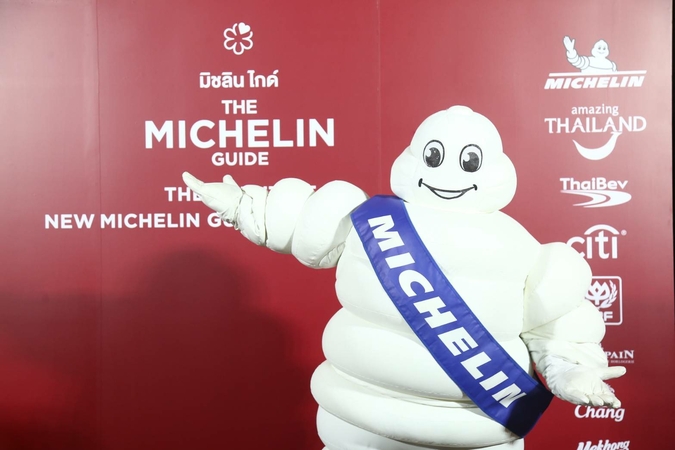
Michelin Guide has launched two new awards — for young chef and service — and a new distinction, the Michelin green star.
The additions will be made to the 2021 Michelin Guide Thailand’s portfolio of accolades. The new accolades are aimed at helping elevate the standards of Thailand’s culinary industry on all fronts and levels, and – during these tough times – boost the morale of restaurant professionals, and encourage consumer patronage of local dining establishments, Michelin Guides said.
Gwendal Poullennec, international director of Michelin Guides, said: “Launching these two new awards and a new distinction shows that our recognition goes beyond the search for the best quality of food. Our inspectors are more than eager to train the spotlight on the talent and commitment of restaurant teams, who put all their passion and knowhow to create unforgettable gastronomic experiences.”
The Young Chef Award will be given to a young starred chef with exceptional talent and great potential; the Service Award will be given to a restaurant personality who has a genuine passion for service, in making all customers feel special and enjoy a truly wonderful dining experience; and the green star will be given to one or more restaurants that “outstandingly embody and embrace sustainability in its day-to-day operations – such as recycling, food waste reduction, or promotion of local and seasonal ingredient sourcing”.
The winners of these awards are selected based on research and data collected from the Michelin Guide inspectors’ fieldwork.
Yuthasak Supasorn, governor of the Tourism Authority of Thailand, said: “The new Michelin Guide awards serve not only as an inspiration for chefs, restaurant professionals and entrepreneurs, to be dedicated in developing themselves and operating with environmental sustainability in mind, but also as a morale booster for them to overcome challenges along the road to their goal and success,” he said.
“Driven by the Michelin Guide awards, Thailand’s culinary and restaurant industry is moving towards excellence that is imbued with true Thai identity and authenticity – the uniqueness that will lead Thailand towards the ultimate goal of becoming a world-class sustainable tourism destination.”
The 2021 Michelin Guide for Thailand is scheduled to be released at the end of 2020, in a bilingual edition (Thai and English) and will be available in both print and digital versions.
Otsuka Group donates scholarships and educational equipment to school for the blind
Sep 29. 2020
By THE NATION
Otsuka Group, led by Mr. Shinsuke Yuasa, President of Thai Otsuka Co., Ltd., in conjunction with the elderly club at Office of the Permanent Secretary, Ministry of Defense organized an activity “Sarn Fun, Pun Num Jai, Pear Nong” to give scholarships and educational equipment as well as lunch for the students of Makudkiriwan (Khao Yai) School for the Blind, Nakhon Ratchasima province. This activity has been organized for 10 years by Thai Otsuka Co., Ltd.
SET, Egat sign MoU to study Thailand’s potential in wholesale of electricity
Sep 29. 2020
By The Nation
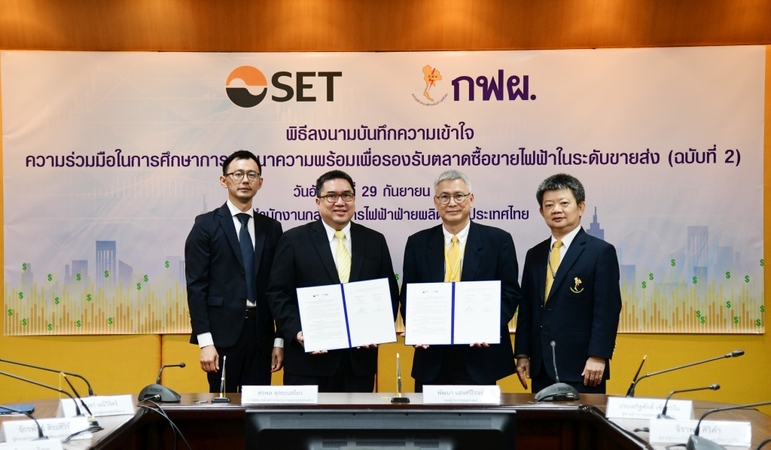
The Stock Exchange of Thailand (SET) and the Electricity Generating Authority of Thailand (Egat) signed a second memorandum of understanding (MoU) on Tuesday to jointly study Thailand’s potential to establish a wholesale electricity market.
The study, which will take six months, will focus on the trend of electricity business, appropriate format of electricity trading market in Thailand and the role financial markets play in the electricity business.
Patana Sangsriroujana, Egat deputy governor for strategy, said the agency saw an opportunity in the wholesale electricity market, and that initially, it will set up a day-ahead market and an intraday market.
Egat will also draw up electricity trading rules for markets, while SEC will advise it on the development of a trading system.
Home prices in 20 U.S. cities accelerate the most since 2018
Sep 30. 2020
By Syndication Washington Post, Bloomberg · Craig Giammona · BUSINESS
Home prices in 20 U.S. cities gained in July, pushed higher by demand for housing that has been fueled by low mortgage rates.
The S&P CoreLogic Case-Shiller index of property values increased 3.9% from 2019, beating the estimate of 3.6%. It was the biggest year-over-year increase since December 2018.
The housing market has been an unexpected bright spot for the U.S. economy, with Americans eager to take advantage of record-low mortgage rates. A shortage of inventory has helped prop up prices, particularly as Americans look for more space to spread out.
“With buyer demand showing no signs of a slow down, as well as limited inventory, more price increases are inevitably on the horizon,” said Danielle Hale, chief economist at Realtor.com.
The biggest increases came in Phoenix (9.2%), Seattle (7%) and Charlotte (6%). New York (1.3%), Chicago (0.8%) and San Francisco (2.5%) saw the smallest gains in July among the 20 cities tracked by the index.
Still, prices were up in those cities, even as the pandemic created anxiety about dense urban living. The pandemic has fueled a narrative that Americans are fleeing cities for the suburbs.
And while some residents have departed high-cost locations, including New York and San Francisco, the death of urban living is a “myth,” according to a research note from Barclays.
Read more: Mortgage Rates in the U.S. Increase, With 30-Year Loans at 2.9%
The higher homes prices come as the available inventory of properties to buy is tight. Some sellers are reluctant to list during a pandemic, while home builders are being cautious as they grapple with high lumber costs.
And while the homebuying stalled when the pandemic first hit, real estate is showing strength even with high unemployment and mounting bankruptcies putting the economic recovery on shaky ground.
“The housing market has withstood basically every obstacle that the pandemic has thrown its way,” Matthew Speakman, an economist at Zillow, said in a statement. “It appears that upward price pressure should endure into the fall.”
By Syndication Washington Post, Bloomberg · Matt Robinson, Tom Schoenberg · BUSINESS JPMorgan Chase & Co. admitted wrongdoing and agreed to pay more than $920 million to resolve U.S. authorities’ claims of market manipulation in the bank’s trading of metals futures and Treasury securities over an eight-year period, the largest sanction ever tied to the illegal practice known as spoofing.
The New York-based lender will pay the biggest monetary penalty ever imposed by the CFTC, including a $436.4 million fine, $311.7 million in restitution and more than $172 million in disgorgement, according to a statement from the Commodity Futures Trading Commission. The CFTC said its order will recognize and offset restitution and disgorgement payments made to the Department of Justice and Securities and Exchange Commission.
The accord ends a criminal investigation of the bank that has led to a half dozen employees being charged for allegedly rigging the price of gold and silver futures for more than eight years. Two have entered guilty pleas, and four others are awaiting trial.
The JPMorgan penalty far exceeds previous spoofing-related fines levied against banks, and is the toughest sanction imposed in the Justice Department’s years-long crackdown on spoofing. The bank entered into a deferred prosecution agreement with the Justice Department as part of the settlement, according to the CFTC.
A JPMorgan spokesman had no immediate comment.
Spoofing typically involves flooding derivatives markets with orders that traders don’t intend to execute to trick others into moving prices in a desired direction. The practice has become a focus for prosecutors and regulators in recent years after lawmakers specifically prohibited it in 2010. While submitting and canceling orders isn’t illegal, it is unlawful as part of a strategy intended to dupe other traders.
More than two dozen individuals and firms have been sanctioned by the Justice Department or the CFTC, including day traders operating out of their bedrooms, sophisticated high-frequency trading shops and big banks such as Bank of America Corp. and Deutsche Bank AG.
The Justice Department took a much more aggressive tack with JPMorgan by alleging that the bank hosted an eight-year market manipulation conspiracy with its precious metals desk as a criminal racketeering operation.
While other suspected market cheats have been charged with specific spoofing and manipulation offenses, the Justice Department accused JPMorgan metals traders under the 1970 Racketeer Influenced and Corrupt Organizations Act — a criminal law more commonly applied to Mafia cases than global bank probes.
RICO allows for prosecutors to charge multiple criminal acts involving a group of people in the same case as long as they were part of the same enterprise. The Justice Department said the conspiracy on the JPMorgan metals desk ran from March 2008 to August 2016. The two former metals traders for the bank who have pleaded guilty to fraud charges are cooperating with authorities.
The highest-level individual charged is Michael Nowak, a veteran gold trader who remained active as the global head of JPMorgan’s precious metals desk until he was indicted under seal in August 2019 along with two others. A former JPMorgan salesman who worked with hedge fund clients was later added to the case.
In 2015, JPMorgan pleaded guilty to felony antitrust charges along with several other global banks that paid penalties and admitted to conspiring to rig the price of U.S. dollars and euros. The bank agreed to pay $550 million, but it and other global lenders in the accord felt little lasting hit from markets or customers, undercutting investor fears that a guilty plea would devastate their business.
Shortly after Nowak and other traders were charged under RICO, JPMorgan learned it was the focus of a separate but related criminal investigation into trading of Treasury securities and futures, according to a person familiar with the matter.
By Special To The Washington Post · Joanna Lewis · WORLD, ASIA-PACIFIC CHINA-ANALYSIS
China’s President Xi Jinping announced new climate targets during his Sept. 22 address to the U.N. General Assembly, including the nation’s plan to achieve carbon neutrality before 2060.
China’s international climate leadership seems to be in direct conflict with Beijing’s continued promotion of fossil fuel projects at home and abroad, however – so why did Xi make this announcement? Here’s what you need to know about its political and scientific implications.
– The timing of China’s announcement is strategic
It’s a big year for the 2015 Paris agreement – by year-end 2020, countries are supposed to submit their second round of “Nationally Determined Contributions” (NDCs), as well as their long-term strategies. Current NDCs target the 2025-2030 time frame, while long-term strategies target mid-century goals. Both are self-designed pledges tailored to each country’s circumstances.
Xi’s announcement suggests that, administratively, China expects to fulfill both 2020 requirements on time, a goal few other countries will probably meet. China is also on track to achieve its original Paris goals ahead of schedule. This lends some new credibility to China’s claim to climate leadership.
China is finalizing its 14th Five-Year Plan, which analysts anticipate will include new climate and energy targets for 2021-2025 that build upon those in previous Five-Year Plans. Since the Paris agreement has minimal enforcement mechanisms, it essentially relies on domestic policy to back up the goals pledged internationally. The 2020 Paris agreement deadline coincides with China’s domestic planning horizon, effectively giving the international community a look under the hood to understand how China plans to meet its international goals.
– External politics may factor into China’s plans
Making this announcement before the U.S. election could be a sign that China anticipates scaled-up U.S. pressure and demands on climate action if Democratic nominee Joe Biden wins in November. A new U.S. NDC would come sometime in 2021 at the earliest, so an early announcement from China would preclude the possibility of another round of coordinated U.S.-China climate targets, giving Beijing more autonomy this time.
The announcement may also appease the European Union. The EU has been increasing bilateral engagement with China in an attempt to fill the void left by the United States, which has dramatically reduced cooperation with China on energy and climate over the past four years. During a mid-September leader’s summit, the EU urged China to “to strengthen its climate commitments in terms of peaking carbon dioxide emissions and setting the goal of climate neutrality domestically,” and agreed to launch a new high-level dialogue in advance of the COP 26 major international climate summit, which has been postponed until November 2021.
China faces an uphill battle to reduce its carbon emissions
Beijing relies on high-level climate and energy goals to compel local governments to act. National targets become provincial targets, which become municipal-level targets, and so on – and meeting these targets affects the evaluation of local officials.
Sometimes this can create perverse incentives, such as the time people were left without heat in the winter so provinces would not violate national coal heating restrictions. But on the whole, targets are important levers in what is still primarily a top-down political system. Without stringent climate targets, local governments under pressure to stimulate the economy after the covid-19 slowdown will face few constraints on energy demand or infrastructure approvals.
Despite calls for a green recovery, China’s post-outbreak stimulus focuses primarily on promoting high-carbon energy and infrastructure projects. China has an estimated 249.6 gigawatts of coal power capacity under construction or in the planning stages – more than the entire coal capacity of the United States (246.2 GW) or India (229 GW).
This includes 40.8 GW of new coal capacity proposed in the first-half of 2020 alone, of which 17 GW is already permitted for construction. Despite rampant overcapacity and low utilization rates in existing plants, as well as record low prices for the renewable energy technologies that China leads the world in deploying, pressure to boost GDP figures combined with antiquated pricing mechanisms means that officials are pushing through approvals for projects that make little economic sense.
China has also played a prominent role in supporting coal-fired plants elsewhere. Increasingly, China has become the lender of last resort as countries such as Japan and South Korea join other countries and multilateral banks in restricting overseas coal investments. Studies have found that the majority of China’s overseas energy investment is going to finance coal plants, and these plants tend to use less efficient technology than the plants they are building at home.
Increasingly, however, China is under pressure to undertake more dramatic changes in its domestic and overseas coal activities – the EU, for example, urged that Beijing place a moratorium on building new plants at home and abroad, and Biden has vowed to make similar demands if elected.
What does this mean for the global climate?
The Climate Action Tracker estimates that China’s pledge of climate neutrality by 2060 could reduce global temperature by about 0.2 to 0.3°C by the end of the century – that would be the single biggest reduction ever estimated by this European modeling tool, which translates country pledges into climate impacts. As the world’s largest carbon emitter and energy consumer, China transitioning away from a carbon-based energy system would have a huge global impact.
Of course, there are all sorts of methodological issues with making estimates of the impact of climate goals on global temperature – especially China’s goals, which as my research has shown, tend to operate with their own set of metrics and assumptions. And there are many ways to interpret what carbon neutrality might actually mean for China.
Ultimately, having a long-term goal for carbon neutrality is only meaningful today if it influences action now. For China, phasing out fossil fuel use in key sectors – and keeping the economy growing – will require far more ambitious measures. Meanwhile, making this pledge buys China some increased leverage in the climate negotiations, and perhaps even some global goodwill at a time of mounting concern over China’s actions at home and abroad.
– – –
Lewis is provost’s distinguished associate professor of energy and environment and director of the Science, Technology and International Affairs Program at Georgetown University. She is the author of “Green Innovation in China: China’s Wind Power Industry and the Global Transition to a Low-Carbon Economy” (Columbia University Press, 2015).
By Syndication Washington Post, Bloomberg · Sarah Ponczek · BUSINESS The end-of-month rebound in global equities faded as investors weighed prospects for fiscal stimulus in the U.S. and the outlook for the coronavirus pandemic. Oil tumbled on concern slow growth will limit demand.
The S&P 500 Index slumped, with more than two stocks falling for every one that advanced, after talks on expanding aid ended for the day with plans to resume discussions tomorrow. Data showing New York City’s rate of positive tests rose above 3% for the first time in months weighed on sentiment.
Oil fell toward $39 a barrel in New York. Treasurys were little changed, while the dollar weakened.
With the pandemic’s global death toll exceeding 1 million and virus cases on the upswing in many locales, investors are pinning hopes on a $2.2 trillion stimulus proposal by Democrats to help support economic growth. End-of-month and end-of-quarter portfolio rebalancing could also be exacerbating market moves as September comes to a close.
“A lot of the fiscal stimulus conversation is driving the markets here in the near-term,” said Brent Schutte, chief investment strategist at Northwestern Mutual Wealth Management. At the same time, there “has been a fear that you’d have a resurgence in cases in the fall and some people have chosen to take their money and sit on the sidelines.”
The negotiations between the Trump administration and congressional Democrats are reaching a critical juncture this week. House Speaker Nancy Pelosi and Treasury Secretary Steven Mnuchin spoke Tuesday morning for 50 minutes and are set to speak again Wednesday.
Markets are also girding for the first presidential debate Tuesday, and traders have pushed up overnight implied volatilities on Mexico’s peso in anticipation of price swings.
Elsewhere, Banks led broad-based declines in the Stoxx Europe 600 index. The MSCI AC Asia Pacific Index was little changed as South Korean shares advanced, while Hong Kong stocks fell. Nippon Telegraph & Telephone Corp. announced plans to turn its wireless carrier unit NTT Docomo Inc. into a wholly owned subsidiary in a $40 billion buyout. NTT Docomo shares surged by their limit at the close in Tokyo.
These are the main moves in markets:
Stocks
– The S&P 500 Index fell 0.5% as of 4 p.m. EDT.
– The Stoxx Europe 600 Index dipped 0.5%.
– The MSCI Asia Pacific Index was little changed.
Currencies
– The Bloomberg Dollar Spot Index declined 0.3%.
– Sterling rose 0.2% to $1.2866.
– The Japanese yen weakened 0.2% to 105.67 per dollar.
Bonds
– The yield on 10-year Treasurys fell less than one basis point to 0.65%.
– Germany’s 10-year yield dipped two basis points to -0.55%.
– Britain’s 10-year yield decreased two basis points to 0.18%.
– Italy’s 10-year yield declined three basis points to 0.85%.
Commodities
– West Texas Intermediate crude tumbled 3.8% to $39.04 a barrel.