เตรียมจัดงาน Medlab Asia and Asia Health 2020 งานแสดงเครื่องมือแพทย์และการประชุมวิชาการทางการแพทย์นานาชาติสร้างโอกาสทางธุรกิจเชื่อมต่อกับผู้ซื้อจากทั่วทุกมุมโลกวันที่ 09 ก.ย. 2563 เวลา 20:43 น. | ข่าวเศรษฐกิจ-ธุรกิจ
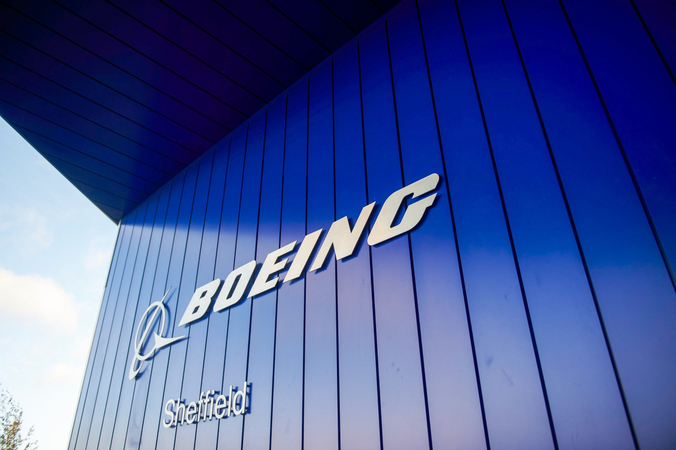
By The Washington Post · Ian Duncan · NATIONAL, BUSINESS, WORLD, TRANSPORTATION More than 2,000 family members of those killed when a Boeing 737 Max crashed in Ethiopia, filed formal opposition Thursday to technical fixes the Federal Aviation Administration has proposed for the plane, saying they still do not believe the aircraft will be safe.
“We believe that the FAA is more concerned with saving Boeing’s investment in the 737 MAX than it is on ensuring that the airplane is safe,” the family members wrote in response to a proposed FAA directive for operators of the plane.
The fixes focus on changes to a software system implicated in two crashes of the 737 Max that happened over at span of five months in 2018 and 2019. The system was designed to smooth the planes’ handling, but malfunctioned before the crashes, driving down the jets’ noses in a way the pilots were unable to overcome. A total of 346 people died in the two crashes and the Max fleet was grounded worldwide while Boeing developed a fix.
The relatives of people who died in the second crash, which happened shortly after the plane took off from Addis Ababa on March 10, 2019, wrote that updating the faulty software was insufficient.
“The FAA should reevaluate the airplane as a whole and only permit it to fly if the FAA is completely satisfied that the 737 MAX is not a danger,” they wrote.
The FAA did not immediately respond to a request for comment.
The families submitted their comments the day after the House Transportation Committee issued a scathing report on the development of the Max by Boeing, its oversight by the FAA and their response in the months between the two crashes.
House investigators concluded that the crashes were the result of a “horrific culmination of a series of faulty technical assumptions by Boeing’s engineers, a lack of transparency on the part of Boeing’s management, and grossly insufficient oversight by the FAA.”
In their comments, the family members wrote that investigative findings showing missed opportunities to make the planes safer mean “the pain of our loss is compounded.”
Boeing engineers and test pilots flagged concerns inside the company about how the software system worked, concluding in one case that if pilots didn’t respond to a malfunction within 10 seconds, the outcome would be catastrophic.
“Boeing engineers identified the exact defect that would later cause the two crashes but decided that it was not necessary to change the design to eliminate the system’s risks,” the family members wrote.
The families called for a more thorough review of Max, including by an independent panel of experts, and the release of more data to the public before the plane is cleared to fly again.
The FAA is proposing to require software changes developed by Boeing that would curb the system and that it rely on data from two sensors instead of one.
The family members argue the changes only paper over an underlying issue with the plane’s aerodynamics. The software was included to counter changes in jet’s handling compared to previous models of 737, caused by the placement of the Max’s new engines.
“The software updates and revised procedures are no more than a mitigation strategy, because they fail to address the root cause of the problem,” they wrote.
An organization representing more than 10,000 British pilots filed comments Wednesday, echoing some of the families concerns. The group said in particular that it would prefer for the software system to receive data from three sensors, an approach used by European manufacturer Airbus.
The public has until Monday to comment on the FAA’s proposal. The agency will then review the comments before issuing a final directive requiring operators of the jets to make the fixes, a key step toward ungrounding the fleet.
But it remains unclear exactly when the Max might be approved to fly again.
An international group of regulators and crews has been meeting at London’s Gatwick Airport this week to evaluate training changes for Max pilots, and their feedback will be incorporated into a second document that the FAA will give the public the opportunity to comment on.
The FAA has repeatedly said that it is not following a specific timeline but is focused on thoroughly reviewing the Max.
Thai e-vehicle mogul urges launch of Bt2tn energy fund
CorporateSep 18. 2020Somphote Ahunai, CEO of Energy Absolute
By The Nation
The government was urged on Thursday to launch a nation-building energy fund worth Bt2 trillion to strengthen the new S-Curve sectors, existing industries and the grassroots economy.
Somphote Ahunai, CEO of Energy Absolute, told a seminar organised by the Institute of Business and Industrial Development that the fund could be established via gradual issuance of government bonds.
The bonds should carry a maturity length of 30 years and an interest rate of 3 per cent per annum, he added.
Of the total fund, Bt200 billion should be spent on supporting power producers, building power transmission lines and expanding the network of charging stations. It should also support electric vehicle (EV) producers and incentives for EV users.
Somphote said if all 20 million vehicles in Thailand switched to electric power, Thailand would save Bt100 billion per year in energy imports. The government could use this saving to pay the fund’s interest and principle to bondholders.
The remaining Bt1.8 trillion of the fund could be used to boost core industries and the grassroots economy, he added.
Thai Airways International (THAI) said on Thursday its latest repatriation flight landed on Wednesday, carrying home citizens who had been stranded by the Covid-19 pandemic.
Flight TG607 from Hong Kong touched down in Bangkok with 75 passengers aboard at 10.08pm on Wednesday.
THAI’s fifth repatriation service from Hong Kong also carried cargo on both legs of the journey, the carrier said.
Staff from THAI, the Foreign Ministry and the Hong Kong consulate collaborated to organise the flight.
All arrivals in Thailand are subject to two weeks mandatory quarantine.
The quarantine requirement will remain in place when Thailand reopens to foreign tourists as early as next month.
Krungsri (Bank of Ayudhya) is focusing on Japanese investment in the Eastern Economic Corridor as a key driver of its business growth over the next few years.
The bank on Thursday said its membership of the Mitsubishi UFJ Financial Group (MUFG), Japan’s largest financial group, gives it a competitive edge to promote new investment from Japan.
Said Yoshiyuki Horio, Krungsri head of Japanese Corporate and Multinational Banking (JPC/MNC):
“To enhance our leadership in the market, Krungsri JPC/MNC has set up business promotion initiatives via both assets and liabilities ends as well as promoting FX and derivative transaction opportunities, and trade and settlement transactions. While we continuously strengthen relationships with customers to be their main operating bank, we maximise the cross segment collaboration within Krungsri as well as leverage synergies with MUFG and other partner banks in the region focusing on operational excellence, data intelligence and professional skill enhancement.”
Krungsri JPC/MNC also underlined its measures to help businesses through the Covid-19 crisis, including additional credit facilities to support working capital and liquidity, providing market and industry outlook through web seminars, and creating new business opportunities for customers through business matching activities.
According to Thailand’s Board of Investment (BOI), the number of investment projects applying for BOI incentive and privileges in the first half of 2020 increased 7 per cent from the same period last year to 754 projects. Thailand is a major production base for Japanese investment, especially in the automotive industry. Japanese investors ranked No 1 in applying for BOI incentives in the first half of 2020.
“In supporting foreign investment in Thailand, we will focus on the Eastern Economic Corridor [EEC] project as a key growth driver for JPC/MNC Banking over the next few years,” Horio added.


 Somphote Ahunai, CEO of Energy Absolute
 Yoshiyuki Horio

