The Stock Exchange of Thailand (SET) Index fell 4.13 points or 0.31 per cent, closing at 1,333.22 today (August 6) despite positive signs about the massive US stimulus package and rising price of crude oil. Total transactions tallied at Bt55.061 billion with an index high of 1,346.49 and a low of 1,333.18.
In the morning, a Krungsri Securities stock analyst said he expected the index to rise between 1,345 and 1,350 points before falling despite positive news that the US Congress and White House may reach an agreement on the $1-trillion economic stimulus package by next week.
“The market also gained positive sentiment from the rising price of crude oil, which rose above $42 per barrel after US crude oil stocks dropped by 7.4 million barrels,” the analyst said
However, he warned the index may slump due to volatility, weak second-quarter company performances and mass sell-offs.
The top 10 stocks with the highest trade value today were PTTGC, BAM, ADVANC, AOT, CPALL, PTT, PTTEP, BDMS, CPF and PTL.
As of 4.30pm, the price of crude oil had dropped by $0.28 or 0.66 per cent to $41.91 per barrel, while gold rose by $13.10 or 0.64 per cent, to $2,062.40 per ounce.
Other Asian indices were mixed:
Japan’s Nikkei Index closed at 22,418.15, down 96.70 points, or 0.43 per cent.
China’s Shanghai SE Composite Index closed at 3,386.46, up 8.90 points, or 0.26 per cent, while Shenzhen SE Component Index closed at 13,863.13, down 97.79 points, or 0.70 per cent.
Hong Kong’s Hang Seng Index closed at 24,930.58, down 171.96 points, or 0.69 per cent.
South Korea’s KOSPI Index closed at 2,342.61, up 30.75 points, or 1.33 per cent.
Taiwan’s TAIEX Index closed at 12,913.50, up 111.20 points, or 0.87 per cent.
A Standard Chartered study shows those aged 18-34 in 12 countries are keen to take steps to adapt income streams, and re-skill if they can, in order to earn more.
Covid-19 is significantly impacting personal finances globally, with one-third already earning less and more than half expecting the pandemic to further affect their income and/or employment, a Standard Chartered survey has found, yet young people (aged 18-34) and those in emerging markets are the most confident in their digital skills and are prepared to adapt and work harder to realise opportunities in a post-Covid-19 world.
The study was conducted on 12,000 adults (aged 18 and above) across twelve markets – Hong Kong, Taiwan, mainland China, Singapore, Indonesia, Malaysia, India, the UAE, Kenya, Pakistan, the UK and the US.
It reveals a stark contrast between the financial reality that people face and their confidence in the future. This can be explained by a willingness – particularly among young people and those in emerging markets – to work harder, take steps to adapt income streams, and re-skill if they can, in order to earn more, Standard Chartered said in a press release today (August 6).
Young people are particularly confident, with 80 per cent of 18- to 34-year-olds feeling they have the digital skills needed to thrive post-pandemic compared to 63 per cent of those over 65. And with many graduating or leaving school in the midst of a global recession, younger generations are also more willing, or able, to adapt to the current circumstances. For example, 75 per cent of 25- to 34-year-olds would consider setting up a second income stream, compared to 40 per cent of those over 55. Meanwhile, and 72 per cent of all 18- to 44-year-olds would re-skill, compared to 37 per cent of those aged 55 and above, the company said.
Millennials and Generation Z are also more likely to respond to the crisis by starting a new business. For instance, 52 per cent of those aged 18 to 44 would consider doing so in the next six months, compared to 30 per cent of those 45 and above.
“Globally, this level of flexibility, adaptability and entrepreneurialism tends to decrease with age, along with confidence, despite – or perhaps because – older generations are more established in their careers.
“The divide is even more stark when comparing developed and emerging markets. Those in established global economies are not only less confident they have the digital skills needed to thrive amidst the downturn but are also less willing to adapt and take steps to increase their income,” Standard Chartered said.
More than 88 per cent of those surveyed in Kenya, mainland China, India and Pakistan said they would prefer to work more to get ahead than reduce their hours for less pay. Meanwhile, the UK and the US had the highest proportion of people who valued free time over more money – 38 and 33 per cent, respectively.
In terms of personal finances, respondents in Kenya (93%), mainland China (85%), Malaysia (83%) and India (82%) report the highest proportion of people who want to better manage their money to make it go further.
And while the pandemic has acted as a catalyst for the growth of online banking, with more than half globally using online services more, the shift has been apparent in fast-growing markets. For example, increased use of mobile devices for banking services is most prominent in India (79%), the UAE (72%), and Kenya (69%). Fast-growth markets are also more likely to want their banks to help improve their confidence at managing money digitally as they increasingly look to bank online – Kenya (91%), India (84%) and Indonesia (84%).
According to Standard Chartered, there is one clear area of almost unanimous agreement: a global desire for more flexibility when it comes to working arrangements post-Covid-19. For those for whom it is applicable, 71 per cent would prefer to continue working from home at least two days a week once restrictions are lifted and 77 per cent want more flexible working arrangements.
“Young people around the world have been hit particularly hard by the economic impact of the pandemic,” said Ben Hung, CEO of Retail Banking and Wealth Management and regional CEO for Greater China & North Asia at Standard Chartered. “Many are in insecure employment or graduating to a tough job market. Yet their confidence, adaptability and willingness to work hard, especially in fast-growing markets, provides hope for a recovery.
“Many are considering starting a new business in the wake of the pandemic and want to learn how to manage their finances better. They must be supported. Banks have a role to play both by helping them manage their money and providing tools that make banking easier so they can focus on leading the way to recovery,” Hung added.
The price of gold could rise further amid uncertainty over rising inflation and mass buy-ups by the world’s large gold funds, experts said.
Yesterday (August 5), the selling price of gold ornaments rose to Bt30,200 per baht weight, while the cost of a gold bar rose to Bt29,700 after the spot gold price hit a new high of US$2,033 (Bt62,972) per ounce.
This year, the price of gold ornaments and a gold bar rose by approximately Bt8,200 per baht weight, or 36 per cent, year on year, while the spot gold price rose by US$500 per ounce, or 33 per cent, year on year.
Benjama Ma-in, an analyst at YLG Bullion International, said the gold price rose faster than expected as it gained positive sentiment from mass buy-ups in gold after the price rose over the resistance line of $1,800 per ounce.
“However, the real factor that boosted the gold price was the inflation rate, which is likely to increase as countries move to stimulate their economies,” she said.
“Although the inflation rate in Thailand is likely to contract this year, the US Federal Reserve’s balance sheet this year increased from $4 trillion to $7 trillion in six months.”
She explained that the gold price could rise to $2,300 per ounce if many countries continued to inject money into their economies, causing uncertainty among investors over the rising inflation rate.
“For example, the US has injected liquidity until M2 money supply, including public cash and deposits, expanded by 23.19 per cent year on year, while the real yield contracted by 1.06. If the real yield contracts further, the gold price could rise as well,” she said.
“Besides, the US inflation rate could surge over 2 per cent as US economists have said that the Fed may use an average inflation policy instead of setting a 2 per cent inflation framework.”
She advised investors to closely follow the Covid-19 situation because the gold price could drop if a vaccine is successfully developed and many countries begin to ease their monetary policies.
Meanwhile, Gold Traders Association chairman Jitti Tangsitpakdee said the gold price rose over $2,000 per ounce after the destructive chemical blast in Lebanon, and political unrest.
“The price of gold could rise further as the world’s large gold funds are still buying the metal,” he pointed out.
“However, investors should pay attention even while speculating and follow the news regularly because the price is very high and the next resistance line is between $2,045 and $2,050 per ounce,” he added.
Huawei launches ICT training to build talent ecosystem in Asia
Aug 05. 2020Michael Macdonald, chief digital officer and executive consultant of Huawei Asia Pacific
By The Nation
Huawei Technologies has unveiled a new training programme to develop an ICT talent ecosystem it says will support sustainable digital transformation in Asia.
Hosted online yesterday, the Huawei Asia Pacific ICT Talent Forum 2020 was joined by over 2,000 participants, including industry experts and IT professors who discussed the need for a highly skilled ICT workforce to solve the region’s skills shortage.
The Huawei Asia Pacific ICT Certification Programme, announced at the event, is open to students and ICT practitioners who have joined or plan to join the Huawei Asia Pacific ICT Academy.
The programme runs from August 4 to November 30, 2020. Participants who pass the exams in the shortest time will be awarded on a first come, first served basis.
With the emergence of cloud computing, big data, the Internet of Things and artificial intelligence, basic IT skills will no longer suffice, said Michael Macdonald, chief digital officer and executive consultant of Huawei Asia Pacific.
“As enterprises redefine their job requirements, this new ICT landscape will leave us with an estimated shortage of about 5 million professionals. We aim to globally develop 2 million ICT professionals over the next five years to match high demand for skilled workers. In 2020, we are going to build more than 200 Huawei ICT Academies and train 10,000 ICT certification in Asia Pacific region,” Macdonald announced.
Huawei said its talent ecosystem consists of three initiatives: the Huawei Certification, the Huawei Academy and the Huawei ICT Competition.
The Huawei Certification covers 100 certification exams and 22 technical fields, and has certified more than 260,000 ICT students and employees, including 19,000 in Asia Pacific, said the firm.
Launched in 2013, the Huawei ICT Academy has collaborated with 900 higher education institutions to offer ICT courses and training for over 45,000 students each year, with 103 ICT Academies in the Asia Pacific region.
Meanwhile the Huawei Competition “allows the students to get recognised and secure valuable employment at leading enterprises”, said Macdonald.
In Thailand, the ICT market is growing rapidly. The company announced it has been working with a dozen leading universities to establish the Huawei Academy in the country. Thailand’s first Huawei ICT Competition was held in 2018, attracting over 2,000 students from across the country. The three national winners were given the opportunity to represent the country at the Global Final in Shenzhen, China.
Thailand’s largest food company says it is using lessons from the Covid-19 epicentre in Wuhan, China to ensure 100-per-cent product safety as Thailand enters its 10th week without local transmission of the virus.
Charoen Pokphand Foods (CPF) has outlined its safety practices in all business units across the world – feed, livestock, processed food, logistics, warehouse and office – in a bid to guarantee its products’ quality and traceability. So far, none of CPF’s operations in 17 countries has been closed or disrupted due to the pandemic.
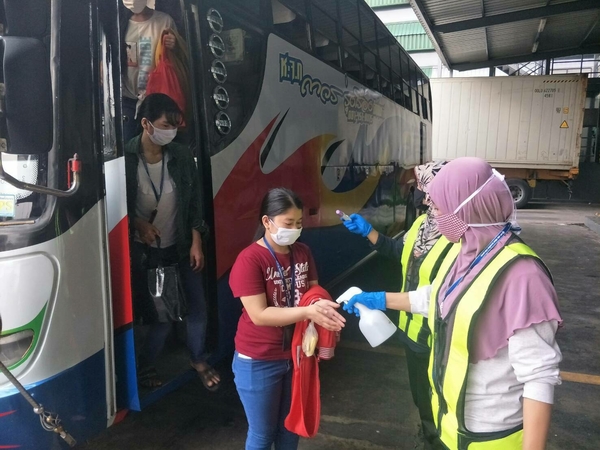
To ensure highest safety, CPF said it has imposed social distancing, increased the number of shuttle buses for employees, installed plastic screens for every table, health checkpoints and alcohol sprays, and body temperature scanners at site entrances.
On site, employees are required to wear gloves and masks all the time, while sanitisation has been made more frequent and automation introduced to reduce human contact during logistics processes.
Identifying workers’ confidence as key to undisrupted operations, CPF has launched a Covid-19 hotline to provide up-to-date information and advice in line with official disease controls for every employee, including migrant workers.
CPF said its contract farmers have also adopted “new normal” practices. Damnoen Chaturavittawong, senior vice president of CPF’s Swine Veterinary Service Department, said international-standard animal and human disease control measures are being practised for both livestock and aquaculture businesses. Following the epidemic of African swine flu across Asia and the Covid-19 pandemic, additional stringent measures and guidelines have been exercised.
To protect livestock raisers from Covid-19, CPF said it has imposed the following measures at buildings and farms countrywide.
1. Temperature monitoring for all employees. Even those not suffering fever must take leave if they have symptoms like coughing, running nose, chest pain or sore throat.
2. Social distancing of 2 metres between persons, zero farm visits, alternate work hours, no travel to risk areas, and work-from-home policy.
3. Personal hygiene concerning face masks and protective equipment and regular hand washing.
4. Safe transportation with temperature checks, face masks and hand washing for all drivers, along with contactless transportation.
Meanwhile the firm says its CP Freshmart chain is following government safety guidelines for food delivery, including temperature checks of employees on arrival at work.Delivery staffs are required to wear a mask, sanitise their hands and ensure social distancing before handing over products to customers. The retail chain also encourages consumers to pay via digital payment, which is contactless, to minimise the risk of infection.
Airports of Thailand (AOT) stands to lose more than Bt133 billion from its decision to change the minimum guaranteed payment method to help duty-free giant King Power amid the Covid-19 crisis, a stock analyst at Kasikorn Securities said on Tuesday (August 4).
AOT had informed the Stock Exchange of Thailand (SET) that it was taking the following steps to help King Power Duty Free and King Power Suvarnabhumi:
• Holding off the renovation of duty free areas until March 31, 2022;
• Changing the minimum guaranteed payment method to base it on the number of passengers at Suvarnabhumi Airport, which is far lower than the number estimated by the duty-free giant when it bid for the project.
An analyst at Kasikorn Securities said AOT was wrong in changing the minimum guaranteed payment without discussing it with shareholders first, because now it stands to lose Bt133.8 billion, which will bring its 2022 net profits down by 5.3 per cent.
“AOT should come up with better ways to ease King Power’s pressure from the Covid-19 pandemic,” he said.
The price of gold rose by Bt150 per baht weight in morning trade today (August 6), the Gold Traders Association reported.
As of 9.32am, the buying price of a gold bar was Bt29,750 per baht weight and selling price Bt29,850, while gold ornaments cost Bt29,213.32 and Bt30,350, respectively.
At close yesterday, the buying price of a gold bar was Bt29,600 per baht weight and selling price Bt29,700, while gold ornaments cost Bt29,061.72 and Bt30,200, respectively.
The Comex (Commodity Exchange) gold price to be delivered in December rose by US$28.30, or 1.4 per cent, to $2,049.30 (Bt63,707.86) per ounce at yesterday’s close.
The gold price closed at a new high amid a weakening dollar, causing the precious metal to become even more attractive to investors. Meanwhile, the market gained positive sentiment from hopes that the US Congress and the White House would agree on a $1-trillion economic stimulus package.
The Stock Exchange of Thailand (SET) Index rose by 0.66 points, or 0.05 per cent, to 1,338.01 this morning (August 6).
A stock analyst at Krungsri Securities expected the index to rise between 1,345 and 1,350 points before falling in response to positive news about a $1-trillion (Bt30.9 trillion) US economic stimulus package, on which the US Congress and the White House could reach agreement next week.
“Also, the market gained positive sentiment from the rising crude oil price that increased over $42 per barrel after US crude oil storage dropped by 7.4 million barrels,” the analyst said.
However, he said stock volatility, weak second-quarter company performance and mass sell-offs in response to technical indicators would see a slump in the index.
He recommended investors buy:
> Energy stocks that benefit from the rising crude oil price, such as PTT, PTTEP, Top, PTTGC, IRPC, SPRC, and IVL.
> Stocks whose second-quarter performance will improve, such as Top, PTTGC, SPRC, BGrim, CPF, TU, Asian, Tasco, STA, STGT, AP, PRM, PTL, AJ, CBG, TQM, JMT, Chayo, PTG, and BCH.
The SET Index closed 6.54 points, or 0.49 per cent, higher at 1,337.35 yesterday. Total transactions stood at Bt60.35 billion, with an index high of 1,341.23 and a low of 1,326.07.
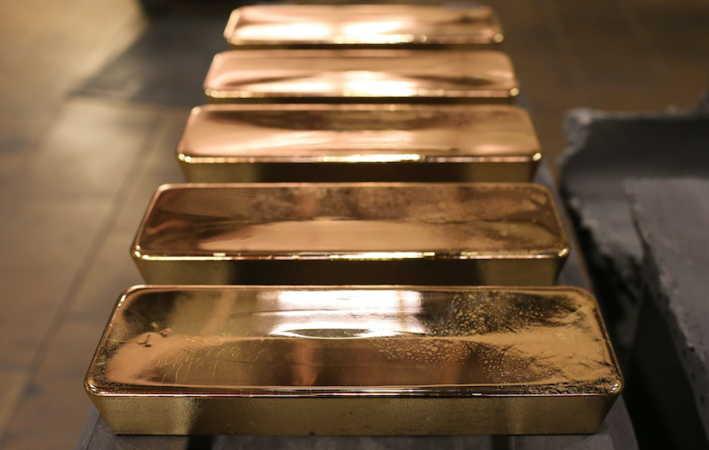
By The Washington Post · Hannah Denham · NATIONAL, BUSINESS, WORLD Gold closed above $2,000 an ounce for the first time this week, capping an explosive growth spurt that has blown past analysts’ projections.
The precious metal closed Wednesday at $2,052 a troy ounce; that’s a 72 percent surge since the rally began in fall 2018 and nearly 35 percent higher year to date. Gold reached a new fervor during the pandemic as investors rushed for cover. In February, Goldman Sachs forecast it would push above $1,800 if the pandemic worsened. Last week, gold hit $1,981 an ounce, blowing past the record $1,921 set in 2011.
Analysts track commodities such as gold and silver for insight on investors’ economic outlook, especially during periods of economic uncertainty and volatility in other financial markets. And with the United States in the throes of a deep recession, tens of millions of Americans out of work, and a resurgence in coronavirus cases, hospitalizations and deaths, investors are looking for something tangible that will last.
Ivan Feinseth, chief investment officer of Tigress Financial Partners, said he’s not a fan of gold. In March, after the U.S. stock market crashed, he said he urged investors not to bail out of equities. But the financial climate is much different now.
The U.S. economy shrank by a stunning 9.5 percent from April through June, according to data released Friday, marking the fastest quarterly drop in modern record-keeping. And there are fears of a backslide if recovery efforts fizzle and the country reverts to widespread shutdowns and other coronavirus pandemic safeguards.
“The only safe haven that we have is gold,” Feinseth said. “You got the momentum of everybody piling in, and the one thing about the commodities markets, they are very trend and momentum-driven.”
Here are five reasons gold is on a tear:
– – –
It’s a safe haven
Gold demand typically spikes in times of crisis or uncertainty – especially if equity markets tumble, as they did earlier this year. In March, the price of bullion hit a seven-year high as the coronavirus pandemic intensified in the United States, reflecting anxieties about the abilities of financial systems, particularly central bankers, to survive the economic hit.
– – –
Sense of stability
Gold is typically insulated from inflation and generalized uncertainty. The precious metal is relatively stable over the long haul, and its value isn’t easily depreciated by outside factors or other currencies.
– – –
Weakened dollar
The dollar has depreciated, and its weakened value makes it more attractive to investors outside the United States and gold cheaper in other currencies. Feinseth said he’s been watching the ties between the dollar and sliding interest rates as a gauge of investor interest in gold.
– – –
Low yields
Since March, the Federal Reserve has kept interest rates near zero to keep financial markets stable and make borrowing costs as low as possible to shore up the economy. It also decided to buy hundreds of billions of dollars in bonds. That brought yields down, making gold and its lack of yield more attractive to investors.
– – –
Media coverage
The higher gold prices go, the more analysts and investors talk about it, and the more financial media reports on it. Added exposure generally translates to more investor interest; that’s why some analysts expect prices to go even higher.
Last month, Phillip Streible, an analyst with Blue Line Futures, predicted gold would hit $2,500 by December 2021. Other market watchers believe it could happen as early as next week or by year’s end.




 Michael Macdonald, chief digital officer and executive consultant of Huawei Asia Pacific