แม่เหล็กใหม่ใจกลางแยกราชประสงค์ Apple Central World ที่ขอบอกเลยว่ามีความแตกต่างที่ไม่เหมือนใคร และมาพร้อมกับเงื่อนไขเล็กๆน้อยสำหรับลูกค้าก่อนเข้าไปชมและช้อปในร้าน เพื่อต้อนรับโลกยุคนิวนอร์มอลวันที่ 31 ก.ค. 2563 เวลา 16:38 น. | ข่าวเศรษฐกิจ-ธุรกิจ
Taiwan online platform to distribute 100,000 medical masks free to Thais
Aug 04. 2020
By The Nation
PChome Thai, a Taiwan online platform and the largest source of Taiwanese products in Thailand, said on Tuesay that it will give away 100,000 Taiwan-made medical-grade masks.
PChome said the programme aimed to show its support and concern for Thai people.
All Thais are welcome to register at PChome Thai website: (https://www.pchome.co.th/) to get free masks.
Wen-Hsiung Tsai, PChome Thailand’s managing director, said: “PChome Thai is deeply engaged in the local market. Taiwan’s success in epidemic prevention is witnessed by the world. As soon as the epidemic in Taiwan slowed down and the ban on the export of masks was lifted, we did our best to find high-quality Taiwan-made masks for Thai people, hoping to help them get through the epidemic and return to normal life as soon as possible. We are providing 100,000 medical-grade masks for Thai people free of charge.”
To get free masks, visit PChome Thai’s “Free Taiwan Masks – Taiwan Can Help” event page. All you need to do is register on PChome Thai website and request free masks (10 pieces per person) and pay less than Bt25 for shipping. For a chance to win a pair of AirPods Pro, share PChome Thai’s free masks offer page, Click on: https://www.pchome.co.th/epage/freemasktaiwancanhelp.html
For months it’s been clear that Disney, the country’s most prominent entertainment company, was facing a financial disaster unlike any in its history.
On Tuesday, it became evident just how deep the carnage has gone.
The company revealed that as a result of the coronavirus pandemic it took in just $11.8 billion in revenue and $1 billion in operating income in the three-month period that ended in June, the height of lockdowns in the country. The numbers are a significant drop from the same period a year ago, when it generated $20.25 billion in revenue and $4 billion in operating income, among the worst slides of the modern era.
The earnings report for the fiscal third-quarter gave numeric form to what had been the sense of many in the entertainment and financial communities: Disney, once the high-flying giant of Hollywood, has been brought low by the virus, its creations often unable to be produced or consumed.
To try to get some of that revenue back, the company said it would finally release “Mulan,” the action-adventure reboot that has been delayed several times since its March opening.
But the company said it would employ a patchwork approach to do so. The live-action film will be made available on Disney Plus in the U.S. beginning Sept. 4 – at a cost of $29.99. The same pattern will follow in Canada, Australia and some of Western Europe. Customers will be given indefinite access to the film in exchange for the fee, but only as long as they subscribe to Disney Plus.
In countries where Disney Plus is not offered or theaters are widely open, meanwhile, the movie will go to theaters. This will almost certainly include China, where the film is expected to generate a large percentage of its box office.
In moving the film to a digital platform in the U.S., Disney is acknowledging that covid-19 surges make unlikely the quick resumption of normal business – a belief embraced by other studios, which have either substantially postponed their movies to 2021 or pursued a more circumscribed American release plan.
The “Mulan” announcement also finally resolves what had been one of the great ambiguities of corona-era Hollywood.
Where many movies – including those from Disney – had either been postponed to the end of 2020 or moved quickly to digital, “Mulan” had remained in a kind of purgatory, postponed several times as the studio sought to bring it to theaters around the world. With the move, Disney has decided on a solution, if a hybrid one. It will bring out the film in theaters in some countries but not others, and it is taking it to a subscription streaming platform but still charging a supersized theater price.
Disney’s $11.78 billion in revenue in the quarter was lower than the $12.37 billion many analysts expected, though earnings-per-share of 8 cents was above the 64-cent loss many forecast.
The company saw major revenue drops in several business units compared to 2019.
Theme parks saw a plummet from $6.58 billion to $983 million, a plunge of 85 percent. No American or European park was open in the quarter, while parks in Shanghai and Hong Kong reopened only midway during the period.
Equally concerning for Disney have been the few rays of theme-park light since the quarter ended. The company reopened Disney World in Florida last month to begin rebuilding its revenue pipeline. But chief financial officer Christine McCarthy acknowledged the move has not panned out as hoped.
“The upside we’re seeing is less than we originally expected given the surge of covid-19 in Florida,” she told analysts.
Disney chief executive Bob Chapek said that the park has experienced a “higher-than-expected level of cancellations” as people decide not to travel to Orlando because of the virus.
The company’s studio unit, which did not release any major new movies to theaters, saw revenue drop from $3.8 billion during the quarter last year to $1.74 billion this year, a slide of 55 percent.
Its TV unit, however, was able to hold the line, as revenue stayed mostly flat at $6.6 billion compared to $6.7 billion last year, with many advertisers already paid up through the quarter. Harsher effects could be felt in the months ahead with the lack of new shows and a slowdown in the ad-sales market.
One of the rare bright spots in the quarter was Disney Plus, the streaming service the company launched in November. Disney executives said on a conference call it now has 60.5 million subscribers worldwide after moving a number of previously theatrical movies to the service, most notably “Hamilton” on July 4 weekend. The service is growing faster than many analysts expected, reaching 54.5 million in May and adding six million subscribers since.
The direct-to-consumer division, of which Plus is a part, saw revenue tick up slightly, by 2 percent, from $3.88 billion in the same quarter in 2019 to $3.97 billion in 2020.
Still, with investment costs high, the company does not expect profitability from Disney Plus for several more years, and the direct-to-consumer division saw a loss of $706 million in the quarter, 26 percent more than last year.
“Mulan” is one way that challenge might be remedied: a product financed by another division that could bring revenue to the start-up service.
Disney executives acknowledged how uncommon the tack was but called it a necessary exception at this moment.
The pandemic has “forced us to consider different approaches and look for new opportunities,” Chapek said in an analyst call.
The move, though, is unusual even in the streaming world, which has typically offered an all-you-can-eat plan to subscribers in which all new content is available under the monthly fee. According to the “Mulan” plan, however, a customer must subscribe to the service just for the right to pay for the movie.
By placing the movie exclusively on the service instead of making it available through cable or satellite providers, the company is gambling that the benefit of the new Disney Plus subscribers it attracts will outweigh the lost revenue from people who are not subscribers.
It also is making a financial calculation: by putting the movie exclusively on its own platform, Disney is avoiding handing over as much as 20 percent of sales revenue to cable operators, as studios typically do with distributors.
Later in the call, Chapek seemed poised to rule out the possibility this could be a trial balloon but then stopped short of that position.
“We’re looking at Mulan as a one-off as opposed to trying to say there’s some new business-windowing model,” he said. But then he added, “That said, we find it very interesting to take a new offering to consumers at a $29.99 price point and learn from it.”
The company’s stock price has not dropped during the pandemic, as bargain-hunters and long-term investors have sent the price up more than 20 percent since lockdowns began in mid-March. On Tuesday, investors, apparently reacting to the digital “Mulan” announcement, sent the share price up 4 percent in after-hours trading.
Both Chapek and executive chairman Bob Iger face significant headwinds in the months ahead. Any hope of a Disney comeback in the last six months of 2020 will turn on several factors related to the pandemic: Whether sports, particularly the NBA and Major League Baseball, can continue uninterrupted and bring much-needed revenue to ESPN; whether prime-time shows can begin shooting to ensure a reasonable start to the broadcast-network fall season; and whether enough theaters can reopen in the U.S. and around the world to begin collecting box office revenue.
While Mulan will not be in U.S. theaters, Disney has high hopes for November, when it has Pixar’s “Soul” and Marvel’s “Black Widow” scheduled to open.
Disneyland will also need to reopen if the company wishes to restore its theme parks to its past glory; the park remains closed under California orders. The parks are key to Disney’s financial fortunes: with $6.76 billion in operating income last fiscal year, the division was the most profitable of any unit besides television.
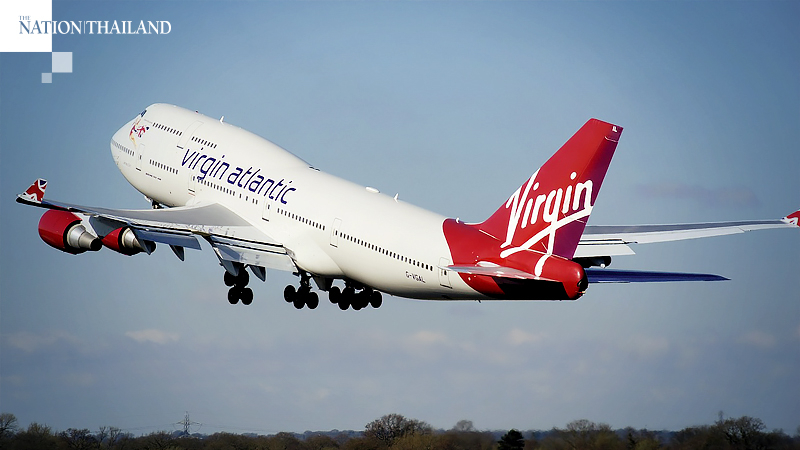
By Syndication Washington Post, Bloomberg · Claire Boston, Josh Saul · BUSINESS · Aug 05, 2020 – 3:18 AM Richard Branson’s Virgin Atlantic Airways filed for Chapter 15 bankruptcy protection in the U.S. on Tuesday after telling a London court it was set to run out of cash next month without getting approval for a rescue financing.
The airline filed its petition in the Southern District of New York. Chapter 15 bankruptcy allows foreign companies with U.S. assets to protect themselves against claims while they work on a turnaround plan.
Since Jan. 1, Virgin’s reservations are down 89% year-over-year and current demand for the second half of 2020 is at approximately 25% of 2019 levels, according to court papers.
“The group and its business have been adversely affected by the ongoing Covid-19 pandemic, which has caused an unprecedented near-shutdown of the global passenger aviation industry,” according to the court papers. “Global aviation was one of the first industries to be impacted by the Covid-19 pandemic and is likely to be one of the last to fully recover.”
By The Washington Post · Steven Zeitchik · BUSINESS, ENTERTAINMENT, FILM, TV For months it’s been clear that Disney, the country’s most prominent entertainment company, was facing a financial disaster unlike any in its history.
On Tuesday, it became evident just how deep the carnage has gone.
The company revealed that as a result of the coronavirus pandemic it took in just $11.8 billion in revenue and $1 billion in operating income in the three-month period that ended in June, the height of lockdowns in the country. The numbers are a significant drop from the same period a year ago, when it generated $20.25 billion in revenue and $4 billion in operating income, among the worst slides of the modern era.
The earnings report for the fiscal third-quarter gave numeric form to what had been the sense of many in the entertainment and financial communities: Disney, once the high-flying giant of Hollywood, has been brought low by the virus, its creations often unable to be produced or consumed.
To try to get some of that revenue back, the company said it would finally release “Mulan,” the action-adventure reboot that has been delayed several times since its March opening.
But the company said it would employ a patchwork approach to do so. The live-action film will be made available on Disney Plus in the U.S. beginning Sept. 4 – at a cost of $29.99. The same pattern will follow in Canada, Australia and some of Western Europe. Customers will be given indefinite access to the film in exchange for the fee, but only as long as they subscribe to Disney Plus.
In countries where Disney Plus is not offered or theaters are widely open, meanwhile, the movie will go to theaters. This will almost certainly include China, where the film is expected to generate a large percentage of its box office.
In moving the film to a digital platform in the U.S., Disney is acknowledging that covid-19 surges make unlikely the quick resumption of normal business – a belief embraced by other studios, which have either substantially postponed their movies to 2021 or pursued a more circumscribed American release plan.
The “Mulan” announcement also finally resolves what had been one of the great ambiguities of corona-era Hollywood.
Where many movies – including those from Disney – had either been postponed to the end of 2020 or moved quickly to digital, “Mulan” had remained in a kind of purgatory, postponed several times as the studio sought to bring it to theaters around the world. With the move, Disney has decided on a solution, if a hybrid one. It will bring out the film in theaters in some countries but not others, and it is taking it to a subscription streaming platform but still charging a supersized theater price.
Disney’s $11.78 billion in revenue in the quarter was lower than the $12.37 billion many analysts expected, though earnings-per-share of 8 cents was above the 64-cent loss many forecast.
The company saw major revenue drops in several business units compared to 2019.
Theme parks saw a plummet from $6.58 billion to $983 million, a plunge of 85 percent. No American or European park was open in the quarter, while parks in Shanghai and Hong Kong reopened only midway during the period.
Equally concerning for Disney have been the few rays of theme-park light since the quarter ended. The company reopened Disney World in Florida last month to begin rebuilding its revenue pipeline. But chief financial officer Christine McCarthy acknowledged the move has not panned out as hoped.
“The upside we’re seeing is less than we originally expected given the surge of covid-19 in Florida,” she told analysts.
Disney chief executive Bob Chapek said that the park has experienced a “higher-than-expected level of cancellations” as people decide not to travel to Orlando because of the virus.
The company’s studio unit, which did not release any major new movies to theaters, saw revenue drop from $3.8 billion during the quarter last year to $1.74 billion this year, a slide of 55 percent.
Its TV unit, however, was able to hold the line, as revenue stayed mostly flat at $6.6 billion compared to $6.7 billion last year, with many advertisers already paid up through the quarter. Harsher effects could be felt in the months ahead with the lack of new shows and a slowdown in the ad-sales market.
One of the rare bright spots in the quarter was Disney Plus, the streaming service the company launched in November. Disney executives said on a conference call it now has 60.5 million subscribers worldwide after moving a number of previously theatrical movies to the service, most notably “Hamilton” on July 4 weekend. The service is growing faster than many analysts expected, reaching 54.5 million in May and adding six million subscribers since.
The direct-to-consumer division, of which Plus is a part, saw revenue tick up slightly, by 2 percent, from $3.88 billion in the same quarter in 2019 to $3.97 billion in 2020.
Still, with investment costs high, the company does not expect profitability from Disney Plus for several more years, and the direct-to-consumer division saw a loss of $706 million in the quarter, 26 percent more than last year.
“Mulan” is one way that challenge might be remedied: a product financed by another division that could bring revenue to the start-up service.
Disney executives acknowledged how uncommon the tack was but called it a necessary exception at this moment.
The pandemic has “forced us to consider different approaches and look for new opportunities,” Chapek said in an analyst call.
The move, though, is unusual even in the streaming world, which has typically offered an all-you-can-eat plan to subscribers in which all new content is available under the monthly fee. According to the “Mulan” plan, however, a customer must subscribe to the service just for the right to pay for the movie.
By placing the movie exclusively on the service instead of making it available through cable or satellite providers, the company is gambling that the benefit of the new Disney Plus subscribers it attracts will outweigh the lost revenue from people who are not subscribers.
It also is making a financial calculation: by putting the movie exclusively on its own platform, Disney is avoiding handing over as much as 20 percent of sales revenue to cable operators, as studios typically do with distributors.
Later in the call, Chapek seemed poised to rule out the possibility this could be a trial balloon but then stopped short of that position.
“We’re looking at Mulan as a one-off as opposed to trying to say there’s some new business-windowing model,” he said. But then he added, “That said, we find it very interesting to take a new offering to consumers at a $29.99 price point and learn from it.”
The company’s stock price has not dropped during the pandemic, as bargain-hunters and long-term investors have sent the price up more than 20 percent since lockdowns began in mid-March. On Tuesday, investors, apparently reacting to the digital “Mulan” announcement, sent the share price up 4 percent in after-hours trading.
Both Chapek and executive chairman Bob Iger face significant headwinds in the months ahead. Any hope of a Disney comeback in the last six months of 2020 will turn on several factors related to the pandemic: Whether sports, particularly the NBA and Major League Baseball, can continue uninterrupted and bring much-needed revenue to ESPN; whether prime-time shows can begin shooting to ensure a reasonable start to the broadcast-network fall season; and whether enough theaters can reopen in the U.S. and around the world to begin collecting box office revenue.
While Mulan will not be in U.S. theaters, Disney has high hopes for November, when it has Pixar’s “Soul” and Marvel’s “Black Widow” scheduled to open.
Disneyland will also need to reopen if the company wishes to restore its theme parks to its past glory; the park remains closed under California orders. The parks are key to Disney’s financial fortunes: with $6.76 billion in operating income last fiscal year, the division was the most profitable of any unit besides television.
IVL enters into deal for acquisition of PET recycling facilities in Poland
CorporateAug 04. 2020Yashovardhan Lohia, Executive Director and Head of Sustainability
By The Nation
Indorama Ventures Pcl (IVL), a global chemical producer, has entered into a definitive agreement to acquire Industrie Maurizio Peruzzo Polowat (IMP Polowat), a PET recycling facility in Poland.
The acquisition consists of two assets, strategically located in Bielsko-Biala and Leczyca, close to the major population centres of Kraków and Warsaw.
The production sites have a combined capacity of 23,000 tonnes of recycled polyethylene terephthalate (rPET) flakes and 4,000 tonnes of rPET pellets. The company is supported by 118 employees.
The acquisition is expected to close in the third quarter of 2020, subject to regulatory approvals.
IMP Polowat has a solid presence as one of the leading PET recyclers in Poland. This acquisition is consistent with IVL’s ambitious target in scaling its recycling capacity to reach 750,000 tonnes by 2025, the company said.
It also adds an attractive recycling platform for IVL in Eastern Europe, and will open up new opportunities to meet the increasing rPET demand for more sustainable packaging solutions. The combination of access to local bottle supply and trusted product quality will secure opportunity for IVL for growth and expansion over time, the company said.
Poland is a strategic market for IVL, and has made significant progress on waste management and recycling.
Yashovardhan Lohia, executive director and head of sustainability of Indorama Ventures, said: “We are pleased to continue to execute on our growth strategy of pursuing strategic acquisitions even during this unprecedented time. IMP Polowat represents a strategic fit for us.
“IVL is fully committed to its strategy and its role in addressing the issue of plastic waste and enhancing the circularity of PET. We continue to make good progress and remain confident in achieving our ambitious 2025 target to recycle at least 50 billion bottles per year, and investing US$1.5 billion to achieve this by 2025,” Lohia said.





 Yashovardhan Lohia, Executive Director and Head of Sustainability

