วันที่ 06 มิ.ย. 2563 ข่าวเศรษฐกิจ-ธุรกิจ #ศาสตร์เกษตรดินปุ๋ย

#ศาสตร์เกษตรดินปุ๋ย : ขอบคุณแหล่งข้อมูล : หนังสือพิมพ์โพสต์ทูเดย์

https://www.posttoday.com/economy

LINE MAN ขยายตลาดฟู้ดเดลิเวอรี ผ่าน "คลาวด์ คิทเช่น"
LINE MAN ขยายตลาดฟู้ดเดลิเวอรี ผ่าน “คลาวด์ คิทเช่น”

LINE MAN ปักหมุด “ปุณณวิถี” เปิด”คลาวด์ คิทเช่น รวบ 13 ร้านดัง สั่งได้ในออเดอร์เดียว จัดโปรโมชั่นปังๆ ระตุ้นยอดสั่งซื้อ ประเดิมโซนแรก กรุงเทพฯฝั่งตะวันออก

วันที่ 06 มิ.ย. 2563 เวลา 15:45 น. | ข่าวเศรษฐกิจ-ธุรกิจ
ผลไม้ไทยส่งออกไม่ได้ ก็เอามาขายใน ไอคอนสยาม

กรมส่งเสริมการเกษตร ผนึก ไอคอนสยาม นำผลไม้คุณภาพส่งออกมาจำหน่าย แก้เกมตลาดส่งออกทรุดจากพิษโควิด

วันที่ 06 มิ.ย. 2563 เวลา 14:57 น. | ข่าวเศรษฐกิจ-ธุรกิจ
บขส.เปิดเดินรถเส้นทางภาคใต้ 9 มิ.ย.นี้

บขส. แจ้งเปิดเดินรถเส้นทางภาคใต้ทุกเส้นทาง เริ่ม 9 มิ.ย.นี้ หลัง ศบค. ผ่อนคลายการเดินทางข้ามเขตพื้นที่จังหวัด

วันที่ 06 มิ.ย. 2563 เวลา 09:14 น. | ข่าวเศรษฐกิจ-ธุรกิจ

วันที่ 05 มิ.ย. 2563 ข่าวเศรษฐกิจ-ธุรกิจ #ศาสตร์เกษตรดินปุ๋ย

#ศาสตร์เกษตรดินปุ๋ย : ขอบคุณแหล่งข้อมูล : หนังสือพิมพ์โพสต์ทูเดย์

https://www.posttoday.com/economy

เปิดคลินิกแหล่งเงิน อุ้มผู้ประกอบการ ช่วงโควิด-19

สอท. ผนึกพันธมิตรสถาบันการเงิน เปิดตัวโครงการ “Advisory Clinic @ F.T.I. Connect” สร้างช่องทางเข้าถึงแหล่งเงินทุนและเสริมสภาพคล่องป้อนผู้ประกอบการ

วันที่ 05 มิ.ย. 2563 เวลา 20:30 น. | ข่าวเศรษฐกิจ-ธุรกิจ
หมอซื้อรถบีเอ็มดับเบิลยู ผ่อน0% ยาว60เดือน

บีเอ็มดับเบิลยู มอบข้อเสนอสุดพิเศษสำหรับแพทย์ ดาวน์เริ่มต้น 0% พร้อมผ่อนดอกเบี้ย 0% นาน 60 เดือน

วันที่ 05 มิ.ย. 2563 เวลา 18:59 น. | ข่าวเศรษฐกิจ-ธุรกิจ
“นกแอร์” ยืนยัน ช่วยเหลือพนักงานเต็มที่

“นกแอร์” ยืนยันให้ความช่วยเหลือพนักงานเสียชีวิตอย่างเต็มที่ ตั้งแต่วันที่เกิดเหตุการณ์

วันที่ 05 มิ.ย. 2563 เวลา 17:53 น. | ข่าวเศรษฐกิจ-ธุรกิจ
ยูเนี่ยน มอลล์ อุ้มผู้เช่าฝ่าวิกฤตพิษโควิด-19

ยูเนี่ยน มอลล์ อุ้มผู้เช่าฝ่าวิกฤตพิษโควิด-19 ลดค่าเช่า พร้อมเติมความรู้ทำธุรกิจ

วันที่ 05 มิ.ย. 2563 เวลา 17:35 น. | ข่าวเศรษฐกิจ-ธุรกิจ
บาร์บีคิวพลาซ่า แจกพี่ก้อนกลับบ้าน

อยากได้แหละดูออก 7 มิ.ย. นี้ ทานอาหารที่บาร์บีคิวพลาซ่า อุ้มพี่ก้อนกลับบ้านไปเลย

วันที่ 05 มิ.ย. 2563 เวลา 17:04 น. | ข่าวเศรษฐกิจ-ธุรกิจ
“อิมแพ็ค เมืองทองธานี” พร้อมเปิดกลางเดือนนี้

ผู้ว่านนท์ฯ ตรวจความพร้อม “อิมแพ็ค เมืองทองธานี” ก่อนเปิดบริการรับงานแรกกลางเดือนมิถุนายนนี้

วันที่ 05 มิ.ย. 2563 เวลา 16:43 น. | ข่าวเศรษฐกิจ-ธุรกิจ
ห้างเซ็นทรัล คว้ารางวัลระดับโลก

ห้างเซ็นทรัล ห้างเดียวของไทยและเซาธ์อีสต์เอเชีย คว้ารางวัลความเป็นเลิศด้านค้าปลีก ในงาน “The 2020 GIA Awards” จากสหรัฐอเมริกา

วันที่ 05 มิ.ย. 2563 เวลา 15:09 น. | ข่าวเศรษฐกิจ-ธุรกิจ
รัฐมนตรีเศรษฐกิจอาเซียน จีน ญี่ปุ่น เกาหลี ออก5 มาตรการ ฟื้นเศรษฐกิจในภูมิภาคจากพิษโควิด-19

วงถกรัฐมนตรีอาเซียนบวก 3 ผนึกกำลัง ร่วมเดินหน้ากระตุ้นเศรษฐกิจ ลดอุปสรรคทางการค้า หนุนธุรกิจใช้เทคโนโลยี เร่งลงนาม RCEP ฟื้นฟูเศรษฐกิจปีนี้

วันที่ 05 มิ.ย. 2563 เวลา 13:20 น. | ข่าวเศรษฐกิจ-ธุรกิจ
กรมทางหลวงผนึกกรุงไทยเปิดสมัครบัตร M-PASS ผ่านแอปพลิเคชัน พร้อมจัดส่งให้ถึงที่

กรมทางหลวงจับมือธนาคารกรุงไทย ให้ผู้ใช้สามารถสมัคร M-PASS ผ่าน M-PASS Mobile Application

วันที่ 05 มิ.ย. 2563 เวลา 10:57 น. | ข่าวเศรษฐกิจ-ธุรกิจ
เดือน พ.ค. คนกรุงฯ ว่างงาน 9.6%

ศูนย์วิจัยกสิกรไทย สำรวจเดือนพ.ค. 2563 คนกรุงฯ ว่างงาน 9.6% แนะภาครัฐเร่งหามาตรการสร้างงานรองรับ

วันที่ 05 มิ.ย. 2563 เวลา 09:12 น. | ข่าวเศรษฐกิจ-ธุรกิจ
โตโยต้า เปิดตัวไฮลักซ์ รีโว่ ใหม่

โตโยต้า เปิดตัวไฮลักซ์ รีโว่ ใหม่ และ ฟอร์จูนเนอร์ รวดเดียว 42 รุ่น

วันที่ 05 มิ.ย. 2563 เวลา 07:25 น. | ข่าวเศรษฐกิจ-ธุรกิจ

Fed vow boosts debt binge while borrowers cut thousands of jobs #ศาสตร์เกษตรดินปุ๋ย

#ศาสตร์เกษตรดินปุ๋ย : ขอบคุณแหล่งข้อมูล : หนังสือพิมพ์ The Nation.

https://www.nationthailand.com/business/30389126?utm_source=category&utm_medium=internal_referral

Fed vow boosts debt binge while borrowers cut thousands of jobs

Jun 05. 2020
Sysco delivery trucks sit outside the company's distribution center in Louisville, Kentucky, on Jan. 29, 2020. MUST CREDIT: Bloomberg photo by Luke Sharrett

Sysco delivery trucks sit outside the company’s distribution center in Louisville, Kentucky, on Jan. 29, 2020. MUST CREDIT: Bloomberg photo by Luke Sharrett
By Syndication Washington Post, Bloomberg · Bob Ivry, Lisa Lee, Craig Torres · BUSINESS, US-GLOBAL-MARKETS, CAREER-WORKPLACE, RETAIL

Soon after the Federal Reserve’s March 23 assurance that it would make borrowing easier for American corporations, Sysco sold $4 billion of debt.

Not long after that, the food-service giant announced plans to cut one-third of its workforce, more than 20,000 employees. Dividends to shareholders would continue, executives said.

That process repeated itself in April and May as the coronavirus spread. The Fed’s promise juiced the corporate-bond market. Borrowing by top-rated companies shot to a record $1.1 trillion for the year, nearly twice the pace of 2019. Companies as diverse as Sysco, Toyota, international marketing firm Omnicom and movie-theater chain Cinemark borrowed billions of dollars — and then fired workers.

The companies were under no obligation to behave any differently, but their actions call into question the degree to which the U.S. central bank’s promise to purchase corporate debt will help preserve American jobs.

While the Fed has yet to buy a single bond, its pledge threw a lifeline to the market that undoubtedly kept some people working. Retail chains such as Dollar General, CVS, Walgreens, Lowe’s and Costco said they’re adding personnel after tapping the bond market.

But unlike the Small Business Administration’s Paycheck Protection Program, which has incentives for employers to keep workers on the job, the taxpayer-backed facilities that the Fed and Treasury Department created for bigger companies have no such requirements. To make sure the emergency programs help fulfill one of the Fed’s mandates — maximum employment — the central bank is essentially crossing its fingers that restoring order to markets will translate to saving jobs.

“They could set conditions, say to companies, hire back your workers, maintain your payroll to at least a certain percentage of prior payroll, and we will help,” said Robert Reich, the former Secretary of Labor for President Bill Clinton who now teaches economics at the University of California, Berkeley. “It’s hardly clear that if you keep companies afloat they’ll hire employees.”

The lending programs — credit for big companies and the so-called Main Street facilities for midsize firms — are supported by the CARES Act, a law that passed the House with more than 96% of the chamber’s votes and cleared the Senate unanimously. For many supporters, putting conditions on the assistance was a step too far. If Congress had intended any, it would have made it explicit in the legislation, they say.

“Really it’s all about creating a context, a climate, in which employees will have the best chance to either keep their job, or go back to their old job, or ultimately find a new job,” Fed Chairman Jerome Powell said in a May 29 webinar hosted by Princeton University. “That’s the point of this exercise.” A spokesman for the U.S. central bank declined further comment.

Even as businesses around the country reopen after months of stay-at-home orders, prospects look grim for the roughly 21 million Americans who lost their jobs in March and April — a total that may have increased by 7.5 million in May. An extra $600 a week in unemployment benefits that Congress approved in March is slated to stop on July 31. The prohibition against firing workers in the $25 billion government rescue of U.S. airlines expires Sept. 30, and the biggest recipients have said they intend to shed employees after that date.

Reich’s view is echoed mostly by progressive Democrats and supporters of stricter regulatory oversight of the financial system.

“The Fed’s primary motivator in creating these lending facilities is not protecting workers,” U.S. Representative Katie Porter, a California Democrat on the Financial Services Committee, said in an email interview. “The American people should not be asked or expected to loan $500 billion with no strings attached.”

A letter, circulated by the Wall Street watchdog group Americans for Financial Reform and published May 27, urged Congress to attach conditions favorable to workers to any covid-19-related rescue programs. It was signed by 45 organizations, including labor unions and religious and environmental groups.

Without provisions for employees, “the credit assistance will tend to boost financial markets, but not the broad economic well-being of the great majority of the population,” Marcus Stanley, Americans for Financial Reform’s policy director, said in an interview.

Stanley said the corporate-lending programs don’t have to require companies to keep or rehire workers, but they could give priority to those that do.

In its legislation, Congress did express an intent that workers benefit from taxpayer-funded assistance, but it left a lot of the details to Powell and Treasury Secretary Steven Mnuchin.

“Our No. 1 objective is keeping people employed,” Mnuchin said during a May 19 Senate Banking Committee hearing after Senator Elizabeth Warren, a Massachusetts Democrat, accused him of “boosting your Wall Street buddies” at the expense of ordinary Americans. “What we put in the Main Street facility is that we expect people to use their best efforts to support jobs,” Mnuchin said.

The phrase “best efforts” echoes the original terms for the Main Street program, which required companies to attest they’ll make “reasonable efforts” to keep employees. The wording was subsequently changed to “commercially reasonable efforts,” which Jeremy C. Stein, chairman of the Harvard University economics department and a former Fed governor, called a welcome watering-down of expectations that the central bank would dictate employment policies to borrowers.

“It was smart of them to weaken that,” Stein said. “You can’t expect companies to borrow to pay employees.”

Companies might not seek emergency help if too many strings are attached to the aid, Stein said. Others question the practicality of tying workers to their companies as economic realities shift.

“To go to great lengths to make companies keep employees that they don’t need, in light of new expectations that economic activity will remain below pre-covid levels for a long while, doesn’t make sense,” said Mark Carey, a former Fed staff member and now co-president of the Risk Institute of the Global Association of Risk Professionals.

The Fed approached this crisis with the intent of keeping credit flowing everywhere, from municipalities to small businesses to big corporations to households. Powell said the programs are about lending, not spending — in other words, they aim to ease a financing pinch rather than stimulate the demand companies need to keep workers on the payroll.

“For the Fed to second-guess a corporate survival strategy would be a step too far for them,” said Adam Tooze, a Columbia University history professor and author of “Crashed: How a Decade of Financial Crises Changed the World.” Putting explicit conditions on program beneficiaries would make the central bank “a weird hybrid of the Federal Reserve, Treasury, BlackRock and an activist stockholder.” BlackRock is the world’s biggest money manager and was hired by the central bank to assist with bond programs.

Through the Main Street facilities, which are scheduled to begin operations any day, the Fed will buy as much as $600 billion in four-year loans made to companies by commercial banks with principal and interest deferred for one year. The program is aimed at midsize businesses, with 15,000 or fewer employees or annual revenue of $5 billion or less in 2019.

The central bank’s credit backstop for larger companies is split in two. The $500 billion primary program is designed to buy slices of syndicated loans or new bonds from companies with investment-grade credit scores or one notch below. It’s available to corporations that can prove they can’t borrow elsewhere. The $250 billion secondary facility buys individual corporate bonds already on the market and exchange-traded funds that include investment-grade and junk bonds. The Fed kicked off the program last month; its balance sheet as of June 2 listed ETF holdings valued at $4.3 billion.

European countries are charting a different policy course by paying workers directly. The U.K., for example, is offering 80% of salaries up to 2,600 pounds ($3,207) a month. The Netherlands and Denmark have effectively nationalized private payrolls.

The U.S. government paid adults who make less than $75,000 a year a one-time sum of $1,200, with $500 for every dependent child. The cost was $239 billion.

The S&P 500 has jumped 38% since March 23, the day the Fed intervened. Observers of the stock market wonder how it could be so bullish at the same time as the country faces an avalanche of joblessness unsurpassed in its history. The choices companies are making provide an answer.

Since selling $4 billion in debt on March 30, Sysco has amassed $6 billion of cash and available liquidity, enabling it to gobble up market share, while cutting $500 million of expenses, according to CEO Kevin Hourican. Sysco, which is based in Houston, will continue to pay dividends to shareholders, Chief Financial Officer Joel Grade said on a May 5 earnings call.

Movie theaters were one of the first businesses to close during the pandemic. Cinemark, which owns 554 of them, shut its U.S. locations on March 17. Three days later, the company paid a previously announced dividend. It has since said it will discontinue such distributions. Cinemark borrowed $250 million from the junk-bond market on April 13, the same day it announced the firing of 17,500 hourly workers. Managerial staff were kept on at reduced pay, according to company filings. Cinemark, which is based in Plano, Texas, said it plans to open its theaters in phases starting June 19.

The theater chain opted to go to the bond market over seeking funding from the government because “it didn’t come with any of the strings attached that government-backed facilities can include,” CEO Mark Zoradi said on the April 15 earnings call. It “was really no more complicated than that.”

Sysco and Cinemark declined to comment for this story, and referred to their executives’ previous remarks.

Omnicom issued $600 million in bonds on March 27. In an April 28 conference call to discuss quarterly earnings, CEO John Wren said the company was letting employees go but didn’t say how many. He said the company was extending medical benefits to July 31 for employees furloughed or fired.

Wren added: “Our liquidity, balance sheet and credit ratings remain very strong and we have no plans to change our dividend policy.” Omnicom didn’t respond to requests for comment.

Toyota borrowed $4 billion from investors on March 27. Three days later, the Japan-based car company said it would continue paying dividends to shareholders. Eight days after that it said it would drop roughly 5,000 contract workers who helped staff its plants in North America. Scott Vazin, a Toyota spokesperson, declined to comment.

In a March 24 letter, 200 academics, led by Stanford University Graduate School of Business Professor Jonathan Berk, called lending programs aimed at corporations “a huge mistake.” Better to focus help directly on people living paycheck to paycheck who lost their jobs, it said.

“Bailing out investors who chose to take high-risk investments because they wanted the high returns undermines capitalism and makes it an unfair game,” Berk said in an interview. “If you don’t have a level playing field in capitalism, it doesn’t work.”

Zoom’s 484% surge gives little-known early investor fortune #ศาสตร์เกษตรดินปุ๋ย

#ศาสตร์เกษตรดินปุ๋ย : ขอบคุณแหล่งข้อมูล : หนังสือพิมพ์ The Nation.

https://www.nationthailand.com/business/30389121?utm_source=category&utm_medium=internal_referral

Zoom’s 484% surge gives little-known early investor fortune

Jun 05. 2020
The logo for the Zoom Video Communications on a laptop computer in an arranged photograph taken in the Brooklyn borough of New York on April 10, 2020. MUST CREDIT: Bloomberg photo by Gabby Jones.

The logo for the Zoom Video Communications on a laptop computer in an arranged photograph taken in the Brooklyn borough of New York on April 10, 2020. MUST CREDIT: Bloomberg photo by Gabby Jones.
By Syndication Washington Post, Bloomberg · Ben Stupples, Venus Feng, Nico Grant · BUSINESS, WORLD, TECHNOLOGY, US-GLOBAL-MARKETS, ASIA-PACIFIC 

Some of the biggest names in finance and business made a fortune on Zoom Video Communications Inc.: Hong Kong’s Li Ka-shing, Tiger Global Management’s Chase Coleman and, of course, founder Eric Yuan, whose net worth has surged to $10.7 billion.

And then there’s Samuel Chen, a little-known Taiwanese investor who made his initial wealth through ink trading and started putting money in the video-conferencing juggernaut about a decade ago.

His Digital Mobile Venture Ltd., which participated in Zoom’s early funding rounds, controls a $1.6 billion stake, assuming it hasn’t sold stock since the holding was last disclosed at the end of March. Shares of Zoom, which recently reported a 170% increase in first-quarter revenue, have more than quintupled since their initial public offering last year.

Chen is also a board member of Taiwan circuit maker Sonix Technology Co., and Digital Mobile is the biggest shareholder of Santa Clara, California-based Telenav Inc., a maker of navigation software.

He keeps a low profile and doesn’t give interviews. Shumin Huang, a spokeswoman for Sonix, said he doesn’t engage in that firm’s daily operations. With respect to the Zoom investment, he considers himself lucky, she said.

For that, Chen can thank Telenav Chief Executive Officer H.P. Jin, who introduced him to Yuan, according to a person familiar with the relationship. Jin knew Yuan from when they played soccer together on weekends in the San Francisco area, and he invested alongside Chen in Zoom’s early financing rounds partly because of how Yuan conducted himself on the pitch.

“The way you behave on the soccer field is very important,” said Jin, who estimates his Zoom stake is worth more than $100 million.

Chen’s investment firm has already sold some Zoom shares, including a $22 million chunk at Zoom’s April 2019 IPO and an additional 13 million shares through March, according to a filing. That means it could have earned a windfall of as much as $2.1 billion.

Analysts tracked by Bloomberg are split on the stock’s prospects. A dozen recommend that investors buy the shares, 13 have hold ratings and five say sell. Zoom’s surging popularity has come with concerns over its security practices, prompting the company to bolster protective measures for users.

There’s also the risk that people will abandon the service after the pandemic ends and they return to the workplace en masse. The stock slipped 6% to $210.35 on Thursday, giving the company a $59.3 billion market value.

On the other hand, Zoom’s cloud-based phone offering is a “significant opportunity” that could set it up as a unified communications provider, Alex Zukin, an analyst at RBC Capital Markets, said in a note to clients this week in which he upgraded the shares to a buy.

There’s “still money to be made in the stock,” he said.

Chen and other investors made initial investments in Zoom in 2011, according to a post last year on Medium by Louis Li of venture-capital firm TSVC, formerly known as TEEC Angel Fund.

A year later, as Zoom burned through its seed funding and few venture-capital funds showed interest, Chen stepped in to lead a series A round.

The investor, now in his late 60s, left Zoom’s board in 2018, four years after Digit Mobile Inc., a Taiwan-based company where he serves as chairman, brought the service to the island.

Chen, who received a bachelor’s degree in chemistry from Taiwan’s National Tsing Hua University, earned his early fortune through a business trading ink, according to a book on successful former students published to celebrate the college’s 100th anniversary.

SET rises sharply as foreign investors return in droves #ศาสตร์เกษตรดินปุ๋ย

#ศาสตร์เกษตรดินปุ๋ย : ขอบคุณแหล่งข้อมูล : หนังสือพิมพ์ The Nation.

https://www.nationthailand.com/business/30389118?utm_source=category&utm_medium=internal_referral

SET rises sharply as foreign investors return in droves

Jun 06. 2020
By The Nation

The Stock Exchange of Thailand (SET) was the only index in the region to rise sharply as foreign investors spent more than Bt11 billion on Thai stocks, said Nuttachart Mekmasin, research analyst at Trinity Securities.

On Friday (June 5), SET Index rose by 24.69 points or 1.75 per cent, closing at 1,435.70, the highest in four months.

Nuttachart said that among other Asian indices, the SET rose 28.4 per cent followed by Japan’s Nikkei rising 23.2 per cent and South Korea’s KOSPI 19 per cent.

“The SET gained positive sentiment from more foreign investors returning to buy Thai stocks,” he said.

“Since the beginning of this month, foreign investors have spent more than US$189 million on Thai stocks, $237 million in Indonesia, $49 million in the Philippines, $2.249 billion in India, $1.239 billion in Taiwan and $210 million in South Korea.”

He added that SET also gained positive sentiment from the uptick rule that requires short sales to be conducted at a higher price than the previous trade, causing the short-selling value to drop below Bt1 billion per day.

“If the SET extends the uptick rule, the index may maintain a high level,” he said, adding that while the index rose sharply, the trading proportion of individual investors also rose 50 per cent.

“Stocks that pushed the index to rise were energy stocks led by PTT and PTT Exploration and Production [PTTEP], and PTT Global Chemical [PTTGC], whose price rose by 4 to 8 per cent after Opec+ decided to keep oil production low for up to three months,” he added.

Meanwhile, a stock analyst at Capital Nomura Securities said that since the end of May, foreign investors had spent up to $4.281 billion on Asian indices.

“However, the SET Index may fall as it has risen to the resistance line at 1,430 points,” the analyst said. “We advise investors to hold only 30 per cent and buy stocks that have strong basic factors every month.”

Gloomy future as further economic contraction predicted #ศาสตร์เกษตรดินปุ๋ย

#ศาสตร์เกษตรดินปุ๋ย : ขอบคุณแหล่งข้อมูล : หนังสือพิมพ์ The Nation.

https://www.nationthailand.com/business/30389129?utm_source=category&utm_medium=internal_referral

Gloomy future as further economic contraction predicted

Jun 06. 2020
Locals flock to the beaches in Chonburi province to the East of Bangkok as the government eases lockdown restrictions, though the country remains closed to foreigners for fear of a second wave of infections. 

Locals flock to the beaches in Chonburi province to the East of Bangkok as the government eases lockdown restrictions, though the country remains closed to foreigners for fear of a second wave of infections.
By The Nation

Siam Commercial Bank’s Economic Intelligence Centre (EIC) has further revised downward its economic projection for this year, and predicted that the baht will reverse its course and weaken in the Covid-19 fallout.

Yunyong Thaicharoen, first executive vice president of EIC, said on Friday (June 5) that the centre has revised its projection to an economic contraction of 7.3 per cent this year from its previous forecast of 5.6 per cent. He added that the Covid-19 pandemic and resulting business shutdowns have impacted the economy more severely than expected.

Tourist arrivals are expected to shrink by 75 per cent or drop to 9.8 million this year from close to 40 million last year, while the value of export in dollar terms is forecast to contract by 10.4 per cent year on year.

However, the economy is expected to bottom out in the second quarter, shrinking 12 per cent, and though contraction will continue in the third and fourth quarters it will be at a slower rate.

Businesses and households may find it tougher to repay their debts, while unemployment may hit the 3 million to 5 million mark.

The research house believes the Bank of Thailand will maintain its key policy rate at 0.5 per cent for the entire year after a recent rate cut by 25 basis points.

The baht is expected to weaken as more and more businesses resume operations after having closed temporarily for three months. The currency is expected to fluctuate between Bt31.5 and Bt32 per dollar. The current account will return to surplus at 2.4 per cent of the GDP after it hit a deficit in April, EIC said.

The centre’s assessment is similar to that of the central bank, which said recently that it was worried about currency appreciation. A strong baht may derail recovery from the crisis. The central bank has also warned that the current account surplus this year will be smaller than last year, and that the baht may reverse its course.

Thailand’s current account deficit in April was the largest in two decades, coming in at US$3.1 billion (not including gold export) and $700 million (including gold export).

Large current account surplus previously had contributed to a stronger baht.

OPEC+ set to extend oil cuts as meeting called for weekend #ศาสตร์เกษตรดินปุ๋ย

#ศาสตร์เกษตรดินปุ๋ย : ขอบคุณแหล่งข้อมูล : หนังสือพิมพ์ The Nation.

https://www.nationthailand.com/business/30389124?utm_source=category&utm_medium=internal_referral

OPEC+ set to extend oil cuts as meeting called for weekend

Jun 05. 2020
Oil storage tanks stand illuminated at a refinery in Tuapse, Russia, on March 22, 2020. MUST CREDIT: Bloomberg photo by Andrey Rudakov.

Oil storage tanks stand illuminated at a refinery in Tuapse, Russia, on March 22, 2020. MUST CREDIT: Bloomberg photo by Andrey Rudakov.
By Syndication Washington Post, Bloomberg · Javier Blas, Grant Smith · BUSINESS, US-GLOBAL-MARKETS

OPEC+ is set to extend production cuts to prop up the oil market after a breakthrough in high-stakes negotiations, with the alliance meeting on Saturday to sign off on the deal.

After almost a week of wrangling, the group’s leaders Russia and Saudi Arabia clinched a tentative deal with holdout member Iraq, according to a delegate. The pair were pushing Baghdad to stop shirking its share of cuts and to compensate for past failings.

The Organization of Petroleum Exporting Countries will meet by video conference on Saturday at 1 p.m. London time, followed by a conference with their OPEC+ allies two hours later, delegates said.

The agreement, once ratified, will prolong the record OPEC+ production curbs for another month until the end of July, instead of easing them as previously planned. Ministers may review later this month whether a further extension into August is warranted, a delegate said.

Brent crude advanced as traders anticipated a tighter market in the coming months, with sentiment further buoyed by a surprise drop in the U.S. unemployment rate. The international benchmark was poised for a sixth weekly advance, rising 4.9% to $41.98 a barrel as of 2:56 p.m. in London.

“We’re reasonably optimistic on the outlook for oil in the second half of the year,” Isabelle Mateos y Lago, co-head of the official institutions group at BlackRock Inc., said in an interview with Bloomberg television. “Demand is likely to recover far more quickly than supply.”

OPEC+ is used to dramatic glitches endangering deals at the last minute, so delegates said nothing would be agreed until formal communications take place.

By accepting stricter terms, the Iraqi government risks a backlash from parliamentarians and rival political parties for acceding to foreign pressure. Still, the Oil Ministry in Baghdad said in a statement on Friday that it will comply in full with pledged OPEC+ cuts despite the country’s difficult financial circumstances.

Mexico, whose resistance to curbing output delayed the April deal, won’t cause problems this time, the delegate said. Under the terms of that accord, the Latin American country wasn’t expected to make production cuts beyond June.

Cutting production is always painful for oil-dependent states. Iraq in particular needs every penny because it’s still rebuilding its economy following decades of war, sanctions and Islamist insurgency.

But members of the 23-nation OPEC+ alliance have a lot to gain by preserving their agreement. They have helped engineer a doubling in Brent prices since April, easing pressure on their government budgets of oil-rich nations.

The accord has also revived the fortunes of major energy companies like Exxon Mobil and Royal Dutch Shell, and prompted some U.S. producers to consider restarting wells just weeks after they were idled.

The deal in April set out historic cuts of 9.7 million barrels a day, or roughly 10% of global oil supplies, to offset the unprecedented collapse in demand caused by the virus lockdowns. Then a few weeks later, Saudi Arabia and its closest allies in the Persian Gulf promised additional supply restraint of 1.2 million barrels a day in June.

Those reductions were set to ease to 7.7 million barrels a day from July 1. so failure to reach an agreement this month could have brought a flood of oil back onto the market and undermined a tentative recovery as countries start emerging from coronavirus lockdowns.

With American shale production starting to come back online, OPEC’s careful management of the demand recovery is crucial.

Saudi Arabia and Russia, who were on opposite sides of a vicious price war until a peace deal in April, are now united against those in OPEC+ who have consistently failed to shoulder their share of the burden. Moscow, a habitual laggard, has complied punctiliously with the historic accord brokered by President Donald Trump, and wants to make sure others do too.

“Reunited in leadership of OPEC+ and grimly facing many more months, if not years, of oversupply, Russia and Saudi Arabia had little to lose and much to gain by imposing concrete measures to improve compliance by the laggards, especially Iraq,” said Bob McNally, founder of consultant Rapidan Energy Group and a former White House official.

The details of the deal between OPEC+ and Iraq on compliance were still not clear on Friday, and the statement from Baghdad didn’t spell out whether they had agreed to compensate for overproduction in May.

Iraq made less than half of its assigned cutbacks last month, so compensating fully would require it to slash production by a further 24% to about 3.28 million barrels a day, according to Bloomberg calculations. That would be a tall order.

Three other nations — Angola, Kazakhstan and Nigeria — also produced above their OPEC+ quotas in May. The three pledged on Thursday to bring their output in line with the agreement.

By extending the cuts, the cartel wants the market to start drawing down the billion barrels of stockpiles that built up during the crisis. To force that to happen, OPEC+ intends to create an oil price structure called backwardation, with crude for immediate delivery priced higher than longer-term contracts, one delegate said.

U.S. jobless rate unexpectedly fell in May as hiring rebounded #ศาสตร์เกษตรดินปุ๋ย

#ศาสตร์เกษตรดินปุ๋ย : ขอบคุณแหล่งข้อมูล : หนังสือพิมพ์ The Nation.

https://www.nationthailand.com/business/30389120?utm_source=category&utm_medium=internal_referral

U.S. jobless rate unexpectedly fell in May as hiring rebounded

Jun 05. 2020
Waiters deliver food to a table at a restaurant after coronavirus disease restrictions were lifted in Houston on May 27., 2020. MUST CREDIT: Bloomberg photo by Callaghan O'Hare.

Waiters deliver food to a table at a restaurant after coronavirus disease restrictions were lifted in Houston on May 27., 2020. MUST CREDIT: Bloomberg photo by Callaghan O’Hare.
By  Syndication Washington Post, Bloomberg · Katia Dmitrieva · BUSINESS, US-GLOBAL-MARKETS 

America’s labor market unexpectedly rebounded in May, signaling the economy is picking up faster than thought from the depths of the damage from the coronavirus pandemic.

Nonfarm payrolls rose by 2.5 million after a 20.7 million tumble the prior month that was the largest in records back to 1939, according to Labor Department data Friday. The jobless rate fell to 13.3% from 14.7%.

Economist forecasts had called for a decline of 7.5 million in payrolls and a jump in the unemployment rate to 19%. No one in Bloomberg’s survey had projected improvement in either figure.

Treasury yields and U.S. stock futures jumped after the surprise report, while the dollar spiked against the yen.

The unexpected improvement wasn’t limited to the U.S. figures. North of the border, Canadian employment rose 290,000 in May, compared with forecasts of a 500,000 slump, its statistics office reported Friday.

The data show a U.S. economy pulling back from the brink as states relax restrictions and businesses bring back staff, while supporting a rebound in the stock market. At the same time, the lack of an effective treatment for Covid-19 — which has already killed more than 100,000 in the U.S. — means infections may persist and possibly surge in a second wave, with the potential to further shake the labor market and extend the economic weakness.

“These improvements in the labor market reflected a limited resumption of economic activity that had been curtailed in March and April due to the coronavirus pandemic and efforts to contain it,” the Labor Department said in a statement.

The latest figures may give a boost to President Donald Trump, who has fallen behind Democratic challenger Joe Biden in polls amid the pandemic, recession and now nationwide protests over police mistreatment of African-Americans. The numbers come amid a debate over the timing and scope of additional stimulus, with Democrats and Republicans at odds following record aid approved by Congress to cushion the downturn.

Minutes after the release, Trump tweeted: “Really Big Jobs Report!” He said he would hold a news conference at 10 a.m. in Washington to discuss the report.

One caveat noted by the U.S. Labor Department: the unemployment rate “would have been about 3 percentage points higher than reported” if data were reported correctly, according to the agency’s statement. That refers to workers who were recorded as employed but absent from work due to other reasons, rather than unemployed on temporary layoff.

Unemployment rates declined among adult men and women, white Americans, and slightly for Hispanic and Latino Americans.

But the rate was little changed among African Americans, at 16.8%, the highest since 2010, amid the protests that have also drawn attention to economic disparities.

Stock soar after surprise drop in U.S. jobless rate #ศาสตร์เกษตรดินปุ๋ย

#ศาสตร์เกษตรดินปุ๋ย : ขอบคุณแหล่งข้อมูล : หนังสือพิมพ์ The Nation.

https://www.nationthailand.com/business/30389119?utm_source=category&utm_medium=internal_referral

Stock soar after surprise drop in U.S. jobless rate

Jun 05. 2020
By The Washington Post · Taylor Telford, Thomas Heath · BUSINESS, US-GLOBAL-MARKETS

Stock markets roared Friday, with the Dow skyrocketing more than 700 points at the opening bell, after a stunning decline in the U.S. unemployment rate put a V-shaped recovery back in play.

The Dow Jones industrial average spiked more than 2.7% after the Labor Department reported May unemployment fell to 13.3% – a far cry from the 19.5% analysts had forecast and a sharp improvement from the 14.7% set in April – as states incrementally reopened their economies after months of pandemic-fueled shutdowns and some Americans got back to work.

More than 2.5 million jobs were added to non-farm payrolls, data show. About half the gains were in restaurants and bars, a sector of the economy that has been among the hardest-hit as social distancing restrictions upended normal business.

“We may well have seen the worst of the historically horrific covid-19 related economic downturn,” Mark Hamrick, senior economic analyst at Bankrate.com, said in comments emailed to The Post. “We still need to step back and remember that the unemployment rate remains higher than the peak during the financial crisis and great recession.”

The Standard & Poor’s 500 index swelled 2% at the open, while the tech-centric Nasdaq composite advanced 0.8%.

Despite protests raging on across the country over the death of George Floyd and the worst economic crisis since the Great Depression, investor optimism had risen after Thursday’s weekly unemployment claims also came in below estimates – although at 1.9 million the losses still show staggering damage to the economy.

Asian markets closed up and European markets were trending higher in midday trading. The rally followed the European Central Bank’s announcement on Thursday that it would add $676 billion (600 euros) to its coronavirus rescue plan, making the total package worth more than $1.5 trillion. Germany, one of Europe’s most powerful economic engines, also announced a fresh stimulus package Thursday amid rising unemployment.

“There are a number of reasons to be cautious in this market but none are clearly as compelling as the grand economic reopening and authorities everywhere pumping out cash like it’s going out of fashion,” Craig Erlam, an analyst with OANDA, wrote in commentary Friday. “This is purely a stimulus and momentum trade and it’s not running shy of either.”

Positive news is filtering through the economy. Personal incomes rose 10.5%, thanks largely to federal stimulus checks. First-time unemployment filings have leveled off. The housing market is on the rise, helped by record-low interest rates. Private payrolls shed 2.76 million jobs in May, ADP reported Wednesday, well below the 8.75 million that economists surveyed by Dow Jones had expected.

Still, the magnitude of economic damage from the pandemic suggest a V-shaped recovery is still a reach. A Monday report from the Congressional Budget Office estimated that fallout from the coronavirus crisis will shrink the size of the U.S. economy by roughly $8 trillion over the next decade. That amounts to a 3% decline in U.S. gross domestic product compared to its initial estimate.

Oil prices soared to their highest levels in three months as investors looked toward the meeting of OPEC and its allies this weekend, where the organization is expected to agree to further production cuts while the world gets back in motion. Brent crude, the international oil benchmark, rose nearly 3.9% to trade at $41.54 per barrel. West Texas Intermediate crude, the U.S. oil benchmark, climbed more than 3% to trade at $38.55 per barrel.

MEA hands out hygiene packages to mark Queen’s birthday #ศาสตร์เกษตรดินปุ๋ย

#ศาสตร์เกษตรดินปุ๋ย : ขอบคุณแหล่งข้อมูล : หนังสือพิมพ์ The Nation.

https://www.nationthailand.com/biz-moves/30389104?utm_source=homepage&utm_medium=internal_referral

MEA hands out hygiene packages to mark Queen’s birthday

Jun 05. 2020
By THE NATION

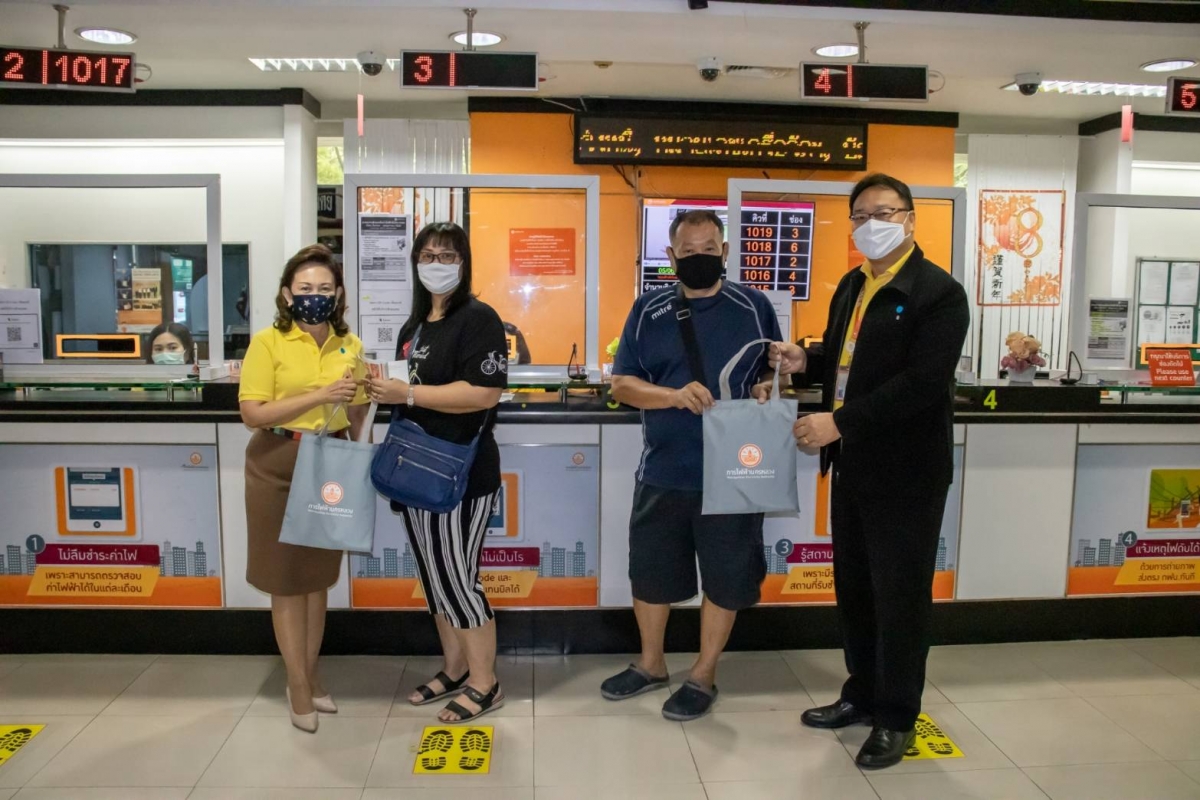
The Metropolitan Electricity Authority (MEA) held a “Sharing with MEA” event on June 3 to mark Queen Suthida’s birthday and to promote hygiene in a bid to keep people safe from Covid-19.

“MEA executives and employees donated money and supplies to create 2,000 sets of MEA care packages to commemorate Her Majesty’s birthday,” MEA governor Keerapat Jiamset said.

“Each care package included alcohol-based hand sanitiser, fabric face mask and a face shield. The packages were distributed among customers who visited the 18 MEA branch offices in Bangkok, Nonthaburi and Samut Prakan on June 4 and 5.

“Though the Covid-19 situation in Thailand is improving, MEA is still concerned about people’s safety and would like to remind people to keep their guard up and maintain social distancing,” he added.

“MEA will continue organising charitable activities to help those affected by the outbreak, as well as donate medical equipment to institutes and communities that are short on supplies to ensure we can overcome this crisis together.