No longer kooky, crystals remain strong sellers in the covid era #ศาสตร์เกษตรดินปุ๋ย

#ศาสตร์เกษตรดินปุ๋ย : ขอบคุณแหล่งข้อมูล : หนังสือพิมพ์ The Nation.

https://www.nationthailand.com/business/30388752?utm_source=category&utm_medium=internal_referral

No longer kooky, crystals remain strong sellers in the covid era

May 29. 2020
Jeweler Disa Allsopp files a gold and tourmaline ring in her studio in London on Jan. 3, 2008. MUST CREDIT: Bloomberg photo by Suzanne Plunkett

Jeweler Disa Allsopp files a gold and tourmaline ring in her studio in London on Jan. 3, 2008. MUST CREDIT: Bloomberg photo by Suzanne Plunkett
By Syndication Washington Post, Bloomberg · Hannah Elliott · BUSINESS, FEATURES 

I did not intend to become interested in crystals. It happened, as these things often do, during a long drive through the desert.

A chance pass through Quartzite, Arizona, piqued my interest. It corresponded with an annual crystal show where thousands of “rock hounds” convene in the aptly named outpost to sell glittering pillars of rose quartz, regal amethysts, and malachite as swirled and green as the back of an ancient gilded turtle. The RVs and tents parked alongside the highway, Burning Man style, demanded investigation.

I soon found myself haggling over the price of golden-colored citrine with a bolero-wearing man named Brian. Later I forked over a few bucks for a rotund couple of break-at-home geodes (dinosaur eggs, I called them as a child) that came with an oversize nutcracker that looked like it came from a construction site circa 1976.

Turns out, I am late to develop an appetite for “near-gemstones,” as diamond dealers call this $1 billion-plus industry. Virtually every Los Angeles-based celebrity you’ve heard of keeps them, whether Kate Hudson’s amethyst chunks credited with healing properties for emotional distress and issues with the nervous system, Adele’s performance-anxiety reducing crystals, or Gwyneth Paltrow’s rose quartz, which some believe promotes harmony and love. Victoria Beckham (black obsidian), Bella Hadid (blue celestites), and Kylie Jenner are fans. Kim Kardashian named her perfume collection Crystal Gardenia.

Today, the crystal-collecting set goes beyond the type of people who shop at health-food stores or practice reiki. The Astro Gallery of Gems on Fifth Avenue in New York attracts famous clients with its $30,000 pieces of barite and six-figure specimens of mesolite. (“Letterman was in here last month,” its star saleswoman Ruth told me the last time I was there.) Sotheby’s and Christie’s sell them for tens of thousands of dollars alongside meteorites and fossils. Mardani Fine Minerals reports annual gross sales of $25 million to $40 million, with profit margins varying from 20% to 70%.

The market was strong before covid-19 and remains unaffected. The coronavirus pandemic is expected to dent the $76 billion diamond industry (as of 2018) by 20% this year, but the value of near-gemstones such as quartz, amethyst, citrine, and malachite is holding steady.

“Near-gemstones are becoming very attractive,” says Martin Rapaport, chairman of the Rapaport Group and founder of the Rapaport Diamond Report and RapNet online diamond trading network.

The diamond market was already expecting a drop in 2020. Wealthier people are buying fewer, rarer gems, he says while those of more modest means are forgoing jewels and gemstones in favor of crystals.

“The diamond market is going to come down significantly this year, but there’s a lot of demand that has moved down to the lower cusp of [crystals and minerals], which are less expensive,” he says. “The need for emotional gifting is going to be intensified, and quarantining is going to drive more buying in general. Near-gems fall directly into this segment.”

James Hyslop, the head of the science and natural history department at Christie’s, agrees. Coronavirus has only strengthened a market that has been “historically undervalued. The sense that everyone has is that interest in the market for minerals and fossils and meteorites is at an all-time high,” Hyslop said on the phone from London. “It’s extremely healthy at the moment.”

Earlier this month, Christie’s “Sculpted By Nature” auction culled $1.09 million (£820,375) in total sales, making it the most successful online sale for the company’s natural history department, outperforming a similar sale it held in October 2019. Many of the lots sold for more than their top estimated value. Among the top crystal sellers were three different rounded Gogotte formations formed from quartz crystals and calcium carbonate in Fontainebleau, France. They took £37,500 apiece.

“I’ve seen ones selling for a hundred times what they were selling for 20 or 30 years ago,” Daniel Trinchillo, the founder and president of Fine Minerals International, told Business Jet Traveler in December. “I’ve seen collections worth 5 and 10 times what they cost 5 or 10 years earlier.”

Mineral collecting became popular in the U.S. by the 1970s, when buyers began focusing more on how they looked than their scientific relevance. They are treasured as much for their beautiful hues as for their supposed healing benefits.

But if you believe the hype, some crystals are said to offer benefits perfectly in tune with the covid-era anxiety: Ocean-blue azurite can assist in clairvoyance and intuition; sodalite obelisks allegedly encourage calm and rational thought; statuesque tourmaline pillars promote self-confidence; and polished, swirling agate is recommended by fans for rebalancing and cleansing.

The likes of calcite, quartz, and fluorite in myriad colors have become pieces of decor in hotels, cafes, and retail businesses. In the latest fashion campaigns for Celine, crystals show up in the brand’s Instagram ads as props for handbags and jewelry. At the Mandarin Oriental, they’re used in wine wands to help extrapolate tannins. The aptly named Crystal Bridges Museum of American Art in Arkansas held an exhibition earlier this year celebrating the role of crystals in culture.

“Acquiring crystals is a bit like acquiring art,” says Anthony James, an artist who showed his work at Crystal Bridges. “You’re forming a relationship.” James uses computer programming to mimic naturally forming crystals in a process he calls “organic digitization” of “polycrystalline shapes.” His unique pieces, which are the size of refrigerators and bigger, sell in the high six figures.

The first rule of shopping for crystals is to buy the best you can afford.

“It’s better to buy one really good piece than spend the same amount of money on five mediocre pieces,” Hyslop says. Specimens with richer, more vibrant colors without flaws are worth-and will cost-more than those with broken edges, weak coloration, and pockets of milky sediment.

And size matters, but only to a point.

“The prices rise according to size-to the point where you can’t pick up the crystal anymore-then they drop again because some of these items these are just too big,” says Hyslop. (You try moving 500 pounds of solid fluorite into your upper-level loft.) “It isn’t necessarily the price that would be the inhibitor. It’s the logistics of moving these things around.”

The pricing scale generally follows a stable per-kilogram increment structure. At The Crystal Matrix in Glendale, California, you can purchase a piece of quartz that you can hold in your hand for a couple hundred dollars. A piece of malachite and azurite nearly 10 inches across sold for £12,500 in Christie’s May sale; a similar piece just over three inches across sold for £3,750.

On the other hand, there is something to be said for having the biggest piece of something.

“When you get into really big center pieces for a museum exhibition, prices shoot up again,” Hyslop says. “The biggest ones are incredibly valuable-six and seven figures.”

The third rule of crystal shopping: There’s no “right” crystal to collect. Focus on the ones that spark your interest, then learn as much as you can about their provenance, follow auctions that sell them, and ask insiders and experienced dealers for insight.

“Buy a crystal for its beauty or get a crystal to use for healing,” says James, the artist. “What is relevant is your intention.”

Battle for Hong Kong is shifting to city’s financial markets #ศาสตร์เกษตรดินปุ๋ย

#ศาสตร์เกษตรดินปุ๋ย : ขอบคุณแหล่งข้อมูล : หนังสือพิมพ์ The Nation.

https://www.nationthailand.com/business/30388751?utm_source=category&utm_medium=internal_referral

Battle for Hong Kong is shifting to city’s financial markets

May 29. 2020
A screen displays the Hang Seng Index in Hong Kong, on May 29. Photographer: Lam Yik/Bloomberk

A screen displays the Hang Seng Index in Hong Kong, on May 29. Photographer: Lam Yik/Bloomberk
By Syndication Washington Post, Bloomberg · Sofia Horta e Costa, Richard Frost · BUSINESS, WORLD, US-GLOBAL-MARKETS, ASIA-PACIFIC

The struggle to maintain confidence in Hong Kong’s future is manifesting in its stock and currency markets.

Waves of mainland capital are flooding into equities, especially megacap Chinese banks, countering losses sparked by sweeping national security legislation. Tension is also building in the foreign exchange market, where options and forwards show the pegged currency will reach the weak end of its trading band.

Stability in financial markets would reinforce the message being promoted by officials and tycoons alike: that tougher laws on dissent will bring calm to a city wracked by violent protests. The city’s leader Carrie Lam cited gains in the Hang Seng Index on Tuesday as evidence that investors weren’t worried the new laws will undermine Hong Kong’s position as an international finance center.

“China needs to deploy some funds to help stabilize the Hong Kong dollar and capital flows in the city — that’s paramount,” said Steven Leung, executive director with UOB Kay Hian (Hong Kong) Ltd. “Some foreign investors worry the security law will threaten Hong Kong’s status as an international financial center and they might exit.”

The city’s stocks need all the help they can get. The Hang Seng Index lost almost 7% this month, clocking up the biggest drop relative to the MSCI All-Country World Index since the Asian financial crisis in 1998. Short selling volume on Hong Kong’s main board climbed to 21% of total turnover Friday, the highest proportion in data going back more than two decades.

The stakes are high: a panicked business community could trigger cascading outflows that crash its markets and cause runs on its banks. A wave of emigration could create a brain drain that damps its appeal as a financial center.

The $4.9 trillion stock market, the world’s fourth largest, is now the most volatile since 2012, according to a measure of historical 100-day swings on the Hang Seng Index. Options traders are preparing for more turbulence: eighteen of the 20 most-owned Hang Seng Index derivatives are puts protecting against losses.

While Hong Kong’s currency remains supported by tight liquidity conditions that keep its interest rates high versus those on the greenback, there are signs that some hedge funds may be changing their positions. The Hong Kong dollar’s 12-month forward points remain extremely elevated after spiking to the highest level since 1999 last week, showing demand to speculate against the currency.

Local companies are lining up to defend China’s expanded powers. Hong Kong property developers issued a statement saying the national security law will guarantee stability and prosperity, even as their shares tumbled to multi-year lows. More public displays of support will likely come: Hong Kong’s former leader Leung Chun-ying exhorted people on Friday with HSBC Holdings accounts to stop using them, saying the British bank had yet to express its position on the law.

The city’s police chief Chris Tang added to the chorus, telling state broadcaster CCTV that the new legislation would help strengthen investor confidence in the city, according to Radio Television Hong Kong.

Such efforts to calm the business community aren’t new. Back in the early 1980s, the then free-floating currency plunged as London and Beijing held talks over the return of Hong Kong to Chinese rule. The colonial government arrested the slide by pegging the Hong Kong dollar to the greenback. Maintaining confidence became an important focus for the British rulers in the run up to the 1997 handover, especially as hundreds of thousands of Hong Kongers migrated to Canada in order to obtain overseas citizenship.

There is no shortage of evidence that Beijing has repeatedly intervened in its domestic stock market to maintain order during politically sensitive periods. It also has plenty of tools at its disposal to minimize moves in the currency. Such control has long dulled the appeal of Chinese assets to foreign investors.

Whether the Communist Party’s tightening grip over Hong Kong will extend to the city’s free-wheeling financial markets remains to be seen. But it’s increasingly becoming clear that in Hong Kong, like on the mainland, stability is paramount.

SET edges up as Thailand readies for third round of lockdown easing #ศาสตร์เกษตรดินปุ๋ย

#ศาสตร์เกษตรดินปุ๋ย : ขอบคุณแหล่งข้อมูล : หนังสือพิมพ์ The Nation.

https://www.nationthailand.com/business/30388743?utm_source=category&utm_medium=internal_referral

SET edges up as Thailand readies for third round of lockdown easing

May 29. 2020
By The Nation

The Stock Exchange of Thailand (SET) Index closed at 1,342.85 today (May 29), up 5.34 points or 0.40 per cent. Total transaction volume was Bt96.186 billion with an index high of 1,342.88 and a low of 1,323.12.

The SET edged up ahead of the third-phase relaxation of lockdown measures from Monday (June 1), which will allow venues such as gyms and cinemas to reopen. Curfew hours will also be cut to 11pm to 3am, and foreigners will be allowed to enter Thailand on a case-by-case basis.

A Krungsri Securities stock analyst expected the index to fall to between 1,325 and 1,330 points before rebounding, due to uncertainty amid US-China tensions after Beijing passed new national-security legislation for Hong Kong,

“A renewal of the trade war might emerge as the US prepares to announce a new policy towards China today [Friday],” the analyst said. “Meanwhile, the index will also be under pressure from the tight SET valuation.”

However, the SET will rebound on expectation of the third phase of lockdown easing, while investors can speculate on stocks which have been added to the MSCI calculation.

The 10 stocks with the highest trade value today were BAM, BANPU, AWC, PTT, GULF, KTC, ADVANC, CPALL, MINT and KBANK.

As of 4.30pm, the price of crude oil dropped by US$1.30 or 3.86 per cent to $32.41 per barrel, while the gold price rose by $10.50 or 0.61 per cent, to $1,738.80 per ounce.

US and European indices were on a downward trend, while Asian indices had a mixed day.

Japan’s Nikkei Index closed at 21,877.89, down 38.42 points, or 0.18 per cent.

China’s Shang Hai SE Composite Index closed at 2,852.35, up 6.13 points, or 0.22 per cent, while Shenzhen SE Component Index closed at 10,746.08, up 92.58 points, or 0.87 per cent.

Hong Kong’s Hang Seng Index closed at 22,961.47, down 171.29 points, or 0.74 per cent.

South Korea’s KOSPI Index closed at 2,029.60, up 1.06 points, or 0.052 per cent.

Taiwan’s TAIEX Index closed at 10,942.16, down 2.03 points, or 0.019 per cent.

SET shows signs of recovery as investors slowly buy back stocks #ศาสตร์เกษตรดินปุ๋ย

#ศาสตร์เกษตรดินปุ๋ย : ขอบคุณแหล่งข้อมูล : หนังสือพิมพ์ The Nation.

https://www.nationthailand.com/business/30388731?utm_source=category&utm_medium=internal_referral

SET shows signs of recovery as investors slowly buy back stocks

May 29. 2020
By The Nation

The Stock Exchange of Thailand (SET) Index rose to over 1,300 points in the second quarter as retail and institutional investors bought back stocks worth Bt133 billion and Bt68.3 billion respectively, though foreign investors sold stocks worth almost Bt200 billion.

Monrat Phadungsit, president of Land and Houses Fund Management, said investors were buying back stocks at this time because they have a large amount of cash in hand.

“Most investors have 10 to 15 per cent of cash in their investment portfolios now, compared to just 5 per cent under normal conditions,” he said, adding that the economy is likely to recover as the Covid-19 situation is improving and many countries are gradually easing lockdown measures.

“We expect the index next year to hit 1,550 points, while this year it is expected to move between 1,300 and 1,450 points,” he said.

“However, investors must be careful because the index could drop below 1,200 points due to uncertainty following the second wave of Covid-19 infections, creating an outbreak that may be worse than the first one.”

Somchai Amornthum, executive vice-president at Krung Thai Asset Management said the index gained positive sentiment from lockdown easing measures, progress in the search for Covid-19 vaccine, central banks’ moves to inject liquidity and governments issuing Covid-19 relief measures.

“We expect the index at the end of the year to be at 1,350 points as it will rely on the Covid-19 outbreak and when the vaccine is completed,” he said.

Chai Sophonpanich, chairman of Bangkok Insurance, said his company expected the index in the next three months to drop to 1,200 points due to uncertainty over the country’s political situation.

“We expect the index at yearend to be 1,340 points, less than 1,500 points in the previous year, though the index should rise to 1,900 points in the next two years,” he said.

He added that in the next three months, the company aims to buy stocks in the food and energy industries as they have a greater chance to grow and will sustain less impact.

Gold price drops amid rising tensions between US and China #ศาสตร์เกษตรดินปุ๋ย

#ศาสตร์เกษตรดินปุ๋ย : ขอบคุณแหล่งข้อมูล : หนังสือพิมพ์ The Nation.

https://www.nationthailand.com/business/30388718?utm_source=category&utm_medium=internal_referral

Gold price drops amid rising tensions between US and China

May 29. 2020
By The Nation

The price of gold dropped by Bt50 per baht weight in morning trade on Friday (May 29), the Gold Traders Association reported.

As of 9.28am, buying price of a gold bar was Bt25,750 per baht weight and selling price Bt25,950, while gold ornaments were priced at Bt25,286.88 and Bt26,450, respectively.

At close on Thursday (May 28), buying price of a gold bar was Bt25,800 per baht weight and selling price Bt26,000, while gold ornaments were priced at Bt25,332.36 and Bt26,500, respectively.

The Gold Spot Index price on Friday morning moved to around US$1,721 (Bt54,797) per ounce after the price rose by $1.5 to $1,728.3 per ounce at close on Thursday.

Investors were selling gold as a safe haven asset due to tensions between US and China. Recently, President Donald Trump said US was preparing to announce a new policy towards China on Friday in reaction to Beijing’s move to enforce a new national-security legislation in Hong Kong.

Gold price in Hong Kong dropped by HK$20 to $15,890 (Bt65,261) per tael.

SET falls amid rising tensions between US and China #ศาสตร์เกษตรดินปุ๋ย

#ศาสตร์เกษตรดินปุ๋ย : ขอบคุณแหล่งข้อมูล : หนังสือพิมพ์ The Nation.

https://www.nationthailand.com/business/30388717?utm_source=category&utm_medium=internal_referral

SET falls amid rising tensions between US and China

May 29. 2020
By The Nation

The Stock Exchange of Thailand Index opened at 1,331.98, down 5.53 points, or 0.41 per cent, on Friday morning (May 29).

The index is expected to fall to between 1,325 and 1,330 before rebounding, due to uncertainty following the conflict between US and China after Chinese lawmakers approved new national-security legislation for Hong Kong, a Krungsri Securities stock analyst said

“A renewal of the trade war might emerge as the US prepared to announce a new policy towards China today [Friday],” the analyst said. “Meanwhile, the index would be under pressure from the tight SET valuation as well.”

However, the index would rebound from hopes of the third phase of lockdown easing this week, while investors could speculate on stocks which have been added to the MSCI calculation.

He recommended investors to buy:

▪︎ Stocks which have been added to the MSCI calculation – AWC, BAM and KTC.

▪︎ Stocks which will benefit from the government’s tourism stimulus measures, such as MINT, CENTEL, ERW and AOT.

▪︎ Stocks which will benefit from the third phase of lockdown easing, such as MAJOR and SPA.

▪︎ Stocks whose second quarter performance will improve, such as CKP, TASCO, STA and RS.

Dow launches its first post-consumer recycled plastic resin in Asia Pacific and Thailand #ศาสตร์เกษตรดินปุ๋ย

#ศาสตร์เกษตรดินปุ๋ย : ขอบคุณแหล่งข้อมูล : หนังสือพิมพ์ The Nation.

https://www.nationthailand.com/biz-moves/30388667?utm_source=homepage&utm_medium=internal_referral

Dow launches its first post-consumer recycled plastic resin in Asia Pacific and Thailand

May 28. 2020
By THE NATION

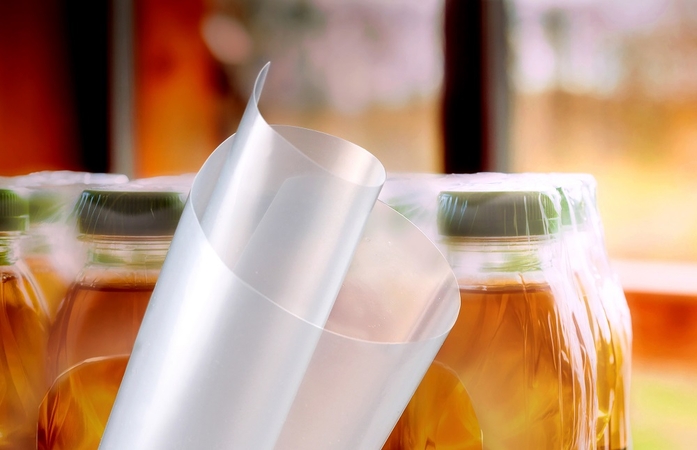
Bangkok – May 27, 2020 – Dow (NYSE: DOW) recently developed and commercialized a new formulated post-consumer recycled (PCR) plastic resin designed for collation shrink film applications in Asia Pacific including Thailand.

The new resin is designed with 40 percent PCR content which creates a film with performance comparable to those made with virgin resins. The product, XUS 60921.01, can provide us 17% CO2 reduction and 30% energy savings (estimated numbers depending on factors). The new formulated PCR resin is going to help converters, brand owners and retailers meet their sustainability goals, while also giving a new end-of-life to plastics that otherwise would have become waste.

“This new resin is helping to make a circular economy for plastics a reality, all without compromising on the performance that brand owners and consumers require,” said Bambang Candra, Asia Pacific commercial vice president, Dow. “As a material science company, we have the responsibility to bring these products to market to prevent plastics from becoming waste in the environment.”

The growing demand for e-commerce will require durable, efficient packaging that can protect products throughout their supply chains while producing minimal waste for consumers. Dow’s new formulated PCR resin can provide brands and consumers with comparable performance to collation shrink film made with virgin resins to ensure products are delivered safely while also reducing the amount of plastic waste ending up in our environment.

The resin is designed to be used as 100 percent of the core layer of collation shrink applications and will enable the development of film with 13 – 24 percent recycled content.

“Developing new end markets for plastic waste will help incentivize collection and recycling, enabling more recycled products to be developed while reducing the amount of plastics entering our environment,” said Suny Markose, Asia Pacific commercial recycling director for Dow.

The new offering is part of Dow’s comprehensive strategy to develop a circular economy for plastics by focusing on integrating recycled content into product offerings.

To learn more about the product, visit www.dow.com/pcrshrinkfilm.

Huawei Launches ASEAN Academy to Empower Digital Talent and Nurture Digital Ecosystem #ศาสตร์เกษตรดินปุ๋ย

#ศาสตร์เกษตรดินปุ๋ย : ขอบคุณแหล่งข้อมูล : หนังสือพิมพ์ The Nation.

https://www.nationthailand.com/biz-moves/30388665?utm_source=homepage&utm_medium=internal_referral

Huawei Launches ASEAN Academy to Empower Digital Talent and Nurture Digital Ecosystem

May 28. 2020
By THE NATION

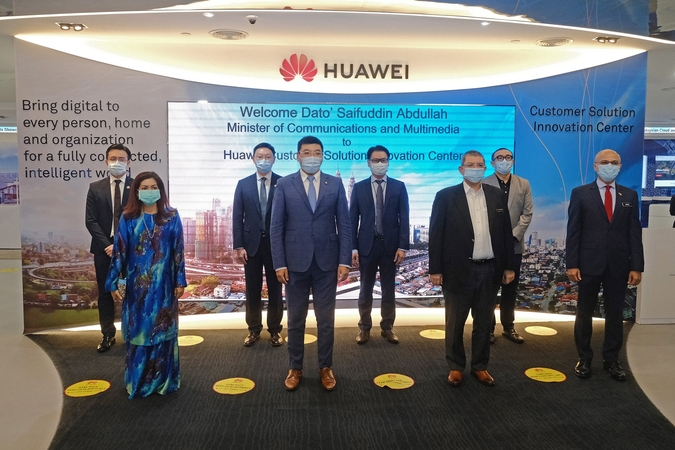
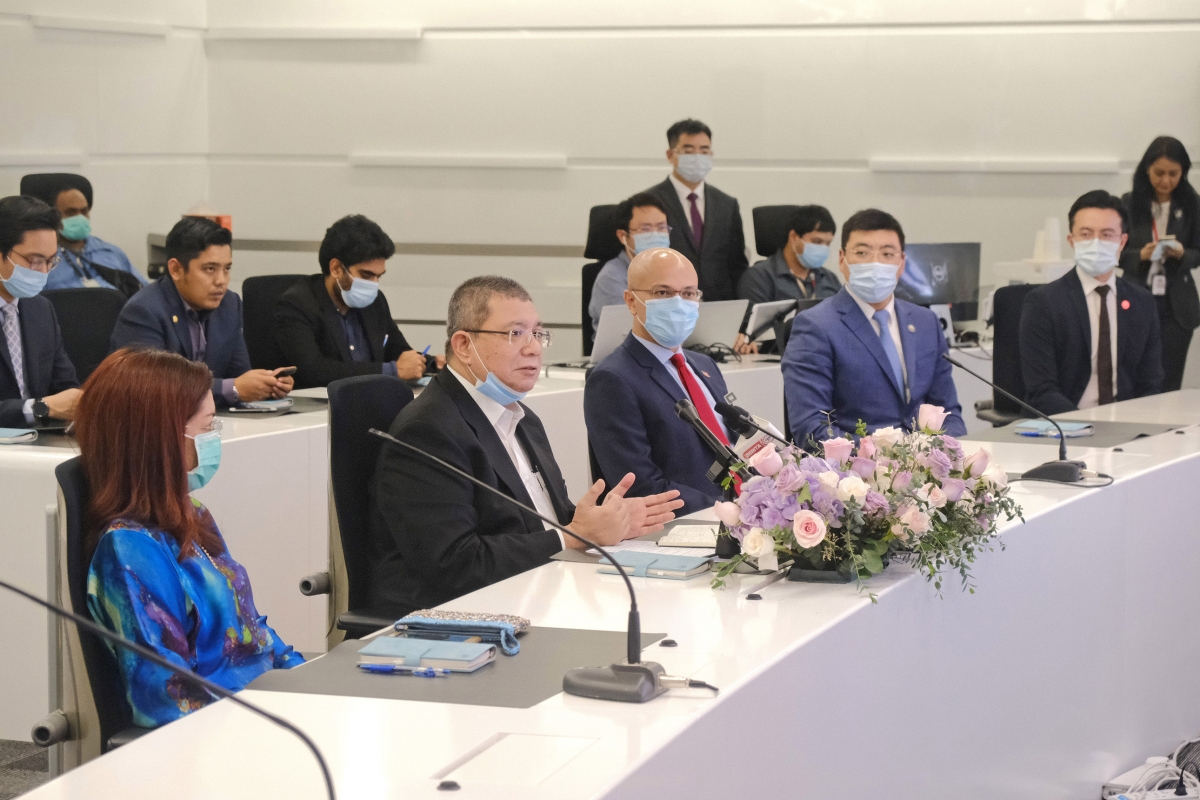
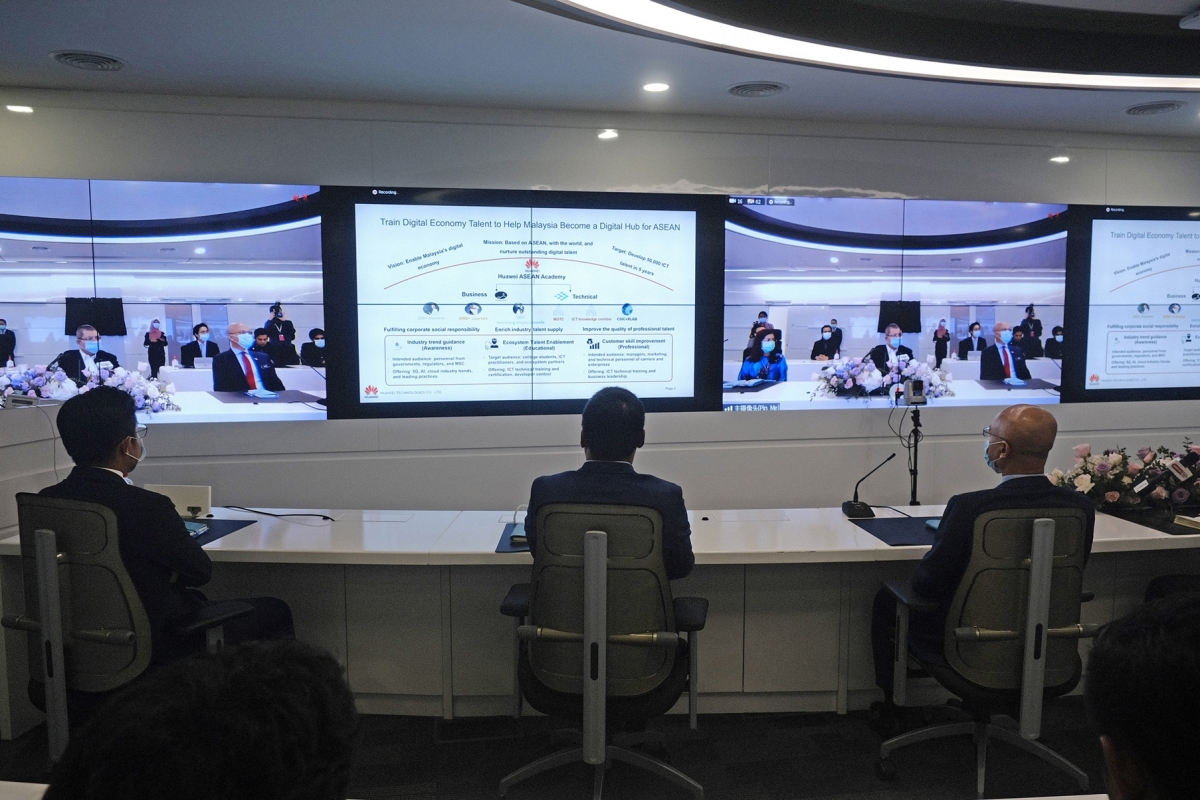
[Kuala Lumpur, May 28, 2020] Huawei introduced its first Huawei ASEAN Academy in Asia Pacific region, located in Malaysia, as a dedicated training module set to empower digital talent in the region.

In its commitment, Huawei aims to nurture 50,000 talents over the next five years, spread across various businesses and technology sectors. The academy will provide more than 3,000 ICT courses involving 100 skilled trainers to nurture digital talent.

“The Huawei ASEAN Academy in Malaysia is the first in Asia Pacific region which plays an important role in ICT development towards digital economic growth. It is more than ever, to nurture and develop local talent to ensure that they are well equipped with the proper ICT knowledge to adapt to this ever-changing globalization landscape. The Ministry of Communications and Multimedia (KKMM) and Huawei have had a long collaborative relationship in ICT since 2001 when Huawei Technologies was first established, we hope to have more successful collaborations in the future between both parties to steer digital economy in the right path,” said YB Dato Saifuddin Abdullah, Minister of Communications and Multimedia of Malaysia.

The academy’s ICT training programs and courses are designed to target government bodies, industry professionals and university students, providing a holistic approach in growing the country’s ICT ecosystem. It will implement established and diversified educational methods namely scenario-based and online live training, and overseas study tours. The academy also provides multi-dimensional solutions for different types of talent and levels of need to ensure that these solutions effectively match the current talent gaps for enterprises.

“As we all adapt to this new normal of social distancing, the importance of having a strong digital network and infrastructure is more obvious now than ever. The backbone of a strong digital network and infrastructure still remains with the people that builds and maintains such services for Malaysians to enjoy. The trainings and programs provided by the ASEAN academy will empower local talents to be future-ready and actively contribute to accelerating the country’s digital transformation journey,” said Michael Yuan, CEO of Huawei Malaysia.

Based on the industry requirements, the academy addresses pain points of the country’s talent gap within the three core pillars which are ICT Industry Trend Guidance, Ecosystem Talent Enablement and Skill Improvement. The academy uses technology as a key enabler in skills and talent development to provide a solid foundation for the country’s digital economy.

As a global leading ICT solution provider, Huawei advocates for an open, shared, ICT talent ecosystem that benefits all parties. The Huawei ASEAN Academy presents another significant milestone in Huawei’s journey to develop local ICT talent and enable the digital transformation.

Ajinomoto supports money donation and company products to 5 Hospitals worth Bt5 million #ศาสตร์เกษตรดินปุ๋ย

#ศาสตร์เกษตรดินปุ๋ย : ขอบคุณแหล่งข้อมูล : หนังสือพิมพ์ The Nation.

https://www.nationthailand.com/biz-moves/30388663?utm_source=homepage&utm_medium=internal_referral

Ajinomoto supports money donation and company products to 5 Hospitals worth Bt5 million

May 28. 2020
By THE NATION

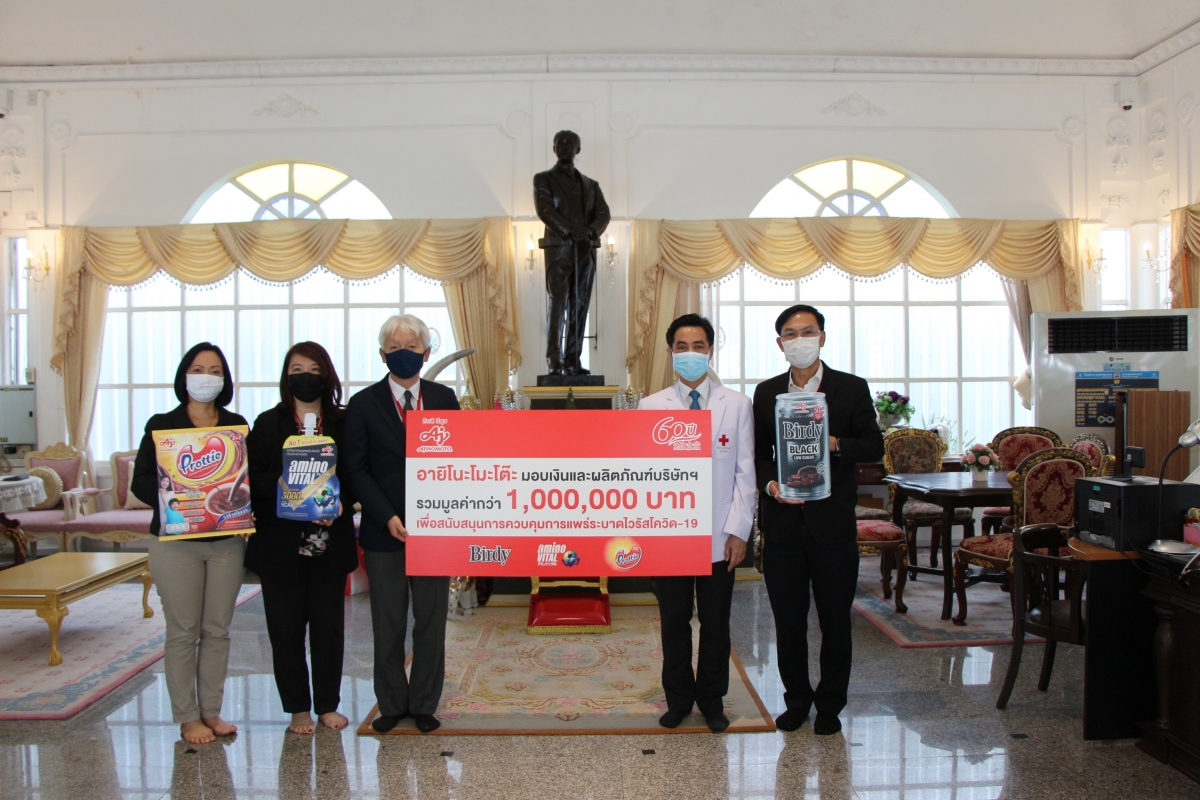
Ajinomoto supports money donation and company products to 5 Hospitals worth Bt5 million in total for support its handling of COVID-19 Crisis

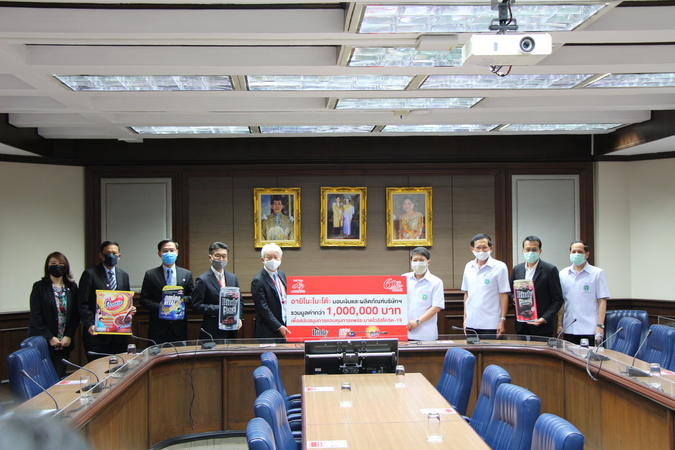
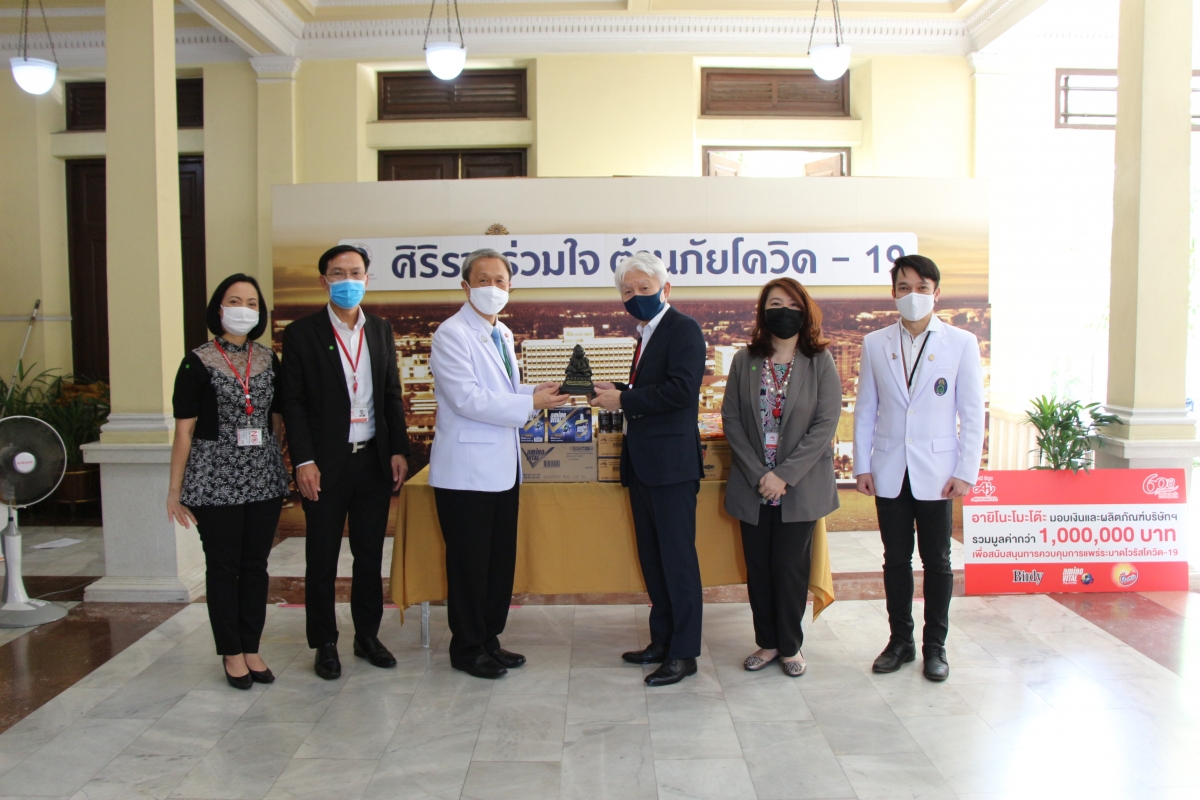
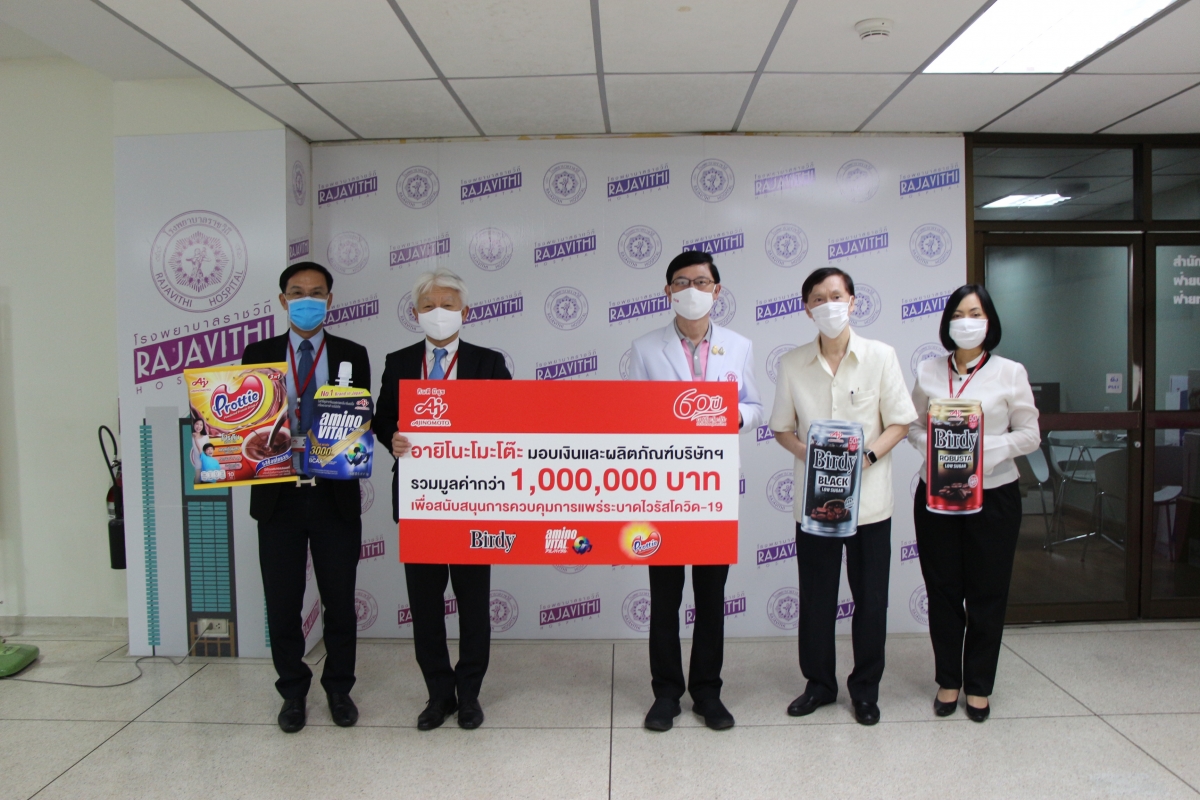
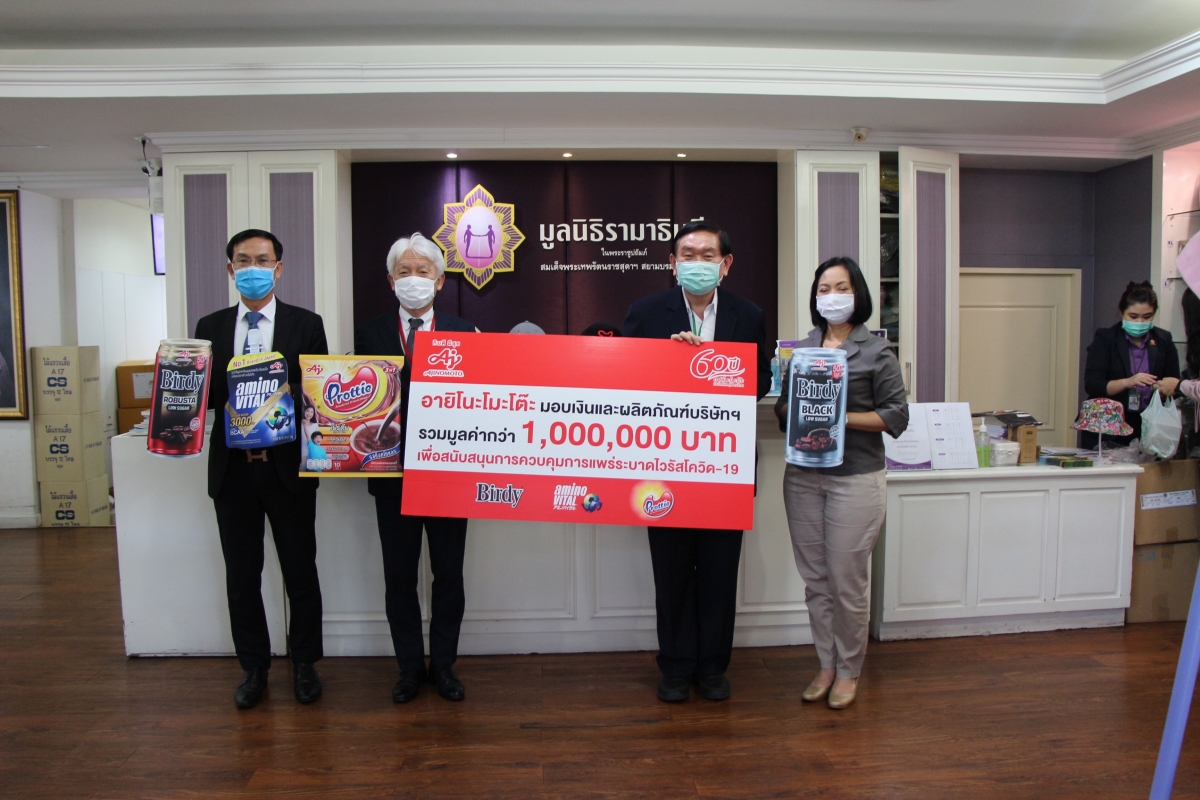
Recently, Ajinomoto Co, (Thailand) Ltd., led by Mr. Hiroharu Motohashi, President, Mr.Takaaki Arashida, Vice President together with Mr.Thongdee Paso, Mr. Varong Prayoonpong, Managing Director and Mrs. Kesya Chaicharncheep, Director, joined to deliver the money donation worth 1 million Baht and company products including “Birdy” RTD canned coffee, “Prottie” Chocolate flavor Protein Drink and “aminoVITAL” RTD amino power gel to M.D.Suwanchai Wattanayingcharoenchai, Director General, Department of Disease Control, Ministry of Public Health. The donation was aimed to support the work of Bamrasnaradura Infectious Diseases Institute under Department of Disease Control for fight against COVID-19 epidemic.

In addition, the company also supports this kind of donation to another 4 hospitals including Siriraj Hospital, Ramathibodi Hospital, King Chulalongkorn Memorial Hospital and Rajavithi Hospital with support at the amount of 5,250, 000 Baht in total.

We, Ajinomoto, aims to encourage all personnel and medical staff who work fight against COVID-19 and to be a part in supporting Thai society to overcome through the COVID-19 situation together in soonest.

Death of Stanley Ho, China’s king of gambling, gives empire reins to daughter #ศาสตร์เกษตรดินปุ๋ย

#ศาสตร์เกษตรดินปุ๋ย : ขอบคุณแหล่งข้อมูล : หนังสือพิมพ์ The Nation.

https://www.nationthailand.com/business/30388704?utm_source=category&utm_medium=internal_referral

Death of Stanley Ho, China’s king of gambling, gives empire reins to daughter

May 29. 2020
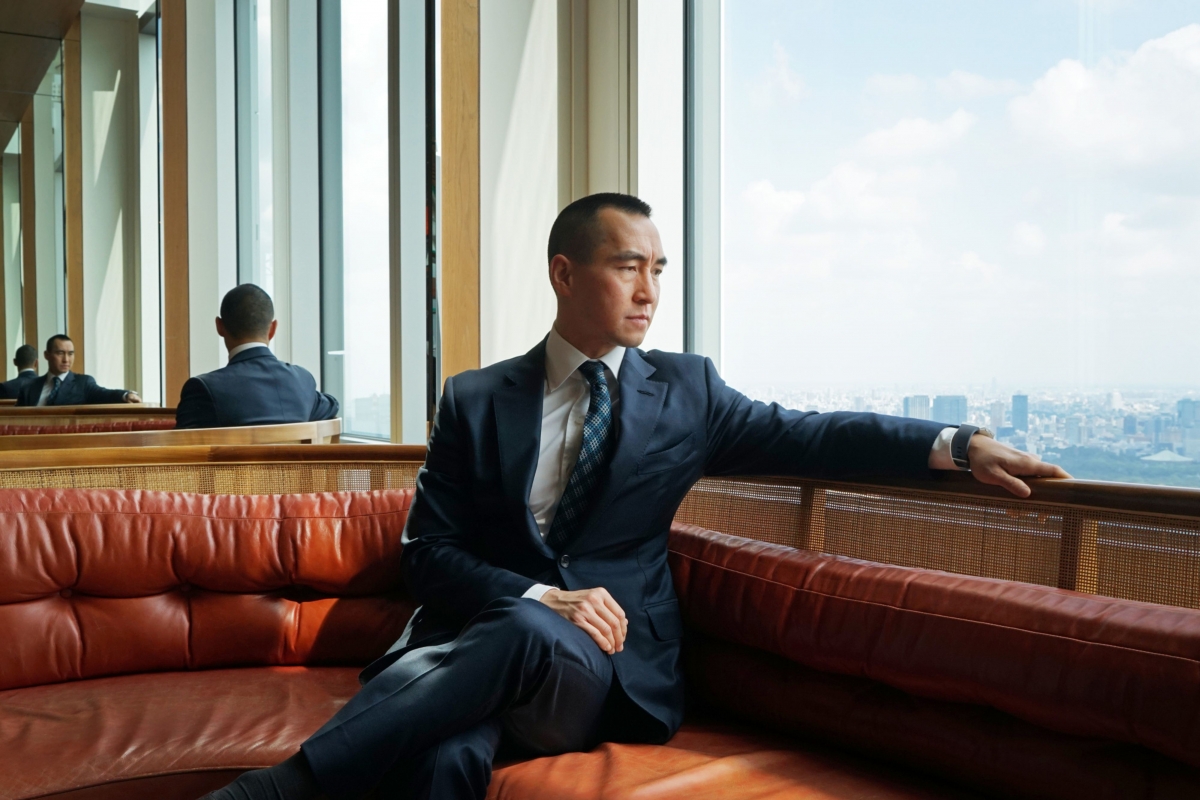
Pansy Ho. MUST CREDIT: Anthony Kwan
Photo by: Anthony Kwan — Bloomberg

Pansy Ho. MUST CREDIT: Anthony Kwan Photo by: Anthony Kwan — Bloomberg
By Syndication Washington Post,  Bloomberg · K. Oanh Ha, Jinshan Hong, Daniela Wei · BUSINESS 

About an hour after the death of Stanley Ho, the billionaire who built the Chinese territory of Macau into the world’s biggest gambling hub, his large clan gathered in front of the Hong Kong Sanatorium & Hospital to break the news. They were also there to send a clear message of unity.

The 98-year-old tycoon fathered 16 recognized children with four women he considered wives. Outside the hospital in front of cameras and journalists, it was Pansy Ho – the 57-year-old eldest daughter of his second wife – who was given the honor of announcing his passing as they flanked her.

Daisy Ho. MUST CREDIT: Bloomberg photo by Paul Yeung

Daisy Ho. MUST CREDIT: Bloomberg photo by Paul Yeung

Ho, a former socialite, is already chairman of one of Macau’s biggest conglomerates and co-chairman of casino operator MGM China Holdings Ltd., having become her father’s favored successor years ago.

With the death of the trailblazer who catapulted Macau past Las Vegas to become the world’s gambling epicenter, the pressure is now on her to unite the interests behind the Ho family’s $15 billion fortune, rejuvenate an aging casino franchise and lead the empire through the coronavirus pandemic that’s caused gambling revenue to plunge by more than 90%.

And with a fractious family held in check only by a delicate balance of power, Ho will need to chart a careful path forward.

“While Stanley was alive, things were in limbo – it would have been disrespectful for someone to take the helm,” said Ben Lee, Macau-based managing partner at gaming consultancy IGamiX. “Now that he has gone, what we’ll ultimately see is one person leading a reincarnated Ho empire. This paves the way for Pansy.”

Lawrence Ho. MUST CREDIT: Bloomberg photo by Kentaro Takahashi

Lawrence Ho. MUST CREDIT: Bloomberg photo by Kentaro Takahashi

A significant new alliance created last year gave Pansy Ho and her allies control over the family’s core casino franchise, SJM Holdings Ltd. None of the other children or three surviving wives have publicly contested the agreement, though investors and analysts remain wary of internal tensions.

“It is generally difficult for the second generation to follow the footstep of their father because the time frame and the geopolitical circumstances are all different,” Ambrose So, SJM’s chief executive officer, said in a message in response to Bloomberg inquiries Thursday. So said it was Ho’s concern for society and his personality traits – including charisma, humor, approachability and nose for business – that’s led him to stay at SJM for more than 40 years.

With her father’s passing, Pansy Ho is now expected to consolidate control over a complicated network of business interests, which include 20 casinos under SJM’s umbrella, the Chinese arm of American casino operator MGM Resorts International, and even the ferry and helicopter routes that link Macau and Hong Kong.

That would be a challenge in boom times. But Macau is now in the midst of a historic free-fall due to the pandemic, with basically empty casinos losing more than $1 million a day.

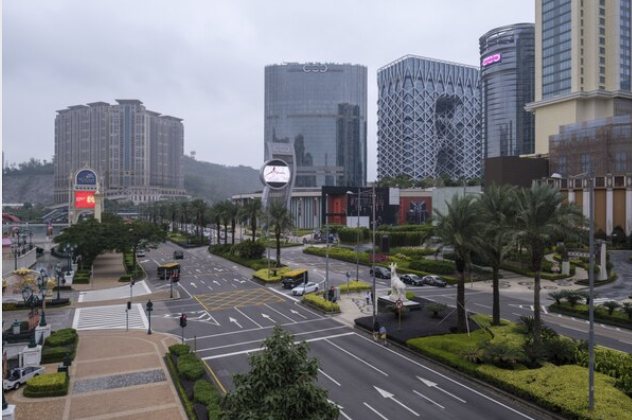
Melco's City of Dreams casino resort in Macau, closed due to the pandemic. MUST CREDIT: Bloomberg

Melco’s City of Dreams casino resort in Macau, closed due to the pandemic. MUST CREDIT: Bloomberg

Gaming revenue plummeted by a record 97% last month compared with the same period a year ago, and a recovery is unlikely as long as virus containment measures prevent Chinese travelers – the enclave’s lifeblood – from entering the territory.

With the outbreak seemingly curbed in mainland China, Macau and Hong Kong, analysts are hoping that border and visa restrictions will be eased starting next month, followed by a summer recovery.

But with casinos now desperate to regain lost ground, competition will be fiercer than ever, and SJM had already been losing market share to more dynamic operators before the pandemic.

The industry will try to relaunch in a slow reopening that may start with a “travel bubble” of tourists to ease movement between Macau and neighboring Hong Kong and China’s Guangdong province, said Glenn McCartney, a professor at the University of Macau’s Faculty of Business Administration.

SJM’s complex division of power – holdings are split between three branches of the family, including Pansy’s – has made it slower-moving than rivals and it’s steadily lost market share. It was the last among Macau’s six operators to build a casino on the territory’s swanky Cotai strip and has had to delay the opening of that new project, the $5 billion Grand Lisboa Palace, to March next year from end-2020.

Internal maneuvering is also a constant distraction. Angela Leong, Ho’s fourth and latest wife who’s seen as a competitor to Pansy, holds an 8% stake in the holding company that controls SJM, a possible future flashpoint.

In 2018, Daisy Ho, Pansy’s sister from Ho’s second wife, joined SJM as chairman. At 55, she’s the youngest board director and came with no casino experience, leading many to presume that she’s allied with Pansy, said Lee of IGamix.

SJM has an “entrenched management” and is steeped in “dysfunction” trying to placate various interests, wrote Sanford C. Bernstein analyst Vitaly Umansky in a note Tuesday.

Investors are now looking to SJM’s June 9 annual general meeting – where four incumbent board members including Angela Leong are seeking reelection – for any signs of brewing division.

“SJM is a company in desperate need of a strong, clear leadership and more transparency in terms of its internal power structures,” said Francisco Gaivão, managing partner at G&R Law Firm in Macau that focuses on gaming.

“Sooner rather than later Pansy Ho will have another go at her pursuit of SJM control,” he said. “Being a very sharp and determined businesswoman, she will continue her strategy of alliances with other shareholders in order to get rid of her known fierce internal enemies and get control of the board.”

The second generation will also face challenges in managing the empire as Stanley Ho’s political and business connections may not pass on to his children.

“It is of utmost importance for the new leader of the Ho group to identify new sources of competitive advantage and transform its business and managerial teams that can no longer depend on Ho’s legacy,” said Joseph Fan, a professor at the Chinese University of Hong Kong.

Representatives at Shun Tak Holdings Ltd., a conglomerate Pansy Ho is chairman of, didn’t respond to requests for comment on plans for the family’s various businesses. A spokesperson for SJM also didn’t immediately respond to a request for comment.

Lawrence Ho, chairman of another Macau casino franchise, Melco Resorts & Entertainment, and Pansy’s brother, is another potential competitor. He has said he is focused on building his own brand, which is expanding to the Philippines and seeking a resort license in Japan, and stays out of family succession issues. But his high profile and solo business success has meant that some see him as a dark horse in the family race.

“The role of Lawrence is one of the unanswered questions on how the future will look,” said Carlos Lobo, a gaming consultant and Macau lawyer who’s advised the government. “I just don’t see how he fits in such a solution of Pansy being at the helm.”

Although the last public family spat over business control was in 2011 – Stanley Ho accused family members of trying to take over his stake and sued – other smaller disputes are ongoing.

Still, Pansy Ho has earned credibility and respect within the industry and the reins are hers to lose, say analysts.

Educated in the U.S, she has experience managing casinos as well as insight into the tourism, property and transportation industries of the region via her work at Shun Tak, another family business. The company controls ferry and helicopter services between Macau and Hong Kong.

She’s also responsible for striking an alliance with MGM, the American casino operator, whose franchise in Macau operates under a sub-concession – Macau’s term for gaming licenses – under SJM’s primary concession.

Gaming law dictates that a shareholder who holds a 5% share or more in one gaming concession is not allowed to hold more than 5% in another operator, which means that Pansy will need to step away from MGM China if she consolidates control over SJM.

At MGM China, Ho has put her “impeccable taste” into the resort’s interior design, said Jim Murren, former MGM Resorts International chief executive officer. He hinted that people may underestimate her.

“People don’t have the full picture of Pansy, of her having tremendous business insight,” Murren said. “She’s fearless, she’s an incredibly intense business person.”

The coming months will likely see the family make public its full plan for the empire’s various businesses, which should have allocations for every branch of the Ho family tree, said IGamiX’s Lee.

“It looks like family members have realized that the infighting that occurred several years ago wouldn’t benefit any of them individually or collectively,” said Lee. “Having someone strong like Pansy with the ability to reignite the empire would benefit all of them.”