CP delivers medical supplies for distribution among state hospitals #ศาสตร์เกษตรดินปุ๋ย

#ศาสตร์เกษตรดินปุ๋ย : ขอบคุณแหล่งข้อมูล : หนังสือพิมพ์ The Nation.

https://www.nationthailand.com/biz-moves/30385975?utm_source=category&utm_medium=internal_referral

CP delivers medical supplies for distribution among state hospitals

Apr 14. 2020
By The Nation

Charoen Pokphand Group (CP) delivered medical supplies to the King Chulalongkorn Memorial Hospital for distribution to other state-run hospitals, especially those in the three southern border provinces, on Tuesday (April 14).

CP said the aim is to equip medical personnel so they can meet the standards when it comes to treating Covid-19 patients.

“Today we provided 2,000 protective suits worth Bt1.4 million and 40,000 face shields worth Bt1 million,” a CP official said.

CP’s senior chairman Dhanin Chearavanont had previously donated several sets of protective suits, including goggles and shoe covers, to doctors, nurses and other medical personnel at King Chulalongkorn Memorial Hospital.

“CP and its associates want to provide encouragement to all medical personnel who are making sacrifices and putting themselves at risk to help people,” the official said. “The company is determined to provide assistance from all aspects and help Thailand overcome this crisis.”

MDES joins hands with HUAWEI, provides 5G solution and AI Technology to Siriraj Hospital #ศาสตร์เกษตรดินปุ๋ย

#ศาสตร์เกษตรดินปุ๋ย : ขอบคุณแหล่งข้อมูล : หนังสือพิมพ์ The Nation.

https://www.nationthailand.com/biz-moves/30385930?utm_source=category&utm_medium=internal_referral

MDES joins hands with HUAWEI, provides 5G solution and AI Technology to Siriraj Hospital

Apr 14. 2020
Buddhipongse Punnakanta (4th left), Digital Economy and Society Minister together with Abel Deng (3rd left), CEO, Huawei Technologies (Thailand) Co., Ltd., provide AI-assisted solution with 5G technology to Siriraj Hospital, led by Prof Dr Prasit Watanapa (5th left) M.D., Dean of Faculty of Medicine Siriraj Hospital

Buddhipongse Punnakanta (4th left), Digital Economy and Society Minister together with Abel Deng (3rd left), CEO, Huawei Technologies (Thailand) Co., Ltd., provide AI-assisted solution with 5G technology to Siriraj Hospital, led by Prof Dr Prasit Watanapa (5th left) M.D., Dean of Faculty of Medicine Siriraj Hospital
By THE NATION

[April 13, Bangkok] – Digital Economy and Society Ministry, together with Huawei Technologies (Thailand) Co., Ltd., provide AI-assisted solution with 5G technology to Siriraj Hospital, which aims to help output diagnosis result automatically, quickly, and correctly through high-speed network.

This world-class technology will strengthen Thai medical staff capabilities to cope with COVID-19 pandemic effectively.

The AI-assisted solution based on HUAWEI CLOUD technology is co-developed by Huawei and HY Medical, a China enterprise that is a leading expert in the AI medical industry, focusing on medical imaging through artificial intelligence, with the technology of computer vision and deep learning. This technology leverages the computer vision and medical image analysis technologies to segment the multiple pulmonary ground glass opacities (GGOs) and lung consolidation and make quantitative evaluations through CTs of patients’ lungs. It can provide result of image analyzing as quick as 25 seconds per case, can help doctors more accurately distinguish between early, advanced, and severe stages of COVID-19. In addition, more than 20 hospitals in China has adopted this technology to handle the COVID-19 and after continues training and optimization, the solution has become more efficient with classification of accuracy rate at 96% and with DICE score higher than 85.

The 5G network will enhance effectiveness of medical service in hospital by guarantee quality of high-speed connection, high reliability and low latency. The healthcare system will benefit from improved response times with more 3-4 times uploaded efficiency compared to WiFi, patient monitoring, data collection and analytics, remote collaboration and resource allocation. It also sets an example for digitalized, data driven and Cloud-based innovative major public emergency response.

Recently, Huawei Technologies (Thailand) Co., Ltd., provided the AI solution for COVID-19 diagnosis to Ramathibodi Hospital and delivered Huawei Telemedicine Video Conference Solution to Ministry of Public Health of Thailand, as part of its plans to help coping with COVID-19 situation. The solution is real-time and full-functional teleconference system that can facilitate Thai medical staff to work smoother, doctors can monitor and diagnose patients from everywhere through their own smart devices. More importantly, this reduces risk of infection for Thai medical team.

JWD self-storage facility uses UVC technology to kill viruses #ศาสตร์เกษตรดินปุ๋ย

#ศาสตร์เกษตรดินปุ๋ย : ขอบคุณแหล่งข้อมูล : หนังสือพิมพ์ The Nation.

https://www.nationthailand.com/biz-moves/30385900?utm_source=category&utm_medium=internal_referral

JWD self-storage facility uses UVC technology to kill viruses

Apr 13. 2020
By THE NATION

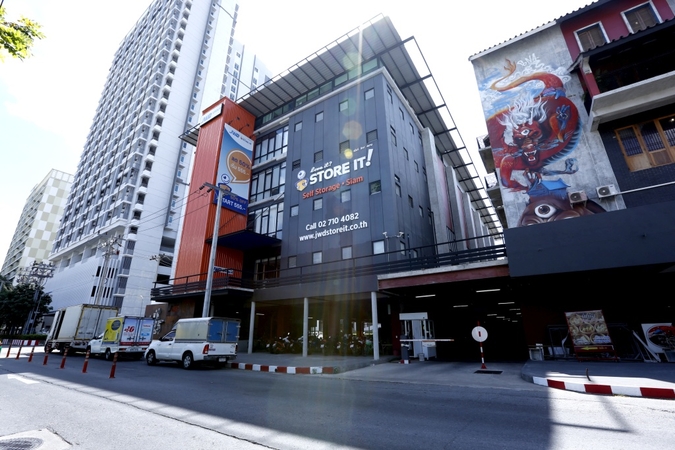
JWD InfoLogistics Public Co Ltd is using UVC Ray technology – ultraviolet rays that diminish viruses down to the DNA level – to contain the spread of Covid-19 at its JWD Store It self-storage facility in Siam and its Art Space to provide customers with full confidence.

Charvanin Bunditkitsada, JWD’s executive committee chairman and CEO, said due to the pandemic, consumers are becoming more careful about their health and safety, which is why JWD hired an expert in integrated disease control to find a way to eradicate all viruses, bacteria and mould at its facilities. The newly employed automatic intelligent UVC robot can accurately and completely kill viruses, bacteria and mould in five to seven minutes through UVC rays. This technology is normally used in operating theatres, sterile rooms, water- and air-treatment plants to name a few.

As for reports that the rate of storage has risen two to three-fold since February, JWD said that there is more demand from online businesses that require additional storage space in downtown Bangkok.

It also said that a large number of contracts have been signed for its Thien Ruammit and Ramintra branches, while its fifth branch on Rama IX will be open for business in June.

The Siam branch of JWD Store It is open 24 hours, while Art Space, which apart from providing space for storage also provides integrated logistics for art works, is open until 7pm and located near the National Stadium BTS station.

MEA ready to meet electricity demands amid Covid-19 situation #ศาสตร์เกษตรดินปุ๋ย

#ศาสตร์เกษตรดินปุ๋ย : ขอบคุณแหล่งข้อมูล : หนังสือพิมพ์ The Nation.

https://www.nationthailand.com/biz-moves/30385833?utm_source=category&utm_medium=internal_referral

MEA ready to meet electricity demands amid Covid-19 situation

Apr 12. 2020
By The Nation

The Metropolitan Electricity Authority (MEA) comprends the problems and effects from the situation caused by the spread of the coronavirus (Covid-19), Phasuk Sampunnachote, director of corporate communications, said.

The MEA has prepared a plan to support electricity distribution during the period of increasing electricity usage in residences. The MEA is working to manage electricity systems to be stable, sufficient, safe and continuous.

In preparation for the high electricity usage, the MEA has maintained and Inspected electrical equipment including change of equipment on electricity poles and other related operations. Also, the MEA has a project to move the aerial electrical system underground, which is ongoing. A project is also being implemented to increase electricity distribution via high-voltage power lines to support the demand for electricity in key business areas that are constantly expanding, help stabilise the electricity distribution system, reduce the physical risks that may occur to high voltage electrical lines on the ground such as accidents, as well as reduce the effects of seasonal storms while having backup electrical systems installed in important locations, Phasuk said

The MEA’s power management system uses SCADA technology and DMS systems to automate power supply, helping to manage, inspect, analyse and operate pressure control systems and provide efficient and safe electricity distribution. In addition, FFM (Field Force Management) is also installed to resolve power failure conveniently, quickly, and accurately, Phasuk said.

People can report power outages through the MEA Smart Life Application that can take pictures, mark location on the map, and coordinates with staff who standby 24 hours, making MEA’s electricity distribution systems efficient, secure, and fully prepared for any situation.

For further information, visit https://www.mea.or.th/content/detail/87/5323 or contact MEA Call Centre 1130 or Line @meanews.

MEA reduces electricity fee for all types of users for 3 months #ศาสตร์เกษตรดินปุ๋ย

#ศาสตร์เกษตรดินปุ๋ย : ขอบคุณแหล่งข้อมูล : หนังสือพิมพ์ The Nation.

https://www.nationthailand.com/biz-moves/30385785?utm_source=category&utm_medium=internal_referral

MEA reduces electricity fee for all types of users for 3 months

Apr 11. 2020
By THE NATION

The campaign will run from April until June with no registration required.

Jaturong Suriyassin, deputy director-general and spokesman of Metropolitan Electricity Authority (MEA) has said that the Energy Regulatory Commission has ordered MEA, Provincial Electricity Authority (PEA) and Electricity Generating Authority of Thailand (EGAT) to reduce the electricity fee after VAT for all users by 3 per cent to help alleviate people’s financial burden during the Covid-19 situation.

“All eight types of users will automatically receive three per cent discount in their power bill of April, May and June,” he said. “Unlike the returning electricity deposit campaign, there is no need for registration in advance.”

Jaturong added that this campaign is applicable to all channels of payment, including online, bank account transfer or payment via agencies such as convenience stores.

“With this measure, we expected to help 3.9 million households save up to Bt1.6 billion in power bills,” he added.

MEA has also announced several measures to help electricity users during the Covid-19 situation, including offering grace period of six months to postpone paying power bills, returning electricity deposit, canceling minimum electricity charge for business users and increasing free usage cap for residential users with less than 5 amps meters from 50 to 90 units per month.

For further information on these measures, please visit https://www.mea.or.th/content/detail/87/5317 or contact MEA Call Center 1130 or Line @meanews.

States that snubbed Obamacare may regret it #ศาสตร์เกษตรดินปุ๋ย

#ศาสตร์เกษตรดินปุ๋ย : ขอบคุณแหล่งข้อมูล : หนังสือพิมพ์ The Nation.

https://www.nationthailand.com/business/30386952?utm_source=category&utm_medium=internal_referral

States that snubbed Obamacare may regret it

Apr 29. 2020
By Syndication Washington Post, Bloomberg Opinion · Matthew A. Winkler · OPINION

If we have learned anything during the pandemic, it is that the quality of national health-care systems contributes to healthy economies. South Korea, Taiwan and New Zealand, the countries with the fewest coronavirus cases and deaths per million people, are proving that right now.

The link between economic and physical health also happens to be at the core of America’s decade-old Affordable Care Act. There’s now enough data showing that the job market in states initially refusing and subsequently embracing the health-care law’s most controversial safety net outperformed states still opposed to it. That’s a lesson the governors of ACA holdout states like Florida, Georgia and Tennessee should remember, especially as they press to free their economies from the coronavirus restrictions that are intended to save lives and to make any recovery that much stronger.

Obamacare was designed to allow the entire population to gain private or public health care funded with corporate, federal and state revenue that combined would reduce the national burden and strengthen the economy. It specifically allowed children to remain insured on a parent’s policy until age 26, required the equal treatment of people with preexisting conditions, and prohibited annual or lifetime coverage limits. Most important, it expanded eligibility for Medicaid, the government program for people of all ages whose resources are insufficient to pay for health care.

The coronavirus is making it clear, in Benjamin Franklin’s words, “We must all hang together, or most assuredly we shall all hang separately.”

That was also the conclusion of two former national security officials — Michele Flournoy, undersecretary of defense for policy between 2009 and 2012, and Michael Morell, former deputy director of the CIA — in a Washington Post essay earlier this month. Former Treasury Secretary Robert Rubin said recently in the New York Times that bringing the economy back to life after the coronavirus pandemic “should also pursue universal health care coverage, preferably through a public option, while at the same time reducing our system’s overall costs, which far exceed other developed economies’.”

With Obamacare, the nation’s uninsured rate dropped to a record-low 10.9% in 2016 from a record-high 16.7% in 2010. It has since climbed to 13.7% under President Donald Trump, who called Obamacare “really bad health care” as he eliminated some of its safeguards and celebrated a 2018 decision by a U.S. judge in Texas agreeing with 20 states challenging its constitutionality.

When Obamacare became effective in 2013, its increased eligibility for Medicaid was welcomed by 27 states, led by New York, whose uninsured rate declined to a record-low 4.7%, and California, where the rate declined to 7.2%.

The 23 other states, all of whom voted for Trump in 2016 and were led by Republican legislatures, initially opposed the Medicaid expansion program, which today insures 1 in 5 Americans. But nine of these red states adopted the Medicaid expansion in 2014, providing an opportunity to compare their labor participation and employment rates over two five-year periods (2010-2014), (2015-2019) with the rates of the 14 still resisting its adoption.

While employment is simply the number of jobs, labor participation is the measure of workers with jobs and the number of people seeking work divided by the total working-age population. When labor participation rises, more people have jobs or are seeking them or both.

For the nine states that belatedly embraced the Medicaid expansion, the labor participation rate during the five years before 2014 declined an average 2.2%, according to data compiled by Bloomberg. During the next five years, the labor participation rate rose an average 0.7%, amounting to an improvement of 2.9 percentage points. Kentucky improved 5.4 percentage points, followed by Arizona, at 4.4 percentage points, and Michigan, which improved 3.1 percentage points.

The average labor participation rate for the 14 states refusing Medicaid expansion declined 2.2% in the five years before 2014 and fell another 0.2% in the subsequent five years, representing an inferior improvement of 2 percentage points, according to data compiled by Bloomberg.

Texas experienced an initial 1.5% drop followed by another 0.3% decline, for a total gain of 1.2%. Florida saw a 2.2% decline in the first five years and 0.2% drop in the ensuing five-year period. Wisconsin fell 1.5% initially and an additional 1.2% in the second five years, for an improvement of 0.3%.

While Arizona, Kentucky and Michigan saw their labor participation rates climb since 2014, Florida, Texas and Wisconsin showed only a smaller average rate of decline.

Employment growth shows a similar dichotomy. Total employees for the nine states that voted for Trump and adopted the Medicaid expansion in 2014 increased 4.9% in the five preceding years and 6.5% in the subsequent five years, an improvement of 1.6%. Kentucky jobs gained 2.1% in the initial period and then tripled in the five years ending in 2019, a favorable difference of 4.2 percentage points.

In Texas, the second-most populous state where employment increased 13.4% to 12.5 million during the five years before the end of 2014, the job growth decelerated by 3.4 percentage points during the next five years, according to data compiled by Bloomberg.

Obamacare in its fullest incarnation shows that when people know their health care is secure, more of them have jobs and more of them will find them in a robust economy.

That’s gone now in the dark days of the coronavirus. But when the recovery begins, augmenting the Affordable Care Act may be something even capitalists and socialists can agree on.

– – –


Winkler is co-founder of Bloomberg News (1990) and editor in chief emeritus; Bloomberg Opinion columnist since 2015; co-founder of Bloomberg Business Journalism Diversity Program in 2017. During his 25 years as editor in chief, Bloomberg News was a three-time finalist and winner of the Pulitzer Prize for Explanatory Reporting and received numerous George Polk, Gerald Loeb, Overseas Press Club and Society of Professional Journalists and Editors (Sabew) awards.


The Fed should go negative next week #ศาสตร์เกษตรดินปุ๋ย

#ศาสตร์เกษตรดินปุ๋ย : ขอบคุณแหล่งข้อมูล : หนังสือพิมพ์ The Nation.

https://www.nationthailand.com/business/30386736?utm_source=category&utm_medium=internal_referral

The Fed should go negative next week

Apr 25. 2020
The Marriner S. Eccles Federal Reserve building in Washington on Aug. 13, 2019. MUST CREDIT: Bloomberg photo by Andrew Harrer.

The Marriner S. Eccles Federal Reserve building in Washington on Aug. 13, 2019. MUST CREDIT: Bloomberg photo by Andrew Harrer.
By Syndication Washington Post, Bloomberg Opinion · Narayana Kocherlakota · OPINION, BUSINESS, US-GLOBAL-MARKETS 

FED-RATES-COMMENT: Unprecedented situations require unprecedented actions. That’s why the Federal Reserve should fight a rapidly deepening recession by taking interest rates below zero for the first time ever.

When Fed officials hold their regular policy-making meeting next week, all the lights on their dashboard will be flashing red. The unemployment rate is expected to reach double digits by June. With global demand cratering, the Fed’s preferred measure of inflation will likely fall to 1% or even lower by the end of the year – well below its target of 2%. And in the absence of a Covid-19 vaccine, the malaise will likely persist well into 2021.

Any Economics 101 student knows that in such a dire situation, the central bank should cut interest rates to stimulate growth and job creation. But as Chair Jerome Powell reiterated last month, the Fed doesn’t plan to do so in the foreseeable future, because a further quarter-percentage-point cut would drive the interest rate it pays on banks’ reserve deposits into negative territory.

Why the fear of negative rates? A decade ago, the answer would have been that it was impossible to go below zero: Banks would simply avoid the charges by withdrawing their reserve deposits and holding the funds in paper currency, which pays zero interest. But economists now recognize that doesn’t happen, because it’s costly to store billions (or trillions) of dollars of paper currency safely. Several European central banks, as well as the Bank of Japan, have successfully taken interest rates below zero.

This stimulates consumer demand in the usual ways: by incentivizing banks to make loans at lower interest rates, to bid up the prices of financial assets, and to charge higher fees for deposits.

Another of the Fed’s concerns about negative rates has to do with financial stability – a relatively new (and completely made up) responsibility of central banks. Sure, negative interest rates would help lower the unemployment rate from what is likely to be its highest level since World War II. But officials worry that they will also weigh on banks’ profitability, pushing down share prices and making the financial system more vulnerable to distress. Put crudely, the Fed is giving up on unemployment reductions to help keep banks and their shareholders safer.

The Fed is inventing a trade-off where none exists. If the central bank really cares about financial stability, it has many tools to ensure it. Right now, for example, it could block large banks from paying dividends, a practice that erodes the capital they need to absorb losses. None of this precludes a monetary policy focused on the Fed’s congressional mandate of maximizing employment and keeping inflation near target.

So, the Fed is left no good argument against going negative. Terrifyingly high unemployment and potentially rapid disinflation are powerful arguments in favor. Next week, the Fed should take interest rates at least a quarter percentage point below zero.

– – –

This column does not necessarily reflect the opinion of the editorial board or Bloomberg LP and its owners. Kocherlakota is a Bloomberg Opinion columnist.

The energy revolution that started in 1954 is reaching its crescendo #ศาสตร์เกษตรดินปุ๋ย

#ศาสตร์เกษตรดินปุ๋ย : ขอบคุณแหล่งข้อมูล : หนังสือพิมพ์ The Nation.

https://www.nationthailand.com/business/30386673?utm_source=category&utm_medium=internal_referral

The energy revolution that started in 1954 is reaching its crescendo

Apr 24. 2020
Photo Credit: PxHere

Photo Credit: PxHere
By Syndication Washington Post, Bloomberg · Nathaniel Bullard · BUSINESS 

We just marked the 50th anniversary of Earth Day, and as I sat writing this column at home, I could gaze out the window at a day that would have made its founders proud.

Washington, D.C., is enjoying its cleanest air in at least 25 years, thanks to decades of local, state, and federal policies combined with a wet, windy spring. Bicycles abound; there’s almost no car traffic. Birdsong awakens us, sometimes far too early. There is, of course, a global pandemic element to the quietness, and pandemic-induced shutdowns are really not the way to way to get clean air. The same way an economic collapse is really not the best way to get cheap gasoline.

There’s another thing I can see that Earth Day’s founders would be delighted by. On my roof, barely visible through a skylight, is a solar-power system that will more than meet my power demand for the day. It’s a small thing now, but it would have been an unimaginably big deal in 1970. Five decades on from the first Earth Day, an energy resolution that started low and slow is now changing the world in real time.

It all started 16 years before the first Earth Day, in 1954, when Bell Laboratories unveiled the first photovoltaic cell. They called it the “solar battery,” and the ads for it are charming. “The same kindly rays that help the flowers and the grains and the fruits to grow,” reads one, “also send us almost limitless power.” But the early marketing also contained a strong dose of realism: “There’s still much to be done before the battery’s possibilities in telephony and for other uses are fully developed.”

Much to be done, indeed. Photovoltaics were wildly expensive, complex to produce, and tiny. There wasn’t even a commercial application for them until 1962 with the Telstar 1, the “first privately sponsored space-faring mission” and the first satellite to relay a transatlantic television signal. Now solar power is standard on satellites.

Other uses followed-power for weather stations, pipeline monitoring systems, and off-grid homes-until developments in the mid-1970s made it possible to put a commercial value on PV cells. Make no mistake, they still weren’t cheap. The earliest data BloombergNEF has on solar costs shows that panels went for more than $100 per watt in 1976. A residential solar installation needs output of at least several kilowatts. That means a few years after the first Earth Day, a pioneering solar homeowner would have had to spend tens of thousands just on panels, not to mention the costs of engineering, installation, and power equipment.

What a difference four decades makes. Last year, one PV panel cost $0.23 per watt-a 99.3% decrease. Entire systems now cost less than what the PV module alone cost just seven years ago. Today’s panels are also much better than what came before: more efficient, more reliable, more durable, and lighter-weight. I could heft a solar panel on my own if I wanted to. My neighborhood is now dotted with “We went solar!” signs.

To put that in context, let’s look at another energy revolution underway before Earth Day No. 1: nuclear power. In 1954, just a few months after Bell Labs brought its Solar Battery to market, Lewis Strauss, the chairman of the U.S. Atomic Energy Commission, gave a speech to the National Association of Science Writers in New York. There’s a key section, one that’s been bandied about often since:

“Transmutation of the elements-unlimited power, ability to investigate the working of living cells by tracer atoms, the secret of photosynthesis about to be uncovered-these and a host of other results all in 15 short years. It is not too much to expect that our children will enjoy in their homes electrical energy too cheap to meter, will know of great periodic regional famines in the world only as matters of history, will travel effortlessly over the seas and under them and through the air with a minimum of danger and at great speeds, and will experience a life span far longer than ours, as disease yields and man comes to understand what causes him to age. This is the forecast for an age of peace.”

Needless to say, the harnessing of the atom didn’t give us energy that’s “too cheap to meter.” Building a new plant now costs tens of billions of dollars, meaning that newly built nuclear power has a hard time competing in many power markets. But the PV module has fulfilled Strauss’ vision and then some: it gave us energy that’s so cheap, people are being paid to use it.

Negative prices are a feature of a properly functioning energy market, and perhaps you noticed on Monday that the key U.S. oil benchmark closed trading at -$37.63 a barrel. Those are cases where the market must pay someone to take product away to balance supply and demand. It’s happening now in electricity, too, thanks to solar and wind power.

Clear skies over Germany meant that intraday wholesale power prices were negative earlier this week. In Britain on April 19, electric vehicle charging platform Ohme said that its customers were paid 69 pence to add 130 miles of charge to their vehicles.

This is bigger than the market havoc of the pandemic. It’s just the beginning, really, of an energy world with more and more moments of being better than too cheap to meter. People will get paid to charge. Services will crop up, on-demand, to use free or negatively-priced electricity. Fleets of electrolyzers will use renewable electrons to produce hydrogen and help reduce emissions in steel, cement, and glass production that are right now a tremendous environmental challenge.

And that’s the revolution. It would have seemed ridiculous even 10 years ago, much less 50, and yet here we are.

– – –


Bullard is a BloombergNEF analyst who writes the Sparklines newsletter about the global transition to renewable energy.

Keeping food supply chains open will help us survive this crisis #ศาสตร์เกษตรดินปุ๋ย

#ศาสตร์เกษตรดินปุ๋ย : ขอบคุณแหล่งข้อมูล : หนังสือพิมพ์ The Nation.

https://www.nationthailand.com/business/30386145?utm_source=category&utm_medium=internal_referral

Keeping food supply chains open will help us survive this crisis

Apr 16. 2020
By Special to The Nation
Matt Kovac
Executive Director of Food Industry Asia (FIA)

The Covid-19 pandemic is having catastrophic and far-reaching effects on economies, jobs, health and lifestyles, while countries are being forced to urgently step up by taking extraordinary measures to tackle the crisis.

Over the past few weeks, we have seen governments implementing additional precautionary measures – from travel bans and nationwide lockdowns to intensified border control and regulations – in a bid to contain the spread of Covid-19.

While deemed necessary for the nation’s health and safety, some of these measures can have a potentially damaging impact on a country’s food security.

It is therefore critical that governments and the industry come together now to ensure that food supply chains remain open and that food production continues unhindered so consumers can have continued access to safe, healthy and nutritious food during this pandemic.

This is especially important for the Asean region, where the food-value chain is highly integrated and involves multiple stakeholders. What we must do is ensure each country keeps its supply chain open. Closures or disruptions of food supply chains in one country can have a devastating impact on other countries and we are already starting to see this play out following the decision made by some governments to suspend the export of staples and other commodities.

If countries across the region begin following suit and implementing such protectionist measures by effectively closing their supply chain, consumers will find it even more difficult to access healthy food and adequate nutrition, especially during this time of crisis.

Closing off food supply chains within Asean will also have extensive economic impacts because the region’s food-value chain is a major driver of the member nations’ gross domestic product (GDP) and employment. Alone, it contributes around US$500 billion (Bt16.34 trillion) of economic output – about 17 per cent of Asean’s GDP – and 113 million jobs.

Essential service

To prevent such issues, which bring added pressure to an already critical situation, governments need to consider the food and beverage industry as an essential infrastructure, and minimise disruptions to the region’s food supply chain.

This means making sure that their countries’ food supply chains can continue to operate at full capacity. Where possible, and with the industry’s cooperation to reinforce efforts to keep employees safe and healthy, there should be exemptions made to measures that restrict the movement of workers to and from food-manufacturing facilities so the production of food and beverage is not hampered.

In doing so, the industry and government bodies must also ensure an adequate supply of personal protective equipment (PPE) so workers are well-equipped and protected.

Governments also need to ensure that the measures they put in place do not delay or disrupt the flow of manufactured products, ingredients and raw materials including food packaging material. For instance, blockages imposed on transport routes should not affect the flow of food and beverage items into a country. Transport vehicles delivering essential food items should be granted entry and be exempted from restrictions across national, state and district borders.

The more vulnerable and food-insecure countries should also be supported by those that are more resilient and have more supplies, particularly in perishable and associated items. This would mean reducing tariffs to facilitate the flow of food and commodities during this time of crisis.

At the same time, it is also important for governments to ensure that the retail sector can continue selling food and beverages uninterrupted so people have easy and convenient access to food.

At an industry level, we recognise that companies must also adapt to the challenges and continue providing access to essential food and beverages amid changing consumer needs during the crisis.

We are already seeing a number of food companies shift their production to focus on packaged and frozen foods to meet the surge in demand from consumers who require packaged food with longer shelf-life as they experience longer movement-control orders around the region.

Keep consumers reassured

It is still uncertain when the coronavirus pandemic will be fully contained, but it is critical that governments continue to keep their people assured that they will have access to essential food products.

Countries need to remain calm and come together in solidarity instead of resorting to protectionist measures that restrict the flow of food as these will only serve to sow division, lead to retaliatory action and instigate further panic.

Now, more than ever, is the time for us to take action collectively to keep food supply chains open and to protect the flow of food so consumers can remain healthy with access to necessary, safe and high-quality food during this global pandemic.

Private sector calls on govt to pay 50% of employees’ wages #ศาสตร์เกษตรดินปุ๋ย

#ศาสตร์เกษตรดินปุ๋ย : ขอบคุณแหล่งข้อมูล : หนังสือพิมพ์ The Nation.

https://www.nationthailand.com/business/30385927?utm_source=category&utm_medium=internal_referral

Private sector calls on govt to pay 50% of employees’ wages

Apr 14. 2020
By The Nation

The private sector is calling on the government to help by paying 50 per cent of employees’ salaries, especially for those who have been forced by the Covid-19 outbreak to take leave without pay, and is also asking it to cut down the wages it has to pay to daily wage earners from eight hours to no less than four hours a day. There are concerns that the outbreak will last for another two to three months, which may result in up to 10 million people losing their jobs.

Suphan Mongkolsuthee, chairman of the board of directors of the Federation of Thai Industries (FTI), said the Joint Standing Committee on Commerce Industry and Banking (JSCCIB) has decided to encourage the Thai Credit Guarantee Corporation (TCG) to provide 80 per cent credit guarantee for loans taken by SMEs up from the current 40 per cent, reduce employers’ social security contribution from 4 per cent to 1 per cent and cut down on electricity bills by 5 per cent.

In addition, he said, the Social Security Office should help businesses affected by Covid-19 by helping to pay 50 per cent of the employees’ wages calculated from a base salary of no more than Bt15,000 or no more than Bt7,500 per employee. The employer will pay another 25 per cent of the wages and deduct this expense to cut down on corporate income tax.

There are some 18 million people who come under the social security system, of them about 10 million are severely affected by the pandemic and should receive aid, so entrepreneurs can continue employing them.

“If the government does not help these operators, a lot of businesses will be closed leaving more people unemployed. If these businesses can maintain their workforce, then they will not have to start all over again once the situation improves,” Suphan said.

As for helping SMEs, the government should improve the procurement regulations for government agencies to use locally manufactured products as well as speed up payments to private contractors working on government projects to boost their liquidity. The government should also waive corporate taxes for SMEs for two years, because most small businesses have almost no revenue and some are even making losses. The government should also cut down on the mortgage fees and land transfers to 0.01 per cent.

In order to further reduce costs for entrepreneurs, the government should get rid of red tape and allow requests to be made online, as it will greatly reduce the operators’ expenses and cut down on travel during the pandemic.

Kalin Sarasin, chairman of the Thai Chamber of Commerce, said that according to private estimates, at least 7 million people are expected to be unemployed in the next two months. If the Covid-19 situation continues for another two to three months, the unemployment numbers may rise to 10 million, including unverified labourers. Therefore, he said, the government should speed up the disbursement of loans to entrepreneurs and grant income tax benefits for businesses that have accumulated losses for the past five to seven years.

The authorities should also automatically renew work visas for foreigners working in Thailand at least until May 31.

As for helping the private sector’s help with the fight against Covid-19, the government should completely waive taxes so businesses have more money in hand to fight the contagion.