In times of crisis, Thailand needs reliable, flexible data centre solutions #ศาสตร์เกษตรดินปุ๋ย

#ศาสตร์เกษตรดินปุ๋ย : ขอบคุณแหล่งข้อมูล : หนังสือพิมพ์ The Nation.

https://www.nationthailand.com/business/30385910?utm_source=category&utm_medium=internal_referral

In times of crisis, Thailand needs reliable, flexible data centre solutions

Apr 13. 2020
By By Sakda Sae-Ueng
Special to The Nation

During this digital age, data centres work on everything we do Thanks to data centres, we can read the latest news, send emails, shop online, make payments, track our deliveries or even work remotely. Interaction with the global data centre network forms the core of our digital economy.

The data centres’ importance is even more apparent now, with the ongoing Covid-19 crisis and massive digital traffic. Businesses have transitioned to working remotely, online retailers provide our daily necessities and even our communication and social interactions are online.

With growing consumer appetite for information, solid infrastructure and favourable Thailand 4.0 policies – Delta Electronics believes that Thailand has the potential to emerge as a data centre hub for Southeast Asia.

Explosion in data volume

Thailand’s mobile penetration rate is a staggering 134 per cent, and 52 million people are active internet users who spend at least nine hours online daily. And with the current crisis, time spent online will only rise.

According to Google’s e-Conomy SEA 2019 report, Thailand’s internet economy is valued at US$16 billion (Bt523.6 billion) and is expected to grow more than three-fold to $50 billion by 2025.

While data centres form the backbone of the digital economy, a sharp spike in demand can cause many decision-makers to realise the importance of reliable digital infrastructure in business and operational continuity.

In the present climate of growth, a continued development in Thailand’s large-scale government data centres, private sector cloud and colocation type data centre businesses can be expected. Accelerating digital transformation in banking, telecommunication and e-commerce industries will also create new value and opportunities throughout the data centre supply chain.

Rise of hybrid data centres

Over the years, there has been a significant shift in industry from company owned-and-operated data centres to more outsourcing to colocation operators. Global technology and cloud companies are migrating from large-scale data centres to independent operators to cope with rapidly growing demands for cloud storage and computing, as well as to increase profit margin.

We see volume and security as two major factors driving the development of data centre infrastructure towards a more hybrid type, which combines the pros and cons of both cloud and on-premise type data centres.

Hybrid data centres leverage small-sized data centres for local processing and storage of confidential data, in cooperation with cloud data centres to store or process other kinds of non-sensitive digital data.

This means data centre requirements are evolving to suit the needs of multiple small-sized, on-premise data centres rather than a single large-scale centralised one. This approach helps businesses maximise flexibility while minimising cost and maintaining competitiveness.

In a crisis like the Covid-19 outbreak, turnkey data centre solutions and full service from experienced suppliers can help operators become better at anticipating catastrophic events and offer better resilience planning. This crisis offers a good opportunity for more businesses to examine the resilience of their mission-critical systems and consider contingencies and backup for their data centres.

New industry players

The recent partial launch of 5G technology in Thailand means a lot more than just faster data on mobiles. Instead, the 5G technology will drive IoT (internet of things) and form the backbone of new technologies like self-driven cars, smart cities or home and factory automation.

Smart manufacturing platforms require 5G technology to integrate with edge computing for field data processing. Data collected from field devices or sensors on the factory shop floor allow real-time remote processing and big data to make informed decisions in the control rooms. In order to implement edge computing to support 5G infrastructure in time, factory operators should consider prefabricated data centres due to their fast deployment and scale-out abilities.

IoT will also boost micro and colocation data centres that are alternatives to enterprise data centres. IoT devices are also predicted to account for 50 per cent of all networked devices by 2023, while half of all workloads will be run outside the centralised enterprise data centre as early as 2021.

Data centre opportunities in Thailand

In Southeast Asia, Singapore is known for its state-of-the-art data centre industry with strong network connectivity, reliable power supply and conducive business environment. But now the city-state no longer issues new licences for data centres because it has run out of land for such infrastructure.

After Singapore, Thailand looks very promising because its central location makes it ideal for expansion opportunities into neighbouring countries. The country’s Eastern Economic Corridor (EEC) zone has incentives for investors, is located less than 30 kilometres from undersea cables and situated more than 100 metres above sea level to protect it from floods.

Overall, prefabricated data centres are a great choice to accelerate Thailand’s digital economy growth in the next couple of years. Any type of data centre chosen, whether it is for UPS ranging from small to large volume electricity backup, precision cooling, indoor and outdoor micro data centres, rack system and data centre management software will be good. Besides local design, installation and after-sales service, locally built data centres are highly reliable, ultra-efficient and excellent in provide immediate success.

With rising demand in Thailand and Asean for a more productive and convenient digital lifestyle, technology-driven IoT adoption and favourable incentives offering great return on investment – we believe it is now time to explore the best data centre opportunities for you.

Sakda Sae-Ueng is the Communication & Information Solutions Regional Director at Delta Electronics (Thailand).

Delta Electronics is the global provider of data centre solutions including UPS, cooling, rack, management software, and prefabricated Point-of-Delivery data centre with industry-leading power usage effectiveness.

Popeyes’ chicken sandwich drives sales growth despite lockdown #ศาสตร์เกษตรดินปุ๋ย

#ศาสตร์เกษตรดินปุ๋ย : ขอบคุณแหล่งข้อมูล : หนังสือพิมพ์ The Nation.

https://www.nationthailand.com/business/30387150?utm_source=category&utm_medium=internal_referral

Popeyes’ chicken sandwich drives sales growth despite lockdown

May 02. 2020
A take-out box and beverage cup are arranged a photograph outside a Popeyes Louisiana Kitchen fast food restaurant in Jeffersonville, Indiana, on Feb. 21, 2017. MUST CREDIT: Bloomberg photo by Luke Sharrett

A take-out box and beverage cup are arranged a photograph outside a Popeyes Louisiana Kitchen fast food restaurant in Jeffersonville, Indiana, on Feb. 21, 2017. MUST CREDIT: Bloomberg photo by Luke Sharrett
By Syndication Washington Post, Bloomberg · Anne Cronin · BUSINESS 

Popeyes chicken sandwich fans haven’t been stopped by coronavirus quarantines.

Restaurant Brands International Inc. reported that comparable sales at its Popeyes Louisiana Kitchen restaurants grew 26% in the first quarter. Tim Hortons’ comparable sales fell 10.3% in the same period; Burger King’s dropped 3.7%.

The company said that Popeyes’ buttermilk fried chicken sandwich, which sold out less than a month after it was first offered nationally last August, was the driver behind the chain’s sales. Almost all Restaurant Brands’ North American stores were open during the first three months of this year.

The chicken sandwich was a bright spot for Restaurant Brands. Tim Hortons, the company’s Canadian coffee chain, faced pressure as stuck-at-home consumers weren’t stopping for caffeine and pastries on the way to work. McDonald’s and Taco Bell also this week said that breakfast was suffering.

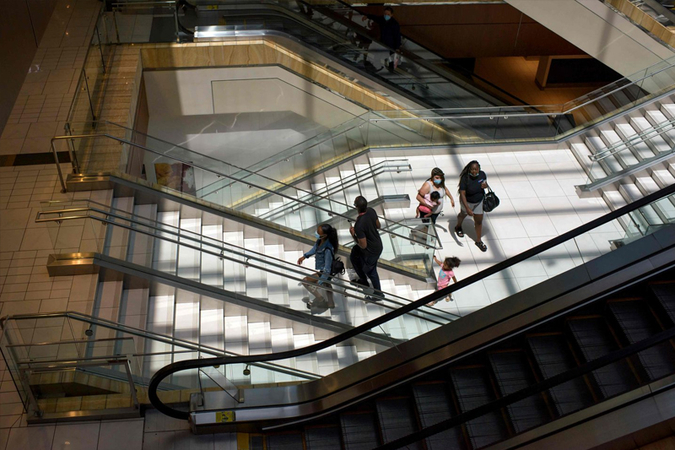
Malls are reopening, with masks, social distancing and hand sanitizer-spritzing doormen #ศาสตร์เกษตรดินปุ๋ย

#ศาสตร์เกษตรดินปุ๋ย : ขอบคุณแหล่งข้อมูล : หนังสือพิมพ์ The Nation.

https://www.nationthailand.com/business/30387145?utm_source=category&utm_medium=internal_referral

Malls are reopening, with masks, social distancing and hand sanitizer-spritzing doormen

May 02. 2020
By The Washington Post · Abha Bhattarai, Arelis R. Hernández, Peter Holley · NATIONAL, BUSINESS, HEALTH 

Americans began trickling back into shopping malls on Friday, wearing masks and facing new rules. Only two customers at a time at a Vitamin World in San Antonio. No shoe-sizing services at a Skechers in Gulfport, Mississippi. Mandatory hand sanitizer, spritzed on by a mask-wearing doorman, at a Louis Vuitton in Houston.

“It wasn’t that different from a typical shopping experience,” said Peyton Burrows, 24, who went to the upscale Texas mall in search of a Louis Vuitton handbag and, like countless others, some measure of normalcy.

Malls, restaurants and movie theaters in Texas and roughly a dozen other states began emerging from the coronavirus lockdowns that have fueled six weeks of economic paralysis, leaving business owners, workers and consumers to make their calculations about what normal should look like amid an ongoing public health crisis.

More than half of America’s governors have now relaxed restrictions put in place to stem the spread of the coronavirus. But the reopenings are largely piecemeal and vary in scope. In Georgia, Gov. Brian Kemp, a Republican, last week opened nearly all businesses, including tattoo parlors and hair salons. Colorado began allowing in-person shopping on Friday, with strict social distancing protocols in place. Ohio is edging into reopening, allowing elective surgeries to resume.

Most department stores and national chains remained closed Friday. The retailers that did reopen represented a smattering of brands: Rack Room Shoes, Gucci and Urban Outfitters. A candle kiosk in Mississippi and a food court Subway.

The landscape is even more muddled within states, with many large cities extending stay-at-home orders even as they are lifted in more rural areas. Officials in Nashville, Denver, St. Louis and other cities have told residents to stay home even as their states have moved to reopen. Texas Gov. Greg Abbott, a Republican, has insisted the entire state follow his plans to reopen, even though mayors in such cities as Austin and Dallas have balked.

Public health experts, meanwhile, have warned that premature openings could lead to a resurgence of the virus, which has killed more than 64,000 Americans.

“There’s no question that at the end of this we’ll have to reopen as a society, but right now it’s happening scattershot without any consistency,” said Mark Cohen, director of retail studies at Columbia Business School. “Nobody has a playbook.”

The patchwork has left many national businesses unsure of how to proceed, though some are slowly rolling out plans. Simon Property Group, the nation’s largest mall operator, reopened three dozen shopping centers on Friday, with plans to expand to 49 properties in 10 states on Monday. Tapestry, the parent company of Kate Spade, Coach and Stuart Weitzman, reopened 40 of its stores for curbside pickup. Best Buy plans to phase in 200 stores this month.

Meanwhile, Macy’s, the nation’s largest department store chain, will open 68 stores on Monday, with the rest of its 775 stores coming onboard in the next six to eight weeks. But there will stark differences from pre-pandemic norms: Customers will not be allowed to try on makeup or dress shirts or get bra fittings. No ear piercings or alterations, either. Employees, meanwhile, will be required to get temperature checks and wear cloth masks. The company is also adding plexiglass barriers at cash registers and providing hand sanitizer at entrances, escalators and checkout counters.

But even with the precautions, analysts say it will be difficult to persuade shoppers to come in and spend. More than 30 million Americans have filed for unemployment benefits in the past six weeks, and many more say they’re worried about possible job cuts and furloughs as the effects of the shutdown continue ripple across the economy. That’s led to steep declines in consumer spending that analysts say will only worsen in the coming months.

“Some people will go to the mall, but there are so many others who are afraid to go out or don’t have money to spend,” said Neil Saunders, managing director of GlobalData Retail.

But that didn’t stop the dozens of shoppers who lined up Friday outside Ingram Park Mall in San Antonio waiting for it to open.

William Luna, 42, had come in search of an exclusive Batman figure, wearing a homemade Spiderman-themed mask. Though he disagrees with the governor’s decision to reopen the state, he said he’s starting to get tired of sitting at home. Plus, he figured, there wouldn’t be much of a crowd at the mall.

“I don’t like being locked up,” said Luna, who is disabled and cannot work. “But I also understand. I expect the opening backfires so people learn.”

Inside the mall, signs warned customers about keeping their distance, and stickers on the tile floor indicated where people should stand. Vitamin World imposed a two-shopper limit, while Rack Room Shoes was allowing 24 at a time. Most national brands were closed but about a dozen locally owned retailers opened their doors. Jewelry kiosks and cookie vendors were busy preparing for foot traffic. At least a dozen people waited for appointments at the mall’s two optical stores.

Massage chairs, merry-go-rounds, and the food court were roped off. Most customers wore face masks and avoided touching surfaces.

Elsewhere in San Antonio, Johnny Hernández reopened his La Gloria Mexican restaurant on Friday. “I’m optimistic we can move forward and it’s a risk I’m willing to take,” he said.

The restaurant used metal barriers to control entry and wait staff wore black masks and gloves. A sign warned, “No mask, No service!”

The chef said he wanted to lead and set an example of how to run a restaurant in a pandemic. He spent two days training employees on the new standards and brought in new inventory. He has rehired 50 of his 150 employees. He feeds 1,500 people on a normal Friday. Today, he predicts about 200 people will come.

“People are ready to come back,” Hernandez said. “We are giving that within the safety boundaries we’ve been giving and trying to respect the guidance.”

Two hundred miles away in Houston, Ashley Smith, 29, arrived early at the Galleria to return a $200 pair of sandals to Tory Burch, which ended up being closed. The recently laid-off medical worker said coming to the mall had been “a hard decision.” She needed the money, she said, but it took only a few minutes for her to regret her choice.

Hundreds of shoppers teemed around her. Some of the malls’s most popular destinations – Tom Ford, Neiman Marcus, Chanel, Macy’s, Starbucks, and the Apple Store – were closed. Other, like Fendi, Valentino and Christian Loubouton, were completely devoid of merchandise.

Six missed delivery stickers were posted to the locked front door of the Chanel store. At Neiman Marcus, a “Temporarily Closed” sign redirected customers to the chain’s website.

“People really don’t seem to be taking the pandemic seriously here,” Smith said. “You don’t know if people are sick and especially with me being African American, it seems like it’s hitting our community worse.”

“It wasn’t worth it,” she added.

Mall operators, analysts say, also have a financial incentive to reopen: Rent. A number of brands – including the Gap, Old Navy and Banana Republic – didn’t pay for their leases in April, adding up hundreds of millions of dollars in lost revenue for mall owners. Retailers are also quickly running out of cash, making it all the more important for landlords to lock in whatever payments they can. “It’s a lot harder for retailers to say, ‘we don’t want to pay rent,’ if the malls are open,” Saunders said. “That’s the calculation.”

Alex Cunningham, who owns two mobile phone repair kiosks in The Galleria called “Street Talk” has been making his own financial calculations lately. It could be weeks until business returns to normal, he said, but it was important that he open anyway. On Friday, he said he had just two customers instead of the usual dozens.

“I’m just out here because I need the money,” said Cunningham, who added that he wasn’t worried about the virus. “I’ve only had a little bit of business, but I’m grateful for it.”

At the Gulfport Premium Outlets in Mississippi, Katherine Bosarge arranged colorful candles on her sidewalk cart, wondering the same things as the shoppers around her: “Which stores are open? Where is everyone?”

She was wearing a black mask with a New Orleans Saints logo but said she wasn’t worried about the coronavirus. What really scares her, she says, is the economic fallout of the shutdown. Unemployment benefits had helped tide her through these past few weeks, she said, but she was worried about how long it could take for sales to return to normal.

“I’m very glad to be back,” said Bosarge. “I wish there was more business. It’s going to be a slow recovery.”

Lufthansa running out of bailout road as Germany sets terms #ศาสตร์เกษตรดินปุ๋ย

#ศาสตร์เกษตรดินปุ๋ย : ขอบคุณแหล่งข้อมูล : หนังสือพิมพ์ The Nation.

https://www.nationthailand.com/business/30387104?utm_source=category&utm_medium=internal_referral

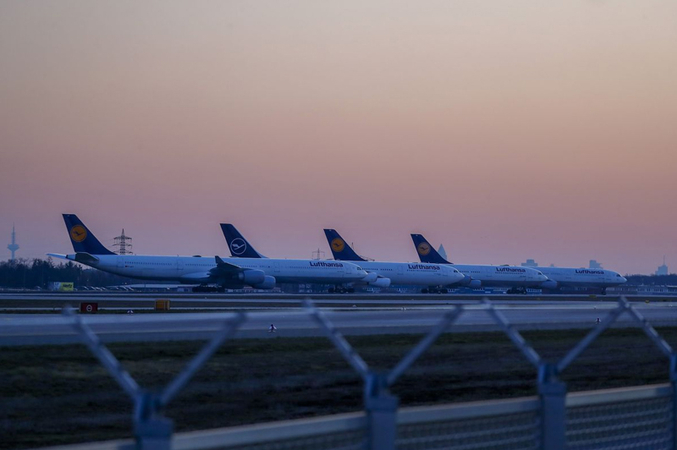
Lufthansa running out of bailout road as Germany sets terms

May 01. 2020
By Syndication Washington Post, Bloomberg · Birgit Jennen, William Wilkes, Matthias Wabl · BUSINESS, WORLD, TRANSPORTATION, US-GLOBAL-MARKETS, EUROPE 

Germany’s government has set out a unified position on a bailout for Deutsche Lufthansa, with the airline group expected to accept a significant state stake and veto rights in exchange for a multibillion-euro package of assistance, according to people familiar with the matter.

While details are still being negotiated, the economy and finance ministries have ironed out disagreements that dragged on for weeks, the people said, asking not to be named discussing the deliberations. The plan foresees Germany taking a least a 25% stake in the airline and receiving at least one seat on the firm’s supervisory board, the people said. The assistance could run to 10 billion euros ($11 billion).

The size of Germany’s equity stake, whether part of it will be under a so-called silent participation that limits state control, and how many seats the government will have on Lufthansa’s supervisory board are still subject to negotiations, according to the people. Talks between the airline and the government are expected to stretch into next week, the people said.

The airline, faced with a substantial loss in revenue due to the worldwide grounding of most of its fleet, is locked in multi-state bailout talks with the governments of Germany, Switzerland, Austria and Belgium. Lufthansa operates so-called flag carriers in all four nations, and has warned that it will run low on cash within weeks if it can’t reach an accord.

Like airlines the world over, Lufthansa is wrestling with a crisis that’s punctured a decades-long aviation boom. The firm is scaling back its fleet and closing the Germanwings discount arm to resize the airline group for depressed levels of travel that could last for years.

The firm isn’t alone in expecting a slow return to normality: an International Air Transport Association survey found 40% of recent travelers anticipated waiting at least six months after the virus is contained before flying again.

Lufthansa understands it has little leverage in the talks with Germany, the people said, and an agreement is likely to be reached based on terms being outlined by the state. While the company is leaving all options open, it’s unlikely to seek court protection — an idea floated this week as a last resort — due to potential reputational damage with investors and financial markets, the people said.

Lufthansa’s pilots union on Thursday said its members were prepared to take a 45% pay cut if the airline’s management promised not to enter court protection.

“These concessions are worth around 350 million euros and make a significant contribution to the viability of the company,” the VC pilots’ union said in a statement.

A spokesman for Lufthansa said talks were ongoing.

The government in Vienna could also join the German government in taking an equity stake, people familiar with the matter said. Lufthansa’s Austrian Airlines has asked the state for aid close to 800 million euros, about 300 million of which may be equity, with the remainder loans, guarantees and non-repayable subsidies.

In a Wednesday meeting with Lufthansa Chief Executive Officer Carsten Spohr, Austrian Chancellor Sebastian Kurz asked for guarantees to maintain and possibly extend Vienna airport as a hub for the group, according to people familiar with the talks. Austria is willing to take an equity stake in Lufthansa along with the German government, the people said.

“We took a step forward yesterday, the talks continue,” Austrian Finance Minister Gernot Bluemel told reporters on Thursday. Austria “isn’t ruling out anything,” he said, when asked if the country would consider taking a stake in Lufthansa.

Lufthansa’s Swiss and Edelweiss subsidiaries on Wednesday reached a deal to receive 1.3 billion francs ($1.3 billion) in credit guarantees from Switzerland’s government, the first plank in a bailout package the parent company is negotiating with the four governments.

Talks with the Belgian government are ongoing.

Apple’s iPhone sales fell as the coronavirus struck #ศาสตร์เกษตรดินปุ๋ย

#ศาสตร์เกษตรดินปุ๋ย : ขอบคุณแหล่งข้อมูล : หนังสือพิมพ์ The Nation.

https://www.nationthailand.com/business/30387096?utm_source=category&utm_medium=internal_referral

Apple’s iPhone sales fell as the coronavirus struck

May 01. 2020
File photo

File photo
By The Washington Post · Reed Albergotti · BUSINESS, TECHNOLOGY 

Apple reported that second quarter revenue inched up 1%, reflecting how the coronavirus has rocked its business from manufacturing to consumer demand.

Apple said revenue in the second quarter totaled $58.3 billion. iPhone revenue was $29 billion, down from $31 billion a year ago. Profits fell 2.7% to $11.3 billion.

“Despite covid-19’s unprecedented global impact, we’re proud to report that Apple grew for the quarter,” said Tim Cook, Apple’s CEO.

Apple’s stock dipped 2% in after-hours trading, after rising 2% earlier in the day. While the report was positive under the circumstances, Apple injected some uncertainty by holding back guidance for the following quarter.

Cook painted a rosy picture of the company’s ability to pump out new products, despite the virus, touting its launch of updated iPads, MacBook Airs and the iPhone SE, and said the company’s production was back up to typical levels by the end of February.

But that optimistic outlook only told half the story. Cook didn’t say whether its flagship iPhone, initially expected to launch this fall, would be on time or whether it would include 5G, the next-generation wireless technology competitors have already implemented.

“There’s not one person on earth who was expecting good news from Apple when they reported, but it’s the degree of the economic abyss,” said Dan Ives, an analyst with Wedbush Securities. “Apple and iPhone are just a core bellwether for consumer spending and demand, especially on technology purchases.”

Apple was exposed to the ravages of the novel coronavirus earlier than some of its technology industry peers, such as Google, Facebook and Microsoft. The virus cut off Apple’s vast and sinuous networks of suppliers and contract manufacturers in China and shuttered its stores there, preventing its customers from touching and feeling its products before they buy.

On Feb. 17, Apple warned investors that it would fail to meet its revenue guidance for the second quarter, largely because of supply chain disruptions and a drop in demand in China because of Coronavirus.

That announcement didn’t deeply spook investors, but things have gotten progressively worse, as the coronavirus has spread around the world and with unparalleled deadliness in the United States, Apple’s core market. On March 13, Apple said it would shutter its hundreds of U.S. retail stores for two weeks. That was seven weeks ago, and there’s no telling when they’ll all reopen.

On Thursday, Wall Street analysts expected, on average, that Apple would bring in $54.54 billion in revenue during the March quarter.

The good news for Apple investors is that, while sales of phones might be down, nothing about the coronavirus has weakened the lock Apple has over its customers. Apple’s launch of the iPhone SE, which starts at $400, should help the company hold onto cash strapped customers during one of the worst economic crises in history.

“Now they’ve made it a bit harder for people to just look at Android that offers more price points,” said Carolina Milanesi, an analyst at market research firm Creative Strategies.

Hardware aside, Apple’s push to diversify into services has gotten a boost from the coronavirus. Apple’s services revenue shot up 17%, to $13 billion, constituting 23% of the company’s revenue. Much of that revenue comes from recurring fees that Apple charges its customers, for things like photo storage, AppleCare and music streaming.

According to Sensor Tower, which tracks the mobile app industry, the number of new app downloads on iPads saw the first year-over-year growth since 2013. Sensor Tower says users spent $2 billion on iPad apps during the quarter, the first time it hit that level.

It also takes a hefty cut of all purchases on the App Store and a percentage of all Apple Pay sales. That customer base continues to grow, the company says, with a growing “installed base” of 1.5 billion devices.

As Thursday’s earnings report showed, it’s not easy for customers to get out of those monthly charges, even during the worst economic downturn many of them have experienced, and that’s a good thing for Apple investors. “Services, that’s Teflon,” Ives said.

Some in the global supply chain industry were eagerly awaiting Apple’s earnings report in hopes that it would provide some guidance on how to proceed with manufacturing in China. “I cannot remember a more anticipated or anxiously awaited earnings call,” said Ron Keith, founder of the Supply Chain Resources Group, which helps consumer electronics companies build devices in places like China.

Keith, for instance, said that rosy projections from Apple would provide some justification in taking a more aggressive approach in China, pushing suppliers to get key components more quickly. “They’re thought of as a very big barometer,” he said of Apple.

Apple didn’t say whether it thought things would get better next quarter, only that once it’s over, “the ending will be a good one,” Cook said.

He also expressed confidence in the global supply chain as it stands, despite criticism from some that Apple has become too reliant on China to assemble its products and produce many of the components. “If you look at the shock to the supply chain that took place this quarter, for it to come back up so quickly really demonstrates that it’s durable and resilient. So I feel good about where we are,” Cook said.

Amazon sales soar as coronavirus-worried consumers shop from home, but costs rise #ศาสตร์เกษตรดินปุ๋ย

#ศาสตร์เกษตรดินปุ๋ย : ขอบคุณแหล่งข้อมูล : หนังสือพิมพ์ The Nation.

https://www.nationthailand.com/business/30387093?utm_source=category&utm_medium=internal_referral

Amazon sales soar as coronavirus-worried consumers shop from home, but costs rise

May 01. 2020
By The Washington Post · Jay Greene · BUSINESS, TECHNOLOGY, US-GLOBAL-MARKETS

SEATTLE – The massive shopping surge fueled by the coronavirus pandemic caught Amazon unprepared, even as it drove a 26 percent jump in first-quarter revenue, the company said Thursday.

Now, Amazon plans to spend at least $4 billion in the current quarter to add warehouse and delivery workers, test its staff and provide them with personal protective gear so it can unclog its network that still struggles to meet customer demand for household staples such as toilet paper and bleach.

“If you’re a shareowner in Amazon, you may want to take a seat, because we’re not thinking small,” Amazon chief executive Jeff Bezos said in a statement.

Bezos owns The Washington Post.

Sales soared to $75.5 billion in the first quarter, up from $59.7 billion the same quarter a year ago, the company reported Thursday. But profits fell 29 percent to $2.5 billion.

Normally, the company might generate $4 billion in operating profit in the current quarter, Bezos said.

“But these aren’t normal circumstances,” Bezos said. “Instead, we expect to spend the entirety of that $4 billion, and perhaps a bit more, on COVID-related expenses getting products to customers and keeping employees safe.”

Even with that spending, Amazon is still not sure when its regular services, such as its one-day shipping promise to its Prime members, will resume.

“Right now things are still so up in the air that I can’t really project when that day will be,” Amazon finance chief Brian Olsavsky said during a call with financial analysts.

The new expenses drove Amazon’s shares down 4 percent to $2,383, in after-hours trading. During regular trading, the stock closed at a record high of $2,474.

In a media call, Olsavsky said “a large portion” of the money will be spent on hiring workers. Another large piece will be paying for the protective gear for those workers. But the threats to Amazon’s warehouse and delivery staff from the coronavirus leave Amazon with little alternative but to spend the additional money, he said.

“There’s no choice. They have to make this move,” said Brent Thill, an analyst with Jefferies.

Nonetheless, Thill said, the heavy spending slashes expectations for the current quarter.

“The biggest fear came out,” Thill said.

At the end of the past quarter, Amazon employed 840,000 workers globally. Olsavsky said it has added another 95,000 employees since then.

Amazon joins Microsoft, Alphabet-owned Google and Facebook in reporting solid financial results this week in the wake of the pandemic. Like those rivals, Amazon is poised to weather the storm and emerge stronger, a sign that the economic fallout from the novel coronavirus is helping the biggest tech giants consolidate their power.

And while Amazon has some exposure to the declining advertising market that raised some concerns for Google and Facebook, its retail and cloud-computing businesses leave it less vulnerable.

The stay-at-home orders are proving devastating to Amazon’s brick-and-mortar-focused rivals. Macy’s shuttered all of its 775 stores in March and furloughed most of its 125,000 workers. Other retail mainstays, such as Neiman Marcus, are edging toward bankruptcy, analysts say.

Amazon continues to struggle to meet the huge demand from Americans and from international customers, many of whom have remained at home for more than a month as the coronavirus pandemic spreads. To unclog its network, Amazon has prioritized stocking and delivering items deemed most essential and raced to hire 175,000 U.S. workers in the span of a few weeks, hiring it completed this week, Olsavsky said.

“What’s really happening is the delays in the warehouse of handling the volumes, and picking and packing and getting it to shipment is really what’s causing delays right now,” Olsavsky said. “We’re still shipping very fast at the end.”

In an unusual move, Amazon spent much of its quarterly earnings release Thursday highlighting its efforts to address the pandemic for both employees and customers. It repeated announcements from earlier that it has made 150 “significant process changes” to help ensure its teams stay healthy, as well as procuring 100 million face masks that are now required for workers.

It also said it was testing a new coronavirus testing process with front-line workers. On the media call, Olsavsky said the company expects to spend $300 million on testing in the current quarter. If Amazon is successful in developing the program, those costs probably will hit $1 billion over the course of this year, he said.

“We’re not sure how far we’ll get in the relevant time frame, but we think it’s worth trying, and we stand ready to share anything we learn,” the company said when it announced the pilot.

Amazon has had to confront restive warehouse and delivery workers who have raised concerns that the company hasn’t done enough to protect them from contracting the virus. As employees at dozens of its facilities have tested positive for covid-19, the disease caused by the coronavirus, the outbreak hit the company’s U.S. warehouses and some workers complained about Amazon policies that push them to meet the per-hour rate at which the company wants orders fulfilled, fearing the practice discourages safe sanitary practices such as washing hands after a cough or sneeze. Other employees complained about “stand-up” meetings, where workers stand shoulder-to-shoulder at the start of each shift.

Since then, Amazon has modified policies, ending the stand-up meetings. It also has begun to hand warehouse staff face masks and check their temperatures at the start of shifts, sending workers home for three days if they register 100.4 degrees Fahrenheit or higher.

Amazon said in its release that it purchased more than 31,000 thermometers and more than 1,000 thermal cameras.

Amazon has repeatedly defended its treatment of workers, saying it has ramped up cleaning its facilities and procuring personal protective equipment, and it has noted that the vast majority of employees continue to show up for work every day.

Amazon has fired some of the activists, while workers continue to press for better benefits and improved conditions. It also has begun airing commercials, lauding its warehouse and delivery staff as front-line “heroes” in the pandemic crisis.

The company on Thursday also highlighted its efforts in cloud computing-arm Amazon Web Services, which it said is helping researchers and health officials to better understand covid-19 through providing a “centralized repository of curated, up-to-date, pre-processed, and publicly readable data sets focused on the spread and characteristics of the virus.” It includes data from Johns Hopkins University, Definitive Healthcare and Carnegie Mellon’s Delphi Research Group.

AWS is also supporting the White House’s High Performance Computing Consortium, Amazon said, as well as providing resources to help schools transition to online learning.

More airlines move to make masks mandatory #ศาสตร์เกษตรดินปุ๋ย

#ศาสตร์เกษตรดินปุ๋ย : ขอบคุณแหล่งข้อมูล : หนังสือพิมพ์ The Nation.

https://www.nationthailand.com/business/30387091?utm_source=category&utm_medium=internal_referral

More airlines move to make masks mandatory

May 01. 2020
By The Washington Post · Lori Aratani · NATIONAL, BUSINESS, WORLD, HEALTH, TRANSPORTATION, TRAVEL

Momentum is growing behind the push to require passengers to wear masks when they fly, in hopes of providing an extra layer of protection against the spread of the novel coronavirus.

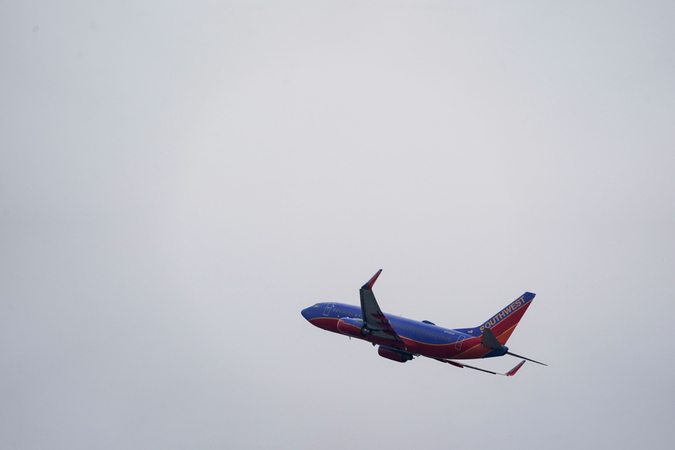
On Thursday, American, Delta, Frontier and United announced that starting this month, passengers would be required to wear masks or facial coverings when they fly. The shift comes after JetBlue announced a similar policy Monday.

Crew members also will be required to wear masks, the airlines said.

Amid reports that more than 500 employees, including screeners at the Transportation Security Administration, have been diagnosed with covid-19, union leaders said travelers should be required to wear masks when passing through security checkpoints as well.

“TSA should require that all passengers wear a mask in order to enter the security process,” said Everett Kelley, president of the American Federation of Government Employees, during at virtual forum Thursday on the impact of covid-19 on TSA workers.

At the session, held by members of the House Committee on Homeland Security, Kelley said that at least five TSA workers have died of the virus.

Rep. Lou Correa, D-Calif., pointing to mask requirements in some supermarkets, said people need to change their behavior to protect “front-line warriors” at TSA who are working to keep the nation safe.

“It’s a change that has to be drilled down into each individual, that you got to change the way we do business, at least in the short term,” he said.

TSA would not say whether it supports a mask requirement. The agency noted in a statement that “several jurisdictions have regulations in place that make it mandatory for individuals to wear masks in public.”

Are you flying during the pandemic? We want to hear from you

All this comes the same week that Rep. Peter DeFazio, D-Ore., chairman of the House Transportation Committee, urged the Federal Aviation Administration to make face coverings mandatory for commercial travelers.

“As our Nation confronts this devastating public health crisis, it is incumbent on every Federal agency to provide clear, consistent requirements that put the health and well-being of all Americans first,” DeFazio said in a statement issued Wednesday. “Accordingly, today I urged FAA Administrator [Steve] Dickson to require masks or other face coverings for all crew members and passengers on U.S. flights.”

Even so, the FAA has so far resisted calls to require masks, reiterating that it sees its role as a regulatory agency that oversees safety, not health.

“The FAA has statutory authority and responsibility to promote the safe operation of civil aircraft,” the agency said in a statement. “The FAA is not a public health agency, but we are lending our aviation safety expertise to federal public health agencies as they issue health guidance for crew members, including health monitoring, screening protocols and aircraft cleaning.”

Scientists know how to stop viruses from circulating on planes. Unfortunately, they are too late for this pandemic

FAA spokesman Lynn Lunsford added that Dickson welcomed the opportunity to speak with DeFazio about his concerns and that the agency would continue to work with air carriers “to ensure they have processes in place for addressing public health risks for their crews and passengers.”

Earlier this week DeFazio and other Democratic and Republican leaders of the Transportation Committee made an appeal to Nicholas Calio, chief executive of Airlines for America, a leading industry trade group, to help address a number of issues related to air travel and the pandemic. They strongly urged him to encourage member airlines to develop “clear, enforceable policies” to require passengers to wear masks or face coverings.

Airlines for America declined to say whether it would support such a policy, saying only in a statement: “The safety and well-being of passengers and employees is the top priority of U.S. airlines. U.S. carriers have worked since the early stages of this outbreak to increase communications with passengers and implement travel policies to provide flexibility for customers. U.S. airlines remain committed to making accommodations that are responsive to travelers’ needs during this unprecedented time.”

According to estimates from employee unions, more than 600 flight attendants have been infected and at least five have died of the coronavirus. Among pilots, there have been at least three deaths and more than 230 infections.

“We’re happy to see airlines taking action to require masks or face coverings for passengers, crew and other front line employees,” Sara Nelson, international president of the Association of Flight Attendants-CWA, said in a statement. “We continue to call on the federal government – whether it be DOT, FAA, HHS, CDC – to require masks for crew, front line employees and all passengers.”

As part of its new policy, American Airlines said it would begin providing masks as well as hand sanitizer and wipes to passengers beginning in early May, with the goal of offering them to passengers on all flights when supplies become available.

The GAO told the government in 2015 to develop a plan to protect the aviatAsion system against an outbreak. It never happened.

In addition to requiring that all passengers wear masks beginning May 8, Frontier Airlines said travelers also will have to fill out a health acknowledgment form before check-in, certifying, among other things, that no one in their household has exhibited covid-19-related symptoms in the past 14 days. Very young children, who are unable to wear a face covering, are exempt from the policy, the airline said.

“We want our passengers to feel comfortable when flying with us by protecting themselves and their fellow travelers as we all navigate the Covid-19 pandemic,” said Barry Biffle, Frontier’s chief executive officer. “This new measure is aligned with CDC recommendations and those of many municipalities within the U.S. that include wearing a face covering when out in public.”

PTTEP reports drop in earnings #ศาสตร์เกษตรดินปุ๋ย

#ศาสตร์เกษตรดินปุ๋ย : ขอบคุณแหล่งข้อมูล : หนังสือพิมพ์ The Nation.

https://www.nationthailand.com/business/30387076?utm_source=category&utm_medium=internal_referral

PTTEP reports drop in earnings

Apr 30. 2020
By THE NATION

PTT Exploration and Production Public Company Limited (PTTEP) has adjusted its investment plans after its net income stood at US$275 million (Bt8.88 billion) in the first quarter amid the oil price crisis and the Covid-19 outbreak in order to sustain long-term growth.

Phongsthorn Thavisin, PTTEP’s president and CEO, said the firm recorded total revenue of $1.77 billion (about Bt55 billion) in the first quarter, marking a 4 percent drop from the last quarter of 2019.

This softening of revenue came from drop in sales at 363,411 barrels of oil equivalent per day (BOED), compared to 395,028 BOED in the previous quarter, owing to low gas nomination from projects in the Gulf of Thailand.

Additionally, the average selling price dropped to $44.81 per barrel of oil equivalent (BOE), against $48.28 per BOE reported in the last quarter of 2019.

On the other hand, PTTEP gained $222 million this quarter on financial instruments, mainly from oil price hedging contracts.

The unit cost was maintained at $31 per BOED. However, the company had to pay $225 million in income tax due to the depreciation of the Thai baht against the greenback.

Taking all the aforementioned factors into account, PTTEP announced a net profit of $$275 million in the first quarter, marking a drop of 28 percent from $384 million in the last quarter of 2019.

The company’s operating cash flow stands at $981 million with a 72 percent earnings before interest, taxes, depreciation and amortisation (EBITDA).

Phongsthorn explained that the drop in domestic energy demand from the Covid-19 outbreak as well as the oil price crisis contributed to the drop in earnings.

PTTEP has revised its estimated sales volume for 2020 to 362,000 BOED, recording a 7 percent slump from the previous target of 391,000 BOED and will also reduce its expenditure for the year by 15 to 20 percent.

Its major spending cuts will come from the deferral of some exploration activities and a cut in non-operation related expenses, while maintaining its capital expenditure to ensure a continuity of energy supply in the country.

PTTEP will continue with its investment in development projects overseas, such as in Mozambique and Malaysia, to ensure production in these projects begins in the next three to four years as planned.

“The exploration and production business is being challenged by the oil price crisis once again. During the last downturn four or five years ago, the company restructured its costs, so now its current costs are low and competitive compared to those of our peers. However, the challenges we are facing today are not just about the price of oil, but also a global downturn that is affecting the business sector more extensively.

“In order to foster growth and sustainability of the company, rather than only lowering unit costs, we need to focus on organisation and culture transformation to be agile and adaptive to disruption. This transformation will ultimately make the future cost structure of the company more resilient and able to surpass any challenging situations,” he said.

Lyft to lay off 17% of staff #ศาสตร์เกษตรดินปุ๋ย

#ศาสตร์เกษตรดินปุ๋ย : ขอบคุณแหล่งข้อมูล : หนังสือพิมพ์ The Nation.

https://www.nationthailand.com/business/30387041?utm_source=category&utm_medium=internal_referral

Lyft to lay off 17% of staff

Apr 30. 2020
By The Washington Post · Faiz Siddiqui · BUSINESS 

Lyft is laying off 17% of its staff, the company announced Wednesday, after the coronavirus crisis wrought havoc on the ride-hailing business and cut substantially into its revenue.

The layoffs will amount to nearly 1,000 jobs. In an email to the company’s thousands of employees, chief executive Logan Green announced the “difficult news,” including the furloughing of 5% of the staff and reducing salaries for three months.

“The COVID crisis has taken an enormous toll on the entire world,” he wrote. “Our guiding principle for decision-making is to ensure we emerge from the crisis in the strongest possible position to achieve the company’s mission.”

Lyft, which went public a year ago on the promise of creating a one-stop-shop transportation app, said it made the decision in the best interest of its financial health.

“It is now clear that the COVID-19 crisis is going to have broad-reaching implications for the economy, which impacts our business,” Green said in a statement. “We have therefore made the difficult decision to reduce the size of our team. Our guiding principle for decision-making right now is to ensure we emerge from the crisis in the strongest possible position to achieve the company’s mission.”

Employees were receiving individual emails Wednesday morning to learn what would happen with their jobs. Lyft said in a financial filing that 982 employees would be affected. The company was set to hold a virtual all-staff meeting later Wednesday morning.

One email viewed by The Washington Post advised the laid off employee, “We regret that we have to deliver this news this way – but for the sake of clarity, I need to let you know that there’s no longer a role at Lyft for you.”

Lyft said pay cuts would be tiered so senior executives forgo 30% of their salary, vice-president-level employees give up 20% and other salaried employees see a 10% drop in pay.

Ride-hailing companies were already on shaky financial footing after going public last year, as their stock debuts increased pressure to trim costs and cut down on heavily subsidized financial incentives used to gain riders. In many cities, the coronavirus means residents sheltering in place couldn’t use the services at all unless they were conducting essential travel.

Uber also is considering how to respond to the crisis after the novel coronavirus has cut into ride-hailing by as much as 80% in some markets, the company told employees this week.

“As you would expect, the company is looking at every possible scenario to ensure we get to the other side of this crisis in a stronger position than ever,” Uber spokesman Noah Edwardsen said in a statement.

Boeing plans to slash 10 percent of its workforce amid pandemic fallout, Max grounding #ศาสตร์เกษตรดินปุ๋ย

#ศาสตร์เกษตรดินปุ๋ย : ขอบคุณแหล่งข้อมูล : หนังสือพิมพ์ The Nation.

https://www.nationthailand.com/business/30387038?utm_source=category&utm_medium=internal_referral

Boeing plans to slash 10 percent of its workforce amid pandemic fallout, Max grounding

Apr 30. 2020
By The Washington Post · Aaron Gregg · BUSINESS, US-GLOBAL-MARKETS

Boeing said Wednesday it plans a 10 percent staff reduction – more than 14,000 jobs – as the continued grounding of its signature jet combined with a global halt in air travel saps billions from its once-profitable commercial jet division.

The company, which reported a loss of $1.7 billion for the first quarter Wednesday, employs more than 140,000 people globally and said it plans to cut approximately 10 percent of its total workforce. Boeing executives said job cuts would likely focus on commercial aircraft factories in the Seattle area, the company’s 787 Dreamliner facility in South Carolina, and smaller aircraft services facilities across the United States. The job cuts would affect at least 14,000 based on recently reported employment figures.

The 737 Max crisis amplified by the pandemic has cost Boeing, once a Wall Street favorite, a total of $5 billion, the company reported Wednesday.

Chief Executive Dave Calhoun said in a video message to employees that the losses would be steeper in the commercial airplane division, based in the Puget Sound region of Washington State.

“Please know that we will do everything we can to minimize that impact, and as we take these steps, we will be as fair and transparent as possible – and absolutely honest and respectful,” Calhoun said in the video.

While the company can take advantage of a government aid program designed to help companies critical to national security, Boeing is riding out the crisis for now without government support. The company has until Friday to seek a cut of the $17 billion Treasury Department fund.

In conversations with reporters and investment analysts Wednesday, Boeing executives declined to offer details on potential government support. Showing a hint of optimism in an otherwise sobering earnings call, Boeing chief financial officer Greg Smith said economic conditions have improved drastically since the initial coronavirus market crash.

“We now have an ability to take a balanced approach because the capital markets are in much better shape than they were even two weeks ago,” Smith said.

The Boeing job cuts will put added strain on an economy already reeling from more than 26 million jobs lost because of the pandemic. The federal government reported Wednesday that fallout from the deadly coronavirus caused the U.S. economy to contract 4.8 percent from January through March. That’s the steepest drop since the financial crisis more than a decade ago.

Analysts said Boeing’s decision to cut the workforce underscores not only the severity of the crisis, but also hints at a potentially rocky, unsatisfying recovery. As the twin crises at Boeing deepen, executives and industry analysts are pointing to a more permanent realignment in Boeing’s business.

“These layoffs are permanent,” said Mike Boyd, an aviation planning consultant who heads Boyd Group International. “Boeing has to shrink in size. The marketplace that they were selling to last year doesn’t exist anymore and it won’t exist for three years or more.”

The company’s 737 Max commercial jetliner has been grounded for more than a year after flawed flight control systems played a role in two deadly crashes that killed 346 people. The federal government launched criminal and civil investigations following the crashes, including an investigation into whether Boeing misled airlines about the training needed to fly the Max.

Boeing has been working on changes to the Max, including software fixes and an updated pilot training program, to win approval from the Federal Aviation Administration to return the plane to service. The company has said it expects that to happen during the third quarter of 2020, while emphasizing that regulators control the timeline.

The company fired its chief executive, Dennis Muilenburg, in December and stopped production of the Max in January. Still reeling from the Max crisis, the company took a hit months later as the pandemic caused a steep drop-off in air travel, leading to billions of dollars’ worth of canceled orders for Boeing jets.

Boeing had to close several of its plants across the country as employees began to fall ill from the virus. Last week, 27,000 Boeing employees returned to work in the Puget Sound region. A few thousand more returned to defense plants outside Philadelphia and Columbus, Ohio.

Bank of America aerospace analyst Ron Epstein said he thinks global air traffic probably won’t return to its previous peak until 2023 at the earliest. Air traffic within the country is down 95 percent, according to data maintained by the Transportation Security Administration, far outstripping even the period after the September 11, 2001 terrorist attacks.

Boeing will have to downsize even if it gets substantial government support, Epstein said.

“You have an end market that has been impacted in ways no one ever would have imagined,” Epstein said, “and Boeing is in the eye of the storm.”

Boeing executives estimate it will take two to three years for the company to recover from the covid-19 economic crisis. Even then, a global surplus in used jetliners could make airlines less eager to purchase new ones.

The company’s first-quarter financial report showed the toll of the combined losses from the Max grounding and the widespread impact from the coronavirus. Along with the quarterly loss of $1.7 billion, the company reported first-quarter revenue of $16.9 billion, 26 percent lower than the previous year.

With the dramatic decline of Boeing’s commercial aircraft division, government contracts have suddenly become the largest source of revenue for Boeing, a major shift from previous years. A new Boeing business unit focused on aircraft repair and technical services has held steady as the pace of government contracts has sped up, driven in large part by new Pentagon spending.

The company’s Arlington, Virginia-based defense, space and security division was also resilient, although there are problems there to. That division also experienced a slight revenue decline due to a $827 million charge for the KC-46A Tanker, the latest of several such charges. The company also fell behind schedule on its contract for the Air Force One presidential airplane, which executives attributed to challenge with having some engineers work remotely.

The company also announced production cuts across its commercial division to align resources more closely with expectations for significantly lower post-pandemic demand. Production of the 787 Dreamliner, which occurs at Boeing factories to the north of Charleston, South Carolina, will be scaled back from 14 per month to 10 per month, then gradually reduced to seven per month by 2022.

Calhoun noted the gravity of the news during a global pandemic that has cost millions of U.S. jobs.

“I know this news is a blow during an already challenging time. I regret the impact this will have on many of you. I sincerely wish there were some other way.”