What hotels are doing to sanitize rooms during the pandemic #ศาสตร์เกษตรดินปุ๋ย

#ศาสตร์เกษตรดินปุ๋ย : ขอบคุณแหล่งข้อมูล : หนังสือพิมพ์ The Nation.

https://www.nationthailand.com/business/30387026?utm_source=category&utm_medium=internal_referral

What hotels are doing to sanitize rooms during the pandemic

Apr 30. 2020
Photo credit: freepik

Photo credit: freepik
By The Washington Post · Natalie B. Compton

In response to the coronavirus pandemic, the travel industry is adapting to meet new health and safety concerns. Airlines are starting to require passengers to wear masks on flights. Airbnb has introduced mandatory vacancy periods between guest stays. Cruising is on hold, thanks to a no-sail order from the CDC.

Hotels, too, have begun dealing with covid-19 on a number of fronts. Changes are being made to housekeeping procedures, food safety, and guest check-in and check-out.

Industry giants Hilton and Marriott both announced new efforts over the past week at their combined 48 brands, spanning more than 100 countries, to consult with experts and implement new ways to enhance guest safety. Hyatt, for its part, had already set up “cross-functional, global response teams” to supply guidance on cleanliness and health issues, according to its website.

As with most global restrictions right now, we don’t yet know whether these changes will be temporary or stay in effect long term. But here’s a look at what hotel brands are doing to take extra precaution for now.

– Enhanced disinfecting protocols

The most basic (and expected) changes that hotels are implementing? More cleaning.

Marriott’s new Global Cleanliness Council, for instance, is requiring the use of “hospital-grade” disinfectants in public spaces and guest rooms. Among the proposals for Hilton’s program, a partnership with the Mayo Clinic and Lysol maker Reckitt Benckiser that’s launching in June, are requirements that public spaces and 10 specific “high-touch” areas be cleaned even more frequently.

Beyond that, hotels are experimenting with new sanitation technology, too.

Both Hilton and Marriott are in the process of introducing equipment like electrostatic sprayers and testing ultraviolet-light technology on hotel items. In Texas, the New York Times reported, the Westin Houston Medical Center is using “LightStrike Germ-Zapping Robots.”

– Making cleaning clearer

Some hotels now may be more visible in their cleaning procedures as well.

“We’ve heard this idea of ‘housekeeping theater,'” said Phil Cordell, Hilton’s global head of new brand development. “You go to a Benihana and they’re cooking the meal right in front of you. So maybe it’s not that dramatic, but customers want to feel like they can sense what’s up. They walk through the commercial area of a hotel and they see the frequent cleanings with a well-known product of high-touch areas in the lobby.”

As part of that push for more transparency, the Hilton housekeeping procedures will include the placement of a room seal on the door to indicate that a room has been cleaned and left vacant since.

– More sanitizing tools for guests

Marriott is stocking guest rooms with disinfecting wipes and installing more hand-sanitizer stations in communal areas of its hotels.

“Marriott is also evaluating adding partitions at front desks to provide an extra level of precaution for our guests and associates and is working with supply chain partners to make masks and gloves available to associates,” a company statement said.

Hilton is adding stations of disinfecting wipes in “key high traffic areas,” including at elevators. But it’s also strategically subtracting: Hotels will remove pens, paper and the guest directory from rooms, with digital alternatives “available upon request.”

– Contact-free check-in and room access

With social distancing so pivotal in preventing covid-19’s spread, reducing contact with others is a priority. For hotels, that means tweaks to the check-in process are, too.

More than 3,200 Marriott hotels are offering guest check-in and room access through their smartphones. Those guests can also use their phones to order room service or make other hotel requests.

Hilton, meanwhile, is expanding its Digital Key service, allowing guests to check in and enter their rooms using their smartphones.

– Employee health precautions

Under its new initiative, Hilton workers will “be provided with personal protective equipment and enhanced training,” the chain said. Marriott says it is “working” to provide masks and gloves to its own employees; as an extra barrier for staff and guests alike, it is also looking into adding partitions atop its front desks.

As for other countries? Hotels in Singapore, for one, are abiding by the government’s “SG Clean” certification program, which mandates temperature and health screenings for employees. At the moment, no major stateside hotels are considering the same.


Google starts giving away Meet video chat to catch up to Zoom #ศาสตร์เกษตรดินปุ๋ย

#ศาสตร์เกษตรดินปุ๋ย : ขอบคุณแหล่งข้อมูล : หนังสือพิมพ์ The Nation.

https://www.nationthailand.com/business/30387023?utm_source=category&utm_medium=internal_referral

Google starts giving away Meet video chat to catch up to Zoom

Apr 29. 2020
By Syndication The Washington Post, Bloomberg · Mark Bergen

Google wants people using its video chat software so badly, the company is now giving it away.

Starting Wednesday, Google Meet, the Alphabet company’s teleconferencing app, will be available at no cost. Currently Meet is part of Google’s paid workplace software suite. People can use the service for calls with as many as 100 participants. Google said it will cap free calls at 60 minutes, but won’t begin enforcing that time limit until the end of September.

The free offer is permanent, according to Smita Hashim, director of product management for Google Meet. “It’s going to last going forward, just like Gmail,” she said. “Video conferencing has pretty much become an essential service.”

Indeed, video calls are exploding globally as work and personal interactions move online during stay-at-home ordinances. Google’s offering has grown — the company said Tuesday that more than 100 million people a day use Meet now. But it has ceded ground to rivals like Zoom, which reported 300 million daily participants last week. Facebook also recently released a free video chat service.

Google has tried to get a foothold in messaging many times, and mostly failed, despite its dominance in email and mobile phone software. To date, Google has packaged Meet with its G Suite service, which charges companies from $6 to $25 per user. For the first quarter, Google reported $2.78 billion in cloud-computing revenue, but it doesn’t disclose G Suite sales.

The video conferencing apps from Zoom and Google have been criticized for lax privacy and security measures, particularity in schools. Hashim said Meet is “very secure, very reliable and very easy to use,” and will continue to add security features.

To use the free service, the company requires that people have a Google account.

THAI offers triple mileage to mark 60 years #ศาสตร์เกษตรดินปุ๋ย

#ศาสตร์เกษตรดินปุ๋ย : ขอบคุณแหล่งข้อมูล : หนังสือพิมพ์ The Nation.

https://www.nationthailand.com/business/30387015?utm_source=category&utm_medium=internal_referral

THAI offers triple mileage to mark 60 years

Apr 29. 2020
By THE NATION

Thai Airways International (THAI) is marking its 60th anniversary by offering triple mileage to Royal Orchid Plus members.

The triple mileage will be offered on both domestic and international THAI and THAI Smile flights booked online between May 1 and 2 for travel between December 1, 2020 and March 31, 2021.

Wiwat Piywiroj, THAI’s executive vice president for commercial operations, said the promotion was launched to mark the national carrier’s 60 years in the industry on May 1.

Laem Chabang Port one step smarter with arrival of autonomous Q-trucks #ศาสตร์เกษตรดินปุ๋ย

#ศาสตร์เกษตรดินปุ๋ย : ขอบคุณแหล่งข้อมูล : หนังสือพิมพ์ The Nation.

https://www.nationthailand.com/business/30387011?utm_source=category&utm_medium=internal_referral

Laem Chabang Port one step smarter with arrival of autonomous Q-trucks

Apr 29. 2020
By THE NATION

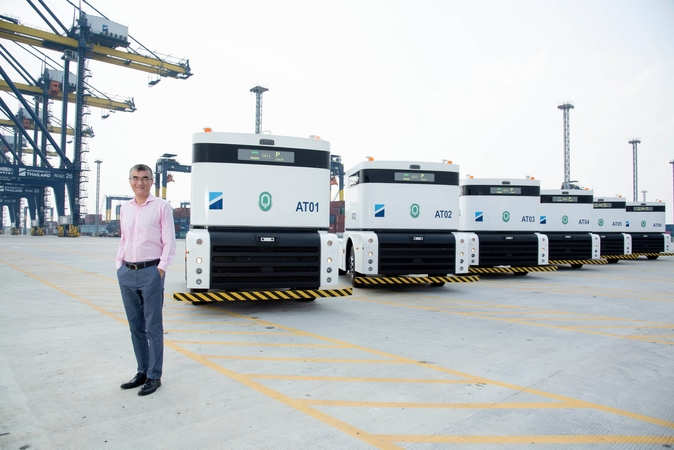
Hutchison Ports Thailand, the nation’s largest container terminal operator and the innovator of “smart port” development, announced on Wednesday (April 29) that it is among the world’s first port operators to acquire and test autonomous trucks at its Terminal D in Chonburi’s Laem Chabang Port.

This marks a huge step forward for the development of “smart” infrastructure in the Eastern Economic Corridor (EEC), with the autonomous “Qomolo” trucks promising to improve efficiency and safety in its operations at Terminal D.

The six battery operated Qomolo or Q-Trucks arrived from Shanghai on April 26 and will be tested for one year.

These trucks will be integrated with the existing fleet of conventional trucks used to transfer containers between the quay and the yard.

Equipped with advanced technology and a wireless charging system, a Q-Truck can operate non-stop for more than 24 hours. These trucks use the advanced LiDAR light and range detection technology, with which it can accurately detect and survey its surroundings and generate a precise 3D map enabling it to avoid all obstacles and collisions.

The operation of the trucks will be integrated into and controlled by Hutchison Ports’ Next Generation Terminal Management System, which works in conjunction with other innovations – such as remote controlled-cranes.

“The autonomous ‘Q-Trucks’ utilise the latest technology and innovation, and are part of our ongoing plan to transform Terminal D into the most technologically advanced and efficient container terminal in the region,” said Stephen Ashworth, managing director of Hutchison Ports’ Thailand and Southeast Asia operations. “The Q Truck continues to push the envelope for port innovation and along with our other already and soon-to-be implemented innovations, such as remote controlled crane-technology, online e-tracking services, gate automation and blockchain technology, we are rapidly approaching our goal of becoming the nation’s first fully-developed ‘smart port’.”

Google revenue is up, but coronavirus crisis is already taking a toll #ศาสตร์เกษตรดินปุ๋ย

#ศาสตร์เกษตรดินปุ๋ย : ขอบคุณแหล่งข้อมูล : หนังสือพิมพ์ The Nation.

https://www.nationthailand.com/business/30386958?utm_source=category&utm_medium=internal_referral

Google revenue is up, but coronavirus crisis is already taking a toll

Apr 29. 2020
By The Washington Post · Rachel Lerman · BUSINESS, US-GLOBAL-MARKETS 

Google’s parent company experienced a “tale of two quarters,” said Alphabet chief executive Sundar Pichai on Tuesday, as first-quarter revenue increased 13 percent despite a drop off in ad sales as the coronavirus pandemic hit.

The first two months of the year started strong, Pichai said. But as the economy started to shut down, consumers started to limit spending and companies started laying off employees and slashing costs. Google’s core business – digital advertising – suffered an “abrupt decline,” particularly as key customers like travel websites slashed ad spending.

Still, people are using Google’s services more than ever, Pichai said. And many businesses are moving toward cloud computing, which allows companies to rent space from Google’s servers.

“We see businesses thinking deeper about the shift to digital,” he said. As Google shifts resources during the crisis, “part of this is making sure our investments deliver value with respect to that shift.”

Alphabet reported revenue grew to $41.2 billion in the first quarter, up from $36.3 billion the same year ago. Profits were also up slightly to $6.8 billion.

The next quarter, which started April 1, is expected to show a fuller picture of the extent of the advertising slowdown. Google’s stock price ticked up 9 percent in after-hours trading Tuesday to $1,344.67, a sign that investors haven’t lost confidence in the powerful company’s ability to make it through the slump.

Alphabet was the first of the tech giants to report earnings this week, a foreshadowing of potential consequences for the broader industry as companies brace for the biggest economic downturn since the Great Depression. Still, the biggest tech companies are expected to be some of the companies to make it through the crisis largely unscathed thanks to huge cash reserves and new consumer tech habits.

Amazon in particular is expected to report a big uptick in revenue Thursday when it reports earnings, thanks to a surge in online orders as people stay home. (Amazon chief executive Jeff Bezos owns The Washington Post.)

Google makes the bulk of its money from selling online advertisements across search, YouTube and other products – a business that has been steadily growing for years as more advertisements moves online. But as businesses cut marketing budgets and consumers close their wallets amid the coronavirus crisis, analysts expect Google’s core business to feel the pain and serve as a bellwether for other digital advertisers.

Google’s first quarter financial results were not as bad as some investors had feared and analysts believe the company is well positioned.

“Google is in a fine financial position to be able to weather a storm,” said eMarketer analyst Nicole Perrin, noting its results indicate the impact of the pandemic on digital advertising might not be bad as it could have been.

Facing that reality, Google announced during its call it is taking cost cutting measures such as slowing hiring for the year, backing off from earlier plans in which it intended to hire about 20,000 people during 2020. It will also pause most construction of office space and reduce marketing budgets.

Pichai promised staff in an email early this month that no major layoffs were coming.

Still, the company and its huge cash reserves is better positioned than smaller rivals.

On the call, Pichai emphasized the company’s cloud computing business, which is working with New York state on its unemployment website and online retailers such as Wayfair. As more companies evaluate an increasingly digital world, he believes the cloud business is poised to pick up customers.

The company’s video streaming service YouTube is also seeing a spike in usage as people spend more time watching videos online.

Google is also benefiting from a slowdown in dozens of regulatory probes launched last year to investigate potential antitrust behavior. In fact, both Google and Apple are partnering with the government to help trace potential cases of covid-19.

Cabinet approves plan to create regional hub of ‘next-gen’ food #ศาสตร์เกษตรดินปุ๋ย

#ศาสตร์เกษตรดินปุ๋ย : ขอบคุณแหล่งข้อมูล : หนังสือพิมพ์ The Nation.

https://www.nationthailand.com/business/30386933?utm_source=category&utm_medium=internal_referral

Cabinet approves plan to create regional hub of ‘next-gen’ food

Apr 29. 2020
By THE NATION

The Cabinet on Tuesday (April 28) approved an action plan to drive economic growth by transforming Thailand into Asean’s production hub for so-called next-generation processed food.

The plan lays out measures for the first phase of processed food industry development, from 2019-2027.

It covers rice, livestock, bio-food and health food products. Also incorporated are packaging and digital technology for food innovation.

The action plan will see the creation of a new generation of food makers who focus on innovation, value-added products and also intelligent packaging.

The plan will be funded by Bt6.671 billion from the 2020-2023 fiscal budget along with private investment of Bt2.224 billion.

The target is to make Thailand the Asean centre of production of next-generation food by 2027 and also place the country among the world’s top 10 food exporters.

Southwest Airlines to issue stock, debt amid travel collapse #ศาสตร์เกษตรดินปุ๋ย

#ศาสตร์เกษตรดินปุ๋ย : ขอบคุณแหล่งข้อมูล : หนังสือพิมพ์ The Nation.

https://www.nationthailand.com/business/30386948?utm_source=category&utm_medium=internal_referral

Southwest Airlines to issue stock, debt amid travel collapse

Apr 28. 2020
A Boeing 737-700 operated by Southwest Airlines flies into California's San Diego International Airport on April 27, 2020. MUST CREDIT: Bloomberg photo by Bing Guan

A Boeing 737-700 operated by Southwest Airlines flies into California’s San Diego International Airport on April 27, 2020. MUST CREDIT: Bloomberg photo by Bing Guan
By Syndication Washington Post, Bloomberg · Mary Schlangenstein · BUSINESS 

Southwest Airlines is selling shares and $1 billion in convertible bonds in a push to add liquidity as the coronavirus pandemic all but erases demand for flights.

The carrier will offer 55 million shares plus an option for the underwriters to buy another 8.25 million to cover over-allotments, according to a company statement Tuesday. The combined total represents about 12% of Southwest’s current outstanding shares. The underwriters can also buy an extra $150 million in the bonds, which are due 2025.

Southwest is following United Airlines in offering shares amid the biggest crisis in the history of the industry, as carriers rush to shore up liquidity even after receiving billions of dollars in government aid. Southwest is also cutting the number of Boeing Co. 737 Max jets it will take through December 2021 by more than half and said the travel outlook demand remains bleak.

“The U.S. economy has been at a standstill, and the current outlook for second quarter 2020 indicates no material improvement in air travel trends,” Chief Executive Officer Gary Kelly said in a separate statement as Southwest reported a first-quarter loss. “Trip cancellations remain at unprecedented levels, though they have receded from their peak in March.”

The shares fell 1% to $28.81 ahead of regular trading in New York. Southwest has dropped 46% this year, the best performance on a Standard & Poor’s index of major U.S. carriers.

Morgan Stanley, Bank of America Corp., JPMorgan Chase & Co., BNP Paribas and Citigroup Inc. are serving as the joint book-running managers of the offerings.

Southwest’s Max deliveries from Boeing will total no more than 48 through the end of next year. Also, the carrier will remove the Max from its schedule until late October of this year, as Boeing works to end a grounding that began in March 2019 after two deadly crashes.

The Dallas-based airline had been scheduled to receive 123 Max jets from Boeing and aircraft lessors through the end of 2021, Chief Financial Officer Tammy Romo said. Under the reworked delivery schedule, the company this year will take fewer than the 27 jets it had been expecting.

With dramatically fewer customers on planes, operating revenue will fall as much as 95% in April and May and revenue trends are too hard to predict after that, Southwest said.

Despite slashing capacity over the two months, the proportion of seats filled per plane will average 6% in April and 5% to 10% in May, the airline said. The average last year was more than 83%.

Cost-cutting efforts and a dramatically reduced flight schedule should lower 2020 operating costs by $2 billion and capital spending will fall $1 billion, Southwest said.

The company has temporarily parked 350 aircraft, or roughly half its fleet. It has also frozen hiring, cut executive salaries and offered workers a mix of voluntary unpaid leave and time off at reduced pay.

Southwest has raised $5.2 billion in debt since the start of the year and still has nearly $8 billion in unencumbered assets. Daily cash burn during the second quarter is estimated at $30 million to $35 million — about half as much as the airline said it had initially expected.

The airline intends to apply for a $2.8 billion secured loan with the U.S. Treasury Department, but hasn’t decided whether it will ultimately take the funds. Southwest earlier got more than $3.2 billion — part grant and part loan — in payroll support from the Treasury. The company said it is now “actively pursuing” other options for additional liquidity.

Southwest reported an adjusted loss of 15 cents a share in the first quarter, a narrower shortfall than the 30-cent loss expected by analysts. The carrier had adjusted earnings of 70 cents a year earlier. Sales fell 18% to $4.23 billion in the first three months of this year, trailing the $4.52 billion average of analyst estimates compiled by Bloomberg.

If stay-at-home restrictions start to be lifted, some improvement in travel demand may begin in June, Kelly said.

“A lot of people have made summer vacation travel plans and I think some people are anxious to begin to get back to their lives,” he said. “Seeing what demand is in July and August is real critical.”

Bangkok Airways to take to the air from May 15 #ศาสตร์เกษตรดินปุ๋ย

#ศาสตร์เกษตรดินปุ๋ย : ขอบคุณแหล่งข้อมูล : หนังสือพิมพ์ The Nation.

https://www.nationthailand.com/business/30386914?utm_source=category&utm_medium=internal_referral

Bangkok Airways to take to the air from May 15

Apr 28. 2020
By THE NATION

Bangkok Airways will resume its domestic operations from May 15, starting with the Bangkok-Samui-Bangkok flight twice daily.

All flight operations will strictly comply with safety measures and social distancing guidelines set by the Public Health Ministry and the Civil Aviation Authority of Thailand, the airline said. The reopening of airports in Sukhothai and Trat and Bangkok Airways’ other routes will be announced later.

The health and safety measures will include onboard seat distancing, suspension of in-flight food and beverage services and a ban on consumption of personal food or drink. All crew members will wear masks and gloves when on duty and passengers themselves are required to wear protective masks at all times during flights, the airline said.

Samui Airport is expected to reopen for daily operations on May 15 from 8am-7pm.

The airport has put in place safety measures to “ensure the highest level of safety for all passengers and staff”.

The measures include passenger and staff screening, body temperature checks, a requirement that staff wear face masks at all times when on duty and social distancing arrangements.

BJC to offer new debentures to retail investors #ศาสตร์เกษตรดินปุ๋ย

#ศาสตร์เกษตรดินปุ๋ย : ขอบคุณแหล่งข้อมูล : หนังสือพิมพ์ The Nation.

https://www.nationthailand.com/business/30386913?utm_source=category&utm_medium=internal_referral

BJC to offer new debentures to retail investors

Apr 28. 2020
By THE NATION

Berli Jucker Public Company Limited (BJC), the major shareholder of Big C Supercenter and a leading consumer goods and packaging products company in Thailand, has announced the public offering of its new debentures with tenures of 4 years, 6 days and 10 years, 6 days. The expected subscription period is May 28-29 and June 1.

BJC president and CEO Aswin Techajareonvikul said on Tuesday (April 28) that BJC will offer the 4-year-6-day debentures with a coupon rate of around 2.8-3 percent and the 10-year-6-day debentures with a coupon rate of around 3.4-3.5 percent after the company recently submitted its filing to the Securities and Exchange Commission of Thailand (SEC).

The 10-year-6-day debentures have a call option granting the company an early redemption right starting from the 5th anniversary of its issuance.

The proceeds of the new issuance will be used to refinance BJC’s existing debentures maturing in early June 2020.

The joint-lead arrangers for the new debentures are Bangkok Bank, Kasikornbank, Krung Thai Bank, and Phatra Securities. The features and details of the debentures are still being considered, and BJC will announce the final structure to the public once it has been finalised.

“With our diversified business portfolio, multiple revenue streams, and strengthened competitive positions of our core business, we believe BJC’s debentures will again be an attractive investment opportunity for retail investors,” Aswin said.

“As of February 14, 2020, BJC was rated ‘A+’ with negative outlook by TRIS Rating.”

CPF debentures to be offered in early June #ศาสตร์เกษตรดินปุ๋ย

#ศาสตร์เกษตรดินปุ๋ย : ขอบคุณแหล่งข้อมูล : หนังสือพิมพ์ The Nation.

https://www.nationthailand.com/business/30386836?utm_source=category&utm_medium=internal_referral

CPF debentures to be offered in early June

Apr 27. 2020
By THE NATION

Charoen Pokphand Foods (CPF) is preparing to issue debentures to retail investors and institutional investors and/or high net worth investors.

The debentures, which have been assigned “A+” by Tris Rating, will be offered to retail investors through KasikornBank, Krungthai Bank, Siam Commercial Bank and CIMB Thai Bank, and to institutional investors and/or high net worth investors through KasikornBank, Krungthai Bank, Siam Commercial Bank and Government Savings Bank, the company said.

The subscription period is expected to be at the beginning of June 2020.

Paisan Chirakitcharern, CFO of Charoen Pokphand Foods, which operates an integrated agro-industrial and food business under the vision to help the country become the “Kitchen of the World”, said the company is in the process of submitting a filing to the Office of the Securities and Exchange Commission to offer these debentures: a 4-year tenor with a coupon rate of about 2.80-3 per cent per annum; a 7-year tenor with a coupon rate of about 3.30-3.40 per cent per annum; a 12-year tenor with a coupon rate of about 3.65-3.75 per cent per annum; and a 15-year tenor with a coupon rate of about 3.80-4 per cent per annum.

The debentures offer semi-annual coupon payment. The 4-year and 7-year tenors will be offered to retail investors. The final coupon rate of each tenor will be determined and announced at a later stage.

The debentures were assigned an “A+” rating by Tris on March 31, reflecting CPF’s position as one of Thailand’s leading agro-industrial and food business operators with production bases in several countries and a variety of products and markets, the company said. The credit rating also reflects the firm’s financial flexibility from strategic investment, it added.

CPF will use the proceeds to support its general businesses and/or expand businesses and/or investments and/or refinance its existing debentures and bills of exchange maturing this year, the company said.

Retail investors can subscribe at a minimum amount of Bt100,000 or multiples of Bt100,000, the firm added.