Gold unchanged at close on Thursday #ศาสตร์เกษตรดินปุ๋ย

#ศาสตร์เกษตรดินปุ๋ย : ขอบคุณแหล่งข้อมูล : หนังสือพิมพ์ The Nation

https://www.nationthailand.com/business/30384891?utm_source=category&utm_medium=internal_referral

Gold unchanged at close on Thursday

Mar 26. 2020
By The Nation

Gold price was unchanged from Wednesday’s at the close today (March 26), the Gold Traders Association reported.

As of 1pm, gold bar stood at Bt24,250 per baht weight with selling price Bt24,550, while the buying price of gold ornament was Bt23,816.36 per baht weight with selling price at Bt25,050.

At Wednesday’s close, a gold bar cost Bt24,200 to buy and Bt24,500 to sell, while gold ornaments cost Bt23,770.88 to buy and Bt25,000 to sell.

As of 5pm, Gold contracts in COMEX to be delivered in April dropped by US$9.00 or 0.55 per cent to $1,624.40 per ounce as investors turned to buy risk assets after the US White House and Senate reached an agreement on relief measures for people and business sectors affected by Covid-19.

US move boosts crude price #ศาสตร์เกษตรดินปุ๋ย

#ศาสตร์เกษตรดินปุ๋ย : ขอบคุณแหล่งข้อมูล : หนังสือพิมพ์ The Nation

https://www.nationthailand.com/business/30384888?utm_source=category&utm_medium=internal_referral

US move boosts crude price

Mar 26. 2020
By The Nation

Crude price increased after the US announced an economic stimulus package of US$2 trillion as the Federal Reserve launched an unlimited quantitative easing bond purchase programme to mitigate economic impact from the Covid-19 outbreak.

The US Energy Information Administration (EIA) revealed that weekly crude oil reserves as of March 20 this year increased by 1.6 million barrels to 455.4 million, lower than market expectation of a rise to 2.8 million barrels.

Indian Prime Minister Narendra Modi has imposed a nationwide lockdown for 21 days from March 25, after over 500 new Covid-19 cases were reported on Tuesday. The move would lower oil usage in the third-largest oil consumer in the world.

Benzene fuel prices dropped in contrary to Dubai crude after India and Pakistan reduced imports of benzene fuels, while exports from China and South Korea slide.

Diesel fuel prices rose less than that of Dubai crude due to oversupply, while demand is expected to decrease further from the lockdown in India.

Stock investors find the silver lining #ศาสตร์เกษตรดินปุ๋ย

#ศาสตร์เกษตรดินปุ๋ย : ขอบคุณแหล่งข้อมูล : หนังสือพิมพ์ The Nation

https://www.nationthailand.com/business/30384887?utm_source=category&utm_medium=internal_referral

Stock investors find the silver lining

Mar 26. 2020
By The Nation

The closure of public venues to try and contain the spread of Covid-19 has benefited retail and ICT stocks.

The anti-virus measure triggered a rush to stockpile foods and other needed goods, a boon to retailers, and many ICT firms (information and communications technology) ordered employees to work from home, hiking purchases of the required equipment.

Both retail and ICT stocks reaped benefits, although prices decreased slightly due to volatile market conditions.

On the Stock Exchange of Thailand from March 16-24, retail stock prices dropped by 9.5 per cent, somewhat deeper than the index’s 9.25 per cent decline, while ICT stocks rose by 1.42 per cent.

Other stock prices were also falling with the notable exception of insurance stocks, which rose by 2.63 per cent.

Nuttawut Wongyaowarak, an analyst at Globlex Securities, has advised investors to gradually buy stocks that gain benefit during the crisis, such as Siam Makro (MAKRO), Berli Jucker (BJC), CP All (CPALL), Thai Union Group (TU) and Thai President Foods (TFMAMA).

On the ICT side he recommends Advanced Info Service (ADVANC), Intouch Holdings (INTUCH), Total Access Communication (DTAC), True Corporation (TRUE), Jasmine International (JAS), Jasmine Broadband Internet Infrastructure Fund (JASIF), Digital Telecommunications Infrastructure Fund (DIF), Com7 (COM7), SiS Distribution (Thailand) (SIS) and Synnex (Thailand) (SYNEX).

But the closing of popular public venues for 22 days has meanwhile disrupted economic activities and pressured listed companies’ profit forecasts, says an analyst at Asia Plus Securities.

“Our research department cut listed companies’ profit forecasts this year by Bt207 billion, to Bt793 billion, of which Bt110 billion has been cut on energy and petroleum stocks, Bt54 billion on commercial bank stocks, Bt47 billion on air transport and hotel stocks, and Bt10 billion on ICT stocks,” he said.

SET gains on the back of agreement in US on stimulus package #ศาสตร์เกษตรดินปุ๋ย

#ศาสตร์เกษตรดินปุ๋ย : ขอบคุณแหล่งข้อมูล : หนังสือพิมพ์ The Nation

https://www.nationthailand.com/business/30384859?utm_source=category&utm_medium=internal_referral

SET gains on the back of agreement in US on stimulus package

Mar 26. 2020
By The Nation

The Stock Exchange of Thailand (SET) Index rose by 14.99 points, or 1.39 per cent, to 1,095.02 in the morning session on Thursday (March 26).

A stock analyst at Krungsri Securities expected the index would move between 1,065 and 1,100.

“The market gained external support after the US White House and Senate reached an agreement on a US$2-trillion package to relieve the burden for Americans and business sectors affected by the Covid-19 impact, including handing out cash to citizens, hospitals, and small enterprises,” the stock analyst said.

“Meanwhile, the US Federal Reserve’s measure to use the unlimited quantitative easing bond purchase programme to increase liquidity and boost the economy will be a positive sentiment for overall investment.”

The analyst said the Monetary Policy Committee (MPC) had forecast that Thailand’s gross domestic product this year would contract by 5.3 per cent due to the Covid-19 outbreak. Besides, the slowing domestic economic activity following the emergency decree to contain the spread would pressure the index to slump.

The analyst recommended three groups of stocks for investors:

● ICT stocks which benefit from work from home trends, such as ADVANC, INTUCH, and DTAC.

● Retail stocks, which benefit from people stocking up products during the Covid-19 situation, such as CPALL and BJC.

● Food stocks, which would benefit from the weakening baht, such as CPF and TU.

Gold price rises but upside scope seen to be limited #ศาสตร์เกษตรดินปุ๋ย

#ศาสตร์เกษตรดินปุ๋ย : ขอบคุณแหล่งข้อมูล : หนังสือพิมพ์ The Nation

https://www.nationthailand.com/business/30384854?utm_source=category&utm_medium=internal_referral

Gold price rises but upside scope seen to be limited

Mar 26. 2020
By The Nation

The price of gold rose by Bt50 per baht weight on Thursday (March 26), the Gold Traders Association reported.

As of 9.29am, buying price of a gold bar was Bt24,250 per baht weight and selling price Bt24,550, while buying price of gold ornaments was Bt23,816.36 per baht weight and selling price Bt25,050.

Prices increased from the Wednesday’s close when buying price of a gold bar was Bt24,200 and selling price Bt24,500, while buying price of gold ornaments was Bt23,770.88 and selling price Bt25,000.

Gold contracts in COMEX futures dropped by US$27.40, closing at $1,633.40 per ounce as investors turned to buy risk assets after the US White House and Senate reached an agreement on measures to relieve Americans and business sectors affected by Covid-19.

An analyst at YLG Bullion and Futures advised investors to take profit if the gold price cannot rise over the line between US$1,628 and US$1,644 per ounce.

“We evaluated the support line at between 1,523 to 1,585 and resistance line at between 1,644 and 1,689,” the analyst said.

GULF Presents THB 20M Donation to Faculty of Medicine Ramathibodi Hospital #ศาสตร์เกษตรดินปุ๋ย

#ศาสตร์เกษตรดินปุ๋ย : ขอบคุณแหล่งข้อมูล : หนังสือพิมพ์ The Nation

https://www.nationthailand.com/recommended/877?utm_source=category&utm_medium=internal_referral

GULF Presents THB 20M Donation to Faculty of Medicine Ramathibodi Hospital

Mar 23. 2020
for Procurement of Extracorporeal Membrane Oxygenation (ECMO) and Ventilators for COVID-19 Patients

From left to right;

  1. Sitamon Ratanavadi, Corporate Social Responsibility Assistant, Gulf Energy Development Public Company Limited
  2. Porntipa Chinvetkitvanit, President, Gulf Energy Development Public Company Limited
  3. Sarath Ratanavadi, Chief Executive Officer, Gulf Energy Development Public Company Limited
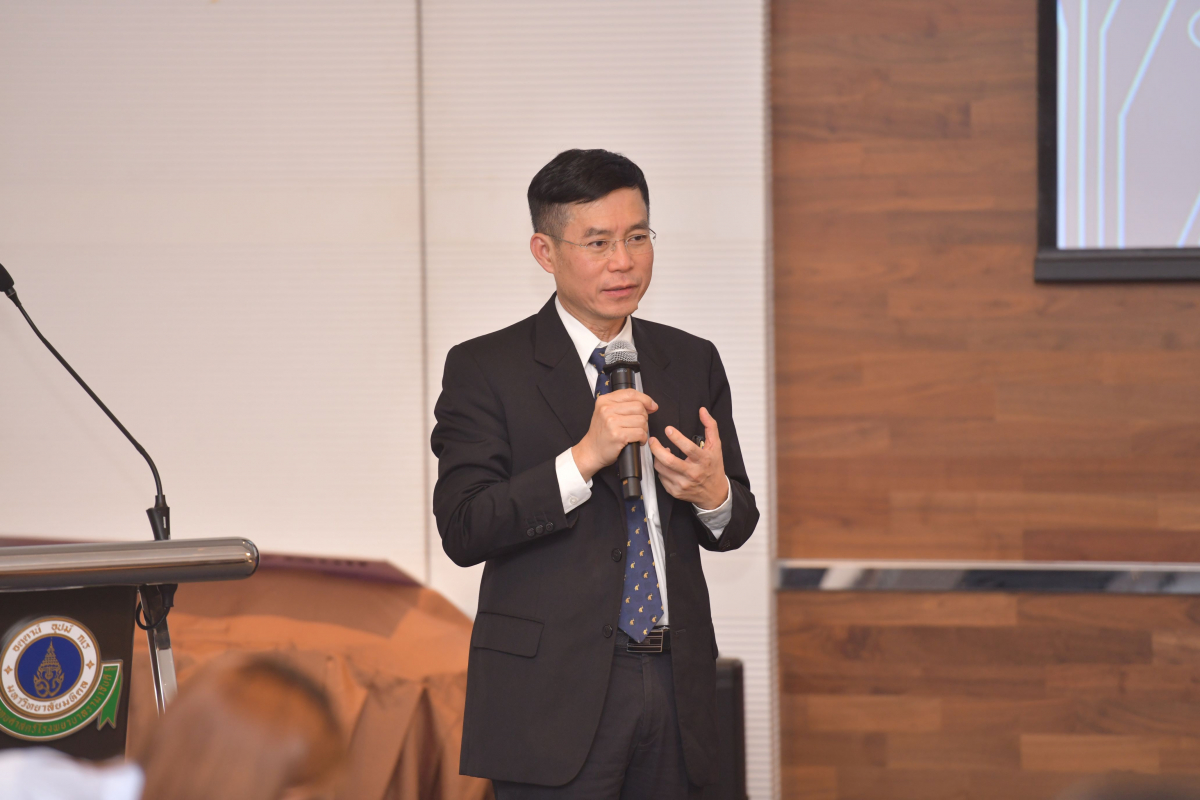
  4. Professor Piyamitr Sritara, MD, Dean, Faculty of Medicine Ramathibodi Hospital, Mahidol University
  5. Wg. Cdr. Sirintara Singhara na Ayudhaya, MD, Deputy Dean for International Relations, the Faculty of Medicine Ramathibodi Hospital, Mahidol University
  6. Pairoj Boonkongchuen, Director, Ramathibodi Chakri Naruebodindra Hospital
  7. Associate Professor Pavit Pienvichit, M.D, the Faculty of Medicine Ramathibodi Hospital, Mahidol University


Gulf Energy Development Public Company Limited or GULF presented a donation of twenty million baht to the Faculty of Medicine Ramathibodi Hospital, Mahidol University to fund the procurement of five ventilators and three Extracorporeal Membrane Oxygenation (ECMO) machines that are able to provide prolonged cardiac and respiratory support to patients whose heart and lungs are unable to fully function. This much-needed medical equipment is vital and in short supply amidst the new coronavirus disease 2019 (COVID-19) outbreak.

Mr. Sarath Ratanavadi, Chief Executive Officer, Gulf Energy Development, Public Company Limited stated, “GULF has consistently supported public health programs for many years. Given the current situation, the company is aware of the increasing number of COVID-19 cases in Thailand. We therefore would like to provide 20 million baht support to the Faculty of Medicine Ramathibodi Hospital for the procurement of this essential medical equipment to improve the hospital’s ability to treat COVID-19 patients and increase their chances of survival. This is also a long-term investment as the medical equipment could be used to help other patients with lung and heart disease moving forward.”

Professor Piyamitr Sritara, MD, Dean of the Faculty of Medicine Ramathibodi Hospital added, “As the COVID-19 outbreak is getting worse, the medical personnel at Ramathibodi Hospital need to speed up preparations to treat critically-ill patients whose numbers may increase in the future. As such, ECMO and ventilators are crucial equipment in a situation like this.”

With regards to COVID-19 infection, Assistant Professor Kamthorn Malatham, Division of Infectious Diseases, Department of Pediatrics, Ramathibodi Hospital explained, “For this new coronavirus, 85% of patients have only a few symptoms without complications. However, we are concerned about the remaining 15% with complications who present severe symptoms as their condition worsens rapidly. They develop pneumonia, which requires life-support technology such as the ECMO that acts as artificial heart and lungs.”

“The state of the outbreak in Thailand is still in the golden period. This means that the number of infected people is relatively low but is starting to increase. There are two possible scenarios for Thailand, either a steady rise like in Singapore or a huge spike like what happened in Italy and Iran. Medical personnel hope that it will be like the former so that there will be sufficient medical personnel on the front lines and medical equipment for treating patients. Of course, prevention is better than cure, especially since there is currently no vaccine. As a result, we would like to ask for everyone’s cooperation to take care of themselves so that we all could get through this situation together,” Associate Professor Dr.Patarawan Woratanarat, MD., Head of Orthopaediecs Department, Ramathibodi Hospital concluded.

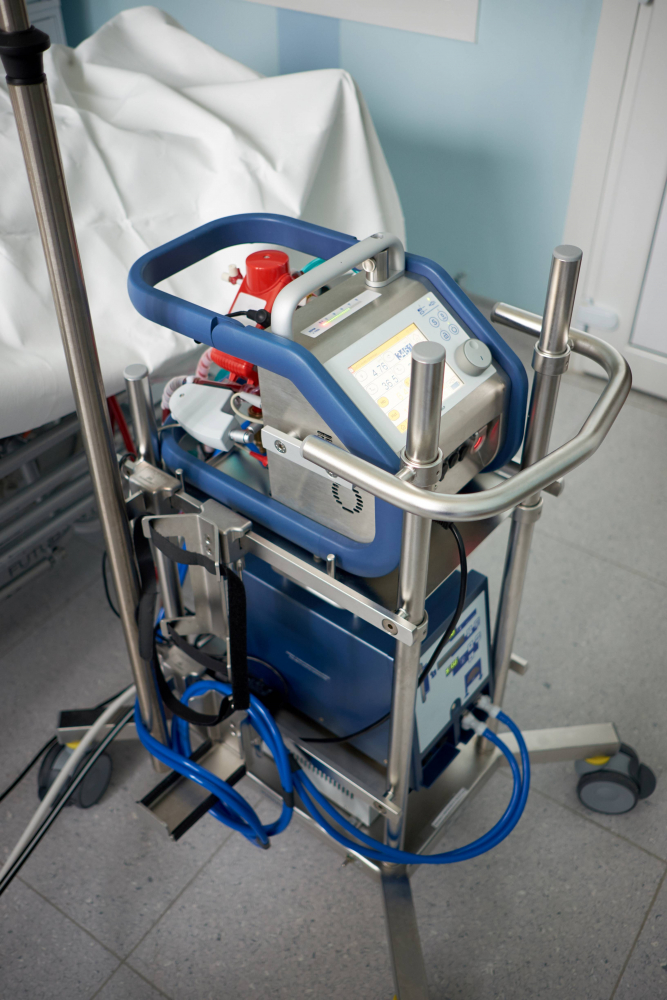
The extracorporeal membrane oxygenation (ECMO) machine acts as a temporary medical intervention for patients whose heart and lungs are unable to provide an adequate amount of oxygen to their bodies, such as patients with respiratory failure due to severe infection. The device also helps patients who are waiting for a heart or lung transplant. It is regarded as medical innovation that significantly reduces the mortality rate of patients in hospitals.


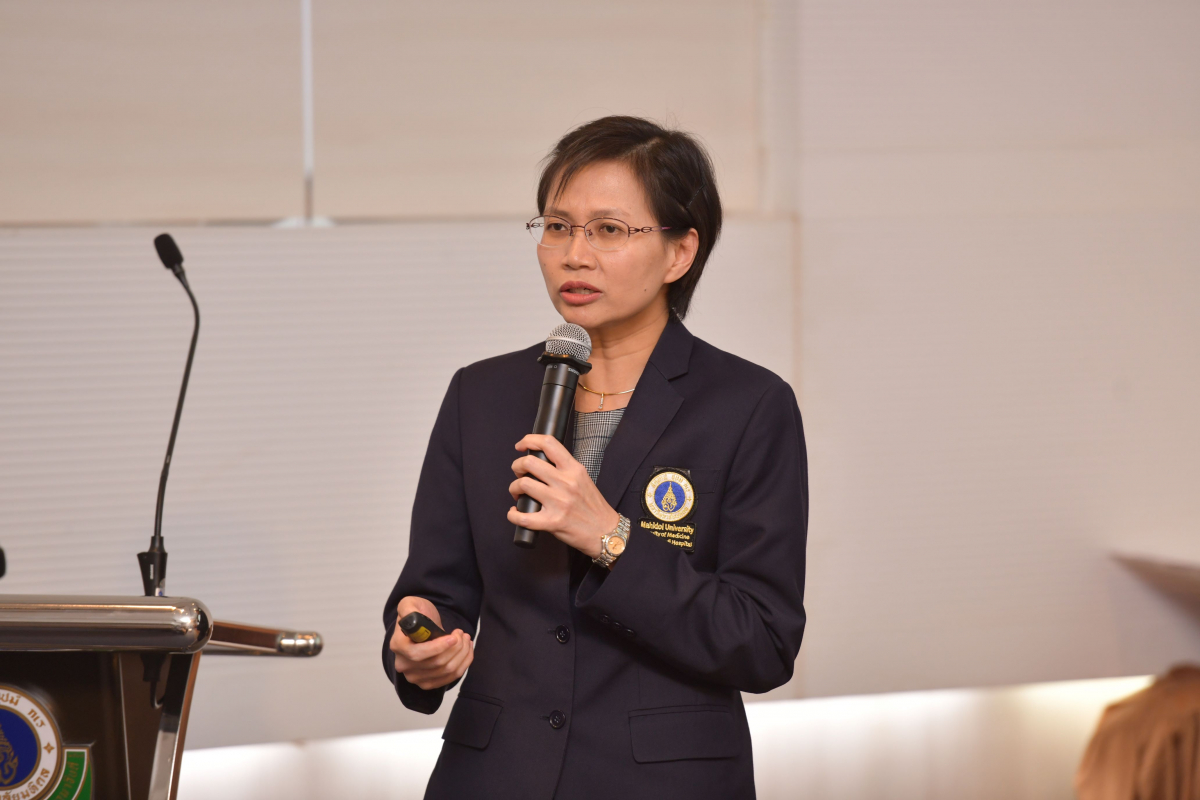
Assistant Professor Kamthorn Malatham, Division of Infectious Diseases, Department of Pediatrics, Ramathibodi Hospital


Associate Professor Dr.Patarawan Woratanarat, MD., Head of Orthopaedic Department, Ramathibodi Hospital


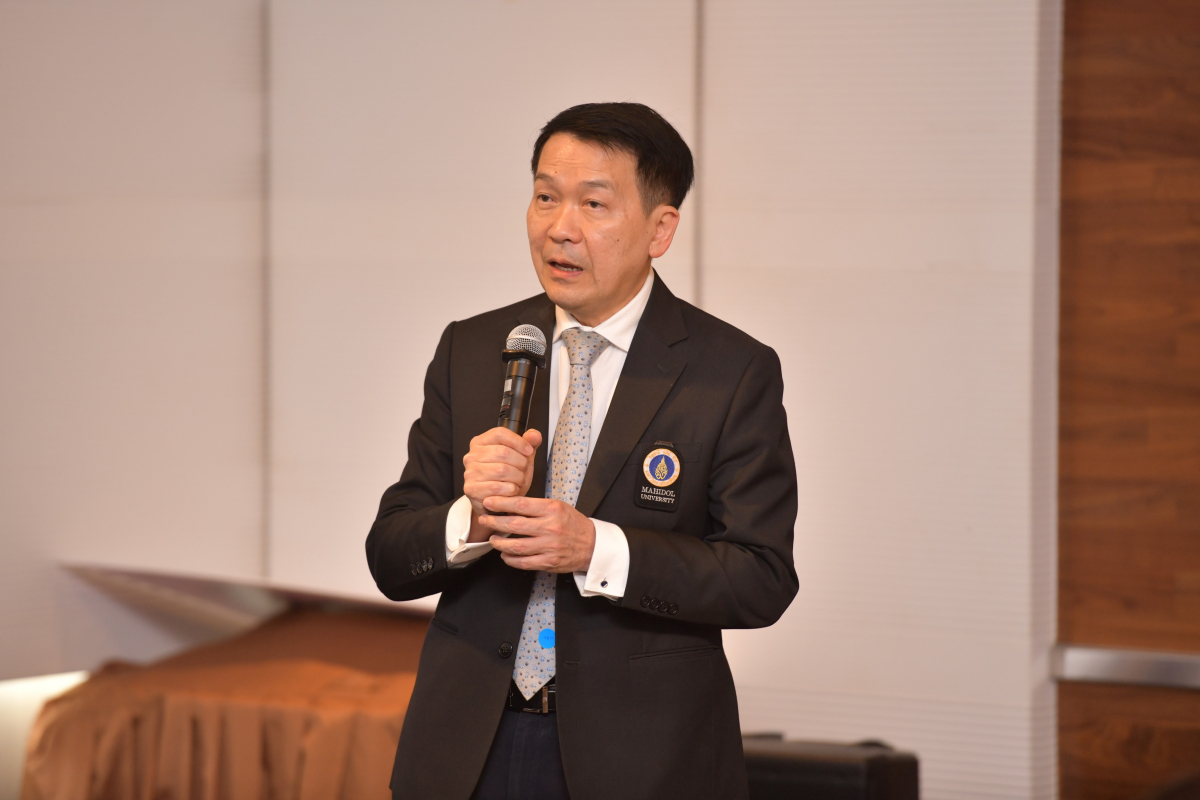
Mr. Sarath Ratanavadi, Chief Executive Officer, Gulf Energy Development Public Company Limited


 Professor Piyamitr Sritara, MD, Dean, Faculty of Medicine Ramathibodi Hospital, Mahidol University


The extracorporeal membrane oxygenation (ECMO) machine

E-commerce also faring poorly in social distancing era #ศาสตร์เกษตรดินปุ๋ย

#ศาสตร์เกษตรดินปุ๋ย : ขอบคุณแหล่งข้อมูล : หนังสือพิมพ์ The Nation

https://www.nationthailand.com/business/30384838?utm_source=category&utm_medium=internal_referral

E-commerce also faring poorly in social distancing era

Mar 26. 2020
By Syndication Washington Post, Bloomberg · Gerald Porter Jr., Jordyn Holman · BUSINESS, HEALTH

Coming off his best sales month ever in December, Eric Powell, the founder of online retailer Ratio Clothing, was looking to keep the momentum alive with new spring and summer collections for his custom dress shirt business. The customary post-holiday hangover in January and February was winding down.

But instead of a rebound, Ratio’s sales plunged sharply after the first week of March as the coronavirus outbreak suddenly and drastically changed consumer spending.

“It just hits you like a freight train,” said Powell, 38, who is based in Denver. “I knew things were coming, but I didn’t anticipate how bad it was going to get.”

Ratio’s experience shows that e-commerce isn’t being spared from the outbreak — even companies that are technically operating normally since they have few or no stores to close. Since the start of 2020, online sales growth for apparel has plunged to zero from a growth rate of about 30% the previous quarter, according to data from e-commerce software firm ChannelAdvisor. The steepest drop came at the beginning of March, the study shows.

Meanwhile, data from e-commerce research company Edison Trends shows that from March 2 to March 22, a handful of e-commerce brands including Stitch Fix and ThirdLove saw a weekly average drop of 7% in sales.

As consumers grapple with the pandemic and a stalling economy, their spending priorities are shifting amid the uncertainty, said Mike Shapaker, chief marketing officer at ChannelAdvisor.

“Right now everybody’s focused on getting enough food, toilet paper and whatever you need to live,” Shapaker said. “If we come out of this, we can see everything spike back up, or this becomes a new normal for quite a long time.”

—

While it’s still early, major brands appear to be experiencing less of a blow amid the outbreak, Edison Trends data shows. Nike’s online sales posted comparatively modest declines in the first two weeks of March, while Adidas experienced a sharp increase due to a broad promotion.

Nonetheless, most retailers will only absorb a fraction of lost sales from store closures, according to a report from Moody’s Investors Service. While companies selling groceries and essentials may benefit, “most brick-and-mortar operations will not be able to offset the steep loss from store sales with their online platforms,” Moody’s analysts including Christina Boni wrote.

Powell, meanwhile, is quickly running through his options to keep his business afloat. For now, he has furloughed several employees after scaling back advertising on Google and Instagram until the “dust settles.” Because Ratio sells customized shirts, it carries less finished product in its inventory, so offering discounts isn’t feasible, he said.

“While we’re hoping for the best, we have to plan for the worst, and we simply can’t predict how long this will last,” he said.

—

Caitlin Mociun, 38, is facing the same bind at her jewelry business, Mociun. In early March, she said demand for her products, which include rings, necklaces and earrings, was strong. But then came a “massive drop.” For five days, she watched her online sales fall sharply.

“As a small business, if people don’t keep buying things, we will cease to exist,” Mociun said.

SoftBank’s Son is betting on himself after go-private talks #ศาสตร์เกษตรดินปุ๋ย

#ศาสตร์เกษตรดินปุ๋ย : ขอบคุณแหล่งข้อมูล : หนังสือพิมพ์ The Nation

https://www.nationthailand.com/business/30384835?utm_source=category&utm_medium=internal_referral

SoftBank’s Son is betting on himself after go-private talks

Mar 26. 2020
Masayoshi Son, chairman and chief executive officer of SoftBank Group, in Jakarta, Indonesia, on Feb. 28, 2020. MUST CREDIT: Bloomberg photo by Dimas Ardian.

Masayoshi Son, chairman and chief executive officer of SoftBank Group, in Jakarta, Indonesia, on Feb. 28, 2020. MUST CREDIT: Bloomberg photo by Dimas Ardian.
By Syndication Washington Post, Bloomberg · Tom Metcalf, Pei Yi Mak · BUSINESS, WORLD, US-GLOBAL-MARKETS, ASIA-PACIFIC 

SoftBank’s Masayoshi Son is continuing to bet on himself, even after he considered and then abandoned the idea of taking his conglomerate private.

Son discussed the idea with investors including Elliott Management and the Abu Dhabi sovereign-wealth fund Mubadala in the past week, the Financial Times reported, before moving ahead with a plan to sell assets instead.

The Japanese billionaire is backing himself in other ways. A regulatory filing Tuesday shows his stake has risen to 26.9% from 25.5% and, with SoftBank’s shares gyrating wildly, he also pledged more stock against his holdings.

Son committed an extra 600,000 shares, or about 0.3% of his holdings, to lenders, the filing shows. It means 38.6% of his stake is now pledged to global banks including UBS Group and Nomura Holdings, more than triple the level in 2013.

He also loaned 30 million shares — about 5% of his holding — to Son Equities, according to the disclosure. The holding company is invested in GungHo Online Entertainment, a gaming firm founded by his youngest brother Taizo Son whose shares have dropped 33% this year, according to data compiled by Bloomberg.

The size of Son’s pledges — 216.9 million shares worth $7.4 billion — are among the most significant tracked by the Bloomberg Billionaires Index. That amount trails only Larry Ellison, Russia’s Suleiman Kerimov and China’s Qin Yinglin on the ranking of the world’s 500 richest people.

“It’s most common among controlling shareholders,” said Michael Puleo, assistant professor of finance at Fairfield University’s Dolan School of Business in Connecticut. The practice is rare right now because of the stock market rout and it is much more expensive to satisfy margin calls, he said. “Banks want nothing to do with high-risk loans.”

SoftBank spokeswoman Hiroe Kotera declined to comment on Son’s personal finances.

SoftBank’s shares have tumbled since February with investors concerned about some of its investments.

The past week Son began thinking of a leveraged buyout after Gordon Singer of Elliott’s London office expressed interest in buying more SoftBank shares last week, one person said, according to the FT. The plan was eventually abandoned for a number of reasons, including difficulty in getting an investor consortium together so quickly for a large deal, Tokyo listing rules and tax considerations.

The regulatory filing doesn’t explain the rationale for Son’s 30-million-share transaction but the shifting of stakes is a reminder of the complex web of relationships that have long underpinned one of Japan’s largest fortunes.

When GungHo was spun out of SoftBank in 2015 all the shares owned by Taizo Son’s holding company were pledged to his brother’s Son Holdings, according to a statement at the time. Son has also leveraged his stake in the Vision Fund, which invests in tech startups, including WeWork and DoorDash. That boosts his returns if things go well, with outsize losses if they don’t.

Leveraged bets are common among the wealthy, but the marketwide plunge triggered by the spread of the coronavirus is pressuring rich families across the globe, who over the years used share-backed debt facilities. Some are now facing margin calls, adding to broader financial turmoil.

India’s Gautam Adani and his family put up an additional $1.4 billion of stock as collateral on existing debt earlier this month. In China, shareholders of at least 14 firms were asked to supply additional shares. The Hinduja family, one of the world’s richest clans with interests in finance, energy and real estate, are repaying debt backed by equity they hold in lender IndusInd Bank Ltd. after a stock rout caused a breach in loan terms.

Like Son, SoftBank isn’t averse to pledging its holdings. Its stakes in Alibaba Group Holding Ltd. and SoftBank Japan both include pledged shares.

The company’s enormous debt load and ties to unprofitable startups from WeWork to Oyo Hotels through its $100 billion Vision Fund are worrying investors. Other assets like chipmaker Arm Holdings aren’t listed and may prove difficult to monetize quickly. Moody’s Japan downgraded SoftBank’s unsecured debt rating on Wednesday, saying the Japanese investment firm’s plan to sell off assets during a market downturn threatened the value of its entire portfolio. SoftBank responded to the downgrade by saying it was “biased and mistaken.”

SoftBank shares have tumbled 27% since Feb. 12, even after soaring this week on Son’s plan Monday to unload 4.5 trillion yen ($41 billion) of assets.

The disposal includes the sale of about $14 billion of its shares in prize asset Alibaba. That amount will probably increase, Bloomberg Intelligence analyst Anthea Lai said in a note this week.

Even for a billionaire who embraces risk as much as Son, the past few weeks have been tumultuous.

At the start of the month his fortune stood at $17 billion. In two weeks it was cut in half. So far this week it has climbed by about 50% as markets embraced his plan.

Son may be comfortable with such swings. He saw $70 billion wiped from his net worth in the dot-com crash. But falling fortunes aren’t the only potential downside of pledging shares.

“It can get painful for more than one reason,” said Fairfield University’s Puleo. “There’s the loss of wealth but it also creates very negative headlines.”


Strict virus-prevention measures in place at CKP power plants, offices to ensure uninterrupted supply #ศาสตร์เกษตรดินปุ๋ย

#ศาสตร์เกษตรดินปุ๋ย : ขอบคุณแหล่งข้อมูล : หนังสือพิมพ์ The Nation

https://www.nationthailand.com/business/30384828?utm_source=category&utm_medium=internal_referral

Strict virus-prevention measures in place at CKP power plants, offices to ensure uninterrupted supply

Mar 25. 2020
By The Nation

In light of the Covid-19 pandemic and the spike in inflection cases in Thailand , CK Power Public Company Limited (CKP) has reaffirmed that power plants under its responsibility in Laos and Thailand will continue to generate electricity for the Electricity Generating Authority of Thailand (EGAT) and Electricite du Lao (EdL) at full capacity without any impact from the current situation, said Thanawat Trivisvavet Managing Director.

Power plants under the management of CKP comprise the Xayaburi Hydroelectric Power Plant, Nam Ngum 2 Hydroelectric Power Plant, Bangpa-in Cogeneration Power Plant 1 (BIC-1) and Plant 2 (BIC-2) and Bangkhenchai Solar Power Plant.

Regardless, guidelines have been issued to prevent the spread of Covid-19 and to safeguard the safety of our employees at head offices and power plant areas, both in Thailand and Lao PDR, in accordance with the announcement of the Ministry of Public Health of Thailand and the Lao PDR, are listed below:

The measures earmarked for power plant areas, defined by the company as restricted area with strictly limited access. are not limited to the following.

Whilst working, if any employee has a body temperature exceeding 37.5 degrees celsius, fever, cough, nasal congestion, sore throat, shortness of breath, or a cold, he/she must visit a doctor immediately. The entry/exit of third parties, only in case of an emergency and when it is necessary, has to be considered by the power plant manager on a case by case basis. Once approved, a physical examination of the visitor by the power plant doctor must be first conducted. And lastly, all employees must strictly refrain from assembling for any type of activity within the power plant.

The measures for employees including contract employees and regular contractors who work in the company’s area as well as all employees in subsidiary companies are listed as follows.

1. No traveling abroad allowed for either business or personal purposes, and previously approved leave for travel shall be cancelled.

2. In case of employees having obtained special case approval to travel abroad, or in case of any close contact of employees especially family members (living together) who travels back from abroad, employees must report to the supervisor and the Human Resources Department immediately and start to work from home (WFH) for 14 days. In this regard, health reports must be submitted to the supervisor and the Human Resources Department on a daily basis for 14 straight days since the day such employees start WFH. Medical certificate shall also be provided to the company at least 1 day prior to returning to work.

3. In the event that any employee has been in close contact with those infected with Covid-19 and those at risk, such as people who recently returned from abroad, those with travel history or were in areas affected by the ​​epidemic, he/she must notify the supervisor and the Human Resources Department immediately and start to work from home (WFH). Health reports must also be submitted to the supervisor and the Human Resources Department for 14 straight days from the date of notification to work from home.

4. In the event that an employee developed any respiratory illnesses, fever, cough or cold, he/she must notify the supervisor and stay at home or see a doctor immediately. And if an employee in the high risk group is deemed necessary by a doctor to be tested the Covid-19 infection, that person must notify the supervisor and the Human Resources Department immediately.

5. Pregnant employees and those with congenital disease at risk of serious illness must start working from home, if infected.

6. For those who have been screened and told by the hospital to undergo a Covid-19 test or been informed of Covid -19 infection and require treatment, the company would provide full reimbursement as a special case (In addition to the budget for normal medical welfare benefits which still can be reimbursed as a company’s policy).

7. Employees must disclose all information regarding previous travel records, contacts, or close contacts with Covid-19 patients and keep the company informed.

8. All employees need to refrain from organising and participating in sports and social gathering activities.

Dealmakers are getting creative after virus upended M&A market #ศาสตร์เกษตรดินปุ๋ย

#ศาสตร์เกษตรดินปุ๋ย : ขอบคุณแหล่งข้อมูล : หนังสือพิมพ์ The Nation

https://www.nationthailand.com/business/30384772?utm_source=category&utm_medium=internal_referral

Dealmakers are getting creative after virus upended M&A market

Mar 25. 2020
By Syndication Washington Post, Bloomberg · Dinesh Nair, Liana Baker, David Hellier · BUSINESS 

As the coronavirus roils markets, dealmakers are pulling out all their tricks to get transactions done. Auctions are accelerating in case conditions worsen. Sellers are choosing cash upfront over higher offers; and they’re doing it all over video chat while pets and children roam in the background.Welcome to M&A during a pandemic.

“I think people are grasping the fact they need to do their jobs when everyone is home, and you have to deal with your family and chores,” said David Gandler, chief executive officer of FuboTV Inc., which agreed on Monday to merge with FaceBank Group Inc. “This is creating some chaos but not too much. We all understand the situation.”

Indeed: Deals are still getting done, despite market turmoil whipsawing stocks, threatening liquidity and muddling valuation predictions. Companies announced $62.5 billion of mergers, acquisitions and investments since the virus was deemed a pandemic on March 11, according to data compiled by Bloomberg.

To be sure, that’s less than half the amount during the same period a year earlier, meaning 2020 could be one of the worst years for M&A in a decade if that pace holds. And some transactions coming together now will have been percolating since before the outbreak.

Still, private equity buyers in particular have been snapping up assets despite the volatility. Buyout firm KKR & Co.’s $4.9 billion (4.2 billion pound) deal for Pennon Group Plc’s waste-management arm Viridor Ltd. came together much faster than a regular auction, people familiar with the negotiations said.

In the early stage of the process, KKR leapfrogged the request for nonbinding bids and instead came to Pennon with a fully financed proposal on March 13, said the people, who asked not to be identified as the details aren’t public. KKR was betting that the company would prefer the certainty of a firm offer instead of risking additional bidding rounds. It was right: the parties entered negotiations within hours and announced a deal five days later.In the age of social distancing, most of the hurried negotiations took place over video conferences, the people said, with the associated technological glitches and unpredictable interruptions that those interactions entail.

The team advising gold miner Endeavour Mining Corp. on its $690 million all-share deal for Semafo Inc., announced Monday, ran into similar issues, according to Jan Sanders, a partner with Endeavour’s advisory firm Gleacher Shacklock LLP.

On-site visits and other physical due diligence took place before the pandemic ruled out in-person meetings, Sanders said. That made it possible for the deal to still come together.

Special care was taken as Endeavour Chairman Michael Beckett is 83 years old and so considered higher risk if he were to catch the virus, CEO Sebastien De Montessus said in an interview.

“What’s going to be challenging, to be frank, will be if we need to start the integration by video conference,” De Montessus said. “That’s unprecedented.”

Private equity firm Nordic Capital’s recent agreement to buy U.K. eye-treatment provider SpaMedica shows how it’s becoming a buyer’s market. Nordic won an accelerated sales process because the seller determined it had the best chance of closing the deal, according to people familiar with the matter.

“For a long time we’ve been in a seller’s market,” said Chris Abbinante, a partner with law firm Sidley Austin LLP, which wasn’t involved in the SpaMedica deal. “In the current environment, I expect that dynamic to shift.”

For example, on some deals bidders are adding so-called earnouts, or clauses that give sellers more money after the deal closes if the target company hits certain performance metrics. Long popular in the energy and technology industries they’re now popping up in other sectors to bridge pricing expectations, dealmakers said.

FaceBank and FuboTV executives wrapped up their final rounds of negotiations last week on Zoom, the popular video conferencing application from Zoom Video Communications Inc., according to FaceBank CEO John Textor.

They signed a deal on Thursday and debated delaying the announcement.

“The merger timeline is now,” Textor said in an interview. “When you get through all of that work, the last thing you want do is leave an attractive transaction on hold. Even before the pandemic, windows open and shut all the time.”