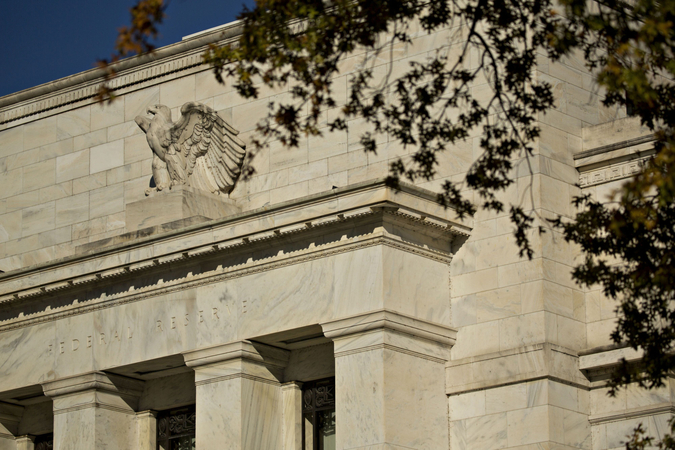
Federal Reserve to backstop the U.S. money market industry and support other central banks, its eighth major emergency action this week #ศาสตร์เกษตรดินปุ๋ย

#ศาสตร์เกษตรดินปุ๋ย : ขอบคุณแหล่งข้อมูล : หนังสือพิมพ์ The Nation

https://www.nationthailand.com/business/30384448?utm_source=category&utm_medium=internal_referral

Federal Reserve to backstop the U.S. money market industry and support other central banks, its eighth major emergency action this week

Mar 19. 2020
Fed Chair Jerome Powell

Fed Chair Jerome Powell
By The Washington Post · Heather Long · Updates with early Thursday announcement

The Federal Reserve announced late Wednesday it is establishing a special backstop for money market mutual funds, which typically serve as risk-free places for investors to store cash. Early Thursday, the Fed announced more “swap lines” with other central banks around the world to help ensure they have sufficient U.S. dollars.

By establishing the Money Market Mutual Fund Liquidity Facility, the Fed is reprising another weapon from its 2008 arsenal. During the financial crisis of a dozen years ago, there was great concern that these money market mutual funds would not be able to make investors whole.

In recent weeks, investors have been rushing to pull money out of the market, leading to concerns that a wide range of assets could face a run. The Fed has launched seven emergency actions this week, with the money market liquidity facility announcement occurring at 11:30 p.m. And on Thursday, the Fed extended a move earlier in the week aimed at central banks, pushing the number of Fed interventions to eight.

Under that program, the Fed will make loans to money market mutual funds if they are facing a cash crunch. With this pledge, it’s hoping to assure investors they should have no worries about these funds.

“Money market funds are common investment tools for families, businesses, and a range of companies,” the Fed wrote in a statement. “The MMLF will assist money market funds in meeting demands for redemptions by households and other investors.”

The coronavirus health crisis is threatening to become a financial crisis as well as so many businesses – big and small – are on the verge of failing and looking for loans from banks.

Fed Chair Jerome Powell has pledged to use every “tool” he has to keep credit available and to try to boost the economy during a swift downturn.

This week, the Federal Reserve has slashed interest rates to zero, restarted its bond-buying program known as “quantitative easing,” started buying short-term business loans known as commercial paper, ramped up “swap lines” with foreign central banks to ensure other nations have enough dollars, allowed banks to borrow money from the Fed at a 0.25% interest rate and announced loans for primary dealers of U.S. Treasury bonds.

On Sunday, the Fed had enhanced its U.S. dollar swap lines with Japan, Europe, Canada and the United Kingdom. On Thursday, the Fed extended more swap lines to Australia, Brazil, Mexico, South Korea and other nations, an effort to make sure U.S. dollars continue to flow easily around the world.

The U.S. Treasury had to approve the money market industry support by seeding the Fed $10 billion to get the special fund going.

Japan’s Abe gears up for another big stimulus package #ศาสตร์เกษตรดินปุ๋ย

#ศาสตร์เกษตรดินปุ๋ย : ขอบคุณแหล่งข้อมูล : หนังสือพิมพ์ The Nation

https://www.nationthailand.com/business/30384447?utm_source=category&utm_medium=internal_referral

Japan’s Abe gears up for another big stimulus package

Mar 19. 2020
Shinzo Abe, Japan's prime minister, speaks in the lower house of parliament in Tokyo on Feb. 26, 2020. MUST CREDIT: Bloomberg photo by Kiyoshi Ota.

Shinzo Abe, Japan’s prime minister, speaks in the lower house of parliament in Tokyo on Feb. 26, 2020. MUST CREDIT: Bloomberg photo by Kiyoshi Ota.
By  Syndication Washington Post, Bloomberg · Toru Fujioka · BUSINESS, WORLD, US-GLOBAL-MARKETS, ASIA-PACIFIC 

Prime Minister Shinzo Abe is gearing up for his second big stimulus package in a matter of months as the coronavirus pushes Japan into what could be a deep and prolonged recession.

Abe on Thursday opened a week-long series of evening hearings with business leaders and experts to try to come up with an economic rescue plan for the country. Cash handouts and a cut to the recently raised sales tax are among ideas reportedly being discussed.

“I want to implement bold economic measures to achieve a V-shaped recovery through various measures,” Abe said at the beginning of the first hearing. “To compile those measures, I want to directly hear from everyone about what kind of a policy people are seeking from the government.”

The meetings in Tokyo come as governments pledge more than $1.9 trillion in fiscal support to fight the coronavirus, shore up financial markets and keep businesses from going bankrupt. President Donald Trump has plans for a $1.3 trillion economic rescue package that would add to measures unveiled by a slew of other countries including Canada, the U.K., France and Australia.

For Abe, the stakes are immense. Private sector economists are predicting a prolonged Japanese recession, the prime minister’s approval ratings are slipping and failure to contain the outbreak would likely derail this year’s Tokyo summer Olympics.

How much fresh spending Japan’s debt-burdened government can offer, and how the money should be spent will be the key focuses of the meetings.Cash payments of about 12,000 yen ($110) for each of Japan’s 120 million citizens are one option being considered, according to local media reports.

Those handouts would be less generous than the $1,000 that Trump has suggested giving Americans, but the numbers would still represent an onerous outlay for Japan’s government, which has the developed world’s biggest public debt load.

What’s more, Japan already tried something similar during the global financial crisis, but found that it didn’t pack much stimulus punch because people simply saved the money instead of spending it.

Finance Minister Taro Aso, Japan’s prime minister back then, told reporters Thursday that the cash handouts didn’t end up being very effective. He denied the idea is under consideration now.Nevertheless, Abe faces calls even from within his own inner circle to go far beyond the small-bore measures that have been taken so far: things like interest-free loans for small businesses and subsidies to freelancers whose work has dried up.

Etsuro Honda, an adviser to the prime minister, says the economy will need at least 5 trillion yen in extra spending to get over the virus hit.

Akira Amari, the head of tax policy for Abe’s own party, has called for an extra budget, while a group of junior lawmakers in the party are advocating 30 trillion yen in new stimulus–it’s a pie-in-the-sky figure, but also a signal of the urgency that’s being felt.

Reducing the sales tax that was just raised in October is another idea being floated. Lowering the unpopular levy could be enticing for Abe as a way to try to boost consumer spending and also raise his own flagging support ratings.

But back-pedaling on efforts to shore up government’s finances would come at a steep cost amid growing turbulence in credit markets.

“The perception in the Japanese government bond market could shift rapidly” if the sales tax were cut, Citigroup economists Kiichi Murashima and Katsuhiko Aiba wrote in a report Thursday. “And this, of course, could prompt rating agencies to lower Japan’s sovereign rating.”

Still, with the Bank of Japan’s policy ammunition largely depleted, government spending has become a last bulwark against the crisis.

BOJ Governor Haruhiko Kuroda, speaking in parliament Wednesday, signaled his support for more fiscal support. Bond yields would continue to stay low despite more spending because of the bank’s yield-curve control program, he said.

At the first evening hearing on Thursday, 10 individuals including a freelance music teacher, a taxi driver and students talked about their struggle related to the virus impact, according to a senior Cabinet Office official. Some asked for an expansion of an emergency government lending program and another sought a change in the distribution timing of childcare subsidies, the official said.

European bonds soar as Lagarde pledges no limits to ECB action #ศาสตร์เกษตรดินปุ๋ย

#ศาสตร์เกษตรดินปุ๋ย : ขอบคุณแหล่งข้อมูล : หนังสือพิมพ์ The Nation

https://www.nationthailand.com/business/30384444?utm_source=category&utm_medium=internal_referral

European bonds soar as Lagarde pledges no limits to ECB action

Mar 19. 2020
Christine Lagarde, president of the European Central Bank. speaks during a Bloomberg Television interview on the closing day of the World Economic Forum (WEF) in Davos, Switzerland, on Jan. 24, 2020. MUST CREDIT: Bloomberg photo by Simon Dawson.

Christine Lagarde, president of the European Central Bank. speaks during a Bloomberg Television interview on the closing day of the World Economic Forum (WEF) in Davos, Switzerland, on Jan. 24, 2020. MUST CREDIT: Bloomberg photo by Simon Dawson.
By Syndication Washington Post, Bloomberg · Jana Randow, John Ainger · BUSINESS, US-GLOBAL-MARKETS

European government bonds from Italy to Greece surged after the European Central Bank launched a 750 billion euro ($820 billion) debt-buying program to keep borrowing costs in check as countries prepare to increase spending to counter the impact of the coronavirus.

Yields plummeted, led by a more than 200-basis-point drop for Greece’s five-year bonds, narrowing the gap between the debt of the euro-area’s strongest economies and the more stressed. The region’s corporate debt risk dropped the most since 2016.

The ECB decision in an unscheduled meeting on Wednesday night is the latest in an escalating global response to an outbreak widely seen driving the economy into recession. President Christine Lagarde reinforced the message that policy makers will do all they can, saying there are “no limits to our commitment to the euro.”

“The ECB was forced to react quickly,” Christoph Rieger, head of fixed-rate strategy at Commerzbank, wrote in a note to clients. “The new envelope of 750 billion euros should help bring in spreads more lastingly, but it is questionable whether this will be the turning point of the broader financial market rout.”

European stocks rose, but the euro was down 0.4% at $1.0874 as of 8:30 a.m in London.

European officials are weighing activating a regional bailout fund to help nations with strained public finances. Investors have been pushing up bond yields as they fret about the cost of the massive fiscal response to the pandemic. Italy, which already has a huge debt burden and is the worst-affected by the disease, is especially hard hit.

The ECB last week agreed to pump more liquidity into the financial system and joined other central banks in a bid to ease a funding squeeze. The measures on Wednesday include:

– Buying public and private-sector securities until at least the end of 2020.

– Program will cover all assets eligible under current quantitative-easing program, and will be extended to commercial papers of sufficient credit quality.

– Greek government debt will be included.

– Collateral standards will be eased.

– Program will continue until ECB judges the crisis phase of the pandemic to be over, but not before the end of this year.

– The ECB will consider raising its self-imposed limits on QE holdings, and will increase the size of its programs if needed.

While the package was broadly welcomed, many said more needs to be done, particularly from governments.

“We think we still need further fiscal easing and indications of absorbing private credit risk to stabilize financial markets more durably,” said Ebrahim Rahbari, Citigroup’s global head of currency analysis.

In its statement, the central bank said it “will not tolerate any risks to the smooth transmission of its monetary policy in all jurisdictions of the euro area.”

Venturing into the commercial-paper market is a novelty for the institution. In doing so, policy makers are taking a page out of the Federal Reserve’s book.

The decision to consider raising the limits on QE holdings could be controversial. The caps, set at the start of the program in 2015, are meant to address concerns the central bank would breach European Union law by financing governments.

Lagarde’s predecessor, Mario Draghi, argued last year the Governing Council could loosen standards if economic circumstances warrant it. Taking that step in the immediate future faces one key complication — a German constitutional court ruling on the legality of QE is just weeks away.

“Within the realm of what monetary policy can do, the ECB is now seriously tackling the two key issues facing economic policymakers,” said Holger Schmieding at Berenberg. “Easing the liquidity crunch in the economy and helping governments to finance their response to the health emergency.”

Wednesday’s announcement came hours after French Finance Minister Bruno Le Maire called on the ECB to intervene “quickly and massively” using all its instruments.

If euro-area officials were to activate the region’s bailout fund, that would be a crucial step toward triggering the ECB’s most powerful bond-buying power — Outright Monetary Transactions. That program was designed during the bloc’s debt crisis in 2012 to purchase the debt of specific nations.

It grew out of Draghi’s “whatever it takes” pledge, but has never been used.

Fed starts emergency program to aid money market funds #ศาสตร์เกษตรดินปุ๋ย

#ศาสตร์เกษตรดินปุ๋ย : ขอบคุณแหล่งข้อมูล : หนังสือพิมพ์ The Nation

https://www.nationthailand.com/business/30384442?utm_source=category&utm_medium=internal_referral

Fed starts emergency program to aid money market funds

Mar 19. 2020
By Syndication Washington Post, Bloomberg · Craig Torres, Christopher Condon, Alexandra Harris · BUSINESS, US-GLOBAL-MARKETS

The Federal Reserve late Wednesday said it was launching a program to support money market mutual funds as alarm over the coronavirus continues to cause strains in short-term funding markets.

The Money Market Mutual Fund Liquidity Facility, established under the Fed’s emergency authority, echoes a version that was set up during the global financial crisis. The Treasury Department will provide $10 billion of credit protection.

U.S. Treasury Secretary Steven Mnuchin said in a statement the fund would “enhance the liquidity and smooth functioning of money markets, support the flow of credit to hard working Americans, and help stabilize the broader financial system.”

Earlier Wednesday, the Treasury Department had proposed to temporarily guarantee money market mutual funds with taxpayer dollars as part of its coronavirus stimulus plan, according to a document obtained by Bloomberg News.

“Money market funds are common investment tools for families, businesses, and a range of companies,” the Fed said in its statement. “The MMLF will assist money market funds in meeting demands for redemptions by households and other investors, enhancing overall market functioning and credit provision to the broader economy.”

The Fed’s action comes hours after the European Central Bank’s late-night emergency decision to launch an extra emergency bond-buying program worth 750 billion euros ($820 billion) to calm markets and protect the euro-area economy. Also, at the same time as the Fed announcement, the Reserve Bank of Australia said it was cutting its benchmark rate by a quarter point to 0.25%.

The dramatic late-night step was the central bank’s third emergency lending facility in two days, after the Fed on Tuesday unleashed measures to support the commercial paper market and primary dealers to ensure credit keeps flowing in the U.S. economy. It slashed interest rates nearly to zero on Sunday and said it would buy at least $700 billion in securities to soften the blow from the virus that has Americans hunkered down to avoid infection.

Money market funds essentially provide credit to everything from banks through repurchase agreements to corporations through purchases of commercial paper. They are a critical link the chain of short-term finance where companies borrow and lend outside the formal banking system.

The launch of the Fed’s program to support money-market funds is a “game-changer,” said Priya Misra, global head of interest rates strategy at TD Securities.

The facility “couldn’t come a moment sooner,” she said. “It provides a much-needed outlet to money funds to get liquidity.”

With Wednesday night’s action, the central bank is trying to carve a firebreak around this financing and the vehicle is somewhat complimentary to the Commercial Paper Funding Facility, which also aims to protect non-bank short-term funding.

It will be administered by the Federal Reserve Bank of Boston.

In the U.S., money funds have been under stress as investors have rushed into cash. Households, businesses and other institutions use money funds to park cash they may need in the short term. Reforms to the industry passed in 2016 forced a tiering of investments into funds with differing levels of safety and segregated retail customers from institutional.

Similar steps were taken during the global financial crisis to shore up money funds when a run on them helped cripple credit markets. Under Treasury Secretary Henry Paulson, the department guaranteed more than $3 trillion of fund holdings against losses for almost a year using its Exchange Stabilization Fund.

Money market mutual funds proved a crucial weak spot in 2008 after the industry’s largest fund, the Reserve Primary Fund, suffered losses on debt issued by investment bank Lehman Brothers. When its share price fell below the stable $1 promised to customers, investors began scrambling out of most other money funds, forcing their managers into a fire sale of assets.

Bt45 shaved off price of cooking gas #ศาสตร์เกษตรดินปุ๋ย

#ศาสตร์เกษตรดินปุ๋ย : ขอบคุณแหล่งข้อมูล : หนังสือพิมพ์ The Nation

https://www.nationthailand.com/business/30384438?utm_source=category&utm_medium=internal_referral

Bt45 shaved off price of cooking gas

Mar 19. 2020
By THE NATION

Cooking gas will be Bt3 per kilogram cheaper for three months starting on Tuesday (March 24). The retail price of a 15-kilogram cylinder, for example, will be Bt318, down from Bt363.

The Energy Policy Administration Committee agreed on Thursday to revise the price of liquefied petroleum (LPG) by cutting its refinery transfer price to Bt14.37/kg from Bt17.17.

Energy Minister Sontirat Sontijirawong said the move was in response to the fall in LPG’s value in the global market and will also help ease people’s cost of living in these lean times.

The committee meanwhile resolved to cap the retail price of natural gas for vehicles (NGV) at Bt13.62/kg for public buses for another three months, May 1-July 31.

The NGV price for passenger cars will also be pegged at Bt15.31/kg for another five months, starting from this week.

Fresh injection boosts central bank’s aid package to Bt100 bn #ศาสตร์เกษตรดินปุ๋ย

#ศาสตร์เกษตรดินปุ๋ย : ขอบคุณแหล่งข้อมูล : หนังสือพิมพ์ The Nation

https://www.nationthailand.com/business/30384437?utm_source=category&utm_medium=internal_referral

Fresh injection boosts central bank’s aid package to Bt100 bn

Mar 19. 2020
Deputy governor Mathee Supapongse

Deputy governor Mathee Supapongse
By The Nation

The Bank of Thailand has thus far injected Bt100 billion into the financial market to lessen the impact of the Covid-19 virus.

The central bank has been steadily injecting liquidity into the bond market to offset volatility, deputy governor Mathee Supapongse said on Thursday (March 19).

It has now bought both short-term and long-term government bonds worth Bt45 billion, he said.

The purchase boosts total aid since last Friday to Bt100 billion.

The bank will also reduce its planned bond auctions to increase liquidity in the market, and stands ready to inject more funds to boost liquidity and calm volatility, Mathee said.

The Bank of Thailand is among central banks worldwide coming to the rescue of markets as investors panic over the virus fallout.

Amid rising numbers of new cases and deaths, investors have been in sell-off mode, sending almost every stock market tumbling.

SET slides amid virus spread, crude tumble #ศาสตร์เกษตรดินปุ๋ย

#ศาสตร์เกษตรดินปุ๋ย : ขอบคุณแหล่งข้อมูล : หนังสือพิมพ์ The Nation

https://www.nationthailand.com/business/30384435?utm_source=category&utm_medium=internal_referral

SET slides amid virus spread, crude tumble

Mar 19. 2020
By The Nation

The Stock Exchange of Thailand (SET) Index closed at 1,044.19 today (March 19) for a decrease of 3.96 points or 0.38 per cent from Wednesday’s.

Transactions amounted to a total of Bt61.601 billion with an index high of 1,048.80 and a low of 1,010.60.

A stock analyst at Krungsri Securities expected the index to slide between 1,020 and 1,030 today as the Covid-19 pandemic intensifies, sparking fears of a global economic recession and pushed crude oil price to the lowest level in 18 years, which would lead to negative sentiment for energy and petroleum stocks.

As of 5.30pm, crude price regained US$1.96 per barrel or 9.62 per cent to $22.33, while the US and most European stocks have contracted. DAX and FYSE fell by 1.04 and 1.25 per cent respectively.

The top ten stocks with the highest trade values today were BAM, PTT, ADVANC, GULF, CPALL, AOT, GPSC, PTTEP, BGRIM, and BDMS.

Elsewhere in Asia,Japan’s Nikkei Index closed at 16,552.83, down 173.72 points, or 1.04 per cent.

China’s Shanghai SE Composite Index closed at 2,702.13, down 26.63 points, or 0.98 per cent, while Shenzhen SE Component Index closed at 10,019.86, down 9.71 points, or 0.097 per cent.

Hong Kong’s Hang Seng Index closed at 21,709.13, down 582.69 points, or 2.61 per cent.

South Korea’s KOSPI Index closed at 1,457.64, down 133.56 points, or 8.39 per cent.

Taiwan’s TAIEX Index closed at 8,681.34, down 537.33 points, or 5.83 per cent.

Gold up Bt50/ baht at Thursday’s close #ศาสตร์เกษตรดินปุ๋ย

#ศาสตร์เกษตรดินปุ๋ย : ขอบคุณแหล่งข้อมูล : หนังสือพิมพ์ The Nation

https://www.nationthailand.com/business/30384434?utm_source=category&utm_medium=internal_referral

Gold up Bt50/ baht at Thursday’s close

Mar 19. 2020
By The Nation

Gold price rose Bt50 per baht weight at the close of trade on Thursday (March 19), the Gold Traders Association reported.

As of 16.31pm, buying price of a gold bar stood at Bt22,750 per baht weight and selling price Bt22,850, while gold ornament was Bt22,345.84 per baht weight to buy with selling price at Bt23,350.

Prices increased from morning trade where a gold bar cost Bt22,700 to buy and Bt22,800 to sell, gold ornaments cost Bt22,285.20 to buy and Bt23,300 to sell.

Gold contracts in COMEX futures to be delivered in April rose by US$4.80 or 0.32 per cent to $1,482.70 per ounce.

Crude oil continues slide as demand slumps #ศาสตร์เกษตรดินปุ๋ย

#ศาสตร์เกษตรดินปุ๋ย : ขอบคุณแหล่งข้อมูล : หนังสือพิมพ์ The Nation

https://www.nationthailand.com/business/30384412?utm_source=category&utm_medium=internal_referral

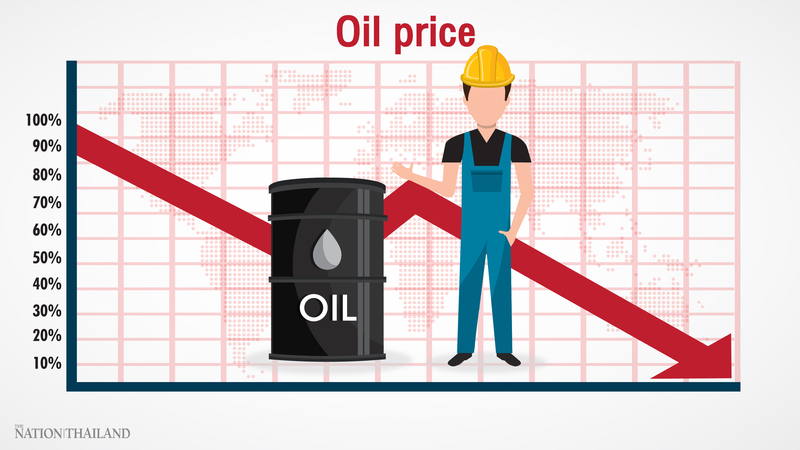
Crude oil continues slide as demand slumps

Mar 19. 2020
By The Nation

Crude oil price dropped as the West Texas Intermediate (WTI) crude oil price fell to the lowest point in 18 years, an energy analyst at Thai Oil said on Thursday (March 19).

The West Texas Intermediate (WTI) crude oil price fell to the lowest point in 18 years due to uncertainty following the decline in oil demand as many governments worldwide have announced suspension of international travel to prevent the spread of Covid-19.

Meanwhile, Saudi Arabia’s energy minister said that the country would increase oil production in April this year to hit the highest level in history at 12.3 million barrels per day and will increase crude oil exports in May this year to its highest-ever at 10 million barrels per day.

The US Energy Information Administration reportedly said that the amount of crude oil in US stocks at the end of March 13 this year had increased from the previous week by about 2 million barrels to 453 million barrels, the highest level since July last year.

Benzene fuel prices dropped lower than those of Dubai crude oil after the amount of benzene exported from Japan decreased.

Diesel fuel prices dropped lower than those of Dubai crude oil as the market expected the amount of diesel fuel in the market to drop in the second quarter of the year for the usual annual maintenance shutdown.

Surging U.S. dollar is next big headache for world economy #ศาสตร์เกษตรดินปุ๋ย

#ศาสตร์เกษตรดินปุ๋ย : ขอบคุณแหล่งข้อมูล : หนังสือพิมพ์ The Nation

https://www.nationthailand.com/business/30384362?utm_source=category&utm_medium=internal_referral

Surging U.S. dollar is next big headache for world economy

Mar 19. 2020
An electronic board displays a U.S. dollar exchange sign above an exchange bureau in Moscow on March 10, 2020. MUST CREDIT: Bloomberg photo by Andrey Rudakov.

An electronic board displays a U.S. dollar exchange sign above an exchange bureau in Moscow on March 10, 2020. MUST CREDIT: Bloomberg photo by Andrey Rudakov.
By Syndication Washington Post, Bloomberg · Michelle Jamrisko · BUSINESS, WORLD, US-GLOBAL-MARKETS 

King Dollar is creating a new headache for virus-battered economies globally, with emerging markets especially vulnerable as they try to cope with collapsing currencies and plunging demand.

Investors are fleeing emerging markets in record numbers and piling into the safe-haven greenback, with two emergency interest-rate cuts this month by the Federal Reserve doing nothing to diminish the dollar’s appeal.

With the dollar more integrated into the world economy than ever before, its gains are an added stress for businesses and governments as they brace for soaring costs on their dollar debt. The dilemma for emerging market central banks is that as they slash interest rates to support growth, they risk destabilizing their currencies as well if they cut too much.

“The surge in the dollar is another blow to emerging markets,” said Mitul Kotecha, senior emerging markets strategist at TD Securities in Singapore. “The demand for the dollar has outweighed any hit to the U.S. currency from sharply lower Fed rates. EM assets will continue to struggle as investors steer clear of relatively risky assets and maintain a bias for safe havens.”

Turkey’s central bank was the latest emerging market to make an emergency rate cut. South Korea, Chile, Vietnam, Sri Lanka and Pakistan already eased this week following the Fed’s action Sunday, and South Africa, Indonesia and Brazil are expected to reduce their key rates in coming days.

New research from the Bank for International Settlements shows that since the global financial crisis, unexpected dollar appreciation depresses world trade growth. A reason for this could be a tightening in financial conditions as dollar lending to emerging markets slows, according to the research paper.

Outflows from emerging markets are already at record levels, reaching $30 billion in 45 days amid the virus outbreak, according to the Institute of International Finance. All major emerging-market currencies tracked by Bloomberg have weakened against the dollar since Jan. 20 — the onset of Covid-19 concerns in Asia — with the Russian ruble and Mexican peso dropping almost 20%.​

The pain is also felt in emerging Asia, where the market plunges have brought back memories of the Asian financial crisis more than two decades back. Indonesia’s rupiah is the worst performer in Asia this year, down 8.9%, South Korea’s won is trading near its weakest since 2010, and India’s rupee slumped to a record low last week.

Khoon Goh, the Singapore-based head of Asia research at Australia & New Zealand Banking Group, sees emerging markets in Asia carefully trying to deploy rate cuts at the same time as currency management.

“They will continue to utilize their FX reserves to smooth currency volatility, but will not seek to stem the trend or defend any particular levels,” said Goh. “In the current environment when external demand is very weak, allowing some currency weakness alongside lowering interest rates is the best way to try and ease overall financial conditions.”

Both Indonesia and the Philippines are set to cut interest rates Thursday, with the latter expected to ease by a bigger-than-usual 50 basis points.

It’s not just emerging markets that have suffered at the hands of the dollar’s rally. The Australian currency fell to its weakest level since 2003 — a cause for concern given it’s likely to push up import costs without any of the normal offset benefit in areas like inbound tourism and education, given the coronavirus is closing borders. Norway’s krone is down more than 16% this year, plunging to an all-time low as crude oil weakens.

Central bankers in the advanced world are coordinating to ensure dollars keep flowing around the globe. The Fed on Sunday reduced rates on its dollar-swap lines with five other central banks, taking a page from the policy playbook during the global financial crisis.

“A strong dollar is typically a headwind for emerging-market currencies and even more so for countries that are reliant on offshore dollar funding and have floating exchange-rate regimes, said Todd Schubert, head of fixed-income research at Bank of Singapore Ltd.

Here’s a look at how other emerging-market central banks outside of Asia have approached policy around the virus:

– Chile’s central bank slashed its key interest rate by the most in more than a decade March 16 amid the threat of a recession. The benchmark S&P IPSA index posted its biggest decline in at least three decades on the same day, and the price of copper, Chile’s leading export, is at the lowest in more than three years.

– Brazil is expected to cut interest rates on Wednesday, with growing calls for a full percentage-point reduction. An emergency meeting of the monetary council Monday announced measures to improve banks liquidity and freed up 56 billion reais ($11 billion) for lenders. After initially moving higher, the currency dropped to new lows days after the announcement while stocks triggered a circuit breaker five times since March 9.

– Mexico’s central bank has expanded the maximum size of their non-deliverable forward hedge program and launched an auction for $2 billion in hedges to contain the market fallout. Goldman Sachs Group Inc. predicts policy makers will likely slash at least 50 basis points in the March 26 meeting to deal with slowdown, if not more.

– In South Africa, a combination of downside surprises on inflation, the second recession in two years and continued power cuts supported the case for a 25 basis-point reduction even before the virus outbreak. There’s growing expectation of the central bank cutting by more than that on Thursday, with derivative markets pricing in 50 basis points.

–Turkey’s central bank on Tuesday cut its one-week repo rate by 100 basis points in an emergency meeting, and announced a range of measures designed to boost the banking sector’s liquidity and bolster loan growth. The move came two days before the scheduled meeting and pushed benchmark borrowing costs into the single digits for the first time since May 2018. The lira extended its slide against the dollar for a seventh day after the announcement, falling to the lowest level in 18 months.

–Russia looks set to put currency stability and inflation concerns first at its next monetary policy meeting on Friday, with all 30 economists surveyed by Bloomberg predicting a hold, after six rate cuts in a row. The central bank is under pressure to act after the ruble fell 18% this year.

–Egypt cut its base rate by a record 300 basis points in an emergency meeting on Monday night. That will put pressure on the pound, one of the best carry-trade currencies over the past two years, according to Goldman Sachs. But the central bank considers it worth the risk if it helps the economy in the face of the spreading virus.

–Nigeria has reacted to the crisis triggered by the virus and oil’s collapse in much the same way that it did when crude last crashed in 2014 — by trying to prevent the naira weakening and tightening capital controls. With foreign reserves having fallen almost 20% since July, Goldman calculates Nigeria needs a currency almost 40% weaker if Brent prices stay at $30 a barrel.