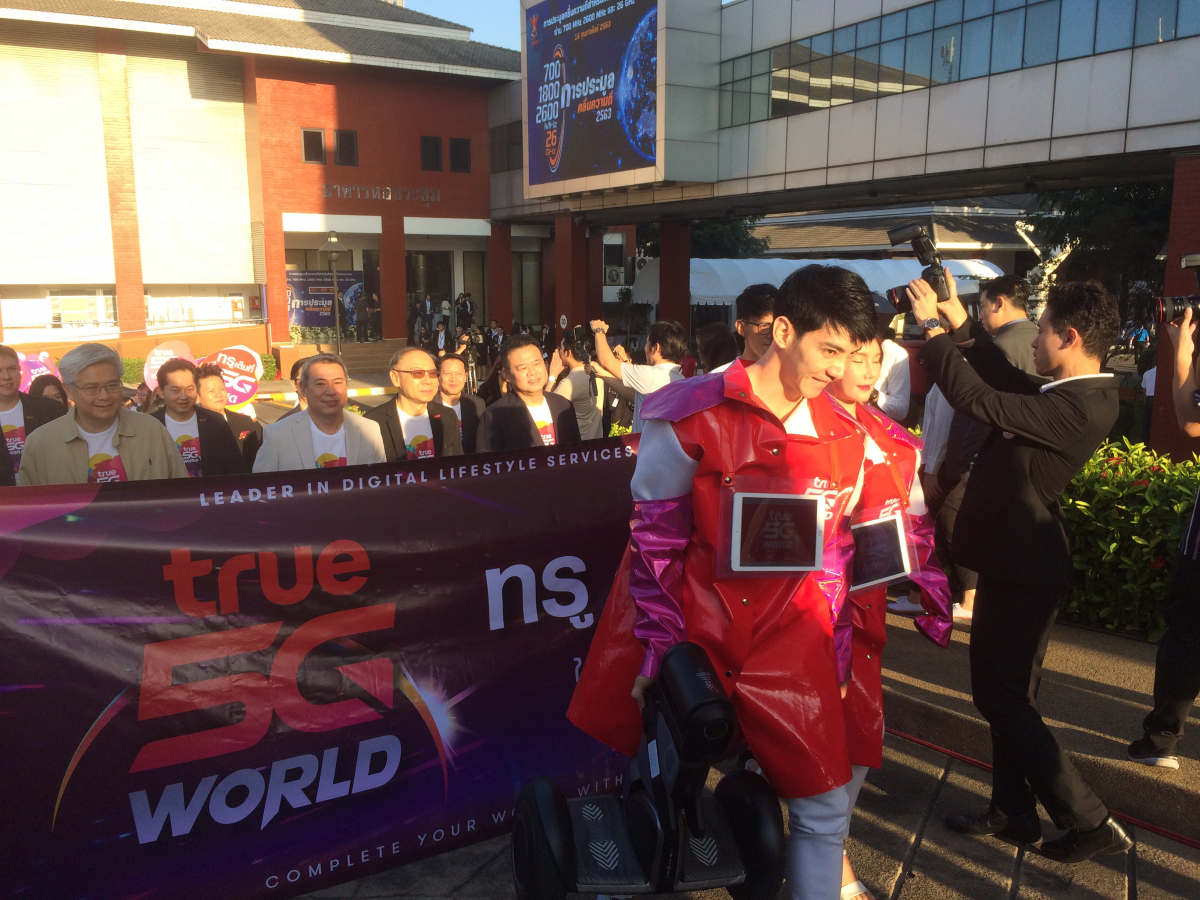
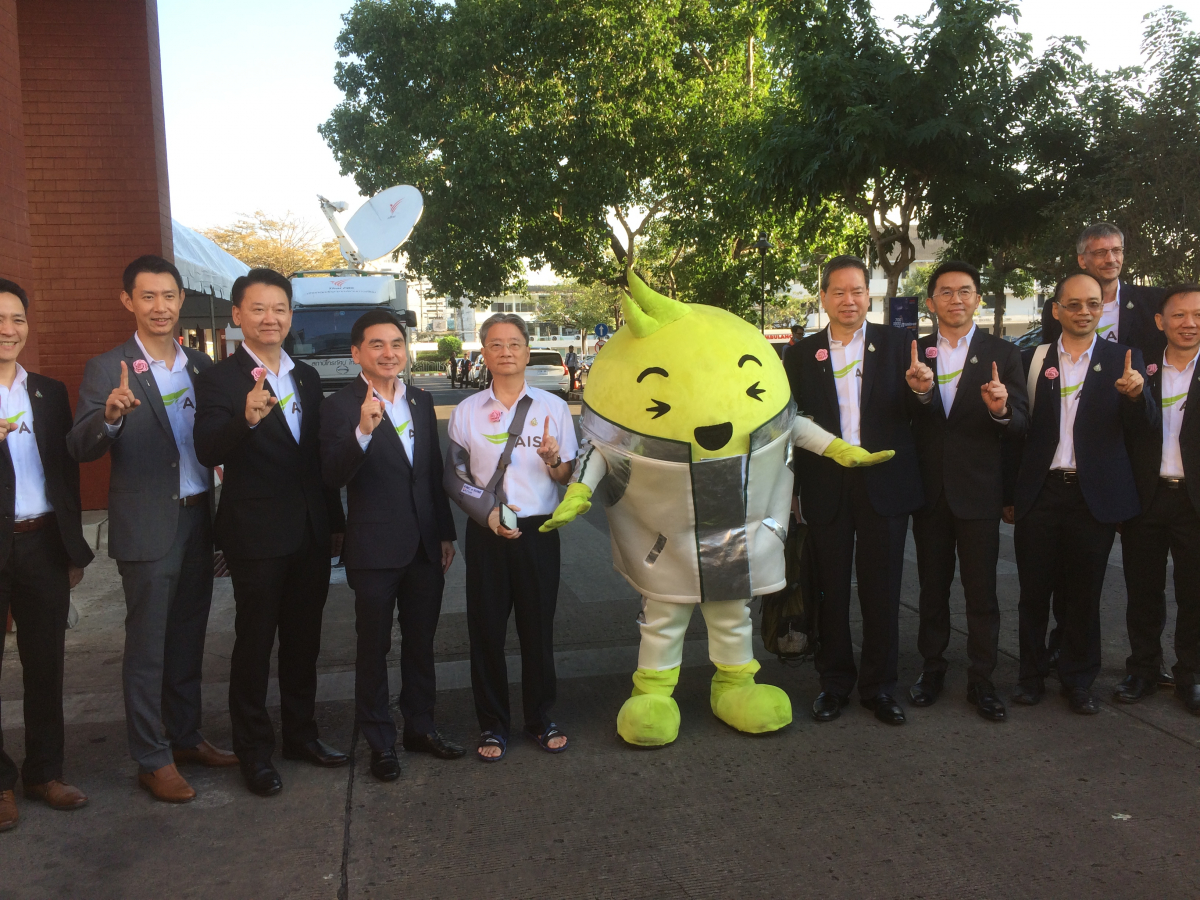
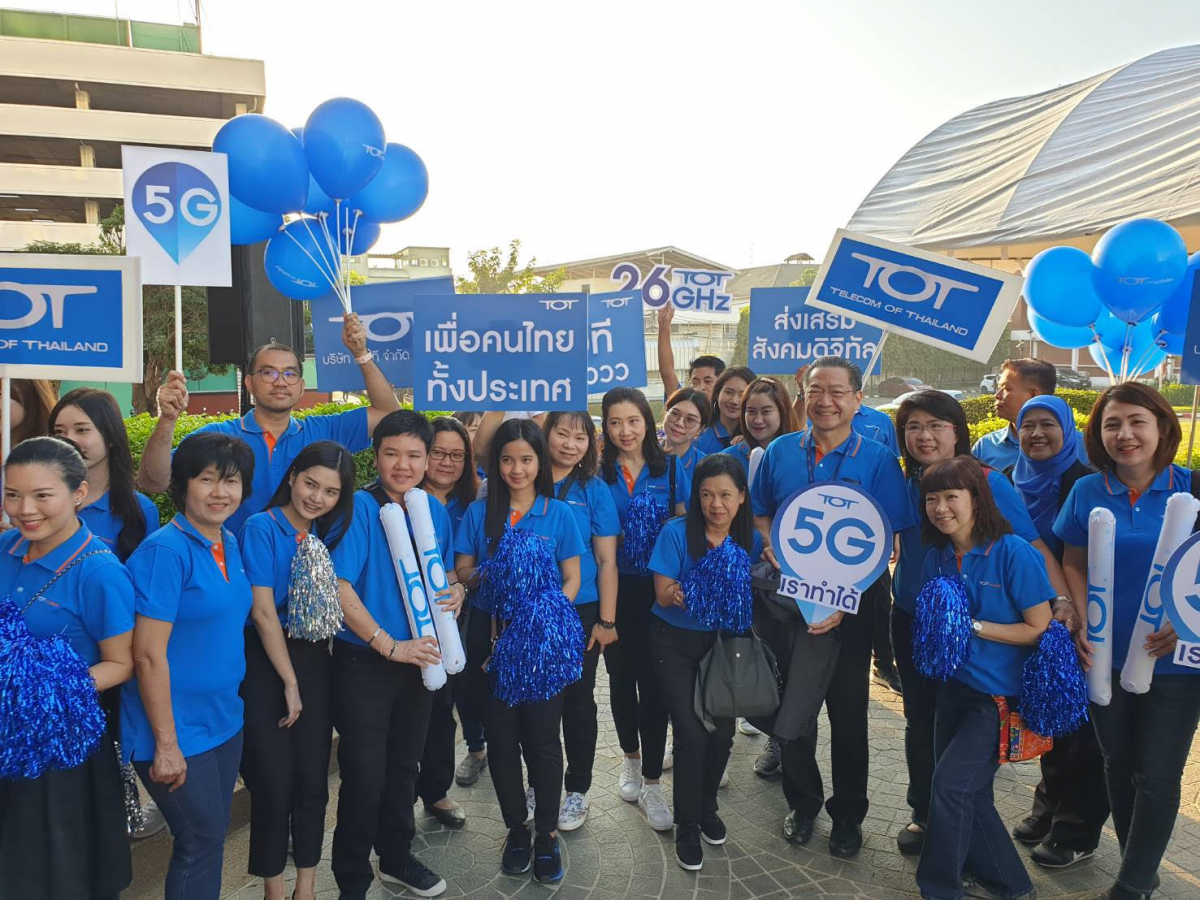
700MHz spectrums go for Bt51.45 billion in 5G auction #ศาสตร์เกษตรดินปุ๋ย

#ศาสตร์เกษตรดินปุ๋ย : ขอบคุณแหล่งข้อมูล : หนังสือพิมพ์ The Nation

https://www.nationthailand.com/business/30382230?utm_source=category&utm_medium=internal_referral

700MHz spectrums go for Bt51.45 billion in 5G auction

Feb 16. 2020
By Sirivish Toomgum
The Nation

The auction of three 700MHz licences in the multiband auction on Sunday (February 16) was concluded in the morning with total sales of around Bt51.459 billion.

The National Broadcasting and Telecommunications Commission (NBTC) on Sunday began the auction of the three bands.

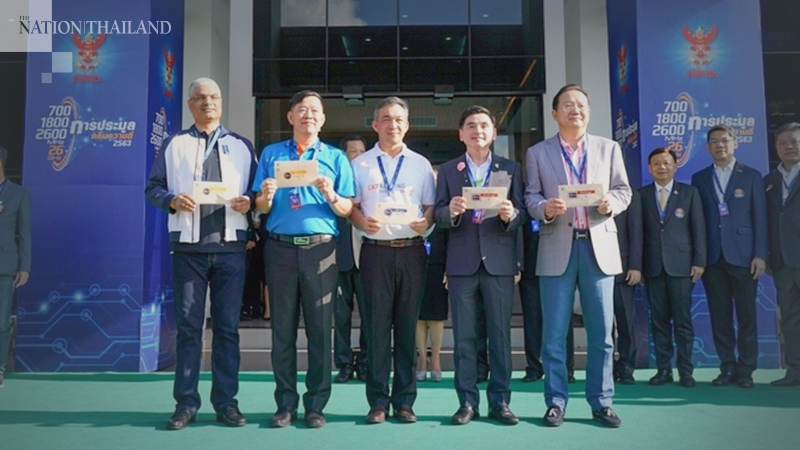
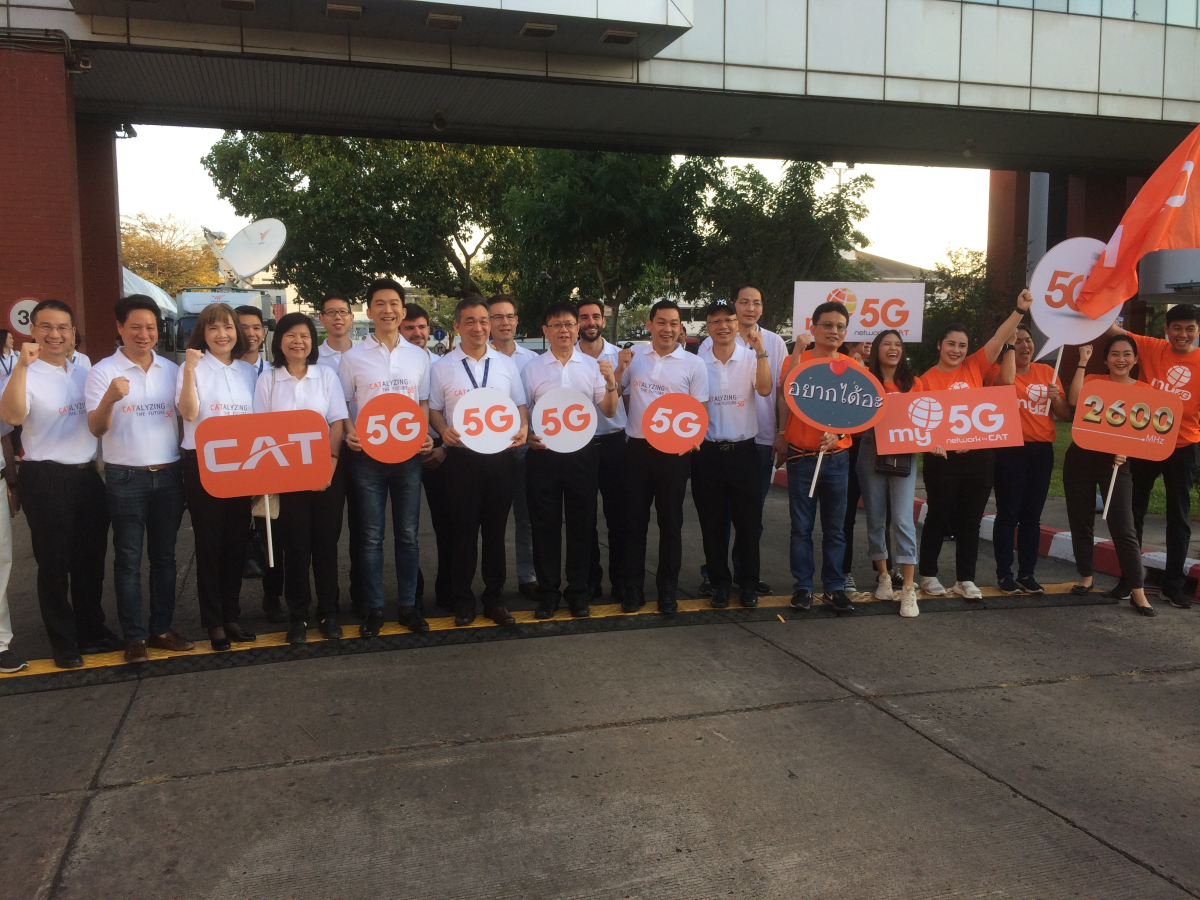
Out of the five bidders in the fray for spectrums being auctioned to provide 5G wireless broadband service, Advanced Wireless Network (AWN) of Advanced Info Service (AIS), TrueMove H Universal Communication (TUC) of True Corp, and CAT Telecom made bids for the 700MHz licences.

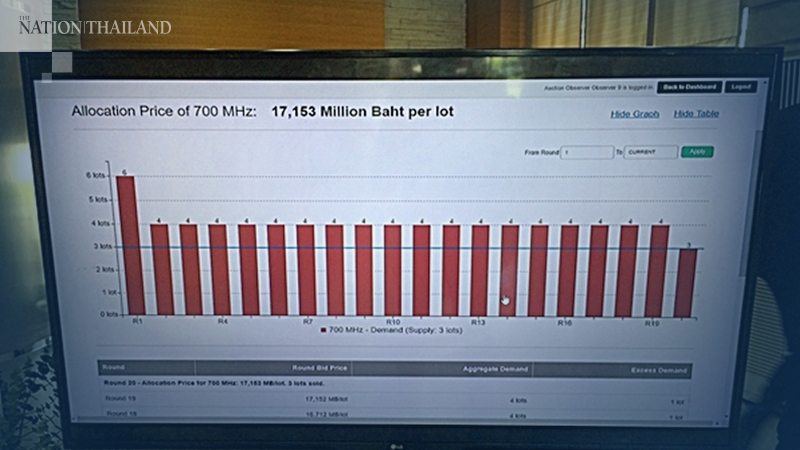
The auction was concluded after nearly three hours and 20 rounds of bidding.

The competition resulted in each licence going at a final price of Bt17.153 billion, after bidding started at Bt8.792 billion for 2x5MHz bandwidth for each licence.

The watchdog will announce details about the winning bidders of the three bands — 700MHz, 2600MHz and 26GHz — after concluding the auction.

The watchdog will next auction the 2600MHz spectrum, followed by 26GHz.

CAT, AWN and TUC will also bid for the 2600MHz licences.

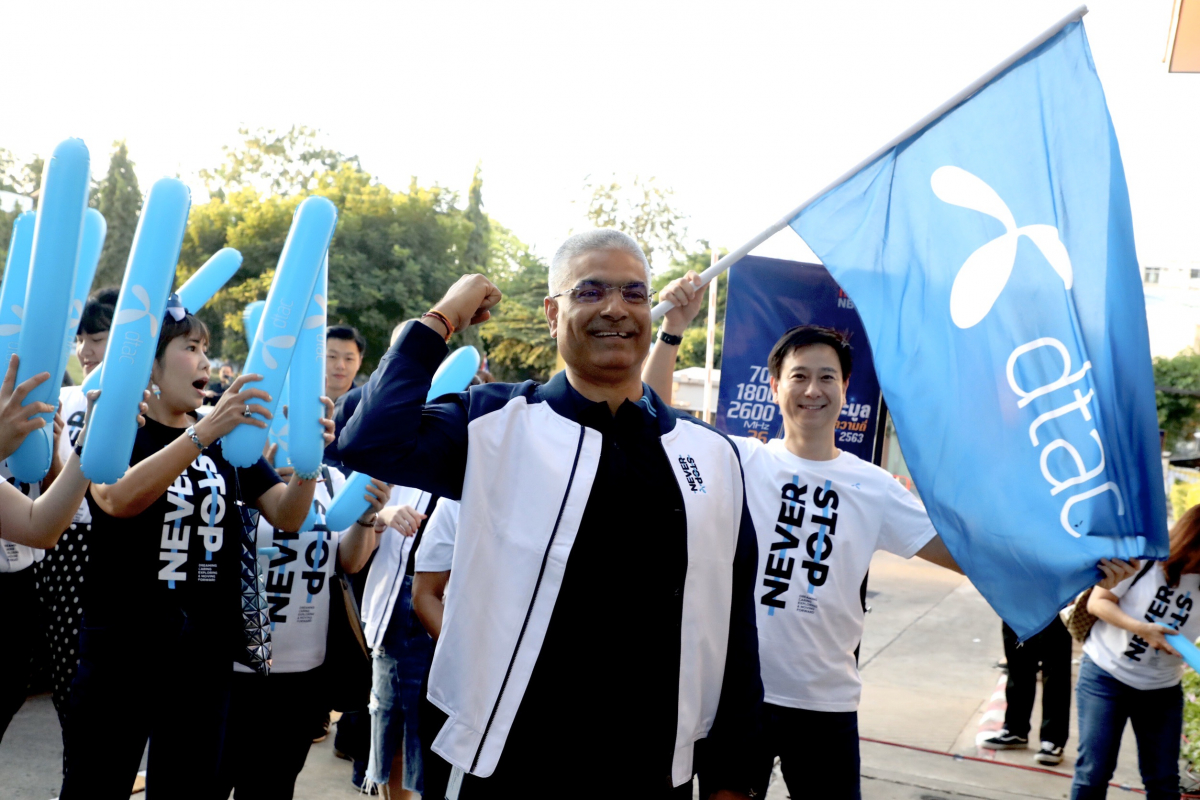
TUC, AWN, DTAC TriNet of Total Access Communication and TOT will bid for the 26GHz band.

The NBTC had said earlier that it would auction four spectrums, including 1800MHz. However, none of the bidders showed interest in bidding for the 1800MHz spectrum, leading to auction of the other three spectrums on Sunday.

Spending on capex, M&A loses favor with U.S. firms, UBS says #ศาสตร์เกษตรดินปุ๋ย

#ศาสตร์เกษตรดินปุ๋ย : ขอบคุณแหล่งข้อมูล : หนังสือพิมพ์ The Nation

https://www.nationthailand.com/business/30382188?utm_source=category&utm_medium=internal_referral

Spending on capex, M&A loses favor with U.S. firms, UBS says

Feb 15. 2020
By Syndication Washington Post, Bloomberg · Joanna Ossinger

American executives set buybacks and dividends as their top priority for deploying capital around the turn of this year, and sharply curbed their expectations for capital spending, according to a survey from UBS Group.

Even with the U.S.-China phase-one trade deal in the offing, business investment “collapsed” as a priority, the UBS Evidence Lab survey of 450 senior executives about expectations for the coming 12 months showed. The percentage of firms seeing some acceleration in capital spending fell 15 percentage points compared with a June survey, while the proportion expecting some slowdown increased by 3 percentage points, the report said.

The survey was conducted in December through mid-January, before concerns erupted about the coronavirus. American nonresidential fixed investment already contracted for three straight quarters through December, hit by both the trade war and a slump in the development of fossil fuels.

Along with capex, mergers and acquisitions slumped to the lowest priority yet in UBS surveys that date back to 2017.

“There is a broad reallocation of funding from capex and M&A to buybacks/dividends, paying down debt/raising cash, and increased R&D budgets,” UBS analysts including Keith Parker wrote in a note about the survey. “Small firms appear to be at the extreme end, with paying down debt/increasing cash the top priority, likely due to relatively higher leverage levels. Materials firms seem to be the exception with higher M&A expectations at the expense of paying down debt.”

Sales and profit margin expectations have moderated from the June survey, with a notable dispersion among sectors. Projections in industrials were weakest “by far,” while health-care companies showed “clear strength” with increases in their outlooks, UBS said.

In addition, profit outlooks for small firms weakened further, while improving for larger companies, which “points to earnings support for the S&P 500, particularly relative to the Russell 2000,” the UBS strategists wrote.

Why it’s important to remember what we don’t know about stocks #ศาสตร์เกษตรดินปุ๋ย

#ศาสตร์เกษตรดินปุ๋ย : ขอบคุณแหล่งข้อมูล : หนังสือพิมพ์ The Nation

https://www.nationthailand.com/business/30382216?utm_source=category&utm_medium=internal_referral

Why it’s important to remember what we don’t know about stocks

Feb 15. 2020
Thomas Heath is a local business reporter and columnist, writing about entrepreneurs and various companies big and small in the Washington metropolitan area. Previously, he wrote about the business of sports for The Washington Post’s sports section for most of a decade.

Thomas Heath is a local business reporter and columnist, writing about entrepreneurs and various companies big and small in the Washington metropolitan area. Previously, he wrote about the business of sports for The Washington Post’s sports section for most of a decade.
By The Washington Post · Thomas Heath · BUSINESS, PERSONAL-FINANCE 

The nosebleed heights of today’s stock prices have me, like many other investors, a bit on edge.

Have equities become too risky? How much longer will the decade-long bull market last? Is a stock crash or a recession coming? Should I sell?

I called Burton Malkiel at his home in Florida recently to talk about the state of the stock market and what it means for average investors, people, like me, who have been stashing money in 401(k) accounts or who might own stocks in taxable accounts.

Malkiel, 87, wrote “A Random Walk Down Wall Street,” the investment classic first published in 1973. He has served as dean of the Yale School of Management, as a director of the Vanguard Group and as a member of the president’s Council of Economic Advisers. He is currently a professor emeritus of economics at Princeton University.

Malkiel is part of an influential cohort – along with the late John C. “Jack” Bogle and legendary stock picker Warren Buffett – that has warned most of us against trying to divine which stocks will beat the overall market. Most people, this persuasive line of reasoning goes, are better off investing in index funds or a diversified portfolio with low fees.

But with the Dow Jones industrial average approaching 30,000, another, broader issue arises: Have stocks, in general, become too expensive?

“What we can say is that relative to historical valuations, the stock market is quite richly valued,”Malkiel said.

Malkiel stated the obvious: Stocks have had a tremendous run in the past 10 years, but no bull market runs forever. History tells us, he said, that the next 10 years aren’t going to be quite so merry.

“We are in an era when, I think, we are going to clearly have very low returns and much lower than average stock returns,” Malkiel said. “If you look at the empirical work, you would suggest the stock market over the next 10 years is likely to give you mid-single-digit returns.”

Over the next decade, he said, we would be “very fortunate” to see 5 percent a year.

That’s a heartburn number for pension fund managers counting on 8, 9 and even 10 percent annual returns. So what’s an investor to do?

Start with rebalancing, Malkiel said. “If the big rise in the stock market has put your stock holdings much higher than normal levels for you, then I would say take some out and put it in other categories.”

Malkiel sits on the investment committee of Rebalance, an online financial advisory firm based in Bethesda, Maryland, and Palo Alto, California that puts clients’ money in long-term, low-cost index funds, mostly Vanguard Group’s exchange-traded funds.

I wrote about Rebalance, then known as Rebalance-IRA, a couple of years ago. Rebalancing, in its simplest form, means buying and selling stocks and bonds annually to keep your holdings in line with your ability to tolerate risk.

“Given that asset prices shift, sometimes significantly, it’s normal for investors to look at their portfolio allocations periodically and rebalance, in order to avoid over- or under-weighting exposures to certain asset classes,” said Shelly Antoniewicz, senior director of industry and financial analysis at the Investment Company Institute, which represents the mutual fund industry.

Take last year’s U.S. stock boom, which returned 31 percent, compared with a 9 percent return in bonds.

“If you did nothing, your asset allocations will have moved to include more equity than you intended,” Antoniewicz said. “If you aim for a 60-40 allocation between equity and bond fund holdings and have not yet rebalanced, your current equity allocation would be 64 percent, not 60 percent, and your current bond allocation would be 36 percent, not 40 percent. So, investors who want to rebalance back to a 60-40 split will sell stock funds and buy bond funds.”

Malkiel said rebalancing a portfolio cures many ills for investors who are not – and I emphasize NOT – professional stock pickers.

“Nobody, and I mean nobody, can consistently predict the short-term moves in the stock markets,’ Malkiel said.

“There’s a lot of people who get it right sometimes. But nobody gets it right consistently. Don’t try to time the market,” Malkiel said. “You will get it wrong. Ride things out. Be well diversified.”

Diversified means buying a variety of stocks across multiple industries or, better yet, holding a healthy mix of mutual funds that include large and small companies, U.S. and international stocks, and even some bonds.

I asked Malkiel whether he follows his own advice.

“Am I still holding equities? Yes,” the professor said, speaking by telephone from Florida. “But I hold other things as well. I am broadly diversified. I hold fixed-income investments. And I hold real estate.”

When asked about the likelihood of a recession or other economic pullback in 2020, Malkiel said he avoids making predictions on short-term market behavior because, well, it is just too difficult.

“The biggest threat is something that will come out of nowhere,” Malkiel said. “Just think of the last few days. We have this new virus coming out of China. Is it going to be contained? Is it something that affects the whole world? In [former defense secretary] Donald Rumsfeld’s parlance, it’s not what we know now. It’s what we don’t know.”

I can’t do anything about that. But I can rebalance to make sure that I am takinga market risk that I have decided is tolerable for me.

Stage set for the auction of spectrums for 5G tech #ศาสตร์เกษตรดินปุ๋ย

#ศาสตร์เกษตรดินปุ๋ย : ขอบคุณแหล่งข้อมูล : หนังสือพิมพ์ The Nation

https://www.nationthailand.com/business/30382202?utm_source=category&utm_medium=internal_referral

Stage set for the auction of spectrums for 5G tech

Feb 16. 2020
By THE NATION

The auction of spectrum bands for 5G wireless technology begins on Sunday (February 16). The five bidders are True Move H Universal Communication Co Ltd (TUC) of True Corp, DTAC TriNet of Total Access Communication, Advanced Wireless Network (AWN) of Advanced Info Service (AIS), TOT, and CAT Telecom.

The NBTC will auction the 700MHz, 1800MHz, 2600MHz, and 26GHz spectrums.

The NBTC last week declared that TUC, AWN, DTAC TriNet and TOT will bid for the 26GHz band.

CAT, AWN and TUC will also bid for 700MHz and 2600MHz.

None of the bidders has shown interest in the 1800MHz band.

Deputy Prime Minister Somkid Jatusripitak last month stepped in to push for the start of 5G service, urging state and private spectrum bidders to hasten the process for the benefit of society and the economy.

Somkid said 5G could help drive the country’s competitiveness and efficiency in the industrial sector as well as attract foreign investment.

The telecom operators have already partnered with several parties to demonstrate 5G in industrial use.

The NBTC will auction three licences of the 700MHz spectrum, each containing 2x5MHz bandwidth, at a starting price of Bt8.792 billion each.

The bidders can raise the price by Bt440 million per time. The licence term is for 15 years. The total payment for the licence is divided into 10 instalments, each at 10 per cent of the winning price.

The NBTC does not cap the maximum number each contender can bid for this licence.

The watchdog will call a bid for 19 licences of the 2600MHz, each containing 10MHz bandwidth at a price of Bt1.862 billion each. They can raise the price by Bt93 million per time. The licence is good for 15 years.

Each bidder can take a maximum of 10 licences of this band. The bidders are required to pay upfront 10 per cent of the total winning price in the first year and enjoy a grace period during the second to fourth years.

They will pay 15 per cent annually of the balance in the fifth to 10th years. The winners are obliged to provide service covering 40 per cent of the Eastern Economic Corridor within one year and 50 per cent of the business zones in several major cities within four years, including Bangkok and Greater Bangkok, Chiang Mai, Nakon Ratsima, Khon Khaen, Songkhla, and Phuket.

The competition for the 2600MHz licences is expected to intensify, given the need for at least 100MHz bandwidth (10 licences) out of the available 190MHz bandwidth (19 licences) in order to enable the company to provide effective 5G service.

The NBTC will auction 27 licences of 26GHz, each containing 100MHz bandwidth at a price of Bt423 million each. They can raise the price by Bt22 million per time.

The licence is valid for 15 years. Each bidder can bid for a maximum of 12 licences. They will have to pay the price upfront.

For the 1800MHz, it will auction seven licences, each containing 2x5MHz bandwidth at a starting price of Bt12.486 billion each. They can raise the price by Bt25 million per time. The licence is good for 15 years.

The NBTC caps at four the maximum number each contender can bid for this licence. The upfront payment is divided into three instalments — 50 per cent in the first instalment, followed by 25 per cent each in the next two instalments.

MEA Jerd-Ja Line sticker available now #ศาสตร์เกษตรดินปุ๋ย

#ศาสตร์เกษตรดินปุ๋ย : ขอบคุณแหล่งข้อมูล : หนังสือพิมพ์ The Nation

https://www.nationthailand.com/biz-moves/30382129?utm_source=category&utm_medium=internal_referral

MEA Jerd-Ja Line sticker available now

Feb 14. 2020
By THE NATION

Metropolitan Electricity Authority (MEA) introduces a new Line creator sticker collection of its newest brand mascot “MEA Jerd-Ja” for this Valentine’s Day – February 14, 2020. Priced at only Bt30, this sticker collection features 40 actions of this cute mascot for your every emotion in everyday.

All profits from selling the sticker will be donated to Foundation for the Welfare of the Crippled.

Head to https://line.me/S/sticker/10650101/?lang=en&ref=gnsh_stickerDetail to get it today, or simply scan the QR code in the above picture. You can either purchase it for yourself or send it as a gift to your friends.

For further information, contact MEA hotline at 1130.

Alibaba launching specialised training programme for SME entrepreneurs #ศาสตร์เกษตรดินปุ๋ย

#ศาสตร์เกษตรดินปุ๋ย : ขอบคุณแหล่งข้อมูล : หนังสือพิมพ์ The Nation

https://www.nationthailand.com/biz-moves/30381960?utm_source=category&utm_medium=internal_referral

Alibaba launching specialised training programme for SME entrepreneurs

Feb 11. 2020
By THE NATION

Alibaba.com, a leading business-to-business (B2B) platform for global trade, today (February 11) announced the launch of the first training programme of its kind in Thailand – the Star Supplier Incubation Programme (SSIP).

Designed to build export success among small and medium-sized enterprises (SMEs), the programme is an exhaustive take on B2B e-commerce for manufacturers contemplating taking their operations to the next level.

According to the platform, SSIP is part of Alibaba.com’s efforts “to foster in-depth understanding of B2B e-commerce among SMEs which are eager to settle smoothly into an increasingly competitive and digitised global trade environment”.

Organised in collaboration with the platform’s local channel partner Feyverly, the three-month programme is scheduled to begin mid-year and will be held in Bangkok by Alibaba experts and other industry practitioners.

The integrated training approach of SSIP aims to equip current and aspiring Thai exporters with fundamental knowledge, practical skills as well as a mindset change required for success in online global trade, the platform said.

Through a combination of lectures and interactive sessions, the course will cover topics including the ins and outs of establishing a presence and operating a supplier store on Alibaba.com; platform analytics for understanding customer demand and the wider industry trends; global trade processes, from business matching to payment and logistics terms; as well as the key to sustainable business growth amid competition.

“Thai suppliers are highly competitive in terms of product variety and quality, but many of them have not yet capitalised on opportunities presented by the current digital era to reach their full potential,” said Samantha Suriwon Tng, head of Strategy and Operations at Alibaba.com in Thailand.

“Our objective is to develop suppliers with both practical knowledge essential to navigating the world of global trade freely, and an appreciation of e-commerce as a powerful global marketing and distribution channel that is crucial for the future of SMEs. With this programme, we look forward to cultivating a batch of stellar exporters who will be an inspiration to other SMEs,” she added.

The programme is open to SMEs from any export sector for enrollment from now until March 31. The enrollment fee covers the full SSIP training and a one-year Alibaba.com basic supplier membership.

Take wing with your lover aboard THAI #ศาสตร์เกษตรดินปุ๋ย

#ศาสตร์เกษตรดินปุ๋ย : ขอบคุณแหล่งข้อมูล : หนังสือพิมพ์ The Nation

https://www.nationthailand.com/biz-moves/30381755?utm_source=category&utm_medium=internal_referral

Take wing with your lover aboard THAI

Feb 07. 2020
By The Nation

Two or more people travelling by air together this month can take advantage of the “Happy in Love for 2” promotion offered by Thai Airways International (THAI), which comes with additional privileges for Citi cardholders.

Korakot Chatasingha of THAI said the deal is tied in with Valentine’s Day and covers international flights in Economy and Royal Silk Class that payable with a Citi credit card at thaiairways.com.

Tickets can be booked and will be issued until March 13 for flights any time before July 31.

The roundtrip routes on offer:

• Bangkok-Fukuoka/Sendai – Economy Class starting at Bt15,425, Royal Silk Class starting at Bt52,005

• Bangkok-Tokyo/Osaka/Nagoya – Economy starting at Bt16,325, Royal Silk starting at Bt53,945

• Bangkok-Sapporo – Economy starting at Bt18,440, Royal Silk starting at Bt55,450

• Bangkok-Taipei/Kaohsiung – Economy starting at Bt10,320, Royal Silk starting at Bt23,640

• Bangkok-Denpasar – Economy starting at Bt10,875, Royal Silk starting at Bt29,865

• Bangkok-Singapore – Economy starting at Bt6,930, Royal Silk starting at Bt20,020

• Bangkok-New Delhi – Economy starting at Bt10,095, Royal Silk starting at Bt31,365

• Bangkok-Jaipur – Economy starting at Bt12,210

• Bangkok-Vienna – Economy starting at Bt23,185, Royal Silk starting at Bt95,835

• Bangkok-Rome – Economy starting at Bt23,040, Royal Silk starting at Bt94,830

• Bangkok-Moscow – Economy starting at Bt21,990, Royal Silk starting at Bt89,190

The prices include all taxes. Limited seats are available on each flight and conditions apply. Mileage accrual is based on Royal Orchid Plus conditions.

Kitima Luengsitong of Citibank Thailand listed the additional privileges for Citi cardholders:

Up to Bt20,000 cash rebate for Bt40,000 sales slip

Spending Bt500,000 earns a chance to win THAI tickets from Bangkok to Vienna, Hokkaido and Osaka until March 15

Citi PayLite instalment plan 0 per cent for three months for a Bt3,000 sales slip

Citi Royal Orchid Plus Preferred and Select cardholders receive Bt1,000 cash rebate for every 4,000 Citi Reward points redeemed

MEA urges customers to use its online services to minimise exposure to pollution and virus #ศาสตร์เกษตรดินปุ๋ย

#ศาสตร์เกษตรดินปุ๋ย : ขอบคุณแหล่งข้อมูล : หนังสือพิมพ์ The Nation

https://www.nationthailand.com/biz-moves/30381742?utm_source=category&utm_medium=internal_referral

MEA urges customers to use its online services to minimise exposure to pollution and virus

Feb 07. 2020
By THE NATION

The Metropolitan Electricity Authority (MEA) is urging customers to tap its online services to avoid threats to their health from PM2.5 pollution and the new coronavirus outbreak.

“People in metropolitan areas should limit their outdoor activities at the moment to avoid risks of health problems,” Phasuk Sampunnachote, MEA’s director of organisation communication, said on Wednesday (February 5) .

“We suggest using MEA’s online services which can accommodate most of your electricity-related needs in the comfort of your house, including MEA Smart Life mobile application to conveniently pay your power bills using Visa or Master Card credit cards. Furthermore, you can report electrical malfunction in just two simple steps, or view bill history up to six months.” The app is available on both App Store and Google Play Store, or via the website https://eservice.mea.or.th/meaeservice/

She also suggested “M Easy service” to apply for electricity usage and meter installation at anytime. Simply log on to https://eservice.mea.or.th/measy/, fill out the information and choose your preferred payment channel. You can also track the progress of the application process in real time.

The e-payment option offers a variety of online payment methods either by mobile application, bank account transfer and credit cards, she added.

Customers who have questions or require assistance can contact MEA staff via several channels without having to leave their houses, such as Facebook: Metropolitan Electricity Authority; Line application: @meathailand; Twitter: @mea_news; or contact MEA Call Center at 1130, which is available 24/7.

PTT joins battle against PM2.5 pollution #ศาสตร์เกษตรดินปุ๋ย

#ศาสตร์เกษตรดินปุ๋ย : ขอบคุณแหล่งข้อมูล : หนังสือพิมพ์ The Nation

https://www.nationthailand.com/biz-moves/30381694?utm_source=category&utm_medium=internal_referral

PTT joins battle against PM2.5 pollution

Feb 06. 2020
By The Nation

The PTT Group will introduce less environmentally harmful UltraForce Diesel B10 at its petrol stations in March in a bid to help reduce the PM2.5 air pollution choking much of the country.

PTT director Chansin Treenuchagron noted in a press release on Thursday (February 6) that the Pollution Control Department has attributed the hazardous levels of particulate matter in the air mainly to people burning waste and cropland debris (25-38 per cent) – but also to incomplete combustion in vehicle engines (21-29 per cent), as well as construction (15-21 per cent).

Chansin Treenuchagorn

Chansin Treenuchagorn

Chansin said PTT, which makes and sells unleaded fuels, has long supported clean energy, developing alternatives such as natural gas, gasohol and biodiesel.

It encourages the use of B10 biodiesel in Euro 4-standard trucks rather than B7, a switch that it says reduces PM2.5 by 3.5 per cent.

PTT is now urging operators of public transport services to use B20 biodiesel.

It also plans to expand its network of charging station for electric vehicles to 77 petrol stations this year and 300 stations by 2024, Chanson said.

And it will have a waste-to-energy plant operating by 2021, equipped with anti-pollution technology capable of eliminating 95 per cent of the particulate dust created.

“The small-particle dust problem needs attention from all sectors,” Chansin said. “Everyone can be part of the solution, from the root of the problem if they stop burning in open areas to using high-quality fuel and ensuring engines are well maintained.

“PTT is offering free 30-item car check-ups until the end of February and is at the same time planting trees as part of its ‘Plants for Change’ campaign.”

Noting that a single tree can absorb 1.5 kilogram of airborne pollutants in a year, he said PTT has thus far planted a million rai of saplings and has established the Green Education Centre, Wangchan Forest Learning Centre and Sirinart Rajini Ecosystem Learning Centre.

Twin recognition for BGRIM CEO #ศาสตร์เกษตรดินปุ๋ย

#ศาสตร์เกษตรดินปุ๋ย : ขอบคุณแหล่งข้อมูล : หนังสือพิมพ์ The Nation

https://www.nationthailand.com/biz-moves/30381597?utm_source=category&utm_medium=internal_referral

Twin recognition for BGRIM CEO

Feb 04. 2020
By The Nation

Preeyanat Soonthornwat (third eft), CEO of B Grimm Power Public Company Limited (BGRIM), has been named the Best CEO in Energy Sector and the Best Power Plant Project Developer for the Phu Yen TTP Joint Stock Company’s solar power plant project, at the International Finance Utility Awards 2019.

The event, organized by Global business and finance magazine International Finance, was recently held at the Waldorf Astoria Bangkok Hotel.

The Best CEO in Energy Sector award is the top award given to the CEO of an energy business organisation who displays outstanding leadership skills  for international success.