JD Central discontinues operations in Thailand on March 3
MONDAY, JANUARY 30, 2023
Online shopping platform JD Central (www.jd.co.th) announced on Monday that it was discontinuing its operations in Thailand from March 3, though customer service will be available until March 31.
In a Facebook announcement, the company said the JD Central Official Store will stop accepting orders from 11.59pm on February 15, while the JD Central platform with other vendors will stop accepting orders from 11.59pm on March 3.
The company has promised to fulfil all orders placed on or before March 3. The time taken for deliveries will be determined by the third-party logistics provider and seller.
JD Central’s customer service centre will continue providing after-sales services for completed orders until March 31, from 9am to 6pm, via live chat, phone (02) 030 4599 and e-mail cs@jd.co.th.
JD points and discount coupons can be used until March 3, while product warranty will not be affected by the discontinuation of the platform.
JD Central is an e-commerce platform set up in 2018 by Thailand’s Central Group and China’s e-commerce operator JD.com. It was named the Best e-Commerce Solution and Best e-Commerce Campaign – B2B in the Marketing Asia e-Commerce Awards 2020 hosted by Singapore’s “Marketing” magazine.
PPT’s life-science arm Innobic reaches profitability, targets THB7bn revenue this year
MONDAY, JANUARY 30, 2023
Innobic (Asia) Co Ltd, the biotechnology arm of national oil and gas conglomerate PTT, generated profit for the first time in 2022 after being established in 2020 with a mission to develop life science products.
Innobic’s profit last year was driven by the sales performance of Lotus Pharmaceutical Ltd, in which it holds a 37% stake worth 6 billion baht, said Innobic chairman Buranin Rattanasombat.
“In 2022, Lotus Pharmaceutical reported 15 billion baht in sales and nearly 2 billion baht profit, which contributed to the positive turnover of Innobic,” said Buranin, who also serves as PTT’s senior executive vice president for innovation and new ventures.
Innobic paid 16.46 billion baht in May last year to acquire Alvogen Emerging Markets Holdings Ltd (AEMH), a major shareholder of Lotus Pharmaceutical Ltd and the sole owner of Adalvo Ltd. As a result, Innobic also has a 60% stake in Adalvo, a leader in patent trading industries.
Innobic has raised its revenue target 15% to 7 billion baht this year, Buranin said.
Sales of Innobic products are expected to generate 480 million baht while the rest is projected from Lotus Pharmaceutical sales.
The company will invest 1.3 billion baht in the first quarter to build a factory producing active pharmaceutical ingredients (API) for anti-cancer drugs for the Government Pharmaceutical Organization.
The factory will be located in either the Eastern Economic Corridor or nearby province such as Bangkok or Ayutthaya. It should be ready to manufacture API by 2027, Buranin said.
So far Innobic has rolled out two food-supplement products, namely Innobic Pro Beta-Glucan+ and Innobic Probiotics GD, developed in collaboration with Chulalongkorn University and Thailand Institute of Scientific and Technological Research, respectively. Both are available at drug stores nationwide, the Shopee platform and the Innobic official shop.
This year, the company plans to launch 10 more products in the Thai food-supplement market, which is worth an estimated 75 billion baht per annum.
It said its existing two products are expected to reach sales of at least 100 million baht this year.
“We are also eyeing the overseas food supplement market, especially in the rapidly expanding Asean region of over 600 million people,” Buranin said. “From 2024 we will open branches in neighbouring countries starting with Vietnam to introduce life science products to local markets.”
Fewer smokers, surging taxes hitting Thai tobacco industry hard
MONDAY, JANUARY 30, 2023
The Tobacco Curers Development Association is calling on the Tobacco Authority of Thailand (TOAT) and the Finance Ministry to review the current tax structure as the dual cigarette tax rates is affecting them financially.
TOAT recently announced that it was earmarking 56.16 billion baht to provide a 50% subsidy for production to tobacco farmers and independent tobacco curers.
Arun Pothita, secretary-general of Chiang Mai’s TOAT branch and a representative of an alliance of tobacco farmers in Thailand, said farmers under contract with TOAT are aware that the agency’s earnings are also affected by the tax structure.
Since TOAT’s profits have taken a downturn, it has been buying 50 to 60% less tobacco from farmers for the past five years, which has dropped farmers’ income by 900 million baht annually. Hence, Arun said, farmers have had to depend on support from the government’s central budget.
The new tax structure has limited TOAT to just covering half of the increased production cost for tobacco farmers, while the farmers are hoping that the other half of the subsidy will be allocated from the central budget, Arun added.
“But we are not sure when the farmers will get this other half of the subsidy,” he said.
He added that over the past five years, the government has implemented dual rates to cigarette tax and increased the rate twice, resulting a dramatic surge in cigarette prices.
“There is a price competition between imported cigarettes and TOAT cigarettes. They are priced at between 66 and 70 baht per pack.”
TOAT said the sale of cigarettes has been dropping now that people are kicking the habit, which has resulted in a large stockpile of tobacco. This is also forcing TOAT to cut down on the amount it purchases from farmers.
“If the government reviewed the cigarette tax structure based on the August 2021 Cabinet resolution to not increase the tax, the TOAT would have been able to resume stable sales and profits, as well as supported farmers without interfering with or burdening the central budget,” he said.
The tobacco industry has contracted significantly since the restructuring of the tobacco excise tax in 2017, during which the dual tobacco tax rate, which includes a 10% domestic tax, was adopted.
Tobacco tax revenue collected by the government dropped from 6.8 billion baht in 2019 to 5.9 billion baht in 2022.
This brought TOAT’s profits down by more than 98%, from 9 billion baht in 2017 to about 100 million baht in 2022.
During the 20th academic conference on tobacco and its impact on national health held recently, a senior official said the Finance Ministry has been encouraging tobacco farmers to grow alternative crops to boost their earnings.
The conference covered the hazardous impact of e-cigarettes and was jointly held by the Medical Association of Thailand, the Tobacco Control Research and Knowledge Management Centre (TRC) and the Thai Health Promotion Foundation.
Damrongsak Wan-aeloh, director of the Excise Standard and Collection Division 2, told the conference that the Finance Ministry has measures for compensating for the reduction in income for tobacco farmers due to the new tax structure, which resulted in a lower purchasing quota by the TOAT.
He said the ministry has been helping farmers and has set up a committee to launch campaigns urging tobacco farmers to switch to other plants like corn, onion or fruit.
Damrongsak said the committee also encouraged tobacco farmers to plant potatoes that can generate the same amount of money as tobacco.
“But some farmers harbour a die-hard belief that the tobacco purchase quota will return to the same as in the past, so they refuse to find alternative ways of earning income,” Damrongsak explained.
He added that tobacco was not on the list of cash crops, so the government agencies in charge of agricultural promotion often ignore tobacco farmers and do not seek funds to help them.
Damrongsak called on agencies in charge of agricultural promotion to start playing a bigger role in changing tobacco farmers’ attitude and getting them to grow other cash crops.
Conflict over battery-plant incentive ‘threatens’ Thailand’s EV competitiveness
MONDAY, JANUARY 30, 2023
A measure to support production of electric vehicle (EV) batteries in Thailand has been delayed by a conflict between the finance and industry ministries, the EV board complained on Monday.
It said the measure – which features incentives for setting up EV battery plants – is as important in building Thailand’s EV industry as tax privileges and subsidies for EV imports.
“The measure to promote EV battery manufacturers to set up factories in Thailand should have been launched in October last year, but no progress has been made,” the EV board said.
The delay came after the Industry Ministry insisted EV battery manufacturers set up factories in Thailand before receiving support from the government.
The Finance Ministry wants the measure to be similar to other EV incentives, such as tax discounts and subsidies on importing EV batteries.
“The Finance Ministry’s idea aims to reduce the battery price and boost demand for EVs in Thailand since the battery price accounts for 50% of the whole EV,” the EV board said.
However, it said the Finance Ministry’s idea was that EV battery manufacturers who set up factories in Thailand must produce double the amount of imported batteries within two years, and three times the number within four years.
The EV board said more than 37,000 EVs were booked as of January this year.
It warned that Thailand could lose the opportunity to penetrate the EV market if the country is slower in gearing up production than rivals such as Indonesia.
Thailand’s unemployment rate drops to 1.2% as of November, statistics show
SUNDAY, JANUARY 29, 2023
A new census conducted by the National Statistical Office shows that the number of unemployed persons in Thailand has dropped by 95,000, with 620,000 new people entering the workforce.
Traisulee Traisoranakul, deputy government spokesperson, said on Sunday that statistics show that 39.82 million Thais were gainfully employed as of November last year, up by 620,000 from October.
She said the census found that Thailand has 58.73 million nationals who are at least 15 years old, and 40.36 million are at employment age. Of them 39.82 million are employed and 460,000 are not. She said 18.37 million are outside the workforce, including housewives, students, and seniors.
According to statistics, of the 39.82 million Thais employed, 12.34 million are in the agricultural sector and 27.48 million in non-agricultural sectors, including industry, commerce and service.
The figures can be further broken down based on work hours per week:
• At least 50 hours per week: 6.67 million people (5.95 million in October)
• 35-49 hours per week: 26.90 million (26.69 million in October)
• Fewer than 35 hours per week: 6.25 million (6.53 million in October)
Traisulee said the increase in people employed for more than 35 hours a week shows that there is more employment security and income.
She added that the number of unemployed people in November dropped by 95,000 persons in October to 4.65 million in November, while the unemployment rate dropped from 1.4% to 1.2%.
She quoted Prime Minister Prayut Chan-o-cha as saying that this was a clear sign of economic recovery, especially since the rate of unemployment had dropped to 1.2%, close to the pre-pandemic level of 0.9%.
Packaging to extend food shelf life being unrolled in major provinces
THURSDAY, JANUARY 26, 2023
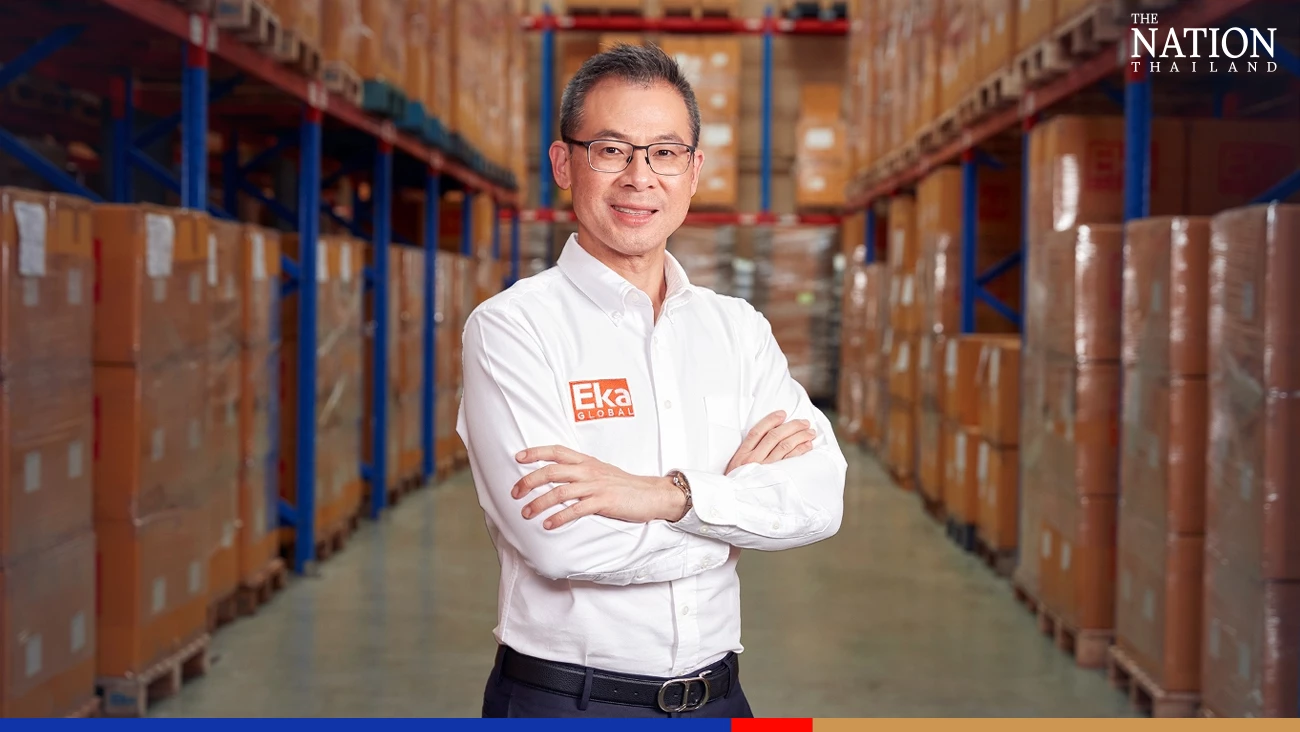
Plastic packaging company Eka Global is hosting roadshows in Chiang Mai, Khon Kaen and Songkhla where food business owners can consult experts in packaging innovations and test the company’s shelf-life extension packaging.
Ten food businesses can test their products with Eka Global‘s shelf life-extending packaging.
The roadshow will launch at Chiang Mai University on February 4 and then move to Khon Kaen University (March 7) and Prince of Songkla University (March 23).
CEO of Eka Global Chaiwat Nantiruj said the firm is ready to offer businesses packaging products that extend the shelf life of food and increase international competitiveness of Thai food firms.
He added that packaging products that keep food fresh for longer are a powerful “weapon” for businesses.
He also said small operators need to adjust themselves to sustainability practices that will be key to doing business in 2023.
Photo shows, from left to right: Dr Chatchai Thnarudee, NZAA President; Dr Tharatee Mookdee, AAA Secretary-General; Niphapan Sang-in, NAAT Vice President; Srisongruk Chaiyasit, OESA Secretary-General; Koblarp
10 Alumni Associations under Royal Patronage jointly organized a merit-making ceremony to wish HRH Princess “Pa” speedy recovery at Vajirayanvongs Bldg – Chulalongkorn Memorial Hospital recently.
Photo shows, from left to right: Dr Chatchai Thnarudee, NZAA President; Dr Tharatee Mookdee, AAA Secretary-General; Niphapan Sang-in, NAAT Vice President; Srisongruk Chaiyasit, OESA Secretary-General; Koblarp
Singha Estate’s new project selling homes for up to 180 million baht
FRIDAY, JANUARY 27, 2023
Singha Estate Plc is entering the top end of the detached-housing market with unit prices ranging up to 180 million baht in a new project in the Pattanakarn area east of Bangkok.
Nattavuth Mathayomchan, the company’s chief residential development officer, said Siraninn Residences marked a milestone in his company’s entry into a new market segment.
Siraninn Residences’ 28 two-storey units range in price from 80 million to 180 million baht. The gated community covers 23 rai of land in the Pattanakarn area, about five kilometres from Thonglor.
The project offers convenient access to urban facilities in an area where prices are rising, the company says.
It said about 95% of the 2.9 billion baht project had already been reserved and that pre-sales reached more than 830 million baht.
The developer has numerous residential brands: from highrise to detached homes. They include The ESSE and The EXTRO brands, SANTIBURI the Residences, and home-office projects under the SENTRE brand.
Launched in early 2022, SANTIBURI The Residences sold out in record time, the company said. Singha Estate is known for investing in quality projects as well as intense branding.
“Singha Estate is determined to develop housing that fulfils diverse lifestyles while maintaining a proper housing balance and perfect living,” Nattavuth said.
It plans to launch five new projects this year with a combined value of 10 billion baht, the company said.
Volvo Car (Thailand) has set itself the ambitious target of selling only electric vehicles by 2025, five years ahead of the company’s global target of 2030.
Chris Wailes, managing director of Volvo Car (Thailand), told a media briefing on Friday that he sees strong demand for electric vehicles (EV) in Thailand, and the trend would continue to grow significantly.
He cited the rapid improvement of EV-related infrastructure, such as charging stations, and people’s environmental awareness, as well as the high price of fossil fuel. He believes these factors would encourage more Thais to switch to EVs.
The entry of new global players like Tesla will increase market competition.
“Competition is always beneficial. Every competitor drives us to learn, adapt, and improve in order to better meet the needs of our customers,” Wailes said.
He added that Thais were more receptive than Europeans when it came to trying new technology.
Amid the overall promising signs in the market, Volvo Car (Thailand) is confident of becoming a seller of only EVs by 2025, he said.
“We will continue to strengthen our position as the leader in the premium EV segment,” he said.
“We are delighted that drivers in Thailand are so enthusiastic about electric-powered vehicles, and we are confident that our bold ambition to sell only fully electric cars in 2025 will be successful.”
His assurance comes as Volvo reports a 71% increase in full-year sales in 2022, as consumers show an increasing desire to drive electric vehicles.
Despite production constraints caused by component shortages, demand for Volvo Cars in Thailand remained strong, he said.
The sales of fully electric models, such as the C40 Recharge Pure Electric and the XC40 Recharge Pure Electric increased by 190 per cent by 2022, accounting for more than one-third of total vehicle sales.
Volvo Cars’ Recharge lineup also saw a 24% increase in sales, accounting for 64.8% of the company’s total sales volume, he said.
The Volvo Car (Thailand) CEO also revealed plans to launch two new pure electric models.
He added that strong profitable returns for dealers and partners are another key focus of Volvo Car (Thailand).
Long way to go for enterprises in implementing “zero trust” system to reduce cyber-risk
FRIDAY, JANUARY 27, 2023
Nongluck Ajanapanya
A recent study by Gartner predicts that about 10% of the world’s large enterprises will have a mature and measurable cybersecurity system known as the “Zero-Trust Program” in place by 2026.
The study, titled “Predicts 2023: Zero Trust Moves Past Marketing Hype Into Reality”, which was formally released on Friday, revealed that the majority of organisations view zero trust as a crucial risk-reduction strategy.
John Watts, Garner’s vice president analyst, describes zero trust as a security paradigm that explicitly identifies users and devices and grants them just the right amount of access, allowing the business to operate with minimal friction while reducing risks.
“Zero trust is a shift in thinking to address these threats by requiring continuously assessed, explicitly calculated and adaptive trust between users, devices, and resources,” he noted.
Unfortunately, the study found out that very few businesses have actually finished implementing zero-trust.
According to Watts, many organisations built their infrastructure with implicit rather than explicit trust models to simplify access and operations for workers and workloads.
However, those models are insufficient in terms of safety. Attackers take advantage of this implicit trust in infrastructure to establish malware and then move laterally to achieve their goals, he explained.
Watts suggested that chief information security officers (CISOs) and risk management leaders begin developing an effective zero-trust strategy that balances the need for security with the need to run the business.
The move will assist organisations in completing the scope of their zero-trust implementations.
He stated that once the strategy is established, CISOs and risk management leaders must begin with identity, which is the foundation of zero trust.
“They must also improve not only technology, but also the people and processes that are used to create and manage those identities,” he added.
However, he cautioned CISOs and risk management executives against assuming that zero trust will eliminate cyber-threats. Rather, zero trust reduces the risk of an attack and its consequences.
According to the current progress, Gartner predicts that by 2026, 10% of large enterprises will have implemented a mature and measurable zero-trust programme, up from less than 1% today.
Meanwhile, Gartner analysts also forecast that through 2026, more than half of cyber-attacks will be aimed at areas that zero-trust controls don’t cover and cannot mitigate.
Jeremy D’Hoinne, VP Analyst at Gartner stated that attackers would quickly consider pivoting and targeting assets and vulnerabilities outside of the scope of zero-trust architectures.
This can include scanning and exploiting public-facing APIs, targeting employees via social engineering, bullying, or exploiting flaws caused by employees creating their own “bypass” to avoid stringent zero-trust policies, he explained.
Gartner said that organisations should implement zero trust to improve risk mitigation for the most critical assets first, as this is where the greatest return on risk mitigation will occur.
However, zero trust does not address all security concerns. CISOs and risk management leaders must also implement a continuous threat exposure management programme to improve inventory and optimise their exposure to threats beyond the scope of zero-trust architectures.


 She quoted Prime Minister Prayut Chan-o-cha as saying that this was a clear sign of economic recovery, especially since the rate of unemployment had dropped to 1.2%, close to the pre-pandemic level of 0.9%.


 SootinClaimon.Com