Rogue Airbus unit the focus of record $4 billion settlement #ศาสตร์เกษตรดินปุ๋ย

#ศาสตร์เกษตรดินปุ๋ย : ขอบคุณแหล่งข้อมูล : หนังสือพิมพ์ The Nation

https://www.nationthailand.com/business/30381397?utm_source=category&utm_medium=internal_referral

Rogue Airbus unit the focus of record $4 billion settlement
Feb 01. 2020
By Syndication Washington Post, Bloomberg · Gaspard Sebag, Franz Wild, Charlotte Ryan
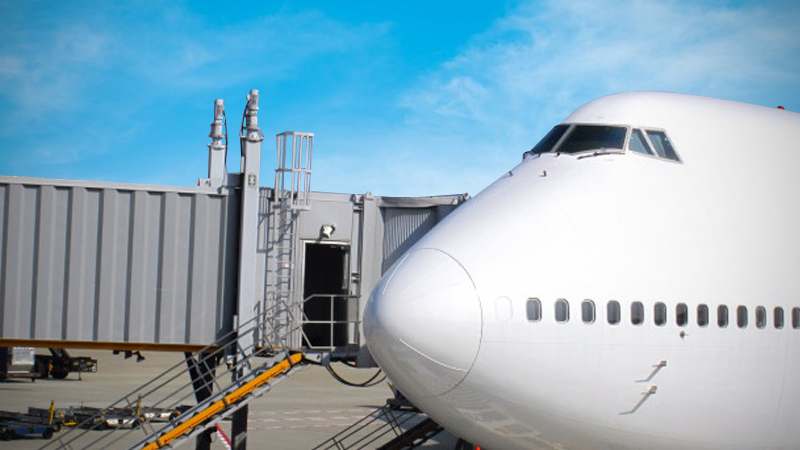
Airbus used a department with a $300 million annual budget to illegally sway government officials and other decisionmakers on airplane sales, boosting profit by more than $1 billion in a long-running bribery campaign, according to documents filed in the biggest corporate bribery case on record.

The European planemaker admitted guilt and agreed to pay $4 billion in a settlement approved Friday by courts in France, the U.S. and the U.K. According to documents filed in the cases, the crimes spanned countries including Malaysia, Russia and China over 13 years. A French prosecutor said in court that the plan helped to boost the company’s profits by 1.05 billion euros ($1.2 billion).

U.S. District Court Judge Thomas Hogan called the conduct by Airbus employees and executives “pervasive and pernicious” and asked prosecutors whether individuals would be charged. The investigation is ongoing, answered U.S. prosecutor Elina Rubin-Smith. She told the judge that Airbus’s deal requires them to aid any efforts to charge individuals.

“All you can assume is that somehow the Airbus ethics and the philosophy in certain parts of the company simply did not move with the times,” said Sandy Morris, an analyst at Jefferies International. “It’s a long time to be doing things wrong and the scale of this penalty seems to suggest this wasn’t just a handful of examples.”

Airbus will be under scrutiny for the next three years. For the Toulouse, France-based company, the settlement ends four years of investigations into accusations that it used middle men to win over officials with bribes when it entered new markets. It agreed to pay 2.1 billion euros to France, 991 million euros including costs to the U.K. and 527 million euros to American authorities.

While steep, the so-called Deferred Prosecution Agreement frees the aerospace giant to press its advantage over struggling rival Boeing, which remains in crisis almost 1 year after its 737 Max workhorse was grounded because of deadly crashes.

Airbus used the 150-person strategy and marketing department to pay bribes to win business, according to prosecutors in Washington D.C. The company made $50 million in improper payments to AirAsia Group directors through the sponsorship of a sports team, promised to pay off the relative of a high-ranking Ghanaian government official and paid $2 million to the wife of a Sri Lankan Airways purchasing official, according to the U.K. judgment.

The company’s crimes in the U.S. included export violations, the court was told. In the U.K., there were five counts, four relating to commercial aircraft in Malaysia, Sri Lanka and Taiwan while the fifth related to a defense contract.

The wrongdoing first came to light when the U.K.’s export finance body, which supports some Airbus sales, questioned the company about missing information about sales agents contained in its filings, according to the U.K. judgment.

A subsequent review by Airbus included “red flags for corruption,” after which U.K. Export Finance suggested the company reports itself to the SFO, the judgment said.

Then-Chief Executive Officer Tom Enders launched an internal probe, and the European manufacturer turned itself in to authorities in 2016. Investigations into Airbus were subsequently opened in France and the U.S.

The fallout led to the departures of top company executives and dominated the last several years of Enders’s tenure. The fine dents profits but lets CEO Guillaume Faury clear away a major distraction. The company just came out the clear winner in the perennial duopoly battle for plane orders with Boeing, which has struggled with delays as it tries to lift the grounding of the 737 Max, idled since last March.

Faury, who took over in April, will be able to turn his attention to another pressing issue: how to resolve production issues that have led to a massive order backlog and compensation for airlines.

While the company can largely move on, Jean-Francois Bohnert, a prosecutor at France’s Parquet National Financier, said investigations into individuals isn’t over. Authorities still have open probes into former executives and other representatives.

Airbus shares fell 0.9% to 133.24 euros in Paris. The stock is up 2.1% so far this year.

“Airbus is relieved to be here today after having had a rather painful past,” Sylvie Kande de Beaupuy, chief compliance officer at Airbus, said in court in France.

Eric Russo, another French prosecutor, said the probe was helped by the “exceptional cooperation” Airbus provided, handing over 30 million documents — three times the size of the Panama Papers leak.

“We went backstage to examine the largest contracts won by the company,” Russo said.

The total Airbus fine surpasses J&F Investimentos SA’s 2017 penalty of about $3.2 billion, billed the world’s largest bribery settlement at the time.

The U.K. settlement is also the largest ever, surpassing the then record 500 million-pound ($651 million) fine paid by jet-engine maker Rolls-Royce Holdings Plc. Airbus plans to book the fines in its year-end results due on Feb. 13.

Investigators from the Serious Fraud Office scrutinized the use of some middlemen who acted as go-betweens for companies and officials in the Middle East and elsewhere. That led to a sweeping review by Airbus into its controls and practices in 2016.

The European manufacturer isn’t the only company that has been tripped up attempting to manage growth in the Middle East, Asia and other fast-growing regions. Companies often use intermediaries with local connections to help establish a presence in new markets, where setting up local offices can take years. The practice isn’t illegal, but it can complicate oversight.


Facebook can’t win its moderation dilemma #ศาสตร์เกษตรดินปุ๋ย

#ศาสตร์เกษตรดินปุ๋ย : ขอบคุณแหล่งข้อมูล : หนังสือพิมพ์ The Nation

https://www.nationthailand.com/business/30381391?utm_source=category&utm_medium=internal_referral

Facebook can’t win its moderation dilemma

Feb 01. 2020
The Facebook logo on an iPhone on Jan. 26, 2020. MUST CREDIT: Bloomberg photo by Gabby Jones.

The Facebook logo on an iPhone on Jan. 26, 2020. MUST CREDIT: Bloomberg photo by Gabby Jones.
By Bloomberg · Eric Newcomer 

Facebook is hard at work crafting its own Supreme Court of content moderation-just as it works to make much of its content impossible for it to review.

This week, Facebook hired the director of its oversight board and released material about the review process. Most cases are expected to take 90 days-which the company that gave us the motto “move fast and break things” surely knows is an eternity in the world of the internet.

Facebook has committed $130 million to fund the board, so it can deal with the hardest calls it faces about which content to remove from its site. For political content and misinformation, a board of elders could make a lot of sense, even though it wouldn’t extend to encrypted messages (more on that later).

The company is aware that the public has run out of patience. “We know that the initial reaction to the oversight board and its members will basically be one of cynicism-because basically, the reaction to pretty well anything new that Facebook does is cynical,” said Nick Clegg, its VP of global policy. Sure enough, TechCrunch on Tuesday called the board “toothless.”

I’ll reserve judgment until we see who Facebook has selected as co-chairs. But not all of Facebook’s problems are all that hard to adjudicate. Just this week, BuzzFeed wrote about a woman who struggled to get Facebook to remove an obscene page using her name without success – for four years! The company became suddenly responsive once BuzzFeed joined the cause.

To take a more extreme example, the New York Times reported last year about 45 million pictures of child sexual abuse appearing online in 2018. The investigation pinpointed Facebook Messenger as a place where abusers swap images, including a video of a man sexually assaulting a 6-year old that went viral in the messaging app.

These cases don’t require an oversight board. (And they wouldn’t get one: Messages would be exempt under Facebook’s current proposal.) But there are other enforcement issues here. Facebook’s WhatsApp product already has end-to-end encryption, meaning the company itself can’t see the contents. And now, Facebook has plans to encrypt Messenger as well. Some of those Facebook cynics that Clegg knows are out there might even say the company plans to encrypt away its Messenger moderation conundrum.

Facebook’s official explanation is that encryption increases privacy – a goal its critics say they share. But elected officials are worried about the company’s plans to encrypt Facebook Messenger perhaps even more than they care about privacy.

Republican Sen. Lindsey Graham, along with Democratic Sen. Richard Blumenthal, is working on a bill wrapping in attacks both on encryption and content moderation. It would “require that companies work with law enforcement to identify, remove, report and preserve evidence related to child exploitation.” While the bill doesn’t specifically mention encryption, it would be hard for Facebook to cooperate if it couldn’t read the underlying messages.

Under the bill, companies that don’t cooperate with law enforcement would no longer receive protection from Section 230 of the Communication Decency Act-the law that shields them from much liability for content their users post. In Facebook’s eyes, this law is the only way to make content moderation tenable. Without it, it could face civil lawsuits for libelous and other problematic content, and will have a much greater incentive to pull down far more content.

But Graham thinks that Section 230 gives companies like Facebook too much freedom in how they run their platforms. He also doesn’t like encryption. So if he doesn’t get his way on encryption, at least he’ll get his way on the content moderation. Like Graham’s idea or not, you have to admit that it’s clever.

Latinos are building businesses, but they don’t get much credit #ศาสตร์เกษตรดินปุ๋ย

#ศาสตร์เกษตรดินปุ๋ย : ขอบคุณแหล่งข้อมูล : หนังสือพิมพ์ The Nation

https://www.nationthailand.com/business/30381390?utm_source=category&utm_medium=internal_referral

Latinos are building businesses, but they don’t get much credit

Feb 01. 2020
By Syndication Washington Post,  Bloomberg · Viviana Hurtado, Alex Tanzi
A dyslexic student who finished at the bottom of his high school class, Ryan Bethencourt remembers his Cuban refugee father urging him to join the family plumbing business. He didn’t listen, and today he’s co-founder and chief executive of Wild Earth.

The vegan pet food startup won backing from billionaire Mark Cuban on the reality show “Shark Tank” and has raised $16 million in total investments, including from Silicon Valley investor Peter Thiel. “You don’t have to be a doctor or plumber,” said Bethencourt. “You can build the next Facebook, Genentech, or Beyond Meat and change the world.”

Bethencourt’s company is one of the 4.4 million Latino-owned businesses that contribute more than $700 billion a year to the American economy. But Bethencourt’s success gaining access to capital is an exception — pointing to a significant opportunity gap for the U.S., according to the Stanford Graduate School of Business’s Latino Entrepreneur Initiative.

In its fifth annual State of Latino Entrepreneurship report released Friday, researchers note the continuing disparities with non-Latino-owned businesses. They project gaps impacting the U.S. economy totaling $410 billion in annual revenues and 1 million jobs.

Since the beginning of the global financial crisis in 2009, growth in the number of Latino business owners has rapidly surpassed the national average, increasing by 34% compared with 1% for all U.S. business owners, the report showed.

Latino-owned businesses are growing in size too. In 2012, approximately 64,000 firms generated revenue of $1 million or more and the Stanford Latino Entrepreneurship Initiative estimates that the number has since grown to 150,000.

But access to outside funding has not kept pace. Lenders are wary of the risks of lending to smaller companies and many Latinos lack the connections needed to access investors.

That’s the experience of Martha Montoya, the founder of the tech platform AgTools, which provides farmers with real-time distribution and pricing information. She’s had to come up with the money through individual Latina angel investors and winning cash awards in business competitions.

“I have global customers and half a million dollars in gross sales and I couldn’t get financing, even a line of credit on my house,” said Montoya.

Overall, Latino-owned businesses are less likely to secure loans from banks or venture capital. When all else fails, they’re more likely to fund their companies through credit card debt or factoring — the practice of selling at a discount. But these practices carry personal risk that can impede the ability for these burgeoning businesses to thrive or survive.

Bethencourt said investors looking for new places to put their cash should be more conscientious about the economic impact of the nation’s demographic changes. Hispanics are projected to make up 29% of the U.S. population by 2060 from about 17% today.

“The U.S. is missing a huge driver of growth,” he said. “If we want to keep leading economically like we have, we need to activate the raw talent of people, like Latinos.”

Cruise lines ban anyone who has recently been to China as coronavirus fears spread #ศาสตร์เกษตรดินปุ๋ย

#ศาสตร์เกษตรดินปุ๋ย : ขอบคุณแหล่งข้อมูล : หนังสือพิมพ์ The Nation

https://www.nationthailand.com/business/30381387?utm_source=category&utm_medium=internal_referral

Cruise lines ban anyone who has recently been to China as coronavirus fears spread

Feb 01. 2020
By The Washington Post · Hannah Sampson 
Cruise lines are putting strict measures in place amid concerns about the new coronavirus, including preventing anyone who has been in mainland China over the previous 14 days from getting on board.

The cruise industry’s trade association said late Thursday that its members – which include the world’s largest operators – had suspended crew movements from China and would deny boarding to any crew member or guest who traveled from or through the mainland during the prior two weeks.

The new restrictions came as 6,000 people were prevented from leaving a ship in the waters off Italy for hours Thursday as health authorities awaited test results for two passengers from Hong Kong. They ultimately were shown to have the flu, not coronavirus.

Passengers can be screened a number of ways, including questionnaires and checks of their travel documents to show where they have recently visited. Some cruise lines will also put mandatory health screening measures in place for some or all guests before they board.

The restriction will be in place “pending further guidance from global health authorities regarding the status of the outbreak,” said Bari Golin-Blaugrund, a spokeswoman for the Cruise Lines International Association, in an email.

This isn’t the first time cruise operators have issued temporary rules preventing some passengers from boarding. In 2014, during the Ebola outbreak, member cruise lines did not allow passengers or crew to get on ships if they had visited any of the countries that were given a Level 3 Travel Warning by the Centers for Disease Control and Prevention.

That included Guinea, Sierra Leone and Liberia – not countries that are major markets for cruise travel. China, on the other hand, has been a growing source of passengers for global cruise lines. In 2018, according to CLIA, nearly 2.2 million people from mainland China, Hong Kong and Taiwan took a cruise.

China has that same Level 3 designation from the CDC now, and the U.S. State Department raised its travel advisory for China late Thursday to warn citizens not to travel there. Also on Thursday, the World Health Organization declared the outbreak to be a “public health emergency.” Nearly 10,000 cases of the virus have been confirmed, most of them in China, and more than 200 people have died.

Golin-Blaugrund said that to CLIA’s knowledge, its member cruise lines have suspended sailings to and from mainland China.

Some operators have announced measures that go beyond those that the association laid out.

MSC Cruises, which is based in Geneva but has ships sailing around the world, said Thursday that no one who had traveled from mainland China or visited the country in the past 30 days would be allowed to board a ship and that all guests and crew would have to undergo thermal scans before getting on any ship.

Anyone with signs of illness, including chills, cough, difficulty breathing or a fever of 100.4 degrees or higher, will not be allowed on board. Passengers who come down with fevers during a cruise, as well as close contacts and crew members who served them, will be isolated in their cabins, MSC said.

Royal Caribbean Cruises, whose lines include Royal Caribbean International, Celebrity Cruises, Azamara Club Cruises and Silversea Cruises, has canceled all China and Hong Kong voyages through mid-February. The company said Thursday that all ships in its fleet would adopt health screening measures “until further notice.” They include denying boarding to anyone who traveled from or through mainland China or Hong Kong over the past 15 days.

Special health screening will be mandatory for: anyone who has been in contact with people who traveled from or through China or Hong Kong over the previous 15 days; anyone who holds a passport from China or Hong Kong, regardless of when they were last there; or those who say they don’t feel well, or show any flulike symptoms. Anyone with a fever or low blood oxygen will not be allowed on a ship.

“These steps are intentionally conservative, and we apologize that they will inconvenience some of our guests,” the cruise company said in a statement.

Colleen McDaniel, editor in chief of Cruise Critic, said in an email that cruise lines have always had regular policies in place to check for illness as passengers are boarding and prevent those who are sick from getting on a ship with hundreds, or thousands, of other people.

“But that’s on a case-by-case basis,” she said. “This wider-spread policy to deny boarding to those who have been in a particular destination is unusual, but it reflects the concern from passengers and caution from the industry.”

The psychology of a Super Bowl ad #ศาสตร์เกษตรดินปุ๋ย

#ศาสตร์เกษตรดินปุ๋ย : ขอบคุณแหล่งข้อมูล : หนังสือพิมพ์ The Nation

https://www.nationthailand.com/business/30381417?utm_source=category&utm_medium=internal_referral

The psychology of a Super Bowl ad

Feb 01. 2020
By SUPERBOWL-ADS-COMMENT
Syndication Washington Post, Bloomberg Opinion · Tara Lachapelle · OPINION, BUSINESS, ENTERTAINMENT, RETAIL, TV
It’s been asked before: Why, if we hate television commercials, do we love Super Bowl ads so much? The question is more relevant now than ever. As consumers ditch cable, Netflix’s new streaming-TV rivals are weighing the pros and cons of placing ads on their services.

Already 18 million traditional pay-TV subscribers may have cut the cord in the last six years, according to Nielsen data and research by Geetha Ranganathan, an analyst for Bloomberg Intelligence. The pace accelerated last year, with recent earnings reports from AT&T owner of DirecTV) and Comcast revealing an exodus of 3.4 million and 733,000 traditional video customers, respectively. A proliferation of new streaming apps – Disney+, Apple TV+, Peacock, HBO Max – promises to see the cord-cutting trend continue this year.

For now, many of these new apps have opted to go ad-free, like Netflix. But that may not always be the case; advertising is likely to play a large role in the future of streaming TV, just as it has for cable networks. For one, ads are a lucrative source of revenue for programmers. Two, advertisers want access to the growing streaming audience. Three, ad-supported viewing might mean cheaper subscriptions for premium content. And so this Sunday’s Super Bowl LIV – between the San Francisco 49ers and the Kansas City Chiefs – comes as a timely reminder that for all the anecdotal aversion to ads, they’re not always so bad.

What is it about Super Bowl commercials that makes them less annoying than all the other campaigns for beer brands, cars, chips, insurance and paper towels throughout the year? It’s hard to say. Of course, breaks are a natural part of sports viewing, and at the Super Bowl, they’re as much a part of the event. But take a look at the most-liked ad spot during last year’s big game, which was M&M’s “Bad Passengers,” according to a survey of 500 viewers by consumer research firm Suzy.

It’s funny. It features a well-known actress. It tells a mini-story in the sense that you have to keep watching to find out who Christina Applegate is reprimanding in the back seat – the twist being that it’s the M&M’s characters and not her kids. It’s what the industry might call a “premium” ad. Is this must-see TV? No. Would I rather skip to the next episode of, say, “Schitt’s Creek” uninterrupted? Yes. But if watching this silly M&M’s ad meant I could stream for free, then I might take that option. After all, one of the biggest drivers of cord-cutting is the desire to save money. Some companies, such as Comcast, have caught on to this frustration brought on by the panoply of streaming subscriptions and are looking to ads as the solution.

Super Bowl ads have also been getting shorter. About 11% of ads during last year’s match were 15 seconds or less, compared with just 5% in 2015, according to Kantar data. Part of the reason is that Super Bowl commercials are just so darn expensive: Buying 30 seconds of air time this year, like the M&M’s spot above, set advertisers back as much as $5.6 million (not including production costs), according to the FOX broadcast network.

One of the more buzzed-about ads this year is for Bud Light Seltzer, and it clocks in at one whole minute. There are two versions featuring rapper Post Malone, and the company is gauging social media to determine which one to air on Sunday:

Streaming-TV services and on-demand content will require shorter ads. Thanks to Netflix, streamers have become accustomed to binge-watching without any interruptions at all. (And Netflix says it’s not planning on changing that.) And so bringing ads into streaming will require lots of creativity and restraint on the part of the media companies. Hulu, for its part, has experimented with “pause” ads that appear only when pausing a video.

When Comcast’s NBCUniversal launches Peacock in April, it will have just five minutes of ads per hour. In turn, viewers can stream for free. It’s the first of the major media companies to go this direction, and I suspect it won’t be the last. “We will make sure that every ad looks as good as the premium content that it’s paired with,” Linda Yaccarino, who oversees advertising at NBCUniversal, said at a presentation this month.

Ads aren’t going away, but they don’t have to be painful. Some are even entertaining. Watching four hours of football, though? That’s a different story.

Commodity shipping costs fall 99.95% after virus slams market #ศาสตร์เกษตรดินปุ๋ย

#ศาสตร์เกษตรดินปุ๋ย : ขอบคุณแหล่งข้อมูล : หนังสือพิมพ์ The Nation

https://www.nationthailand.com/business/30381389?utm_source=category&utm_medium=internal_referral

Commodity shipping costs fall 99.95% after virus slams market

Feb 01. 2020
By Bloomberg · Krystal Chia 
The coronavirus crisis in China has hammered many markets this month. None may have felt a bigger impact than freight.

Rates for giant Capesize ships, typically used to carry raw materials such as iron ore, plunged 90% from a September peak to less than $4,000 a day based on an index that tracks their earnings. A wider Baltic Dry Index more than halved in January to hit the lowest since 2016, as the worsening outbreak brought an already-weak freight market because of the Lunar New Year to its knees.

The plunge in shipping rates underscores just how much pull China has in global commodities markets, with the virus upending everything from oil futures to copper prices.

“Weakness is expected to persist amid uncertainty about how long the virus effects will last,” said Ralph Leszczynski, head of research at shipbroker Banchero Costa & Co. Seasonally, rates are already low in January because of the Lunar New Year and lower demand out of Brazil on bad weather, and the virus is an added bearish factor, Leszczynski said.

Iron ore is the biggest dry-bulk cargo by volume, with annual seaborne flows totaling about 1.6 billion tons as vessels carry the key steel-making ingredient from giant mines in Brazil and Australia to users in China and Europe.

Miners have downplayed concerns. Australia’s Fortescue Metals Group said concern over the virus is impacting sentiment rather than the physical trade in iron ore. Separately, Brazil’s Vale said operations at Asian ports are normal.

Global markets sink on slowing growth, coronavirus fears; Dow drops 603 #ศาสตร์เกษตรดินปุ๋ย

#ศาสตร์เกษตรดินปุ๋ย : ขอบคุณแหล่งข้อมูล : หนังสือพิมพ์ The Nation

https://www.nationthailand.com/business/30381385?utm_source=category&utm_medium=internal_referral

Global markets sink on slowing growth, coronavirus fears; Dow drops 603

Feb 01. 2020
By The Washington Post · Taylor Telford, Thomas Heath 

Stock market volatility returned on Friday as the spreading coronavirus that has brought China to a standstill fanned fears the epidemic will escalate into a global social and economic calamity.

The Dow Jones industrial average fell 603 points or 2%, wiping out January’s gains and launching the blue chips on their worst start since 2016. The Dow closed at 28,255. The Standard & Poor’s 500 index and Nasdaq composite closed down 1.77 and 1.59%, respectively.

Stocks were hit from several sides. Delta Air Lines and American Airlines joined United and a large group of European carriers in suspending all service to China, as demand for service plummets and officials scramble to contain the spread of the disease.

On Thursday, the World Health Organization declared a public health emergency, after declining to do so the previous week. The pneumonia-like virus has infected more than 9,900 people in China and killed 213 and is spreading. The national Centers for Disease Control and Prevention reported the first person-to-person transmission of the virus in the United States, as the husband of a woman who contracted the virus in Wuhan was diagnosed with the illness. The United Kingdom and Russia both reported their first cases Friday.

The deadly coronavirus presents a threat to the global economy, as it paralyzes China’s workforce and dampens its powerful manufacturing industry. It is forcing global firms with roots in the country to freeze operations and seek ways to reorient supply chains.

“There is a growing recognition that the coronavirus contagion is worsening, with more travel restrictions and the number of infected already exceeding the total infected by SARS,” said Kristina Hooper, chief global market strategist for Invesco.

From an economic perspective, the outbreak’s timing is especially punishing, dragging down growth prospects and taking a bite out of corporate earnings just when investors had hoped for a boost after the truce in the U.S.-China trade war. A Chicago report showing the weakest manufacturing in five years added to market woes on Friday.

The Dow and the S&P both finished January in negative territory. The Nasdaq is still up a comfortable 2% on the year, thanks to the big technology stocks that have propelled the last several years of the bull market.

The big U.S. energy companies, already hit by low oil prices due to oversupply, were the biggest drags on the Dow Jones industrial average Friday. Exxon Mobil and Chevron finished down 4% each, hitting 52-week lows after reporting disappointing earnings on Friday. Oil prices are expected to decline further due to a slowdown in demand from the economic implications of the coronavirus.

“The market’s worry is all about consumer demand,” said Scott Wren, global equity strategist at Wells Fargo Investment Institute. “If people stay home and don’t go out and spend money, economic growth will really get hit.”

China’s markets are closed for the extended holiday, but Hong Kong’s Hang Seng Index fell 0.5%. Europe’s benchmark Stoxx 600 index closed at a loss of 1%. Britain’s FTSE 100 was off 1.3% on the long-awaited official day of Brexit.

The tumult ushered U.S. markets’ worst week of trading in 2020, a disappointing end to what otherwise had been a strong January that brought the Dow Jones industrial average within striking distance of 30,000. Ten of 11 S&P sectors finished in the red, with energy the biggest drag.

Growth in the euro zone softened significantly last year, fresh economic data showed Friday, expanding just 1.2% in 2019, its lowest level in six years. Experts say the slowdown is tied to a weakening manufacturing sector and strife in the automobile industry, further complicated by global trade tensions.

U.S. economic growth dropped to its slowest pace since 2016 in 2019, the Commerce Department reported Thursday. The slowdown defies claims from the Trump administration that stimulus from the 2017 tax bill, which yielded big cuts for corporations and households, would lead to 3% GDP growth. Despite a 2.1% rise in fourth-quarter GDP, growth for the full year was 2.3%, compared with 2.9% in 2018 and 2.4% in 2017.

Consumer spending rose slightly, at 0.3%, in December, the Commerce Department reported Friday, while incomes inched up 0.2% and inflation picked up 0.3%.

“Consumers are not as positive as they were in the middle of 2019 and are sitting on their wallets as the year came to a close, which draws a great big question mark over the 2020 economic outlook,” Chris Rupkey, chief financial economist at MUFG Union Bank wrote in a note to investors Friday. “Business investment spending on equipment and structures are declining which doesn’t suggest companies think consumer spending will be all that red hot in 2020 and this is before the China virus has spread … generating uncertainty that will keep the consumer at home instead of taking those trips to the mall that the economy sorely needs to keep growing.”

Goldman Sachs in a research note on Thursday predicted the coronavirus will somewhat stifle U.S. economic growth in the first quarter. The investment firm said that a bigger outbreak in the United States could pose a significant risk to consumer spending and business activity. But in an interview with Fox Business on Thursday, Commerce Secretary Wilbur Ross claimed that the lethal virus could “help” the U.S. economy as businesses seek alternatives to China because of the health risks.

“I think it will help accelerate the return of jobs to North America,” Ross said.

Experts have been exploring the 2003 SARS outbreak to weigh the potential economic impact of the coronavirus. A 2004 study from The Brookings Institution, Korea University and the Australian National University estimated that the outbreak delivered a $40 billion hit to the global economy; that would amount to about $56 billion today, adjusting for inflation.

Starbucks earlier this week shuttered more than 2,000 locations – more than half its stores in the country – and McDonald’s and KFC have also announced closures. Google closed its five offices in mainland China, Hong Kong and self-governing Taiwan. The airline industry has been hit particularly hard, and on Friday Delta and American Airlines joined a large group of European airlines in suspending all flights to China. Delta’s shares sank 2% and American Airlines’ shares fell more than 3%.

Technology giants Apple, Microsoft and Amazon delivered blockbuster earnings beats this week. But their success was not enough to rescue markets from Friday’s plunge over fears that the coronavirus was rapidly spreading across the planet.

Moody’s analysts predict the virus will eat into Apple’s profits in the first quarter as the company freezes operations and looks to supply chain alternatives. Apple’s shares fell 4.4% on the day. Microsoft closed down 1.5%. Amazon.com was up 7.4%. Washington Post owner Jeff Bezos is the founder and chief executive of Amazon.

“Though its current offerings appear to be popular in China, if the epidemic endures and causes a sustained weakening of economic activity, there could be material impacts to Apple’s performance over an extended period,” Moody’s analysts wrote in a report Thursday. “Apple’s large product-centric and consumer oriented sales make it susceptible to sharp swings in demand.”

The virus scare has brought volatility back to the markets. Stocks moved 1% last Monday for the first time since October and then again on Friday. “It’s not a free-for-all, and not a panic,” said Howard Silverblatt of S&P Dow Jones Industries. “A pullback was expected. The virus has been the trigger. The question is how long does the virus scare continue and how much it impacts global supply chains.”

Ivan Feinseth of Tigress Financial partners sees the virus scare as a potential opportunity for investors.

“History has shown that any selloffs in stocks driven by health scares have been short-lived and did little to change the upward ascent of stocks in the past,” Feinseth said. “The S&P 500 gained 31% in 1997 even in the face of a combination of the Avian flu epidemic, the Asian financial crisis, the Russian sovereign debt default, and the collapse of Long-Term Capital Management.”

But there are signs that the outlook for 2020 could be less robust than in the past three years. Caterpillar, a bellwether for the global economy, beat earnings estimates but reported an 8% decline in revenue year-over-year, citing “global economic uncertainty.” Its shares were down 3%.

“We expect continued global economic uncertainty to pressure sales to users in 2020 and cause dealers to further reduce inventories,” Chief Executive Jim Umpleby said in a statement.

Council sets steps to offset virus impact #ศาสตร์เกษตรดินปุ๋ย

#ศาสตร์เกษตรดินปุ๋ย : ขอบคุณแหล่งข้อมูล : หนังสือพิมพ์ The Nation

https://www.nationthailand.com/business/30381383?utm_source=category&utm_medium=internal_referral

Council sets steps to offset virus impact

Jan 31. 2020
By THE NATION

The Council of Economic Ministers on Friday (January 31) outlined measures to cushion impacts of the novel coronavirus outbreak on Thailand.

Kobsak Pootrakool, deputy secretary-general to the prime minister for political affairs, said short term measures would include reduction of excise on jet fuel, tax cuts for local tourism seminars organised by the private sector, postponement of corporate tax payment for companies in the tourism sector and soft loans for tourism operators.

The measures will be proposed to the Cabinet on February 4.

The tourism sector contributes 20 per cent of gross domestic product and employs more than 10 million.

The Transport Ministry proposed to the meeting a cut in plane landing fee.

Meanwhile, long term measures to be implemented in May, are the establishment of a committee to ensure ‘ease of travelling’. The committee will focus on upgrading tourism sector and solve problems for travellers.

Prime Minister Prayut Chan-o-cha, who chaired a meeting of the economic ministers on Friday (January 31), will approve setup of the committee soon.

Tourism Authority of Thailand Governor Yutthasak Supasorn said the TAT had yet to revise the arrival target of around 41.8 million with an estimated total revenue of Bt2.22 trillion this year.

He added that after the situation returns to normal, the TAT will promote travel by Thais and woo tourists from other countries to offset the decline in  arrivals from China.

Plunge in arrivals from China may lead to Bt100 bn loss for tourism #ศาสตร์เกษตรดินปุ๋ย

#ศาสตร์เกษตรดินปุ๋ย : ขอบคุณแหล่งข้อมูล : หนังสือพิมพ์ The Nation

https://www.nationthailand.com/business/30381380?utm_source=category&utm_medium=internal_referral

Plunge in arrivals from China may lead to Bt100 bn loss for tourism

Jan 31. 2020
By THE NATION

The number of Chinese tourist arrivals in Thailand is expected to decline by 2.4 million in the first half of this year as a result of the novel coronavirus outbreak in the country, according to TMB Analytics, an economic analysis division of TMB Bank.

The decline in arrivals from China is estimated to cost the tourism sector more than Bt100 billion this year.

The sector will be hit hard in the first quarter of the year, with many holidays on the chinese calendar, before the situation improves in the mid of the year.

TMB Analytics estimated that the number of foreign tourist arrivals in Thailand this year will fall to 38.7 million from 40.8 million in its previous forecast.

The revenue of the tourism and related sectors is expected to decline by over Bt100 billion, of which over Bt70 billion loss will be seen in the hotel, restaurant and retail segments.

By sector, the hotel business is expected to face revenue loss of Bt28.4 billion, retail Bt28.4 billion, and restaurants Bt18.9 billion. 7,500 hotels  are expected to be affected, especially those located in Bangkok, Phuket, Chonburi, Krabi, Surat Thani, Chiang Mai and Pang-Nga. The seven provinces, popular with Chinese tourists, have a total of 4,763 properties, accounting for 65 per cent of all hotels in Thailand.

Analysts foresee cut in benchmark rate next week #ศาสตร์เกษตรดินปุ๋ย

#ศาสตร์เกษตรดินปุ๋ย : ขอบคุณแหล่งข้อมูล : หนังสือพิมพ์ The Nation

https://www.nationthailand.com/business/30381375?utm_source=category&utm_medium=internal_referral

Analysts foresee cut in benchmark rate next week

Jan 31. 2020
By THE NATION

Citing multiple, simultaneous threats to the economy, Kasikorn Research Centre expects the central bank’s Monetary Policy Committee, meeting on February 5, to trim the benchmark rate by at least 0.25 percentage point from the current 1.25 per cent.

The centre said on Friday in a statement that the committee has two option if it determines there is an urgent need to cut the rate.

The first is to cut it by 25 basis point this month and another 25 in March. The second is to trim away 0.5 per cent all at once.

The centre noted a high risk that the global economy could slow further and said Thailand would suffer despite the baht now showing signs of depreciating.

The baht was at Bt31.2 to the US dollar as of Thursday (January 30), a decline from Bt29.97 at the end of 2019, which has eased pressure on the export sector.

However, China’s economy is this year expected to expand only 5.5-5.9 per cent, which will hurt countries like Thailand that rely heavily on exports there.

The centre suspects the baht’s weakening might not be enough to offset the impact from China’s faltering economy.

Other crucial factors are chronic drought afflicting farm production and another delay in disbursing the budget for fiscal 2020.