Lufthansa deploys Airbus A380 to increase capacity on flights to Thailand #ศาสตร์เกษตรดินปุ๋ย

#ศาสตร์เกษตรดินปุ๋ย : ขอบคุณแหล่งข้อมูล : หนังสือพิมพ์ The Nation

https://www.nationthailand.com/business/30380231?utm_source=category&utm_medium=internal_referral

Lufthansa deploys Airbus A380 to increase capacity on flights to Thailand

Jan 07. 2020
By THE NATION

Lufthansa Group is expanding its passenger capacity on its Bangkok to Frankfurt route by using the world’s largest aircraft, the Airbus A380.

It is the only European carrier operating the A380 to Thailand.

The airline said the expanded service targets both Thai customers and international visitors to Thailand seeking a unique flying experience on long-haul flights to and from Europe.

Stefan Molnar, Lufthansa Group’s general manager for Thailand, Philippines, Vietnam and the Mekong Region, said: “Lufthansa remains highly committed and confident about Thailand. It is a very important market for us. Last year we welcomed 800.000 passengers on flights to and from Thailand. We are certain outbound travel from Thailand will sustain good growth.” Currently, Lufthansa Group serves Thailand with four airlines: Austrian, Swiss, Eurowings and Lufthansa. Together they offer customers 31 weekly flights between Thailand and some of the most important cities in Europe: Frankfurt, Vienna, Zurich and Munich that has the only European five-star airport.

In First Class, the seat can be converted into a 2-metre-long bed with a comfortable mattress and a temperature-regulating duvet.

In First Class, the seat can be converted into a 2-metre-long bed with a comfortable mattress and a temperature-regulating duvet.

Lufthansa initially increased capacity by going from the Boeing 747-400 to the Airbus A380 during the 2017-18 winter schedule. This is the third season Lufthansa is operating an A380 on the Frankfurt-Bangkok route.

The airline said first class offers passengers exclusivity and privacy with only eight seats and premium features. The A380 business class offers 78 lie-flat seats stretching across the aircraft’s entire upper deck and unique inflight entertainment.

LHG First Class on A380

LHG First Class on A380

As one of the world’s leading airlines, Lufthansa offers more than 5,200 weekly flights and currently serves about 200 destinations in 74 countries operating from its hubs in Frankfurt and Munich.

Building up the backbone of Thailand 4.0 #ศาสตร์เกษตรดินปุ๋ย

#ศาสตร์เกษตรดินปุ๋ย : ขอบคุณแหล่งข้อมูล : หนังสือพิมพ์ The Nation

https://www.nationthailand.com/business/30380251?utm_source=category&utm_medium=internal_referral

Building up the backbone of Thailand 4.0

Jan 07. 2020
Tarin Thaniyavarn, Country Head of Grab Thailand

Tarin Thaniyavarn, Country Head of Grab Thailand
By Tarin Thaniyavarn
Country Head of Grab Thailand

Leaders from the public and private sectors across Southeast Asia gathered in Bangkok in November for the Asean Business and Investment Summit (ABIS), part of the Asean Summit, to discuss how Asean businesses can best take advantage of and be ready for the digital era.

Under the theme of “Empowering MSMEs towards ASEAN 4.0”, I spoke about a topic that is closest to Grab’s business model and Grab For Good mission.

How do technology platforms like Grab empower micro-entrepreneurs, small and medium-sized enterprises (MSMEs) to embrace the 4th Industrial Revolution, and why is this important?

First of all, MSMEs form the backbone of the Asean economy. Likewise in Thailand, local micro-entrepreneurs and small business owners make up more than 99 per cent of enterprises, and in 2018, accounted for 85 per cent of overall employment [1].

This is a critical business segment to digitally transform in order to progress towards Thailand 4.0.

Yet, despite the large number of MSMEs, these Thai businesses are only recognising a fraction of their potential, accounting for only 43 per cent of Thailand’s GDP [2]. There is a clear opportunity to increase their contribution.

Second, the Asean plus 6 countries across Southeast Asia, including Thailand, are developing national masterplans to shift away from a labour-based to a knowledge and service-based economy.

This is necessary to move out of the so-called “middle-income trap,” a condition where rapidly growing economies stagnate at middle-income and fail to transform into high-income economies.

The digital transformation of MSMEs through the adoption of technologies will accelerate this transition and drive greater economic progress for the nation.

Third, our region’s digital economy is projected to reach US$300 billion by 2025 [3], propelled by the phenomenal growth of e-commerce, mobile payments, ride-hailing, and on-demand food delivery and logistics services.

All Asean countries are aiming to get a much larger slice of this economic pie and are setting national agenda to bring more MSMEs into this sector.

But what’s impeding MSMEs from leveraging the explosive growth of technology? It has become increasingly clear that equitable access is the key.

Such gaps exist across all of Southeast Asia countries and caused by common challenges that MSMEs face on their path to digitalisation.

Barriers include ease of accessing credit, readiness to embrace tech and innovation, and progressiveness of government regulations to facilitate their digitalisation process. And this is where technology platforms like Grab hope to play our part.

Let me share the story of Nonthakarn Saigalakum who owns a small north-eastern Thai cuisine restaurant, Somtam Amorn.

In the past, his business solely relied on walk-in customers whose numbers rarely crossed the 100 mark. Even on a good day, he felt he didn’t earn enough as he was always constrained by the small space of the shop that could accommodate only 60 people at full capacity.

Things changed for the better when Nonthakarn set up an online extension of the shop on GrabFood platform.

As a merchant-partner, he was able to tap into Grab’s vast online consumer base and use digital tools and insights to tailor his menu to diverse consumers’ food choices.

After taking his business online, Nonthakarn stopped relying solely on walk-in customers. Grab’s extensive driver-partner network enabled him to extend his business without investing into a physical expansion.

Today, more than 75 per cent of Somtam Amorn’s revenue comes from GrabFood. Nonthakarn is a single example of millions of MSMEs on Grab platform that can leverage technologies to access to new revenue streams, and in doing so bring Thailand closer to seizing the USD 300 billion digital economy pie.

GrabKitchen, an innovative cloud kitchen which has recently launched in Thailand, is another example of how we support MSMEs through technology.

Through GrabKitchen, merchant-partners can expand the geographical areas they serve and reach more consumers.

GrabKitchen also help MSMEs manage their cost of operations by eliminating rental cost which is one of the highest barriers of entry for food MSMEs.

In Thailand, and across the region, tech companies like Grab are partnering with governments to empower MSMEs, including driver-partners, delivery-partners, merchant-partners and more, to elevate their quality of life.

For example, one in 70 MSMEs regionally have earned an income through the Grab platform, allowing them to work independently and flexibly.

For about 21 per cent of these individuals who did not work before joining Grab, this income was their first step on a path to financial independence [4].

In Thailand, Grab has been operating in 20 cities across 18 provinces, empowering hundreds of thousands of MSMEs to earn better livelihoods.

As Grab expands its business upcountry to more secondary provinces and cities in 2020, we will expand the benefits of the digital economy to millions more Thai citizens, particularly those living in rural areas, many of whom may not enjoy the same benefits as those in the urban cities.

Beyond economic access and inclusion, Grab has been bridging the gap in financial inclusion for the underserved population.

In Thailand, 18 per cent of people still don’t have access to financial services. At a regional level, the number is as high as 46 per cent.[5]

Since 2012, Grab has worked, along with key financial partners, to help as many as 1.7 million MSMEs across the region open their first bank account.

In addition, we have also been providing digital lending solutions to many of these micro-entrepreneurs and small, medium-sized businesses who would have been traditionally turned down by banks for not meeting income threshold or lacking supporting documentation for their credit worthiness.

We have also doubled down on driving Asean e-wallet adoption to ensure that every person and business has equal access to cashless payments solutions.

In Thailand, we have opened up our GrabPay wallet to merchant-partners to accept in-store cashless payments from our extensive consumer base.

This has immediately extended the reach of these MSMEs to a new pool of digitally-savvy, mobile-first consumers that they may not have been able to attract before.

Finally, Grab has been working to close another critical gap on the path to digital transformation–investing in future-ready workforce and nurturing the next tech unicorns.

Through our GrabVentures programme, we have been helping innovative start-ups, another critical driver of the digital economy, develop and scale technologies that validate their business models with our regional-base of over 163 million mobile downloads and over nine million microentrepreneurs partner network to further their reach.

Our Grab For Good vision for the future of Southeast Asia and Thailand is to enable equitable access to the benefits that technology provides.

By empowering the backbone of Asean economy – the MSMEs, Grab will create economic opportunities at scale and enable Thailand to fully capitalize the USD 300 billion digital economy.

2020 is the best year yet to fulfill our ambitious mission for the longer-term benefit of Thai people and community.

[1], [2] The Office of SMEs Promotion, 2019

[3] e-Conomy SEA Report 2019 by Google, Temasek and Bain & Company

[4] Grab Internal Data

[5] World Bank Global Financial Inclusion Data, 2019

Stocks fall amid Iran tensions; dollar gains #ศาสตร์เกษตรดินปุ๋ย

#ศาสตร์เกษตรดินปุ๋ย : ขอบคุณแหล่งข้อมูล : หนังสือพิมพ์ The Nation

https://www.nationthailand.com/business/30380257?utm_source=category&utm_medium=internal_referral

Stocks fall amid Iran tensions; dollar gains

Jan 08. 2020
The S&P 500 dropped for the second time in three sessions, with investors cautious after Iran threatened a military response to a U.S. airstrike that killed a top general four days ago. Chipmakers buoyed the benchmark.

The S&P 500 dropped for the second time in three sessions, with investors cautious after Iran threatened a military response to a U.S. airstrike that killed a top general four days ago. Chipmakers buoyed the benchmark.
By Syndication Washington Post, Bloomberg · Claire Ballentine, Vildana Hajric

U.S. stocks fell as investors remained wary of an escalation in tensions with Iran. The dollar advanced, while oil continued its retreat from multimonth highs.

The S&P 500 dropped for the second time in three sessions, with investors cautious after Iran threatened a military response to a U.S. airstrike that killed a top general four days ago. Chipmakers buoyed the benchmark.

Havens showed little reaction to the bellicose Iranian rhetoric, with West Texas crude falling below $63 a barrel and gold slightly higher. The dollar advanced versus the yen, while the 10-year Treasury yield rose to 1.82% after indicators pointed to a resilient U.S. economy.

“Markets are to some degree calming down from the trash talk that we’ve seen over the last couple of days,” said Matt Forester, chief investment officer at BNY Mellon’s Lockwood Advisors, about the U.S.-Iran conflict. “The issue is whether there will be heightened conflict in the future. I don’t think markets know yet. This could easily flare back up again.”

Even as investors appeared to have started the first full trading week of 2020 in a defiantly upbeat mood, the unfolding crisis in the Middle East, which triggered a broad sell-off on Friday, returned to the forefront Tuesday. Traders are now waiting to see how Iran fulfills its threats.

Here are some events to watch for this week:

–Federal Reserve officials Richard Clarida, John Williams, James Bullard and Charles Evans speak on Thursday.

–The U.S. monthly employment report is due Friday.

These are moves in major markets:

Stocks

–The S&P 500 index fell 0.3% as of 4 p.m. New York time.

–The Stoxx Europe 600 index gained 0.3%.

–The U.K.’s FTSE 100 index was little changed.

–The MSCI Asia Pacific index climbed 0.9%.

Currencies

–The Bloomberg Dollar Spot index increased 0.3%.

–The euro declined 0.5% to $1.1147.

–The British pound fell 0.4% to $1.3119.

–The Japanese yen decreased 0.2% to 108.53 per dollar.

Bonds

–The yield on 10-year Treasuries rose two basis points to 1.82%.

–Germany’s 10-year yield gained less than one basis point to -0.29%.

–Britain’s 10-year yield added two basis points to 0.792%.

Commodities

–West Texas Intermediate crude dipped 1% to $62.63 a barrel.

–Gold rose 0.3% at $1,574.00 an ounce.

Cabinet okays Bt100-billion package to assist struggling SMEs. #ศาสตร์เกษตรดินปุ๋ย

#ศาสตร์เกษตรดินปุ๋ย : ขอบคุณแหล่งข้อมูล : หนังสือพิมพ์ The Nation

https://www.nationthailand.com/business/30380256?utm_source=category&utm_medium=internal_referral

Cabinet okays Bt100-billion package to assist struggling SMEs.

Jan 08. 2020
Lavaron Sangsnit, director-general of Fiscal Policy Office, as the SMEs have been experiencing high risk stemming from the US-China trade tensions, uncertainty of the global economy, export contraction and the strengthening of the baht, the Cabinet on Tuesday approved an assistance package proposed by the Finance Ministry.

Lavaron Sangsnit, director-general of Fiscal Policy Office, as the SMEs have been experiencing high risk stemming from the US-China trade tensions, uncertainty of the global economy, export contraction and the strengthening of the baht, the Cabinet on Tuesday approved an assistance package proposed by the Finance Ministry.
By The Nation

The Cabinet on Tuesday (January 7) approved a financial package of more than Bt100 billion to support struggling small and medium-sized enterprises, including tax exemption to SMEs who restructure their loans with banks.

As the SMEs have been experiencing high risk stemming from the US-China trade tensions, uncertainty of the global economy, export contraction and the strengthening of the baht, the Cabinet on Tuesday approved an assistance package proposed by the Finance Ministry, Lavaron Sangsnit, director-general of Fiscal Policy Office, told a press conference.

For those who need more liquidity to run their business, the state-owned Thai Credit Guarantee Corporation (TCG) has set aside a credit guarantee facility worth up to Bt60 billion. Eligible are those have business potential but whose ability to repay debt had reduced , those who are on the list of non-performing loans, or those who restructure their debts with banks and get new loans from those banks. The TCG insurance will cover 40 per cent of total loan losses incurred by SMEs for banks.

The Government Savings Bank (GSB) will offer soft loans to commercial banks worth up to Bt15 billion at 0.1 per cent annually. Then those banks will charge SMEs an interest rate lower than the market rate, or at 4 per cent for a seven-year loan.

Banks can re-lend to SMEs that are in the supply chain, those that are not among 10 S-Curve businesses. Banks could also give loans to SMEs placed on the non-performing loan list but who have been successful in getting their debt restructured with banks.

The GSB will also launch SMEs Extra Liquidity with loans of Bt 50 billion. Each borrower could get up to Bt50 million with interest rate based on the minimum loan rate (MLR) minus 1 percentage point. Currently the MLR is 6.375 per cent, meaning that SMEs will be charged just 5.357 per cent per annum. Borrowers could have up to a six-year contract with a one-year grace period for principal payment.

The TCG will extend credit guarantee for SMEs that are needed for immediate support under the PG5-PGS7 programme for another five years. Banks are allowed to restructure debts with these SMEs.

The Small and Medium Enterprise Development Bank of Thailand will offer soft loans worth Bt5 billion to micro-SMEs. The SME bank will charge an interest of just 1 per cent per annum, a maximum loan term of seven years and a one-year grace period of principal payment. Eligible borrowers are those who have business potential or those who have debt restructured.

The SME bank will also offer loans worth up to Bt20 billion for SMEs, aimed at promoting the local economy. Those eligible will be on the bank’s bad debt list who have had their debts restructured.

GSB will also offer loans worth Bt45 billion to SMEs at 4 per cent interest rate in the first two years. The GSB will also pay the TCG credit guarantee fee for SMEs for four years.

State-owned Krung Thai Bank will top up its SME loans by more by Bt10 billion, leading to total SME portfolios loans up to Bt60 billion. The interest rate will start at 4 per cent per annum and KTB will pay TGC guarantee fee for SMEs for four years.

The TCG will also pay compensation to

banks participating in the PGS8 programe, in order to discourage banks from taking legal action against debt defaulters and encouraging banks to facilitate loan restructuring.

The TCG also offers direct guarantee worth up to Bt5 billion and each SME could get up to Bt10 million insured amount.The TCG will charge a guarantee fee according to risk-based pricing and insured period no more than 10 years.

The Bank of Thailand will consider relaxing the loan reserve ratio for commercial banks and specialised financial institutions, said Lavaron.

A member of Thai Bankers’ Association will help SMEs with debt restructuring. Each bank will set as target for supporting SMEs

Tax measures to support SMEs.

Income tax exemption will be applied to debtors who get debt forgiven by creditors engaging in credit card and personal loan businesses.

Exemption of taxes including income tax, value-added tax, specific business tax will be applied for transaction of assets or services involved in debt restructuring.

Firms that undergo debt restructuring are exempted from income tax, value-added tax, specific business tax and stamp fee for related transactions of real estate being placed as loan collateral.

The Revenue Department will also suspend existing regulations related to debt write-off for restructuring debt.

Those engaged in debt restructuring will get a reduction in registration fee, mortgage fee for home and residential condominium units from 2 per cent to 0.01 per cent.

Banks told to cut interest rates and fee charges for small businesses, consumers #ศาสตร์เกษตรดินปุ๋ย

#ศาสตร์เกษตรดินปุ๋ย : ขอบคุณแหล่งข้อมูล : หนังสือพิมพ์ The Nation

https://www.nationthailand.com/business/30380252?utm_source=category&utm_medium=internal_referral

Banks told to cut interest rates and fee charges for small businesses, consumers

Jan 07. 2020
The Bank of Thailand (BOT) has ordered financial institutions to change the ways they calculate interest rates and fee charges to lessen the financial burden on small businesses and at the same time, reflecting real cost, says governor Veerathai Santiprabhob (right)on Tuesday.

The Bank of Thailand (BOT) has ordered financial institutions to change the ways they calculate interest rates and fee charges to lessen the financial burden on small businesses and at the same time, reflecting real cost, says governor Veerathai Santiprabhob (right)on Tuesday.
By The Nation

The Bank of Thailand (BOT) has ordered financial institutions to change the ways they calculate interest rates and fee charges to lessen the financial burden on small businesses and at the same time, reflecting real cost, said governor Veerathai Santiprabhob on Tuesday (January 7).

The central bank has demanded banks to make change to prepayment fine whereas banks usually impose interest charge on the full loan amount extended to small and medium-sized enterprises(SMEs) and individual clients. Under new calculation method, interest charge must be based on the balance amount. Banks are also required to set a grace period for prepayment’s interest rate charge. The new way of interest rate calculation is aimed at encouraging competition in debt refinancing market, said Veerathai.

Banks are also required to change the way they calculate interest charge for default on mortgages, SME loans, and personal loans. Currently banks impose interest rates on a balance amount. New interest charge must be based on the installment amount as it will be lower. Banks should reduce interest rate or cancel interest rate on existing clients who are currently on loan default list.

Banks were also asked to offer a grace period on interest payment should a debtor fail to pay his debt on time due to genuine financial difficulties. This new way of debt restructuring will be fairer and reduce the affordability risk, according to the central bank.

In case of banks cancelling ATM or debit cards before the expiry date, banks have to pay back a proportional amount of the card fee to clients and when banks issue new cards to replace old ones, they can no longer impose fee charge. However, should the cost of issuing a new card is high, banks can charge clients accordingly, it said.

The central bank also asked banks to adopt four guidelines on interest rates and fee charges: The charges have to reflect real service cost. Banks should not impose excessive burden on clients and have to take into accounts their ability to pay. Banks must not demand duplicate fees from clients. Banks have to disclose list of fee charges to the public.

The central bank will make available each bank’s interest rates and fee charges to the public in order to encourage competition in the market.

The central bank assures the new measures would make people have more confidence in the financial system and support service providers to operate sustainably.

Procedures for starting a business to be cut this year #ศาสตร์เกษตรดินปุ๋ย

#ศาสตร์เกษตรดินปุ๋ย : ขอบคุณแหล่งข้อมูล : หนังสือพิมพ์ The Nation

https://www.nationthailand.com/business/30380249?utm_source=category&utm_medium=internal_referral

Procedures for starting a business to be cut this year

Jan 07. 2020
A worker at Phu Tho Textile Company in the northern provinve of Phu Tho. Vietnam will reduce the number of procedures for starting a business by half this year. — VNA/VNS Photo Vu Sinh

A worker at Phu Tho Textile Company in the northern provinve of Phu Tho. Vietnam will reduce the number of procedures for starting a business by half this year. — VNA/VNS Photo Vu Sinh
By Viet Nam News

Hanoi — Vietnam would strongly cutting the number of procedures needed to start a business this year as an effort to improve the country’s business climate.

This was stressed at a Government Office meeting on Monday to discuss solutions to improve the country’s ranking for starting a business evaluated by the World Bank’s Ease of Doing Business report.

Government Resolution No 2 issued on January 1 sets a target for Vietnam jumping 10-15 spots on the ranking.

Vietnam currently ranked 115th out of 190 economies in facilitating business establishment indicators in 2019, losing 11 spots against the previous year, with eight procedures in total.

The Government Office plans to submit a proposal to the Prime Minister about cutting procedures by half.

Minister, Chairman of the Office of the Government Mai Tien Dung said it was critical to enhance cooperation among ministries and promote the transition from paper-based to online procedures to boost reforms.

According to Director of the Government Office’s Administrative Procedure Management Department Ngo Hai Phan, a number of reforms must be carried out.

Phan pointed out that although most procedures for opening a business were now conducted online, some paper forms were still required. In addition, to open a bank account, companies must submit their seals and business registration certificates.

He asked the Ministry of Planing and Investment to remove regulations that require paper forms in this regard.

Paper invoices should also be eliminated and replaced by e-invoices, he added.

In addition, national databases on businesses, social insurance and labour had not been merged, Phan said, adding that it was important to link them to facilitate management.

According to administrative reform specialist Nguyen Minh Thao from the Central Institute for Economic Management, if co-ordination among management agencies were enhanced, 25 per cent of time and costs to implement procedures to start a business could be reduced.

A representative from the General Department of Taxation said that promoting cashless payments would significantly help improve management.

“Difficulties for businesses must be adjusted and removed,” Dung stressed.

The World Bank’s starting a business indicator measures the number of procedures, time, cost and paid-in minimum capital requirements for a small-to-medium size limited liability company to start and formally operate in each economy’s largest business city.

The Government of Vietnam targets having at least one million firms by the end of this year, from currently nearly 800,000, requiring significant efforts to boost reforms and improve the business climate. — VNS

Exports shrink 7.4% as imports plunge in November last year #ศาสตร์เกษตรดินปุ๋ย

#ศาสตร์เกษตรดินปุ๋ย : ขอบคุณแหล่งข้อมูล : หนังสือพิมพ์ The Nation

https://www.nationthailand.com/business/30380239?utm_source=category&utm_medium=internal_referral

Exports shrink 7.4% as imports plunge in November last year

Jan 07. 2020
By THE NATION

Thai exports contracted 7.4 per cent year on year in November last year to US$19.657 billion as imports fell 13.8 per cent to US$19.108 billion from the same period of 2019, said Ghanyapad Tantipipatpong, chairman of Thai National Shippers’ Council on Tuesday (January 7).

January-November exports last year shrank 2.8 per cent year on year to US$227.090 billion, while imports contracted 5.2 per cent year on year to US$218.081 billion, he added.

The council has maintained its forecast of Thailand’s export performance last year at minus 2.5 per cent to minus 3 per cent year on year, based on the baht staying at approximately Bt33 per US dollar.

The council expected zero or a 1 per cent growth in Thai exports this year from 2019.

The forecast was based on the assumption of the average baht value at Bt30.5 per US dollar. The baht was at Bt30.17 per US dollar as of January 6.

If the Thai currency strengthens beyond that level, exports this year may contract by 5 per cent.

Among the positive factors contributing to Thai export growth this year is the Phase 1 trade deal between US and China, expected to be signed on January 15.

On the other hand, risk factors include continuous appreciation of the baht, impact of the drought on farm production and companies depending on farm produce as raw materials.

Central bank panel ready to take more action to deal with rising baht #ศาสตร์เกษตรดินปุ๋ย

#ศาสตร์เกษตรดินปุ๋ย : ขอบคุณแหล่งข้อมูล : หนังสือพิมพ์ The Nation

https://www.nationthailand.com/business/30380232?utm_source=category&utm_medium=internal_referral

Central bank panel ready to take more action to deal with rising baht

Jan 07. 2020
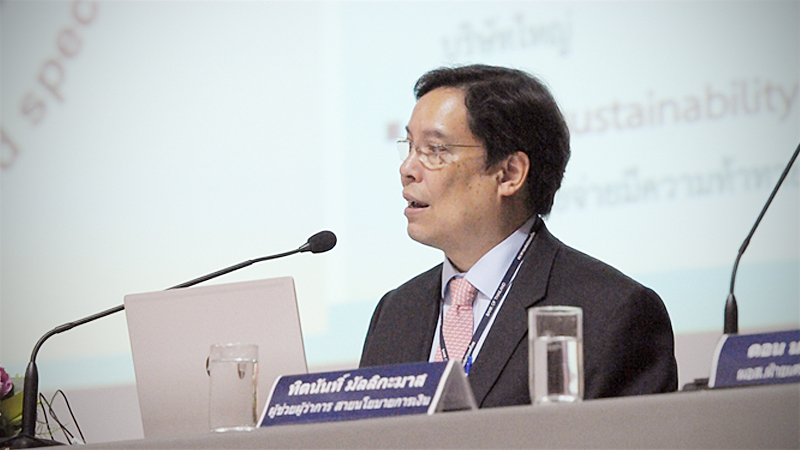
Titanun Mallikamas, assistant governor of the BOT's Monetary Policy Group, stated that the MPC had maintained the expansion rate of the Thai economy would be lower than the previous forecast.

Titanun Mallikamas, assistant governor of the BOT’s Monetary Policy Group, stated that the MPC had maintained the expansion rate of the Thai economy would be lower than the previous forecast.
By The Nation

The Monetary Policy Committee (MPC) of the central bank said it stands ready to use policy tools as appropriate and monitor structural problems which should be firmly addressed by all related parties.

The statement was made on Tuesday (January 7) at the central bank and analysts’ meeting at the Bank of Thailand (BOT)’s headquarters amid rising concerns over the baht’s exchange rate moving beyond economic fundamentals.

Titanun Mallikamas, assistant governor of the BOT’s Monetary Policy Group, stated that the MPC had maintained the expansion rate of the Thai economy would be lower than the previous forecast.

However, the global economic outlook has started to stabilise. As a result, Thai exports and economic growth will tend to improve in 2020, he said.

Furthermore, an accommodative monetary policy during the recent period will support economic growth and bring the rise of headline inflation towards the targeted rate.

The committee will monitor economic growth, inflation, and financial stability as well as associated risks, in deliberating monetary policy going forward.

The committee said it stands ready to use policy tools as appropriate.

The committee expressed concerns over the appreciation of the baht against trading partners and competitors’ currencies even though the appreciation of the baht has slowed down and recently, its movement has been more two-way. Therefore, the committee suggested closely monitoring exchange rates and capital flows amid elevated external uncertainties as well as the effectiveness of the relaxation of foreign exchange regulations to encourage capital outflows. It will also assess the necessity of implementing additional measures.

The overall Thai financial system is stable but it has continued accumulating vulnerabilities because of an economic slowdown and the prolonged low interest rate. The committee believed that the policy interest rate as well as microprudential and macroprudential measures should be applied in controlling the risk to the stability of the financial system.

The committee thinks that the Thai economy is facing structural problems which should be firmly addressed by all related parties. In the labour sector, for example, the emergence of the ageing society has reduced the number of working population.

More businesses replaced human labour with automation. Employment has been more of outsourcing and sub-contracting. Workers from these kinds of jobs are less stable and endowed with less welfare than the permanent worker. Moreover, it is more difficult for laid-off workers to return to the labour market, especially aged and skills-mismatch workers.

In the investment sector, the continued increase in the current account surplus reflects the structural problem: there is high savings but low investment, especially in the business sector.

Compared to other countries, the Thai investment rate is lower although the savings have continually increased. Therefore, we should encourage both public and private investment which will increase economic growth in the short term and enhance the potential of economic growth in the long term, added the statement.

วันที่ 31 ส.ค. 2562 ข่าวเศรษฐกิจ-ธุรกิจ #ศาสตร์เกษตรดินปุ๋ย

#ศาสตร์เกษตรดินปุ๋ย : ขอบคุณแหล่งข้อมูล : หนังสือพิมพ์โพสต์ทูเดย์

https://www.posttoday.com/economy

'วีรศักดิ์' ตามงานโครงการ 'สมาร์ทวิลเลจออนไลน์'

‘วีรศักดิ์’ ตามงานโครงการ ‘สมาร์ทวิลเลจออนไลน์’

ลงพื้นที่โคราชดูความพร้อม ‘ชุมชนเครื่องปั้นดินเผาด่านเกวียน’ ปั้นต้นแบบหมู่บ้านอี-คอมเมิร์ซ พร้อมเชื่อมยุทธศาสตร์ ‘นครชัยบุรินทร์’ สร้างความเข้มแข็งเศรษฐกิจภูมิภาคทั่วประเทศ

วันที่ 31 ส.ค. 2562 เวลา 18:00 น.

ข่าวเศรษฐกิจ-ธุรกิจ

'จุรินทร์' ลงพื้นที่สงขลา เดินหน้านโยบายผลักดันผลไม้ไทยสู่ผลไม้โลก

‘จุรินทร์’ ลงพื้นที่สงขลา เดินหน้านโยบายผลักดันผลไม้ไทยสู่ผลไม้โลก

นำทีมกระทรวงมหาดไทย-คมนาคม พร้อมคณะ ติดตามผลการเพิ่มช่องทางจำหน่าย/บริการขนส่งผลไม้จากมือชาวสวนสู่ตลาดโลก พร้อมกำชับ 60 ทูตพาณิชย์ทำหน้าที่เซลแมนแบ่งกลุ่มดูแลพืชเกษตรอย่างใกล้ชิด

วันที่ 31 ส.ค. 2562 เวลา 16:00 น.

ข่าวเศรษฐกิจ-ธุรกิจ

ครึกครื้น! จุรินทร์ ดันเด็กใต้สร้างแรงบันดาลใจ เป็นนักขายออนไลน์ ต่อยอดธุรกิจ

ครึกครื้น! จุรินทร์ ดันเด็กใต้สร้างแรงบันดาลใจ เป็นนักขายออนไลน์ ต่อยอดธุรกิจ

รมว.พาณิชย์ นำคณะพบเยาวชน 5จังหวัดชายแดนใต้ ปั้นหลักสูตรการค้าออนไลน์รุ่นใหม่ ปะทะพ่อค้าเน็ตไอดอล ‘ฮาซันอาหารทะเล’ ร่วมแลกเปลี่ยนเทคนิคไลฟ์ขายสินค้าให้เงินเข้าบัญชี 2 แสนบาทใน 20 นาที

วันที่ 31 ส.ค. 2562 เวลา 15:00 น.

ข่าวเศรษฐกิจ-ธุรกิจ

เปิดวันแรกคึกคัก ‘เซ็นทรัล วิลเลจ’ ลูกค้ารอเปิดประตูแน่นกว่า 2,000 คน

เปิดวันแรกคึกคัก ‘เซ็นทรัล วิลเลจ’ ลูกค้ารอเปิดประตูแน่นกว่า 2,000 คน

‘ซีพีเอ็น’ เคลียร์ทางเข้าออกโครงการฯโล่ง เปิดให้บริการวันแรกคนแห่รอช้อปเพียบ ร้านค้าเอาท์เล็ตจัดหนักลักชัวรี แบรนด์เนมนำสินค้าหมดซีซัน ลดราคา 35-70%

วันที่ 31 ส.ค. 2562 เวลา 14:36 น.

ข่าวเศรษฐกิจ-ธุรกิจ

รถยนต์ไฟฟ้า...เปลี่ยนความท้าทายในธุรกิจน้ำมันให้กลายเป็นโอกาส

รถยนต์ไฟฟ้า…เปลี่ยนความท้าทายในธุรกิจน้ำมันให้กลายเป็นโอกาส

Economic Intelligence Center (EIC) ธนาคารไทยพาณิชย์ จำกัด (มหาชน)

วันที่ 31 ส.ค. 2562 เวลา 12:00 น.

ข่าวเศรษฐกิจ-ธุรกิจ

'หมูไทย' เนื้อหอม!! รับออเดอร์จีน-ฮ่องกงเพียบ

‘หมูไทย’ เนื้อหอม!! รับออเดอร์จีน-ฮ่องกงเพียบ

ยอดส่งออกหมูไทยไปฮ่องกงในเดือนก่อนสูงขึ้น40% หลังจากไทยมีระบบป้องกันโรค ASF เข้มต่อเนื่อง ด้านเอกชนร่วมมือลงขันกองทุนต่อต้านโรคในหมูจูงใจเกษตรกรหากพบต้องรีบแจ้งภาครัฐ รับตลาดสดใสต่อเนื่องอีก2ปี

วันที่ 31 ส.ค. 2562 เวลา 10:00 น.

ข่าวเศรษฐกิจ-ธุรกิจ

วันที่ 30 ส.ค. 2562 ข่าวเศรษฐกิจ-ธุรกิจ #ศาสตร์เกษตรดินปุ๋ย

#ศาสตร์เกษตรดินปุ๋ย : ขอบคุณแหล่งข้อมูล : หนังสือพิมพ์โพสต์ทูเดย์

https://www.posttoday.com/economy

กสทช. เผย 38 ประเทศเอเชียแปซิฟิก ถกการใช้คลื่นความถี่

กสทช. เผย 38 ประเทศเอเชียแปซิฟิก ถกการใช้คลื่นความถี่

ประชุมใหญ่’APG19-5′ เผยประเด็นร้อนร่วมหารือคลื่นความถี่สำหรับกิจการเคลื่อนที่สากลรองรับ 5G – 6G ด้านวงการดาวเทียมรวมตัวเสนอใช้ย่านความถี่นอกอวกาศ หวังใช้ประโยชน์จาก SpaceX ของ Elon Musk

วันที่ 30 ส.ค. 2562 เวลา 19:45 น.

ข่าวเศรษฐกิจ-ธุรกิจ

สวัสดีชาวทวิตเตอร์!! โชว์ 10 อันดับแบรนด์มาแรง

สวัสดีชาวทวิตเตอร์!! โชว์ 10 อันดับแบรนด์มาแรง

แอคเคานท์แบรนด์ ‘AIS’ ยืนหนึ่งต่อเนื่อง ชี้เทรนด์เจ้าของสินค้าหันใช้ทวิตเตอร์สื่อสารผู้บริโภคคนรุ่นใหม่สูงขึ้น รับกระแสการ ‘ทวีต’ หนักมากพุ่งกว่า 1.4 พันล้านข้อความในปีที่ผ่านมา

วันที่ 30 ส.ค. 2562 เวลา 17:00 น.

ข่าวเศรษฐกิจ-ธุรกิจ

แฮปปี เอนดิง!! 'เซ็นทรัล วิลเลจ' หลังศาลปกครองมีคำสั่งคุ้มครองชั่วคราว

แฮปปี เอนดิง!! ‘เซ็นทรัล วิลเลจ’ หลังศาลปกครองมีคำสั่งคุ้มครองชั่วคราว

โครงการฯพร้อมเปิดสบายๆ ตามแผนเดิม 31 สิงหาคมนี้ ภายหลังศาลปกครองมีคำสั่งให้ ทอท.ถอนสิ่งกีดขวางออกจากทางเข้า-ออก พร้อมให้ยุติการรบกวนทุกด้าน

วันที่ 30 ส.ค. 2562 เวลา 16:55 น.

ข่าวเศรษฐกิจ-ธุรกิจ

กรอ. รับนโยบาย “สุริยะ” ร่วมขับเคลื่อน 5 เครื่องยนต์อุตสาหกรรมไทยสู่ความยั่งยืน

กรอ. รับนโยบาย “สุริยะ” ร่วมขับเคลื่อน 5 เครื่องยนต์อุตสาหกรรมไทยสู่ความยั่งยืน

เจ้ากระทรวงอุตฯ ตรวจเยี่ยมกรมโรงงานอุตสาหกรรม ให้เร่งพัฒนาอุตสาหกรรมไทยสร้างความเชื่อมั่นนักลงทุน เผยรอบ 8 เดือนนักลงทุนไทย-เทศ ขออนุญาตตั้งโรงงานใหม่-ขยายกิจการในพื้นที่ EEC เฉียด 8 หมื่นล้านเพิ่มขึ้น 107%

วันที่ 30 ส.ค. 2562 เวลา 16:00 น.

ข่าวเศรษฐกิจ-ธุรกิจ

ตลาดการบินปี62สุดว้าเหว่ โตต่ำสุดในรอบ 10 ปี จากพิษสงครามการค้าฉุดเที่ยวไทย

ตลาดการบินปี62สุดว้าเหว่ โตต่ำสุดในรอบ 10 ปี จากพิษสงครามการค้าฉุดเที่ยวไทย

บวท. ตั้งโต๊ะแถลงแนวโน้มตลาดการบินปีนี้วูบหนัก หวั่นท่องเที่ยวไทยปีหน้าทรุดต่อเนื่อง เหตุเศรษฐกิจไทยชะลอตัว พร้อมแจง ‘เซ็นทรัลวิลเลจ’ไม่กระทบการบินสุวรรณภูมิ ทดสอบบินแล้วไร้อุปสรรค

วันที่ 30 ส.ค. 2562 เวลา 14:08 น.

ข่าวเศรษฐกิจ-ธุรกิจ

สุดว้าวครั้งแรกในไทย!! จุดพักรถพลังงานแสงอาทิตย์

สุดว้าวครั้งแรกในไทย!! จุดพักรถพลังงานแสงอาทิตย์

บีซีพีจี ผนึก แสนสิริ ล้ำหน้าเปิดตัว “Bangkok’s First Solar Bus Stop with Wireless Charger” พร้อม “Solar Bin” ถังขยะบีบอัดอัจฉริยะ เดินหน้าสู่ต้นแบบชุมชนพลังงานสีเขียว ที่ T77

วันที่ 30 ส.ค. 2562 เวลา 13:51 น.

ข่าวเศรษฐกิจ-ธุรกิจ

ขนทัพสินค้าเกษตรเกรดพรีเมี่ยม ร่วมงานเกษตรสร้างชาติ ครั้งที่2

ขนทัพสินค้าเกษตรเกรดพรีเมี่ยม ร่วมงานเกษตรสร้างชาติ ครั้งที่2

กรมส่งเสริมการเกษตร คัดสุดยอดสินค้าเกษตรเกรดพรีเมี่ยมจากผลงานส่งเสริมเกษตรทั่วประเทศมาร่วมแสดง หวังพัฒนาความสามารถ Young Smart Farmer เกษตรกรไทยรุ่นใหม่

วันที่ 30 ส.ค. 2562 เวลา 13:26 น.

ข่าวเศรษฐกิจ-ธุรกิจ