SET shows slight rise before bourses close for the holidays #ศาสตร์เกษตรดินปุ๋ย

#ศาสตร์เกษตรดินปุ๋ย : ขอบคุณแหล่งข้อมูล : หนังสือพิมพ์ The Nation

https://www.nationthailand.com/business/30379791?utm_source=category&utm_medium=internal_referral

SET shows slight rise before bourses close for the holidays

Dec 24. 2019
Market summary of SET’s Monday trade

Market summary of SET’s Monday trade
By The Nation

1,070 Viewed

The easing of the trade war is positive for the SET though the long holiday will result in the market becoming quiet, say analysts.

Easing of trade tension between the United States and China as well as rising crude oil prices have improved sentiment on Thai stocks, according to Tisco Market Insight report.

The Stock Exchange of Thailand Index rose slightly by 0.65 point to close at 1,573.57 on Monday (December 23).

The SET Index will hover around the 1,580-90 barrier but find it hard to pass over it, Tisco analysts said today (December24).

They suggest fundamental stocks such as BBL which is expected to make profits worth of Bt 4 billion in the final quarter of this year.

Stocks benefitting l from trade tension and rebound of oil prices include HANA, PTTEP, PTTGC, SCC and IRPC. High liquidity stocks targeted by Long-term Equity Fund (LTF) and Retirement Mutual Fund (RMF) are AOT, BDMS, BJC, CPALL,PTT, KBANK, SCB and VGI. They also suggested to look for investment opportunities in ADVANC, INTUCH, AP, QH, LH, BBL, KKP, SCB, MAJOR, SCC, TTW, TVO, as these stock prices could rise in the first quarter of next year.

U.S. stocks face 50% odds of correction in 2020, Vanguard’s Davis says #ศาสตร์เกษตรดินปุ๋ย

#ศาสตร์เกษตรดินปุ๋ย : ขอบคุณแหล่งข้อมูล : หนังสือพิมพ์ The Nation

https://www.nationthailand.com/business/30379790?utm_source=category&utm_medium=internal_referral

U.S. stocks face 50% odds of correction in 2020, Vanguard’s Davis says

Dec 24. 2019
By Syndication Washington Post, Bloomberg · Joanna Ossinger 

871 Viewed

U.S. stocks face a greater-than-usual risk of a sell-off next year, with investors overconfident in an economic resurgence, according to Vanguard Group’s investment-strategy chief.

“Financial markets run the risk of getting ahead of themselves,” Joseph Davis, who also serves as Vanguard’s chief economist, said in an interview Friday. He sees 50% odds on a correction in 2020, against what he terms a more typical figure of about 30%.

A correction is often defined as a 10% drop, and the S&P 500 Index hasn’t seen one since December 2018, when it came a hair’s breadth from entering a bear market — that is, recording a decline of 20% from the peak.

While this year investors were too pessimistic about recession odds, next year they’ll be too optimistic on reflation, Davis said. He also sees a pick-up in U.S. equity volatility from “unsustainably low” levels

“Across the board, expected returns for most strategies are below trailing three-year returns,” said Davis. The investment chief for the $5.6 trillion asset manager — known more for its passive, index-tracking offerings — estimates that risk assets are pricing in close to 3% U.S. economic growth, an outcome he sees as unlikely.

Vanguard isn’t alone in expressing caution, as hedge funds and some others wonder if there’s now too much optimism priced into assets. Others see another year of gains in equities, if not on the order of this year’s 28.5% advance through Dec. 20.

Davis said U.S. equities have broken out onto the expensive side of fair value on their price-to-earnings ratio, a measure Vanguard prefers rather than identifying target levels on indexes.

Davis said he’d consider value stocks if he were putting active money to work now, and also sees mortgages looking “a little more attractive than they have for some time.” But it might be better to keep the powder dry for now, heading into 2020, as “there will be better entry points,” he said.

Banks stock up on cash #ศาสตร์เกษตรดินปุ๋ย

#ศาสตร์เกษตรดินปุ๋ย : ขอบคุณแหล่งข้อมูล : หนังสือพิมพ์ The Nation

https://www.nationthailand.com/business/30379787?utm_source=category&utm_medium=internal_referral

Banks stock up on cash

Dec 24. 2019
By THE NATION

1,401 Viewed

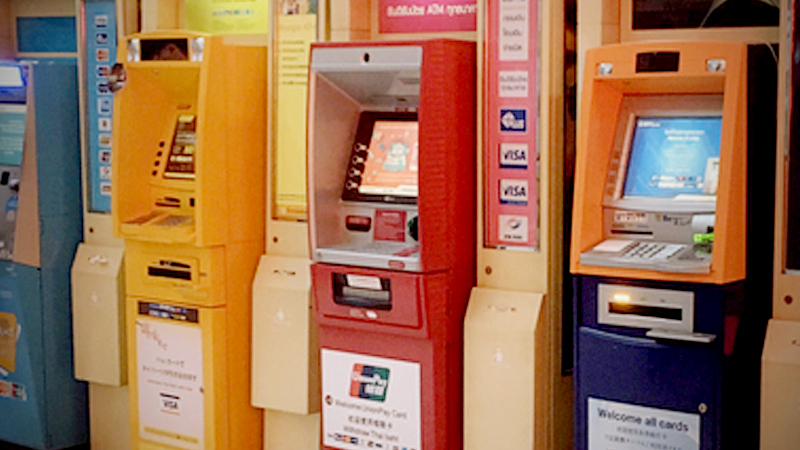
Bangkok Bank today (December 24) said it has prepared more than Bt30 billion in cash reserves at 10,000 ATMs nationwide to serve customers during the New Year holiday.

Digital and online services such as Bualuang Phone 1333 and 0-2645-5555, Bualuang iBanking, Bualuang mBanking and QR Code payment would also be fully operational and the bank’s 300 micro branches in shopping malls will be open for business every day during the holiday.

The bank will be open on Monday December 30 and resume normal operations on Thursday January 2.

CIMB Thai Bank has prepared cash reserves of Bt250 million at its ATMs and branches.

Kasikonrbank plans to allocate cash reserves worth Bt45.8 billion for KBank branches and K-ATMs during the holidays. Of that total, Bt11.8 billion is for branches nationwide, including Bt4.5 billion for branches in Bangkok and the remaining Bt7.3 billion for those in other provinces. Currently, KBank has a total of 900 branches nationwide. A total of Bt34.0 billion is reserved for over 8,200 K-ATMs across the country, Bt15.0 billion of which for K-ATMs in Bangkok and the remaining Bt19.0 billion for K-ATMs in other provinces.

Siam Commercial Bank (SCB) has earmarked a cash reserve of Bt63 billion of which Bt42 billion is for ATMs and Bt21 billion for branches. As of November this year SCB had 698 branches and 9,373 ATMs nationwide.

U.S. stocks advance, treasuries fall in light volumes #ศาสตร์เกษตรดินปุ๋ย

#ศาสตร์เกษตรดินปุ๋ย : ขอบคุณแหล่งข้อมูล : หนังสือพิมพ์ The Nation

https://www.nationthailand.com/business/30379778?utm_source=category&utm_medium=internal_referral

U.S. stocks advance, treasuries fall in light volumes

Dec 24. 2019
File Photo/ Getty Images

File Photo/ Getty Images
By Syndication Washington Post, Bloomberg · Randall Jensen, Vildana Hajric 

1,015 Viewed

U.S. stocks edged to fresh record highs in light trading as investors chased gains that have added more than $5 trillion to valuations this year. Treasuries declined.

The S&P 500 gained for the eighth time in nine sessions, notching another all-time high after China said it cut tariffs on a wide range of goods. The holiday week took a toll on the benchmark’s volume, which was more than 20% below its 100-day average for most of the day. The Dow Jones Industrial Average paced indexes as Boeing Co. surged after the company ousted Chief Executive Officer Dennis Muilenburg.

Ten-year Treasury yields rose to around 1.93%, 16 basis points higher than where it started the month. The dollar headed for only its fourth monthly decline of the year, while the pound padded its worst week in more than two years amid Brexit fears.

“It’s a combination of low volume but also the fact that you’ve seen some progress with China, and it’s really causing the bulls to jump in here,” Dunkin Allison, director of portfolio management at Delegate Advisors, said by phone. “We don’t see a lot of selling pressure today.”

Major asset classes are collectively on track for the best returns in a decade in 2019 after central banks around the world eased monetary policy. Trade tensions have also eased ahead of the year-end, calming investors’ nerves. The signing of the first-phase of the U.S.-China trade deal is set for January.

Meanwhile, Chinese shares dropped after a state-backed fund said it would pare its stakes in some tech companies.

Here are some events to watch for this week:

–Chinese Premier Li Keqiang hosts a summit with Japanese Prime Minister Shinzo Abe and South Korean President Moon Jae-in Tuesday in Chengdu, focused on trade.

–Most stock markets close Wednesday for Christmas. Australia, Canada, Germany and U.K. markets also shut on Dec. 26.

–U.S. jobless claims on Thursday.

–Japan retail sales and industrial production are scheduled for Friday.

–China industrial profits also on Friday.

These are the main moves in markets:

Stocks

–The S&P 500 index gained 0.1% as of 4 p.m. in New York.

–The Stoxx Europe 600 index was little changed.

–The U.K.’s FTSE 100 index advanced 0.5%.

–The MSCI Emerging Market index increased 0.3%.

Currencies

–The Bloomberg Dollar Spot index was little changed.

–The euro increased 0.1% to $1.1092.

–The British pound declined 0.4% to $1.2944.

–The Japanese yen rose 0.1% to 109.36 per dollar.

Bonds

–The yield on 10-year Treasuries rose one basis point to 1.93%.

–Germany’s 10-year yield gained less than one basis point to -0.24%.

–Britain’s 10-year yield sank one basis point to 0.771%.

Commodities

–West Texas Intermediate crude rose 0.5% at $60.73 a barrel.

–Gold added 0.6% to $1,489.30 an ounce.

Decrease in November exports, but some products witness increased sales #ศาสตร์เกษตรดินปุ๋ย

#ศาสตร์เกษตรดินปุ๋ย : ขอบคุณแหล่งข้อมูล : หนังสือพิมพ์ The Nation

https://www.nationthailand.com/business/30379773?utm_source=category&utm_medium=internal_referral

Decrease in November exports, but some products witness increased sales

Dec 24. 2019
By The Nation

2,365 Viewed

Thailand’s November exports witnessed a drop of 7.39 per cent compared to the same period last year, with the trade value being US$19.7 billion (Bt593.5 billion) while exports in the first 11 months of this year totalled $227.09 billion. The value of imports was $218.08 billion, with a surplus balance of trade being $9 billion.

Exports still maintained a higher value compared to other countries in the region, including South Korea, Indonesia and Singapore.

One temporary factor that led to decreased exports of oil and related products came from oil refinery maintenance at the end of the year, causing a reduction by 27 per cent in exports of oil, plastic beads and chemical products. Oil refineries under maintenance will resume production at the beginning of 2020.

Oil-related products saw a decrease in exports to China, Malaysia, Vietnam, Cambodia and Indonesia, but expanded in Pakistan.

The impact of the US-China trade war on Thailand’s exports has stabilised and this can be seen from the fact that the kingdom exports many products to the US and Chinese markets.

The value of exports of agricultural products declined by 3.6 per cent compared to the same period last year. Major agricultural products that have seen higher sales are sugar, which grew 105.3 per cent, expanding in markets such as Indonesia, Sudan, China, Cambodia and Vietnam.

Frozen, processed and fresh chicken grew by 10.4 per cent, with increased sales to Japan, the United Kingdom, China, South Korea and Malaysia. Meanwhile, exports of fresh, chilled, frozen, canned and processed fruits and vegetables grew by 7 per cent in the Chinese, US, Hong Kong, Indonesian and Australian markets.

Beverages witnessed 3.8 per cent growth, with increased sales to Cambodia, Myanmar, China, Indonesia and Japan.

However, cassava products decreased by 37.3 per cent, shrinking in the Chinese, Japanese, Indonesian, Taiwan and US markets but expanding well in Vietnam and the Netherlands.

Rice, too, went down by 31.4 per cent, with reduced sales to China, South Africa, Hong Kong, Japan and Singapore, but exports to the US, Cameroon and Angola increased.

Rubber dropped by 18.4 per cent, seeing decreased exports to China, Japan, South Korea, India and Brazil, but expanding in Malaysia, the US and Turkey.

Frozen shrimp and processed shrimp also dropped – by 9.1 per cent – witnessing reduced exports to the US, Japan, Australia, Canada and South Korea, but saw increased sales to China, Malaysia and Myanmar.

Additionally, the export value of industrial products dropped by 6.4 per cent. Major products which performed well were furniture and related parts, which grew 26.4 per cent, expanding in the Chinese, US, Malaysian, Vietnamese and Philippines markets.

Cars, equipment and parts saw a reduction of 15.6 per cent, dropping in the Australian, Philippine, Japanese, Indonesian and Malaysian markets but expanding well in Vietnam, China and Saudi Arabia.

Gold decreased by 8.5 per cent, seeing reduced exports to Cambodia, Singapore, Taiwan, Bangladesh, and Italy but expanding in Switzerland, Myanmar and South Korea.

Exports to the US decreased by 2.6 per cent. Major products that saw a reduction in exports included iron and steel products and electrical circuits, while high-growth export products included semiconductors, furniture, and rubber products

The EU market (15 countries) saw a decline by 8.2 per cent. Major products that went down were automobiles and parts.

Exports to Japan fell by 10.9 per cent. Major products that declined were telephones and accessories, plastic beads, cars and components, televisions and components, and machinery, while air conditioners witnessed high growth.

Exports to the Chinese market grew by 2.3 per cent. Automobiles and related components, fresh, frozen and dried fruit, combustion engines and sugar saw increased sales.

The Asean market of five countries went down by 11.1 per cent. Refined oil, computers, automobiles and related parts, machinery and plastic beads witnessed slowing sales, while exports of gems and jewellery increased.

The Indian market also saw a reduction of 14.1 per cent. Chemical products, televisions and components, cars and parts, and copper saw lower sales, while the high-growth products included gems and jewellery.

New Year gift in store for SMEs, says Somkid #ศาสตร์เกษตรดินปุ๋ย

#ศาสตร์เกษตรดินปุ๋ย : ขอบคุณแหล่งข้อมูล : หนังสือพิมพ์ The Nation

https://www.nationthailand.com/business/30379762?utm_source=category&utm_medium=internal_referral

New Year gift in store for SMEs, says Somkid

Dec 24. 2019
Deputy PM Somkid Jatusripitak

Deputy PM Somkid Jatusripitak
By THE NATION

1,733 Viewed

As a New Year gift to Small and Medium-sized Enterprises (SMEs), Deputy Prime Minister Somkid Jatusripitak said on Monday (December 23) that he had ordered the setup of a working panel, tasked with preparing support measures to ease their financial burden.

The committee will comprise representatives from the Finance Ministry, Bank of Thailand, the Thai Bankers’ Association and the private sector. The measures are expected to be submitted to the Cabinet on January 7, 2020.

SME owners will return from their New Year break to good news, Somkid said.

He added that Prime Minister Prayut Chan-o-cha had asked related parties to look into the procurement law, in order to seek access for SMEs to participate in bidding for state projects.

U.S. new-home sales rise to cap best three months since 2007 #ศาสตร์เกษตรดินปุ๋ย

#ศาสตร์เกษตรดินปุ๋ย : ขอบคุณแหล่งข้อมูล : หนังสือพิมพ์ The Nation

https://www.nationthailand.com/business/30379772?utm_source=category&utm_medium=internal_referral

U.S. new-home sales rise to cap best three months since 2007

Dec 24. 2019
By Syndication Washington Post, Bloomberg · Vince Golle 

1,352 Viewed

Sales of new U.S. homes increased in November, capping the best three months for demand since 2007 and reflecting sustained momentum in a residential real estate market that’s helping to underpin the economy.

Single-family home sales rose 1.3% to a 719,000 annualized pace from a downwardly revised October, government data showed Monday. In the three months through November, purchases averaged a 720,000 pace, the strongest in 12 years. An index of U.S. homebuilder stocks pared losses following the report.

Increased demand for new homes is being fueled by historically cheap borrowing costs, the lowest jobless rate since the 1960s and stronger income growth. The strength in housing should continue to fuel gains in residential construction, a direct input into the government’s calculation of gross domestic product.

At the same time, low supplies continue to put upward pressure on prices, offsetting some of the boost in affordability from low interest rates and wage gains. The median sales price of a new home increased 7.2% from a year earlier to $330,800 in November.

Following a separate report Monday showing a slight gain in core capital goods orders, the home-sales figures underscore consumer-led economic growth as business- investment cutbacks restrain manufacturing.

Data last week showed sales of previously owned homes, which make up the vast majority of the market, declined in November as lean inventory continued to restrain an industry with otherwise solid growth. New-home sales are considered a timelier barometer than those of previously- owned homes, which are calculated when contracts close.

Purchases of new homes rose in two of four U.S. regions, led by a 52.4% surge in the Northeast and a 7.5% gain in the West, which recorded its highest sales level in two years.

Economists in Bloomberg’s survey projected an annualized pace of 732,000 new-home sales for November after a previously reported 733,000 a month earlier. Estimates ranged from 696,000 to 765,000.

The supply of homes at the current sales rate dropped to 5.4 months from 5.5 months in November. The number of new homes for sale held at 323,000.

The number of properties sold for which construction hadn’t yet started increased, while the number of partially built dwellings climbed to the highest level since July 2016. The figures indicate a robust pipeline for homebuilders.

Changes in the seasonally adjusted data are volatile and have a wide margin of error. There’s a 90% chance that the monthly percentage change was between a 9.7% decline and a 12.3% increase, according to the U.S. Census Bureau. The report is published jointly by Census and the Department of Housing and Urban Development.

Blockchain, alternative energy to disrupt power industry #ศาสตร์เกษตรดินปุ๋ย

#ศาสตร์เกษตรดินปุ๋ย : ขอบคุณแหล่งข้อมูล : หนังสือพิมพ์ The Nation

https://www.nationthailand.com/business/30379763?utm_source=category&utm_medium=internal_referral

Blockchain, alternative energy to disrupt power industry

Dec 24. 2019
 Several manufacturers and retailers such as Tesco and BigC have deployed solar cell panels on their rooftops, says Prasit Siritiprussamee, director of engineering and regulatory department at the office of the Energy Regulatory Commission.

Several manufacturers and retailers such as Tesco and BigC have deployed solar cell panels on their rooftops, says Prasit Siritiprussamee, director of engineering and regulatory department at the office of the Energy Regulatory Commission.
By Wichit Chaitrong

The Nation

2,405 Viewed

The arrival of blockchain technology and alternative energy will disrupt the current electricity generating and trading system, say experts.

As the slide in solar cell price continues with increasing numbers of businesses and households turning to solar energy, power supply and consumption will see a dramatic change.

Several manufacturers and retailers such as Tesco and BigC have deployed solar cell panels on their rooftops, said Prasit Siritiprussamee, director of engineering and regulatory department at the office of the Energy Regulatory Commission.

Should storage technology progress, then it would disrupt the way we produce and trade electricity, he said at seminar recently hosted by the Economic Reporters Association.

Currently, Electricity Generating Authority of Thailand(Egat) is the only   buyer of power from large plants. However, in the near future, there would be multiple buyers while a large number of households will also become  electricity producers, he said.

Blockchain technology will lead to a new system of electricity trading where peer to peer transaction is a possibility as opposed to  producers selling only to Egat.

There are eight peer to peer energy trading projects being tested in sandbox experiment by the Energy Regulatory Commission. Small production has the advantage of staying closer to consumers, meaning that energy loss and energy transmission cost is lower.

“About 200 applicants filed for the sandbox experiment but only eight were accepted. We figured that the rest could learn from these pilot projects. Also, it would spare them the expenses involved in an experiment,” he said.

The new way of electricity production and trading have the potential to disrupt the existing system.

If more small producers join in, large electricity generating plants run by state enterprises would have to reduce production capacity which might affect their previous investments.

Those who still buy electricity from the Metropolitan Electricity Authority and Provincial Electricity Authority might have to shoulder higher cost of excessive investment in large electricity plants.

Prasit said that regulators must ensure a smooth transition to the scenario of multiple-producers and buyers of electricity. Asked about when the big change will happen, he replied that nobody know what would happen after the next three years,

Sathapon Patanakuha, CEO and founder of Smart Contract, said his company has been facilitating peer to peer energy trading among households and factories via blockchain technology. Home owners could sell and buy electricity produced by roof top solar panels among themselves.

Alternative energy, mainly solar energy, is estimated to account for 9 per cent of total supply in Thailand.

It remain a small proportion but growing fast, Sathapon said.

Meanwhile, Veerapol Chirapraditkul, director of the Energy Fund Administration Institute, said state enterprises must get a fare share from previous investment in electricity infrastructure because new producers will still depend on power lines and other facilities for energy trade.

SET index barely up at 0.04% #ศาสตร์เกษตรดินปุ๋ย

#ศาสตร์เกษตรดินปุ๋ย : ขอบคุณแหล่งข้อมูล : หนังสือพิมพ์ The Nation

https://www.nationthailand.com/business/30379759?utm_source=category&utm_medium=internal_referral

SET index barely up at 0.04%

Dec 23. 2019
By The Nation

909 Viewed

The SET Index on Monday (December 23) closed at 1,573.57, barely changing from Friday’s close, up 0.04 per cent with turnover of Bt42.9 billion. KSecurities predicts resistance at 1,590 and 1,600 for this week.

Investors were disappointed with November exports, which declined by 7.39 per cent year-on-year to US$19.7 billion (Bt593.5 billion), compared to market forecasts of a 4.5 per cent decrease and following a 4.5 per cent drop in October. Total exports between January and November shrank 2.8 per cent from the corresponding period a year earlier. The Commerce Ministry predicts exports will grow by 3 per cent this year, while most research houses forecast negative growth.

Regarding the SET index outlook for this week until December 27, Kasikorn Securities expects the SET to touch 1,565 to 1,555 points, but face resistance at 1,590 to 1,600 points. The key issues to watch include November exports, year-end window dressing, the US-China trade situation and Brexit. Important US indicators include November new home sales and durable goods orders. Other international factors that warrant close monitoring include the latest Bank of Japan minutes, Japan’s November industrial production and retail sales, plus China’s November industrial profits.

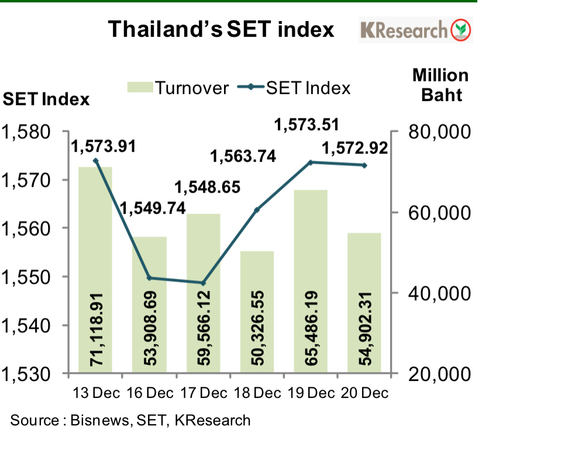
The SET index on Friday closed near previous week’s level, ending at 1,572.92 points, down 0.06 per cent over the week. The average daily trading value was Bt56.8 billion, down 4.32 per cent over-week. The MAI closed at 310.49 points, down 1.4 per cent over-week. The SET index dropped early in the week on sell-offs by foreign and institutional investors amid concerns over domestic political issues, although there were signs of easing trade tensions between the US and China.

However, the SET rebounded midweek, supported by large-cap stock purchases, especially in the banking and telecommunication sectors, as a result of window dressing and long-term equity funds as well as retirement mutual funds investment, added Kasikorn Securities.

Walking Street promotes Thai handmade products #ศาสตร์เกษตรดินปุ๋ย

#ศาสตร์เกษตรดินปุ๋ย : ขอบคุณแหล่งข้อมูล : หนังสือพิมพ์ The Nation

https://www.nationthailand.com/lifestyle/30379734?utm_source=category&utm_medium=internal_referral

Walking Street promotes Thai handmade products

Dec 23. 2019
By The Nation

1,869 Viewed

The Walking Street@Silom event organised by the ministries of Commerce and Culture is now wooing customers to take a look at Thai traditional handmade products from 30 brands.

Line Kram Saruda is one of 30 brands offering tie-dyeing shirts created by Saruda Kantawong, an artist and dyeing teacher, and Sirapob Boonsuk, a graphic designer.

Saruda said that her dyeing style is called Shibori, using rocks to make colour patterns. They have both taught their dyeing techniques for 3-4 years, charging only Bt2,500-3,500.

Maka Brand created by Suchada Khlongnakrop, a former programer, has received four stars from One Tambon One Product. The shop sells bags, baskets and key rings. All products are decorated with animal-shaped leather.

Maka also has hemp fabric hats and keychains, which have drawn the attention of foreign tourists.

Ban Nok Hook (House of Owls) provides fancy keychains in the shape of an owl, a lucky mascot for Japanese people. The brand was named after traditional network communities in Chom Thong district, Bangkok.

Donlapak Thanapan, owner of Ban Nok Hook, wants to distribute the income to communities and decided to hire the elderly to help assemble various parts of keychains.

The products have got very good responses, so the shop is expanding into a new product lines such as key covers, bags and T-shirts.

By Grandmama (Thai Dessert Soap by Grandmama) sells soap products that look like Thai desserts and tells their history.

The owner of the brand, Rungpailin Pinyokaew, chooses only natural ingredients to make soaps as she used to make for her family, bringing joy to her family.

The Ministry of Culture rewarded By Grandmama as the best product from Ratchaburi province in 2019.