Bangkok Bank enhances regional position with takeover of Indonesia’s Permata

#ศาสตร์เกษตรดินปุ๋ย : ขอบคุณแหล่งข้อมูล : หนังสือพิมพ์ The Nation

https://www.nationthailand.com/business/30379367?utm_source=category&utm_medium=internal_referral

Bangkok Bank enhances regional position with takeover of Indonesia’s Permata

Dec 12. 2019
By THE NATION

2,094 Viewed

Bangkok Bank Plc announced today (December 12) its entry into a conditional share purchase agreement with Standard Chartered Bank (Standard Chartered) and PT Astra International Tbk (Astra) to acquire their aggregate 89.12 per cent shareholding in Indonesian bank PT Bank Permata Tbk (Permata).

Transaction is expected to close within 2020, according to a Bangkok Bank statement.

The bank anticipates conducting a mandatory tender offer for the remaining 10.88 per cent stake in Permata following the completion of its acquisition of the 89.12 per cent stake.

The transaction will be effected on the basis of an agreed valuation of a 1.77 times multiple of Permata’s book value (subject to certain adjustments).

This implies, on the basis of Permata’s book value as at 30 September 2019, an indicative purchase price of 1,498 rupiah per share and an indicative transaction value of 37,430,974 million rupiah (approximately US$2,674 million or Bt81,017 million) for an 89.12 per cent stake at 42,001,080 million rupiah(approximately US$3,000 million or Bt90,909 million) for a 100 per cent stake.

The price payable for the 89.12 per cent stake in Permata will be finalised on the basis of a 1.77 times multiple of Permata’s book value (subject to certain adjustments), as set out in the last financial statements published by Permata prior to the closing of the transaction.

Completion of the transaction is subject to a number of conditions precedent including regulatory approvals from the Bank of Thailand and Otoritas Jasa Keuangan (OJK) and approval of the Bangkok Bank’s general meeting of shareholders.

The acquisition will be financed via a combination of internal resources and Bangkok Bank’s routine funding activities.

The acquisition is expected to be accretive to Bangkok Bank’s earnings per share and return on equity immediately post-completion, while the bank’s capital position is expected to remain robust following the transaction.

Bangkok Bank has the most extensive international network among Thai banks, with a presence in 14 international economies, and loans made through this network accounting for 17 per cent of its total loans.

Over the years, it has adopted a strategy of connecting the region to support its clients in their overseas expansion, and the bank’s international network has been an important factor in the continued growth of its business.

Permata is one of the leading commercial banks in Indonesia, with a sizeable presence across customer segments. With its leading retail deposit franchise and best-in-class digital capabilities, and led by its seasoned management team, Permata is well poised for growth post the recent restructuring.

The acquisition of Permata underlines the Bangkok Bank’s commitment to Indonesia, having been present here since 1968, and will further strengthen the Bangkok Bank’s position as a regional player with strong positioning in Thailand and Indonesia, the two largest markets in Asean.

Piti Sithi-Amnuai, Chairman of Bangkok Bank, said, “International expansion is our key strategy. Indonesia in particular is a key focus for us, as it is one of the fastest-growing major economies in Asia with highly attractive macroeconomic fundamentals, favorable demographics, and increasing Asean regional integration”.

Chartsiri Sophonpanich, President of Bangkok Bank, said: “Based on our first hand experience in Indonesia and deep understanding of the banking sector, we believe the Indonesian banking sector is poised to continue delivering attractive growth while maintaining healthy margins. Permata offers us a solid scalable platform with capabilities that complement our strategic objectives, including an extensive distribution network, a strong retail deposit franchise and brand, and advanced digital capabilities. We look forward to working with and supporting Permata’s management and employees to take Permata to the next level.”

Permata is currently the 12th largest bank in Indonesia by total assets, the acquisition by Bangkok Bank will allow it to tap Bangkok Bank’s expertise in corporate and SME banking, strong network and relationships with top corporates across Asia, as well as cross-border product and sectorial expertise.

Bangkok Bank will continue to support Permata’s customers by delivering high quality products and services, and promoting financial inclusion and financial literacy.

The bank is also committed to supporting corporates and SMEs across industries, including the agriculture and automotive sectors, in achieving their business goals.

“There are clear synergistic opportunities between the two platforms. With our broad presence in Asia, Bangkok Bank will bring cross-border capabilities across key Asian markets to Permata’s clients, which will be important given increasing regional integration, within Asean and with the Greater China region. I am also very pleased to see Astra remaining supportive of continuing the existing business and extending the relationship between Permata and Astra Group across platforms and products” Chartsiri added.

Bangkok Bank is being advised by Morgan Stanley.

Anantara enters third country in Europe via rebranding of Dublin hotel

#ศาสตร์เกษตรดินปุ๋ย : ขอบคุณแหล่งข้อมูล : หนังสือพิมพ์ The Nation

https://www.nationthailand.com/business/30379363?utm_source=category&utm_medium=internal_referral

Anantara enters third country in Europe via rebranding of Dublin hotel

Dec 12. 2019
By THE NATION

1,223 Viewed

Anantara Hotels, Resorts & Spas will make its debut in the upcoming months in Ireland with the rebranding of The Marker Hotel in Dublin, one of the Irish capital’s most modern and luxurious buildings.

The addition of the property in Dublin will represent the expansion of the luxury brand’s footprint into northwest Europe for the first time and also the first urban Anantara hotel in Europe.

The hotel is located in the Docklands, one of the most attractive and dynamic areas of the Irish capital, in the heart of Silicon Docks, a nod to Silicon Valley on account of the high concentration of multinational high-tech companies located in the area.

Close to the International Financial Services Centre (IFSC) and the Bord Gáis Energy Theatre, the hotel is a perfect cultural and business epicentre for travellers’ keen to experience Ireland’s famous hospitality at its best. The Marker is the only five-star hotel in the area, which has recently emerged as one of the most vibrant and modern parts of the city for living, working and socialising.

Owned by Deka Immobilien, one of Europe’s leading real estate investment managers, and a member of Leading Hotels of the World, The Marker Hotel has a futuristic design and style and offers 187 contemporary guest rooms over six floors (166 deluxe rooms, 18 executive rooms and three suites) plus eight state-of-the-art event and meeting facilities.

Services such as an award-winning spa, named Irish Tatler Dublin Spa of the year several times, and stylish rooftop terrace with stunning panoramic 360º views and the restaurant La Brasserie, recently named Best Hotel Restaurant in Dublin by the Restaurant Association of Ireland (RAI), are part of the experience of The Marker Hotel.

“We are thrilled to announce the expansion of our luxury Anantara brand into northwest Europe in the fair city of Dublin. The Marker Hotel is already known as one of the city’s leading hotels and bringing the reputation and luxury touch points of Anantara to the property will further elevate the guest experience,” commented Dillip Rajakarier, CEO of Minor Hotels, parent company of Anantara Hotels, Resorts & Spas.

Ramón Aragonés, CEO of NH Hotel Group, operators of Anantara in Europe, under the guidance and brand oversight of Minor Hotels, said that “this agreement will enable us to bring a truly different value proposition to the Irish market for the first time. The Anantara brand will connect travellers with genuine experiences in a privileged location in the city of Dublin.”

In the surrounding area visitors to the city can enjoy a walk through the culture and heritage of the Docklands, which dates back to the eighteenth century, a wide range of options for foodie travellers, including extravagant cafés and high-end restaurants, shopping on nearby Grafton Street, boat rides along the river and in Dublin Bay or sporting activities from a relaxing yoga class to watching a game of Gaelic football at renowned Croke Park.

The Dublin hotel will be the third Anantara in Europe, joining Anantara Vilamoura Algarve Resort in Portugal and the Anantara Villa Padierna Palace in Marbella, Spain.

Cashless travelling made easy

#ศาสตร์เกษตรดินปุ๋ย : ขอบคุณแหล่งข้อมูล : หนังสือพิมพ์ The Nation

https://www.nationthailand.com/business/30379351?utm_source=category&utm_medium=internal_referral

Cashless travelling made easy

Dec 12. 2019
By THE NATION

1,318 Viewed

Kasikornbank (KBank) has teamed up with JCB and Singtel’s Via for Asia’s first cross-border mobile payment alliance and is offering a QR code payment service via its K Plus mobile banking application in Japan and Singapore.

The initiative aims to provide enhanced convenience for K Plus users when making payments abroad.

By opting to pay via QR code with enhanced security, customers can go cashless when going abroad, with no more concerns about insufficient funds or leftover currency, especially foreign coins that cannot be exchanged for cash at home.

Currently, there are more than 1,000 pay points in Japan, including outlets in Narita International Airport, Grandberry Park, Kirindo, Sugiyama Drugs, and other shops bearing the K Plus or Smart Code logos nationwide. JCB plans to expand its service up to 100,000 pay points by March.

In Singapore, more than 800 pay points are available at 7-Eleven, Watsons, outlets in Jewel Changi Airport and at various tourist attractions – including China Town, Clarke Quay, Orchard Road, and Marina Bay – that display the Via logo.

The service does not require a minimum transaction amount. Customers can make payment up to Bt100,000/transaction/day without transaction fee, and check the payment amount in both Baht and foreign currencies with the exact conversion rate before confirming the payment to end any worries over currency fluctuations.

Upon completing the transaction, customers will receive an e-Slip as an evidence of payment. They can also access information on their spending records any time via K Plus.

EA Renewable acquires shares in TF Tech

#ศาสตร์เกษตรดินปุ๋ย : ขอบคุณแหล่งข้อมูล : หนังสือพิมพ์ The Nation

https://www.nationthailand.com/business/30379348?utm_source=category&utm_medium=internal_referral

EA Renewable acquires shares in TF Tech

Dec 12. 2019
1,078 Viewed

Energy Absolute subsidiary, EA Renewable has acquired 40 per cent of the increased share capital of TF Tech Company Limited (TF Tech), the associate company of Thai Foods Group (TFG), according to EA’s filing to the Stock Exchange of Thailand today (December 12).

The transaction was approved by the EA board on November 8.

TFG owns the other 40 per cent in TF Tech, which has registered capital of Bt200 million.

TF Tech aims to install floating solar panels in order to generate and sell the electricity to TFG and the companies in its group

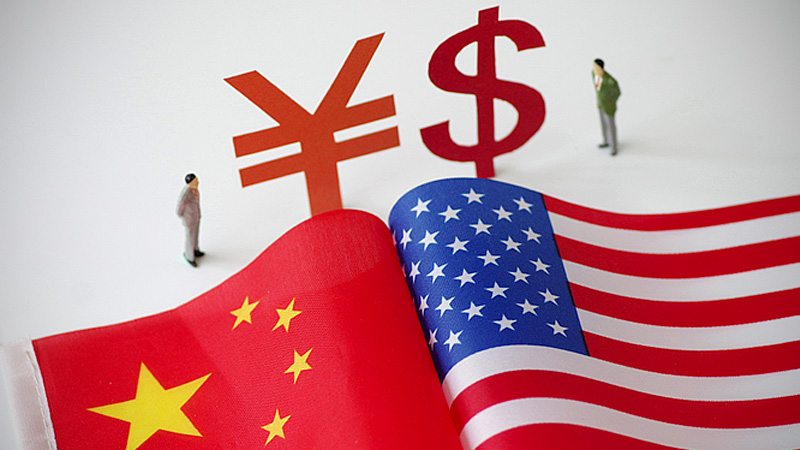
TRADE-COMMENT : Trump is getting played by China

#ศาสตร์เกษตรดินปุ๋ย : ขอบคุณแหล่งข้อมูล : หนังสือพิมพ์ The Nation

https://www.nationthailand.com/business/30379386?utm_source=category&utm_medium=internal_referral

TRADE-COMMENT : Trump is getting played by China

Dec 13. 2019
Josh Rogin is a columnist for the Global Opinions section of The Washington Post. He writes about foreign policy and national security. Rogin is also a political analyst for CNN. He previously worked for Bloomberg View, the Daily Beast, Foreign Policy, Congressional Quarterly, Federal Computer Week and Japan's Asahi Shimbun newspaper.

Josh Rogin is a columnist for the Global Opinions section of The Washington Post. He writes about foreign policy and national security. Rogin is also a political analyst for CNN. He previously worked for Bloomberg View, the Daily Beast, Foreign Policy, Congressional Quarterly, Federal Computer Week and Japan’s Asahi Shimbun newspaper.
By The Washington Post · Josh Rogin · OPINION, OP-ED · Dec 13, 2019

348 Viewed

The Trump administration seems to have reached terms with Beijing over a “Phase One” China trade deal, which President Donald Trump will surely tout as a victory for himself and the United States.

But if the president strikes the deal on the terms being reported, he will actually be making a huge concession to Beijing that achieves few U.S. goals, and is so bad that even Trump will have trouble spinning it as a political win.

On Thursday afternoon, several media outlets reported that the United States and China have agreed to a limited interim trade deal that will surely boost markets in the short term and provide a temporary de-escalation of the U.S.-China trade war. For more than two months, sources briefed on the negotiations told me, the two sides had been stuck. The Trump administration wanted to freeze tariffs in exchange for Beijing agreeing to purchase more U.S. agricultural products and granting more market access for U.S. financial firms. But China wouldn’t sign off, demanding the White House sweeten the pot by offering substantial tariff rollbacks, as well.

On Thursday, The Wall Street Journal reported the Trump team caved on that huge point. If true, the result would be a deal that immediately relieves major pressure on the Chinese economy in exchange for future promises the Chinese side may never fulfill. Beijing’s concessions also don’t address the bulk of the structural issues and abuses that make Chinese economic aggression a long-term threat to the U.S. economy.

Of course, we know that no Trump decision is final until he announces it. He could still reject what his officials have brought him.

“It’s all Trump’s call,” said Derek Scissors, a senior fellow at the American Enterprise Institute. “He either makes a call that’s consistent with decades of his beliefs or he’s getting played. . . . But he hasn’t gotten played unless he rolls back tariffs.”

Some reports said the interim deal includes some promises by Beijing to better secure intellectual property rights. But China has made and broken such promises many times before. Also, administration officials say the tough structural issues, including China’s economic espionage, forced technology transfer and unfair subsidies would be tackled in a subsequent Phase Two agreement. But few believe that will ever happen.

“There is pretty much consensus there’s not going to be any meaningful ‘Phase Two,’ “Scissors said.

If Trump substantially reduces tariff pressure on China as part of the Phase One deal, Beijing’s incentive to make future concessions as part of any Phase Two negotiation disappears.

The conventional wisdom is that Trump is prioritizing his reelection prospects and needs a big win to brag about on the campaign trail. That’s why he is lowering his terms for a deal. The Phase One deal was already a huge concession compared to the more comprehensive deal the two sides were closing in on in May.

If the president strikes the deal now, markets will surely go up in the short term – but late next year, the deal’s weaknesses will be laid bare. If China doesn’t do everything it’s promised by the time voters go to the polls, Trump will bear the brunt.

As the election nears, the pressure on Trump to keep the market up and avoid any crises will only increase. Beijing knows that – and it’s calculating that the U.S. president will have little leverage if China doesn’t hold up its end of the bargain.

A bad deal is worse than no deal. That’s why Trump was right when he said last week he likes the idea of waiting until after the election to make a deal with China.

“He is trying to pivot to negotiating and dealmaking for the last year of the first term. He wants to show he’s the dealmaker in chief,” said Tom Wright, a senior fellow at the Brookings Institution. “But he doesn’t necessarily need [signed] deals for that strategy to work.”

Trade hawks inside the administration have long argued that a deal on these poor terms will be a bad story for Trump – and they are right. He would be much better off turning down the deal on the table, maintaining the pressure and keeping the negotiations alive.

If he gets reelected, Trump will have all the leverage in the world to do what he’s wanted to do for more than 30 years – finally stop China from taking advantage of the U.S. economy. But if he gets played now, the best and perhaps last opportunity to pressure Beijing to really change its bad economic behavior could be lost forever.

Redefining work with smart move

#ศาสตร์เกษตรดินปุ๋ย : ขอบคุณแหล่งข้อมูล : หนังสือพิมพ์ The Nation

https://www.nationthailand.com/business/30379365?utm_source=category&utm_medium=internal_referral

Redefining work with smart move

Dec 12. 2019
Kessara Sakmaneevongsa

Kessara Sakmaneevongsa
By Kessara Sakmaneevongsa
Partner, Consulting Services
Deloitte Thailand
Special to The Nation

639 Viewed

Future of work is not only about growing an adoption of digital and technology, but more into a significant change of workplace, workforce and the nature of work owing to the influence of a rapid social and environmental shift as well as emerging technologies, such as robots, artificial intelligence and automation, that could be worked alongside humans to assess, develop and deliver new value around expanded work outcomes.

In order to be ready and be well prepared for changing external factors, it is a need for business itself to rethink and redefine its existing way of working and step ahead in the digital era.

Prior to redefining work in practical approach, enterprises should come up with solid vision and expectation of what your future of work and organisation might look like in consideration of two major trends: a capability to handle a changing of customer expectation and preference with a wider array of options provided in the market, and a pressure of corporate performance to no longer delivering diminishing returns but increasing improvement and marginal outputs not only for customers and shareholders but also for employees to work in a better environment. These two trends significantly lead to a new non-linear value for future of work by emphasising on reorienting the organisation, systems and processes around learning, adapting and transforming in time for the changing environment. Lagging in execution seems to be a significant loss of opportunity for companies, not only to satisfy customers but also to develop itself.

Redefining work is to re-imagine what work should be shifted to create a big impact with smart moves. Big impact doesn’t mean spinning up large or major changes and creating big investment. It rather means to demonstrate a significant impact with actual planning and monitoring before, during and after execution, to ensure a success of future change and generate further momentum in a timely manner. Going with big moves without well-designed working processes, less-talented workers and unstructured organisation might create an imbalance between spending a big investment and achieving the desired results. There are three key shifts to create redefining work efficiently; shift the objective, shift the focus and shift the requirement.

First, shift the objective of work from traditional linear development, focusing heavily on efficiency and cost saving of sales and product development, to boarder non-linear value creation. Spreading an idea of transformation on both business and support functions, such as IT, HR and Finance, to optimise way of working and support sustainable growth and, at the same time, build internal development in a long term. Actions can be taken without starting from scratch or doing everything at once. Proof of concept becomes a meaningful tool to help targeting on the right issues, shortening time to identify pain points and seek out improvement opportunities.

The second is to shift the focus. The organisation needs to know how to best redefine way of working to rapidly respond to rapidly changing customer expectations and a more complex environment by freeing up workers to do more value-added and/or insight-driven activities instead of executing routine and/or standardised tasks. Digital technologies and automation are applied to optimise many processes. Robotic process automation, for example, can take part of the repetitive work. BI tools can be applied on reporting for better visualisation to support routine forecast and constant performance evaluation. Technologies give humans an opportunity to identify and address unseen opportunities that could contribute sustainable differentiation and create new value across systems, practices, and infrastructure as long as it has been used wisely.

Lastly, shift the requirement of workers beyond specific skills to build and train them on core human capabilities to learn fast and adapt quickly to context. Organisation must drive fast learning and problem-solving skills among workers and, at the same time, promote collaboration between humans and machines plus humans and humans to better address and diagnose previously unknown opportunities that have never been considered before. Then, develop roadmap, test a pilot initiative and implement quick-wins/initiatives in a timely manner.

It’s a need for business to grow and change in a promptly manner in response to external changes. Redefining work is relevant for many organisations to shift from old school practice to the future-state working culture considering three key shifts: shift the objective, shift the focus and shift the requirement across process, system and people in order to create a smart move and deliver a big positive impact on the organisation and ecosystem in a long run. It’s time for management to either plan upfront for change or stand behind.

The Year of two Rats for Thai economy

#ศาสตร์เกษตรดินปุ๋ย : ขอบคุณแหล่งข้อมูล : หนังสือพิมพ์ The Nation

https://www.nationthailand.com/business/30379362?utm_source=category&utm_medium=internal_referral

The Year of two Rats for Thai economy

Dec 12. 2019
Amonthep Chawla

Amonthep Chawla
By Amonthep Chawla, Ph.D.
Head of Research, CIMB THAI Bank

1,165 Viewed

When exports decline along with softening global demand and the on-going trade war uncertainty, exporters would likely order less from manufacturers.

Then, investors tend to experience a problem of excess supply and could start to lower their production as seen in the lower capacity utilisation rate and the shrinking Manufacturing Production Index (MPI). Companies cut working hours, resulting in a decline in overtime payment.

Consumers then get hit because of declining non-farm income whereas farm income remains volatile from drought and floods, affecting agricultural production.

Meanwhile, the government has tried to provide cash transfers to the poor and introduced consumption stimulus packages which could somewhat help stabilise purchasing power.

However, it may be hard to revive spending when income remains low amid weak confidence.

The BOT cut the policy rate twice this year from 1.75 per cent to 1.25 per cent while we would wait and see the transmission of higher liquidity to the financial market that could stimulate investment and consumption.

Despite rate cuts and relaxation of capital outflows by the BOT, the baht has remained strong against regional peers, deterring competitiveness on top of global economic slowdown.

Will the economy slow down further?

The National Economic and Social Development Council (NESDC) reported that the Thai economy in the third quarter of 2019 expanded by 2.4 per cent from the same period last year or increased by 0.1 per cent from the second quarter after seasonal adjustment.

The slow quarterly growth is quite alarming because Thailand could experience a technical recession — two consecutive quarters with negative quarter-on-quarter growth — if the downward trend persists.

We do not think so. We still look at the Thai economy on the bright side – continual slow growth.

Some good signs to expect in 4th quarter

Despite softening growth, there are some indicators pointing towards rebounding economic activities.

First, we could expect continual positive contribution to growth from external factors. Export growth would likely fall modestly while imports could fall more than exports, causing a large trade balance surplus.

Stronger tourism revenue could be a positive factor to growth. Local investors could run down inventory before accelerating their production, which could cause continued negative import growth for the next few quarters.

Second, investment could likely pick up, especially projects that are a collaboration between the private sector and the government or public-private partnership.

An increase in project approval by the Board of Investment (BOI) for the Eastern Economic Corridor (EEC) and other areas signalled higher private investment going forward.

However, we could watch out for residential construction as problems of oversupply could linger.

Third, private consumption grew well for tourism-related spending, such as hotels and restaurants, food and non-alcoholic beverage, whereas some items could continue slowing down amid weak purchasing power among low-income households.

Car sales may fall further amid lower consumer confidence. Fourth, public spending could be stronger to drive growth, especially when we could expect the budget bill to pass by January 2020.

Outlook for 2020 – the year of 2 Rats

The year 2020 in the Chinese zodiac is the Year of the Rat. In economic outlook, we could look at it as both positive outcome and risk factors for RAT. For positive outcome, we could expect Relocation, Active stimulus and Tourism. We could expect industry relocation from China to Thailand, especially to the EEC area to avoid the US-China trade war and use Thailand as a connectivity hub for Asean.

Investors could resume increasing their production, which could generate higher income for households and contribute to higher exports.

The government would likely be more active in terms of fiscal stimulus when the budget bill is passed by January 2020.

The BOT would likely hold the rate unchanged at 1.25 per cent throughout the year but they may cut the rate if the economy decelerates further, as they still have policy space to employ when necessary.

Tourism would likely remain a growth driver for the Thai economy, especially after the number of Chinese tourists rebounded sharply in the third quarter.

Risks that could restrain Thailand’s economic growth are real estate, the appreciating baht and the trade war.

The problem of over-supply in residential real estate with tight regulation on mortgage by the BOT could lower outlook on private construction.

The strong baht against peers could hurt exports, especially commodity exports which could subsequently lower outlook for farm income.

Tourism may suffer a slight hit from the stronger baht against peers but the number of tourists would likely grow along higher Chinese demand for travelling.

Meanwhile, at present, we don’t expect the trade war to escalate, which could allow exporters and investors to adjust themselves no matter what tariff rates could be set.

However, if trade wars escalate to higher tariffs or more countries are added to US President Donald Trump’s list or trade wars lead to currency wars and technological wars, the global economy could decelerate which could subsequently hurt Thailand’s exports and domestic market.

In sum, we would project a moderate positive outcome with low likelihood for risk factors. We projected the Thai GDP to grow by 2.7 per cent in 2020 from 2.4 per cent in 2019.

Outlook for FX and interest rate

The BOT would likely hold the rate unchanged at 1.25 per cent throughout 2020. The BOT would monitor the transmission of interest rate cut on the financial market before taking another step to loosen monetary policy.

Meanwhile, liquidity in the market is rather high due mainly to slow business loan growth, especially from small enterprises.

Consumer loan growth would likely soften from tight regulation on mortgage from the BOT together with more caution by commercial banks for fear of rising NPLs.

Thus, Thailand would not have a problem of tight liquidity which requires another rate cut.

On the other hand, Thailand’s financial market is likely to experience a challenge of stability due to the prolonged low interest rate environment which could induce investors to invest in risky assets without properly understanding risks.

Meanwhile, the BOT could encourage more capital outflows from local investors so as to allow the baht to weaken or slow the pace of appreciation against the US dollar and regional peers.

In line with the attempt by the BOT, we project that the baht would strengthen to Bt29.50 to the US dollar by year-end 2020 amid the large current account surplus.

Net exports could remain large due mainly to slow import growth from high inventory and low oil prices while tourism revenue could grow moderately from rebounding Chinese tourists.

In addition to trade flows, foreign direct investment could accelerate amid higher project approval by the BOI in line with industry relocation.

Trump trade official heads to Hill to ease tensions with GOP senators over trade deal

#ศาสตร์เกษตรดินปุ๋ย : ขอบคุณแหล่งข้อมูล : หนังสือพิมพ์ The Nation

https://www.nationthailand.com/business/30379388?utm_source=category&utm_medium=internal_referral

Trump trade official heads to Hill to ease tensions with GOP senators over trade deal

Dec 13. 2019
President Trump /File Photo:GettyImages

President Trump /File Photo:GettyImages
By The Washington Post · Seung Min Kim

279 Viewed

WASHINGTON – President Donald Trump’s top trade official briefed Senate Republicans on the new trade agreement with Canada and Mexico on Thursday – an attempt to soothe tensions with GOP senators who have voiced frustration that the administration conceded too much to House Democrats to win their support for the deal.

Robert Lighthizer, the U.S. trade representative, met with all GOP senators at a lunch to detail key changes to the U.S.-Mexico-Canada trade agreement. He also separately briefed Republican and Democratic members of the Senate Finance Committee, which oversees trade policy, earlier Thursday.

The White House and congressional Democrats have touted the rewrite of the existing North American Free Trade Agreement as a major improvement over the original 1990s-era compact. But many Republicans have been skeptical about the enthusiastic support for the new trade deal from Democrats and labor unions, and questioned whether the agreement moved too far to the left at the expense of GOP trade priorities.

Some Republicans – including Sen. Patrick Toomey of Pennsylvania, probably the most vocal GOP critic of the administration’s NAFTA rewrite – have criticized the substance of the administration’s accord with House Democrats. But most of the annoyance among Republicans has centered largely on their sense that the GOP was cut out of the administration’s negotiations with House Speaker Nancy Pelosi, D-Calif., and her ranks.

Sen. John Cornyn, R-Texas, told reporters that he registered process complaints with Lighthizer and that the administration had jammed the Senate in negotiating directly with Democrats. That, Cornyn said, was a “lousy way to treat the Senate.”

“I’ve supported NAFTA, and I support this,” Cornyn said. “But I don’t appreciate the Senate being ignored as part of the process.”

Despite the GOP complaints, Congress is still likely to support the trade agreement with large margins, with Senate Majority Whip John Thune, R-S.D., the party’s chief vote counter, conceding that “everybody kind of realized, too, that it’s a take-it-or-leave-it proposition.”

Still, that didn’t stop the venting in private.

During the lunch with Senate Republicans and Lighthizer, Sen. Ted Cruz, R-Texas,s told the trade official that the administration conceded too much to demands from congressional Democrats and labor unions, according to an official in the room who spoke on the condition of anonymity to disclose a private conversation.

Tying Senate Republicans’ hands further is the fast-track procedure that is being deployed to pass the trade deal with Canada and Mexico in Congress – which significantly limits the ability of lawmakers to amend the substance of the agreement.

“Everybody knows that at the end, it’s pretty much an up-or-down-type option,” Thune said. Lighthizer, he continued, “walked through some of the changes they made on labor provisions and enforcement and some of the environmental stuff.”

Thune added: “But like I said, at this point, kind of academic. You either take it or leave it.”

The House is expected to ratify the trade agreement before the end of the year. Senate Majority Leader Mitch McConnell, R-Ky., has said senators won’t vote on it until after the impeachment trial of Trump, which will almost certainly begin in early January.

“It’s imperfect,” Sen. Kevin Cramer, R-N.D., said. “And some people are concerned about the more recent negotiations. But at the end of the day, the speaker of the House and her majority have a lot to say about it, and I think the vast majority of us feel comfortable he got the best deal he could get.”

White House, Chinese negotiators reach trade deal in principle

#ศาสตร์เกษตรดินปุ๋ย : ขอบคุณแหล่งข้อมูล : หนังสือพิมพ์ The Nation

https://www.nationthailand.com/business/30379384?utm_source=category&utm_medium=internal_referral

White House, Chinese negotiators reach trade deal in principle

Dec 13. 2019
By The Washington Post · David J. Lynch 

622 Viewed

WASHINGTON – President Donald Trump on Thursday approved a proposed U.S.-China trade deal, raising hopes for a possible truce in a 21-month commercial conflict that roiled financial markets, disrupted corporate supply chains and cost taxpayers tens of billions of dollars.

At a White House meeting with his top trade advisers, the president signed off on a swap of U.S. tariff reductions in return for China spending $50 billion on U.S. farm goods, tightening its intellectual property protections and opening its financial services markets, according to Michael Pillsbury, a China expert at the Hudson Institute, who says the president briefed him on the deal Thursday.

“It’s a breakthrough,” Pillsbury said. “He says it’s historic. I certainly agree with that.”

The limited accord caps a roller-coaster negotiation that brought the two countries to the brink of success more than once this year only to see talks stall. Diplomats from the world’s two largest economies have been working against a Sunday deadline, when new U.S. tariffs on $160 billion in Chinese goods were scheduled to take effect.

That increase now will not go forward and existing tariffs on $360 billion in Chinese imports will also be reduced, according to Pillsbury and others familiar with the arrangement. The deal includes provisions that will penalize the Chinese government if it fails to place the required agricultural orders.

As of Thursday evening in Washington, the Chinese government had issued no official confirmation of a deal.

Still, the so-called “phase one” agreement leaves the thorniest issues in the U.S.-China trade dispute to future negotiations, which are scheduled to begin next year. China’s massive subsidies for state enterprises and its practice of forcing foreign companies to surrender technology secrets in return for access to the Chinese market will be the subject of “phase two” of the talks.

Pillsbury recounted that the president told him in a late-afternoon phone call that Trump anticipates those talks continuing past the November 2020 election. Pillsbury serves as an occasional outside adviser to the president.

For Trump, the China deal is part of a sudden flurry of policy making that has dazzled official Washington in the past week, as House Democrats are advancing plans to impeach him next week.

This week alone, the administration has reached deals with lawmakers to provide federal workers with 12 weeks of paid parental leave, establish a new military branch called “Space Force,” revise a proposed North American trade deal, and broker a budget deal that would prevent a government shutdown later this month.

“It’s very ironic: In some ways, this has been the best week of Trump’s presidency, and it’s happening at the very moment impeachment is reaching its crescendo,” said Stephen Moore, who advises Trump on economic policy and visited the White House for policy discussions this week. “It’s been revealed by their actions that the strategy was to go on a policy offensive as a way to play defense against impeachment, and it’s made Trump look unfazed by this.”

Plans for announcing the deal, including whether an official text will be made public, remain in flux. The administration has said it does not intend to seek congressional approval of the agreement.

“The deal is essentially done. The mechanics of how you execute it and how you get it signed still have to be worked out,” said one person briefed on the White House’s deliberations, who requested anonymity because they were not authorized to speak to the press.

Under one scenario, Robert Lighthizer, the president’s chief trade negotiator, and Chinese Ambassador to the U.S. Cui Tiankai could sign the document as soon as tomorrow. Alternatively, Lighthizer and Treasury Secretary Steven Mnuchin could travel to Beijing for the signing.

Administration officials expect that Trump will benefit politically from sealing a deal with China. His decision to confront Beijing over its discriminatory trade practices was backed by business and farm groups who had felt the sting of Chinese behavior. Trump began imposing tariffs on Chinese imports in March 2018 in an effort to pressure Beijing to overhaul their state-dominated economy. Chinese leaders retaliated, halting purchases of U.S. farm products, in a bid to pressure some of Trump’s strongest supporters.

As the trade war escalated, costs mounted. Assembly lines were disrupted, as manufacturers petitioned the administration for permission to continue importing tariff-free Chinese parts they depended on to operate. In August alone, more than 10,000 workers were laid off, collateral damage from the trade war’s salvos. To mollify farmers, a politically potent constituency that lost lucrative Chinese sales, Trump doled out $28 billion — an amount that was more than double the controversial 2009 rescue of the auto industry.

Some were unimpressed with Thursday’s news.

“It is unclear that much will really be gained from the deal other than partially unwinding some of the disruptions created earlier this year while leaving other uncertainties in place,” economists at J.P. Morgan told clients.

Business leaders who have grown anxious for relief from the trans-Pacific tariff wars welcomed the development . “That is excellent news. It puts a floor under the deterioration in the relationship,” said Craig Allen, president of the U.S.-China Business Council.

Myron Brilliant, executive vice president of the U.S. Chamber of Commerce, said the deal would benefit American manufacturers and farmers. “It’s an important first step, but just a first step,” he said. “There is more work to be done.”

Several people close to the talks said the administration had not shared with them the text of the deal, which they described as an “agreement-in-principle.” Trump two months said he had reached “an agreement in principle” with China and expected to commit the terms to paper within a few weeks.

Even before a formal presidential decision to proceed, Republican critics of the so-called “Phase One” agreement sounded the alarm.

Senator Marco Rubio, a Florida Republican and member of the Senate Foreign Relations Committee, warned against settling too quickly with Beijing. “@WhiteHouse should consider the risk that a near-term deal with #China would give away the tariff leverage needed for a broader agreement on the issues that matter the most such as subsidies to domestic firms, forced tech transfers & blocking U.S. firms access to key sectors,” Rubio tweeted.

Derek Scissors, a China hawk with the American Enterprise Institute and occasional administration adviser, accused the president of rushing to make a deal. “This timing is really weird,” Scissors said. “Technically, there’s been a deal on the table for the president to sign for some time. What’s changed is they think the president will say ‘yes.'”

Early Thursday morning, Trump teased investors with word of a potential deal with China, sending the stock market briefly higher amid optimism about a breakthrough in the lengthy standoff.

“Getting VERY close to a BIG DEAL with China,” the president tweeted shortly after Wall Street opened. “They want it, and so do we!”

The Dow Jones industrial average quickly rose more than 300 points, or roughly 1 percent, within the first hour of trading as financial markets cheered the prospect of a “Phase 1” deal with China. The market later surrendered some of its gains, though, and closed at 28,132.05, up almost 221 points or 0.8 percent.

The emerging deal would fall well short of the president’s initial goal: a comprehensive settlement of U.S. complaints about subsidized Chinese state businesses and trade secrets theft.

The president has often suggested the two sides were close to a deal only to see negotiations stall in the past. In April, Trump said the White House and Chinese negotiators were within weeks of an “epic” deal. The next month, talks collapsed amid U.S. charges that Beijing had reneged on a tentative bargain.

Progress with China comes as the White House is celebrating victory on another front in Trump’s trade wars. This week, House Democrats agreed to support a revised version of a new North American trade deal, which the president had signed last year with Mexico and Canada.

House Speaker Nancy Pelosi, D-Calif., backed the agreement after securing amendments that toughened enforcement of labor and environmental standards. The modified accord also dropped an extension of patent protections for a class of new drugs known as biologics, which Democrats said would lead to higher prescription drug prices.

The new U.S.-Mexico-Canada Agreement is expected to reach a House vote next week and clear the Senate early next year. Once approved by the legislatures in each country, it will supplant the 1994 North American Free Trade Agreement, which Trump has called “our country’s worst trade deal.”

The bipartisan cooperation on trade is occurring even as House Democrats move forward with plans to impeach the president over his demand that Ukraine announce an investigation of one of his political rivals before receiving $391 million in congressionally authorized military aid.

Enough fiscal room to implement policies: Somkid

#ศาสตร์เกษตรดินปุ๋ย : ขอบคุณแหล่งข้อมูล : หนังสือพิมพ์ The Nation

https://www.nationthailand.com/business/30379360?utm_source=category&utm_medium=internal_referral

Enough fiscal room to implement policies: Somkid

Dec 13. 2019
Deputy Prime Minister Somkid Jatusripitak, left

Deputy Prime Minister Somkid Jatusripitak, left
By THE NATION

820 Viewed

Thailand still has fiscal space to continue the government’s policies and projects in the medium and long-terms without impact on the state coffers.

Deputy Prime Minister Somkid Jatusripitak made the remarks on Thursday (December 12) after the meeting of the committee on government finance and fiscal policy to consider the medium-term fiscal plan for 2021-2024.

Somkid said it was a good thing that S&P Global Ratings had revised its outlook onThailand’s sovereign credit rating to positive from stable, which reflected that the Thai economy was still in good shape when compared to many other countries.

However, Thailand would still keep a close watch on the economic situation next year, he added.