California undertakes extensive effort to trace contacts of woman with coronavirus #ศาสตร์เกษตรดินปุ๋ย

#ศาสตร์เกษตรดินปุ๋ย : ขอบคุณแหล่งข้อมูล : หนังสือพิมพ์ The Nation

https://www.nationthailand.com/lifestyle/30383000?utm_source=category&utm_medium=internal_referral

California undertakes extensive effort to trace contacts of woman with coronavirus
Feb 28. 2020
By The Washington Post · Geoffrey A. Fowler, Lenny Bernstein, Laurie McGinley · NATIONAL
VACAVILLE, Calif. – California has launched a far-reaching effort to find anyone who might have come in contact with a new coronavirus patient infected despite having no known link to others with the illness, as federal officials tried to fix the faulty testing process that has hamstrung their ability to track how widely the disease is spreading.

U.S. officials raced to meet the daunting new challenge of a virus that could be spreading through a Northern California community, even as the covid-19 virus continued its relentless march around the globe. Stock markets continued to plunge, Japan initiated a weeks-long school closure and an Iranian lawmaker contracted the infection. From the Middle East to South Korea to parts of Europe, the number of deaths and infections continued to grow.

https://www.washingtonpost.com/video/c/embed/5c44e183-70b7-45c5-811e-e0a4c6aa1c52

In Washington, Vice President Mike Pence convened his first meeting as the new head of the task force battling the virus. On the other side of the country, California Gov. Gavin Newsom, a Democrat, and state health officials sought to reassure jittery residents that public health officials would be able to handle the first U.S. case of community transmission.

Projecting an air of calm during a moment of rising anxiety over the outbreak, Newsom repeatedly told reporters that methods of tracing a Solano County woman’s contacts have been honed in response to other public health crises, from tuberculosis to the swine flu.

“This is not our first great challenge as it relates to public health,” Newsom said. “Quite the contrary. These protocols have been perfected.”

Federal officials have faced fierce criticism for overly narrow criteria about who should be tested and for shipping coronavirus test kits to public health labs that included a component that in most cases did not work correctly.

But on Thursday, the Centers for Disease Control and Prevention expanded the federal guidelines for testing to include people who have unexplained severe respiratory symptoms and people with symptoms who have recently traveled to Iran, Italy, Japan and South Korea as well as China.

Federal health officials also are moving to try to correct the problems with the test kits. Scott Becker, executive director of the Association of Public Health Laboratories, said that although only eight public health labs are able to run the tests, federal officials have approved a procedural change that may allow about 40 more labs to come online very shortly.

New tests are expected to be sent out to labs next week. That should result in all 100 public health labs across the country being able to run tests by the end of two weeks.

Newsom and state health officials acknowledged the Solano County woman was in the community and showing symptoms of the disease before she was admitted to a hospital here Feb. 15. That is a worrisome prospect because the virus is highly transmissible, especially when someone with the disease has its flulike symptoms. Officials did not share any details about the woman’s family, work or social contacts, citing patient privacy, and declined to say how many people she came in contact with.

At the same time, experts reminded the public that, in other parts of the world at least, most cases of the virus are mild. To date, the coronavirus has killed 2,801 people and sickened more than 82,000, the vast majority of them in China. The United States has seen 60 cases, none fatal, and most of them among people who caught the virus while quarantined on a cruise ship off Japan.

Nevertheless, the CDC warned Americans on Tuesday that community spread is almost certain and that they should prepare for the possibility of significant disruption in their daily lives.

“This virus has adapted extremely well to the human species,” said Anthony Fauci, director of the National Institute of Allergy and Infectious Diseases and a key member of the coronavirus task force. “This one has the capability of spreading readily from human to human.”

Solano County, where the new case emerged, is home to Travis Air Force Base, where hundreds of Americans repatriated from China and from the Diamond Princess cruise ship have been quarantined. Officials have said the woman had no known contacts with people quarantined on the base.

Newsom said the CDC was sending 10 staffers to aid state and local personnel in tracing the woman’s contacts.

Mark Ghaly, secretary of the California Health and Human Services Agency, described a “robust and first-class reaching out to . . . many, many individuals in all walks of this person’s life.” That includes the people who cared for her at NorthBay VacaValley Hospital here, some of whom have been put on paid leave and are isolated at home monitoring themselves for symptoms, according to Aimee Brewer, president of NorthBay Healthcare, which owns the hospital.

The Solano County woman wasn’t tested for the disease for four days, despite an immediate request to the CDC, because she did not meet the strict criteria for the test, according UC-Davis Medical Center, where she is being treated after spending four days at the community hospital in Vacaville.

The CDC has not responded to that assertion. But federal health officials have said clinicians always have discretion to order the test for people who do not meet the criteria.

https://www.washingtonpost.com/video/c/embed/c9b6d2f4-9255-4143-925f-d2fb601c7882

The patient brought herself to NorthBay VacaValley Hospital, a 50-bed community hospital in Vacaville, California, with flulike symptoms on Feb. 15.

Staff members at that hospital questioned the woman about travel and contacts under CDC guidelines, but she did not meet the criteria for someone who should be tested for the virus, because she had not recently traveled to China or had contact with someone who is a confirmed case, according to Brewer.

The hospital is “meticulously tracing” anyone who may have come into contact with the woman there, and monitoring scores of staff members who may have been exposed,” Brewer said in a statement. She added that staffers who had direct contact with the patient have been tested for the virus and are on paid leave, tracking their health at home. So far, there have been no positive tests, she said.

Brewer said in an interview that the woman had a private room, and “we believe strongly that our patients are protected.”

The hospital was going through “records and security footage to make sure we know every person who has been in contact with the patient to determine if they are a low, medium or high risk,” she said. “We did that last night and are finishing it up today.”

Staff at NorthBay inserted a tube in the woman’s lungs to help her breathe, a procedure experts say increases risk of exposure to the virus because it can aerosolize respiratory droplets, according to a person briefed on the case.

When the woman’s health continued to decline, Brewer said, she was transferred to UC-Davis Medical Center in Sacramento, which has more capacity and expertise with pulmonary patients. UC-Davis officials said she arrived there on Feb. 19.

“Contact tracing,” or finding people the woman has come in contact with, “sounds simple,” but “is really a resource-intensive effort, even with a single case” said Thomas Inglesby, director of the Center for Health Security at the Johns Hopkins Bloomberg School of Public Health.

“They are going to be working to identify everyone who spent substantial time in close contact – within six feet – during the time the person could have been incubating the virus. Family is fairly straightforward, then close co-workers, but there may have been contacts” that are more difficult for public health workers to track down.

“Standing in line quite briefly next to a person would probably be considered low risk, but sitting next to someone in church for a half-hour might be high risk,” he said.

A pair of colleges in nearby Sacramento said they have sent home two students – one from each school – who came into contact with the infected woman. The students at American River College and Cosumnes River College were exposed during their work as health-care providers.

Like other health-care workers who have had contact with the patient, the students have been asked by county health officials to isolate themselves for 14 days and monitor for symptoms.

Neither school is asking other students to stay home, and classes are continuing as scheduled.

https://www.washingtonpost.com/video/c/embed/f6538cdc-3bee-4101-9bed-debb312969a5

On Thursday afternoon, UC Davis announced that three students who lived in its Kearney Hall dormitory were in insolation and being monitored for symptoms of coronavirus. One of the three was getting a covid-19 test from the CDC, while the other two had shown no symptoms and would not be tested, per current CDC guidelines. The dorm is located on the main UC Davis campus in Davis, Calif., about 19 miles west of the UC Davis Medical Center.

The university did not say how or where the students were exposed to the virus or where they were staying while in isolation, because they were no longer in their campus housing. The university said it plans to increase daily sanitation procedures in Kearney Hall. No UC Davis classes are being canceled at this time.

UC Davis Medical Center officials sent an email to employees Wednesday that said the woman arrived at the medical center Feb. 19 but was not tested until Sunday because she did not meet the criteria.

“When the patient arrived, the patient had already been intubated, was on a ventilator, and given droplet protection orders because of an undiagnosed and suspected viral condition,” according to an email sent by David Lubarsky, vice chancellor of human health sciences, and Brad Simmons, interim chief executive of UC Davis Health. “Since the patient arrived with a suspected viral infection, our care teams have been taking the proper infection prevention (contact droplet) precautions during the patient’s stay.”

UC Davis asked the CDC to conduct a test for the virus because local and state labs were not doing so. “Since the patient did not fit the existing CDC criteria for covid-19, a test was not immediately administered. UC Davis Health does not control the testing process,” they wrote.

The CDC ordered a test Sunday and additional precautions were taken, they wrote. The agency confirmed the positive test Wednesday.


Coronavirus testing widened as California case makes containment more urgent #ศาสตร์เกษตรดินปุ๋ย

#ศาสตร์เกษตรดินปุ๋ย : ขอบคุณแหล่งข้อมูล : หนังสือพิมพ์ The Nation

https://www.nationthailand.com/lifestyle/30382992?utm_source=category&utm_medium=internal_referral

Coronavirus testing widened as California case makes containment more urgent

Feb 28. 2020
By The Washington Post · Carolyn Y. Johnson, Laurie McGinley · NATIONAL, HEALTH

The four-day delay in testing a California woman for coronavirus highlights how a faulty test and until Thursday, a narrow definition of who should be tested have hindered the U.S. ability to track how widely the disease has spread. Infectious disease experts worry the disease may be spreading undetected in other places.

Those concerns were stoked by the emergence of the nation’s first case of community transmission in Northern California, where hospital administrators say the patient, a woman, was not tested when clinicians requested it because she did not meet strict CDC criteria that recommended that only those with symptoms who had a recent trip to China, or close contact with a person confirmed to be infected with covid19.

“We have just a few hundred testing kits in the state of California,” Gov. Gavin Newsom said Thursday at a news conference. “That’s simply inadequate to do justice to the kind of testing that is required to address this issue head on. . . . Testing protocols have been a point of frustration for many of us.”

“You don’t know what you don’t know unless you’re testing,” he added.

The problems underscored by the California case include the limited availability of tests – which were shipped out to labs nationwide with a problematic component that is only now being corrected – and the federal testing criteria, which had become outdated as the outbreak evolved from being centered in China to circulating in more than three dozen countries. On Thursday, the Centers for Disease Control and Prevention expanded federal guidelines to include testing for people who have unexplained severe respiratory symptoms and people with symptoms who have recently traveled to Iran, Italy, Japan and South Korea as well as China.

Newsom said the state was working with CDC to get more testing kits and the ability to do tests without shipping samples across the country.

“There’s a desperate need to do more testing,” said Marc Lipsitch, an epidemiologist at the Harvard T.H. Chan School of Public Health. “The point is to find out if, like many other countries, we have undetected chains of transmission that we’re just not detecting.”

While Lipsitch said that Guangdong Province in China had conducted more than 300,000 tests in fever clinics, the U.S. has tested 445 people, not including those who were evacuated. Health and Human Services Secretary Alex Azar said Thursday that 3,600 tests have been run but did not clarify how many people had received them.

In addition, the tests sent out nationwide earlier this month had a faulty component that has required most samples to be sent to the Centers for Disease Control and Prevention in Atlanta for analysis. There were signs Thursday federal health officials were also correcting those problems. As of 9 a.m. Thursday, Scott Becker, executive director of the Association of Public Health Laboratories, said he was aware of only eight public health labs currently able to run tests, but about 40 more labs are expected to come online very shortly. And he said he expected all 100 public health labs across the country to be able to run tests by the end of two weeks.

Infectious disease experts and others had been calling for the expanding of testing criteria for some time.

“It’s long overdue that it [testing criteria] be broadened,” said Amesh Adalja, senior scholar at Johns Hopkins Center for Health Security. He said the reason testing should include people with unexplained symptoms is because “travel history will become less important as we have community spread in countries around the world, as well as perhaps in the United States.”

He also said it’s important to test people with mild disease; right now, the emphasis is on those with lower respiratory symptoms like coughs or shortness of breath versus symptoms like runny noses and sore throats. “But testing people with milder symptoms will give us an understanding of how widespread this is in the community,” Adalja said.

Hawaii Lt. Gov. Josh Green, who is an emergency physician, gave the example of a person who arrived in his state with flulike symptoms earlier this week from Las Vegas.

“Very likely, he had the flu; he hadn’t been in a region of concern for a full month, but it would have been very convenient to test,” Green said.

Some people who have fallen ill with what they fear may be the coronavirus are also upset they haven’t been able to get tested because they haven’t meet the CDC criteria.

A 57-year-old woman who lives in New York City said that her husband developed a severe sore throat after returning from a business trip to South Korea in mid-February. He got a strep test, which came back negative. Ten days later, she got sick, with many more symptoms, including aches and pains, headache, congestion and fever. Her doctor wanted her tested for the coronavirus, but she wasn’t eligible because she hadn’t traveled to a country with widespread transmission or been in contact with someone known to be infected.

“The testing needs to be broadened,” said the woman, who requested anonymity because of a desire to protect her privacy. “If you don’t test, you don’t find. This is irresponsible.”

The woman said she has decided to self-quarantine for several days, but worries that other people might not suspect they are infected and will pass on the virus. “It’s a Catch-22 that will put the weak and elderly at risk,” she added.

Jeff Engel, executive director of the Council of State and Territorial Epidemiologists, said that the tests not working has been the biggest impediment, in part because public health officials need to gain experience using them as they ramp up.

“I think the biggest disappointment was not getting field experience on laboratory testing,” Engel said. “We’ve already lost two weeks on that, and I think that was the biggest blow to progress.”

Officials are taking steps to try to fix the test. One of the three reagents, or components of the test, was giving inconclusive results when many laboratories were trying to verify that it was working. Public health labs received guidance late Wednesday afternoon that would allow them to go ahead with tests using two of the three components, if they were able to get those working. New test kits are expected to be sent out to labs next week.

NOOK to ease mental health concerns of young Thais #ศาสตร์เกษตรดินปุ๋ย

#ศาสตร์เกษตรดินปุ๋ย : ขอบคุณแหล่งข้อมูล : หนังสือพิมพ์ The Nation

https://www.nationthailand.com/lifestyle/30382954?utm_source=category&utm_medium=internal_referral

NOOK to ease mental health concerns of young Thais

Feb 27. 2020
By The Nation

If you’ve ever felt alone, you’re not alone. And if you’re not ok, that’s ok, too. For those that have questions to ask; thoughts to explore; or feelings to express about mental health, Bangkok’s first pop-up mental health space The NOOK is being launched this weekend; space where you can come to when you are “no(t) ok”.

The NOOK is a 4-day pop-up space organised by social impact agency Love Frankie in partnership with Acorn & Associates and TQPR, designed to discover new and diverse ways to openly discuss and actively tackle mental health issues, all under the guidance of highly trained experts and practitioners. Through more than 30 activities for free, young people will gain advice and insight through educational talks, take part in intimate sharing sessions and enjoy creative workshops that engage the body, heart, and mind. The hope is to build a community of care where all who join can be seen, heard, understood, and feel a little less alone.

R U OK? The popular podcast hosted by movement therapist and psychotherapist Dujdao Vadhanapakorn will have a live recording taking participants through an experiential workshop where the live audience will discover different tips and tools that will allow them to start a conversation with themselves.

Tuesday Circle founded by the Thai Counseling Psychologist Club and conformed by the country’s leading counselors and psychologists, will have a live recording as well for their podcast at The NOOK. This session will explore how technology, social phenomena, and changing values are shaping the state of mental health in contemporary society.

For music lovers, Piyapong Muenprasertdee, co-founder of music community Fungjai, will be joined by singer/songwriter Lukpeach and her partner in a panel discussion about the healing potential of music. Following the panel, Lukpeach will take audience members through a songwriting workshop before closing with a live jam session

Khaisri Wisutthipinetr, author of Tales from the Tip of the Iceberg will lead a writing workshop to move thoughts and feelings out of the mind and onto paper, where they can be more tangibly observed, reviewed, and reflected upon.

These are just a few of the highlights of what will happen at The NOOK. Join and be part of the community. Limited spaces are still available. Reserve your spot for the activities on the FB event pages at www.facebook.com/nookfriends

New Thonburi hospital caters to ‘super-aged’ society with specialist care #ศาสตร์เกษตรดินปุ๋ย

#ศาสตร์เกษตรดินปุ๋ย : ขอบคุณแหล่งข้อมูล : หนังสือพิมพ์ The Nation

https://www.nationthailand.com/lifestyle/30382886?utm_source=category&utm_medium=internal_referral

New Thonburi hospital caters to ‘super-aged’ society with specialist care

Feb 26. 2020
By The Nation

Thonburi Healthcare Group Pcl has opened a special hospital for the aged, specialising in providing care to Alzheimer’s and stroke patients.

The 54-bed Thonburi Burana Hospital treats those with chronic diseases and Alzheimer’s, offering full facilities, from patient room to the medical clinic, and medical counselling services provided by experienced doctors, pharmacists, therapists, dietitian, nutritionist and psychologists, Dr Boon Vanasin, managing director and chairman of Thonburi Healthcare Group Pcl, said.

He expects Thailand to become a “super-aged society within decades” and said the project was aimed at accommodating and transforming healthcare as Alzheimer’s and stroke were big obstacles in daily life.

Many countries around the world are becoming ageing societies, and over the next 10 years Thailand is expected to enter the super-aged society with the proportion of population aged 65 years and above comprising more than 20 per cent of population.

The major diseases which cause the elderly to have accidents or death are Alzheimer’s and stroke, Boon said. “Both diseases affect the elderly and caretakers are unable to live their normal lives and be happy as before. There are severe symptoms such as weakness in legs and arms, difficulty in speaking, hard swallowing, Bell’s palsy, pressure ulcers in the tract food even psychiatric disorders, etc.

“These problems require specialised care from specialists such as physical therapists, acupuncture, alternative medicine, nutrition therapy, rehabilitation with activities and using modern technology to help.”

He said the Thonburi Burana Hospital is in the midst of a natural environment and facilities, and it will help patients achieve positive results and return to a good quality of life.

Shortages, confusion and poor communication complicate coronavirus preparations #ศาสตร์เกษตรดินปุ๋ย

#ศาสตร์เกษตรดินปุ๋ย : ขอบคุณแหล่งข้อมูล : หนังสือพิมพ์ The Nation

https://www.nationthailand.com/lifestyle/30382866?utm_source=category&utm_medium=internal_referral

Shortages, confusion and poor communication complicate coronavirus preparations

Feb 26. 2020
File Photo

File Photo
By The Washington Post · Lena H. Sun, Christopher Rowland, Lenny Bernstein · NATIONAL, WORLD, HEALTH ·

Major U.S. hospital systems are burning through their supplies of specialized masks needed for a widespread epidemic of coronavirus, in part because federal protocols call for them to be thrown out after a single use in practice sessions, federal officials have told health-care leaders.

Some hospitals have just a week’s inventory of the N95 face masks, which filter out 95 percent of all airborne particles, even as a top official with the Centers from Disease Control and Prevention warned Tuesday that spread of the virus here now appears inevitable.

At a tense invitation-only briefing held last week, the Department of Health and Human Services offered few answers to health system leaders trying to prepare for wider spread of coronavirus, according to participants. Parts of the presentation were obtained by The Washington Post.

The possible mask shortage is one of countless critical issues that federal, state and local officials and health care providers are confronting as the U.S. posture on the covid-19 crisis shifts from keeping the virus out of the country to mitigating its impact here. Already, coordination and communication problems among the various parts of the public health apparatus are beginning to cause difficulties, according to providers on the front lines.

HHS also said 60 percent of large-chain pharmacies are already unable to meet demand at stores for the masks, technically known as “respirators.”

“Personal protective equipment is not what you think about day-to-day” at most hospitals, said Lauren Sauer, who oversees preparedness and response for Johns Hopkins Medicine and the Johns Hopkins University system. “What is the plan for allocation of scarce resources? Is it going to be who has the most face time” [with HHS officials] who gets the most supplies?”

CDC spokesperson Kristen Nordlund said the agency’s guidance has to be flexible. “We can’t be too specific, because it might not be something a health department or hospital can do, or it might not fit their needs at the moment.”

Many of those involved in the response have been preparing for weeks. But if there was any doubt among them, the CDC eliminated it Tuesday by openly asking Americans to prepare for the disruption that widespread transmission of the virus would cause in their communities.

“Ultimately we expect we will see community spread in the United States,” said Nancy Messonnier, director of the CDC’s National Center for Immunization and Respiratory Diseases, who described a breakfast table conversation she had with her own children. “It’s not a question of if this will happen but when this will happen, and how many people in this country will have severe illnesses.”

Messonnier outlined scenarios she said Americans now must contemplate, including school and day-care closings, increased teleworking and limiting, postponing or canceling mass gatherings. She did not mention lockdowns like the one that has paralyzed central China, the epicenter of the outbreak that has killed more than 2,400 people and sickened more than 80,000. The United States so far has 57 known cases and no deaths.

Hospitals and public health officials on the leading edge of the U.S. mitigation strategy have been preparing for weeks.

In San Antonio, for example, Metro Health Director Dawn Emerick said she is rounding up 30 recreational vehicles that might be used to house infected people and looking for a place to put them. The city already has 11 people who were evacuated from the Diamond Princess cruise ship and Wuhan, China in isolation rooms in a special facility, but Emerick anticipates greater need as tests of more individuals come in.

At one point, Emerick halted the RV plan when federal officials told her that sick people evacuated from Asia to nearby Lackland Air Force Base would be sent to a facility on a former Army base in Anniston, Alabama. But when officials in that state objected, the RV plan was resurrected, she said.

“What we’ve been trying to do at the local level is look at alternatives that are safe, that are away from the community,” Emerick said.

At the sprawling NYU Langone Health system in New York, which has nearly 1,700 inpatient beds at six facilities, doctors are working to prevent patients from swamping hospitals with minor respiratory complaints and crowding out patients who may need more intensive care.

They are ramping up messaging that tells people how to arrange online appointments with providers and other alternatives, said Michael S. Phillips, chief hospital epidemiologist for the system.

Similarly, hospitals in Washington State are discussing triaging patients in parking lots and “and if it’s really bad, people can get a drive-through screening in their car,” said state Health Director John Wiesman.

The Hopkins health system also has contingency plans to use nonmedical spaces, such as cafeterias, a children’s play area and ambulance ramps to treat respiratory patients. The ambulance ramp is set up to accommodate a tent, has heated water, gas lines and electricity.

Health systems need more specific guidance, Sauer said. “We’ve maxed out on our capacity to prepare without additional pieces of information. People would really like to see something concrete from the federal government, like say, ‘it’s a pandemic, it’s time to shift strategies to mitigation’.”

Guidance from the CDC on use of face masks has too many caveats said Russell Faust, medical director of Oakland County, Michigan’s health department. Under current federal guidelines, after a mask is adjusted to form a seal over an individual’s mouth and nose during a test run, it should be thrown away.

CDC recommended that providers “consider” extended use or repeat use of the respirator, he said. “They’re waffling big time,” he said. “That is a little concerning. We hope that at some point, someone will say, ‘Here’s what you do when you run out of N95 respirators.”

Faust already has developed a workaround. If coronavirus arrives, Oakland County personnel will put surgical masks over N95s, protecting the underlying mask somewhat so it can be used again.

NYU is already working to conserve “personal protective equipment” – full body moon suits, masks, face shields and other gear – for a shortage that Phillips considers inevitable. Many masks used in U.S. hospitals come from Hubei province in China, where the outbreak began. And when production in China resumes, equipment surely will be reserved for use in that country, he said. About 65 percent of N95 respirators are manufactured outside the continental United States, in China and Mexico, according to HHS data.

NYU is urging health-care personnel to re-use moon suits now to help preserve inventory for later. That is appropriate, for example, in treating patients with tuberculosis, he said. Face masks can be used again by the same individual, especially after practice sessions, he said.

“We are really looking carefully at how we’re utilizing [protective equipment] and I think every hospital in the United States is girding for these kind of shortages,” he said.

While some hospitals have as many as 14 weeks worth of masks on hand, the overall situation is grim. India, Taiwan, and Thailand also have halted or limited exports as they brace for spikes in demand in their own countries.

Anticipating a surge in need, California’s state officials have ordered 300,000 masks to distribute to hospitals and clinics on an emergency basis, hoping to add to the 20,000 currently in state stockpiles. Officials would not say where they hope to find that many masks.

Health care systems nationally have about two weeks of supply left on hand, said Soumi Saha, senior director of advocacy at Premier Inc., a large group purchasing organization that serves 4,000 hospitals.

Normally, an average of 2 million masks per month is used in the United States, Premier said. That rises to 4 million per month during a typical flu season.

Two domestic manufacturers that use raw material from the United States – 3M and Prestige Ameritech – are ramping up production but are not expected to be able to satisfy demand of 4 million masks a month until April, Saha said.

“I don’t think hospitals can sort of buy their way out of this problem. It is not a bidding war for N95s,” said Amy Ray, director of infection prevention for the MetroHealth System in Cleveland. “The supply is the supply and prudence is necessary to preserve the stock that we have.”

Italy’s elderly population in danger as coronavirus spreads #ศาสตร์เกษตรดินปุ๋ย

#ศาสตร์เกษตรดินปุ๋ย : ขอบคุณแหล่งข้อมูล : หนังสือพิมพ์ The Nation

https://www.nationthailand.com/lifestyle/30382865?utm_source=category&utm_medium=internal_referral

Italy’s elderly population in danger as coronavirus spreads

Feb 26. 2020
By  The Washington Post · Chico Harlan, Stefano Pitrelli · WORLD, EUROPE

ROME – As the coronavirus death toll ticks up day by day in Italy, a picture has emerged of the people most at risk: a 77-year-old found dead in her home, an 84-year-old man who lost his battle with the virus, and another who was 88.

The virus can be carried by anybody. But as it spreads through China and accelerates in other parts of the world, it is delivering an unequal demographic blow to the elderly and those already sick.

That has set off a race in countries with significant older populations – such as Italy – to figure out whether there are ways to protect their most vulnerable: those in hospitals, in nursing homes, and seniors in sealed-off hotspot towns who are watching television and fearing the worst.

“The purpose is preventing the virus from entering our facility,” said Danilo Achilli, the health director of one Italian nursing home in the northern town of Chignolo Po, where the workers now wear masks, and where management has decided to put strict limits on visits from relatives.

But even as Italy works to contain what is the first major coronavirus outbreak in Europe, there is growing concern that the virus is outracing the health measures.

New cases on Tuesday popped up farther from the original cluster, including in the southern island of Sicily and the tourist-heavy Tuscan capital, Florence. Italy has at least 322 confirmed cases and 11 deaths, all people who were elderly or already sick, and cases have soared as well in South Korea and Iran.

Italy, though, presents a particularly grim laboratory for the virus’s risks.

It has Europe’s highest proportion of people older than 65, a ratio that is second in the world to Japan.

And in the dense northern strip of small Italian towns where the virus first flared – now put on lockdown by authorities – life has become complicated for the many older people who live there. Some elderly inside those restricted zones are unable to see relatives or caretakers. Some smaller health clinics are shuttered. Most people simply have nothing to do.

“I spend the whole day with the TV set on, a shut-in, and I only get out for the most important chores,” said Piera Salamina, 71, a retired math teacher in one of the sealed-off towns, Casalpusterlengo.

Nursing homes say they have employees who haven’t been able to come to work. One nursing home director said his employees still on the job were “scared.”

Efforts to study the illness are only at the beginning stages, but flulike viruses of all kinds tend to be disproportionately risky for the old.

In one of the first major Chinese studies into the coronavirus, published this month, researchers found that people younger than 50 died in roughly one of every 325 cases, or 0.3%. But for people in their 70s, roughly 8% of people who contract the virus don’t survive. For people 80 or older, the death rate hits nearly 15%.

Italy has a far higher proportion of people in their 80s than does China. Italy reported four deaths Tuesday; the victims were 76, 83, 84, and 91 years old.

“The rate of lethality will be higher in Italy,” said Raffaele Antonelli Incalzi, the president of the Italian Society of Gerontology and Geriatrics. “[The elderly] have no higher risk of contagion; the opposite – they’ll likely get infected less, since they have fewer social relations. But if they do fall sick, the illness is graver.”

Italy’s government has not imposed steps specifically aimed at the elderly, and instead has tried to limit movement of people in areas where the virus has emerged.

Across the north of the country, schools, churches and museums are closed. The government has tried to curb unnecessary crowding in hospitals, urging people who think they might have a fever or respiratory problems to dial a hotline before getting into their cars.

The steps to limit the spread are most obvious in a dozen small towns at the center of the outbreak, where authorities have cordoned off entrance points, and where residents like Santino Gobbi, 75, say they feel a mounting sense of isolation.

Several of Gobbi’s grandchildren live in the same town, but now he mostly talks to them on the phone. He no longer has a place to stop for a coffee. When he went outside Tuesday morning, he said he saw people lining up for two things, medicine and cigarettes. They took care to remain several feet apart from anybody else.

Gobbi says he is still healthy, going for walks in the countryside, taking 10,000 steps per day, and says he can’t remember the last time he even had the flu. But what worries him is his sister, who is 80 years old and rarely leaves her house.

“The news is constantly saying that people don’t need to be afraid because the disease is only killing the elderly who are already sick,” said Gobbi, a retired building manager who lives in Casalpusterlengo, southeast of Milan. “Well, this is not something nice to hear from television. If you say something like that, for many elderly people who are at home alone, tension only increases.”

Ten miles away, in Chignolo Po, which has not been closed off, the nursing home has been taking new precautions, and several visitors who showed up in recent days to see their elderly relatives were turned away.

Many of the 72 residents suffer from memory loss and pass the time playing card games or watching TV, but over the weekend, they listened to a staff member try to give the news about what was happening in their country.

Tina Lista, the staffer, felt it was necessary to tell them about the coronavirus because some might already be having questions about why people were wearing masks, and why fewer visitors were coming through the door.

She described the virus as an “aggressive flu.”

Hearing the news, one of the residents brought up the Spanish flu, a 1918-19 pandemic blamed for about 50 million deaths worldwide.

Others said they were worried about their children.

“Usually when I read them the news, we try to keep it colorful – never anything about politics or the economy,” Lista said. “I try to safeguard them.” But now, she said, “the risk is there for everyone.”

White House struggles to contain public alarm over coronavirus #ศาสตร์เกษตรดินปุ๋ย

#ศาสตร์เกษตรดินปุ๋ย : ขอบคุณแหล่งข้อมูล : หนังสือพิมพ์ The Nation

https://www.nationthailand.com/lifestyle/30382858?utm_source=category&utm_medium=internal_referral

White House struggles to contain public alarm over coronavirus

Feb 26. 2020
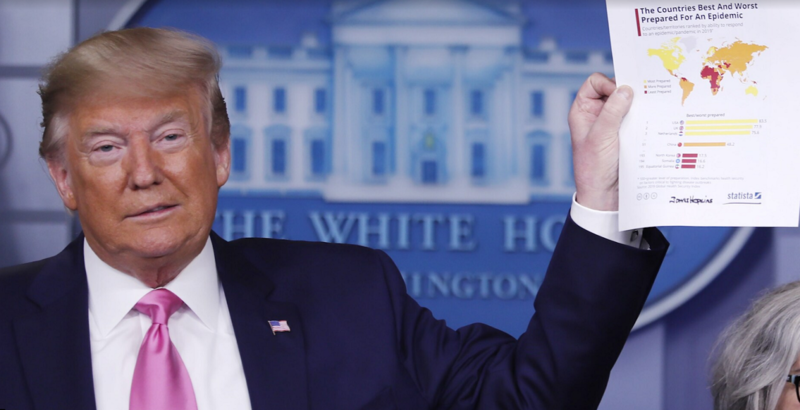
File Photo of President Trump

File Photo of President Trump
By The Washington Post · Jeff Stein, Josh Dawsey · NATIONAL, HEALTH

WASHINGTON – Top White House economic adviser Larry Kudlow told The Washington Post late Monday that investors should consider “buying these dips” in the stock market amid the coronavirus panic. The message was to take advantage of one-day slumps and “buy low.”

After all, the Dow Jones industrial average had just fallen 1,032 points. President Donald Trump tweeted similar guidance thousands of miles away in India.

Less than 24 hours later, the Dow Jones industrial average would fall another 879 points, bringing Trump and Kudlow’s economic advice – at least in the short term – under greater scrutiny.

The rosy sheen that Trump, Kudlow, and other White House officials have tried to express about the economic impact of the coronavirus outbreak has now collided with reality: The coronavirus is spreading, quickly, to more countries. The death toll is rising, and the outbreak is wreaking havoc on global supply chains. Efforts to detect and contain it have failed.

And the White House’s efforts to contain and control government messaging on the disease have come under attack. Trump is highly concerned about the market and has encouraged aides not to give predictions that might cause further tremors. He is expected to talk to officials on Wednesday, said aides, who spoke on the condition of anonymity to discuss private conversations.

At least publicly, Trump has devoted the majority of his public statements to slamming Democrats or complaining about the criminal justice system. But he has not publicly engaged much about the coronavirus, other than to downplay what he believes the impact will be on the United States. Privately, Trump has become furious about the stock market’s slide, according to two people familiar with the president’s thinking, who spoke on the condition of anonymity to share internal details.


While he has spent the past two days traveling in India, Trump has watched the stock market’s fall closely and believes extreme warnings from the Centers for Disease Control and Prevention have spooked investors, the aides said. Some White House officials have been unhappy with how Health and Human Services Secretary Alex Azar has handled the situation, they said.

On Tuesday afternoon, as the Dow flirted with its second-straight 1,000-point drop, Azar held a news conference that struck a markedly less concerned tone about the virus’s impact on the United States. By that point, the market didn’t budge.

In January, during his trip to the World Economic Forum in Switzerland, Trump dismissed questions about the coronavirus’s impact in the United States.

“We have it totally under control,” Trump told CNBC at the time. Pressed about the confirmed case in Washington state, Trump said, “It’s one person coming in from China. We have it under control. It’s going to be just fine.”

Now there are more than 50 people in the United States with coronavirus, and health officials believe the number will continue to grow.

On Tuesday, as the stock market began its second day of a precipitous slide, Nancy Messonnier, a top CDC official, told reporters that the coronavirus’s impact on the United States “may seem overwhelming and that disruption to everyday life may be severe.”

She said that it was inevitable the virus would spread more broadly in the United States and that people needed to begin taking precautions.

White House officials often face a tricky balance of trying to assure the public while also not dismissing threats that could become calamities. The Dow is still up markedly from 2017, when Trump took office, but it closed Tuesday at its lowest level since October, before the coronavirus was even detected in China.

“You don’t want to overly feed the darkness, but if you seem like all you do is happy talk then you lose credibility,” said Gene Sperling, who served as a top economic adviser during the Clinton and Obama administrations. “You get a three-hour high from your happy talk, but lose the long-term ability to be seen as serious, factual and potentially reassuring at a later point when it might be justified. This White House may already be in danger of losing the capacity to be seen as serious.”

Now, White House officials’ efforts to contain the economic fallout from the coronavirus have created new political hazards, as they publicly downplay the threat while other federal officials with a background in health and diseases are warning of more severe consequences for inaction. The administration also risks creating new health hazards, should the pressure to assure investors of economic stability undercut its public health message about the mounting threat.

In a statement, the White House defended its response, saying comments have been taken out of context or twisted to try to distract from the Trump administration’s efforts so far. Administration officials strongly denied that the CDC and White House economic team were at odds on Tuesday.

“Unfortunately what we are seeing today is a political effort by the Left and some in the media to distract and disturb the American people with fearful rhetoric and palace intrigue,” White House spokesman Judd Deere said in a statement. “The United States economy is the strongest in the world thanks to the leadership and policies of President Trump. The virus remains low risk domestically because of the containment actions taken by this Administration since the first of the year.”

In India this week, Trump said that the coronavirus is “very well under control” in the United States and that “the situation will start working itself out.”

“Stock Market starting to look very good to me,” Trump tweeted on Monday.

The stock market opened up slightly higher on Tuesday, but the slide began as CDC officials began briefing lawmakers about how problems were worsening. It was a few hours later when Kudlow appeared on CNBC and offered an assessment that appeared to contradict what health officials had conveyed.

“We have contained this. We have contained this. I won’t say airtight, but pretty close to airtight,” Kudlow said. “The business side and the economic side, I don’t think it’s going to be an economic tragedy at all. . . . The numbers are saying the U.S. [is] holding up nicely.”

Kudlow has argued repeatedly that while China may be hurt economically, the impact on U.S. growth is likely to be minimal, citing robust consumer confidence and data showing domestic manufacturing remains strong. Commerce Secretary Wilbur Ross has made similar assessments, telling Fox Business last month, “I think it will help to accelerate the return of jobs to North America, some to [the] U.S., probably some to Mexico as well.”

Their comments come amid widespread concern that the shuttering of numerous Chinese firms could wreak havoc with American companies’ domestic supply chain. U.S. companies do not appear to be cheering the economic disruption. In fact, many are fretting that it could have a severe impact on their operations.

Global markets also appeared to brush off the pronouncements of economic stability from Kudlow and Trump.

“The CDC is probably more credible about the risks from the coronavirus than anything the Trump economic officials say,” said Chris Rupkey, chief financial economist at MUFG Union Bank. “The market is coming down on the CDC.”

The White House’s assurances also fell flat on Capitol Hill, as lawmakers from both parties expressed outrage at the Trump administration’s seeming unfamiliarity with facts about the scale of the problem.

Within the span of a few hours, the CDC’s messaging appeared to change.

“It’s not a question of if this will happen, but when this will happen, and how many people in this country will have severe illnesses,” Messonnier told reporters in the morning.

In the afternoon, the CDC appeared to offer a more optimistic assessment.

“We believe the immediate risk here in the United States remains low and we’re working hard to keep that risk low,” said Anne Schuchat, CDC’s principal deputy director.

The White House may face further practical and political constraints in its ability to contain the virus. The White House asked Congress to approve a $2.5 billion plan to combat the virus on Monday, but it immediately touched off a partisan firestorm and denunciations from Democrats who said it was far too little to meet the growing threat.

The White House’s response to the coronavirus has continued to change. It recently moved to block or restrict travel from China, which some officials believe has helped keep the number of cases in the United States low compared with other countries. But further steps could end up sparking more concern. The administration could issue further travel restrictions on the nations to which the disease has spread, but doing so could further cut off ties between the United States and other countries, fanning even more investor concerns.

She wasn’t drinking after all. Her bladder was brewing its own alcohol. #ศาสตร์เกษตรดินปุ๋ย

#ศาสตร์เกษตรดินปุ๋ย : ขอบคุณแหล่งข้อมูล : หนังสือพิมพ์ The Nation

https://www.nationthailand.com/lifestyle/30382849?utm_source=category&utm_medium=internal_referral

She wasn’t drinking after all. Her bladder was brewing its own alcohol.

Feb 26. 2020
By The Washington Post · Katie Shepherd · NATIONAL, SCIENCE-ENVIRONMENT 

Her urine was full of alcohol. The 61-year-old woman, who was seeking a liver transplant, insisted she had not been drinking. Her doctors hesitated to believe her.

The liver transplant team at the first hospital she visited ushered her into an alcohol abuse treatment program, suspecting she had lied to obscure an addiction that may have contributed to her failing organ, according to a case study published Monday in the journal Annals of Internal Medicine.

“Initially, our encounters were similar, leading our clinicians to believe that she was hiding an alcohol use disorder,” wrote the study’s authors, a group of researchers at the University of Pittsburgh School of Medicine and Medical Center.

Further investigation showed a strange alternative explanation: The woman suffered from “urinary auto-brewery syndrome,” the study said, which caused her bladder to make alcohol.

Curiously, the patient didn’t show any signs of intoxication when she visited the clinic. The high alcohol concentration of her urine should have caused visible impairments if she had consumed the alcohol that ended up in her bladder.

When the doctors drew blood and tested her plasma, they did not find any trace of ethanol. They tested the woman’s urine for ethyl glucuronide and ethyl sulfate, two chemicals the body produces as it metabolizes alcohol and then expels it through the urinary tract. Neither showed up in the lab tests.

But her urine did contain sugar and yeast – the two key ingredients for fermentation.

And ferment it did. Researchers found yeast-rich urine samples became increasingly alcoholic when the sugars were allowed to ferment in the lab. The same process, they theorized, might be happening inside the woman’s body.

The doctors decided the presence of alcohol in her urine, but nowhere else, was “best explained by yeast fermenting sugar in the bladder.” The yeast inside the woman’s body, which was closely related to the “brewer’s yeast” used to make beer, was probably making the ethanol that was showing up in her urine tests, the scientists concluded.

After all of the tests and experiments, the Pittsburgh woman with alcoholic urine was allowed to apply again for a liver transplant. It’s unclear whether she will receive a new organ.

“As a result of our experiment and new appreciation for her pathophysiology, she was reconsidered for liver transplantation,” the University of Pittsburgh study said.

The woman’s bladder brewery is not the first instance of auto-brewery syndrome documented by doctors.

A 46-year-old man pulled over on suspicion of drunken driving claimed he had a similar disorder, The Washington Post reported in October. He refused a breathalyzer but was taken to a hospital, where his blood alcohol level was determined to be more than twice the legal limit to drive a car. Scientists said in a study last year that fungi in the man’s gut were brewing alcohol that made him act drunk, even though he said he had not had a drop to drink.

Not all researchers agree auto-brewery syndrome exists. A review of medical literature published in 2000 concluded “to date none of the studies published supporting the theory have withstood close scrutiny.”

In the 20 years since then, several additional case studies and news reports have documented suspected instances of the syndrome. A more recent study, in 2019, concluded auto-brewery syndrome is “probably an underdiagnosed medical condition.”

In South Korea, a region is stricken with coronavirus. But no China-style lockdowns planned. #ศาสตร์เกษตรดินปุ๋ย

#ศาสตร์เกษตรดินปุ๋ย : ขอบคุณแหล่งข้อมูล : หนังสือพิมพ์ The Nation

https://www.nationthailand.com/lifestyle/30382838?utm_source=category&utm_medium=internal_referral

In South Korea, a region is stricken with coronavirus. But no China-style lockdowns planned.

Feb 25. 2020
By The Washington Post · Min Joo Kim, Simon Denyer · WORLD, ASIA-PACIFIC

SEOUL, South Korea – When a spokesman for South Korean’s ruling party suggested Tuesday that the government would be rolling out a “maximum lockdown” on the coronavirus-hit southern city of Daegu, the backlash was immediate and the political retreat swift.

Hong Ihk-pyo soon clarified that he didn’t mean a “Wuhan-style lockdown” or any blockade on travel into and out of the city – along the lines that China’s Communist Party has imposed on Wuhan and surrounding areas at the center of the covid-19 outbreak.

President Moon Jae-in soon chimed in, too. There would be no regional blockade, he said, only a full-scale effort to contain the spread of the virus.

The measures include tracing and testing potential carriers, canceling large public gatherings and marshaling the country’s medical and financial resources, with help from the police and the military.

But as South Korea struggles to contain a rapid acceleration in coronavirus infections, one thing is clear: the kind of tactics imposed by authoritarian regime in China are simply not on the menu in this compact, democratic and politically outspoken country.

Of South Korea’s nearly 1,000 confirmed cases of the new coronavirus, 543 are in Daegu and another 248 in the neighboring province of North Gyeongsang – with a major burst of cases linked to a church with a messianic leader. All but one of the 11 deaths have taken place in the city or province.

“Some kind of travel restriction on Daegu citizens might have been helpful to contain the virus, but it was just out of the question,” said Choi Eun-hwa, a professor of medicine at Seoul National University and a member of an expert panel who met Moon on Monday. “The South Korean government can’t afford to enforce that kind of restriction as it would spark a huge backlash.”

The World Health Organization argues that China’s policy of keeping tens of millions of people virtual prisoners in their homes has helped curb the spread of the virus. The rate of new cases has plateaued somewhat in China, but infections are spiking in places including South Korea and Italy.

China’s lockdown was also not as effective as it could have been: Wuhan’s mayor said 5 million people left the city before it was even imposed.

And many face widespread discrimination in China, with people from Hubei Province, which includes Wuhan, unable to find work, turned away from hotels and even shunned in shops around the country.

“Isolating a community and enhancing surveillance like in Wuhan is undemocratic – and increases the risk of a backfire,” said Woo Seoc-kyun of the Association of Physicians for Humanism, adoctors’ group in South Korea. “Would Daegu’s citizens flee the city, like people evacuated Wuhan ahead of the lockdown?

The mayor of Daegu urged residents last week to stay indoors if possible, but politicians around South Korea have had to be wary of any charge of scapegoating a city of 2.5 million people.

Won Hee-ryong, the governor of the southern island of Jeju, was forced to publicly apologize to Daegu’s citizens last weekend after proposing a reduction of flights to the city.

“I am very sorry to have hurt the feelings of Daegu citizens who are facing the worst hardships,” Won wrote on Facebook on Saturday, describing a “pressing realization” that “the problem, shared by all the people of South Korea, needs to be overcome with joint efforts.”

The South Korean government also apologized on Saturday for hurting the feelings of Daegu citizens after calling the virus “Daegu covid-19” in a news release.

So if blockades aren’t on the menu, what is?

Moon traveled to Daegu on Tuesday, visiting its main public hospital, a market and city hall, and pledging that his own prime minister would base himself in the city to lead the fight against the virus. Money would be found to “lessen the socioeconomic damage” in Daegu and the surrounding province of North Gyeongsang, he said.

“If we all gather strength, there’s nothing that we can’t overcome,” Moon told city officials. “The government and all the people of our country are in this together with people of Daegu and North Gyeongsang.”

South Korean authorities pledged to test more than 200,000 members of the Shincheonji Church of Jesus, whose followers comprised a major cluster of early cases. Coronavirus tests also will be offered to everyone in Daegu who has cold-like symptoms, an estimated 28,000 people.

Medical experts urged Moon on Monday to shift the country’s strategy from containment to mitigation, and to focus on improving the supply of hospital beds.

It is a shift that is already being made in Japan, which has 170 cases outside the Diamond Princess cruise ship and is bracing for a surge in infections.

On Tuesday, the government announced a new policy designed to focus medical care on the most serious cases, while urging people with mild symptoms to treat themselves at home.

“We shouldn’t have illusions,” said Shigeru Omi, a senior Japanese government adviser. “We can’t stop this, but we can try to reduce the speed of expansion and reduce mortality.”

Focusing resources on protecting the elderly has to be a real priority for both Japan and South Korea, experts say, given how vulnerable they are to covid-19: a quarter of Japan’s citizens are over the age of 65, and 15% of South Korea’s.

The coronavirus epidemic is already exposing weaknesses in the health services of the countries it affects.

In Japan, the failure to establish a specialist Center for Disease Control and Prevention has left the health ministry looking out of its depth and overwhelmed, critics say, while there is a shortage of laboratories capable of carrying out coronavirus tests.

The Korea Centers for Disease Control and Prevention has a much greater capability for testing than Japan and can administer around 20,000 tests a day – one possible reason it has found so many cases.

But with public hospitals underfunded for years, the country’s health service suffers from a shortage of beds, experts say. At least 142 people with coronavirus in Daegu have already been forced to quarantine themselves at home as a result.

“The Moon government promised to strengthen public health infrastructure, but we still haven’t seen a single new public hospital getting built,” Woo said. “The cost of taking a capitalistic approach to public health is now overwhelming the entire country.”

Nonprofits are helping kids with innovative prosthetics #ศาสตร์เกษตรดินปุ๋ย

#ศาสตร์เกษตรดินปุ๋ย : ขอบคุณแหล่งข้อมูล : หนังสือพิมพ์ The Nation

https://www.nationthailand.com/lifestyle/30382691?utm_source=category&utm_medium=internal_referral

Nonprofits are helping kids with innovative prosthetics

Feb 23. 2020
By  The Washington Post · Kate Furby · HEALTH 

Faith Trznadel was born without a tibia bone, and when she was 10 months old, doctors had to amputate her lower leg.

“The hardest part is the staring, the snickering,” said Faith’s mother, Sheila Trznadel, about how other people treated her daughter. “One message to get across to people is it’s OK to ask questions. … It’s better to ask questions than just stare. (It’s) getting rid of that stigma.”

Faith Trznadel's leg was amputated when she was 10 months old. Faith, now 11, loves dancing and gymnastics, activities she is able to pursue because of her prosthetic, which allows running. MUST CREDIT: Sheila Trznadel

Faith Trznadel’s leg was amputated when she was 10 months old. Faith, now 11, loves dancing and gymnastics, activities she is able to pursue because of her prosthetic, which allows running. MUST CREDIT: Sheila Trznadel

When Faith first started walking, she was fitted for a prosthetic. As a growing child, she needed a new leg every eight to 12 months. Insurance covered most of the $30,000 cost for each new prosthetic, but the family was still left with thousands of dollars in medical bills. Because of their medical plan, the total cost depended on their other medical expenses for the year.

When Faith was 5, her family realized her prosthetic was fine for walking, but not running. The walking prosthetic covered by insurance wasn’t designed for fast movement. It lacked an ankle joint, for example, and limited the speed at which Faith could move. So her family tried to get her a prosthetic that would let Faith run.

“Our insurance declared that it was not medically necessary to run,” said Trznadel, who is covered by BlueCross BlueShield, “so she couldn’t have a running leg.”

At first Faith wanted to play tag and other games, and then as she grew up, she wanted to join athletic teams. Without a specialized and more expensive prosthetic, she would be relegated to the sidelines.

Thousands of children are born with limb differences in the United States every year, and many do not have access to affordable prosthetics. Prosthetic limbs can cost from $5,000 to over $50,000, and many insurance carriers restrict financial coverage, placing limits on how much they will pay.

Adult prosthetics may last a few years, but children who need prosthetics can grow out of them as fast as they outgrow their clothes, creating a critical need for affordable, sustainable limbs.

“The amount covered may vary depending on the type of coverage the member has and the benefits allowed under that coverage,” CareFirst BlueCross BlueShield said in a statement. “Typically we provide coverage for prosthetics that are medically necessary to replace an absent or nonfunctioning body part. Repairs, adjustments and replacements due to growth or reasonable weight loss of gain, and normal wear and tear are typically considered medically necessary.”

The nonprofit sector is trying to help fill the gap in affordable prosthetic limbs in innovative ways, as well as creating communities where children can excel. For example, summer camps bring children together and provide athletic training and encouragement. Entrepreneurs are engineering ways to work with recycled plastics and new technologies.

Faith, who lives outside Chicago, is now 11 and loves dancing and gymnastics, activities she is able to pursue because of Amputee Blade Runners. The Nashville-based nonprofit group, which relies on corporate and individual sponsors and foundations for funding, provided her with a running prosthetic.

Joshua Southards, executive director of ABR, said that because most Americans in need of prosthetics are elderly, children are often overlooked. ABR works with children to provide what they need to take part in athletics, such as racing each other on playgrounds and competing in tournaments.

Sheila Trznadel is the former executive director of the NubAbility Athletics Foundation, which hosts camps for children with limb differences. NubAbility pairs children with counselors who look like they do, to build their confidence on and off the sports field. The foundation hosts several camps a year, in different locations.

This year, there are two – one in Florida focused on baseball skills and one in Idaho that will feature snow sports.

“Kids come into our camp, and they’ll be hiding their hand or putting it in their pocket, and then realizing … there’s nothing wrong with me. They walk out with their heads held high,” Trznadel said.

At camp last summer, Faith met Abbey McPherren. “They just clicked,” Trznadel said. “They both did dance, cheer and gymnastics camp together.”

Abbey is a cheerful 11-year-old with dozens of gymnastics medals. She was born with symbrachydactyly, a limb difference on her left hand. One child out of 32,000 births has this congenital condition, characterized by missing, shorter or conjoined fingers.

“I think people tend to be careful with kids who maybe only have one leg or only have one hand. … (Abbey) has taught me a lot about bravery and being courageous,” said Abbey’s mother, Melissa McPherren. “There’s no limit you can put on any kid, with any limb difference or any difference.”

Abbey has a purple and green prosthetic hand, custom-made with recycled ocean plastic by the Million Waves Project. Abbey, who lives with her family outside Seattle, is one of the project’s young spokespersons.

“We’re big ocean people,” Melissa McPherren said. Becoming involved with Million Waves has sparked a passion for ocean conservation in Abbey. “Now when she sees plastic or anything at the beach, she’s like, ‘Oh, my gosh, we’ve got to pick that up, Mom.’ ”

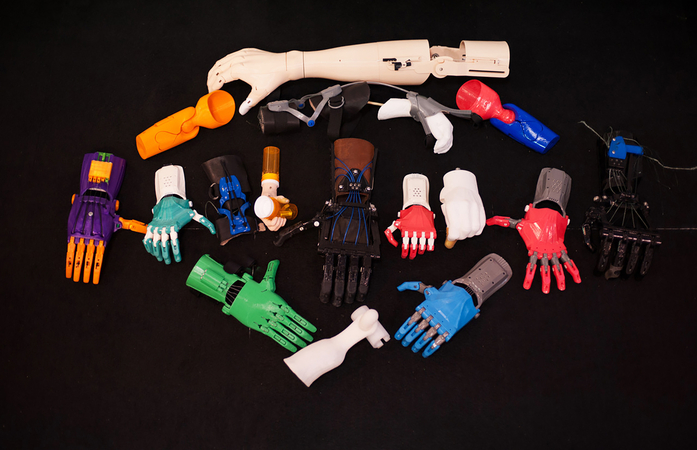
The Million Waves Project creates prosthetic hands for children using plastic water bottles collected from the seas to address two critical needs: providing affordable prosthetic hands and cleaning up ocean plastic pollution.

Every year, 10 to 24 billion pounds of plastic end up in the ocean, adding to the billions of pounds already plaguing our waterways and sea life. The Million Waves Project uses plastic water bottles from beaches and from donations, shreds them and makes them usable for 3-D printers. It takes about 30 water bottles to make a hand, said Chris Moriarity, who started Million Waves with his wife, Laura Moriarity, as a project in their dining room in coastal Northwest Washington state.

Million Waves partnered with a self-described, “digital humanitarian” organization called e-Nable to crowdsource their 3-D printers, working with hundreds of volunteers all over the world who own personal 3-D printers to create custom-fit, eco-friendly prosthetic hands. The hands are provided at no cost to the recipients.

Million Waves and e-Nable match children with makers in their area. The owner of the printer and the family organize fittings and print the custom hand. Kids can even request a “Frozen”-themed Elsa hand or an “Iron Man” arm.

All of the design files are open-source and available through e-Nable.

Jen Owens is the founder of enablingthefuture.org, an online community, and the co-founder of e-Nable. In 2011, excited about their handmade steampunk science-fiction costumes, Jen and her then husband, Ivan, posted a YouTube video showing Ivan using a giant, working mechanical hand. From there, an open-source platform to share engineering ideas was born.

Owens now estimates that their network has grown to 20,000 people in 100 countries. They have made more than 5,000 hands. Owens said it is difficult to find the exact numbers because the designs and materials are all crowdsourced and open-access. People “really have no idea the impact their creativity could have on the world unless they share it,” said Owens.

Abbey and Faith have been inspired by Shaquem Griffin, a linebacker for the Seattle Seahawks, who is also limb different. Abbey was encouraged by a video showing him weightlifting with his prosthetic hand.

Sheila Trznadel said the biggest challenge was making sure the children with limb differences had community, “knowing they’re not alone, knowing that they can do anything.”