การทดสอบว่าคนไข้มีการแพ้ไข่จริงหรือไม่ พิจารณาจากประวัติการกินไข่ การทำ Skin prick test หรือ การตรวจเลือดหาภูมิที่จำเพาะต่อโปรตีนในไข่ (Blood test for specific IgE) ไปจนถึงการทำการทดสอบโดยการกินไข่ (Oral challenge test)
Expert virologist Dr Yong Poovorawan on Saturday posted a list of questions and answers related to the Omicron variant of Covid-19.
• Is it very transmissible?
Yes. For example, if one person infected by the original Covid-19 virus sits among seven people, one or two will be infected.
If a person infected by the Delta variant sits among 10 people, six or seven will be infected.
If one person infected by the Omicron variant sits among 11 people, 10 will be infected.
• Can Omicron skip the immunity provided by the vaccine?
Two doses of any Covid-19 vaccine provide little or no protection. People should get a third jab to protect themselves. Those who have received a booster a long while ago may be at risk because immunity provided by the vaccine can drop over time and people who have been infected before can be infected again.
Vaccines, however, reduce the severity of symptoms.
Studies show that the Omicron variant is far less severe than the Delta variant. The number of hospitalisations from the variant in South Africa, where it was discovered, is 70 per cent fewer than from the Delta variant.
However, hospitalised patients did develop symptoms as severe as with the Delta variant.
Studies in the UK revealed that the number of hospitalisations from Omicron was 15 to 20 per cent less than the Delta variant, while they were two-thirds less in Scotland.
Yong advised people to get their shots to build up their immunity to reduce the severity of the disease. He said people should get a booster three months after their last jab because Omicron will soon replace the Delta variant.
In a Facebook post on Thursday, expert virologist Dr Yong Poovorawan said people need at least three doses of the Covid-19 vaccine to protect themselves from the Omicron variant.
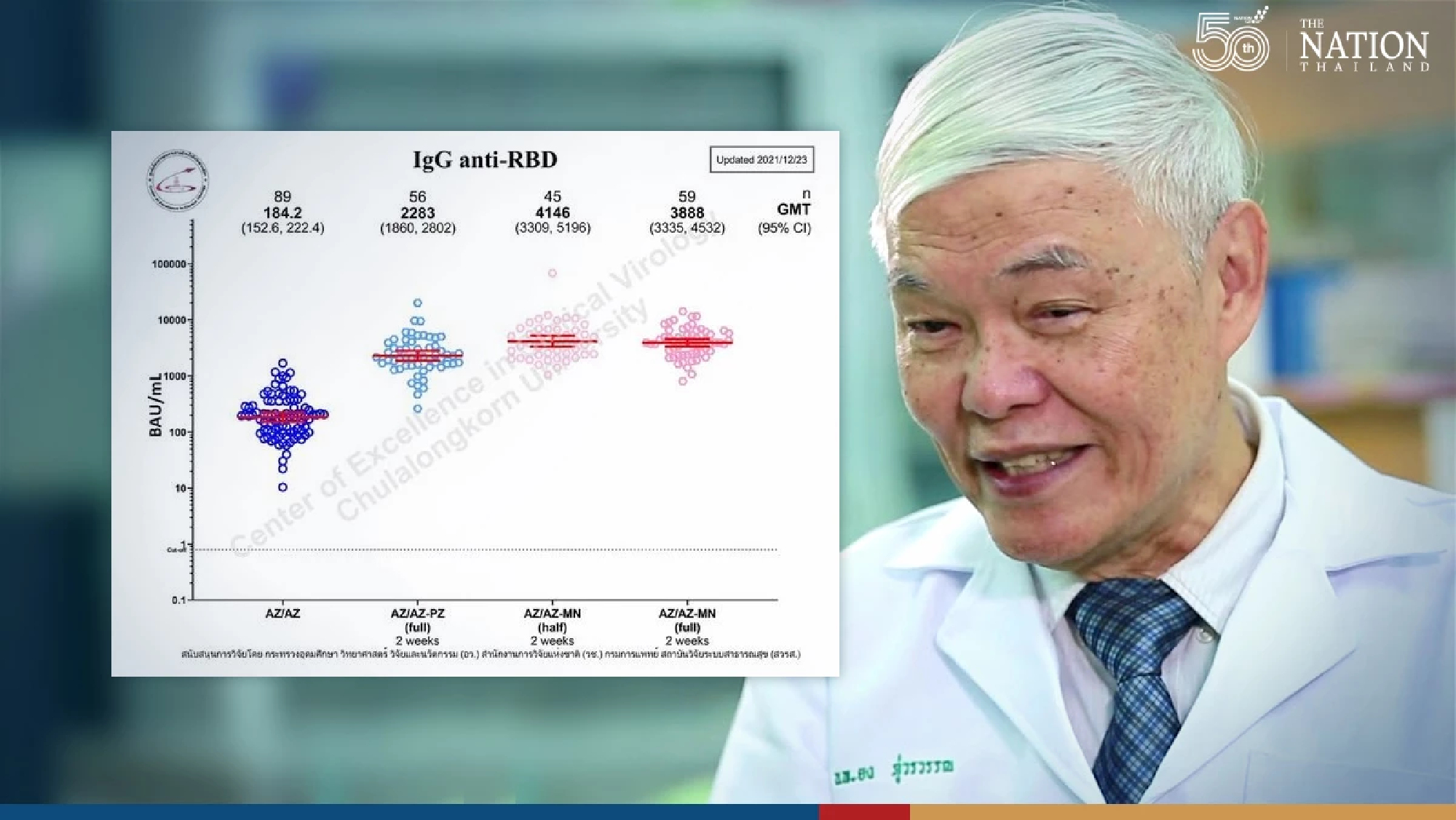
He said the booster dose should be AstraZeneca or the mRNA Pfizer or Moderna vaccines, as they will increase people’s immunity, especially if they have had two jabs of the inactivated Sinovac or Sinopharm vaccines.
He added that people who have received two Sinovac shots and followed up with an AstraZeneca, Pfizer or Moderna booster will have the same immunity as people who have received two jabs of AstraZeneca and then a third shot of either Pfizer or Moderna.
He added that even half a dose of Moderna provides enough immunity.
However, the virologist said this was a basic study and that we need to wait for the results of a study into neutralising antibodies that work against Omicron and Delta.
Yong added that people in the US and UK were being given half a dose of Moderna if their first two doses were AstraZeneca.
He added that the results of a study into the booster dose for people who received a combination of Sinovac and AstraZeneca will be available next year.
These studies are necessary to work out which vaccine formula is most effective, he added.
A third dose of AstraZenecas Covid-19 vaccine significantly boosted neutralizing antibodies against omicron, according to lab studies at the University of Oxford.
The vaccine, created by Astra and Oxford, saw antibodies increase to similar levels as those after two doses against the delta variant with a booster shot, the drug company said Thursday. A third dose also produced higher levels of neutralizing antibodies than those found in individuals who had recovered naturally from the alpha, beta and delta strains.
The results are largely good news for the vaccine, which has been sidelined in the West as a booster after messenger RNA vaccines were shown to be more effective in various trials. The study looked at 41 people who had been given a third dose.
Omicron’s rapid spread and its ability to initially reduce antibody protection in many vaccines led many countries to launch accelerated booster campaigns. The U.K. alone reported more than 100,000 new covid cases Wednesday for the first time, heaping pressure on Prime Minister Boris Johnson, who has resisted imposing further restrictions before Christmas.
However, early studies out of South Africa, Scotland and England show the highly mutated omicron variant appears less likely to land patients in the hospital than delta. The findings raise hopes there will be fewer cases of severe disease, yet omicron’s greater infectiousness means it could still severely affect health services, fueling the need for boosters.
“It is very encouraging to see that current vaccines have the potential to protect against omicron following a third dose booster,” said John Bell, a professor of medicine at Oxford and one of the study investigators. “These results support the use of third dose boosters as part of national vaccine strategies, especially to limit the spread of variants of concern, including omicron.”
Neutralizing antibodies against omicron were 3.6-fold lower 28 days after a booster Astra shot compared with the levels seen from three shots against delta, according to a preprint of the study. Exactly the same reduction was seen from the Pfizer Inc. vaccine compared with delta in the study.
The results come after Pfizer and Moderna released studies on how their vaccines stand up against omicron in recent weeks. Initial lab tests from Pfizer and partner BioNTech showed a third dose of their Covid-19 vaccine may be needed to neutralize omicron after researchers observed a 25-fold reduction in neutralizing antibodies that fight the variant from two doses.
Moderna also found a booster dose increased antibody levels against omicron.
Novavax said Wednesday that its vaccine generates an effective immune response against the variant, but added it could be necessary to develop an omicron-targeted vaccine.
Data from another lab study showed two doses Astra’s retained some protection against omicron, although a 36-fold decrease in antibody levels was observed from the original virus strain.
Separately, Astra published more results on the impact of omicron on its Covid-19 antibody drug Thursday after the company said last week the therapy retained neutralizing activity against the variant in lab testing.
Tests using a live version of the virus conducted by University College Oxford and Washington University School of Medicine in St. Louis found neutralizing antibody levels were similar to individuals who had been previously infected with Covid-19.

 กุมารแพทย์ผู้เชี่ยวชาญโรคภูมิแพ้และภูมิคุ้มกันวิทยา ระบุ คนไทยแพ้อาหารมากขึ้น จากปัจจัยด้านพันธุกรรม และสิ่งแวดล้อม โดยเฉพาะการแพ้อาหาร ที่มีส่วนประกอบของนมวัว ไข่ และแป้งสาลี โดยการ “แพ้ไข่” แต่ไม่กระทบกับการฉีดวัคซีนไข้หวัดใหญ่

 ราชวิทยาลัยจุฬาภรณ์ ร่วมกับสมาคมวิชาชีพและสถาบันทางการแพทย์ หารือแนวทางรับมือการแพร่ระบาดของเชื้อโควิด-19 ในปัจจุบันและอนาคต พร้อมเร่งลดภาระงานของแพทย์ด่านหน้า ลดจำนวนผู้ป่วยอาการรุนแรงซึ่งต้องใช้เครื่องช่วยหายใจ และลดตัวเลขผู้เสียชีวิตในประเทศ


 วันโรคลมพิษโลก : คนคันบ่อยต้องสำรวจตัวเอง แพทย์เร่งสร้างความรู้ ความเข้าใจ และตระหนักถึงความสำคัญของโรคลมพิษ ชี้อันตรายถึงตายได้

 แพทย์โรคปอดผนึกกำลังเติมเต็มลมหายใจให้ผู้ป่วยโรคพังผืดในปอด เผยความรู้โรคพังผืดในปอด ลดความสับสนจากโรคโควิด-19
 สถาบันประสาทวิทยา โดยกรมการแพทย์ ชี้แจงประเด็นด้านความเชื่อเกี่ยวกับความเชื่อเรื่องภูตผีปีศาจ สิ่งลี้ลับ ไสยศาสตร์ ที่คนทั่วไปเชื่อว่าไม่สามารถหาข้อพิสูจน์หรือคำอธิบายทางวิทยาศาสตร์ได้นั้น แท้จริงแล้วมีความเกี่ยวข้องสัมพันธ์กับระบบประสาท และโรคทางจิตเวช ซึ่งสามารถหาสาเหตุ และอธิบาย อันจะนำไปสู่แนวทางการบำบัดรักษาได้

 หมอซี แพทย์อาสา THAI COVID CARE ให้ความรู้เกี่ยวงานวิจัยโพรพอลิส (Propolis) จากรังผึ้ง ช่วยลดการบาดเจ็บของไต และลดจำนวนวันนอนโรงพยาบาลของผู้ป่วย COVID-19


 แพทย์เฉพาะทางด้านอายุรศาสตร์โรคหัวใจ แนะอาหารที่ดีต่อหัวใจ พร้อมไขความต่างระหว่าง การกินอาหารเพื่อหัวใจที่ดี กับการกินอาหารเพื่อลดน้ำหนัก


 SootinClaimon.Com