The number of Covid-19 cases crossed 13.05 million across Southeast Asia, with 27,325 new cases reported on Tuesday (October 26), higher than Monday’s tally at 26,848. New deaths are at 435, increasing from Monday’s number of 380. Total Covid-19 deaths in Asean are now at 276,287.
Indonesia’s Public Health Ministry announced that it is considering the possibility of reducing the cost of PCR test for Covid-19 down to 300,000 rupiah or around Bt700 following the request of President Joko Widodo. The country reported 611 new cases and 35 deaths on Tuesday, bringing cumulative cases to 4,241,090 patients and total 143,270 deaths.
Meanwhile, Cambodia has allowed Thai nationals and foreigners living in Thailand to enter the country without quarantine. The country will also resume international flights with Indonesia, Malaysia and the Philippines in addition to flights from China, Singapore and South Korea that it currently allows to land. Cambodia reported 112 new cases and three deaths on Tuesday, bringing cumulative cases in the country to 37,018 patients and 56 deaths.
Tesla has opened its R&D innovation center, the first of its kind among the electric car companys overseas facilities, and a Gigafactory data center in Shanghai, Tesla China said on Monday.
Tom Zhu, president of Tesla China, said Tesla has been practicing its commitment to deeply cultivating the Chinese market, adding that the R&D center will further promote Tesla’s localization process in China.
According to the plan, the R&D innovation center will carry out original development work for vehicles, charging equipment and energy products.
The data center will be used to store Chinese operations data such as factory production information.
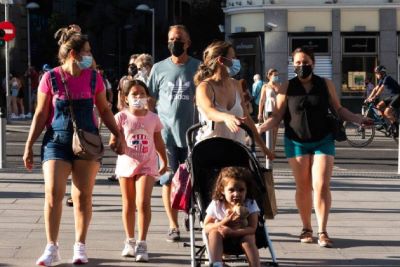
The cumulative number of COVID-19 cases in Spain surpassed 5 million on Monday, with the countrys COVID-19 death toll rising to 87,186.
The cumulative number of COVID-19 cases in Spain passed the 5-million mark on Monday after the country’s Ministry of Health confirmed 4,485 new cases.
The new cases, recorded for the 72-hour period from 2:00 p.m. Friday to 2:00 p.m. Monday, brought the total number of confirmed cases since the start of the pandemic in the country to 5,002,217.
The country’s COVID-19 death toll rose to 87,186 after 54 deaths were reported during the period, according to the ministry.
A medical worker prepares to work at a hospital in Barcelona, Spain, April 8, 2021. (Xinhua/Francisco Avia)
If authorized, the Pfizer-BioNTech COVID-19 vaccine would be the first COVID-19 vaccine for younger children.
Advisors to the U.S. Food and Drug Administration (FDA) are set for a key meeting Tuesday on whether to recommend the Pfizer-BioNTech COVID-19 vaccine for children ages 5 to 11, as experts predicted younger kids will be eligible for the vaccine in early November.
The FDA’s Vaccines and Related Biological Products Advisory Committee is scheduled to meet on Tuesday to discuss whether to approve the vaccine. If authorized, it would be the first COVID-19 vaccine for younger children.
Anthony Fauci, the nation’s top infectious disease expert, said some 28 million children ages 5 to 11 in the United States may be able to receive their COVID-19 vaccine in the first two weeks of November.
Students attend an in-person class in a school in Los Angeles, California, the United States, on April 13, 2021. (Xinhua)
“You never want to get ahead of the FDA in their regulatory decisions, nor do you want to get ahead of the CDC and their advisers on what the recommended would be,” Fauci said in an interview with ABC News.
“But if you look at the data that’s been made public and announced by the company, the data looked good as to the efficacy and the safety,” he said.
Pfizer and its partner BioNTech said their COVID-19 vaccine is safe and 90.7 percent effective against symptomatic COVID-19 in children ages 5 to 11, according to a document posted on the FDA website ahead of the meeting.
Pfizer and BioNTech are applying FDA emergency use authorization (EUA) of a two-dose regimen of 10-microgram dose for children ages 5 to 11, which would be administered three weeks apart.
The most common side effects occurred after the second dose and included pain at the injection site, fatigue and headache.
There were no serious adverse events associated with the vaccine, according to the FDA.
Moderna also announced Monday that a study in children ages 6 to 11 found two doses of its COVID-19 vaccine given 28 days apart produced a strong antibody response.
The Phase 2/3 study, called the KidCOVE study, gave over 4,700 participants two 50 microgram doses of the Moderna COVID-19 vaccine mRNA-1273, half the dose authorized for adults.
The interim analysis showed a “robust neutralizing antibody response” after two doses given 28 days apart, according to Moderna.
The most common side effects were fatigue, headache, fever and pain at the site of injection. Moderna said the analysis showed a “favorable safety profile.”
Nearly 6.3 million children have tested positive for COVID-19 since the onset of the pandemic, according to latest data updated by the American Academy of Pediatrics (AAP) on Monday.
Almost 118,000 child COVID-19 cases were added over the past week. Over 1 million child cases were added over the past six weeks, according to the AAP.
Although weekly cases decreased from the peak of nearly 252,000 child cases on the week of Sept. 2, a total of 118,000 cases remains an “extremely high number” of newly diagnosed children, said the AAP.
Health experts stressed to get children eligible for COVID-19 vaccine as soon as possible is key to curb the increase in child cases, and prevent the virus from spreading to other vulnerable groups.
The sea level off the Dutch coast could rise by 1.2 meters around 2100 compared to the beginning of this century if the greenhouse gas emissions do not reduce. As the melting of the Antarctic Ice Sheet at the South Pole accelerates, the KNMI said “even a 2-meter rise in sea level by 2100 is in sight.”
The sea level off the Dutch coast could rise much faster than expected, by up to two meters by 2100, the Royal Netherlands Meteorological Institute (KNMI) warned on Monday.
The sea level off the Dutch coast could rise by 1.2 meters around 2100 compared to the beginning of this century if the greenhouse gas emissions do not reduce, the KNMI said in a new report.
“As the melting of the Antarctic Ice Sheet at the South Pole accelerates, even a 2-meter rise in sea level by 2100 is in sight,” it added.
A helicopter patrols over a beach that is closed to avoid large crowds in Zandvoort, the Netherlands, April 5, 2020. (Xinhua/Sylvia Lederer)
The new insights in KNMI’s report are based on the August report of the United Nations Intergovernmental Panel on Climate Change (IPCC) and supplemented with its own research.
The calculated sea level rise has now been adjusted upwards. In 2014, the KNMI calculated that in 2100 the limit would be one meter at most.
In line with the IPCC, the KNMI noted that the climate in the Netherlands is changing fast. “With this report, the urgency of the rapidly occurring climate change becomes clear,” the weather institute said.
In addition to the rising sea level, the KNMI also foresees an increase in dry springs and summers and more extreme summer rain. “Our climate is increasingly moving towards the climate of southern Europe,” it said.
Photo taken on April 5, 2020 shows closed beach bars in Zandvoort, the Netherlands. (Xinhua/Sylvia Lederer)
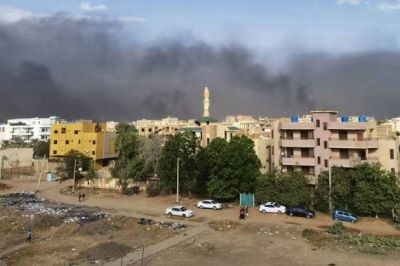
A State Department spokesperson urged Sudanese military to immediately release all detained political actors, fully restore the civilian-led transitional government, and refrain from violence against protesters.
The United States on Monday suspended 700 million U.S. dollars in economic aid to Sudan after the country’s military forces arrested civilian leaders and officials.
“The United States condemns the actions taken overnight by Sudanese military forces,” State Department spokesperson Ned Price said during a press briefing. “The arrest of civilian government officials and other political leaders, including Prime Minister (Abdalla) Hamdok, undermines the country’s transition to democratic civilian rule.”
“In light of these developments, the United States is pausing assistance from the $700 million in emergency assistance appropriations of economic support funds for Sudan,” he added.
Price urged the military to immediately release all detained political actors, fully restore the civilian-led transitional government, and refrain from violence against protesters.
Earlier on Monday, Chairman of Sudan’s Sovereign Council Abdel Fattah Al-Burhan declared a state of emergency across Sudan, and dissolved the transitional sovereign council and the government.
The decision was made hours after Sudanese Prime Minister Abdalla Hamdok, members of the Transitional Sovereignty Council’s civilian component and several ministers were arrested by joint military forces.
Microsoft Corp. said the hackers behind the SolarWinds cyberattack are engaged in a fresh campaign to compromise global networks by targeting the tech supply chain, including resellers and providers of cloud technology.
Microsoft attributes the coordinated attack, which was first observed in May, to a group called Nobelium, the same state-sponsored Russian hackers who used sophisticated intrusion techniques in 2020 to infect with malware as many as 18,000 customers of Texas-based software company SolarWinds Corp. More than 140 technology service providers and resellers have been notified as recent targets of the hackers and 14 of them are believed to have been compromised, Microsoft said in a blog on Monday.
Nobelium was also behind an attack on IT companies, governments, think tanks and financial service entities earlier this year that spanned 36 countries, Microsoft announced in June.
When they met in Geneva in the summer, U.S. President Joe Biden said he gave Russian President Vladimir Putin a list of 16 critical sectors that shouldn’t be hacked to deter a cyber response from the U.S. government, but the attacks have continued. The Kremlin, for its part, has repeatedly denied responsibility for any hacking attacks.
This time, between July and October this year, “we informed 609 customers that they had been attacked 22,868 times by Nobelium, with a success rate in the low single digits,” Microsoft Corporate Vice President of Customer Security and Trust Tom Burt wrote.
The Redmond, Washington-based company said this activity was another indicator that “Russia is trying to gain long-term, systematic access to a variety of points in the technology supply chain, and establish a mechanism for surveilling – now or in the future – targets of interest to the Russian government.”
The White House, which issued an executive order in May this year urging the private sector to bolster its cyber defenses, said it was increasing its intelligence sharing and other measures to protect against cyber threats.
The attacks described in the Microsoft blog were unsophisticated operations attempted daily by Russia and other foreign governments. The attackers weren’t attempting to exploit any flaws or vulnerabilities in software but instead using “well-known” techniques to steal credentials, the blog said.
Afghanistan is on the brink of a starvation crisis, with more than half its population – some 22.8 million people – projected to face acute food insecurity this winter, according to a study co-led by the United Nations World Food Program and its Food and Agriculture Organization.
Nearly 19 million Afghans, or 45% of the population, are experiencing “high levels of food insecurity,” according to the Integrated Food Security Phase Classification (IPC) report. That number is expected to jump to 22.8 million between November and March unless immediate action is taken.
“It’s terrifying. I think it confirms our worst fears,” said Richard Trenchard, the FAO’s representative in Afghanistan. “What we’re seeing here is a dramatic worsening of the humanitarian situation across Afghanistan.”
The IPC uses a five-level ranking system to classify food insecurity, with 1 being “minimal” and 5 constituting “famine.” In the case of Afghanistan, nearly half the population is either experiencing “crisis” (level 3) or “emergency” (level 4) food insecurity. The United Nations determines the ranking by assessing markers such as access to food and the impact of malnutrition, especially among children.
Crisis-level insecurity means that people are short of food and households are starting to skip meals, but that they still have ways to cope, usually by selling belongings or seeking extra work. When a family or individual reaches the emergency level, those options are exhausted, Trenchard said.
“Children are a particular concern because they’re affected at the time but we also know the consequences of hunger on a child can affect them the rest of their lives,” he said.
Afghanistan’s economy has declined sharply in recent moths, in large part because of the evaporation of international aid when the Taliban returned to power in August, a liquidity crisis in which banks have run out of cash and people are unable to buy basic necessities. In addition, remittances from Afghans abroad have declined because of the coronavirus pandemic.
The problems began before the Taliban takeover. Some 665,000 people were internally displaced because of conflict between January and September, the United Nations found.
Also, an acute drought that started in late 2020 led to reduced snow in the mountains, hurting farmers who depend on snowmelt for their crops and livestock. About 70% of the population lives in rural areas.
The La Niña weather pattern this winter is likely to extend drought conditions into early next year.
For Trenchard, who has responded to humanitarian crises in Somalia, Syria and Sudan’s Darfur, Afghanistan’s food insecurity crisis stands out for the speed with which it has unfolded and its national scope, including in urban areas – a situation that could continue to devolve without more aid and an upturn in the economy.
“Afghanistan’s people are incredibly resilient. They will find a way through this, but at the moment they need that assistance,” Trenchard said.
Vaccination will not be required for children under age 18 to travel to the United States once officials lift a ban on international visitors, but they will have to show proof of a negative coronavirus test before boarding a flight, according to rules outlined Monday by the Biden administration.
With roughly two weeks to go before the United States lifts a travel ban on visitors from 33 countries, federal health officials offered more specifics for travelers and airlines before restrictions are lifted Nov. 8. While vaccination won’t be required for children, most non-U. S. citizens and nonimmigrants arriving by air will have to show both proof of vaccination and proof of a negative coronavirus test taken at least three days before departure.
“With science and public health as our guide, the United States has developed a new international air travel system that both enhances the safety of Americans here at home and enhances the safety of international air travel,” the White House said in a statement.
Federal health officials said the exception was made for children because many do not have access or are not yet eligible for the vaccine. However, children must still be tested before traveling to the U.S. Those traveling with vaccinated adults must be tested within the previous three days, while those traveling with unvaccinated adults or who are traveling alone must show proof of a negative test taken one day before their flight.
The new rules don’t require U.S. citizens and legal permanent residents to be vaccinated but do outline different testing requirements depending on their vaccine status. Those who have been vaccinated must show proof of a negative test taken at least three days before their departure. Those who are unvaccinated must show proof of a test taken one day before their departure.
It will be up to airlines to verify a person’s vaccination and testing status, officials said. Many airlines already have systems that allow travelers to upload proof of a negative test and vaccine status. In addition, international visitors will have to provide information for how they can be reached in the U.S. for contact-tracing efforts.
“These are strict safety protocols that follow the science and public health to advance the safety of Americans here at home and the safety of international air travel,” a senior White House official said in a briefing with reporters.
The Biden administration announced in September it was replacing the travel ban on international visitors with a system that would rely on vaccination, testing and contact tracing for visitors wishing to come to the United States.
The announcement was welcomed by the travel industry, which has been pushing the administration for more than a year to lift the travel ban on travelers from 33 countries. With the ban in place, industry representatives feared the United States was losing ground to Europe, which began to ease travel restrictions for Americans this summer. Canada opened its borders on Aug. 9 to visitors from the United States who had been vaccinated.
Kevin M. Burke, president of the Airlines Council International – North America, said the new protocols will help the nation safely and securely reopen its borders.
“We appreciate the Biden administration’s commitment to working with industry on these complex challenges and we look forward to our ongoing work as the November 8 reopen date nears,” he said in a statement.
Since the announcement in September, the administration has slowly been laying the groundwork for lifting the ban. That included the Centers for Disease Control and Prevention deciding which vaccines would be accepted, specifying that travelers must have received those with full or emergency approval from the Food and Drug Administration or the World Health Organization.
In January, President Donald Trump announced a plan to end the travel ban, saying it was unnecessary because of his administration’s policy that required international travelers to provide proof of a negative test before boarding U.S.-bound flights. But within days of taking office, the Biden administration reinstated the ban and added South Africa, and later India, to the list, citing the need to control the spread of variants.
In June, the White House formed working groups to help determine when to lift rules that banned international visitors from certain countries.
Under the restrictions, most foreign nationals who have been in the United Kingdom, several European Union countries, Brazil and China in the previous 14 days are not permitted to enter the United States. India was added to the list in May.
The White House also announced this month it was easing pandemic-related restrictions on overland border crossings from Canada and Mexico. Officials said Monday they would release additional information about requirements that those coming to the United States via land borders must follow.
The updated policy offers limited exceptions for individuals enrolled in certain coronavirus vaccine clinical trials and those who shouldn’t take the vaccine for medical reasons. Those who need to travel for emergency or humanitarian reasons and have a letter issued by the U.S. government verifying their need to travel also may be exempted.
In addition, those with non-tourist visas coming to the United States from countries where there is low vaccine availability as determined by the CDC may be allowed to travel to the United States. Those who receive exemptions but intend to stay for more than 60 days may be required to become vaccinated once in the U.S.
NAIROBI – Sudans military on Monday detained the prime minister, dissolved the government and declared a state of emergency, in what could be the end of a democratic transition propelled by the millions of Sudanese who marched in the streets for the overthrow of longtime dictator Omar Hassan al-Bashir more than two years ago.
The Biden administration will suspend $700 million in bilateral assistance to Sudan in response to the military’s takeover, the State Department said Monday. Speaking to reporters in Washington, State Department spokesman Ned Price called for the military to release civilian leaders, restore civilian control, and refrain from using violence, including live ammunition, against protesters.
“We are watching very closely to see how the military responds, to do everything we can to see to it that the military respects the right of peaceful assembly and ultimately to see to it that the military respects the aspirations of the Sudanese people to restore the country’s path to democracy,” Price said. “Our entire relationship with this entity in Sudan will be evaluated in light of what has transpired unless Sudan is returned to the transitional path.”
The coup comes just days after the U.S. envoy to the region met with Sudan’s military leaders and warned them that American support – which aims to prop up an economic renewal after decades of sanctions – was conditional on sticking to an agreement that would see power put squarely in civilian hands this year.
Sudan’s top military commander and head of state, Lt. Gen. Abdel Fattah al-Burhan, appeared on state television about noon local time to announce the new measures, but he did not specifically address the arrests of Prime Minister Abdalla Hamdok and other members of the government. He also did not mention a target date for a transition to full civilian control of the government. He said the military was still committed to democratic elections by mid-2023.
As news of the military’s action spread around Khartoum, crowds gathered in the streets in protest – just days after the capital witnessed the biggest pro-democracy demonstrations since 2019, when Bashir was toppled by a wave of popular discontent. Locals described security forces out in droves using batons and live ammunition to scatter protesters, who uploaded videos of the chaos despite Internet services being disrupted.
“Everyone is on the streets. People are feeling like this is a major determining moment for our future,” said Asma Ismail, 35, a pro-democracy activist who spoke by phone from Khartoum. “Two and a half years of progress could disappear. It could all have been in vain.”
Local news channels reported the closing of roads and bridges connecting Khartoum with the rest of Sudan by large contingents of security forces, as well as the suspension of flights at the airport. A prominent doctors association said in a statement posted to Twitter that two people had died of gunshot wounds and more than 80 were injured.
Since Bashir’s ousting, the country has been governed by a civilian-military transitional council, and tensions over power-sharing have repeatedly threatened to boil over into outright confrontation. Divisions within the military have also contributed to the instability. Last month, pro-Bashir elements in the army attempted a coup but were thwarted.
The civilian side of the government, led by former economist Hamdok, had recently set a Nov. 17 deadline for a full transition to civilian power.
In a statement posted on the Facebook page of Sudan’s civilian-run Information Ministry, Hamdok was quoted as calling on the Sudanese people to peacefully “occupy the streets to defend their revolution.” A separate post said Hamdok had been arrested and transferred to an unknown location. His whereabouts remained unclear Monday afternoon.
The United States, European Union and United Nations all issued statements calling for the immediate release of civilian leaders and their restoration in the government, and the African Union suspended Sudan’s membership. Saudi Arabia, a close ally, expressed concern in a statement but did not call Monday’s events a coup or military takeover.
“The kingdom calls for the importance of self-control, calm and de-escalation, and preserving all that was achieved from political and economic gains,” the Saudi Foreign Ministry’s statement read.
Washington’s special envoy to the Horn of Africa region, Jeffrey Feltman, met on Saturday with Hamdok and Sudan’s two most powerful military figures, Burhan, and Mohamed Hamdan Dagalo, better known as Hemedti, a former warlord who now commands a powerful paramilitary unit called the Rapid Support Forces.
Feltman had used the meeting to warn that U.S. support for Sudan was tied to its transition toward elections and civilian rule, which military leaders have agreed to while pushing for a longer transition period.
On Monday, Feltman’s office said in a tweet: “The US is deeply alarmed at reports of a military take-over of the transitional government. This would contravene the Constitutional Declaration and the democratic aspirations of the Sudanese people and is utterly unacceptable. As we have said repeatedly, any changes to the transitional government by force puts at risk U.S. assistance.”
Price, the State Department spokesman, on Monday suggested that while U.S. economic aid was paused, U.S. humanitarian aid to Sudan would continue. “Our humanitarian commitment to the people of Sudan will not change,” he said, without providing details.
Price said the United States had not been in touch with Hamdok and did not get advance notice from military officials about their takeover.
The Sudanese Congress Party, which is part of Hamdok’s coalition of civilian stakeholders in the transitional government, posted numerous videos to its social media accounts of protesters gathering Monday in symbolically important places in Khartoum, including in front of the military headquarters, the focus of the vast protests in 2019 in the months before and after Bashir’s eventual unseating by his military commanders.
The protesters reprised a central slogan of the 2019 revolution as they marched up Africa Avenue past the airport and toward the center of the city: “Freedom, peace and justice, the revolution belongs to the people.”
The prime minister’s political coalition, largely made up of groups that supported Bashir’s overthrow, had made progress with Western governments in normalizing Sudan’s diplomatic and economic relations with the rest of the world after decades of sanctions. Sudan was taken off the United States’ state sponsors of terrorism list last year and had begun engaging with Western lending institutions to clear enormous debt arrears and secure loans to stabilize the country’s inflation-rocked economy.
The military’s role in Sudan’s transitional government was presented to civilian leaders in 2019 as a largely honorary one, but Burhan and others have figured prominently in the country’s domestic and foreign policy since then, and they accused Hamdok of trying to monopolize control.
Over the past half-century, Sudan has been rocked by coups and wars, creating an intricate and shifting web of alliances and rivalries. In 2011, following a decades-long civil war, the country was split in two after largely non-Muslim southerners voted to secede and create the new country of South Sudan. A particularly brutal conflict in the western region of Darfur, along the border with Chad, still simmers and has displaced hundreds of thousands of people this year alone, according to the United Nations.
Militia leaders from Darfur who once fought Burhan and Hemedti have now sided with them in an alliance that has made supporters of the civilian government, especially among displaced communities in Darfur, deeply uncomfortable. Pro-democracy demonstrators have also alleged that Sudanese military leaders still maintain close ties with Bashir’s inner circle despite claiming to be vanguards of the movement that ousted him.
A particularly sore point has emerged over Bashir’s outstanding warrant from the International Criminal Court in The Hague on charges of genocide and crimes against humanity, relating to atrocities in Darfur carried out by state security forces between 2003 and 2008. The civilian government has approved measures to hand Bashir over to the court from a Sudanese jail, but the military has blocked the move. Burhan, Hemedti and other prominent military and paramilitary figures served in Darfur under Bashir, but there are no outstanding cases against them.



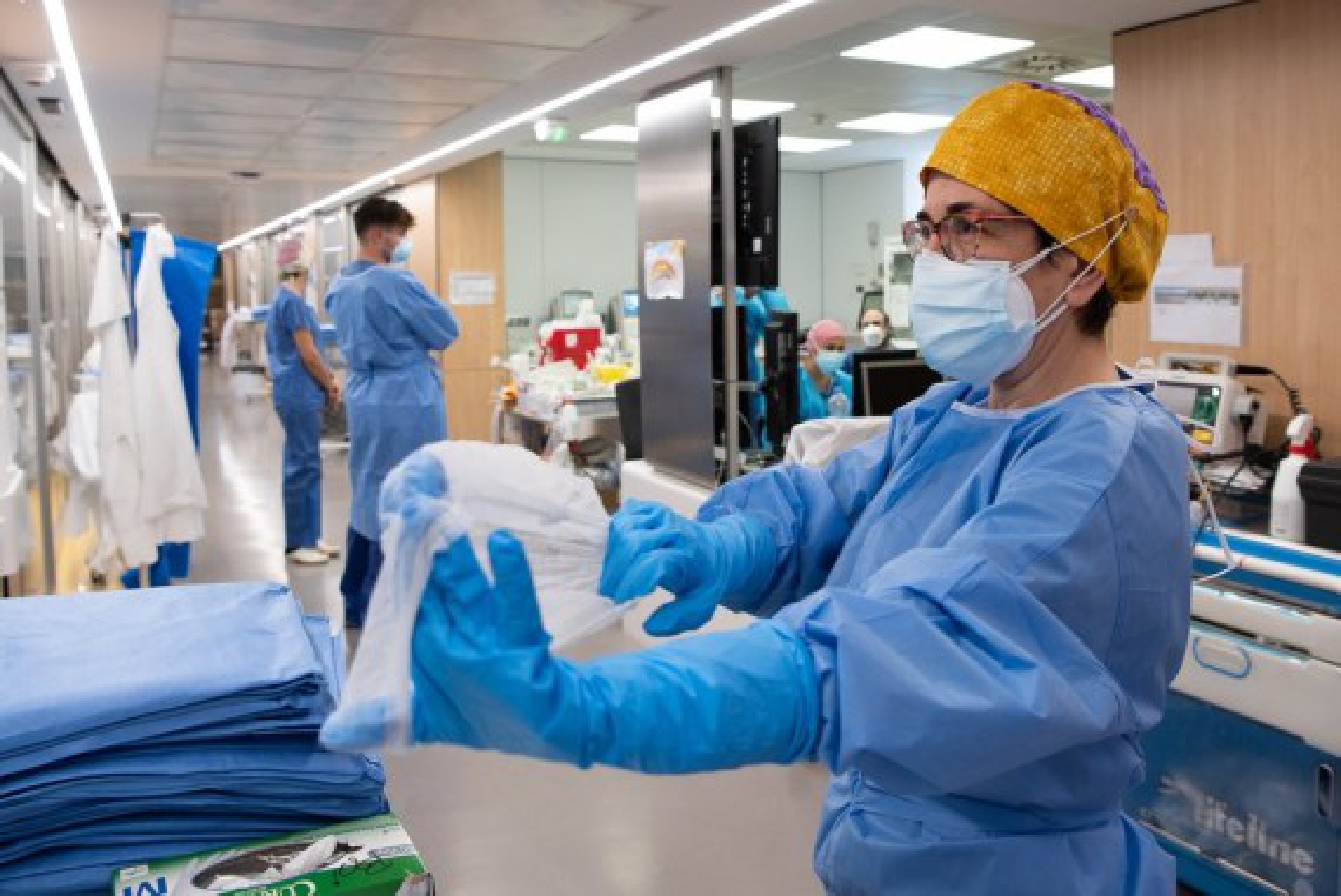 A medical worker prepares to work at a hospital in Barcelona, Spain, April 8, 2021. (Xinhua/Francisco Avia)
 People queue up to receive the COVID-19 vaccine outside a hospital in Madrid, Spain, July 7, 2021. (Xinhua/Gustavo Valiente)
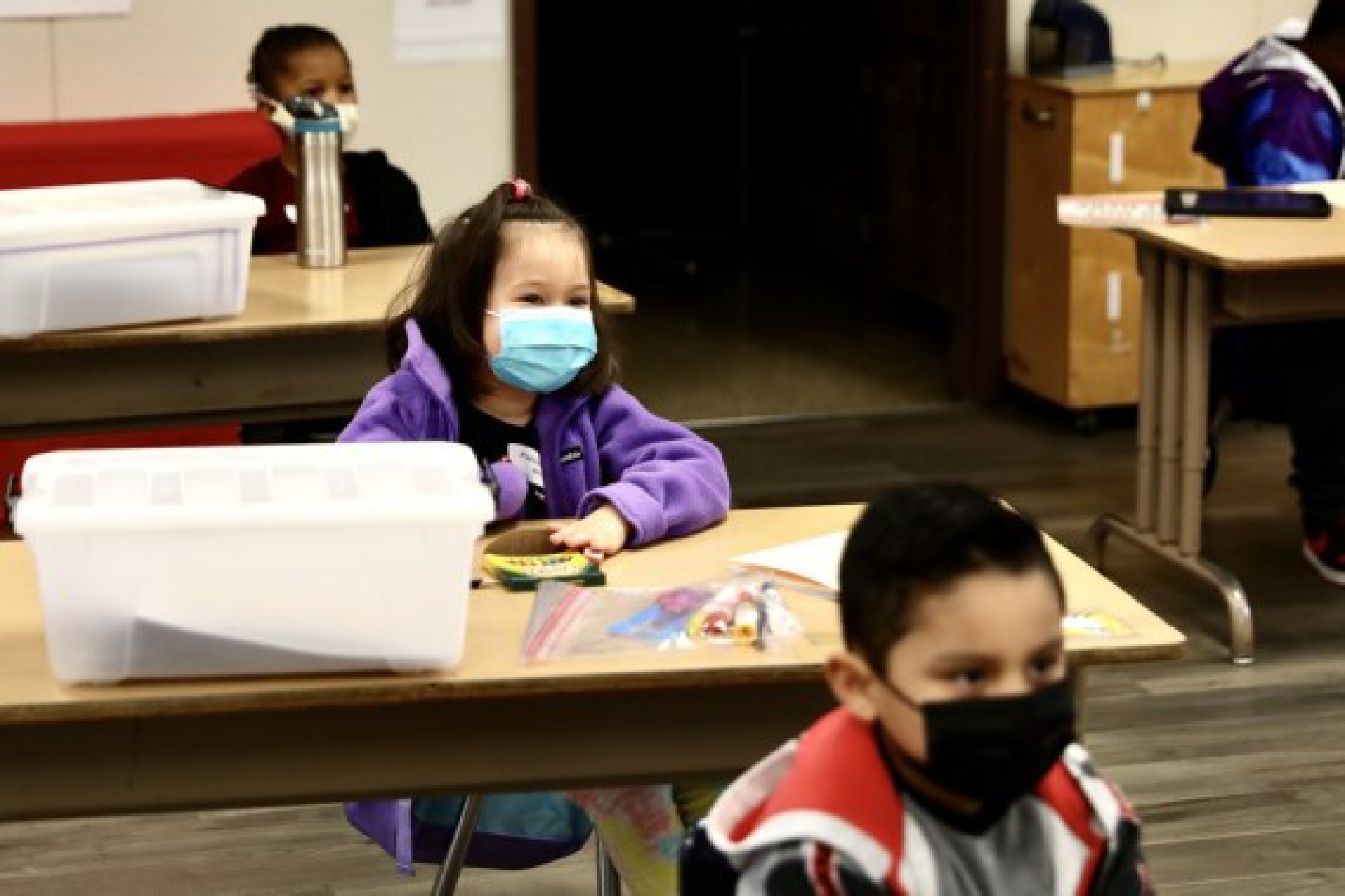 Students attend an in-person class in a school in Los Angeles, California, the United States, on April 13, 2021. (Xinhua)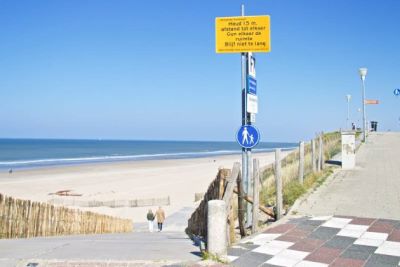
 A helicopter patrols over a beach that is closed to avoid large crowds in Zandvoort, the Netherlands, April 5, 2020. (Xinhua/Sylvia Lederer)
 Photo taken on April 5, 2020 shows closed beach bars in Zandvoort, the Netherlands. (Xinhua/Sylvia Lederer)