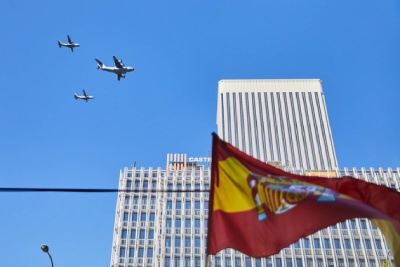
Spain celebrated its National Day on October 12 with a military parade and flypast by the Spanish Air Force, which was canceled in 2020 because of the coronavirus pandemic.
King Felipe VI of Spain and Prime Minister Pedro Sanchez on Tuesday attended a military parade held here to celebrate the country’s National Day.
The traditional annual parade and flypast by the Spanish Air Force returned after being canceled in 2020 because of the coronavirus pandemic.
ADVERTISEMENT
COVID-19 restrictions, such as smaller stands, were still in place for the event in which 2,656 troops participated — considerably fewer than the 4,200 who took part in the 2019 parade.
Sixty-eight aircraft and helicopters took part in the flypast and 115 vehicles rolled through the streets during the event, whose slogan was “Service and Commitment.”
Soldiers attend a parade to celebrate the National Day of Spain in Madrid, Spain, Oct. 12, 2021. (Xinhua/Gustavo Valiente)
It was designed to highlight the Spanish armed forces’ efforts to contain the pandemic and to respond to natural catastrophes, such as forest fires; to clean up after Storm Filomena, which covered central Spain in almost a meter of snow earlier in the year; or to help save lives and property during the ongoing volcanic eruption on the island of La Palma.
Early in the day, Sanchez tweeted that “this October 12 let us claim what unites us, what makes us better as a society and what makes Spain a welcoming, open and diverse country. Let’s celebrate our commitment, solidarity, cooperation and multilateralism. Let’s celebrate who we are.”
Planes fly at a parade to celebrate the National Day of Spain in Madrid, Spain, Oct. 12, 2021. (Xinhua/Gustavo Valiente)
Soldiers attend a parade to celebrate the National Day of Spain in Madrid, Spain, Oct. 12, 2021. (Xinhua/Meng Dingbo)
Two postal workers were killed in a shooting at a U.S. Postal Service facility in Memphis on Tuesday, according to Postal Inspection Service, the mail agencys law enforcement arm. The shooter also died.
An assistant mail carrier retrieved a firearm from his car in the East Lamar Carrier Annex and returned to the building, shooting his manager and a plant supervisor before shooting himself, according to a U.S. Postal Inspection Service official and a postal union official, both of whom spoke on the condition of anonymity to discuss the investigation.
The Memphis Police Department said late Tuesday afternoon that there were “no active threats” in the area.
An FBI spokeswoman told the Memphis Commercial Appeal that the shooter was a Postal Service employee.
An Inspection Service statement said the agency was working with the Memphis Police Department, the FBI and the Bureau of Alcohol, Tobacco, Firearms and Explosives to investigate the shooting. Postal Service spokeswoman Kimberly Frum said in an emailed statement that the mail service was “saddened at the events that took place today in Memphis. Our thoughts are with the family members, friends and co-workers of the individuals involved.”
The agency will provide mental health resources to employees at the annex, a staff-only mail-sorting and distribution facility, in coming days, Frum said.
ADVERTISEMENT
Authorities did not identify the victims or the shooter, but Memphis-area resident Roxanne Rogers identified her cousin James Wilson as one of the victims, according to the Commercial Appeal.
“He was a good man. An outstanding man,” Rogers told the newspaper. “The best man you’d ever want to be around.”
Sen. Marsha Blackburn, R-Tenn., said Tuesday night that she was “saddened by the loss of life” in the attack.
Postal shootings during the 1980s and ’90s gave rise to the slang “going postal” to describe homicides committed by current or former mail service employees. News media often falsely ascribed long hours and intense work for driving employees to violence.
Postal Service workers, and the agency’s unions, bristle at the term and instead commend the agency for its workplace protections. The Postal Service commissioned a report in 2000, led by former Carter administration Cabinet official Joseph Califano Jr., that found that “‘going postal’ is a myth, a bad rap.”
“Postal workers are no more likely to physically assault, sexually harass, or verbally abuse their co-workers than employees in the national workforce,” the report stated.
Tuesday’s shooting at the annex in the Orange Mound neighborhood comes less than a month after a shooting at a grocery store killed one person and injured 15 in the Memphis suburb of Collierville. The gunman in that attack fatally shot himself, police said.
“A prolonged period of extremely easy financial conditions, while needed to sustain the economic recovery, may result in overly stretched asset valuations and could fuel financial vulnerabilities,” the IMF report said.
While policy support continues to be key to sustaining the ongoing recovery from the COVID-19 pandemic, policymakers need to tackle pockets of elevated vulnerabilities to maintain financial stability, the International Monetary Fund (IMF) said on Tuesday.
“Policymakers are confronted with a challenging trade-off: maintaining near-term support for the global economy while preventing unintended consequences and medium-term financial stability risks,” the IMF said in its latest Global Financial Stability Report.
ADVERTISEMENT
“A prolonged period of extremely easy financial conditions, while needed to sustain the economic recovery, may result in overly stretched asset valuations and could fuel financial vulnerabilities,” the report said.
Some warning signs that point to a deterioration in the underlying foundations of financial stability are “increased financial risk-taking and rising fragilities in the nonbank financial institutions sector,” according to the report.
“If left unchecked, these vulnerabilities may evolve into structural legacy problems, putting medium-term growth at risk and testing the resilience of the global financial system,” the report said.
The report also warned that a sudden change in the monetary policy stance of advanced economies may result in a sharp tightening of financial conditions, adversely affecting capital flows and exacerbating pressures in countries facing debt sustainability concerns.
“We already see that over 50 percent of low-income countries have either unsustainable debt or very close to unsustainable debt,” Tobias Adrian, financial counselor and director of the IMF’s Monetary and Capital Markets Department, told Xinhua in a video interview.
“So many countries might be pushed into unsustainable territory. And we could see more debt restructuring of low-income countries,” he said.
While leveraging the historic general Special Drawing Rights (SDRs) allocation, emerging and frontier markets should rebuild buffers as appropriate and implement structural reforms to insulate themselves from the damage from capital flow reversals and abrupt increases in funding costs, the report said.
The new allocation of SDRs equivalent to 650 billion U.S. dollars, the largest in the IMF’s history, came into effect in August. About 275 billion dollars of the new allocation would go to emerging and developing countries, of which low-income countries would receive about 21 billion dollars, according to the IMF.
The SDR allocation came at an important time as many countries are in acute need of liquidity support to fight the pandemic with the spread of the more contagious Delta variant.
The SDR, an international reserve asset created by the IMF in 1969 to supplement its member countries’ official reserves, can be exchanged among governments for freely usable currencies in times of need.
A trader works at the trading floor in the New York Stock Exchange in New York, the United States, Sept. 20, 2021. (Xinhua)
England will suffer devastating floods like the ones that submerged parts of Germany this summer if the country fails to protect itself against more severe weather brought on by climate change, a government agency said Wednesday.
“It is adapt or die,” the head of the Environment Agency, Emma Howard Boyd, said in a statement accompanying a new climate change report.
The report warned of rising sea levels, increased river flows and significant strains on England’s public water supply amid soaring global temperatures associated with the changing climate. It urged the government, businesses and broader society to in adaptation and mitigation strategies, “rather than living with the costs of inaction.”
“Some 200 people died in this summer’s flooding in Germany. That will happen in this country sooner or later … unless we also make the places where we live, work and travel resilient to the effects of the more violent weather the climate emergency is bringing,” Boyd said.
According to the agency, even with a 2°C temperature rise compared to preindustrial levels, summer rainfall is expected to decrease while winter rainfall is expected to increase over the next several decades. Some 3 million properties in England are at risk of surface water flooding in places where no early warnings are available.
“The Environment Agency alone cannot protect everyone from increasing flood and coastal risks … we must help communities learn to live with risk, minimize damage and return to normal life quickly,” the report said, adding that “the required scale and urgency of national action is daunting.”
ADVERTISEMENT
Britain is hosting the United Nations’ COP26 climate summit in Glasgow next month, where adapting to “protect communities” against climate change is one of the conference’s four key goals.
But with much of the world’s focus on reducing emissions, Boyd said that she is worried adaptation will take a back seat at the summit.
“It is deeply worrying that adaptation is in danger of being grievously undercooked at COP26. Not by the UK Government, but by the world at large,” she said.
“Significant climate impacts are inevitable,” she said. “But we are running out of time to implement effective adaptation measures. Our thinking must change faster than the climate.”
Britain has done too little in the early weeks to stop coronavirus spreading, which is one of the countrys worst public health failures, according to an official report.
Britain’s failure to do more to stop the spread of coronavirus early in the pandemic was one of the country’s worst public health failures, said an official report released Tuesday.
The government approach was to try to manage the situation and in effect achieve herd immunity by infection, according to the “Coronavirus: lessons learned to date” report from the Health and Social Care Committee and the Science and Technology Committee of the British parliament.
ADVERTISEMENT
The result was that too little was done in the early weeks to stop COVID spreading, despite evidence from China and then Italy that it was a virus that was highly infectious, caused severe illness and for which there was no cure.
People line up outside Bridge Park Community Leisure Center to receive the COVID-19 vaccines in Brent, northwest London, Britain, June 19, 2021. (Xinhua/Ray Tang)
“The veil of ignorance through which the UK viewed the initial weeks of the pandemic was partly self-inflicted,” said the report.
Across 150 pages, the report covers a variety of successes and failings. However, the report described the whole approach to the vaccination program, from the research and development through to the rollout of the jabs, as “one of the most effective initiatives in UK history.”
Another 38,520 people in Britain have tested positive for COVID-19, bringing the total number of coronavirus cases in the country to 8,231,437, according to official figures released Tuesday.
The country also recorded another 181 coronavirus-related deaths. The total number of coronavirus-related deaths in Britain now stands at 137,944. These figures only include the deaths of people who died within 28 days of their first positive test.
There are currently 7,003 patients in hospital with COVID-19.
More than 85 percent of people aged 12 and over in Britain have had their first dose of vaccine, and over 78 percent have received both, the latest figures showed.
Photo taken on March 31, 2021 shows a view of the National COVID Memorial Wall outside St Thomas
The political package that must be delivered in Glasgow needs to contain at least three key elements: emissions reduction, financing for climate action in developing countries, and climate adaptation, UN Secretary-General Antonio Guterres said.
UN Secretary-General Antonio Guterres said Tuesday that the UN Climate Change Conference (COP26) in Glasgow, Scotland, next month must be a turning point for climate action.
“COP26 must be a turning point if we are to fulfill the promise of the Paris Agreement to limit global temperature rise to 1.5 degrees Celsius above pre-industrial levels, protect populations from the impacts of climate change and ensure that all financial flows are consistent with the goals of net-zero emissions and sustainable development,” he told the sixth ministerial meeting of the Coalition of Finance Ministers for Climate Action, in a video message.
ADVERTISEMENT
People participate in a march calling for action against climate change in Brussels, Belgium, Sept. 20, 2019. (Photo by Riccardo Pareggiani/Xinhua)
With COP26 fast approaching, he said, he remained genuinely concerned over the lack of progress on these priorities.
The political package that must be delivered in Glasgow needs to contain at least three key elements: emissions reduction, financing for climate action in developing countries, and climate adaptation, he said.
“First, we must swiftly close the emissions gap. That means national pledges must collectively put us on track to reduce emissions by 45 percent by 2030 compared to 2010 levels. And each country must be ready to update its climate commitments until we collectively get on track to reach the 1.5-degree objective,” he said.
Second, developed countries must close the finance gap by providing and exceeding the promised 100 billion U.S. dollars a year to developing countries for climate action, he said. “And this is just a starting point. Beyond that goal, all financial flows, public and private, must align with a net-zero emissions and resilient development pathway.”
Third, Glasgow must deliver a breakthrough on adaptation. Climate disruption is already here, affecting ever more lives and livelihoods every year, especially among the most vulnerable. Building resilience and adapting must be a priority for all, said Guterres.
“I ask each of you in your national capacity and as shareholders of national and multilateral development banks to consider allocating half of all public climate finance in support of developing countries for adaptation. And I ask that you reconsider how you calculate gross domestic product. Nature’s resources still do not figure in countries’ calculations of wealth. We need nature-based solutions for adaptation and mitigation. The current system is weighted toward destruction, not preservation. Governments must reflect nature’s true value in all policies, plans and economic systems,” he said.
As COVID-19 and climate change pose new and unique challenges to low- and middle-income countries, he asked the finance ministers to revise eligibility thresholds for official development assistance to improve access to finance for those countries.
The number of Covid-19 cases crossed 12.61 million across Southeast Asia, with 35,025 new cases reported on Tuesday (October 12), higher than Monday’s tally at 33,489. New deaths are at 610, increasing from Monday’s number of 403. Total Covid-19 deaths in Asean are now at 269,668.
Indonesia announced on Tuesday that foreign visitors to Bali Island must have been fully vaccinated against Covid-19 for at least 14 days prior to arrival. They are also required to have valid Covid-19 treatment insurance covering at least US$100,000 and to pay for their hotel accommodation for the quarantine period in advance. Visitors from up to 18 countries have been approved to enter the island, although the list is yet to be announced.
Meanwhile, Malaysian government announced that the Covid-19 situation in the country is improving due to the declining trend in average daily cases, the number of clusters and hospital utilisation capacity, while the country registers a high vaccination rate. These factors prove that Malaysia and the people are ready to enter the endemic phase. The country reported 7,276 new cases and 93 deaths on Tuesday, bringing cumulative cases to 2,353,579 patients and total 27,422 deaths.
“If we do not act and help Afghans weather this storm, and do it soon, not only they but all the world will pay a heavy price,” UN Secretary-General Antonio Guterres warned.
UN Secretary-General Antonio Guterres on Monday called for the injection of liquidity to keep the Afghan economy afloat.
In addition to humanitarian aid, the international community needs to act to prevent the economic collapse of Afghanistan, he told reporters.
ADVERTISEMENT
Even before the Taliban takeover in August, Afghanistan’s fragile economy, which has been kept afloat by foreign aid over the past 20 years, suffered from the impact of drought and COVID-19. Right now, with assets frozen and development aid paused, the economy is breaking down. Banks are closing, and essential services, such as health care, have been suspended in many places, he noted.
United Nations Secretary-General Antonio Guterres addresses the Security Council meeting on Ethiopia at the UN headquarters in New York, Oct. 6, 2021. (Loey Felipe/UN Photo/Handout via Xinhua)
“We need to find ways to make the economy breathe again. And this can be done without violating international laws or compromising principles. We must seek ways to create the conditions that would allow Afghan professionals and civil servants to continue working to serve the Afghan population,” he said.
“I urge the world to take action and inject liquidity into the Afghan economy to avoid collapse,” Guterres said.
This is a make-or-break moment, warned Guterres. “If we do not act and help Afghans weather this storm, and do it soon, not only they but all the world will pay a heavy price.”
Afghan currency exchange dealers wait for customers in Kabul, capital of Afghanistan, Sept. 4, 2021. (Photo by Saifurahman Safi/Xinhua)
Without food, without jobs, without their rights protected, more and more Afghans will flee their homes in search of a better life. The flow of illicit drugs, criminal and terrorist networks will also likely increase. This will not only badly affect Afghanistan itself, but also the region and the rest of the world, he warned.
Guterres said the issue of injecting liquidity should be treated independently of other issues, such as the questions of recognition or nonrecognition of a government in Afghanistan, the question related to sanctions, and the questions related to frozen assets.
“There are many questions of these that, obviously, the international community will be discussing with the Taliban and that will require that the Taliban abide by a number of important aspects, be it related to human rights and the rights of women and girls, in particular, be it in relation to the question of terrorism, be it … the inclusivity of the government,” he said.
Independently of those measures, there are forums to inject cash inside the economy through different entities, through nongovernmental organizations (NGOs), through UN agencies to allow for the people to receive assistance, he said. “And this is what we have been asking.”
Afghan girls pose for photos in Kabul, capital of Afghanistan, Sept. 15, 2021. (Photo by Saifurahman Safi/Xinhua)
There is a need to find ways — on the basis of respect for international law and principles — to inject liquidity for the economy not to collapse and for the people not to suffer tremendously, he said. “The Afghan people cannot suffer a collective punishment because the Taliban misbehave.”
The diplomatic recognition of the Taliban and the injection of liquidity are completely different things, said Guterres.
The World Bank can create a trust fund and that trust fund can pay directly to Afghan people in need. The UN Development Programme has a trust fund that can pay directly to people in need or organizations in need. And there are many NGOs operating in Afghanistan, he said.
“So, we need to inject cash in the economy. I’m not saying that I’m asking the international community to give money to the Taliban or to the present authorities. No. We need to inject cash in the economy. We need to make the economy breathe. We need to allow people to survive. That is our concern.”
While the international community has consensus on humanitarian aid, things in relation to the injection of liquidity into the Afghan economy are moving too slowly, said Guterres.
The main responsibility for finding a way back from the abyss lies with those that are now in charge in Afghanistan, he said.
Since their takeover, the Taliban have — at various times — promised Afghan citizens, including women, children, minority communities, former government employees, that they would protect their rights. Central to those promises was the possibility of women to move, work and enjoy their basic rights, and for girls to have effective access to all levels of education, the same as boys, he said.
“Gender equality has always been an absolute priority for me. … I am particularly alarmed to see promises made to Afghan women and girls by the Taliban being broken,” said Guterres. “Broken promises lead to broken dreams for the women and girls of Afghanistan.”
Women and girls need to be the center of attention. Their ability to learn, work, own assets, and live with rights and dignity will define progress. Eighty percent of Afghanistan’s economy is informal, with a preponderant role of women. Without them, there is no way the Afghan economy and society will recover, he said. “I strongly appeal to the Taliban to keep their promises to women and girls and fulfill their obligations under international human rights and humanitarian law.”
The United Nations is permanently engaging with the Taliban on the safety and security of its staff, humanitarian assistance and unhindered access for all, including female staff, and human rights with particular focus on women and girls’ rights, he said.
The humanitarians have been acting with the cooperation of the Taliban, who have progressively granted access to the areas requested and provided security when needed. The number of incidents during humanitarian operations has been in constant decline, he noted.
The United Nations is engaging with the Taliban and progress is being made, said Guterres.
He gave an example of the UN engagement with the Taliban for its female staff to have full and unimpeded work in relation to humanitarian aid.
“Now, we have been engaging the Taliban province by province, day by day. And the result of that effort, in the month of September, is the following: we managed to reach full agreement with the Taliban on this freedom in six provinces, against three in the beginning of the month; we have partial agreement in 20, instead of 16 in the beginning of the month; we have no agreement in four, against six in the beginning of the month; and there are four in which we have not yet had the possibility to engage, against eight in the beginning of the month.”
“This is daily work, area by area, fighting for the rights of each woman, sometimes one by one. But this is our engagement to our staff and to the women and girls in Afghanistan in general,” he said. “We might have difficulties. We might fail here and there. But one thing I can promise: we will not give up.”
The humanitarian crisis is growing in Afghanistan, with at least 18 million people — half of the country’s population — needing help. UN agencies and humanitarian NGOs in Afghanistan are in a race against time to deliver life-saving aid to crisis-affected people and pre-position supplies ahead of winter, he said.
Despite financial shortfalls, logistical challenges, and an increasingly complex geopolitical situation, the United Nations is undertaking a massive humanitarian operation in the country.
In September alone, more than 3.8 million people received food assistance; 21,000 children and 10,000 women received treatment for acute malnutrition; 32,000 people received non-food items, including blankets and warm clothes for winter; 10,000 children were reached with community-based education activities; 450,000 people were reached with primary and secondary health care; 160,000 farmers and herders were provided with livelihoods support; 12,000 people received emergency psycho-social and mental health support; 186,000 drought-affected people received water; and 150,000 people received hygiene promotion and hygiene kits, he said.
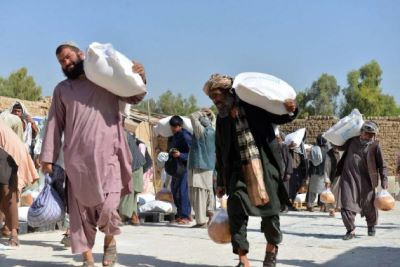
An Afghan man delivers bananas in Kabul, capital of Afghanistan, Sept. 15, 2021. (Photo by Saifurahman Safi/Xinhua)
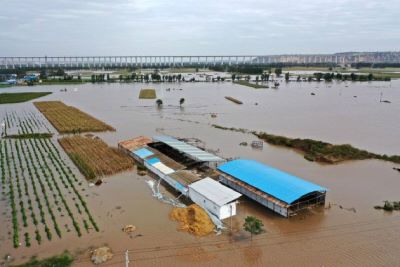
North Chinas Shanxi Province had lowered its emergency response for floods to Level IV from Level III at 6 p.m. Monday, said the provincial flood control and drought relief headquarters.
China has a four-tier flood-control emergency response system, with Level I being the most severe.
The flood situation in the province has been stabilized. The water levels of small and medium-sized rivers have fallen below the warning mark, said the headquarters.
ADVERTISEMENT
The headquarters require that related departments closely monitor the flood situation and strictly implement all measures to ensure the safety of people’s lives and property.
Located on the eastern end of the Loess Plateau, Shanxi is usually dry. However, the average precipitation of the province reached 119.5 mm from 8 p.m. on Oct. 2 to 8 a.m. on Oct. 7 this year, three times the normal average rainfall for October in previous years, said the provincial meteorological bureau.

 Soldiers attend a parade to celebrate the National Day of Spain in Madrid, Spain, Oct. 12, 2021. (Xinhua/Gustavo Valiente)
 Planes fly at a parade to celebrate the National Day of Spain in Madrid, Spain, Oct. 12, 2021. (Xinhua/Gustavo Valiente)
 Soldiers attend a parade to celebrate the National Day of Spain in Madrid, Spain, Oct. 12, 2021. (Xinhua/Meng Dingbo)
 A trader works at the trading floor in the New York Stock Exchange in New York, the United States, Sept. 20, 2021. (Xinhua)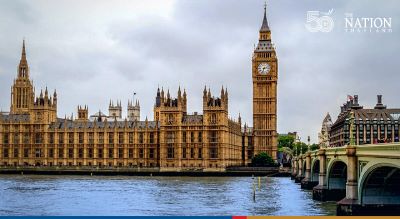
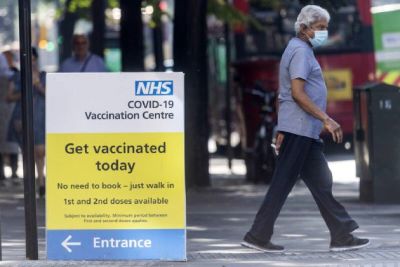
 People line up outside Bridge Park Community Leisure Center to receive the COVID-19 vaccines in Brent, northwest London, Britain, June 19, 2021. (Xinhua/Ray Tang)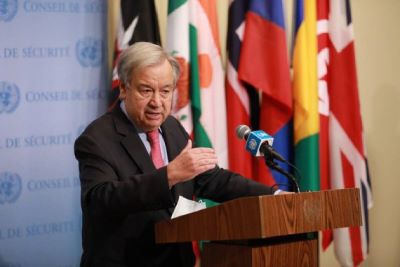
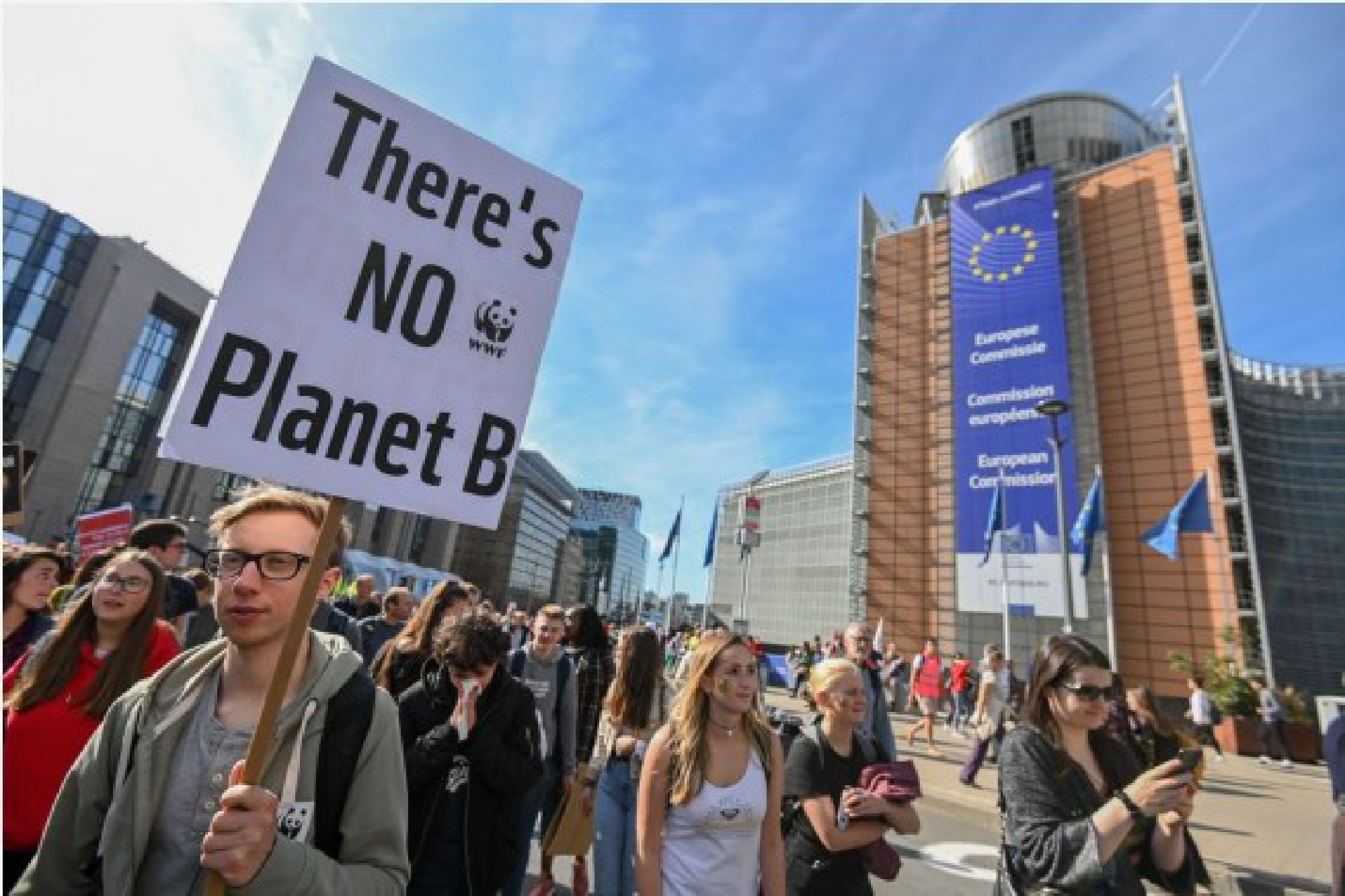 People participate in a march calling for action against climate change in Brussels, Belgium, Sept. 20, 2019. (Photo by Riccardo Pareggiani/Xinhua)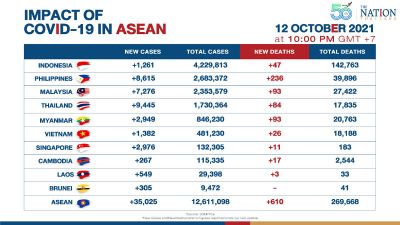
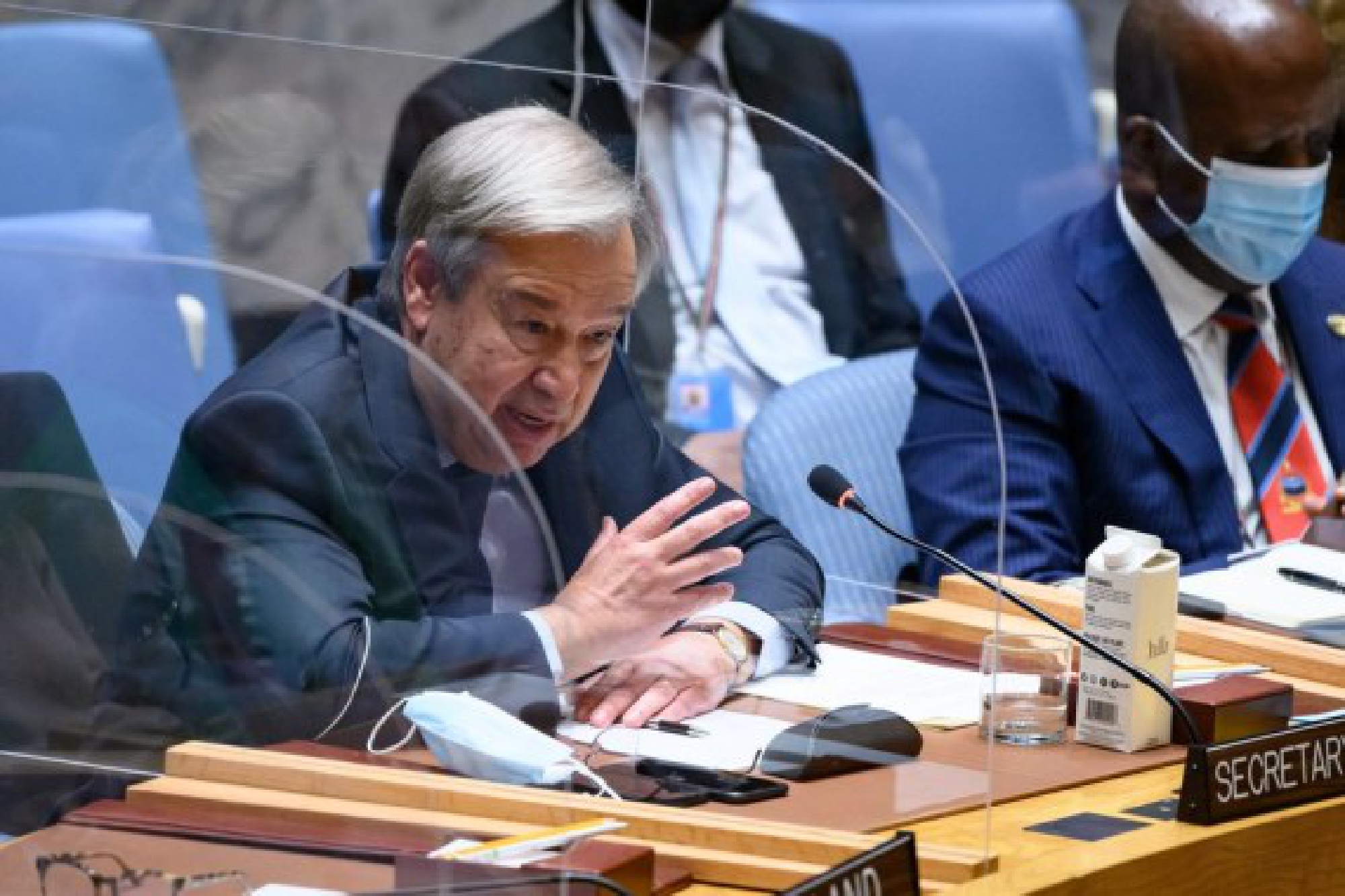 United Nations Secretary-General Antonio Guterres addresses the Security Council meeting on Ethiopia at the UN headquarters in New York, Oct. 6, 2021. (Loey Felipe/UN Photo/Handout via Xinhua)
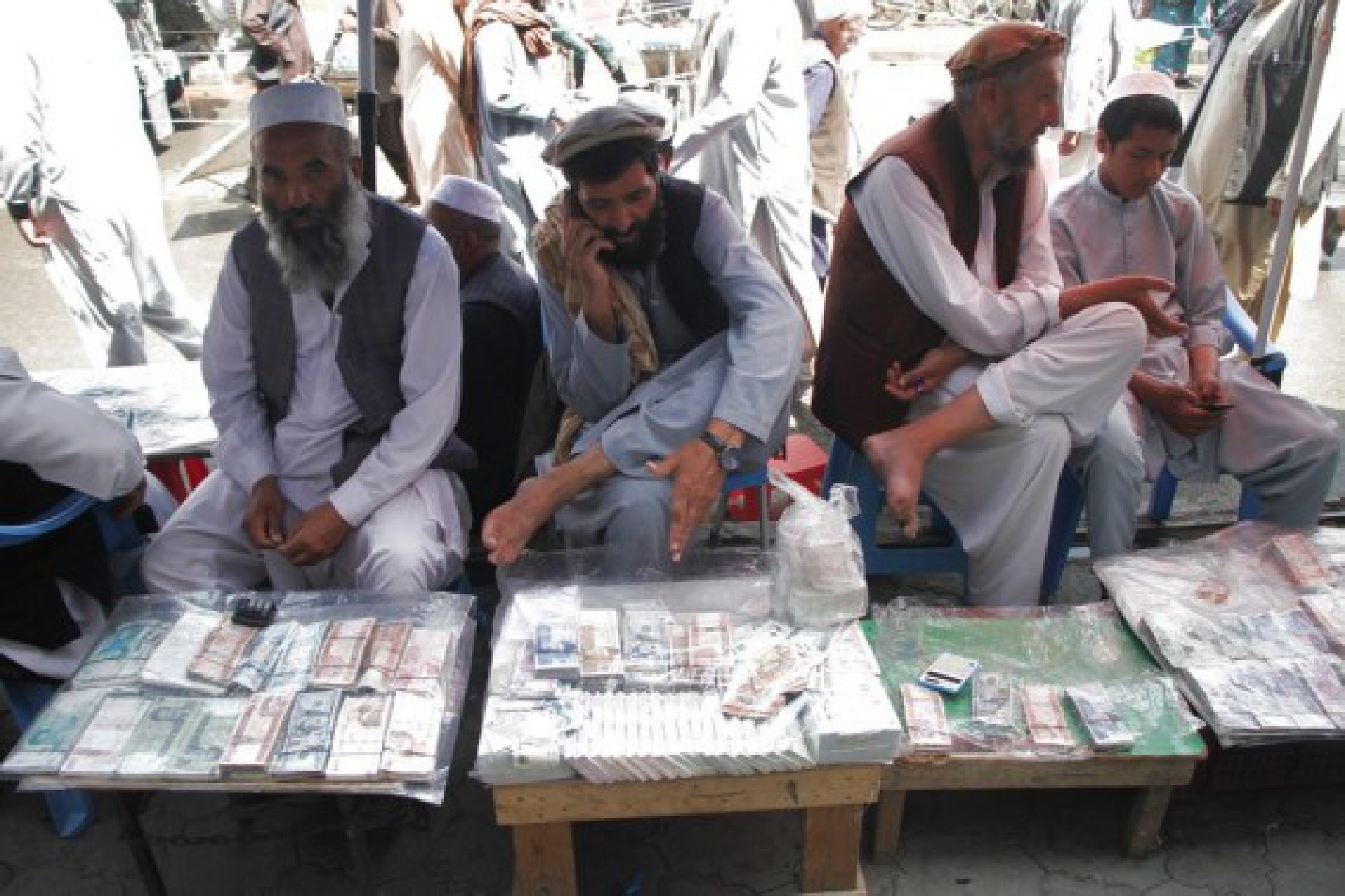 Afghan currency exchange dealers wait for customers in Kabul, capital of Afghanistan, Sept. 4, 2021. (Photo by Saifurahman Safi/Xinhua)
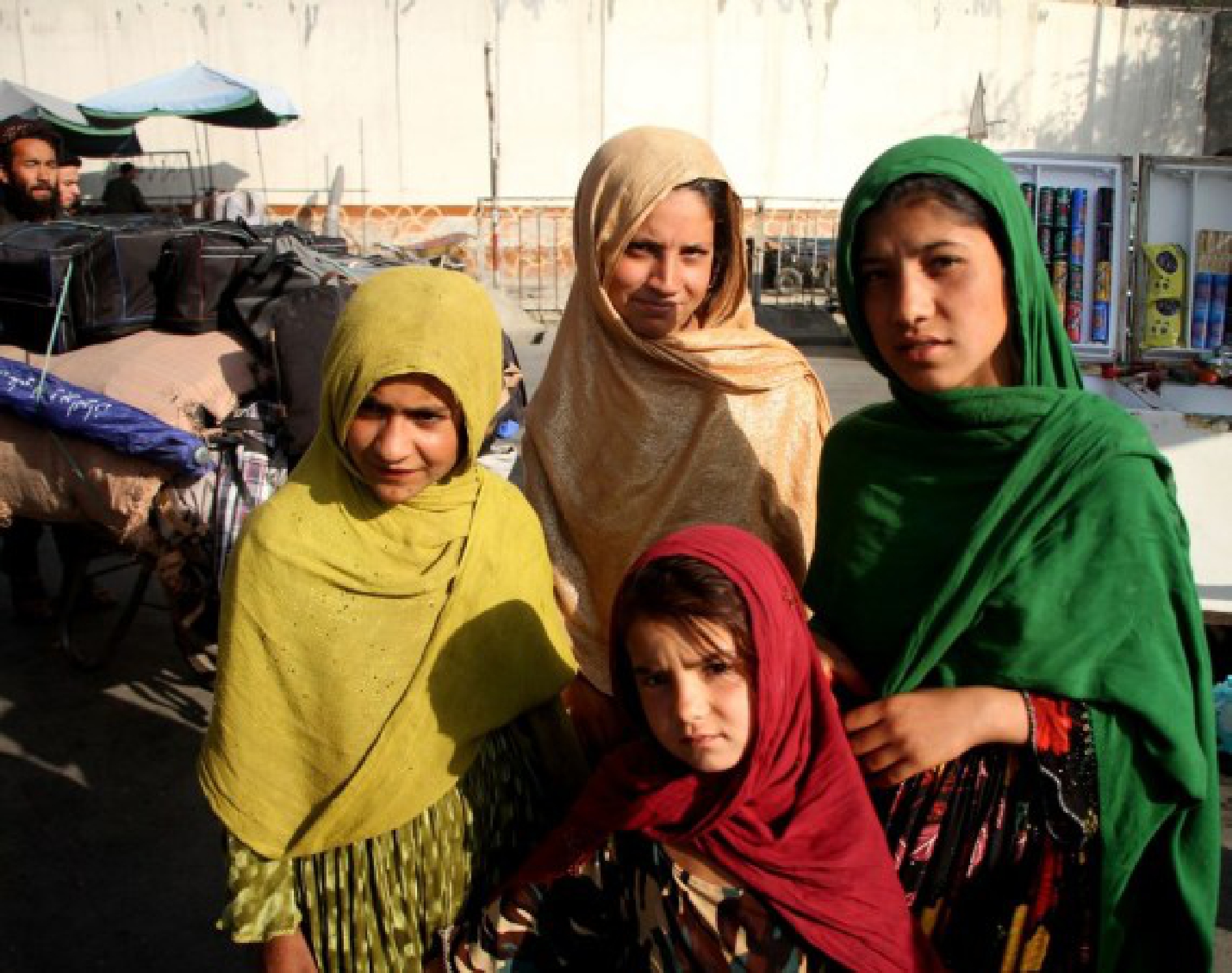 Afghan girls pose for photos in Kabul, capital of Afghanistan, Sept. 15, 2021. (Photo by Saifurahman Safi/Xinhua)
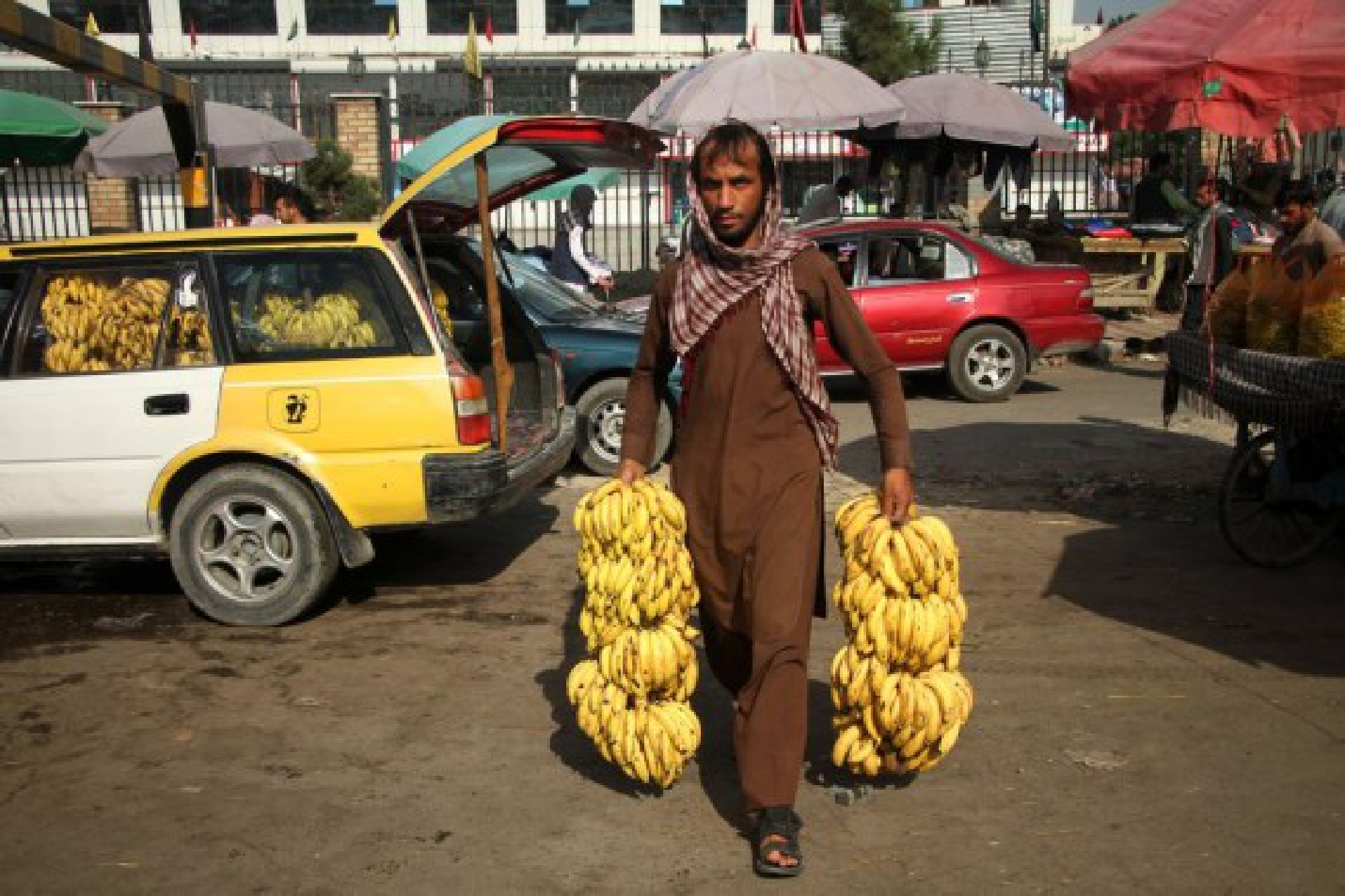 An Afghan man delivers bananas in Kabul, capital of Afghanistan, Sept. 15, 2021. (Photo by Saifurahman Safi/Xinhua)