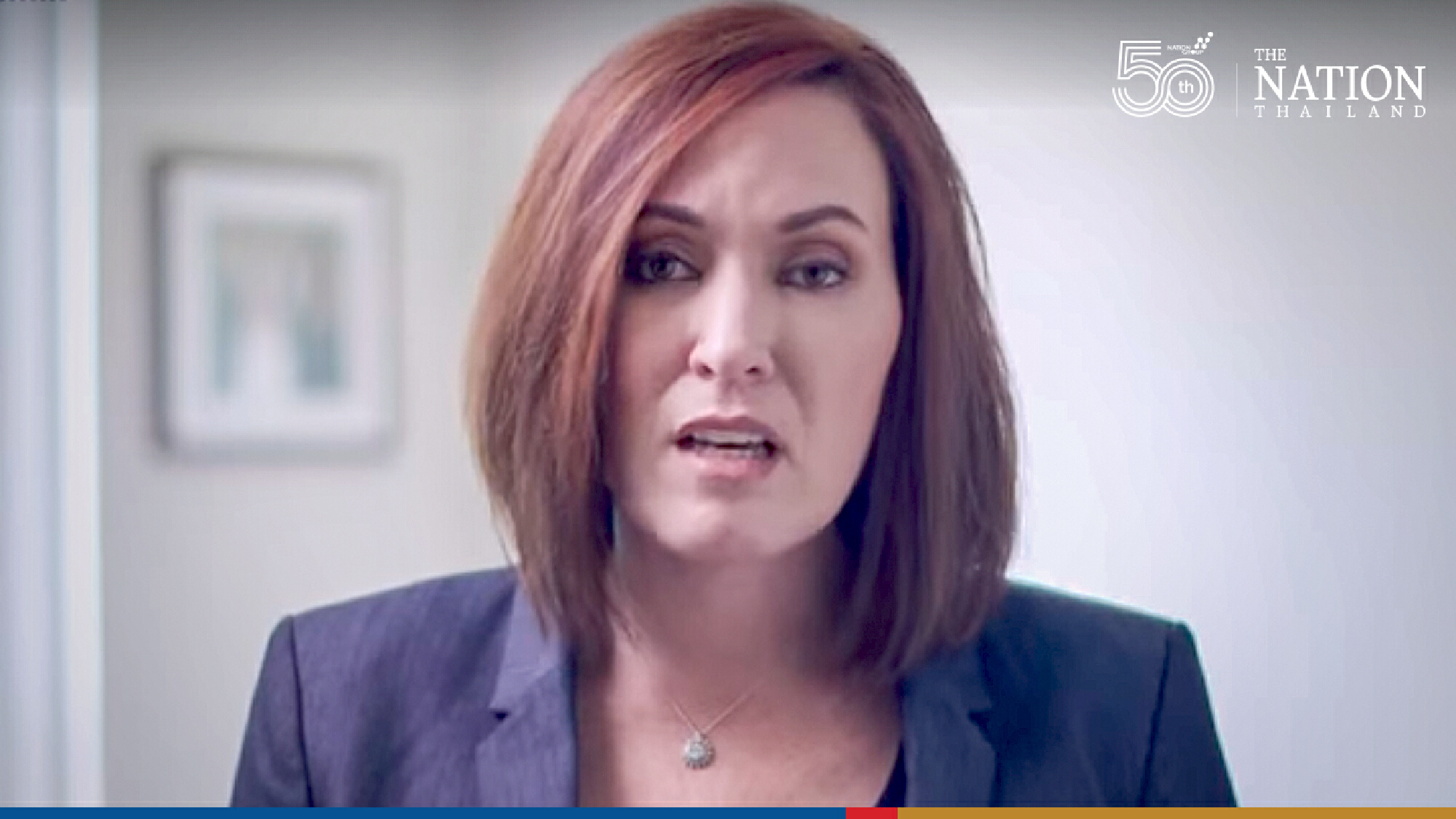
In countries where vaccines are available, offers of free airline tickets and apartments for the fully inoculated
Across the United States, businesses such as the Anheuser-Busch brewing company and the Krispy Kreme doughnut chain are jumping on the national effort to vaccinate the population against the coronavirus by offering freebies to fully vaccinated customers.
Since mass vaccination programs began rolling out worldwide nearly six months ago, governments and private businesses have been offering incentives – including tax breaks, free airline tickets and even millions of dollars in lotteries – to entice those hesitant to get vaccinated.
It’s a gambit that probably can’t hurt – but it’s unlikely on its own to help communities reach herd immunity, which is when a high-enough percentage of the population achieves immunity from a disease, said Emily Largent, a professor of medical ethics and health policy at the University of Pennsylvania.
“I’m generally optimistic that we will see some increase, but it’s not going to get us to the high levels of vaccination” needed, Largent said. “Incentives are not going to move everyone who is holding out over the finish line.”
Freebies and financial incentives will probably work best for certain groups, such as young people who are interested in getting vaccinated but have not yet considered it a priority, Largent said. For populations “philosophically opposed” to getting vaccinated, however, financial incentives “could make them suspicious and reinforce concerns they have or introduce new ones,” she cautioned.
These programs also do not address “persistent information gaps” that have proved a barrier for inoculation among populations, particularly marginalized groups, that have questions about the science or where to get the doses, Largent said.
“Targeted education,” she said, is needed alongside creative initiatives. “We can’t let the fun things … distract us from doing all the other public health work that’s been going on.”
Efforts to increase vaccination rates in primarily high-income countries where shots are readily available are in sharp contrast to the lack of vaccine access faced by a majority of the world’s population.
In countries with better vaccine access, some sectors – including publicly funded ones – are employing creative means to lure the vaccine-hesitant while also gaining publicity for their products.
Property developers and philanthropic foundations in Hong Kong have teamed up to offer a one-bedroom apartment worth $1.4 million, as well as 20 cash prizes equal to $12,890, in a lottery open only to vaccinated residents. Registration opens June 15, the South China Morning Post reported, and the winner will be announced Sept. 8.
The Airport Authority said it will give away 60,000 airline tickets to city residents and airport employees who have been fully inoculated by the end of September. Hong Kong civil servants, as well as employees at private businesses such as HSBC bank, are being offered a day off work per vaccine dose taken.
Vaccine uptake in Hong Kong has been sluggish, with only about 15 percent fully vaccinated, according to the New York Times. Organizers of the real estate raffle said bookings were filling up in the hours after the lottery was announced, the South China Morning Post reported. Still, mistrust of the government is high, complicating official efforts, while reports of adverse reactions to the vaccines have circulated widely in Hong Kong, where both the Pfizer-BioNTech and the Chinese-made Sinovac shots are available.
In Serbia, citizens who had received one or two doses by May 31 could get a one-time payment of about $30 – about 5 percent of the average monthly salary.
“We have considered how to reward people who have shown responsibility and decided to grant additional financial support to those who have been vaccinated,” President Aleksandar Vucic said in early May, Euronews reported.
Vucic said he would not make the vaccine mandatory but called it “irresponsible and selfish” not to get vaccinated, Euronews reported. Last month, he said public sector workers who were unvaccinated and caught the virus would no longer be eligible for sick days.
About a quarter of the Balkan country’s citizens are fully vaccinated, a number higher than the European Union’s average. Still, the government has struggled to keep up interest amid continued vaccine skepticism.
Last month, some top gyms in Dubai, the United Arab Emirates’ commercial hub, offered two weeks of free access to those who are fully vaccinated. The UAE has some of the highest vaccination rates in the world, but, despite a plethora of doses, has faced waning interest among the still unvaccinated.
Israel initially offered vaccinated residents a “green pass” – state-issued documentation indicating they had been fully vaccinated. The pass holders could easily access restaurants, clubs, gyms, weddings and other venues, while those without had to take frequent coronavirus tests to gain entry. Public adherence to the system, however, waned over time, and Israel scrapped the green pass this month, with few people in the highly vaccinated country wearing masks or taking other precautions against the virus.
In the Philippines, where vaccine skepticism was high even before the coronavirus outbreak, some communities are trying to get ahead of hesitancy by offering enticements to people before shots are available. The mayor of a small town in the Ilocos Sur province is planning to raffle off a plot of land with a house in December, when he expects vaccines to be available for his community, the Straits Times reported. Elsewhere in the country, malls serving as vaccination sites are offering free parking and banana fritters, according to the Straits Times.
American expats push for access to coronavirus vaccines, raising questions about international equity
The United States is one of the small number of countries where coronavirus vaccinations are widely available.
“All over the world people are desperate to get a shot that every American can get at their neighborhood drugstore,” President Joe Biden said on Wednesday.
But one group of Americans feels left behind: expatriates.
“We pay taxes, we vote, why shouldn’t we have a vaccine?” asked Loran Davidson, an American living in Thailand.
So far, the request has been denied. “We have not historically provided private health care for Americans living overseas, so that remains our policy,” White House press secretary Jen Psaki told reporters last month.
Davidson, 76, and her husband moved from New York to Thailand in 2006 after they retired. They live in Pattaya, about 60 miles southeast of Bangkok.
Davidson’s 86-year-old husband is overweight and has high blood pressure, she said, which puts him at increased risk for covid-19 complications, and he is partially disabled after an accident in October. Returning to the United States for a jab would be out of the question.
An estimated 9 million Americans live outside the United States, according to State Department figures. Unlike expatriates from most other countries, they are required to pay U.S. taxes. In recent weeks, a growing chorus has argued that they should therefore be entitled to receive U.S.-approved coronavirus vaccines.
After a rocky start, the State Department finished inoculating embassy staff worldwide in April, a department spokesperson said. So far, the administration has presented those unaffiliated with U.S. embassies with two options: Come home to get the shot, or wait your turn where you are.
But Americans living overseas say it’s not that simple. Vaccines are scarce in many countries. A pregnant woman in Taiwan said she doesn’t feel safe traveling internationally. A disabled veteran in Tunisia can’t afford the trip. Expats in Thailand say that with local quarantine requirements, the round-trip ordeal could take up to six weeks.
“Although some of us have access to vaccines in our host countries, we all agree that the U.S. government should take appropriate steps to ensure that vaccines are available to all of its citizens worldwide,” read an open letter to Biden from leaders of Democrats Abroad, the Democratic Party’s official arm for American expatriates, on Tuesday. Other expat groups have demanded the same.
Two former U.S. ambassadors appointed by President Donald Trump argued in a Wall Street Journal op-ed that the recent spike in cases in the Indo-Pacific region heightened the urgency of the issue.
The campaign has gathered momentum in recent weeks due in large part to expatriates in Thailand, where cases are spiking and less than 4% of some 69 million people are vaccinated.
The Thai government recently announced that foreigners living in the country, beginning with the elderly and those with underlying conditions, will be eligible to book shots when the country begins its mass vaccination program on Monday. Davidson registered with two hospitals – but staff there told her they had no idea when she and her husband would receive the shots.
And so far, what’s on offer is the Chinese Sinovac vaccine, which the World Health Organization recently approved for emergency use. The shot is less effective than its FDA-authorized counterparts at preventing disease. AstraZeneca, whose vaccine is being manufactured by a local partner in Thailand, is set to make 6 million doses available to the country this month.
A bipartisan coalition of organizations representing Americans in Thailand have implored Secretary of State Antony Blinken and Deputy Secretary of State Wendy Sherman not to “abandon” them.
China, which has engaged in extensive vaccine diplomacy, began vaccinating its citizens living in Thailand last month as part of Beijing’s “Spring Sprout” program to inoculate Chinese citizens living abroad, the Associated Press reported. More than half a million Chinese citizens in at least 120 countries have benefited from the initiative since its launch in March, according to China’s official People’s Daily newspaper.
When Thailand accepted a recent donation of 500,000 doses from China, it agreed to set aside some to vaccinate Chinese nationals.
“The Chinese Embassy is making sure that their citizens here can get the vaccine,” Davidson said. “So why can’t America?”
The lobbying campaign by U.S. expats has raised larger questions about what the U.S. government owes to its citizens in a global health emergency – and in a phase of the pandemic increasingly defined by vaccine equity, what it owes to the world.
While those back home enjoy the fruits of America’s vaccine rollout, unequal global access to the shots, due in part to the policies of their own government, has affected the availability of vaccinations in other countries, particularly in the developing world.
J. Stephen Morrison, director of the Global Health Policy Center at the Center for Strategic and International Studies and a former diplomat, said U.S. embassies are not equipped to carry out mass inoculation drives.
“I would be skeptical that the government would want to take this on,” he said.
But the pandemic demands unusual measures, said Michael March, a Bangkok-based former lawyer who is part of Democrats Abroad Thailand’s covid-19 task force. “We don’t see this as a medical care issue; it’s a health and safety issue and it’s a national security issue,” he said.
Jo-Anne Prud’homme, who works for a nonprofit in Tunisia, made the trip back to Maryland with her husband and two young kids in early May. Tunisia, which has the highest recorded per capita covid-19 death rate in Africa, was reeling from a third coronavirus wave. Prud’homme, 38, knew it would be months before she and her husband would become eligible for vaccinations there.
They were able to get Pfizer shots after they arrived in Kensington, Md. But the trip – including plane tickets, lodging and a rental car – cost the family more than $7,000.
“If I could have had access to a vaccine instead of flying back to the United States for five weeks, I would have done that in a heartbeat,” Prud’homme said.
But Sophia Winkler, 23, said that she had made a choice to live abroad in Tunisia and that the U.S. Embassy was not responsible for the consequences.
“When you choose to go abroad you kind of decide to put yourself at the mercy of that country’s medical system,” she said.
Skeptics of the expatriates’ proposal warn that giving priority access to Americans would create a two-tiered system and heighten tensions over vaccine disparities.
“In the countries that are suffering major problems in terms of affordable access to vaccines and which are angry and resentful of the Western countries that have vast stockpiles,” Morrison said, “I would think that a program that was specifically targeted at American citizens could prove to be pretty problematic diplomatically.”
In the face of widespread criticism, the United States and other wealthy countries accused of hoarding doses have taken steps to close the gap. Biden announced in April that he would send up to 60 million AstraZeneca doses abroad. Last month, he pledged to add 20 million U.S.-authorized vaccine doses to the mix.
The White House announced Thursday that it would distribute an initial 25 million across a “wide range of countries” in Latin America and the Caribbean, South and Southeast Asia and Africa, and the Palestinian territories.
That could leave some American expats disappointed.
“I would hope that when the U.S. government is providing vaccines to a country, that they do make a provision, as the Chinese government has done, for Americans in that country,” March said.
Morrison said that increased vaccine donations could make the request more palatable.
“If the United States steps forward at the G-7 and elsewhere and starts doing more to try to crack the code on this vaccine access, that might shift the environment a little bit and make this less awkward,” he said.
Meghan and Harry announce birth of baby girl, Lilibet Diana
LONDON – Britains Prince Harry and his wife, Meghan, the Duke and Duchess of Sussex, have announced the birth of their second child, daughter Lilibet “Lili” Diana.
The baby’s full name is Lilibet “Lili” Diana Mountbatten-Windsor, the couple said in a statement Sunday. She was born at 11:40 a.m. Friday at Santa Barbara Cottage Hospital in California. She is eighth in line to the British throne.
The baby is named after Queen Elizabeth II, Harry’s grandmother, who was called Lilibet during her childhood, and the late Diana, Princess of Wales, Harry’s mother, who died in a car crash in Paris in 1997, while being pursued by paparazzi.
Harry and Meghan said they were “blessed” by the arrival of their second child. “She is more than we could have ever imagined,” they wrote, “and we remain grateful for the love and prayers we’ve felt from across the globe.”
Mother and baby are “healthy and well” and adjusting to life at home, they said.
The decision to name the baby after Elizabeth might be viewed as a peace offering after what has been months of scandal and upheaval for Britain’s royals. Lilibet is the queen’s 11th great-grandchild.
Harry and Meghan have a son, Archie Harrison, who was born in May 2019. Meghan revealed in November that she had a miscarriage in July. She wrote in an opinion piece for the New York Times that the grief that came with losing a child was “almost unbearable.”
Within seconds of the birth announcement, well-wishers flocked to social media to congratulate the couple, who have had a tumultuous year. A stunning interview the couple gave to Oprah Winfrey on life in the spotlight has divided the royal family.
British Prime Minister Boris Johnson offered his congratulations to the couple on Sunday evening local time, as did Harry’s older brother, Prince William, and his wife, Catherine, the Duke and Duchess of Cambridge.
“We are delighted by the happy news of the arrival of baby Lili,” the pair wrote on their official Twitter account.
Harry and his brother were last seen in public together in April, during the funeral of their grandfather, Britain’s Prince Philip, who was married to the queen for more than 70 years. Photographs of the brothers together reignited hopes that they were repairing their relationship following rumors of a growing rift between the family.
During a two-hour sit-down with Winfrey in March, Harry and Meghan offered a string of staggering claims concerning the royal family. Among them, that Meghan had suffered from depression and had considered suicide. They said that they were denied support from the family, and that one member had expressed concern, when Meghan was pregnant with Archie, over how dark the child’s skin would be.
Meghan has a Black mother and a White father.
Meghan and Harry were married at a lavish ceremony at Britain’s Windsor Castle in May 2018 but chose to step back from their royal duties in January 2020, a decision that stunned the family and people around the world.
The couple has long struggled with attention from the notorious British tabloids and expressed anger and despair over the constant scrutiny that comes with being a part of one of the most famous families in the world. Before the pair were married, Harry criticized the British media in a rare statement over its ill treatment of Meghan, blasting journalists for racist and sexist reporting. He said he was worried for her safety and wanted to protect her.
In a recent podcast interview, Harry spoke openly about the detrimental effect that losing his mother had on his mental health and said Meghan encouraged him to seek support.
“She could tell that I was hurting and that some of the stuff that was out of my control was making me really angry,” he said. “It would make my blood boil.”
Harry also described his life as the son of heir to the throne Prince Charles as akin to being on “The Truman Show” and living “in a zoo.”
Cambodias hero rat, Magawa, is retiring after sniffing out land mines for five years
A heroic rat who discovered more than 70 land mines during five years of service in Cambodia is retiring this month.
Magawa, a 6-year-old African pouched rat, has traversed the Southeast Asian nation to sniff out mines left behind after decades of war. During that time, he’s helped to clear more than 2.4 million square feet of land and saved an unknown number of people from injury or possible death, according to APOPO, the organization that trained him.
“Although still in good health, he has reached a retirement age and is clearly starting to slow down,” APOPO announced this week. “It is time.”
The Belgian nonprofit group has been teaching rats to detect land mines for more than 20 years, and Magawa – whose name means “courage” – is the most successful graduate of its program. In September, he was awarded a gold medal for bravery from British charity PDSA, an honor that had previously only gone to dogs.
African giant pouched rats like Magawa are used to identify land mines and unexploded ordnance because they’re light enough to avoid triggering them. According to APOPO, which also works to remove land mines in Angola, Zimbabwe and Mozambique, most mines require roughly 11 pounds of pressure to be activated. The rats searching for them weigh approximately three pounds at most, and none have ever been injured or killed at work.
The rats, which have a strong sense of smell, can detect the chemical compounds found inside explosives. They are trained through a process using bananas and other food rewards in exchange for successfully completing a task.
In the field the rats, which can work faster than a human with a metal detector, will stop and scratch at the ground to alert their handlers when they’ve picked up a scent.
“We really trust our rats, because very often after clearing a minefield, our teams will play a game of soccer on the cleared field to assure the quality of our work,” Christophe Cox, APOPO’s CEO and co-founder, told NPR last year.
Photo Credit: APOPO
Sniffing out explosives is important work in Cambodia, where the number of mines left over from the country’s civil wars is believe to be in the millions. Groups working to address the problem estimate that Cambodia has more people who have lost a limb to land mines than any other country in the world, per capita. Unexploded bombs dropped during the Vietnam War also continue to be a hazard.
Magawa has found 71 land mines and 38 items of unexploded ordnance to date, according to APOPO. Now approaching the end of his life span, he’ll spend the rest of his days being cared for along with the organization’s other retired mine-sniffing rats, snacking on bananas and peanuts.
Death toll remains above 500 in Asean, but slight dip in new Covid cases
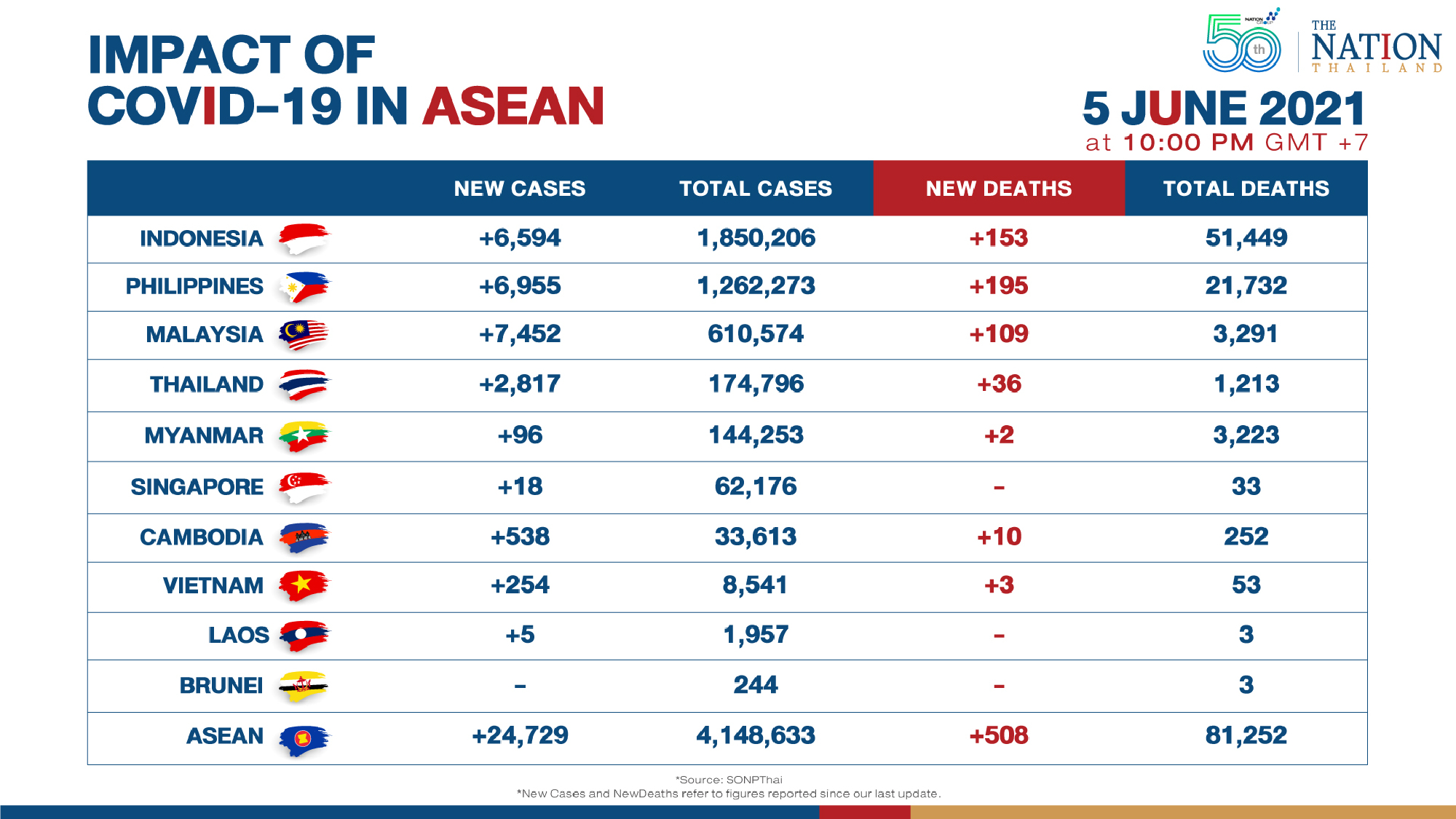
The number of new Covid-19 patients in Asean countries on Saturday saw a slight drop but deaths topped 500 for the fourth successive day.
Collated data showed 24,729 new cases compared to 25,659 on Friday.
The number of Covid-linked deaths were higher at 508 compared to Friday’s 506.
Total number of Covid-19 patients since the outbreak rose to 4,148,633 and deaths to 81,252.
Indonesia reported 6,594 patients and 153 deaths on Saturday, bringing cumulative cases in the country to 1,850,206 with 51,449 deaths, the highest in the region.
The Indonesian government has commenced the third phase of its vaccination drive in Jakarta, focusing on people in slums who were at risk of Covid-19 infection and could cause the virus to spread quickly.
Cambodia reported 538 cases and 10 deaths on Saturday, bringing cumulative cases in the country to 33,613 with 252 deaths.
The country’s health ministry has warned people to beware of the delta variant, first found in India, in workers who had returned from Thailand. Meanwhile, curfew has been extended in Poipet, which has a border with Thailand’s Sa Kaew province until June 12.
Trumps chief of staff pushed Justice Department to investigate baseless election fraud claims
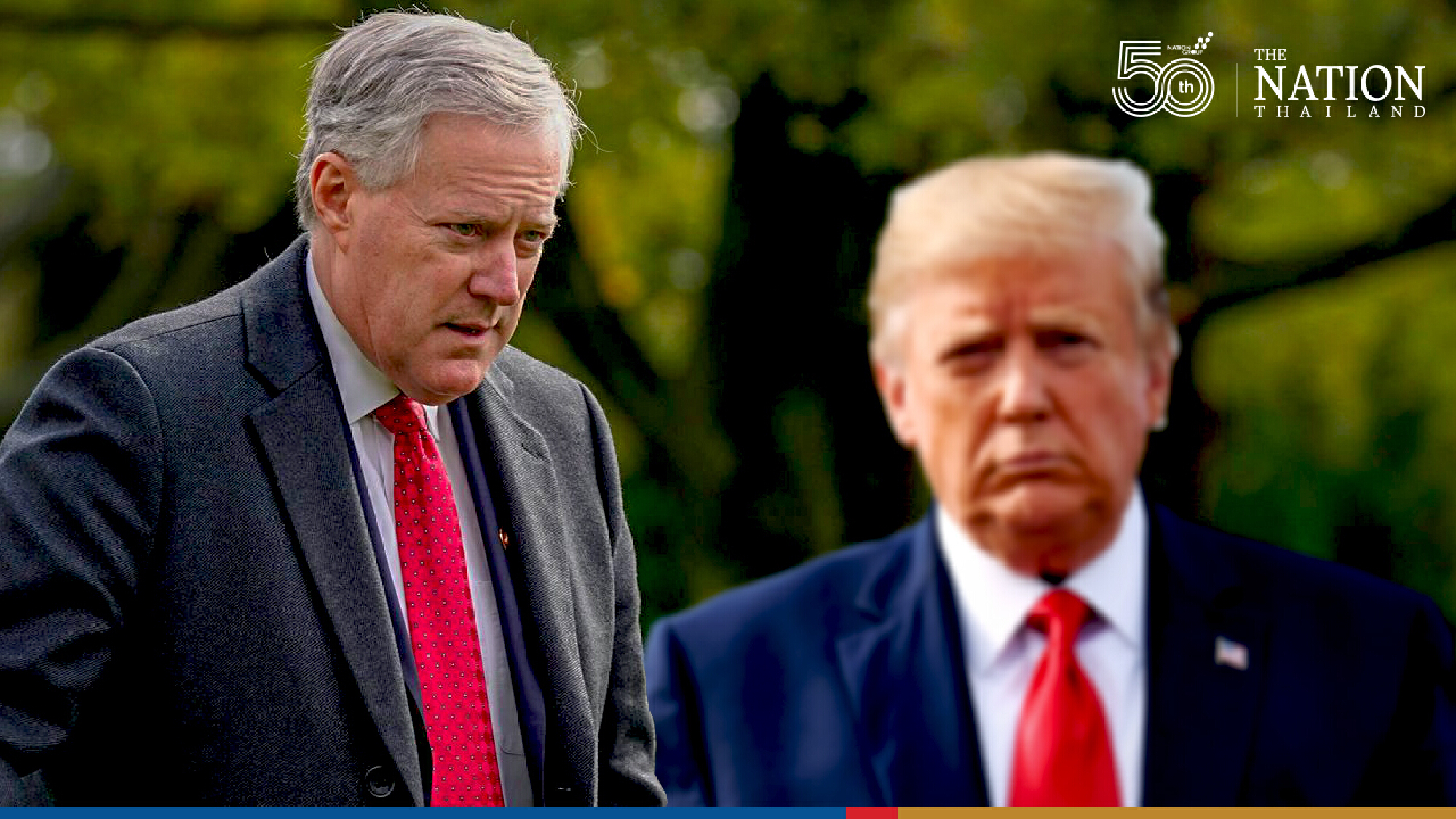
WASHINGTON – Former White House chief of staff Mark Meadows sent a series of emails to the acting attorney general in the waning weeks of Donald Trumps presidency, as part of a campaign to strong-arm the Justice Department into investigating Trumps spurious claims of widespread election fraud.
Meadows’s emails, first disclosed Saturday by the New York Times, demonstrate how the former president’s determination to overturn his election defeat was not just a personal obsession or localized to his campaign, but an official project of the Trump White House. Attempts to reach Meadows directly were unsuccessful.
The brief but tumultuous tenure of acting attorney general Jeffrey Rosen, who led the Justice Department for only a month after his predecessor William Barr departed the administration in late December, was punctuated by the relentless campaign to legitimize Trump’s claims of a “stolen” election. Rosen was pressured to open an official investigation of voter fraud despite a lack of evidence – and even as Trump contemplated firing Rosen and replacing him with another Justice Department official seen as amenable to helping undermine the election results.
And then came Jan. 6, when hundreds of Trump’s supporters invaded the U.S. Capitol to protest congressional certification of President Joe Biden’s win.
Rosen has firmly and repeatedly stated that, under his watch, no special prosecutors were appointed to look into the election and no statements questioning its results were made. But to date, he has refused to discuss the pressure he endured from the White House – or detail his conversations with Trump in the weeks ahead of the insurrection.
He did not respond to a request for comment Saturday and, publicly, has been mum about his personal views on the subject. When asked during a House Committee on Oversight and Reform hearing last month whether he believed the election had been stolen from Trump, Rosen demurred.
The emails from Meadows, however, shed more light on how the campaign to squeeze Rosen progressed in the last days of December and early days of January, as Trump became more desperate to challenge the election’s outcome.
In his missives, Meadows asked Rosen to look into a series of conspiracy theories, according to details documented in the New York Times account and confirmed broadly as accurate by two people familiar with the matter, who spoke on the condition of anonymity because it remains a focus of ongoing investigations in Congress and by the Justice Department’s inspector general.
One had to do with thin allegations of election fraud in New Mexico, where state officials declared the vote secure. Another relied on the assumption that military satellites being manipulated by people in Italy had been used to target voting machines and switch votes for Trump into votes to Biden. There is no evidence to suggest that is true either.
The emails, which were shared with the Senate Judiciary Committee as part of its investigation into what role the Justice Department played in challenging the 2020 election results, do not indicate that Rosen agreed to or endorsed any of Meadows’s proposed lines of inquiry. Aides to the committee’s chairman, Sen. Richard Durbin, D-Ill., did not return messages seeking comment.
The White House entreaties nevertheless reveal a troubling pattern of conduct by Trump administration officials that is likely to elicit more questions on Capitol Hill, where interest in investigating and documenting the events that precipitated the Jan. 6 riot remains high, especially among Democrats, even if the forum for doing so remains elusive.
Last month, the Senate voted down a bipartisan effort to create a Jan. 6 commission that would have been tasked with looking into such matters, including the Trump White House’s pressure campaign on Rosen. It remains to be seen whether House Speaker Nancy Pelosi, D-Calif., will announce an alternative course. The House is next in full session June 14.
Published : June 06, 2021
By : The Washington Post · Karoun Demirjian, Josh Dawsey
Trump called Arizona Senate president to thank her for pushing to prove any fraud in audit, emails show
Newly released emails sent to and from Arizona state senators reveal that President Donald Trump and his lawyer Rudy Giuliani reached out personally to urge GOP officials there to move forward with a partisan recount of the 2020 election, despite a lack of evidence of widespread fraud or other issues.
Hundreds of pages of emails related to the GOP-ordered audit underway in Maricopa County were obtained by the nonprofit legal watchdog group American Oversight through a records request under the Freedom of Information Act. The group published them Friday, along with a scathing statement that decried the audit as a “sham partisan crusade.”
In one email dated Dec. 2, Arizona state Senate President Karen Fann, a Republican, told two constituents that she had spoken with Giuliani “at least 6 times over the past two weeks.”
In another exchange dated Dec. 28, a constituent threatened that Fann would be recalled by “the new patriot movement of the United States” for not standing up for Trump.
Fann assured him that the state Senate was “doing everything legally possible to get the forensic audit done” and that they planned to sue the Maricopa County Board of Supervisors. (The Republican-led board had in November voted unanimously to certify the county’s election results, with the board chairman declaring there was no evidence of fraud or misconduct “and that is with a big zero.”)
“I have been in numerous conversations with Rudy Guiliani [sic] over the past weeks trying to get this done,” Fann wrote in the Dec. 28 message. “I have the full support of him and a personal call from President Trump thanking us for pushing to prove any fraud.”
In an email dated Nov. 30, Fann noted that she had asked Trump’s legal team for evidence of “rampant fraud” and to file a lawsuit so the certification of the results can be put on hold, to no avail.
“No suit has been filed nor was a suit filed to contest the certification process,” Fann wrote. “I also want to get to the bottom of all this.”
President Joe Biden became the first Democrat to win Arizona since 1996. Trump has remained heavily invested in ballot audits across the country as he continues to push his baseless claims that the 2020 election was stolen from him.
American Oversight Executive Director Austin Evers said the emails were clear evidence that the goal of the audit was to erode trust in the voting process and to further legitimize Trump’s “big lie.”
“The more we learn, the more it becomes clear that this is not an audit, it’s a sham partisan crusade carried out by some of the most cynical actors our democracy has ever known,” Evers said in a statement. “With each new email, the paper trail confirms that the true goal of this process is to perpetuate Donald Trump’s big lie of a stolen election and to undermine faith in our democracy.”
Representatives for Fann and for Trump did not immediately respond to requests for comment Friday.
The emails also show some of the depths of panic and anger from Republican constituents insisting that there was widespread fraud in the 2020 election, despite a slew of both Democratic and Republican election officials vouching for the integrity of the vote. In the weeks after the election, dozens of state and federal judges also rejected Trump’s numerous legal efforts to overturn the election results.
Fann herself outright acknowledged Biden’s win in at least one of the emails. To a constituent who said she was “appalled, offended, and upset” that taxpayer dollars were being wasted on a “fraudulent audit,” Fann replied: “This is where you are mistaken. Biden won. 45% of all Arizona voters think there is a problem with the election system. The audit is to disprove those theories or find ways to improve the system.”
Still, Fann appeared to spend much more time placating outraged constituents and fielding baseless speculation about a supposedly rigged election. In an email dated April 10, someone named Rachel Griffin emailed Fann wondering if the audit will ever happen and demanding lawmakers produce proof of fraud, or else risk getting booted from office.
“We are not going to be treated like idiots. We will make sure none of you are never re-elected again unless you prove there was fraud,” Griffin wrote. “It is no longer acceptable for all of you to pay lip service. We want results and we want them now.”
In response, Fann said the audit would begin soon. “Our efforts have been sabotaged every step of the way but we are not giving up!” she added.
The Maricopa County audit, which started in late April, has been heavily criticized for its lack of transparency and for not following state rules for elections and recounts. Arizona Republicans hired a Florida-based private contractor called Cyber Ninjas, whose chief executive has echoed Trump’s false allegations of fraud, to handle the recount.
The office of Arizona Secretary of State Katie Hobbs, a Democrat, began documenting the audit’s alleged security infractions online this week.
“The effort to hand-count the 2.1 million ballots cast in Maricopa County during the 2020 Presidential Election resumed on May 24, after a week-long pause,” Hobbs’s office said in a statement Tuesday. “Observers on behalf of the Arizona Secretary of State’s Office continued to note problematic practices, changing policies, and security threats that have plagued this exercise from the start.”
U.S. government raises alarm on ransomware threat as intensifying cyberattacks expose vulnerabilities
WASHINGTON – For years, the federal government treated ransomware as a criminal menace – not as urgent as hacking by foreign spies. But after a spasm of high-profile attacks that jarred the nation, the U.S. government now has begun framing the issue as a matter of national – and global – security.
The FBI director this week compared it to the challenge posed by the Sept. 11, 2001, terrorist attacks. On Thursday, a top White House cyber official urged corporate America to strengthen its computer security. And on Friday, the White House said that President Joe Biden will raise the issue of Russia’s harboring ransomware criminals when he meets with Russian President Vladimir Putin next week in Geneva.
“We know that the ransomware threat is urgent, it’s complex, and it’s been increasing over the last several years,” White House press secretary Jen Psaki said. “It feels new to us over the last couple of weeks, but it has been increasing rapidly around the world over the last several years.”
She noted this week that many of the world leaders with whom Biden will gather at the annual Group of Seven meeting next week “have similar concerns.”
Until about a year and a half ago, ransomware extortion – in which hackers lock up victims’ machines with malware and then demand hefty fees to unlock the data – was seen primarily as cybercrime. It afflicted schools, hospitals and businesses, but the disruptions were considered isolated. No one was known to have died, and the disruptions were limited to the entities that were hacked.
Then came the pipeline attack last month that shut down almost half the East Coast fuel supply. That was followed this week by another that threatened the nation’s largest meat supplier, and quickly it became painfully apparent that malware devised by criminals could have effects that threaten national security.
“I don’t think that attention is going to go away anytime soon,” said Michael Phillips, co-chairman of the Ransomware Task Force, a group of industry, government and academic experts that in April produced a set of recommendations for the Biden administration on combating ransomware. “People want to know that the U.S. government can protect them from these kinds of attacks.”
After the Colonial Pipeline attack last month, Biden launched an initiative to address the dangers of ransomware, including the creation of a global coalition to hold countries that shelter ransomware criminals accountable. The spadework for that began shortly after Biden took office, and the initiative complements an executive order he signed last month to shore up the federal government’s digital defenses, an effort the administration hopes will spur the private sector to bolster its own cybersecurity.
One of the strategy’s most significant elements is to remove the cloak of anonymity around the digital ransoms victims pay, to crack down on the criminals. The ransoms can run into the millions of dollars – Colonial Pipeline paid $4.4 million last month to a Russia-based group – paid out in cryptocurrencies like bitcoin.
These digital currencies are run on a global network of computers that are not under the control of any central bank. They grant users the ability to instantly record their transactions on a public digital ledger without a middleman brokering the transaction – but without revealing their identities. The cryptocurrency exchanges that convert the digital tokens into actual cash, if they’re operating outside the United States, often aren’t required to follow the same anti-money-laundering laws that govern U.S. exchanges and banks.
What the White House wants to do, a senior administration official said in an interview Friday, is work with an international coalition of governments to compel cryptocurrency exchanges operating offshore to report suspicious transactions, including the identities of the parties.
“I can’t underscore enough how that cryptocurrency line of effort is key,” said the official, who spoke on the condition of anonymity to discuss an ongoing review.
The growth of unregulated cryptocurrency, the official said, is “what’s driven the growth of ransomware.”
The White House would like to see an international standard, similar to the United States’ “know your customer” regulations that require reporting large transactions to the Treasury Department. “There are cryptocurrency exchanges all around the world, and we want to ensure that there’s a common threshold of ‘know your customer’ rules, which are in place and implemented so there aren’t places to hide funds,” the official said.
“This is exactly the signal that needs to be sent to the ransomware criminals,” said Philip Reiner, executive director of the Ransomware Task Force and chief executive of the Institute for Security and Technology. “The status quo is over. We’re not going to approach this in the same way anymore.”
Right now, criminal hacker groups operate with near impunity. Many of the ransomware rings are based in Russia or Eastern Europe, and countries like Russia ignore their activities as long as they don’t target companies, people or government agencies inside their borders. The hackers lurk in the shadows of the Internet and exploit the anonymity that cryptocurrency affords, officials and experts say.
“I almost feel like it’s ‘bring it on, bro,'” said Rick Holland, chief information security officer at the digital risk protection firm Digital Shadows, making the point that the hackers don’t fear being caught by U.S. authorities.
Indeed, criminal ransomware rings have made clear that they don’t intend to slink away in the face of the U.S. government’s ramped-up efforts. “We will work harder, harder and harder,” said one ransomware hacker, who goes by the handle UNKN, or Unknown, and who belongs to one of the largest ransomware extortion groups, REvil.
Potential U.S. government efforts “will not affect our work in any way,” UNKN told cybersecurity blogger Sergey R3dhunt, according to a translation posted on Twitter by Recorded Future cyberthreat researcher Dmitry Smilyanets.
Kremlin spokesman Dmitry Peskov told the state RIA news agency that hackers exist in every country in the world. Russia has previously denied that state-sponsored hackers launched cyberespionage campaigns against U.S. institutions.
Putin told state television that reports about ransomware attacks by Russia-based hackers on Colonial and on JBS, the meat processor, are “nonsense.” Said Putin: “It’s just laughable.” He said the reports were an attempt to “provoke some new conflicts before our meeting with Biden.”
Another major element of the White House ransomware review will be to determine what the government’s formal ransomware policy should be, the official said. The FBI’s guidance has long been for victims not to pay ransoms. But, bureau officials note, in the end it is up to the company. When a CEO is facing the prospect of closing a business, or a hospital might need to cut critical services that keep patients alive, the dilemma is acute.
“We’re sympathetic to companies who say, ‘Look, we’ve got to recover our business operations,’ but on the other hand, [ransom payments are] what fuels the growth of it,” the official said.
The federal government’s efforts began before last month’s pipeline attack. The Justice Department in April created a task force to disrupt the criminal ecosystem that fuels ransomware attacks. On Thursday, Deputy Attorney General Lisa Monaco issued a memo directing all federal prosecutors to inform Justice Department headquarters of ransomware cases.
The directive, Monaco wrote, was meant to ensure the department has a “comprehensive picture” of the national and economic security threats facing the nation. “We need to have a national picture, and we need to bring all of our tools to bear,” Monaco said on CNBC.
In January, the Department of Homeland Security’s Cybersecurity and Infrastructure Security Agency kicked off a campaign to prod public and private sector organizations to adopt measures to reduce their risk of being victimized by ransomware. And in 2019, CISA waged a similar initiative to encourage state and local officials to secure election infrastructure against ransomware attacks.
Last fall, in the weeks before the presidential election, U.S. Cyber Command, the military’s cyber attack force, temporarily disrupted one of the world’s largest botnets – Trickbot, an army of at least 1 million hijacked computers run by Russian-speaking criminals. Trickbot was often used to launch ransomware attacks and officials feared it might disrupt the election.
Last month, in the wake of the pipeline attack, Biden refrained from blaming the Kremlin, but said “we do have strong reason to believe that criminals who did the attack are living in Russia.” He added: “We have been in direct communication with Moscow about the imperative for responsible countries to take decisive action against these ransomware networks.”
On Friday, Psaki repeated that Biden would confront Putin with cyber issues, including a major Russian espionage campaign dubbed SolarWinds that compromised nine federal agencies and 100 private sector firms, as well as the ransomware attacks. “There is no doubt President Biden will be raising that directly in that conversation,” she said.
But administration officials also stressed that this is Biden’s first meeting as head of state with Putin, and privately sought to lower expectations of any major breakthroughs.
The stepped up government attention mirrors a growing sense of concern in the private sector, said Michael Daniel, president and CEO of the Cyber Threat Alliance and the top cyber official in the Obama White House.
“Ransomware has moved from an economic nuisance to a national security and public health and safety threat,” he said. “So we need to treat it commensurately. That means stepped up efforts by both the government and the private sector.”
Published : June 05, 2021
By : The Washington Post · Ellen Nakashima, Hamza Shaban, Rachel Lerman
Biden weighing former Israel ambassador for Middle East envoy
WASHINGTON – The Biden administration is strongly considering a former ambassador to Israel for a role as an envoy to the Middle East, people familiar with the planning said. The role is likely to include a portfolio involving diplomatic accords between Israel and Muslim neighbors that were a hallmark of Middle East policy under President Donald Trump.
Daniel Shapiro was a Middle East specialist for President Barack Obama and later the U.S. ambassador to Israel for the Obama administration. He has lived primarily in Israel for years and had been mentioned as a possible ambassador to the country under Joe Biden.
The White House is expected to nominate former State Department official Thomas Nides for the Israel job instead. The two Obama administration veterans would work closely together as Biden seeks to strengthen ties between Israel and Muslim-majority nations that had once rejected Israel’s legitimacy.
The exact role Shapiro will fill is unclear, but he has agreed to join the administration, several people familiar with aspects of the discussions said. In all, nine people said they expected Shapiro to take on a new Middle East position, although many identified an ambassadorship that now appears unlikely.
The people each spoke on the condition of anonymity because they were not authorized to discuss the matter on the record. All said Shapiro’s position is not final.
The White House declined to comment on a personnel issue.
Part of Shapiro’s portfolio may involve work to put Biden’s stamp on the Trump-era project of deals known as the Abraham Accords, people familiar with it said, though it was not clear what that entails.
A role shepherding the four Trump-era normalization deals or encouraging new ones would be a signal that Biden continues to see that approach as valuable despite opposition from senior Palestinian leaders. It could also be a sign that Biden does not see a near-term prospect for peace talks between Israel and the Palestinians to form an independent state. Biden endorsed the goal of two states as recently as last month.
Trump had said he preferred a two-state option, but his administration pursued a parallel strategy of linking Israel to its neighbors through individual agreements that normalized diplomatic relations.
The United Arab Emirates was the first to do so since Egypt and Jordan decades ago, striking a historic agreement with Israel last year to normalize relations and establish business and tourism ties. Three other Arab or Muslim-majority nations followed suit.
Biden welcomed the UAE agreement as a breakthrough toward peace, even though Palestinian leaders bitterly opposed.
The Biden administration has been unusually slow to announce nominations for ambassadors from among the ranks of the president’s friends and political backers. Slates of those nominations, known as political ambassadors, had been expected as early as March.
White House officials have said Biden wants to cut back on the number of ambassadorships awarded as political perks. He is expected to rely more heavily on current and former State Department diplomats and others, such as Shapiro, with specific expertise.
Recently, Shapiro had worked for the Institute for National Security Studies in Tel Aviv.
Published : June 05, 2021
By : The Washington Post · Anne Gearan, Tyler Pager
Socialists, Proud Boys, and anti-maskers: The political establishment struggles to keep up in Nevada
LAS VEGAS – Shortly before it took over Nevadas Democratic Party, the local branch of the Democratic Socialists of America began organizing “Sunday solidarity” giveaways for the homeless. Comrades set up card tables, loaded them with food, clothes and essentials, and brought them to a mosques parking lot, unbothered by police. They were usually joined by Amy Vilela, a 46-year old accountant and socialist who is making her second run for Congress.
“We’re out here doing the front-line work,” said Vilela, 46. “That really helps when you’re campaigning, because you build relationships with people who are already motivated, not just people you hire for a job.” The giveaway wrapped up, and Vilela joined a group photo under the red flag of DSA and the red, green, black and white flag of Palestine. “How many candidates,” she asked, pointing to the flags, “would take a picture like that?”
Not many Democrats would, but Nevada’s Democratic Party has been changing. In March, DSA members dominated the 458-member vote to elect new leadership. Local Republicans and national media called it a “socialist takeover” of a swing state’s governing party, and a high-profile Democratic mayor quit the party to join the GOP.
But before they could press their advantage, Republicans faced a revolt of their own, including a vote to censure their only statewide official and an effort by the Proud Boys and anti-mask activists to take over the party. Last week, the Clark County GOP canceled a meeting, citing “risks” to members, and highlighting the “hateful and racist”conduct of activists who considered themselves the pro-Trump vanguard in Nevada. In a closely divided, racially diverse swing state – one that is competing to hold the first presidential primaries in 2024 – both major parties have been transformed by ideological activists.
“All I care about is winning the general election,” said state Sen. Carrie Buck, a Republican, who is campaigning to lead the GOP in Clark County, where most Nevadans live. “I try and find people who are little more moderate, because you can win primaries all day long but it doesn’t mean anything if you lose the general election.”
The socialists who took over Nevada’s Democratic Party intend to win those elections, too. Between 2016 and 2020, when Sen. Bernie Sanders, I-Vt., lost one presidential caucus and then won the nextby a landslide, left-wing activists here became serious political organizers. Vilela, who lost a 2018 congressional primary despite the backing of the Justice Democrats, sat out 2020 to help Sanders win the state. She’d entered politics after the sudden death of her daughter Shalynne, telling again and again the story of how she might still be alive if America had single-payer health care.
“Bernie Sanders gave me hope again,” Vilela told Sanders’s supporters at their caucus night victory party in February of 2020. “He gave me a reason to live again.”
At the same time, Vilela was moving from the 4th Congressional District, which is competitive between Democrats and Republicans, to the 1st Congressional District, which covers most of Las Vegas itself and backed President Biden by 25 points. She announced her challenge to Rep. Dina Titus, a Democrat, in April, again running as a crusader for Medicare-for-all, a $15 minimum wage, and the rest of an agenda largely shared by Sanders and DSA.
“This is the most diverse, most Democratic district in the state, and it has the lowest turnout,” Vilela said in an interview. “What is the purpose of voting for people if they’re not actually going to go in there and fight? People don’t want someone just to agree with them. Politics is about life-and-death decisions.”
She thought, as she often does, about Shalynne,who died of a thrombosis that Vilela believes would have been caught had she been treated as well as a patient with comprehensive insurance. “My daughter is dead,” Vilela said. “She’s never coming back. And I understand fully why she’s dead. People have been talking about universal health care since before she was born.”
Democrats swept last year’s elections in Nevada but they lost some ground in the state legislature after some early, hopeful expectation that they’d win a supermajority.Judith Whitmer, the DSA-backed party chair, won her job with a plan for all-year organizing; in a sign of how the party’s center of gravity had shifted, the runner-up also was a supporter of Sanders. The new leadership faced a skeptical media and public hand-wringing from elected Democrats, such as Sen. Catherine Cortez Masto, who emphasized their own capitalist bona fides.
“We didn’t do this to burn the party the ground,” said Kara Hall, the 35-year old co-chair of Las Vegas’s DSA chapter. “We did this because we want to get things accomplished. We want changes in our community. We want to be able to elect people who’ll make those changes. People ask why Amy ran against Dina Titus, and to me, that’s easy. Dina Titus is comfortable.” She noted how the state’s majority-Democratic legislature had balked at some things they ran on, and that local activists expected, such as banning the death penalty. “We have too many Democrats who are comfortable.” Like Sanders, the new party leadership sees more risk in de-motivating their base than in giving Republicans material for “socialist” attacks they could make in their sleep.
The party is staying neutral in the Titus-Vilela race, but the contest has already exposed fault lines in the changing party. Titus, 71, moved to Las Vegas for a teaching job, got elected to the state Senate in 1988, and established herself as a pragmatic liberal. She lost a swing House seat in the 2010 Republican wave, then captured the new, deep blue Las Vegas district created after the last census. Since then she has spent as much time in the state as possible. On Memorial Day, at a charity that provided stable housing for homeless veterans, Titus was frequently recognized, pulling out a pen to take notes on what the veterans said they needed, over the loud music of a mariachi band.
“It’s kind of hard for me to figure out how you attack me,” Titus said, calling Vilela’s bid “opportunistic,” and noting thather challenger had run third in her 2018 race for an open seat. “I’m on Medicare-for-all, even though I know you need to move step by step, gradually. I had the bill that created the [renewable] energy standard here, so I don’t know how you attack me and say I’m not green enough.”
Like Cortez-Masto, Titus had avoided arguments with the new Democratic Party’s team; since they took over, the biggest disagreement came when the party put out a statement criticizing Israel’s military action in the Gaza Strip, calling for a cease-fire. That prompted a new member of the leadership team to resign, and got a rebuke from Titus.
“I realize that some of our representatives were not happy with their our statement,” said Whitmer. “But we felt it was important to take a stand on human rights, and we’re still really working really hard for our Democratic candidates, putting into place an infrastructure so that we’re ready to mobilize in 2022.”
Republicans looked ready to benefit from the infighting. Days after the DSA’s win, North Las Vegas Mayor John Lee, a conservative Democrat who’d twice backed Donald Trump for president, announced that he was becoming a Republican to fight “socialism” and a party he no longer recognized. Just months after Trump’s campaign tried to overturn Nevada’s election results, and after the state GOP endorsed an ersatz slate of “electors” for the defeated ex-president, the party was pitching itself as a home for anyone unwelcome in a left-wing Democratic Party.
Reality began to interfere. Republicans were also electing new leadership across the state to take them into midterm elections, and activists who wanted the party to move right were mobilizing to take it over. In April, the state GOP’s central committee voted to censure Secretary of State Barbara Cegavske, saying that she’d chosen to “disregard of her oath of office by failing to investigate election fraud.” (An investigation by Cegavske found no evidence of widespread voting fraud, and she has defended herself as acting appropriately and refusing to put a thumb on the scale for her party.) Party leaders like Buck pushed for an audit to figure out who voted for the censure, after a leader of the far-right Proud Boys claimed that he and some friends got invited to the party meeting, got credentialed, and cast the deciding votes.
Weeks later, the Clark County GOP canceled its own meeting to elect new leadership, citing worries that fringe activists would show up and take over. At a news conference, they singled out Proud Boy members who posted racial comments on social media. But other groups that had been formed and mobilized during Trump’s presidency were trying to swing the leadership race, including No Mask Nevada PAC, which had quickly collected thousands of emails from people who wanted to prevent the state’s government from ever imposing unilateral lockdown rules. Ian Bayne, the PAC’s co-founder, said that he could mobilize enough people to determine who controls the Clark County GOP, so long as the next meeting on July 20 meeting is kept open.
“The ball is in their court,” Bayne said. “Will they keep our pro-Trump party members or wannabe-members out? Or will they have an open meeting? Are we a pro-Trump Republican Party, or an anti-Trump party?”
There’s infighting, but not much debate about what the party should run on. At a Tuesday luncheon hosted by the Nevada Republican Club, Trump was referred to onstage as “the real president.” Buck urged Republicans to unite to fight their actual opponent, holding up a picture of Gov. Steve Sisolak, a Democrat. Lee joked about getting used to his new party – “clean the swamp, isn’t that what you guys call it?” – and ran through his bipartisan successes as mayor, but one of the first questions he got was about 2024. Would he pledge to support Trump?
“Sure,” Lee said. “Already supported him, both times.”
Asked in a short interview whether the fight with the fringe was hurting the GOP, Lee suggested that both parties were losing votes from the perception that they’d abandoned the middle.
“It’s almost even,” Lee said, referring to state voter registration numbers, which have found the GOP slipping behind both Democrats and voters with no party preference. “Like, a thousand Democrats and a thousand Republicans are going independent.”
The GOP’s turmoils have encouraged Democrats, too. A fight over what the party stands for is inevitable. So is the primary challenge from Vilela, one of the best-known left-wing candidates in the country, after her appearance in a 2019 documentary about four women running as Sanders-inspired challengers. (Two of them, Missouri’s Cori Bush and New York’s Alexandria Ocasio-Cortez, are already in the House.) So, probably, is yet another campaign to portray all Democrats as socialists, pointing to the power that Sanders’s movement now wields here.
“Yes, the Republicans might use that against some of the people in difficult districts,” Titus said. “But the Republicans have got so many problems, right? I don’t think they have the wherewithal or the resources to try to attack us on anything like that.”
– – –
Turnout watch
Democrats expected to win New Mexico’s 1st Congressional District, but hustled like they were going to lose it. Republicans hoped to send a message in the June 1 election, with their nominee telling conservative media that he was challenging a “radical agenda.”
Radical or not, the Democrats won by a landslide. Rep.-elect Melanie Stansbury captured 60% of the vote to just 36% for state Sen. Mark Moores, the GOP’s nominee. A Libertarian candidate and a Libertarian-turned-independent split the other 4%, neither making any difference in the outcome.
Turnout was the highest of the four special House elections held this year. Moores’s total of 46,977 votes was not far off the combined vote for all Republicans in last month’s all-party primary in Texas,which locked Democrats out of the runoff for the 6th Congressional District. In Albuquerque, Democrats outnumber Republicans, and they turned out, giving Stansbury 79,208 votes.
Stansbury, a state representativenominated at a party convention a few days after Moore’s party picked him, never lost control of the race. She outspent him by a nearly 2-to-1 margin, putting more than $875,000 into the race, while Moores spent nearly $470,000. Despite making appearances on conservative media outlets, and framing his race as a referendum on the Biden agenda and rising crime, Moores never attracted interest from PACs or his party’s members of Congress. He got just $7,000 in donations from his potential colleagues, less than 1/12th of what House Democrats gave Stansbury.
The result, nonetheless, was the most financially balanced race between the two parties in this district for a decade. Last year, now-Interior Secretary Deb Haaland spent nearly $1.9 million on her reelection, compared to around $245,000 spent by the Republican candidate, and she won by 16 points. Stansbury won by 24, narrowly carrying Moores’s district on a romp through Albuquerque and its suburbs. The state senator may have been the strongest possible Republican nominee, and his party argued that the defeat was a fluke.
“Republican voters were angry from 2020,” the local party said in a statement. “Many questioned election integrity – and stayed home.”
Democrats, eager to prove that there was no tea party-style backlash to their agenda, celebrated into the next news cycle. Democratic Congressional Campaign Committee Chair Rep. Sean Maloney, D-N.Y., flew to the district, with the official spin that voters “rejected the tired Republican tactics of lies and fearmongering.” The Working Families Party, one of several liberal groups that had members in the district and encouraged them to vote, argued that the result was proof that Democrats kept their base active if they passed far-reaching, redistributive legislation.
The race did clarify the crime issue and how it is hitting these races. Moores spent most of the campaign attacking Stansbury over her support of a national proposal toredirect somelaw enforcement spending to social welfare. Most of his ads said that Stansbury would “defund the police,” and in debates, Moores repeatedly urged voters to look at the BREATHE Act, the police crackdown proposal from the Movement for Black Lives.
Stansbury’s campaign quickly attacked back. It called in her supporters in law enforcement, including Albuquerque’s district attorney, to cut spots thanking her for increasing public safety spending. Those testimonials ran alongside claims that Moores, who had opposed the American Rescue Plan, hypocritically “lined his pockets” with a PPP loan. That kept running even after a TV network flunked it in a fact-check. The campaign from McKenna Media, which had also worked on Haaland’s races, largely neutralized the main GOP line of attack.
That gave Stansbury a broad victory,as she won in all the places that shifted left during the Trump presidency and improved slightly on Biden’s numbers with Latino voters. Although some coverage mentioned Moores’s Hispanic heritage, the candidate did not emphasize it in his paid media. Speculation that a White nominee could lose some Latino Democratic votes to a Hispanic Republican came to nothing, and Stansbury invested big in digital ads that got out the election information in English and Spanish.
Stansbury’s win was bigger than most Democrats expected going into Tuesday. Not since Woodrow Wilson’s presidency has a member of the House joined a presidential Cabinet and watched his or her party grow its margin in the resulting special election. But this also was the second special election of the year, after the race in Louisiana’s 2nd Congressional District, where Democratic margins were up. In the other two, in Texas and in Louisiana’s 5th Congressional District, Republicans beat their 2020 margins; in both of those races, the top vote-getter was the widow of the Republican who’d just won the seat.
So, what has been happening in these races? There have been just 25 special state legislative elections this year, and patterns have been hard to find. One reason is structural: The most recent elections in those districts happened in different years, from 2017 to 2020, with different political conditions each time. In some races, the party out of power fielded a candidate after running no one last cycle, making it impossible to mark a trend. No seat has changed hands between Democrats and Republicans.
Another problem in finding a special election pattern is the randomness of the results. In two Wisconsin elections, Democrats ran eight points ahead of their 2020 vote in a Republican-held Assembly district and three points ahead of their 2018 vote in a Republican-held Senate district.
But they were helped by the race for state superintendent of public instruction,in which Democrats invested, and which drove up their vote. In races in Connecticut, Iowa, Louisiana and New Hampshire, Republicans ran a few points ahead of their most recent vote share; in Maine and Oklahoma, Democrats ran ahead of theirs. (In Pennsylvania, the Republican vote stayed steady from the last election, while a Green candidate took 8% of the liberal vote, leaving the winning Democrat with less.)
Squint hard enough, though, and a familiar pattern emerges: a slight Democratic overperformance in suburbs, and Republican gains with white voters without college degrees, who preferred Trump over Biden last year.Oklahoma’s 22nd state Senate district is just outside Oklahoma City, and Pennsylvania’s 22nd state Senate district covers Scranton. But Iowa’s 41st state Senate district includes Ottumwa and Fairfield, which have been moving right, and Republicans did three points better there than when they held the seat three years ago.
– – –
Ad watch
– Kathryn Garcia, “Best.” A New York Times endorsement helped Garcia grab fresh attention in the city’s mayoral race, and the stumbles of some rival candidates pushed her into the top tier of the ranked-choice election. Her first spot portrayed Garcia as an emergency brake, literally, breaking out of glass. “I’ve been your crisis manager, I’m ready to be your mayor.”
– Maya Wiley, “Breathe.” The collapse of Dianne Morales’s campaign simplified one of Wiley’s challenges: Consolidate liberal voters who are skeptical that more police would reverse the city’s rising crime rate. Wiley’s spot highlights police overreactions during last summer’s civil rights protests, and says that “it is time the NYPD sees us as people who deserve to breathe.” The ad got a swift, angry response from police unions, which was the point: In a Democratic primary in the current climate, being on the wrong side of those unions is a plus.
– Andrew Yang, “La Familia.” Actor John Leguizamo, a Yang supporter since his presidential campaign, narrates a Spanish-language spot. “Nothing is more important than family,” Leguizamo says, as the candidate, wife, and kids scamper around a swing set.
– Shaun Donovan, “Experienca.” The candidate himself speaks Spanish in this spot, which begins with video of former president Barack Obama praising him. As he calls himself the one “leader with experience in a crisis,”images of him with Obama and Biden flash on-screen.
– Scott Stringer, “Tour.” Even before a sexual misconduct accusation sent many of Stringer’s endorsers running, his ad campaign from the liberal firm Putnam & Putnam focused on making him look relatable. The gimmick here is the civics-obsessed comptroller taking his kids on a field trip, from small businesses to vacant lots, using the subway, which they fall asleep on. “They’ll appreciate it when they’re older,” Stringer says.
– – –
Dems in disarray
Democrats in June’s most closely watched primaries did combat this week – Virginia Democrats at a Tuesday gubernatorial forum, New York CityDemocrats at their first in-person mayoral debate. Virginia’s race has a clear poll leader and New York’s doesn’t, but a similar drama played out across both stages. Candidates who are counting on the party’s liberal base but have struggled to break through and win them, looked for ways to portray their opponents as dangerously out of touch.
In Virginia, none of former governor Terry McAuliffe’s rivals have dented his poll lead or pushed him off message ahead of the June 8 primary. (Early voting has been underway, but slow, for a month.) Former Del. Jennifer Carroll Foytried again at the Newport News debate, twice denouncing “politicians of the past” – a veiled reference to McAuliffe – and then repeatedly criticizing him by name.
“We jeopardize our majority and the governorship if we do what Republicans want and nominate a former governor who failed to keep his promises and who almost lost his election to an extreme Trump Republican,” Carroll Foy said. After McAuliffe referred to his executive order that re-enfranchised tens of thousands of felons, part of his answer to a criminal justice reform question, Carroll Foy suggested that the answer was racist.
“Terry McAuliffe, not all Black people are convicted felons,” she said. “We need a governor who will treat us in a holistic way to root out the inequities in our health care, in our economy, in our environment, in all of the systems, because we need intentional, anti-racist policies.” Moments later, Lt. Gov. Justin Fairfax bemoaned that McAuliffe, who is White, was even running when several credible Black candidates were seeking the governor’s office.
“When African Americans are shut out of opportunities repeatedly, it sends a signal to people about what our system truly values,” Fairfax said.
McAuliffe ignored the attacks, after briefly rebutting Carroll Foy in their last debate. McAuliffe, state Sen. Jennifer McClellan and state Rep. Lee Carter spent more time laying out their agendas, although McClellan and Carter both emphasized their experience – McClellan as a pathbreaking Black female senator, Carter as a veteran who is still waiting on unemployment payments. McAuliffe focused on his education agenda and on attacking GOP nominee Glenn Youngkin, whom he has been trying to define as a “radical” Trump supporter, while saying little about his Democratic rivals.
“We have a racist system when we have unequal schools,” McAuliffe said. “Pay our teachers above the national average for the first time ever. The 40,000 at-risk 3- and 4-year-olds, get them pre-K. Get every child online here.”
Youngkin tweeted during the debate about McAuliffe’s rivals, arguing that the former governor was “struggling to earn the confidence of his party.” But Youngkin didn’t focus on anything McAuliffe himself said; as the primary wraps up, McAuliffe hasn’t made the sort concessions to the left that Republicans hoped to run against.
New York’s debate had more objects flying in more directions. Since the first debate, conducted on Zoom, former sanitation commissioner Kathryn Garcia had jumped up in public polls, 2020 presidential candidate Andrew Yang has sagged, and nonprofit CEO Dianne Morales had watched her campaign fall apart as key members of it bolted, citing a “hostile work environment toward Black and Brown staffers.”
Morales made the stage anyway, defended the turmoil as the sort of thing that happens in large organizations, and was largely ignored by candidates looking to more credible threats. Maya Wiley, a civil rights attorney who has struggled to unite left-wing voters and could benefit from the Morales slump, went after Brooklyn Borough President Eric Adams for saying he’d continue to carry a firearm if elected mayor.
“Isn’t this the wrong message to send our kids?” Wiley said. “Children who see their role models carrying guns may think it’s okay.”
“He may be packin’ now!” joked former Citi executive Ray McGuire.
Adams, a former cop whose police reforms don’t go as far as activists want, was attacked repeatedly by rivals, who grabbed opportunities to talk over moderators or inject a few jokes. (“That was important,” Scott Stringer snarked, after former HUD secretary Shaun Donovan went over his time to say that one of his policies was cited by President Biden in his Tuesday speech on race in Tulsa.) It alternately amused and annoyed Adams, who repeatedly pointed out that he was following the debate rules, and who unloaded on Yang for leaving the city during the worst of the pandemic.
“I never fled the city,” Adams said. “I protected the city.”
Yang accused Adams of shoddy ethics, saying he’d “achieved the rare trifecta of corruption investigations” at multiple levels; when Adams said that Black men were sometimes falsely accused, Yang said the charges had nothing to do with his race. And Yang, whose months-long dominance of polling and media coverage rankled other candidates, took hit after hit.
“I don’t think you’re an empty vessel,” City Comptroller Scott Stringer said, looking at Yang and quoting an ill-advised comment an adviser had made about the candidate. “I think you’re a Republican.”
Kathryn Garcia, who Yang had praised for weeks as his own second choice for mayor, included him in a knock on the field: “I invite anyone on this stage to talk about track records because I actually have one.”
Yet Garcia was largely ignored by other candidates, as the race’s struggling liberals tried to find an advantage. Stringer, who lost some endorsements to Wiley after being accused of sexual misconduct, again compared that allegation to the one a former Biden staffer made against him last year, convincing few Democrats; he challenged Wiley’s civil rights record, saying she “was a rubber stamp” for police unions when she led the Civilian Complaint Review Board.
– – –
In the states
Arizona Secretary of State Katie Hobbs, who gained national attention during the state’s 2020 races and its confounding unofficial audit, announced a run for governor, pitching herself as a get-things-done candidate who would save the state from extremism.
“We’ve got this state government being run by conspiracy theorists right now,” she told the Arizona Republic. “They are out of touch with everyday Arizonans and that’s holding us back as a state.”
In Texas, Land Commissioner George P. Bush launched a primary challenge to Attorney General Ken Paxton, who’s seeking a third term despite fighting both securities fraud charges and allegations of unethical conduct by former staffers. Paxton, who led both the dismissed lawsuit to overturn the 2020 election and the third legal effort to kill the Affordable Care Act, narrowly won reelection in 2018.
“Enough is enough, Ken,” Bush said at a campaign launch in Austin, warning that Paxton is the only statewide elected Republican in danger of losing in 2022. “You’ve brought way too much scandal and too little integrity to this office.” In its first days, the race has been less about policy differences than about whether Bush can convince Trump to abandon a legal ally; Koozies distributed at the launch portrayed Bush and Trump together, with a quote from Trump about the 45-year-old being the “only Bush” who was smart enough to endorse him.





 Photo Credit: APOPO
 Photo Credit: APOPO
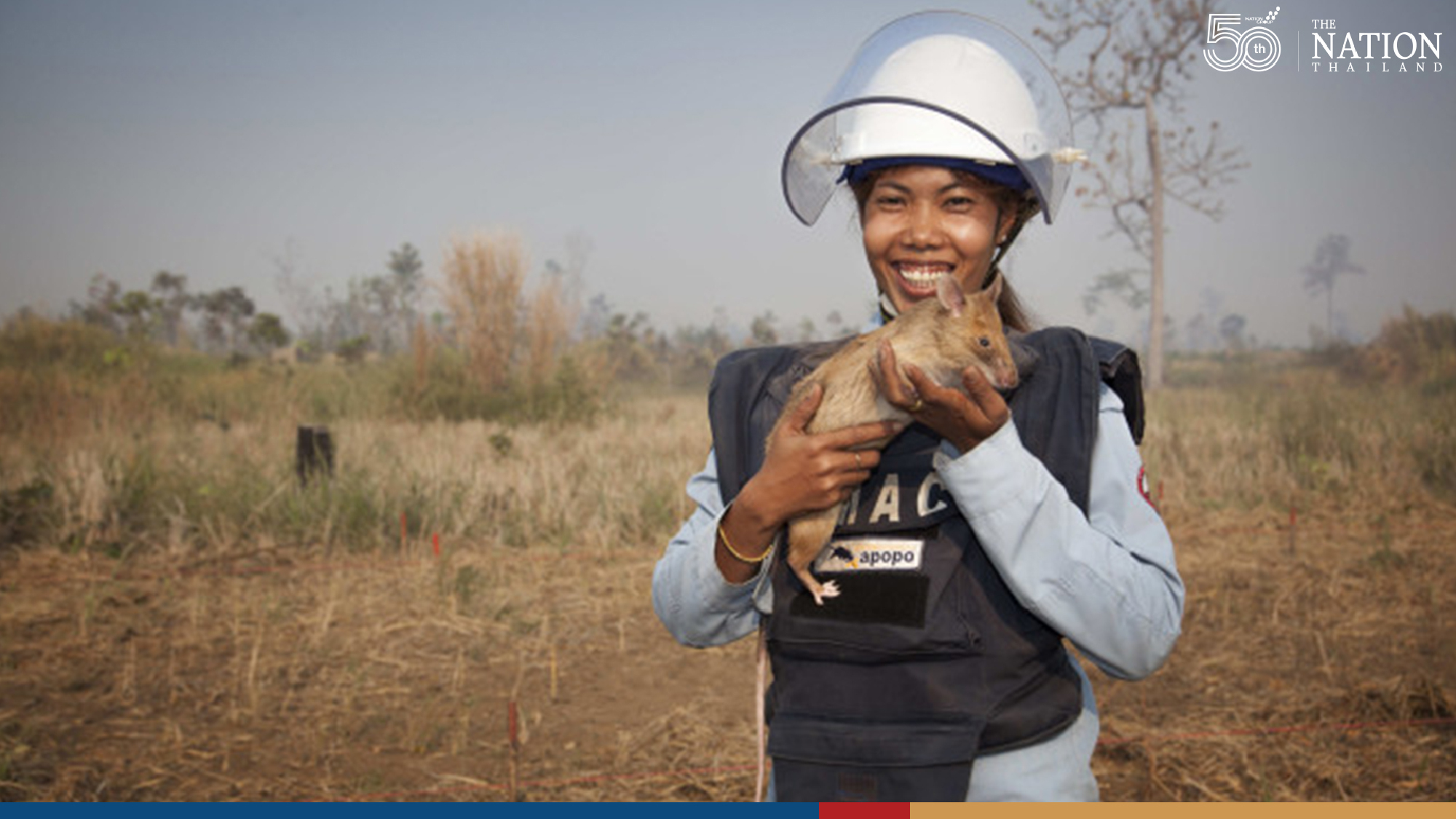 Photo Credit: APOPO