Asean sees 22,650 new Covid-19 cases and over 400 deaths
Covid-19 cases in Southeast Asia continued to show an increase on Friday, although the number of deaths dropped in comparison with Thursday.
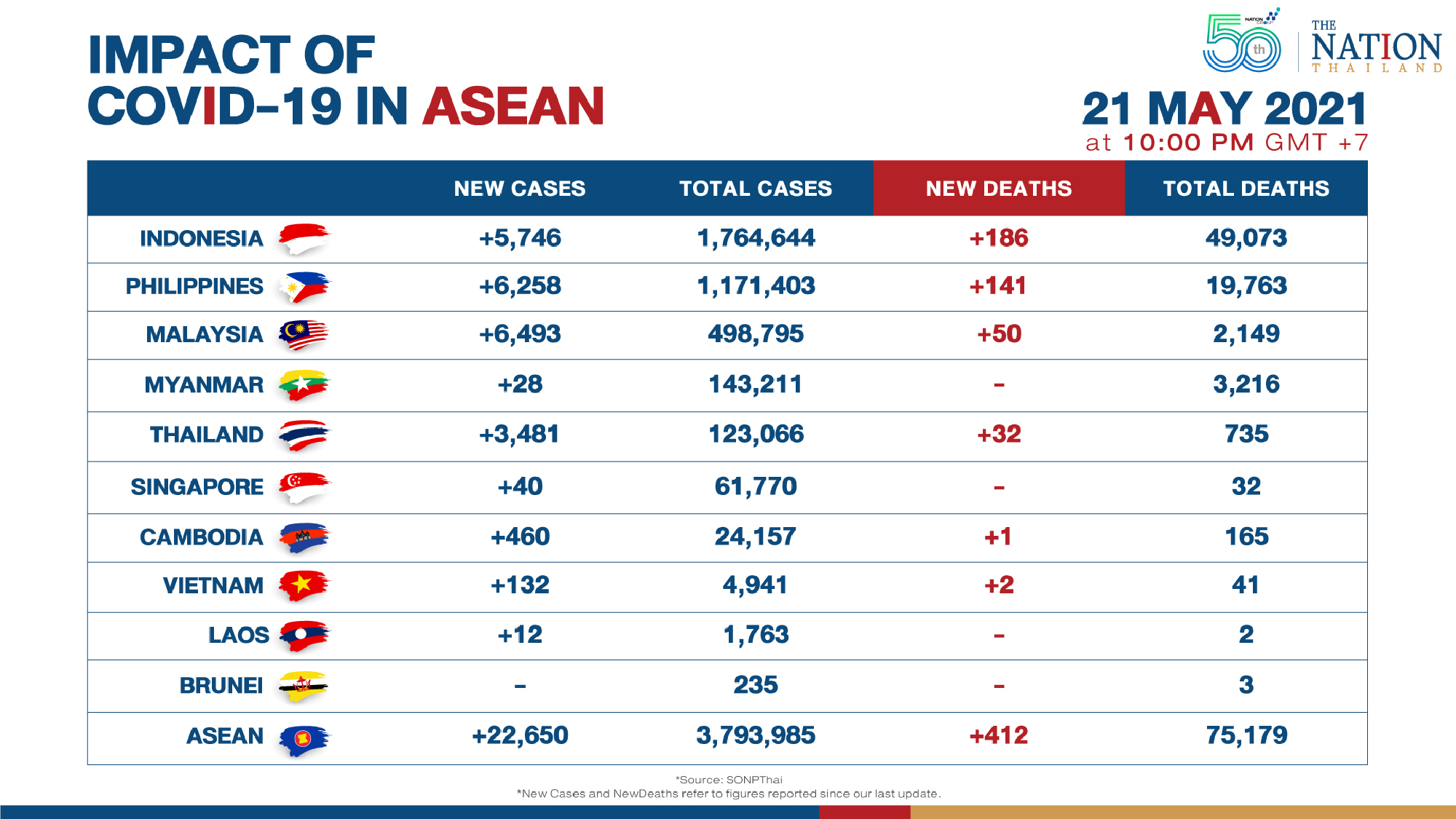
Asean saw 22,650 new cases on Friday, higher than Thursday’s 21,952, while 412 deaths were reported, down from the previous day’s 445.
The total number of Covid-19 cases in the region since the outbreak crossed 3.79 million, while the death toll rose to 75,179.
Malaysia reported more than 6,000 new cases for the third consecutive day, with 6,258 patients testing positive on Friday, pushing cumulative cases in the country to 498,795. With 50 more deaths on Friday, total fatalities in Malaysia rose to 2,149.
The Malaysian government planned to announce stricter lockdown measures on Saturday as daily infections had been rising.
Vietnam reported 132 new infections and two deaths, bringing cumulative cases in the country to 4,941, with 41 deaths. So far 2,689 people have been cured and discharged.
Ho Chi Minh city announced tighter quarantine measures after new cluster cases with unknown origin emerged in a community.
Authorities seize 68 big cats from Tiger King couple who allegedly abused animals, threatened federal official
About 70 big cats were seized by authorities this week from an Oklahoma animal park owned by a couple featured in the Netflix docuseries “Tiger King” who are accused of abusing and mistreating the animals and threatening federal officials, the Justice Department announced Thursday.
Authorities said they recovered 68 big cats, including tigers, lions and ligers, and a jaguar owned by Jeffrey and Lauren Lowe at Tiger King Park in Thackerville, Okla.
The seizure comes as the Lowes, who operated the facility formerly run by imprisoned “Tiger King” star Joe Exotic, are accused of inhumane treatment and ongoing violations of the Endangered Species Act. The couple was sued by the Justice Department last year for exhibiting the big cats without a license as well as jeopardizing the health of their animals. Authorities recovering the animals this week is part of a court-approved agreement to help resolve the civil complaint from the Justice Department.
“This seizure should send a clear message that the Justice Department takes alleged harm to captive-bred animals protected under the Endangered Species Act very seriously,” said acting assistant attorney general Jean E. Williams of the Justice Department’s Environment and Natural Resources Division.
In a news release Thursday, authorities outlined how the three inspections of Tiger King Park since last December by the Department of Agriculture’s Animal and Plant Health Inspection Service resulted in citations for the Lowes for “failing to provide the animals with adequate or timely veterinary care, appropriate nutrition, and shelter that protects them from inclement weather and is of sufficient size to allow them to engage in normal behavior.”
“The Lowes have consistently failed to provide their Big Cats with a diet containing the necessary nutrients to allow them to grow properly and thrive,” the affidavit says.
Daniel Card, the couple’s attorney, did not immediately respond to a request for comment Thursday. Card told a federal judge last week that the Lowes “want out completely” and were willing to give up their big cats to help resolve the federal complaint against them. The judge had found the Lowes in contempt for violating a previous order regarding the care of the big cats, fining them $1,000 a day until they complied.
“They don’t want to fight this anymore. They don’t want to do it,” Card said to the judge, according to the Associated Press. “They want to give the tigers to a . . . sanctuary of their choice and be done with it.”
The seized animals will be moved to preserves to receive “proper care and rehabilitation,” said Edward Grace, assistant director of the U.S. Fish and Wildlife Service’s Office of Law Enforcement.
Jeffrey, 56, and Lauren Lowe, 30, came to fame last year as part of a group of eccentric exotic animal owners starring in “Tiger King,” a breakout streaming hit during the early part of the pandemic.
Jeffrey Lowe was portrayed in the series as a Las Vegas playboy whose exotic-animal business attracted controversy. Lowe was previously convicted in 2018 for illegally using animals to make money in Las Vegas, bringing tigers to Sin City and selling meet-and-greets and photos with the cats. A plea agreement resulted in a suspended jail sentence with a “stay out of trouble” order, including no animal violations, reported KTNV.
Exotic, the show’s main character whose real name is Joseph Maldonado-Passage, was convicted last year for a murder-for-hire scheme against rival Carole Baskin and violating federal wildlife laws. The 58-year-old was sentenced to 22 years in federal prison. Exotic – a one-time business partner of Lowe’s who handed over to him ownership of Greater Wynnewood Exotic Animal Park in Wynnewood, Okla., due to financial troubles – claims Lowe set him up. (Lowe has denied the allegation.)
But the focus from authorities intensified after the Lowes shut down the Wynnewood facility in August and moved the animals last year to the private park in Thackerville, a town of more than 400 located roughly five miles from the Texas border. USDA inspectors found some of the animals “in poor health and living in substandard conditions at the Wynnewood facility,” officials said, and wanted to follow up.
During inspections of Tiger King Park, officials found several animals suffering from what appeared to be neurological abnormalities, stunted growth and lameness, according to the affidavit. Inspectors said they found that boneless chicken was the only food available for the big cats, which officials point to as a failure to uphold balanced nutritional needs and caused some to “suffer greatly.”
When it came to shelter, the couple allegedly kept the animals in places not strong enough to protect them from extreme weather and not big enough to allow them to participate in basic behavior.
The affidavit also noted how the Lowes allegedly verbally and physically harassed law enforcement officials inspecting their property. A U.S. Fish and Wildlife Service agent alleged that Lauren Lowe threatened to kill him during a search of Tiger King Park this month. “I’m gonna kill him,” she said in reference to the agent, according to the affidavit.
When asked about the interaction from investigators, the agent said, “The statement was especially intimidating because their former Tiger King business partner is serving a prison sentence for hiring a hit man to assassinate a business rival in another state.”
The same agent accused Jeffrey Lowe of intimidation, the affidavit says. Lowe allegedly crumpled up a property receipt and screamed profanities, the agent said, “in an apparent self-scripted effort to film the exchange for what he had commented earlier would be sold to Netflix as ‘Tiger King 2.'”
The Justice Department’s announcement was celebrated by former Oklahoma attorney general Drew Edmondson, co-chair of the National Law Enforcement Council for Animal Wellness Action. He told the AP that the move was the latest win in federal efforts to shut down an “unethical roadside zoo operator.”
“Joe Exotic and Jeff Lowe ran slipshod operations and the chickens have come home to roost,” Edmondson said.
Southeast Asia continued to see a surge in Covid-19 cases on Thursday, data showed.
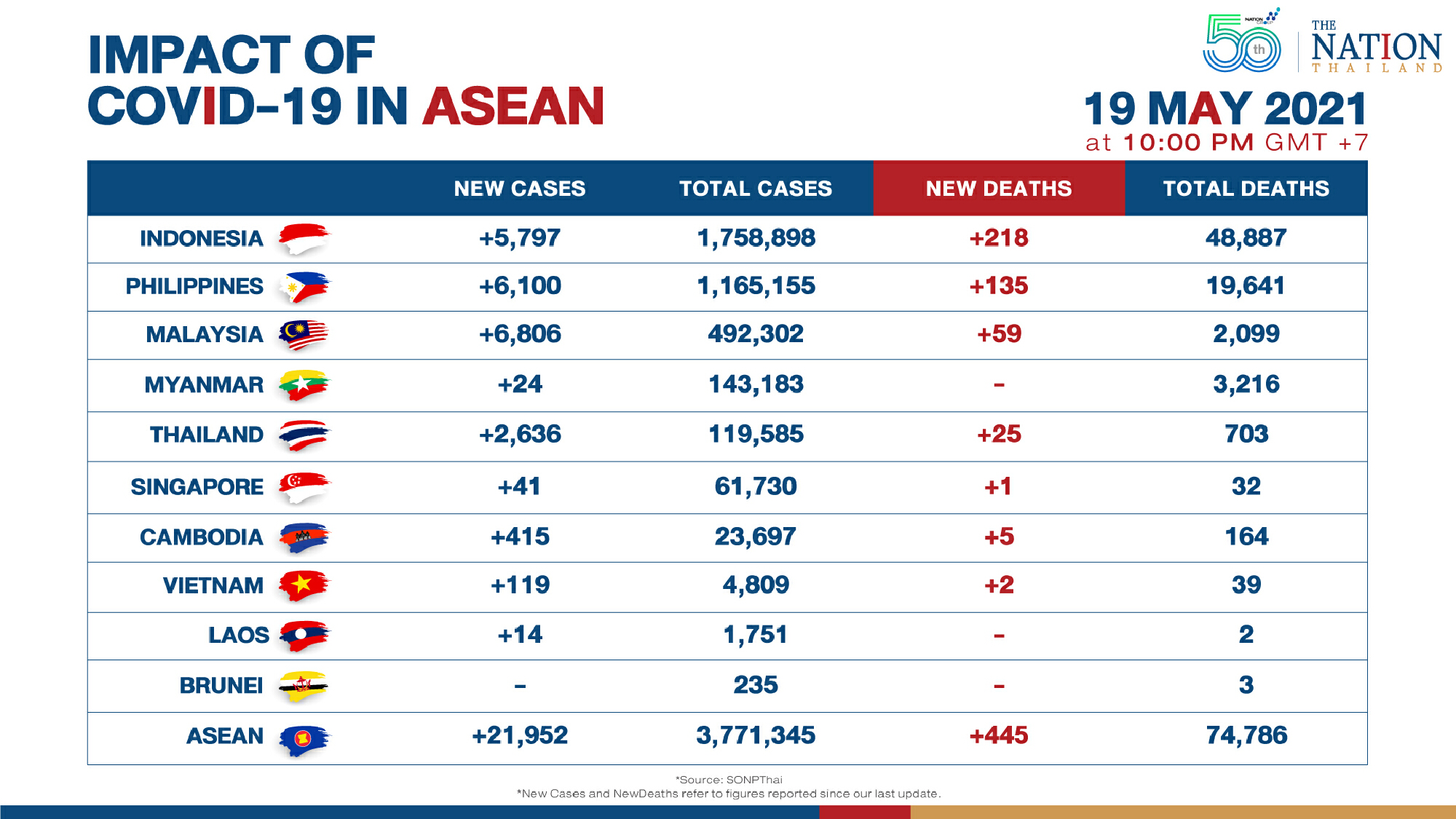
Asean countries reported 21,952 cases, higher than Wednesday’s 19,730.
Deaths in the region also rose to 445, compared to Wednesday’s 409 fatalities. Total Covid-19-related deaths in Asean has risen to 74,786, while total cases since the outbreak crossed 3.77 million.
Philippines reported 6,100 infections and 135 deaths, bringing cumulative cases in the country to 1,165,155 and 19,641 deaths.
Philippine President Rodrigo Duterte has prohibited the disclosure of vaccine type to be administered at centres before the inoculation date, after huge crowds queued up at centres that had announced they would provide Pfizer’s vaccine.
Malaysia reported a new high of 6,806 new infections, pushing cumulative cases in the country to 492,302 patients, while 59 deaths on Thursday — also a new high — took total deaths in Malaysia to 2,099.
The country’s National Vaccine Committee is investigating a case where at least two people reportedly received a smaller dose of vaccine than the required amount.
Record heat scorches northwestern Russia, central Canada
Its only May, and temperatures near the Arctic Circle in northwestern Russia are approaching 90 degrees. In Moscow, temperatures have shattered records on consecutive days.
It has also been unusually warm in central Canada, where wildfires in Manitoba are sending plumes of smoke across retreating ice in Lake Winnipeg.
Summer has yet to begin in the northern hemisphere, but temperatures in high latitudes are alarmingly warm, portending another brutally hot season while signaling more climate troubles.
– – –
Since last week, historic warmth has swelled over much of western Russian and bled into eastern Scandinavia.
On Thursday, the temperature hit 87.8 degrees (31.7 Celsius) in Naryan-Mar, Russia, a town near the Arctic Ocean and almost 1,000 miles northeast of Moscow. The temperature shattered the previous monthly record of 82 degrees (27.8 Celsius), according to Serge Zaka, a meteorologist in France.
The reading came a day after the temperature surged to 86.5 degrees (30.3 Celsius) in Nizhnyaya Pesha, about 800 miles northeast of Moscow, also inside the Arctic Circle. Etienne Kapikian, a meteorologist for Meteo France, tweeted that it was one of the earliest 30-Celsius readings ever seen that far north.
Numerous locations in western Russia set records Wednesday for their highest May temperatures.
Arkhangelsk, more than 600 miles north of Moscow near the shore of the Arctic Ocean, soared to nearly 90 degrees (32.1 Celsius), its highest temperature ever recorded during the month.
On Tuesday, numerous locations in western Russia observed their hottest weather ever recorded during the middle third of May, according to Kapikian.
Moscow broke temperature records that were more than 100 years old on Monday and Tuesday, according to the Moscow Times, reaching 86.7 degrees (30.4 Celsius) and 84.6 degrees (29.2 Celsius). The Russian capital has seen temperatures at least 10 to 20 degrees above normal for days.
Muscovites sunbathed on park benches and swam in city fountains, filling Instagram feeds with bathing-suit selfies. Vendors set up portable ice cream stands along bridges and embankments.
The Moscow Metro handed out free water bottles at underground subway stations where temperature rose above 82.4 degrees (28 Celsius), and they removed doors to increase airflow.
City authorities issued a weather hazard level and offered guidance for citizens unaccustomed to what Roman Wilfand, the chief researcher at Russia’s Hydrometeorological Center, called “super heat.”
“It’s the subtropics,” he told the state-run Tass news agency. “This is not the temperature of middle latitudes. There is no climate like this in Moscow.”
Near the Russian border, the Finnish village of Ilomantsi hit 87.4 degrees (30.8 degrees Celsius) Wednesday. It’s the second instance of temperatures that high so early in the year in Finland.
On Thursday morning, temperatures over a large part of western Russia were 20 to 40 degrees above normal. Anomalous warmth is projected to persist through Friday before shifting toward the central part of the country.
– – –
On the other side of the northern hemisphere, fires have erupted in Saskatchewan, Manitoba and Ontario amid unusually warm and dry conditions.
CBC News reported that 20 heat records were broken Monday in Saskatchewan while temperatures in four Canadian provinces have recently surpassed 86 degrees (30 Celsius).
Temperatures throughout central Canada were 10 to 30 degrees above average early in the week, intensifying the blazes.
One fire in Saskatchewan forced the evacuation of at least 50 homes, CBC News wrote.
In Manitoba, the plumes of large wildfires could be detected by weather satellites.
CBC News reported that one fire destroyed two homes and had forced the evacuation of about 80 households on Tuesday. Fires caused highway closures throughout the province.
The wildfire smoke prompted air quality advisories. “Localized areas of smoke are creating reduced visibilities and poor air quality down wind of fires,” wrote Environment Canada.
It’s not unusual for Manitoba to see wildfires at this time of year, said Rob Paola, a retired meteorologist from the Meteorological Service of Canada. But “this year has been especially intense fairly early given how dry our spring has been, and our low snowpack this past winter,” he told The Washington Post.
Some smoke from Manitoba has been carried by the jet stream into the Northeastern United States, according to Santiago Gassó, an earth systems scientist at the University of Maryland.
On Wednesday, he tweeted that smoke from the fires in Manitoba had reached New England and extended over the ocean offshore from the Mid-Atlantic region.
In northwestern Ontario, more than a dozen forest fires were burning Tuesday, according to CBC News.
A powerful cold front sweeping east across central Canada is set to end the warm spell and is expected to help control the fires. Thunderstorms flared in southern Manitoba on Wednesday afternoon, while snow fell behind the front in a much chillier air mass to the north and west. Unusually warm weather was forecast to shift into eastern Canada through Friday.
– – –
The warmth seen in the high latitudes this month is consistent with what climate scientists expect with increasing frequency as the planet’s temperature rises due to human-caused climate change.
The exceptional warmth in western Russia comes a little less than a year after a town in northeast Siberia saw temperatures reach 100.4 degrees (38 Celsius), the highest temperature ever documented in the Arctic Circle.
That triple-digit reading marked the climax of an exceptionally hot year in Siberia during which annual temperatures were more than 10.8 degrees (6 Celsius) above average.
“The 2020 Siberian heat was remarkable both for its magnitude and its persistence,” wrote the Copernicus Climate Service, the European Union’s climate monitoring agency in a report released earlier this year.
The hot weather intensified summer fires, “which resulted in the largest annual amount of carbon emissions from wildfires in the region since at least 2003,” the Copernicus report stated.
Parts of Siberia, Alaska and Canada have also seen what are known as “zombie fires” or fires that emerge one season and smolder through the winter in the soil before reigniting the next spring. A study published in the journal Nature on Wednesday found that conditions for these holdover fires have become more frequent in recent decades.
The high latitudes are the planet’s fastest warming area, and the Arctic is warming three times as fast as the global average.
To be sure, the extreme warmth seen in recent days is also related to the configuration of weather patterns that has helped focus high temperatures in central Canada and northwestern Russia.
As Scott Duncan, a meteorologist based in London put it in a Twitter thread, “the Arctic . . . is often subject to extremely wild temperature swings.” But Duncan made clear that the Arctic, particularly on the Russian side, “is experiencing more and more intense heatwaves” as the planet warms.
He concludes: “Human induced climate change is the key player here. We simply would not be able to achieve the severity of heat without a warming planet.”
E.U. agrees on covid certificates to sweep away barriers on travel between countries
BRUSSELS – European policymakers struck a deal Thursday to sweep away travel barriers among European countries through a digital certificate system, another step toward normalizing global movement after more than a year in which the modern, interconnected world has seemed on pause because of the pandemic.
The agreement seeks to eliminate quarantine requirements for people who can prove they are at low risk of having covid-19 because they are vaccinated, have recently tested negative for the coronavirus, or have already recovered from the disease. The plan will set up a digital certificate system that policymakers hope will make it easy for travelers to prove their status. It will go into effect July 1, although E.U. countries will have another six weeks to implement it if they are not ready by then.
The deal – which is primarily focused on travel inside Europe – is separate from an agreement reached Wednesday to reopen Europe’s borders to travelers from outside the bloc. But the goal is to allow all travelers, not just European residents, to connect to the system. The timing of the new system means that vaccinated Americans and others who want to travel to the E.U. before July 1 may still face quarantine requirements, depending on their destination, even though the official ban on travel from outside the bloc is expected to end Saturday, after it received final approval earlier Thursday.
“This will mark summer 2021. It will make all the difference, and we won’t be repeating the nightmare of summer 2020,” said Juan Fernando López Aguilar, a Spanish lawmaker who helped lead negotiations on behalf of the European Parliament.
“People are going to be able to start thinking of booking holidays, booking hotel rooms, booking family holidays, booking trains,” he said. “We have not been able to enjoy that freedom for over a year now.”
The streets of Europe fell silent in March 2020, as nations set up bans not only on travel from outside the E.U. but often on travel from one country to another within European borders. It was a grievous blow to the interconnected European world that has developed in recent decades, in which grocery stores see little risk in stockpiling goods in warehouses in other countries, and Romanian farmworkers can easily travel to Germany during planting season.
At their height, the travel restrictions threatened food supplies in parts of Eastern Europe, because trucks were having such a difficult time crossing from one country to the next. By now, most barriers against commercial traffic have fallen away, but people traveling for business or pleasure still often face quarantines of seven or 10 days when they go to another country, even if they have been vaccinated.
The situation has made cross-border tourism all but impossible, even as Europe’s vaccination program is speeding up after a slow start. Tourism-dependent countries such as Spain, Italy and Greece have been especially eager to end the restrictions.
“European citizens are looking forward to traveling again, and today’s agreement means they will be able to do so safely very soon,” European Commission President Ursula von der Leyen said in a statement. The certificate “will make it easier for Europeans to travel – whether to see their families and loved ones or to get some well-deserved rest.”
Some European countries are already testing the system of travel passes, which will be known officially as E.U. Digital Covid Certificates. Individual countries will issue the certificates, which will serve as a digital proof of vaccination, a negative test or of recovery from the coronavirus.
But some key details remain unresolved, and the deal set up a structure for the passes while leaving individual countries to sort out the challenges. National health authorities will be responsible for verifying existing proofs of vaccination, many of which are on paper and easily forged. Policymakers have not yet decided how to determine what kind of past coronavirus infection makes a person low-risk.
They ruled out, for now, the antibody tests that have sometimes been used to determine whether a person appears to be immune to the disease, asking the European Center for Disease Prevention and Control to come back to them with a report within 40 days. This means that, for the time being, testing or vaccination may be more important for travel.
All E.U. countries will be required to accept vaccines approved for use in the European Union – which includes all those on the market in the United States, but not Chinese- or Russian-made ones. Individual countries can decide whether to accept other vaccines.
And although countries will retain final say over who is allowed into their borders, the new set of regulations seeks to impose more binding requirements on countries to commit to opening up. It also devotes about $122 million in E.U. funds to reducing the cost of coronavirus tests for citizens, a key demand by E.U. lawmakers.
“The goal is to facilitate free movement and the lifting of all restrictions,” Didier Reynders, the top European Commission official in charge of negotiating the system, told reporters.
Published : May 21, 2021
By : The Washington Post · Michael Birnbaum, Quentin Ariès
Israel approves cease-fire to end 11-day battle with Hamas
JERUSALEM – Israels security cabinet voted Thursday night to approve a cease-fire in its 11-day aerial battle with Hamas in the Gaza Strip, according to the office of Prime Minister Benjamin Netanyahu.
The cabinet, made up of top security officials and ministers, voted unanimously “to accept the Egyptian initiative for a bilateral cease-fire without any conditions, which will take effect later,” according to a statement.
Hamas, which controls the Gaza Strip, has also agreed with the Egyptian proposal. Taher al-Nounou, a media adviser to the head of the Hamas political bureau, said, “We were informed by our brothers in Egypt that an agreement had been reached for a mutual and simultaneous cease-fire in the Gaza Strip, starting at 2 a.m. on Friday, May 21, 2021. And that the Palestinian resistance will abide by this agreement as long as the occupation is committed.”
The statement from Netanyahu’s office also stressed, that “reality on the ground that will determine the future of the operation.”
The two sides continued to launch rockets and airstrikes against each other even as the agreement was announced. The battle has killed 232 Gazans, including at least 65 children, and 12 in Israel, two of them children.
Israel and Hamas have agreed to an Egyptian cease-fire initiative after 11 days of combat.
Hamas officials say that fighting will end at 2 a.m. local time on Friday.
The Palestinian death toll in Gaza rose to 232, including at least 65 children, local health officials said Wednesday. In the West Bank, at least 21 Palestinians have been killed since Friday, officials there said.
The death toll in Israel stood at 12, including two children, after police said two Thai workers were killed Tuesday by rockets fired from Gaza.
Osama Hamdan, Hamas’ top official in Lebanon, said the militant group had won concessions from Israel on several contentious points. It said these include Israel’s interference at al-Aqsa Mosque in Jerusalem and in the East Jerusalem neighborhood of Sheikh Jarrah, where Israeli settlers have been seeking to evict several Palestinian families. These were two flash points that triggered the military escalation earlier this month.
“We obtained guarantees regarding lifting the hand of the occupation from Sheikh Jarrah and the mosque,” he said in an interview on Hezbollah’s television channel.
But Israeli officials said the cease-fire agreement called only for the immediate halt to military operations. The security cabinet statement emphasized that the deal entailed a “mutual and unconditional ceasefire.” Members of the cabinet speaking later to Israeli media said no concessions had been made on Jerusalem.
The Israel Defense Forces said their campaign had largely achieved the goal of sharply degrading Hamas’ capability, saying that more than 200 hours of bombardment had killed numerous militant commanders and destroyed much of their military infrastructure.
“I’d like to commend our security forces and the IDF, led by the chief of staff, who have, over the past 11 days, reached military achievements unprecedented in their scale, precision and strategic significance for the struggle with terrorist organizations in Gaza,” Defense Minster Benny Gantz said in a statement.
Efforts to broker a cease-fire between Israel and Hamas had stepped into high gear earlier on Thursday as hostilities neared a 12th day, with Egyptian and U.N. mediators furiously working to find a resolution acceptable to both sides. The Egyptian government will now send security delegations to Israel and the Palestinian territories, to follow up on implementation and secure agreement on other measures to maintain stability.
Speaking at the White House, Biden commended Netanyahu for deciding to end the military campaign. “These hostilities have resulted in the tragic deaths of so many civilians, including children, and I send my sincere condolences to all the families, Israeli and Palestinian, who have lost loved ones,” Biden said.
The president repeated his support for Israel’s right to defend itself against Hamas attacks said the United States would help Israel replenish its missile defense system, which military officials say had intercepted most of the rockets fired across the border. Biden added, “I believe the Palestinians and Israelis equally deserve to live safely and securely and enjoy equal measures of freedom, prosperity and democracy.”
On Wednesday, in the most assertive language used publicly by the White House since the fighting began, Biden had told Netanyahu he “expected a significant de-escalation today on the path to a cease-fire.”
Biden’s intervention was a sharp departure from what Netanyahu experienced during four years of the Trump presidency, and sources inside the prime minister’s circle told Israeli media that Netanyahu was taken aback. He found himself caught between pressure to accommodate Israel’s most important ally and the need not to appear weak before his right-wing base.
“To Israeli ears, a cease-fire means a kind of Hamas victory, where they get the amalgamated West Bank, Gaza and Arab Palestinian political victory, and also got to fire 4,000 rockets at us,” said Michael Oren, a former Israeli ambassador to Washington. “For many Israelis this time, they’re increasingly telling themselves: once we’ve started, we might as well keep going to the end.”
Netanyahu was days, perhaps hours, away from being ousted from Israel’s top job last week when the fighting began. A coalition of opposition parties were reportedly close to announcing they had secured a bare majority of parliamentary votes to form a new government when Hamas fired missiles at Jerusalem. The escalation has derailed that effort, opening the door for Israel’s fifth election in two years. Political observers say Netanyahu needs a decisive military victory to improve his odds at the ballot box.
Netanyahu publicly resisted Biden’s entreaty at first, releasing a video message that made no mention of a cease-fire. “I especially appreciate the support of U.S. President Biden, for the right of self-defense for the state of Israel,” he said, adding that the operation would “continue until its goal is achieved – to restore peace and security to you, citizens of Israel.”
The American pressure may have played to the prime minister’s benefit. Chuck Freilich, a former Israeli deputy national security adviser, said that Netanyahu has for years leveraged U.S. criticism of Israeli actions toward Palestinians in political talking points for his right-wing supporters.
“Netanyahu needs to do whatever he can to rally his base, to show that he’s the only one to stand up to the world, and standing up to international pressure is always popular,” said Freilich.
After enduring 11 days of air and artillery strikes, Gaza has seen its infrastructure devastated, including damaged electricity and water systems, according to aid agencies, which have warned of a burgeoning humanitarian crisis. Israel has kept checkpoints into Gaza closed throughout most of the conflict. Trucks carrying medical supplied and relief workers were turned back in recent days.
An electrical workers union in Israel said Thursday that its members would refuse to carry out repairs on power lines heading into Gaza in protest Hamas’ refusal to return a civilian and the bodies of two Israeli soldiers believed to have been held in the enclave since 2014.
Even as the diplomacy accelerated on Thursday, military activity continued. Large explosions rocked Gaza, lighting up the predawn sky and drowning out the morning calls to prayer, according to local television footage. Witnesses in Gaza said Israeli tanks shelled targets near Khan Younis, the enclave’s second-largest city. Video on social media showed a three-story building in the Jabaliya refugee camp exploding in a fireball Thursday morning. The family had been warned to evacuate, witnesses said.
The Israeli military said it had struck a number of Hamas military targets, including a weapons manufacturing facility, underground rocket launchers and “a weapons storage unit located inside the residence of the former Minister of Justice and Released Prisoners who previously served as a member of the Hamas Political Bureau.”
A Hamas spokesman acknowledged that several of its leaders’ homes were hit, but denied that the residences also served to store weapons.
“Homes of many Hamas members and leaders were targeted and destroyed, but Israeli claims that they were weapons caches were raised just to justify targeting civilian and residential facilities,” the spokesman said in response to a query on the group’s media WhatsApp account. “Israeli army has to provide evidence to its claims, and we are sure it will never find this evidence because we know very well where we keep our stockpiles and where we launch our rockets.”
Both Hamas and Islamic Jihad, meantime, said they carried out multiple mortar attacks across the border. Residents of the Israeli communities of Netiv Haasara and Nahal Oz, near the Gaza border, were told to stay inside during what civilians on both sides hoped would be the final hours of fighting.
Published : May 21, 2021
By : The Washington Post · Steve Hendrix, Loveday Morris, Shira Rubin, Michael E. Miller
Moderna starts shipping vaccine from U.S., boosting shot exports
Moderna has begun exporting U.S.-produced Covid-19 vaccines to other countries, a key step as U.S. vaccine supply begins to be shipped abroad.
The company’s early U.S. production had been gobbled up by a single buyer — the federal government — as the country, under the administrations of Donald Trump and then Joe Biden, used wartime powers to prioritize its orders and make sure it was the front of the line for vaccine supply for Americans.
Both the Biden administration and Moderna confirmed this week that the company has begun to ship vaccine supply abroad from its U.S. production, though it’s not clear when that began, how many doses have been shipped or where they’ve been sent. Pfizer Inc. has also begun shipping from the U.S. to countries including Mexico, Canada and Uruguay.
Moderna and Pfizer Inc. have been the backbone of the U.S. vaccination campaign, which is leveling off as domestic demand wanes. Their shipments of their coveted mRNA vaccines could be a turning point for nations that have sought to get any doses they can, including ones that have shown lower efficacy.
The U.S. government has separately pivoted to share its own doses abroad, with Biden pledging this week to ship 80 million doses by the end of June, including 20 million that are authorized for U.S. use — Pfizer, Moderna or Johnson & Johnson. That will be the first time that Biden has shared U.S. government-owned doses that he could have used domestically. The remaining 60 million doses are from AstraZeneca Plc., whose vaccine isn’t authorized for U.S. use.
Collectively, the efforts will make up total U.S. vaccine exports, those doses produced in the U.S. and sold by companies to other countries, and doses bought by the U.S. government before being donated. The total number of shots sold or donated abroad by the U.S. so far remains unclear.
Moderna spokesman Ray Jordan confirmed that the company is shipping some vaccine doses abroad, but said he couldn’t provide additional details. White House Covid-19 adviser Andy Slavitt said this week that Moderna was exporting but declined to give further details.
Moderna has delivered 145 million doses to the U.S., or about 41% of supply so far, according to data from the Centers for Disease Control and Prevention. The U.S. is administering 1.8 million shots per day, down from a high of 3.4 million in mid-April.
Published : May 21, 2021
By : Syndication Washington Post, Bloomberg · Josh Wingrove, Robert Langreth
Remembering Kentaro Miura, creator of Berserk, which inspired countless fantasy stories
Kentaro Miura, author and creator of the influential manga “Berserk,” died on May 6 of acute aortic dissection, according to a statement from publisher Young Animal Comics. He was 54.
Miura’s influence on modern fantasy writing and art can hardly be overstated. “Berserk” is a serial dark fantasy story about a knight named Guts and his extremely big sword. The series, most famous for its dark themes and violence, has sold over 50 million copies since its first entry in 1989 – arguably on the strength of its character work and its complicated intrapersonal relationships as much as its Hieronymus Bosch-inspired art style.
“Berserk” helped start a visual trend that continued in video game heroes such as Cloud Strife of “Final Fantasy VII” and Dante from “Devil May Cry.” Perhaps the most famous example of his inspiration is within the “Dark Souls” series by From Software, which borrows much of Miura’s monster design to create its own nightmarish hellscapes.
The “Berserk” story is most famous for its Golden Age arc, the second story in the series. The arc is arguably the series peak, telling the origin of the complicated hero-villain relationship of Guts and Griffith, the beautiful and charismatic leader of mercenaries who eventually becomes obsessed with Guts. The name of the arc belies its dark nature. To this day, when artists and creators think of dark fantasy, they often think of the Eclipse moment within the Golden Age arc, which makes the red wedding sequence of “Game of Thrones” feel like a tea party by comparison. The Golden Age arc has been adapted into anime and a film trilogy.
Thousands of players of the online role-playing game “Final Fantasy XIV” gathered online Wednesday night and Thursday morning to memorialize Miura. Many of those paying their respects are within the Dark Knight class, which was heavily inspired by “Berserk” and Miura.
“Berserk” may be a story that remains unfinished; it is still going. Miura famously took long breaks (often measured in several years) between stories. His readers were often very patient with these breaks, particularly since “Berserk” is more detailed and meticulously drawn (and planned out) than many standard manga works. It was a popular meme to guess what Miura might be up to during his hiatus, including his admiration for pop-idol video games.
“Berserk” and Miura’s other art have endured throughout the decades and will live on through the countless other fantasy worlds he’s inspired. Like “Berserk,” Miura’s ability to inspire and move entire universes may never end.
Japan to bar entry of foreigners from Thailand, 6 other nations
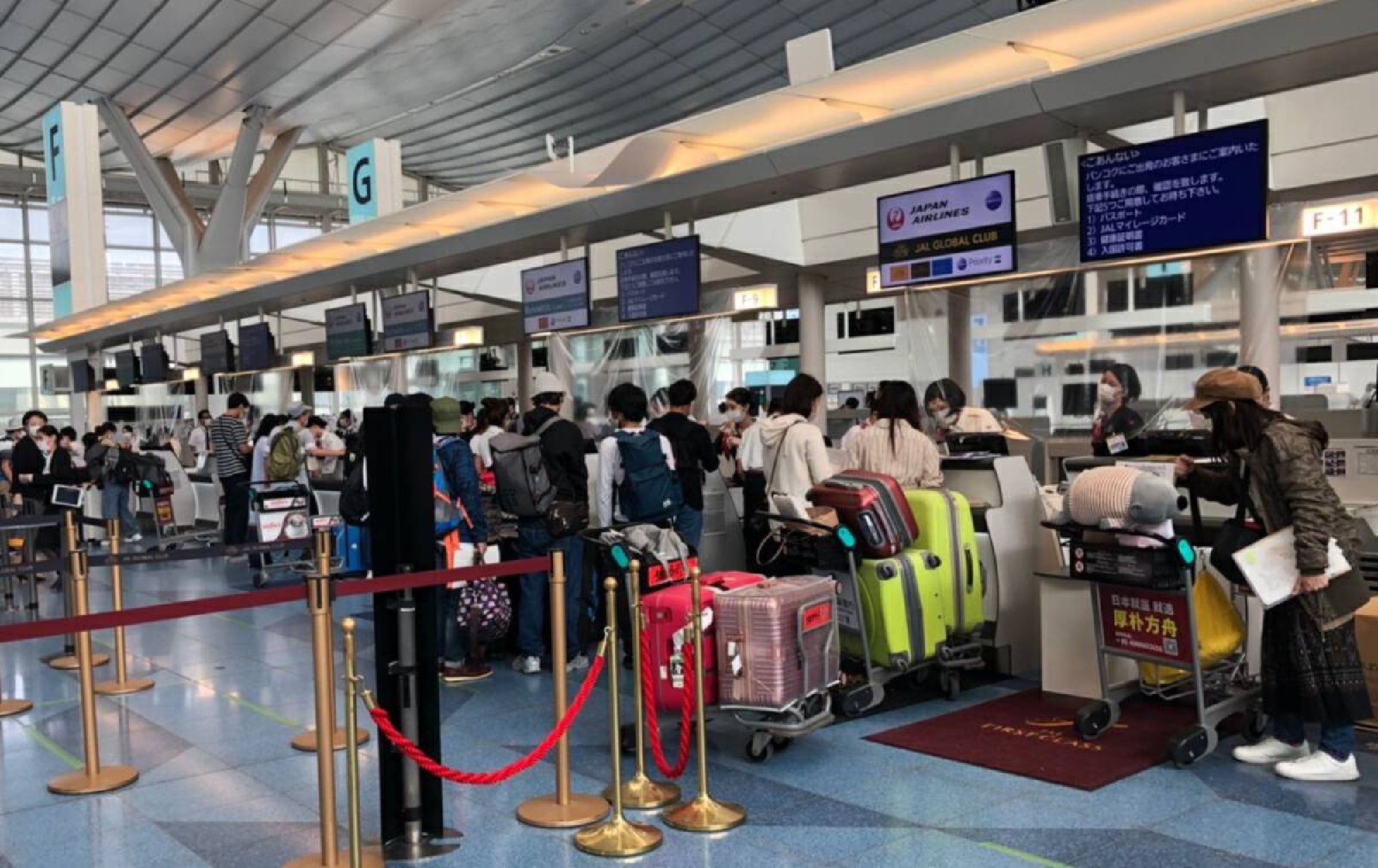
Japan will temporarily bar the entry of foreign nationals who recently visited Thailand or six other nations hit by Covid-19, Japanese media reported.
The six are Cambodia, East Timor, Mongolia, the Seychelles, Sri Lanka and Saint Lucia.
The number of countries and regions under such Japanese restrictions now total 159.
Foreign nationals who have been to any of these countries within 14 days of arrival in Japan will not be allowed to enter, with the exception of permanent residents, their families and others with special circumstances.
Japanese citizens are not included.
The government added Sri Lanka to the list because it poses a high risk of becoming a gateway for the highly contagious Indian variant.
Foreigners, even those residing in Japan, will be denied entry if they travelled recently to India, Pakistan, Nepal, the Maldives and Bangladesh.
Japanese citizens who have been to these countries will need to undergo quarantine for six days at a designated facility and take tests to check for any Covid-19 infection.
India has deadliest day for any country since pandemic began
NEW DELHI – For a doctor, it was another 18-hour day trying to rescue patients who could not be saved. For a crematorium official, it was one more procession of victims. For the family of a young academic, it was a time to mourn their second loss to the virus this month.
India reported more than 4,500 deaths from covid-19 on Wednesday for the prior 24 hours, the highest single-day death toll in any country since the pandemic began and a grim marker of the scale of the outbreak ravaging this nation of 1.3 billion people.
The previous high for daily fatalities in the pandemic – 4,400 – occurred in the United States on Jan. 20, according to data from The Washington Post.
While the official statistics on covid-19 deaths in India are devastating, they do not capture the full scope of the calamity. Crematorium figures, obituaries and death certificates have repeatedly indicated higher numbers of deaths in this wave of infections than are reflected in the data from local and national authorities.
Deaths from covid-19, the illness caused by the novel coronavirus, lag infections by several weeks, and there are now signs that after an exponential rise, the surge in India appears to be moderating. The country has reported fewer than 300,000 new infections each day this week, still a large number but lower than the record-shattering figure of more than 414,000 daily cases recorded earlier this month.
In New Delhi, India’s capital, the number of new cases has fallen sharply after more than a month of lockdown measures. The slowing growth rate has helped ease the immense pressure on the city’s hospitals, which were turning away patients and grappling with shortages of oxygen earlier in May.
Yet the situation remains dire, notably in rural areas where the majority of Indians live and where health care is scarce. In India’s vast hinterland, scores of people are dying with covid-19 symptoms without being tested. Hundreds of bodies have been found floating in the Ganges River or buried in shallow graves near its banks.
Sanjeev Goyal, a civil servant at India’s Defense Ministry, lost his 23-year-old wife Nidhi Goyal, a teacher, to the virus in April. The family found her a hospital bed in Delhi after a frantic search, but when her condition turned critical, no ventilator was available, Goyal said. She was six months pregnant.
Goyal returned to his small ancestral village in the state of Bihar to immerse his wife’s ashes according to tradition. The number of people complaining of fever, coughs and sore throats in the village is now on the rise, he said. But officially there are no coronavirus cases because “not even a single person has been tested.”
He blames the Delhi authorities for forcing him to search for a ventilator and criticized a lack of preparation by the government for the second wave. “I will carry this pain for the rest of my life that I couldn’t see her face properly one last time,” said Goyal.
Indian Prime Minister Narendra Modi last addressed the nation on the coronavirus crisis on April 20. In recent days, he has talked about the need to help rural and remote areas combat the pandemic.
“The challenge is huge, but our morale is even bigger,” he told local officials on Tuesday. “With spirit and resolve, we will take the country out of this crisis.”
As India seeks to contain the current deadly wave of cases, it is also grappling with a faltering vaccination program. The number of doses administered in the country has tumbled over the past six weeks amid supply shortages and an abrupt change in procurement policy.
Epidemiologists believe that while the rate of growth of new cases appears to be decreasing, the actual toll of the current wave is far larger than official statistics indicate. Experts say the true number of deaths could be anywhere from two to eight times the government figures.
Shahid Jameel, a virologist and professor at Ashoka University, noted recently that under normal circumstances, India’s death rate is about 27,600 a day. If the official figures of about 4,000 covid-19 deaths a day were accurate, he said, they would represent a 15% increase – not enough to overwhelm crematoriums or to generate the harrowing scenes witnessed across the country in recent weeks.
The country would not “see this kind of mayhem” unless the number of bodies at crematoriums had doubled, Jameel told the Indian Express newspaper.
The country’s death toll reflects not just the rampant spread of the virus but also the strain on a chronically weak health-care system. Covid-19 patients have died at home because hospitals were full, as well as inside hospitals because ventilators were unavailable. Hospitals often have run out of supplemental oxygen, with fatal consequences.
India’s Health Ministry reports the prior day’s fatalities each morning. For some, Tuesday’s more than 4,500 deaths were part of a now familiar routine.
Mayur Rathod, a doctor overseeing the treatment of covid-19 patients at Saroj Hospital in Delhi, began the day at 8 a.m. He often does not stop until the wee hours of the next morning. He updates the availability of hospital beds every two hours, checks stocks of supplemental oxygen and medicines, and submits death reports to a government website. The hospital reported three deaths on Tuesday and seven on Monday.
“We are mentally exhausted,” Rathod said. “It is depressing to see patients dying in front of our eyes.”
About 500 miles away in the central Indian city of Bhopal, Mamtesh Sharma, an official at one of the city’s crematoriums, began the grim process of performing the final rites for dozens of covid-19 patients. For more than a month, he has spent 14 hours a day surrounded by the dead.
On Tuesday, his crematorium handled more than 30 covid-19 victims, including a prominent doctor and a wealthy businessman. In normal times, such funerals would draw crowds of friends and relatives. Instead, four people accompanied the bodies and left quickly, Sharma said. What he has seen in the past five weeks will haunt him for the rest of his life, he said.
Back in Delhi, later in the afternoon, about a dozen people gathered at a cemetery to bury Nabila Sadiq, a beloved 38-year-old professor of women’s studies at Jamia Millia Islamia University. Sadiq wrote on Twitter about her illness, which she said began with “chills and a choked throat” on April 25. Early this month, her condition worsened. “Any icu bed leads? For myself,” she wrote.
Sadiq’s 76-year-old mother was also hospitalized with covid-19, said Farid Khan, a businessman who assisted the family in its search for medical care. Her mother died 10 days ago, and Sadiq died late Monday, Khan said. She is survived by her father and brother.
The situation in India is “unimaginable,” Khan said. “Just pray for whatever we can salvage.”