
White House increased tax proposal as it sought to address tensions over next big spending plan #SootinClaimon.Com

#SootinClaimon.Com : ขอบคุณแหล่งข้อมูล : หนังสือพิมพ์ The Nation.

https://www.nationthailand.com/news/30404275

White House increased tax proposal as it sought to address tensions over next big spending plan

InternationalMar 30. 2021President Joe Biden walks to board Marine One on the south lawn of the White House on March 26. MUST CREDIT: Washington Post photo by Demetrius FreemanPresident Joe Biden walks to board Marine One on the south lawn of the White House on March 26. MUST CREDIT: Washington Post photo by Demetrius Freeman

By The Washington Post · Jeff Stein

WASHINGTON – When President Joe Biden’s team began putting together his infrastructure and jobs package this February, the White House National Economic Council circulated an internal proposal calling for about $3 trillion in new spending and $1 trillion in new tax hikes, according to three people with knowledge of the matter.

But soon enough, some members of the economic team second-guessed themselves, concerned that the plan could jeopardize the nation’s long-term financial stability. The officials worried that the large gap between spending and revenue would widen the deficit by such a large degree that it could risk triggering a spike in interest rates, which could in turn cause federal debt payments to skyrocket, said the people familiar with the matter.

The two-pronged package Biden will begin unveiling this week includes higher amounts of federal spending but also significantly more in new tax revenue – with possibly as much as $4 trillion in new spending and more than $3 trillion in tax increases, said the people, who spoke on the condition of anonymity to describe private dynamics.

The two-pronged package that Biden will begin unveiling this week includes higher amounts of federal spending and significantly more new tax revenue – with possibly as much as $4 trillion in new spending and more than $3 trillion in tax increases, said the people, who spoke on the condition of anonymity to describe private dynamics. One person familiar with the matter said that the early infrastructure draft did not include every tax increase the White House was eventually considering for its ultimate proposal, and that the administration believes the tax hikes can advance its goal of reducing income inequality.

The choice to increase the bill’s tax hikes because of its effect on the deficit reflects how concerns over the nation’s spending imbalance are shaping the White House’s internal policy debate. But it also sets up the administration for an enormous political challenge in convincing Congress to pass a package of tax increases on wealthy Americans and companies that together would represent the largest tax hike in generations.

The shift in strategy reveals just one of the many ways the White House has grappled with shaping Biden’s second major legislative effort, which the administration will kick off this week at an event in Pittsburgh.

Biden’s “Build Back Better” agenda is ambitious in scope, aiming to confront global climate change, rebuild the nation’s infrastructure, revive domestic manufacturing, and transform U.S. child care, among other goals.

The path toward crafting the legislation has exposed the White House to crosscutting demands from key allies. This account is based on interviews with seven senior administration officials involved in the effort, as well as more than a dozen congressional officials, labor leaders, activists, and economists involved in the crafting of the package.

One core tension is to what degree Democrats should emphasize investments in traditional physical infrastructure seen as more likely to garner GOP support – such as roads and bridges – rather than child care and other social spending that liberal economists increasingly have emphasized as critical to ensuring robust economic growth.

It is unclear to what extent Biden has the political capital to do both. Already, the administration has decided to trim its sails somewhat and is not expected to make a child anti-poverty initiative permanent or embrace a plan from Sen. Elizabeth Warren, D-Mass., to devote as much as $500 billion to push mass transit away from fossil fuels.

“We know that Republicans and particularly blue-collar men really like the physical building kind of infrastructure and see that as leading to good paying jobs for men in particular. And women and the Democratic base really respond to what you might call softer infrastructure – child care; school; caregiving responsibilities – which have come home very vividly during covid,” said Celinda Lake, a Democratic pollster who advised Biden’s 2020 presidential campaign. “It’ll be a challenge, but they have a major opportunity here to do both in a way that both helps these constituencies and is majorly appealing to them as voters.”

Republicans have already begun to attack the White House for embracing large spending and tax plans – which would largely reverse former president Donald Trump’s 2017 tax cut – that reflect Democratic priorities with very narrow majorities in Congress.

Biden’s coming push to raise the corporate tax rate would damage the competitiveness of American firms and push them to relocate jobs abroad, conservatives say. Although Biden hosted a bipartisan group at the White House for infrastructure discussions, Republican lawmakers have complained of little outreach from the administration or interest in their ideas.

“It’s like Republicans saying, ‘We’ll do infrastructure but pay for it by reversing the Affordable Care Act.’ They don’t really have a seat at the table,” said Donald Schneider, who served as chief economist to Republicans on the House Ways and Means Committee. “This process seems even more insincere than the way the stimulus played out.”

Despite their narrow margins, administration officials have begun comparing their coming efforts to Franklin Delano Roosevelt’s New Deal or Lyndon B. Johnson’s Great Society programs. They see their proposals as more impactful than those put forward by any modern Democratic president, including Barack Obama.

“If you look at what makes the Democratic Party what it is, and what’s considered our greatest hits – our ‘Abbey Roads,’ if you will – it’s not doing something small with Dwight D. Eisenhower or when Bill Clinton triangulated. It’s about creating programs that create a floor of justice and decency in this country,” said Rep. Andy Levin, D-Mich., who met with officials at the White House last week to discuss the infrastructure plan. “We have that opportunity again now.”

On Wednesday, Biden will unveil the first part of his agenda focused on jobs and improving America’s economic competitiveness.

The plan will center on proposals to repair the nation’s physical infrastructure, such as its bridges, railways, ports, water systems and more, as well as revive domestic manufacturing; invest in research and development; expand clean energy investments, and create a nationwide infrastructure for electric vehicles. This part of the plan also will include major investments in child care and educational facilities, and major investments in caretakers for the elderly and disabled amid the nation’s major aging crisis.

The second part of the plan, which will be unveiled next month, is expected to include initiatives to expand child care; provide paid family and medical leave; approve an expansion of health care and the Affordable Care Act, and extend a larger child benefit recently approved by Congress, among other measures. White House officials have said no decisions have been made about which of the proposals they would aim to move through Congress first.

The proposals are the result of months of behind-the-scenes work across numerous agencies to forge consensus on dozens of knotty policy questions. Although they had some disagreements over its provisions, Democrats in the House and Senate were unified in clamoring for a coronavirus relief bill and gave the White House leeway in shaping the new president’s first bill.

The senior White House officials tasked with assembling the package – primarily National Economic Council Director Brian Deese and Susan Rice, director of the Domestic Policy Council – faced much fiercer tensions between its allies than it did over the $1.9 trillion stimulus plan.

Over the past two months, leading business groups privately told the administration that the infrastructure package should be focused primarily on physical capital projects – such as roads and bridges – rather than on the caregiving priorities, such as child care, three people familiar with the internal conversations said. Lobbyists urged the White House to jettison the care economy investments, which also would reduce the amount of tax revenue necessary to fund the package.

Centrist Senate Democrats also are more interested in big investments in roads and bridges than in the care-economy investments, which some viewed as reflective of a liberal wish list. That is in part because Republicans are more likely to support an infrastructure package, and many moderate Democrats such as Sen. Joe Manchin, D-W.Va., have said they want to return to bipartisan policymaking.

“There’s some broad skepticism we can do the other piece in a bipartisan way and there’s a strong desire for the next bill to be bipartisan,” said one aide to a centrist Democratic senator, speaking on the condition of anonymity to frankly reveal internal dynamics, about the White House’s caregiving proposals.

Democrats may use the parliamentary procedure known as reconciliation to approve an infrastructure package with a narrow majority that would not require Republican votes, the same way they approved the coronavirus relief bill. Bill Hoagland, senior vice president at the Bipartisan Policy Center, citing conversations with Senate Democratic staff, said: “The difficulty is all the advocacy groups have seen the possibility of using reconciliation to move their agendas [for] things that do not normally fall into definition of infrastructure – child care; public health care. The moderates and the center will say, ‘Wait a minute let’s deal with those through the normal appropriations process.'”

But White House officials assembling the package also faced demands from key constituencies to not let the caregiving proposals be of secondary importance to more traditional infrastructure investments.

Some people close to the White House said they feel that the emphasis on major physical infrastructure investments reflects a dated nostalgia for a kind of White working-class male worker. In private discussions with the White House National Economic Council, the Council of Economic Advisers and the Domestic Policy Council, SEIU International President Mary Kay Henry urged the administration to follow through on its promise to approve major investments in the care economy.

Henry said she reminded the White House of promises Biden had made in person to low-wage service workers – disproportionately minorities and women who also helped elect him in the fall.

On National Equal Pay Day, Council of Economic Advisers economists Cecilia Rouse and Heather Boushey talked at the White House media briefing about the need for major caregiving investments.

On a private Zoom call earlier this month, economists Heidi Shierholz, Darrick Hamilton and Larry Katz presented Rouse, Boushey and other senior Biden officials with evidence that federal investments in care work would do more to generate jobs and economic growth than physical infrastructure, Shierholz said.

“We’re up against a gender and racial bias that this work is not worth as much as the rubber, steel and auto work of the past century,” Henry said. “The key job right now is we have to in the public imagination and in the congressional debate widen the lens, so that people understand that investment in caregiving is an investment in infrastructure.”

Part of the jockeying over the second effort reflects the broader uncertainty surrounding the administration’s next priority. Biden had initially pledged to release an infrastructure and jobs package that included caregiving investments in February. The process was delayed as the administration worked to finalize and implement the relief package.

But the infrastructure package also involved much more extensive input from a range of senior officials than the relief bill, which was modeled largely after prior coronavirus relief bills.

The climate components of the bill were written in part by Gina McCarthy, White House national climate adviser and former head of the Environmental Protection Agency. Her deputy – Ali Zaidi, a former Obama administration official – took extensive meetings with climate activists as they pressed the administration on how to approve Green New Deal-like investments in clean energy.

Jennifer Granholm, secretary of the Energy Department, was also closely involved in producing the bill. A former governor of Michigan, Granholm pushed for provisions aimed at blunting the impact of job loss in Appalachia and other parts of the country dependent on fossil fuel industries, particularly through money for retraining.

Mark Mazur, a former Obama administration official tapped to deal with tax policy at the Treasury Department, took the lead in drafting a menu of tax increases that were then submitted to the White House for review. Kimberly Clausing, who was an international tax and trade expert at UCLA, helped draft the provisions aimed at taxing multinational profits abroad.

The tax component is expected to be the heaviest lift politically for the administration. The White House is studying a range of tax hikes on wealthy investors, corporations and rich people to pay for the package. Steve Rosenthal, a tax expert at the nonpartisan Tax Policy Center, said the tax increases would be the largest in decades.

But in other ways, the process revealed the limits of the White House’s willingness to be ambitious in its policy goals.Biden’s campaign plan called for more than $7 trillion in health, energy, infrastructure and child-care investments, according to estimates from Americans for Tax Fairness, a left-leaning think tank.

Lindsay Owens, a liberal economist at the Groundwork Collaborative and former aide to congressional Progressive Caucus Chair Rep. Pramila Jayapal, D-Wash., said of early reports of Biden’s plan: “Congress will need to beef up the draft significantly to come anywhere close to addressing decades of underinvestment in infrastructure and to take on the climate crisis.”

Almost immediately after the relief legislation passed, Sens. Sherrod Brown, D-Ohio, Cory Booker, D-N.J., and MichaelBennet, D-Colo., began a campaign to lobby the White House to permanently extend the expanded child benefit in the stimulus, according to two people familiar with their efforts. The Democratic senators pressed Vice President Harris, Deese, White House Chief of Staff Ron Klain and White House Council of Economic Advisers member Jared Bernstein, the people said.

The White House agreed to the Democratic senators’ demand only in part, including in the package an extension only through 2025. Making it permanent would increase the 10-year cost of the bill by as much as $500 billion.

“It’s really worrisome – they’re raising a ton of money in this package and this is our opportunity to ensure this lasts,” one senior Democrat involved in the effort said. “This is the chance, right now, to really slot this in.”
Giant vessel afloat in Suez, service provider says #SootinClaimon.Com

#SootinClaimon.Com : ขอบคุณแหล่งข้อมูล : หนังสือพิมพ์ The Nation.

https://www.nationthailand.com/news/30404258

Giant vessel afloat in Suez, service provider says

InternationalMar 29. 2021

By Syndication Washington Post, Bloomberg · Jack Wittels, Salma El Wardany, Mirette Magdy

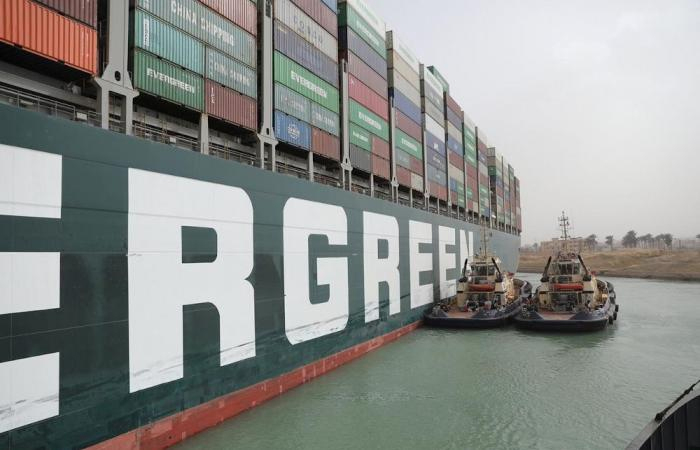
Salvage teams freed the Ever Given in the Suez Canal, according to maritime services provider Inchcape, almost a week after the giant vessel ran aground in one of the world’s most important trade paths.

While the ship was floating again, it was not immediately clear how soon the waterway would be open to traffic, or how long it would take to clear the logjam of more than 450 ships stuck, waiting and en route to the Suez that have identified it as their next destination.

The backlog is one more strain for global supply chains already stretched by the pandemic; the canal is a conduit for about 12% of global trade. Some ships have already opted for the long and expensive trip around the southern tip of Africa instead of Suez.

The breakthrough in the rescue attempt came after diggers removed 27,000 cubic meters of sand, going deep into the banks of the canal.

Warm weather propels D.C. cherry blossoms to bloom days ahead of schedule #SootinClaimon.Com

#SootinClaimon.Com : ขอบคุณแหล่งข้อมูล : หนังสือพิมพ์ The Nation.

https://www.nationthailand.com/news/30404237

Warm weather propels D.C. cherry blossoms to bloom days ahead of schedule

InternationalMar 29. 2021People gather near the Tidal Basin in Washington to see the blooming cherry trees on Saturday, March 27, 2021. MUST CREDIT: Washington Post photo by Matt McClainPeople gather near the Tidal Basin in Washington to see the blooming cherry trees on Saturday, March 27, 2021. MUST CREDIT: Washington Post photo by Matt McClain



By The Washington Post · Tara Bahrampour, Jason Samenow

WASHINGTON – Echoing the sentiments of many Americans itching to get out after a year of hibernation, Washington’s cherry blossoms burst Sunday into full-on cotton-candy splendor, several days earlier than predicted.

The surprisingly swift peak bloom happened ahead of forecasts from The Washington Post and the National Park Service, which had predicted peak bloom between Wednesday and Saturday, and Friday and April 5, respectively.

A little more than two weeks ago, after a chilly February and early March, the cherry trees at the Tidal Basin had hardly developed buds. But the unusually warm weather, particularly since Thursday, when it reached 10 to 20 degrees above average, propelled them through their six stages.

MUST CREDIT: Washington Post photo by Matt McClain

MUST CREDIT: Washington Post photo by Matt McClain

This year’s first day of peak bloom is four days head of the average date over the past 30 years and almost a week ahead of the 100-year average of April 3.

March 15, 1990, marks the earliest peak bloom on record, while April 18, 1958, was the latest. Last year, the peak occurred on March 20, tied for the third-earliest on record.

Once peak bloom occurs, the blossoms can remain on cherry trees for another week or so if it’s warm and winds are light.

‘Vaccine passports’ are on the way, but developing them won’t be easy #SootinClaimon.Com

#SootinClaimon.Com : ขอบคุณแหล่งข้อมูล : หนังสือพิมพ์ The Nation.

https://www.nationthailand.com/news/30404235

‘Vaccine passports’ are on the way, but developing them won’t be easy

InternationalMar 29. 2021

By The Washington Post · Dan Diamond, Lena H. Sun, Isaac Stanley-Becker

The Biden administration and private companies are working to develop a standard way of handling credentials – often referred to as “vaccine passports” – that would allow Americans to prove they have been vaccinated against the novel coronavirus as businesses try to reopen.

The effort has gained momentum amid President Joe Biden’s pledge that the nation will start to regain normalcy this summer and with a growing number of companies – from cruise lines to sports teams – saying they will require proof of vaccination before opening their doors again.

The administration’s initiative has been driven largely by arms of the Department of Health and Human Services, including an office devoted to health information technology, said five officials who spoke on the condition of anonymity to discuss the effort. The White House this month took on a bigger role coordinating government agencies involved in the work, led by coronavirus coordinator Jeff Zients, with a goal of announcing updates in coming days, said one official.

The White House declined to answer questions about the passport initiative, instead pointing to public statements that Zients and other officials made this month.

“Our role is to help ensure that any solutions in this area should be simple, free, open source, accessible to people both digitally and on paper, and designed from the start to protect people’s privacy,” Zients said at a March 12 briefing.

The initiative has emerged as an early test of the Biden administration, with officials working to coordinate across dozens of agencies and a variety of experts, including military officials helping administer vaccines and health officials engaging in international vaccine efforts.

The passports are expected to be free and available through applications for smartphones, which could display a scannable code similar to an airline boarding pass. Americans without smartphone access should be able to print out the passports, developers have said.

Other countries are racing ahead with their own passport plans, with the European Union pledging to release digital certificates that would allow for summer travel.

U.S. officials say they are grappling with an array of challenges, including data privacy and health-care equity. They want to make sure all Americans will be able to get credentials that prove they have been vaccinated, but also want to set up systems that are not easily hacked or passports that cannot be counterfeited, given that forgeries are already starting to appear.

One of the most significant hurdles facing federal officials: the sheer number of passport initiatives underway, with the Biden administration this month identifying at least 17, according to slides obtained by The Washington Post.

Those initiatives – such as a World Health Organization-led global effort and a digital pass devised by IBM that is being tested in New York state – are rapidly moving forward, even as the White House deliberates about how best to track the shots and avoid the perception of a government mandate to be vaccinated.

One of the teams working on vaccine passports is the Vaccination Credential Initiative, a coalition endeavoring to standardize how data in vaccination records is tracked.

“The busboy, the janitor, the waiter that works at a restaurant, wants to be surrounded by employees that are going back to work safely – and wants to have the patrons ideally be safe as well,” said Brian Anderson, a physician at Mitre, a nonprofit company that runs federally funded research centers, who is helping lead the initiative. “Creating an environment for those vulnerable populations to get back to work safely – and to know that the people coming back to their business are ‘safe,’ and vaccinated – would be a great scenario.”

Anderson’s team is aiming to release its free software standards in April, hoping developers will use them to help build digital vaccine records that allow people to show they have been inoculated. The Vaccination Credential Initiative includes the Mayo Clinic, Microsoft and more than 225 other organizations, many of which have pledged to use the code when administering shots.

Biden administration officials privately acknowledge the high stakes of the effort.

Proof of vaccination “may be a critical driver for restoring baseline population health and promoting safe return to social, commercial, and leisure activities,” according to the March 2 slides prepared by the Office of the National Coordinator for Health Information Technology and obtained by The Post. But officials at the session – attended by more than 150 staff from the health, defense, homeland security and other departments, and even far-flung agencies such as NASA – warned of the “confusing array” of efforts underway to create credentials.

“A chaotic and ineffective vaccine credential approach could hamper our pandemic response by undercutting health safety measures, slowing economic recovery, and undermining public trust and confidence,” one slide reads.

Micky Tripathi, whom Biden tapped as the national coordinator for health IT, recently said federal officials are concerned with a variety of health-tech challenges, including protecting the credentials against fraud, ensuring data security and making certain that low-income populations aren’t squeezed out.

“How do we make sure that whatever is available is accessible to everyone so no one is left behind or feeling like they can’t participate in the return of their day-to-day activities?” Tripathi asked at a virtual meeting hosted by the Health IT Leadership Roundtable on March 11.

Tripathi told the group he didn’t like the term “vaccine passports,” adding that “passports are something that are issued by governments. … I think of them as vaccine credentials or certificates.” Tripathi did not respond to a request for comment.

The Centers for Disease Control and Prevention, which is participating in the WHO’s effort to create “digital vaccination certificates,” also is preparing to help advise on the passport rollout. The health agency says it is expecting to play a role in determining which organizations will credential and issue the certificates, in addition to informing the public, according to CDC documents reviewed by The Post.

The Biden administration has promised to release more information about its efforts. Asked by Hawaii Gov. David Ige on Tuesday about the state of the passport initiative, Zients told governors he would provide a more detailed briefing this week, according to two peopleon the call, speaking on the condition of anonymity to describe the private conversation.

Federal officials defended the pace of the project.

Taking time to get the credentialing project right “is very, very important because this has a high likelihood of being either built wrong, used wrong or a bureaucratic mess,” said one official, speaking on the condition of anonymity to discuss the effort. The official said some of the considerations include how to adjust for the spread of variants, how booster shots would be tracked and even questions about how long immunity lasts after getting a shot. There’s “a lot to think through,” the official said.

“Many people see this as a key aspect to getting things closer to normal,” said Kristen McGovern, a partner at health-care consultancy Sirona Strategies and former chief of staff at the Office of the National Coordinator for Health IT. But the technical challenges are significant and given that so many separate efforts are underway, “it would be an almost herculean task to come up with a single standard” for all the vaccine credentials to follow, McGovern said.

There is evidence vaccine passports could motivate skeptical Americans to get shots. Several vaccine-hesitant participants at a recent focus group of Trump voters led by pollster Frank Luntz suggested their desire to see family, go on vacation and resume other aspects of daily life outpaced fear of the shots, particularly if travel companies and others moved to require proof of vaccination.

“We love to travel. We love to take cruises. I would get it to travel,” said Debbie of Georgia, who like others in the focus group was identified only by her first name.

Some attendees dissented and warned that requiring a credential would backfire.

“I would change my travel plans,” said a man identified as Patrick of Tennessee.

Public health and ethics experts agreed that the Biden administration needed to strike a careful balance: Encourage shots and support the private-sector initiatives but don’t put too much federal emphasis on the looming passports.

“If it became a government mandate, it would go down a dark road very quickly,” said Brian Castrucci, who leads the Bethesda, Md.-based de Beaumont Foundation, a public health group funding Luntz’s research into why some Americans are balking at the vaccine. “It becomes a credential. It becomes a ‘needing your papers,’ if you will. That could be dangerous – and it could turn off people.”

“It has to be that everyone can get it, and it’s their choice, as it were,” said Ezekiel Emanuel, a University of Pennsylvania bioethics expert who co-authored a Journal of the American Medical Association article last year about the ethics of such certificates and advised Biden’s transition team on the coronavirus. “The one thing I am concerned is that some people won’t be able to get vaccinated for a variety of reasons.”

Emanuel added that the passports will be an element of global travel – not just domestic policy. Key aviation and travel associations on March 22 called on the White House to finalize its vaccine credential plan by May, saying it was essential for the safe resumption of international travel.

Donald Rucker, who led the health IT office during the Trump administration, said myriad technical issues await the rollout of vaccine credentials, including how they are tracked, whether they are enforced and who pulls together the initial records of which Americans have gotten shots.

Rucker said keeping vaccine credentials could help officials better understand coronavirus vaccination, including possible long-term side effects, if the data is connected with the health information exchanges that states maintain.

“The tracking of vaccinations is not just simply for vaccine passports,” Rucker said. “The tracking of vaccinations is a broader issue of ‘we’re giving a novel biologic agent to the entire country,’ more or less.”

Egypt’s president orders preparations for unloading the Ever Given blocking the Suez Canal #SootinClaimon.Com

#SootinClaimon.Com : ขอบคุณแหล่งข้อมูล : หนังสือพิมพ์ The Nation.

https://www.nationthailand.com/news/30404234

Egypt’s president orders preparations for unloading the Ever Given blocking the Suez Canal

InternationalMar 29. 2021The Ever Given, a cargo ship wedged across the Suez Canal, is seen Saturday. (Mohamed Elshahed/AP)The Ever Given, a cargo ship wedged across the Suez Canal, is seen Saturday. (Mohamed Elshahed/AP)

By The Washington Post · Sudarsan Raghavan, Jennifer Hassan

ISMAILIA, Egypt – Egyptian President Abdel Fatah al-Sissi ordered preparations to be made for the unloading of the Ever Given cargo carrier that is blocking the Suez Canal, the head of the canal authority said Sunday.

Lt. Gen. Osama Rabie, chairman of the Suez Canal Authority, told Egyptian television that officials were preparing for the “third scenario” of unloading containers from the massive ship so that it can be refloated, opening up one of the world’s busiest waterways. The canal has been blocked since Tuesday, leaving more than 300 ships waiting to pass through.

Unloading some of the 18,000 containers from the towering ship would require special equipment, so the president authorized its acquisition even as dredging continued, Rabie said. So far, 27,000 cubic feet of sand have been removed from around the vessel to a depth of 60 feet.

“His excellency has ordered that we should not wait for the failure of the first and second scenarios to start thinking about implementing the third one,” he said, referring to unloading.

Earlier, there had been hopes that the vessel could be freed overnight with the high tide, but “the tidal (conditions) didn’t help re-floating #EverGiven tonight,” Leth Agencies, the canal’s service provider, tweeted early Sunday morning, adding that “dredgers will continue their work, tugs will assist in new attempts.”

The refloating process was delayed again Sunday afternoon, with the company saying another effort would take place at 10 p.m. local time, to make the most of “favorable tidal conditions.”

The alignment of the full moon with Earth on Sunday night was expected to result in a king tide, or unusually high tide, that could help lift the ship.

Two more tugboats were dispatched to the scene, as well: the Italian-flagged Carlo Magno and the Dutch-flagged Alp Guard.

The 200,000-ton container ship, as long as the Empire State Building is tall, is costing billions of dollars in global trade every day. The fifth day of the salvage operation illustrated the technical and weather challenges facing the international team seeking to dislodge the Ever Given from the eastern bank of the canal and stave off a global economic calamity.

Syria announced Saturday that it has begun rationing oil supplies, in particular diesel and gasoline, because of the canal blockage.

The Danish shipping giant Maersk said Sunday that it is continuing efforts to mitigate the situation, adding that it has redirected 15 ships in a bid to keep cargo moving through the waterway.

“We have until now redirected 15 vessels where we deemed the delay of sailing around the Cape of Good Hope at the southern tip of Africa equal to the current delay of sailing to Suez and queuing,” the statement said. The African route adds weeks to the trip.

The company said it would consider rerouting more vessels Monday after further analysis and flotation attempts.

The attempts to pull the vessel out of the sand and mud will be aided by the addition of two larger and heavier tug boats: the Netherlands-registered ALP Guard and the Italy-registered Carlo Magno. Both are scheduled to arrive in the canal on Sunday, according to Ever Given’s technical manager, Bernhard Schulte Shipmanagement.

CNN reported Friday that a U.S. Navy team of dredging experts was expected to arrive as early as the weekend to assess the situation. As of Sunday, it was unclear whether any Navy personnel had reached the Suez or performed an assessment.

Bernhard Schulte Shipmanagement, which oversees the ship’s crew and maintenance, said in a statement that the salvage efforts began again at 2 p.m. Saturday, after “significant progress” was made to free the vessel’s rudder from the sand and mud. But by midnight, with at least 11 tugs on the job, it was clear that the dredging operations to remove thousands of tons of sediment around the port side of the vessel’s bow would require more time and effort.

But as flotation attempts continued, industry experts weighed the idea that the saga of the wedged ship could have been preventable, given years of warnings that the size of vessels using the waterway was growing even as risk assessments failed to keep pace.

“This is a big ship and a big problem, but it is not like we have not seen this coming,” said Lloyd’s List editor Richard Meade on a recent podcast in which he discussed the issues that arise when vessels increase in size to keep up with economic demand but fail to contain the risk that coincides with making ships larger.

On Sunday, six more ships entered the canal, bringing the number of vessels trapped in the massive maritime congestion to 327, according to Leth Agencies.

In addition to the delays, shipping companies will face higher insurance costs. Only one in every 10 ships surrounding the stranded Ever Given has adequate insurance to cover mounting disruption costs, analysis from the Lloyd’s List shipping journal indicated, leading to further concerns over the financial effect of the standstill which will probably affect different businesses in myriad ways.

According to the report, an estimated 90 percent of nearby ships will be unlikely to claim for “sizeable out-of-pocket expenses” incurred amid the chaos, which has forced hundreds to consider alternate routes, led to port and transit delays, and disrupted oil trade.

Experts have warned that unloading containers from the Ever Given to lighten the vessel could take days or even weeks, since doing so requires the use of extra-tall cranes and specialized helicopters. Such an effort would be extremely costly, and it’s not clear who would shoulder the expense.

On Saturday, Egyptian Prime Minister Mostafa Madbouly expressed appreciation for the offer from foreign allies to help free the ship.

The salvage effort has truly become an international operation led by an Egyptian, Dutch and German team with tugs now from Italy and the Netherlands, mirroring the global shipping industry and the Ever Given itself. The ship is owned by a Japanese company and operated by a Taiwanese firm. Its crew is Indian and it sails under a Panamanian flag.

Threat of demotion spurs Japan firms to shake up stock register #SootinClaimon.Com

#SootinClaimon.Com : ขอบคุณแหล่งข้อมูล : หนังสือพิมพ์ The Nation.

https://www.nationthailand.com/news/30404233

Threat of demotion spurs Japan firms to shake up stock register

InternationalMar 29. 2021Visitors are seen at the Tokyo Stock Exchange in Tokyo on Nov. 30, 2020. MUST CREDIT: Bloomberg photo by Toru Hanai.Visitors are seen at the Tokyo Stock Exchange in Tokyo on Nov. 30, 2020. MUST CREDIT: Bloomberg photo by Toru Hanai.

By Syndication Washington Post, Bloomberg · Shoko Oda

Japanese policymakers may have found the one thing that can force executives to simplify their arcane capital structures — threatening their status in the elite grouping of Japan’s top firms.

With just months to go until a key deadline in the Tokyo Stock Exchange’s once-in-a-generation makeover, companies are being forced to divest stakes, unwind tie-ups or cancel treasury stock to ensure that they remain among the country’s elite listed firms.

The process has been triggered by the reorganization of the Tokyo bourse, in which the bloated First Section will be replaced by a trimmer “Prime” segment. One requirement to make it into the new section is for firms to have a certain percentage of shares that freely trade — not locked up in cross-shareholdings or held by long-term business partners.

With the exchange itself deciding what counts as tradable shares, some firms are discovering they might not make the cut. The head of one Japanese bank said he’s seen an uptick in the number of companies reaching out for advice on how to ensure they become members of the Prime market. Executives are weighing the cost of unwinding cross-shareholdings and improving governance said the bank head, who couldn’t be named as the discussions aren’t public.

Even with more than 2,000 members, being on the First Section carries cachet in Japan. Those that want to make it to its successor will need at least 10 billion yen ($91.6 million) in “tradable shares,” which omits large long-term shareholders, treasury stock held by the company itself, and other types of stock considered unavailable. Those shares must also make up more than 35% of all stock issued.

This is creating a headache for companies and forcing some to rush to boost their ratio — with everything from buybacks to unwinding long-term capital ties with subsidiaries and partners under consideration.

“We are seeing some companies move to unwind their cross-shareholdings,” wrote SMBC Nikko Securities Inc. analysts including Keiichi Ito earlier this month. “Companies that struggle to meet the criteria may ask some shareholders to divest their shares and are also considering share buybacks or equity issuance.”

Japan Exchange Group Inc. will evaluate if companies have met the criteria on June 30 and notify firms the following month, though there’s a backdoor for those that fail to meet the cut. The reforms will replace five current market segments with three, with “Standard” and “Growth” sections rounding out the list.

Some companies aren’t waiting around. In February, Toyota sold a portion of its shares in unit Toyota Boshoku Corp., a First Section firm that makes auto parts and textiles.

Toyota Boshoku said the sale was to ensure it would be listed on the new top market segment in order “to boost social credibility and visibility, and thereby increase corporate value.”

Askul Corp. is canceling 4 million shares in March, breaking with the precedent of many local firms, which often hold onto treasury stock for years at a time. The office-supply retailer said its tradable share ratio is expected to increase to over 40% from about 37% with the cancellation.

Close to 250 firms have a low free float and might need to act to improve things, wrote Amir Anvarzadeh, a market strategist at Asymmetric Advisors in Singapore, in a note.

For companies listed on the First Section, making it to Prime also means an almost-guaranteed membership of the new Topix Index, which will also be revamped in a lengthy transition process set to run until 2025.

“Because removal from Topix will likely trigger significant selling from passive funds, there are significant benefits to be had from boosting tradable share ratio,” wrote the analysts at SMBC Nikko Securities.

The need becomes even more pressing with the Bank of Japan shifting its buying of exchange-traded funds solely over to the Topix, a move that’s expected to be beneficial for the index’s smaller firms.

There are other reasons why companies would want to be listed in the Prime segment, said Atsushi Kamio, a researcher at Daiwa Institute of Research, citing reasons such as recruiting new employees, the branding power of being listed in the elite section, and high liquidity allowing for easier financing.

And even companies that easily meet the requirements might still be considering corporate actions, Kamio said.

“The tide is turning — even companies that already fulfill Prime and new Topix standards may look at their competitors and want to boost their weight within the new Topix Index,” Kamio said. “In that scenario, they might have to unwind some of these strategic shareholdings.”

Threat of another lost summer stirs cash-crunch fears for airlines #SootinClaimon.Com

#SootinClaimon.Com : ขอบคุณแหล่งข้อมูล : หนังสือพิมพ์ The Nation.

https://www.nationthailand.com/news/30404232

Threat of another lost summer stirs cash-crunch fears for airlines

InternationalMar 29. 2021Passenger aircraft, operated by Ryanair Holdings, on the tarmac at London Stansted Airport , in Stansted, England, on Jan. 8, 2021. MUST CREDIT: Bloomberg photo by Chris Ratcliffe.Passenger aircraft, operated by Ryanair Holdings, on the tarmac at London Stansted Airport , in Stansted, England, on Jan. 8, 2021. MUST CREDIT: Bloomberg photo by Chris Ratcliffe.

By Syndication Washington Post, Bloomberg · Christopher Jasper, Siddharth Philip, Tara Patel

The latest setbacks to the return of air travel are stoking concern that a cash crunch is about to bear down on the airline industry.

A second summer lost to the coronavirus crisis would likely trigger a spate of airline failures and bankruptcy filings, alongside a repeat of 2020’s bailouts, job cuts, and jetliner deferrals and cancellations, according consultants IBA Group.

In just the past week, the optimism that took the Bloomberg World Airlines Index to the highest since the start of the pandemic has evaporated.

TUI, the world’s biggest tour operator, scaled back its summer schedule to reflect a peak season that won’t start until July, at least two months later than normal. Ryanair Holdings held a press briefing to reassure would-be holidaymakers they could change flights for free and exhorted them not to be “panicked” by negative headlines.

“The ground is shifting from one day to the next,” IBA’s Stuart Hatcher said in an interview. Governments are aware that pushing back the reopening of travel will mean more pain for the aviation industry but have been spooked by resurgent infection rates even as vaccine rollouts continue, he said.

European carriers especially have felt the gloom that’s set in because of rising cases and fresh lockdowns. Leisure-focused companies such as TUI and Ryanair usually use the first three months of the year taking summer bookings, giving them a cash stockpile to work with as they gear up operations.

Any wiggle room is swiftly contracting. TUI, which caters to German and British travelers who flood to the Mediterranean during the warmer months, said Thursday it has enough liquidity to last “until the summer,” without being more specific. British Airways owner IAG secured a new loan using its coveted takeoff and landing slots at London Heathrow airport as collateral.

Travel needs to restart in earnest by July 1 or carriers risk missing out on the handful of months that will provide the bulk of annual earnings, Air France-KLM Chief Executive Officer Ben Smith said Thursday.

“What’s critical about July is that Q3, for the majority of European carriers, is the key quarter to make it through the year,” Smith said in a briefing held by the Airlines for Europe lobby. The group is pushing for the rapid adoption of so-called vaccine passports and an end to quarantines it says crush demand.

While 45 airlines failed in 2020, many more have been hanging on in hopes of an imminent revival of leisure markets, Hatcher said. That’s looking less likely as the year develops, with Airports Council International on Thursday forecasting global passenger traffic will remain almost 50% below usual levels this year.

While most carriers could survive a delayed summer, the cost to bail them out would be considerable. Even before the latest setbacks, the International Air Transport Association said carriers would need as much as $80 billion more in government money this year.

A lone passenger waits by the check-in counters at Nice Cote d'Azur Airport in Nice, France, on Feb. 5, 2021. MUST CREDIT: Bloomberg photo by Jeremy Suyker.

A lone passenger waits by the check-in counters at Nice Cote d’Azur Airport in Nice, France, on Feb. 5, 2021. MUST CREDIT: Bloomberg photo by Jeremy Suyker.

In Europe, Air France-KLM is seeking further aid on top of 10.4 billion euros ($12 billion) in loans and guarantees granted last year. TUI, which has taken 4.8 billion euros in German government aid, gave no financial forecast at its annual meeting on Thursday, promising only that cash flow will trend toward breakeven as business normalizes.

The airport sector will also need state support, the ACI group said, warning that even large hubs are struggling. The industry is “in a precarious situation right now,” the trade association’s economist Patrick Lucas said.

Discount carriers such as Ryanair, EasyJet and Wizz Air Holdings have strong liquidity positions and easy options for boosting reserves through aircraft sale-and-leaseback deals if necessary.

There could also be an extension of $50 billion of Cares Act loans and worker payments in the U.S. and a similar continuation of furloughs in Europe and elsewhere. Even then, airlines may need to deepen cost cuts.

More carriers are likely to pursue local bankruptcy protection where that’s possible, following companies like Norwegian Air Shuttle ASA and Virgin Atlantic Airways.

Major Latin American carriers including Latam Airlines Group, Avianca Holdings and Grupo Aeromexico that secured U.S. Chapter 11 protection for their main businesses in the absence of state bailouts at home are likely to seek extensions if cash flows fail to revive, Hatcher said.

IBA anticipates moves to rationalize supply in Asia, where aircraft order books remain bloated, especially in Southeast Asia and India, and airline failures have been limited. Mergers like that between Korean Air Lines Co.’s and national rival Asiana Airlines Inc. may become more common.

A cash crunch will have further implications for airline fleet plans, prompting the retirement of more older planes and extended deferrals of new deliveries. Outright order cancellations would become more likely at Airbus SE and Boeing Co.

Airlines and travel firms are now waiting for U.K. Prime Minister Boris Johnson to deliver his verdict on reopening travel from Britain in an update set for April 5. A targeted date of May 17 is expected to be pushed back.

“The market is there, the customers want to travel,” said Fritz Joussen, TUI’s CEO. “However, the conditions for tourism need to be created at the political level.”

Uyghur expats push Washington levers of power #SootinClaimon.Com

#SootinClaimon.Com : ขอบคุณแหล่งข้อมูล : หนังสือพิมพ์ The Nation.

https://www.nationthailand.com/news/30404208

Uyghur expats push Washington levers of power

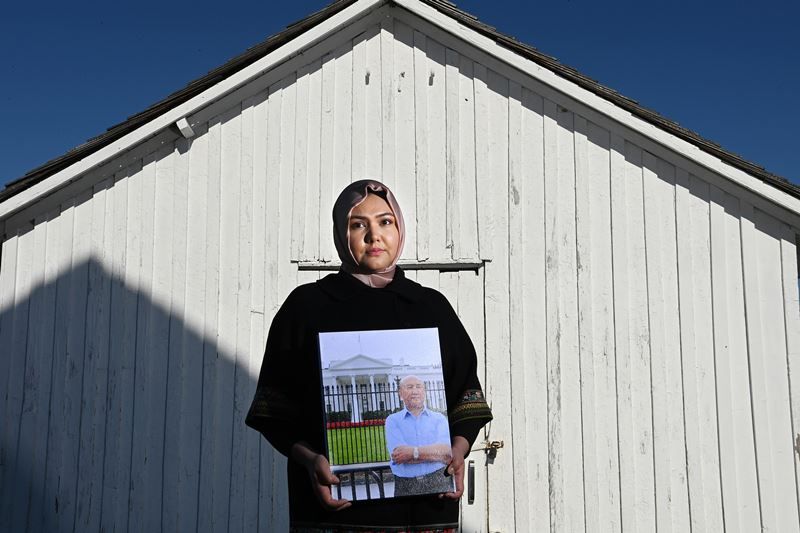
InternationalMar 28. 2021Kalbinur Gheni, 35, is pictured near her home in Northern Virginia. She says her sister, Renagul Gheni, is detained in a forced-labor camp in China. MUST CREDIT: Washington Post photo by Sarah L. Voisin.Kalbinur Gheni, 35, is pictured near her home in Northern Virginia. She says her sister, Renagul Gheni, is detained in a forced-labor camp in China. MUST CREDIT: Washington Post photo by Sarah L. Voisin.


By The Washington Post · Meagan Flynn

WASHINGTON – Weeks before then-Secretary of State Mike Pompeo accused China of committing genocide against Uyghur Muslims, Kalbinur Gheni met him in his office in Foggy Bottom.

She had three minutes to tell him about her sister, Renagul, and how she was sentenced to a Chinese internment camp for 17 years for praying and reading the Koran.

“I could hear my heart beat,” Kalbinur said, describing the Dec. 3 session. “I told him, ‘This is only one example happening to millions of families back home.’ “

The encounter encapsulated the reason Kalbinur moved last year from Boston to Northern Virginia: to be as close as possible to the people in power, believing they could help free her sister.

Renagul, 39, is one of more than a million Uyghurs who have been detained in internment camps in China, where they have been subject to abuse, forced labor and indoctrination, according to the U.S. State Department.

Family members in Northern Virginia – one of the largest diasporas of Uyghurs in the United States – are largely powerless to help them. Speaking out, even from here, can carry grave risks of reprisal by China, which is why many choose to stay silent. But some, like Kalbinur, have taken the risk, bringing their stories to the highest echelons of government.

“Nobody wants to cry for anyone, but if it happens to you, what can you do?” Kalbinur said. “We can let people hear us, because back home nobody can.”

In recent weeks, their advocacy has seen several significant victories.

Some diplomats and lawmakers are pushing the Biden administration to boycott the 2022 Winter Olympics in Beijing. Members of Congress from both parties have brought bills to ensure that U.S. companies don’t profit from Uyghur forced labor, and to fast-track protections for Uyghur asylum seekers in the United States.

Rep. Jennifer Wexton, D-Va., who introduced one of those bills in the House, said hearing directly from Uyghurs in her Northern Virginia district is what has compelled her to prioritize the legislation.

“I was just so horrified that I wanted to do something about it,” she said in an interview. “They didn’t know if their family members were alive or dead. They weren’t even able to reach out to them to see if they were safe.”

The Biden administration has not yet unveiled specific actions it plans to take to hold China accountable. But both Secretary of State Antony Blinken and the White House have echoed Pompeo’s determination that China is committing genocide – statements that make Kalbinur believe she and other Uyghur advocates are finally being heard.

“We were saying – we were screaming – for the last four years that this is genocide,” she said.

Still, as Kalbinur learned soon after meeting with Pompeo, the louder she yelled, the more China paid attention to her.

And the more Kalbinur had to ask herself: Was it really worth it?

Kalbinur Gheni holds a photo of her sister, Renagul Gheni, and her nephew, Radiljan Abla. MUST CREDIT: Washington Post photo by Sarah L. Voisin.

Kalbinur Gheni holds a photo of her sister, Renagul Gheni, and her nephew, Radiljan Abla. MUST CREDIT: Washington Post photo by Sarah L. Voisin.

The last time Kalbinur spoke to her sister – an art teacher and married mother of two – was four years ago. Kalbinur was in Malaysia, studying for her PhD in business management, when her mother and Renagul appeared on a frantic WeChat video call. Their eyes were puffy and red.

“They just kept telling me, just take care of yourself,” Kalbinur said, and that they would not be able to call for a while.

For the next two years, calls and texts to her family went unanswered.

Finally, a college friend in Beijing learned that Renagul had been detained in what the Chinese government then called a “reeducation center.” It was located just a short walk from their home in the Xinjiang Uyghur Autonomous Region, Kalbinur said.

China denies mistreating Uyghurs or committing genocide, and the Chinese Embassy in Washington did not answer questions from The Washington Post about specific cases. Xinjiang officials said at a Feb. 1 news conference that the camps are intended as an “active exploration of preventive anti-terrorism and deradicalization.”

Sean R. Roberts, a foreign affairs professor at George Washington University and author of “The War on the Uyghurs: China’s Campaign Against Xinjiang’s Muslims,” said local officials seeking to forcibly assimilate Uyghur Muslims with Han Chinese can define virtually any practice of Islam as extremism.

“It’s a frightening prospect that has framed all of the policies towards this region in the last four years,” Roberts said. “There is this recurring theme about ‘preventive’ counterterrorism, which is obviously very problematic. . . . It becomes thought police very quickly.”

In the spring of 2019, Kalbinur fled Malaysia for Boston. At night, she used sleeping pills to stifle fears about Renagul. “I imagine every day, my sister, how she’s coping. Every day, what she’s eating,” Kalbinur said. “Are they going to torture her today? Are they giving her food?”

She shared her situation with only a few close Uyghur friends she met on Facebook – until October 2019, when she was invited to an event at the University of Rochester focused on China’s treatment of the Uyghurs.

Did she want to speak out?

Kalbinur took a deep breath. She decided it was time.

– – –

For many Uyghurs, the decision to come forward can be years in the making.

Subi Mamat Yuksel tried to hide her anxieties from her family after her father went missing, detained on the day he and his wife were supposed to fly to the United States for a visit.

After her toddler noticed her distress, she put Post-it notes around the house reminding herself to smile. She grew more restless around dusk, knowing that it was dawn back home and that her WeChat messages could light up any minute with bad news.

“Every night I would start having panic attacks,” said Yuksel, who lives in Manassas. “What’s going to happen? What news am I going to hear?”

For two years, she stayed quiet. Until her father – a former Xinjiang forestry official – was sentenced to life in prison, accused of being a “two-faced separatist” disloyal to the Chinese Communist Party.

“Then I realized we waited way too long,” Yuksel said. She made the leap into the public eye in February 2020, at an event hosted by the Uyghur Human Rights Project.

She had come to Northern Virginia in 2007 while on a student visa, in search of the Uyghur community her brother had told her about, with its plethora of familiar restaurants and even a Uyghur school.

But this was her first time working with D.C.-based advocacy groups, and the first time she realized how many in her community shared her situation. “I felt so guilty, for two years that I passed without speaking out,” she said. “Finally when I was standing with other Uyghurs holding their family’s pictures, I felt like I was doing something right.”

By September, with her baby on her lap, Yuksel was telling her story to Wexton over Zoom.

The congresswoman keeps a Uyghur hat on prominent display in her Capitol Hill office – a gift from constituents, and a daily reminder of the people depending on her help.

She was recently named to the Congressional-Executive Commission on China, which monitors human rights abuses. Wexton has reintroduced her Uyghur Forced Labor Disclosure Act, which puts the onus on U.S. companies to audit supply chains to ensure they aren’t exploiting Uyghurs. And earlier this month, she joined Rep. Ted Deutch, D-Fla., in introducing a bill to expedite the asylum process for Uyghurs.

“These are people who are in legal limbo,” Wexton said. “They don’t have a voice, and so I was determined to be their voice.”

The desire to punish China over its treatment of the Uyghurs has become a rare bipartisan force in Congress. In January, the Trump administration blocked all cotton and tomato products from Xinjiang from entering the country. The Uyghur Forced Labor Prevention Act, sponsored by Sen. Marco Rubio, R-Fla., and Rep. Jim McGovern, D-Mass., would block the import of all goods from the Xinjiang region on the presumption that they are tainted by forced labor, unless a company can prove otherwise.

It passed the House last session, but did not get a vote in the Senate. That could change this year, as pressure builds for the Biden administration to address the genocide allegations – and curb China’s economic influence.

A White House spokeswoman said last month that the administration was evaluating what measures were needed to “ensure that products made with forced labor do not enter U.S. supply chains.”

“Uyghurs and other ethnic minorities have suffered unspeakable oppression at the hands of China’s authoritarian government,” said Emily Horne, a spokeswoman for Biden’s National Security Council. “China has engaged in gross human rights violations that shock the conscience and must be met with serious consequences.”

Subi Mamat Yuksel holds a photo of her father, Mamat Abdullah, who has been sentenced to life in prison in China. MUST CREDIT: Washington Post photo by Matt McClain.

Subi Mamat Yuksel holds a photo of her father, Mamat Abdullah, who has been sentenced to life in prison in China. MUST CREDIT: Washington Post photo by Matt McClain.

After Kalbinur’s speech at the University of Rochester, young people lined up to talk to her – first a Jewish student whose grandmother survived a Nazi concentration camp, then a Chinese student who said he was sorry. Finally, Kalbinur said, “I felt like I wasn’t alone in this.”

Emboldened, she started a Twitter account, peppering Chinese officials with questions: “Where is my sister? Where is our millions of Uyghurs?”

She traveled with other Uyghurs by bus from Boston to meet with lawmakers in Washington as they considered the Uyghur Human Rights Policy Act, which passed in June and requires the federal government to track China’s abuses against the Uyghurs.

Soon she decided to move to Northern Virginia, to live in Congress’s backyard.

But as she continued to speak out online, police in her family’s town contacted her through her brother’s WeChat account multiple times, imploring her, “You need to think about your family.”

Her brother reached out himself – probably under duress, Kalbinur said – pleading with her to stop her activism. It was her first contact with any family member since 2017.

Eventually, Kalbinur said, she told the officials she would stop – if they released her sister.

After she met with Pompeo, the intimidation escalated, Kalbinur said.

A Chinese official who went by the name “Ali” contacted her through a family member’s WeChat account in January.

At first he didn’t say what he wanted, according to copies of the messages provided to The Post.

“Then help me find my sister,” Kalbinur wrote to him in Mandarin. “You guys are supposed to know everything. She’s not supposed to just disappear like that.”

She said that she had been reading about the wrongful imprisonment of Uyghurs in headlines every day, and that she knew her sister was among them.

“Lies, definitely don’t believe,” Ali wrote back.

“I don’t want to believe it, but my sister has been missing for almost three years,” Kalbinur responded. “How can you ask me to believe?”

He called Kalbinur on the phone and stayed on the line for 92 minutes. Why did she go to Pompeo? he asked. Because China wouldn’t help me, Kalbinur said. He tried to convince her it was safe to come home. Kalbinur told him she knew it wasn’t.

Then he had a proposition, Kalbinur said: He would prove her sister was okay, if she behaved. If she would be quiet.

She hung up, and didn’t need to think any further.

On March 2, she told Renagul’s story to a United Nations human rights panel.

“When you lose the most valuable things in your life, what’s left?” she said. “Nothing left. I don’t have any fear anymore.”

Hopes for blocked Suez Canal hinge on rising tide potentially freeing ship #SootinClaimon.Com

#SootinClaimon.Com : ขอบคุณแหล่งข้อมูล : หนังสือพิมพ์ The Nation.

https://www.nationthailand.com/news/30404207

Hopes for blocked Suez Canal hinge on rising tide potentially freeing ship

InternationalMar 28. 2021

By The Washington Post · Sudarsan Raghavan

ISMAILIA, Egypt – The global economic troubles triggered by a giant container ship stuck in the Suez Canal worsened Saturday with the blockage of more ships carrying billions of dollars of goods. But hopes also grew that favorable tidal conditions could help free the Ever Given as a U.S. Navy team was expected to arrive this weekend to assist in the operation.

Meanwhile, Egyptian authorities publicly acknowledged for the first time that an initial investigation that found that the ship beached because of strong winds in a dust storm might not have been entirely accurate.

At a news conference Saturday, Lt. Gen. Osama Rabie, head of Egypt’s Suez Canal Authority, said that such “a significant incident” typically has many causes.

“The weather was one reason, but maybe there was a technical error, or a human error,” he said, adding that the probe into the grounding was continuing.

By Saturday, the potential for a full-blown economic calamity was palpable – the canal is a vital global portal, carrying 13 percent of all global trade via ships ferrying $9.5 billion in goods each day.

A total of 321 vessels – carrying crude oil, cars, livestock and other commodities – were stuck in a massive maritime traffic jam at both ends of the 120-mile waterway, as well as in the middle, according to Leth Agencies, the canal’s service provider.

Two days ago, the number was 156.

A drive along the canal Saturday, between the cities of Ismailia and Suez, found scores of massive ships carrying containers and other cargo, some seemingly the size of the Ever Given, stalled in the waterway.

More than 100 additional ships in the Red and Mediterranean seas were en route to the canal, said analysts, though a growing number of vessels were being diverted around the southern tip of Africa as concerns grew that getting the Ever Given afloat again could take weeks.

The ship is wedged sideways in a single-lane stretch of the canal, stuck in sand and mud roughly four miles north of the waterway’s southern entrance.

On Friday night, the ship’s Japanese owner, Shoei Kisen, offered a bit of hope by suggesting that tidal movements over the next few days looked favorable enough for another attempt to dislodge the Ever Given. Yukito Higaki, the company’s president, told reporters in western Japan that the ongoing dredging of the banks and sea floor to refloat the ship could be assisted by a high tide, which would raise the water in the canal and potentially help float the ship off the mud it’s mired in.

On Saturday, 14 tugs were still trying to free the vessel, said Leth Agencies, noting unconfirmed reports by Egyptian media outlets that the ship’s propeller and rudder had been freed by the salvage equipment, which includes a specialized suction dredger capable of shifting 70,600 cubic feet of sand an hour.

If the rising tide doesn’t help free the vessel, Shoei Kisen said in a statement Saturday that it would consider removing its containers to reduce the vessel’s weight and thereby help it float again.

Later Saturday, Hend Fathy Hussein, spokeswoman for the Suez Canal Economic Zone, wrote in a Facebook post that the ship’s rudder had begun moving again.

“The locomotives are now full force and the ship is starting to operate its machines, but it hasn’t been floating yet,” she said.

Rabei, of the Suez Canal Authority, said in a statement late Friday night that the “complex technical process” could require “multiple attempts” to free the Ever Given, which was heading to the Netherlands when it grounded.

The statement came hours after the authority welcomed assistance from the United States to reopen the canal.

“We have equipment and capacity that most countries don’t have and we’re seeing what we can do and what help we can be,” President Biden told reporters. The U.S. Navy plans to send a team of dredging experts to the canal to assess the problem as early as this weekend, CNN reported, citing Pentagon sources.

Bernhard Schulte Shipmanagement, which is responsible for managing the ship’s crew and maintenance, said in a statement that there have been no reports of “pollution or cargo damage and initial investigations rule out any mechanical or engine failure as a cause of the grounding.” Two more large tugboats were scheduled to arrive Sunday to assist in dislodging the ship, the company said.

The focus of the operations, it said, was to remove sand and mud from around the port side of the vessel’s bow, which is stuck in the canal’s eastern bank. High-capacity pumps, the company added, would be used to reduce water levels in the ship’s forward void space and bow thruster room, making the vessel lighter and more maneuverable.

There are two canal pilots aboard to guide the ship through the canal. The 25-member crew – all Indian nationals – were safe and accounted for and remained onboard, “working closely with all parties involved to refloat the vessel,” the company said.

On Saturday, more shipping companies appeared to be losing confidence that the canal would be unblocked soon.

“Vessel-tracking data shows evidence that container lines are starting to take the long routes around southern Africa on the backhaul to Asia, rather than wait for the Suez Canal to reopen,” Lloyd’s List Intelligence, a maritime analysis firm, said in a tweet.

The list included the Ever Given’s sister ship, the Ever Greet, which was traveling from Malaysia to Europe and was diverted by either its Japanese owner or its Taiwan-based operating firm toward the Cape of Good Hope, according to satellite data.

The unprecedented bottleneck at or near the canal could strain global supply chains that are already stressed by the coronavirus pandemic.

On top of the need to shuttle raw materials to industrial manufacturers and pharmaceutical companies, shipping firms are grappling with extraordinary demand for consumer products, which has created a scarcity of empty containers.

The containers aboard many of the ships, with goods mostly from China, are destined for consumers in the United States and northern Europe.

Goldman fraud-claim case will test Supreme Court shaped by Trump #SootinClaimon.Com

#SootinClaimon.Com : ขอบคุณแหล่งข้อมูล : หนังสือพิมพ์ The Nation.

https://www.nationthailand.com/news/30404206

Goldman fraud-claim case will test Supreme Court shaped by Trump

InternationalMar 28. 2021The statue The statue “Contemplation of Justice” by sculptor James Earle Fraser behind temporary security fencing outside the U.S. Supreme Court in Washington, D.C., on March 12, 2021. MUST CREDIT: Bloomberg photo by Al Drago.

By Syndication Washington Post, Bloomberg · Greg Stohr, Robert Schmidt

The U.S. Securities and Exchange Commission sent Goldman Sachs shares tumbling by 13% in a single day in 2010, when it accused the firm of defrauding customers by selling them a mortgage-backed investment that was secretly designed to fail.

Eleven years later, shareholders who lost money that April day are before the U.S. Supreme Court in a case that could deal an even more sweeping blow to investors. In an argument set for Monday, Goldman Sachs will urge the court to put new limits on class action shareholder suits, and toss out a case that seeks to recoup potentially billions of dollars.

Investor advocates say they’re nervous ahead of the first Supreme Court clash over shareholder lawsuits since former president Donald Trump appointed three justices and created a 6-3 conservative majority. The court is scheduled to rule by late June.

“I am very concerned, and very concerned where this particular court might come out,” said Lynn Turner, a former SEC chief accountant.

The investors, led by the Arkansas Teacher Retirement System, say they were deceived by Goldman Sachs’ repeated public assurances that it was being vigilant about avoiding conflicts of interests. They say the assurances proved to be false, as details emerged about a group of so-called collateralized debt obligations, known as CDOs, including the Abacus portfolio that was at the center of the SEC suit.

The SEC said in its lawsuit that Goldman Sachs created and sold Abacus without disclosing that the hedge fund Paulson & Co. helped pick the underlying securities and bet against the vehicle.

Later that year, Goldman paid $550 million to settle with the SEC, a record amount for a Wall Street firm. Though Goldman didn’t admit wrongdoing, the firm said it made a “mistake” in not disclosing the Paulson & Co. role, an unusual acknowledgment in an SEC case.

Wall Street’s peddling of CDOs remains a touchstone of the global financial crisis, evidence to many that clients’ interests came second to the massive profits bankers were making for themselves. Much of the 2008 economic collapse was fueled by losses suffered by banks and hedge funds that owned the complex securities. Ultimately, the U.S. government was forced to provide a $700 billion taxpayer-financed bailout for the financial industry.

Investigations by the SEC, Congress and the Department of Justice quickly followed, causing a drop in the share prices of Goldman Sachs and other banks at the time.

Goldman was featured in a scathing report on CDOs by a Senate panel, and former Chief Executive Officer Lloyd Blankfein was among several employees hauled up to Capitol Hill to testify. At a 2010 hearing, the panel’s now-retired chairman, Michigan Democrat Carl Levin, blasted the executives over an internal email that labeled one of the securities Goldman was selling as “one sh**ty deal.”

“Your people think it’s a piece of crap and go out and sell it,” Levin said at the hearing. “We’re talking about betting against the very thing that you’re selling, without disclosing that to your client.”

The Supreme Court case centers on the rules the court has crafted to determine whether shareholders have enough in common with one another to press a securities-fraud suit as a class action.

In 1988, the top court said judges can presume that investors all relied on any public misrepresentations when they bought shares. But that ruling also said defendants can rebut that presumption — and block certification of the class action — by showing that the statements had no impact on the share prices.

Goldman Sachs says its assurances about conflicts were so “generic” they couldn’t possibly have been responsible for propping up the stock price. The statements included promises in regulatory filings that the firm had “extensive procedures and controls that are designed to identify and address conflicts of interest” and that “our clients’ interests always come first.”

The “extreme generality of the alleged misstatements makes it exceedingly unlikely that the statements had any impact on the stock price,” Goldman told the Supreme Court in court papers.

But a divided federal appeals court said the bank had to wait to make that argument and couldn’t use it as a reason to block class action status. A two-judge majority said Goldman was improperly “smuggling” an argument about the materiality of its statements into the class-action analysis.

The suing investors have partial support from the Biden administration and the SEC. The government says the appeals court should have considered Goldman’s contention that its assurances were too generic to prop up the share price. But the U.S. also says Goldman and its allies are going too far in seeking a categorical rule that some types of statements are legally incapable of affecting stocks.

“Courts considering particular facts may appropriately credit evidence that seemingly generic statements would have been significant to the trading decisions of reasonable investors,” acting U.S. Solicitor General Elizabeth Prelogar said in court papers.

Investor advocates say a ruling in Goldman Sachs’ favor could leave companies free to mislead investors with impunity.

“It runs to whether or not when you’re investing your money into the markets, you can trust them, you can have confidence that they’re giving you accurate, complete information, and they’re not omitting any facts,” said Turner, the former SEC accountant. “All too often, we’ve seen where management has put out false facts to hype their stock.”

University of Michigan law professor Adam Pritchard, a former SEC official who joined a brief supporting Goldman, called the shareholder activists’ concerns “nonsense,” and said the court is likely at most to take a middle ground in its decision. Part of the problem, he said, is that the case focuses on “trivial, procedural questions” that the justices, with little expertise in securities law, won’t fully comprehend.

“They will not do anything useful,” said Pritchard, who’s recently written a book on the Supreme Court and securities law. “They are in over their heads.”

The case is Goldman Sachs v. Arkansas Teacher Retirement System, 20-222.