
In report, Biden administration formalizes genocide declaration in China #SootinClaimon.Com

#SootinClaimon.Com : ขอบคุณแหล่งข้อมูล : หนังสือพิมพ์ The Nation.

https://www.nationthailand.com/news/30404327

In report, Biden administration formalizes genocide declaration in China

InternationalMar 31. 2021

By The Washington Post · John Hudson

WASHINGTON – The Biden administration declared China’s treatment of Uyghur Muslims a genocide in an annual human rights report Tuesday, formalizing its dire assessment of a campaign of mass detention and sterilization of minority groups in the Xinjiang region.

The move comes amid a sharp plunge in relations between the world’s two largest economies following a tense meeting of top diplomats in Alaska and underscores the Biden administration’s willingness to spotlight atrocities regardless of the impact on sensitive bilateral relations.

“Genocide and crimes against humanity occurred during the year against the predominantly Muslim Uyghurs and other ethnic and religious minority groups in Xinjiang,” reads the report.

In unveiling the document, Secretary of State Antony Blinken said human rights were going in the “wrong direction” in “every region of the world,” calling out attacks on freedoms in Russia, Uganda, Venezuela, Ethiopia, Belarus and elsewhere.

Blinken sought to demonstrate a clear break with the Trump administration’s approach to human rights by sharply rebuking a commission setup by former secretary of state Mike Pompeo that prioritized religious liberty and property rights while dismissing LGBTQ and abortion rights.

“There is no hierarchy that makes some rights more important than others,” Blinken said. “Past unbalanced statements that suggest such a hierarchy, including those offered by a recently disbanded State Department advisory committee, do not represent a guiding document for this administration.”

Blinken also reversed a Trump-era decision to scrap the report’s sections on abortion rights, saying that will appear in the future.

The China section of the report says that genocide against minority groups in Xinjiang continues and includes “the arbitrary imprisonment or other severe deprivation of physical liberty of more than one million civilians; forced sterilization, coerced abortions, and more restrictive application of China’s birth control policies; rape; torture of a large number of those arbitrarily detained; forced labor; and the imposition of draconian restrictions on freedom of religion or belief, freedom of expression, and freedom of movement.”

Beijing has vociferously denied the claims of genocide and sought to underscore the mistreatment of Black Americans and Washington’s destabilizing wars in the Middle East.

Pompeo first officially declared a genocide in Xinjiang during the waning days of the Trump administration. Blinken affirmed Pompeo’s assessment during his confirmation hearing, but the word’s inclusion into Tuesday’s report formalizes the outlook as an official U.S. government assessment.

“Using the term genocide in the report indicates profound concern in the administration about appalling Chinese government human rights violations against Uyghurs, Kazakhs, Kyrgyz and other Turkic communities,” said Sophie Richardson, a China expert at Human Rights Watch.

The move may also put further pressure on the Biden administration to punish China for its alleged actions. “The next step is to map out a strategy to back an independent investigation, gather evidence and pursue accountability,” Richardson said.

Blinken’s relationship with his Chinese counterpart, Yang Jiechi, got off to a rocky start during a two-day meeting in Alaska on March 18 and 19. Before the first formal discussions even began, the U.S. and Chinese delegations harshly criticized each other in extended improvised remarks, which resulted in both sides claiming a breach in diplomatic protocol.

During the report’s unveiling at the State Department, Blinken was asked if his condemnations of China and Russia could come at the expense of cooperation from the two powers on other issues, such as the military crackdown in Myanmar. Blinken suggested that no trade-off was necessary.

“Whether it’s China or Russia or anyone else, we’re not standing against any of those countries,” Blinken said. “We’re not trying to, for example, contain China or keep it down. What we are about is standing up for basic principles, basic rights and a rules-based international order.”

Biden’s infrastructure and climate plan emerges as congressional wrangling begins #SootinClaimon.Com

#SootinClaimon.Com : ขอบคุณแหล่งข้อมูล : หนังสือพิมพ์ The Nation.

https://www.nationthailand.com/news/30404324

Biden’s infrastructure and climate plan emerges as congressional wrangling begins

InternationalMar 31. 2021President Joe BidenPresident Joe Biden

By The Washington Post · Jeff Stein, Juliet Eilperin, Alyssa Fowers

WASHINGTON – The White House on Wednesday is expected to unveil a plan to spend $2.25 trillion on a jobs and infrastructure package that could form a cornerstone of President Joe Biden’s economic agenda, two people familiar with the matter said.

Biden’s plan will include approximately $650 billion to rebuild the country’s infrastructure, such as its roads, bridges, highways and ports, the people said. The plan will also include in the range of $400 billion toward home care for the elderly and the disabled, $300 billion for housing infrastructure and $300 billion to revive U.S. manufacturing. And it will include hundreds of billions of dollars to bolster the nation’s electric grid, enact nationwide high-speed broadband and revamp the nation’s water systems to ensure clean drinking water, among other major investments, the people said.

The people, who spoke on the condition of anonymity to reveal internal deliberations, cautioned that White House officials were still making last-minute adjustments to the plan and that details were subject to change.

White House press secretary Jen Psaki has said the proposal will be paid for in new tax hikes. These hikes will be particularly focused on corporations, seeking to reverse much of President Donald Trump’s 2017 tax law, the people familiar with the plan said. The plan will also include approximately $400 billion in clean-energy credits on top of the $2.25 trillion in new spending.

A White House spokesman declined to comment on the new details that have emerged.

The plan, which Biden will introduce in Pittsburgh on Wednesday, forms one part of the “Build Back Better” agenda that the administration aims to introduce. Psaki has said the administration within weeks will introduce a second legislative package. That second package is expected to include an expansion in health insurance coverage, an extension of the expanded child tax benefit, and paid family and medical leave, among other efforts aimed at families, the officials said.

White House officials have not explained whether they will seek to have both efforts pass at the same time or try to get Congress to approve one first. The combined price tag of the plans could top $4 trillion.

The jockeying around these efforts has already begun, as Biden’s allies push for inclusion of their priorities in the next major legislative effort. Centrist Democrats have said the package should be targeted to win Republican votes, seeking a return to bipartisan policymaking after a contentious and partisan vote over Biden’s $1.9 trillion relief plan. But liberal lawmakers and some economists are pressing the administration to use Democrats’ narrow majorities in Congress to confront some of the nation’s biggest problems, such as climate change, with solutions they say are necessary to address the scale of the crises.

The White House will brief Democratic leadership and also separately brief Democratic and Republican leaders of relevant committees about the plan Tuesday, according to multiple Senate officials who spoke on the condition of anonymity to reveal internal planning.

Congressional aides expect a bruising legislative battle that will prove significantly more difficult than the relatively quick passage of Biden’s relief plan, in which Democrats were held together in part by the need to combat the pandemic. Despite some objections, almost every Democrat in both chambers voted for Biden’s plan.

“I’m getting a little confused about how we’re going to get anything done. It’s only going to get more difficult from here on out,” said Jim Manley, who served as an aide to former Senate majority leader Harry Reid, D-Nev. “There’s not only more divisions over where to go, but there’s a certain sense of spending fatigue setting in on Capitol Hill.”

On Monday, Sen. Edward Markey, D-Mass., and Rep. Debbie Dingell, D-Mich., unveiled a climate and infrastructure plan that called for $10 trillion in spending over the next decade. Biden’s initial campaign pledge to invest $2 trillion over four years was already inadequate to confronting climate change, and his coming proposal may be even less so, said Robert Pollin, an economist at the University of Massachusetts at Amherst, who helped craft the Markey-Dingell plan. Pollin said a $3 trillion investment amounted to only about 1.3% of the country’s gross domestic product.

Climate experts have warned the world faces devastating consequences if it does not reverse global warming.

“That was itself skirting on the edge of being inadequate relative to the climate goals and infrastructure goals,” Pollin said of Biden’s initial plan.

Leah Stokes, an assistant professor of political science at the University of California at Santa Barbara, said in an interview that the amount of money designated for the power sector per reports on Biden’s proposal representsless than what isneeded to extend renewable energy tax credits and lower consumers’ bills as utilities shift to cleaner energy sources.

“We need more spending on climate change if we want to meet this crisis at the scale that’s necessary,” Stokes said. “We definitely need more spending on the electricity grid and on rebates for home retrofits for electrification.”

Still, Josh Freed, who runs the climate and energy program at the center-left think tank Third Way, argued in an email that the emerging proposals could still shift the nation’s climate trajectory. He noted that the Energy Department is now spending about $12 billion on energy innovation, so the plan would mark a major boost in that area.

“Our analysis shows that the federal investment could end up being matched by an equal amount of private capital, which would go a long way to getting us to our climate goals,” he said. “This a bold set of investments that does get the grid, homes, and clean energy innovation on track to meet the goal of net-zero by 2050, and it creates a lot of jobs now to put us on the path to a real economic recovery.”

Other challenges to the effort have emerged.

For example, on the campaign trail Biden called for a major investment in home-based care services, aiming to clear massive backlogs in states for disabled and elderly people on Medicaid in need of caretaking assistance. While details on the plan are unclear, some Democrats have called for a much bigger expansion of home care than Biden contemplated as a presidential candidate.

Biden’s team is also eyeing as much as $3 trillion in new tax hikes to pay for the two programs, primarily on wealthy investors, rich people and businesses. Those have already come under heavy criticism from congressional Republicans, who say such hikes will damage U.S. competitiveness and drain the nation of vital economic activity as it struggles to rebound from the pandemic.

Biden’s tax plan is expected to raise the corporate tax rate from 21 percent to 28 percent, end federal subsidies for fossil fuel companies and increase the global minimum tax paid from about 13 percent to 21 percent, as well as other measures aimed at taxing corporations that shelter profits offshore to avoid taxes.

Senate Minority Leader Mitch McConnell, R-Ky., said this month that Republicans would not support tax increases to pay for infrastructure. “I don’t think there’s going to be any enthusiasm on our side for a tax increase,” McConnell said.

However, some Democrats are already saying they will vote against Biden’s package unless it includes tax changes that Republicans also oppose. Rep. Thomas Suozzi, D-N.Y., said in a statement Tuesday that he will oppose any deal that does not reverse the limitation on state and local tax deductions imposed by Republicans in their 2017 tax law. That threat could be backed up by other lawmakers in high-tax states who have sought to reverse the GOP provision, although tax experts have said such a change would primarily benefit high-earners.

The White House is pressing forward despite the emerging divisions. “After all the jokes about infrastructure weeks, we’re going to have a real serious effort to get both infrastructure spending on roads and bridges and programs like broadband,” said Howard Gleckman, a tax expert at the nonpartisan Tax Policy Center think tank. “I think there’s pretty broad bipartisan support is a big infrastructure plan. There is not bipartisan support for paying for it.”

Unicef’s ‘magic boxes’ keep youngsters in Covid-hit communities stay interested in school #SootinClaimon.Com

#SootinClaimon.Com : ขอบคุณแหล่งข้อมูล : หนังสือพิมพ์ The Nation.

https://www.nationthailand.com/news/30404313

Unicef’s ‘magic boxes’ keep youngsters in Covid-hit communities stay interested in school

InternationalMar 31. 2021

By The Nation

With the prolonged closure of early childhood development centres in high-risk areas of Samut Sakhon, Unicef (United Nations International Children’s Emergency Fund) has started distributing “magic boxes” to help engage young children.

So far, 1,000 magic boxes – packed with books, toys and learning materials – have been delivered to families with children under the age of six in Thai and migrant communities in areas that have been severely affected by the outbreak.

The agency is also working closely with the local administration and non-governmental organisations to ensure disadvantaged children and families receive the supplies and support they need.

Extended school closure has affected children’s ability to learn and poses long-term consequences for their well-being, especially for young children from the most excluded and vulnerable groups.

“The first six years of life are the most important for the child’s growth and lifelong learning as children’s brains develop most rapidly during this period,” said Kyungsun Kim, Unicef’s representative for Thailand. “Therefore, any disruptions to play, stimulation and learning during this period will negatively impact a child’s development. We know that many early childhood development services have been interrupted due to the pandemic, meaning children’s physical, emotional and social development relies entirely on their caregivers at home. That’s why we came up with the idea of the ‘magic box’ to help parents with limited resources play and read with their young children at home so children will continue to learn and develop during this crucial period of life.”

Even before the pandemic, few parents were engaging their young children in activities that support their learning and development. According to the recent survey, only six in 10 mothers and three in 10 fathers engage in four or more activities that promote learning and school readiness. Also, only three in 10 children under the age of five have at least three children’s books at home. This situation is even worse among the poorest families.

Apart from distributing these magic boxes and other supplies, Unicef is also helping the NGO Proud Association organise recreational activities and provide psychological first aid to children and migrant families suffering during the pandemic.

French truckers, airports, landlords fret over new climate law #SootinClaimon.Com

#SootinClaimon.Com : ขอบคุณแหล่งข้อมูล : หนังสือพิมพ์ The Nation.

https://www.nationthailand.com/news/30404283

French truckers, airports, landlords fret over new climate law

InternationalMar 30. 2021The law will supplement Macron's policies that are supporting electric cars. MUST CREDIT: Bloomberg photo by Cyril MarcilhacyThe law will supplement Macron’s policies that are supporting electric cars. MUST CREDIT: Bloomberg photo by Cyril Marcilhacy


By Syndication Washington Post, Bloomberg · Francois de Beaupuy

French trucking companies, airports and landlords are among those that have most to lose as Parliament starts discussing a law that cracks down on carbon emissions and pollution tied to travel, manufacturing, farming and housing.

From Monday, the French parliament’s Lower House starts debating a bill that includes 69 articles with measures such as the end of some domestic flights, new taxes on trucking, and a ban on renting badly insulated homes. It also includes stronger sanctions for pollution of soil, air and water.

The Climate and Resilience bill is based on proposals of an assembly of 150 randomly picked citizens created by President Emmanuel Macron. Coming a year ahead of next year’s presidential election, it’s a response to the Yellow Vest movement which, almost three years ago, violently rejected Macron’s push for higher environmental taxes on gasoline and diesel.

The law will supplement Macron’s policies that are supporting electric cars and squeezing fossil fuels from housing and manufacturing as voters are increasingly worried about climate change. While the citizens’ assembly and the Green party say the bill isn’t going far enough to reduce France’s emissions, businesses fear the legislation will add red tape and leave them at a disadvantage to European rivals.

The government said it will help road-freight companies switch to cleaner vehicles as the law foresees a progressive elimination of a tax break on diesel for truckers from 2023. However, electric or hydrogen lorries won’t be credible options for years, truckers lobbies say.

“It’s not by trying to tax French companies that there will be a shift to other transport means,” said Florence Berthelot, general delegate of FNTR, a French truckers federation. “There will still be as many trucks tomorrow, only that they won’t be French anymore.”

The planned legislation is also angering airport operators as it will ban domestic flights when there’s a train alternative of less than 2 1/2 hours, except for a limited number of connections. The bill will also force airlines to compensate emissions for all domestic flights from 2024 by purchasing carbon credits.

The ban, which will reduce flights from Paris to Bordeaux, Lyon and Nantes that carried almost a million passengers a year before the coronavirus pandemic, is “a tough blow to the attractiveness of territories” affected by the measure, Thomas Juin, president of the Union of French Airports, said last month. “Shrinking air transport in a single country is an illusion.”

Another controversial measure of the Climate and Resilience bill is a ban on renting badly insulated housing from 2028 that would apply to 4.8 million homes, even as the government is working on measures to help fund renovation works.

“This is a key dent to a fundamental part of property rights,” Jean-Marc Torrollion, chairman of the FNAIM federation of real-estate agents, said. Without appropriate government aid, a large proportion of 1.8 million badly-insulated homes currently rented will be removed from the market, further fueling housing tensions, he said.

While the measure may hurt homeowners, it may be a boon for companies involved in renovation and insulation works, which are already currently benefiting from government subsidies.

The Climate and Resilience bill includes other measures, such as:

– Creation of a tax on nitrogen-based fertilizers from 2024 pending failure to reach targets on related emissions

– Gradual obligation to use organic food in public and private canteens

– Ban on advertising for fossil energies, and the creation of a code of conduct to reduce advertising on polluting products

– Increased restraint on advertising screens in shop windows

– Reinforcement of environmental criteria in public procurement

– Mandatory creation of low-emission zones in cities of more than 150,000 inhabitants where most polluting cars will be banned by the end of 2024. About a third of existing vehicles may be concerned by the measure, according to Ecology Minister Barbara Pompili

– Ban on sales of cars emitting more than 95 grams of CO2 per kilometer by 2030, with limited exceptions for some professional vehicles

– Protecting farmland and forests by halving the pace of transformation of theses areas into construction areas during the coming decade

Snow, rugged terrain hinder recovery of Alaska helicopter crash that killed five, including one of Europe’s richest people #SootinClaimon.Com

#SootinClaimon.Com : ขอบคุณแหล่งข้อมูล : หนังสือพิมพ์ The Nation.

https://www.nationthailand.com/news/30404282

Snow, rugged terrain hinder recovery of Alaska helicopter crash that killed five, including one of Europe’s richest people

InternationalMar 30. 2021

By The Washington Post · Teo Armus, Loveday Morris, Lateshia Beachum

A helicopter crash in the Alaskan wilderness killed five people, including one of Europe’s richest residents, after the chopper went down on Saturday during a backcountry heli-skiing trip.

Among the victims was Petr Kellner, 56, who was the Czech Republic’s richest person and one of the 70 richest people in the world last year, according to Forbes.

The Alaska Department of Public Safety said rescuers over the weekend recovered the bodies of Kellner and four others: Benjamin Larochaix, 50, a resident of the Czech Republic; heli-skiing guides Greg Harms, 52, and Sean McManamy, 38; and Zachary Russell, 33, who was piloting the helicopter.

A sixth person, who has not been named as of late Sunday night local time, was in serious but stable condition and being treated at a hospital in the Anchorage area. A rescue team found no other survivors.

It is not immediately clear what caused the Airbus AS350 B3 helicopter to crash. It was due back at around 6:30 p.m., local time, and was reported overdue by 8:30 p.m., National Transportation Board member Tom Chapman said in a virtual news conference Monday afternoon. A search-effort operator found wreckage about an hour after that, near Palmer, Alaska, which lies 45 miles north of Anchorage, Chapman said.

The commercial aircraft rolled downhill 800 to 900 feet from an elevation of about 5,500 feet, Chapman said.

Victim recovery was expedited as a snowstorm threatened to obscure the area that Chapman described as having rugged terrain and weather conditions, but he said a full recovery of the site, including wreckage, was a priority. Chapman said the exact weather conditions at the time of the crash were still unknown, and details from the flight recorder had not yet been recovered.

The chopper had been chartered for a backcountry heli-skiing trip by the Tordrillo Mountain Lodge, a representative for the lodge, Mary Ann Pruitt told The Washington Post. With packages starting at $15,000 per person, the lodge bills itself as a multisport luxury facility in the remote Tordrillo mountain range.

Kellner and Larochaix, the two Czech victims, were “loyal and frequent guests” at the Tordrillo lodge, Pruitt said. Kellner, whose net worth was estimated at $17.5 billion, made his fortune selling office supplies and then buying a stake in the Czech Republic’s largest insurance company, Forbes reported.

The billionaire was the founder and majority shareholder of the Netherlands-based PPF Group, an investment fund with business spanning telecoms, finance, biotechnology, mining and real estate. The company has assets exceeding $50 billion, according to its website.

“His professional life was known for his incredible work ethic and creativity, but his private life belonged to his family,” the company said in a statement, adding the funeral would be for close family members only.

Born in North Bohemia in what was then Czechoslovakia, Kellner started his career selling photocopiers after the fall of communism in 1989, Czech media reported. He built his business empire by acquiring stakes in formerly state-owned enterprises as the country made its transition to capitalism. Most notable was a holding in what had been the state-run insurer.

Last year, PPF acquired CME, a media and entertainment company that broadcasts more than 30 television channels in Europe, from AT&T. Sen. Marco Rubio, R-Fla., was among those who raised concerns about the sale, alleging that Kellner and his company worked as a “proxies” for China.

The company has dismissed such allegations against it as “unfounded” and said that it is committed to freedom, democracy, entrepreneurship, professionalism, and a plurality of opinions. Kellner was also a former co-owner of the Czech soccer team Slavia Prague, which said it had received the news with “great sadness.”

“Slavia would like to offer its deepest and most sincere condolences to the family and friends of Mr. Kellner,” the club tweeted.

Czech Prime Minister Andrej Babis also wrote his condolences on Twitter, calling Kellner’s death “an incredible tragedy.”

Kellner’s hobbies included snowboarding and kitesurfing. Larochaix, who also died in the crash, was a freestyle snowboarding coach, according to media reports.

Heli-skiing, in which a helicopter shuttles athletes to untouched patches of powdery snow, has developed a reputation as a pricey, sought-after goal for many skiers. It is banned for environmental reasons in some European countries, according to the BBC.

McManamy had worked as a heli-ski guide for over a decade, including the past five years at Tordrillo, Pruitt said. He was also an avalanche instructor and an experienced mountain guide at Denali, the tallest peak in North America.

Relatives said McManamy developed an early love for skiing and the outdoors while growing up in New England, a passion that eventually took him to wilderness training school in Colorado. He split his time between Girdwood, Alaska, and California, where he and his wife, Caitlin, had recently purchased an apartment.

“He was a great person. He was adventurous and dedicated but devoted to family as well,” his uncle, Rob McManamy, told The Washington Post. “We all admired him because he was doing things most of us can only dream about.”

Harms, who had worked at Tordrillo for 15 years, was “one of the most experienced guides in the business” and a pioneer in Alaskan heli-skiing, Pruitt said. Through his own company, Third Edge Heli, he led excursions to mountain ranges in Chile.

In Alaska, meanwhile, the Coloradan had recently set a world record for making 101 runs over a 24-hour period, according to the lodge’s website.

Russell, of Anchorage, was employed by Soloy Helicopters, the company confirmed to The Post. The Wasilla-based outfit owns and operates a fleet of 17 helicopters for a range of industries, including firefighting and diamond and seismic drill exploration, its website said.

Rescuers found wreckage from the helicopter about 21 miles from the town of Palmer, the National Transportation Safety Board’s local office told the Anchorage Daily News. Crews were working to recover the debris before a forecast snowstorm moved in.

“It’s in an area of very steep terrain, snow-covered terrain, right around 5,000 to 6,000 feet . . . on the north side of Knik River,” Clint Johnson, Alaska chief of the NTSB, told the Daily News.

In a statement, the Tordrillo Mountain Lodge said it was the first time it has faced “an event of this measure” in its 17 years in business.

WHO Wuhan report leaves question of coronavirus origins unresolved #SootinClaimon.Com

#SootinClaimon.Com : ขอบคุณแหล่งข้อมูล : หนังสือพิมพ์ The Nation.

https://www.nationthailand.com/news/30404281

WHO Wuhan report leaves question of coronavirus origins unresolved

InternationalMar 30. 2021

By The Washington Post · Emily Rauhala

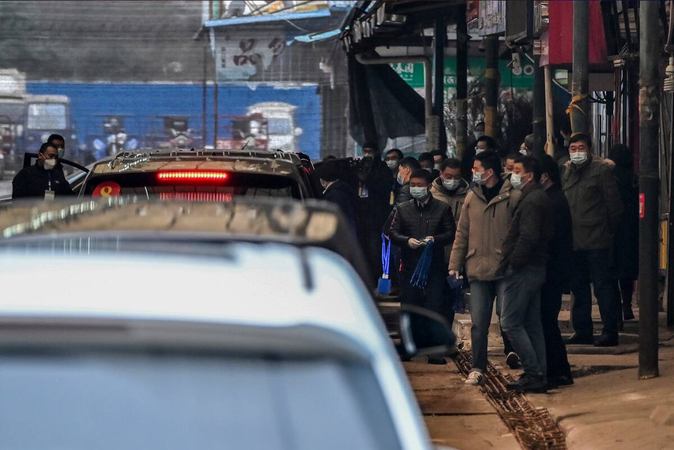
A joint World Health Organization-China report on the origins of the coronavirus says it most probably jumped from animals to humans via an intermediate animal host, downplays the possibility it leaked from a lab and suggests next steps in a complex search mired in controversy, according to a copy obtained by The Washington Post.

The report, set to be released Tuesday, offers the most detailed look yet at what happened in Wuhan, China, in late 2019 and early 2020. However, the findings are far from conclusive and will be overshadowed by questions about China’s lack of transparency – and the WHO’s apparent inability to press for more.

The team recommends further study of the possible path of transmission between animals and humans and on transmission through frozen food – a once-fringe theory favored by the Chinese government. It does not recommend additional research on the lab leak hypothesis.

But WHO director general Tedros Adhanom Ghebreyesus, who was not part of the Wuhan mission, offered somewhat contradictory messaging at a news conference on Monday, saying “all hypotheses are open” and warrant future study.

Given China’s coverup of the outbreak in Wuhan, the WHO’s early praise for the country’s response, and the fact that it took a full year to get a joint Chinese-international team on the ground for a brief visit, the critical but challenging search for clues faced skepticism from the start.

Secretary of State Antony Blinken told CNN last week he had concerns about “the methodology and the process,” including “the fact that the government in Beijing apparently helped to write it.”

“I don’t think the global community can have confidence in this report, because of China’s lack of transparency on necessary data sources, as well as the close relationship the team had to have with China,” said Larry Gostin, a professor of global health law at Georgetown University.

“This was an expert panel who worked diligently but were blocked from finding all that it could,” he continued. “As a result, we may never know the origins of the pandemic.”

Questions about Chinese interference will be hard to shake. The terms of reference set out by WHO member states called for a collaboration between Chinese and foreign scientists, not an independent investigation or audit. Much of the data was collected by Chinese scientists ahead of the visit and then analyzed by the joint team.

Among the report’s findings is that the market linked to early cases was not necessarily the source of the virus, as some once believed, but may have been the site of an early outbreak or an accelerator, as a virus that was circulating in December 2019 spread between close-packed stalls. It does not draw a firm conclusion and calls for additional research on the role of this and other markets.

According to the report, 233 Chinese health institutions reviewed 76,253 records of cases of respiratory conditions from October and November 2019, found 92 cases compatible with SARS-Co-V2, but later ruled out each case, concluding that significant transmission before December was unlikely.

But the report questions whether the clinical criteria used to select those cases was sufficiently broad and notes that the results were based on serological testing conducted about a year later. It says the possibility of transmission before December 2019 cannot be excluded and recommends a review of methods and additional studies on Chinese blood samples.

The report reiterates the team’s belief that the virus most probably jumped from an animal, potentially a bat or pangolin, to an unknown intermediate animal host, then to humans, but the path of transmission remains a mystery. It recommends additional studies on livestock and farmed wildlife that may be susceptible to SARS-CoV-2, such as cats and mink.

The mission concludes it is extremely unlikely that the virus accidentally leaked from a lab in Wuhan – a theory many scientists downplay for lack of evidence, but that others are not ready to dismiss after a single visit.

The visit to the Wuhan Institute of Virology lasted a few hours, according to scientists on the trip. They got a tour of the facility, heard about the lab’s rigorous safety protocols and were told the lab was not working with viruses close to SARS-CoV-2.

One member of the team said in a post-trip television interview that researchers at the lab were sick in the fall of 2019 – a potentially interesting finding that had been raised by the Trump administration – but then dismissed its relevance and offered little else.

The final report states that there was no direct infection of workers, but does not go into detail or recommend further research on the topic.

It also notes that three laboratories in Wuhan were working with either coronavirus diagnostics or on isolation and vaccine development. All were “high quality” and “well managed,” it said, but it did not specify if the joint mission saw additional evidence, such as audits, to substantiate the claims.

The report also notes that a Wuhan Center for Disease Control lab moved on Dec. 2, 2019 – a new detail – but that it “reported no disruptions or incidents caused by the move.”

The search for the origin of any virus is challenging, but the circumstances surrounding the first known cases of this one made launching a credible investigation particularly tough.

When a novel coronavirus hit Wuhan in late 2019, Chinese officials downplayed the risk, undercounted cases and silenced would-be whistleblowers. Then, through the early weeks of the crisis, the WHO amplified some of the official Chinese line, giving a false sense of reassurance and eroding public trust.

Foreign scientists on the trip generally agree the timing and level of access was suboptimal, but stressed that they were able to obtain information the world did not have before.

Even though the Huanan market had been shut for a year and its contents removed, for instance, seeing the proximity of the stalls and the layout helped, said WHO team member Hung Nguyen-Viet, a Vietnamese expert on livestock and human health.

In interviews, Hung and another expert on the trip, Keith Hamilton of the World Organization for Animal Health, said research on the market pointed to the need for additional investigation in southern China. It is unclear if China will allow foreign scientists to return.

Dominic Dwyer, an Australian microbiologist and infectious-disease expert on the mission, stressed that the team did not have the mandate, personnel or time to conduct a formal audit on labs.

“You could do, if so desired, a more detailed forensic examination,” he said. “But that is another whole negotiation and discussion.”

“What stands out starkly is that this is the kind of situation where member states are expecting results from WHO that they have not empowered it to produce,” said Mara Pillinger, a senior associate in global health policy and governance at Georgetown’s O’Neill Institute for National and Global Health Law. “They needed permission to go in, to conduct research, and on the report.”

In general, the foreign scientists on the trip took pains to praise their Chinese counterparts, noting their technical expertise and professionalism. They also acknowledged the limits of working with data collected before they arrived that may or may not be complete.

“At the end of the day,” said Hung, “They show us what they show.”

In echo of George Floyd killing, a woman dies after police in Mexico pin her down #SootinClaimon.Com

#SootinClaimon.Com : ขอบคุณแหล่งข้อมูล : หนังสือพิมพ์ The Nation.

https://www.nationthailand.com/news/30404280

In echo of George Floyd killing, a woman dies after police in Mexico pin her down

InternationalMar 30. 2021

By The Washington Post · Jennifer Hassan

Face down and with her hands behind her, a woman cries out. She is surrounded by four police officers. One pins her to the ground, kneeling on her back.

Moments later, she lies handcuffed and silent, barefoot and motionless, as onlookers record the incident, which unfolded Saturday in the Mexican beach resort city of Tulum.

In videos published on Mexican news sites, officers can be seen picking up her limp body and carrying her toward a patrol vehicle. In the clips, they load her onto the back of the truck and appear to roll her over before driving away from the scene.

On Sunday, police confirmed that the woman had died, and opened a homicide investigation.

Later in the day, the four officers were jailed. Prosecutors said they were being charged with femicide.

The Salvadoran government and local media identified her as Victoria Salazar Arriaza, a 36-year-old Salvadoran mother of two who was living in Mexico on a humanitarian visa.

She died of broken vertebrae, according to a statement Monday from the Quintana Roo state prosecutor’s office. It accused police of using “disproportionate” force and said that the four officers would be taken into custody on suspicion of committing femicide.

“The law will be applied rigorously so this crime doesn’t go unpunished,” the statement said.

Mexican media quoted local officials as saying police detained the woman after getting a call that she was acting aggressively toward employees of a convenience store.

The videos have been viewed millions of times on Twitter, sparking widespread anger and calls for justice.

Mexican President Andrés Manuel López Obrador denounced the “brutal killing.”

On social media, users expressed horror at the incident and used the hashtag #JusticiaParaVictoria denounce police brutality. The hashtag soon gained traction, becoming one of the top trends in the country on Twitter.

Police brutality is hardly uncommon in Mexico, but it has received new attention since the death of George Floyd, a Black man who died while being detained by a White Minneapolis police officer during an arrest in the United States in May last year. During his arrest, Floyd told officers he was unable to breathe, uttering the phrase at least 25 times while he was restrained.

In video taken by onlookers, then-Officer Derek Chauvin placed his knee on Floyd’s neck for more than nine minutes – a widely criticized restraint method.

Chauvin has been charged with second- and third-degree murder and second-degree manslaughter. His trial begins Monday. The other three officers at the scene of Floyd’s death – J. Alexander Kueng, Thomas Lane and Tou Thao – were fired and charged with aiding and abetting and will be tried separately in August.

Floyd’s death triggered a global outcry, with thousands denouncing police brutality from the streets of London, Paris and other cities around the world.

On Sunday, demonstrators marched in the streets to demand justice for Salazar Arriaza. Some carried signs that read “Tulum Corrupto.” They chanted “justice for Victoria” and “no more corrupt killer police.”

Salvadorans also demanded justice for the victim.

The Salvadoran Foreign Ministry condemned the incident Monday and said it would continue to work closely with the Mexican government so that “the full force of the law can be applied.”

Nayib Bukele, the president of El Salvador, in a tweet Monday, promsied that his government would take care of Salazar Arriaga’s two children. “We only ask for justice,” he tweeted. “That those who did this face all the weight of the law.”

Tulum’s mayor, Victor Mas Tah, described the behavior of the officers as “deplorable” and offered his condolences to the victim’s family. Mash Tah, who is seeking reelection, demanded a thorough investigation into the incident.

“As a government authority, we join in with the calls from civil society, collectives, and associations. We will not allow these situations in Tulum,” he said Sunday, adding that the situation was “unacceptable.”

Japan’s Kyoto cherry blossoms peak on earliest date in 1,200 years, a sign of climate change #SootinClaimon.Com

#SootinClaimon.Com : ขอบคุณแหล่งข้อมูล : หนังสือพิมพ์ The Nation.

https://www.nationthailand.com/news/30404279

Japan’s Kyoto cherry blossoms peak on earliest date in 1,200 years, a sign of climate change

InternationalMar 30. 2021

By The Washington Post · Jason Samenow

During an exceptionally warm March in Japan, the cherry blossoms in Kyoto peaked Friday, the earliest in more than 1,200 years of records. The bloom fits into a long-term pattern toward earlier spring flowering, a compelling indicator of climate change, experts say.

The March 26, 2021, peak bloom date surpassed the previous record holder of March 27, 1409, nearly a century before Christopher Columbus sailed to America. The long-term record dates back to 812 A.D., not longer after Charlemagne was crowned Holy Roman Emperor.

“The Kyoto Cherry Blossom record is incredibly valuable for climate change research because of its length and the strong sensitivity of flowering to springtime temperatures (warmer springs equal earlier flowering, typically),” said Benjamin Cook, a research scientist at Columbia University who specializes in reconstructing climate data from the past.

Unique for its longevity, the cherry blossom records show that the average peak bloom date was relatively stable for about 1,000 years, from about 812 to 1800. But then, the peak bloom dates slope abruptly downward, revealing a shift earlier and earlier in the spring.

“Since the 1800s, warming has led to a steady trend toward earlier flowering that continues to the present day,” Cook said. “Some of this warming is due to climate change, but some is also likely from an enhanced heat island effect due to increased urbanization of the environment over the last couple of centuries.”

The data is a treasure, having been maintained by emperors, aristocrats, governors and monks over the centuries. Most recently, Yasuyuki Aono, a scientist at Osaka Prefecture University, has tracked the blossoms and posted the data online.

Cherry blossoms have burst unusually early all over Japan this spring. In Tokyo, they reached full bloom March 22, their second-earliest date and earliest since 1953, according to the Japan Forward. It marked the ninth consecutive earlier-than-normal bloom, the Forward reported, after nearly a week during which high temperatures climbed to at least 68 degrees (20 Celsius). The average full bloom date is March 25.

In Kyoto, the shift toward earlier blooms has been most rapid in the last 100 to 150 years. In 1850, the average flowering date was about April 17; now, it’s closer to April 5. During this time, the average temperature in Kyoto has risen by about 6 degrees (3.4 Celsius).

The shape of the trend line through the blossom flowering dates resembles a hockey stick – with a flat handle but sharply sloping blade. Studies documenting temperature changes over the past 1,000 to 2,000 years have taken on a similar shape, reflecting a relatively stable climate through the mid-1800s, and a quickly warming one since.

“Evidence, like the timing of cherry blossoms, is one of the historical ‘proxy’ measurements that scientists look at to reconstruct past climate,” said Michael Mann, a professor of climate scientist at Pennsylvania State University who has published numerous studies on temperature changes through recent millennia. “In this case, that ‘proxy’ is telling us something that quantitative, rigorous long-term climate reconstructions have already told us – that the human-caused warming of the planet we’re witnessing today is unprecedented going back millennia.”

The trends toward earlier blooms in Japan have also been observed in the cherry trees at the Tidal Basin in Washington gifted by Japan in 1912. Since 1921, the National Park Service has kept a record of their peak flowering dates.

In the century of records, the average peak bloom date of the Yoshino cherry trees in Washington has advanced six to seven days, from about April 5 to March 31.

In 2021, the blossoms in Washington peaked on Sunday, several days ahead of the recent 30-year average. In 2020, they peaked March 20, tied for the third earliest on record.

Canadian officials recommend pausing AstraZeneca vaccine for people under 55 #SootinClaimon.Com

#SootinClaimon.Com : ขอบคุณแหล่งข้อมูล : หนังสือพิมพ์ The Nation.

https://www.nationthailand.com/news/30404278

Canadian officials recommend pausing AstraZeneca vaccine for people under 55

InternationalMar 30. 2021

By The Washington Post · Amanda Coletta

TORONTO – A panel of scientists in Canada on Monday recommended against the administration of the AstraZeneca vaccine in people 55 and younger, citing “substantial uncertainty” over its benefits for that age group because of “rare” cases of serious blood clots reported in Europe.

The National Advisory Committee on Immunization cast the guidance as a “precautionary measure” to be taken while the incidents, primarily reported in women under 55, are investigated further. It said the rate at which the clotting occurs is not known “with certainty.”

No vaccine-related clotting has been reported in Canada.

The panel’s recommendations are nonbinding, but Canada’s 13 provinces and territories, which are responsible for administering the vaccines, had decided to adopt a “unified position” and suspend the vaccine’s use in that demographic, Howard Njoo, the country’s deputy chief public health officer, told reporters in Ottawa.

Supriya Sharma, chief medical adviser to regulator Health Canada, said it would issue “additional terms and conditions” on the authorization of the vaccine, including a requirement that AstraZeneca conduct “a detailed assessment of the benefits and risks of the vaccine by age and sex in the Canadian context.”

Health Canada approved the vaccine for all ages in late February. Days later, the panel recommended against its use in those 65 and older because of “limited” data on its efficacy in that age group. Weeks later, the panel reversed itself, citing the results of studies in Britain.

“This vaccine has had all the ups and downs. It looks like a roller coaster,” Caroline Quach-Thanh, chair of the panel, told reporters. “The problem is because they are evolving, we are evolving our recommendations.”

The change in guidance comes after trust in the vaccine was shaken in Europe. Several countries there temporarily halted its use this month while Europe’s medical regulator conducted a review. It concluded on March 18 that AstraZeneca’s vaccine was “safe and effective,” though it said it could not rule out a link to the rare blood clots.

The announcement also comes as infectious-disease experts warn that parts of Canada are experiencing a third wave of the pandemic. The country’s vaccine rollout is the second-slowest among Group of Seven countries.

Canada has received 500,000 doses of the AstraZeneca vaccine from India’s Serum Institute. An additional 1.5 million doses were due to arrive this week from the United States.

Giant ship blocking Suez Canal is finally freed #SootinClaimon.Com

#SootinClaimon.Com : ขอบคุณแหล่งข้อมูล : หนังสือพิมพ์ The Nation.

https://www.nationthailand.com/news/30404277

Giant ship blocking Suez Canal is finally freed

InternationalMar 30. 2021The Ever Given container ship moves along the Suez Canal towards Ismailia after being freed from the canal bank in Suez, Egypt, on Monday, March 29, 2021. The giant Ever Given container ship was finally pulled free from the bank of the Suez Canal, allowing for a massive tail back of ships to start navigating once again through one of the world's most important trade routes. Photographer: Islam Safwat/BloombergThe Ever Given container ship moves along the Suez Canal towards Ismailia after being freed from the canal bank in Suez, Egypt, on Monday, March 29, 2021. The giant Ever Given container ship was finally pulled free from the bank of the Suez Canal, allowing for a massive tail back of ships to start navigating once again through one of the world’s most important trade routes. Photographer: Islam Safwat/Bloomberg

By Syndication Washington Post, Bloomberg

Ships on Monday started moving again through the Suez Canal after the giant container ship that lay stranded across the critical waterway for a week was finally tugged free.

Hundreds of vessels carrying everything from oil to livestock had been forced to wait in line after the Ever Given got stuck in the canal. The accident was a stark reminder of the fragility of global trade infrastructure and threatened to further strain supply lines already stretched by the pandemic.

Horns sounded in celebration as the container ship — which is longer than the Eiffel Tower and weighs 220,000 tons — limped up the canal after a painstaking rescue operation that saw teams of tugs and dredgers working day and night.

Salvage teams used the tides and a full moon to pull the ship from deep inside the sandy bank it had smashed into last week amid high winds and poor visibility. As part of their efforts, they shoveled 1 million cubic feet (30,000 cubic meters) of sand and even removed part of the canal wall.

Part of the problem was a five-day wait for two large tugboats, according to Peter Berdowski, chief executive officer of Boskalis Westminster, the parent company of the salvage team.

“We were enormously helped by the strong tide, the forces of nature that push hard, even harder than the two tugboats can pull,” he told Dutch radio.

“The men were euphoric of course. But there was a tense moment when this giant was floating freely. You need to bring it under control quickly with the tugboats before it gets stuck on the other side, we would have gone from bad to worse. Those were a tense 10 minutes.”

The Ever Given container ship enters the Great Bitter Lake after being freed from the Suez Canal in Suez, Egypt, on March 29, 2021. MUST CREDIT: Bloomberg photo by Islam Safwat

The Ever Given container ship enters the Great Bitter Lake after being freed from the Suez Canal in Suez, Egypt, on March 29, 2021. MUST CREDIT: Bloomberg photo by Islam Safwat

The Suez Canal Authority said it could take around a week to clear the lineup of ships. On Monday evening, at least three ships were on the move, according to vessel-tracking data.

Egyptian authorities were desperate to get traffic flowing again through the waterway that’s a conduit for about 12% of world trade and about 1 million barrels of oil a day. This has been the canal’s longest closure since it was shut for eight years following the 1967 Six Day War.

Firms including A.P. Moller-Maersk A/S and Hapag-Lloyd AG were forced to reroute their ships via the southern tip of Africa, which can add two weeks on to a journey between Europe and Asia. At least one ship appeared to do a double U-turn on Monday as news of the salvage operation emerged.

The long-term impact of the canal’s $10-billion-per-day closure will likely be small given that global merchandise trade amounts to $18 trillion a year. Yet so many ships being thrown off schedule will ensure cargo delays for weeks, if not months. The dozen or so container carriers that control most of the world’s ocean freight are already charging record-high rates on some routes, and shortages of everything from chemicals and lumber to dockside labor already abound.

“The dominoes have been toppled,” Lars Jensen, chief executive of SeaIntelligence Consulting in Copenhagen, wrote on social media over the weekend. “The delays and re-routing which have already happened will cause ripple effects” which will be felt for several months.

Companies from Ikea to Caterpillar Inc. flagged potential impacts and tens of thousands of live animals are stuck on ships in the area. Consumer goods, industrial inputs, and commodities from oil to coffee are caught up in the jam, with Asian exporters and European importers affected most directly.

The blockage held up about $400 million an hour, based on rough calculations from Lloyd’s List that suggested westbound traffic to Europe is worth around $5.1 billion a day and eastbound traffic is approximately $4.5 billion.