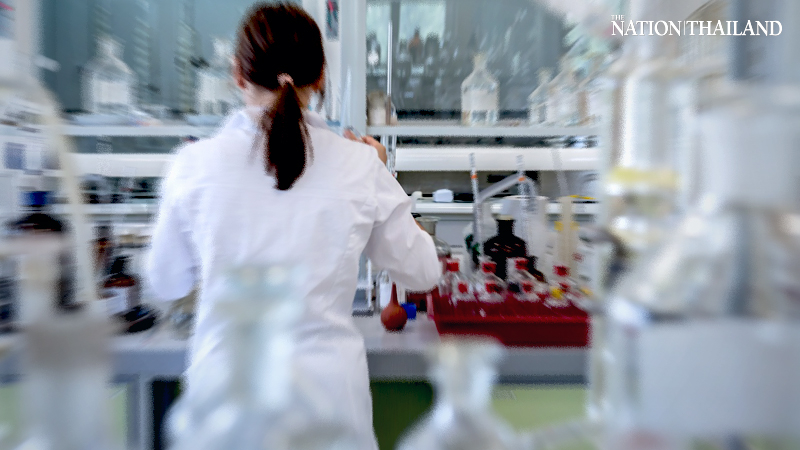
Russia has registered the world’s first coronavirus vaccine for dogs, cats, minks, foxes and other animals, the country’s agriculture safety watchdog said Wednesday.
Called Carnivak-Cov, the vaccine was developed by scientists at the Federal Service for Veterinary and Phytosanitary Surveillance, also known as Rosselkhoznadzor, Russia’s Tass News Agency said.
While many scientists say the virus causing covid-19 initially jumped from bats to humans, perhaps through another intermediary, infections have since been reported worldwide in animals, from zoos to mink farms.
It remains unclear how easily the virus can move between animals and humans. But after repeated outbreaks among minks at farms in Denmark and elsewhere in Europe, millions of the furry animals were killed precautionarily to cut any further transmission. Scientists have been particularly worried about mutated variants of the virus developing in minks and other animals going on to infect humans.
Russia has already approved three coronavirus vaccines for use in humans on an emergency basis. Rosselkhoznadzor deputy head Konstantin Savenkov said Wednesday that this would be the world’s first authorized for widespread animal inoculations.
The vaccine could be mass produced as soon as April, although the agency did not say when it would be on the market.
“Carnivak-Cov, a sorbate inactivated vaccine against the coronavirus infection . . . is the world’s first and only product for preventing covid-19 in animals,” Savenkov told Tass News.
Two U.S. companies, New Jersey-based veterinary pharmaceutical company Zoetis and the North Dakota-based Medgene Labs, have also been developing coronavirus vaccines for use among minks and other animals.
Scientists in Russia launched clinical trials in October and tested the vaccine on dogs, cats, foxes, including Arctic foxes, and minks, among other animals. Mass production of the vaccine could begin in April, according to Savenkov.
“The outcome of the research gives us grounds to conclude that the vaccine is safe and has strong immunogenic effect,” Savenkov said.
The vaccine is expected to produce antibody resistance that lasts at least six months.
Savenkov told Tass News that “domestic animal-breeding enterprises and commercial firms from Greece, Poland and Austria” are planning to purchase the vaccine, while companies from the United States, Canada and Singapore, among others, have expressed interest in it.
Russia’s coronavirus vaccine for humans have so far not been approved for use in the United States or Europe.
Earlier this year Zoetis’s vaccine was administered on a trial-basis to nine infected apes at a San Diego zoo. They have since recovered.
MOSCOW – Jailed Russian opposition leader Alexei Navalny declared a hunger strike on Wednesday after unsuccessful attempts to get medical care for severe back pain, according to an Instagram post in his name.
Navalny survived an August assassination attempt with a chemical weapon that the U.S. State Department blames on Russian security agencies, but he was jailed when he flew back to Russia in January after treatment in Germany.
He was sentenced to 21/2 years in prison for breaching parole conditions in a 2014 fraud case, partly because he failed to report to authorities while under treatment in Germany.
Navalny last week requested painkilling injections for back pain and a right leg so numb that he says it barely supports his weight.
“I have the right to call a doctor and get medicine. Neither of which I am given, stupidly,” the Wednesday post said. It said the numbness was moving to his left leg.
The Kremlin has declined to comment on Navalny’s complaints, calling it a matter for prison authorities.
The post said he was lying in his cell on his bed on a hunger strike, in what he called a major violation of prison rules. He was reading the Bible, the only book made available to him in prison.
The post said was also being “tortured by sleep deprivation,” woken up eight times every night by a guard shining a torch in his face to supposedly ensure he has not absconded.
“Why do prisoners go on hunger strikes? This question worries only those who have not been prisoners. From outside, everything looks complicated. But from the inside, it’s simple: You don’t have any other methods of struggle, so you go on a hunger strike,” the post said. Navalny is denied Internet access, and his team has not indicated how the posts in his name are made, but he meets regularly with his attorneys.
The post said other prisoners were afraid and told him that “the life of a convict is worth less than a pack of cigarettes.”
Navalny is serving his term in Penal Colony No. 2, a notorious prison that former inmates claim uses constant psychological pressure to “break” inmates.
Vyacheslav Kulikov, a member of a commission that monitors prisoners’ conditions, said Monday that monitors visited Navalny and recorded his requests for painkilling injections.
However Vladimir Grigoryan a member of the monitoring commission from Vladimir, around 111 miles east of Moscow, the nearest large town to Penal Colony Number 2, told independent Dozhd TV that “Navalny is just faking it so don’t worry about him.”
Grigoryan who worked in the prison system for 30 years said prisoners like Navalny demanded medicines that ordinary Russians could not get.
Earlier this week, Navalny posted a photograph of himself in prison, with head shaven, and reported that he had received six reprimands in two weeks for rule violations such as getting up 10 minutes too early or going to meet his attorney wearing a T-shirt. “I’m not kidding,” ran a post in his name Monday describing the reprimands.
“It seems the song ‘Bad Guy’ is the soundtrack of my prison sentence,” Monday’s post ran. After two reprimands, prisoners are sent to the punishment cell, where conditions were “close to torture,” he said.
Being reprimanded beneath a portrait of President Vladimir Putin on the wall reminded him of being a schoolboy and getting in trouble, he said in Monday’s post.
Russian authorities rounded up key members of Navalny’s team in January and placed them under house arrest. But Ivan Zhdanov, direction of Navalny’s Anti-Corruption Foundation is outside Russia. His father Yuri Zhdanov was arrested and placed in detention Friday. Ivan Zhdanov said his father’s arrest was political and aimed at himself. He called the case “an entirely new level of baseness and meanness from the presidential administration.
“I won’t hide it. For me this is the worst thing that could happen.”
Navalny’s team is collecting the names of people willing to join street protests this spring, and recording the numbers in an online map. Once 500,000 people join, they say a protest will be held. So far nearly 360,00 people have signed up.
What’s in Biden’s $2.25 trillion infrastructure and tax proposal
InternationalApr 01. 2021Contractors work on a portion of Van Ness Boulevard under construction in San Francisco on March 22, 2021. MUST CREDIT: Bloomberg photo by David Paul Morris.
By Syndication Washington Post, Bloomberg · Laura Davison
President Joe Biden released a sweeping plan to pump money into transportation, renewable energy, manufacturing and efforts to combat climate change — funded by undoing some of the tax breaks that corporations received during the Trump administration.
The $2.25 trillion, eight-year proposal is a follow-up to the $1.9 trillion economic relief bill passed earlier this month. To cover the costs, Biden wants to raise corporate taxes to 28% from 21%. The plan also seeks a minimum tax on profits U.S. corporations earn overseas, increasing the rate to 21% from roughly 13%.
The White House plans a second major package, which could cost $1 trillion or more, later in April to focus on social measures, including expanding health care and paid-leave access and extending the child tax credit –offset by tax increases on wealthy individuals.
Biden will offer his opening argument for the first phase of spending Wednesday in Pittsburgh. Here’re some of the key elements in the plan:
–Transportation
The plan provides $620 billion for transportation. That includes $115 billion to improve bridges, highways, roads and $20 billion for road safety, which will upgrade 20,000 miles of roads and highways. There’s $85 billion to modernize public transportation systems and $80 billion for Amtrak. The plan provides $25 billion for airports and $17 billion for ports, inland waterways and ferries. Biden is also calling for $20 billion for transportation projects for disadvantaged communities.
–Electric Vehicles
The transportation funding would specifically direct $174 billion to electric vehicles, including sale rebates and tax incentives for consumers to buy American-made cars. It also would provide grants to state and local governments and the private sector for 500,000 charging stations by 2030. It includes funds to electrify school buses and federal vehicles such as Postal Service trucks.
–Research and Development
Biden is calling for $180 billion to upgrade the country’s research infrastructure and labs at universities and federal agencies. The funding would also be directed toward climate-science research and addressing gender and racial inequalities in the science, math and technology fields.
–Manufacturing Boost
A $300 billion initiative to boost American manufacturing incorporates a number of bipartisan initiatives that Senate Majority Leader Chuck Schumer had planned to move in a broader China bill this spring. Biden will call on Congress to invest $50 billion in semiconductor manufacturing and research — as envisioned by the CHIPS Act. There’s also $50 billion for the National Science Foundation to create a technology directorate, modeled after the Endless Frontiers Act.
In addition, he is asking for $50 billion to create a new office at the Department of Commerce dedicated to monitoring domestic industrial capacity and funding investments to support production of critical goods.
–Workforce Development
Biden is proposing $100 billion for workforce-development programs, including training for those who have lost their jobs, as well as apprenticeship initiatives.
–Electric Grid
Biden is offering $100 billion to build a more resilient electric grid. He is also proposing a 10-year extension and phase-down of an expanded, refundable investment tax credit and production tax credit for renewable energy generation and storage.
The plan calls for high labor standards and allowing workers on the projects to join unions and bargain collectively. The goal is to move toward 100% carbon-pollution free power by 2035. The plan also directs $16 billion to clean up abandoned mines and gas wells.
–Carbon Capture
The plan would create 10 carbon-capture facilities retrofitted in large steel, cement and chemical production facilities. It expands the bipartisan Section 45Q tax credit for carbon capture, making it refundable and easier to claim. Another $10 billion would be spent on a Civilian Climate Corps that employs Americans in conservation work on public lands and waters.
–Clean Water
The plan includes $45 billion to eliminate lead pipes nationwide. It also calls for $56 billion in grants and low-cost loans to states, tribes, territories and disadvantaged communities to improve water systems and $10 billion to bolster rural-well and waste-water systems.
–Broadband Internet
Biden is proposing $100 billion to bring high-speed broadband internet to all Americans. The plan also includes measures to make pricing more transparent and competitive and includes short-term subsidies for low-income households.
–Housing
The proposal would provide $213 billion to build and renovate more than than two million affordable homes. The plan includes tax credits to build housing for low-income families and $40 billion for public housing.
–Schools, Child Care
The plan includes $100 billion to improve public school buildings, with $50 billion in direct grants and an additional $50 billion leveraged through bonds. The plan also calls for $12 billion for community-college facilities and technology and $25 billion to upgrade child-care facilities and provide incentives for employers to offer on-site child care.
–Elder Care, VA Hospitals
Biden is asking Congress to approve $400 billion for housing and care for the elderly and people with disabilities. He is also proposing $18 billion for the modernization of Veterans Affairs hospitals and clinics.
–Corporate Tax Hikes
The plan would raise the corporate tax levy to 28% from 21%, increasing the rate established in President Donald Trump’s tax law. The plan would also institute a 15% minimum tax on a corporation’s profits for financial-reporting purposes. This would prevent companies from racking up tax breaks to whittle down their tax bill to nothing.
–International Taxes
The plan would also impose a minimum tax on the profits U.S. corporations earn overseas, increasing the rate to 21% from the roughly 13%. It also includes several measures that would penalize companies that move assets and jobs offshore and eliminates current preferences to book profits overseas.
–Eliminate Oil, Gas Tax Breaks
The plan would eliminate all tax preferences for the oil and gas industry and would also require companies that pollute to pay into the Superfund Trust Fund to cover the cost of fuel-related cleanup.
–IRS Audits
The plan calls for additional funding for the Internal Revenue Service to increase audits on corporations. The White House says it will release additional details about tax examinations on individuals in the coming weeks.
By Syndication Washington Post, Bloomberg · Shelly Banjo
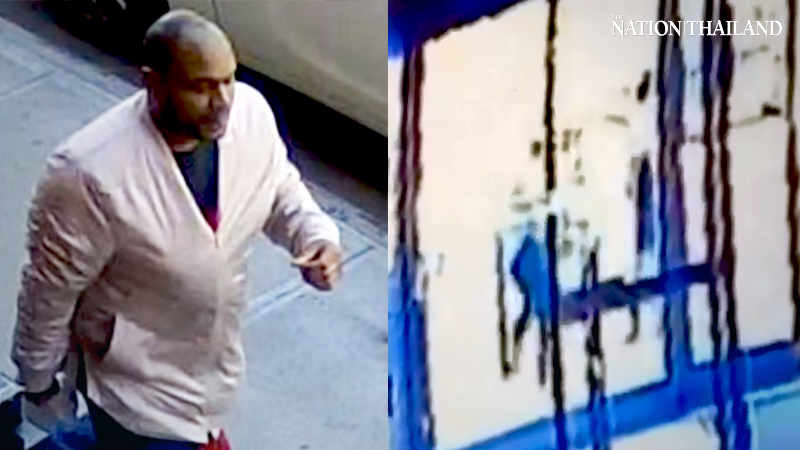
The New York Police Department has arrested a man in connection with a suspected hate crime against a 65-year-old Asian woman outside a Midtown Manhattan luxury apartment. The man in the incident was captured on video kicking the woman to the ground and then stomping on her in broad daylight Monday, while shouting “you don’t belong here.”
Brandon Elliot, 38, a parolee out on supervised release, was charged with felony assault as a hate crime early Wednesday, according to Police Commissioner Dermot Shea.
On Tuesday New York Mayor Bill de Blasio called the crime “disgusting” and vowed to bring the perpetrator to justice.
“I’m very frustrated by these attacks,” de Blasio said during a press briefing Tuesday. “I know a huge effort is being expended to educate, to get people involved in the solution, to find the perpetrators, to bring them to justice.”
A surveillance video, released by the police Tuesday, showed a man kick the woman outside an apartment building at 360 W. 43rd Street while the building’s security guards looked on but didn’t intervene. One guard then shut the door.
The Brodsky Organization, which manages the luxury Manhattan apartment building, said staff who saw the attacks were suspended “pending an investigation in conjunction with their union,” according to a statement Tuesday. “The Brodsky Organization condemns all forms of discrimination, racism, xenophobia and violence against the Asian American community.”
The victim of the attack, a Filipino immigrant, remains in the hospital recovering from a fractured pelvis, according to The New York Times.
The attack comes as the city’s hate crimes task force is reporting an increase in attacks and racially charged violence against Asian New Yorkers they said increased during the pandemic when U.S. political leaders insisted on referring to the coronavirus as the “Chinese flu.”
The incidents have led to protests by Asian-American leaders and community activists in New York and globally, as they respond to an outbreak of violence that includes a March 16 shooting in the Atlanta metropolitan area where eight people died, including six women of Asian descent.
President Joe Biden on Tuesday announced plans to address the hate crimes against the Asian-American community, including increasing access to hate crime data and requiring new training for local police.
U.S. Attorney General Merrick Garland on Tuesday directed Justice Department employees to give priority to investigating and prosecuting hate crimes and incidents, noting “the disturbing trend in reports of violence against members of the Asian American and Pacific Islander community,” according to a memo to department employees.
Garland, who became the nation’s top law enforcement officer almost three weeks ago, ordered a review to be completed in a month to determine specific steps that can be taken to better combat hate crimes.
“We must recommit ourselves to this urgent task and ensure that the department makes the best and most effective use of its resources to combat hate,” Garland wrote.
Read More: Asian-American Groups Grapple With Police Response to Violence
Stop AAPI Hate identified nearly 3,800 anti-Asian incidents since last March, 6.2% of which were targeted at people over 60 years old and an overwhelming 68% at women.
“It’s disgusting and outrageous,” de Blasio said, of the video. “But then to see a security guard standing nearby and not intervening, it’s absolutely unacceptable. Look, I don’t care who you are. I don’t care what you do, you’ve got to help your fellow New Yorker.”
By Syndication Washington Post, Bloomberg · Andreo Calonzo
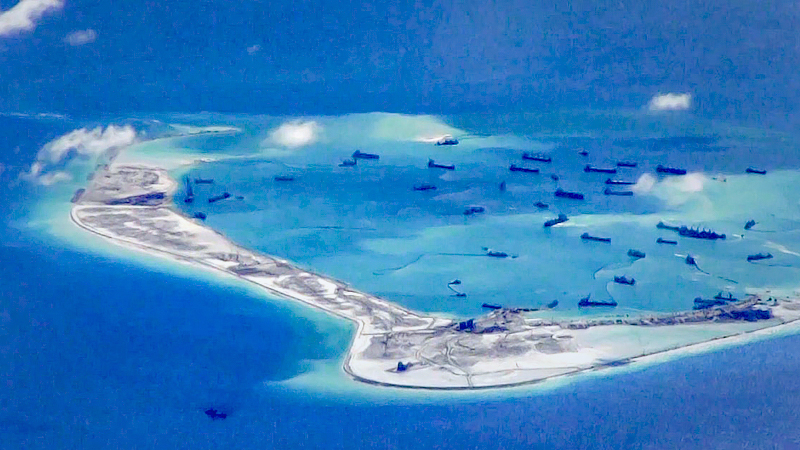
The Philippines said Chinese “maritime militia” vessels have expanded into more disputed South China Sea areas, even after the Southeast Asian nation protested and the U.S. aired concerns over the ships’ presence.
More than 250 Chinese vessels were seen in areas including Whitsun Reef and Thitu Island, as well as an island group known in the Philippines as Kalayaan, a government task force said Wednesday, citing air and sea patrols on March 29. It added that four Chinese Navy ships were also spotted at Mischief Reef, also known as Panganiban Reef.
The Chinese ships’ presence in the contested waters comes despite Philippine President Rodrigo Duterte’s efforts to build closer ties with Beijing, while keeping good relations with the U.S. China earlier said that its vessels near a disputed reef were sheltering from the wind.
The Philippines repeated its call for the Chinese vessels to immediately leave the disputed areas, saying their presence is “hazardous to navigation and safety of life at sea.”
“Their swarming also poses a threat to the peaceful exercise of sovereign rights of the Philippines in its exclusive economic zone,” the Southeast Asian nation said, adding that more Philippine Navy and coast guard ships have been deployed to patrol in the South China Sea.
By Syndication Washington Post, Bloomberg · Michelle Fay Cortez, Jason Gale
Nearly three dozen scientists vetted by the World Health Organization and the Chinese government gathered in Wuhan, China, early this winter to start the arduous task of finding the origins of covid-19 and determining how it spread like wildfire around the world.
Six weeks after that trip, the working group this week delivered an analysis that laid out four possible scenarios and recommended next steps for digging deeper to find the pandemic’s genesis. The 123-page report, and a nearly 200-page supplement, was immediately engulfed by criticism, with a dozen nations including the U.S., the U.K. and Japan questioning its structure and insights.
The most unexpected detractor was WHO Director General Tedros Adhanom Ghebreyesus, who helped negotiate the details of the trip and agreed to the scope of the work back in July. He said the theory that the virus escaped via a laboratory accident needed to be more thoroughly vetted, a hypothesis that has been vigorously denied by the Chinese government.
“There’s obviously a lot of politics,” said John Mackenzie, an Australian virologist who led a 2003 WHO-convened mission in China to study the origins of SARS, leaving him well-versed on the delicacies of undertaking such a study. “He should be standing by his committee’s report.”
“I just find it very strange that he’s demeaning it and he’s deflecting from it,” said Mackenzie, an emeritus professor at Curtain University in Perth who serves on the WHO’s emergency committee for covid-19.
It’s not that controversy was unexpected: the mission was fraught from the start, with China resisting the scientists for months before relenting to a team of experts that comprised of a local expert for every foreign one. Still, the furor now threatens to undermine scientific progress in understanding how the coronavirus came about, and the chance of WHO-led further investigation in both China and other countries — which the experts have always said is needed — is growing faint.
“Multiple attacks daily, demonstrably false, but gullible followers believe them,” said Peter Ben Embarek, an expert on zoonotic diseases at the WHO who led the international team of scientists, in a Twitter post on what he described as “right-wing media outlets.” “Real issue is that this undermines science and ironically puts U.S. citizens at risk by leading us into rabbit hole conspiracies instead of better understanding of how to prevent pandemics.”
The WHO experts, who traveled to China in January after months of negotiations, were presented with reports from local researchers, rather than being allowed to conduct their own analysis, some said in media interviews after the trip. They also didn’t have unfettered access to raw material or the lab in Wuhan that has become central to the controversy. Instead, they were required to work within the parameters negotiated by the Chinese government and the WHO more than six months before the mission began.
Their official report, itself delayed for weeks, was questioned even before its official release. The U.S. has “real concerns about the methodology and the process” of the report, including that the Chinese government “apparently helped to write it,” Secretary of State Antony Blinken told CNN on Sunday, ahead of publication.
On Tuesday, hours after it was published, a joint statement from 14 countries including the U.S., the U.K., Australia, Japan, South Korea and Norway, bemoaned a lack of access to “complete, original data and samples.” Scientists from five of the countries took part in the mission.
China dismissed the criticism as not “serious or responsible” on Wednesday. “They want to spread rumors and push their hidden political agenda,” said Chinese Foreign Ministry spokeswoman Hua Chunying at a briefing in Beijing. “The experts have said they went to places they wanted to, and they met with people they wanted to.”
Some among the WHO expert team, made up of virologists, epidemiologists and other public health experts, argued that not many countries would allow unfettered access to confidential data, and noted that their work seemed to be taken out of context. At the heart of the controversy appears to be a mismatch between the slow speed and cautious precision of scientific work, and the political symbolism thrust on the origins investigation.
Marion Koopmans, a Dutch virologist who was a member of the WHO team, mused on Twitter about whether other countries would allow outsiders to conduct a similar investigation.
While much of the criticism has focused on the report’s dismissal of the laboratory leak theory, the scope of study included no mention of research specifically on labs in Wuhan, or any role they may have played.
A true audit of the lab is a “much more complex process, and that’s not what we were there to do,” said Dominic Dwyer, a microbiologist based in Sydney who was part of the team.
The lab leak theory took off when it was promoted by the Trump administration. There has been nothing to suggest it emerged from a lab in China or anywhere else, Ben Embarek said.
Maria Van Kerkhove, the WHO’s technical lead on covid, defended the report, saying the epidemiology and molecular data from 2019 is the most comprehensive she has seen, while the animal section provides details on the species that were sampled.
“We were able to create a space for the science,” said Ben Embarek. “We were never pressured to remove critical elements from our report. Personally, I am very proud of this report and, like my other colleagues, we all stand behind it on both sides, despite all the interest and the pressure and the immense difficult environments we have faced over the past few months.”
An Asian American woman was walking through the Hell’s Kitchen neighborhood of Manhattan on Monday morning when a stranger approached.
The 65-year-old woman stopped abruptly outside a luxury condo tower, surveillance video shows. Suddenly, the man kicked her in the stomach, knocking her to the sidewalk, and then brutally stomped on her head again and again. All the while, police said, he spewed slurs at her.
As the woman was viciously attacked, video appears to show at least three people in the condo’s lobby passively watching the violence. When the attacker walks away, leaving the injured woman prone on the sidewalk, one man – reportedly a security guard – calmly shut the door on her.
The video has led to new calls for an end to the rising tide of violence against Asian Americans and raised questions about the bystanders’ conduct.
“The cold hearted building security guard not only failed to render aid, he closed the door on the victim,” the New York Police Department’s Asian Hate Crimes Task Force wrote in a since-deleted tweet about the video, WABC reported.
Early on Tuesday, the company that manages the condo tower announced that the staffers involved in the incident have been suspended.
“The staff who witnessed the attack have been suspended pending an investigation in conjunction with their union,” the Brodsky Organization wrote in an Instagram post, which also noted the company is trying to identify a “third-party vendor” who was also on the scene “so that appropriate action can be taken.”
The case was one of two attacks on Asian Americans in New York caught on video and publicized on Monday, on the same day that city leaders gathered in Brooklyn to urge quick action to halt a rising tide of racist violence and threats.
“This is absolutely vile. These attacks against Asian-American New Yorkers must end,” New York City Council Speaker Corey Johnson, D, said on Twitter, linking to a video of the attack on the woman. “Hate has no place here and we must always call it out when we see it.”
In recent weeks, Asian Americans in New York have reported being punched in subway cars, spit on and pummeled with metal pipes – an ugly echo of a national trend that activists say gained traction as former president Donald Trump has used racist terms to tie the coronavirus pandemic to China.
The first attack shared by the NYPD on Monday took place onboard a Manhattan-bound subway car in Brooklyn. Police have not said when the attack took place, but a video of the incident shows an Asian man wearing a backpack being shoved by another passenger, who then starts punching him in the face repeatedly. Eventually, the passenger locks the man in a chokehold, tightly gripping his neck until he passes out on the floor of the train.
“The NYPD is aware of this video and is investigating,” the NYPD Hate Crimes Task Force said on Twitter on Monday morning.
The attack in Hell’s Kitchen happened just before noon on Monday, police said, as the unidentified victim was walking along West 43rd Street. The woman was headed to church, WABC reported, when the attacker yelled, “F— you, you don’t belong here,” and began assaulting her.
Video shows one man in the building’s lobby watching the entirety of the attack. That man, who appeared to be tying a stack of boxes onto a cart, stared out the glass doors as the woman was repeatedly kicked in the head, but made no move to assist her. Two other men, who were security guards according WABC, then walked toward the entrance as the assailant left, and closed the door on the victim.
The woman “sustained a serious physical injury,” the NYPD said, and was taken to NYU Langone Hospital, where she was in stable condition. The NYPD’s Hate Crimes Task Force is investigating the case.
City officials, activists and celebrities decried the video and urged a swift arrest for the attacker.
“This is absolutely disgusting. Asian Americans belong in New York and are an integral part of our city,” tweeted Scott Stringer, New York City’s comptroller and a candidate for mayor. “We have to continue to speak out, we have to continue to protect our AAPI neighbors, and we have to act immediately to #StopAsianHate.”
Others questioned the apparent lack of action from the bystanders in the lobby.
“This is despicable. The attack and the guard’s inaction and closing the door on the victim,” tweeted actress Gemma Chan.
Rep. Grace Meng, D-N.Y., who was among the officials calling for an end to anti-Asian hate crimes at the meeting in Brooklyn earlier on Monday, said the video reinforced a profound lack of empathy for Asian Americans.
“We’ve gone from being invisible to being seen as sub-human,” Meng tweeted. “We just want to be seen as American like everyone else.”
China cuts number of elected legislators in Hong Kong, delays elections
InternationalMar 31. 2021Hong Kong Chief Executive Carrie Lam
By The Washington Post · Eva Dou, Theodora Yu
SEOUL – China has sharply reduced the number of directly elected legislators in Hong Kong and delayed the city’s elections until December, in the latest erosion of its democratic institutions.
The electoral changes announced Tuesday cut the number of directly elected seats in Hong Kong’s legislature to 20 out of 90, from the current 35 of 70. A new committee to vet candidates for public office will give national security authorities sway over who can run.
Members of the district councils – the only fully democratic body in Hong Kong – will be excluded from the committee that selects Hong Kong’s chief executive.
“This is shocking and difficult to comprehend for Hong Kong people,” said Lo Kin-hei, chairman of the city’s Democratic Party.
It’s the latest move by China’s central government to tighten its grip over Hong Kong after a series of massive pro-democracy protests. Dozens of Hong Kong activists were arrested earlier this year under the national security law, essentially neutralizing the city’s long-cherished democratic movement.
The overhaul of Hong Kong’s legislature will mean easier control for China’s central government, with only a minority of seats directly elected by the population.
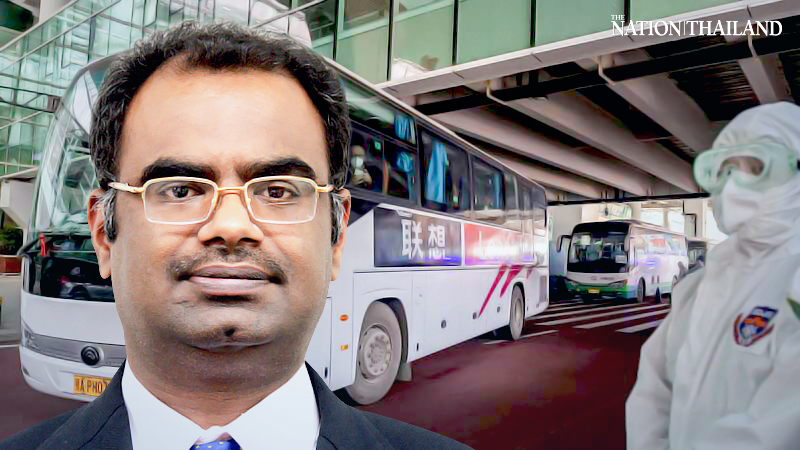
Hong Kong Chief Executive Carrie Lam said Tuesday that Hong Kong unwaveringly supports the amendment.
Referring to the pro-democracy movements since 2014, Lam said the government needs to deal with the “chaos” of the past few years that was enabled by “loopholes in the legislation” and restore order in the Legislative Council.
The move drew sharp criticism from Western officials on Tuesday. In a post on Twitter, British Foreign Secretary Dominic Raab called the electoral changes a “clear breach” of China’s commitments under the Sino-British Joint Declaration signed in 1984 ahead of the 1997 handover of Hong Kong to China.
Layla Moran, a member of Britain’s Parliament, called for the British government to act. “Words of condemnation have done nothing to protect Hong Kong’s democracy,” she said.
The new vetting procedure for public office candidates includes initial screening and background checks by the Hong Kong police’s national security department. Lo, of the Democracy Party, said police involvement essentially means they can choose who can run for public office.
Lam said the vetting committee does not aim to bar pro-democracy candidates from running for these public positions.
“As long as they can prove to be [patriots], and not be disloyal or collude with foreign forces . . . and as long as they want to serve the Hong Kong citizens, they can still [run],” she said.
Andrew Leung Kwan-yuen, president of Hong Kong’s Legislative Council, announced Tuesday that the election will be delayed until December.
The move was cheered by Chinese state media. State broadcaster CGTN said Tuesday that the legislative changes would provide “much-needed stability” in Hong Kong and prevent future violent protests.
A former British colony, Hong Kong was returned to China in July 1997 after Beijing pledged that the city’s way of life would remain unchanged for 50 years. This meant Hong Kong enjoyed a high degree of autonomy and democratic government and much greater free speech than mainland China.
But under President Xi Jinping, the Chinese central government has significantly increased control over Hong Kong’s affairs, especially following a series of massive pro-democracy protests in the city. The passage of the Hong Kong national security law last year put the city under similarly oppressive speech restrictions as in the mainland.
Dozens of activists were arrested in January under the national security law and charged with “conspiracy to commit subversion.” Many were either candidates in or helped facilitate a primary in July designed to select pro-democracy candidates who would run in the upcoming legislative election.
Tuesday’s overhaul of Hong Kong’s legislature has been expected, with China’s rubber-stamp national parliament voting in mid-March to make these amendments to Hong Kong’s Basic Law.
By The Washington Post · Shane Harris, Emily Rauhala, Ben Guarino, Chris Mooney
Shortly after evidence emerged that a new coronavirus was spreading in the Chinese city of Wuhan in January 2020, speculation mounted about the origins of the lethal pathogen.
Right-wing news outlets in the United States published tendentious and thinly sourced reports that the virus may have come from the Wuhan Institute of Virology, famous in the scientific community for researching coronaviruses in bats. In April, President Donald Trump suspended U.S. funding for the World Health Organization, which he accused of being subservient to Chinese officials, and said that the U.S. government was investigating the lab as a potential source of the virus.
“A lot of people are looking at it – it seems to make sense,” he said.
Since then, more information has accumulated that the virus may have first infected humans after moving through animals, and the “lab-leak theory” usually has been framed as a political distraction, promulgated by a president deflecting attention from his administration’s response to the pandemic, and not as a serious scientific question.
No consensus has emerged on where the virus originated, and there are far more scientists who think it developed naturally than who entertain the possibility that it came from a lab.
That made it all the more surprising when, on Tuesday, the head of the WHO said that his agency hadn’t sufficiently examined the lab scenario.
“Although the [WHO] team has concluded that a laboratory leak is the least likely hypothesis, this requires further investigation, potentially with additional missions involving specialist experts, which I am ready to deploy,” Director General Tedros Adhanom Ghebreyesus said at a news conference marking the release of a highly-anticipated report on the virus’s origins, which concluded that the virus probably jumped from an infected animal into a human.
Tedros voiced frustration with the level of access Chinese authorities gave the WHO, an unusually public rebuke from an agency that has been mostly solicitous to Beijing.
In recent interviews, some members of the WHO team that flew to Wuhan to gather information have acknowledged that they lacked the expertise, resources or mandate to determine whether the virus may have emanated from a lab.
The lab-leak theory is far from proved, but Tedros’s openness was applauded by those who have argued that some circumstantial evidence points to the Wuhan lab as a possible source.
“Making these assertions despite the incredible pressure being placed on him and the WHO represented a bold defense of the organization’s integrity in the face of Chinese government efforts to manipulate and restrict the covid-19 origins examination process,” said Jamie Metzl, a National Security Council staffer in the Clinton administration and a member of a WHO expert advisory panel, who had helped organize an open letter calling for more scrutiny of the Wuhan lab, unrestricted by Chinese authorities.
Officially, the Biden administration is open to the possibility of a lab leak. A State Department document, published five days before Trump left office, and which has not been retracted, alleged that “several researchers” at the lab became sick in the fall of 2019 with covid-like symptoms, before the first identified case of the disease, and claimed that the lab “has engaged in classified research, including laboratory animal experiments, on behalf of the Chinese military since at least 2017.”
Versions of the lab-leak theory imagine that an infected worker may have unknowingly passed the virus to others in Wuhan or that an infected animal may have escaped or been sold.
Lab officials have said they possessed no samples of the virus, SARS-Cov-2. And Shi Zhengli, a renowned coronavirus researcher at the lab, has said none of the staff were infected and that the Chinese military has no connection to the institute.
The WHO report states there was no direct infection of workers but does not go into detail or recommend further research on this or other topics.
From the outset, the WHO investigation was unlikely to unearth much evidence that the virus emanated from a lab.
When a joint international-Chinese team convened in Wuhan in the final days of the Trump administration, their itinerary was focused on exploring possible paths of transmission between human and animals – and even a theory pushed primarily by the Chinese government about transmission via frozen seafood – rather than the lab hypothesis.
The group visited the Wuhan Institute of Virology for a few hours, hearing about the lab’s research and safety record and getting assurances that scientists there were not working with viruses closely related to SARS-CoV-2, according to interviews with three foreign scientists on the team and a summary included in the annexes of the WHO’s report.
At a post-trip news conference, Peter Ben Embarek, a Danish food safety expert serving as the WHO lead, described the conversation with staff at the lab as “long, frank and open,” and he appeared satisfied with the short visit and Chinese assurances.
“They’re the best ones to dismiss the claims and provide answers to all the questions,” he said, surprising some experts and U.S. officials, who were reluctant to take the staff’s word at face value.
The international team’s level of interest in exploring the lab theory seemed low, either because they saw it as a politically motivated hoax, thought the evidence pointed in other directions, or did not believe the team had a mandate – or the appropriate staffing – to investigate a Chinese lab.
Dominic Dwyer, an Australian microbiologist and infectious-disease expert on the mission, said he didn’t think the possibility of a lab accident could be ruled out but stressed that the team wasn’t equipped to investigate the hypothesis.
“So, I mean, yes, we did a three-hour visit, and it was sort of managed in the sense that there’s a lot of people there and we did a tour,” he said. “But we did get to ask questions and so on.”
Hung Nguyen-Viet, a Vietnamese expert on livestock and human health on the team described the institute as a “nice lab and well organized” and the discussions with Chinese scientists there as spirited but collaborative.
Hung emphasized that the team agreed that a lab leak was the least likely path of the virus and therefore put their time and energy into exploring other hypotheses.”You would need another team and set of people who really have expertise” to investigate the hypothesis further, he said.
The WHO report also addressed suspicions that the Wuhan institute may have been experimenting with a virus related to SARS-Cov-2 before the outbreak, which in turn might have set the stage for an accidental release.
At a mine in Mojiang, in China’s southern Yunnan province in 2013, scientists discovered the closest known relative to the coronavirus, called Ratg13. It shares 96% of its genetic identity with SARS-Cov-2.
That’s hardly close enough to mean that Ratg13 itself could have sparked the pandemic. That 4% gap would take decades of evolutionary time to bridge.
Still, Ratg13 may be an important clue to the coronavirus’s origins. Yet oddly to some observers, when lab staffers first showed how closely Ratg13 is related to the novel coronavirus, in an article in the journal Nature in early 2020, they did not highlight that it came from the mine. Nor did they note that in 2012, several mine workers who had been tasked with cleaning bat feces there were sickened with a respiratory illness that some have since argued resembles covid-19. Three died.
The Wuhan institute scientists later acknowledged that the cases of the sickened miners initially drew them to conduct extensive research, since they “suspected that the patients had been infected by an unknown virus.”
The new WHO report, however, says institute staffers told investigators the miners’ illnesses “were more likely explained by fungal infections acquired when removing a thick layer of guano,” or bat feces.
The report does not elaborate on that suggestion, which is mentioned briefly in one of the report’s annexes under a category titled “Conspiracy Theories.”
Meanwhile, there is a larger body of evidence that SARS-CoV-2 emerged in nature.
“My view is: This is another example of a bat virus jumping into humans, either directly or through an intermediate host,” said Tony Schountz, an expert in bat-borne viruses at Colorado State University.
When asked whether a lab accident may have been responsible for the Wuhan outbreak, Schountz said it was possible “but, you know, tomorrow I could win the lottery.”
Other virus specialists described WHO’s exploration as sufficient. “I’m not particularly disappointed that they didn’t dig deeper into the Wuhan Institute of Virology,” said Joel Wertheim, an associate professor of medicine at University of California at San Diego. “I don’t think that idea merited as much investigation as looking for the earliest cases.”
Wertheim and his colleagues, in a paper published recently in the journal Science, suggested that the first case of covid-19 may have emerged as late as mid-October to mid-November 2019, before a large cluster of cases linked to a seafood market in Wuhan.
In their models, Wertheim and his co-authors also found coronavirus outbreaks were much more likely than not to fizzle out, especially in rural communities with fewer connections between people. “It’s not fair to characterize this virus as sort of the perfect vessel for human-to-human transmission,” he said. The pathogen seemed to need a denser, urban area to become a pandemic.
“Even if you believe this came through the lab, what you’d have to then show is that the lab had a virus that was very close to SARS-CoV-2. They haven’t found that,” said David Robertson, head of viral genomics and bioinformatics at the University of Glasgow. If laboratory scientists “did have it, I don’t think they would have hidden it. It wouldn’t have occurred to them.”
By The Washington Post · Loveday Morris, Luisa Beck
BERLIN – German Chancellor Angela Merkel on Tuesday said the country will halt the use of AstraZeneca’s coronavirus vaccine for people under 60 due to concerns that is causing rare but occasionally deadly blood clots.
Merkel said the government “cannot ignore” a recommendation for such a move by the country’s vaccine committee and new data about blood clots developing after being vaccinated with the vaccine developed by the Swedish-British pharmaceutical giant AstraZeneca and the University of Oxford.
Germany’s medical regulator, the Paul Ehrlich Institute, said earlier that it had recorded 31 cases of cerebral venous thrombosis, a rare kind of brain clot that can result in hemorrhaging, among 2.7 million people who have received the vaccine in the country.
All were under age 63, and all but two were women. Nine people have died of the clots.
“We all know that vaccination is the most important tool against the coronavirus,” said Merkel, but she said there were other options for younger people.
“We are not faced with the question of AstraZeneca or no vaccine,” she said. “Instead we have several vaccines at our disposal.”
AstraZeneca said that “patient safety remains the company’s highest priority” and that a causal relationship between the vaccine and blood clots had not been established by British and European regulators.
“Regulatory authorities in the UK, European Union, the World Health Organization have concluded that the benefits of using our vaccine to protect people from this deadly virus significantly outweigh the risks across all adult age groups,” AstraZeneca said in its statement. Younger Germans will still be able to receive an AstraZeneca vaccine if they consult with a doctor and sign a waiver.
After an initial review this month, the European Union’s medical overseer, the European Medicines Agency, had deemed the vaccine “safe and effective,” but it said it is continuing to investigate a “possible link” between the vaccine and rare cases of particularly unusual blood clots.
The EMA said that the risks outweighed the benefits, and it added a blood-clot warning to the product about two weeks ago. At the time, it said 25 cases were being investigated among 20 million vaccinations across Europe.
Germany had resumed vaccinations with AstraZeneca after the recommendations, having recorded three deaths before pausing.
But there have been growing calls from parts of the medical community to reassess. Of particular concern has been the risk for younger women, who have made up the majority of the blood-clot cases in Germany.
In an open letter to health authorities, the heads of five university hospitals in the German state of North-Rhine Westphalia, wrote that there was an “extremely unfavorable risk/benefit profile for the use of the AstraZeneca vaccine” for women ages 20 to 29 because of the unlikelihood of dying from the coronavirus, according to excerpts carried by Germany’s DPA news agency.
While the EMA continues its investigations, experts in Germany and Norway who have treated patients suggest that the rare type of blood clots are caused by an overactive immune response triggered by the vaccine.
Some other countries that had initially paused AstraZeneca this month had been more cautious about restarting vaccinations. France limited its use to people over 55 years old.
Norway, where regulators say four people died of blood clots among about 120,000 people who received the AstraZeneca vaccine, has continued its pause. Sweden has resumed AstraZeneca use for people over 65.
The vaccine has not been approved in the United States, where the independent medical board overseeing its trials took the unusual move last week of accusing the company of providing an “incomplete view” of its efficacy data in its U.S. trials.
Regulators in Britain, where the majority of AstraZeneca vaccines in Europe have been administered, said they had found five cases of blood clots as of March 14 but they have not updated numbers since.
“There is a time lag between reports received and publication to allow us time to fully evaluate the data before we issue any conclusions on it,” it said.
A Canadian panel of scientists on Monday recommended against the administration of the AstraZeneca vaccine in people 55 years of age and younger, citing “substantial uncertainty” over its benefits for that age group because of “rare” cases of blood clots reported in Europe.
Canada’s National Advisory Committee on immunization cast the guidance as a “precautionary measure” while Health Canada, the country’s drug regulator, investigates. It said the rate at which the clotting incidents occur is not known “with certainty.”
No such cases have been reported in Canada, which has administered about 300,000 doses of the AstraZeneca vaccine.
The panel’s guidance is nonbinding, but Canadian provinces, which are responsible for the administration of vaccines, said they would follow the advice.


 Alexei Navalny
 Contractors work on a portion of Van Ness Boulevard under construction in San Francisco on March 22, 2021. MUST CREDIT: Bloomberg photo by David Paul Morris.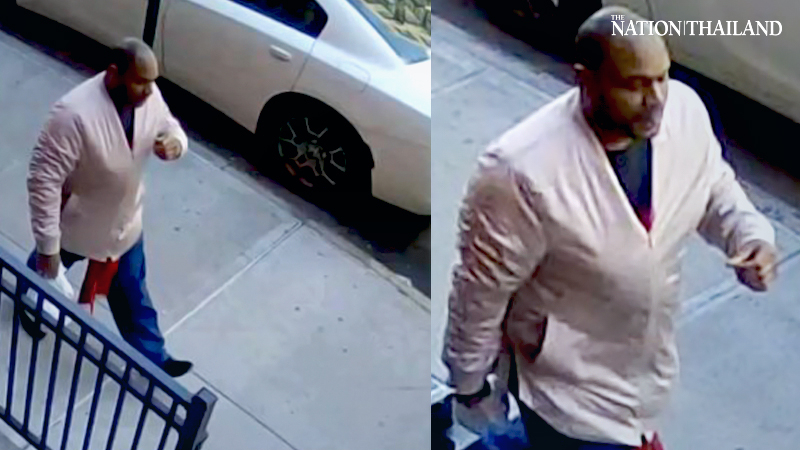
 Hong Kong Chief Executive Carrie Lam