
British politicians vow to oppose use of covid passports #SootinClaimon.Com

#SootinClaimon.Com : ขอบคุณแหล่งข้อมูล : หนังสือพิมพ์ The Nation.

https://www.nationthailand.com/news/30404464

British politicians vow to oppose use of covid passports

InternationalApr 03. 2021A Covid-19 Vaccination Record Card at a vaccination centre in Cardiff, U.K. Photographer: Ben Birchall/PA Wire/BloombergA Covid-19 Vaccination Record Card at a vaccination centre in Cardiff, U.K. Photographer: Ben Birchall/PA Wire/Bloomberg

By Syndication Washington Post, Bloomberg · Alex Morales

British Prime Minister Boris Johnson risks triggering a major backlash among members of the ruling Conservative Party if his government opts to use so-called covid passports to help reopen the economy.

More than 70 members of Parliament from three parties, including 41 from Johnson’s Tories, pledged to oppose the use of vaccine certificates, calling them “divisive and discriminatory.” They include former Conservative Party leader Iain Duncan Smith, former Labour Party leader Jeremy Corbyn and Liberal Democrat Party leader Ed Davey.

“We oppose the divisive and discriminatory use of covid status certification to deny individuals access to general services, businesses or jobs,” the pledge reads, according to a statement Friday from civil liberties campaign group Big Brother Watch. The pledge came as it emerged the government is considering using covid certification as part of trials to reopen large scale events such as sports matches, concerts and conferences.

The opposition from across the political spectrum suggests the premier may struggle to get the measure through Parliament if he pursues it. The government is studying covid certification as a potential means to bolster confidence in returning to restaurants and entertainment venues while also helping to keep coronavirus cases under control.

The Telegraph late Thursday reported that the government is set to trial passports demonstrating a person’s covid status at sporting and cultural events within weeks. But a person familiar with the matter told Bloomberg that while such a policy is under consideration, no final decision has been taken, pending a review by the Cabinet Office over the feasibility of covid certification.

The person also said that events including soccer’s FA Cup Final, one of the cup semifinals, and the Snooker World Championships will take part in a pilot program in April and May to reopen large-scale events with less social distancing and larger crowds than currently permitted under covid rules. The Brit Awards for music are also under consideration, according to the person, who spoke anonymously about unannounced plans.

The pilot program forms part of the government’s road map for unlocking the economy, and will use “enhanced testing approaches,” according to the government plan published in February.

The Cabinet Office report on certification is due for publication by June 21, though Johnson’s office has indicated interim findings are likely April 5 — the same day the government is due to give an early indication on how foreign travel will reopen, something ministers have said won’t happen before May 17 at the earliest.

“There’s definitely going to be a world in which international travel will use vaccine passports,” Johnson told reporters Thursday during a trip to northeast England. He also said proof of someone’s covid status — whether it’s immunity from having had the disease or an inoculation, or a negative test — could be “useful” in re-opening the domestic economy.

“Those three things working together will be useful for us as we go forward,” he said.

Johnson’s comments contrast with those of Labour leader Keir Starmer, who told the Telegraph newspaper on Wednesday that using covid passports for everyday social activities goes against the British “instinct.”

As the vaccine is rolled out and deaths diminish, “there will be a British sense that we don’t actually want to go down this road,” he said.

Starmer said he would examine any proposals before deciding Labour’s stance. But if the 41 Tories signing Friday’s pledge joined with all opposition MPs to vote against any measures on covid certification, they’d have the numbers to defeat the government.

Labour Member of the House of Lords Shami Chakrabarti called domestic covid passports “an authoritarian step too far.” Influential rank-and-file Conservative Graham Brady said: “We should aim to return to normal life, not to put permanent restrictions in place.”

Biden administration reverses Trump decision, will provide $1 billion a month more in emergency food assistance #SootinClaimon.Com

#SootinClaimon.Com : ขอบคุณแหล่งข้อมูล : หนังสือพิมพ์ The Nation.

https://www.nationthailand.com/news/30404463

Biden administration reverses Trump decision, will provide $1 billion a month more in emergency food assistance

InternationalApr 03. 2021During the pandemic, 50 million Americans have become food insecure. Nationally, SNAP provides help to more than 42 million people each year. MUST CREDIT: Photo by Alyson Aliano for The Washington Post.During the pandemic, 50 million Americans have become food insecure. Nationally, SNAP provides help to more than 42 million people each year. MUST CREDIT: Photo by Alyson Aliano for The Washington Post.

By The Washington Post · Laura Reiley

The Biden administration has abandoned the Trump administration’s opposition to emergency nutrition assistance going to the lowest income households already at the maximum benefit levels.

In two lawsuits in Pennsylvania and California, plaintiffs argued that Trump’s agriculture secretary Sonny Perdue misinterpreted a section of the Families First Coronavirus Response Act in a way that denied millions of the neediest Americans access to emergency allotments of Supplemental Nutrition Assistance Program (SNAP), the program formerly called food stamps. In Pennsylvania, the suit alleged that the U.S. Department of Agriculture under Trump denied any emergency allotments to nearly 40% of the state’s SNAP households.

Biden’s agriculture secretary Tom Vilsack moved on Thursday for voluntary dismissal of the agency’s appeal in these cases, entering into a settlement that will provide $1 billion per month in additional food assistance to an estimated 25 million people in very low-income American households.

Starting this month, households that had not received at least $95 per month in increased benefits through emergency allotments during the pandemic – because they were already at or close to receiving the current maximum benefit – will now be eligible to receive additional benefits. Benefit levels will remain unchanged for households that have been receiving increased payments of at least $95 per month. States may need a few weeks to update their systems and get the additional benefits to participants, “but it should be smooth sailing from here on out,” said Stacy Dean, deputy undersecretary of the USDA.

“We’ve seen the food insecurity numbers through the Census Pulse data and knew we needed to do everything we could for the truly struggling low-income households,” Dean said.

Biden signed an executive order shortly after taking office in January ordering the agency to reconsider the emergency allotments. Later that month, Vilsack began to focus on the issue.

“The emergency SNAP increases authorized by Congress last year were not being distributed equitably, and the poorest households – who have the least ability to absorb the economic shocks brought about by COVID – received little to no emergency benefit increases,” Vilsack said in a statement on Thursday. “As part of President Biden’s commitment to deliver economic relief and ensure every family can afford to put food on the table, today’s actions will provide much-needed support for those who need it most.”

The Families First Coronavirus Response Act authorized emergency allotments to SNAP households to help address temporary food needs during the pandemic.

Under the Trump administration’s interpretation of the act, if a recipient was already receiving the maximum SNAP benefit, he or she was not eligible for the additional Families First act’s emergency benefit. But Judge John Milton Younge of the U.S. District Court for the Eastern District of Pennsylvania ruled in September that the administration was ignoring the intent of the law.

The USDA continued to resist, telling Pennsylvania officials they would not respond to their request for additional benefits and filing a motion for the court to clarify its order.

In October, Younge called out the Trump administration’s USDA for “egregious disobedience” that “flouts this court’s basic authority to preserve order and administer justice.”

USDA settled the Pennsylvania and California lawsuits Thursday afternoon.

Despite a promising rebound in the labor market last month, Vollinger said it is important to compare unemployment now to February 2020, before the pandemic took hold: “The ranks of long-term jobless is significant – they are now 40% of the officially unemployed. That is stunning, and the economic situation they are in is more dire.”

Food insecurity is just one of the problems they face, she says.

“This has been such a welcome development to people who have been frustrated by the lack of the prior administration using all the tools in the toolbox to address the scope of this crisis,” Vollinger said.

Since the start of the pandemic, USDA has issued about $29 billion in additional benefits, to bring all SNAP households up to the maximum benefit for their household size. Among households that received little to no benefit increase because of the Trump administration’s interpretation of the Families First act, about 40% have children, 20% include someone who is elderly and 15% include someone who is disabled.

“We recognize SNAP doesn’t just help boost and stabilize the economy, it has incredibly long-term benefits for health and well-being,” said Julie Morita, executive vice president of the Robert Wood Johnson Foundation, a philanthropy. “But it is my understanding that this [SNAP expansion] is temporary, until the end of the pandemic. We need to look hard at the program and ask if it was strong enough before the pandemic.”

Wreckage of long-lost WW II ship, sunken with its Native American skipper and half its crew, identified #SootinClaimon.Com

#SootinClaimon.Com : ขอบคุณแหล่งข้อมูล : หนังสือพิมพ์ The Nation.

https://www.nationthailand.com/news/30404462

Wreckage of long-lost WW II ship, sunken with its Native American skipper and half its crew, identified

InternationalApr 03. 2021Lt. Cmdr. Ernest E. Evans, left of center, speaks at the commissioning ceremonies on fantail of the USS Johnston on Oct. 27, 1943, in Seattle. MUST CREDIT: U.S. Naval History and Heritage CommandLt. Cmdr. Ernest E. Evans, left of center, speaks at the commissioning ceremonies on fantail of the USS Johnston on Oct. 27, 1943, in Seattle. MUST CREDIT: U.S. Naval History and Heritage Command

By The Washington Post · Michael E. Ruane

Near the end, the battered American destroyer USS Johnston was surrounded by Japanese warships closing in to finish her off. The Johnston was ablaze. Scores of sailors lay dead. And after three hours of heroic battle, only one of its guns could return fire.

At 9:45 a.m. on Oct. 25, 1944, the wounded skipper, Cmdr. Ernest Evans, gave the order to abandon ship, and 25 minutes later the Johnston sank off the Philippine island of Samar.

Evans and 185 members of the crew were lost, and he would become the first Native American in the Navy to receive the Medal of Honor.

On Thursday, the Navy and a team of undersea explorers announced that the wreck of the Johnston had been positively identified in 21,180 feet of water. Scattered wreckage had been found at the site in 2019 but could not be positively identified.

But late last month, a manned-submersible operated by Caladan Oceanic, a Dallas undersea exploration company, located the front two-thirds of the ship, sitting upright, along with the bridge, mid section and the identifying hull number, 557.

The submersible, piloted by former Navy Cmdr. Victor Vescovo, also saw two large gun turrets, twin torpedo racks, and multiple gun mounts.

“No human remains or clothing were seen at any point during the dives and nothing was taken from the wreck,” Caladan said in its announcement.

“The wreck of Johnston is a hallowed site,” said retired Rear Adm. Sam Cox, head of the Naval History and Heritage Command in Washington.

“It … serves as a sobering reminder for today’s Sailors: after all that’s asked of them in day-to-day service, they … may one day be asked for far more,” he said in the Navy’s announcement.

The Johnston was sunk during a huge naval battle in the Philippine Sea as the United States was liberating the island nation from the Japanese and advancing the bloody drive across the Pacific Theater that would end the war 10 months later.

In late October 1944, a powerful force of Japanese battleships and cruisers managed to catch the Navy off-guard and jump a U.S. fleet of small aircraft carriers off Samar.

The Johnston and other small destroyers assailed the Japanese force as the carriers fled, according to historian Ian W. Toll.

“She was nearer to the enemy than any other American warship and therefore came in for special attention from enemy gunners,” he wrote in his recent book, “Twilight of the Gods.”

Despite the barrage the destroyer charged away.

“I intend to go in harm’s way,” Evans had said when the Johnston was commissioned in 1943. “Anyone who doesn’t want to go along had better get off right now.”

Evans was from Pawnee, Okla. His mother was Cherokee and his father was half White and half Creek Indian. Despite the racism of the era, he was admitted to the Naval Academy and graduated in 1931. He was 36 at the time of the attack, and he had been the Johnston’s only skipper.

As the splashes from enemy shell hit nearby, he steered toward the enemy.

“I can see him now,” Bob Hagen, the ship’s gunnery officer recalled, according to Toll. “Short, barrel-chested, standing on the bridge with his hands on his hips, giving out with a running fire of orders in a bull voice.”

The nimble Johnston zigged and zagged, firing off torpedoes and shells, and ducking into smokescreens. But at 7:25 a.m. the monster Japanese battleship Yamato spotted the destroyer and landed three huge shells.

“It was like a puppy being smacked by a truck,” Hagen remembered.

Evans was knocked down. His shirt had been torn off. His hair was singed, and two of his fingers had been ripped off, Toll wrote. Evans got up, wrapped a handkerchief around his hand and resumed shouting orders.

An hour later, another Japanese battleship, the Kongo, loomed, and the Johnston let loose with its small guns, firing 40 shells. They did little damage. The destroyer escaped, but came upon a crippled American aircraft carrier being pummeled by a Japanese cruiser.

“Commander Evans then gave me the most courageous order I’ve ever heard,” Hagen recalled. “‘Commence firing on that cruiser … draw her fire on us and away from'” the carrier.

It was then that the enemy ships closed in and finished the Johnston off.

“Men were floating on the water’s surface or sinking beneath it,” a Japanese sailor reported. “Half-naked crew members jammed themselves into lifeboats and rowed away … We were close enough to see their unkempt beards and the tattoos on their arms.”

A Japanese gunner opened fire, but was ordered to stop. And as the Johnston went down, a Japanese officer was seen saluting from his ship, Toll wrote.

Of the Johnston’s crew of 327, only 141 survived, the Naval history command says on its website. About 50 “were killed by enemy action, 45 died on rafts from battle injuries and 92, including Evans, were alive in the water after Johnston sank, but were never heard from again.”

The suspected wreck site, the deepest shipwreck ever located, was first discovered in 2019 by the late Paul Allen’s vessel R/V Petrel, Caladan said in its statement. But most of the ship was deeper than the Petrel’s submersible could go.

The Caladan submersible has no depth limitation, the company said.

As the expedition ended, the project’s research vessel came to a stop, sounded its whistle, and a memorial wreath was placed on the ocean, the company said.

EU to chair meeting of world powers and Iran on U.S. rejoining nuclear deal #SootinClaimon.Com

#SootinClaimon.Com : ขอบคุณแหล่งข้อมูล : หนังสือพิมพ์ The Nation.

https://www.nationthailand.com/news/30404423

EU to chair meeting of world powers and Iran on U.S. rejoining nuclear deal

InternationalApr 02. 2021

By The Washington Post · Karen DeYoung

World powers will hold a virtual meeting with Iran on Friday to discuss “the prospect of a possible return of the United States” to the Iran nuclear deal, the European Union said.

The six countries still party to the deal since the United States withdrew nearly three years ago – Britain, France, Germany, Russia, China and Iran – will attend the EU-chaired meeting, according to a statement by the European body.

The Biden administration welcomed what it called a “positive step,” signaling a possible breakthrough in the months-long stalemate between the United States and Iran over the conditions for a U.S. return to the agreement.

“We have been clear for weeks now that we are ready to pursue a return to compliance with our JCPOA commitments, consistent with Iran also doing the same,” State Department spokesman Ned Price told reporters. The agreement is officially known as the Joint Comprehensive Plan of Action.

“We took note of the Europeans’ announcement today as a positive step, especially if it moves the ball forward,” he said.

President Donald Trump withdrew from the 2015 accord, which he consistently criticized as a “bad deal.” He reimposed harsh economic sanctions on Iran that had been lifted as part of the agreement, and added more than a thousand new measures. In response, Iran eventually began enriching uranium to levels that the deal had prohibited.

The United States charged, and Iran denied, that its goal was to construct a nuclear weapon.

President Joe Biden campaigned on a promise to rejoin the accord, saying that it had successfully constrained Iran’s nuclear ambitions. The administration now estimates that Iran’s “breakout time” – the amount of time needed to produce enough fissile material for one nuclear device – has been reduced from more than a year, under the agreement, to only a few months.

But attempts earlier this year to negotiate a U.S. return to the accord repeatedly faltered as the United States and Iran each insisted the other take the first steps. The administration said it would lift Trump-imposed sanctions if Iran returned to compliance with limits on uranium enrichment and full international monitoring. Iran, noting that it was the United States that quit the accord, said it would return to the terms of the deal once the sanctions were removed.

The Iranians also have said they had no interest in Biden-proposed “follow-on” talks about Iran’s ballistic missile program, proxy wars in the region and alleged terrorism sponsorship.

Both the United States and Iran have to deal with domestic political pressures for and against agreement. Iran is gearing up for elections in June that will center in large part on the nuclear deal.

Iran rejected an EU proposal in late February to gather the original parties to the agreement – including the United States – saying that it first wanted a clear-cut agenda.

Since then, the administration has made clear that it would participate in “indirect” talks, through the Europeans. Britain, France and Germany, which maintain embassies in Tehran, have served as conduits as the two sides proposed sequential, simultaneous steps to bring them into mutual compliance.

“Working closely with our [European] partners as well as Moscow and Beijing, we are determined to find a diplomatic solution that allows Iran to resume respect for its nuclear commitments and the United States to return to the agreement as swiftly as possible. We are engaged in ongoing discussions with Washington and Tehran in that regard,” French Foreign Ministry spokeswoman Agnes von der Muhll said Thursday.

Indian states fight each other for jobs with laws to hire local #SootinClaimon.Com

#SootinClaimon.Com : ขอบคุณแหล่งข้อมูล : หนังสือพิมพ์ The Nation.

https://www.nationthailand.com/news/30404422

Indian states fight each other for jobs with laws to hire local

InternationalApr 02. 2021A man sits outside shuttered stores in New Delhi on Aug. 31, 2020. MUST CREDIT: Bloomberg photo by Anindito Mukherjee.A man sits outside shuttered stores in New Delhi on Aug. 31, 2020. MUST CREDIT: Bloomberg photo by Anindito Mukherjee.

By Syndication Washington Post, Bloomberg · Bibhudatta Pradhan

A short drive from the capital of New Delhi, Gurugram has become one of India’s wealthiest cities with business-friendly policies that have attracted multinationals such as Alphabet’s Google, PepsiCo and Nestle India. But suddenly that reputation is at risk.

A slowing economy and a dearth of new jobs has prompted northern Haryana state, where Gurugram is located, to implement a new law last month that limits private companies from hiring workers from other states. Passed by a government controlled by Prime Minister Narendra Modi’s ruling Bharatiya Janata Party, such laws are quickly becoming popular with other states.

The law in Haryana has raised concerns among foreign business groups and prompted them to look elsewhere. One Korean logistics company that recently shifted operations to Gurugram is now drawing up alternate plans because its skilled workforce doesn’t meet requirements under the new law.

“The current restriction is something opposite of ease of doing business,” said Hee Chul Jung, secretary-general of the Korean Chamber of Commerce and Industry in India. “The new regulation could scare future investors away that favor flexibility and a dynamic business environment.”

Millions of jobs were lost during last year’s nationwide lockdown, dealing a blow to Modi’s promise of generating adequate employment for the world’s youngest and biggest workforce as the economy suffered its worst contraction since 1952. Now more states are forcing companies to hire local, setting up internal trade barriers that could further hinder growth in Asia’s third-biggest economy.

The southern state of Andhra Pradesh led the way in 2019 with a step for reserving jobs for locals in factories. The mines-rich state of Jharkhand then approved a similar policy last month, while a top regional party in Tamil Nadu has also promised a job-protection plan if wins upcoming elections.

The law in Haryana took effect last month. It provides a 75% quota for job seekers from the northern state for posts in private companies with a monthly salary of less than $683 (50,000 rupees).

“This cure is worse than the disease itself,” said Ravi S. Srivastava, professor and director of the Centre for Employment Studies, Institute for Human Development. “They are doing this for short-term political appeal. This is easier than creating proper infrastructure and an environment for more jobs.”

Unlike Singapore’s move to offer incentives to companies that hire local workers, the laws in Haryana and other Indian states force businesses to comply. Rather than strong-arming investors, the government should skill people so they can be recruited easily, said Himanshu Baid, chairman of the medical technology division at the Confederation of Indian Industry. “Industries need the best human resources from where ever they are available in the country,” he said.

Dushyant Chautala, Haryana’s deputy chief minister, defended the move during a press briefing in March, saying it would bring jobs to young people and strengthen industries. He couldn’t be reached for comment through several phone calls to his office and residence.

While the laws are ostensibly aimed at helping young workers, labor rights advocates have warned they aren’t compliant with constitutional guarantees including freedom of movement, a right to livelihood, and no discrimination based on place of birth.

“The way the Haryana law stands, it looks excessive and of an excluding nature,” said Tanima Kishore, an advocate in the Supreme Court of India, who has worked on labor rights. “It can be challenged on the ground that it violates people’s constitutional right to carry on any occupation or trade in any part of the country.”

Apart from possible legal flaws, the law risks pushing away companies that have helped make Gurugram attractive. The city is a hub for offshore back-office operations and needs a workforce highly proficient in the English language, a skill that may not be easily available in any one state.

“It is a slippery slope,” said Jean Dreze, a visiting professor with Ranchi University in eastern India. “If many states emulate these policies there is a risk of adverse effects on employment opportunities for large numbers of disadvantaged workers.”

2 entrepreneurs urge Brazil to let them buy doses to aid vaccination effort #SootinClaimon.Com

#SootinClaimon.Com : ขอบคุณแหล่งข้อมูล : หนังสือพิมพ์ The Nation.

https://www.nationthailand.com/news/30404421

2 entrepreneurs urge Brazil to let them buy doses to aid vaccination effort

InternationalApr 02. 2021Patients wait in line to receive a dose of the Sinovac Biotech Ltd.'s CoronaVac coronavirus vaccine at a clinic in Rio de Janeiro on March 31, 2021. MUST CREDIT: Bloomberg photo by Andre CoelhoPatients wait in line to receive a dose of the Sinovac Biotech Ltd.’s CoronaVac coronavirus vaccine at a clinic in Rio de Janeiro on March 31, 2021. MUST CREDIT: Bloomberg photo by Andre Coelho

By Syndication Washington Post, Bloomberg · Felipe Marques, Martha Beck

In the global race for coronavirus vaccines, Brazil is limping behind. Less than 10% of the population has received its first shot while the pandemic rages unchecked, killing more than 3,500 people a day.

The man behind Taco Bell and Pizza Hut brands in the country thinks he can do better. Carlos Wizard Martins is leading a group of business executives who want to buy coronavirus vaccines themselves, donating shots to the government while also immunizing their employees. Martins said he offered last week to deliver as many as 10 million shots to the nation, but has yet to hear back from the government.

“The sluggishness of Brazil’s public sector is deeply troubling because while they study our proposal, people are dying,” he said in a video interview.

Martins and Luciano Hang, the firebrand billionaire owner of department store chain Havan, went on a marathon of meetings with government officials last week. They also lobbied for a change in a recently approved law that requires any vaccines bought by the private sector to be donated to Brazil’s public health system, known as SUS, until 78 million people in priority groups have been immunized.

Martins called the law “useless” to both companies and the country as it only delays immunizations.

“Brazil’s situation is only going to get worse,” Martins said. “Soon, we will have 5,000 dead a day and it’s all because of governmental inefficiency.”

In an emailed response to questions, the health ministry confirmed a meeting with Martins and said Minister Marcelo Queiroga supports the private sector’s push to acquire vaccines as determined by laws. It declined to comment on specifics of the offer.

Though Martins criticized the public sector’s red tape, he stopped short of naming President Jair Bolsonaro as a culprit. In fact, Martins was briefly named an aide at the health ministry last year, only to withdraw a few days later after coming under fire for suggesting Brazil should recount its covid deaths.

Martins declined to say whether he still supports the president, who’s been harshly criticized for his handling of the crisis. The businessman says Brazil’s response has always been haunted by the “ghost of ideology.”

Martins, 64, made his fortune by creating a network of 2,600 franchised language schools in Brazil, a business he sold to Pearson Plc for about $570 million in 2013. Born in the southern city of Curitiba to a seamstress and a truck driver, he learned to speak English through the local chapter of the Mormon Church. Later, he taught the language as a side job, which evolved into his Wizard schools.

Now, his main activity is franchising some of the U.S. most iconic fast-food brands in Brazil, including Pizza Hut, KFC and Taco Bell, businesses that suffered a heavy blow from the pandemic. The brands’ 360 stores are “currently operating at loss,” Martins said. He also owns Mundo Verde, a chain of health supplement stores, and a stake in another language school venture, Wiser Educacao, both of which are faring better during the crisis despite the government’s “very weak” support to companies.

Martins’s businesses have a total of 50,000 employees, he said. They would be first in line for a shot if he has his way. He estimates Brazil will take four to five months to immunize risk groups. After that, under the current law, companies can keep as many as half the shots they buy, donating the rest to SUS.

The government has been under pressure to speed up vaccinations, as the nation registered more than 321,500 dead from the virus. So far, Brazil has administered 22.6 million doses, according to data collected by Bloomberg. That’s enough to give one shot to 8.4% of the 212 million population, and fully immunize just 2.4%. At the same time, the nation is leading the world in new cases of the disease and this week notched back-to-back daily records of over 3,700 deaths.

Martins wants the legislation changed so he can start vaccinating his employees right away, donating the same number of doses he uses to the government. He says other companies, such as Carrefour SA’s Brazil unit, signaled interest as well.

Carrefour is “looking into possibilities, but there’s nothing concrete,” the company said in an emailed statement.

Even if Martins pulls off the regulatory changes he’s hoping for, getting 10 million shots to Brazil seems like a tall order at a time governments around the world are scrambling for vaccines. No purchase agreements have been signed, he said, adding he’s hoping to pay $5 to $10 per dose. He declined to specify which vaccines the group is looking to buy.

Alan Eccel, who owns foreign-commerce consultancy NDI and worked with Hang in the past, is behind securing the shots. Negotiations include only vaccines approved by local regulators and still require authorization from several branches of the government, he said, adding he’s talking to either the laboratories themselves or local representatives in hopes to gain access to any surplus doses they might have.

On Wednesday, health regulator Anvisa cleared Johnson & Johnson’s single-dose vaccine for emergency use in the country. It had already authorized shots from Sinovac Biotech Ltd, Pfizer Inc and AstraZeneca Plc.

Martins is confident he can deliver the shots if the government does its part.

“In Brazil, the education, the economy, the sports are all paralyzed. Even churches are paralyzed. We can’t accept spending 2021 as hostages of the pandemic,” he said.

Hong Kong’s Jimmy Lai, Martin Lee found guilty over 2019 protest #SootinClaimon.Com

#SootinClaimon.Com : ขอบคุณแหล่งข้อมูล : หนังสือพิมพ์ The Nation.

https://www.nationthailand.com/news/30404420

Hong Kong’s Jimmy Lai, Martin Lee found guilty over 2019 protest

InternationalApr 02. 2021

By Syndication Washington Post, Bloomberg · Kari Lindberg, Chloe Lo

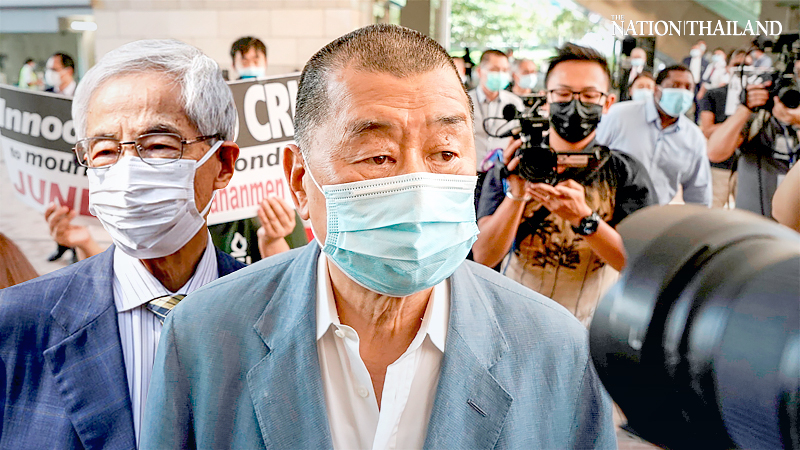
Hong Kong’s “father of democracy” Martin Lee and media mogul Jimmy Lai were among a group of opposition activists found guilty for attending an unauthorized protest in 2019, in the latest blow to the city’s beleaguered opposition.

Lee, 82, who helped lead the pro-democracy camp during the former British colony’s transition to Chinese rule, was convicted Thursday in a court in the West Kowloon area along with fellow activists Albert Ho, Leung “Long Hair” Kwok-hung, Lee Cheuk-yan, Cyd Ho and Margaret Ng. The court set sentencing for April 16.

“We are very disappointed with the verdict because what we have done is only exercising our constitutional rights,” Lee Cheuk-yan said outside the courtroom. “But it’s a badge of honor for us that we are convicted for walking together with the people of Hong Kong for democracy and freedom.”

Martin Lee declined to comment on the verdict. Diplomats from the European Union, Germany, Sweden, Canada, Australia and New Zealand attended the hearing.

The court case is the latest in a series of major setbacks in recent weeks for Hong Kong’s pro-democracy camp. The group on trial comprised veteran activists who have for years supported causes such as human rights and women’s rights, and organized vigils commemorating the 1989 crackdown on student demonstrators in Tiananmen Square.

The decision comes shortly after top Chinese lawmakers approved a sweeping plan that effectively ends open elections in Hong Kong. The city’s government separately charged some 47 prominent opposition figures with “conspiracy to commit subversion” under a national security law imposed last year that carries sentences as long as life in prison.

Martin Lee was among 15 prominent democracy activists accused last year of participating in a historic — but unauthorized — march on Aug. 18, 2019. The mostly peaceful demonstration was one of the biggest held during months of unrest over proposed extradition legislation, with an estimated 1.7 million people attending.

The case is part of a push to disband Hong Kong’s democratic institutions and clamp down on the opposition’s moderate wing, according to Michael Davis, a professor of law and international affairs at O.P. Jindal Global University in India and a former law professor at the University of Hong Kong.

“The government has chosen 15 people very carefully out of the 1.7 million protesters, and all are moderate democratic activists and politicians,” Davis said. “It’s very hard to separate this trial from the current effort to prevent participation in the political process.”

Hong Kong police have swept up many of the city’s established opposition leaders among the more than 10,000 activists arrested since the protests erupted in June 2019. Some, such as Jimmy Lai, face multiple prosecutions, including charges under the national security law.

Two former opposition lawmakers, Au Nok-hin and Leung Yiu-chung, had previously pleaded guilty to charges related to the August 2019 protest. Six other people are expected to go on trial over the demonstration later this year.

Martin Lee, a London-trained lawyer, has stoked Beijing’s ire for more than three decades, dating back to his support for the Tiananmen Square protests and subsequent defeat of the pro-establishment camp in Hong Kong’s first direct legislative elections. He sat on the committee that drafted Hong Kong’s post-handover charter, founded the Democratic Party and served as a lawmaker until his retirement in 2008.

Chinese authorities have accused him of being a “traitor” for testifying before the U.S. Congress, and in August 2019 labeled him as part of a “New Gang of Four” in a publication under the Communist Party’s top legal body. The piece also named Lai and Ho, a former Democratic Party leader and chief executive candidate, as members of the “gang” — a reference to a Communist Party faction jailed for attempting to seize power after Mao Zedong’s death in 1976.

Nonetheless, Martin Lee had avoided arrest until last year. In an op-ed published in the Washington Post last year, he described his arrest as “part of a large plan” to snuff out dissent in Hong Kong.

“But once Hong Kong’s human rights and rule of law are rolled back, the fatal virus of authoritarian rule will be here to stay,” he said.

The Suez Canal ship is free, but the shipping industry’s ‘humanitarian crisis’ isn’t over #SootinClaimon.Com

#SootinClaimon.Com : ขอบคุณแหล่งข้อมูล : หนังสือพิมพ์ The Nation.

https://www.nationthailand.com/news/30404418

The Suez Canal ship is free, but the shipping industry’s ‘humanitarian crisis’ isn’t over

InternationalApr 02. 2021

By The Washington Post · Antonia Noori Farzan

For nearly a week, the world was fixated on the spectacle of a mammoth cargo carrier blocking the Suez Canal, causing billions of dollars of damage to the global economy with every passing day.

It was a surreal experience for advocates who have spent the past year trying to draw attention to the hundreds of thousands of mariners who are stranded on container ships because of the pandemic, creating what has been described as a “humanitarian crisis at sea.” While more than 90% of goods used worldwide are transported by ship, few consumers stop to think about the lengthy ocean voyage involved, or the plight of seafarers who go months or years without seeing their families to make that possible.

The crisis in the canal forced the world’s attention on ships that despite their massive size are often all but invisible, suddenly making plain the extent to which global trade relies on vessels such as the Ever Given and their crews, who predominantly come from developing nations.

“Hero is a strong word, but they really have kept society moving for the past 13 months,” said Stephen Cotton, the general secretary of the International Transport Workers’ Federation, which represents seafarers worldwide.

For many of the seafarers who found themselves stuck in the Suez Canal last week, the delays were a new source of stress that added to what has already been a difficult year. When countries closed their borders to prevent the spread of the coronavirus in March 2020, hundreds of thousands of workers at sea were left stranded, unable to return home or set foot on shore when their ships arrived in port. Under international labor standards, crews are required to rotate off ships every 11 months to avoid burnout, but many long ago hit that milestone and still have no idea when they might be able to disembark.

“Seafarers must not be forgotten as soon as this incident is over,” the United Kingdom-based International Chamber of Shipping said in a Monday statement after the Ever Given was freed.

About 200,000 mariners worldwide are either unable to leave their ships or travel to ports to relieve crew members who have exceeded their contracts, according to the organization.

That has added new strain to what was already a taxing job: Seafarers must work long shifts, often staying up overnight to keep watch, while bunking in cramped quarters and having little to no contact with the outside world. In September, the Consumer Goods Forum pleaded with the United Nations for help, warning that well-intentioned travel restrictions had “inadvertently created a modern form of forced labour.”

Advocates for mariners have warned that crew fatigue is a safety issue, and that seafarers’ mental health is suffering. The International Seafarers’ Welfare and Assistance Network found that the number of reported suicides among seafarers roughly doubled over the past year; it said the true extent of the problem may be vastly understated.

“When someone goes overboard, there is always a question mark: Was it suicide or was it an accident?” executive director Robert Harris told Lloyd’s List last month. “I’ve been told by at least two shipping companies that sometimes it is suspected as suicide, but it is reported as ‘missing at sea’ because the family wouldn’t get a payout from the protection and indemnity club.”

It is not clear whether crew exhaustion was a factor in the grounding of the Ever Given. The International Transport Workers’ Federation has determined that the 25 crew members – all Indian nationals – were not yet over-contract, and that all had been onboard for less than six months.

Still, the organization has called for an investigation that will examine whether larger systemic issues in the industry, such as crew fatigue, played a role. “We always worry that it’s very easy to blame seafarer error,” Cotton told The Washington Post. Rather than single out a culprit, “we want to understand what happened so we can make sure it doesn’t happen again.”

Abdulgani Serang, the general secretary for National Union of Seafarers of India, wrote on social media Saturday that he had been in touch with the crew, who he described as “fine but stressed out.”

The shipping industry uses the term “sea blindness” to describe the general public’s lack of awareness about the critical role seafarers and ocean networks play in global commerce. While the United Nations has designated ship crews as essential workers and urged other governments to do the same, that designation has led to little change, and many mariners still have no idea when they might be able to take a break or return home, more than a year into the pandemic.

Meanwhile, as coronavirus vaccines become available worldwide, people working at sea do not have ready access to vaccination clinics or medical facilities. More than half the shipping industry’s workforce comes from developing nations, where vaccines are in short supply, Guy Platten, the secretary general for the United Kingdom-based International Chamber of Shipping, told The Washington Post on Friday.

Such logistical challenges will continue to be an issue long after the traffic jam in the Suez Canal is unsnarled. Hopefully, Platten said, one takeaway of the Ever Given saga is that consumers will be more aware of the lengthy and arduous voyage that products take to get to their door, and “think about the seafarers who deliver those goods that we all take for granted.”

‘Chargers everywhere’: Biden maps $174 billion path for EV boom #SootinClaimon.Com

#SootinClaimon.Com : ขอบคุณแหล่งข้อมูล : หนังสือพิมพ์ The Nation.

https://www.nationthailand.com/news/30404416

‘Chargers everywhere’: Biden maps $174 billion path for EV boom

InternationalApr 02. 2021A Tesla Inc. vehicle charges at a charging station in San Mateo, Calif., on Sept. 22, 2020. MUST CREDIT: Bloomberg photo by David Paul MorrisA Tesla Inc. vehicle charges at a charging station in San Mateo, Calif., on Sept. 22, 2020. MUST CREDIT: Bloomberg photo by David Paul Morris

By Syndication Washington Post, Bloomberg · Keith Laing, Ari Natter

The U.S. auto industry sees President Joe Biden’s infrastructure package as accelerating a global shift toward electric vehicles, thanks to the $174 billion proposed for charging stations, planned consumer rebates for American-made EVs and a pledge to electrify the government’s fleet.

The proposal, which requires congressional approval, is likely to be targeted by progressives as too little in scope and by Republicans as unfairly using taxpayer funds to help the alternative energy sector while harming others, such as the oil industry. Market researchers, oil-energy advocates and other critics warn that it may not be enough to make a dent in the sale of gas guzzlers in the U.S. any time soon.

“The numbers tell the current story,” Michelle Krebs, executive analyst at Cox Automotive, which conducts market research for auto dealers. EVs made up only 2% of new car sales in 2020, while SUVs and pickup trucks comprised about 70%. “However, we know there is interest in EVs. Our consumer survey on upcoming EV pickup trucks showed interest, especially among young buyers.”

Biden’s plan directs $174 billion to electric vehicles, including sale rebates and tax credits for consumers to buy American-made cars, in addition to industry incentives. The centerpiece of the plan made public Wednesday is to help build a national network of half a million charging stations through grants to state and local governments and the private sector.

“Efforts that incentivize wider-scale EV adoption, build out the necessary infrastructure, and facilitate consumer awareness are essential components to EV market expansion,” said John Bozzella, president and chief executive officer of the Alliance for Automotive Innovation, a trade association that represents major automakers such as Ford Motor Co., General Motors Co., Stellantis NV, Honda Motor Co. and Toyota Motor Corp.

Installing charging stations nationwide is something industry and environmental groups regard as essential to increase the adoption of electric vehicles by consumers worried about getting stranded on a long road trip in an electric car.

“Seeing chargers everywhere will make consumers feel comfortable purchasing electric vehicles,” Katherine Garcia, deputy director of the Sierra Club’s Clean Transportation for All program, said in an interview.

The 500,000 charging stations is “of critical importance,” said Genevieve Cullen, president of the Electric Drive Transportation Association, which represents companies that stand to benefit from the move such as GM, the utility CenterPoint Energy Inc., and the electric vehicle charging network EVgo Services LLC. “It’s the right start.”

The plan to wean American motorists off gas-powered automobiles is part of a broader $2.25 trillion infrastructure blueprint that also calls for sweeping spending to achieve the White House’s climate goals — such as net-zero emissions in the U.S. by 2050. It also comes in stark contrast to former President Donald Trump, who rolled-back fuel economy requirements put in place by his predecessor and called for an end to a key EV consumer tax credit seen as helping to launch the industry.

“The combination of a Biden administration and a blue Senate sets the stage for a green tidal wave in the U.S. to kick off, with electric vehicles the centerpiece,” said Dan Ives, a senior equity research analyst at Wedbush Securities wrote in a research note Wednesday. “For the EV sector, the Street has been awaiting this day since Biden was elected.”

Shares of EV makers may get a fresh lease on life from Biden’s plan. EV stocks had rallied hard last year, partly in anticipation of more favorable industry policies after the election, but the intense investor enthusiasm had started showing signs of strain this year, as sentiment toward risky, high-multiple stocks soured amid a rise in Treasury yields.

EV stocks gained in trading Thursday. Tesla Inc. rose more than 3% while smaller companies that typically take their trading cues from Tesla rose, too, with Workhorse Group Inc., Lordstown Motors Corp., Nikola Corp., Nio Inc., XPeng Inc. and Fisker Inc. all higher.

Some critics of Biden’s plan questioned whether the scope will even come close to what is needed to shift consumers from gas-powered vehicles.

The 500,000 charging stations “wouldn’t even amount to 50% of what is needed in California alone,” said Tom Pyle, a former Trump adviser and the president of the American Energy Alliance, a free-market advocacy group. “The notion it would be built in the U.S. with union paying jobs is also a fantasy when you consider the entire supply chain is based in China.”

“It’s a pipe dream built on a foundation of lies,” Pyle said.

Biden also called for the electrification of the federal government’s entire fleet of more than 600,000 vehicles — including the U.S. Postal Service, which recently earned scorn of environmentalists and Democratic lawmakers for selecting the military and emergency truck maker Oshkosh Corp. for part of a $6 billion contract for more than 100,000 mail-delivery vans over Workhorse Group.

“It forces the U.S. Postal Service in the game,” said Scott Sklar, director of sustainable energy at George Washington University’s Environment & Energy Management Institute. “The U.S. government is a huge customer so that could propel the U.S. EV industry into a world leadership position vis-a-vis China.”

Congress in the coming months is expected to put its own flourishes on the final package — which House Speaker Nancy Pelosi, D-Calif., said she wants to see completed by July 4.

Among likely candidates for inclusion is a $454 billion plan to remove gas-power vehicles on the road by 2040, a measure championed by Senate Majority Leader Chuck Schumer, as well as the expansion of an existing $7,500 consumer tax credit for the purchase of electric vehicles.

Sen. Debbie Stabenow and Rep. Dan Kildee, both Michigan Democrats, are working with the White House and Democratic leadership on a plan to do away with an existing 200,000-vehicle per manufacturer cap on the tax credit. Among possible tweaks to the credit are making it refundable and targeting it better toward middle and lower-income motorists.

U.S. jobless claims rise as labor market recovery remains choppy #SootinClaimon.Com

#SootinClaimon.Com : ขอบคุณแหล่งข้อมูล : หนังสือพิมพ์ The Nation.

https://www.nationthailand.com/news/30404415

U.S. jobless claims rise as labor market recovery remains choppy

InternationalApr 02. 2021

By Syndication Washington Post, Bloomberg · Reade Pickert

Applications for U.S. state unemployment insurance unexpectedly rose last week but remained near the lowest levels of the pandemic as the labor market meanders toward full recovery.

Initial jobless claims in regular state programs increased to 719,000 in the week ended March 27, up 61,000 from the prior week, Labor Department data showed Thursday. Economists in a Bloomberg survey estimated 675,000 claims. The prior week’s figure was revised down to 658,000, which is below the Great Recession’s peak.

The unexpected increase in claims underscores the choppy nature of the labor market recovery and indicates it will take time to recoup the millions of the jobs lost because of the pandemic. However, vaccinations are increasing and business restrictions are easing, suggesting employment will accelerate in the coming months.

Virginia, Kentucky and Georgia led states with the biggest increases in unadjusted claims from the prior week. The data have been volatile during the pandemic amid backlogs, fraud and new programs.

The figures come a day before the monthly employment report. The median forecast of economists in a Bloomberg survey calls for a 650,000 gain in payrolls in March, the most in five months, and some economists are expecting an increase of 1 million.

Historical revisions to initial and continuing claims for 2016-2020 were also released Thursday. The pandemic peak was revised down to 6.149 million initial jobless claims in regular state programs from 6.867 million.

Continuing claims — an approximation of the number of people filing for ongoing state benefits — fell to 3.79 million in the week ended March 20. To some extent, the decline in that figure reflects an improvement in the labor market, but millions of Americans have also exhausted those benefits and moved to federal programs

Continued weeks claimed for the federal pandemic program that extends the duration of unemployment benefits, known as Pandemic Emergency Unemployment Compensation, fell to 5.52 million in the week ended March 13. This program was extended into September in the $1.9 trillion relief package passed last month

Applications for Pandemic Unemployment Assistance — which was also recently extended by Congress and provides benefits to those not traditionally eligible — totaled 237,025 last week