By The Washington Post · Andrew Van Dam, Heather Long · NATIONAL, POLITICS Are you better off than you were four years ago? That question has been at the heart of presidential campaigns since President Ronald Reagan first asked it in 1980.
The general thinking has been that voters who are doing well would vote to re-elect a sitting president. That’s not what happened in 2020.
This time around, those who were better off voted for a change in the White House.
The parts of America that have seen strong job, population and economic growth in the past four years voted for Joe Biden, economic researchers found. In contrast, President Donald Trump garnered his highest vote shares in counties that had some of the most sluggish job, population and economic growth during his term.
Trump fared well among voters who said the economy was their top concern, and he even won votes in places that didn’t fare particularly well under his presidency. This is perhaps a continuation of the 2016 election, when Trump won a huge share of places that had struggled under President Barack Obama. Democrats tended to view the 2020 election more as a referendum on Trump, especially his response to the pandemic.
These trends help explain why Biden was able to flip the counties that contain Phoenix, Fort Worth and Jacksonville, Fla., all of which are growing and prosperous urban hubs. And it helps explain why Trump did better than expected in Osceola County and Miami-Dade counties, the two Florida counties with some of the state’s highest unemployment rates.
“Counties where voters feel better off today than four years ago swung toward Biden,” said James Chung, co-founder of StratoDem Analytics, which studies local economic trends. “Counties that declined over the past four years were more likely to shift even more to Trump.”
To be sure, Chung found that – as exit polls have shown – education and race most strongly explained voting patterns, but they were followed closely by a county’s economic performance. The economy often decides elections, but the surprise in this case was that good economic performance didn’t appear to favor the incumbent.
What occurred in 2020 appears to be part of a larger shift in U.S. politics and economics that has been in motion since the turn of the century. In almost every election since 2000, Democrats increased their share of votes in urban areas that are densely populated and prosperous, while Republicans have increasingly become the dominant party for voters in smaller cities and rural areas.
The transformation has been swift – and stark. In the 2000 election, Republican George W. Bush won 2,417 counties that drove 45 percent of the U.S. economy, while Democrat Al Gore won 666 counties that made up to 55 percent of the economy, a fairly even split of the economic map.
In 2020, Biden won 477 counties that account for 70 percent of the U.S. economy, while Trump won 2,497 counties amounting to just shy of 30 percent of the economy, according to an analysis by Mark Muro, who directs the Metropolitan Policy Program at the Brookings Institution, and his team. (A handful of counties are still awaiting final election results.) For Democrats, it was a notable increase from 2016, when Hillary Clinton won counties amounting to 64 percent of the U.S. economy.
The United States is transforming into a knowledge and digital economy, and the political map appears to be shifting with it. Some call it the urban versus rural divide, but it is also a digital versus blue-collar split.
Increasingly, blue America is diverse, college-educated and heavily invested in professional and tech businesses. In contrast, red America is more White, less likely to have gone to college and reliant on blue-collar sectors like manufacturing, construction and energy.
“It’s a fundamentally different economic geography than we saw 30 years ago, and our politics seem to be following pretty closely,” said John Lettieri, president of the Economic Innovation Group. “Democrats are consistently and increasingly capturing the most economically productive and vibrant areas of the country.”
Some warn this political divide could heighten the gridlock in Congress. If the parties are looking out for such different types of industries and workers, they are unlikely to agree on where to invest money and what policies to prioritize.
This is “not a scenario for economic consensus,” Muro warns.
Muro notes that Biden flipped half of the 10 most “economically significant” counties that Trump won in 2016, including Maricopa County, Ariz. (which includes Phoenix), Tarrant County, Texas (which includes Fort Worth), Duval County, Fla. (which includes Jacksonville), Morris County, N.J. (a New York City suburb) and Pinellas County, Fla. (which includes St. Petersburg).
A Washington Post analysis of Labor Department data found counties that suffered economically under Obama’s second term flocked to the Trump in 2016, while prosperous counties moved toward Obama’s Democrat successor, Hillary Clinton. Contrast that with 2020, when the gaps were smaller, but Biden saw the biggest shift in his favor in counties that saw the fastest job growth in the four years of the Trump presidency through March. Meanwhile, the largest shift to Trump in 2020 came from counties that saw the least job growth over his term.
In an analysis for The Post, StratoDem Analytics found that three variables best explained voting shifts form 2016 to 2020: educational attainment, race and ethnicity, and county-level economic performance. Rapidly growing counties around Austin and Dallas turned more blue, primarily because they attracted higher educated workers who are more likely to vote Democratic.
An analysis from the Economic Innovation Group came to a similar conclusion, finding that counties won by Biden have stronger recent growth than counties won by Trump. The EIG team focused on employment growth, wage growth and growth in the number of businesses in a county from 2018 to the first quarter of 2020 – just before the pandemic caused a devastating downturn.
“Democrats need to figure out what their positive and inclusive vision is that speaks to rural America,” said Kenan Fikri, research director at EIG. “Democrats really didn’t make inroads into rural America this time around.”
Harris’s allies wonder anxiously: Will she have real clout?
InternationalNov 15. 2020Vice President-elect Kamala Harris speaks Nov. 10 on the Affordable Care Act in Wilmington, Del. MUST CREDIT: Washington Post photo by Demetrius Freeman
By The Washington Post · Chelsea Janes, Sean Sullivan · NATIONAL, POLITICS, RACE When Kamala Harris stepped onstage for the first time as vice president-elect recently, she spoke emotionally of “Black women, who are often – too often – overlooked, but so often prove that they are the backbone of our democracy.”
But while Black activists remain excited about Harris’s ascent, many now worry that the administration will not deliver much beyond her historic election – a fear sharpened by Democrats’ disappointing performance in congressional races, which has dramatically limited Biden’s maneuvering room.
Their worries are underlined by the ongoing uncertainty over what exactly Harris’s portfolio will be in the Biden administration, and how much freedom she will have to chart her own course on issues like racial justice and immigration.
“I really want her to be a transformative leader. I don’t want her to be transactional,” said LaTosha Brown, co-founder of Black Voters Matter. “What I am hoping is she becomes the lightning rod.”
Brown conceded that will be a challenge amid emerging signs that President-elect Joe Biden’s longtime advisers will hold an array of influential positions in his administration. “The entire political landscape has been dominated by White, male-centered power,” Brown said. “I certainly think there’s going to be a strain within the administration. I think there’s going to be a strain within government.”
All indications are that Harris and Biden are cementing a strong personal relationship. They talk frequently, most often through phone calls and text messages, according to a person familiar with the dynamic, who spoke on the condition of anonymity to describe private interactions. Their connection is built partly on a shared belief in the importance of family, this person said, and on Harris’s friendship with Biden’s late son Beau, who served with Harris when both were state attorneys general.
But it is far from clear how that personal relationship will translate to official roles. Biden has not announced a portfolio for Harris, the way Biden handled the economic stimulus for Obama, and Harris’s allies are watching anxiously to see if she will be allowed to choose her top staffers or if Biden loyalists will be installed.
Many Black activists are not waiting to find out. Patrisse Cullors, co-founder of the Movement for Black Lives, has written a letter on the group’s behalf to Biden and Harris requesting a meeting to convey their demands.
“Black people won this election,” Cullors wrote. “Alongside Black-led organizations around the nation, Black Lives Matter invested heavily in this election. … We want something for our vote. We want to be heard and our agenda to be prioritized.”
Not everyone agrees. Some Democrats argue that while Black voters were crucial to Biden’s win, his ability to attract White centrists – who often vote Republican – was equally important. That’s sparked tensions within the party.
Cullors said she had not received a response to her letter. “The fact that we have to ask for a seat at the table, after the way we showed up, shows that Democrats have a lot of work to do when it comes to rewarding and listening to the Black folks that made this victory possible,” she said.
Another complication is that some of Biden’s powerful African American backers, such as Rep. James Clyburn, D-S.C., are also forceful critics of the most far-reaching demands of Black Lives Matter protesters, such as calls to “defund the police.”
All of this has created a swirl of often-conflicting hopes, pressures and expectations around Harris, 56, who will be a vice president like no other.
As a youthful woman of color and daughter of immigrants, she represents an increasingly diverse, liberal Democratic Party – while serving a president who reflects an older, whiter, more centrist America.
In addition, many Democrats are unsure whether the 77-year-old Biden will – or should – seek a second term in 2024. That makes Harris a possible successor and a source of excitement as potentially the first female president, but Biden’s team will want her to focus loyally on his agenda and not her own political future.
Few of these complications have manifested themselves publicly yet, a little over a week after Biden and Harris declared victory in an election their opponent has yet to concede.
Biden has already given Harris unusual prominence. She spoke before him on the night he declared victory – an event usually dedicated solely to highlighting the president-elect. Harris also addressed reporters during a joint event Tuesday on the importance of the Affordable Care Act, and she has participated in internal briefings all week.
Harris’s personal relationship with Biden has been up-and-down. He initially felt close to her because of her friendship with Beau, but when she attacked his record on racial issues at a June 2019 Democratic debate, he and his family felt betrayed.
When Biden was looking for a running mate, he was facing pressure to choose a Black woman – leaving it unclear whether the decision to pick Harris was driven more by confidence or political necessity. But since then, Harris has worked tirelessly for his candidacy, serving as an ambassador of sorts to the Black community, and by all accounts their relationship has solidified.
A spokeswoman for Harris said it is too early to know what influence she will have in the administration or what her portfolio might include, and her own comments on the subject have been vague. “I will strive to be a vice president like Joe was to President Obama – loyal, honest and prepared, waking up every day thinking of you and your family,” she said in her victory speech.
Some Black activists hope that Harris, a former California attorney general, will focus on racial inequities in the criminal justice system. In the 2 1/2 months she spent campaigning for the Biden-Harris ticket, she made repeated trips to cities – Atlanta, Philadelphia, Milwaukee, Detroit – where turnout from Black voters contributed to Biden’s victory.
“I think Joe Biden will be very wise to have Vice President-elect Harris have a say in all of his major decisions,” said civil rights attorney Ben Crump, who has represented the families of victims of police violence including George Floyd and Breonna Taylor.
Rashad Robinson, spokesman for the Color of Change PAC, said he “absolutely sees Harris as an ally.” Both he and Crump said they have been in touch with Biden’s transition team and have urged it to stress diversity in the administration.
But the prospect of Harris carving out her own identity within the administration would be a departure from the traditional role of the vice president as a low-profile servant of the president, one without a separate agenda.
Sen. Robert Casey Jr., D-Pa., who campaigned alongside Harris in the final stretch and is in touch with Biden, predicted she would play a “vital role,” but one that fits the traditional mold of 21st-century presidencies.
“I think the job of the presidency in the modern era has gotten so much more complicated and even more difficult than it was years ago,” Casey said in an interview. “Presidents have had to offload responsibility on the vice president. … I would expect that model or that relationship to continue.”
Those who have different hopes for Harris argue that these are not traditional times and she is not a traditional figure. Recent vice presidents – including Biden, Dick Cheney and Vice President Mike Pence – were all chosen by inexperienced presidents to reassure voters they would govern with competence and, in Trump’s case, ideological consistency.
Many Democrats are also say Biden’s diversity efforts should go far beyond Harris. They are pushing for a Black woman to serve as attorney general, for example, and for figures like Rep. Cedric Richmond, D-La., a top Biden ally, to get senior White House roles.
Biden has promised that his government will look like the country, but for now he relies on a small clutch of mostly White, male advisers who have long been at his side. Ronald Klain was recently named his chief of staff, and advisers Steve Ricchetti and Mike Donilon are seen in Biden’s orbit as likely to receive high-level White House posts.
Still, civil rights leaders say Biden’s aides have reached out to consult on potential appointees. “The transition team has been in touch and we have had conversations about our suggestions,” said Robinson, declining to provide details of names he and others are advocating.
Others said they were cautiously optimistic. Aimee Allison, head of the organization She the People, said Harris has reached out to Black women on social media and elsewhere in an unprecedented way. “I’ve never experienced that as a Black woman in my lifetime, and I think anyone’s lifetime,” she said.
Allison also praised the work of two female Black advisers to Biden’s transition team, the Rev. Leah Daughtry, former CEO of the Democratic National Convention, and longtime Democratic strategist Minyon Moore.
Longtime White House watchers say a critical question is whether Harris is allowed to assemble her own senior staff. During her presidential run, disagreements among Harris’s aides sometimes spilled into public view, prompting concerns in the party about her abilities to manage such a team.
But after dropping out of the primaries, Harris slimmed down her operation as she competed to be Biden’s running mate. When she joined the ticket, her longtime aide Rohini Kosoglu helped run her campaign.
One of Harris’s closest allies is her sister Maya, who co-chaired her presidential campaign, served as a policy adviser to Hillary Clinton’s presidential effort and has deep ties in Black activists circles.
When Harris was running for president, Maya often served as an emissary to activists concerned that Harris’s background as a prosecutor meant she would not support needed reforms to the criminal justice system. It remains unclear if Maya Harris will reprise that role, or any role, in the Biden administration.
As Biden was contemplating whom to choose as his running mate earlier this year, his inner circle was split over Harris. Some worried she would seize any opportunity to advance her own career, citing her attack on Biden’s record on race during the Democratic primary.
Others disagreed, arguing that Harris had invaluable experience in the glare of the national spotlight and would serve Biden well. Now that the administration is taking shape, there are at least small signs that the two have forged a comfortable relationship.
Biden often described his goal of finding a running mate with whom he was “simpatico,” citing his closeness with Obama, whom he publicly called “Barack.” He is already in the habit of referring to Harris as “Kamala.”
Amid the continued tense bilateral relationship between Japan and South Korea, the two countries have increased reciprocal visits by high-profile politicians and government officials in attempts to smooth the rough edges. Of particular interest is the unresolved issue of lawsuits involving South Korean former wartime requisitioned workers.
On Friday, Prime Minister Yoshihide Suga and South Korean lawmakers including Kim Jin-pyo, who leads the South Korea-Japan Parliamentarians Union, met at the Prime Minister’s Office in Tokyo. However, no clue for a thaw was found.
“The relationship between Japan and South Korea has been in a very difficult situation,” Suga told Kim and other members of the South Korean delegation at the meeting on Friday.
According to a person present at the meeting, Suga asked them to relay the message to South Korean President Moon Jae-in that Seoul should first create an opportunity to resolve the issue.
Since Suga took office, the two countries have accelerated moves to mend the stalled bilateral relationship.
Takeo Kawamura, secretary-general of a nonpartisan parliamentary league that promotes the Japan-South Korea relationship, Shigeki Takizaki, director-general of the Foreign Ministry’s Asian and Oceanian Affairs Bureau, and other high-profile people recently visited South Korea in succession. From South Korea, officials such as National Intelligence Service Director Park Jie-won have visited Japan. And on Thursday, Vice Foreign Minister Takeo Akiba held phone talks with South Korea’s first vice foreign minister.
Two years have passed since the South Korean Supreme Court ordered Japanese companies to pay compensation to the former requisitioned workers. Procedures are being taken to convert the companies’ seized assets into cash. Japan and South Korea are both aware that the time left to prevent this action is limited.
However, efforts by the both countries have produced no major positive results.
At a press conference on Friday, Lee Nak-yon, leader of the South Korean ruling Democratic Party, said, “I don’t think they [the delegation members] brought a solution proposal” for the wartime labor issue.
A senior official of the Japanese Foreign Ministry also said: “The South Korean side didn’t present [any solution proposals at the meeting with Suga]. We’ve got nothing.”
As Moon has taken a victim-oriented approach, he has not changed his position that the Japanese companies should pay redress to the victims in one way or another. According to South Korean government sources, the Moon administration intends to hold a Japan-South Korea summit on the sidelines of a Japan-China-South Korea leaders summit being arranged in South Korea by the end of this year. Moon intends to take advantage of the bilateral summit to issue a joint declaration that will collectively resolve pending issues, including the wartime labor and Japan’s tightening of export controls, the sources said.
On the other hand, Tokyo has ruled out the court rulings that ordered the Japanese firms to pay compensation, saying that the wartime labor issue was settled under the 1965 Agreement on the Settlement of Problems concerning Property and Claims and on Economic Cooperation between Japan and South Korea.
Frustration apparently has grown on the Japanese side as the South Korean side, including the lawmakers who visited Japan, did not present realistic proposals to resolve the issue.
“There wasn’t anything that sat well with us,” a senior Japanese government official said.
The Japanese side has taken a stance not to agree to hold even the trilateral summit if the situation remains unchanged. During the meeting Friday, Suga expressed caution after Kim asked him to visit South Korea.
If South Korea acts to cash in the seized assets, the Japanese government is expected to take strong countermeasures.
If that happens, a senior official of the Japanese Foreign Ministry said, “Further deterioration in the bilateral relationship will be unstoppable.”
A trade pact nearly 10 years in the making: 5 things to know about RCEP
InternationalNov 15. 2020The Regional Comprehensive Economic Partnership will eliminate as much as 90 per cent of the tariffs on imports between its parties.(ST PHOTO: MARK CHEONG)
Involving the 10 Asean members, plus China, Japan, South Korea, Australia and New Zealand, the RCEP bloc covers nearly one-third of the world’s population, and contributes around 30 per cent of its gross domestic product.
It will eliminate as much as 90 per cent of the tariffs on imports between its parties within 20 years of coming into effect, and will improve market access for goods and services within the region.
It also aims to establish a common set of trade rules and covers non-traditional areas which are not in some existing agreements, such as e-commerce, competition policy, and intellectual property.
Here are five key things to note about the mega trade deal.
1. The Covid-19 factor
While online talks have made legal scrubbing – a process in which lawyers, translators and staff review and edit the text of the agreement – more cumbersome, the economic fallout from the Covid-19 pandemic was a motivating factor to finalise the deal, given the benefits of its cuts to tariffs and trade barriers.
A joint statement by ministers, released after online talks in August, said the signing of the agreement would enhance business confidence, as well as demonstrate the region’s support for an open, inclusive and rules-based multilateral trading system.
“The ministers also underscored the significant role that the RCEP Agreement could play in post-pandemic recovery efforts, as well as in contributing to the growth and stability of the regional and global economy,” the statement said.
Outgoing United States President Donald Trump’s tariff-raising trade war with China has also given extra impetus in recent years to push ahead with the RCEP, which had otherwise progressed only sluggishly since negotiations began in 2012.
2. Who benefits?
All parties to the RCEP stand to gain.
Assistant professor of international studies at China’s Renmin University Jason Ji said Cambodia, Thailand and Vietnam could see an increase in GDP and export volumes under the pact.
Key sectors he sees benefiting include Thailand’s construction sector, Singapore and Malaysia’s processed food industries, and Laos’ manufacturing sector.
Singapore University of Social Sciences senior lecturer Pan Zhengqi said a significant result of the RCEP is that it helps to facilitate complex supply chains, which would also boost South Korea’s electronics sector.
As for Vietnam, he said, the lower trade barriers and enhanced market access would benefit its telecommunications, textile and footwear sectors.
Dr Pan added that China, being the world’s largest trading nation, stands to gain the most from the pact. Both its manufacturing and service sectors would see a boost, given the country’s large export and import capacities, he said.
He added that exchanges of technical know-how under the agreement would also help China move up the value chain.
It had major concerns over trade imbalances, as it had trade deficits with 11 of the 15 nations involved in the RCEP. Fearing that the deal could result in a flood of manufacturing and agricultural products into its market, India was unwilling to remove tariffs on many sensitive industries.
Associate professor of practice at the Lee Kuan Yew School of Public Policy James Crabtree said India’s decision not to come on board was a setback for the agreement but a “historic blunder” for India itself.
“It might well have made the agreement easier to finalise, but it also left it dominated by China, to the disappointment of South-east Asia in particular,” he said.
“For India, it signalled a more fundamental turn away from economic openness, leaving New Delhi outside both of the economic blocs that will define Asia’s future: RCEP and the 11-member Comprehensive and Progressive Agreement for Trans-Pacific Partnership (CPTPP).”
Renmin University’s Prof Ji said India’s withdrawal is not irreversible, nor will its absence significantly impact the scope and quality of the agreement, as the bulk of the negotiations were already concluded with India’s participation.
“That said, RCEP becomes a smaller mega-FTA because of India’s absence, temporary or otherwise.”
4. Where does the CPTPP fit in?
The Trans-Pacific Partnership (TPP) which originally included the US was seen as a counterweight to RCEP, and RCEP’s inclusion of India was meant to balance China. But neither scenario has panned out in the way it was envisioned.
The CPTPP, which evolved from the TPP after Mr Donald Trump pulled out of the deal in one of his first acts as president, was concluded in 2018 among 11 countries, seven of which are also in the RCEP: Australia, Brunei, Japan, Malaysia, New Zealand, Singapore and Vietnam. The other CPTPP members are Canada, Chile, Mexico and Peru.
The CPTPP involves greater elimination of tariffs and also includes provisions on labour and environmental standards, unlike the RCEP.
But few are holding their breath that the US, which is still emerging from the throes of a bitterly contested presidential election, will return to the table any time soon.
“The RCEP provides China with much-needed reprieve from the US-China trade war and rising global protectionism,” says SUSS’ Dr Pan.
However, both the CPTPP and RCEP are seen as building blocks of a much-larger free trade vision spanning the Pacific Ocean: The Free Trade Area of the Asia Pacific (FTAAP), which members of the Asia-Pacific Economic Cooperation have alluded to as early as 2004. Malaysia is hosting this year’s Apec leaders summit later this week.
Some say the ongoing trade spat could stymie cooperation under the RCEP. But SUSS’ Dr Pan said the trade pact can be useful in de-escalating tensions between Australia and China in one major way: It constrains the actions of both countries within a rules-based framework.
“As such, participating countries – even major powers such as China – might not readily use trade as a strategic leverage,” he said, pointing out that China’s behaviour within RCEP will shape its reputation and credibility as well as alter the behaviour of other states towards it.
By supporting frequent dialogues among members, the trade pact will also decrease information asymmetries and foster cooperation, he added.
Notwithstanding these issues, analysts agree that the key now is to demonstrate that the RCEP is useful.
“RCEP will not supersede pre-existing FTAs like Asean-Plus agreements per se,” said Renmin University’s Prof Ji, referring to agreements which Asean has signed separately with major economies such as China, Japan, and South Korea.
“But it improves upon them and facilitates an orderly and negotiated convergence of these agreements in terms of trading rules and customs procedures.”
Australia donates millions of dollars to support ASEAN’s COVID-19 response efforts
InternationalNov 15. 2020Australian Prime Minister Scott Morrison (centre) announces financial packages to support ASEAN on Saturday. (Photo: VNA/VNS )
By Vietnam News
HÀ NỘI — Australian Prime Minister Scott Morrison on Saturday announced a series of financial packages to support ASEAN and Mekong countries with post-COVID-19 economic recovery at the second ASEAN-Australia biennial summit.
Those included A$21 million to the ASEAN Centre for Public Health Emergencies and Emerging Diseases, which was launched on Thursday; A$1 million for the ASEAN COVID-19 Respond Fund; and A$70 million for resilience and recovery in Southeast Asia in the sectors of maritime, connectivity, sustainable development and economic co-operation.
Australia recently committed some $500 million over three years to support access to safe and effective COVID-19 vaccines for Southeast Asia and the Pacific. Safe effective access to affordable COVID-19 vaccines will be the central factor in our collective recovery, Morrison said.
The Australian PM also committed a A$232 million package for Mekong countries, focusing on the environment, infrastructure, cyber, and critical technologies and scholarships.
“In spite of changes brought by COVID-19, ASEAN remains united as always and Australia’s commitment to a region of sovereign, independent states, resilient to coercion, remains absolutely steadfast,” he said.
“We are more than your neighbour as your first dialogue partner, we are also your partner in the great recovery.
“ASEAN centrality is at the core of Australia’s vision for the Indo Pacific. We strongly support the ASEAN outlook for the Indo-Pacific.
“In Australia we understand that your prosperity is our prosperity.”
Vietnamese Prime Minister Nguyễn Xuân Phúc said as Australia was one of the most long-standing partners of ASEAN with relationship established in 1974. Over the past four decades, the bilateral relationship has been increasingly strengthened.
At the ASEAN-Australia Summit on Saturday, the two sides agreed to hold the summit annually instead of biennially as a foundation to further deepen and substantially promote the important relationship. — VNS
HÀ NỘI — Leaders from ASEAN countries, the Republic of Korea (RoK), Japan and China praised the region’s international co-ordination in the battle against COVID-19 during a summit on Saturday.
Addressing the 23rd ASEAN+3 Summit on Saturday, RoK President Moon Jae-in said the COVID-19 Response Fund and the reserves of essential medical supplies had been a joint effort.
He said ASEAN and the RoK, Japan and China must boost co-operation in the area of public health and work towards the development and equitable supply of vaccines and treatment.
“We must also establish a timely and transparent co-ordination mechanism to prepare against new infectious diseases which could strike at any time,” he added.
On the economic front, he said the global economy was projected to bounce back to pre-pandemic levels by next year. But the speed of this recovery would be very uneven among different countries.
“We are still facing a wave of trade protectionism and uncertainties in the financial markets. There are concerns that an accelerated transition to a digital economy could widen the gap between social classes. No country can solve these challenges on its own,” he said.
Japanese Prime Minister Yoshihide Suga said Japan would provide more than US$200 million to secure medical supplies and equipment, as well as technical assistance to research institutes in ASEAN. On economic revitalisation, Japan has provided a total of $2.5 billion in budget support loans to countries.
Following up on the joint statement at the ASEAN+3 special summit on responding to COVID-19 in April, based on collaboration between Japan, China and the RoK, a contribution of $300,000 had been made from the ASEAN+3 Co-operation Fund to the COVID-19 ASEAN Response Fund. In addition, Japan had made its own contribution of $1 million to the fund, he added.
Chinese Prime Minister Li Keqiang delivered his thanks to the ASEAN countries, Japan and the RoK for offering support to China during the most difficult stages in its fight against COVID-19.
“ASEAN countries have extended assistance to China, and we have done as much as we can to help ASEAN countries. We’ve been there for each other and we are looking out for each other. This is the best demonstration of our solidarity and friendship,” Li said.
Thailand’s Prime Minister Prayut Chan-o-cha proposed promoting sustainable economic security, economic integration and supply chain connectivity in the region, and invited the Plus Three Countries to support the ASEAN Comprehensive Recovery Framework. — VNS
US-ASEAN partnership a ‘positive force’ for Indo-Pacific region: Indonesian foreign minister
InternationalNov 15. 2020Foreign Affairs Minister Retno LP Marsudi speaks on behalf of President Joko “Jokowi” Widodo at the ASEAN Women Leaders’ Summit on Nov. 12. (Twitter/@Menlu_RI)
By Alya Nurbaiti The Jakarta Post
Indonesia has conveyed its hope for a stronger partnership between ASEAN and the United States for years to come, as the partnership can promote peace, stability and prosperity in the Indo-Pacific region, Foreign Minister Retno LP Marsudi has said.
Speaking on behalf of President Joko “Jokowi” Widodo, Retno expressed Indonesia’s hope for a strategic partnership to US National Security Advisor Robert C. O’Brien, who represented President Donald Trump at the ASEAN-US Summit held virtually on Saturday.
“Indonesia hopes for the US to remain an important and strategic partner in the region, including in the implementation of the ASEAN Outlook on the Indo-Pacific. We expect the partnership to be a positive force to create peace, stability and prosperity in the region,” she said in a press conference held at the Bogor Palace, West Java.
During the virtual meeting, Retno said Indonesia emphasized the importance of maintaining the strong friendship and cooperation between ASEAN and the US.
“In the last four years, in the economic and development sectors, the US continues to be ASEAN’s second-largest trade and investment partner. The trading volume of the two parties increased by 39 percent from US$211.8 billion to $294.6 billion.”
She went on to say that US investment in the region had increased by 110 percent from $11.65 billion to $24.5 billion. In the energy sector, the US and ASEAN have made a long-term 2021-2025 partnership plan.
Meanwhile, in the digital economy sector, they have cooperated through capacity-building programs for 4,000 micro, small and medium enterprises (MSME).
Moreover, Retno said, in the past 10 months, the partnership between ASEAN and the US in health care had also strengthened with the mutual fight against the COVID-19 pandemic.
After thousands of Trump supporters rally in D.C., violence erupts when night falls
InternationalNov 15. 2020A supporter of President Donald Trump mocks a counterprotester as people gather for the Million MAGA March on Saturday, Nov. 14, 2020, in Washington, D.C. MUST CREDIT: Washington Post photo by Matt McClain
By The Washington Post · Julie Zauzmer, Katie Mettler, Marissa J. Lang, Rachel Chason, Emily Davies, Michael E. Miller, Peter Jamison, Fredrick Kunkle, John Woodrow Cox · NATIONAL, POLITICS WASHINGTON – President Donald Trump’s supporters had celebrated for hours on Saturday, waving their MAGA flags and blaring “God Bless the USA” as they gathered in Washington to falsely claim that the election had been stolen from the man they adore. The crowd had even reveled in a personal visit from Trump, who passed by in his motorcade, smiling and waving.
A supporter of President Trump near the White House on Friday. MUST CREDIT: Washington Post photo by Bill O’Leary.
But that was before the people who oppose their hero showed up and the mood shifted, growing angrier as 300 or so counterprotesters delivered a message the president’s most ardent backers were unwilling to hear: The election is over. Trump lost.
On stark display in the nation’s capital were two irreconcilable versions of America, each refusing to accept what the other considered to be undeniable fact.
While much of the day unfolded peacefully, brief but intense clashes erupted throughout. Activists spewed profanity and shouted threats, threw punches and launched bottles. On both sides, people were bloodied, and at least 10 were arrested, including four on gun charges.
When darkness fell, the counterprotesters triggered more mayhem as they harassed Trump advocates, stealing red hats and flags and lighting them ablaze. Scuffles continued well into the night as the provocateurs overturned the tables of vendors who had been selling pro-Trump gear and set off dozens of fireworks, prompting police to pepper-spray them.
At 8 p.m., violence broke out five blocks east of the White House between the president’s supporters, who wielded batons, and his black-clad detractors, many of whom had participated in District of Columbia rallies throughout the summer. The brawl went on for several minutes before police arrived and cleared the intersection.
In the melee, a District Fire official said, a man in his 20s was stabbed in the back and rushed to the hospital with serious injuries.
The earlier demonstrations were urged on by Trump, who refuses to concede to Joe Biden or allow a formal transition to begin. On Saturday morning, as the president’s devotees remained in District to fight for him, he headed to Trump National in the Virginia suburbs for a round of golf.
After a week in which more than 750,000 Americans were diagnosed with the novel coronavirus, almost none of his backers wore masks. Among their ranks were white nationalists, conspiracy theorists and far-right activists carrying signs demanding action that was already being taken: “Count the legal votes.”
Trump had thrilled them when his motorcade appeared on Pennsylvania Avenue shortly after 10 a.m., prompting fans to scramble to the side of Freedom Plaza to catch a glimpse.
“He drove right past me. I saw him. He waved right past me,” one man said as he tried to collect himself.
A group of women huddled around a phone, looking at a video of Trump’s appearance near a Walt Whitman quote inscribed in the stone beneath them: “The President is there in the White House for you, it is not you who are here for him.”
Then the appearance of counterprotesters sparked bursts of conflict, though they could have become far more violent had police not worked to keep the feuding sides separate. When a small group holding bright orange “Refuse Fascism” posters arrived at the edge of Freedom Plaza, they were almost immediately surrounded by Trump fans shouting “USA! USA!” into their faces.
The women leading the tiny march fought their way up 14th Street, repeatedly breaking out of the crowd, only to be engulfed again.
“Trump, pack your s—! You’re illegitimate!” they yelled into their megaphone.
One pro-Trump man attempted to gouge the opposition with a flag bearing the president’s name. Another grabbed a woman’s neon orange poster and hit her with it.
When the women made it to the barrier set up by police across the street, Trump supporters filled the entire intersection, blocking them. Police arrived on bikes and, after several minutes, moved the crowd back. Shortly after, the group began singing the national anthem.
Nearby, on the street beside inscriptions from Abraham Lincoln recognizing the District as a place of freedom, people piled atop a U-Haul truck with a flag of a gun and the words “Come and take it.”
Later, near Union Station, another altercation broke out.
Roland Biser, a 69-year-old Pentagon employee who had attended a pro-Trump rally, was driving home when he said he saw a young man throw a rock at a group of Trump supporters. The rock grazed a woman, he said, and may have hit someone else.
Biser pulled over as a crowd quickly surrounded the young man and three others with him, all of whom were Black. Nearly a hundred Trump supporters quickly surrounded them before a dozen U.S. Capitol Police officers rushed in and separated the groups.
As police escorted the four young men away, the crowd taunted them, chanting “USA!”
“I didn’t do anything!” said one of them, who had been handcuffed. The 21-year-old District resident insisted that it was the Trump supporters who had come after him.
A few minutes later, police removed his cuffs off and let him go.
A family of four on Capital Bikeshare bikes – the father with an American flag tied around his neck like a cape – were cut off by a line of counterprotesters as they tried to leave a tense scene outside the Supreme Court about 1 p.m.
“Get out of our city!” a young woman in black yelled.
“You lost, losers!” shouted a man.
The father and his teenage son began to chant “USA!” and raised their fists as police officers surrounded the family and pushed them out of the crowd.
“Why would you bring your kids here? It’s dangerous,” observed a man nearby, a helmet on his head and respirator hanging around his neck.
On a day when the president’s supporters touted a vast array of falsehoods, his spokeswoman, Kayleigh McEnany, offered perhaps the most ludicrous.
“More than one MILLION marchers for President @realDonaldTrump descend on the swamp in support,” she tweeted, vastly exaggerating the crowd size.
Hours before the official rally begun, the Trump believers had begun gathering at Freedom Plaza Saturday morning.
“They think we’re stupid,” a young White man with a microphone told the crowd. “They’re underestimating The Donald. They’re underestimating The Donald’s supporters.”
“They’re stupid!” a young White woman replied.
Speakers who addressed the aggrieved legions included Alex Jones, a discredited conspiracy theorist most famous for tormenting the families of school shooting victims, and Marjorie Taylor Greene, a recently elected congresswoman from Georgia who has promoted QAnon, which falsely alleges that famous Democrats belong to a cabal of Satan-worshiping pedophiles.
Among the rallygoers were members of the Proud Boys, an extremist group known for their black-and-yellow garb and endorsements of violence. Some wore flak jackets and helmets. “Stand Back, Stand By,” read several of their shirts, referencing the president’s directive to them during a September debate.
As conservative speakers at Freedom Plaza derided the news media, including Fox News, the Proud Boys marched down Pennsylvania Avenue, leading hundreds in chants of “F— antifa!” and shouting down stray opponents who yelled “Black lives matter!”
“All lives matter!” they screamed back.
Marching with them was District resident Justin Anthony, who waved a satirical sign that read, “Sue anyone who did not vote for this great American.”
He led chants to the tune of “Count only Trump votes” and danced around in a large mock police uniform with the name “Officer Pudge” on its badge.
Almost no one got it, he said. They joined in, asked for pictures, cheered.
“It’s crazy,” he said. “Like, they really don’t see how insane this is.”
Near the Supreme Court, a line of riot police stood facing a few dozen protesters resting homemade shields on the ground as a MAGA throng chanted and churned behind them.
“F- antifa!” they shouted in unison.
“Who’s antifa?” one Trump supporter wondered.
“I don’t know,” another responded. “But they don’t like her!”
Snippets of speeches from the court’s steps floated over the crowd between roaring cheers. Listeners climbed tree branches on the Capitol grounds, where they hung onto trunks and flipped off counterprotesters with their free hands.
A woman standing next to a barricade prayed over a well-worn Bible, an American flag sticking out of her purse.
On the other side of the police line, behind the line of homemade shields stamped with the letters BLM, a man with a cane also hunched over a book: “Black Reconstruction in America,” by W.E.B DuBois.
At midday, along the east end of Freedom Plaza, a lone counterprotester stood on the sidewalk holding a sign that read “Trump is the fraud.” He wore a gray cloth mask.
A succession of Trump supporters approached the curb, unmasked, to offer their opinions of his solitary demonstration.
“Why didn’t your mother abort you?” one screamed. “You’re mentally disturbed, and you’re a coward, and you’re a f—–. I hope you get AIDS.”
“I just feel strongly about the disinformation that’s being peddled on the Internet about fraud in this election,” said the counterprotester, a 40-year-old D.C. man who declined to give his name because he is a federal employee and feared repercussions at work.
As a thin film of sweat formed on his face, an elderly woman in red MAGA gear paused and stared at him, sadly.
“We feel bad for you that you can’t see the truth,” she said.
By The Washington Post · Ellen Nakashima · NATIONAL, WORLD, POLITICS, NATIONAL-SECURITY, MIDDLE-EAST Israeli agents acting at the behest of American officials assassinated al-Qaida’s second-in-command in August, in a brazen drive-by shooting in Iran’s capital, according to a senior U.S. official.
Abdullah Ahmed Abdullah, whose nom de guerre was Abu Muhammad al-Masri, was killed along with his daughter, Maryam, as they were driving in an upscale Tehran neighborhood, according to the official, who spoke on the condition of anonymity because of the matter’s sensitivity.
The operation, first reported Friday by the New York Times, further slims the leadership ranks of al-Qaida and removes the accused mastermind of the 1998 bombings of two U.S. embassies in East Africa that killed more than 200 people.
Al-Qaida has not officially acknowledged Masri’s death, and no country has claimed responsibility. The Israelis coordinated the operation with the CIA, according to the official. The CIA, FBI and Pentagon declined to comment, and the White House did not respond to a request for comment. The Israeli prime minister’s office and intelligence ministry also declined to comment.
Iran’s Foreign Ministry issued a statement Saturday denying the report and the presence of any Qaeda members in Iran, accusing the United States and Israel of trying “to draw a link between Iran and such groups through falsification and the leakage of fabricated information to the media.”
A report about Masri’s death was posted and quickly deleted from a private al-Qaida forum last month, according to SITE Intelligence Group, which tracks extremism online. al-Qaida has repeatedly failed to acknowledge the deaths of its leaders in the past two years, fearful that to do so would betray its weakness, SITE founder Rita Katz said.
Iran, a Shiite Muslim theocracy whose ideology is at odds with that of Sunni Islamic groups such as al-Qaida, has long denied it has harbored al-Qaida, though top leaders such as Masri fled from Afghanistan after the 2001 terrorist attacks and sought refuge there. The Washington Post first reported in 2003 that Masri was in Iran.
After the Aug. 7 attack on Masri, Iran concocted a cover story. Its semiofficial news agency Fars reported that a Lebanese man, Habib Daoud, and his daughter, Maryam, were shot and killed by a rider on a motorcycle, according to SITE. Other Iranian news outlets said the man was a history professor.
In fact Habib Daoud was Masri, 57, an Egyptian-born former professional soccer player who became one of Osama bin Laden’s most trusted lieutenants.
Masri joined al-Qaida at its inception in 1988, having fought the Soviets in Afghanistan. He ran al-Qaida’s terrorist training camps and played a role in the group’s mass-casualty attacks against Americans, including helping train the Somali militants who attacked U.S. forces in Mogadishu in 1993.
He was still on the FBI’s Most Wanted Terrorists list as of Saturday, and the State Department offered a reward of up to $10 million for information leading to his arrest.
“Abu Mohammed al-Masri was among the most important – and culpable – al-Qaida leaders on the planet,” said Nicholas J. Lewin, a former federal prosecutor in Manhattan who helped lead the investigation and prosecution of several of the group’s senior leaders and operatives. “His death deprives al-Qaida of one of its most experienced and respected leaders.”
Masri’s daughter, Maryam, married bin Laden’s son, Hamza bin Laden, who was being groomed for a leadership role and had also lived in Iran. He was killed last year in a U.S. counterterrorism operation in the Afghanistan-Pakistan region.
While it might seem strange that Iran would harbor senior al-Qaida leaders, Iran in the past had aided Sunni militant groups such as Hamas and Egyptian Islamic Jihad, and Osama bin Laden once contemplated Iran and al-Qaida teaming up against the West, counterterrorism expert Ali Soufan wrote in an article for the Combating Terrorism Center at West Point.
Many of al-Qaida’s senior commanders have been sheltered in Iran, though one by one, they have been killed in recent years. With Masri’s death, the only remaining member of al-Qaida’s shura council – its core leadership – with operational al-Qaida terrorist experience is Saif al-Adel, who is believed still to be in Iran.
Al-Qaida’s leader, Ayman al-Zawahiri, who assumed the mantle after the 2011 killing of Osama bin Laden by U.S. Special Forces in Pakistan, is 69 and ailing.
“Al-Masri’s death leaves limited choices for al-Qaida to select a new emir with the legitimacy of a bin Laden or Zawahiri,” Soufan said in an email. Adel is a prime contender, he said, but noted that “could be controversial because his appointment could leave al-Qaida open to accusations that it is acting as a puppet of the Iranian regime, whether or not these claims have any basis in reality.”
Trump lost at the ballot box. His legal challenges aren’t going any better.
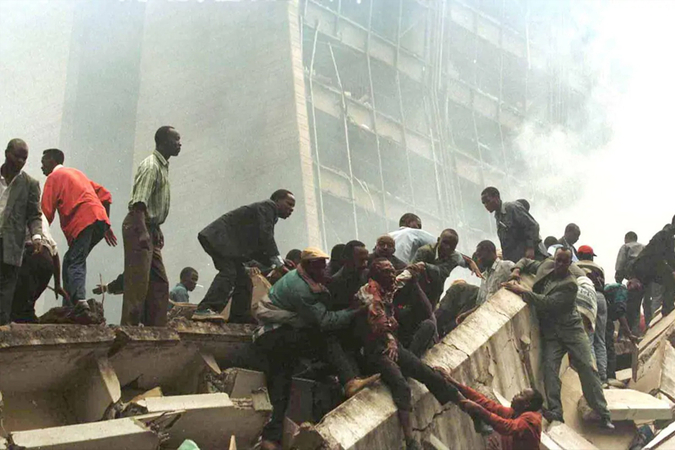
InternationalNov 15. 2020Supporters of President Donald Trump gather near Freedom Plaza in Washington, D.C., on Saturday, Nov. 14, 2020. MUST CREDIT: Washington Post photo by Matt McClain
By The Washington Post · David A. Fahrenthold, Emma Brown, Hannah Knowles · NATIONAL, POLITICS, COURTSLAW, WHITEHOUSE WASHINGTON -President Donald Trump lost his reelection bid at the ballot box. But he said he could win it back in court.
In five key states, Trump and his allies filed lawsuits that – according to Trump – would reveal widespread electoral fraud, undo President-elect Joe Biden’s victory, and give Trump another four years. “Biden did not win, he lost by a lot!” Trump tweeted.
It’s not going well.
Rather than revealing widespread – or even isolated – fraud, the effort by Trump’s legal team has so far done the opposite: It’s affirmed the integrity of the election that Trump lost. Nearly every GOP challenge has been tossed out. Not a single vote has been overturned.
“The Trump legal team does not seem to have identified any kind of global litigation strategy that has any prospect of changing the outcome of the election, and all of the court filings to date underscore that – as do all of the court rulings that have been issued to date,” said Robert Kelner, a Republican lawyer who chairs the election and political law practice group at Covington & Burling, an international law firm based in Washington.
Part of the problem is that Trump’s approach has been backward: Declare crimes first, then look for proof afterward.
Again and again, the president or his allies said they’d found evidence that would stun the public and swing the election.
But, when Trump and his team revealed that evidence, it often was far less than they had promised. A “dead” voter turned out to be alive. “Thousands” of problematic ballots turned out to be one. Election-changing problems turned out to involve a few dozen, or a few hundred, ballots.
Some moments veered into the absurd, as the president’s lawyers tried – and failed – to use Trump’s reality-bending logic on baffled, unbending judges.
“Are your observers in the counting room?” Judge Paul Diamond asked Trump’s lawyers in Pennsylvania at one point, in a case where Trump was seeking to stop the vote count in Philadelphia.
In that case, Trump’s suit depended on the answer being “no.” The logic for stopping the vote count was that GOP observers were not being allowed to watch it.
But the actual answer was “yes.” The observers were there.
So Trump’s lawyer tried an answer that wasn’t yes or no.
“There’s a nonzero number of people in the room,” he responded.
That did not work.
Lawyers from two major firms have now backed out of helping Trump’s efforts. Inside the White House, some officials have grown pessimistic about this legal effort, according to people who have spoken to them.
But officially, the Trump campaign has said it will fight on, despite its losses.
“Every state has different laws and therefore different legal approaches,” said campaign spokesman Tim Murtaugh. “We are still determined to ensure that every legal vote is counted and every illegal vote is not.”
The mismatch between Trump’s rhetoric about voter fraud – and his ability to prove it – was particularly stark in Georgia.
There, Trump’s campaign said last weekthis week that it had found the clearest possible evidence of fraud: A dead man had voted.
“Someone used the identity of James Blalock of Covington, Georgia to cast a ballot in last week’s election, even though Blalock died in 2006,” the campaign posted on its website, along with a screenshot of Blalock’s obituary. It added: “These victims of voter fraud deserve justice.”
Trump’s campaign had one thing right. James Blalock is dead.
But it wasn’t him who voted.
“I knew it wasn’t fraud,” said Mrs. James Blalock, a 96-year-old widow, in an interview with Atlanta’s WXIA-TV on Friday.
Mrs. Blalock, whose first name is Agnes, had chosen to be listed on the voter rolls under her husband’s name – which is now an uncommon practice but is legal. She told WXIA she’d voted for Biden: “I guess I voted against the other one, really.”
Philip Johnson, chairman of the board of elections in Newton County, Ga., confirmed that account and called the allegations of Trump’s campaign “shameful.”
“I’ve been practicing law 46 years, and I believe that when you aim accusations or allegations, you should always have your facts straight,” Johnson said. He is a former Democratic Party official, but his appointed position is officially nonpartisan. “It just bothers me that they weren’t.”
WXIA said it had found at least one other instance where one of Trump’s “dead” voters was alive. There are a few remaining cases – including at least two in Nevada – where authorities are investigating whether someone did use a dead person’s name to vote. But they say these were isolated cases and didn’t amount to any kind of coordinated fraud.
The accusation about Mrs. Blalock wasn’t Trump’s only misfire in Georgia. In another case, Trump’s campaign had filed a lawsuit saying that 53 late-arriving ballots in Savannah’s Chatham County may have been backdated to appear valid.
But, when they called their witnesses, the witnesses admitted they didn’t know that for sure. The local board of elections testified that the ballots arrived on time.
Judge James Bass dismissed the case in eight words: “I’m denying the request and dismissing the petition,” he said from the bench.
In Nevada, Trump allies promised they had found problems on a huge scale. In news conferences, they said thousands of people – some having departed this life, others simply having departed Nevada – might have voted illegally.
They said there were reports of a van decked out in Biden/Harris logos, and carrying boxes of ballots that people were opening, filling out and sealing in envelopes
“Nevada is turning out to be a cesspool of Fake Votes,” Trump tweeted last week,this week, promising that new revelations, once released, would be “absolutely shocking!”
But many of the “out of state” voters turned out to be military personnel, who are allowed to continue voting while outside Nevada.
And the lawsuit filed in federal court offered no evidence of widespread fraud. Instead of thousands of illegal votes, Republicans presented evidence about . . . one.
In the lawsuit, a woman said a thief had filled out and returned her mail ballot. When she showed up to vote in person, the woman said, she wasn’t allowed.
County officials denied that. They said they had actually offered the woman a chance to vote in person, if she would sign an affidavit saying the mail-in ballot had been stolen. She had refused.
The Trump allies said this incident was still proof of a flawed system, because the woman could not vote in the normal way.
“I’m still having a hard time understanding your argument,” Judge Andrew Gordon said.
He blocked Republicans’ request for emergency changes in local voting procedures – but said they could return if they found more compelling evidence.
As of Friday, they had not.
Biden was winning the state by 34,000 votes. Trump’s litigation had not changed that total – even by one.
In Arizona, the Trump camp’s allegations of misconduct – and hope for an election miracle – centered at first on a conspiracy theory about Sharpie pens.
The president’s allies alleged that when voters in Maricopa County used Sharpies to bubble in Arizona ballots, the voting machines could not properly read them.
“AZ update:apparently the use of sharpie pens in gop precincts is causing ballots to be invalidated,” Trump ally Matt Schlapp, the head of the American Conservative Union, tweeted Nov. 4. “Could be huge numbers of mostly Trump supporters. More to come.”
Trump’s son Eric retweeted that, adding three siren emoji. Neither man explained how or why the Sharpie problem would have disproportionately affected Trump’s supporters.
Voters backed by a conservative legal advocacy group filed suit, claiming that Sharpies had been “bleeding through” ballots and causing problems with their processing.
Then the Trump campaign, the Republican National Committee and the Arizona GOP stepped in with another argument. The suit said that machines had repeatedly detected “overvotes” – where people appear to have chosen multiple candidates in the same race – and that poll workers had pushed or encouraged voters to push a green button casting their ballot anyway.
No vote is counted in an overvoted race.
The lawsuit said that invalidated overvotes would “prove determinative” in Trump’s bid for reelection and sought to block certification of Arizona’s results until the ballots could be reviewed by hand.
But there was a problem. In all of Maricopa County, the total number of overvotes for president was 190. Biden is winning Arizona by about 10,000 votes.
“We’re not alleging that anyone was stealing the election,” said the Trump campaign’s lawyer, Kory Langhofer, in a court hearing Thursday. Langhofer added later: “The allegation here is that, in what appears to be a limited number of cases, there were good faith errors in operating machines that should result in further review of certain ballots.”
State and county election officials have said there is no truth to the rumors that ballots filled out with a Sharpie do not cause problems for the voting machines. “We looked into that. We were able to determine that did not affect anyone’s vote,” said Arizona Attorney General Mark Brnovich, a Republican.
On Friday, Langhofer officially gave up on claims that the Sharpie allegation could flip the result of the presidential election in Arizona, saying the point was moot because so few votes were affected.
“We continue to explore President Trump’s options in Arizona,” said Murtaugh, the Trump campaign spokesman.
As his legal hopes faded, the president on Thursday endorsed a new, baseless, conspiracy theory: that a company called Dominion Voting Systems had given thousands of his votes to Biden. Dominion Voting Systems operates in Arizona and other key states.
Later that day, Trump’s own Department of Homeland Security released a statement rebutting his claim, though without naming Trump or Dominion directly. “The November 3rd election was the most secure in American history,” said the statement from the federal Cybersecurity and Infrastructure Security Agency and its state and local partners. “There is no evidence that any voting system deleted or lost votes, changed votes, or was in any way compromised.”
Brnovich, the Arizona attorney general, said the best piece of evidence that Maricopa County had run a fair election was the fact that the official who actually oversaw the voting – county recorder Adrian Fontes, a Democrat – had lost his own race.
“If indeed there was some great conspiracy, it apparently didn’t work,” Brnovich said.
In Michigan, Trump and Republican groups have filed five different lawsuits, all based on similar allegations: that officials in Detroit had miscounted ballots in a way that helped Biden. In one case, they didn’t even get the filing right – lawyers somehow aimed at the Western District of Michigan but instead filed the case in an obscure federal court in Washington. Trump’s team blamed a computer glitch.
The Michigan lawsuits relied on testimony from people inside the city’s ballot-counting room – poll watchers, an IT contractor, and an election worker. The most voluminous of the lawsuits, filed in federal court, include more than 230 pages of sworn statements.
“Shocking allegations of voter irregularities revealed in 234 pages of signed and sworn affidavits,” the Trump campaign wrote on Twitter.
But a closer look at the affidavits showed that many did not allege any wrongdoing with ballots. Instead, they showed poll challengers complaining about other things: a loud public-address system, mean looks from poll workers, and a Democratic poll watcher who said “Go back to the suburbs, Karen.”
Some poll observers had become suspicious simply after seeing many ballots cast for Democrats – in Detroit, a heavily Democratic city where Biden won 94 percent of the vote. “I specifically noticed that every ballot I observed was cast for Joe Biden,” one observer wrote. The Trump campaign filed that as evidence in court.
In other cases, poll challengers raised issues with procedures that election workers say were normal. Some, for instance, noted that workers input voters’ birth dates as January 1, 1900. Election officials say that was a quirk of the computer system: It required workers to enter a voter’s birth date at a step when they did not have access to that information, so they were told to enter a placeholder.
So far, Trump and his allies have faced a judge three times in Michigan.
All three times, it went poorly.
In one case, the plaintiffs relied on testimony from a poll worker, who was relaying what she’d been told by an unidentified election worker.
Judge Cynthia Stephens said that was hearsay. Inadmissible. The lawyer tried to argue.
” ‘I heard somebody else say something,’ ” Stephens said. “Tell me why that’s not hearsay. Come on, now.”
Stephens ruled against the plaintiffs.
A few days later, Judge Timothy Kenny heard a similar argument from another group of Republican plaintiffs. He asked how well the Republican poll-watchers understood the procedures they were watching.
The city had conducted a “walk-through” for Republican poll-challengers in late October, long before the counting began, to show how the absentee ballot counting procedure worked.
Had the plaintiff’s poll watchers been there, to learn about the process they were now objecting to?
No, the plaintiff’s lawyer said. They had not known about it.
“Plaintiff’s affiants did not have a full understanding of the [convention center] absentee ballot counting process,” Kenny wrote in an opinion. “However, sinister, fraudulent motives were ascribed to the process and the City of Detroit. Plaintiff’s interpretation of events is incorrect and not credible.”
David Kallman, an attorney for the Republican poll-challengers, said afterward that he would appeal Kenny’s decision to a higher court. He said there was still time to get a favorable ruling before Michigan is supposed to certify its statewide election results on Nov. 23.
“We’ve still got some time built in there,” Kallman said. “Not a lot of time.”
Pennsylvania was the state that put Biden over the top, and it has been the center of Trump’s legal battles since Election Day. Trump has said on Twitter that Pennsylvania’s fraud was so big that – if it were corrected – “based on our great Constitution, we win the State of Pennsylvania!”
In Pennsylvania’s courts, however, Trump’s legal team has produced no signs of fraud on that scale.
In fact, as his lawyers have bounced from loss to loss, they have often struggled to explain the logic of their own arguments.
In that Philadelphia case – where Trump’s lawyer attempted to dodge a question by saying there was a “nonzero number” of GOP observers in a room – Judge Paul Diamond responded with another question.
“I’m asking you as a member of the bar of this court,” Diamond said, invoking attorney’s responsibility to be honest. “Are people representing the plaintiffs in the room?”
“Yes,” the lawyer said.
“I’m sorry, then what’s your problem?” Diamond asked. Trump’s lawyers also wanted closer access for their observers in the room.
In another case, in state court, Trump’s attorneys asked a judge to throw out 592 ballots because voters had made minor mistakes, such as failing to write their address on the outer envelope. In most cases, the address was already printed on a mailing label attached to the envelope.
What the judge wanted to know was: Why? Why was the Trump campaign focused on these ballots? What was the reason for throwing out people’s votes, for a minor error?
“I am asking you a specific question, and I am looking for a specific answer,” said Judge Richard Haaz. “Are you claiming that there is any fraud in connection with these 592 disputed ballots?”
“To my knowledge at present, no,” Trump campaign attorney Jonathan Goldstein replied.
The Trump campaign has some broad, long-shot lawsuits still pending in Pennsylvania.
One seeks to have more than 680,000 votes in Democratic-leaning Philadelphia and Pittsburgh thrown out, on the basis that the campaign’s observers were not allowed close enough to the counting process. That could swing the state’s election, but it appears very unlikely to succeed.
Another seeks to throw out 10,000 ballots that arrived after Election Day, saying that an extension granted by the state was improper. That one may actually succeed, but it’s unlikely to swing the election – Biden’s lead is much bigger than 10,000, even if all those votes were his.
On Friday alone, Trump’s campaign suffered six different defeats in state courts, as judges rejected their attempts to invalidate about 9,000 ballots for minor errors.
The Trump campaign has notched only minor successes in Pennsylvania courts.
On Thursday, a state court agreed with Trump’s request to bar a small number of ballots where voters were late to provide missing proof of identification. Those ballots have not been counted yet.
That was a victory. But it only underscored the vast mismatch between Trump’s actual legal strategy and the history-changing one he had promised.
Before that court’s decision, Trump was losing Pennsylvania by 65,000 votes. Afterward, he was still losing Pennsylvania by 65,000 votes.


 Vice President-elect Kamala Harris speaks Nov. 10 on the Affordable Care Act in Wilmington, Del. MUST CREDIT: Washington Post photo by Demetrius Freeman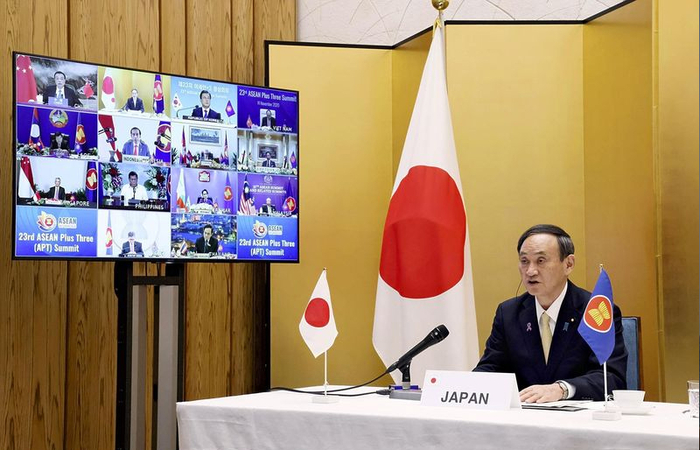
 The Regional Comprehensive Economic Partnership will eliminate as much as 90 per cent of the tariffs on imports between its parties.(ST PHOTO: MARK CHEONG)
  Australian Prime Minister Scott Morrison (centre) announces financial packages to support ASEAN on Saturday. (Photo: VNA/VNS )
 Foreign Affairs Minister Retno LP Marsudi speaks on behalf of President Joko “Jokowi” Widodo at the ASEAN Women Leaders’ Summit on Nov. 12. (Twitter/@Menlu_RI)
  A supporter of President Donald Trump mocks a counterprotester as people gather for the Million MAGA March on Saturday, Nov. 14, 2020, in Washington, D.C. MUST CREDIT: Washington Post photo by Matt McClain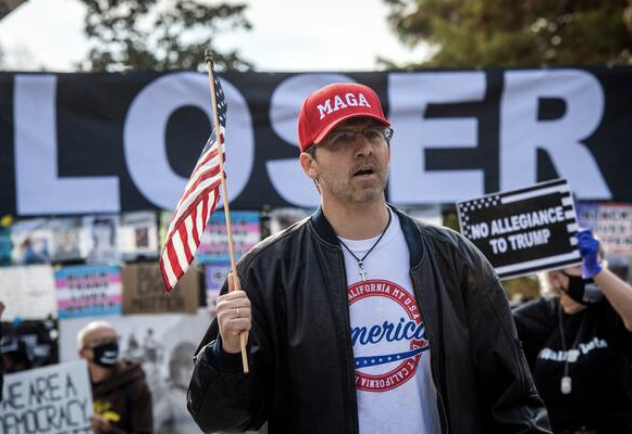
 Supporters of President Donald Trump gather near Freedom Plaza in Washington, D.C., on Saturday, Nov. 14, 2020. MUST CREDIT: Washington Post photo by Matt McClain
