S&P 500 tumbles most in a month on virus spread: markets wrap
InternationalOct 27. 2020UBS’s Haefele Sees Opportunity in Volatility, Uncertainty
By Bloomberg News Claire Ballentine, Vildana Hajric
The S&P 500 Index posted its biggest drop in a month on concern rising coronavirus cases will hurt the global economy and as prospects dimmed for fiscal aid from Washington before the presidential election.
Losses for energy and industrial companies sent the benchmark gauge down 2.9% at one point, though stocks pared losses in the afternoon amid recoveries for the biggest technology companies and as House Speaker Nancy Pelosi voiced optimism on a stimulus deal. Boeing, Lockheed Martin and Raytheon Technologies slid on China’s plan to sanction the companies over arms sales to Taiwan.
In Europe, a gauge of tech stocks fell the most since March after German software maker SAP SE plunged 22% following a cut to its sales forecast and warnings that the pandemic will hurt business through mid-2021.
The dollar strengthened and Treasuries rose, sending yields on the 10-year lower. Oil futures and copper declined, while gold was little changed.
Investors remain focused on the prospect of a U.S. stimulus deal, even as time runs out to finish an aid package before the election. On the virus front, U.S. infections have hit a record in recent days. Europe took a step closer to the strict rules imposed during the initial wave of the pandemic, with leaders struggling to regain control of the spread while confronting growing opposition to restrictions.
“Fiscal stimulus seems to not be coming as quickly as we thought and the virus is coming quicker than we imagined,” said Keith Buchanan, portfolio manager for GLOBALT Investments in Atlanta. “Putting those two together is somewhat of a reality check for the markets.”
In Washington, Pelosi and Treasury Secretary Steven Mnuchin again attempted to reconcile differences on a virus relief package. Differences between the two sides “have narrowed,” but “the more it narrows, the more conditions come up on the other side,” White House economic adviser Larry Kudlow told reporters.
“The overwhelming consensus in the market is that while the economic recovery to date is impressive, it still needs help,” said David Donabedian, chief investment officer of CIBC Private Wealth Management. “It’s not ready to stand on its own, and so some fiscal support is necessary and does not really seem to be forthcoming before year-end.”
In other markets, the MSCI Asia Pacific Index slipped, with Japan and South Korea posting declines. Emerging-market stocks were also lower.
Turkey’s lira weakened past 8 per dollar for the first time. The central bank rattled investors last week by unexpectedly keeping rates on hold, and geopolitical risks have sapped interest in Turkish assets.
These are some events to watch this week:
– The Chinese Communist Party’s Central Committee holds its all-important plenum, where it’s expected to chart the course for the economy’s development for the next 15 years. Through Oct. 29.
– Brexit negotiating teams have started intense daily negotiations, and these are likely to continue as both sides push to finalize a deal by the middle of November.
– Bank of Japan and the European Central Bank have monetary policy decisions Thursday, followed by briefings from Governor Kuroda and President Lagarde.
– The first reading of U.S. 3Q GDP Thursday is anticipated to be the strongest on record following a record dive in the prior quarter as many businesses were shuttered by the pandemic.
Here are the major moves in markets:
Stocks
The S&P 500 Index decreased 1.9% as of 4 p.m. New York time.
The Stoxx Europe 600 Index fell 1.8%.
The MSCI Asia Pacific Index dipped 0.4%.
The MSCI Emerging Market Index declined 0.6%.
Currencies
The Bloomberg Dollar Spot Index rose 0.4%.
The euro fell 0.5% to $1.1807.
The British pound fell 0.2% to $1.3019.
The Japanese yen weakened 0.1% to 104.85 per dollar.
Bonds
The yield on 10-year Treasuries declined four basis points to 0.80%.
Germany’s 10-year yield was little changed at -0.58%.
Britain’s 10-year yield was little changed at 0.27%.
Commodities
West Texas Intermediate crude declined 3.2% to $38.56 a barrel.
Gold was little changed at $1,902.20 an ounce.
– – –
Bloomberg’s Andreea Papuc and Anchalee Worrachate contributed to this report.
InternationalOct 27. 2020U.S. markets fall sharply amid uncertainty over stimulus talks and the increase in the number of coronavirus infections. (Mary Altaffer/ AP)
By The Washington Post Taylor Telford, Hamza Shaban
U.S. markets slumped Monday as investors grappled with uncertainty about economic stimulus negotiations and soaring coronavirus cases around the country.
The Dow Jones industrial average fell 650 points, or 2.3%, to 27,686. The S&P 500 index tumbled nearly 1.9% to 3,401, while the tech-heavy Nasdaq composite index dropped 1.6%, to 11,359. The sell-off erased all of the blue-chip index’s gains for October.
The United States hit a record high in new coronavirus cases Friday, with more than 83,700 reported, according to data from Johns Hopkins. The resurgence is compounding volatility in the countdown to the presidential election, according to Craig Erlam, an analyst with OANDA.
“Financial markets are getting a reality check, as investors come to terms with the failure of Congress to agree to a pre-election stimulus package and surging covid-19 cases,” Erlam wrote in commentary Monday. “Just over a week to go until the U.S. election, it was always likely we could see a little more risk aversion this week given the level of uncertainty.”
It’s likely to be an eventful week on Wall Street as investors parse central bank decisions from Canada, Japan and Europe, third-quarter gross domestic product data from the U.S. Commerce Department and financial results from the biggest names in tech, including Facebook, Amazon, Apple and Alphabet. (Amazon founder Jeff Bezos owns The Washington Post.)
“The double whammy of a stalled stimulus bill and new highs in cases is a harsh reminder of the many worries that are still out there,” said Ryan Detrick, chief market strategist with LPL Financial. “Most of the recent economic data has been strong, but when you see parts of Europe going back to rolling shutdowns, it reminds us this fight is still far from over.”
Investors have been closely tracking negotiations over a new round of emergency coronavirus relief, which would pump hundreds of billions of dollars into the U.S. economy. Last week, House Speaker Nancy Pelosi, D-Calif., signaled optimism that prolonged talks with Treasury Secretary Steven Mnuchin would yield progress. Each day’s updates on the status of a roughly $2 trillion package coincided with ups and downs in the markets, as investors tried to divine the chances for a deal.
On Friday, however, Mnuchin offered a downbeat assessment of the talks, noting that “significant differences” remain between the two sides. Pelosi had set an earlier, informal deadline to give Congress enough time to pass the legislation before Election Day. But that timetable is now seen as less likely.
“The COVID-19 situation is worrying to investors because they are looking across the pond to Europe, where many countries are increasing stringency measures and implementing a variety of targeted lockdowns, and wondering if that is the future for the US as well,” said Kristina Hooper, chief global market strategist at Invesco. “This suggests fiscal stimulus is needed now more than ever, but it looks like it is not forthcoming any time soon. Add to that concerns about a contested election and you have a recipe for market gyrations and sell-offs.”
With just eight days to go until the presidential election, former Vice President Joe Biden leads Trump by 9 percentage points nationally, 52% to 43%, according to an average of national polls since Oct. 12.
The market slide also coincides with another covid-19 outbreak at the highest levels of U.S. government, infecting at least five aides or advisers to Vice President Mike Pence, who leads the White House’s coronavirus task force.
“Ultimately, until the underlying health care issue truly begins to resolve, we should expect a cloud to continue hang over the global economic outlook and the markets to continue their choppy path,” said Nicole Tanenbaum, partner and chief investment strategist, at Chequers Financial Management.
Oil prices sank in response to the rising infections around the globe, which is starting to cause the reinstatement of movement restrictions in some places. Brent crude, the international oil benchmark, fell more than 2% to trade at $40.92 a barrel.
In another reflection of volatility, the yield on the 10-year U.S. Treasury note fell as investors flocked to safer ground. Bond yields fall as prices rise.
In Gettysburg, Trump supporters clash with Black Lives Matter protesters as election nears
InternationalOct 27. 2020Supporters of President Trump gather as a Gettysburg police cruiser goes by on the square in Gettysburg, Pa., on Oct. 10. Washington Post photo by Michael S. Williamson.
By The Washington Post Peter Jamison
GETTYSBURG, Pa. – The white GMC Acadia slowed to a crawl, windows rolled down. The message its driver had for the small band of Black Lives Matter protesters on the town square was not a friendly one.
“All lives matter, a–hole!” he shouted hoarsely before the vehicle rumbled off. From a silver SUV behind him, a passenger blared an air horn, screaming more obscenities at the half-dozen protesters holding aloft signs in the October sunlight.
“Why are they angry? That’s what I want to know,” said Irish Whaley, 61, the sole Black woman attending the tiny Saturday demonstration. “You’re going to tell me all lives matter, but you’re going to yell and scream at me like my life don’t matter.”
Nearly 160 years after a battle here helped turn the tide of the Civil War, Gettysburg is once again riven by conflict. The acrimony – including angry confrontations and arrests – has not yet led to serious violence, let alone the kind of bloodshed this town endured over three days in 1863. But clashes have gradually escalated, and Saturday a Democratic state senate candidate attending a Black Lives Matter demonstration was shoved to the ground.
The divisions on display in Gettysburg are emblematic of tensions gripping Pennsylvania and the nation as the presidential election approaches. Disputes over race, social justice, identity and Americans’ understanding of their own history have played out here in vivid fashion, with Black Lives Matter demonstrators facing off against counterprotesters toting AR-15 rifles in plain view of the diners at the Blue and Gray Bar & Grill.
Jacob Schindel, president of the Gettysburg Borough Council, lamented the extent to which demonstrators on both sides appear to be talking past each other.
“I think Gettysburg is really just a microcosm of the larger environment,” he said.
The trouble began on the Fourth of July, when armed right-wing militias descended on the town’s battlefields in response to hoax predictions on social media of a flag-burning. Calm did not return after they left.
For months, the town square has been a stage for protesters on the political left and right screaming each other down. Homegrown “Trump trains” – caravans of dozens of cars, trucks and motorcycles, honking and waving flags for the president’s re-election campaign – have regularly roared through the mostly White borough of 8,000.
Gettysburg Police Chief Robert Glenny Jr. said residents are tired of the clashes. Washington Post photo by Michael S. Williamson.
“A lot of folks have just had it with the hubbub of what’s going on,” said Gettysburg Police Chief Robert Glenny Jr., whose department of a dozen full-time officers has repeatedly been called into the fray and this month arrested three demonstrators for disorderly conduct.
The conflict is being fanned by Pennsylvania’s role as a pivotal swing state in the presidential race, with polls showing a tight contest between President Donald Trump and former Vice President Joe Biden. Gettysburg is home to a left-leaning liberal arts college but sits deep in a swath of rural Pennsylvania that strongly supported Trump in 2016.
But the debate is also about this town’s symbolic stature in American consciousness – what Gettysburg should mean and to whom. The battle that made it famous, some residents note, is seldom celebrated for what it was: A victory that advanced the cause of ending slavery and led to Abraham Lincoln’s vow that the nation “shall have a new birth of freedom – and that government of the people, by the people, for the people, shall not perish from the earth.”
Instead, visitors often immerse themselves in the minutiae of the opposing sides’ military tactics. The reverence exhibited for soldiers’ valor can at times blur uncomfortably into “Lost Cause” nostalgia for states that fought to defend white supremacy. Confederate statues have been toppled across the country, but Gettysburg’s 40 monuments to the slaveholding states and their soldiers remain untouched.
“Very few Black people, in my experience, come to Gettysburg. It’s not a very welcoming place, and the emphasis is on strategy rather than emancipation,” said Karl Mattson, who retired as Gettysburg College’s chaplain 19 years ago and still lives in town. “The hope is that a different narrative will develop.”
To that end, Mattson, White and 86, has begun distributing hundreds of signs around town aimed at rebranding Gettysburg’s legacy: “This battle was fought because Black lives matter.”
– – –
Not long after he came to Gettysburg as a Pennsylvania State Police officer in 1994, Shawn Palmer made a traffic stop that would stay with him.
As a Black officer in overwhelmingly White Adams County, Palmer was accustomed to uncomfortable encounters. But as he approached the pickup truck he had pulled over for speeding, he braced himself: It was decorated with the Confederate battle flag, and the vehicle bore a license plate with the words, “Don’t worry, boys. The South will rise again.”
After an amiable interaction, Palmer gave the driver a warning, then asked if he was from the South.
“He said, ‘Oh, no. I’m from Chambersburg,'” Palmer recalled – a small town 25 miles west of Gettysburg that was burned by Confederate cavalry during the Civil War. “I just laughed.”
Black Lives Matter protester Irish Whaley holds a sign in the Gettysburg town square. Washington Post photo by Michael S. Williamson.
As Palmer began to study the Civil War in greater detail, he became increasingly perplexed by the worship of the Confederacy evident around Gettysburg. “It’s comical, but in another sense its almost alarming,” he said, “that people will fly the Confederate flag and the American flag together as if they were the same country.”
On July Fourth, Palmer joined a friend – Scott Hancock, a Black professor of history and Africana studies at Gettysburg College – on an excursion to some of the battlefield’s Confederate monuments. Hancock had been organizing similar trips for several years. He and those who joined him would carry signs displaying historical documents with information about Confederate leaders’ views on race and on why the war was fought.
This year, the group met with an unprecedented reaction. Hundreds of armed men and women had turned out in response to online rumors of an American flag-burning. Hancock said some people yelled at him to go back to Africa or said that he just wanted to collect his welfare check. At Mississippi’s monument, camouflaged men were lying in the grass with rifles. Hancock’s group ultimately left and were trailed by men on motorcycles until they reached a police command station.
“It felt like we went so far back on that day,” Palmer said, recalling his feeling that America, again, “was almost on the brink of Civil War.”
Demonstrations had begun in town after the killing of George Floyd in late May. But in August armed men and women began to appear alongside the Black Lives Matter protests, which were increasingly dominated by activists from out of town.
Frank Marrone, the Gettysburg resident who organized some of the counter-protests, said his goal was to offset the protesters’ message with a “pro-America, pro-gun, pro-Trump” argument that supported rather than attacked the police. He said the weapons were not meant to intimidate those on the other side.
“We believe in law and order. They believe in feelings. So if they feel uncomfortable with a rifle, they’re going to cry about it,” Marrone said. “I’m no terrorist. I’m no Nazi. I’m not going out there to do a mass shooting in the square.”
Marrone, who said he was a Democrat for 25 years and voted for Obama in 2008, said he recognizes the right of Black Lives Matter protesters to speak out but that they should not be allowed on the town square using vulgar language and spooking the tourists who are finally returning to restaurants and shops devastated by the coronavirus pandemic.
“Who’s to say that freedom of speech has to be on the main square in one of the most historic towns in America, where there’s diners?” Marrone said. “I don’t like what happened to George Floyd no more than anyone else. It has nothing to do with Gettysburg, and they’re not changing anything.”
On Oct. 3 – just a few days before Biden delivered a campaign speech at Gettysburg calling for national unity – demonstrators on both sides faced off in what had become a Saturday ritual. Police made three arrests, including two Black Lives Matter protesters.
– – –
One of them was Leslie Mon-Lashway, 43, a White former overnight baker at Giant Food who was accused by police of “shouting vulgarities” and was cited for disorderly conduct.
Mon-Lashway, who lives in Hanover, about 15 miles east of Gettysburg, said she and other Black Lives Matter activists have been unfairly targeted by Gettysburg police, while their armed antagonists have been ignored.
Mon-Lashway acknowledged using profanity on her signs and in some of her dealings with counterprotesters and belligerent passersby but said police should also be cracking down on the counterprotesters.
“It’s definitely something that’s been escalating,” she said, “and when they’re not held to the same standard, that physical, violent behavior is not going to stop.”
On Saturday afternoon, a small group of Black Lives Matter demonstrators was marching near the town square with Rich Sterner, the Democratic challenger to incumbent State Sen. Doug Mastriano (R). When a young man approached and began screaming at the group, the 65-year-old Sterner said he tried to calm him down and was shoved to the ground. Sterner later received stitches in his hand.
“We need human decency to rise up again,” Sterner said Monday. “This is just beyond the pale that this kind of stuff is going on in the United States.”
Gettysburg resident Zachary Moore, 22, was arrested for pushing Sterner and cited for harassment, said Glenny, the police chief. The charge can lead to a fine of up to $300 and up to 90 days in jail. Moore could not be reached for comment.
Glenny said that vulgar language to accost or intimidate others also merited the previous arrests made by his officers and that he had no authority to forbid counterdemonstrators from carrying guns in public. He also said he fears an effort to clear out counterdemonstrators could provoke more radical elements to descend on the town.
“If you tell these folks who are carrying the guns now, ‘You can’t come,’ then my fear is what we get is the – what’s the word I’m looking for – the ultra, ultra folks, the anti-government folks,” he said.
Even some in town who support the movement for Black lives have reservations about the actions of Mon-Lashway and her fellow protesters.
Jenny Dumont, a Spanish professor at Gettysburg College and head of the left-leaning activist group Gettysburg Rising, said she was “really alarmed” by the presence of armed, right-wing activists on the town square. But she also took issue with the tactics used by some of the Black Lives Matter protesters, saying they were too quick to let themselves be drawn into profanity-laced confrontations with the other side.
“I don’t want to come off as if I’m criticizing them,” she said. “But I don’t understand what their long-term goal is.”
Dumont is taking a different approach, working to include more Black history in the town’s public school curriculum and advocating alongside Hancock for new monuments on Gettysburg’s battlefields to honor enslaved people. Like Mattson, she believes the town is overdue for a rebranding that recognizes the battle as a milestone in the centuries-long Black struggle for freedom.
In the meantime, as what may be the most divisive presidential election in modern U.S. history approaches, Americans continue to visit Gettysburg in an effort to understand a different era of division.
On a recent Saturday, after the shouting and signs had disappeared from the town square, visitors quietly wandered Little Round Top several miles to the south. An ember-red sun was dipping into the hills above Plum Run Valley, better known by its nickname: the Valley of Death. The scene was steeped in an eerie serenity that often impresses visitors to the site of one of America’s bloodiest battles.
Heather McClintock-Racz stood on the slopes wearing 19th century widow’s weeds and a broad hat.
“I do Union,” said McClintock-Racz, a historical re-enactor from Downingtown, Pa. Nevertheless, she said, Confederate memorials have an important place on the battlefield. “When you come out here,” she said, “how are you going to understand the terrain without these monuments and these markers?”
McClintock-Racz marveled at the scale of the violence that once swept over the fields around her – roughly 50,000 casualties over three days.
“Think of the damage that happened to the country,” she said. “My question is: Did we not learn from that?”
What, exactly, should Americans have learned? McClintock-Racz admitted she didn’t know.
New York mayor, police commissioner sued over clashes at George Floyd protests
InternationalOct 27. 2020A protester is arrested on Manhattan’s Fifth Avenue in June. (John Minchillo/ AP)
By The Washington Post Shayna Jacobs
NEW YORK – Eleven people sued New York City and its police department Monday over officials’ handling of racial-justice protests earlier this year, saying their rights were violated when law enforcement employed heavy-handed tactics to quell demonstrations sparked by the death of George Floyd.
The civil complaint, filed in federal court by the New York Civil Liberties Union and the Legal Aid Society, names Democratic Mayor Bill de Blasio and New York City Police Commissioner Dermot Shea, among others. To date, it is the largest lawsuit brought against City Hall in response to the nightly clashes that gripped New York following Floyd’s death while in the custody of Minneapolis police.
The lawsuit seeks unspecified financial damages.
“Over and again, at protests throughout the City in May and June, NYPD officers descended on protesters with unjustifiable fist and baton strikes, chemical pepper spray attacks, and other acts of physical violence,” the complaint says.
One of the plaintiffs, Charlie Monlouis-Anderle, suffered a broken arm at the hands of police, the complaint alleges. Another, Vidal Guzman, was pepper sprayed in the face, it says. Eight others claim they were wrongly arrested while exercising their right to protest.
“We will review the lawsuit if and when we are served,” an NYPD spokesperson said Monday. The city’s legal department did not immediately respond to a request for comment.
Jarrett Payne, 34 of Queens, was arrested June 2 after the city’s 8 p.m. curfew while marching along Fifth Avenue outside of Central Park. The complaint says he was struck in the face by a police baton without any warning. He was then shoved to the ground even though he was not resisting, it says.
“Payne’s body struck something hard – possibly a bench – and then fell into the wall of Central Park and onto the ground, knocking his glasses off his face so he could not see properly,” the lawsuit says, alleging that several police officers continued to beat him with batons while pinning him to the ground.
Payne’s summonses were eventually dismissed by the district attorney’s office.
In an interview, he said he still experiences pain from his injuries and for a time was unable to jog or do other exercise.
“I couldn’t really do anything. I couldn’t ride a bike, couldn’t run at all,” he said, noting that only within the last month did he start exercising again.
Law enforcement advocates have pointed out that, during the protests, there were numerous incidents of violence against police, leading to aggressive arrests.
But Corey Stoughton, one of the lead attorneys on the case, said the conduct alleged in the lawsuit was not in response to the rioting or looting that plagued parts of the city during the protests.
“This pattern started before the looting and it continued after the looting,” Stoughton said, adding that the aggressive tactics were “not about enforcing the curfew [but] . . . about the NYPD’s reaction to the protests calling for police accountability.”
By The Washington Post Michael Scherer, Josh Dawsey
Faced with record levels of U.S. coronavirus infections and a new White House outbreak, President Donald Trump declared Monday that the pandemic was “ending anyway,” further tying his reelection bid to his ability to convince voters, including those at large rallies that defy health authorities, that the viral danger is fading.
Financial markets fell as he spoke, with investors reacting to the growing infection rates and dwindling hope of a pre-election stimulus package. Vice President Pence canceled a planned appearance at the U.S. Senate for the expected confirmation of Amy Coney Barrett as a Supreme Court justice, after Democrats objected because he has been in close contact with at least one of the five staff members who tested positive for the disease in recent days.
Over the past week, the nation has suffered a 20 percent increase in new diagnosed cases, a 13% rise in hospitalizations and an 11 percent rise in daily deaths, according to Johns Hopkins University, with the seven-day average of new cases reaching its highest level ever. The increase has been driven by spread in rural communities and northern states, including Wisconsin, Iowa, Minnesota and parts of Michigan, all of which could play a decisive role in the presidential contest.
Trump nonetheless argued in three Pennsylvania rallies – where thousands gathered without social distancing or consistent mask-wearing – that the viral danger has been exaggerated by the news media and that Democratic politicians, including the governors of several swing states, had imposed unnecessary restrictions on large gatherings for political reasons.
“It’s ending anyway. We are rounding the turn. It’s ending anyway,” Trump said of the virus at an outdoor stop in Allentown, Pa. “Normal life. That’s what we want, right? Normal life. Normal life. We just want normal life. It’s happening, very quickly.”
Before taking the stage, the president rejected his opponent Joe Biden’s claim in a statement that Trump’s strategy had been to “wave the white flag of defeat and hope that by ignoring it, the virus would simply go away.”
“No, he has. He’s waved the white flag on life. He doesn’t leave his basement,” Trump said. “We’re doing a great job.”
In a stark contrast to Trump’s packed campaign schedule, Biden, who tested negative for the virus again Monday, traveled Monday afternoon for a single unannounced campaign stop in Chester, Pa., a suburb of Philadelphia, where he addressed reporters.
“The bottom line is, Donald Trump is the worst possible president, the worst possible person, to try to lead us through this pandemic,” Biden said. “Either he just doesn’t have any idea what to do or just doesn’t care.”
Biden condemned Trump’s recent claim that medical professionals are inflating the number of covid-19 cases to “get more money.”
“What in the hell is the matter with this man?” Biden exclaimed, noting what he said were the deaths of more than 1,000 health-care workers due to covid-19, the disease caused by the virus. “Mr. President, you have to have a little bit of shame. Just a little bit of shame. Because people are dying.”
Biden said he plans travel in the coming week to Iowa, Florida, Wisconsin, Georgia and possibly other states.
“I am not overconfident about anything,” he said, when asked about his campaign schedule. “But the big difference about us, the reason it doesn’t look like we are traveling, is we are not putting on superspreaders. We are doing what we are doing here – everybody is wearing a mask and trying as best we can to be socially distanced.”
Biden’s latest attacks on Trump’s handling of the virus stemmed from a television interview Sunday in which White House chief of staff Mark Meadows said, “We’re not going to control the pandemic.”
Meadows expanded on his remarks Monday by mocking Biden’s purposeful efforts to wear a mask in public, a measure public health experts say could save more than 100,000 American lives in coming months.
“The only person waving the white flag along with his white mask is Joe Biden,” Meadows told reporters traveling with the president. “We’re going to defeat the virus. We’re not going to control it. We will try to contain it as best we can.”
That argument was rejected Monday by Assistant Secretary for Health Adm. Brett Girior, a political appointee, who contradicted Meadows in a call with reporters.
“I think we can control the pandemic,” he said. “I want to be clear that what we have done, what the American people have done, has been able to put out very significant outbreaks.”
He encouraged Americans to keep their distance from each other, wear masks when they can’t stay more than six feet apart and frequently wash their hands.
Trump has been inconsistent in his embrace of that advice. At an event in the Oval Office on Friday, where people gathered in proximity without masks, Trump mocked a reporter from Reuters for wearing “the largest mask I’ve ever seen.”
The posture of the president and other administration officials stands in opposition to a majority of American voters, who consistently have favored mask-wearing and social distancing – and have harshly judged Trump’s handling of the pandemic.
Rather than trying to reverse those views, Trump has chosen to flout the objections of health officials, even those in his own government, to corral big crowds of supporters.Trump has been pushing aides, in conversations on Air Force One and from the White House residence, to schedule more campaign rallies for the final stretch – hoping to do four or five a day. Aides say his travel is likely to focus heavily on Midwest states – Pennsylvania and Wisconsin chief among them.
The president has become convinced, aides said, that people are tired of the coronavirus and staying home. Trump and Meadows have both sought to downplay the news of the virus in the final days of the campaign. Officials are trying to publicly show optimism, even placing positive polls on the seats of Air Force One where reporters sit.
Democratic strategists believe Trump is making a major error. They remain confident that Trump’s strategy of dismissing concern over the virus, or blaming it on a conspiracy by the media and political opponents, will be self defeating.
A Washington Post-ABC News Poll in early October found 65 percent of Americans were either very or somewhat worried that they or someone in their family would catch the coronavirus. Those answers have remained steady throughout the course of the pandemic.
“Every time Donald Trump pushes conspiracy theories, it just reminds everyone that he takes no actual responsibility for the reality that’s plaguing their lives,” said Jesse Ferguson, a Democratic strategist who worked for Hillary Clinton’s 2016 campaign. “It’s as if the captain of the Titanic not only refused to go down with the ship, but demanded everyone else stay aboard because it was actually an airplane.”
Pence aides say the vice president, who has tested negative for the virus on Monday, will continue to attend campaign events, even though his proximity to infected staff marks him as a “close contact” under federal guidelines.
White House officials said Pence’s campaign work makes him “essential” allowing him to ignore Centers for Disease Control and Prevention guidelines that he self-quarantine for 14 days after close contact with an individual who is recently symptomatic or tests positive.
While Trump traveled the Keystone State, Pence appeared at a closely packed outside event in Minnesota, the state the White House coronavirus task force he chairs categorized on Oct. 18 as in the “red zone for cases,” the highest level, with the 19th highest rate of covid-19 spread in the country. Nonetheless, many in his audience did not wear masks.
He encouraged those in attendance to “vote with a friend” and talk to their extended circle of neighbors about the upcoming election.
“You know I will always believe that the greatest form of media in the this country is not your TV networks, it’s not your big newspapers, it’s not even social media. I think it’s word of mouth, ” Pence said. “We came so close in Minnesota last time around because people were talking to each other.”
Pence’s plan to attend the Senate vote to confirm Barrett was canceled after 10 Democratic senators demanded that he not appear because his “presence alone could be very dangerous to many people.” Because of the expected vote margin, he was not needed to break a tie vote.
Biden’s running mate, Sen. Kamala Harris, D-Calif., was in Washington on Monday, in preparation for the vote on Barret. In a morning interview on ABC’s “The View,” she responded to Trump’s recent attacks on her as a “female socialist.”
“You know look, the name calling is not new to me – it’s not new to anybody who played on the playground as a child,” said Harris, who is not a socialist. “But this is not a playground.”
After his final campaign rally, Trump planned to return to the White House, where he had instructed aides to stage an event to celebrate Barret’s confirmation, 30 days after holding a White House announcement of her nomination that the nation’s top infectious-disease expert, Anthony Fauci, called “a superspreader event.” At least eight people, including Trump, tested positive following that event.
Some political and communications advisers to Trump feared Monday that a second event would be a bad idea, according to people familiar with internal discussions, who requested anonymity to speak more frankly. Associate Supreme Court Justice Clarence Thomas is expected to swear Barrett into office.
Asked about the planned White House event, Biden urged caution.
“I don’t blame them for celebrating,” Biden said. He urged participants to wear masks and practice social distancing, and said it would be a problem if the president did otherwise.
“The words of a president and the actions of a president matter. They matter a great deal,” Biden said. “I just hope he is willing to have learned the lesson.”
– – –
The Washington Post’s Amy Wang contributed to this report.
As tensions mount ahead of Election Day, a legal battle in Michigan is highlighting fears some officials and civil rights groups have about what will happen when people show up at polling sites with guns – which is legal in numerous jurisdictions across the United States.
Michigan, already the site of election-year unease, was thrust into the center of the armed-voter debate after state officials announced a ban on openly carried weapons at polling sites, saying guns could intimidate voters or election workers. Gun rights groups challenged the move in court and have argued it forces Michigan residents to choose between their right to vote and their right to bear arms.
Many Americans will be able to show up at their polling locations with guns, something that has unnerved law enforcement officials and experts nationwide at a time of pitched anxiety over whether clashes or violence could break out before, on or after Election Day. Gun rights supporters argue that law-abiding gun owners should be able to continue carrying their weapons where doing so is allowed.
Exactly where that is allowed varies widely, echoing the way the country’s election processes vary from state to state.
“There are no national rules on guns in polling places,” said Adam Winkler, a law professor at the University of California, Los Angeles and an expert on the Second Amendment. “As with so much about our election system, these things are decided by the states. And because there are 50 different states, there is a wide variety of rules regulating guns at polling places.”
According to the Giffords Law Center to Prevent Gun Violence, which supports stricter gun laws, six states and D.C. ban firearms at polling locations entirely, while another four ban concealed weapons at these spots. Guns might also be outlawed at some polling locations by virtue of where they are housed, such as a church or a school, Winkler said.
The issue has come up during previous elections, but it is gaining more attention this year, given the fraught atmosphere leading up to Election Day next week. President Donald Trump’s attacks on the election and comments urging his supporters to monitor voting sites also have exacerbated some fears of possible tensions at and around the polls.
Police have said they are undertaking unusually extensive planning in advance of Nov. 3 to prepare for possible voter intimidation or violence, deploying more officers and gaming out possible scenarios.
Already, tensions and allegations of voter intimidation have been emerging at early-voting sites, which have seen tens of millions of people cast ballots. Police have said that on Election Day they will be watching for any voter intimidation to help people vote safely and securely.
Michigan Secretary of State Jocelyn Benson, a Democrat, invoked the possibility of voter intimidation when she announced this month that she was banning people from openly carrying guns at or around polling places.
“The presence of firearms at the polling place, clerk’s office(s), or absent voter counting board may cause disruption, fear, or intimidation for voters, election workers, and others present,” Benson, the state’s top elections official, wrote in her directive, issued on Oct. 16.
Benson wrote that she was banning openly carried firearms in any polling place as well as “within 100 feet of any entrance to a building in which a polling place is located.” Her directive also said that if a person was outside that 100-foot space and “acting in a way that would tend to intimidate, hinder or impede voters on the way to the polls,” election officials should contact law enforcement.
Her move prompted a lawsuit from three pro-gun rights groups, who said Benson “makes an unsupported correlation between mere possession of a firearm and voter intimidation” and argued that her directive was “conjured without any legal basis or authorization under Michigan law.”
James Makowski, an attorney for Michigan Gun Owners, one of the groups that brought the lawsuit, said in an interview that people have carried their weapons openly at Michigan polling sites with no issues for years and called the idea that doing so is a problem “a fabrication out of thin air.”
Benson’s directive does not apply to law enforcement officers on the job. It also does not mention people carrying concealed firearms beyond noting that doing so will remain banned in any building where it was already prohibited. Makowski said that because most polling places are in churches and schools – where concealed carry is already largely prohibited – her order functions as a “near-blanket prohibition.”
Benson’s office did not respond to requests for comment about the litigation. The lawsuit also names Michigan Attorney General Dana Nessel, a Democrat, and Col. Joe Gasper, director of the Michigan State Police, as defendants. Nessel’s office declined to comment on ongoing litigation, and a state police spokesman did not respond to a request for comment.
Benson’s directive also prompted some pushback from law enforcement officials, including Michael Murphy, sheriff of Livingston County, Mich., who said in a video statement on Facebook that he would not enforce Benson’s directive: “I’m a law enforcement officer, not a directive enforcement officer.”
While Murphy said that “open carry is not against the law,” he also asked people who might “want to thumb the nose and open carry just because they can” in defiance of Benson’s order to avoid doing so because of the escalated tensions in the country.
Other officials have spoken out against armed individuals seeking to have a presence at voting sites.
Minnesota Attorney General Keith Ellison, a Democrat, had criticized a private security company that sought out former Special Operations personnel to guard polling places, saying “armed outside contractors at polling places would constitute intimidation and violate the law.” The group has since canceled its plans, Ellison announced over the weekend.
Wisconsin Attorney General Josh Kaul, a Democrat, said that his state, which allows concealed carry, has no “statewide laws governing firearms in polling places,” though many voting sites are in schools, where guns are already banned.
The key factor in carrying a gun at a polling place is whether the person seeks to intimidate voters, which is a crime, Kaul said in an interview. He said that someone with a concealed weapon might come and go without anyone noticing, which would not interfere with another voter.
“If somebody is bringing a firearm to a polling place in any way that is creating a disruption or interference, I think there should be action taken to make sure that interference isn’t happening,” Kaul said.
The rules vary nationwide, including in places not necessarily known for their gun restrictions. In Texas, “no one except licensed peace officers may carry handguns into the polling place,” according to the secretary of state’s office. Georgia has a similar restriction that stretches out 150 feet from any polling place, the secretary of state’s office said.
North Carolina does not have a specific law in place about guns at polling sites, and whether guns can be carried in specific buildings being used for voting depends on the rules already in place for those locations, according to Patrick Gannon, a spokesman for the state’s Board of Elections.
Pennsylvania allows for people to openly carry guns without permits everywhere except Philadelphia, which requires a permit, something that extends into polling places, according to the office of Josh Shapiro, the attorney general.
While legally carried guns are allowed both inside and adjacent to Pennsylvania’s polling places, they are generally not allowed at schools or court facilities that would otherwise ban them, according to Wanda Murren, a spokeswoman for the Department of State. Her agency also issued guidance this month that included “aggressive or threatening brandishing of weapons” as an example of voter intimidation, warning that people who intimidate voters can face fines of up to $5,000 and up to two years behind bars.
Murren said her agency and its partners in an election preparedness and security working group – including the state police, the governor’s office and the state Emergency Management Agency – have sought to prepare for multiple scenarios that could affect polling locations this year.
Supporters of stricter gun-control measures have called for more widespread policies that declare firearms off-limits in such places. The Brady Campaign to Prevent Gun Violence has created a petition urging state and local officials to declare polling places gun-free and said that “Armed intimidation at the polls is voter suppression, plain and simple.”
Gun rights supporters, meanwhile, argue that such a ban would force people to choose between two protected rights.
“You should not have to choose which of your constitutionally protected rights you can exercise,” said Erich Pratt, senior vice president of Gun Owners of America, a pro-Second Amendment group. “You should be able to exercise more than one at the same time.”
Winkler, the UCLA professor, said people have “reason to be concerned” heading into this election’s final days. Winkler also said that if someone sees a gun and feels intimidated, it might discourage them from voting, so he came down on the side of not wanting guns in voting sites.
“Polling places are not the kind of place where firearms are likely to do any good,” he said. “And given the history of voter intimidation in America . . . it’d be best to prohibit guns in polling places.”
Pence skips final confirmation vote for Barrett after latest coronavirus outbreak at White House
InternationalOct 27. 2020Vice President Pence attends a rally in Kinston, N.C., on Sunday. (Jonathan Drake/ Reuters)
By The Washington Post John Wagner, Josh Dawsey, Paulina Firozi
WASHINGTON – Vice President Mike Pence did not preside over the Senate during the final confirmation vote of Supreme Court nominee Amy Coney Barrett.
A group of 10 Democratic senators, led by Minority Leader Chuck Schumer of New York had urged Pence in a letter to stay away from the chamber given the latest outbreak of the coronavirus at the White House.
An aide to the vice president said midday Monday that he was not planning to attend the vote despite his original intent to be present for the likely confirmation of President Trump’s third Supreme Court justice.
Sen. Chuck Grassley, R-Iowa, the president pro tempore of the Senate, presided over the chamber during the vote.
In their letter, the Democratic senators argued Pence’s presence would not only violate guidelines from the Centers for Disease Control and Prevention but would “be a violation of common decency and courtesy” after five people who work for or advise Pence tested positive for the coronavirus.
“Your presence alone could be very dangerous to many people – not just to senators, but to all the truly essential staff – Democratic and Republican – who must be physically present inside the U.S. Capitol for it to function,” they wrote.
The senators said Pence will not be needed to break a tie and his presence would be purely “ceremonial.”
Republicans hold a 53-47 advantage in the Senate, and only one GOP senator – Susan Collins of Maine -voted against confirmation.
Pence had indicated this past weekend that he wanted to preside over the vote for Barrett, who comes from Pence’s home state of Indiana.
“As vice president, I’m president of the Senate. And I’m going to be in the chair, because I wouldn’t miss that vote for the world,” Pence said Saturday night at a campaign rally in Tallahassee, shortly before the disclosure of the coronavirus outbreak within his staff. “Come this Monday night, Judge Amy Coney Barrett is going to be Justice Amy Coney Barrett. We’re going to fill that seat.”
White House Chief of Staff Mark Meadows told reporters Monday that plans for Pence to preside over the confirmation vote were “in flux.”
“The vice president obviously has great knowledge about the disease and the pandemic, and he knows the right protocols to follow, and I have every confidence that he’s following those protocols,” Jared Kushner, the president’s son-in-law, said of Pence, who serves as chairman of the White House coronavirus task force.
Pence is regularly summoned to the Capitol to preside over major votes for the administration or if he needs to break a tie.
Pence’s public schedule for Monday, released Sunday night, did not include a trip to the Capitol, although his plans can be revised during the day. He was set to return to Washington shortly after 6 p.m. Monday after campaigning in Minnesota.
Senate Majority Leader Mitch McConnell, R-Ky., who has been highly critical of how the White House has not abided by public health guidelines on its property, declined Sunday to answer multiple times whether he preferred that Pence stay away from the Capitol for the confirmation vote.
Although Pence has had close contact with his chief of staff, Marc Short, who tested positive for the virus, aides said the vice president will continue with his scheduled events because he is considered essential.
Pence’s office said Monday that he and his wife, Karen Pence, have tested negative for the coronavirus.
– – –
The Washingotn Post’s Seung Min Kim contributed to this report.
California is enduring its day of highest wildfire risk in a year that has featured unrelenting assaults from Mother Nature, with a fire season that has set records for the total amount of acres burned (more than 4.1 million) and for the size and destructiveness of the blazes.
On Monday, in Southern California, the fire danger rapidly ramped up with grassland fires and other spot fires popping up around Los Angeles County as winds reached 70 mph and above. The Silverado Fire in Irvine in Orange County prompted the evacuation of about 90,000 as fierce winds spread flames and smoke horizontally across the landscape. The fire grew to 7,200 acres Monday at midday, threatening numerous homes.
Two Orange County firefighters were critically injured battling the blaze, according to the county fire chief.
Other fires have also developed across the heavily populated region, including one threatening homes in Yorba Linda.
The National Weather Service office in Los Angeles warned of winds gusting as high as 90 mph in higher elevations, calling it “a particularly dangerous situation.”
“That area has a lot of grasses and they burn fast,” said Alex Tardy, warning coordination meteorologist for the Weather Service’s San Diego office, about the Silverado Fire. “It’s just moving very quickly into the urban areas.”
Smoke from the fire is moving horizontally or “laying flat” – a sign of a dangerous fire that is being pushed by very strong winds. Winds are gusting to 40 mph in the area, and Fremont Canyon, a typically windy zone north of the fire, recorded a peak gust of 88 mph Monday.
Southern California had some light rain and clouds Sunday, but the weather quickly shifted and a rapid drying occurred with the arrival of Santa Ana winds early this morning.
Meanwhile, powerful northerly winds were blowing in Northern California. Winds in the Sierra Nevada Mountains have been the strongest in the state, with a gust to 140 mph recorded at Kirkwood Mountain, where sustained winds were clocked above 100 mph.
These land-to-sea winds, locally known in northern parts of the state as “El Diablo,” and “Santa Ana” winds in the south have brought in extremely dry air, causing the relative humidity to plunge into the single digits.
With the air so dry, winds so strong and vegetation, or fuels, already at record dry levels for this time of year, the state is poised to burn. The focus for officials has been on depriving lands of an ignition source.
Red flag warnings are up throughout the Golden State, from San Francisco to Sacramento all the way to the northern border with Oregon, and extending south into the Los Angeles and San Diego metropolitan areas as well. In some locations, these warnings last through Wednesday.
As of Monday afternoon, fires flaring up in Southern California were the main focus of concern.
Any blaze that occurs Monday will probably exhibit extreme fire behavior, including rapid rate of spread. The strong winds even halted flights for at least one California airport, with Ontario Airport shutting down for a time because of severe crosswinds.
In addition to networks of fire-spotting cameras, firefighters are using heat-sensing equipment aboard a National Oceanic and Atmospheric Administration (NOAA) satellite to quickly find any developing blazes and direct firefighters to them.
The Weather Service forecast office in Los Angeles said the Santa Ana winds there are the strongest the region has seen this year and have the potential to contribute to a conflagration through Tuesday. So far, winds have gusted as high as 96 mph in the San Gabriel Mountains, the Weather Service reported.
Forecasters called this severe weather event “the most dangerous fire weather conditions we have seen since October 2019.”
“A particularly dangerous situation is expected for the Los Angeles County mountains from 2 pm to 11 pm [Monday] due to the combination of damaging wind gusts of 60 to 75 mph, single digit humidities, and critically dry fuels,” forecasters wrote in a technical discussion on a Weather Service website. “New fire ignitions in Los Angeles and Ventura counties will have the potential for very rapid fire growth, extreme fire behavior, and long range spotting, resulting in a significant threat to life and property.”
The Storm Prediction Center in Norman, Okla., which issues fire risk outlooks for the United States, placed Southern California in its highest threat category of “extremely critical” fire danger because of high winds, low humidity and record dry vegetation.
In preparation for the winds and fire risk, the utility company Pacific Gas & Electric preemptively cut power to hundreds of thousands of Californians. On Monday at about 5:45 p.m. Eastern time, about 456,000 customers were without power across the state, according to Poweroutage.us.
During the past few years, the company’s infrastructure, including transmission lines, have been blamed for some of the state’s deadliest and most destructive blazes, including some of the wine country fires and the 2018 Camp Fire, which nearly destroyed the town of Paradise, Calif., and killed dozens.
On Friday, Berkeley took an extraordinary step in recommending that residents who live in the fire-prone hills of the city consider evacuating ahead of Sunday’s predicted winds – and even noted hotels that are offering discounts in the better-protected urban core. The Weather Service has expressed concern about upcoming conditions in the East Bay hills, referencing the 1923 fire in Berkeley and the 1991 Tunnel Fire in the Oakland Hills.
California is in the midst of its worst wildfire season on record, with more than 4.1 million acres burned, which is more than double the acreage burned in the previous record-breaking year. In addition, at least 9,200 structures have been destroyed and 31 people killed. A staggering five of the top six largest fires on record in the state have occurred this season, including the largest, the August Complex.
That fire is also the state’s first “gigafire” on record, having burned more than 1 million acres.
To see a longer-term perspective: 17 of the top 20 largest blazes in the state have taken place since 2000.
Scientific studies show that by increasing air temperatures and drying out soils and vegetation, climate change increases the frequency and severity of days with extreme fire risk. This is true in the West, but also in other parts of the world, according to a recent review of the scientific literature.
California has seen its fire season lengthen, which causes the driest time of year to increasingly overlap with the typical season for the state’s strongest fall offshore wind events.
This year, the state saw its hottest August on record, with sizzling temperature records. Then an even more severe heat wave struck in early September, leading to a firestorm of historic proportions. Fuels that have not burned are at or near record-dry levels.
Land management practices, along with the building of homes closer to forested areas susceptible to fires, are other significant factors driving wildfire trends in the West, but they don’t explain the major uptick in large fires in recent years.
One study, for example, found that climate change has doubled the days during the fall with extreme wildfire conditions in parts of California since the 1980s.
– – –
The Washington Post’s Diana Leonard contributed to this report.
Senate confirms Barrett to Supreme Court, cementing its conservative majority
InternationalOct 27. 2020Groups supporting the nomination and confirmation of Judge Amy Coney Barrett gather outside the Supreme Court on Monday, Oct. 26. Photo for The Washington
By The Washington Post Seung Min Kim
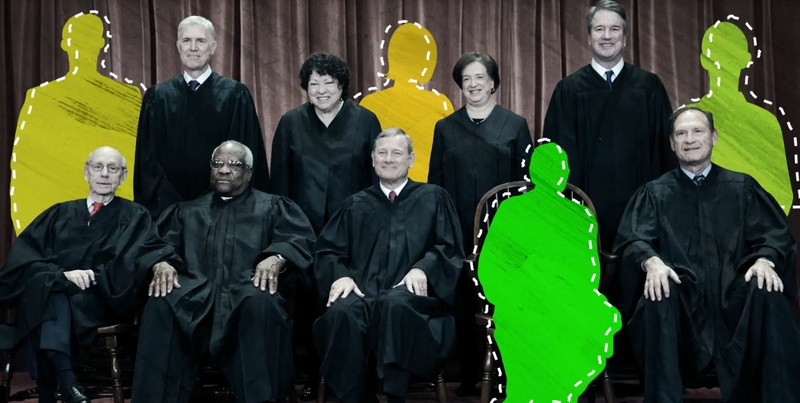
WASHINGTON – A bitterly divided Senate confirmed Amy Coney Barrett as the 115th justice to the Supreme Court on Monday, elevating just the fifth woman to the court in its 231-year history and one who further cements its conservative shift – a legacy that will last even if Republicans lose power in next week’s elections.
The vote was 52-48 for Barrett, President Trump’s third nominee to the Supreme Court. The 48-year-old jurist solidifies a judicial legacy for the White House and Senate Republicans that also includes dozens of younger and more ideologically conservative judges to the federal appeals courts. An acolyte of the late Justice Antonin Scalia, Barrett is certain to diverge dramatically from the woman she will succeed: Justice Ruth Bader Ginsburg, who died Sept. 18 and was for decades an enduring icon for liberals.
The battle to confirm Barrett – whose installation occurred as more than 60 million people had already cast their ballots for president – also plunged a Senate already bruised by years of tit-for-tat skirmishes in the judicial wars into deeper partisan acrimony. Incensed Democrats charged Republicans with hypocrisy for blocking President Barack Obama’s Supreme Court nominee for eight months in 2016 and repeatedly pointed out that no justice has been confirmed this close to a presidential election.
“The American people will never forget this blatant act of bad faith. They will never forget your complete disregard for their voices, for the people standing in line right now voting their choice, not your choice,” Senate Minority Leader Chuck Schumer, D-N.Y. said shortly before the vote.
But Republicans asserted their raw power, muscling Barrett’s nomination through in just over four weeks and with no bipartisan support – the first time that has occurred for a Supreme Court nominee in generations and a reflection of the politicized atmosphere around judicial fights.
“The reason we were able to do what we did in 2016, 2018 and 2020 is because we had the majority,” Senate Majority Leader Mitch McConnell, R-Ky., said moments after Schumer. “No rules were broken whatsoever. So all of these outlandish claims are utterly absurd, and the louder they scream, the more inaccurate they are.”
In an outdoor ceremony at the White House an hour later, Justice Clarence Thomas administered the constitutional oath to Barrett, with Trump and several Republican senators looking on.
Barrett, who faced repeated questions at her confirmation hearings about Trump’s preferred outcome for court rulings, delivered brief remarks on judicial independence in an unusual move for a new justice.
“A judge declares independence not only from Congress and the president, but also from the private beliefs that might otherwise move her. … My fellow Americans, even though we judges don’t face elections, we still work for you,” she said.
Supreme Court justices take two oaths – one to protect and uphold the Constitution, and another about judicial conduct. Chief Justice John Roberts will administer the judicial oath in a private ceremony at the court on Tuesday.
Barrett will solidify a 6-to-3 conservative majority on the court and will be in position to immediately hear contentious cases on elections and health care. A centerpiece of the Democrats’ strategy against Barrett was the pending case on the fate of the Affordable Care Act, set for oral arguments at the Supreme Court on Nov. 10. The Trump administration and Republican attorneys general argue that the entire 2010 health care law and its protections for millions of Americans with preexisting medical conditions should be invalidated.
From the moment Barrett was nominated, one Democratic senator after another warned that the judge, who currently sits on the U.S. Court of Appeals for the 7th Circuit, would pose a significant threat to the Affordable Care Act, having critically written about legal reasonings that had previously rescued it.
“It’s becoming clear that we have a binary choice: We can have the Affordable Care Act, or we can have Amy Coney Barrett on the Supreme Court,” Sen. Edward Markey, D-Mass., said. “We can have the ACA or we can have the ACB, but we can’t have both.”
Barrett assiduously declined to hint at how she would rule on that case, California v. Texas, as well as evaluate existing Supreme Court precedents on abortion, gay rights and use of contraceptives.
She attempted to differentiate herself from her mentor, Scalia, and, despite her personal and well-documented opposition to abortion, told senators that she would not abide by the “law of Amy,” but rather that of the American people. She also came under pressure from Democratic senators to recuse herself from any election-related challenges involving the president who nominated her, but Barrett declined to do so, instead promising that she will be an independent jurist.
“I certainly hope that all members of the committee have more confidence in my integrity than to think that I would allow myself to be used as a pawn to decide this election for the American people,” Barrett told senators during her confirmation hearing.
Her repeated pledges of independence did not satisfy Democrats.
“You deserve a Supreme Court nominee who will speak truth to power or at least acknowledge when basic precedent exists, even if it’s inconvenient to the president who nominated her,” said Sen. Amy Klobuchar, D-Minn., a member of the Senate Judiciary Committee.
Barrett’s qualifications – two federal clerkships, including with Scalia, a lengthy tenure as a law professor at the University of Notre Dame and three years as a federal appeals court judge – were not questioned by her opponents. She also came to the national spotlight with a compelling personal story as a mother of seven children, including two adopted from Haiti.
“She is an unparalleled nominee and will be a dazzling originalist on the Supreme Court,” said Sen. Ben Sasse, R-Neb., one of Barrett’s most ardent defenders. “Democrats didn’t lay a glove on Judge Barrett in her confirmation hearings and I think she ran circles around politicians who want to outsource lawmaking to unelected judges.”
Sen. Josh Hawley, R-Mo., said of Barrett: “This is the most openly pro-life judicial nominee to the Supreme Court in my lifetime.”
If Barrett follows the pattern of her colleagues, she will get to work immediately.
The court resumes oral arguments next Monday, and two of its biggest cases of the term are scheduled, including the challenge to the health-care law. While the rest of the country is still counting votes Nov. 4, the court will take up a legal fight from Philadelphia, where city officials ended a contract with Catholic Social Services to provide foster care services because the agency said it would not accept applications from married same-sex couples. A lower court has agreed the city can enforce its anti-discrimination policy, which protects sexual orientation.
A broad ruling could decide when religious organizations deserve exemptions from anti-discrimination laws that the groups say would cause them to violate deeply held beliefs, such as what constitutes a marriage.
But Barrett will have work to do before then. The court will meet in private conference Friday – most likely by teleconference – to review cases that could still be added to this term’s docket.
And there are four emergency requests pending at the court – three involving election procedures in the battleground states of Wisconsin, North Carolina and Pennsylvania, plus a request from Trump that the court temporarily stop a subpoena from Manhattan District Attorney Cyrus Vance, D, seeking the president’s private financial records.
McConnell marshaled support from all but two of his Republican senators to proceed with Barrett before the Nov. 3 election. The duo opposed to doing so were Sens. Susan Collins of Maine and Lisa Murkowski of Alaska, although Murkowski supported Barrett in the final confirmation vote on the merits. And Collins stressed that her “no” vote was meant to register her disagreement with confirming her amid a presidential campaign, not any conclusion about Barrett’s qualifications.
Murkowski, who along with Collins are the only two GOP senators who support access to abortion, said that based on her conversation with Barrett and her testimony before the committee, she doesn’t believe the newest justice would vote to overturn Roe v. Wade, the landmark 1973 decision that legalized the procedure.
With only Republicans supporting her confirmation, Barrett is the first Supreme Court justice since Edwin Stanton in 1869 to be confirmed without bipartisan support, according to a review of Senate voting data by National Journal. Even Sen. Joe Manchin, D-W.Va., who backed now-Justice Brett Kavanaugh in 2018 and Barrett for her circuit court seat three years ago, did not support her.
There were other factors that made the circumstances of Barrett’s confirmation unique, including the ongoing coronavirus pandemic – meaning a nomination that would’ve surely drawn large throngs of protests to the Capitol in a normal time instead operated in a literally sanitized sphere.
Monday’s planned White House ceremony gives a fitting bookend to her nomination, as Trump hosted a similar Rose Garden event on Sept. 26 to unveil Barrett as his pick, a ceremony which later was deemed a superspreader event. Numerous attendees were later diagnosed with covid-19, the disease caused by the coronavirus, including the president and first lady Melania Trump, two GOP senators and the president of the University of Notre Dame.
Most in attendance Monday night wore masks.
Vice President Mike Pence, who said on Saturday that he wouldn’t miss Barrett’s confirmation vote “for the world,” instead stayed away from his initial plans to preside over the Senate on Monday evening amid a fresh outbreak of covid-19 among his staff, including some of his closest aides. Democrats urged Pence not to come to the Capitol on Monday, and Schumer advised his ranks to limit time in the chamber because of the virus.
Barrett has also played a significant role in the 2020 campaigns for both the presidency and the Senate, with most GOP senators in competitive races latching onto the confirmation fight to energize conservative voters. Democratic challengers, meanwhile, have assailed Republicans for charging ahead with a lifetime appointment to the Supreme Court at the expense of a relief bill for millions of Americans suffering from the health and economic impact of the pandemic.
The Barrett confirmation has also fueled an internal Democratic debate over the issue of expanding the court, with the party’s presidential nominee, Joe Biden, under significant pressure from the party base to embrace a plan to increase the number of seats on the Supreme Court if he wins the White House.
Few elected Democratic officials have definitively supported the idea ahead of the closely contested elections for both the White House and the Senate. Biden has said he would appoint a bipartisan commission to propose changes to the Supreme Court and federal judiciary.
“This is to me, a real threat,” said Sen. John Barrasso, R-Wyo. “If they weren’t going to do it, former vice president Joe Biden, nominee Joe Biden, would have put an end to this early on.”
– – –
The Washington Post’s Robert Barnes contributed to this report.
WASHINGTON – President Donald Trump’s first-term record on the federal judiciary – which reached its apex Monday with the confirmation of Amy Coney Barrett as his third Supreme Court justice – will be difficult to roll back even if Democrats win both the White House and the Senate majority.
But the pipeline of conservative judges and the fast-track procedures Republicans have used to confirm them give a potential President Joe Biden and a Democratic-led Senate a rough playbook to try to install their own stream of liberal nominees.
The judicial legacy set by Trump but engineered primarily by Senate Majority Leader Mitch McConnell, R-Ky., includes several significant milestones, including the trio on the Supreme Court and the fact that for the first time in 40 years, there were no openings on the circuit courts. That has been a monumental achievement for a majority leader whose mantra has been “leave no vacancy behind” and for a president who simply likes to win.
“I have three Supreme Court justices. I have a great one coming,” Trump said Saturday at a campaign rally in Circle-ville, Ohio. Inflating the total number of judges confirmed under his tenure, the president added: “Think of that, 300 federal judges, I think close to 60 court of appeals judges and three Supreme Court justices. I mean – can you believe it? Even I can’t believe it!”
Barrett, 48, was confirmed with Republican-only votes Monday night, cementing a 6-to-3 conservative majority on the Supreme Court. She will be the 220th federal judge confirmed under the Trump presidency and the McConnell-led Senate – a figure that includes not only her and Justices Neil Gorsuch and Brett Kavanaugh, but also 53 circuit court judges, 162 district court judges and two to the U.S. Court of International Trade.
For the first time in more than four decades, there were no vacancies on the circuit court level, where approximately 30 percent of those sitting on the bench have been nominated by Trump.(That changed Monday with the death of Judge Juan Torruella of the U.S. Court of Appeals for the 1st Circuit, who was nominated by President Ronald Reagan.) Only President Jimmy Carter had more circuit court judges, as well as a larger share of the entire federal appellate bench, confirmed in his first term, and that was before the number of seats in the circuit courts was expanded.
Since 2017, McConnell and Senate Republicans have prioritized filling vacancies on the Supreme Court and the circuit courts, where the vast majority of cases on a litany of matters, including health care, the environment and government regulations, are settled.
“We do a lot of stuff here that is small ball, but this is something that may last 25 or 30 years,” said Sen. John Cornyn, R-Texas, one of the majority leader’s closest allies. “I give Senator McConnell a lot of credit for keeping us focused on it.”
Few issues have energized and united the Republican base more than the issue of the judiciary, and it has been a decades-long project of the right to steadily fill seats on the federal bench with reliable conservatives. Once viewed skeptically by traditional GOP voters, Trump released a list of potential Supreme Court nominees during his campaign in 2016, a move that reassured conservatives while a seat on the court was vacant.
Still, public polling has started to show a shift in which party cares more about the judiciary. A Pew Research Center poll in August found that 66% of registered voters who supported Biden said the matter of Supreme Court appointments was “very important” in considering their vote for president, compared with 61% of Trump backers.
That same question in 2016 drew the reverse response, with 70% of Trump’s supporters saying the issue was “very important,” while 62% of backers of Democrat Hillary Clinton said the same.
To reach their judicial goals, Republicans and the White House revised Senate rules and reversed key practices used by their Democratic predecessors in evaluating nominees – traditions that some Senate Democrats have said they should similarly disregard if they take control of the Senate.
Two of the most significant changes involve floor deliberations. During Gorsuch’s nomination fight in 2017, Senate Republicans invoked the “nuclear option” to change rules for Supreme Court nominees so that they no longer needed 60 senators to advance to a final confirmation vote. That effectively finished the task Senate Democrats began in 2013, when they deployed the same maneuver to change confirmation rules for all executive branch picks and nearly all judicial nominees.
In 2019, Senate Republicans changed the rules to significantly trim the time available for floor debate for district court judges. Before the change, nominations could be debated for a total of 30 hours before a confirmation vote, but GOP senators slashed that to two hours for all nominees except those to the Cabinet, the Supreme Court, the circuit courts and some independent boards.
A Biden White House and a Democratic-controlled Senate could certainly take advantage of the floor changes by being able to confirm Supreme Court picks with a simple majority and process district court nominees more quickly on the floor, should they prioritize the judiciary.
There are other practices generally used by the previous Democratic-led Senate that Republicans have neglected. They include the “blue slip” tradition for circuit court nominees – which effectively gave a state senator veto power over judicial picks from his or her state.
Democrats also complained when the Senate Judiciary Committee in the past four years – first under Sen. Chuck Grassley, R-Iowa, and now Sen. Lindsey Graham, R-S.C. – questioned multiple circuit court nominees at the same confirmation hearing, which Democrats said offered less time for senators to vet each one individually. Republicans said previous committee leaders, including Democrats, have held hearings featuring more than one circuit court nominee.
Meanwhile, at the Trump White House, the counsel’s office has declined to allow the American Bar Association to review potential candidates before they are formally nominated. That was the process used by the Obama White House – which helped weed out “not qualified” candidates before their names were made public – but the Trump administration returned to the process followed under President George W. Bush, which allowed for American Bar Association evaluations after people were nominated.
There has been no clamoring from Democrats to return to many of these practices. Sen. Dianne Feinstein, D-Calif., who would be in line to be Judiciary Committee chairwoman under Democratic control, has not publicly committed to any particular policy for processing nominees if she ran the panel.
Other senators on the Judiciary Committee aren’t as gun-shy, a reflection of the acrimony after years of partisan fighting in the judicial wars.
“No,” said Sen. Mazie Hirono, D-Hawaii, when asked whether Democrats should offer deference to Republican home-state senators if they do not sign off on circuit court nominees from a Biden administration. “The rules have changed. Do I look stupid to you?”
Sen. Richard Blumenthal, D-Conn., another Judiciary Committee member, also stressed that he believes Democrats “ought to play complete hardball” on judges.
“The question is whether we should allow states where there are two Republican senators to dictate who the judge here should be. I would say no,” Blumenthal said.
Still, some other Democrats are more cautious at this point about embracing some of those practices.
Sen. Christopher Coons, D-Del., said he would have to think about whether he would support reinstating the blue-slip practice for circuit court nominees. Coons, perhaps Biden’s closest ally in the Senate, also noted that the American Bar Association has “long played an important role of providing an early warning” about unqualified picks.
“We need to have a focused, deliberate conversation about which are the features of the confirmation process from before that are constructive, appropriate, necessary and we want to restore, and which are the features that, frankly, given they’ve been broken, we’re not going to reinstate them,” Coons said.
Those are arcane, yet critical, process decisions that Democrats may have to make soon.
About 30 circuit court judges nominated by Democratic presidents may be eligible to take senior status – a kind of semiretirement – but have not chosen to do so, according to Russell Wheeler, a fellow at the Brookings Institution who is an expert on the federal judiciary. (One seat on the U.S. Court of Appeals for the 7th Circuit opened up with Barrett’s confirmation, although the Trump White House has already nominated her replacement.)
Trump’s influence on the circuit courts is already deeply felt. He and Senate Republicans have turned three federal appeals courts once dominated by Democratic-appointed judges – the U.S. Court of Appeals for the 2nd Circuit, based in New York; the 3rd Circuit, based in Philadelphia; and the 11th Circuit, based in Atlanta – into courts with a majority of Republican appointees, according to Wheeler.
Even the U.S. Court of Appeals for the 9th Circuit, often a bane for legal conservatives and a target of efforts by Republican senators to break it up, has become less Democratic as Trump picks have been tapped for the San Francisco-based court.
Should eligible Democrats take senior status or leave the bench in coming months, that would give the next president a significant pot of openings in the appeals courts to fill.
“You’re likely to see . . . a splurge of Democrats taking senior status” if Biden wins, Wheeler said.
The bottom line is that few are publicly predicting a de-escalation of the judicial wars that have been continuously ramped up by both Democrats and Republicans over the past few decades, with few political incentives for senators to reinstitute practices meant to encourage bipartisan sign-off on judges.
Democrats were responsible for the first partisan filibuster of a circuit court nominee and went “nuclear” to make it easier to confirm nearly all nominees. Republicans repeatedly blocked President Barack Obama’s choices for the influential U.S. Court of Appeals for the District of Columbia Circuit and ignored the nomination of Merrick Garland, Obama’s third Supreme Court pick, for eight months in 2016.
“It cuts both ways,” Cornyn said. “And that’s part of the problem.”

 UBS’s Haefele Sees Opportunity in Volatility, Uncertainty
  U.S. markets fall sharply amid uncertainty over stimulus talks and the increase in the number of coronavirus infections. (Mary Altaffer/ AP)
  Supporters of President Trump gather as a Gettysburg police cruiser goes by on the square in Gettysburg, Pa., on Oct. 10. Washington Post photo by Michael S. Williamson.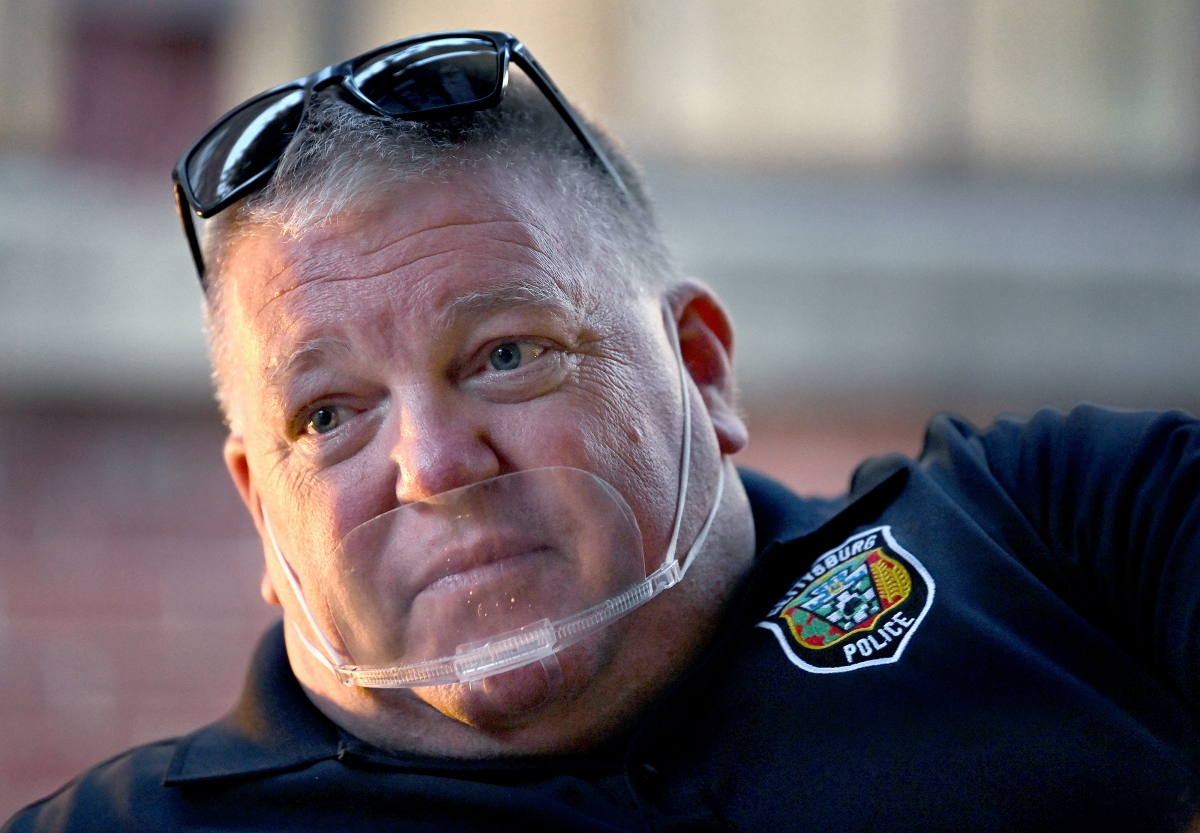
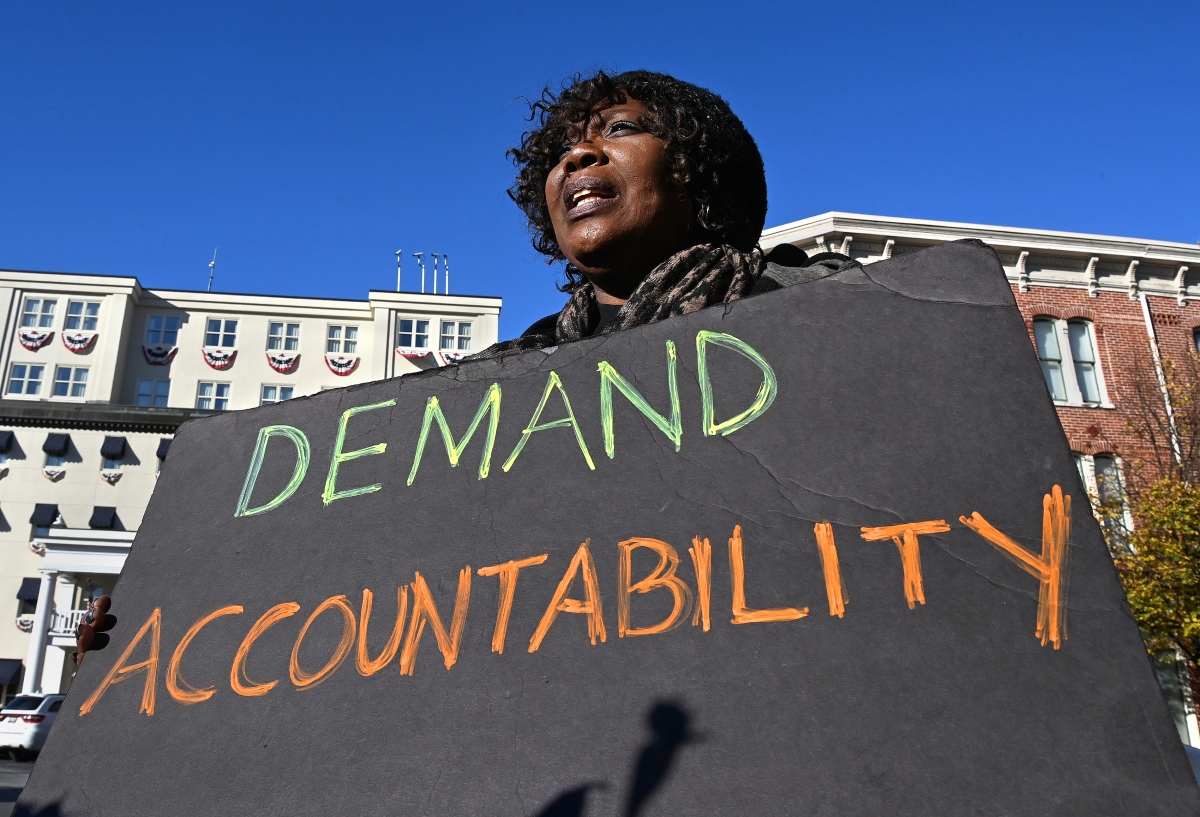
 A protester is arrested on Manhattan’s Fifth Avenue in June. (John Minchillo/ AP)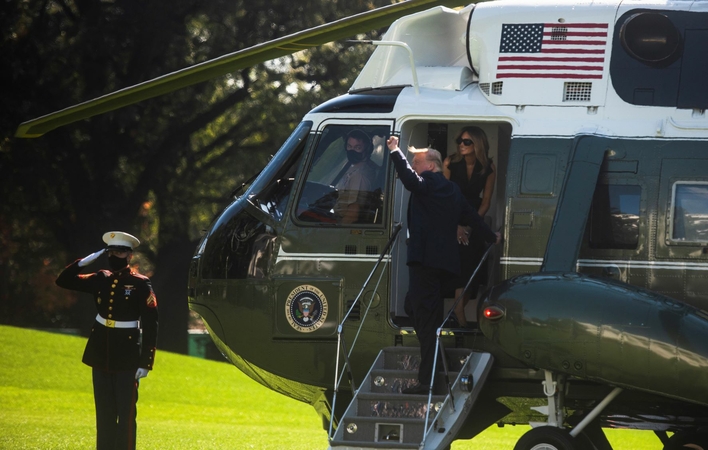
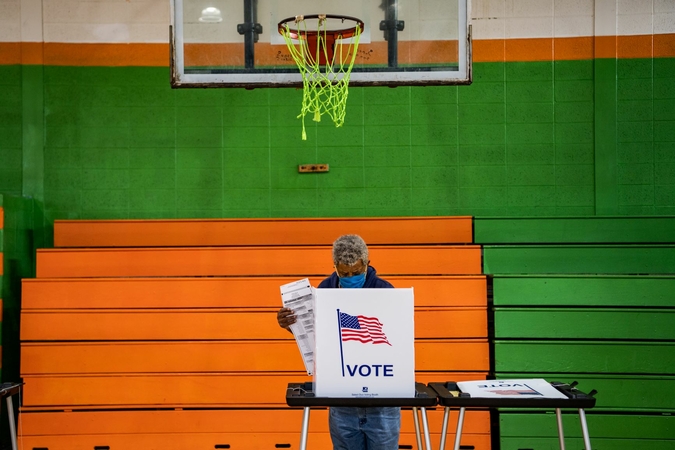
 Vice President Pence attends a rally in Kinston, N.C., on Sunday. (Jonathan Drake/ Reuters)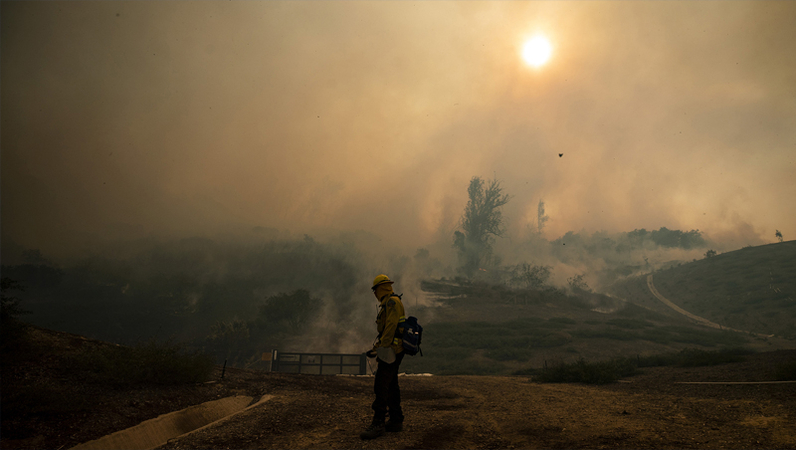
 Groups supporting the nomination and confirmation of Judge Amy Coney Barrett gather outside the Supreme Court on Monday, Oct. 26. Photo for The Washington